UPSC Current Affairs

15 topicsGS-1: 3GS-2: 5GS-3: 7
0/15 done
GS-2Polity

2.National Commission for Minorities Vacancies (National Commission Minorities)

The Hindu
Illustration for National Commission for Minorities Vacancies (National Commission Minorities)

What & Where

Body: National Commission for Minorities, statutory under NCM Act 1992, quasi-judicial watchdog for notified minorities.

Location: Head office New Delhi; administratively under Ministry of Minority Affairs.

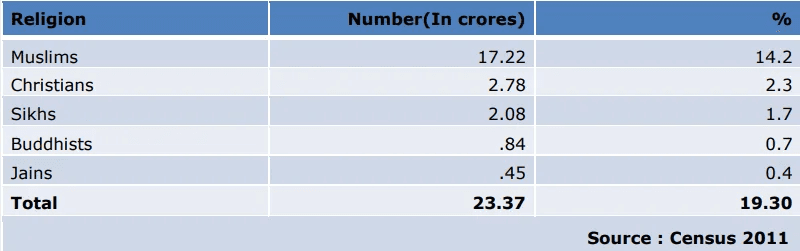
Scope: Muslims, Christians, Sikhs, Buddhists, Parsis, Jains—religious only, not linguistic/ethnic.

Quick Facts for MCQs

Institutional Challenges

  • Vacancy: All seven posts empty despite Delhi HC notices, crippling functioning.
  • Autonomy: Political discretion in appointments questions impartiality, credibility.
  • Enforcement: Recommendations non-binding, cannot penalise defaulting authorities.

Legal & Policy

  • Constitution: Term ‘minority’ undefined; Articles 29-30 safeguard cultural, educational rights.
  • Jurisdiction: 1992 Act excludes linguistic minorities after 1988 change.
  • Comparison: NCM only statutory, unlike constitutional NCSC/NCST.

Suggested Reforms

  • Upgrade: Convert to constitutional body or amend Act to give binding powers.
  • Process: Institute transparent, time-bound selection; include parliamentary oversight.
  • Capacity: Permit suo-motu inquiries, penalties, dedicated investigation cadre.

Key Data Points

FeatureData-Point
Statutory basisNational Commission for Minorities Act, 1992
First constituted17 May 1993
Current status (Dec 2025)Chair, Vice-Chair & 5 Members vacant since Apr 2025
Total strength7 (Chair + VC + 5 Members)
Tenure3 years from joining
Minority list6 religions; Jains added 2014
AppointmentCentral Government nominates; no parliamentary confirmation
PowersRecommendatory, inquiry, summon witnesses, seek reports; no penal authority
RemovalSame procedure as appointment; grounds: insolvency, infirmity, misconduct
Parent ministryMinistry of Minority Affairs

Related UPSC Prelims PYQs

GS1, NDA_GAT 2001PYQ 1

Consider the following statements about the minorities in India:

GS1, NDA_GAT 2022PYQ 2

Which one of the following is not a Constitutional Commission of India?

GS-3Infrastructure

3.India's Transport Infrastructure Challenges (Transport Infrastructure)

The Hindu

What & Where

Nationwide road, rail & air network links metros (Delhi, Mumbai, Kolkata) to interiors.

2025 crunch: jam-packed trains, mass flight cancellations, Ahmedabad Air India crash (>200 dead).

Debate set within PM Gati Shakti, Bharatmala, Sagarmala planning.

Quick Facts for MCQs

Infrastructure Deficits

  • Outdated tracks & highways slow travel, spur festive overcrowding.
  • Metros choke: Delhi-Mumbai-Kolkata witness peak congestion.
  • Freight suffers from poor warehousing, opaque tenders.

Safety Concerns

  • India tops global road deaths; pedestrians, cyclists most vulnerable.
  • Recurring derailments; Kavach 5.0 urged on busy corridors.
  • 2025 Ahmedabad crash exposed aviation oversight gaps.

Policy & Schemes

  • NIP, Gati Shakti aim sub-14 % logistics cost via multimodal mapping.
  • Bharatmala, Sagarmala, UDAN extend highways, ports, regional flights.
  • Metro Policy 2017, PM e-Bus Sewa push PPP & electrified transit.

Sustainability

  • Transport emits 14 % CO₂; EV uptake sluggish despite FAME-II.
  • NAPCC seeks climate-proof roads, rails against floods, heatwaves.
  • Cities piloting NMT through Streets for People, Cycles4Change.

Key Data Points

FeatureData-Point
Transport CO₂ share14 % of energy emissions
Ahmedabad Air crash2025; >200 deaths
ITS PolicyAdopted 2022
Key master planPM Gati Shakti
Accident burdenOne of world’s highest

Related UPSC Prelims PYQs

ESE_GS, GS1 2025PYQ 1

निम्नलिखित कथनों पर विचार कीजिए :

ESE_GS, GS1 2022PYQ 2

Consider the following statements regarding Forum for Decarbonizing Transport:

GS-3EconomyQuick Bite

4.Hybrid Mutual Funds Overview (Hybrid Mutual Funds)

Economic Times

What & Where

Hybrid mutual funds = SEBI-defined schemes investing across equity, debt, plus optional gold/REIT/InvIT in India

Aim balanced growth-stability; fund manager auto-rebalances to maintain preset asset-mix

Key variants: Equity Savings, Balanced Hybrid, Aggressive Hybrid, Dynamic Asset Allocation, Multi-Asset Allocation

Quick Facts for MCQs

Types & Allocation

  • Equity Savings prioritises stability via major debt/arbitrage
  • Balanced Hybrid targets equal growth-safety mix
  • Multi-Asset broadens diversification by adding gold or similar

Taxation Angle

  • Equity-classified hybrids enjoy 10 % LTCG post 1 yr on gains > ₹1 lakh
  • Debt slice still benefits from equity tax umbrella when fund meets 65 % rule
  • More tax-efficient than direct bonds taxed at slab rates up to 30 %

Market Context

  • Rising indices push investors to hybrids as hands-off rebalancing tool
  • Wealth managers increasingly recommend hybrids to first-time or passive investors
  • Popularity stems from need to temper equity froth without manual shifts

Risk-Return

  • Asset spread dampens drawdowns versus pure equity funds
  • Aggressive Hybrid offers higher upside with commensurate risk
  • Dynamic funds cut equity weight during overvaluation, cushioning downside

Key Data Points

FeatureData-Point
Equity threshold for equity-tax status≥ 65 % equity (incl. arbitrage)
Aggressive Hybrid equity range65–80 %
Balanced Hybrid equity & debt40–60 % each
Equity Savings equity share10–25 %
Multi-Asset ruleMin 3 asset classes
Dynamic/Balanced AdvantageFlexible equity-debt switch by valuation
Key tax edgeLTCG rates apply on equity portion
Investor benefitLower volatility than pure equity
Core market driverRecord equity indices prompting interest
Auto-rebalancing responsibilityFund manager, not investor
GS-1History

5.Deepavali UNESCO Intangible Heritage Listing (UNESCO Intangible Heritage)

UNESCO

What & Where

Deepavali – multi-faith festival of light now on UNESCO Representative List of Intangible Cultural Heritage

Core geography – pan-India plus diaspora in SE Asia, Africa, Europe, Gulf, Caribbean

ICH domain – social practices, rituals and festive events

Quick Facts for MCQs

Cultural Significance

  • Legends celebrate moral victory, prosperity and harvest linking Itihasas, Puranas and regional lore
  • Rituals feature diyas, rangoli, Lakshmi-puja, communal feasts ensuring intergenerational knowledge transfer
  • Motto Tamso Ma Jyotirgamaya reinforces hope over darkness

Livelihood Ecosystem

  • Festival sustains potters, artisans, farmers, florists, sweet-makers and priests creating large seasonal economy
  • Crafts demand boosts earthen lamps, decorations, sweets, flowers, textiles across rural and urban clusters
  • Diaspora markets energise exports of mithai, diyas, décor items enhancing soft-power trade

UNESCO Framework

  • Community-based approach requires local recognition before nomination
  • States must inventory, support practitioners, report safeguarding measures periodically
  • List highlights dynamic, living heritage adapting to contemporary contexts without losing core identity

Key Data Points

FeatureData-Point
UNESCO list typeRepresentative List of ICH of Humanity
Inscription year2023 (20th session)
Committee venueNew Delhi, India
UNESCO ICH Convention2003
India ratified Convention2005
ICH domains countFive
Key Deepavali legendsRama return, Narakasura defeat, Lakshmi worship, harvest rites
Core festival valuesInclusivity, unity, generosity, wellbeing

Related UPSC Prelims PYQs

GS1, NDA_GAT 2024PYQ 1

Which one of the following was the latest inclusion in the Intangible Cultural Heritage List of UNESCO?

GS1, NDA_GAT 2025PYQ 2

Which dance form of India has been inscribed into UNESCO’s Representative List of Intangible Cultural Heritage of Humanity?

GS-1History

6.Indus Valley Civilisation Decline Study (Indus Decline)

Indian Express
Illustration for Indus Valley Civilisation Decline Study (Indus Decline)

What & Where

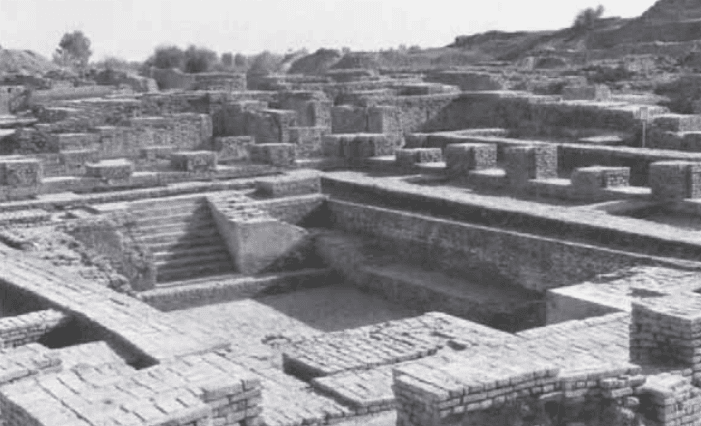
Bronze-Age urban culture (3300–1300 BCE) along Indus & Ghaggar-Hakra rivers in present Pakistan, NW India.

Mature cities: Harappa, Mohenjo-Daro, Dholavira, Rakhigarhi; grid plans, brick houses, covered drains.

Study (2025) maps civilisation-wide decline to four ≥85-year mega-droughts between 2425–1400 BCE.

Quick Facts for MCQs

Paleoclimate Evidence

  • Stalagmites, lake cores show Pacific move from La Niña-like to El Niño-like state, weakening ISM.
  • Four drought cycles induced river contraction, soil desiccation, salinity rise.
  • Hydrological stress lasted centuries, not single catastrophic year.

Socio-Economic Impact

  • Agriculture surplus shrank; urban provisioning failed, prompting de-urbanisation to smaller villages.
  • River shallowing cut maritime & fluvial trade, collapsing bead, metal, pottery industries.
  • Civic upkeep dipped; clogged drains, encroached streets denote administrative fatigue.

Discarded Theories

  • Aryan invasion now rejected; archaeology lacks burn layers, weaponry, mass violence.
  • River-course shifts & Mesopotamian turmoil seen contributory, but climate identified as primary driver.

Cultural Significance

  • First South Asian planned sewage systems; standardised weights hint central regulation.
  • Peaceful, egalitarian archaeological record offers model for water-sharing, urban resilience today.

Key Data Points

FeatureData-Point
Mature phase2600–1900 BCE
Largest Indian siteRakhigarhi, Haryana
ScriptUndeciphered pictographs on seals
Iconic figurineBronze “Dancing Girl”, Mohenjo-Daro
Core riversIndus, Sutlej, Ghaggar-Hakra
Worst droughtc. 1733 BCE, ~164 years
Monsoon drop10–20 % rainfall reduction
Crop shiftWheat–barley → millets
Key trade partnerMesopotamia (Akkad, Ur III)
Invasion evidenceNone; no mass graves or weapon finds

Related UPSC Prelims PYQs

CAPF_GAI, GS1 2021PYQ 1

Most of the mature Harappan sites in the region of Cholistan had been abandoned during

CAPF_GAI, GS1 2021PYQ 2

Which one of the following ancient towns is well-known for its elaborate system of water harvesting and management where a series of bunds created check-dams and canals carried the water to connected reservoirs?

GS-1Mapping

7.Sea of Japan Geographical Features (Marginal Sea)

Business Standard
Illustration for Sea of Japan Geographical Features (Marginal Sea)

What & Where

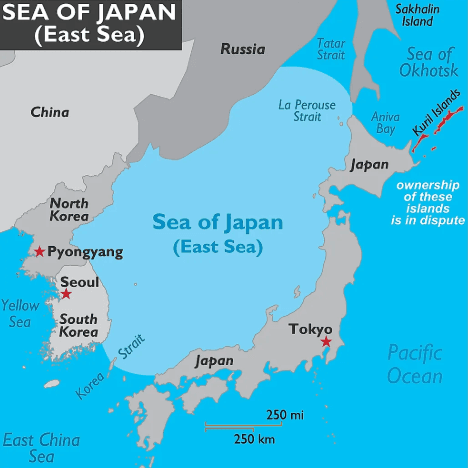
Marginal sea; semi-enclosed deep basin in western Pacific between Japan-Sakhalin and Korean Peninsula-Russia

Span ~978,000 sq km; mean depth 1,752 m; elongated southwest–northeast

Exchanges water via Korea, Tsushima, Tsugaru, La Perouse, Kanmon Straits

Quick Facts for MCQs

Physiography

  • Basins: Japan north, Yamato southeast, Tsushima southwest
  • Eastern shelves broader; include Sado Ridge, Oki Ridge, Hakusan Banks
  • Narrow straits create limited circulation and higher isolation

Straits & Connectivity

  • Korea Strait bifurcates; western Korea channel, eastern Tsushima channel to East China Sea
  • Tsugaru Strait separates Honshu–Hokkaido; La Perouse lies between Sakhalin–Hokkaido
  • Kanmon Strait links Inland Sea to Sea of Japan

Security Dimension

  • June 2023 drill: two US B-52H with JASDF F-35A, F-15J over sea
  • Aim deterrence after China–Russia joint bomber and naval sorties nearby
  • Sea routinely hosts US-Japan surveillance of DPRK missile launches

Border Disputes

  • Senkaku / Diaoyu islands flashpoint in East China Sea between Japan and China
  • Southern Kurils Iturup, Kunashir, Shikotan, Habomai claimed by Japan, held by Russia
  • Contestations affect EEZ boundaries and resource exploration

Key Data Points

FeatureData-Point
Total area~978,000 sq km
Mean depth1,752 m
OrientationSouthwest–northeast ellipse
Neighbouring statesJapan, Russia, North Korea, South Korea
Major basinsJapan, Yamato, Tsushima
Key straitsKorea, Tsushima, Tsugaru, La Perouse, Kanmon
Widest shelvesJapanese eastern flank
Recent US exerciseB-52H with F-35A, F-15J, June 2023
China–Japan disputeSenkaku / Diaoyu islands
Russia–Japan disputeSouthern Kurils / Northern Territories
GS-3Environment

8.UNEP Champions of the Earth Award (UNEP Award)

UNEP

What & Where

Award – Champions of the Earth is UN’s highest environmental honour, instituted 2005, presented by UNEP (HQ Nairobi).

Scope – Recognises outstanding climate and nature leadership across Policy Leadership, Inspiration & Action, Entrepreneurial Vision, Science & Innovation.

Geography – 127 laureates worldwide so far; 2025 cycle highlights India, Pacific Islands, Niger/France, Brazil.

Quick Facts for MCQs

Award Categories

  • Policy Leadership – high-level governance or legal breakthroughs.
  • Inspiration & Action – grassroots or public-sector mobilisers driving scalable change.
  • Entrepreneurial Vision / Science & Innovation – market or research solutions delivering measurable environmental gains.

2025 Laureates

  • Pacific Islands Students – secured ICJ advisory opinion on state climate obligations.
  • Supriya Sahu – advanced heat resilience, NBS, sustainable cooling in Tamil Nadu.
  • Mariam Issoufou & Imazon – passive cooling architecture; AI-based Amazon deforestation tracking.

Focus Areas 2025

  • Methane – transparency, rapid reduction central to 1.5 °C pathway.
  • Cooling – promotion of nature-based, energy-efficient alternatives over conventional AC.
  • Forests – governance tools to curb illegal logging and enhance carbon sinks.

Indian Angle

  • Leadership – Tamil Nadu model positions state as global climate frontrunner.
  • Employment – Large-scale green jobs generated alongside ecosystem restoration.

Key Data Points

FeatureData-Point
Awarding agencyUnited Nations Environment Programme
Year instituted2005
Total laureates till 2024127
2025 theme focusClimate justice, resilient buildings, methane cuts, sustainable cooling, forest protection
Number of award categoriesFour
Indian 2025 winnerSupriya Sahu – Inspiration & Action
Job impact TN initiative2.5 million green jobs
Beneficiaries TN initiative12 million people
Lifetime achievement 2025Manfredi Caltagirone (methane transparency)
UNEP HQ cityNairobi

Related UPSC Prelims PYQs

CDS_GK, GS1 2023PYQ 1

इनमें से किन्हें उद्यमिता दृष्टिकोण श्रेणी (Entrepreneurial Vision category) में संयुक्त राष्ट्र पर्यावरण कार्यक्रम के वर्ष 2022 ‘Champions of the Earth Award’ से सम्मानित किया गया है?

CDS_GK, GS1 2007PYQ 2

Wangari Maathai, the Nobel Prize winner from Kenya, is known for her contribution to which one of the following?

GS-3Species

9.Western Tragopan Conservation Status (Endangered Species)

The Hindu
Illustration for Western Tragopan Conservation Status (Endangered Species)

What & Where

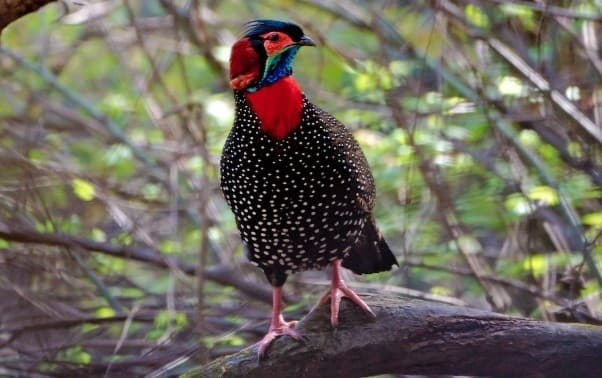
Western Tragopan Tragopan melanocephalus — rare “king-of-birds” pheasant; Himachal Pradesh state bird; Western Himalaya flagship

Range 2,400–3,600 m moist temperate forests; key sites GHNP, Kazinag, Limber, Uttarakhand and N Pakistan pockets

Sarahan Pheasantry Himachal Pradesh runs India’s only captive-breeding programme; population now stable

Quick Facts for MCQs

Conservation Status

  • Single fragile global sub-population heightens extinction risk
  • Flagship species used for temperate forest health monitoring
  • Insurance population from captive birds offers genetic safeguard

Habitat & Ecology

  • Dense conifer, bamboo, rhododendron thickets provide cover and forage
  • Ground-dwelling, most active dawn and dusk reducing predation visibility
  • Indicator presence signals intact high-altitude biodiversity corridors

Captive Breeding

  • Himachal Pradesh Forest Department & Central Zoo Authority oversee Sarahan facility
  • Protocols include artificial incubation, soft-release pens, genetic monitoring
  • Success inspires proposal to establish satellite centres in J&K and Uttarakhand

Key Data Points

FeatureData-Point
IUCN statusVulnerable
Global mature birds3,000 – 9,500
Elevation band2,400 – 3,600 m
Breeding seasonMay – June
Clutch size3 – 5 eggs
DietBerries, seeds, buds, insects
Male hallmarkBlue-orange facial wattles
Preferred undergrowthRingal bamboo, rhododendron
Conservation strongholdGreat Himalayan National Park
Captive stock Sarahan40 + individuals
GS-3S&T

10.Q-day Quantum Encryption Threat (Quantum Cryptography)

The Hindu
Illustration for Q-day Quantum Encryption Threat (Quantum Cryptography)

What & Where

Q-day – moment a cryptographically relevant quantum computer can break RSA-2048/ECC, endangering global digital security

Trigger – execution of Shor’s algorithm on millions of fault-tolerant logical qubits

Headline site – Google’s 65-qubit Willow “Quantum Echoes” experiment rekindles debate, yet still far from Q-day

Quick Facts for MCQs

Security Dimension

  • Vulnerability – Internet TLS, VPNs, banking ledgers reliant on RSA/ECC become readable post-Q-day
  • Data-longevity – Classified, biomedical, financial files with 20-30 yr shelf-life most at risk
  • Transition cost – Massive key infrastructure replacement, firmware updates, hardware security module upgrades

Tech & Schemes

  • PQC algorithms – Lattice-based Kyber, Dilithium; code-based Classic McEliece; hash-based SPHINCS+ under standardisation
  • Migration path – Hybrid classical-quantum keys during overlap period
  • Error-correction need – Surface codes, topological qubits critical to scale beyond noisy era

Geopolitical Angle

  • National races – US, China, EU, India funding ₹-billion quantum missions, viewing PQC as strategic infrastructure
  • Regulation push – US Quantum Computing Cybersecurity Preparedness Act mandates federal PQC adoption timelines
  • Intelligence stakes – Stored diplomatic cables, satellite links, nuclear command data prime decryption targets

Key Data Points

FeatureData-Point
Key threatFactoring RSA-2048, ECC keys exponentially faster
Algorithm behind riskShor’s algorithm, 1994
Present hardware scaleHundreds of noisy qubits
Estimated need for attackMillions of logical qubits + error correction
Harvest-now-decrypt-laterAdversaries store ciphertext today for future quantum decryption
US standard responseNIST-selected PQC: CRYSTALS-Kyber (encryption) & Dilithium (signatures)
Sectoral urgencyBanks, militaries, cloud providers by ~2030
New Google testbed65-qubit Willow processor
GS-3S&T

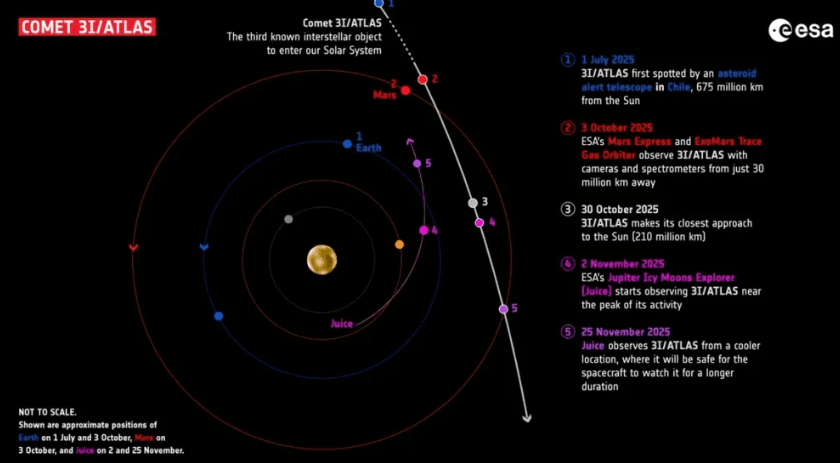
11.3I/ATLAS Global Planetary Defense Drill (Planetary Defence)

WION
Illustration for 3I/ATLAS Global Planetary Defense Drill (Planetary Defence)

What & Where

Drill: World’s largest planetary-defence simulation "3I/ATLAS" evaluating detection, tracking, response

Geography: ESA Europe hosts; partners NASA, UN-IAWN, ISRO, CNSA, JAXA, global observatories

Object: Interstellar comet 3I/ATLAS, ~60 km/s, tracked via ground and space sensors

Quick Facts for MCQs

Tech & Schemes

  • Orbit-modeling: Real-time updates include gravity, solar perturbations, Monte-Carlo impact likelihoods
  • Deflection-options: Kinetic impactor, gravity tractor, civil-defence evacuation scenarios rehearsed
  • Data-pipeline: UN-IAWN hazard messages circulate instantly among agencies

Security Dimension

  • Planetary-security: Treats asteroid risk as cross-border security threat
  • Defence-links: US, European, Chinese, Indian space commands share tracking, readiness data
  • Gap-audit: Drill highlights absence of unified public-guidance system

International Examples

  • ESA budget: Record allocation underscores European leadership in planetary defence
  • NASA heritage: DART success informs present deflection planning
  • Emerging players: China, India showcase independent mitigation tech ambitions

Social Concerns

  • Public-messaging: Module counters misinformation, panic across media
  • Psychological-prep: Mock briefings gauge citizen stress, compliance

Key Data Points

FeatureData-Point
Lead agenciesESA, NASA, UN-IAWN
Object typeInterstellar comet 3I/ATLAS
Velocity≈60 km s⁻¹
Drill scaleLargest planetary-defence exercise
Core tasksEarly warning, tracking, impact response
Key toolsGround telescopes + space sensors
Participant space agenciesISRO, CNSA, JAXA, defence commands

Related UPSC Prelims PYQs

CAPF_GAI, GS1 2023PYQ 1

NISAR satellite is manufactured jointly by Indian Space Research Organisation and:

CAPF_GAI, GS1 2007PYQ 2

What is the Galileo project which has been in news recently?

GS-3SecurityQuick Bite

12.INTERPOL Blue Corner Notice Explained (INTERPOL Notices)

Economic Times

What & Where

Blue Corner Notice – Interpol colour notice to gather identity, location or activity details on persons under criminal probe.

Issued by Interpol General Secretariat on National Central Bureau request; circulated to police of 195 member states.

Non-arrest tool; activated post-Goa nightclub blaze to trace absconding owners across borders.

Quick Facts for MCQs

Legal & Policy

  • Constitution compliance ensures notices respect human-rights and privacy commitments.
  • Blue Notice lacks coercive force; domestic law decides detention, extradition.
  • UNSC Special Notice merges Interpol circulation with Chapter VII sanction lists.

Security Dimension

  • Cross-border alert reaches 195 police networks via I-24/7 secure system.
  • Functions as early intelligence layer preceding possible Red Notice escalation.
  • Goa fire case showcases rapid international tracking of public-safety fugitives.

Institutional Setup

  • National Central Bureau housed within each nation’s police links to Interpol HQ, Lyon.
  • General Secretariat validates, classifies, disseminates notices round-the-clock.
  • Colour coding standardises urgent criminal information sharing worldwide.

Key Data Points

FeatureData-Point
Colour notices count7 regular (Red, Yellow, Black, Green, Orange, Purple, Blue) + pilot Silver
Blue Notice purposeCollect info on suspect’s identity, whereabouts, activities
Arrest warrant?No; only Red Notice seeks arrest or detention
Issuing authorityInterpol General Secretariat after NCB request
Legal filterMust satisfy Interpol Constitution & data-protection norms
UNSC Special NoticeFlags individuals/entities under UN sanctions
GS-2Scheme

13.Shilp Didi Women Artisan Programme (Women Artisans)

News on Air

What & Where

Government programme to economically empower women artisans (“Shilp Didis”) across India via training, e-commerce and exhibitions.

Piloted June 2024 for 100 days; implemented by Ministry of Textiles through Development Commissioner (Handicrafts).

Initial cohort: 100 women artisans from 72 districts in 23 States, spanning 30 handicraft categories.

Quick Facts for MCQs

Tech & Schemes

  • E-training leverages mobile modules; covers payment gateways, GST, packaging standards.
  • NHDP clusters provide design studios, common facility centres for Shilp Didi participants.

Economic Angle

  • Income diversification beyond farm sector; supports micro-entrepreneurship in rural craft belts.
  • Market linkage lowers middlemen margin, improving artisan net returns.

Social Impact

  • Women-focused skilling boosts financial independence and household decision-making power.
  • Digital inclusion narrows gender gap in online commerce participation.

Key Data Points

FeatureData-Point
Launch year2024
Pilot length100 days (began June 2024)
Nodal ministryTextiles
Implementing officeDevelopment Commissioner (Handicrafts)
Baseline beneficiaries100 women artisans
Geographic spread72 districts, 23 States
Craft coverage30 handicraft types
Key trainingEntrepreneurship, regulatory compliance, social-media, e-commerce onboarding
Marketing venuesDilli Haat, craft fairs, curated events
Digital accessIntegration with Indian e-commerce platforms for national/global reach
Linked schemeNational Handicrafts Development Programme clusters
Reported income gainSome artisans earned ₹5 lakh+

Related UPSC Prelims PYQs

GS1 2008PYQ 1

What is the name of the scheme which provides training and skills to women in traditional and non-traditional trades?

GS-2Scheme

14.PM Dhan-Dhaanya Krishi Yojana Overview (Agriculture Scheme)

The Hindu

What & Where

PM Dhan-Dhaanya Krishi Yojana: six-year, Rs 24,000 cr/year convergent farm-productivity mission

Integrates 36 schemes to uplift 100 low-performing districts via irrigation, storage, credit, natural farming

Pan-India coverage; minimum one district per state, modelled on Aspirational Districts approach

Quick Facts for MCQs

Legal & Policy

  • Convergence principle mirrors 3C framework of Aspirational Districts
  • Cabinet clearance July 2025; nodal ministry – Agriculture & Farmers Welfare
  • Mandatory one beneficiary district per state ensures regional equity

Implementation & Monitoring

  • District Plan crafted with progressive farmers, focuses crop diversification, water saving, self-sufficiency
  • NITI Aayog handholds, audits KPIs through dedicated tech dashboard
  • Central Nodal Officer anchors funds, resolves bottlenecks, reports monthly

Economic Angle

  • Investment in irrigation, storage, credit expected to stabilise incomes, cut post-harvest losses
  • Allied sectors – livestock, dairy, fisheries – embedded for value addition and jobs
  • Complements MSP hikes, KCC loans, fertiliser subsidy to spur input adoption

Key Data Points

FeatureData-Point
Annual allocationRs 24,000 crore
Scheme window2025-26 → 2030-31
Districts targeted100
Schemes merged36
Union ministries11
Direct beneficiaries1.7 crore farmers
Monitoring metrics117 KPIs
Review cycleMonthly dashboard
Main local bodyDistrict Dhan Dhaanya Samiti
Central supportOne Nodal Officer/district

Related UPSC Prelims PYQs

CAPF_GAI, GEO_GS 2025PYQ 1

Which one among the following schemes focuses on developing modern infrastructure and optimizing supply chain from farm to retail in Indian agriculture sector?

CAPF_GAI, GEO_GS 2024PYQ 2

Which one among the following statements about PDMC scheme (Per Drop More Crop) is not correct?

GS-2SchemeQuick Bite

15.Sujalam Bharat Rural Water App (Rural Water)

PIB

What & Where

Digital Sujalam Bharat App under Jal Jeevan Mission manages rural drinking water schemes end-to-end

Creates unique Sujal Gaon ID linking source, network, household for real-time monitoring

Operates nationwide; launched by Ministry of Jal Shakti on PIB platform

Quick Facts for MCQs

Tech & Schemes

  • Backend BISAG-N platform enables satellite, GIS and mobile fusion
  • App captures hydraulic data, assets, quality tests within single dashboard
  • Works in synergy with existing JJM IoT and sensor pilots

Governance & Accountability

  • Citizen dashboard pushes service metrics to Gram Panchayats enhancing social audit
  • Real-time analytics flags service lapses for district engineers and VWSCs
  • Transparency expected to deter fund leakages through traceable scheme IDs

GIS & Data

  • PM Gati Shakti layers provide pipeline alignments, reservoirs, borewell geotags
  • Geo-referenced water quality readings allow hotspot mapping and targeted chlorination
  • Continuous data feed supports evidence-based planning for future schemes

Key Data Points

FeatureData-Point
Parent missionJal Jeevan Mission
Launch ministryMinistry of Jal Shakti
Core objectiveUnified digital identity for every rural water scheme
Key outputSujal Gaon ID
Tech developerBISAG-N
GIS integrationPM Gati Shakti portal
App positioningAadhaar for rural water systems
Citizen roleGram Panchayat feedback and oversight
Coverage focusRural drinking water supply
Data layersAsset inventory, water quality, community feedback

Related UPSC Prelims PYQs

ESE_GS 2023PYQ 1

Consider the following statements regarding the aim of Jal Jeevan Mission to provide every rural household of the country with adequate tap water of prescribed quality on regular basis:

Ready to practice?

Test your knowledge with our UPSC test series.

Start Free Trial