UPSC Current Affairs

12 topicsGS-1: 2GS-2: 4GS-3: 6
0/12 done
GS-2Polity

1.SHANTI Bill Nuclear Sector Reform (Nuclear Legislation)

NDTV
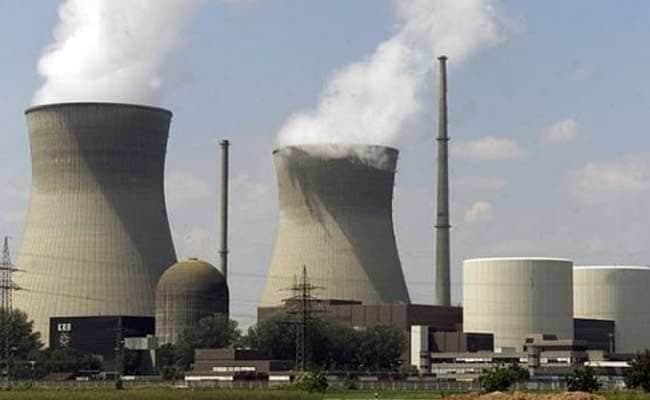
Illustration for SHANTI Bill Nuclear Sector Reform (Nuclear Legislation)

What & Where

SHANTI Bill (Atomic Energy Bill 2025): India’s first full-spectrum nuclear-sector reform since 1962

Replaces Atomic Energy Act 1962 & Civil Liability for Nuclear Damage Act 2010 with one consolidated statute

Nationwide application; piloted by Department of Atomic Energy under the Prime Minister

Quick Facts for MCQs

Legal & Policy

  • Consolidates licensing, safety, compliance into one streamlined code
  • Clarifies liability aligning with global Vienna/CSC norms; eases supplier concerns
  • Enables private equity participation, ending six-decade state monopoly

Tech & Schemes

  • Promotes SMR R&D and deployment for grid and industrial applications
  • Opens uranium exploration, fuel cycle services to domestic/foreign tech firms
  • Mandates globally benchmarked safety protocols under new authority

Economic Angle

  • Aims to attract large-scale private & FDI inflows into $150 bn projected nuclear build-out
  • Enhances energy security by diversifying away from coal and imported LNG
  • Expects job creation across mining, manufacturing, construction value chains

Security Dimension

  • Independent regulator ensures transparent oversight, reducing conflict of interest with operator NPCIL
  • Insurance-backed liability caps designed to prevent fiscal shocks from severe accidents
  • Dedicated tribunal promises swift adjudication, limiting prolonged security-related litigation

Key Data Points

FeatureData-Point
Cabinet approval year2025
SHANTI full formSustainable Harnessing of Advancement of Nuclear Energy for Transforming India
Existing laws replacedAtomic Energy Act 1962; CLND Act 2010
New regulatorIndependent Nuclear Safety Authority
Dispute forumDedicated Nuclear Tribunal
Private-sector accessExploration, fuel fabrication, equipment, possible plant operations
Liability modelOperator–supplier split, insurance caps, government backstop
Target nuclear capacity100 GW by 2047
Supported techSmall Modular Reactors (SMRs)
Net-zero commitment year2070

Related UPSC Prelims PYQs

NDA_GAT 2025PYQ 1

The Joint Venture named ‘ASHVINI’ to develop nuclear power facility in India is between
GS-3Economy

2.Insurance Sector 100% FDI Approval (FDI Policy)

Financial Express

What & Where

Foreign Direct Investment: ≥10 % equity by a non-resident, conferring lasting control in an Indian firm.

Cabinet okays raising insurance-sector FDI ceiling from 74 % to 100 % via Insurance Laws (Amendment) Bill, 2025.

Applies pan-India; subject to FEMA, IRDAI and amended Insurance/Life Insurance Corporation Acts.

Quick Facts for MCQs

FDI Routes

  • Automatic route: comply with sectoral cap, pricing, reporting; post-facto filings only.
  • Government route: prior approval mandatory; conditions like lock-in, security, reporting may attach.
  • Insurance FDI currently automatic up to 74 %; Bill likely extends automatic status to 100 %.

Regulatory Caps & Timeline

  • 2015: Insurance FDI limit lifted to 49 % under Insurance Laws (Amendment) Act.
  • 2021: Budget-time hike to 74 %, retaining “Indian management & control” safeguards.
  • 2025: Cabinet-cleared Bill targets full 100 % foreign ownership, necessitating parallel LIC, IRDA, Insurance Act tweaks.

Prohibited Sectors

  • Lottery (online/offline) and gambling, including casinos, barred from any FDI.
  • Chit funds, Nidhi companies, real-estate trading, TDRs, farm-house construction off-limits.
  • Manufacture of cigarettes/cigars and private atomic-energy, certain rail operations also prohibited.

Compliance Conditions

  • Sectoral caps, pricing per SEBI/RBI rules, anti-money laundering checks mandatory.
  • Convertible notes, share swaps, mergers allowed routes for bringing FDI in.
  • Post-investment reporting: FC-GPR/FC-TRS forms, annual return on foreign liabilities & assets.

Key Data Points

FeatureData-Point
New FDI cap in insurance100 % (proposed 2025)
Cap after 2021 amendment74 %
Cap between 2015-2149 %
Pre-2015 cap26 %
Equity holding treated as FDI≥10 %
Automatic route hallmarkNo prior Govt/RBI approval
Government route portalForeign Investment Facilitation Portal
Key insurance regulatorIRDAI
Main FDI lawFEMA, 1999
Sample prohibited areaGambling & betting

Related UPSC Prelims PYQs

CDS_GK, GS1 2025PYQ 1

Union Budget 2025 increased the sectoral cap of FDI to 100 per cent from 74 per cent for:

CDS_GK, GS1 2003PYQ 2

With reference to Government of India’s decisions regarding Foreign Direct Investment (FDI) during the year 2001-02, consider the following statements:

GS-3Economy

3.CoalSETU Transparent Coal Linkage Policy (Coal Linkage)

PIB
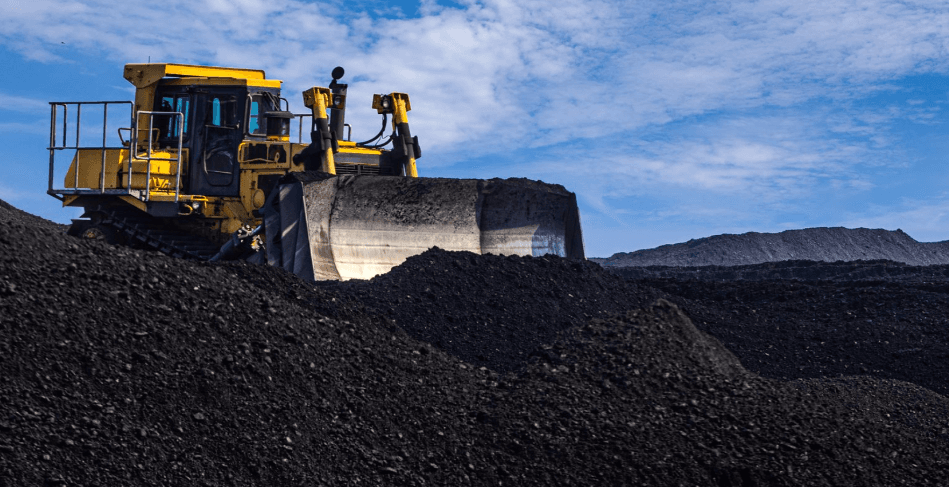
Illustration for CoalSETU Transparent Coal Linkage Policy (Coal Linkage)

What & Where

CoalSETU: new auction-based coal-linkage window under Non-Regulated Sector (NRS) Linkage Policy, pan-India.

Enables any domestic industrial consumer to obtain long-term linkage for own use or export (≤50%).

Covers thermal/non-coking coal from Coal Ministry blocks; resale within India barred.

Quick Facts for MCQs

Legal & Policy

  • Alignment with 2020 commercial-mining reform; reinforces market-driven, end-use-agnostic allocation.
  • Keeps existing NRS sub-sector auctions (cement, steel, CPPs) alive; bidders may access both windows.
  • Cabinet decision embeds transparency, removes discretionary linkage grants.

Economic Angle

  • Import-substitution; wider domestic access plus washed coal supply curb costly foreign purchases.
  • Long-term assured fuel boosts viability of small, medium and new industrial investments.
  • Export provision monetises surplus, raises forex from coal value chain.

Tech & Schemes

  • Incentivises private washeries; cleaner, higher-grade coal for domestic use and overseas demand.
  • Washery growth expected to cut logistics cost via lighter, high-CV consignments.
  • Supports Make-in-India push by integrating domestic coal beneficiation infrastructure.

Key Data Points

FeatureData-Point
Approving bodyUnion Cabinet
Nodal ministryMinistry of Coal
Parent policyNRS Linkage Policy 2016
Year cleared2024
Eligible biddersDomestic industrial users only
Trader participationExplicitly barred
Coal typesNon-coking only
Export ceiling50 % of linked quantity
Washed coal exportAllowed
Sharing within groupPermitted
Auction mechanismForward e-auction for long-term linkage
End-use restrictionNone except no resale inside India
GS-1History

4.Savarkar's Poem Sagara Pran Anniversary (Freedom Literature)

DD News
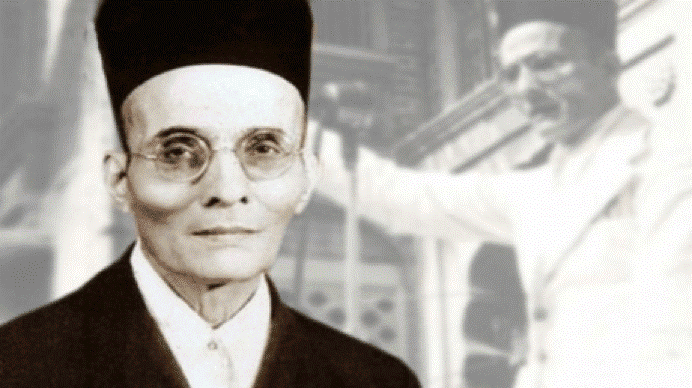
Illustration for Savarkar's Poem Sagara Pran Anniversary (Freedom Literature)

What & Where

Poem: ‘Sagara Pran Talamalala’ Marathi patriotic verse on exile-homesickness, written 1909

Location: Composed on Brighton seashore, England, while Savarkar stayed at India House

Geography motif: Sea personified as carrier between revolutionary poet and motherland India

Quick Facts for MCQs

Historical Context

  • Surveillance: British watch after Curzon Wyllie assassination by Madan Lal Dhingra, Savarkar mentor
  • Family angle: Elder brother arrest deepened poet’s emotional turmoil abroad
  • Symbolism: Opening sea invocation became emblem for freedom-movement prisoners

Literary Works

  • Book: ‘Indian War of Independence 1857’ recasts revolt as national uprising
  • Ideology text: ‘Hindutva – Who is a Hindu?’ defines cultural-civilisational nationalism
  • Memoir: ‘My Transportation for Life’ details Cellular Jail hardships

Cultural Legacy

  • Music: Hridaynath-Lata rendition popularised poem across Maharashtra and diaspora
  • Usage: Often recited on patriotic occasions and Savarkar commemorations
  • Emotion: Captures universal exile anguish, transcending period specifics

Key Data Points

FeatureData-Point
AuthorVinayak Damodar Savarkar (1883-1966)
LanguageMarathi
Year of composition1909
Place writtenBrighton, England
Occasion celebrated115th anniversary (2024)
Alternate titleNe Majasi Ne…
First recorded singerLata Mangeshkar
Music composer (song)Hridaynath Mangeshkar
Central themeLonging of exiled revolutionary for “Matru-bhoomi”
Associated organisationIndia House, London

Related UPSC Prelims PYQs

CAPF_GAI 2024PYQ 1

नलचरित्र दिव्यवन्दना क्या है ?

GS-1History

5.Bengal's Role in National Movement (Freedom Struggle)

Economic Times

What & Where

Bengal Presidency: eastern province that became intellectual, cultural and revolutionary pivot of Indian freedom struggle (19th – 20th C)

Key processes: reformist awakening, Swadeshi-Extremist militancy, armed revolutionary acts, later Gandhian mass campaigns

Core hubs: Calcutta for associations & press, Chittagong for armoury raid, Midnapore coast for Tamralipta parallel govt

Quick Facts for MCQs

Intellectual & Reform

  • Rammohan Roy’s Brahmo Samaj pushed rationalism, anti-sati drive, women education, vernacular press freedom
  • Bankim’s Anandamath (1875) gave anthem Vande Mataram; Tagore, Vivekananda blended culture with patriotism
  • British Indian Association 1851 and Indian Association 1876 nurtured leaders like Surendranath Banerjea, dominating early Congress

Swadeshi & Revolutionary

  • Partition 1905 triggered boycott, swadeshi industries, national schools like Bengal National College
  • Anushilan Samiti 1902, Jugantar 1906 led bombings; Alipore Case 1908 spotlighted extremist zeal
  • Chittagong Armoury Raid 18 Apr 1930 by Surya Sen; women martyrs Pritilata Waddedar, Kalpana Dutta inspired youth

Gandhian Participation

  • Chittaranjan Das, Basanti Devi mobilised Bengal during Non-Cooperation 1920-22
  • Civil Disobedience 1930-34 saw Midnapore salt raids, Hijli jail protests, thousands arrested
  • Quit India 1942 birthed Tamralipta Jatiya Sarkar 1942-44 under Satish Chandra Samanta, administering courts and relief

Key Data Points

FeatureData-Point
Partition of Bengal1905, reversed 1911
Anushilan SamitiFounded 1902, Calcutta
Vande Mataram authorBankim Chandra Chattopadhyay
Chittagong Raid date18 April 1930
Quit India parallel govtTamralipta Jatiya Sarkar 1942-44
Tagore Nobel PrizeLiterature, 1913

Related UPSC Prelims PYQs

GS1 2002PYQ 1

With reference to the period of extremist nationalist movement in India with its spirit of Swadeshi, which one of the following statements is correct?

GS1 2009PYQ 2

In the context of the Indian freedom struggle, 16th October 1905 is well known for which one of the following reasons?

GS-3Environment

6.Siliserh Lake, Kopra Jalashay Ramsar Inclusion (Ramsar Wetlands)

Times of India

What & Where

Ramsar List global wetland register; India’s tally now 96 with two fresh inclusions

Siliserh Lake artificial freshwater body near Alwar, Rajasthan, lying in Sariska Tiger Reserve buffer

Kopra Jalashay irrigation reservoir in upper Mahanadi catchment, Bilaspur district, Chhattisgarh

Quick Facts for MCQs

Biodiversity Values

  • Siliserh hosts 149 bird and 17 mammal species, crucial Central Asian Flyway node
  • Kopra sustains habitat mosaic of open water, shallow nutrient-rich backwaters, attracting winter migrants
  • Combined sites add arid-zone and Deccan wetland representation to national network

Historical & Construction

  • Siliserh embankment lake created for Alwar drinking water; old aqueducts still visible
  • Kopra formed as irrigation reservoir; ecological importance recognised post-construction
  • Siliserh flanked by woodland, cenotaphs enhancing heritage appeal

Threats & Management

  • Siliserh facing agricultural runoff, settlement expansion; state restoration plan initiated
  • Kopra threatened by siltation, invasive species, intensive farming; management plan awaited
  • Ramsar designation demands wise-use strategy and periodic ecological monitoring

Tourism & Livelihood

  • Siliserh popular for birdwatching, eco-tourism linked with Sariska circuit
  • Kopra appreciated by locals and tourists for scenic vistas, seasonal avifauna
  • Ramsar tag expected to boost sustainable nature-based income for surrounding villages

Key Data Points

FeatureData-Point
Siliserh site number2581
Kopra site number2583
India Ramsar total96 sites
Siliserh area≈7 km²
Siliserh built1845 by Maharaja Vinay Singh
Siliserh river linkTributary of Ruparel
Kopra river basinUpper Mahanadi
Siliserh key faunaTiger, River tern, Black stork ≥1 % flyway
Kopra key faunaGreater spotted eagle, Egyptian vulture
Kopra migrant count>60 species

Related UPSC Prelims PYQs

CDS_GK, GEO_GS 2024PYQ 1

Which of the following Ramsar Wetland sites is not situated in any of the Union Territories of India?

CDS_GK, GEO_GS 2025PYQ 2

Which one of the following pairs of Ramsar Sites and States is not correctly matched?

GS-3Species

7.Tapanuli Orangutan Cyclone Threat (Critically Endangered)

Down to Earth
Illustration for Tapanuli Orangutan Cyclone Threat (Critically Endangered)

What & Where

Critically endangered great ape described 2017; global wild count under 800

Endemic to Batang Toru Ecosystem, three Tapanuli districts, North Sumatra, Indonesia

Occupies fragmented upland–submontane rainforests, now under 3 % of historical range

Quick Facts for MCQs

Environmental Impact

  • Cyclone Senyar; flood-induced landslides threaten already tiny population
  • Habitat fragmentation from hydropower, mining, roads further isolates sub-populations

Physical Traits

  • Smaller, differently shaped skull; flatter face compared to Sumatran/Bornean kin
  • Flanged males bear broad cheek pads, beard, blond fuzz; body size otherwise similar

Behaviour & Life History

  • Arboreal solitary lifestyle; advanced tool use for foraging, rain cover, insect extraction
  • Slowest non-human mammal life history; females reproduce late with long inter-birth intervals

Key Data Points

FeatureData-Point
IUCN statusCritically Endangered (CR)
Global population≈ 760–800 individuals
Discovery year2017 (separate species)
Endemic regionBatang Toru, North Sumatra
Main habitat altitude600–1 300 m upland forest
Historical range left< 3 %
Recent cyclone loss6–11 % individuals (est.)
Maternal bond length7–11 years
Male formsFlanged vs unflanged bimaturism
Distinct furThicker, frizzier orange coat
Unique diet itemsCaterpillars, pinecones
GS-3S&T

8.Geminid Meteor Shower Peak 2025 (Meteor Showers)

Economic Times
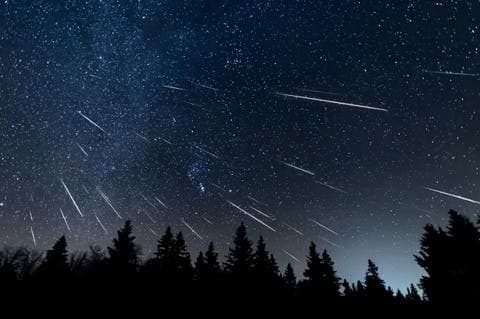
Illustration for Geminid Meteor Shower Peak 2025 (Meteor Showers)

What & Where

Geminids, annual mid-December meteor shower generated by asteroid 3200 Phaethon debris

Radiant in Gemini constellation, global visibility, stronger in Northern Hemisphere including India

Displays bright yellow-white meteors and fireballs, best under dark rural skies

Quick Facts for MCQs

Origin & Orbit

  • Parent-body: Asteroid 3200 Phaethon, highly elliptical solar orbit
  • Debris-stream: Released by intense perihelion heating, intersecting Earth mid-Nov–late Dec
  • Radiant: Appears from Gemini, altitude rises after midnight increasing counts

Observation Window

  • Peak-2025: 13–15 Dec, expected 100–120 meteors per hour India under clear dark skies
  • Visibility: Global, optimum Northern Hemisphere, naked-eye watching preferred
  • Speed-colour: Moderate 35 km s⁻¹, usually yellow-white with frequent bright fireballs

Scientific Significance

  • Meteoroid-stream: Rare asteroid-sourced shower aids study of NEO composition and dynamics
  • Citizen-science: High brightness encourages public observations bolstering datasets
  • Planetary-defence: Tracking Phaethon refines impact-hazard assessments

Key Data Points

FeatureData-Point
Meteor-shower typeAnnual, asteroid-origin
Parent body3200 Phaethon (rocky NEO)
Peak 2025 dates13–15 December
Hourly rate100–120 meteors under dark skies
Meteoroid speed~35 km s⁻¹
Radiant constellationGemini
Best viewing windowMidnight to pre-dawn
Hemisphere advantageNorthern
GS-3S&T

9.Google Quantum Echoes Breakthrough (Quantum Computing)

The Hindu

What & Where

Quantum Echoes = Google experiment probing information scrambling on 65-qubit ‘Willow’ quantum processor

Process employs Out-of-Time-Order Correlator: tiny push → time-reversal → detect returning quantum echo

Device hosted in Google Quantum AI infrastructure; findings spotlight global encryption-security debates

Quick Facts for MCQs

Security Dimension

  • Q-Day would upend public-key systems; retro-active data theft risk intensifies
  • Hybrid classical-plus-PQC schemes emerging to bridge pre-Q-Day gap
  • RSA-2048 fallback lifespan now measured in single-digit years

Tech & Standards

  • Post-quantum cryptography standards finalised by NIST, global adoption underway
  • Google, Cloudflare piloting Kyber-based TLS, aiming transparent browser integration
  • Fault-tolerance demands logical qubits; error-correction remains primary hardware hurdle

India Angle

  • RBI urges banks, payment networks to migrate to quantum-safe protocols before 2030
  • Majority Indian critical-infra still on classical PKI; concerted audits planned
  • Domestic R&D focusing on indigenised PQC libraries and quantum-key-distribution pilots

Key Data Points

FeatureData-Point
Processor used65-qubit Willow
Scientific toolOut-of-Time-Order Correlator (OTOC)
Threat termQ-Day
Key vulnerable cipherRSA-2048
Qubits needed to break RSA-2048≈ 20 million physical qubits
Est. break time (post-threshold)~8 hours
Quantum factoring algorithmShor’s algorithm
Current top processorsGoogle Willow, IBM Condor (few hundred qubits)
NIST PQC encryption pickCRYSTALS-Kyber
NIST PQC signature pickDilithium
Indian regulator alertRBI advisory for quantum-safe transition
Harvest-now-decrypt-laterIntercept today, decrypt after Q-Day
Fault-tolerant QC ETA5-8 years
GS-2Editorial

10.Indian Ocean Emerging Blue Economy (Blue Economy)

The Hindu
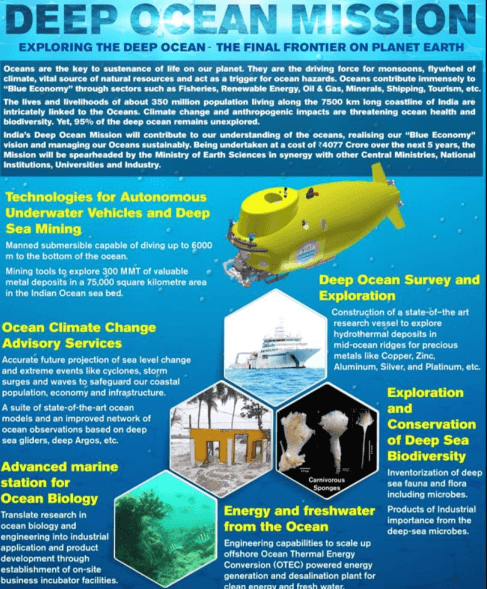
Illustration for Indian Ocean Emerging Blue Economy (Blue Economy)

What & Where

Indian Ocean: fastest-warming ocean; pivotal for climate resilience, trade routes, coastal livelihoods.

Blue Economy: model tying sustainable resource use, biodiversity protection, low-carbon growth, maritime security.

India’s sphere: own EEZ plus SIDS & East-Africa littorals linked through IORA, IONS, BBNJ high-seas areas.

Quick Facts for MCQs

Legal & Policy

  • UNCLOS stand: India backed “Common Heritage of Mankind” for seabed beyond jurisdiction.
  • Pushing quick BBNJ ratification; advocates high-seas MPAs & benefit-sharing norms.
  • Proposal: Indian Ocean Blue Fund to translate global pledges into regional projects.

Environmental Impact

  • Rapid warming ⇒ sea-level rise, stronger cyclones battering coastal settlements.
  • Ocean acidification degrading coral ecosystems, cutting fisheries & tourism revenue.
  • Declining nutrient upwelling + overfishing shrinking marine productivity, heightening food insecurity.

Economic Angle

  • Green shipping corridors planned to meet IMO decarbonisation targets, cut freight emissions.
  • Offshore wind, wave, tidal energy in India’s EEZ pitched for clean coastal growth.
  • Mariculture & seaweed farming promoted to lift artisanal incomes, ease wild-stock pressure.

Security Dimension

  • IUU fishing fleets spark regional tension, harm livelihoods; need integrated patrol & monitoring.
  • “Security through Sustainability” links anti-IUU, coral & pollution tracking to domain awareness.
  • Ecosystem loss inducing migration, job erosion—non-traditional security challenge for littorals.

Tech & Schemes

  • Expand INCOIS & satellite networks for cyclone, monsoon, tsunami early-warnings.
  • Regional resilience hub envisaged for SIDS/Africa: observation, modelling, tech transfer.
  • Nature-based coastal shields—mangroves, dunes, artificial reefs—pushed for storm-surge defence.

Key Data Points

FeatureData-Point
Indian Ocean warmingExceeds global mean rate
Existing ocean–finance pipeline€25 billion
Fresh pledges (BEFF 2025)€8.7 billion
One Ocean Partnership goal$20 billion by 2030
Threat hotspotsLakshadweep & Chagos reefs
Core threatsIUU fishing, acidification, overfishing
Key Indian agenciesINCOIS, MoES, CSIR-NIO
Multilateral anchorsIORA, IONS, Indian Ocean Commission

Related UPSC Prelims PYQs

ESE_GS, GS1 2026PYQ 1

Which institution released the report titled “India’s Blue Economy: Strategy for Harnessing Deep-Sea and Offshore Fisheries”?

ESE_GS, GS1 2015PYQ 2

‘क्षेत्रीय सहयोग के लिए हिन्द महासागर रिम संघ (Indian Ocean Rim Association for Regional Cooperation – IOR-ARC)’ के संदर्भ में, निम्नलिखित कथनों पर विचार कीजिए :

GS-2PolityQuick Bite

11.UN Genocide Convention 1948 Overview (Genocide Convention)

The Hindu
Illustration for UN Genocide Convention 1948 Overview (Genocide Convention)

What & Where

Genocide Convention, UNGA treaty, criminalises genocide worldwide

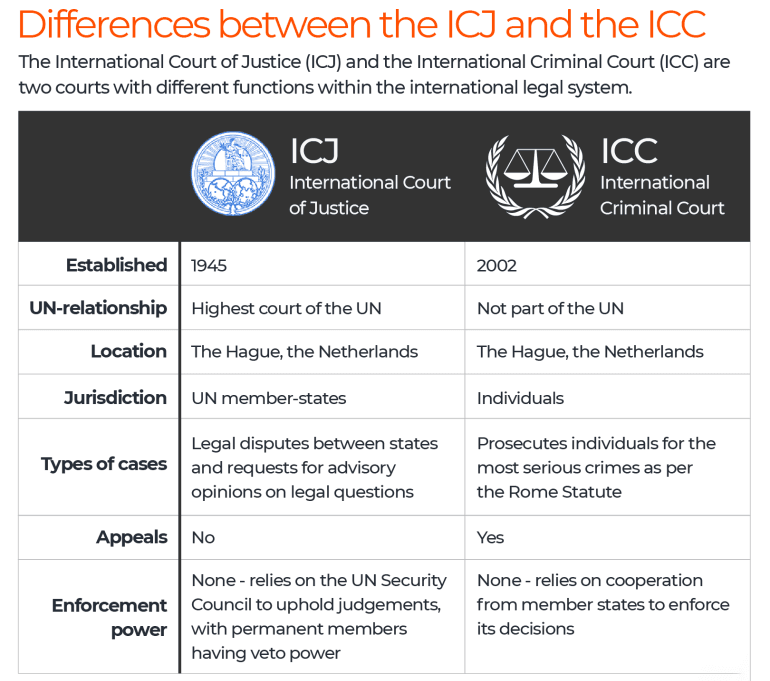
Applies during peace or war; jurisdictional disputes go to ICJ (The Hague)

Ratified by 153 states; India a party yet lacks enabling law

Quick Facts for MCQs

Legal & Policy

  • Treaty obliges states to legislate, prevent, punish genocide domestically
  • Allows universal repression; no reservation to escape core obligations
  • Sets customary-law benchmark influencing later human-rights accords

India Angle

  • Constitutional void; offences prosecuted only under generic IPC sections
  • Periodic law commission reports urge standalone Genocide Act
  • Non-compliance may weaken India’s stance in global human-rights fora

Global Impact

  • First UN instrument to codify individual criminal responsibility post-WWII
  • Template for ICTY, ICTR statutes and national penal codes
  • Strengthened ICC jurisdiction over genocide through Rome Statute incorporation

Key Data Points

FeatureData-Point
Adoption date9 Dec 1948
In-force date12 Jan 1951
Core definition basisArticle II: intent to destroy national/ethnic/racial/religious group
Total ratifications153 States (Nov 2025)
India’s timelineSigned 1949; ratified 1959; no domestic act
Enforcement forumInternational Court of Justice
Linked ICC clauseRome Statute Article 6
GS-2Scheme

12.MGNREGA Renaming and Workdays Increase (Rural Employment)

The Hindu

What & Where

Demand-driven, rights-based rural wage employment scheme across all districts of India.

Legal guarantee of unskilled manual work under Mahatma Gandhi NREGA Act, 2005; proposal to rename as “Pujya Bapu Gramin Rozgar Yojana”.

Panchayats plan/implement works; focus on natural-resource assets.

Quick Facts for MCQs

Legal & Policy

  • Amendment plan 2025: rename, raise days, alter funding, allow economic-criteria exclusions.
  • Schedule-I revised 2025 to earmark funds by groundwater status.
  • Rights component unchanged: time-bound employment or allowance.

Economic Angle

  • Largest social-security programme globally; mitigates distress migration.
  • 125-day proposal increases rural wage outlay; funding tweaks under discussion.
  • Unemployment allowance liability borne by States after Day 15.

Governance & Transparency

  • Aadhaar-Based Payment System curbs ghost workers.
  • Gram Sabha social audits legally enforced for accountability.
  • Decentralised planning strengthens Panchayati Raj Institutions.

Key Data Points

FeatureData-Point
Enactment year2005 Act; phased rollout 2006
Present work guarantee100 days/HH; proposal 125 days
Payment mode99 % via Aadhaar-based e-FMS
Wage : Material ratio60 : 40 at Gram Panchayat level
Women beneficiary mandate≥ 33 %; actual 58 % (FY 24-25)
Work must start within15 days of demand; else unemployment allowance
Social auditMandatory by Gram Sabha
Project UNNATI launch2019; 90,894 trained till Mar 2025
Water-priority amendmentSept 2025; 65 % funds to over-exploited blocks
Proposed exclusionsBased on State economic indicators

Related UPSC Prelims PYQs

CDS_GK 2022PYQ 1

Which one of the following statements with regard to the National Rural Employment Guarantee Act, 2005 is correct?

CDS_GK 2020PYQ 2

मनरेगा (MGNREGA) का उद्देश्य निम्नलिखित में से कौन-सा एक नहीं है?

Ready to practice?

Test your knowledge with our UPSC test series.

Start Free Trial