UPSC Current Affairs

14 topicsGS-1: 4GS-2: 6GS-3: 4
0/14 done
GS-2Polity

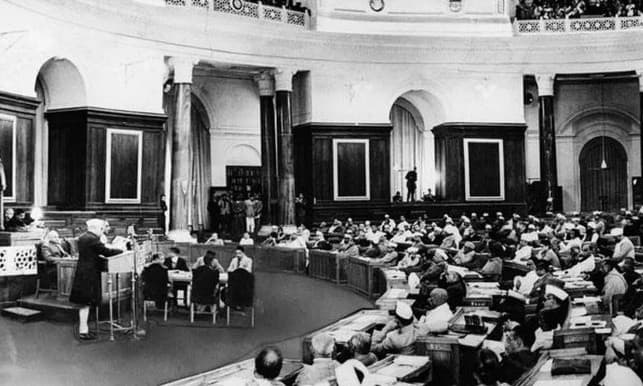
1.Constituent Assembly of India (Constituent Assembly)

Indian Express
Illustration for Constituent Assembly of India (Constituent Assembly)

What & Where

Constituent Assembly of India – supreme body that framed the Constitution while functioning as provisional legislature, 1946-49

Set up under 1946 Cabinet Mission Plan; members indirectly elected from Provincial Legislatures plus princely nominees

Met in New Delhi’s Parliament House; draft readied in 2 yr 11 m 17 d; Constitution commenced 26 Jan 1950

Quick Facts for MCQs

Timeline & Sessions

  • Eleven sessions spanning Dec 1946 – Jan 1950 with 165 total sittings
  • Drafting work formally lasted 2 years 11 months 17 days
  • Pakistan’s secession post Mountbatten Plan June 1947 reduced membership from 389 to 299

Committees

  • Drafting Committee under Ambedkar produced Feb 1948 Draft Constitution
  • Key functional panels: Union Powers – Nehru; Provincial Constitution – Patel; Rules – Prasad
  • Eight major and numerous minor committees handled subjects like finance, minorities, language

Social & Ideological Mix

  • Membership spanned liberals, leftists, conservatives, women, Dalits, religious minorities, princely representatives
  • Deliberations balanced federal unity, fundamental rights, directive principles, duties, social justice
  • Set precedent for constitutional morality and inclusive deliberative democracy in independent India

Key Data Points

FeatureData-Point
Intellectual genesis1934 M N Roy proposal
Political demandINC resolution 1935
Creation instrumentCabinet Mission Plan 1946
Election modeIndirect via Provincial Assemblies
Initial strength389 (292 Provinces, 93 Princely, 4 Commissioners)
Post-partition strength299 members
First session9 Dec 1946
Temporary ChairmanDr Sachchidananda Sinha
Total sessions11
Sitting days165
Draft debate days114
Draft adopted26 Nov 1949
Enforcement date26 Jan 1950
Drafting Committee headB R Ambedkar
Union Powers CommitteeJawaharlal Nehru
Provincial Constitution CommitteeSardar Vallabhbhai Patel
Rules CommitteeDr Rajendra Prasad

Related UPSC Prelims PYQs

GS1 2004PYQ 1

Which one of the following statements is correct?

GS1 2002PYQ 2

The members of the Constituent Assembly which drafted the Constitution of India were
GS-2PolityQuick Bite

2.DHRUVA Digital Address Framework (Digital Address System)

The Hindu

What & Where

DHRUVA = Digital Hub for Reference & Unique Virtual Address; new Digital Public Infrastructure by India Post.

Supplies consent-based digital address label linked to 10-character “DIGIPIN” geocode covering every 12 m² block nationwide.

Draft amendment to Post Office Act 2023 seeks statutory backing and nationwide rollout.

Quick Facts for MCQs

Legal & Policy

  • Amendment: Empowers issuance, validation and mandatory recognition of digital address labels.
  • Governance: NPCI-like central body to frame standards, licence ecosystem players, audit security.
  • Compliance: Creates offences for misuse, ensuring data protection under postal legislation.

Technological Design

  • DIGIPIN: Open-source code derived from latitude–longitude; precise even in address-poor rural belts.
  • Grid: Hierarchical encoding enables easy human truncation for area, sub-area navigation.
  • Label: API-based token combines descriptive text plus geocode, revocable by user anytime.

User & Business Gains

  • Privacy: Consent manager (AIA) lets users limit who sees address and for how long.
  • Efficiency: Cuts delivery failures, returns, misrouting for e-commerce, courier, gig fleets.
  • Portability: One update propagates to all subscribed platforms, easing relocation hassles.

Key Data Points

FeatureData-Point
Parent bodyDepartment of Posts, MoC
Legal anchorPost Office Act 2023 (proposed amendment)
DIGIPIN length10-character alphanumeric
Grid resolution12 square metres
Character set16 symbols: 2-9, C, J, K, L, M, P, F, T
Comparable DPIsAadhaar, UPI
Key institutionsASP, AVA, AIA, Central Governance Entity
Core benefitSingle verified address token with user consent
GS-3Economy

3.BRICS Gold-Backed Digital Unit (BRICS Digital Currency)

TN

What & Where

Currency: pilot gold-backed digital “Unit” created for BRICS cross-border settlement.

Valuation: 40 % physical gold + 60 % weighted BRICS currency basket, recalibrated daily.

Platform: permissioned Cardano blockchain; used only for trade payments, not domestic money.

Quick Facts for MCQs

Economic Angle

  • De-dollarisation: Unit offers non-USD settlement, lowering currency-dominance risk.
  • Stability: Gold anchor cushions against extreme fiat volatility.
  • Diversification: Currency basket spreads macro shocks across five economies.

Tech & Schemes

  • Blockchain: Cardano ledger delivers secure, auditable, tamper-proof transactions.
  • AI governance: Algorithmic rules manage supply, limiting political interference.
  • Transparency: On-chain records bolster member trust, deter manipulation.

Institutional Setup

  • Reserve sovereignty: Gold stays domestically held, avoiding pooled-asset geopolitics.
  • Unit Foundation: Oversees issuance, compliance, algorithmic recalibration.
  • Support status: Backed informally by BRICS; consensus required for scale-up.

Gold Market Impact

  • Liquidity: Settlement use increases bullion turnover beyond mere storage.
  • Price linkage: Daily recalibration deepens trade-finance connection to gold rates.
  • Leverage: Expanded gold role strengthens commodity-rich Global South bargaining power.

Key Data Points

FeatureData-Point
DeveloperInternational Research Institute for Advanced Systems (IRIAS)
Official statusPilot; no formal BRICS adoption yet
Backing ratio40 % gold, 60 % BRICS currency basket
BlockchainPermissioned Cardano network
Value resetDaily, using global gold price & FX rates
Governance bodyAI-run Unit Foundation
Domestic impactDoes not replace national currencies
Strategic aimDe-dollarisation & South-led financial architecture
GS-1History

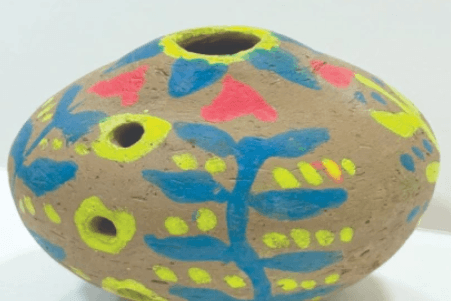
4.Boreendo Vessel Flute Heritage (UNESCO Intangible)

Hindustan Times
Illustration for Boreendo Vessel Flute Heritage (UNESCO Intangible)

What & Where

Boreendo = spherical terracotta vessel-flute yielding mellow, breathy tones.

Native to Keti Mir Muhammad Lund, Thar-Sindh; lineage traced to Mohenjo-daro Indus Valley artefacts.

2023: added to UNESCO Intangible Cultural Heritage “In Need of Urgent Safeguarding” list.

Quick Facts for MCQs

Craft Techniques

  • Terracotta crafting: clay moulded, sun-dried, kiln-fired; eco-friendly process.
  • Women artisans paint flora, fauna, geometric motifs.
  • Simple tilt mechanics replaces complex fingering.

Performance & Symbolism

  • Accompanies Sindhi folk melodies, pastoral Thari songs.
  • Integral to winter bonfires, weddings, community festivals.
  • Embodies human-nature harmony in desert ecology.

Archaeological Evidence

  • Indus sites show vessel flutes with comparable hole patterns.
  • Uneven spacing hints microtonal scales in ancient music.
  • Artefacts suggest both solo and ensemble performances.

Safeguarding Challenges

  • Craft survives through one potter plus one maestro.
  • Knowledge mainly oral; limited school/festival training now emerging.
  • UNESCO status mobilises funds, research, apprenticeships.

Key Data Points

FeatureData-Point
Instrument typeVessel-flute (ocarina-like)
Main materialSun-dried, kiln-fired terracotta
Body shapeEgg/spherical hollow
Sound controlMouthpiece tilt; 1 inlet + 3–5 holes
Pitch ruleLarger = deeper; smaller = sharper
Decor workNatural motifs hand-painted by women
Key performerOnly maestro Zulfikar Loond alive
Typical venuesBonfires, weddings, winter folk gatherings
Cultural identitySymbol of Thari pastoral community
UNESCO list“Urgent Safeguarding” 2023 inscription
Linked civilisationIndus Valley (3300–1300 BCE)
Archaeological findsClay/bone flutes at Mohenjo-daro, Harappa
GS-1History

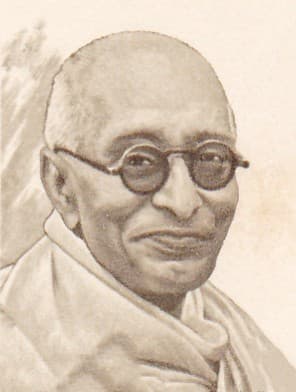
5.C. Rajagopalachari Legacy (Freedom Personality)

DD News
Illustration for C. Rajagopalachari Legacy (Freedom Personality)

What & Where

C. Rajagopalachari (1878-1972) Tamil freedom-fighter, jurist, writer; Gandhi’s “keeper of conscience”.

Only Indian Governor-General; also West Bengal Governor, Union Home Minister, Madras Chief Minister.

Thorapalli-born leader led Vedaranyam Salt March; later founded pro-market Swatantra Party.

Quick Facts for MCQs

Freedom Struggle

  • Rowlatt Satyagraha 1919: mobilised Madras Presidency, Marina Beach mass meetings.
  • Non-Cooperation: relinquished lucrative law practice, organised province-wide boycotts.
  • Vedaranyam Salt March 1930: Tamil replica of Dandi, thousands arrested under him.

Post-Independence Offices

  • West Bengal Governor 1947-48: managed partition violence, refugee influx.
  • Governor-General 1948-50: oversaw transition till Republic Day abolition.
  • Home Minister 1950: continued princely state integration post-Patel.

Ideology & Policies

  • Swatantra Party 1959: championed free market, minimal government, anti-socialist line.
  • Education reform as Madras CM: opposed compulsory Hindi, introduced “Kulakalvi” system.
  • Language stance: propagated “English ever, Hindi never” for linguistic choice.

Personal Traits

  • Intellect sharp, lifestyle minimalist, integrity unquestioned.
  • Noted for wit and persuasive oratory influencing masses and leaders alike.

Key Data Points

FeatureData-Point
Birth10 Dec 1878, Thorapalli (TN)
Death25 Dec 1972
Popular nameRajaji
Gandhi’s epithet“Keeper of my conscience”
Unique postSole Indian Governor-General (1948-50)
West Bengal Governorship1947–48
Union Home Minister1950, after Sardar Patel
Madras CM tenure1952–54
Salt Satyagraha roleLed Vedaranyam March, 1930
First public officeChairman, Salem Municipality, 1917
Party foundedSwatantra Party, 1959
Signature slogan“English ever, Hindi never”
Early professionCriminal lawyer, Salem
EducationBangalore; Presidency College, Madras

Related UPSC Prelims PYQs

GS1 2010PYQ 1

After Quit India Movement, C. Rajagopalachari issued a pamphlet entitled "The Way Out". Which one of the following was a proposal in this pamphlet?

GS1 1996PYQ 2

Who among the following suggested the winding up of the Indian National Congress after India attained independence?

GS-3Environment

6.CITES 50th Anniversary (CITES Treaty)

Down to Earth
Illustration for CITES 50th Anniversary (CITES Treaty)

What & Where

CITES: global, legally binding treaty regulating international trade in wild fauna & flora to avert species extinction.

Drafted 1973 (Washington D.C.); in force 1 July 1975; membership expanded to 185 Parties by 2025.

20th CoP convened at Samarkand, Uzbekistan—first Central-Asian host—coinciding with CITES’ 50-year milestone.

Quick Facts for MCQs

Legal & Policy

  • Permits & certificates regulate export, import, re-export; enforced by national management authorities.
  • Appendices tiered: I bans commercial trade; II allows regulated trade; III reflects unilateral national requests.
  • CoP resolutions become binding guidelines for Parties’ wildlife-trade authorisations.

Species Decisions

  • Uplisted: Galápagos land iguanas, marine iguana, Home’s hinge-back tortoise moved to Appendix I.
  • Downlisted: Saiga antelope quotas relaxed; Guadalupe fur seal reclassified to Appendix II.
  • Net result: 77 additional taxa secured CITES protection at CoP20.

India Angle

  • India cited inadequate science to oppose Appendix II listing of guggul (Commiphora wightii).
  • Stance aimed at shielding livelihoods in Ayurveda, incense and perfumery sectors.
  • Continues balancing conservation goals with sustainable-use & livelihood considerations.

Key Data Points

FeatureData-Point
Full formConvention on International Trade in Endangered Species of Wild Fauna and Flora
Appendices countThree: I, II, III
Current Parties (2025)185
Entry into force1 July 1975
CoP frequencyEvery 2–3 years
CoP20 host citySamarkand, Uzbekistan
Species newly listed (2025)77
Shark & ray outcomeAll manta, devil rays, oceanic whitetip, whale shark → Appendix I
Successful downlistingGuadalupe fur seal: I → II
India’s objectionBlocked EU bid to list guggul in Appendix II

Related UPSC Prelims PYQs

GS1 2015PYQ 1

With reference to the International Union for Conservation of Nature and Natural Resources (IUCN) and the Convention on International Trade in Endangered Species of Wild Fauna and Flora (CITES), which of the following statements is/are correct?

GS1 2017PYQ 2

In India, if a species of tortoise is declared protected under Schedule I of the Wild Life (Protection) Act, 1972, what does it imply?

GS-3Environment

7.Global Environment Outlook 2025 (UNEP GEO-7)

Economic Times
Illustration for Global Environment Outlook 2025 (UNEP GEO-7)

What & Where

Global Environment Outlook-7 (GEO-7); flagship UNEP state-of-planet assessment, released Dec 2025 at UNEP HQ, Nairobi.

Scope: climate, biodiversity, pollution, food, materials; offers tipping-point warnings and transformation pathways to 2050-2070.

Geography: global synthesis; data from 1990-2024, with focus on developing-country vulnerabilities and investment gaps.

Quick Facts for MCQs

Environmental Impact

  • Tipping-Points: 1.5 °C breach early 2030s, 2 °C in 2040s risks irreversible ecosystem collapse
  • Land-loss: fertile area equal to Colombia lost yearly, undermining food, water, biodiversity
  • Nutrition: per-capita food supply may fall 3.4 % by 2050, heightening hunger and unrest

Economic Angle

  • GDP-hit: possible 4 % loss by 2050, 20 % by 2100 without action
  • Health-burden: pollution causes 9 million deaths, USD 8.1 trillion costs annually
  • Opportunity: systemic green shift could yield USD 100 trillion yearly post-2070

Policy & Action

  • Finance: adopt comprehensive wealth metrics, price externalities, achieve net-zero by 2050
  • Energy: decarbonise supply, boost efficiency, secure sustainable critical-mineral chains
  • Food: promote healthy diets, cut waste, lift 200 million from under-nutrition

India Priorities

  • Metric: develop Green GDP / Inclusive Wealth Index incorporating natural-capital depreciation
  • Circularity: launch National Circular Economy Mission with sector roadmaps and recycled-content mandates
  • Subsidy Shift: phase out fossil subsidies, redirect to renewables, e-mobility, organic farming

Key Data Points

FeatureData-Point
GEO edition7th (2025)
GHG rise 1990-20241.5 % per year
2024 global temperature1.55 °C above pre-industrial
Species at extinction risk1 million of 8 million
Degraded land share20–40 %; affects 3 billion people
Annual climate extreme costUSD 143 billion (20-yr avg)
Air-pollution health cost 2019USD 8.1 trillion ≈ 6.1 % GDP
Pollution-linked deaths9 million per year
Plastic waste stock8 000 million tonnes
Projected annual benefits of actionUSD 20 trillion by 2070
Needed yearly green investmentUSD 8 trillion till 2050
UNEP founding date5 June 1972
UNEP headquartersNairobi, Kenya

Related UPSC Prelims PYQs

GEO_GS 2026PYQ 1

The United Nations Framework Convention on Climate Change (UNFCCC) was first signed during

GEO_GS 2021PYQ 2

Which one of the following was the theme of the One Planet Summit, 2021?

GS-3EnvironmentQuick Bite

8.Nahargarh Biological Park Safari (Protected Area)

Indian Express

What & Where

Nahargarh Biological Park – zoological ecotourism zone 12 km NW of Jaipur inside Nahargarh Wildlife Sanctuary, Aravalli range

Nahargarh Wildlife Sanctuary – dry-deciduous reserve around 720 ha, named after 18th-century Nahargarh Fort, hosts lion safari

Aravalli Range – one of Earth’s oldest fold mountains, 800 km arc Gujarat-Delhi, highest peak Guru Shikhar (1 722 m)

Quick Facts for MCQs

Tourism & Safety

  • Incident 2025 Dec 9: safari bus fire inside park, no wildlife harmed
  • Concern: inadequate vehicle maintenance and fire-safety protocols in ecotourism zones
  • Implication: stricter guidelines likely under Rajasthan Ecotourism Policy

Biodiversity Highlights

  • Birding hotspot: Ram Sagar Lake draws ornithologists during winter migrations
  • Keystone predator: Asiatic lion population aids prey balance and tourism revenue
  • Habitat mosaic: scrubland, grassland, anogeissus-dominant woodlands increase species heterogeneity

Aravalli Geography

  • Barrier function: Aravallis block Thar desert expansion eastward
  • Mineral wealth: range hosts zinc, lead, marble deposits, driving regional mining debates
  • Hydrology: source region for seasonal Luni and Banas rivers supporting semi-arid agriculture

Key Data Points

FeatureData-Point
StateRajasthan
Nearest cityJaipur (≈ 12 km)
Sanctuary area≈ 720 ha
Park highlightLion safari buses
Avian diversity285 + species
Endemic birdWhite-naped tit
Key waterbodyRam Sagar Lake
Dominant biomeDry deciduous forest
Major mammalsAsiatic lion, Bengal tiger, sloth & Himalayan black bears
Highest Aravalli peakGuru Shikhar, Mount Abu
Aravalli length~800 km SW-NE
Important riversBanas, Sahibi, Luni

Related UPSC Prelims PYQs

GS1 2006PYQ 1

Match List – I with List – II and select the correct answer using the code given below the lists:

GS1 2017PYQ 2

Recently there was a proposal to translocate some of the lions from their natural habitat in Gujarat to which one of the following sites?

GS-2Mapping

9.Thailand–Cambodia Border Clash (Border Dispute)

CNN
Illustration for Thailand–Cambodia Border Clash (Border Dispute)

What & Where

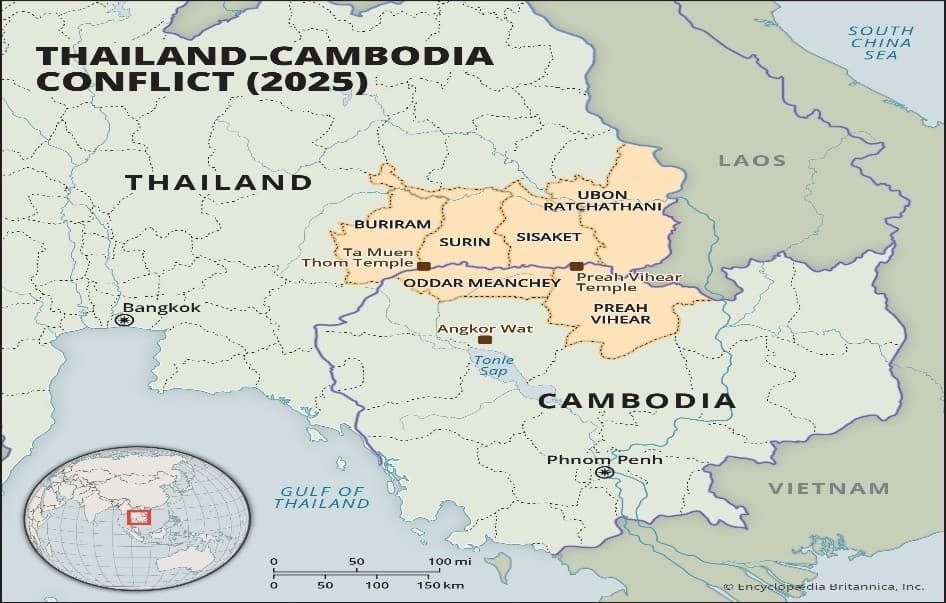
Border dispute spans 817 km undemarcated Thailand–Cambodia frontier, concentrated near ancient hill-temples and forested highlands

Originates in 1907 French colonial map; sovereignty overlap around Preah Vihear, Ta Muen, Ta Kwai complexes

Current clashes feature artillery, rockets, drones, airstrikes across Surin–Sisaket (TH) and Oddar Meanchey–Preah Vihear (KH)

Quick Facts for MCQs

Historical Timeline

  • 1907 French map sets preliminary line triggering later Thai objections
  • 1962 ICJ grants temple to Cambodia; 2008 UNESCO listing ignites nationalism
  • 2008–11 artillery duels; 2025 soldier death revives hostilities

Legal & Policy

  • ICJ 2013 clarifies surrounding land belongs to Cambodia; Bangkok contests scope
  • No final demarcation treaty; joint boundary commission stalled since 2008
  • UNESCO listing adds cultural stake complicating troop withdrawal

Security Dimension

  • Weapons used artillery, MLRS, armed drones, limited airstrikes across dense jungle terrain
  • Thai trade bans and tighter crossings followed May 2025 incident
  • Evacuation shelters set up in Surin and Sisaket districts

Humanitarian Impact

  • Rising civilian and military casualties reported both sides
  • Thousands internally displaced to schools, pagodas, makeshift camps
  • Shelling damages homes, roads, small bridges hindering relief supplies

Key Data Points

FeatureData-Point
Border length817 km
Colonial map year1907
Key disputed templePreah Vihear
ICJ first award1962 to Cambodia
ICJ reaffirmation2013 land around temple
Major clash phase2008 – 2011
Deadliest 2011 sitePreah Vihear area
Latest escalationMay 2025 skirmish
Thai border provincesSurin, Buri Ram, Sa Kaeo, Sisaket, Trat
Cambodian border provincesOddar Meanchey, Preah Vihear, Banteay Meanchey, Battambang, Pailin, Koh Kong
UNESCO tag year2008 Preah Vihear
Main river near siteMekong
GS-2Scheme

10.National Mission on Edible Oils (Edible Oil Mission)

PIB
Illustration for National Mission on Edible Oils (Edible Oil Mission)

What & Where

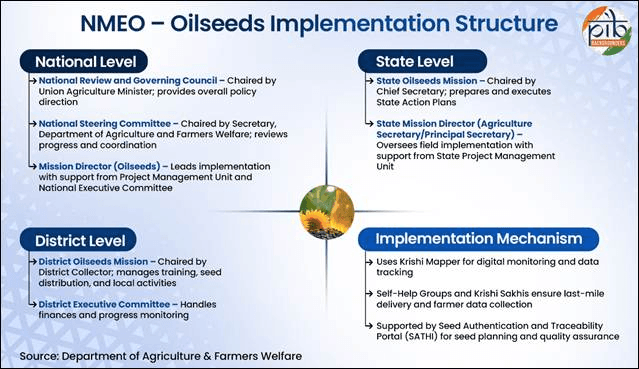
NMEO: twin schemes—Oil Palm 2021 and Oilseeds 2024 aiming edible-oil self-sufficiency

Interventions: area expansion, yield-gap technologies, viability price, higher subsidies, Krishi Sakhis last-mile support

Geography: Oil palm concentrated Andhra Pradesh-Telangana, expanding North-East; oilseeds dominant Rajasthan, Madhya Pradesh, Gujarat, Maharashtra

Quick Facts for MCQs

Tech & Schemes

  • ViabilityPrice: cushions oil-palm growers against international CPO price swings
  • SubsidyBoost: planting material support lifted to Rs 29,000 / ha; rejuvenation Rs 250 / plant
  • DigitalTracking: CASP updates Krishi Mapper for on-ground progress monitoring

Economic Angle

  • ImportBill: 56 % edible-oil demand imported 2023-24
  • SelfRelianceTarget: 25.45 mt domestic oil to meet 72 % demand by 2030-31
  • FarmIncome: oilseed crops cover 14.3 % gross cropped area sustaining millions

Geography & Crops

  • MustardHub: Rajasthan leads; soybean dominated by Madhya Pradesh
  • OilPalmSpread: 6.2 lakh ha planted till Nov 2025, 2.5 lakh ha added via NMEO-OP
  • ConsumptionRise: rural intake up 83.68 %, urban up 48.74 % between 2004-05-2022-23

Key Data Points

FeatureData-Point
Launch year NMEO-OP2021
Launch year NMEO-OS2024
Scheme typeCentrally Sponsored
Outlay NMEO-OPRs 11,040 crore
Oil-palm area target 2025-266.5 lakh ha
CPO target 2029-3028 lakh tonnes
Oilseed area target 2030-3133 million ha
Domestic oil output goal 2030-3125.45 million tonnes
Self-sufficiency share aimed72 % demand
Import share 2023-2456 % demand
Oil-palm share AP-Telangana98 % national

Related UPSC Prelims PYQs

CDS_GK, GS1 2021PYQ 1

Which of the following States/Union Territory/Region are in special focus in the National Mission on Edible Oils—Oil Palm?

CDS_GK, GS1 2010PYQ 2

An objective of the National Food Security Mission is to increase the production of certain crops through area expansion and productivity enhancement in a sustainable manner in the identified districts of the country. What are those crops?

GS-2Scheme

11.Export Promotion Mission Framework (Export Promotion)

PIB
Illustration for Export Promotion Mission Framework (Export Promotion)

What & Where

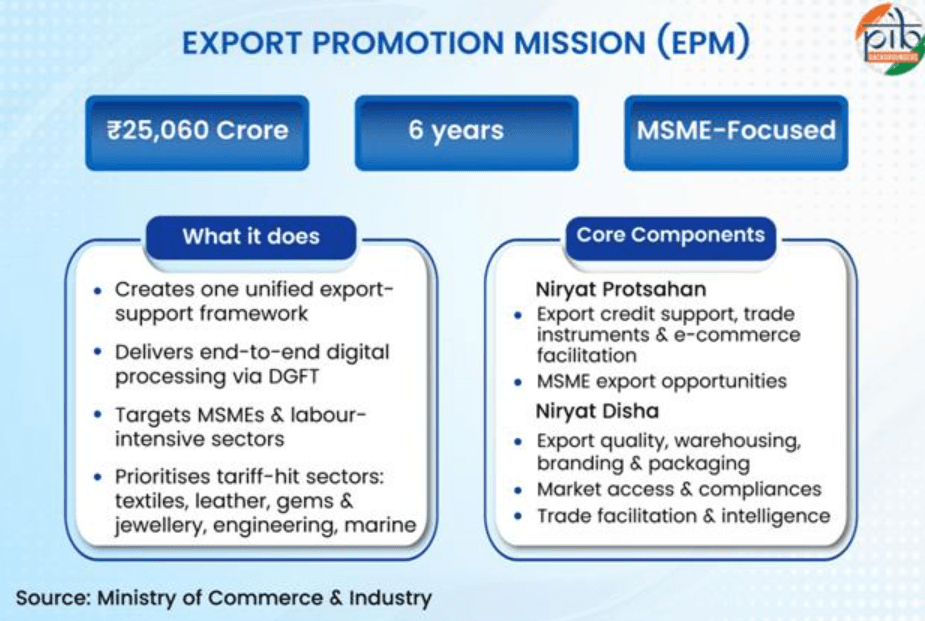
Export Promotion Mission (EPM): single digital umbrella for all Central export-support schemes announced Union Budget 2025-26

Coverage: FY 2025-26 → FY 2030-31; nationwide with district reach via DGFT platform

Core processes: twin sub-schemes—Niryat Protsahan (finance) & Niryat Disha (non-finance) targeting MSMEs, labour-intensive exports

Quick Facts for MCQs

Policy Architecture

  • Coordination: Commerce, MSME, Finance ministries plus EPCs, commodity boards, states
  • Convergence: Merges scattered export incentives into one rules-based framework
  • Compliance: Outcome monitoring enables mid-course correction with global trade shifts

Financial Enablers

  • Credit: Affordable trade finance, collateral support, credit enhancement for small exporters
  • Guarantee: Backstopped by Credit Guarantee Scheme for Exporters (CGSE) 100 % sovereign cover
  • Liquidity: RBI 2025 relief aligns with EPM to cut working-capital stress

Sectoral & Regional Focus

  • Tariff-hit sectors: Dedicated branding, quality help for textiles, leather, gems, engineering, marine
  • District push: Capacity-building, logistics aid to expand export base beyond coastal hubs
  • Sunrise areas: Support for electronics, medical devices, renewable components to upgrade export basket

Key Data Points

FeatureData-Point
Total outlay₹25,060 crore
Implementing agencyDirectorate General of Foreign Trade
Scheme period2025-26 to 2030-31
Integrated sub-schemesNiryat Protsahan & Niryat Disha
Primary beneficiariesMSMEs, first-time exporters, labour-intensive sectors
Key financial toolsInterest subvention, factoring, exporter credit card
Digital modePaperless DGFT portal with outcome tracking
Focus districtsInterior & low-export districts under DEH synergy
RBI linkageTrade Relief Measures 2025 for liquidity easing
Target sectorsTextiles, leather, gems-jewellery, engineering goods, marine products

Related UPSC Prelims PYQs

CAPF_GAI, CDS_GK 2024PYQ 1

Which of the following is NOT one of the pillars of India’s ‘Foreign Trade Policy-2023’?

CAPF_GAI, CDS_GK 2025PYQ 2

भारत में निर्यात हब के रूप में जिले (DEH) के बारे में निम्नलिखित में से कौन-सा कथन सही नहीं है?

GS-2Scheme

12.PM Surya Ghar Rooftop Solar Scheme (Rooftop Solar)

LiveMint

What & Where

Central scheme PM Surya Ghar–Muft Bijli Yojana, promotes residential rooftop solar across India

Two implementation pathways: Renewable Energy Services Company (RESCO) model and Utility-Led Asset (ULA) model

Geography pan-India; National Programme Implementation Agency + state DISCOMs oversee roll-out

Quick Facts for MCQs

Models & Ownership

  • RESCO model: private firm installs, owns, maintains system, consumer pays per kWh
  • ULA model: state DISCOM owns first 5 years, transfers asset to household afterwards
  • Pre-installed rooftop systems ineligible under both models

Financial Architecture

  • Central Financial Assistance capped at 3 kW, disbursed directly to vendors
  • Net-metering plus options for group/virtual net-metering authorised
  • DISCOMs, ULBs, PRIs receive separate incentives for facilitation and outreach

Projected Outcomes

  • 30 GW rooftop solar → 1,000 BUs generation over 25 years
  • CO₂ reduction estimated 720 million tonnes lifecycle
  • Model Solar Village slated for every district to showcase adoption

Implementation Challenges

  • Household hesitation where state offers free/cheap grid power
  • Small terraces, shading, ownership disputes hurt 1–2 kW uptake
  • Net-metering without storage strains DISCOM finances, risks “duck-curve” grid imbalance

Key Data Points

FeatureData-Point
Cabinet outlay₹75,000 crore
Target beneficiaries1 crore households
Monthly free power300 units
Max subsidy capacity3 kW
Subsidy rate 0–2 kW60 % of benchmark cost
Subsidy rate 2–3 kW40 %
Payment-security corpus₹100 crore
Minimum third-party ownership5 years
Anticipated added capacity30 GW
Expected direct jobs17 lakh

Related UPSC Prelims PYQs

GS1 2025PYQ 1

Consider the following statements about ‘PM Surya Ghar Muft Bijli Yojana’ :

GS1 2016PYQ 2

Which one of the following is a purpose of 'UDAY', a scheme of the Government?

GS-1Editorial

13.India’s Unhealthy Diet Transition (Nutrition Transition)

Indian Express

What & Where

Diet paradox: rising incomes yet 62 % energy from low-quality carbs; ultra-processed foods treated as staples.

Key shift: home-cooked cereals → refined grains, added sugars, high-salt snacks; protein-veg gap persists.

Geography: change visible nationwide; NSSO shows 353 % processed-food spend surge rural, 222 % urban.

Quick Facts for MCQs

Health Impact

  • Metabolic surge: NCDs now 66 % deaths; cancer deaths projected +75 % by 2050.
  • Dual burden: coexistence of 24 % urban obesity & 35 % child stunting.
  • Protein gap: 80 % rural homes under RDA, cereals give 60-75 % protein.

Economic Angle

  • Cheap chips: ₹5–10 vs fruit 3-4× cost; incentivises junk.
  • Consumption inequality: Gini 0.284 urban limits diet diversity for poor.
  • Balanced plant diet could cut household food cost 23 % (EAT-Lancet).

Environmental Impact

  • Guideline shift could curb methane 36 %, N₂O 35 % by 2050.
  • Pulse acreage +10 % saves huge synthetic nitrogen load.
  • Reduced dairy/refined grains eases agri emissions.

Policy Prescriptions

  • Sugar tax: 20-30 % could lower obesity 5-10 %.
  • HFSS front-pack warnings sway 20 % consumer choices.
  • Reallocate fertiliser subsidy to millets/pulses; diversify 20 m ha from paddy.

Key Data Points

FeatureData-Point
Energy from low-quality carbs62 % of intake (ICMR-INDIAB 2024)
Processed-food spend rise+353 % rural, +222 % urban since 1999
Price elasticity drop for processed−90 % → treated as necessity
Dairy monthly spend (urban/rural)₹503 / ₹348 (HCES 2022-23)
Top vs bottom 5 % food spend₹20,310 vs ₹2,376 MPCE
Disease burden from diet56.4 % of total (ICMR 2024)
Diabetes patients101 million Indians
Urban female obesity (NFHS-5)24 % prevalence
Child stunting (NFHS-5)35.5 %
Fruit-veg wastage16 % annually
GS-1Editorial

14.Climate Heat Risks for Women (Gender & Climate Health)

The Hindu
Illustration for Climate Heat Risks for Women (Gender & Climate Health)

What & Where

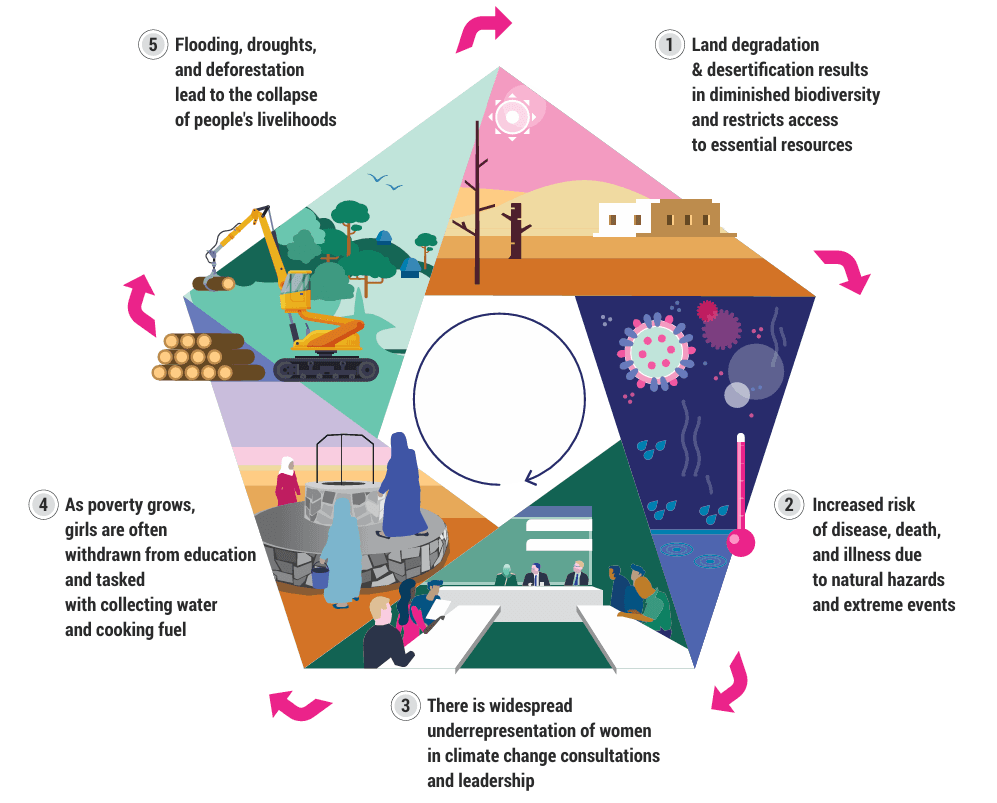
Heat-linked morbidity: rising temperatures trigger reproductive, mental crises among women in Beed, Tamil Nadu, urban Ahmedabad.

Global health pivots: WHO’s guarded nod to GLP-1 drugs; South Africa adopting twice-yearly Lenacapavir HIV prophylaxis.

Core geographies: Beed (Maharashtra), Tamil Nadu textile belt, Kerala “noon break” model, South Africa Global Fund rollout.

Quick Facts for MCQs

Climate & Gender

  • Heat-stress doubles hysterectomy incidence among Beed female sugarcane workers.
  • Peak-summer domestic-violence reports rose 38 %, tied to economic, water stress.
  • Informal women workers lack cooling, hydration, driving UTIs and chronic fatigue.

Drug Access & Equity

  • WHO restricts Semaglutide to last-resort, BMI ≥ 35, rejects cosmetic use.
  • GLP-1 cost (~$1,000/month US) limits access to <10 % needy by 2030.
  • Medicines Patent Pool licences Indian firms for low-cost Lenacapavir in 120 countries.

AMR & Regulation

  • Kerala, Gujarat enforce OTC-antibiotic bans; most states leave loopholes.
  • CDSCO post-Gambia tragedy cancels 18 licences for safety violations.
  • Weak veterinary oversight hampers One-Health AMR containment.

Tech & Surveillance

  • Nagpur AI system flagged Acute Encephalitis days before official confirmation.
  • IHIP aggregates 33 diseases real-time, spotting fever clusters instantly.
  • Ahmedabad plan integrates heat alerts with hospital data to pre-empt cardiac events.

Key Data Points

FeatureData-Point
Hysterectomy rate, Beed sugarcane women2× higher in high-heat zones
Women reporting dizziness/fatigue, Beed70 % during summer
UTI trigger, Tamil Nadu millsWater avoidance to skip bathroom breaks
WHO Wegovy use allowed at BMI≥ 35 kg/m² after failed lifestyle change
Projected GLP-1 reach by 2030< 10 % of global need
Lenacapavir dose frequencyTwice yearly injection
Doses secured by South Africa4 lakh via Global Fund (2026 start)
State OTC-antibiotic bans effectiveKerala, Gujarat
CDSCO 2024 audit outcome18 licences cancelled, 76 firms inspected
Ahmedabad heatwave mortality spike43 % all-cause rise

Ready to practice?

Test your knowledge with our UPSC test series.

Start Free Trial