UPSC Current Affairs

15 topicsGS-1: 3GS-2: 4GS-3: 8
0/15 done
GS-2Polity

1.Proposal for National Judicial Policy (Judicial Reforms)

LL

What & Where

National Judicial Policy: common framework to standardise interpretation, procedure & case-management across Indian judiciary

Where: applies to 25 High Courts + all Supreme Court Benches; conceived by CJI Surya Kant

Goal: ensure “one rhythm” on constitutional/legal issues, reduce 5.4 crore-case pendency

Quick Facts for MCQs

Divergent Rulings

  • Conflicting High-Court judgments create policy uncertainty for citizens, businesses and executive
  • Separate SC Division Benches sometimes issue inconsistent interim orders on identical questions
  • Absence of uniform case-listing and precedent-tracking fuels interpretational splits

Current Initiatives

  • Mediation Promotion: structured training, pre-litigation referral encouraged nationwide
  • Digital Justice: e-filing, virtual hearings, AI transcripts, multilingual portals expanding access
  • Arbitration Upgrades: modern centres, global-standard procedures to boost investor confidence

Structural Challenges

  • Federal Diversity: varied state laws, languages, customs impede blanket procedures
  • Resource Gaps: uneven staffing, tech, basic amenities hinder uniform digital rollout
  • Judicial Vacancies: single judges handling 80–100 cases/day thwart timeline discipline

Reform Pathways

  • Draft Joint Policy: SC, HCs, Law Ministry craft guidelines balancing autonomy & uniformity
  • Harmonise Procedures: standard rules on listing, timelines, citation hierarchy across tiers
  • Inclusive Tech: low-bandwidth, multilingual, mobile-friendly platforms for rural & marginal litigants

Key Data Points

FeatureData-Point
Total pending cases≈ 5.4 crore
High Courts covered25
SC ruling against Tribunal Reforms Act parts2021
Madras HC language decision2024; retained English
Courts lacking ladies’ toilets26 %
Allahabad HC vacancy (2025)~50 % judges
Satgawan, Jharkhand issueFrequent internet collapse
Boycott over e-filing2023; Thoothukudi & Puducherry lawyers

Related UPSC Prelims PYQs

GS1 2019PYQ 1

निम्नलिखित कथनों पर विचार कीजिए :
GS-2Polity

2.SC Review of Anonymous Donations (Political Funding)

The Hindu

What & Where

Political funding: money/anything of value given to registered parties for Indian elections.

Key channels: sub-₹2000 cash, cheque/online, corporate gifts, electoral-trust transfers, FCRA-compliant foreign-owned Indian firms.

Governed nationally by ECI; statutes include RPA-1951, Income-Tax Act-1961, Companies Act-2013, FCRA-2010.

Quick Facts for MCQs

Legal & Policy

  • Section 29B RPA permits voluntary donations; bans govt-company & foreign-source money.
  • Companies Act amendment allows unlimited corporate sums, still barred for govt firms.
  • FCRA redefinition treats Indian firms with >50 % foreign share as non-foreign sources.

Constitutional Rights

  • Article 19(1)(a) extends to voter’s funding-information right; upheld in 2002 & 2024 ADR rulings.
  • Petition claims anonymous cash breaches this right, seeks total prohibition.
  • SC has issued notice to Centre & ECI on constitutional review.

Institutional Enforcement

  • Plea demands ECI vet Form 24A, impound entries lacking PAN/address, forfeit to state.
  • Independent auditors under ECI, stricter report deadlines, RBI–SEBI tracking mooted.
  • Non-compliant parties risk de-recognition or symbol withdrawal.

Proposed Reforms

  • Complete digital-only donations, lower/zero cash threshold for traceability.
  • Real-time donor list (PAN, address, amount) on single ECI–CBDT portal.
  • Partial state funding (Indrajit Gupta 1998; Law Commission 1999) to curb private money.

Key Data Points

FeatureData-Point
Cash donation cap for anonymity₹1 999 (Sec 13A(d), IT Act 1961)
Company age needed to donate≥3 yrs (Companies Act 2013)
Corporate donation ceiling7.5 % of 3-yr average net profit
Electoral Trust retention limit≤5 % of receipts
Mandatory distribution by Trusts≥95 % to parties (Sec 29A-registered)
ECI symbol suspension powerPara 16A, Election Symbols Order 1968
Landmark case striking Electoral BondsADR v. UOI, 2024
First disclosure judgmentUnion of India v. ADR, 2002
GS-3Editorial

3.Boosting MSME Growth and Resilience (MSME Financing)

Indian Express

What & Where

MSMEs = enterprises classified (MSMED Act 2006) by investment & turnover; micro ≤ Rs1 cr/5 cr, small ≤ Rs10 cr/50 cr, medium ≤ Rs50 cr/250 cr.

Present pan-India, anchor rural–semi-urban industrialisation; supply 29 % GDP, 36 % manufacturing, 45 % exports.

Delayed Payments Report 3.0 flags Rs 8.14 lakh cr dues, Rs 25 lakh cr credit gap choking growth.

Quick Facts for MCQs

Economic Impact

  • Employment engine; handicrafts supply 40 % global handmade carpet exports.
  • Drives inclusive growth via KVIC, PURA vision.
  • Startup ecosystem largely MSME-led, catalysing innovation.

Financial Bottlenecks

  • Delayed-payments tie up working capital despite statutory 45-day limit.
  • Info asymmetry & strict NPA norms deter banks; 90 % units remain informal.
  • Alternative finance urged: invoice discounting, P2P, venture debt, public credit registry.

Policy & Committees

  • Standing Committee 2022: cash-flow lending via GSTIN–AA, Rs 5-10k cr extra to SIDBI.
  • UK Sinha 2019: Rs 5,000 cr stressed-asset fund, collateral-free limit doubled to Rs 20 lakh.
  • Nayak 1992: banks to fund ≥ 20 % of turnover with 5 % margin.

Technology & Market Access

  • E-commerce MSME storefronts, export consortia grants to widen markets.
  • Tech clinics & cloud grants proposed to curb obsolescence, raise productivity.
  • Cluster-based common facilities, ESG-linked tax perks build supply-chain resilience.

Key Data Points

FeatureData-Point
Employment generated≈ 120 million persons
GDP contribution29 % of India’s GDP
Share in exports~45 %
Manufacturing output share36 %
Women-owned units (Udyam)> 20 %
Value of delayed paymentsRs 8.14 lakh crore
Estimated unmet credit needRs 25 lakh crore
Outstanding bank loansRs 12.99 lakh crore
MSME Ministry created2007
Governing legislationMSMED Act, 2006

Related UPSC Prelims PYQs

CDS_GK, GS1 2023PYQ 1

Consider the following statements with reference to India:

CDS_GK, GS1 2022PYQ 2

सूक्ष्म, लघु और मध्यम उद्योगों (MSMEs) के बारे में निम्नलिखित कथनों पर विचार कीजिए:

GS-3Economy

4.Insolvency and Bankruptcy Code Review (IBC Reforms)

Economic Times

What & Where

Insolvency & Bankruptcy Code 2016: unified, creditor-driven corporate insolvency framework across India.

Adjudicators: NCLT for companies; DRT for individuals/firms; regulator—IBBI with Finance, MCA, RBI members.

Pre-packaged Insolvency (PPIRP) 2021: MSME-focused, ≤ ₹1 crore default, 120-day fast track.

Quick Facts for MCQs

Legal & Policy

  • SARFAESI 2002 lets secured creditors seize, sell assets; enabled Asset Reconstruction Companies.
  • IBBI issues model regulations; empowers valuers, insolvency professionals, ARCs.
  • Finance Ministry seeks synchronised bank strategy to cut NCLT admission lags.

Process & Bodies

  • Trigger: creditor/debtor files on default; NCLT decides admission within 14 days.
  • IRP assumes control, verifies claims, creates CoC; plans need 66 % nod else liquidation.
  • NCLT clearance makes resolution binding on all stakeholders.

MSME Special Route

  • PPIRP allows debtor-creditor pre-negotiated buyer; court mainly certifies, reduces cost.
  • Related parties may bid—unlike regular CIRP restrictions.
  • Designed for post-COVID liquidity stress in MSMEs.

Key Data Points

FeatureData-Point
IBC enactment year2016
Drafted on reportT.K. Vishwanathan Committee 2015
Statutory regulatorInsolvency & Bankruptcy Board of India
Corporate adjudicatorNational Company Law Tribunal
Statutory CIRP limit330 days (incl. litigation)
CoC approval threshold66 % voting share
IRP full formInterim Resolution Professional
PPIRP default ceilingUp to ₹1 crore
PPIRP timeline120 days
Pre-IBC recovery lawSARFAESI Act 2002

Related UPSC Prelims PYQs

CDS_GK, GS1 2022PYQ 1

भारतीय दिवाला और शोधन-अक्षम बोर्ड (IBBI) किस वर्ष में स्थापित किया गया था?

CDS_GK, GS1 2019PYQ 2

हाल ही में, भारतीय बैंकों और वित्तीय संस्थाओं द्वारा ‘इंटर-क्रेडिटर एग्रीमेंट’ (Inter-Creditor Agreement) पर हस्ताक्षर करने का क्या उद्देश्य था?

GS-1History

5.Sirpur Multi-religious Heritage Site (Sirpur Heritage)

Indian Express
Illustration for Sirpur Multi-religious Heritage Site (Sirpur Heritage)

What & Where

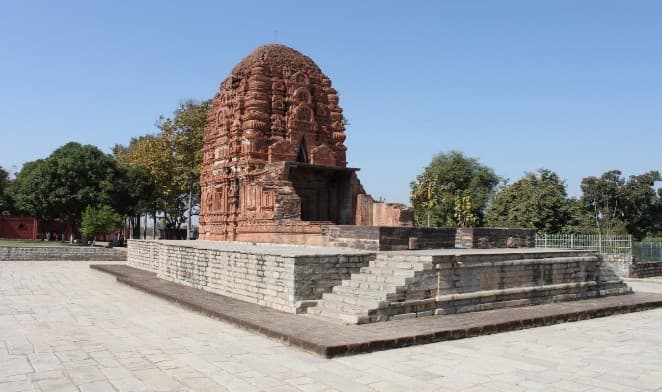
Sirpur Archaeological Site = 5th–12th century urban-religious complex of Hindu, Buddhist, Jain monuments.

Location banks of Mahanadi, Sirpur village, Mahasamund district, Chhattisgarh; c. 80 km east of Raipur.

Historic capital of Dakshina Kosala under Panduvanshi & Somavamshi kings; now readied for UNESCO nomination.

Quick Facts for MCQs

Architectural Highlights

  • Lakshmana Temple brick shikhara, intricate door-jambs, Maithuna panels, Vishnu imagery.
  • Surang Tila panchayatana, four colored lingams, 32-pillared mandapa, seismic tilt evidence.
  • Teevardev Vihara blends Buddhist iconography with Hindu motifs, houses monolithic Avalokiteshvara.

Multi-Religious Landscape

  • Syncretism evidenced by Buddha images beside Shiva lingams in Gandheshwar Temple.
  • Counts: 22 Shaiva, 5 Vaishnava temples; 10 Buddhist, 3 Jain viharas within 6 km radius.
  • Art styles Shaiva, Vaishnava, Buddhist, Jain co-developed, reflecting social harmony of Dakshina Kosala.

Excavation & Conservation

  • Discovery 1882; systematic digs resumed 1950s, intensified post-1990 under ASI & state archaeology.
  • Current plan digital exhibits, battery vehicles, visitor amenities for UNESCO World Heritage bid.
  • Recovered urban remains include palace complex, 6th-c market, water systems, meditation cells.

Key Data Points

FeatureData-Point
Era span5th to 12th century CE
RiverMahanadi
First survey1882, Alexander Cunningham
Major excavations1950s, 1990s, 2003-onwards
Shiva temples22
Vishnu temples5
Buddhist viharas10
Jain viharas3
Signature brick templeLakshmana Temple, 7th c
Surang Tila terrace height9 m; 37 steps
Avalokiteshvara statueMonolithic, Teevardev Vihara
Living reuse shrine18th-c Gandheshwar Temple

Related UPSC Prelims PYQs

GEO_GS 2022PYQ 1

Among the following, which one has been accorded the status of UNESCO World Heritage Site recently?

GEO_GS 2024PYQ 2

Which one among the following temples, constructed by Queen Loka Mahadevi in Pattadakal, is a UNESCO World Heritage site?

GS-1Mapping

6.Aravalli Hills Protection Issue (Aravalli Range)

Indian Express
Illustration for Aravalli Hills Protection Issue (Aravalli Range)

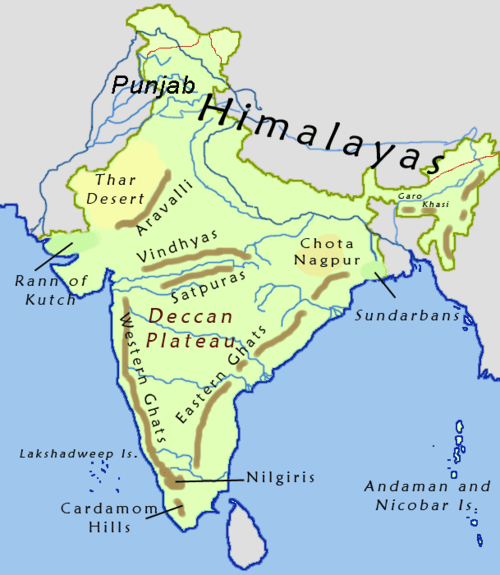
What & Where

Range type Ancient fold mountains, Proterozoic origin, part of Aravalli–Delhi orogenic belt

Spatial stretch ~670 km, trending SW–NE from Gujarat through Rajasthan & S-Haryana to Delhi fringe

Ecological role Barrier to Thar dust, wildlife corridor; peaks 300–900 m, Guru Shikhar 1 722 m highest

Quick Facts for MCQs

Legal & Policy

  • Supreme Court accepted MoEFCC proposal making ≥100 m sole criterion for defining Aravalli Hills
  • Definition shift removes legal safeguards from majority landscape previously covered under 1992 notifications
  • Potential precedent for other hill classifications in clearance decisions

Environmental Impact

  • Excluded 90 % hills risk intensified mining, construction, desertification spread eastward
  • Loss of low-height windbreaks may raise dust load & air-quality stress in NCR
  • Fragmented wildlife corridors threaten gene flow for leopards, sloth bears, others

Geological Features

  • Rocks host Cu-Zn sulphide deposits central to Khetri, Zawar mining belts
  • Erosional remnants indicate original Himalayan-scale heights before prolonged denudation
  • Faulted quartzite ridges furnish groundwater recharge zones for semi-arid districts

Key Data Points

FeatureData-Point
Geological ageProterozoic (≈1.5–1.8 Ga)
Total length~670 km
States/UTsGujarat, Rajasthan, Haryana, Delhi
Highest peakGuru Shikhar, 1 722 m, Mount Abu
Dominant lithologyQuartzite, marble, granite, Cu-Zn ores
Key riversBanas, Luni, Sabarmati, Sahibi
Old protection yardstick≥30 m height + slope criteria
New SC-accepted yardstick≥100 m above local ground
FSI finding~90 % hills fall below 100 m, lose protection
Critical low hills10–30 m act windbreaks against desertification

Related UPSC Prelims PYQs

GS1 1995PYQ 1

Which one of the following mountain ranges is spread over only one State in India?

GS1 2001PYQ 2

The approximate age of the Aravalli’s range is

GS-3Environment

7.Proposed Goa Tiger Reserve (Tiger Reserve)

The Hindu
Illustration for Proposed Goa Tiger Reserve (Tiger Reserve)

What & Where

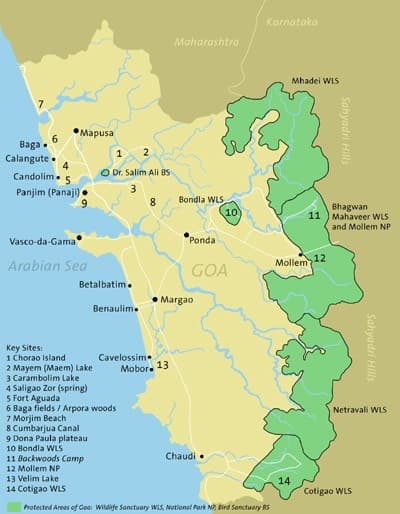
Proposal: Supreme-court-mandated CEC urges a phased “Goa Tiger Reserve” across southern Goa sanctuaries.

Geography: Western Ghats belt contiguous with Karnataka’s Kali Tiger Reserve, enabling uninterrupted tiger corridor.

Phasing: Phase-I targets low-inhabited Netravali, Cotigao (core) and Bhagwan Mahavir NP/WLS (buffer); Phase-II may add Mhadei WLS.

Quick Facts for MCQs

Legal & Policy

  • Mandate: SC referred dispute to CEC after State opposed HC directive.
  • Approach: CEC advocates community-sensitive, phased notification minimising legal displacement issues.

Ecological Connectivity

  • Corridor: Goa forests form southern extension of Kali landscape, permitting gene flow and natural dispersal.
  • Documentation: Camera-traps confirm occasional tigers; protection crucial for population recovery.

Social Concerns

  • Households: Phase-I encloses very few families, reducing relocation stress.
  • Strategy: Gradual expansion allows stakeholder consultations and adaptive conflict management.

Key Data Points

FeatureData-Point
Proposed reserveGoa Tiger Reserve
Recommending bodySupreme Court Central Empowered Committee
Bombay HC (Goa) order2023; asked State to notify tiger reserve
Goa govt claimTigers are “transient”, not resident
Phase-I core areasNetravali WLS, Cotigao WLS
Phase-I buffer areasBhagwan Mahavir National Park + northern Bhagwan Mahavir WLS
Probable Phase-II areaMhadei Wildlife Sanctuary
Adjacent Karnataka PAKali Tiger Reserve (breeding population)
Combined landscape size~1,814 sq km (Kali + proposed Goa reserve)
Biodiversity hotspotWestern Ghats

Related UPSC Prelims PYQs

GS1 2017PYQ 1

From the ecological point of view, which one of the following assumes importance in being a good link between the Eastern Ghats and the Western Ghats ?

GS1 2017PYQ 2

Recently there was a proposal to translocate some of the lions from their natural habitat in Gujarat to which one of the following sites?

GS-3Environment

8.UN ESCAP Urban Heat Warning (Urban Heat Islands)

Down to Earth
Illustration for UN ESCAP Urban Heat Warning (Urban Heat Islands)

What & Where

Definition: IMD labels heat wave when max ≥40 °C (plains) or ≥37 °C (coast) & ≥5 °C above normal

Types: Heat wave, severe heat wave (≥7 °C anomaly); compounded Urban Heat Island adds extra 2–7 °C

Geography: Highest frequency over Northwest, Central, East India; megacities Delhi, Kolkata, Hyderabad showing rising duration

Quick Facts for MCQs

Climate Science

  • Humidity factor elevates heat index beyond air temperature intensifying physiological stress
  • High night-time temperatures hinder human recovery raising mortality risks
  • Heat fuels wildfires releasing PM10, VOCs creating feedback loop

Health Impact

  • Cardiovascular, respiratory, renal illnesses spike during prolonged hot spells
  • Children, elderly, outdoor workers disproportionately affected due to lower thermoregulation capacity
  • Limited cooling access magnifies morbidity in low-income settlements

Economic Angle

  • Agriculture, construction, mining lose productive hours reducing GDP and wages
  • Power demand peaks strain grids causing outages during critical cooling periods
  • Heat-induced learning loss in schools lowers long-term human capital

Governance Gaps

  • Many Heat Action Plans unfunded, non-statutory and lack scientific baseline
  • Meteorological early-warning coverage remains below 50 % district level
  • Labour codes miss mandatory rest-water-shade clauses for extreme heat

Adaptive Measures

  • Cool roofs, reflective paint, permeable pavements lower surface temperature up to 2 °C
  • Urban forestry, blue-green corridors enhance ventilation and evaporative cooling
  • District-wise heat-health warning systems with vernacular SMS, IVRS, FM alerts enable last-mile reach

Key Data Points

FeatureData-Point
Expected UHI amplification+2 – 7 °C over global warming baseline
Cities flaggedDelhi, Karachi, Dhaka, Manila, Shanghai, Seoul
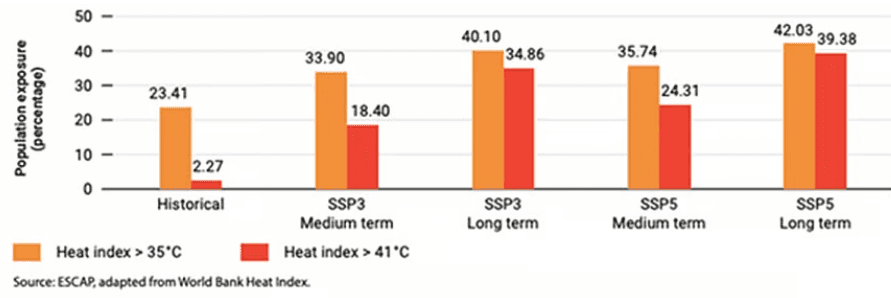
Chronic exposure in South Asia300+ days heat index >35 °C
Population at risk>40 % South Asians medium & long term
2024 Bangladesh heatwave33 million people impacted
2024 India heatwave deaths~700 fatalities
Working-hour loss projection8.1 million FTE jobs by 2030
Annual economic loss (Asia)US $498 billion under high-emission scenario

Related UPSC Prelims PYQs

GEO_GS 2021PYQ 1

Thermal pollution is:

GS-3S&T

9.Kerala Names on Mars (Planetary Nomenclature)

New Indian Express
Illustration for Kerala Names on Mars (Planetary Nomenclature)

What & Where

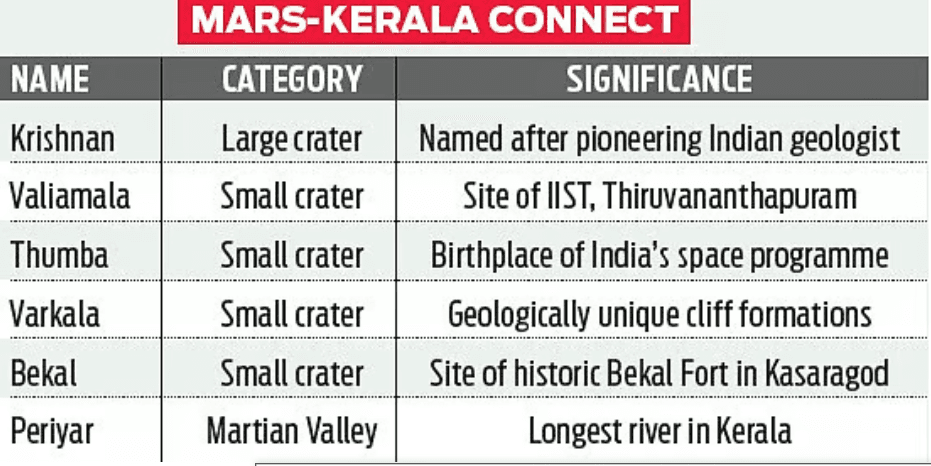
Naming: IAU christens a 3.5 Ga Martian crater “M.S. Krishnan”, plus five nearby features after Kerala places.

Location: Crater sits in Xanthe Terra, an area showing ancient glacial-fluvial signatures.

Origin: Proposal by IIST Thiruvananthapuram & Govt College Kasaragod; first Kerala names on Mars.

Quick Facts for MCQs

IAU Rules

  • Authority: IAU sole global body assigning extraterrestrial toponyms.
  • Classification: Diameter-based split into “large” vs “small” for naming criteria.
  • Consistency: Ensures multicultural representation while avoiding duplication.

Indian Dimension

  • Recognition: Immortalises M.S. Krishnan, first Indian Director, Geological Survey of India.
  • Milestone: Marks Kerala’s entry into Martian cartography.
  • Diplomacy: Enhances India’s soft-power in planetary science.

Geology & Location

  • Terrain: Xanthe Terra believed to host ancient river channels and glacial deposits.
  • Chronology: 3.5 Ga places crater in Noachian epoch of intense bombardment.
  • Research value: Offers clues on past Martian hydrology and climate.

Key Data Points

FeatureData-Point
Approving bodyInternational Astronomical Union (IAU)
Crater age~3.5 billion years
Martian regionXanthe Terra
HonoureeGeologist M.S. Krishnan (India)
Kerala names approvedValiamala, Thumba, Bekal, Varkala, Periyar
Naming rule—large craterDeceased scientist with major contribution
Naming rule—small craterTown/village of cultural‐historic value
Proposal originIIST & Govt College Kasaragod
SignificanceFirst Kerala toponyms on Mars
GS-3S&T

10.Pusa DST-1 Gene-edited Rice (Gene-edited Rice)

TW

What & Where

Gene-edited rice lines Pusa DST-1 & DRR Dhan-100 Kamala, precision-bred upgrades of MTU1010 & Samba Mahsuri.

Created by ICAR-IARI (DST-1) and ICAR-IIRR (Dhan-100); evaluated in blind-coded AICRPR multi-location trials.

Target belts: saline-alkaline soils of southern/coastal India and zones already cultivating Samba Mahsuri.

Quick Facts for MCQs

Tech & Schemes

  • Gene-editing: advanced precision method alters parent genomes for stress resilience and higher yield.
  • AICRPR: national coordinated rice testing; blind-coding prevents developer-bias.
  • First-in-India: these lines pioneer gene-edited rice evaluation under an official protocol.

Performance Metrics

  • Yield-boost: DST-1 outperforms MTU1010 by 15 % in alkaline, 30 % in coastal saline fields.
  • Output-rise: Dhan-100 tops Samba Mahsuri by 9 % (season 1) and 22 % (season 2).
  • Agro-fit: Retains grain type, duration of parent cultivars, simplifying farmer switchover.

Regulatory Oversight

  • ICAR rebuttal: dismisses allegations of bias in multi-location data analysis.
  • Blind-coded process: varietal identities hidden until statistical completion, ensuring impartiality.
  • Validation span: 2–3 years of replicated trials satisfies release prerequisites for new public varieties.

Key Data Points

FeatureData-Point
Parent varietyMTU1010 ; Samba Mahsuri
New line namesPusa DST-1 ; DRR Dhan-100 Kamala
Developer instituteICAR-IARI ; ICAR-IIRR
Breeding toolGene editing / precision breeding
Yield gain15–30 % (DST-1) ; 9–22 % (Dhan-100)
Stress focusSalinity & alkalinity tolerance
Trial network≈100 AICRPR sites over 2–3 years

Related UPSC Prelims PYQs

CDS_GK, GS1 2025PYQ 1

Recently, ICAR (Indian Council of Agricultural Research) has developed the world's first genome-edited rice varieties. Which of the following statements is/are correct with respect to the developed products?

CDS_GK, GS1 2010PYQ 2

Mon 863 is a variety of maize. It was in the news for the following reason

GS-2Misc

11.Ahmedabad Hosts 2030 Commonwealth Games (Commonwealth Games)

DD News
Illustration for Ahmedabad Hosts 2030 Commonwealth Games (Commonwealth Games)

What & Where

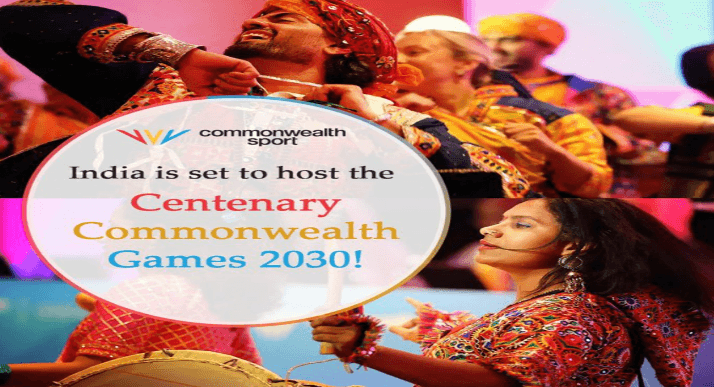
Commonwealth Games 2030: quadrennial multi-sport centenary edition of the British-Empire-origin event

Host city: Ahmedabad (Amdavad), Gujarat, India; core at Sardar Vallabhbhai Patel Sports Enclave + Narendra Modi Stadium

Ratified by Commonwealth Sport General Assembly, Glasgow, Nov 2025, through 74-nation vote

Quick Facts for MCQs

Historical Evolution

  • Naming shift: British Empire Games→British Empire & Commonwealth Games→British Commonwealth Games→Commonwealth Games (1978)
  • 1926 Imperial Conference recognised Dominions as equal, birthing British Commonwealth concept
  • London Declaration 1949 enabled republics to remain, forming modern Commonwealth

Infrastructure & Host Plan

  • Venue cluster: 233-ha Sardar Vallabhbhai Patel Sports Enclave adjoining world’s largest cricket stadium
  • Legacy aim: facilities to strengthen Ahmedabad’s 2036 Olympic candidature
  • Complementary sports hubs slated across Gujarat’s GIFT City, Gandhinagar campuses

Participation & Performance

  • India’s medal peak: Delhi 2010, overall 2nd rank behind Australia
  • Continuous presence: India competed in every Games since 1934 except 1986 Edinburgh boycott group
  • Disciplines mix: Olympic core plus Games-only sports netball, lawn bowls, squash

Commonwealth Organisation

  • Membership: 56 states, many without direct British colonial past post-1990s inclusions
  • Governance: Head of Commonwealth (British Monarch), Secretariat headquartered London Marlborough House
  • Guiding values: democracy, human rights, development cooperation via Commonwealth Charter 2013

Key Data Points

FeatureData-Point
Event frequencyEvery 4 years
First GamesHamilton, Canada, 1930
2030 Games number23rd edition; centenary
Earlier Indian hostingDelhi 2010
India’s debut year1934, London
Ratifying bodyCommonwealth Sport General Assembly
Ratification venueGlasgow, Scotland
Votes cast74 member nations/territories
Planned Olympic bidIndia targets 2036 Summer Olympics
Core infrastructureSardar Vallabhbhai Patel Sports Enclave, Narendra Modi Stadium
Commonwealth typeVoluntary association of independent, equal nations
Key founding documentLondon Declaration 1949

Related UPSC Prelims PYQs

CDS_GK 2020PYQ 1

Which one of the following States is planned to host the Khelo India Youth Games (4th Edition)?

GS-3SecurityQuick Bite

12.HAMMER Precision-Guided Bomb System (HAMMER Weapon)

Business Standard

What & Where

HAMMER = Highly Agile Modular Munition Extended Range; precision air-to-ground kit turning unguided bombs into stand-off weapons.

India–France JV Cooperation Agreement (2025) clears in-country production; Safran plus Indian partner.

Fits Rafale & HAL Tejas; delivers up to 70 km strikes against static or moving ground targets.

Quick Facts for MCQs

Technical Specs

  • Range: Up to 70 km via bolt-on rocket propulsion.
  • Accuracy: Maintains precision despite GPS jamming or electronic attack.
  • Target-set: Defeats fixed, relocatable and moving ground assets.

Operational Use

  • Deployment: Combat-proven by IAF in Operation Sindoor.
  • Platform-fit: Plug-and-play on Rafale and Tejas with minimal airframe changes.
  • Strike-profile: Allows release outside adversary surface-to-air engagement zones.

Indigenisation & Industry

  • Localization: JV eyes 60 % Indian manufacture of avionics, casings, propulsion parts.
  • Supply-chain: Opens MSME workshare in seeker electronics, mechanical sub-assemblies.
  • Spin-offs: Complements Indo-French fighter-engine co-development roadmap.

Strategic Payoffs

  • Deterrence: Bolsters deep, precise offensive capability versus hardened positions.
  • Survivability: Stand-off launches cut aircraft exposure to enemy air defences.
  • Diplomacy: Deepens India–France defence axis alongside prospective Rafale-Marine buy.

Key Data Points

FeatureData-Point
DeveloperSafran Electronics & Defence
Stand-off range≤ 70 km
GuidanceModular kit; works in GPS-denied/EW zones
Compatible aircraftRafale, Tejas LCA
First Indian combat useOperation Sindoor
Target Indian content60 % (electronics + mechanical)

Related UPSC Prelims PYQs

CDS_GK 2025PYQ 1

भारत के सैन्य आयुध (military arsenal) के बारे में निम्नलिखित में से कौन-सा/कौन-से कथन सही है/हैं?

GS-3SecurityQuick Bite

13.SURYAKIRAN India-Nepal Military Exercise (India-Nepal Exercise)

PIB

What & Where

SURYAKIRAN: annual battalion-level India–Nepal army exercise on sub-conventional operations for UN peacekeeping.

19th edition (2025) held at Pithoragarh cantonment, Uttarakhand, near the India–Nepal Himalayan border.

Drills span jungle, mountain & HADR scenarios reflecting shared high-altitude operational theatres.

Quick Facts for MCQs

Security Dimension

  • Counter-terror, jungle warfare, mountain drills bolster joint border readiness.
  • Chapter VII modules prep composite troops for UN peacekeeping contingencies.
  • Integrated ground-aviation sorties refine rapid insertion & casualty evacuation.

Tech & Schemes

  • AI-enabled decision aids trialled for faster threat assessment.
  • Drone-based ISR provides real-time situational awareness in rugged terrain.
  • Unmanned logistics platforms tested for high-altitude resupply.

Legal & Policy

  • 1816 Treaty of Sugauli opened Nepali recruitment into (British) Indian Army, cementing military links.
  • 1950 Peace & Friendship Treaty grants citizens reciprocal movement, residence, economic rights.
  • SURYAKIRAN alternates annually between India & Nepal under bilateral defence cooperation framework.

Key Data Points

FeatureData-Point
Participating armiesIndian Army & Nepali Army
Edition number19th (SURYAKIRAN XIX)
First conducted2011
2025 venuePithoragarh, Uttarakhand
UN mandate chapterVII
Core focusSub-Conventional Ops & Peacekeeping
Key terrainsJungle, mountain, disaster zones
New tech showcasedUAS, drone-ISR, AI decision tools
Logistics upgradeUnmanned supply platforms
Protection gearNext-gen armoured systems

Related UPSC Prelims PYQs

CDS_GK, GEO_GS 2023PYQ 1

The 16th edition of Indo-Nepal annual joint training exercise in jungle warfare and counter-terrorism operations was held in December 2022 at Nepal Army Battle School, Saljhandi. What is the name of this exercise?

CDS_GK, GEO_GS 2020PYQ 2

‘Surya kiran’ is a joint military exercise between the militaries of India and:

GS-2Scheme

14.REPM Manufacturing Incentive Scheme (REPM Manufacturing)

PIB
Illustration for REPM Manufacturing Incentive Scheme (REPM Manufacturing)

What & Where

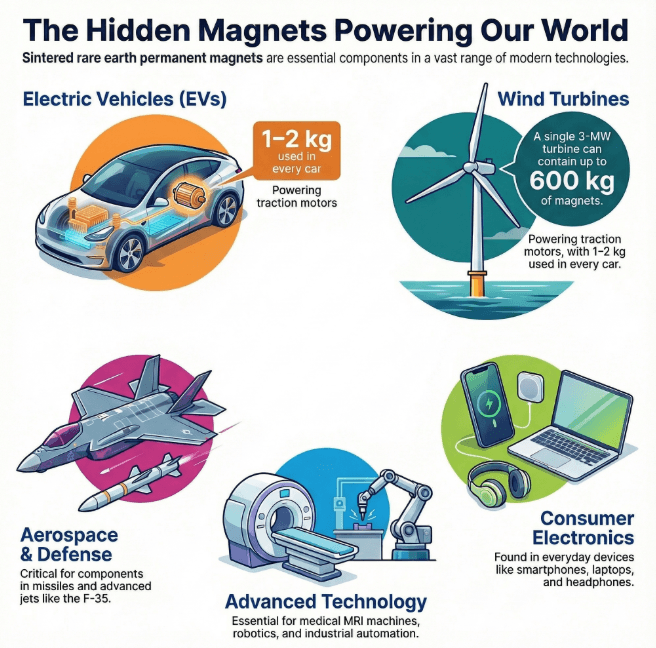
Scheme: first Indian initiative for end-to-end rare-earth permanent magnet chain, oxides → metals → alloys → sintered NdFeB.

Geography: 6,000 MTPA capacity to be created across India through five integrated plants chosen by global bidding.

Market: magnets critical for EVs, wind turbines, defence; present demand met almost entirely by imports.

Quick Facts for MCQs

Tech & Schemes

  • Incentives: sales-linked ₹6,450 cr released for five years post commissioning.
  • Capital aid: ₹750 cr offsets high-cost oxide-to-metal, alloying, sintering equipment.
  • Integration: scheme mandates single-site flow ensuring quality, traceability, cost efficiency.

Economic Angle

  • Import cut: replacing almost full magnet imports, saving forex through 6,000 MTPA domestic supply.
  • Competitiveness: volume-based payout encourages scale economies and global price parity.
  • Job multiplier: metallurgical clusters likely to spur alloy, machining, EV component industries.

Security Dimension

  • Supply risk: China controls ~90 % REPM pipeline; domestic chain lowers defence, space vulnerability.
  • Critical minerals: REPMs essential for missiles, radars, nuclear systems; assured availability boosts strategic autonomy.
  • Geopolitics: aligns with Quad critical-minerals agenda, enhancing India’s rare-earth bargaining power.

Key Data Points

FeatureData-Point
Nodal ministryMines; oversight DAE & NITI
Scheme outlay₹7,280 crore
Sales incentives₹6,450 crore
Capital subsidy₹750 crore
Scheme duration7 years
Incentive window5 years
Gestation to build2 years
Planned capacity6,000 MTPA REPM
Eligible beneficiaries5 firms; ≤1,200 MTPA each
India REE reserves rank5th; 6.9 million t
China global REPM share~90 %
India REE output share~1 %
GS-1Polity

15.Addressing Custodial Violence in India (Custodial Torture)

The Hindu

What & Where

Custodial violence: physical or mental harm during official detention; India lacks statutory definition.

BNSS 2023 custody types: police ≤15 days; judicial till bail or sentence end.

Supreme Court spotlight: 11 custodial deaths in 8 months, Rajasthan.

Quick Facts for MCQs

Legal & Policy

  • Articles 20(1), 20(3), 21 safeguard liberty, bar torture, coerced confessions.
  • Bharatiya Nyaya Sanhita 2023 criminalises hurt used to obtain confession.
  • BNSS 2023 records arrest reasons; official prosecution needs government sanction.

Judicial Directions

  • DK Basu 1997: arrest-detention protocols; State liable for custodial violence.
  • Paramvir Singh 2020: compulsory audio-video CCTV in all police/investigative offices.
  • Nambi Narayanan 2018: compensation affirmed psychological harm from wrongful custody.

Challenges

  • Undefined torture, colonial Police Act 1861 sustain legal gaps.
  • Sanction requirement, delayed probes keep conviction rates negligible.
  • Colonial policing culture, political approval normalize third-degree methods.

Reform Measures

  • Ratify UNCAT; enact standalone anti-torture statute aligned with CAT.
  • Ensure functional CCTV, digital custody logs linked to CCTNS.
  • Train police in forensics, stress-management; grant NHRC binding powers.

Key Data Points

FeatureData-Point
SC CCTV directive caseParamvir Singh Saini 2020
Central agencies coveredNIA, CBI, ED, NCB, DRI
NHRC 2023-24 deaths (judicial custody)2,346
NHRC 2023-24 deaths (police custody)160
India signed UNCAT1997 (not ratified)
ICCPR ratified by India1979
DK Basu guideline year1997

Related UPSC Prelims PYQs

CAPF_GAI, GS1 2023PYQ 1

The Judgment of the Supreme Court in Peoples’ Union for Civil Liberties v. Union of India 2004 is related to which of the following ?

CAPF_GAI, GS1 2021PYQ 2

भारत के संदर्भ में, निम्नलिखित कथनों पर विचार कीजिए :
Ready to practice?

Test your knowledge with our UPSC test series.

Start Free Trial