UPSC Current Affairs

13 topicsGS-1: 2GS-2: 4GS-3: 7
0/13 done
GS-2Editorial

1.Indian Constitution’s Progressive Edge (Constitutional Evolution)

YT
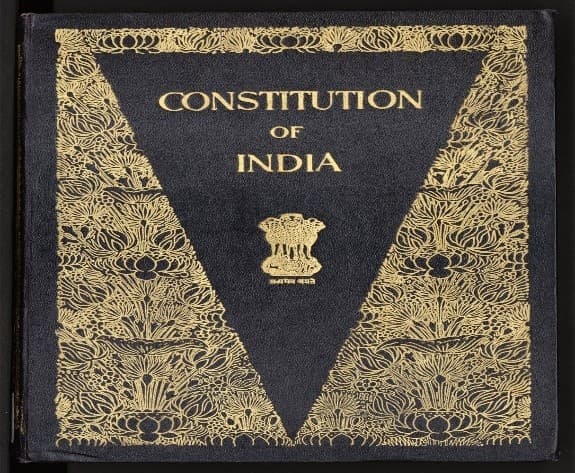
Illustration for Indian Constitution’s Progressive Edge (Constitutional Evolution)

What & Where

Definition: Constitutional-morality means loyalty to constitutional values above societal or political majorities

Application: Guides State, judiciary, citizens to uphold liberty, equality, fraternity, dignity

Indian-source: Principle rooted in Preamble, Fundamental Rights and Directive Principles

Quick Facts for MCQs

Legal & Policy

  • Affirmative-action: SC/ST quotas 1950; OBC 77th Amend 1995; EWS 103rd Amend 2019
  • Anti-discrimination: Articles 14-17 bar caste, sex, status exclusion in state and private arenas
  • Directive-Principles: push land reform, education, health, worker welfare for social equity

Judicial Evolution

  • Article 21: widened to privacy, environment, education, legal aid from Maneka 1978 to Puttaswamy 2017
  • Basic-Structure: since 1973 shields democracy, secularism, federalism, judicial review from arbitrary amendment
  • Minority-rights: courts uphold language, religion, transgender, disability protections, enlarging equality ambit

Institutional Issues

  • Watchdogs: EC, CVC, CBI need transparent appointments, fixed tenure, independent funds against executive capture
  • Federal-bodies: GST Council, Inter-State Council, Finance Commission enhance cooperative federalism mechanisms
  • Constitutional-literacy: NCERT rewrite, Constitution Clubs, digital modules proposed to deepen public engagement

Contemporary Challenges

  • Caste-bias: manual scavenging, residential segregation persist despite Article 17, SC/ST Atrocities Act 1989
  • Surveillance: mass data capture, facial recognition, weak Data Protection Bill threaten privacy
  • Majoritarianism: homogenising rhetoric strains Articles 25-30 plural ethos, minority cultural rights

Key Data Points

FeatureData-Point
Universal adult franchise1950 adoption
Anti-caste Articles15(2), 17, 23
Minority-rights Articles29-30
Basic Structure year1973 Kesavananda
Privacy right year2017 Puttaswamy
EWS quota103rd Amendment 2019

Related UPSC Prelims PYQs

CDS_GK, GS1 2023PYQ 1

सुभाष शर्मा बनाम भारत संघ (1991) के मामले में उच्चतम न्यायालय के ऐतिहासिक निर्णय में निम्नलिखित में से भारत के संविधान के किस मूल सिद्धान्त के बारे में उल्लेख किया गया ?

CDS_GK, GS1 2025PYQ 2

निम्नलिखित युग्मों पर विचार कीजिए:
GS-3Economy

2.IMF Reclassifies India’s Exchange Framework (Exchange Rate Regime)

Economic Times

What & Where

IMF de facto exchange-rate regime list tracks actual currency behavior under Article IV global surveillance.

India may shift to “crawling-peg–like” tag; rupee moves gradually while RBI smooths volatility.

Regime choice spans hard pegs, crawling formats, managed floats, independent floats, shaping monetary-policy autonomy.

Quick Facts for MCQs

Legal & Policy

  • Mandate: Articles of Agreement require uniform, evidence-based currency classification.
  • Metric: Staff examines path, scale, pattern of FX intervention, declared policy commitments.
  • Consequence: Tag informs surveillance dialogue, not legally binding on domestic policy.

Regime Spectrum

  • Hard peg: Currency board with legally fixed rate, full foreign-asset backing.
  • Conventional peg: Narrow band around central rate using active intervention.
  • Managed float: No announced path; decisions guided by reserves, BoP, stability.

India Angle

  • Practice: RBI buys/sells dollars to damp daily swings yet allows gradual trend moves.
  • Geography: Rupee’s crawl mainly versus US dollar, key trade-settlement currency.
  • Timeline: New regime description expected in IMF’s 2025 Article IV report.

Key Data Points

FeatureData-Point
Governing IMF articleArticle IV (surveillance mandate)
Planned India tag (2025)Crawling peg–type features
Key crawl traitCentral rate adjusted in small, periodic steps
RBI intervention aimVolatility smoothing, not fixed parity
Hard-peg monetary powerFully surrendered to anchor currency issuer

Related UPSC Prelims PYQs

CDS_GK, GS1 2021PYQ 1

Exchange rate refers to the price of one currency in terms of other currencies. Which of the following statements about exchange rates is correct?

CDS_GK, GS1 2016PYQ 2

Recently, which one of the following currencies has been proposed to be added to the basket of IMF's SDR?

GS-1History

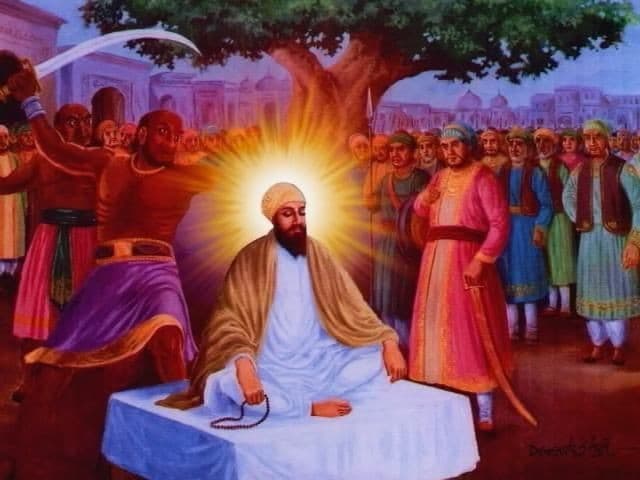
3.Sri Guru Tegh Bahadur Legacy (Sikh Guru)

PMI
Illustration for Sri Guru Tegh Bahadur Legacy (Sikh Guru)

What & Where

Guru; Ninth Sikh Guru (1621–1675), youngest son of Guru Hargobind

Geography; born Amritsar, preached across North & East India, founded Anandpur Sahib (Chak Nanaki)

Martyrdom; publicly beheaded 11 Nov 1675 at Chandni Chowk, Delhi, for defending religious freedom

Quick Facts for MCQs

Life & Travels

  • Missions; toured Punjab, UP, Bengal, Bihar, Assam, Dhaka establishing sangats, wells, langars
  • Settlement; 20 years meditation in Bakala before Guruship
  • Finance; supported poor communities through offerings and philanthropy

Spiritual Works

  • Composition; verses stress nirbhau (fearlessness) and nirvair (no-enmity) ethos
  • Inclusion; hymns later compiled into Guru Granth by Guru Gobind Singh
  • Reform; condemned casteism, ritualism, fanaticism across congregations

Martyrdom & Legacy

  • Stand; chose death over conversion, protecting freedom of conscience—unique interfaith sacrifice
  • Witness; companions executed by saw, fire, boiling water before his beheading
  • Memorials; Sis Ganj & Rakab Ganj gurudwaras mark execution and cremation sites

Key Data Points

FeatureData-Point
Birth date1 April 1621
BirthplaceAmritsar, Punjab
Childhood nameTyag Mal
Title “Tegh Bahadur”after Battle of Kartarpur 1634
SpouseMata Gujri
Installation as 9th GuruAug 1664, Bakala (by Diwan Dargha Mal)
Land purchased fromRani Champa of Bilaspur
Town foundedChak Nanaki (1665–72), later Anandpur Sahib
Hymns in Guru Granth59 Shabads + 57 Shaloks in 15 Ragas
Appeals for helpKashmiri Pandits led by Pandit Kirpa Ram
Arrest locationRopar; jailed Sirhind then Delhi
Companions martyredBhai Mati Das, Bhai Sati Das, Bhai Dayala
Execution date & site11 Nov 1675, Chandni Chowk (now Gurdwara Sis Ganj)
Body cremation siteGurdwara Rakab Ganj Sahib, Delhi
Opposing rulerMughal Emperor Aurangzeb

Related UPSC Prelims PYQs

GS1 2004PYQ 1

Consider the following statements about Sikh Gurus:

GS1 1996PYQ 2

Which one of the following pairs is correctly matched?

GS-1Mapping

4.Arunachal Pradesh Border Geography (Border State Geography)

Times of India
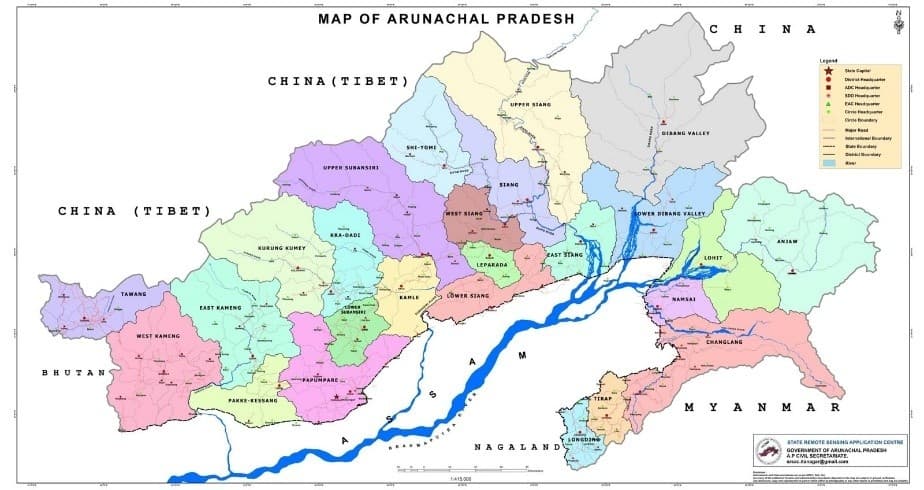
Illustration for Arunachal Pradesh Border Geography (Border State Geography)

What & Where

Border state in India’s far northeast; nicknamed “Land of the Rising Sun”.

Part of Eastern Himalaya; mountainous & sub-montane slopes descending to Assam plains.

Largest NER state; borders Bhutan, China, Myanmar; Indian neighbours Assam, Nagaland.

Quick Facts for MCQs

Historical Evolution

  • Yandaboo Treaty 1826 brought Assam hills under British administration.
  • Shimla Convention 1914 affirmed McMahon Line; China withheld recognition.
  • NEFA later reorganised into five frontier divisions headed by Political Officers.

Post-Independence Administration

  • 1947-72 Governor of Assam ran NEFA on President’s behalf under GoI Act 1935, then Constitution.
  • 1972 North-Eastern Areas Act created UT Arunachal Pradesh with Agency/Pradesh Councils, Lt Governor.
  • 1986 State Act enabled elected Assembly; full statehood from Feb 1987.

Security Dimension

  • China periodically rejects Arunachal’s status; India reiterates integral, inalienable claim.
  • McMahon Line serves as de facto LAC; friction sparks diplomatic protests and patrol stand-offs.
  • Strategic location guards Eastern Himalaya flank and approaches to Siliguri Corridor.

Geophysical Traits

  • Altitudes span tropical foothills to alpine peaks, generating sharp climatic gradients.
  • Dense forests and river valleys contribute major Brahmaputra tributaries.
  • First Indian terrain to receive sunrise, driving cultural epithet.

Key Data Points

FeatureData-Point
Statehood date20 Feb 1987
Union Territory formation21 Jan 1972
Colonial/early nameNorth-East Frontier Agency (NEFA)
Boundary line with TibetMcMahon Line, Shimla Convention 1914
International neighboursBhutan, China, Myanmar
Frontier divisions (initial)Kameng, Subansiri, Siang, Lohit, Tirap

Related UPSC Prelims PYQs

GS1, NDA_GAT 2020PYQ 1

Which one of the following Indian states does NOT share international border with two or more countries?

GS1, NDA_GAT 2007PYQ 2

Which one of the following is the correct chronological order of the formation of the following as full States of the Indian Union?

GS-3Environment

5.Climate Threat to Tea Industry (Tea Climate Impact)

The Hindu

What & Where

Beverage: Tea from Camellia sinensis; world’s second-most consumed drink after water.

Core belts: Assam Valley & Cachar, Dooars–Terai–Darjeeling (WB), Nilgiris–Anamalai (TN), Kerala; 96 % of output.

Ideal terroir: 23–25 °C mean, 1 500–2 500 mm even rain, deep friable acidic soils.

Quick Facts for MCQs

Climate Impact

  • Rising-temperature: Blackened leaves, wilting, erratic flush cycles, weakened nutrient absorption.
  • Rainfall-variability: Dry spells drain moisture; heavy deluges trigger erosion, waterlogging.
  • Suitability-shift: South Bank & Upper Assam losing viability; move towards Karbi Anglong, Dima Hasao highlands.

Economic Angle

  • Price-cost: 4.8 % annual price rise versus double-digit inputs shrinks grower margins.
  • Parity-gap: Little drought or heatwave compensation versus staples, heightening vulnerability.
  • Market-structure: Direct-to-consumer e-commerce advised to bypass auctions, raise earnings.

Institutional & Policy

  • Tea-Board: Commerce Ministry body; offices London, Dubai, Moscow for promotion.
  • Certification: ‘trustea’ code verifies sustainable practice, boosts market access, resilience.
  • Policy-asks: Disaster relief, subsidies, dedicated climate R&D demanded for parity with foodgrains.

Adaptive Practices

  • Varietal-breeding: Deep-rooted, high-yield clones introduced for heat-drought tolerance.
  • Farm-management: Mulching, cover crops, micro-irrigation, rainwater harvesting conserve moisture.
  • Agroforestry: Shade trees buffer heat, lower soil temperature, aid pest control.

International Example

  • Kenya-model: KTDA Farmer Field Schools train growers in planting, fine-plucking, certification readiness.

Key Data Points

FeatureData-Point
India’s production rank2nd worldwide
India’s export rank3rd; Kenya 1st, China 2nd
Domestic consumption share80 % of production
Per capita use840 g per year
Avg price rise 1995-20254.8 % / yr; wheat-rice ≈10 %
Assam tea workers≈12 lakh livelihoods
Tea Board statuteTea Act 1953; HQ Kolkata

Related UPSC Prelims PYQs

GS1 2010PYQ 1

Though coffee and tea both are cultivated on hill slopes, there is some difference between them regarding their cultivation. In this context, consider the following statements :

GS1 2020PYQ 2

“This crop is of tropical origin. For its development it requires about 210 frost-free days and 50–100 centimetres of rainfall annually. Its adaptability to moist, deep, well-drained soils makes it ideally suited for plantation agriculture.” Which one of the following crops is described in the above passage?

GS-3S&T

6.LCA Tejas Indigenous Fighter Jet (Indigenous Fighter Jet)

The Hindu
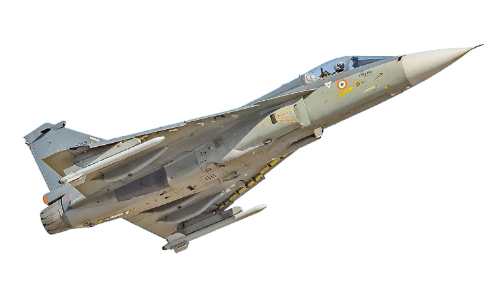
Illustration for LCA Tejas Indigenous Fighter Jet (Indigenous Fighter Jet)

What & Where

Indigenous 4.5-generation Light Combat Aircraft (LCA) Tejas; cornerstone of Indian Air Force fighter modernisation.

Designed by Aeronautical Development Agency; manufactured by Hindustan Aeronautics Ltd under India’s LCA programme.

Operates from Indian bases; showcased abroad, notably Dubai Air Show where a crash recently occurred.

Quick Facts for MCQs

Tech & Schemes

  • Composite airframe yields high agility, low weight, reduced radar signature.
  • Open-architecture mission computer eases rapid sensor or weapon upgrades.
  • Mk-1A adds advanced EW suite, BVR missiles, improved maintainability.

Security Dimension

  • MiG-21 replacement bolsters squadron strength without heavy import bills.
  • Indigenous supply chain aligns with Atmanirbhar Bharat defence goals.
  • Cost-effective platform enables larger fleet size within limited budgets.

International Examples

  • Dubai Air Show crash highlights need for rigorous display safety protocols.
  • Successful Bahrain 2016 demonstrations earlier boosted foreign buyer interest.
  • HAL marketing teams engaging Asian-African air forces for first export order.

Key Data Points

FeatureData-Point
Generation4.5
Primary roleMulti-role, all-weather fighter
First flight2001
IAF induction2016
DevelopersADA + HAL
AirframeCarbon-fiber composite
Flight controlsQuadruplex fly-by-wire
RadarAESA
RefuellingProbe-mounted IFR capability
Present variantsMk-1, Mk-1A; Mk-2 in development
Seat optionsSingle-seat fighter, twin-seat trainer
Export interestMalaysia, Argentina, Egypt, Philippines (expressed)

Related UPSC Prelims PYQs

CAPF_GAI, GS1 2024PYQ 1

Consider the following aircraft:

CAPF_GAI, GS1 2022PYQ 2

निम्नलिखित कथनों पर विचार कीजिए :

GS-3S&T

7.Artificial Intelligence in Agriculture (Agri AI Applications)

WB
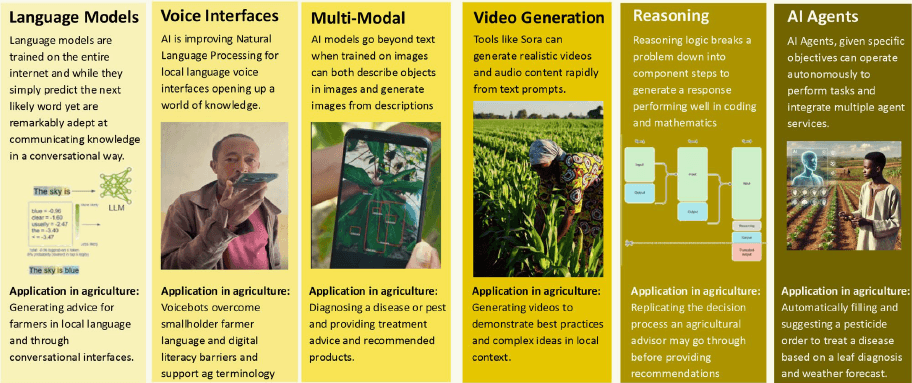
Illustration for Artificial Intelligence in Agriculture (Agri AI Applications)

What & Where

Definition : Use of GenAI, multimodal and “small AI” tools to optimise complete agrifood value chain.

Key types/processes : Precision advisory, climate-smart breeding, AI-based finance, logistics, market intelligence.

Core geography : Low- & middle-income countries, especially India, Ethiopia, wider Africa and Asia pilots.

Quick Facts for MCQs

Technology Trends

  • GenAI multimodal: Combines text, images, satellite feeds for vernacular, conversational farm advice.
  • Systems-level adoption: Tools now cover R&D to retail, not isolated pilots.
  • Lightweight models: “Small AI” enables on-device analytics in low-bandwidth villages.

Economic Angle

  • Investment surge: Market expected to grow nearly seven-fold within a decade.
  • Income gains: Telangana’s Saagu Baagu raised per-acre earnings while trimming input costs.

Governance & Ethics

  • Regulation gap: LMICs lack clear norms on data rights, liability, transparency.
  • Data sovereignty: Ethiopia’s Coalition, India’s ADeX build nationally governed data layers.
  • Safeguards needed: Prevent vendor lock-in, bias and smallholder exclusion.

Social Concerns

  • Digital divide: Patchy rural internet and power limit real-time AI services.
  • Skill deficit: Women and older farmers need targeted digital-literacy support.

Environmental Impact

  • Input efficiency: Precision spraying slashes pesticide and fertiliser footprints.
  • Climate resilience: AI-accelerated phenotyping breeds heat-, flood-tolerant crop varieties faster.

Key Data Points

FeatureData-Point
Global AI-agri market 2023≈ US$1.5 billion
Projected market 2032≈ US$10.2 billion
Yield uplift potential20–30 %
Agro-chemical cut via dronesUp to 95 %
Use cases in WB report60
Deployment on devicesRuns on basic offline smartphones

Related UPSC Prelims PYQs

GS1 2024PYQ 1

Which of the following correctly describes "100 Million Farmers"?

GS1 2025PYQ 2

विश्व बैंक ने यह चेतावनी दी है कि भारत वह पहला देश बन सकता है जहाँ आर्टिफ़िशियल इंटेलिजेंस-आधारित ऑटोमेशन (डेटा-ड्रिवन ऑटोमेशन) के कारण 35% से अधिक नौकरियाँ प्रभावित होंगी। निम्नलिखित कथनों पर विचार कीजिए:

GS-2Polity

8.UN Secretary-General Selection Process (UN Secretary-General)

NDTV

What & Where

UN Secretary-General: chief administrative officer under Art 97, represents UN worldwide.

Chosen through Security Council screening, then General Assembly appointment, HQ New York.

Current race (for 2027-31) stresses first-ever woman, regional rotation norm.

Quick Facts for MCQs

Legal & Policy

  • Charter silent on rotation; practice follows informal regional rotation since 1946.
  • P5 veto decisive; colour-coded ballots flag permanent members.
  • Joint UNSC-UNGA President letter triggers nomination window.

Selection Procedure

  • Straw polls: each member marks Encourage/Discourage/No opinion in secret ballots.
  • Final UNSC resolution names single candidate to GA; GA vote usually by acclamation.
  • Gender balance push since 2016; civil society campaigns demand transparent hearings.

Powers & Functions

  • Administration: heads Secretariat, supervises 30k staff, manages core budget ≈ USD 3.7 bn.
  • Peacekeeping: oversees separate budget ≈ USD 5.6 bn and 12+ missions.
  • Article 99: may bring threats to peace directly before UNSC.

Key Data Points

FeatureData-Point
Legal basisArticle 97, UN Charter
Formal appointerUN General Assembly
Recommending bodyUN Security Council (15 members)
Victory threshold≥9 UNSC votes & zero P5 veto
Term length5 years, renewable once

Related UPSC Prelims PYQs

CDS_GK, GS1 2009PYQ 1

The Security Council of UN consists of 5 permanent members, and the remaining 10 members are elected by the General Assembly for a term of

CDS_GK, GS1 2020PYQ 2

Which one among the following is not correct about the Secretary General of the Lok Sabha?

GS-2Polity

9.G20 Johannesburg Summit 2025 Outcomes (G20 Johannesburg Summit)

PIB

What & Where

20th G20 Leaders’ Summit; hosted 26 Nov 2025, Johannesburg, South Africa

Theme: “Solidarity, Equality, Sustainability”; first-ever summit on African soil

Focus: Global South priorities, Ubuntu philosophy, climate-finance, UNSC reform

Quick Facts for MCQs

Declarations & Commitments

  • Ubuntu call: stronger multilateralism against conflict, inequality, humanitarian crises
  • Climate finance push: “billions-to-trillions” shift; equitable Paris transition
  • Terrorism: unequivocal condemnation aligning with India’s stance

Institutional Reform

  • UNSC expansion sought for Africa, Asia-Pacific, Latin America
  • Cost of Capital Commission to curb “African risk premium” in credit ratings
  • Support reiterated for 25th IMF Board seat for Africa

Development Finance

  • Mission 300 backed by WB & AfDB; electricity access focus
  • Critical Minerals Framework promotes exploration, local beneficiation in Global South
  • Debt sustainability spotlight: > 50 % Africans in nations spending more on interest than public services

India’s Contributions

  • Proposed G20 Initiative on Countering Drug-Terror Nexus; financial tracking & border coordination
  • Africa Skills Multiplier: train 1 mn trainers in 10 yrs
  • Advocated Global Compact on AI; invited nations to AI Impact Summit 2026

Socio-Economic Targets

  • Nelson Mandela Bay Target: reduce youth NEET by 5 %
  • Women’s empowerment: barrier removal, decision-making inclusion, peacebuilding role
  • Labour force aim: 25 % gender parity increase by 2030

Key Data Points

FeatureData-Point
Troika 2025Brazil – South Africa – United States
Members’ share of GDP≈ 85 % of world total
Johannesburg Declaration length122 paragraphs
Debt burden highlightedAfrica: USD 1.8 trillion
Mission 300 targetElectricity to 300 mn Africans by 2030
Youth NEET cut (Mandela Bay)−5 % by 2030
Gender parity goal25 % rise in LFPR by 2030
New body launchedCost of Capital Commission
Critical Minerals toolG20 Critical Minerals Framework
G20 composition19 states + EU + AU (since 2023)

Related UPSC Prelims PYQs

GEO_GS 2021PYQ 1

G-20 is a forum of countries that intends to promote global economic stability and sustainable growth. Which among the following group of countries DOES NOT form a part of the forum?

GEO_GS 2025PYQ 2

Which country is the Chair of G20 for the year 2025?

GS-3SecurityQuick Bite

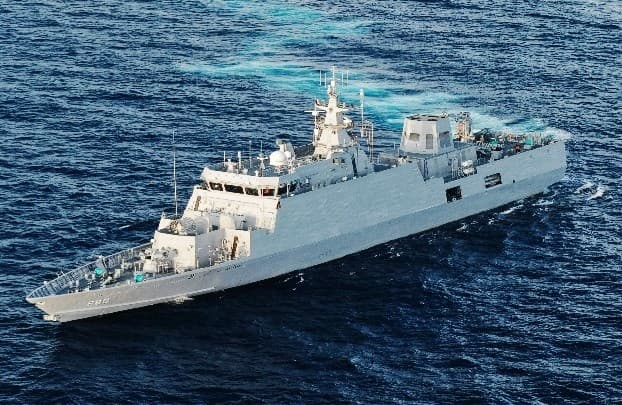
10.INS Mahe ASW Shallow Craft (ASW Craft)

PIB
Illustration for INS Mahe ASW Shallow Craft (ASW Craft)

What & Where

INS Mahe: lead Mahe-class Anti-Submarine Warfare Shallow Water Craft, commissioned into Indian Navy at Mumbai.

Built by Cochin Shipyard Limited, Kochi; over 80 % indigenous; operates in India’s coastal/shallow waters.

Mission: frontline coastal defence—detect, track, neutralise submarines and support larger naval assets.

Quick Facts for MCQs

Technology & Capability

  • Stealth optimisation enables low-depth manoeuvring where larger platforms struggle.
  • Integrated suite: modern weapons, high-precision sensors, advanced communication and control systems.
  • Superior ASW algorithms provide accurate sub-surface tracking in littoral zones.

Security Dimension

  • Forward layer within India’s multi-tier maritime security grid, enhancing coastal surveillance.
  • Supports submarines, larger warships and naval aviation, creating persistent deterrence.
  • Strengthens response against hostile underwater threats close to shorelines.

Indigenisation Drive

  • Project aligns with Aatmanirbhar Bharat, showcasing domestic design–build competence.
  • Demonstrates ability to construct complex combatants without major foreign dependence.
  • Sets precedent for future shallow-water ASW fleet expansion through Indian yards.

Key Data Points

FeatureData-Point
Ship typeASW Shallow Water Craft
Class leadMahe-class
BuilderCochin Shipyard Limited (CSL), Kochi
Indigenous content> 80 %
Commissioning locationMumbai
Motto“Silent Hunters”
Named afterMahe town, Malabar Coast
Crest symbolUrumi (flexible sword)
MascotCheetah
Primary roleSubmarine detection, tracking, neutralisation

Related UPSC Prelims PYQs

CDS_GK, ESE_GS 2024PYQ 1

Which one of the following ships does NOT come under Indian Navy's eight ASW Shallow Water Craft project?

CDS_GK, ESE_GS 2024PYQ 2

Which one of the following statements about 'INS Tarmugli' is not correct?

GS-3SecurityQuick Bite

11.Operation Pawan Peacekeeping Mission (IPKF Sri Lanka)

The Hindu
Illustration for Operation Pawan Peacekeeping Mission (IPKF Sri Lanka)

What & Where

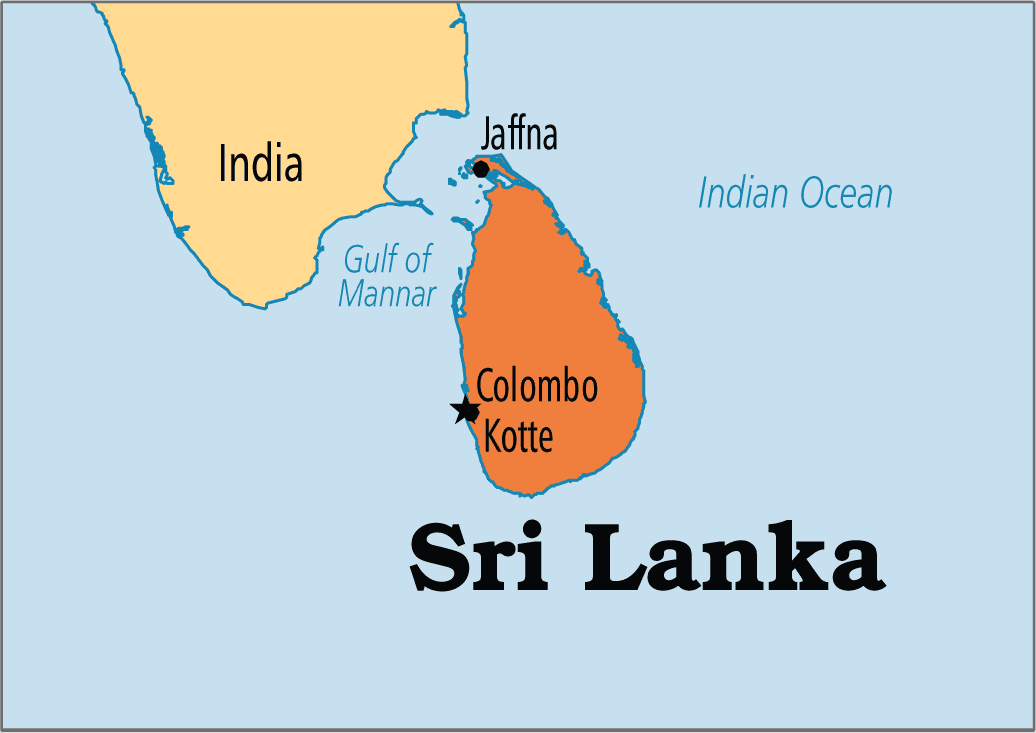
Operation Pawan = IPKF’s counter-insurgency mission in Sri Lanka under the 1987 Indo-Sri Lanka Accord.

Core zone = Jaffna Peninsula, Northern Sri Lanka, amid the civil war (1983-2009).

Mandate = Disarm LTTE, deny its control of Jaffna, support peace accord implementation.

Quick Facts for MCQs

Security Dimension

  • Counter-insurgency drive prevented LTTE from retaking Jaffna during 1987-90.
  • Mission involved urban combat, search-and-destroy, enforced disarmament.

International Relations

  • Indo-Sri Lanka Accord symbolised India’s first large post-Independence peacekeeping abroad.
  • Aimed at stabilising Sri Lanka while curbing external (foreign) involvement.

Historical Timeline

  • Accord signed July 1987; IPKF inducted soon after.
  • Active operations wound down by March 1990, forces fully withdrawn thereafter.

Key Data Points

FeatureData-Point
Operation nameOperation Pawan
Deployed forceIndian Peace Keeping Force
Host nationSri Lanka
Theatre of actionJaffna Peninsula
Accord year1987
Campaign spanDec 1987 – Mar 1990
Main adversaryLTTE
Accord signatoriesRajiv Gandhi & J.R. Jayewardene
GS-3Security

12.Digital Tradecraft in Terrorism (Cyber Terrorism)

The Hindu

What & Where

Definition: Digital tradecraft = encrypted, decentralised online methods for terror communication, finance, planning

Key processes: end-to-end apps, VPN/Tor anonymity, draft-only emails, crypto payments, OSINT target mapping

Geography: Trigger event — 2025 car blast near Delhi Red Fort; threat now pan-India including professional campuses

Quick Facts for MCQs

Legal & Policy

  • Gap: Current IT Act, UAPA omit draft-only mails, self-hosted servers, ephemeral chats
  • Proposal: TRAI monitoring of VPN gateways; compliance norms for private encrypted servers
  • Tool: MLATs, updated UAPA clauses for digital evidence admissibility

Tech Dimension

  • Capability need: memory forensics, encrypted-network mapping, server seizure kits
  • Tactic: offline Bluetooth mesh, Wi-Fi dead drops evade metadata capture
  • OSINT use: satellite maps, AI reconnaissance choose targets remotely

Institutional Capacity

  • Shortfall: trained cyber-intelligence manpower across NIA, IB, state ATS units
  • Plan: specialised courses in cryptography, malware analysis, OSINT through IITs, IIITs
  • Community: National Integration Council to aid behavioural flagging in campuses

International Coordination

  • Requirement: fast MLAT, data-sharing pacts with Switzerland, EU, West Asian hosts
  • Platforms: INTERPOL, Europol, UN 1267 sanctions for cross-border digital evidence
  • Hindrance: foreign server jurisdiction delays real-time intelligence flow

Social Concerns

  • Trend: radicalisation infiltrating doctors, engineers, academia via gaming, AI-generated propaganda
  • Measure: UGC, AICTE advisories for early ideological shift detection
  • Community policing: district-level security committees to counter extremist narratives

Key Data Points

FeatureData-Point
First flagged incident26 Nov 2025 Red Fort car explosion
Flagship encrypted app citedThreema; no phone / email required
Legal ban usedSec 69A IT Act 2000 blocks Threema
Core counter-terror lawUAPA 1967; needs digital update
Lead cyber-forensic agencyCERT-In (to be expanded)
Proposed skill partnersIITs, IIITs, DRDO, ISRO
Anonymity tool trioVPNs, Tor browser, burner devices
Finance maskingCrypto, prepaid wallets, fake-charity crowdfunding

Related UPSC Prelims PYQs

CDS_GK 2025PYQ 1

किस फ़ायरवॉल को चालू करने के उपयोग निम्नलिखित में से कौन-से हैं?

GS-2Scheme

13.Integrated Child Development Services (ICDS Programme)

The Hindu

What & Where

Definition – ICDS: centrally sponsored MoWCD programme (launched 2 Oct 1975) delivering nutrition-health-ECCE to 0-6 children, pregnant & lactating women.

Key processes – package of Supplementary Nutrition, Immunisation, Health Check-up, Referral, Pre-school Education, Nutrition & Health Education via Anganwadis.

Geography – piloted Karnataka 1975; now pan-India; since FY 2021 merged into Mission Saksham Anganwadi & Poshan 2.0.

Quick Facts for MCQs

Objectives & Services

  • Target – reduce child mortality, morbidity, malnutrition, school dropouts through integrated community delivery.
  • Foundation – ensure psychological, physical, social development during critical 0-6 window.
  • Coordination – links health, WASH, education, agriculture departments for holistic child welfare.

Mission Saksham Anganwadi 2.0

  • Verticals – Supplementary Nutrition, ECCE, Infrastructure upgradation, Poshan Abhiyaan convergence.
  • Nutrition focus – IYCF promotion, SAM/MAM protocols, AYUSH wellness elements.
  • Infrastructure – smart devices, upgraded buildings, growth-monitoring tools at 13.9 lakh centres.

Social Impact

  • Human-capital – early interventions break inter-generational poverty, raise cognitive outcomes.
  • Gender – childcare support frees women for labour force participation.
  • Safety-net – prenatal to preschool continuum lowers maternal and under-five mortality.

Key Data Points

FeatureData-Point
Launch date2 October 1975
Nodal ministryMinistry of Women & Child Development
Current umbrella schemeMission Saksham Anganwadi & Poshan 2.0
Finance period covered15th FC cycle 2021-26
Core beneficiariesChildren 0-6 yr; pregnant & lactating mothers
Adolescent coverageGirls 14-18 yr under Scheme for Adolescent Girls
Monitoring toolPoshan Tracker real-time app
Focus geographiesAspirational Districts & North-East
Upgraded centres termSaksham Anganwadi
National convergence missionPoshan Abhiyaan

Related UPSC Prelims PYQs

CDS_GK 2023PYQ 1

Which of the following strategies is/are adopted for implementing the POSHAN Abhiyaan?

CDS_GK 2025PYQ 2

Which one of the following platforms marks a transformative step in India's immunization efforts by digitizing vaccination records for pregnant women and children up to 16 years?

Ready to practice?

Test your knowledge with our UPSC test series.

Start Free Trial