UPSC Current Affairs

14 topicsGS-1: 3GS-2: 4GS-3: 7
0/14 done
GS-2Polity

1.Stagnation in Subordinate Judiciary (Judiciary)

The Hindu
Illustration for Stagnation in Subordinate Judiciary (Judiciary)

What & Where

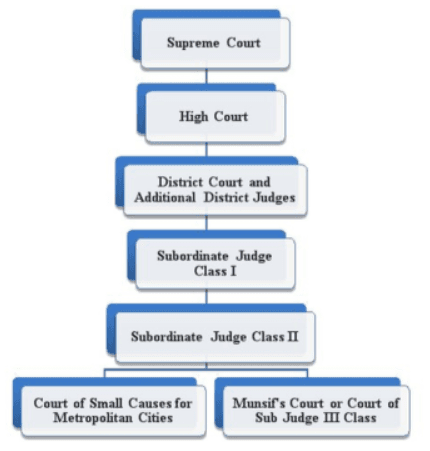
Structure: Three-tier subordinate courts—District & Sessions, Senior Civil/Chief JM, Junior Civil/JMFC—first interface for litigants

Constitution: Articles 233-237 vest recruitment, postings, discipline jointly in High Courts and State Governments

Caseload: District courts hold 4.69 crore pending cases, ~77 % of India’s total litigation burden

Quick Facts for MCQs

Governance & Recruitment

  • Oversight: High Courts inspect, post, promote; States fund infrastructure, run PSC examinations
  • Entry routes: Lower Judicial Service for 0-7 yr graduates; Higher Judicial Service for 7 + yr advocates as District Judges
  • Gap: Inexperienced fresh recruits cited for weak orders and trial mismanagement

Capacity & Pendency

  • Load: Each District Judge handles 1,000–1,500 new filings yearly plus backlog
  • Ratio: India needs 10,000 + more judges to meet minimum 50 per million benchmark
  • Execution: 70 % civil matters delayed in decree execution, adding 3–7 years

Tech & Schemes

  • e-Courts Phase III: IT upgrade in 18,735 courts, 1,814 e-Sewa Kendras operational
  • Fast Track Courts: 865 FTCs and 725 POCSO courts disposed 3.34 lakh priority cases
  • Digital lag: Only 21 Virtual Courts despite 65 crore VC hearings nationwide

Procedural Bottlenecks

  • CPC hurdles: 106 rules under Order XXI and multi-stage decrees prolong enforcement
  • Adjournments: Criminal trials record 42 % adjournment rate, stalling convictions
  • Clerical load: Judges lose ≈ 2 hrs daily on summons and cause-list calling duties

Key Data Points

FeatureData-Point
Total pending in district courts4.69 crore
Share of national caseload≈ 90 %
Sanctioned judges (district level)25,843
Working judges21,122
Vacancy rate stated3 %
Judges per million population21
Law Commission norm50 per million
Pages digitised under e-Courts506 crore
VC hearings conducted65 crore
Functional Virtual Courts21 in 17 States
Average civil case lifespan5–10 years
Land dispute duration20–30 years

Related UPSC Prelims PYQs

GS1 2004PYQ 1

Consider the following statements:

GS1 1996PYQ 2

According to the Constitution of India, the term ‘district judge’ shall not include
GS-3Economy

2.India-US LPG Import Deal 2026 (Energy Trade)

TN

What & Where

Structured one-year LPG import contract; India buys from US Gulf Coast for calendar year 2026.

Volume 2.2 MTPA, roughly 10 % of India’s yearly LPG imports.

Shifts India’s supply map beyond UAE-Qatar-Saudi-Kuwait to the United States.

Quick Facts for MCQs

Economic Angle

  • Benchmarking; Mont Belvieu pricing expected to offer competitive, transparent cost discovery.
  • Dollar-denominated US trade may reduce freight differentials versus spot Gulf cargos.
  • Supports India’s aim to narrow bilateral trade gap with US.

Energy Security

  • Diversification lowers geopolitical risk from Strait of Hormuz disruptions.
  • Structured supply ensures assured cargoes for Ujjwala-driven demand surge.
  • Multi-supplier award prevents single-point failure.

India–US Relations

  • Builds on existing crude, LNG trade; adds LPG as third hydrocarbon stream.
  • Facilitates ongoing discussions on tariff cuts and critical mineral access.
  • Signals strategic trust amid Indo-Pacific cooperation.

Key Data Points

FeatureData-Point
Contract natureFirst ever structured, long-term US LPG deal
Contract year2026
Annual volume2.2 million tonnes
Indian buyersIOC, BPCL, HPCL
US suppliersChevron, Phillips 66, TotalEnergies Trading
Price benchmarkUS Mont Belvieu LPG index
Share of India’s LPG imports≈10 %
Present import dependence~60 % of total LPG demand
West Asia share in 2024 imports≈90 %
India’s 2024 LPG imports~21 million tonnes
GS-3EconomyQuick Bite

3.RBI Floating Rate Bonds Surge (Government Securities)

Economic Times

What & Where

Definition – RBI Floating Rate Bonds: Govt securities with coupon reset, first issued 1995, retail tranche since 2020

Geography – Sovereign debt of India; issued, serviced and redeemed by Reserve Bank of India

Benchmark – Current coupon = National Savings Certificate rate + 35 bps, reset every six months

Quick Facts for MCQs

Economic Angle

  • Demand surge; investors reallocating from equities, gold, bank deposits toward higher yielding sovereign FRBs
  • Return linkage raises coupon when policy rates climb, improving real yield retention
  • Acts diversification tool versus fixed-rate G-Secs under volatile rate cycles

Eligibility & Access

  • Residents; joint holders and HUF karthas eligible
  • NRIs, FPIs, corporates barred from retail FRB tranche
  • NSC allows guardians to invest for minors aged ≥10 years

Risk & Return

  • Interest-rate risk mitigated; coupon resets prevent price erosion during tightening
  • Credit risk minimal; sovereign guarantee backs principal and coupon
  • Liquidity moderate; tradable in secondary market unlike NSC certificates

Tech & Schemes

  • FRB rate formula = Base benchmark + pre-set spread announced at auction
  • NSC certificates pledgable as collateral for bank loans
  • Multiple NSC accounts permitted, aiding laddered long-term savings

Key Data Points

FeatureData-Point
Coupon natureVariable, semi-annual reset
Present spread35 basis points over NSC rate
Typical benchmark alternativeAvg yield last three 182-day T-Bill auctions
Investor eligibilityResident individuals & HUFs only
NRI participationNot permitted
Issue first year1995
Key attractionAutomatic hedge against rising interest rates
Linked small-saving rateNational Savings Certificate (7.7 % for FY 2024-25)
NSC tenure5 years, compounded annually
NSC deposit floor₹1,000; no maximum cap

Related UPSC Prelims PYQs

GS1 2022PYQ 1

भारतीय अर्थव्यवस्था के संदर्भ में, 'मुद्रास्फीति-संलग्न बांड (Inflation-Indexed Bonds — IIBs)' के क्या लाभ हैं?

GS1 2021PYQ 2

भारतीय सरकारी बांड प्रतिफल (Government Bond Yields) निम्नलिखित में से किससे/किनसे प्रभावित होता है/होते हैं?

GS-1HistoryQuick Bite

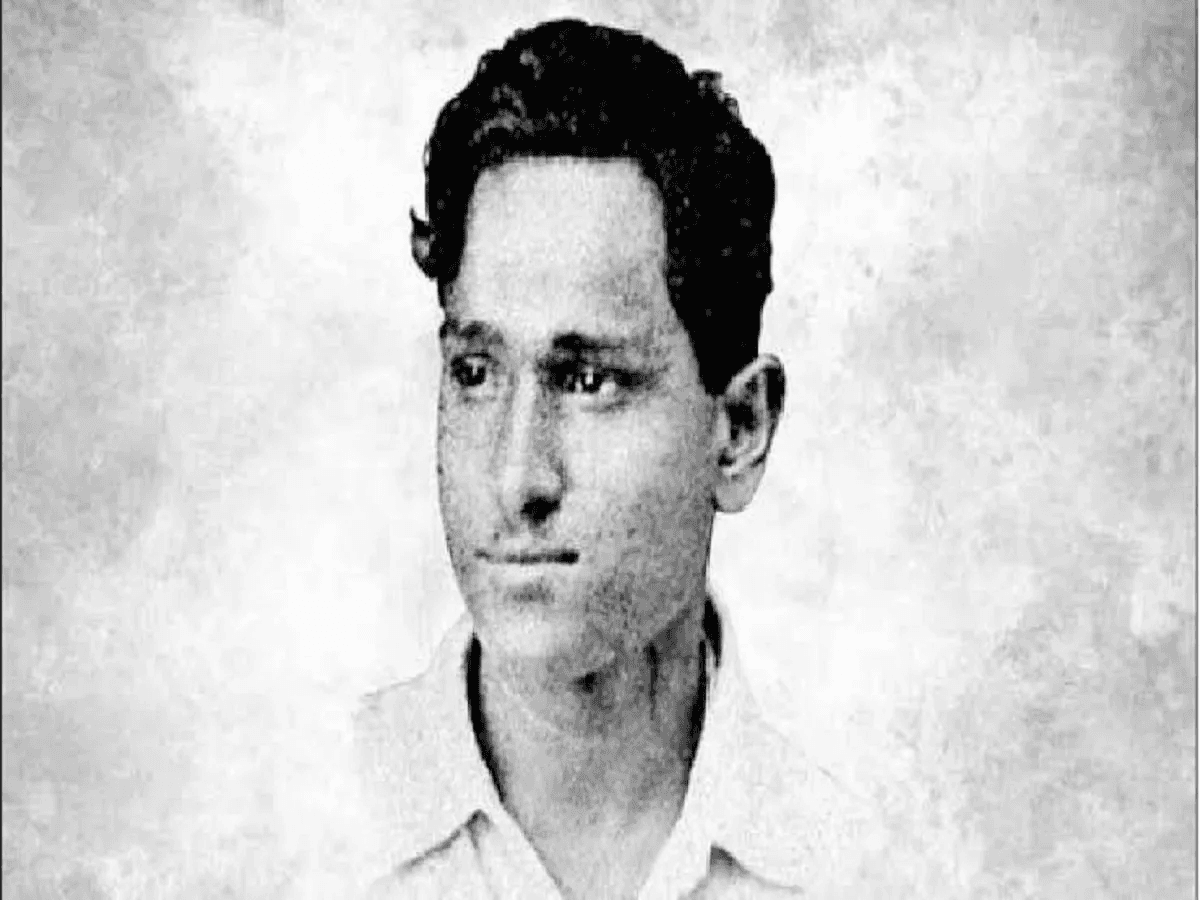
4.Batukeshwar Dutt Birth Anniversary (Revolutionary Freedom Fighter)

The Hindu
Illustration for Batukeshwar Dutt Birth Anniversary (Revolutionary Freedom Fighter)

What & Where

Batukeshwar Dutt – Indian revolutionary, HSRA cadre, close associate of Bhagat Singh.

Central Legislative Assembly, Delhi: site of his 8 Apr 1929 protest-bombing against repressive bills.

Geography: born Khandaghosh (Burdwan, West Bengal); cremated Hussainiwala Martyrs’ Memorial, Punjab.

Quick Facts for MCQs

Revolutionary Actions

  • 8 Apr 1929: hurled two homemade bombs into empty benches; no intent to injure.
  • Distributed leaflets, shouted “Inquilab Zindabad”, then surrendered to court arrest.
  • Aimed to spotlight anti-people colonial bills before entire nation.

Prison Struggles

  • Life convict led multiple hunger strikes for political-prisoner status.
  • 114-day fast with Bhagat Singh demanded better food, books, mail rights.
  • Campaigned inside jails for humane treatment of all revolutionaries.

Legacy & Memory

  • Released 1938; re-entered struggle during Quit India despite frail health.
  • Revered as selfless revolutionary, echoing Swami Vivekananda’s service ideal.
  • Annual tributes paid on 18 Nov; samadhi alongside Singh, Rajguru, Sukhdev.

Key Data Points

FeatureData-Point
Birth date18 Nov 1910
Birth placeKhandaghosh, Burdwan, Bengal
OrganisationsHSRA; Naujawan Bharat Sabha
Key associateBhagat Singh
Iconic action8 Apr 1929 Assembly bombing
Slogans raised“Inquilab Zindabad”
Leaflet quote“If the deaf are to hear, the sound has to be very loud”
SentenceLife imprisonment
Longest hunger strike114 days
Release year1938
Later movementQuit India, 1942
Cremation siteHussainiwala, Punjab

Related UPSC Prelims PYQs

CDS_GK, GEO_GS 2023PYQ 1

Who among the following revolutionaries founded the Hindustan Socialist Republican Army?

CDS_GK, GEO_GS 2020PYQ 2

Who among the following wrote The Philosophy of the Bomb?

GS-1Mapping

5.Saudi Arabia Mapping Overview (Middle East Geography)

NDTV

What & Where

Saudi Arabia: largest Arabian Peninsula nation in West Asia, monarchy ruled by Al Saud family

Core terrain: Rubʿ al-Khāli desert, Hejaz highlands, Najd plateau, oil-rich Persian Gulf littoral

Umrah: non-mandatory Islamic pilgrimage to Mecca, performable year-round unlike Hajj

Quick Facts for MCQs

Physical Geography

  • Rubʿ al-Khāli: world’s largest contiguous sand desert, spans south-central peninsula
  • Hejaz: volcanic western escarpment flanking Red Sea, elevation up to 2500 m
  • Najd: central plateau, dry steppe feeding eastward oil-rich Gulf coast

Religious Sites

  • Mecca: birthplace of Islam, hosts Kaaba inside Masjid al-Haram
  • Medina: Prophet’s resting place, contains Al-Masjid an-Nabawi
  • Both cities situated in Hejaz, non-Muslims prohibited entry

Umrah Rituals

  • Ihram: state of consecration plus two-piece garment, begins at designated Miqat
  • Tawaf: seven anticlockwise circuits of Kaaba, ends with kissing or gesturing to Black Stone
  • Sa’i: seven walks between Safa and Marwah hills, commemorates Hagar’s search for water

Key Data Points

FeatureData-Point
CapitalRiyadh
Largest peninsula countrySaudi Arabia, ~2.15 mn km²
NeighborsJordan, Iraq, Kuwait, UAE, Qatar, Oman, Yemen
Adjacent watersRed Sea, Gulf of Aqaba, Persian Gulf
Largest sand desertRubʿ al-Khāli (Empty Quarter)
Holy citiesMecca & Medina, both in Hejaz
Central plateauNajd
Voluntary pilgrimageUmrah (lesser pilgrimage)
Umrah key ritualsIhram, Tawaf, Sa’i
Prophet’s Umrah countFour times
GS-1Mapping

6.Senkaku Islands Renaming Dispute (East China Sea Islands)

Hindustan Times
Illustration for Senkaku Islands Renaming Dispute (East China Sea Islands)

What & Where

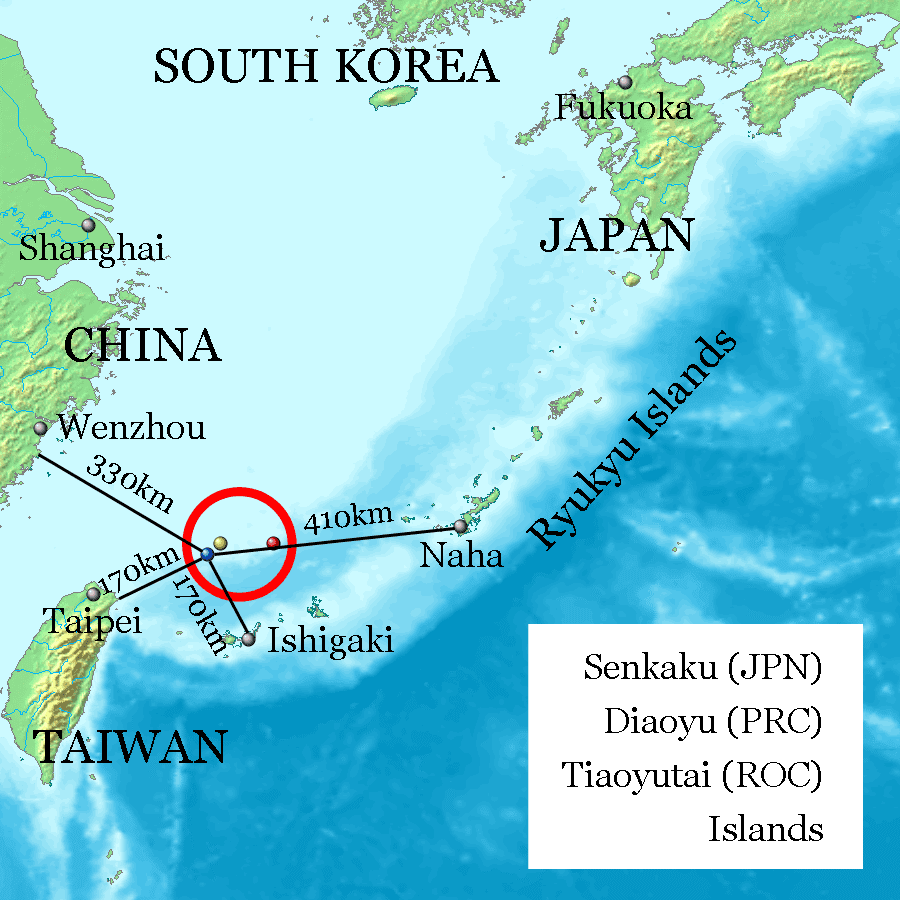
Geography: Eight uninhabited islets (≈ 7 sq km) in East China Sea, ~170 km NE of Taiwan.

Status: Administered by Japan (Okinawa, Ishigaki City) since 1972; sovereignty claimed by China and Taiwan.

2020 Move: Ishigaki council renamed district Tonoshiro Senkaku to reinforce administrative control and signal deterrence.

Quick Facts for MCQs

Administrative Move

  • Renaming: Clears duplication with downtown Tonoshiro; formalised via Ishigaki ordinance.
  • Deterrence: Responds to rising Chinese coast-guard patrols near islets.
  • Jurisdiction: Islands remain under Okinawa Prefecture; no change to external treaties.

Claimant Responses

  • China: Labels act illegal; urges adherence to Four-Principle consensus.
  • Taiwan: Asserts Tiaoyutai sovereignty; deems renaming “invalid”.
  • USA: Confirms islands fall under treaty defence obligations to Japan.

Strategic Significance

  • Geography: Controls sea-lanes linking Taiwan-Ryukyu-Japan; potential hydrocarbon reserves.
  • Pattern: Mirrors China’s disputes with ASEAN states in South China Sea.
  • Flashpoint: Analysts tag Senkakus as possible next Asian military hotspot.

India Angle

  • Timing: Occurred days after Galwan Valley clash, spotlighting Chinese assertiveness.
  • Diplomacy: Backing Japan can bolster India’s LAC narrative without major economic fallout.
  • Indo-Pacific: Shared interest in curbing PLA Navy boosts India-Japan maritime synergy.

Key Data Points

FeatureData-Point
Alternate namesDiaoyu (China), Tiaoyutai (Taiwan)
LocationEast China Sea, NE of Taiwan
No. of islets8
Total land area~7 sq km
Administered byJapan since 1972
Renaming date22 Jun 2020
New local nameTonoshiro Senkaku
Defence coverUS-Japan Mutual Security Treaty 1960
China-Japan consensus yearFour-Principle 2014
Resource interestProbable oil, rich fishing grounds

Related UPSC Prelims PYQs

GS1 2022PYQ 1

Which one of the following statements best reflects the issue with Senkaku Islands, sometimes mentioned in the news?

GS-3Environment

7.Global Big Cats Summit 2026 (Wildlife Conservation)

DD News

What & Where

Global Big Cats Summit 2026: high-level meet in New Delhi to boost worldwide policy, science and collaboration for big-cat conservation.

International Big Cat Alliance (IBCA): India-based, multi-country coalition safeguarding seven major big-cat species through shared funding, tech and best practices.

Scope spans 95 range & non-range nations covering tiger, lion, leopard, snow leopard, cheetah, jaguar, puma habitats across Asia-Africa-Americas.

Quick Facts for MCQs

Conservation Goals

  • Emphasis on tiger population rebound models, Asiatic lion range security, holistic snow-leopard landscape management.
  • Cheetah translocation lessons integrated for future species reintroductions worldwide.
  • Alliance acts as central repository of science, monitoring and adaptive management protocols.

Capacity & Funding

  • Mechanism pools global expertise, tech transfer, training and finance for under-resourced range nations.
  • Corporate, NGO, academic partners support grant windows and rapid-response funds.
  • Centralised data portal streamlines access to research, GIS layers, anti-poaching tech.

Climate & Livelihood Links

  • Protected big-cat habitats aid carbon sequestration and watershed stability, reinforcing climate resilience.
  • Landscape conservation underpins ecotourism, sustainable livelihoods and community stewardship incentives.

Key Data Points

FeatureData-Point
Summit year2026
Summit venueNew Delhi, India
Host countryIndia
IBCA launch9 Apr 2023, Mysuru
IBCA HQ approval12 Mar 2024, India
Member countries95
Covered big catsTiger, Lion, Leopard, Snow Leopard, Cheetah, Jaguar, Puma
Key summit focusTiger recovery, lion plans, snow-leopard landscapes, cheetah translocation
Core IBCA aimUnified platform for protection & population recovery
Major threats tackledPoaching, illegal trade, habitat loss, prey depletion

Related UPSC Prelims PYQs

ESE_GS 2021PYQ 1

The Thirteenth Meeting of the Conference of the Parties to the Convention on the Conservation of Migratory Species of Wild Animals (CMS COP-13) in 2020 was held in

GS-3S&T

8.African Swine Fever Outbreak Assam (Animal Disease)

New Indian Express
Illustration for African Swine Fever Outbreak Assam (Animal Disease)

What & Where

Viral hemorrhagic disease of domestic & wild pigs; caused by African Swine Fever Virus, family Asfarviridae.

Maintained in nature via soft ticks (Ornithodoros spp.) and wild suids.

First Indian detection 2020: Arunachal Pradesh & Assam; current spike prompts Assam inter-district pig ban.

Quick Facts for MCQs

Transmission & Vectors

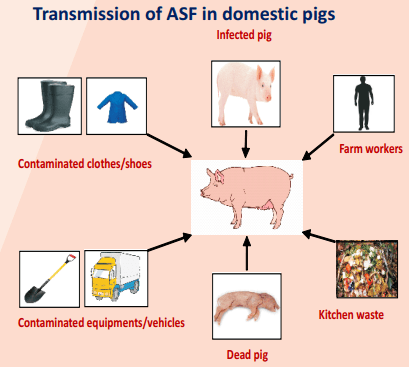
  • Contact with infected pigs, blood, carcasses, feed waste, contaminated clothes, vehicles.
  • Virus endures in ham, sausages, bacon; trade and human movement key spreaders.
  • Sylvatic cycle: warthogs, bushpigs ↔ Ornithodoros ticks sustain virus.

Clinical Signs

  • Peracute: sudden death within 1–3 days, fever 106–108 °F.
  • Acute: anorexia, respiratory distress, cyanotic ears/abdomen, bloody froth, diarrhoea, abortions.

Control & Biosecurity

  • Only option: stamping-out, movement bans, strict farm hygiene.
  • Quarantine new pigs 30–45 days; segregate sick from healthy.
  • Regular disinfection of sheds, equipment, vehicles with approved virucides.

Recent Assam Steps

  • Prohibited inter-district live-pig movement; halted pork sales in seven affected districts.
  • Measures aim to contain new ASF spike reported May 2024.

Key Data Points

FeatureData-Point
Genome typeLarge double-stranded DNA virus
Human riskNil; no zoonotic transmission
Mortality rate90–100 % in acute outbreaks
VectorsSoft ticks (Ornithodoros spp.)
Notifiable statusOIE-listed; mandatory reporting in India
First India outbreakMay 2020, Arunachal Pradesh & Assam
Vaccine / cureNone available globally
Environmental survivalPersists long on surfaces & pork products
Recent Assam actionBanned pork sales, pig transport in 7 districts
Disinfection standard2 % sodium hypochlorite or potassium permanganate

Related UPSC Prelims PYQs

GEO_GS 2023PYQ 1

The recent outbreak of extremely contagious lumpy skin disease affects mostly which one of the following animals?

GS-3S&TQuick Bite

9.Energy Dynamics of Quantum Clock (Quantum Physics)

The Hindu

What & Where

Quantum clock: timepiece exploiting probabilistic state changes of a single electron in a Double Quantum Dot (DQD) system

Tick path: electron sequentially tunnels 0 → L → R → 0 inside semiconductor “islands” controlled by gate voltages

Context: 2025 Physical Review Letters study analysing energy-entropy costs in reading vs running the clock

Quick Facts for MCQs

Physics Insight

  • Randomness: quantum ticks may reverse, unlike deterministic forward classical ticks
  • Irreversibility challenge: reliable time requires net entropy production through measurement
  • Measurement back-action: observation collapses superposition, defining arrow of time

Thermodynamics

  • Entropy: ticking produces minimal heat; sensing generates dominant entropy load
  • Equilibrium limit: equal forward/backward jumps kill entropy, halting clock function
  • Energy budgeting: study highlights observation as primary thermodynamic bottleneck

Potential Applications

  • Atomic-clock design: focus on low-entropy readout to boost energy efficiency
  • Quantum computing: informs architectures needing frequent, low-cost qubit state checks
  • Ultra-precision metrology: insights aid next-gen sub-femtosecond timing devices

Key Data Points

FeatureData-Point
Journal (2025)Physical Review Letters
Core deviceDouble Quantum Dot (DQD)
One tick cycle0 → L → R → 0
Entropy at equilibriumZero; clock stops
Energy comparisonReading > Ticking
State sensorNearby quantum dot charge detector
Entropy sourceMeasurement process
Possible upgradesOptical, ytterbium lattice clocks
Key disciplinesQuantum physics, thermodynamics, precision metrology
Main semiconductor roleControls electron tunnelling via voltages

Related UPSC Prelims PYQs

ESE_GS 2023PYQ 1

Which one of the statements is NOT relevant to quantum computing?

ESE_GS 2026PYQ 2

Consider the following statements regarding quantum dots:

GS-2Editorial

10.Reviving India–Africa Partnership (India–Africa Relations)

The Hindu

What & Where

Inter-governmental India–Africa Forum Summit guides political, economic, security cooperation with all 54 African nations

Geographic focus: Western Indian Ocean seaboard, resource-rich interior corridors, priority LDCs under Duty-Free Tariff Preference

Core tools: Lines-of-Credit, digital public infrastructure, capacity-building, AI-KEYME maritime drill, peacekeeping deployments

Quick Facts for MCQs

Economic Angle

  • Trade: $100 billion turnover, 3rd partner; still dwarfed by China’s $280 billion Africa commerce
  • Investment: $75 billion FDI targets telecom, hydrocarbons, pharma, digital services aligning with Agenda-2063 priorities

Development & Capacity

  • Finance: $10 billion LoCs fund 189 power, rail, water projects across 42 countries; dashboard proposed for faster delivery
  • Human Capital: 40,000 Africans trained; IIT-Madras Zanzibar campus 2023 signals co-creation in STEM education

Security Dimension

  • AI-KEYME 2025 naval drill with nine African navies improved anti-piracy, HADR and Western Indian Ocean coordination
  • India remains top UN peacekeeping troop contributor in Congo, Sudan, South Sudan, boosting security credibility

Bottlenecks & Fixes

  • Challenges: Chinese financial muscle, slow LoC execution, weak connectivity raise cost and erode diplomatic momentum
  • Remedies: institutionalise IAFS-IV, launch UPI-Afripay corridor, sign logistics pacts with Kenya, Mauritius, Tanzania

Key Data Points

FeatureData-Point
Bilateral trade value$100 billion (FY 2024-25)
India’s FDI stock$75 billion
Concessional LoC pledge$10 billion, 189 projects
DFTP coverage98.2 % tariff lines, 38 LDCs
African personnel trained40,000+
Overseas IIT campusZanzibar, 2023
AU seat in G20Achieved 2023 with India’s support

Related UPSC Prelims PYQs

CAPF_GAI, GS1 2016PYQ 1

Consider the following statements:

CAPF_GAI, GS1 2022PYQ 2

Recently, with which one of the following countries did India sign the 'Comprehensive Economic Partnership Agreement'?

GS-3Security

11.Garuda 2025 and Ajeya Warrior Exercises (Military Exercises)

ANI
Illustration for Garuda 2025 and Ajeya Warrior Exercises (Military Exercises)

What & Where

Bilateral air exercise Garuda-2025: India–France; Mont-de-Marsan Air Base, southwest France

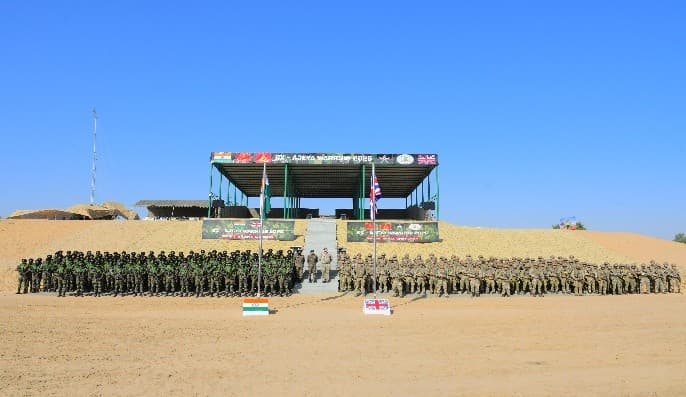
Biennial land exercise Ajeya Warrior-2025: India–UK; Mahajan Field Firing Range, Rajasthan

Objectives: higher interoperability in air combat and semi-urban counter-terror operations under a UN peace ethos

Quick Facts for MCQs

Security Dimension

  • Interoperability upgraded through realistic joint scenarios covering air dominance and urban counter-terror contingency
  • UN mandate for Ajeya Warrior enhances peacekeeping readiness aligning with Chapter VII operations
  • Strategic messaging of cohesive response capability in Indo-Pacific and West Asia theatres

Participants & Assets

  • Indian Air Force fields Su-30MKI multirole fighters with aerial refuelling support
  • French Air & Space Force deploys Rafale F3R frontline aircraft
  • Indian Sikh Regiment represents Indian Army; overall 240 troops shared equally with UK Army

Training Content

  • Complex air combat, tactical manoeuvres, integrated packages in Garuda-2025
  • Brigade-level planning, simulation, field firing, semi-urban operations in Ajeya Warrior-25
  • Emphasis on mission planning, communication, after-action review for lessons

Diplomatic Angle

  • Exercises sustain long-standing Indo-French strategic partnership since 2003
  • India–UK Ajeya Warrior strengthens Roadmap 2030 defence pillar
  • Showcases credible Indian commitment to multilateral security cooperation

Key Data Points

FeatureData-Point
Garuda-2025 TypeAir-combat exercise
Ajeya Warrior-2025 TypeCounter-terror field exercise
Partner NationsIndia–France; India–UK
Host LocationsMont-de-Marsan (France); Mahajan, Rajasthan (India)
FrequencyGaruda – irregular; Ajeya Warrior – biennial
Indian PlatformsSu-30MKI fighters; Sikh Regiment infantry
Foreign PlatformsRafale F3R fighters; UK Army troops
Personnel StrengthAjeya Warrior: 240 (1:1 ratio)
MandateAjeya Warrior under UN charter
Focus TerrainGaruda: airspace; Ajeya Warrior: semi-urban

Related UPSC Prelims PYQs

CAPF_GAI, NDA_GAT 2023PYQ 1

Exercise Ajeya Warrior is a biennial training event between the Indian Army and the army of:

CAPF_GAI, NDA_GAT 2021PYQ 2

'Exercise Desert Knight – 21' is a bilateral air exercise between the Indian Air Force and the Air Force of which one of the following countries?

GS-3Security

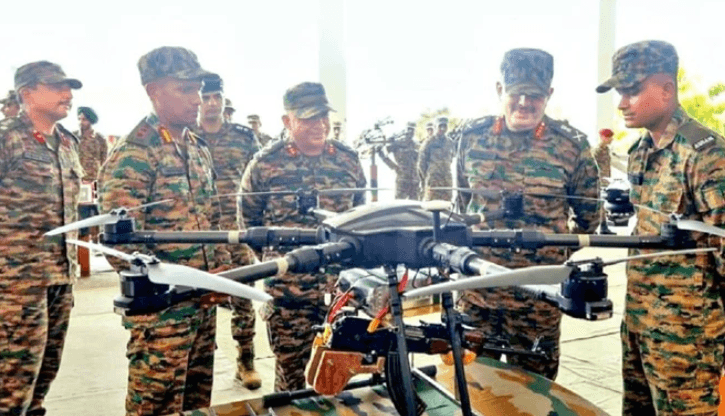
12.Rudra Integrated Combat Brigades (Integrated Battle Groups)

Times of India
Illustration for Rudra Integrated Combat Brigades (Integrated Battle Groups)

What & Where

Rudra Brigade = permanently integrated, all-arms combat formation under Indian Army for rapid, limited-war strikes.

Validated in tri-service Exercise Trishul; conceived for western deserts and northern mountains.

Anchors shift from “Cold Start” mobilisation to quicker “Cold Strike” offensive doctrine.

Quick Facts for MCQs

Structural Design

  • Integration: all combat, support, ISR and logistics units nested under one brigade HQ.
  • Modularity: detach/attach sub-units per mission, retaining core C2 framework.
  • Force-multipliers: drones, precision artillery, attack-helicopter support embedded.

Operational Advantages

  • Mobilisation: permanent grouping slashes assembly time, enabling near-instant offensives.
  • Synchronisation: units train together, boosting cohesion during high-tempo strikes.
  • Multi-domain: designed for land, air, EW and sensor-fusion operations.

Security Dimension

  • Deterrence: swift punitive option against Pakistan cross-border actions under nuclear threshold.
  • Northern readiness: Ladakh & Sikkim brigades counter rapid PLA build-ups.
  • Crisis response: pre-aligned forces reduce decision-to-action lag in border escalations.

Key Data Points

FeatureData-Point
Parent serviceIndian Army
Core doctrineCold Strike (upgrade of Cold Start)
First major validationTri-service Exercise Trishul
Permanent constituentsInfantry, mech-inf, armour, artillery, AD, engineers, signals, UAV, logistics
Current deployments2 brigades: Eastern Ladakh & Sikkim
Lead western formationKonark Corps
Key capabilitySelf-deployable, multi-axis, limited-war strike within nuclear overhang
ModularityComposition tailored to desert, plain, mountain or LoC terrain
GS-2Scheme

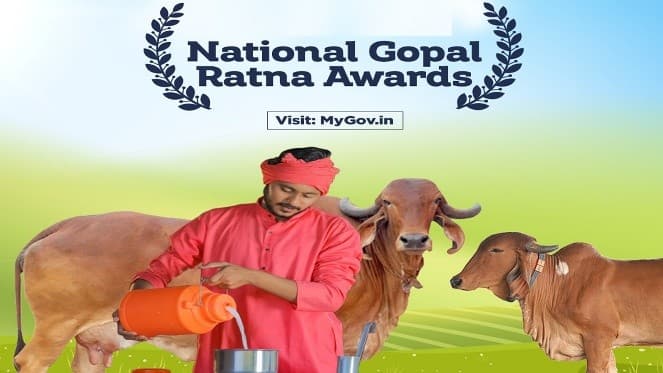
13.National Gopal Ratna Awards 2025 (Livestock Promotion)

DD news
Illustration for National Gopal Ratna Awards 2025 (Livestock Promotion)

What & Where

Prestigious national award honouring excellence in indigenous cattle rearing & scientific dairying across India

Three competitive categories: Dairy Farmer-Indigenous, Artificial Insemination Technician, Dairy Cooperative/FPO/MPC

Implemented by Dept. of Animal Husbandry & Dairying under Rashtriya Gokul Mission, launched 2021

Quick Facts for MCQs

Tech & Schemes

  • Recognition spans scientific breeding, AI services, cooperative milk handling
  • Aligns with RGM goals: genetic up-gradation, breed registration, data-driven herd management

Economic Angle

  • Direct monetary incentives up to ₹5 lakh encourage on-farm investments & service quality
  • Award visibility aids market linkage for winning cooperatives, raising rural income streams

Social Concerns

  • Morale boost for marginal dairy farmers, especially in NER/Himalayan belt
  • Promotes community adoption of ethical, sustainable dairy practices, strengthening village livelihoods

Key Data Points

FeatureData-Point
Administering ministryMoFAHD, GoI
Nodal departmentDepartment of Animal Husbandry & Dairying
First instituted2021
Parent missionRashtriya Gokul Mission (2014)
Award cycle mentioned2025
Total categories3
Cash prize-1st (Farmer/Coop)₹5 lakh
Cash prize-2nd₹3 lakh
Cash prize-3rd₹2 lakh
Special prize NER/Himalayan₹2 lakh (Farmer/Coop)
AIT reward formCertificate & memento only
Key objectiveBoost productivity & conservation of indigenous cattle

Related UPSC Prelims PYQs

CAPF_GAI, GS1 2025PYQ 1

Consider the following statements about the Rashtriya Gokul Mission:

CAPF_GAI, GS1 2025PYQ 2

'Rashtriya Vigyan Puraskar, 2024' under the category of 'Vigyan Ratna Award' was given to

GS-2Scheme

14.AMRIT Pharmacy Decadal Milestone (Affordable Medicines)

The Hindu

What & Where

AMRIT Pharmacy = MoHFW 2015 initiative, run by HLL Lifecare, sells affordable medicines-implants nationwide

Outlets located mainly in central govt hospitals; complements Department of Pharmaceuticals’ Jan Aushadhi Kendras

10-year milestone marked Nov 2025 at Bharat Mandapam, New Delhi

Quick Facts for MCQs

Impact Metrics

  • Savings ratio approx 49 % of medicine value, easing out-of-pocket burden
  • Average beneficiary base ~6.8 million per year since launch
  • Scale indicator; AMRIT supplies worth ₹17k crore in 10 years

Scheme Design

  • Model; central procurement then retail via hospital-attached kiosks to cut mark-ups
  • Focus items; essential medicines, cardiac-orthopaedic implants, basic surgical disposables
  • Pricing; discounts 50-90 % below market MRPs

Comparative Schemes

  • Jan Aushadhi under Ministry Chemicals & Fertilisers, not MoHFW
  • Both aim affordability yet Jan Aushadhi emphasises generic substitution, AMRIT includes implants
  • Combined networks widen rural–urban drug access gap reduction

Technology Tools

  • SUGAM app enables geotagged Kendra locator, price comparison, stock inquiry
  • Backend ERP ensures batch tracking, expiry alerts in AMRIT stores
  • Digital dashboards feed ministries with real-time sales-savings analytics

Key Data Points

FeatureData-Point
AMRIT full formAffordable Medicines and Reliable Implants for Treatment
Parent ministryMoHFW
Implementing PSUHLL Lifecare Ltd (Mini-Ratna)
Launch year2015
Medicines supplied (till Oct 2025)₹17,047 crore
Patient savings₹8,395 crore
Beneficiaries count68.51 million
Comparable schemePradhan Mantri Bhartiya Janaushadhi Pariyojana
Jan Aushadhi Kendras (2025)>16,000 outlets
Generic drugs offered2,100+
Surgical items via PMBJP~300 types
Quality normWHO-GMP manufacturing, NABL lab-tested
Mobile appJan Aushadhi SUGAM

Ready to practice?

Test your knowledge with our UPSC test series.

Start Free Trial