UPSC Current Affairs

13 topicsGS-2: 5GS-3: 8
0/13 done
GS-2Polity

1.SC Revokes Ban on Retrospective ECs (Environmental Clearances)

The Hindu
Illustration for SC Revokes Ban on Retrospective ECs (Environmental Clearances)

What & Where

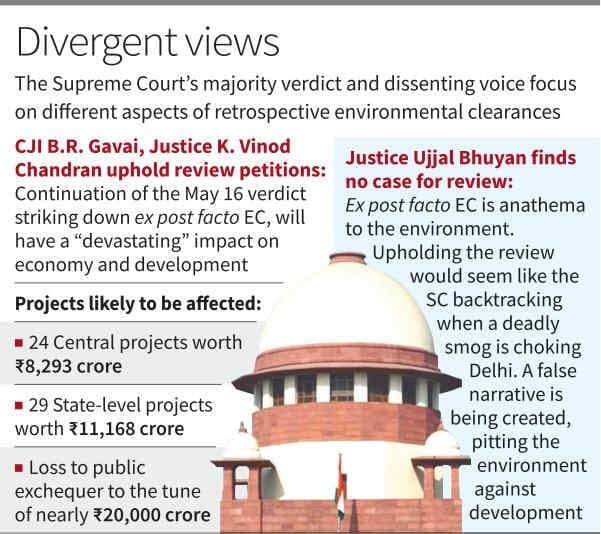
Ex-post-facto ECs: post-construction approvals for projects that skipped mandatory prior clearance under India’s EIA 2006 rules.

Vanashakti ruling (16 May 2025): Supreme Court invalidated 2017 MoEFCC notification & 2021 OMs permitting such approvals nationwide.

Recall order (2025): Majority of the Bench lifted ban and referred issue to a larger Bench for final decision.

Quick Facts for MCQs

Legal & Policy

  • Precautionary principle: preventive safeguards must precede activity; post-facto EC undermines this foundation.
  • Rule-of-law: retro approvals convert illegal builds into legal projects via compensatory payments.
  • Larger Bench referral: aims uniform constitutional-ecological doctrine balancing development with environment.

Environmental Impact

  • Irreversible damage: pollution emitted during unregulated phase cannot be fully remedied later.
  • Public-health risk: Delhi smog cited to stress need for prior controls.
  • Inter-generational equity: post-hoc approvals threaten long-term ecological integrity.

Compliance & Deterrence

  • Heavy penalties, restoration mandates, ecological bonds proposed to deter future violations.
  • Satellite monitoring, automated alerts suggested for real-time detection of clearance breaches.
  • Faster prior EC processing viewed as incentive alignment to reduce illegal project starts.

Key Data Points

FeatureData-Point
Original judgment date16 May 2025
Original BenchJustices A.S. Oka & Ujjal Bhuyan
Instruments struck2017 MoEFCC notification; 2021 Office Memoranda
Core principle invokedPrecautionary principle
Constitutional article citedArticle 21 – Right to life & clean environment
Recall Bench stance2:1 majority; Justice Bhuyan dissented
Dissent descriptionEx-post EC “an anathema, a curse devoted to evil”
Typical sectors seeking retro ECMining, large infrastructure, real estate, industry
GS-2Polity

2.POCSO Gender Neutrality Debate (POCSO Act)

The Hindu

What & Where

Definition: Protection of Children from Sexual Offences Act, 2012; umbrella law against child sexual abuse in India

Scope: Covers penetrative, non-penetrative assault, sexual harassment, pornography; applies to all children <18

Forum: Tried in Special POCSO Courts; overrides conflicting provisions of other domestic laws

Quick Facts for MCQs

Legal & Policy

  • Masculine pronouns construed to include females, ensuring female-perpetrator liability
  • Lok Sabha reply and 2019 Statement of Objects confirm gender neutrality
  • Child-on-child or child-on-adult incidents handled under Juvenile Justice Act

Judicial Process

  • Special Courts mandated; child-friendly procedures minimise re-traumatisation
  • Appeals and sentencing guided by graded punishment structure
  • Failure to meet statutory timelines invites High Court monitoring

Institutional Capacity

  • Need: Dedicated training for police, prosecutors, medical staff on trauma-informed methods
  • Recommendation: Expand Forensic Science Laboratory network for quicker evidence analysis
  • Technology: National child-protection database proposed for case tracking

Digital Challenges

  • Rising Online Child Sexual Abuse & Exploitation necessitates specialised cyber cells
  • Collaboration urged with tech firms for swift takedown and victim identification
  • Personal Safety Education in schools recommended for digital literacy

Key Data Points

FeatureData-Point
Enacted byParliament; Ministry of Women & Child Development
Amendment year2019 (stricter punishments, death for aggravated cases)
Child age limitBelow 18 years
Gender stanceStatutorily gender-neutral, per Sec 13 (1) General Clauses Act
Key offence sectionSection 3: Penetrative Sexual Assault
Minimum term, penetrative10 years (may extend to life)
Minimum term, aggravated20 years; may extend to death
Evidence timelineRecording within 30 days
Trial timeline goalCompletion within 1 year
Override clauseAct prevails over inconsistent laws

Related UPSC Prelims PYQs

GEO_GS 2020PYQ 1

The Justice J S Verma Committee was constituted in 2012 to propose legal reforms regarding the safety of which of the following sections of Indian society?

GS-3Economy

3.National Industrial Classification 2025 Update (Industrial Classification)

DD News

What & Where

National Industrial Classification-2025: six-digit taxonomy covering every economic activity in India.

Released by MoSPI during NSSO’s 75th anniversary event, Udaipur, Rajasthan.

Becomes single reference for surveys, statistics and policy; harmonised with UN ISIC Rev-5.

Quick Facts for MCQs

Revision Timeline

  • Evolution: 1962 origin; five subsequent revisions before 2025 upgrade.
  • 2025 edition adds extra digit improving granularity and comparability.
  • Harmonisation ensures Indian data mesh with global statistical systems.

Sectoral Additions

  • Technology: Blockchain, cloud, digital platforms explicitly coded.
  • Sustainability: Renewable energy, waste management, remediation newly recognised.
  • Services: Detailed logistics, real estate, food-service intermediation classes.

Institutional Architecture

  • MoSPI: Policy custodian and publisher of NIC codes.
  • NSSO: Collects data using NIC; led by Director General, four specialist divisions.
  • Output: Data feed into national accounts, employment and industry surveys.

Key Data Points

FeatureData-Point
Implementing ministryStatistics & Programme Implementation
Digits per codeSix
Replaces versionNIC-2008 (five-digit)
First NIC release1962
Revision years1970, 1987, 1998, 2004, 2008, 2025
AlignmentUN ISIC Revision-5
New tech examplesCloud services, blockchain, platform-based services
Green additionsRenewable energy, waste management, environmental remediation
New intermediation classesLogistics, real estate, food services
NSSO founding year1950
NSSO founderProf. P. C. Mahalanobis
NSSO functional divisionsSDRD, FOD, DPD, SCD
Key NSSO surveysASI, PLFS

Related UPSC Prelims PYQs

GS1 2022PYQ 1

भारत में, निम्नलिखित में से कौन-सा, उन फैक्टरियों में नियमित रूप से औद्योगिक विवाद, समझौते, छँटनी और कामबंदी के विषय में सूचनाओं को संकलित करता है?

GS-3Economy

4.Tier II Bonds and Bank Capital (Bank Capital)

Indian Express
Illustration for Tier II Bonds and Bank Capital (Bank Capital)

What & Where

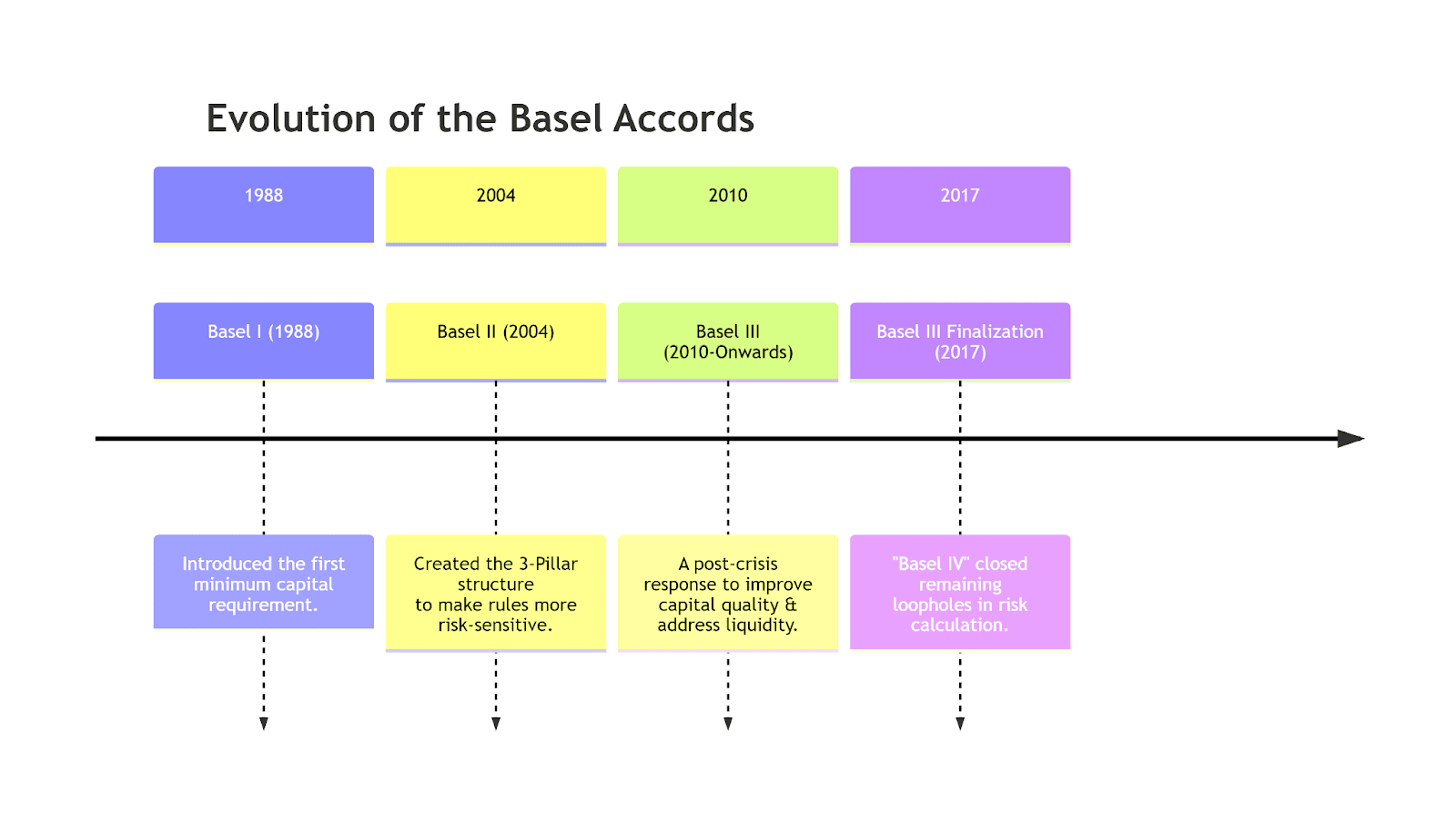
Tier II bonds: subordinated debt counting as supplementary capital under Basel III, improve Capital Adequacy Ratio (CAR)

Issued by Indian public & private banks to meet regulatory capital, avoid equity dilution

Governed by RBI-implemented Basel norms; counted in global CAR formula capital ÷ risk-weighted assets ×100

Quick Facts for MCQs

Capital Adequacy

  • Formula CAR = Eligible capital ÷ Risk-weighted assets ×100
  • Tier II issuance strengthens ratio without fresh equity dilution
  • Higher CAR enhances resilience against bank distress

Bond Characteristics

  • Subordination places Tier II senior to Tier I but junior to regular debt
  • Fixed maturity and callable feature allow banks early redemption after five or ten years
  • Coupons higher than senior bonds due to increased credit risk

Basel Framework

  • Basel III sets tighter capital, liquidity, leverage norms post-2008 crisis
  • Three pillars: minimum capital, supervisory review, market discipline
  • Basel Committee hosts 45 members from 28 jurisdictions, including India

Key Data Points

FeatureData-Point
Planned FY26 Tier II supply~₹25,000 crore
Minimum original maturity5 years
Seniority in liquidationBelow senior debt, above equity
Coupon trendHigher than senior bonds
Typical call optionRedeem after 5/10 years
Loss absorption stagePoint of non-viability/liquidation
Investor baseInsurance, pension, mutual funds, retail
Regulatory classificationSupplementary capital under Basel III

Related UPSC Prelims PYQs

GS1 2007PYQ 1

Basel II relates to which one of the following?

GS-3Environment

5.Brazilian Indigenous Territory Expansion (Indigenous Territories)

BBC
Illustration for Brazilian Indigenous Territory Expansion (Indigenous Territories)

What & Where

Indigenous Territories; legally protected areas for Brazil’s native peoples, culture, forests and biodiversity

New Designation; 10 territories added by presidential decree ahead of COP-30 at Belém, Pará state

Coverage; all Indigenous areas now span 117.4 mn ha ≈ 13.8 % of Brazil, size of Colombia

Quick Facts for MCQs

Legal & Policy

  • Decree; issued by President Lula to accelerate land demarcation process
  • Constitutional backing; Article 231 recognises Indigenous right to traditional lands
  • Area status; once demarcated, land becomes non-transferable government property for perpetual Indigenous use

Environmental Impact

  • Forest shield; demarcated lands act as barriers against logging, ranching, mining expansion
  • Climate benefit; protected areas crucial for Amazon carbon sink integrity
  • Wetlands link; some new territories overlap Pantanal headwaters aiding hydrological regulation

Security Dimension

  • Conflict driver; illegal miners, loggers, ranchers increasingly invade Indigenous zones
  • Violence trend; recorded attacks on tribes surged in recent years per Indigenous Missionary Council
  • Protection mechanism; federal environmental police (IBAMA) gain clearer mandate within newly demarcated borders

Key Data Points

FeatureData-Point
New territories created10
Total Indigenous area117.4 million ha
Share of Brazil’s land13.8 %
Size comparisonRoughly Colombia
Key tribes involvedMura, Tupinambá de Olivença, Pataxó, Guarani-Kaiowá, Munduruku, Pankará, Guarani-Mbya
Biodiversity share on Indigenous lands82 % of global biodiversity
Deforestation cut via demarcationUp to 20 %
Carbon emission reduction by 2030Estimated 26 %
Venue of COP-30Belém, Brazil
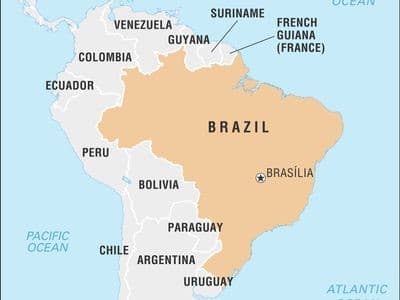
Nation bordering exceptionsBrazil borders all South American countries except Chile & Ecuador
GS-3Environment

6.Global Methane Status Report 2025 (Methane Emissions)

UNEP
Illustration for Global Methane Status Report 2025 (Methane Emissions)

What & Where

Methane: short-lived, high-warming greenhouse gas, ~28× CO₂ over 100 yr; key lever for near-term climate action.

Major anthropogenic sources: Agriculture 42 %, Energy 38 %, Waste 20 % of global 2020 emissions.

Geography: G20 + bloc (EU-24, Norway, etc.) drives 65 % emissions & 72 % mitigation potential.

Quick Facts for MCQs

Emission Status

  • Revised baseline slower growth: Europe–N America waste rules cut 14 Mt vs 2021 outlook.
  • Non-G20+ regions set to rise 16 % emissions by 2030, 53 % by 2050 without action.
  • Locked-in landfill decay risks losing 2040-50 mitigation unless early capture deployed.

Mitigation Potential

  • Waste sector offers net US$9 bn savings yearly via biogas valorisation.
  • Agriculture MTFR 18 %: enteric inhibitors, rice intermittent aeration, waste-burn bans.
  • Integrated methane + deep decarbonisation could deliver 53 % cuts by 2050, aligning 1.5 °C pathway.

Policy Progress

  • 127 countries now list methane in NDCs, a 38 % jump since pre-2020.
  • EU Methane Regulation & OGMP 2.0 cited as model measurement-based frameworks.
  • “No-regret” mandates: LDAR, venting bans, source-separated organics, rice water management.

Finance Gap

  • Needed investment ≈10× current flows; concessional finance & subsidy repurposing urged.
  • Redirecting small share of US$635 bn harmful agri-subsidies could close gap.
  • Risk-sharing instruments essential for National Oil Companies in developing economies.

Key Data Points

FeatureData-Point
Global Methane Pledge (GMP) goal‑30 % vs 2020 levels by 2030
CLE 2030 projection369 Mt; only 4 % below pre-Pledge baseline
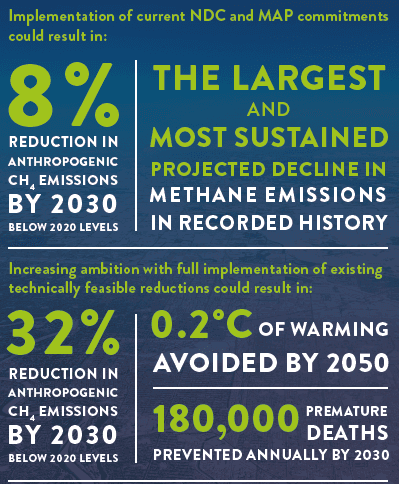
MTFR technical cut possible 2030131 Mt (-32 %)
Low-cost share of MTFR>80 % (109 Mt / yr) at <$0 / t CH₄
Largest sector mitigation shareEnergy 72 % of 2030 potential
Health benefit of MTFR≥180,000 premature deaths avoided / yr by 2030
Warming avoided by MTFR0.2 °C by 2050
Annual methane finance trackedUS$13.7 bn vs needed US$127 bn
Nations with GMP-level targets6 (Canada, Japan, Moldova, Norway, USA, Vietnam)
Under-reporting exampleMeasured fossil fuel leaks ≈2× official data (Mexico, Australia)

Related UPSC Prelims PYQs

CDS_GK 2024PYQ 1

Which one of the following resolutions in the final agreement reached at COP28 is associated with the target of achieving 'Net Zero by 2050'?

CDS_GK 2024PYQ 2

कौन-सी ग्रीनहाउस गैस का वायुमंडल में अधिकतम औसत जीवन-काल होता है?

GS-3Environment

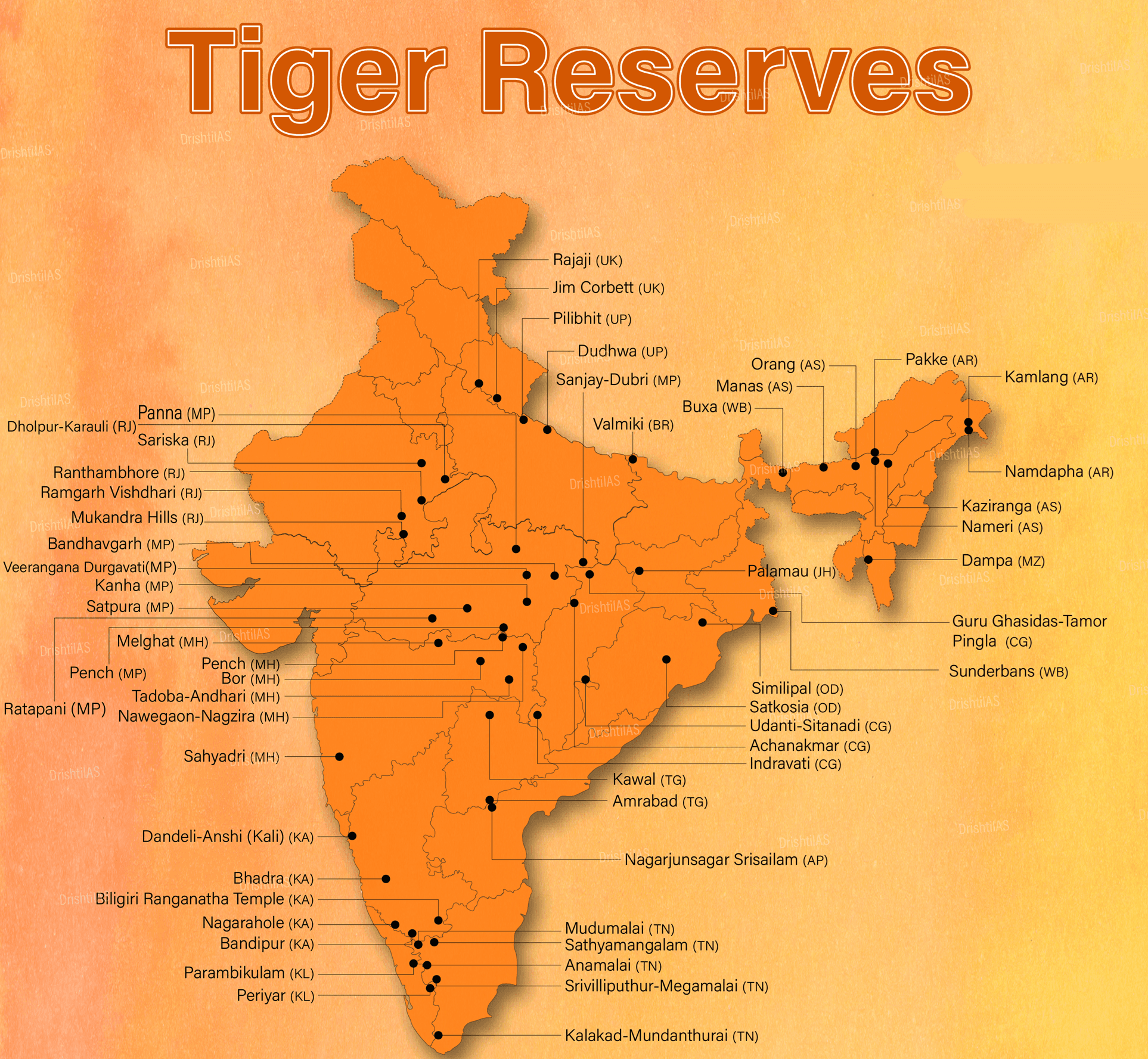
7.SC Directives on Tiger Conservation (Tiger Conservation)

The Hindu
Illustration for SC Directives on Tiger Conservation (Tiger Conservation)

What & Where

Corbett Tiger Reserve – Asia’s first national park; notified 1936 as Hailey NP, renamed 1956 after conservationist Jim Corbett

Location Uttarakhand Bhabar-Shivalik foothills; rivers Ramganga, Pallaen, Sonanadi shape porous alluvial valleys

First Project Tiger site 1973; records world-highest tiger density

Quick Facts for MCQs

Legal & Policy

  • SupremeCourt orders Uttarakhand restore reserve; plan in 2 months, demolitions 3 months, compliance report 1 year
  • All states to notify core & buffer areas for every tiger reserve within 6 months
  • Tiger safaris banned inside core and critical habitats per SC directive

Conservation Schemes

  • TigerConservationPlan mandatory for every reserve within 3 months detailing habitat, prey and corridor management
  • Eco-Sensitive Zones around reserves to be declared within 1 year to control high-impact activities
  • IntegratedDevelopmentOfWildlifeHabitats scheme grants ₹10 lakh ex-gratia for human–wildlife conflict fatalities

Ecological Profile

  • Terrain spans porous Bhabar belt, lower Shivalik ridges, river-fed valleys of Ramganga, Pallaen, Sonanadi
  • Vegetation sal-dominated moist & dry deciduous forests, riparian belts, grassland chaurs like Dhikala, Bijrani
  • Fauna hosts Bengal tigers, Asian elephants, leopards, sambar, gharial, mugger and diverse avifauna

Key Data Points

FeatureData-Point
State locationUttarakhand
Establishment year1936
First under Project Tiger1973
SC core/buffer notification deadline6 months
ESZ declaration deadline1 year
Tiger Conservation Plan deadline3 months
Ex-gratia for conflict death₹10 lakh

Related UPSC Prelims PYQs

GS1 2020PYQ 1

Among the following Tiger Reserves, which one has the largest area under “Critical Tiger Habitat”?

GS1 2012PYQ 2

Consider the following protected areas:

GS-3Species

8.Blackbuck Species Profile (Antelope Species)

NDTV
Illustration for Blackbuck Species Profile (Antelope Species)

What & Where

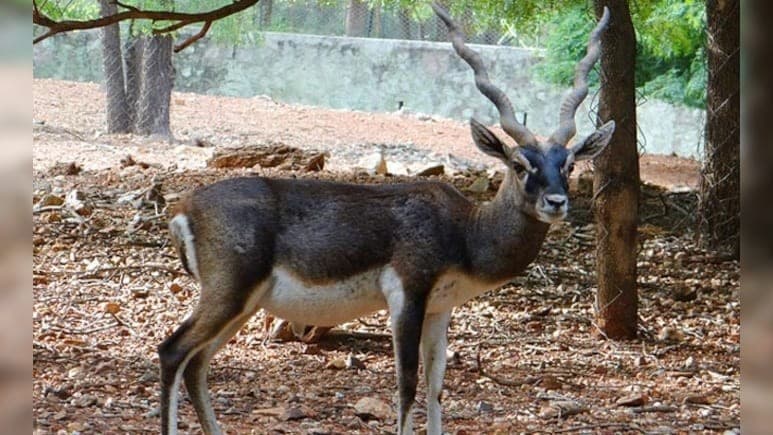
Blackbuck Antilope cervicapra diurnal grassland antelope native to Indian subcontinent

Prefers open short grasslands and semi-deserts across India Nepal Pakistan

Mass mortality at Kittur Rani Chennamma Zoo Belagavi Karnataka

Quick Facts for MCQs

Species Traits

  • Agility enables high leaps and zig-zag sprint to evade predators
  • Territorial males use preorbital gland scent and dung middens for marking
  • Only mature males carry V-shaped ringed horns

Conservation & Legal

  • Included in CITES Appendix III India regulating international trade
  • Schedule I status mandates maximum protection and stringent penalties for hunting
  • Population stable overall yet locally fragmented by habitat loss

Incident Update

  • Rapid spread within captive herd highlights biosecurity gaps in small zoos
  • Karnataka Forest Minister ordered high-level probe and veterinary autopsy
  • Findings to inform revised health protocols across state zoological parks

Key Data Points

FeatureData-Point
Scientific nameAntilope cervicapra
IUCN statusLeast Concern
Wildlife Act listingSchedule I India
Adult male horn length50–71 cm spiral
Top speed≈ 80 km h
Sexual dimorphismDark males; fawn females
Typical herdsFemale-young, bachelor, territorial males
Deaths reported 202431 blackbucks
Suspected causeBacterial infection (investigation on)
Zoo locationBhutaramanahatti Belagavi NH-4
Zoo area68 ha
Zoo established1989
GS-3S&T

9.Sentinel-6B Ocean Altimetry Satellite (Ocean Altimetry)

Indian Express
Illustration for Sentinel-6B Ocean Altimetry Satellite (Ocean Altimetry)

What & Where

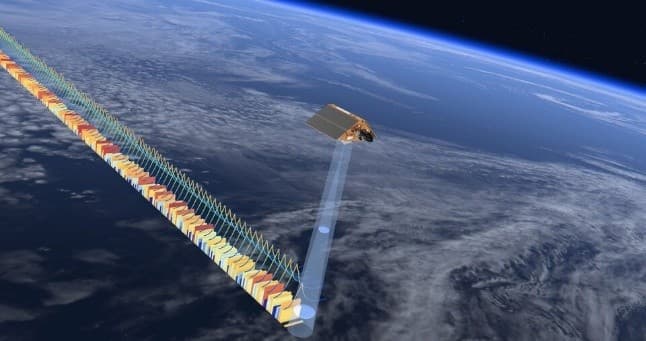
Sentinel-6B; next-gen ocean-altimetry satellite tracking sea-level, waves, winds with millimetre precision.

Low-Earth polar orbit, circling Earth every 112 minutes at ~2 km/s, covering ~90 % of oceans.

Joint NASA-NOAA-ESA-Eumetsat-EU-CNES mission; launched via SpaceX Falcon-9 from Vandenberg (US).

Quick Facts for MCQs

Tech & Schemes

  • Radar altimeter times pulses to millimetre precision, deriving centimetre-level sea-height.
  • Microwave radiometer removes water-vapour bias, enhancing dataset fidelity.
  • Six onboard instruments collectively form gold-standard ocean-topography reference.

Environmental Impact

  • Extends 30-year sea-level record, capturing acceleration from climate change.
  • Feeds cyclone, storm-surge, flood models, boosting coastal resilience planning.
  • Supports ocean-heat content and circulation analysis for climate projections.

International Examples

  • Mirrors EU Copernicus Sentinel framework; data freely shared worldwide.
  • Continues three-decade US-Europe collaboration on ocean-altimetry missions.

Key Data Points

FeatureData-Point
Mission lineageTopex-Poseidon → Jason-1/2/3 → Sentinel-6 Michael Freilich → Sentinel-6B
Launch siteVandenberg Space Force Base, California
Launch vehicleSpaceX Falcon-9
Core agenciesNASA, NOAA, ESA, Eumetsat, European Commission, CNES
Orbital period112 minutes
Orbital speed~2 km s⁻¹
Ocean coverage≈90 % of global oceans
Altimetry accuracy≈1 inch (≈2.5 cm)
Key instrumentsPoseidon-4 radar altimeter; Advanced Microwave Radiometer
Main outputsSea-level rise, ocean temperature, sea-state data
Atmospheric correctionWater-vapour sensing by radiometer
Primary aimContinuous, high-accuracy sea-level monitoring
GS-2Polity

10.India Re-Elected to Codex Committee (Codex Alimentarius)

PIB

What & Where

Codex Alimentarius Commission (CAC) – FAO-WHO intergovernmental body framing global, science-based food standards.

Executive Committee (CCEXEC) – 10-member group steering standard development between CAC sessions.

India – unanimously re-elected Asia regional representative on CCEXEC; term runs till CAC50 (2027).

Quick Facts for MCQs

Governance Structure

  • Committee tiers: CCEXEC, General Subject & Commodity Committees, Regional Coordinating Committees.
  • CCEXEC size: 10 members including seven regional coordinators, Chair & Vice-Chair.
  • Region coordination: Six regions including Asia, Africa, Europe, North America, Latin America & Caribbean, South-West Pacific.

India’s Role

  • Representation: Voices Asian technical, trade priorities in global food standard debates.
  • Oversight: Monitors draft standards, recommends adoption between CAC plenaries.
  • Contribution: Inputs on efficiency, digital tools, emerging safety challenges.

Trade Implications

  • Recognition: Codex norms form reference point for WTO dispute settlements under SPS.
  • Harmonization: Reduces non-tariff barriers, boosts agri-exports compliance.
  • Consumer trust: Science-based limits strengthen import acceptance of Asian produce.

Key Data Points

FeatureData-Point
Establishment year1963
Founding agenciesFAO & WHO
Total members189 (188 nations + EU)
India’s CAC membershipSince 1964
Elected bodyCCEXEC (Executive Committee)
India’s current seatAsia Regional Representative
Tenure validityUp to CAC50 in 2027
Core mandateConsumer health protection & fair food trade
WTO linkageStandards cited under SPS Agreement

Related UPSC Prelims PYQs

GS1 2010PYQ 1

As regards the use of international food safety standards as reference point for the dispute settlements, which one of the following does WTO collaborate with?

GS-3Security

11.Women Induction into Territorial Army (Territorial Army)

Indian Express

What & Where

Territorial Army: part-time citizen-soldier reserve under Territorial Army Act 1948, supplements Regular Army while members keep civil careers

Unit-types: Infantry, Home & Hearth (J&K/N-E), Ecological Task Force, Railway/Oil engineer, Composite Eco TF for Clean Ganga

Geography: H&H battalions locally raised in Jammu-&-Kashmir and North-East; Eco units deployed in Himalayan and Ganga catchments

Quick Facts for MCQs

Legal & Policy

  • Legislation: TA Act 1948 enables voluntary enlistment with annual training obligations
  • Restriction: Army Act 1950 earlier confined women to notified services; Supreme Court 2020 ensured Permanent Commission parity
  • Reform: Agnipath 2022 scheme opened Agniveer enlistment, gender-neutral across Army, Navy, Air Force

Evolution & Structure

  • Heritage: Volunteer Forces 1857 → Indian Defence Force 1917 → Indian Territorial Force, renamed TA 1949
  • Rationalisation: Initial diverse units merged; current focus on Infantry, H&H, Eco, Engineer, Departmental formations
  • Engineering role: TA engineer units erected Line-of-Control fencing, support critical infrastructure protection

Gender Inclusion

  • Timeline: Nursing 1888, AMC doctors 1958, WSES 1992, SSC 2005, limited PC 2008, IAF fighter pilots 2016, Navy all-branches 2022
  • Expansion: Women H&H soldiers to perform local counter-insurgency, disaster relief, essential services restoration
  • Impact: Broader talent pool, operational diversity, progressive civil-military gender norms

Security Dimension

  • Force-multiplier: TA frees Regular Army from static guard duties, bolstering frontline combat availability
  • Internal security: H&H battalions conduct CI/CT tasks in terrorism-prone districts of J&K and North-East
  • National utility: TA mobilised for wars, natural calamities, industrial unrest, ecological restoration missions

Key Data Points

FeatureData-Point
Formal inauguration9 Oct 1949 by C. Rajagopalachari
Raising Day9 October every year
Governing lawTerritorial Army Act 1948
Concept tagline“Citizen Soldiers / Sons of Soil”
First women TA officers2019 (Eco, Rail, Oil units)
First women soldiers nodNov 2025 for H&H battalions
Women in Army≈4 % of total strength
SC Permanent Commission caseBabita Puniya judgment 2020
GS-2Scheme

12.NAP-AMR 2.0 One Health Strategy (Antimicrobial Resistance)

New Indian Express

What & Where

National Action Plan on Antimicrobial Resistance 2.0; India’s 2025-29 One-Health roadmap to curb AMR.

Covers human health, animal husbandry, agriculture, food, environment; pan-ministry execution.

Released by Union Health Ministry during WHO World AMR Awareness Week.

Quick Facts for MCQs

Legal & Policy

  • Ministry-specific action plans with budgets, targets, timelines ensure accountability.
  • Regulatory push curbs irrational prescriptions, bans OTC antibiotic sales, audits pharmacies.
  • Alignment with WHO framework elevates India’s global AMR leadership stance.

Tech & Schemes

  • Surveillance expansion: new AMR labs, diagnostic networks, pathogen tracking systems.
  • India AMR Innovation Hub funds novel diagnostics, drugs, digital tools.
  • Prescription auditing software supports hospital-level antibiotic stewardship.

Environmental Impact

  • Guidelines monitor pharmaceutical waste discharge into water bodies.
  • Controls on antimicrobial pesticides in crops; promotes integrated pest management.
  • Safe livestock practices limit growth-promoter antibiotics, improving residue compliance.

International Alignment

  • Launch during WHO week highlights India’s commitment to global AMR fight.
  • One Health model mirrors OIE-FAO-WHO tripartite collaboration principles.
  • Multisectoral design qualifies for international funding, technical partnerships.

Key Data Points

FeatureData-Point
Plan period2025–2029
Predecessor planNAP-AMR 2017–21
Launch occasionWorld AMR Awareness Week (WHO)
Coordinating ministryHealth & Family Welfare
Ministries involved20 + (Health, AH&D, Agriculture, MoEFCC, DST, etc.)
Core approachOne Health, whole-of-government
Key pillarsSurveillance, Stewardship, IPC, Awareness, Innovation, Environment
Innovation hubIndia AMR Innovation Hub strengthened
OTC antibiotic curbsKerala, Gujarat pioneered; plan promotes nationwide
Global alignmentMirrors WHO Global Action Plan on AMR

Related UPSC Prelims PYQs

CDS_GK 2023PYQ 1

भारत के सन्दर्भ में जलवायु परिवर्तन पर राष्ट्रीय कार्य योजना (NAPCC) के बारे में निम्नलिखित में से कौन-सा/कौन-से कथन सही है/हैं ?

GS-2Scheme

13.YUVA AI Literacy Initiative (AI Literacy)

PIB

What & Where

Definition Free 4.5-hour self-paced online course introducing Artificial Intelligence fundamentals

Ownership Launched pan-India by MeitY under the IndiaAI Mission, content by AI expert Jaspreet Bindra

Access Hosted on FutureSkills Prime, iGOT Karmayogi and partner ed-tech portals, open to anyone nationwide

Quick Facts for MCQs

Tech & Schemes

  • Alignment Integral part of broader IndiaAI Mission to scale national AI capabilities
  • Cost-free No enrollment fee, reducing financial barrier to tech education
  • Certification Verifiable digital certificate enhances employability evidence

Education & Skilling

  • Inclusivity Designed for students, professionals, curious citizens across sectors
  • Indian context Examples, case-studies localized to domestic needs for better relatability
  • Workforce prep Foundational AI literacy seen as prerequisite for emerging digital jobs

Ethics & Inclusion

  • Responsible use Dedicated module on safe, ethical AI deployment to curb misuse
  • Digital divide Massive open reach aims to narrow urban-rural tech knowledge gap
  • Policy thrust Supports national objective of ethical, human-centric AI adoption

Key Data Points

FeatureData-Point
Launch ministryMeitY
Scheme nameYUVA AI for ALL
Course duration4.5 hours
Learning modeSelf-paced, online, free
Target reach1 crore learners
Module countSix
CertificationGovernment-certified e-certificate
DeveloperJaspreet Bindra
Key focusAI basics, safety, ethics, opportunities
Availability platformsFutureSkills Prime, iGOT Karmayogi, others

Related UPSC Prelims PYQs

ESE_GS 2026PYQ 1

Which Ministry released the India AI Governance Guidelines in 2025?

Ready to practice?

Test your knowledge with our UPSC test series.

Start Free Trial