UPSC Current Affairs

13 topicsGS-1: 1GS-2: 2GS-3: 10
0/13 done
GS-2Polity

1.Draft Seeds Bill 2025 Seed Regulation Overhaul (Seed Regulation)

PIB

What & Where

Draft Seeds Bill 2025: proposed central law superseding Seeds Act 1966 & Seeds (Control) Order 1983.

Covers nationwide seed registration, quality norms, digital traceability (QR, SATHI portal).

Seeks farmer protection, streamlined trade, boosted private R&D.

Quick Facts for MCQs

Legal & Policy

  • Mandatory registration across producers, processors, dealers, nurseries with State or Central accreditation.
  • Suspension/revocation possible on poor field performance or safety concerns.
  • Central Govt may fix seed prices in emergencies.

Farmers’ Rights

  • Farmers retain traditional seed practices barring branded sales.
  • Explicit exemption from all penal provisions.
  • Protection against misbranded, spurious, sub-standard seeds.

Quality & Traceability

  • Government notifies minimum germination, purity, trait, health standards.
  • QR-based labels enable end-to-end tracking on SATHI.
  • Misbranded or spurious seeds expressly prohibited.

Certification & Testing

  • State/Central Seed Certification Agencies recognised; private entities can be accredited.
  • Seed Testing Labs established with uniform protocols.
  • Inspectors & Analysts empowered for on-spot sampling, seizure, prosecutions.

Trade & R&D

  • Imports liberalised yet regulated; unregistered varieties permissible solely for R&D trials.
  • Graded penalties, decriminalised minor lapses reduce compliance burden.
  • Framework incentivises private breeding, hybrids, biotech innovations.

Key Data Points

FeatureData-Point
Governing MinistryAgriculture & Farmers’ Welfare
Replaced lawsSeeds Act 1966; Seeds (Control) Order 1983
Sale prerequisiteMandatory variety registration after VCU trials
Existing varietiesDeemed/provisional registration for 3 years
Core portalSATHI Seed Traceability
Label mandateQR code on every seed container
Farmer privilegeFree to save, reuse, exchange, sell unbranded seeds
Farmer penaltiesCompletely exempt
Penalty ceiling₹30 lakh + imprisonment (major offence)
Minor offenceUp to ₹2 lakh fine; decriminalised
Price control clauseActivated during scarcity, monopoly, profiteering
Import ruleMust meet quarantine & Indian Minimum Seed Certification Standards
Trial importsAllowed for research with approval
AccreditationMulti-state firms get “deemed registered”
Inspectors’ powerSearch, sampling, seizure defined

Related UPSC Prelims PYQs

GS1 2015PYQ 1

In India, markets in agricultural products are regulated under the

GS1 2014PYQ 2

In the context of food and nutritional security of India, enhancing the ‘Seed Replacement Rates’ of various crops helps in achieving the food production targets of the future. But what is/are the constraint/constraints in its wider/greater implementation?
GS-3Economy

2.India Skills Report 2026 Rising Employability (Employability Index)

IT

What & Where

Annual India Skills Report (ISR) gauges workforce employability across all Indian states & sectors

Jointly produced by ETS, CII, AICTE, AIU & Taggd via surveys of students, fresh graduates, employers

Tracks skill gaps, hiring intent, AI-readiness, gig trends to guide industry–academia–policy alignment

Quick Facts for MCQs

Employability Trends

  • Employability up-trend; 10-percentage-point jump recorded over 4 years
  • Commerce, Science, Arts streams show consistent gains, vocational training gradually catching up

Gender & Geography

  • Women surpass men; strongest in BFSI, education, healthcare, Tier-2/Tier-3 cities
  • Smaller cities emerging as new skill hubs, easing metro concentration

Tech & Skills

  • AI, data analytics, cloud, cybersecurity drive highest demand; CSE & IT grads post 78-80 % readiness
  • Skill-first hiring accelerating; micro-credentials & stackable certificates valued over traditional degrees

Challenges

  • Rural, Tier-3 learners face digital divide, limited access to advanced AI labs
  • Soft-skill, critical-thinking deficits persist despite technical competence
  • Gig work lacks social security, causing income volatility for youth

Key Data Points

FeatureData-Point
Latest ISR edition2026
Overall employability rate56.35 %
Rise since 2025 report+1.54 pp
Women employability54 %
Men employability51.5 %
Top stream employabilityComputer Science 80 %
Gig jobs share of total jobs16 %
YoY gig hiring growth~38 %
Firms planning higher intake40 % (next year)
Fresher hiring leader sectorIT at 35 % share
Commerce graduate employability62.81 %
ITI graduate employability45.95 %
Students seeking internships92.8 %

Related UPSC Prelims PYQs

CDS_GK, GEO_GS 2026PYQ 1

With reference to distribution of employment in India for the year 2024-2025, consider the following statements:

CDS_GK, GEO_GS 2025PYQ 2

Consider the following statements regarding Annual Periodic Labour Force Survey (PLFS) report 2023–24 by the National Statistical Organization (NSO):

GS-1Mapping

3.New Mangalore Port Modernisation Projects (Indian Ports)

News on Air
Illustration for New Mangalore Port Modernisation Projects (Indian Ports)

What & Where

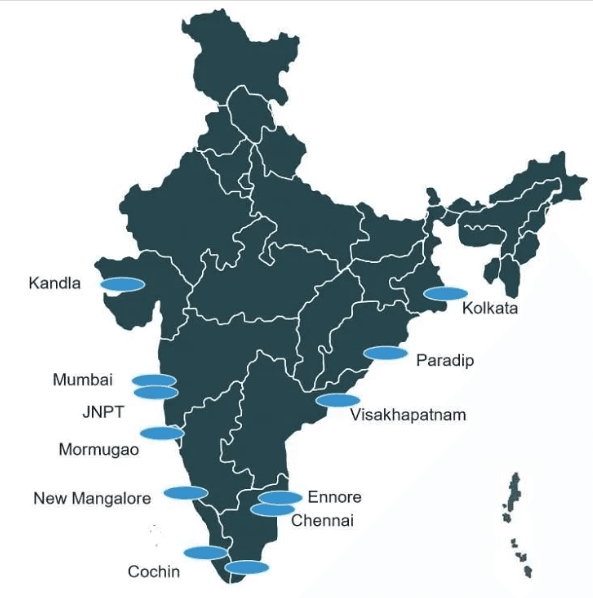
Classification: all-weather, deep inner-harbour; only Major Port of Karnataka; among India’s top 10 major ports

Location: Panambur, Mangaluru on Arabian Sea; north of Gurupur (Phalguni) estuary; halfway Mormugao–Kochi shipping lane

Function: Gateway for petroleum, coal, containers and agri cargo serving Karnataka’s industrial hinterland

Quick Facts for MCQs

Historical Snapshot

  • Antiquity: Roman, Greek, Ptolemaic texts list “Mangala” as western coast trade hub
  • Vijayanagara era: Arab merchants used port for spice–silk exchange
  • Bunder overload led to Panambur deep-water construction; operations scaled from <1 lakh t to 46 mt

Cargo & Operations

  • Exports: POL, iron-ore pellets, containerised goods dominate outbound tonnage
  • Imports: Crude (MRPL), coal, fertiliser, edible oil, liquid chemicals, containers lead inbound mix
  • Depth advantage: Deepest west-coast inner harbour accommodates large tankers, Cape-size bulk carriers

Connectivity & Economic Role

  • Road: NH-66 links port to Bengaluru, Hubballi, Goa industrial clusters reducing logistics costs
  • Rail: Konkan Railway interface at Surathkal enables seamless movement to northern and southern corridors
  • Multimodal: Proximity to Mangaluru International Airport enhances time-sensitive cargo and business travel

Legal & Policy

  • 1980 inclusion under Major Port Trust Act 1963 provided statutory governance
  • 2021 Major Port Authorities Act converted trust into autonomous Port Authority for faster decision-making
  • 2025 Golden Jubilee targeted with ₹1,500 crore modernisation projects including mechanisation and digital systems

Key Data Points

FeatureData-Point
Harbour project start1962
Maritime works commenced1968
Declared Major Port4 May 1974 (9th of India)
Formal inauguration11 Jan 1975 by PM Indira Gandhi
Brought under Major Port Trust Act1 Apr 1980
Renamed New Mangalore Port Authority3 Nov 2021
Modernisation outlay announced₹1,500 crore (Golden Jubilee plan)
Total land area≈ 480 ha (1,200 acres)
FY 2024-25 traffic46 million tonnes
Main export cargoPOL products, iron-ore pellets, containers
Main import cargoCrude for MRPL, coal, fertiliser, edible oil, chemicals
Adjacent riverGurupur (Phalguni)
Key highwayNH-66
Nearest railwayKonkan Railway, Surathkal
Coastal distance170 NM south of Mormugao; 191 NM north of Kochi

Related UPSC Prelims PYQs

CDS_GK, GS1 2009PYQ 1

In India, the ports are categorized as major and non-major ports. Which one of the following is a non-major port?

CDS_GK, GS1 2021PYQ 2

Which one of the following sea ports has gained importance for the export of iron ore to Japan?

GS-3Environment

4.India Green Hydrogen Production Potential (Green Hydrogen)

PIB
Illustration for India Green Hydrogen Production Potential (Green Hydrogen)

What & Where

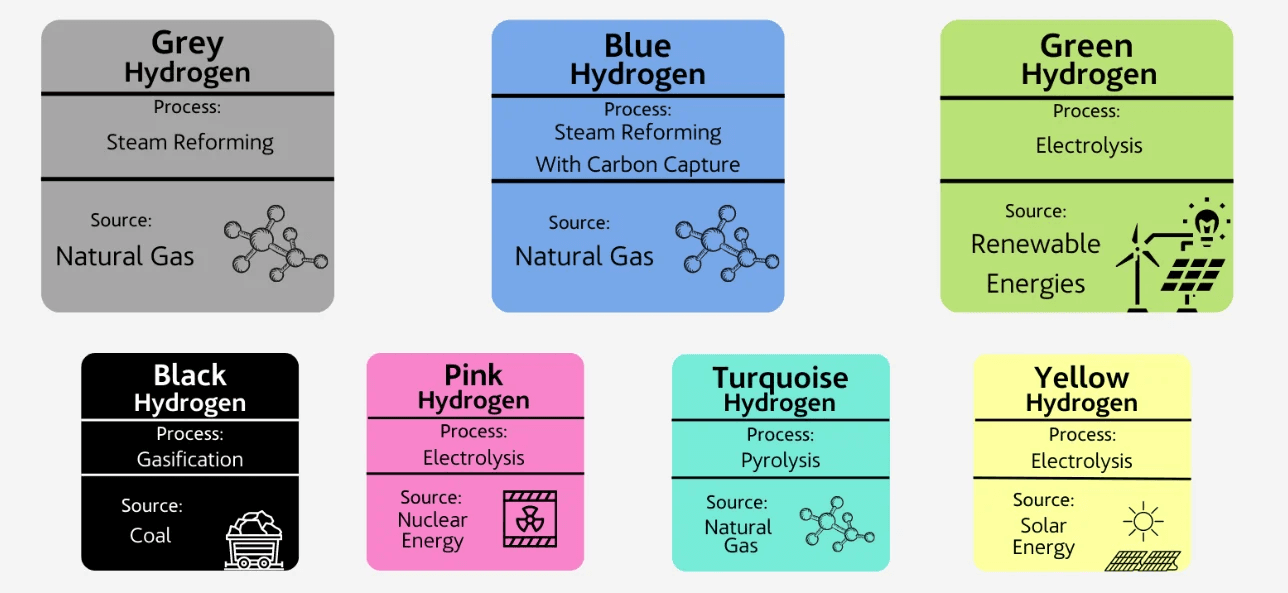
Definition: Green hydrogen = H₂ from renewable-powered electrolysis/low-emission biomass; Indian “green” cap ≤2 kg CO₂-eq per kg.

Processes: Electrolyser splitting water, biomass reforming; backed by SIGHT incentives, GHCI certification, SHIP R&D facilitation.

Geography: Recognised Green Hydrogen Hubs—Deendayal (Gujarat), V.O. Chidambaranar (Tamil Nadu), Paradip (Odisha).

Quick Facts for MCQs

Tech & Schemes

  • SIGHT: Capital incentives accelerate domestic electrolyser manufacture and green H₂ deployment.
  • GHCI 2025: Mandatory certification for subsidised or domestic-sale hydrogen; BEE handles accreditation.
  • SHIP: Consortium-based R&D fund spurs indigenous, competitive hydrogen technologies.

Economic Angle

  • Investment: Mission seeks ₹8 lakh crore, leveraging modest public spend of ₹19,744 crore.
  • Employment: 6 lakh direct positions projected across production, logistics, research.
  • Savings: Annual fossil-fuel import cut targeted at ₹1 lakh crore after 2030.

International Partnerships

  • EU-India TTC: >30 joint waste-to-hydrogen proposals under evaluation.
  • UK 2025 workshop: Aligning hydrogen standardisation and certification.
  • SECI-H2Global 2024, Sembcorp-Indian ports 2025: Market mechanisms, export-oriented hubs.

Sectoral Pilots

  • Steel: Five plants trial hydrogen-based direct reduced iron to curb furnace coal use.
  • Transport: 37 H₂ buses/trucks on 10 routes; Leh 3,650 m station with five buses.
  • Maritime: VOC Port ₹25 crore pilot; megawatt-scale green H₂ facility upcoming at Kandla.

Key Data Points

FeatureData-Point
Emission threshold≤2 kg CO₂-eq per kg H₂
Mission launch year2023
2030 RE capacity target125 GW
2030 GHG cut aim50 MMT / year
Planned investment₹8 lakh crore
Expected jobs6 lakh
Import-bill saving₹1 lakh crore / year
Govt outlay till FY30₹19,744 crore
Certified trainees5,600+

Related UPSC Prelims PYQs

CAPF_GAI, ESE_GS 2025PYQ 1

Which of the statements given below is/are correct?

CAPF_GAI, ESE_GS 2022PYQ 2

US-based Ohmium International has started India's first green hydrogen electrolyzer manufacturing unit at

GS-3Environment

5.Climate Risk Index 2026 India Ranking (Climate Risk Index)

The Hindu

What & Where

Definition: Annual Germanwatch Climate Risk Index quantifies human & economic toll of extreme weather.

Indicators: fatalities, economic losses, people affected; data sourced EM-DAT, World Bank, IMF.

Geography: Report unveiled at COP30, Belém; top-10 risk nations in Global South; India 9th.

Quick Facts for MCQs

Ranking & Statistics

  • GlobalEvents: 9,700 EWEs since 1995 caused 8.32 lakh deaths, USD 4.5 trn losses.
  • IndiaRecord: 430 events, USD 170 bn damage, 1 bn affected, 80,000 deaths over three decades.
  • 2024Position: India 15th overall, 3rd in people affected after Bangladesh, Philippines.

India Impacts

  • WaterStress: Gangetic aquifers −4 cm/yr; Himalayan melt threatens Ganga-Brahmaputra-Indus flows.
  • CoastalRisk: Mumbai sea rise 4.44 cm (1987-2021); projected 0.4–0.8 m rise by 2100.
  • EconomicCost: Climate may trim GDP 6.4–10 %, push 50 mn Indians into poverty by 2100.

Adaptation & Mitigation

  • EnergyShift: 500 GW non-fossil target by 2030; boost solar, wind, green hydrogen, storage.
  • WaterPolicy: Update National Water Policy; adopt drip, zero-tillage, artificial recharge, traditional systems.
  • CoastalResilience: Restore mangroves, reefs; strengthen early-warnings, social safety nets for cyclones.

Extreme Weather Types

  • 2024Floods: ~50 mn affected globally, most lethal category.
  • HeatwaveImpact: ~33 mn affected; droughts next at ~29 mn.
  • IndexScope: CRI tracks rapid-onset events only; excludes gradual sea-level rise, acidification.

Key Data Points

FeatureData-Point
Report editionCRI 2026
Assessment years1995–2024
India long-term rank9th
India 2024 rank15th
Total global EWEs9,700
Global deaths8.32 lakh
Global economic lossUSD 4.5 trn
India EWEs count430
India people affected1 billion
India economic lossUSD 170 bn
Deadliest 2024 hazardFloods ~50 mn affected
Sea-level rise rate3.6 mm/yr

Related UPSC Prelims PYQs

GEO_GS 2020PYQ 1

According to the Global Climate Risk Index 2020, published by environmental think tank Germanwatch, in the year 2018 India’s rank in the list of top most climate affected nations is:

GEO_GS 2023PYQ 2

According to the Climate Change Performance Index (CCPI), 2023, India climbed two spots to rank

GS-3EnvironmentQuick Bite

6.NGT Warns Chromium Contaminated Drinking Water (Chromium Pollution)

The Hindu

What & Where

Chromium contamination: toxic Cr(VI) in water; Cr(III) only trace-nutrient.

Hot-spot: industrial & naturally leached groundwater belts, esp. western-central Uttar Pradesh flagged by NGT.

Key processes: effluent discharge, mining runoff, urban drainage drive Cr(VI) into surface/ground water.

Quick Facts for MCQs

Legal & Policy

  • NGT ordered UP to ensure immediate safe-water supply in Cr-hit areas.
  • IS 10500 prescribes 50 µg L⁻¹ ceiling; legally enforceable via State agencies.

Environmental Impact

  • Cr(VI) exposure: dermatitis, respiratory illness, carcinogenic risks.
  • Groundwater pollution worsened by chromium-rich rock leaching during monsoon recharge.

Tech & Schemes

  • Conventional removal: adsorption, biosorption, ion-exchange; cost & efficiency variable.
  • Emerging TiO₂ photocatalysis reduces Cr(VI) to benign Cr(III) under sunlight, high efficacy.

Key Data Points

FeatureData-Point
Tribunal actingNational Green Tribunal (NGT)
Affected StateUttar Pradesh
Toxic chromium speciesHexavalent Cr(VI)
IS 10500 drinking-water limit50 µg L⁻¹ for Cr(VI)
Top advanced remediationSunlight-driven TiO₂ photocatalysis

Related UPSC Prelims PYQs

GEO_GS 2024PYQ 1

Which one among the following trace elements is not highly toxic?

GS-3S&T

7.DRISHTI AI Freight Door Monitoring System (Railway AI System)

Indian Express
Illustration for DRISHTI AI Freight Door Monitoring System (Railway AI System)

What & Where

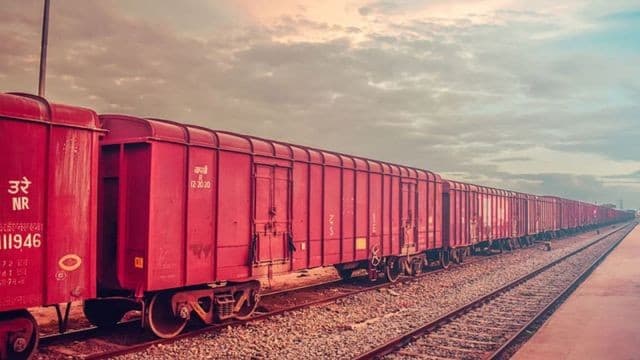
DRISHTI; AI-powered real-time system monitoring door-lock status of freight wagons in motion

Geography; Jointly created by Northeast Frontier Railway and IIT Guwahati, trialled on NFR freight routes

Process; Wagon-mounted cameras-sensors feed computer-vision engine that flags tampering or unlocking instantly

Quick Facts for MCQs

Tech & Schemes

  • Hardware; Roof-mounted cameras, vibration-tolerant sensors, onboard processing units
  • Software; Algorithm identifies door geometry deviations under varying speed, light, weather
  • Design; Modular architecture allowing retrofit on existing BOXN, BCNHL, other wagon classes

Security Dimension

  • Theft control; Early tamper alerts enable station staff or RPF interception
  • Integrity; Continuous seal assurance supports insurance and accountability frameworks
  • Transparency; Digital audit trail aids dispute resolution with consignors

Operational Efficiency

  • Labour saving; Removes need for en-route guard yard inspections over long hauls
  • Turnaround; Faster formation dispatch as lock status visible instantly in control rooms
  • Reliability; Automated anomaly detection minimises human error and oversight

Key Data Points

FeatureData-Point
Full formDoor lock Real-time Integrated Safety & Health Technology Initiative (DRISHTI)
DevelopersNortheast Frontier Railway + IITG Technology Innovation & Development Foundation
Core technologyComputer vision, machine learning, AI analytics
Trial length10 months on selected wagons
Alert typeReal-time notifications of tamper, partial lock, unexpected movement
Key aimAutomate lock checks; cut manual inspection
Primary benefitEnhanced cargo security, theft deterrence
Scalability planGradual extension across entire Indian Railways freight fleet

Related UPSC Prelims PYQs

GS1 2025PYQ 1

निम्नलिखित कथनों पर विचार कीजिए :

GS-3S&T

8.Cohort Connect Longitudinal Health Data Platform (Cohort Studies)

DD News

What & Where

Nationwide platform unifying longitudinal cohort studies under Phenome India

Launched 2025 at CSIR–IMMT, Bhubaneswar, Odisha

Generates India-specific multi-year health data for precision medicine and public-health planning

Quick Facts for MCQs

Scientific Objectives

  • Map gene-lifestyle-environment interactions shaping Indian disease patterns
  • Build longitudinal dataset covering chronic, emerging and infection-linked disorders
  • Enable early detection and personalised therapeutics for Indian populations

Technologies & Methods

  • Use whole-genome sequencing, biomarker panels, wearables, lifestyle mapping
  • Integrate diverse regional cohorts via national framework Cohort Connect
  • Longitudinal tracking captures temporal disease progression and risk factors

Policy & Public Health

  • Provide Indian evidence base, reducing reliance on Western health models
  • Enhance preparedness for future epidemics and rising lifestyle diseases via predictive analytics
  • Inform precision public-health strategies at national and state levels

Key Data Points

FeatureData-Point
Launch year2025
Launch venueCSIR–IMMT, Bhubaneswar
Nodal ministryScience & Technology
Parent programmePhenome India
Flagship eventPhenome National Conclave “Cohort Connect 2025”
Core disease focusDiabetes, cardiovascular, metabolic, renal NCDs
Emerging link studiedDiabetes–TB interaction
Current genomes sequenced10 k
Target genomes1 million
Key collaboratorsCSIR, DBT institutes, clinicians, industry
GS-3S&T

9.Hepatitis A Virus Vaccination Inclusion Demand (Viral Disease)

The Hindu
Illustration for Hepatitis A Virus Vaccination Inclusion Demand (Viral Disease)

What & Where

Definition: Acute liver inflammation by Hepatitis A Virus; usually self-limiting but severe in adults.

Process: Faeco-oral spread via contaminated food, water, close contact; no vector.

Geography: High endemicity in low- and middle-income areas with poor sanitation; cyclic global outbreaks.

Quick Facts for MCQs

Epidemiology

  • Burden: Most children infected early in high-endemic zones, adults now showing increased symptomatic cases.
  • Outbreak drivers: Rapid urbanisation, mixed sanitation levels, waning childhood exposure.

Transmission & Symptoms

  • Sources: Sewage-contaminated water, improperly handled food, household spread, oral-anal sexual contact.
  • Clinical signs: Fever, malaise, nausea, dark urine, jaundice, diarrhoea.

Treatment & Immunity

  • Management: Supportive care; hospitalisation only for severe hepatitis or liver failure.
  • Immunity: Recovery confers lifelong protection; vaccination offers active immunity where natural exposure falling.

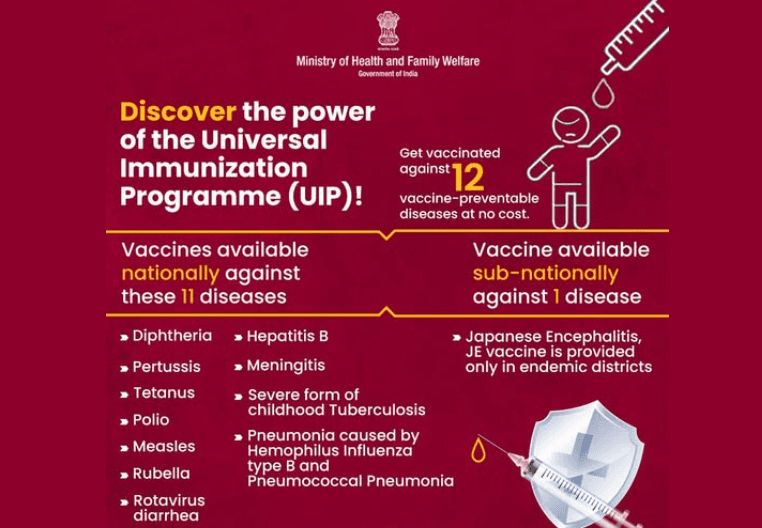
UIP Infrastructure

  • Logistics: ILRs, deep freezers, WIC/WIF, dedicated vaccine vans maintain 2–8 °C chain.
  • Safety: Auto-disable syringes, hub cutters, CPCB-aligned biomedical disposal.

Policy & Schemes

  • Expert call: Public health specialists urge Hep A vaccine inclusion under UIP to curb rising adult outbreaks.
  • Decision body: NTAGI evaluates new vaccine additions based on disease burden, cost-effectiveness, supply readiness.

Key Data Points

FeatureData-Point
Virus familyPicornavirus, single-stranded RNA
Chronic disease riskNone; no chronic carrier state
Severe outcomeAcute liver failure mainly in adults
Natural immunity trendDeclining among Indian adolescents & young adults
Recommended vaccine dosesTwo, ≥6 months apart
UIP launch year1985 (as UIP)
UIP current diseases12; Hep A not yet included
Cold-chain points≈30,000 across India
Real-time stock tooleVIN digital platform
AEFI portalSAFEVAC since 2018
Early programme nameExpanded Programme on Immunization, 1978

Related UPSC Prelims PYQs

GEO_GS, GS1 2024PYQ 1

Which one among the following diseases does not yet have any effective vaccine?

GEO_GS, GS1 2019PYQ 2

Which one of the following statements is not correct?

GS-3S&T

10.Moon Sphere of Influence Orbital Region (Space Mechanics)

New Indian Express

What & Where

Definition: Region where Moon’s gravity mathematically dominates Earth’s for trajectory calculations

Extent: ≈ 66,000 km radius from Moon’s centre; oblate-spheroid, not perfect sphere

Location switch: Outside MSI → Earth-centric equations; inside MSI → Moon-centric equations

Quick Facts for MCQs

Orbital Mechanics

  • Patched-conic method switches differential equations at MSI crossing
  • Earth & Sun still act as perturbing forces within MSI
  • Outside MSI Moon still perturbs Earth-centric trajectory

Mission Planning

  • MSI entry triggers navigation handover from Earth-centric to Moon-centric control
  • Crucial for timing lunar flybys, insertion burns, braking manoeuvres
  • Reduces trajectory uncertainty, enabling fuel-optimal corrections

Physical Characteristics

  • Radius varies with Moon’s orbital eccentricity and solar influence
  • Region approximated spherical for quick estimates, refined via higher-order models
  • Not a hard cutoff; gravitational dominance transitions smoothly

Key Data Points

FeatureData-Point
Alternate nameSphere of Influence (SOI)
Approx. radius~66,000 km from lunar centre
ShapeOblate spheroid (model-dependent)
Classical formular_SOI ≈ a × (m/M)^(2/5)
a (Earth-Moon semi-major axis)~384,400 km
Mass ratio (m/M)1 : 81
Planning toolPatched-conic approximation
ISRO practiceN-body numerical simulation
Physical boundary?No, purely mathematical
GS-3S&T

11.DNA Double Helix Structural Model (DNA Structure)

Indian Express
Illustration for DNA Double Helix Structural Model (DNA Structure)

What & Where

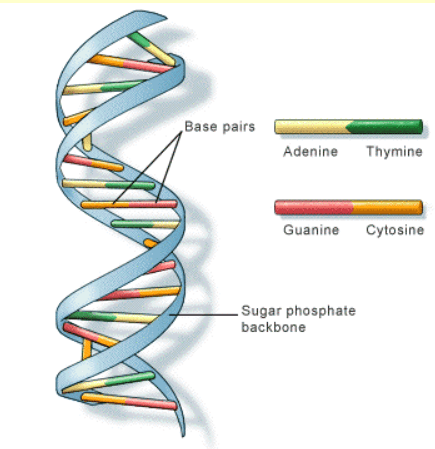
Double-helix: two antiparallel DNA strands twisting into a helical ladder.

Found chiefly as nuclear DNA inside eukaryotic cell nuclei.

Discovered 1953 at Cambridge using Franklin’s X-ray “Photo 51”.

Quick Facts for MCQs

Structural Biology

  • Complementarity ensures sequence-specific hydrogen bonding, stabilising helix.
  • Antiparallel strands run 5′→3′ opposite, critical for replication enzymes.
  • Sugar–phosphate backbone external, nitrogenous bases internal.

Medical & Biotech Impact

  • Foundation for molecular biology, genetic engineering, personalised medicine.
  • Enabled Human Genome Project completion 2003, ushering diagnostics revolution.
  • CRISPR tools exploit base-pairing for targeted gene edits.

Agriculture & Forensics

  • Genetic modification created pest-resistant, high-yield crops.
  • DNA fingerprinting revolutionised crime investigation and paternity testing.
  • Molecular markers aid selective breeding programmes worldwide.

Key Data Points

FeatureData-Point
DiscoverersJames Watson & Francis Crick
Supporting dataRosalind Franklin’s X-ray crystallography (Photo 51)
Discovery year1953
Nobel PrizePhysiology/Medicine, 1962 (Watson, Crick, Wilkins)
BackboneSugar–phosphate chains
Base pairsA–T and C–G (complementary)
Strand orientationAntiparallel
Replication keyComplementarity enables accurate copying
Primary locationCell nucleus (nuclear DNA)
Landmark projects enabledHuman Genome Project, CRISPR gene editing

Related UPSC Prelims PYQs

CAPF_GAI, GS1 2001PYQ 1

Which of the following features of DNA makes it uniquely suited to store and transmit genetic information from generation to generation?

CAPF_GAI, GS1 2024PYQ 2

Which one of the following is the correct chronology of invention/discovery in the field of Biotechnology?

GS-3S&TQuick Bite

12.Record Distant Black Hole Flare Discovery (Black Hole Flare)

Indian Express

What & Where

Superflare from Active Galactic Nucleus J2245+3743, 10 billion light-years distant in deep cosmos

Event classed as tidal disruption event: star torn apart by super-massive black hole’s gravity

Recorded as brightest, largest black-hole flare yet detected, monitored since 2018

Quick Facts for MCQs

Astronomical Parameters

  • Redshift-induced time dilation lets scientists view flare evolution in extended pace
  • AGN central engine mass class: super-massive, orders of millions–billions M☉
  • Flare energy dwarfs typical TDEs, making benchmark for high-energy astrophysics

Observational Evidence

  • Keck spectral series confirmed hydrogen-poor signatures matching stellar shredding
  • Multi-month light curve captured 40-fold brightening before peak plateau
  • Absence of supernova-like elemental lines eliminated explosive stellar death scenario

Comparative Solar Phenomena

  • Solar flare driven by twisted magnetic fields, spans minutes–hours, emits radio to γ-rays
  • Magnitude orders lower: solar events heat plasma to millions K, not trillions Sun luminosity
  • Illustrates scale contrast between stellar and super-massive black-hole dynamics

Key Data Points

FeatureData-Point
Host objectSuper-massive black hole in AGN J2245+3743
Cosmic distance≈ 10 billion light-years
First detection2018
Peak brightening30 × previous record
Rise factor40 × over several months
Energy output≈ 10 trillion Sun luminosities
Disrupted star mass≈ 30 M☉ (solar masses)
Verification toolKeck Observatory (2023)
Key phenomenonCosmological time dilation slows observed light curve
Not a supernovaRuled out by spectral data

Related UPSC Prelims PYQs

CAPF_GAI, GS1 2019PYQ 1

Recently, scientists observed the merger of giant 'blackholes' billions of light-years away from the Earth. What is the significance of this observation?

CAPF_GAI, GS1 2022PYQ 2

कभी-कभी समाचारों में प्रकाशित शब्द 'डीनेटरस A' निम्नलिखित में से किससे संबंधित है?

GS-2Polity

13.Pakistan 27th Amendment Military Power Centralisation (Pakistan Constitution)

Indian Express

What & Where

Pakistan’s 27th Constitutional Amendment: fast-tracked change centralising military control and revising top judicial hierarchy.

Creates over-arching Chief of Defence Forces (CDF) and Federal Constitutional Court (FCC) above existing Supreme Court.

Applies across Pakistan, impacting civil–military relations and constitutional interpretation nationwide.

Quick Facts for MCQs

Security Dimension

  • Centralisation: CDF gains operational control of Army, Navy, Air Force, strategic and nuclear assets.
  • Immunity: Five-star officers shielded permanently from prosecution, enhancing military autonomy.
  • Hierarchy: CDF constitutionally outranks PM, President, Parliament in defence matters.

Judicial Architecture

  • FCC: Sole authority on constitutional interpretation, federal–provincial disputes, fundamental rights enforcement.
  • Supreme Court: Loses writ jurisdiction; constitutional appeals redirected to FCC, curbing judicial review.
  • Transfers: Executive can relocate High Court judges; dissent triggers forced retirement, diluting independence.

Governance & Power Balance

  • Militarisation: Amendment codifies long-standing de facto dominance of army into de jure supremacy.
  • Civilian erosion: Elected institutions sidelined in defence, strategic and constitutional spheres.
  • Checks & balances: Concentrated powers plus legal immunity weaken accountability mechanisms across state organs.

Key Data Points

FeatureData-Point
Amendment numberTwenty-Seventh (2024)
New top military postChief of Defence Forces (CDF)
Present CDFGen. Asim Munir
Service chiefs now underArmy-led unified command
Nuclear oversight bodyNational Strategic Command
Commander appointmentOn CDF recommendation
Top-rank immunityLifelong, five-star officers
Removal thresholdTwo-thirds Parliament vote
New apex courtFederal Constitutional Court
Supreme Court statusCivil/criminal final appellate only
Judge transfer ruleWithout consent; refusal = retirement

Ready to practice?

Test your knowledge with our UPSC test series.

Start Free Trial