UPSC Current Affairs

14 topicsGS-1: 5GS-2: 2GS-3: 7
0/14 done
GS-2Polity

1.Digital Personal Data Protection Rules 2025 (Data Protection)

LL

What & Where

Digital Personal Data Protection Rules 2025: delegated legislation operationalising DPDP Act 2023.

Governs processing of digital personal data by all Data Fiduciaries across India.

Enforced through fully online Data Protection Board of India.

Quick Facts for MCQs

Legal & Policy

  • Phased-implementation clause grants MSMEs/startups staged compliance, reducing regulatory shock.
  • Rules flesh out obligations, penalties mirror Act’s graded structure via Board orders.
  • Technology-neutral drafting allows quick amendment without parliamentary process.

Social Concerns

  • Child data processing banned without guardian approval, exemptions only for education, healthcare, safety.
  • Severe-disability data needs lawful-guardian consent, promoting inclusivity.
  • Nomination facility lets citizens assign representatives for data rights exercise.

Security Dimension

  • Mandatory breach notification strengthens incident transparency, reduces harm.
  • Significant fiduciaries undergo DPIA ensuring risk identification before deployment.
  • Fully digital grievance portal enables rapid, audit-trailed adjudication.

Key Data Points

FeatureData-Point
Legal baseDPDP Act 2023
Notification year2025
Compliance window18 months (phased)
Enforcing bodyData Protection Board of India
Key actorsData Fiduciary & Data Principal
Consent formatStand-alone, plain-language notice
Children safeguardVerifiable parental consent
Disability safeguardGuardian consent for severe disabilities
Rights turnaround90 days to honour requests
Breach intimationMandatory, prompt, risk details
Significant Fiduciary extrasAudit, DPIA, tech due-diligence
Consent managersMust be Indian entities
Appeal forumTDSAT
Guiding principleSARAL – Simple Accessible Rational Actionable

Related UPSC Prelims PYQs

CAPF_GAI 2023PYQ 1

सूचना का अधिकार अधिनियम, 2005 के बारे में निम्नलिखित में से कौन-सा/कौन-से कथन सही है/हैं ?
GS-3Infrastructure

2.Drone City and Space City Initiatives (Drone City Project)

PIB

What & Where

Drone City; 300 acre cluster at Orvakal Industrial Node Kurnool Andhra Pradesh for drone manufacturing testing innovation

Space City; planned near Sriharikota launch centre Andhra Pradesh to host private space technology industries

Announcement; projects unveiled by Union Commerce and Industry Minister during 30th CII Partnership Summit

Quick Facts for MCQs

Economic Angle

  • Investment magnet; twin cities expected to draw significant domestic and foreign capital into aerospace sector
  • Employment creation; high skilled design manufacturing and services roles projected across drone and space value chains
  • Growth target; supports Swarna Andhra 2047 USD 2.4 trillion economy vision

Tech & Schemes

  • Indigenization push; Drone City aims self reliance in advanced UAV design production testing
  • Mission alignment; drones to serve Kisan Drones Swamitva Yojana and security Operation Sindoor
  • Space ecosystem; Space City complements IN SPACe drive for private launches satellites and downstream applications

Policy Incentives

  • GST refund; 100 percent state GST reimbursed through escrow ensuring timely clearance
  • Capital support; 20 percent reimbursement on eligible plant and machinery costs
  • Facilitation; state promises single window non bureaucratic approvals for investors

Key Data Points

FeatureData-Point
Announcing ministryUnion Commerce & Industry
Event30th CII Partnership Summit
Drone City area300 acres
Drone City locationOrvakal Industrial Node, Kurnool, AP
Space City locationNear Sriharikota, AP
Key missions servedKisan Drones; Swamitva Yojana; Operation Sindoor
State GST incentive100 % refund via escrow
Capital subsidy20 % investment reimbursement
GS-1History

3.Janjatiya Gaurav Diwas Tribal Commemoration (Birsa Munda Legacy)

PIB

What & Where

Celebration: Janjatiya Gaurav Divas on 15 Nov honours tribal resistance; first marked 2021

Commemoration: Janjatiya Gaurav Varsh 2024-25 observes 150th birth of Birsa Munda, planning 11 thematic museums

Geography: Chota Nagpur Plateau origin of Ulgulan; initial museums at Raipur, Ranchi, Chhindwara, Jabalpur

Quick Facts for MCQs

Freedom Fighters

  • Birsa Munda led Ulgulan demanding self-rule, died 9 Jun 1900 in Ranchi Jail aged 25
  • Veer Narayan Singh, Binjhwar leader, opposed 1856–57 famine policies, executed 10 Dec 1857
  • Badal Bhoi, Raja Shankar Shah, Kunwar Raghunath Shah fought forest laws, used poetic resistance 1857

Museums

  • Raipur museum documents Halba, Meria, Bhumkal revolts, women-led Rani Cho-Ris Kranti 1878
  • Ranchi museum to Birsa; Chhindwara to Badal Bhoi; Jabalpur hall to poetic patriots
  • Culture Ministry funding eleven sites as narrative correctives to mainstream historiography

Digital Cultural Projects

  • Adi Sanskriti offers ~100 tribal art courses, 5,000 curated heritage documents
  • Adi Vaani enables live text-speech translation across six tribal tongues plus Hindi-English
  • Tribal Digital Repository, Varnamala project archive folklore, rhymes, indigenous knowledge

Legal & Welfare Schemes

  • Empowerment: FRA 2006, PESA 1996 secure land and governance in Scheduled Areas
  • Livelihood: Van Dhan Vikas Yojana, PM-JANMAN advance forest-produce enterprise, social security
  • Social infrastructure: EMRS schooling, Adi Adarsh Gram & Unnat Gram Abhiyans, Sickle Cell Mission

Key Data Points

FeatureData-Point
Fixed observance date15 November
First Divas edition2021
Varsh span2024–25
Planned museums11
Museums inaugurated4 (Raipur, Ranchi, Chhindwara, Jabalpur)
Birsa birth15 Nov 1875, Ulihatu
Birsa revoltUlgulan 1899–1900
Post-revolt reformChotanagpur Tenancy Act 1908
GS-1History

4.Jawaharlal Nehru Architect of Modern India (Jawaharlal Nehru)

Indian Express

What & Where

Occasion Children’s Day on 14 Nov across India commemorates Jawaharlal Nehru’s birth (14 Nov 1889).

Shift Date moved from UN-linked 20 Nov to 14 Nov after Nehru’s 1964 demise.

Focus National celebration promotes child welfare, education, rights per Nehru’s vision.

Quick Facts for MCQs

Child Welfare Framework

  • ConstitutionalArticles 21A 24 39(f) 45 embed education, labour ban, protection, ECCE mandates.
  • Statutes RTE 2009, POCSO 2012, Juvenile Justice 2015 implement safeguards.
  • Motto “Children of today will make India of tomorrow” guides policy orientation.

Freedom Struggle Roles

  • Presidency Lahore 1929 Congress adopted Poorna Swaraj under Nehru.
  • Participation Non-Cooperation, Salt Satyagraha, Quit India led to repeated imprisonments.
  • Diplomacy 1926 Brussels Congress of Oppressed Nationalities projected Indian cause internationally.

Institution Building

  • Establishments IITs, AIIMS, INCOSPAR-ISRO labelled Temples of Modern India.
  • Infrastructure Bhakra-Nangal dam, Bhilai-Durgapur-Rourkela steel plants, planned city Chandigarh.
  • Governance Election Commission 1950 enabled world’s largest 1951-52 democratic poll.

Economic Planning

  • FiveYearPlans initiated 1951 prioritised agriculture, irrigation, rural revival for post-Partition stability.
  • Model Mixed-economy welfare state balanced growth with social justice against extremes of laissez-faire or communism.

Foreign Policy

  • NonAlignment champion kept India outside Cold War blocs; NAM institutionalised 1961.
  • Panchsheel 1954 articulated five principles of peaceful coexistence shaping diplomacy.
  • AsianRelations Conference 1947 fostered decolonised Asian solidarity.

Key Data Points

FeatureData-Point
Birth date14 Nov 1889
125th anniversary14 Nov 2025
First Prime Minister tenure1947-1964
Children’s Film SocietyFounded 1955
Congress presidencyLahore Session 1929
First Five-Year PlanLaunched 1951
Article 21A scopeFree education 6-14 yrs
Key child-protection lawPOCSO Act 2012
Landmark damBhakra-Nangal project
Panchsheel signing1954 with China
NAM founding summit1961 Belgrade
First general election1951-52, managed by ECI

Related UPSC Prelims PYQs

GS1 1996PYQ 1

Consider the following statements about Jawaharlal Nehru:

GS1 2006PYQ 2

Under whose presidency was the Lahore Session of the Indian National Congress held in the year 1929 wherein a resolution was adopted to gain complete independence from the British?

GS-1Mapping

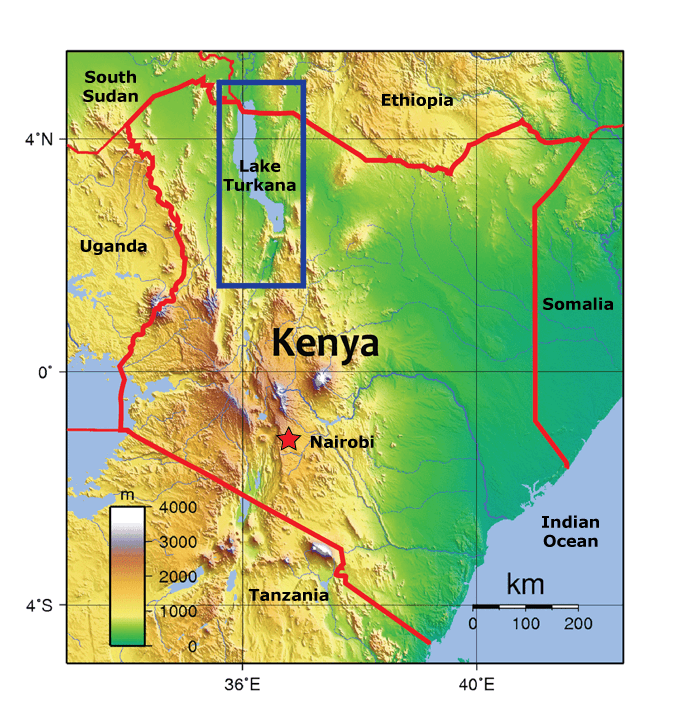
5.Lake Turkana Desert Rift Lake (Places in News)

Down to Earth
Illustration for Lake Turkana Desert Rift Lake (Places in News)

What & Where

Largest permanent desert lake; fourth-largest Great Rift Valley lake; famed jade-green waters.

Situated mainly in northern Kenya; northern tip crosses into southern Ethiopia within the eastern arm of East African Rift.

Tectonic rift-formed basin, 248 km long, 16–32 km wide, ~73 m deep; closed, brackish; fed chiefly by Omo River.

Quick Facts for MCQs

Geological & Seismic

  • RiftingZone: Lies on active East African Rift, model site for continental breakup and magma genesis studies
  • WaterLevelImpact: 6,000-year decline in lake levels correlated with increased earthquake frequency
  • Volcanism: Shorelines and islands comprise young volcanic outcrops indicating ongoing tectonism

Biodiversity

  • FishWealth: Supports abundant Nile perch, tilapia; vital regional fishery resource
  • Megafauna: Home to sizable crocodile, hippo populations and 300+ bird species
  • IslandDiversity: Volcanic islands host unique terrestrial and aquatic ecosystems amid arid surroundings

Early Hominins

  • KoobiFora: Excavations yielded 200+ early hominin fossils, key to human evolutionary timeline
  • LeakeyExpeditions: Discoveries by Mary and Richard Leakey branded area the Cradle of Humankind
  • ArchaeologicalStrata: Sediments preserve stone tools and fauna older than 1.8 million years

Key Data Points

FeatureData-Point
ContinentAfrica
CountriesKenya, Ethiopia (tip)
Length248 km
Width range16–32 km
Maximum depth~73 m
Lake typeClosed-basin brackish
Principal inflowOmo River
Volcanic islandsNorth, Central, South (3)
Desert lake rankWorld’s largest permanent
Rift Valley rank4th largest
Study highlight6,000-yr water drop spurred quakes
GS-3Environment

6.Conservation as Coexistence Community Approach (Community Conservation)

TFL
Illustration for Conservation as Coexistence Community Approach (Community Conservation)

What & Where

Conservation-as-Coexistence; inclusive stewardship where biodiversity prospers with resident communities

Four models; protection-based, community-based, co-management, landscape-level conservation in India

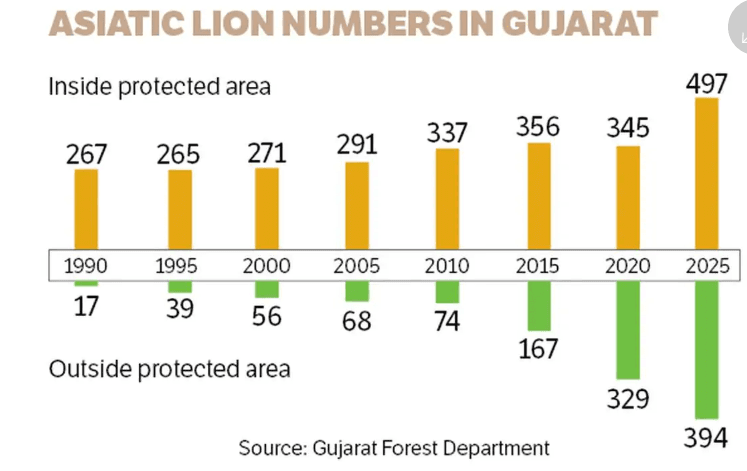
Demonstrated in Gir landscape (Gujarat) and Biate villages, Jaintia Hills (Meghalaya)

Quick Facts for MCQs

Legal & Policy

  • WLPA1972, Forest Conservation Act1980, CAMPA anchor statutory habitat protection
  • Eco-Sensitive Zones, anti-poaching squads, drones tighten on-ground enforcement
  • FPIC, transparent benefit-sharing essential for equitable community participation

Case Studies

  • Gir landscape; Maldhari tolerance sustains lions beyond protected core
  • Biate villages; community jhum retains forests and biodiversity gains
  • Sacred groves, rotational farming illustrate long-standing indigenous stewardship

Limitations & Challenges

  • Exclusionary approach; evictions sever traditional guardianship, fuel conflict
  • Colonial mindset; ignores human-shaped cultural landscapes needing protection
  • Weak manpower; mining, encroachment, fencing erode habitat integrity

Future Directions

  • Inclusive conservation; integrate rights, livelihoods, cultural values in governance
  • Landscape-scale planning; link farms, forests, wetlands as movement corridors
  • Low-cost community models; traditional norms safeguard ecosystems economically

Key Data Points

FeatureData-Point
Key lawsWLPA 1972; Forest Conservation Act 1980; CAMPA fund
Community success~50 % Asiatic lions now range outside Gir NP
Compensation toolGujarat offers rapid ex-gratia for livestock loss
Indigenous practiceBiate jhum shows zero deforestation, fresh bird records
Governance principleFPIC — Free, Prior, Informed Consent for locals
Conflict driverHard park boundaries restrict wildlife movement

Related UPSC Prelims PYQs

GS1 2023PYQ 1

Consider the following statements:

GS1 2017PYQ 2

‘M-STrIPES’ पशु-घनी समावटों में किस संदर्भ में देखा जाता है ?

GS-3Environment

7.Saranda Forest Declared Wildlife Sanctuary (Saranda Forest)

The Hindu

What & Where

Saranda Forest — Asia’s largest contiguous Sal tract, ~900 sq km near Jamshedpur, West Singhbhum, Jharkhand

Supreme Court directed 31,468.25 ha core to be declared wildlife sanctuary; mining banned inside + 1 km buffer

Name Saranda means land of seven hundred hills; rugged terrain harbouring rich iron-ore belts and Adivasi villages

Quick Facts for MCQs

Legal & Policy

  • Supreme Court upheld 1968 notification; nullified state inaction post Jharkhand bifurcation 2000
  • Mining prohibition reiterates Wildlife (Protection) Act and predecessor Lafarge judgment buffer principle
  • State directed to issue fresh sanctuary notification under Section 26A within court-specified timeline

Environmental Significance

  • Sal canopy ensures high carbon sequestration and watershed regulation for Koina and Karo rivers
  • Habitat shelters critically endangered reptiles and supports mega-herbivore elephant corridors
  • Continuous deciduous stretch considered one of world’s finest Sal ecosystems

Economic Angle

  • Region hosts massive iron-ore deposits; PSU & private leases now face stricter clearances
  • Sanctuary tag may shift local economy from extractive mining toward eco-tourism and NTFP collection
  • Conservation-driven land use could impact royalty revenues but lowers long-term ecological restoration costs

Tribal Concerns

  • Adivasi livelihoods tied to NTFPs, shifting cultivation, sacred groves; require inclusive management plans
  • Community rights under FRA 2006 must align with new sanctuary regime
  • Cultural identity linked to Sal landscape and traditional elephant coexistence

Key Data Points

FeatureData-Point
Sanctuary area ordered31,468.25 ha
Original notification1968 Bihar Saranda Game Sanctuary
Dominant treeSal (Shorea robusta)
Other major floraMahua, Kusum
Flagship faunaSal forest tortoise, four-horned antelope, Asian palm civet
Elephant presenceHundreds migrate/reside seasonally
Iron-ore share≈26 % of India’s reserves
Tribes inhabitingHo, Munda, Uraon and allied groups
Mining exclusion zoneInside sanctuary + 1 km radial buffer
GS-3S&T

8.Ammonium Nitrate Properties and Regulation (Industrial Explosives)

NDTV
Illustration for Ammonium Nitrate Properties and Regulation (Industrial Explosives)

What & Where

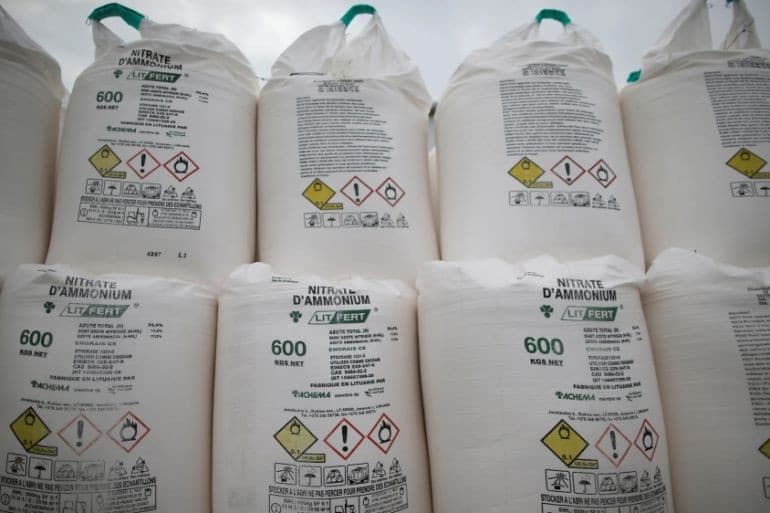
Compound Ammonium Nitrate NH₄NO₃ white hygroscopic crystal widely produced for fertilisers and industrial explosives

Explodes only when mixed with fuel or confined under heat yet drives ∼80 % of mining blasts worldwide

Seized across India; regulated as explosive since 2011 Gazette and Nowgam Srinagar blast highlights misuse risk

Quick Facts for MCQs

Chemical Properties

  • Oxidiser greatly accelerates combustion of organics or fuel oil
  • Thermal instability rapid decomposition under confinement triggers detonation
  • Endothermic dissolution enables instant cold pack applications

Applications

  • Agriculture high nitrogen fertiliser preferred over urea for consistent release
  • Industry core of ANFO, Amatol, Ammonal, Minol, Nitrolite used in quarrying and construction
  • Niche roles cold packs off-grid cooling former airbag propellant now phased out

Regulations in India

  • Classified explosive via 2011 Gazette notification following 2008 Jaipur, 2010 Pune blasts
  • Rules 2012 cover manufacture storage transport sale import export with mandatory bar-coding of bags
  • Any handling without licence invites penalties up to ₹1 lakh fine and imprisonment

Security Dimension

  • Low cost and easy availability make preferred IED oxidiser for terror groups in J&K and Naxal belts
  • Nowgam accident involved stock seized from Faridabad terror-linked doctor exemplifying diversion risks
  • Central advisory issued for tighter inventory audits and real-time transporter tracking

Key Data Points

FeatureData-Point
Chemical formulaNH₄NO₃
Melting point170 °C
NatureStrong oxidiser not fuel
Fertiliser grade NPK34-0-0
Moisture behaviourHighly hygroscopic, freely soluble
Explosives share in mining≈80 % via ANFO
Explosive threshold>45 % NH₄NO₃ in mixture
Indian legal tagExplosive under Explosives Act 1884
Governing rulesAmmonium Nitrate Rules 2012
Key licence ActsIDR Act 1951 & AN Rules 2012

Related UPSC Prelims PYQs

CAPF_GAI, NDA_GAT 2025PYQ 1

Match List–I with List–II and select the answer using the code given below the Lists :

CAPF_GAI, NDA_GAT 2022PYQ 2

यदि अमोनियम आयन की संयोजकता (+1) और कार्बोनेट आयन की संयोजकता (−2) है, तो निम्नलिखित में से अमोनियम कार्बोनेट का सही आणविक सूत्र कौन-सा है?

GS-3S&T

9.Indigenous High-Precision Quantum Diode Laser (Quantum Hardware)

PIB
Illustration for Indigenous High-Precision Quantum Diode Laser (Quantum Hardware)

What & Where

Product: compact, indigenous high-precision diode laser for quantum communication, computing and spectroscopy

Location: developed by Prenishq Pvt. Ltd., IIT-Delhi spin-off, under India’s National Quantum Mission

Usage: deployable in labs, industry and field setups for quantum-grade light sources

Quick Facts for MCQs

Tech & Schemes

  • Indigenous-first diode laser aligns with Atmanirbhar Bharat and Digital India quantum-safe infrastructure goals
  • NQM funding accelerates quantum hardware ecosystem, targeting secure communication backbones and advanced sensors
  • Startup incubation via IIT-Delhi exemplifies academia-industry translational research pathway

Applications

  • Quantum communication: stable coherent light enables QKD, banking and defence data protection
  • Photonic quantum computing: precise pulses control photon qubits, boosting gate fidelity, reducing error rates
  • Metrology: supports optical clocks, enhancing navigation, telecom synchronisation accuracy

Performance Specs

  • Ultra-narrow linewidth delivers high-resolution sensing and spectroscopy capability
  • Wide wavelength tunability permits compatibility with diverse atomic, molecular and photonic systems
  • Rugged design maintains output in Indian climatic variations, minimising recalibration downtime

Key Data Points

FeatureData-Point
Supporting schemeNational Quantum Mission (NQM)
DeveloperPrenishq Pvt. Ltd., IIT-Delhi spin-off
Output stabilityUltra-narrow linewidth with long-term frequency & power stability
Wavelength spanUV to Near-Infrared
Form factorCompact, lightweight, low-power, rugged, temperature-controlled
Coupling optionsFree-space and fiber-coupled output
Key applicationsQKD, photonic quantum computing, precision spectroscopy, atomic clocks
Integration stylePlug-and-play for quick lab or field deployment
GS-2EditorialQuick Bite

10.US Warning on Nigeria Sectarian Violence (US-Nigeria Relations)

Indian Express
Illustration for US Warning on Nigeria Sectarian Violence (US-Nigeria Relations)

What & Where

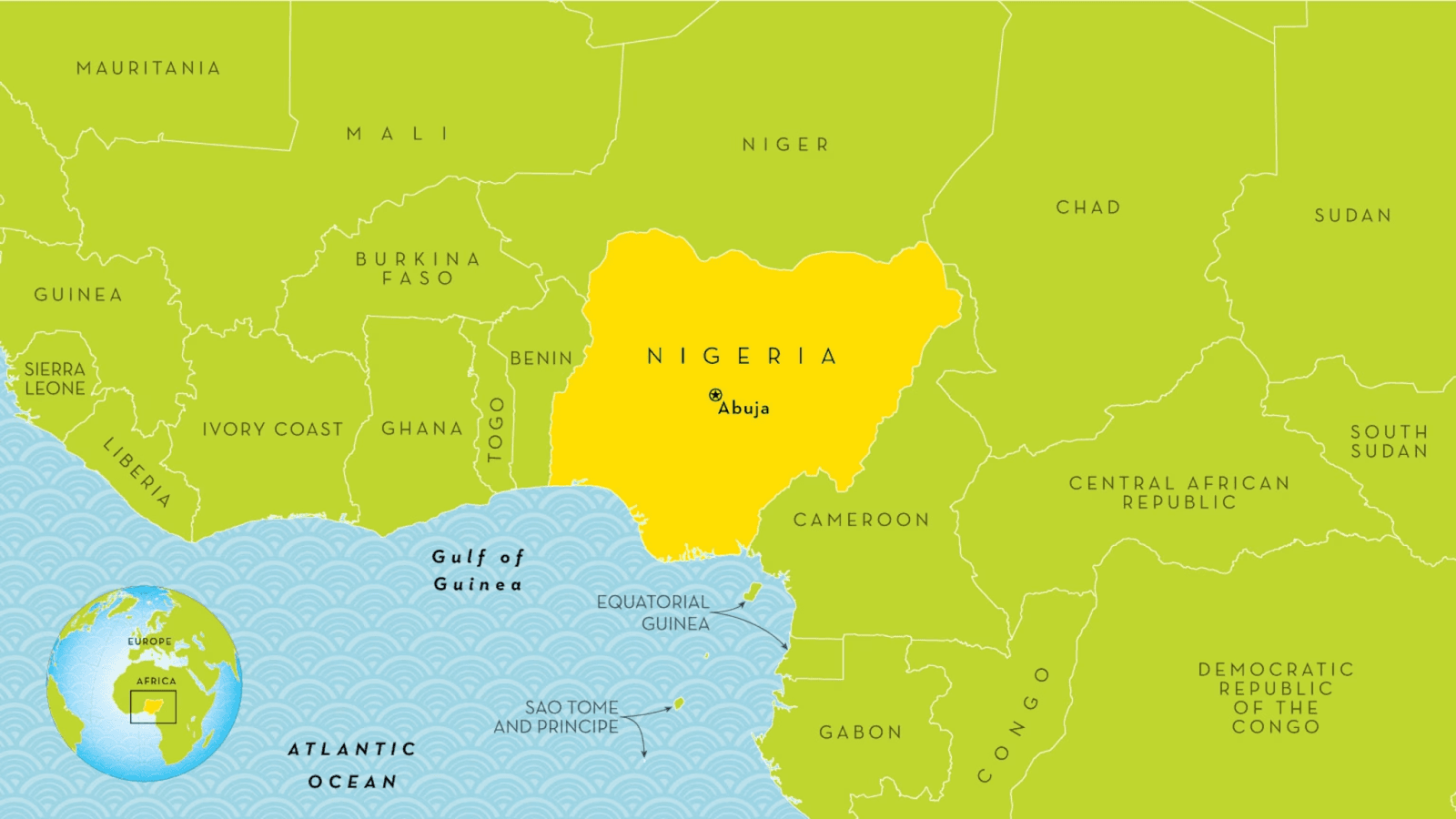
Nigeria — West-African coastal state, borders Niger, Chad, Cameroon, Benin; opens to Gulf of Guinea.

Core basins — Niger–Benue, Lake Chad, coastal Gulf; Niger River + Benue tributary dominate drainage and transport.

Lies inside wider Sahel conflict arc marked by Islamist insurgency, ethnic strife, climate-driven land-water stress.

Quick Facts for MCQs

Security Dimension

  • Drivers — terrorist insurgencies, criminal banditry, farmer-herder disputes compounded by poverty and weak governance.
  • Spill-over — Sahel militancy weakens regional borders, boosts arms flow into northern Nigeria.
  • US warning — possible aid cuts, military action over Christian safety lapses.

International Alignments

  • Diversification — Abuja courting China, India, EU to trim dependence on Washington.
  • BRICS+ — joined nine-nation partner list without decision power, signalling emerging-economy outreach.
  • Aid leverage — US remains key donor but uses conditionality on human-rights protection.

Physical Geography

  • Climate gradient — humid south to semi-arid north, heightening land-water competition.
  • Lake Chad shrinkage exacerbates northern livelihood loss and recruitment for insurgents.
  • Niger–Benue confluence at Lokoja forms economic heartland and floods risk zone.

Key Data Points

FeatureData-Point
World population rank6th
Africa population rank1st
Economy rank in Africa4th largest
NicknameGiant of Africa
Southern coastlineGulf of Guinea
Border countriesNiger, Chad, Cameroon, Benin
Main riversNiger & Benue
Major conflict statesPlateau, Benue, Kaduna
Top insurgent groupBoko Haram
Insecurity driversTerrorism, communal land-water clashes, banditry
US aid statusLargest African recipient
New BRICS status9th partner (no voting rights)
Alternate partners soughtChina, India, EU
Sahel peers in turmoilMali, Burkina Faso, Niger, Chad
GS-3Security

11.DRDO Man-Portable Underwater Vehicle System (Underwater AUVs)

IT
Illustration for DRDO Man-Portable Underwater Vehicle System (Underwater AUVs)

What & Where

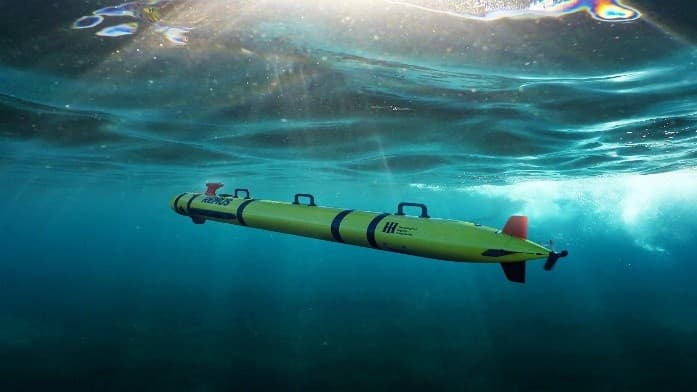
Compact man-portable autonomous underwater vehicle system for real-time mine detection, classification and analysis.

Developed by Naval Science & Technological Laboratory (NSTL) under DRDO, Visakhapatnam, Andhra Pradesh.

Operates as multi-AUV swarm for naval mine countermeasure missions in littoral and harbour zones.

Quick Facts for MCQs

Tech & Specs

  • Multi-AUV cooperation enables wider area coverage with shared target data.
  • Lightweight design allows single-person carriage and quick over-the-side launch.
  • AI algorithms autonomously flag mine-like objects, cutting operator workload.

Security Dimension

  • Minefield neutralisation capability strengthens coastal and harbour defence readiness.
  • Autonomous ops lower casualty risk versus diver-based clearance.
  • Faster detection shortens open-sea lane restoration after mine threats.

Indigenous Push

  • Programme supports Aatmanirbhar Bharat in critical underwater warfare technology.
  • Indigenous design reduces dependence on imported mine-countermeasure systems.
  • Demonstrated field trials showcase maturing domestic undersea robotics ecosystem.

Key Data Points

FeatureData-Point
Developing organisationDefence Research & Development Organisation
Lead laboratoryNaval Science & Technological Laboratory
Lab locationVisakhapatnam, Andhra Pradesh
Platform typeMan-portable Autonomous Underwater Vehicle (MP-AUV)
Primary missionNaval mine countermeasures
Sensor suiteSide-scan sonar + underwater cameras
Intelligence layerDeep-learning target recognition
CommunicationUnderwater acoustic data-link between AUVs
Operational conceptMulti-AUV collaborative swarm
Deployment modeRapid launch from ship or shore by personnel
Key advantageReduces need for divers/manned vessels in minefields
Trial statusHarbour trials at NSTL completed
GS-3Security

12.Operation Southern Spear Counter-Narcotics Campaign (US Anti-Drug Ops)

The Hindu

What & Where

Operation Southern Spear – large-scale U.S. military-intelligence campaign against Latin American drug-trafficking routes

Surveillance theatres – Caribbean Sea and eastern Pacific maritime corridors

Leadership – U.S. Department of Defence under Navy modernization Project 33 hybrid fleet concept

Quick Facts for MCQs

Security Dimension

  • Border-security focus – neutralize narco-terrorist networks, block maritime smuggling corridors
  • Force posture – largest U.S. Caribbean naval presence in decades heightening strategic deterrence
  • Interdiction capability – high-speed robotic boats for rapid pursuit in chokepoints

Tech & Schemes

  • Robotics – long-endurance surface drones, VTOL aircraft enable 24×7 surveillance without crew fatigue
  • Integration – unmanned craft networked with traditional warships through Project 33 command architecture
  • Testbed – operation validates doctrine for future robotic fleet deployment across U.S. Navy

Regional Politics

  • Sovereignty concerns – Venezuela and neighbours wary of perceived U.S. interventionism
  • Diplomacy – expanded counter-narcotics net may reshape cooperation with Caribbean and Pacific states
  • Geopolitical signalling – U.S. asserts hemispheric security leadership amid rising cartel influence

Key Data Points

FeatureData-Point
NatureCounter-narcotics military & intelligence operation
Lead agencyU.S. Department of Defence
Primary theatresCaribbean Sea; eastern Pacific
Key technologyRobotic & Autonomous Systems (surface, interceptor, VTOL)
Fleet conceptHybrid unmanned–manned Project 33
Flagship carrierUSS Gerald R. Ford
Additional assetsAmphibious ships; nuclear submarine
GS-1Editorial

13.Media Ethics Principles and Challenges (Media Ethics)

AN
Illustration for Media Ethics Principles and Challenges (Media Ethics)

What & Where

Media ethics = principles guiding news gathering, production and publication while balancing expression with public responsibility

Core pillars: truth-accuracy, objectivity-fairness, independence, privacy-dignity, accountability

India cases: Dharmendra ICU leak 2025, Sushant Singh Rajput death 2020 spotlight ethical lapses in celebrity coverage

Quick Facts for MCQs

Ethical Breaches

  • Intrusion: ICU footage aired without consent, violating privacy and dignity
  • Misinformation: Unverified death rumour about Dharmendra circulated, forcing family rebuttal
  • Voyeurism: Media showed Sushant’s body images, psychiatric records under false “public interest” claim

Reasons for Decline

  • Commercialisation: TRP-click race rewards outrage and sensationalism over verification
  • Weak self-regulation: Low penalties, NBSA fines insufficient to deter profitable misconduct
  • Political-corporate pressure: Ownership and ad money shape narratives, compromising independence

Way Forward

  • Strengthen self-regulation: Enforce in-house codes, active press councils, visible corrections
  • Clear privacy protocols: No filming in ICUs, funerals or children without consent and proven public interest
  • Media literacy: Educate citizens to reject voyeuristic content, boosting demand for ethical journalism

Key Data Points

FeatureData-Point
Year Dharmendra ICU video leakedNov 2025
Supreme Court on NBSA finesCalled them “toothless”, 2023
Reuters Digital News Report findingDeclining trust in Indian news, 2024
Typical 24×7 riskHalf-verified “first” reports
Five core ethical dutiesTruth, objectivity, independence, privacy, accountability
GS-1Editorial

14.Targeting 55 Percent Female Workforce Participation (Female Labour)

Economic Times

What & Where

Definition FLFPR = share of women (15 + yrs) employed or actively seeking work

Coverage includes paid, self-employed and unpaid family labour; quality of work may vary

India FY24 rate 41.7 %; Labour Ministry aims 55 % by 2030

Quick Facts for MCQs

Economic Angle

  • Growth McKinsey projects gender parity can add USD 700 bn to GDP
  • Productivity gender diversity elevates innovation and sector resilience
  • Household women reinvest earnings in nutrition, health, education boosting human capital

Trend Snapshot

  • Rise FLFPR up 18.4 ppt from 2017-18 to 2023-24 mainly rural driven
  • Composition uptick led by unpaid family labour and own-account work not salaried roles
  • Urban female participation largely stagnant despite national surge

Barriers & Social Norms

  • Sectoral majority women clustered in low-productivity agriculture, informal services
  • Care unpaid domestic work equals 3.1 % of GDP restricting paid labour time
  • Mobility safety, transport gaps and childcare absence curb job choices

Policy & Schemes

  • Protection 26-week maternity leave, crèche rule, night-shift safeguards under Labour Codes
  • Empowerment Beti Bachao Beti Padhao and NEP 2020 raise girl education retention
  • Support One Stop Centres and 24×7 Women Helpline aid violence survivors, job continuity

Strategy Recommendations

  • Metric merge NSO Time-Use Survey to value care work within labour statistics
  • Jobs embed women incentives in PLI, MGNREGA, rural clusters for formal wage creation
  • Infrastructure community childcare, eldercare, shared kitchens lighten unpaid workload

Key Data Points

FeatureData-Point
Current FLFPR (FY24)41.7 %
2030 Government Target55 %
Lowest level (2017-18)23.3 %
FLFPR in 2011-1231.2 %
GDP boost if parity achieved (2025)₹46 lakh crore
Women in informal work> 90 %

Related UPSC Prelims PYQs

CDS_GK 2025PYQ 1

Consider the following statements regarding Annual Periodic Labour Force Survey (PLFS) report 2023–24 by the National Statistical Organization (NSO):

Ready to practice?

Test your knowledge with our UPSC test series.

Start Free Trial