UPSC Current Affairs

15 topicsGS-1: 3GS-2: 5GS-3: 7
0/15 done
GS-2Polity

1.DCGI Enforces Revised GMP Standards (Drug Regulation)

Indian Express
Illustration for DCGI Enforces Revised GMP Standards (Drug Regulation)

What & Where

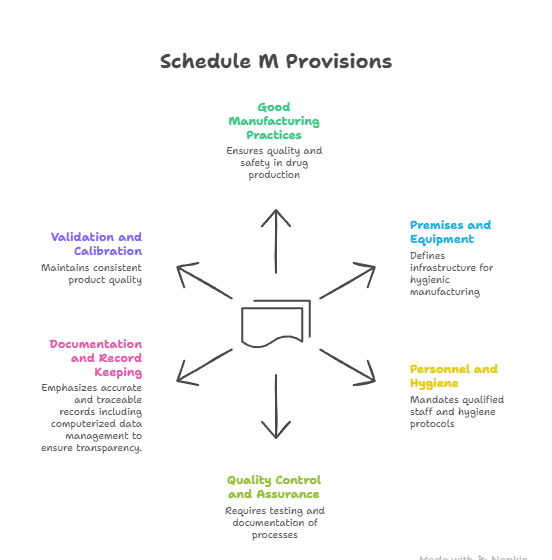
Schedule M, annex to Drugs & Cosmetics Act 1940, codifies GMP for Indian pharma manufacturing.

2023 revision renamed clause to “good manufacturing practices and requirements of plant & equipment”, mirroring WHO-GMP.

DCGI directs state regulators to enforce upgraded Schedule M nationwide by Jan 2026 after fatal cough-syrup contaminations.

Quick Facts for MCQs

Legal & Policy

  • Directive; DCGI orders uniform Schedule M adoption, reducing CDSCO–state overlap.
  • Provision; stresses validated processes, cleanrooms, documentation, product-recall systems.
  • Aim; align with WHO-GMP, USFDA norms, restore credibility.

Quality & Safety

  • Incident; contaminated paediatric syrups killed children in Gambia, Uzbekistan, India.
  • Concern; repeated WHO alerts tarnish “Pharmacy of the World” image.
  • Barrier; MSME units face high costs for labs, data-integrity upgrades.

Economic Angle

  • Growth; pharma market projected USD 130 bn by 2030 at >10 % CAGR.
  • Export; US, Belgium, S. Africa, UK, Brazil dominate destinations.
  • Risk; heavy API import reliance despite PLI-backed bulk-drug parks.

Key Data Points

FeatureData-Point
Enforcement deadlineJanuary 2026
Supervising authorityDrugs Controller General of India
India’s pharma rank (volume)3rd globally
Share in global generic exports≈20 %
FY 24 drug & pharma exportsUSD 27.85 bn
API import dependence~70 % (largely China)
UNICEF vaccine supply55-60 % from India
WHO DPT demand met99 % by India
2024 biotech sector size>USD 130 bn
Top export marketsUSA, Belgium, S. Africa, UK, Brazil

Related UPSC Prelims PYQs

ESE_GS 2026PYQ 1

Which organization developed the Online National Drugs Licensing System (ONDLS) portal?
GS-2PolityQuick Bite

2.Petroleum Gas Regulatory Board Overview (Energy Regulation)

Economic Times

What & Where

PNGRB; statutory regulator for petroleum & natural gas sector (excludes crude) across India

HQ; New Delhi; oversees nationwide pipelines, city-gas and marketing networks

Constituted under Petroleum & Natural Gas Regulatory Board Act 2006 as quasi-judicial tribunal

Quick Facts for MCQs

Legal & Policy

  • Act 2006 legally empowers PNGRB; rules notified by Centre
  • Appeals lie before Appellate Tribunal; further appeal Supreme Court
  • Board functions as tribunal with Civil Court powers under CPC

Functions & Powers

  • Regulates transportation, storage, distribution, marketing of natural gas, LNG, petroleum products
  • Promotes competition, consumer protection, ensures uninterrupted national supply
  • Adjudicates disputes, issues orders, refers investigations on pipeline terms, price display etc

Current Issue

  • GAIL chairman opposed several Sarraf committee suggestions to boost domestic gas consumption
  • Committee constituted by PNGRB to recommend market reforms
  • Disagreement highlights balancing regulator proposals with PSU operational concerns

Key Data Points

FeatureData-Point
Constituting ActPNGRB Act 2006
Statutory statusYes
Parent ministryMo Petroleum & Natural Gas
HeadquartersNew Delhi
Appellate bodyAppellate Tribunal under Sec 110, Electricity Act 2003
Quasi-judicial powerCivil Court-like
Activity excludedCrude oil production
Expert panel headD K Sarraf

Related UPSC Prelims PYQs

GS1 2019PYQ 1

निम्नलिखित कथनों पर विचार कीजिए :

GS1 2025PYQ 2

Consider the following activities:

GS-3Economy

3.Revised Royalty Rates for Critical Minerals (Mining Policy)

Economic Times

What & Where

Royalty: government levy on mined output, calculated as % of Average Sale Price or fixed per-tonne rate

Minerals covered: Graphite, Caesium, Rubidium, Zirconium; blocks dispersed across Indian mineral belts

Legal basis: Mines & Minerals (Development & Regulation) Act 1957 and Mineral Concession Rules 1960

Quick Facts for MCQs

Legal & Policy

  • MMDR Act Section 9 empowers Centre to notify or revise royalty rates
  • New 1-4 % band aligns with global practice, easing auction of critical-mineral blocks
  • Notification encourages co-exploration of lithium and rare-earth elements within same leases

Economic Angle

  • Lower, ad-valorem levies improve project IRR, drawing private and FDI capital into mining
  • Royalty pegged to market price lets states share upside without deterring production
  • Domestic output trims forex outgo on graphite and strengthens supply-chain resilience

Tech & Schemes

  • Minerals feed EV anodes, nuclear cladding, atomic clocks, fibre-optic amplifiers—vital for green tech stack
  • Policy supports Atmanirbhar Bharat and National Electric Mobility Mission through assured raw-material access
  • Quality-graded graphite royalty incentivises purification technology and higher-grade concentrate production

Key Data Points

FeatureData-Point
Graphite royalty2 % (≥80 % C) ; 4 % (<80 % C)
Caesium royalty2 % of metal value
Rubidium royalty2 % of metal value
Zirconium royalty1 % of metal value
Graphite import reliance≈60 % of demand
Global royalty norm2 % – 4 %
Governing statuteMMDR Act 1957

Related UPSC Prelims PYQs

GS1 2025PYQ 1

Consider the following statements:

GS-1HistoryQuick Bite

4.Bal Sahitya Puraskar 2025 (Literary Awards)

PIB

What & Where

Bal Sahitya Puraskar: national award for original children’s books (ages 9–16) in 24 Indian languages

Sahitya Akademi: autonomous literary body, New Delhi HQ, promotes multilingual Indian literature since 1954

Event 2025: awards slated for 14 Nov 2025, observing Children’s Day across India

Quick Facts for MCQs

Awards & Eligibility

  • Originality: only first‐time Indian works, no translations, eligible
  • Authorship: applicant must hold Indian citizenship
  • Evaluation: excellence in language, style, child engagement

Institutional Profile

  • Governance: autonomous, Ministry of Culture funding but independent decision‐making
  • Recognition spread: covers 22 scheduled languages + English & Rajasthani

Comparative Rankings

  • Prestige ladder: Jnanpith top, Sahitya Akademi Awards second, Bal Sahitya caters exclusively to children

Key Data Points

FeatureData-Point
First Bal Sahitya Puraskar2010
Award scope24 recognised Indian languages
Reader age focus9–16 years
Publication windowWithin last 5 years of award year
Awarding bodySahitya Akademi
Sahitya Akademi formationRegistered 1956, Societies Act 1860
Highest Indian literary honourJnanpith Award
Sahitya Akademi Award start1954
Annual Akademi awards24 Literary, 24 Translation
Special honourBhasha Samman for classical/unrecognised tongues
GS-1S&T

5.ISRO National Emergency Database (Disaster Management)

New Indian Express
Illustration for ISRO National Emergency Database (Disaster Management)

What & Where

National Database for Emergency Management (NDEM): ISRO-NRSC geo-spatial platform offering real-time disaster data across India.

Serves as national GIS repository for preparedness, response and mitigation of multi-hazard events.

Now compulsory input in all highway Detailed Project Reports (MoRTH mandate).

Quick Facts for MCQs

Tech & Schemes

  • Geo-spatial-integration: Combines satellite imagery, DEM and GIS layers for multi-scale analysis.
  • Multi-institutional-access: Secure web portal allows simultaneous viewing by central, state and district responders.
  • Decision-support: Auto-generates risk maps, evacuation routes, resource allocation charts.

Infrastructure Planning

  • Alignment-optimisation: Highway planners avoid unstable slopes, high-flood corridors early in DPR stage.
  • Resilience-design: Bridges, tunnels sized considering hazard zonation, ensuring post-disaster operability.
  • Cost-saving: Data-driven surveys reduce redundant fieldwork, land acquisition reworks.

Disaster Management

  • Preparedness-boost: Common database standardises hazard information for quick inter-agency coordination.
  • Response-speed: Real-time layers aid NDRF in locating assets, shortest safe routes during crisis.
  • Mitigation-focus: Encourages risk-sensitive land-use planning beyond transport sector.

Key Data Points

FeatureData-Point
DeveloperNational Remote Sensing Centre, ISRO
Supervising bodiesMinistry of Home Affairs & NDMA
Core aimEvidence-based, risk-informed emergency decisions
Hazard coverageFlood, earthquake, landslide, drought, cyclone
Key data layersDEM, land-use, hazard zonation
Decision toolsReal-time risk analysis & response dashboards
User agenciesNDRF, SDRF, State DM Authorities
New mandateIncluded in every highway DPR by MoRTH
Route planning supportIdentifies flood-/landslide-prone stretches
Cost impactCuts field uncertainties, curbs overruns
GS-1Mapping

6.Botswana Geographical Overview (Place in News)

News on Air
Illustration for Botswana Geographical Overview (Place in News)

What & Where

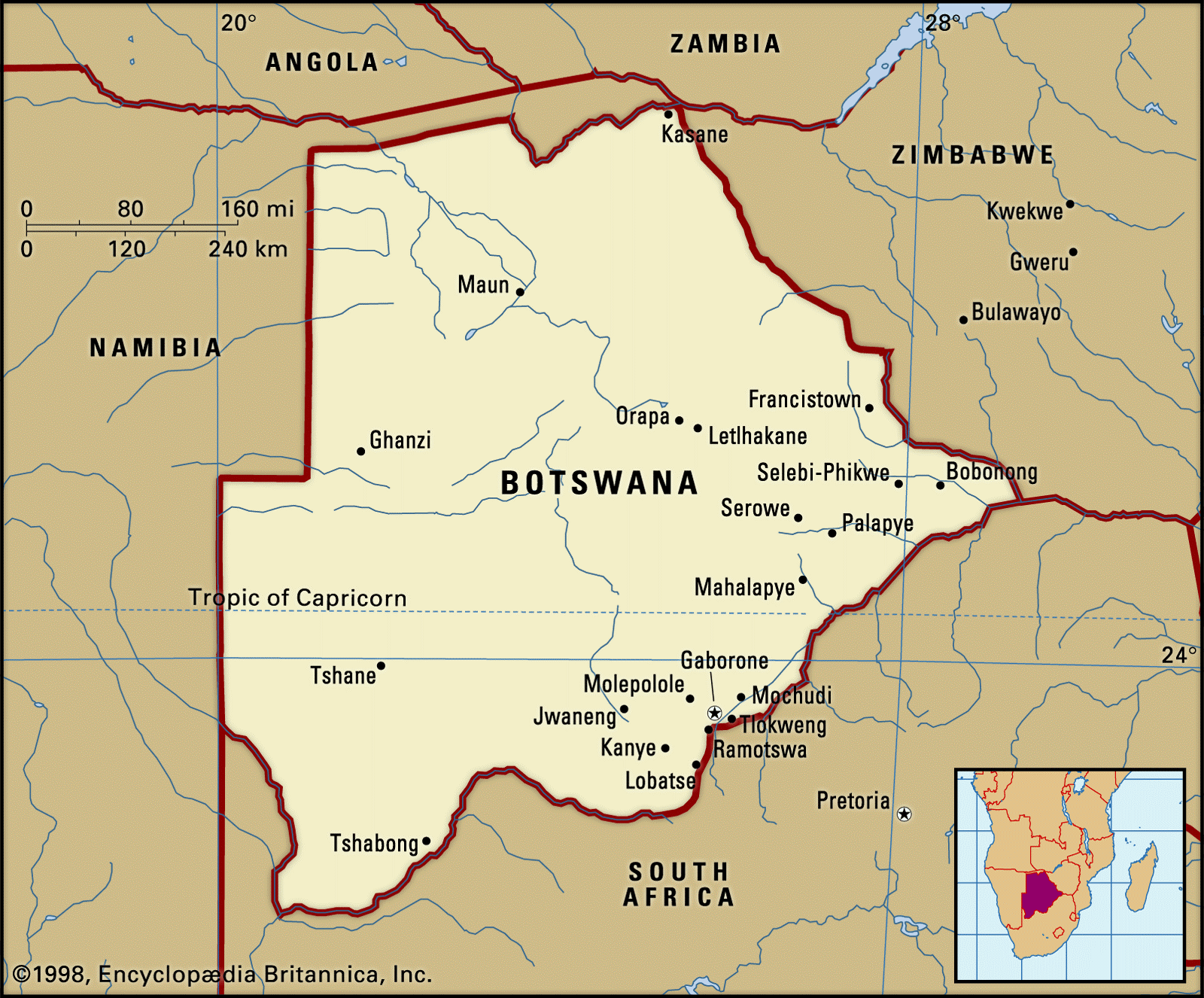
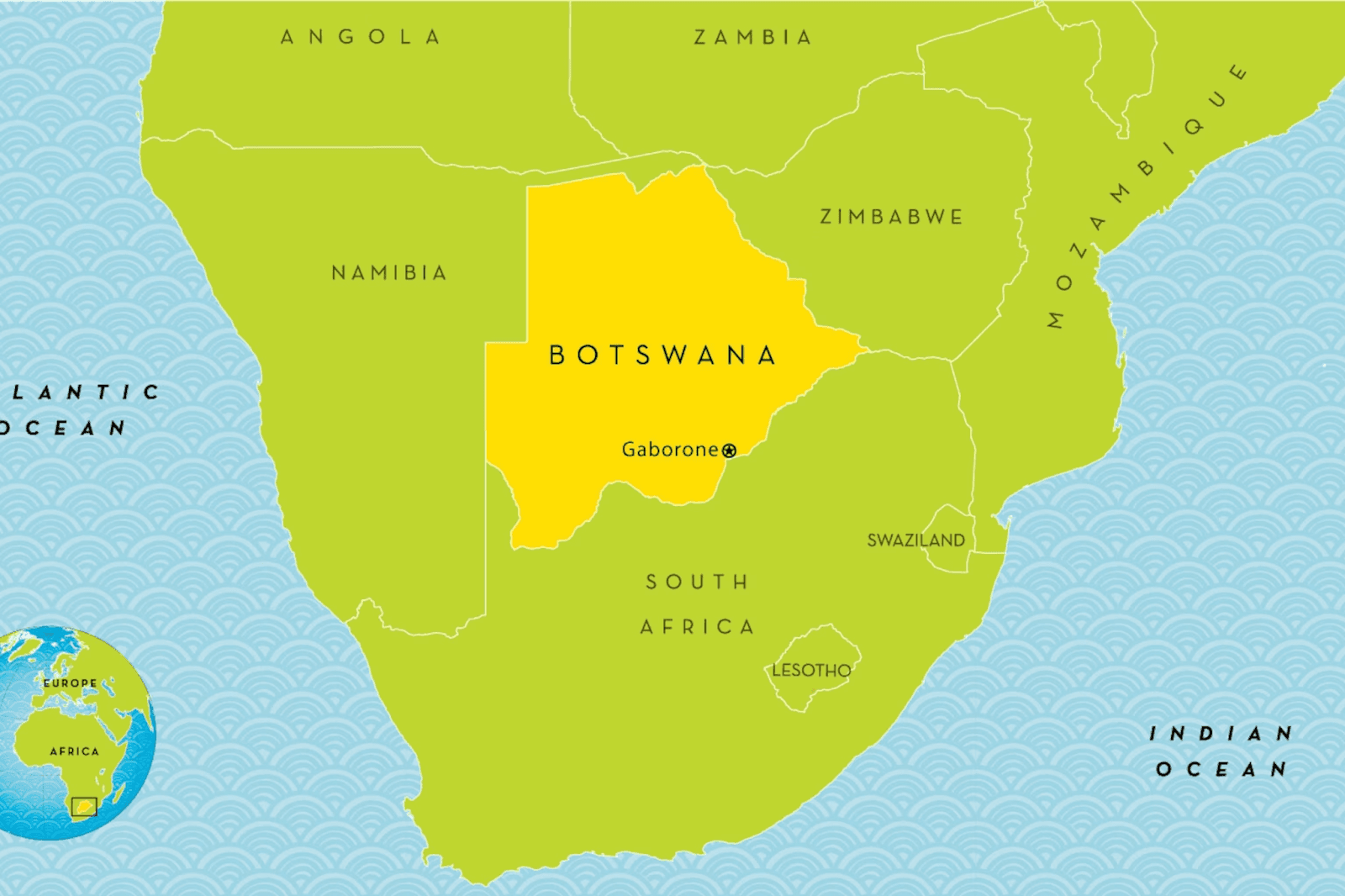
Botswana – landlocked Southern African nation on ~1 000 m Kalahari plateau; roughly triangular, 600 mi N-S & E-W.

Three terrains: Hardveld east, Sandveld central-south, northern wetlands (Okavango Delta, Makgadikgadi Pans).

Project Cheetah: India to receive 8 cheetahs from Botswana amid efforts to restore species once native to India.

Quick Facts for MCQs

Physical Geography

  • Hardveld bears rocky hills, shallow soils; Sandveld hosts deep Kalahari sands; wetlands hold year-round waters.
  • Rainfall sparse, highly seasonal, driving frequent drought cycles.

Wildlife Distribution

  • Cheetahs once roamed Africa, Middle East, India; now fragmented into 10 % of past territories.
  • Southern Africa remains stronghold, critical for translocation programmes like India’s.

International Cooperation

  • Donation underscores India-Botswana conservation ties and South-South wildlife collaboration focus.

Key Data Points

FeatureData-Point
Independence1966 from Britain
NeighboursNamibia, Zambia, Zimbabwe, South Africa
Highest share of landscapeKalahari Desert sands
Mean elevation~1 000 m
Major riversOkavango, Chobe, Limpopo
Climate typeSemi-arid; hot summers 34 °C; dry winters
Cheetahs worldwide≈7 100 adults & adolescents
Present global range~9–10 % of historical
Largest wild cheetah populationSouthern Africa (Namibia, Botswana, Angola, South Africa, Mozambique, Zambia)
Southern Africa range retained~22 % of former species range
Eastern Africa range retained~6 %
Botswana donation to India8 cheetahs under Project Cheetah

Related UPSC Prelims PYQs

CDS_GK, GEO_GS 2023PYQ 1

Cheetahs, brought from Namibia, were introduced in India to which one of the following National Parks?

CDS_GK, GEO_GS 2022PYQ 2

Which one of the following was recently considered to be a suitable site for introducing African cheetah in India?

GS-3Environment

7.ARISE Climate Resilience Program (Climate Finance)

Economic Times

What & Where

ARISE Program – next-gen Climate Investment Funds initiative to harden developing-economy resilience against floods, droughts, storms

Launch Site – unveiled at COP30 Climate Summit, Belém, Pará state, Brazil

Geography Focus – 70-plus low & middle-income countries via six multilateral development banks

Quick Facts for MCQs

Tech & Schemes

  • Clean Technology Fund finances renewable energy, clean transport, efficiency projects in program countries
  • Strategic Climate Fund pilots PPCR, Forestry Investment, Smart Cities then scales successes
  • ARISE adds resilience lens to existing CIF toolkit, focusing on economic & institutional strengthening

Economic Angle

  • Catalytic Finance uses concessional funds to derisk adaptation investments, crowding in private capital
  • Resilience Investments convert climate risks into growth opportunities, boosting GDP stability and job creation

International Examples

  • Donor Diversity extends beyond traditional climate funds, welcoming EU members like Spain alongside Germany
  • Partnership Model mandates country-led plans executed through six MDBs, ensuring regional expertise and oversight

Key Data Points

FeatureData-Point
Full form ARISEAccelerating Resilience Investments & Innovations for Sustainable Economies
Parent bodyClimate Investment Funds (CIF)
CIF hostWorld Bank Group
Initial ARISE kittyUSD 100 million
Donor nationsGermany, Spain
CIF inception year2008
CIF core fundsClean Technology Fund; Strategic Climate Fund
Finance modelBlended concessional + MDB/private capital
MDB partnersIFC, ADB, AfDB, EBRD, IDB, World Bank
Core ARISE objectiveMainstream climate resilience into national economic planning

Related UPSC Prelims PYQs

GS1 2025PYQ 1

निम्नलिखित में से किस एक ने 'एशिया और प्रशांत क्षेत्र के लिए प्रकृति समाधान (नेचर सॉल्यूशन्स) फंड' प्रारंभ किया?

GS1 2017PYQ 2

The Global Infrastructure Facility is a/an

GS-3Environment

8.UNEP Global Cooling Watch 2025 (Sustainable Cooling)

UNEP
Illustration for UNEP Global Cooling Watch 2025 (Sustainable Cooling)

What & Where

Assessment: UNEP’s Global Cooling Watch 2025, second global review of cooling’s climate, economic and equity aspects.

Purpose: Projects demand/emissions to 2050 and proposes “Sustainable Cooling Pathway” underpinning the Global Cooling Pledge.

Geography: Launched COP30, Belém-Brazil; contrasts Article 5 (developing) vs non-Article 5 nations.

Quick Facts for MCQs

Environmental Impact

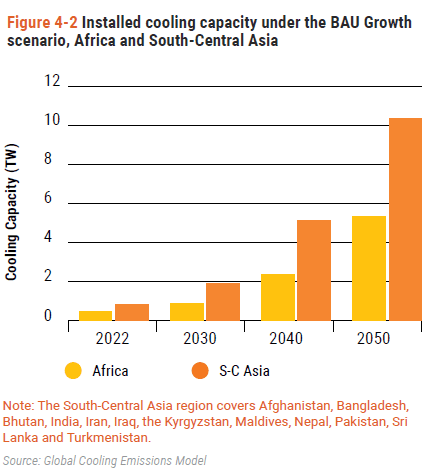
  • Emissions: BAU cooling could double 2022 levels, risking offset of other climate gains.
  • Warming: HFC transition alone can avoid ~0.4 °C global rise.
  • Inequality: Cooling gap leaves billions in tropics exposed to lethal heat.

Policy & Finance

  • Pathway: UNEP urges combined passive design, efficient appliances, clean power integration.
  • Regulation: Kigali Amendment enforcement, lifecycle refrigerant recovery, mandatory passive-cooling codes.
  • Funding: Green finance via concessional loans, PPPs, climate bonds to widen equitable access.

Technology & Design

  • Passive measures: Reflective roofs, urban greening, orientation crucial for 15-55 % energy savings.
  • Appliances: Hybrid & low-energy systems achieving up to 50 % higher efficiency.
  • Grid impact: Smart, efficient tech necessary to manage projected 18,000 TWh demand surge.

Key Data Points

FeatureData-Point
PublisherUnited Nations Environment Programme
Release eventCOP30 (2025), Belém, Brazil
Cooling capacity rise 2022-5022 TW → 58 TW (2.6 ×)
Cooling-sector GHG 2050 (BAU)10.5 Gt CO₂e
2022 electricity for cooling~5,000 TWh
2050 electricity for cooling~18,000 TWh
Article 5 demand growth4-fold by 2050
Population heat-vulnerable>2 billion people
Passive design temp dropup to 8 °C indoors
Passive design energy cut15–55 %
HFC phase-down warming cut≈0.4 °C this century
Global Cooling Pledge members72 countries + 80 organisations
Pledge emission-cut target68 % by 2050
Adaptation finance met<20 % of need

Related UPSC Prelims PYQs

CAPF_GAI, CDS_GK 2024PYQ 1

Which one among the following statements with regard to the United Nations Climate Change Conference (COP28) is NOT correct?

CAPF_GAI, CDS_GK 2024PYQ 2

Which one of the following resolutions in the final agreement reached at COP28 is associated with the target of achieving 'Net Zero by 2050'?

GS-3Environment

9.Botswana Cheetahs Translocated to India (Project Cheetah)

Economic Times
Illustration for Botswana Cheetahs Translocated to India (Project Cheetah)

What & Where

Project Cheetah; launched 2022; reintroduces extinct Asiatic cheetahs to India through first intercontinental carnivore translocation.

First lot 8 cheetahs donated by Botswana; 5 in quarantine at Mokolodi Nature Reserve before shipment.

Release landscape includes Kuno NP, Gandhi Sagar WLS and proposed Nauradehi WLS, Madhya Pradesh savannas.

Quick Facts for MCQs

Governance & Stakeholders

  • Steering Committee 2023 guides project progress, research, adaptive management.
  • NTCA anchors; partners include Madhya Pradesh Forest Department, Wildlife Institute of India.
  • 350 + Cheetah Mitras drive local outreach, conflict reduction.

Ecology & Conservation

  • Objective restore cheetah metapopulation, rejuvenate grassland–savanna ecosystems, spur ecotourism.
  • World’s first intercontinental wild carnivore relocation; precedents limited to herbivores.
  • Site readiness involves prey base bolstering, soft-release bomas, continuous monitoring.

Botswana Geography

  • Landlocked Southern Africa; borders South Africa, Namibia, Zimbabwe.
  • Kalahari Desert covers > 70 % territory; moderate rainfall enables grassland vegetation.
  • Biodiversity hotspots include Okavango Delta and Chobe National Park with 50,000 + elephants.

Key Data Points

FeatureData-Point
Cheetah extinction year India1952
Donor country (2025 batch)Botswana
Current cheetahs in India27 (11 adult, 16 born)
Implementing authorityNTCA with MP Forest Dept & WII
Oversight panel yearSteering Committee 2023
Community volunteers350 + Cheetah Mitras
Botswana land in Kalahari> 70 %
Botswana protected area share≈ 17 % land
Okavango Delta statusUNESCO World Heritage inland delta
Chobe NP elephant count> 50,000
Botswana diamond share global~ 20 % production

Related UPSC Prelims PYQs

CDS_GK, GEO_GS 2023PYQ 1

Cheetahs, brought from Namibia, were introduced in India to which one of the following National Parks?

CDS_GK, GEO_GS 2022PYQ 2

Which one of the following was recently considered to be a suitable site for introducing African cheetah in India?

GS-3Environment

10.Singapore Introduces Green Fuel Levy (Sustainable Aviation Fuel)

Indian Express

What & Where

Sustainable Aviation Fuel (SAF): non-petroleum jet fuel from agri waste, MSW, forestry residues, waste oils.

Singapore: world’s first Green Fuel Levy on all departing air passengers, operational 2026.

India: SAF blending for international flights—1 % by 2027, 2 % 2028, 5 % 2030.

Quick Facts for MCQs

Legal & Policy

  • Singapore levy aligns with Paris Agreement, starts collection next fiscal year.
  • National Biofuel Coordination Committee sets phased Indian blend mandates (2027–30).
  • Levy model may guide ICAO-level market-based measures.

Environmental Impact

  • SAF use can lower lifecycle CO₂ by four-fifths versus ATF.
  • Reaching 65 % SAF share pivotal for sectoral net-zero by 2050.
  • Supports India’s 2070 national net-zero commitment.

Tech & Schemes

  • Feedstocks include agri stubble, used cooking oil, municipal solid waste.
  • Drop-in compatibility avoids new aircraft or airport investments.
  • Centralised procurement expected to scale production, cut per-litre cost.

International Examples

  • Singapore adoption sets precedent; no other state-level passenger levy dedicated to SAF yet.

Key Data Points

FeatureData-Point
First Green Fuel Levy countrySingapore
Levy revenue useCentralised SAF purchase
Aviation share of global GHG1.2 %
SAF share in global jet fuel (2024)0.3 %
SAF GHG reduction potentialUp to 80 %
Contribution to aviation net-zero 2050Up to 65 % GHG cut
Typical SAF–ATF blend range10–50 %
Engine/infrastructure change neededNone
India SAF blend target 20305 % (international flights)
First Indian SAF passenger flightAirAsia, Pune–Delhi, May 2023
GS-3S&T

11.WHO Global Tuberculosis Report 2025 (Public Health Report)

WHO
Illustration for WHO Global Tuberculosis Report 2025 (Public Health Report)

What & Where

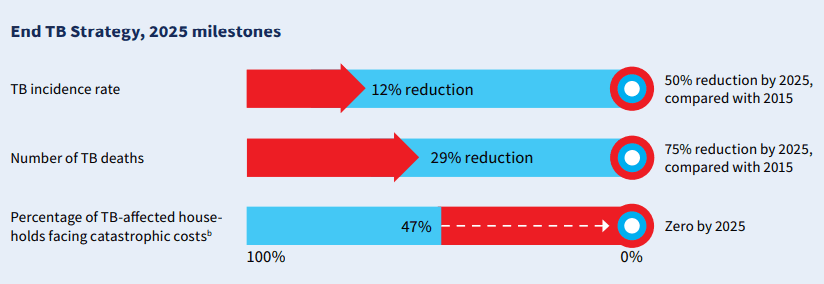
WHO Global Tuberculosis Report 2025 – annual assessment of TB incidence, mortality, funding and control progress worldwide.

Tracks advance toward End TB Strategy (2015-2035) targets of 90 % death cut, 80 % incidence cut.

India tops global burden (25 % of cases); South-East Asia, Western Pacific, Africa jointly host 86 % cases.

Quick Facts for MCQs

Global Trends

  • Incidence falling in Africa, SE Asia, EMR, Europe; Americas show fourth yearly rise from under-detection.
  • MDR-TB detection & cure moving slowly; remains major threat.
  • Funding plateau jeopardises diagnostics, drugs, research pipeline.

India Status

  • “Missing cases” gap narrowed: 2.61 mn diagnosed of 2.7 mn estimated 2024.
  • Mortality still sevenfold above 2025 national goal despite steady drop.
  • Upfront molecular tests (Truenat, CBNAAT) scaled nationwide under TB-Mukt Bharat.

Initiatives & Schemes

  • National Strategic Plan 2017-25 targets 80 % incidence cut five years before global timeline.
  • Ni-kshay Poshan Yojana offers ₹500/month nutrition support to notified patients.
  • Community-driven Pradhan Mantri TB Mukt Bharat Abhiyan enables corporates/individuals to “adopt” patients.

Key Challenges

  • Undernutrition continues as strongest risk factor, fuelling transmission cycles.
  • Rising MDR-TB strains need costlier, longer regimens; access still patchy.
  • Surveillance gaps in private & rural sectors cause delayed detection and drug resistance.

Financing & R&D

  • Domestic outlay must rise to offset shrinking global donor pool.
  • Accelerated trial & equitable rollout of next-gen TB vaccines critical before 2030.
  • AI-enabled digital platforms advised for real-time monitoring, adherence nudges.

Key Data Points

FeatureData-Point
Global incidence rate 2024131 / 100 000 population
2023-24 global decline–1.7 %
Share of global cases: India25 %
India incidence 2024187 / 100 000
India decline since 2015–21 % (global –12 %)
India TB deaths 202421 / 100 000 (target 3 by 2025)
India MDR-TB share32 % of global
Eight high-burden nations67 % global cases
Funding trend post-2020Stagnant; donor cuts expected 2025
Treatment coverage India92 % (Ni-kshay 2.0)
GS-2International Relations

12.India–Bhutan Partnership Initiatives (Bhutan Relations)

PIB

What & Where

State Visit; Nov 2025; Bhutan; marks 70th birthday of 4th Druk Gyalpo.

Centres: Thimphu, Punatsangchhu river basin, Gelephu Mindfulness City corridor to Assam.

Cooperation pillars: hydropower, trade-development grants, cross-border connectivity.

Quick Facts for MCQs

Economic & Development

  • Stimulus: India backs Bhutan’s 13th FYP plus separate Economic Stimulus Programme.
  • Investment: India provides 50 % of total FDI inflow into Bhutan.
  • Essential-goods: Institutionalised fertiliser & commodity supply, first batch delivered 2025.

Energy Cooperation

  • Diversification: Talks extend beyond hydro to solar, wind, “new energy” via ₹40 bn credit.
  • Power trade: India imported electricity worth ₹2,448 crore from Bhutan in 2022.
  • Concerns: Downstream Indian states fear siltation, flood risks from Bhutanese dams.

Connectivity

  • Multimodal: Jogigopha terminal + Darranga land port deepen Assam–Bhutan logistics arc.
  • Tourism: High Sustainable Development Fee restricts Indian footfall, hurts border towns.
  • Digital: RuPay, BHIM, Digital Drukyul operational; India-Bhutan SAT launched 2022.

Security Dimension

  • Doklam: 2017 standoff highlights India’s stake in Bhutan–China boundary talks.
  • Border control: Smuggling & insurgent movement require tighter joint patrols.
  • Strategy: Quiet Indian support urged for speedy Bhutan-China settlement without compromising tri-junction.

Key Data Points

FeatureData-Point
MoUs signed 20253 (Renewable Energy, Health, Mental Health)
Hydropower inaugurated1,020 MW Punatsangchhu-II
Stalled project resumed1,200 MW Punatsangchhu-I
Line of Credit offered₹40 billion for “new energy”
Cross-border rail linksGelephu–Kokrajhar & Samtse–Banarhat (survey done)
New check-postHatisar, Assam (Immigration)
Indian grant in Bhutan’s 12th FYP₹4,500 crore (≈73 % external aid)
India-Bhutan trade 2024-25USD 1.78 billion; tripled since 2014
Operational Indo-built dams4 projects, 2,136 MW
Annual Indian scholarships1,000+ to Bhutanese students

Related UPSC Prelims PYQs

ESE_GS, NDA_GAT 2024PYQ 1

In January 2024, India has entered into a bilateral agreement through which it will provide grant assistance to a country to construct a 20 feet Bailey bridge. Identify the country.

ESE_GS, NDA_GAT 2026PYQ 2

What is the name of the initiative launched by India and Denmark in November 2025 to enhance bilateral ties?

GS-3Security

13.Nyoma Air Base Operationalisation (High-Altitude Airfield)

Hindustan Times
Illustration for Nyoma Air Base Operationalisation (High-Altitude Airfield)

What & Where

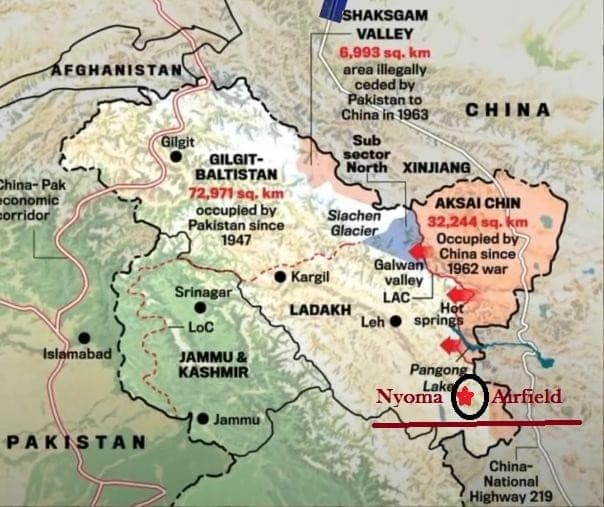
Facility: Nyoma Air Base, newly operationalised IAF station at Mudh-Nyoma, Eastern Ladakh

Geography: 13,700 ft on Changthang plateau, northern bank Indus, ~30 km from LAC, near Pangong Tso

Capability: Accommodates fighters, C-130J, AN-32, Apache, Chinook; among world’s highest operational airfields

Quick Facts for MCQs

Security Dimension

  • Deterrence: Strengthens surveillance-strike reach over Indus–Pangong–Hanle corridor against PLA
  • Mobility: Cuts response time for troop lift, med-evac, logistics in Hanle–Chumar–Demchok sectors
  • Network: Complements Leh, Thoise, DBO, Fukche for multi-node Western Sector air grid

Infrastructure & Engineering

  • Construction: High-altitude runway built within two short summer seasons by BRO
  • Support: Hangars, ATC, fuel farms planned for 24×7 fighter operations
  • Connectivity: Black-topped Leh-Nyoma road eases heavy equipment movement

Geography & Climate

  • Terrain: Flanked by Kailash Range, Skakjung plains, rugged valleys
  • Constraint: –30 °C winters limit construction to ~5 warmer months yearly
  • Advantage: Plateau provides clear high-angle approaches for heavy aircraft

Timeline

  • 1962: Mud ALG constructed, remained dormant
  • 2009: AN-32 touchdown restarted strip; 2020 standoff saw C-130J, Apache, Chinook use
  • 2023-25: BRO runway built 2024; full airbase commissioning slated Nov 2025

Key Data Points

FeatureData-Point
Altitude13,700 ft (≈4,175 m)
Runway length2.7 km paved
Runway completion2024
Runway cost₹218 crore
Original build1962 mud ALG
Reactivation year2009 (AN-32)
Upgrade agencyBRO, Project Himank
Full commissioningNov 2025 (planned)
Distance to LAC~30 km
Nearby lakePangong Tso
River bankNorthern Indus
Winter lowto –30 °C
Inaugural C-130J landing2024 by Air Chief Marshal A.P. Singh
Sister Ladakh airfieldsLeh, Thoise, Kargil, DBO, Fukche
GS-2Scheme

14.Export Promotion Mission Framework (Export Incentives)

Times of India
Illustration for Export Promotion Mission Framework (Export Incentives)

What & Where

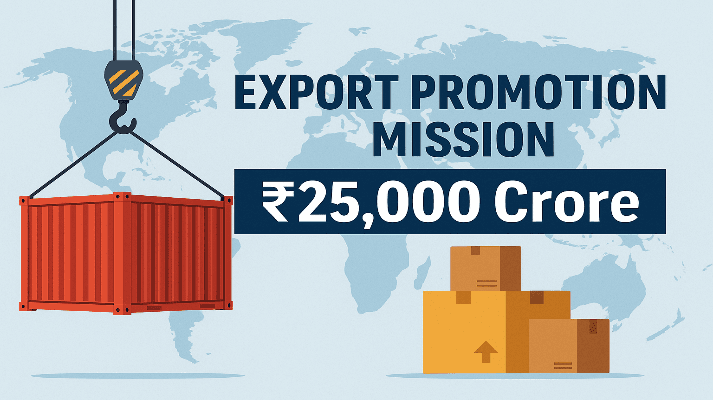
Mission: Export Promotion Mission, unified tech-driven export framework

Location: Nationwide, executed by DGFT, Ministry of Commerce & Industry

Period & funds: FY 2025-26 → 2030-31, ₹25,060 crore

Quick Facts for MCQs

Economic Angle

  • Export-boost: widens trade finance, cuts barriers, diversifies markets
  • Jobs: targets manufacturing and logistics employment via export growth
  • Inclusivity: emphasises MSME participation, regional balance

Tech & Schemes

  • Integration: unifies IES, MAI and new sub-schemes under one dashboard
  • Digital: paperless processing on DGFT portal linked to customs, banks
  • Monitoring: outcome metrics enable real-time fund and impact tracking

Sectoral Focus

  • Priority: aids textiles, leather, gems-jewellery, engineering, marine against tariff pressures
  • Compliance: finances quality upgrades, certification, modern packaging
  • Logistics: supports branding, trade fairs, supply chain improvements

Key Data Points

FeatureData-Point
Cabinet approvalNov 2025
Budget announcementUnion Budget 2025-26
Mission tenure2025-26 to 2030-31
Financial outlay₹25,060 crore
Nodal agencyDGFT, Commerce Ministry
Sub-scheme 1Niryat Protsahan (trade finance)
Sub-scheme 2Niryat Disha (non-financial aid)
Merged schemesInterest Equalisation Scheme, Market Access Initiative
Digital modeSingle DGFT portal for applications & disbursals
Priority sectorsTextiles, leather, gems-jewellery, engineering goods, marine
Vision alignmentViksit Bharat @2047 export goals

Related UPSC Prelims PYQs

CAPF_GAI 2024PYQ 1

Which of the following is NOT one of the pillars of India’s ‘Foreign Trade Policy-2023’?

CAPF_GAI 2025PYQ 2

'राष्ट्रीय विनिर्माण मिशन' के संबंध में निम्नलिखित में से कौन-सा/कौन-से कथन सही है/हैं?

GS-2Scheme

15.PPV&FRA Act Silver Jubilee (Plant Variety Rights)

PIB

What & Where

PPV&FRA Act 2001: India’s sui generis law protecting plant breeders & farmers, Ministry of Agriculture.

Authority operational 2005; Silver Jubilee celebrated 2024 in New Delhi with Plant Genome Saviour Awards.

Awards recognise farmers/communities conserving traditional, endangered crop germplasm nationwide.

Quick Facts for MCQs

Legal & Policy

  • Sui generis framework balances innovation with equity, deterring biopiracy via National Register.
  • Researchers’ exemption maintains open scientific access, fostering varietal improvement.
  • Benefit-sharing mandatory for registered variety commercialization.

Farmers’ Rights

  • Section 39 permits farmers to save, exchange, resow registered seeds royalty-free.
  • Compensation due to farmers for non-performance of protected varieties.
  • Gene Fund resources support on-farm conservation by cultivators.

Awards & Incentives

  • Plant Genome Saviour Awards honour individual, community custodians of landraces, wild relatives.
  • 2025 awardees include Community Seed Bank (Telangana), Mithilanchal Makhana Association (Bihar), CRS-Na Dihing Committee (Assam).
  • Awards aim to reinforce seed sovereignty, traditional knowledge preservation.

Key Data Points

FeatureData-Point
Enacted2001
MinistryAgriculture & Farmers’ Welfare
Authority operational2005
Farmers’ Rights section39
Breeder protectionExclusive production, sale, licensing rights
Registration testDUS (Distinctness-Uniformity-Stability)
Notified crop species57
Researchers’ exemptionFree use for experimentation & breeding
National Gene Fund purposeChannel benefit-sharing, finance in-situ conservation
Award legal basisSec 39(1)(iii) PPV&FRA

Related UPSC Prelims PYQs

GS1 2019PYQ 1

Consider the following statements:

Ready to practice?

Test your knowledge with our UPSC test series.

Start Free Trial