UPSC Current Affairs

15 topicsGS-1: 3GS-2: 4GS-3: 8
0/15 done
GS-2Polity

2.Amended Organ Transplant Rules 2025 (Organ Transplant Rules)

ETH

What & Where

Amendment 2025 to Transplantation of Human Organs & Tissues Rules 2014 under Act 1994

Regulates cornea retrieval / transplant centres across India

Key tweak drops mandatory clinical specular microscope, widening rural-semi-urban access

Quick Facts for MCQs

Legal & Policy

  • Amendment deregulates equipment requirement easing licence for smaller eye centres
  • Provision aims to simplify approval and cut infrastructural bottlenecks
  • Policy framed after expert and stakeholder consultations aligning with Vision Equitable Healthcare

Health Infrastructure

  • Cost reduction boosts potential cornea donation and transplantation volume
  • Step facilitates service expansion in rural and semi-urban regions
  • Strengthened NOTP improves coordination among hospitals tissue banks regulators

Eye Anatomy

  • Cornea transparent dome front of eye enabling light focus on retina
  • Layers comprise Epithelium Bowman Stroma Dua Descemet Endothelium
  • Self healing limited; deep scarring needs corneal graft surgery

Key Data Points

FeatureData-Point
Governing ActTransplantation of Human Organs and Tissues Act 1994
Amending Rule year2025
Earlier mandatory equipmentClinical specular microscope
Target programmeNational Organ Transplant Programme
Corneal blindness rank (≥50 yrs)Second leading cause
Cornea anatomical layersSix
Pain receptor density300–600 × skin

Related UPSC Prelims PYQs

GS1 1999PYQ 1

In eye donation, which one of the following parts of donor’s eye is utilised?

GS1 2001PYQ 2

In the eye donation, which part of the eye is transplanted from the donor?

GS-2Polity

3.Shah Bano Verdict and Muslim Women’s Rights (Shah Bano Case)

Indian Express

What & Where

Shah Bano verdict 1985 SC; affirmed Sec 125 CrPC maintenance rights for divorced Muslim women beyond iddat.

Uniform Civil Code under Art 44 DPSP; aims common civil laws; only Goa follows full code, Uttarakhand drafting state UCC.

Core geography: Goa governed by Portuguese Civil Code 1867; sets precedent for nationwide UCC debates.

Quick Facts for MCQs

Legal & Policy

  • Section 125 secular; applicable irrespective of religion; ensures wife, child, parent maintenance.
  • 1986 Act shifted post-iddat support to relatives or Waqf; later read as lump-sum within iddat.
  • Muslim Women Marriage Act 2019 criminalises instant triple talaq; extends reform trajectory.

Judicial Chronology

  • Petition 1978 M-P High Court raised maintenance quantum; escalated to SC.
  • 1985 SC cited Quran, equality; termed Art 44 dead letter.
  • 2024 Samad case held 1986 Act does not bar simultaneous Sec 125 claims.

Constitutional Context

  • Article 44 DPSP non-justiciable; aims unity, gender justice; yet politically contentious.
  • Constituent Assembly minorities wanted personal-law safeguard; Ambedkar, Munshi pushed equality.
  • Law Commission 2018 opined nationwide UCC neither necessary nor desirable currently.

Key Data Points

FeatureData-Point
Shah Bano filing year1978
SC bench strength5-judge Constitution Bench
Iddat period length~3 months
Overriding statuteMuslim Women (Protection of Rights on Divorce) Act 1986
Re-affirmation caseDaniel Latifi v Union 2001
Latest related rulingMohd Abdul Samad v Telangana 2024
CrPC Section renumbered in 2023Bharatiya Nagarik Suraksha Sanita Sec 144
Only Indian UCC stateGoa
GS-3Economy

4.SEBI Advisory on Digital Gold Risks (Digital Gold Advisory)

Economic Times

What & Where

Digital gold / e-gold; electronic purchase of gold units stored by issuer, tradable online

India; SEBI issued 11 Nov 2025 advisory against unregulated offerings

Safer SEBI-regulated routes: Sovereign Gold Bonds, Gold ETFs, Electronic Gold Receipts, commodity derivatives

Quick Facts for MCQs

Legal & Policy

  • Classification gap; not a security or commodity derivative under Securities Contracts (Regulation) Act
  • Absence of SEBI oversight removes mandatory disclosures, audits, compliance checks

Economic Angle

  • Price discovery opaque; investors depend solely on issuer-quoted rates
  • Liquidity risk; resale usually restricted to issuer’s platform, no exchange trading

Tech & Schemes

  • Blockchain ledger enables fractional ownership, instant buy/sell
  • Regulated substitutes offer demat holding, exchange trade, RBI sovereign guarantee for SGBs

Key Data Points

FeatureData-Point
Regulator for digital goldNone; outside SEBI, RBI, PFRDA ambit
SEBI advisory date11 Nov 2025
Key risk flaggedCounterparty default on cash or physical delivery
Investor safeguardsNo insurance, grievance redressal, guaranteed settlement
Technology baseBlockchain used for recording fractional gold ownership
SEBI-regulated gold productsSGB, Gold ETF, EGR, commodity derivatives
Settlement of regulated productsClearing corporations; eliminates counterparty risk
Minimum investment edgeDigital gold allows very small ticket sizes
GS-3Economy

5.Co-Op Kumbh 2025 Urban Co-op Banks (Urban Cooperative Banks)

Indian Express

What & Where

Co-Op Kumbh 2025: international conference on India’s Urban Cooperative Banks, held in New Delhi.

Delhi Declaration 2025: agreed roadmap for nationwide UCB expansion and modernization.

Target geography: every Indian city >2 lakh population to host at least one UCB within 5 years.

Quick Facts for MCQs

Legal & Policy

  • Delhi Declaration 2025 directs NAFCUB to convert successful credit societies into UCBs.
  • Expansion target codified: one UCB in every city >2 lakh residents within five years.
  • Cooperation ministry seeks RBI-aligned governance standards across all UCBs.

Digital Initiatives

  • Sahkar Digi-Pay app enables low-cost digital payments, UPI integration for small UCB clients.
  • Sahkar Digi-Loan app promises paperless loan processing and faster approval for cooperative members.
  • Commitment: 1,500 UCBs to adopt Digi-Pay platform within two years, monitored by NAFCUB.

Sector Performance

  • NPAs in UCBs down to 0.6 % from 2.8 % since 2023, indicating improved asset quality.
  • Global cooperative ranking: Amul 1st, IFFCO 2nd by International Cooperative Alliance.
  • Co-Op Kumbh positions India’s cooperative banks within global conversations on inclusive finance.

Key Data Points

FeatureData-Point
ConferenceCo-Op Kumbh 2025, New Delhi
Key DocumentDelhi Declaration 2025
Digital AppsSahkar Digi-Pay & Sahkar Digi-Loan
UCB Expansion Goal1 UCB per city >2 lakh pop. in 5 yrs
UCB NPA Level 20250.6 %
UCB NPA Level 20232.8 %
NAFCUB Digi-Pay Target1,500 banks in 2 yrs
NAFCUB StatusApex body; Multi-State Coop. Society Feb 1977
Global Coop. RankAmul 1st, IFFCO 2nd (ICA)
GS-1History

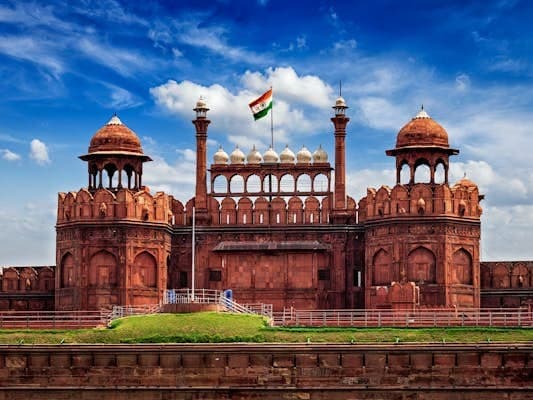
6.Red Fort Mughal Architectural Heritage (Mughal Architecture)

NDTV
Illustration for Red Fort Mughal Architectural Heritage (Mughal Architecture)

What & Where

Fort-palace complex in Old Delhi along Yamuna, served as Mughal seat 1648-1857

Commissioned 1639 by Shah Jahan shifting capital to Shahjahanabad, designed by Ustad Ahmad Lahori

Iconic Indo-Persian-Timurid architecture now national symbol hosting Independence Day flag ceremony

Quick Facts for MCQs

Architectural Features

  • Red-sandstone ramparts, marble inlays, pietra dura craftsmanship denote Mughal power
  • Structures include Moti Masjid, Mumtaz Mahal, Rang Mahal, royal hammams, Shah Burj
  • Nahr-i-Behisht water channel threads pavilions embodying paradise garden imagery

Historical Milestones

  • 1739 Nadir Shah loot removed Peacock Throne accelerating empire decline
  • 1857 Revolt led to Bahadur Shah Zafar trial and British garrisoning of fort
  • 1945–46 INA courts-martial galvanised nationalist movement against Raj

National Significance

  • 15 August flag hoisting by Prime Minister annually reinforces sovereignty narrative
  • 2007 UNESCO tag affirms outstanding universal value and conservation priority
  • Managed by Archaeological Survey of India; part of Delhi’s Red Fort Archaeological Park

Key Data Points

FeatureData-Point
Construction period1639–1648
BuilderEmperor Shah Jahan
Chief architectUstad Ahmad Lahori
Primary materialRed sandstone
Wall length≈2.5 km
Key hallsDiwan-i-Aam; Diwan-i-Khas
Garden planCharbagh + Nahr-i-Behisht
Major plunder1739 by Nadir Shah
British takeoverPost-1857 Revolt
INA Trials1945–46
UNESCO listing2007
First tricolour15 Aug 1947
GS-1Mapping

7.Ethiopia Geographic and Political Snapshot (Horn of Africa)

IT

What & Where

Ethiopia federal republic in Horn of Africa hosting UNFCCC COP32 in 2027

Capital Addis Ababa seat of African Union and UN Economic Commission for Africa

Borders Eritrea Djibouti Somalia Kenya South Sudan Sudan with dominant highlands terrain

Quick Facts for MCQs

Climate Diplomacy

  • COP32 Ethiopia 2027 first East African organiser
  • COP30 Belém Brazil 2025 Amazon centric summit
  • COP31 host undecided options Australia Pacific partnership or Turkey

Physical Geography

  • Highlands rugged highlands bisected by Great Rift Valley north south
  • Peak Mount Ras Dejen 4,533 m Ethiopia zenith
  • Terrains deep valleys plateaus create climatic diversity

Hydrology & Lakes

  • Rivers Blue Nile Tekeze Baro form major drainage west to Nile basin
  • Rift Valley lakes Abaya Shala Ziway critical biodiversity hotspots
  • Lake Tana source of Blue Nile Ethiopia largest lake

Geology

  • Composition Precambrian crystalline basement overlain by basaltic traps and sedimentaries
  • Era Mesozoic Cenozoic layers record tectonic volcanic history
  • Feature Great Rift Valley exposes active volcanism and faults

Key Data Points

FeatureData-Point
Continent sub-regionHorn of Africa
CapitalAddis Ababa
Political systemFederal republic
Highest peakMount Ras Dejen 4,533 m
Principal valleyGreat Rift Valley
Largest lakeLake Tana
Key riverBlue Nile (Abay)
Neighbouring statesEritrea, Djibouti, Somalia, Kenya, South Sudan, Sudan
COP32 year & host2027, Ethiopia
COP30 venueBelém, Brazil
GS-3Environment

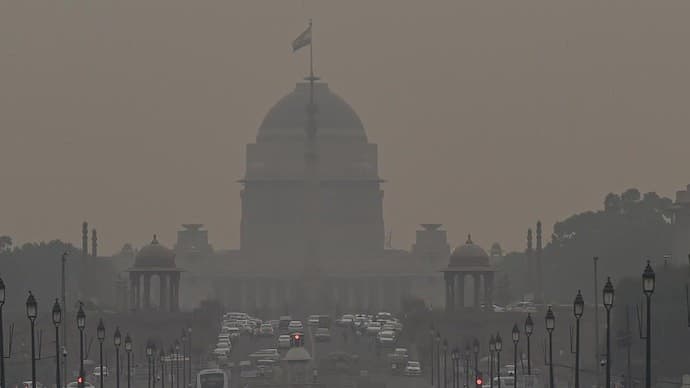
8.Graded Response Action Plan for NCR Pollution (Delhi Air Pollution)

Hindustan Times
Illustration for Graded Response Action Plan for NCR Pollution (Delhi Air Pollution)

What & Where

Dynamic, four-stage pollution response framework for Delhi–NCR activated as per daily/forecast AQI values.

Links preventive-corrective actions to AQI bands: Poor, Very Poor, Severe, Severe+.

Operated by CAQM with CPCB, Delhi govt & NCR state boards across entire National Capital Region.

Quick Facts for MCQs

Legal & Policy

  • Genesis: Supreme Court order; aligns with National Clean Air Programme targets.
  • Framework: Progressive, cumulative restrictions ensure earlier-stage measures stay operative.
  • Compliance: NCR states legally bound via CAQM directives.

Enforcement Process

  • Coordination: DPCC, state boards, district magistrates jointly inspect and penalise violators.
  • Review: CAQM Sub-Committee meets daily to impose/relax stages.
  • Technology: Online dashboards enable cross-agency sharing of compliance evidence.

Public Impact

  • Mobility: Vehicle curbs push adoption of CNG, electric, shared transport.
  • Work culture: Stage III encourages work-from-home, reduces commuting emissions.
  • Health advisory: Residents urged to limit outdoor activity during Severe/Severe+ days.

Key Data Points

FeatureData-Point
Launch year2017
Supreme Court roleDirected creation; EPCA recommendations basis
Implementing hubCAQM Sub-Committee
GeographyDelhi + adjoining NCR districts
Total response stagesFour
Stage III AQI band401–450 (“Severe”)
Stage IV AQI band>450 (“Severe+”)
Proactive triggerNext stage if ≥3-day severe forecast
Core monitoringCPCB real-time data; IMD/IITM forecasts
Major Stage III bansConstruction, demolition, BS-III petrol & BS-IV diesel vehicles
School measureClosure up to Class 5 possible
Essential servicesMetro, rail, sanitation, defence, health exempt but must control dust/emissions

Related UPSC Prelims PYQs

CDS_GK, GS1 2023PYQ 1

भारत के सन्दर्भ में जलवायु परिवर्तन पर राष्ट्रीय कार्य योजना (NAPCC) के बारे में निम्नलिखित में से कौन-सा/कौन-से कथन सही है/हैं ?

CDS_GK, GS1 2022PYQ 2

WHO के वायु गुणवत्ता दिशानिर्देशों के संदर्भ में, निम्नलिखित कथनों पर विचार कीजिए :

GS-3Environment

9.Integrity Matters Climate Disclosure Checklist (Climate Disclosure)

Down to Earth

What & Where

Integrity Matters Checklist – UN-endorsed framework for transparent, science-based corporate net-zero disclosures.

Process: checklist aligns targets, transition plans, GHG cuts with UN HLEG guidance & GRI Climate Change 2025 Standard.

Geography: global applicability; developed by Global Reporting Initiative (est. 1997, HQ Amsterdam) in partnership with UN bodies.

Quick Facts for MCQs

Tech & Schemes

  • Checklist tool tracks journey from pledge to delivery, enabling comparable, investor-friendly data.
  • Integrates seamlessly with existing GRI reporting suite for one-stop ESG disclosure.
  • Promotes science-based transition pathways, rejects unsubstantiated offsets.

Legal & Policy

  • Operationalises UN HLEG “Integrity Matters” recommendations into measurable corporate actions.
  • Embeds just-transition principles; emphasises social safeguards amid decarbonisation.
  • Aims to bridge regulatory gap by standardising voluntary climate claims.

Institutional Framework

  • GRI founded 1997 by Ceres & Tellus Institute with UNEP backing; provides world’s most-used sustainability standards.
  • Integrity Matters endorsed by senior UN officials as accountability bridge between ambition and action.
  • Tool enhances policymaker confidence, potentially informing future mandatory disclosure regimes.

Key Data Points

FeatureData-Point
CreatorGlobal Reporting Initiative (GRI)
UN linkageHigh-Level Expert Group on Net Zero Commitments
Core documentIntegrity Matters Checklist
Connected standardGRI 102: Climate Change 2025
Key demandVerifiable, science-based net-zero targets
Transition askPhase-out fossil-fuel investments
Supports treatiesParis Agreement; 2030 Agenda SDGs
GS-3Environment

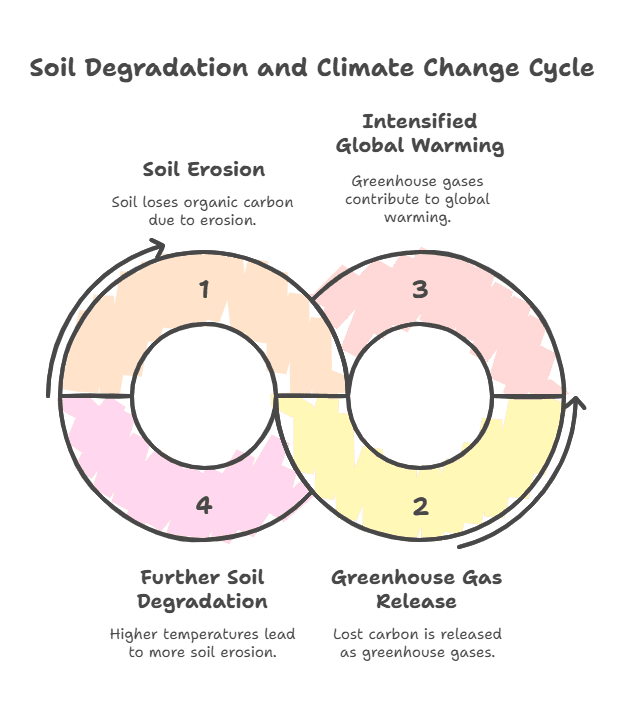
10.Soil Organic Carbon Restoration Strategies (Soil Organic Carbon)

The Hindu
Illustration for Soil Organic Carbon Restoration Strategies (Soil Organic Carbon)

What & Where

Definition: Soil Organic Carbon (SOC) = carbon stored in decomposed plant/animal residues and microbes; primary soil-health indicator.

Drivers: Unscientific fertiliser use and higher temperatures accelerate SOC loss; rice-pulse rotations conserve, wheat-coarse grains exhaust.

Geography: ICAR sampled 2.54 lakh soils across 620 districts; worst depletion in Haryana, Punjab, western UP; higher SOC in Himalayan elevations.

Quick Facts for MCQs

Environmental Impact

  • Carbon-loss: Degraded soils release stored CO₂, amplifying climate feedback.
  • Albedo-shift: Light, structure-poor surfaces reflect more heat, warming microclimates.
  • Biodiversity-hit: SOC decline collapses microbes and earthworms, impeding nutrient cycling.

Agricultural Practices

  • Overuse-fertiliser: Haryana, Punjab, W-UP excess urea & P severely lower SOC.
  • Crop-choice: Rice–pulse rotations with irrigation sustain higher microbial carbon.
  • Conservation-methods: Zero tillage, cover crops, residue retention rebuild carbon stocks.

Policy & Schemes

  • Soil-Health-Card: Digital upgrade proposed for site-specific NPK + micronutrient advice.
  • Carbon-credit: ICAR soil map can anchor agriculture-based carbon trading incentives.
  • Per-Drop-More-Crop: Drip/sprinklers improve moisture retention, curbing SOC erosion.

Key Data Points

FeatureData-Point
Soil samples analysed2,54,236
Districts covered620
States/UTs covered29
Critical low SOC threshold< 0.25 %
High-risk statesHaryana, Punjab, W-UP
Balanced-fertiliser exemplarBihar
Elevation–SOC relationHigher altitude → higher SOC
Temperature–SOC relationRising °C → declining SOC

Related UPSC Prelims PYQs

GS1 2020PYQ 1

What is/are the advantage/advantages of zero tillage in agriculture?

GS1 2018PYQ 2

With reference to agricultural soils, consider the following statements :

GS-3S&T

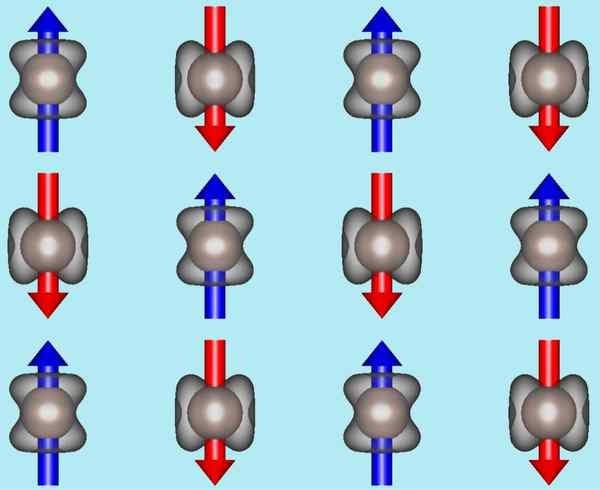
11.Altermagnetism Novel Magnetic Order (Magnetism Research)

The Hindu
Illustration for Altermagnetism Novel Magnetic Order (Magnetism Research)

What & Where

Definition Third magnetic order; spins alternate yet remain symmetry-related, yielding zero external field but internal spin polarisation

Process Spin alternation governed by crystal mirror/rotational symmetry, not simple translation as in antiferromagnets

Loci Observed in compounds MnTe, RuO₂; predicted across metals, semiconductors, insulators worldwide laboratories (2024–25 proofs)

Quick Facts for MCQs

Physical Traits

  • Alternating-spin pattern cancels dipole yet keeps internal polarisation
  • High-speed spin dynamics suit ultrafast logic and communication
  • Symmetry protection offers robustness against external magnetic noise

Material Scope

  • Exists across metals, semiconductors, insulators, easing device integration
  • Strong crystalline symmetry crucial for stable altermagnetic phase
  • Research expanding to engineered heterostructures for tailored properties

Potential Uses

  • Spintronics promises faster, energy-lean processors and memories
  • Quantum computing benefits from low magnetic noise, improved qubit coherence
  • Terahertz electronics enable next-gen sensors, on-chip communication

Current Challenges

  • Crystal growth demands single-domain, defect-free synthesis techniques
  • Conventional magnetometers fail; requires Hall or band-structure probes
  • Scaling uniform spin domains over wafers remains unresolved

Key Data Points

FeatureData-Point
Magnetic order rankThird, after ferro- and antiferromagnetism
Net magnetisationZero external field
Band structureSpin-split electronic bands similar to ferromagnets
Governing symmetryMirror or rotational, not translational
Switching timescalePicosecond/sub-picosecond; terahertz frequencies
Verified materialsManganese telluride (MnTe), ruthenium dioxide (RuO₂)
Key detection signalAnomalous Hall effect despite zero field
GS-2Editorial

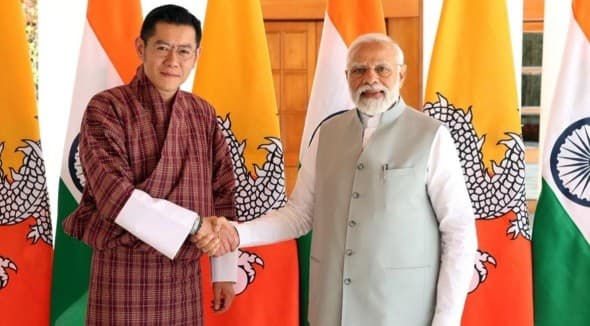
12.India–Bhutan Strategic Partnership Overview (India-Bhutan Relations)

India
Illustration for India–Bhutan Strategic Partnership Overview (India-Bhutan Relations)

What & Where

India-Bhutan friendship: 1949 Treaty, revised 2007; rests on “trust without tutelage”.

Bhutan: Himalayan buffer between India’s Northeast and China’s Tibet plateau.

Hydropower rivers—Chukha, Tala, Mangdechhu—anchor bilateral economy and energy trade.

Quick Facts for MCQs

Legal & Policy

  • Treaty-2007: sovereignty affirmed; no “external guidance” clause.
  • Neighbourhood First: Bhutan cited as most consistent partner.
  • Gyalsung National Service: India grant ₹200 crore, loan ₹1,500 crore.

Economic Angle

  • Trade: India largest partner, bilateral commerce ≈$1.4 bn, surplus for Bhutan.
  • Tourism & organics targeted to diversify beyond hydropower.
  • RuPay, BHIM-UPI enable low-cost cross-border payments.

Energy & Environment

  • Hydropower revenue: ~30 % of Bhutan’s budget; surplus sold to India.
  • Renewable roadmap: solar, green hydrogen round-table 2024.
  • Bhutan carbon-negative; collaboration fits India’s green corridor plan.

Security Dimension

  • Doklam vigilance: joint interest in blocking Chinese PLA advances.
  • 2003 counter-insurgency cemented strategic trust.
  • Mountain terrain gives India early-warning advantage via Bhutanese cooperation.

Connectivity & Tech

  • Rail, fibre, power-grid interlinks fast-tracked for seamless movement.
  • Fintech links: QR interoperability operational since 2023.
  • Shared ground station enhances satellite-based disaster alerts.

Key Data Points

FeatureData-Point
1st Treaty year1949
Treaty revision2007 (guidance clause removed)
Bhutan exports to India>90 % of total
Hydropower installed (three big plants)≈2,100 MW
Punatsangchhu-II capacity1,020 MW
Indian aid for 13th Plan₹10,000 crore
Operation All Clear2003 (flush out Indian insurgents)
India-Bhutan Satellite launch2022
Rail links plannedKokrajhar–Gelephu; Banarhat–Samtse
Carbon status of BhutanCarbon-negative nation

Related UPSC Prelims PYQs

NDA_GAT 2024PYQ 1

In January 2024, India has entered into a bilateral agreement through which it will provide grant assistance to a country to construct a 20 feet Bailey bridge. Identify the country.

NDA_GAT 2024PYQ 2

निम्नलिखित में से कौन-सा, 1954 में भारत और चीन द्वारा हस्ताक्षरित ‘पंचशील’ समझौते में निहित पाँच सिद्धांतों का भाग नहीं है ?

GS-3Security

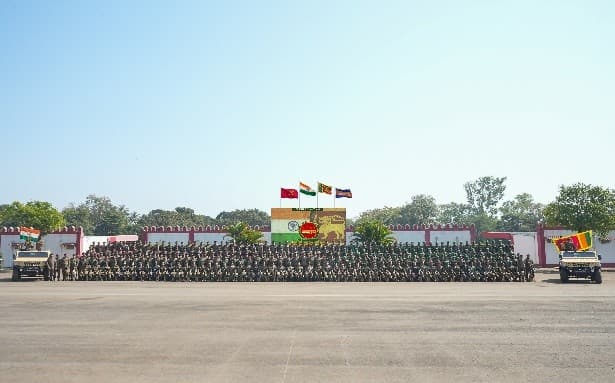
13.Exercise Mitra Shakti XI Military Drill (India-Sri Lanka Exercise)

The Hindu
Illustration for Exercise Mitra Shakti XI Military Drill (India-Sri Lanka Exercise)

What & Where

Exercise Mitra Shakti XI–2025 : annual Indo-Sri Lankan army drill on sub-conventional operations

Focus : UN Chapter VII scenarios—counter-terrorism, peacekeeping, humanitarian assistance

Venue : Foreign Training Node, Belagavi, Karnataka

Quick Facts for MCQs

Security Dimension

  • Counter-terrorism focus; mixed columns rehearse raid, cordon-search, area domination
  • Real-time ISR via drones; counter-UAV suites test air-defence readiness
  • Casualty evacuation lanes, helipad security simulate hostile extraction environments

Training Modules

  • Army Martial Arts Routine and reflex shooting sharpen close-quarter combat
  • Yoga sessions enhance endurance, mental composure under stress
  • Inter-platoon pairing fosters radio procedure, SOP interoperability

UN Mandate & Humanitarian Angle

  • Chapter VII rules of engagement guide all tactical decisions
  • Integrated command post mirrors multinational UN peacekeeping headquarters
  • Humanitarian assistance tasks practised: displaced-civilians management, vital supply drops

Key Data Points

FeatureData-Point
Edition11th
Year2025 (Jan)
Host locationBelagavi, Karnataka
Indian contingent170 personnel
Sri Lankan contingent135 personnel
Indian lead unitRajput Regiment
Sri Lankan lead unitGajaba Regiment
Key platformsDrones, counter-UAV, helicopters
Core drillsJoint raid, search-destroy, heliborne ops
Physical modulesAMAR, combat reflex shooting, yoga

Related UPSC Prelims PYQs

CDS_GK, GS1 2023PYQ 1

The 16th edition of Indo-Nepal annual joint training exercise in jungle warfare and counter-terrorism operations was held in December 2022 at Nepal Army Battle School, Saljhandi. What is the name of this exercise?

CDS_GK, GS1 2024PYQ 2

Which of the following statements about 'Exercise Mitra Shakti-2023' are correct?

GS-3Security

14.Ricin Toxicity and Security Risks (Bioterrorism Hazard)

Indian Express

What & Where

Ricin; protein toxin from Ricinus communis (castor) seeds; fatal on inhalation, ingestion, injection

Incident site; Gujarat ATS foiled cross-border plot to weaponise ricin in India

Governance; classified Schedule-1 under Chemical Weapons Convention (CWC), monitored globally by OPCW

Quick Facts for MCQs

Security Dimension

  • Availability; castor seeds common, extraction low-tech, raises bioterror risk
  • Detection; colourless, odourless, rapid cellular protein inhibition hampers early diagnosis
  • Inspections; Schedule-1 status allows challenge inspections, export nearly banned

Legal & Policy

  • CWC obligations; prohibit development, production, stockpiling, transfer, use of ricin weapons
  • Indian law; Act 2000 criminalises unauthorised possession, mandates facility declarations
  • Transparency; dual-use chemical reporting essential to retain CWC compliance

Institutional Framework

  • OPCW; verifies destruction, conducts routine and challenge inspections worldwide
  • NACWC; nodal for licencing, industry outreach, and international reporting from India
  • Enforcement; ATS, NIA, state agencies coordinate under UAPA & CWC Act for biothreat cases

Key Data Points

FeatureData-Point
Natural sourceCastor bean (Ricinus communis)
LethalityFew micrograms can kill adult; no antidote
CWC ScheduleSchedule-1 (highest control)
Overseeing bodyOrganisation for the Prohibition of Chemical Weapons
India ratification1996; enforced via Chemical Weapons Convention Act, 2000
National regulatorNational Authority for Chemical Weapons Convention (NACWC)
GS-1Misc

15.UPSC Mains 2025 Result Update (Civil Services Exam)

Union Public Service Commission (UPSC)

What & Where

UPSC Civil Services Examination (CSE): nationwide recruitment for All-India & Group ‘A’ Central services.

Three-stage process—Preliminary, Mains (written), Personality Test—held at UPSC HQ, Dholpur House, New Delhi.

Mains-2025 result out; shortlisted candidates await interview schedule within roughly 2–3 weeks via e-Summon.

Quick Facts for MCQs

Exam Process

  • Sequence: Prelims screening → Mains descriptive papers → Personality Test assessing traits & service suitability.
  • Interview board includes Chairman & four members; weightage 275 marks.
  • Final rank list combines Mains (1750 marks) + Interview (275 marks).

Interview Preparation

  • Strategy: Revise DAF, update current affairs, practice crisp articulation in mock panels.
  • Focus areas: Hometown, graduation subject, optional, hobbies—frequent DAF-based queries.
  • Attributes judged: Clarity, balance, integrity, leadership, general awareness.

Document Verification

  • Mandatory originals: Matriculation proof, degree certificates, photo ID, caste/PH/EWS documents.
  • Discrepancies may lead to provisional status or cancellation.
  • Photocopies self-attested; arrange chronologically for smooth scrutiny.

Support Programs

  • InsightsIAS IGP-2025 offers one-on-one mocks, panel feedback, video analysis.
  • Orientation session highlights board expectations, body language, tone modulation.
  • Telegram, YouTube, social media channels provide schedule alerts and study material.

Key Data Points

FeatureData-Point
Exam cycleCSE-2025
Stage clearedMains (written)
Next stagePersonality Test / Interview
Result release modePDF on UPSC website
Summon letter deliveryE-mail & login download
Interview venueUPSC, New Delhi
Certificate verificationOriginal academic, identity, category, EWS
DAF relevanceCore source of interview questions

Ready to practice?

Test your knowledge with our UPSC test series.

Start Free Trial