UPSC Current Affairs

14 topicsGS-1: 3GS-2: 3GS-3: 8
0/14 done
GS-1MiscQuick Bite

2.2025 Booker Prize Winner (Booker Prize)

Indian Express

What & Where

Booker Prize — annual award for the best single English-language novel, run by Booker Prize Foundation, London.

Global scope; any nationality eligible if work originally in English and published in UK/Ireland.

Selection by rotating jury; prize promotes literary excellence since 1969.

Quick Facts for MCQs

Recent Winner

  • Szalay’s Flesh tracks ascent from Hungarian poverty to London wealth, probing fate and ambition.
  • Award highlights Central European narrative within Anglo literary sphere.

Historical Milestones

  • 1969 inaugural prize launched to boost reading culture in Commonwealth and Ireland.
  • 1981 Midnight’s Children crowned; later Booker of Bookers winner.
  • 2017 Nobel laureate Kazuo Ishiguro earlier won Booker 1989.

Prize Comparison

  • Booker: original English text; single monetary award to author.
  • International Booker: translated work; purse split author-translator; broadens linguistic diversity.

Key Data Points

FeatureData-Point
2025 winnerDavid Szalay (Hungarian-British)
Winning novelFlesh (6th novel)
Year instituted1969
Administering bodyBooker Prize Foundation
EligibilityOriginal fiction, English, any nationality
First woman laureateBernice Rubens, 1970
International Booker start2005
Intl. Booker focusTranslated fiction
Author & translator both awardedYes
Past Indian winnersSalman Rushdie 1981, Arundhati Roy 1997, Aravind Adiga 2008

Related UPSC Prelims PYQs

CAPF_GAI, GS1 2005PYQ 1

Consider the following statements:

CAPF_GAI, GS1 2021PYQ 2

Which one of the following books was declared winner of the 2021 International Booker Prize?

GS-1Mapping

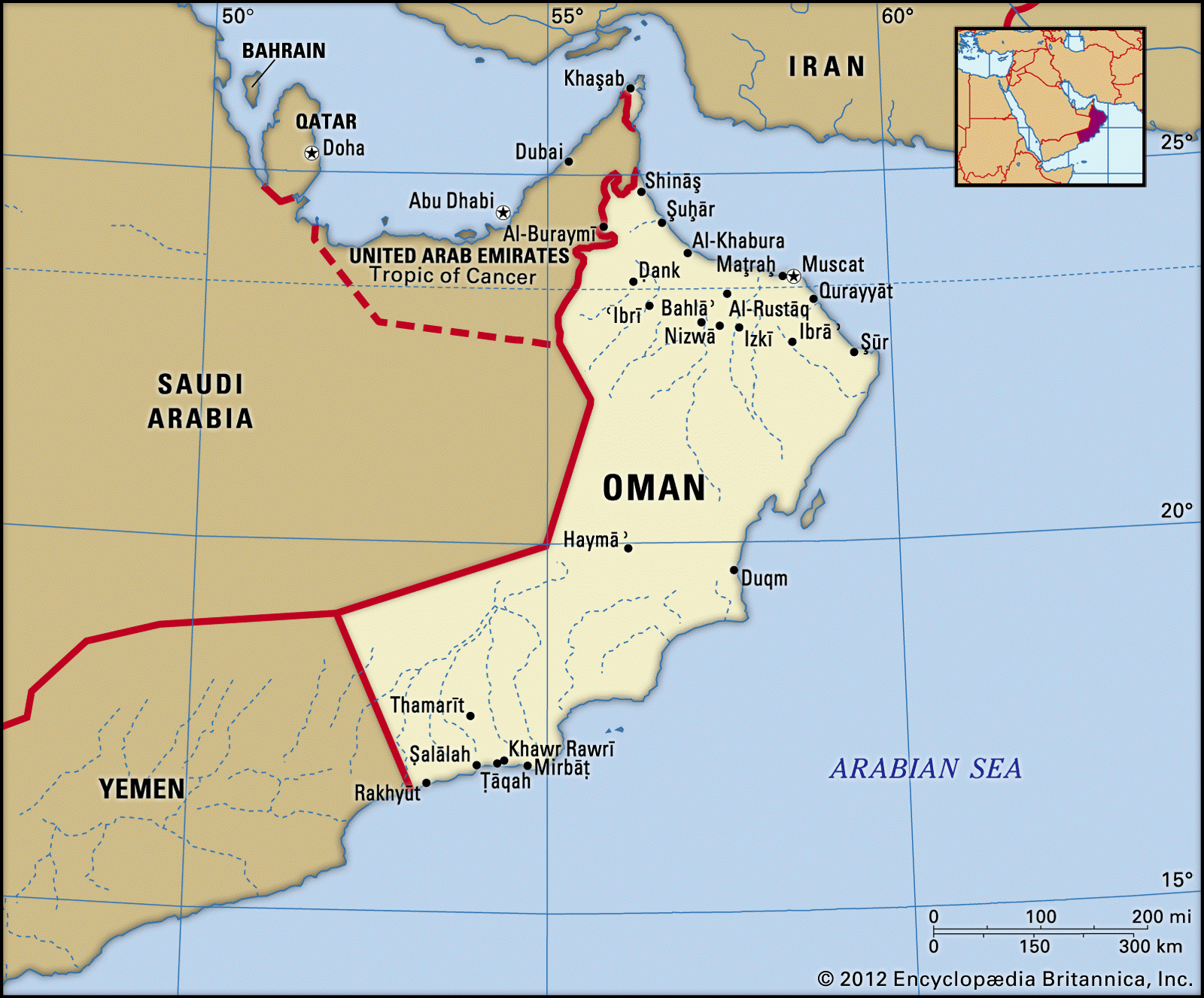
3.Oman Geographic Snapshot (Middle East Mapping)

Times of India
Illustration for Oman Geographic Snapshot (Middle East Mapping)

What & Where

MAB Council — UNESCO body guiding biosphere‐reserve science; Oman elected for 2025-29 at 43rd General Conference, Samarkand

Oman — hereditary monarchy on southeastern Arabian Peninsula; coastlines on Arabian Sea & Gulf of Oman

Core relief: Al-Hajar Mountains in north, Rubʿ al-Khali desert interior, fertile Dhofar & Al-Batinah plains

Quick Facts for MCQs

Geography Highlights

  • Al-Hajar: rugged limestone mountains framing Omani north, influencing climate & settlement
  • Dhofar: monsoon-fed south-west plain enabling agriculture, frankincense heritage
  • Falaj: ancient gravity-fed irrigation sustaining interior oases

Neighbouring States

  • Borders: UAE (north-west), Saudi Arabia (west), Yemen (south-west)
  • Maritime: strategic Strait of Hormuz access via Gulf of Oman
  • Regional positioning aids trade between Gulf, Indian Ocean

MAB Governance

  • Council: elected by UNESCO General Conference; steers programme implementation
  • Roadmap: 2015-25 guiding sustainability, to be replaced by 2025-35 plan at Hangzhou
  • Focus: biodiversity research, youth engagement, policy innovation against climate change

Key Data Points

FeatureData-Point
Election term2025 – 2029
Election venueSamarkand, Uzbekistan
Oman capitalMuscat
GovernanceSultan Haitham bin Tariq Al Said
Highest peakMount Shams 2,980 m
Major desertRubʿ al-Khali (Empty Quarter)
CoastlinesArabian Sea; Gulf of Oman
MAB launch year1971
MAB Council seats34 Member States
Next roadmap span2025 – 2035
Next roadmap event5th World Congress, Hangzhou 2025
GS-3Environment

4.Tropical Forest Forever Facility (Tropical Forest Fund)

Indian Express
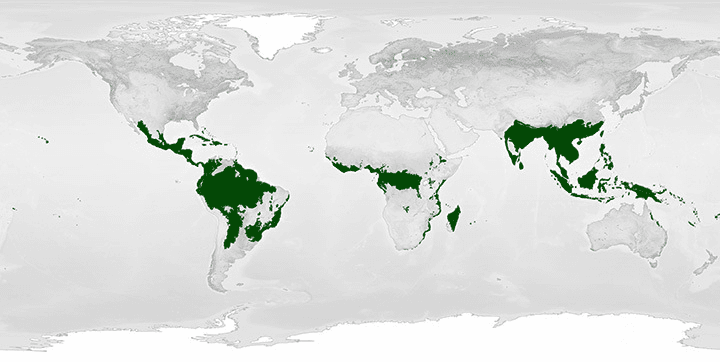
Illustration for Tropical Forest Forever Facility (Tropical Forest Fund)

What & Where

Tropical Forest Forever Facility (TFFF): permanent, self-financing fund rewarding 74 tropical nations for keeping old-growth forests intact.

Tropical forests: equatorial (23.5° N–23.5° S) warm-humid biomes; key types – rainforests & seasonal (dry) forests.

Major holders: Brazil, DRC, Indonesia, Peru, India, Angola, Australia, Sudan.

Quick Facts for MCQs

Funding Architecture

  • Portfolio-mix invests in public & corporate bonds; annual yields flow to forest nations as conservation payments.
  • Initial endowment seeks 25 bn donor money, leverages 100 bn private capital for perpetual, self-financing model.
  • India joins as observer, signalling multilateral commitment without yet pledging funds.

Risks & Critiques

  • Market-shock risk: bond downturn could erase returns, delaying forest payments.
  • Governance concern: outside UNFCCC, may dilute developed-country finance obligations and encourage corporate greenwashing.
  • Equity issue: unclear criteria might bypass indigenous communities and perpetuate land-rights, poverty gaps.

Suggested Reforms

  • Redirect subsidies from cattle, soy, palm to sustainable agroforestry; enforce deforestation-free supply chains.
  • Strengthen indigenous land rights, legal action against illegal logging, aided by satellite and drone monitoring.
  • Align voluntary funds with Paris finance mechanisms; embed forest targets within updated NDCs.

Key Data Points

FeatureData-Point
Launch venue & yearCOP30, Belém, 2025
Target corpusUSD 125 billion
Funding split25 bn public/philanthropy; 100 bn private
Eligible tropical nationsUp to 74
Brazil pledgeUSD 1 billion
Norway pledgeUSD 3 billion (10 yrs)
Monitoring toolAnnual satellite remote sensing
Tropical forest land share6 % of Earth’s land
Global species share~80 % documented species
Forest loss 2004-17>43 million ha

Related UPSC Prelims PYQs

GS1 2015PYQ 1

‘BioCarbon Fund Initiative for Sustainable Forest Landscapes’ is managed by the

GS1 2015PYQ 2

With reference to ‘Forest Carbon Partnership Facility’, which of the following statements is/are correct?

GS-3Species

5.Great Indian Bustard Conservation (Critically Endangered)

The Hindu
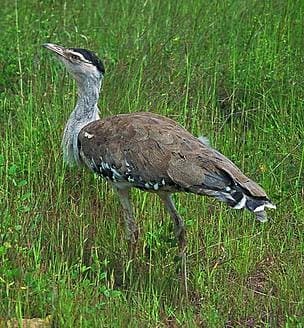
Illustration for Great Indian Bustard Conservation (Critically Endangered)

What & Where

Great Indian Bustard – one of the heaviest flying birds, strictly endemic to Indian subcontinent

Current stronghold: Thar Desert (Rajasthan); remnant groups in Gujarat, Maharashtra, Karnataka

Occupies arid/semi-arid grasslands; ground-nester on open, undisturbed plains

Quick Facts for MCQs

Physical Traits

  • Distinctive black crown, white neck, brown-grey-black wings
  • Male gular pouch amplifies booming courtship call
  • Maintains sustained flight despite 15 kg body mass

Conservation & Schemes

  • Included in Integrated Development of Wildlife Habitats recovery actions
  • Key threats: power-line collisions, habitat conversion, human disturbance
  • Schedule I and multiple Appendix-I listings ensure highest legal protection

Judicial Context

  • Justice P.S. Narasimha termed inter-generational equity doctrine inadequate for GIB protection
  • Supreme Court attention keeps species in policy spotlight

Key Data Points

FeatureData-Point
IUCN statusCritically Endangered
WPA 1972 listingSchedule I
CITES appendixI
CMS appendixI
Average height≈ 1 m
Adult weight15–18 kg
Male identifierBlack breast band + inflatable gular pouch
Mating call reach~500 m
Diet typeOmnivore; seeds, insects, reptiles, rodents
Gov programmeIDWH species-recovery list

Related UPSC Prelims PYQs

GS1 2012PYQ 1

Which one of the following groups of animals belongs to the category of endangered species?

GS1 2017PYQ 2

In India, if a species of tortoise is declared protected under Schedule I of the Wild Life (Protection) Act, 1972, what does it imply?

GS-3Species

6.Himalayan Black Bear Threats (Vulnerable Species)

New Indian Express
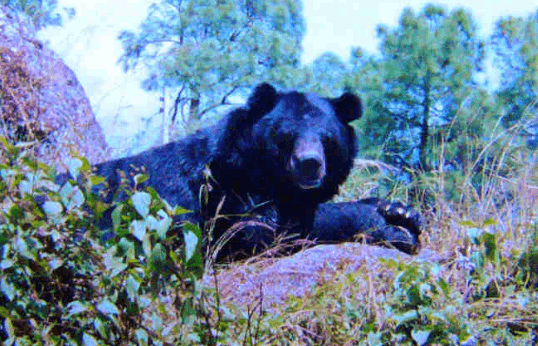
Illustration for Himalayan Black Bear Threats (Vulnerable Species)

What & Where

Omnivorous Asiatic black-bear subspecies with chest crescent, glossy coat, powder-puff ears.

Ranges 1,200–3,300 m in Himalayan broadleaf–conifer forests, J&K→Arunachal; Great Himalayan NP core refuge.

Normally winters in torpor; 2023 Uttarakhand bears remain active owing to delayed cold spells.

Quick Facts for MCQs

Climate Impact

  • Erratic snowfall prolongs foraging, pushing bears into villages and orchards.
  • Food-scarcity aggression spikes Oct–Dec conflict incidents in Uttarakhand hills.
  • Climate variability adds to habitat loss, heightening vulnerability index.

Ecological Functions

  • Seed-dispersal sustains mid-altitude forest regeneration and biodiversity corridors.
  • Soil-turnover while digging promotes nutrient recycling, microhabitats.
  • Invertebrate predation naturally regulates forest pest populations.

Legal & Policy

  • Schedule I status ensures highest penalties for hunting, trade or captivity.
  • CITES Appendix I forbids commercial international exchange of specimens.
  • State rapid-response teams operate under MoEFCC conflict-mitigation guidelines.

Behavioural Traits

  • Arboreal, nocturnal climber; curved claws enable tree use, swimming prowess crosses rivers.
  • Pre-hibernation hyperphagia normally peaks aggression; torpor failure extends risk window.
  • Vocalizations and scent-marking maintain territories, especially in mast-rich zones.

Key Data Points

FeatureData-Point
IUCN Red ListVulnerable
Wildlife Protection ActSchedule I
CITES AppendixI
Altitudinal range1,200–3,300 m
Male weight180–250 kg
Female weight35–170 kg
Key ecological roleKeystone seed disperser
Recent conflict driverClimate-induced torpor disruption
GS-3S&T

7.Vanadium Flow Battery at NTPC (Energy Storage)

BW

What & Where

Vanadium Redox Flow Battery (VRFB) = liquid-electrolyte grid-scale storage using vanadium ion redox reactions

India’s first MWh-scale VRFB, 3 MWh capacity, installed at NTPC NETRA campus, Greater Noida, Uttar Pradesh

Developed by NTPC R&D under Ministry of Power to advance long-duration energy storage and reduce lithium dependency

Quick Facts for MCQs

Tech & Schemes

  • Scalability: energy and power rated independently by tank size and stack number
  • Safety: aqueous vanadium electrolyte non-flammable, permits indoor siting without thermal runaway risk
  • Recycling: electrolyte reusable, enabling closed-loop material recovery

Energy Transition

  • Grid support: shifts surplus solar/wind to peak demand enhancing renewable firming
  • LDES roadmap: aligns with national 500 GW non-fossil target by 2030
  • Import substitution: taps indigenous vanadium, curbing lithium-ion import bills

Institutional Setup

  • NTPC: pursuing green hydrogen, carbon capture, LDES under in-house R&D umbrella
  • NETRA: functions as National Energy Technology Research Alliance hub for advanced clean-tech pilots
  • Ministry of Power: provides policy backing, potential scale-up funding avenues

Environmental Impact

  • Non-toxic electrolyte: reduced end-of-life hazards versus lead-acid or Li-ion
  • Extended lifetime: 15–20 years lowers material throughput and e-waste generation
  • Renewable coupling: facilitates higher renewable penetration, cutting grid carbon intensity

Key Data Points

FeatureData-Point
Commissioned atNTPC NETRA, Greater Noida
Storage capacity3 MWh (largest in India)
Electrolyte usedVanadium (liquid)
Design life15–20 years
DeveloperNTPC R&D Centre (NETRA)
Supervising ministryMinistry of Power
Key advantageScalability, non-flammable, minimal degradation
Target sectorLong-duration renewable energy storage
Nation’s policy linkAtmanirbhar Bharat, energy transition
Comparable techAlternative to lithium-ion for grid storage
GS-3S&T

8.Rare Earth Life Hypothesis (Astrobiology)

The Hindu

What & Where

Rare Earth Hypothesis: idea that complex, multicellular life needs exceedingly rare planetary–stellar conditions

Posited in 2000 book “Rare Earth” by Ward (palaeontologist) & Brownlee (astronomer)

Focus: Earth-sized planets in stellar habitable zones yet with Earth-like long-term stability

Quick Facts for MCQs

Necessary Conditions

  • Climate-stability via carbon-silicate cycling moderates CO₂ over billions of years
  • Plate-tectonics recycles nutrients, builds continents, drives magnetic dynamo
  • Gas-giant like Jupiter deflects comet–asteroid impacts protecting inner worlds

Research Significance

  • Exoplanet surveys now prioritise Sun-like stars with calm radiation and long orbital stability
  • Astrobiology models incorporate magnetic retention thresholds and impact-shield metrics
  • Hypothesis shapes funding toward detailed atmospheric spectroscopy missions

Stellar Dynamics

  • Giant-planet mass and eccentricity decide whether inner orbits are shielded or destabilised
  • Habitability requires near-circular orbit within conservative habitable zone
  • High stellar flare activity strips atmospheres from tidally locked red-dwarf planets

Key Data Points

FeatureData-Point
ProposersPeter Ward & Donald Brownlee
Year coined2000
Key text“Rare Earth: Why Complex Life is Uncommon in the Universe”
Telescopes reviving debateNASA Kepler, JWST
Core claimMicrobes plentiful; complex life exceedingly scarce
Planetary must-havesPlate tectonics, magnetic field, thick atmosphere, carbon-silicate cycle, shielding gas giant
Copernican linkChallenges view that Earth is not special
GS-3S&T

9.Lab-Grown Dairy Milk (Precision Fermentation)

Business Standard
Illustration for Lab-Grown Dairy Milk (Precision Fermentation)

What & Where

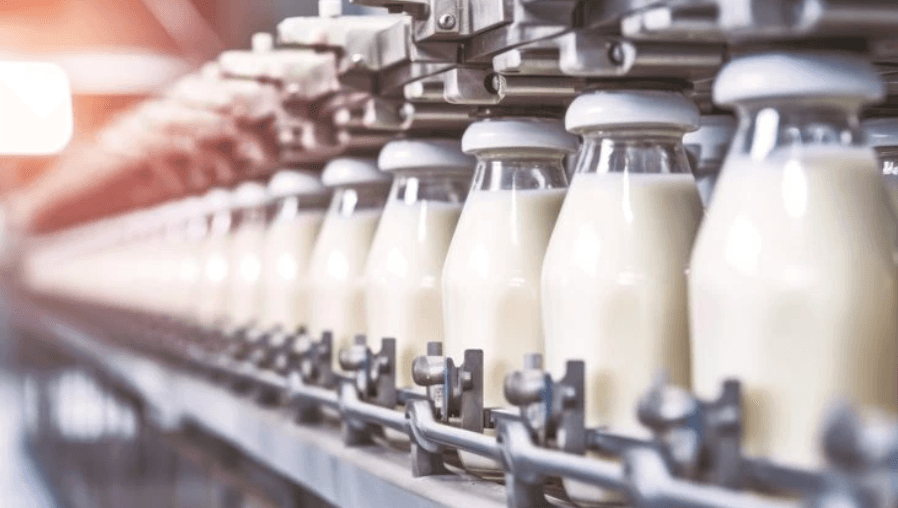
Definition: Animal-free milk produced via precision-fermentation generating bovine-identical casein & whey without cows

Core geography: Israeli startups—Remilk (commercial Jan 2026), Imagindairy, Wilk—leading global rollout

Key process: Cow milk genes inserted into yeast, cultured in bioreactors; secreted proteins blended with fats, minerals, carbs

Quick Facts for MCQs

Technology & Process

  • Precision-fermentation; engineered yeast fed sugar secretes dairy proteins
  • Industrial bioreactors enable large-scale, cow-free milk output
  • Customisation; adjustable fat, lactose, micronutrient composition

Nutritional & Health

  • Nutrient-identical profile; calcium & complete amino acids intact
  • Lactose-free formulation aids lactose-intolerant consumers
  • Cholesterol-free attribute may reduce cardiovascular risk

Environmental Impact

  • No ruminants; drastic methane emission cut
  • Reduced land, feed, water footprints versus conventional dairy
  • Antibiotic elimination; lowers antimicrobial resistance risk

Market & Policy

  • Remilk spearheads, with Imagindairy & Wilk as parallel innovators
  • India faces price, culture, regulatory hurdles under FSSAI norms
  • Mandatory allergen labelling despite animal-free production

Key Data Points

FeatureData-Point
Commercial debutJan 2026 (Remilk)
Production methodPrecision fermentation
Primary proteinsCasein, Whey
Lactose presenceAbsent
Cholesterol & hormonesAbsent
Essential amino acidsAll nine present
Allergen labelRequired (milk-protein identical)
Climate benefitZero methane; lower land, water use
Indian regulatorFSSAI oversight
GS-2Economy

10.India–Latin America Trade Talks (India-Peru CEPA)

PIB
Illustration for India–Latin America Trade Talks (India-Peru CEPA)

What & Where

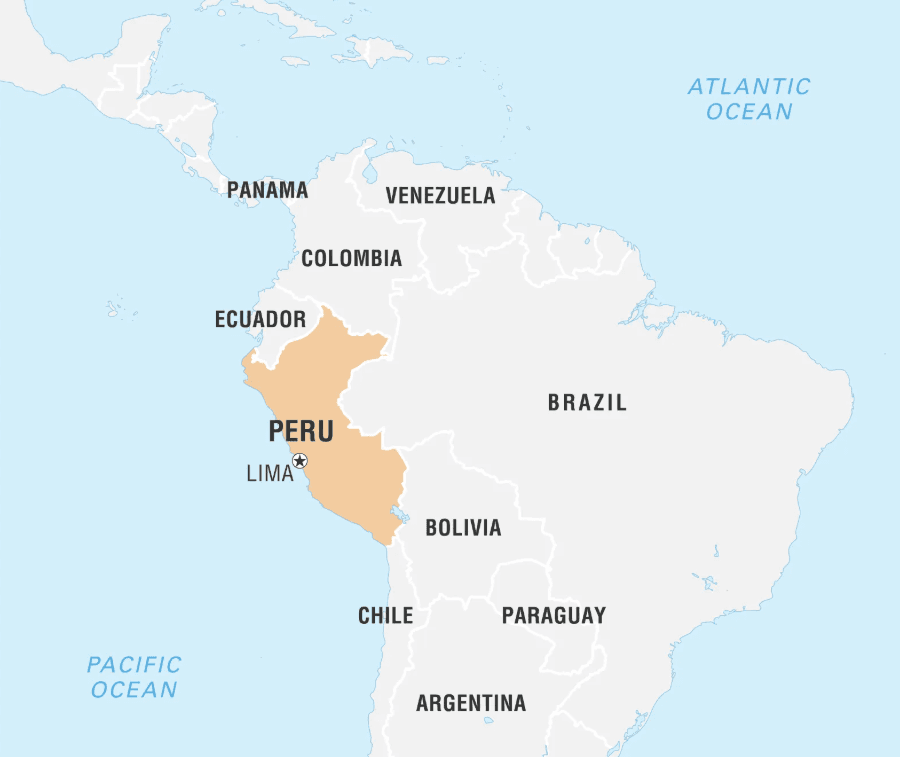
Engagement; India deepens Latin America outreach via Peru Trade Agreement (9th round) and Chile CEPA (3rd round).

Geography; Peru—Pacific coast, Andes & Amazon; Chile—Andean strip on Pacific Ring of Fire, part of Lithium Triangle.

Process; talks span goods, services, rules of origin, technical barriers, critical minerals, upgrading PTAs toward deeper FTAs.

Quick Facts for MCQs

Economic Angle

  • Trade; India–LAC merchandise value USD 35.7 bn (2023-24), Indian exports >USD 14 bn.
  • PTA & DTAA; India-Chile instruments boost market access under “Act Latin America”.
  • Commodities; India exports vehicles, pharma; imports copper, gold, pulp, fruits.

Energy & Minerals

  • Crude; Brazil, Mexico, Venezuela collectively meet one-fifth of Indian oil demand.
  • Lithium; KABIL–CAMYEN Argentina venture is India’s first overseas lithium exploration.
  • Copper; Chile world’s top producer, Peru key supplier to Indian electrical sector.

Strategic Challenges

  • Connectivity; long sea routes, scarce air freight inflate costs and time.
  • Competition; China–LAC trade >USD 400 bn, backed by big rail/mining deals.
  • Regionalism; MERCOSUR splits and low Indian presence in CELAC, Pacific Alliance curb influence.

Key Data Points

FeatureData-Point
Peru’s rank in India–LAC trade3rd largest
India–Peru trade FY 2023USD 3.68 bn
India–Chile trade FY 2024USD 3.84 bn
Rounds finished: Peru pact9
Rounds finished: Chile CEPA3
Latin America share in India’s crude15–20 %
Lithium Triangle global reserves>75 %
Edible-oil import from LAC 2022USD 5.6 bn

Related UPSC Prelims PYQs

CDS_GK 2024PYQ 1

Recently the Government of India entered into an agreement for a lithium exploration and mining project with which one among the following countries?

GS-3Security

11.White Collar Terrorism Trend (Educated Radicals)

NDTV

What & Where

Definition: violent extremism executed by educated professionals—doctors, engineers, academics—leveraging technical skills for terror logistics.

Key processes: digital radicalisation, technological sophistication, societal camouflage enabling evasion of standard surveillance.

Core geography: Recent bust in Faridabad (Haryana); trend visible across India and trans-national groups like ISIS, Al-Qaeda, LTTE.

Quick Facts for MCQs

Drivers of Radicalisation

  • Moral-anger: perceived injustice, humiliation among urban middle class.
  • Online-echo: encrypted platforms create validation loops for extremist ideology.
  • Spiritual-duty narrative: violence framed as ethical or religious obligation.

Security Dimension

  • Detection-challenge: white-collar profiles clean, rarely flagged in police databases.
  • Tech-upgrade: professionals enhance bomb design, cyber propaganda, financial routing.
  • Trust-erosion: involvement of doctors/engineers undermines faith in elite professions.

International Examples

  • LTTE Sri Lanka, IRA Ireland relied on university-educated cadres beyond religious extremism.
  • UK-trained Sudanese doctors staffed ISIS hospitals, merging medical skill with jihad.
  • 9/11 hijackers utilised aviation, architectural expertise for coordinated strikes.

Counter-Strategies

  • Ethics-curriculum: multidisciplinary moral reasoning across schooling and professional training.
  • AI-monitoring: Europol IRU model for flagging extremist content with privacy safeguards.
  • Community-counselling: targeted therapy, youth debate councils in J&K to reduce ideological isolation.

Key Data Points

FeatureData-Point
Explosives seized (Faridabad)≈3,000 kg
Arrested profilesDoctors, engineers
Noted global exemplarsAl-Baghdadi (PhD), Al-Zawahiri (surgeon)
Digital tool used by 9/11 Hamburg cellUniversity chat forums
Indian value-education policyNEP 2020
Kerala vigilance modelOperation Pigeon
UK de-radicalisation schemePrevent Strategy
Oversight body adding ethics for doctorsNational Medical Commission 2023
GS-3SecurityQuick Bite

12.Exercise MITRA SHAKTI 2025 (India-Sri Lanka Exercise)

PIB

What & Where

Exercise Mitra Shakti - annual India–Sri Lanka Army drill, alternates between both nations since 2012.

11th edition (2025) hosted at Belagavi, Karnataka; terrain chosen for sub-conventional warfare training.

Focus on UN Chapter VII counter-terrorism & peacekeeping missions; integrates drones and Counter-UAS tactics.

Quick Facts for MCQs

Security Dimension

  • Interoperability boost for joint responses against terrorism and insurgency.
  • Training covers urban warfare, hostage rescue, convoy protection.
  • Enhances readiness for UN peacekeeping deployments.

Tech & Schemes

  • Integration of quadcopters, loitering munitions, anti-drone jammers.
  • Live-fire modules simulate swarming drone threats.
  • Lessons dovetail with Indian Army’s counter-UAS roadmap.

India–Sri Lanka Cooperation

  • Complementary exercises: Mitra Shakti (Army) and SLINEX (Navy) held annually.
  • India’s first-responder role in MV X-Press Pearl (2021) and MT New Diamond (2020) maritime crises.
  • GOI-funded Maritime Rescue Coordination Centre for Sri Lanka commissioned 2024.

Key Data Points

FeatureData-Point
Edition11th
Year held2025
Venue city/stateBelagavi, Karnataka
Partner armiesIndian Army, Sri Lankan Army
First conducted2012
Exercise frequencyAnnual, alternates host nation
UN mandate focusChapter VII (threats to peace, aggression)
Core themeSub-conventional & counter-terrorist ops
Key tech 2025Drones, Counter-UAS
Parallel naval drillSLINEX

Related UPSC Prelims PYQs

CDS_GK, GS1 2023PYQ 1

The 16th edition of Indo-Nepal annual joint training exercise in jungle warfare and counter-terrorism operations was held in December 2022 at Nepal Army Battle School, Saljhandi. What is the name of this exercise?

CDS_GK, GS1 2024PYQ 2

Which of the following statements about 'Exercise Mitra Shakti-2023' are correct?

GS-2Scheme

13.Jal Sanchay Jan Bhagidari Awards (Water Conservation)

DD News

What & Where

National Water Awards (2018–) & Jal Sanchay Jan Bhagidari Awards (2024–): national honours for water conservation.

Executing body: Dept. of Water Resources, RD & GR, Ministry of Jal Shakti; field checks by CWC/CGWB.

Coverage: all States/UTs; urban & rural entities, industries, NGOs, philanthropists.

Quick Facts for MCQs

Tech & Schemes

  • Jal Shakti Abhiyan: Catch the Rain anchors JSJB; focus on artificial recharge & storage.
  • Urban recharge: joint work Ministry Jal Shakti + Ministry Housing & Urban Affairs.

Rankings & Winners

  • NWA district toppers: Rajnandgaon, Khargone, Mirzapur, Tirunelveli, Sepahijala.
  • JSJB recognises states, districts, ULBs, NGOs, industries, philanthropists—total 100 entities.

Funding & CSR

  • JSJB incentivises CSR spending; graded cash awards ₹2 cr/₹1 cr/₹25 lakh to districts.
  • Community-led cost-sharing emphasised to ensure long-term O&M of recharge structures.

Key Data Points

FeatureData-Point
NWA edition6th, 2025
JSJB edition1st, 2025
Core slogan“Jal Samridh Bharat”
NWA categories10 (State, District, Village Panchayat, ULB, Industry, NGO, Institution, etc.)
JSJB mantra3 Cs – Community, CSR, Cost
Min. recharge structures target10,000 per district; 3,000 in hilly/NE
NWA applications received751 via Rashtriya Puraskar Portal
NWA winners46
JSJB awardees100 (incl. 67 districts, 6 municipal corps)
NWA Best State ranks1-Maharashtra; 2-Gujarat; 3-Haryana
JSJB Best State ranks1-Telangana; 2-Chhattisgarh; 3-Rajasthan
NWA Best ULBNavi Mumbai, Maharashtra
Top district cash prize (JSJB)₹2 crore

Related UPSC Prelims PYQs

ESE_GS, NDA_GAT 2023PYQ 1

Consider the following statements regarding the aim of Jal Jeevan Mission to provide every rural household of the country with adequate tap water of prescribed quality on regular basis:

ESE_GS, NDA_GAT 2024PYQ 2

Recently the Ministry of Environment, Forest and Climate Change has submitted three nominations from India for Wetland City Accreditation (WCA) under the Ramsar Convention on Wetlands. Which one among the following cities is not one among them?

GS-1Editorial

14.Draft Shram Shakti Policy Critique (Labour Policy)

The Hindu

What & Where

Definition: Draft Shram Shakti Niti 2025—proposed national labour policy promising universal, portable social security for all Indian workers.

Key process: Integrates EPFO, ESIC, PM-JAY, e-Shram into one Universal Social Security Account delivered through digital public infrastructure.

Core geography: All-India scope, with special outreach to Tier-II/III cities and rural informal sectors.

Quick Facts for MCQs

Legal & Policy

  • Constitution: Reclassification as “daily wagers” violates Articles 14, 16, 23.
  • ILO: Weak compliance with Conventions 29, 155 dents global credibility.
  • Funding gap: No explicit employer/State corpus for universal coverage.

Social Concerns

  • Vulnerability: Informal, women, elderly risk digital exclusion and benefit loss.
  • Union decline: Contractor dependence erodes collective bargaining power.
  • Gender shortfall: No mandatory childcare/maternity norms despite LFPR target.

Tech & Schemes

  • DPI: AI-based NCS to verify credentials, map skills, match jobs nationwide.
  • Oversight: Absence of bias audits in algorithms may embed caste/gender prejudice.
  • Labour & Employment Policy Evaluation Index: Annual, data-driven State ranking.

Economic Angle

  • Formalisation push: Single-portal compliance intends lower transaction cost, raise tax base.
  • Green jobs: Policy aligns skilling with climate commitments for sustainable employment.

Implementation Risks

  • Inspector shortage: Weak monitoring undermines “zero fatality” aspiration.
  • Digital divide: Offline enrolment & grievance redressal still undefined.

Key Data Points

FeatureData-Point
Forced labour in India≈11 million persons (world’s highest)
Informal workforce share≈90 % of total employment
Female LFPR target35 % by 2030
Zero workplace fatalities goalYear 2047
Universal Social Security AccountMerges EPFO, ESIC, PM-JAY, e-Shram
Employment DPI backboneNational Career Service (AI-driven job-match)
Three-tier governanceNational, State, District Labour Missions
Compliance reformSingle-window portal + risk-based self-certification
Relevant ILO conventions flaggedNo 29 (Forced Labour), No 155 (OSH)
Constitutional articles cited14, 16, 23 (equality & forced labour bans)

Related UPSC Prelims PYQs

GEO_GS, GS1 2020PYQ 1

The Swavalamban Scheme of the Government of India is directed to provide a social safety net to:

GEO_GS, GS1 2017PYQ 2

संविधान के 42वें संशोधन द्वारा, निम्नलिखित में से कौन-सा प्रावधान राज्य की नीति के निदेशक तत्वों (Directive Principles of State Policy) में जोड़ा गया था ?

Ready to practice?

Test your knowledge with our UPSC test series.

Start Free Trial