UPSC Current Affairs

15 topicsGS-1: 4GS-2: 4GS-3: 7
0/15 done
GS-2Polity

1.Interlocutor Appointed for Gorkhaland Talks (State Reorganisation)

Indian Express

What & Where

Movement: Gorkhaland seeks separate state from N. Bengal; core areas Darjeeling, Terai, Dooars.

Timeline: Violent phase 1980s (GNLF); 104-day strike 2017 (GJM); autonomy bodies DGHC 1988, GTA 2011.

Update: 2025 Centre names ex-Deputy NSA interlocutor to negotiate statehood & ST status with hill leaders.

Quick Facts for MCQs

Legal & Policy

  • Article3: Parliament may form new state; state assembly view only consultative.
  • AutonomyAttempts: DGHC 1988, GTA 2011 via tripartite pacts, wield limited fiscal-legislative powers.
  • STProcess: Tribal Affairs Ministry, AnSI studies ongoing for 11 sub-tribes inclusion.

Social Concerns

  • Identity: Statehood demand anchors Gorkha ethnic recognition, linguistic pride, administrative visibility.
  • Reservation: ST tag would unlock quotas in education, jobs, tribal schemes.
  • Frustration: Repeated assurances without timeline fuel periodic shutdowns and protests.

Security Dimension

  • MilitaryRecruitment: Agnipath’s four-year tenure clouds traditional Gorkha army career pipeline.
  • Geopolitics: Reports of PLA interest in Gorkha hiring heighten Himalayan security calculus.
  • NepalAngle: Kathmandu invokes 1947 Tripartite Agreement on pensions while assessing Agnipath compliance.

Key Data Points

FeatureData-Point
Constitutional articleArticle 3
Autonomy body 1988Darjeeling Gorkha Hill Council
Autonomy body 2011Gorkhaland Territorial Administration
2017 shutdown length104 days
ST recognition sought for11 Gorkha sub-tribes
Language in 8th ScheduleNepali (1992)
Interlocutor appointed2025, former Dy-NSA
Martial community originNepal, Gorkha Kingdom
GS-3Economy

2.Authorised Economic Operator Trade Facilitation (Customs Facilitation)

LiveMint

What & Where

Voluntary Indian Customs scheme certifying “trusted traders” for secure, compliant international supply chains

Four categories: AEO-T1, T2, T3 (ascending facilitation) and AEO-LO for logistics/warehouse operators

Implemented pan-India by CBIC; MRAs signed with South Korea & Hong Kong, talks on with USA, UAE, Taiwan

Quick Facts for MCQs

Legal & Policy

  • Alignment WCO SAFE ensures global security compliance
  • CBIC decentralised approval at Customs Zonal offices easing access
  • Recognition by WTO commended for bolstering MSME trade participation

Trade Facilitation Benefits

  • Clearance speed reduced documentation and priority processing
  • Financial gains expedited refunds and lower inventory dwell time
  • Risk management fewer inspections owing to trusted status

International Linkages

  • MRA reciprocity grants Indian AEOs lower inspection & priority abroad
  • Negotiations expand network enhancing supply-chain predictability
  • Global appreciation at WTO boosts programme credibility

Key Data Points

FeatureData-Point
Launch circular33/2016-Customs dated 22 Jul 2016
Global frameworkWCO SAFE Framework 2018 edition
WTO anchorArticle 7.7, Trade Facilitation Agreement
Certification tiersT1 → T2 → T3 (+ AEO-LO)
MRA partnersSouth Korea, Hong Kong
Ongoing MRA talksUSA, UAE, Taiwan, others
Target coverage3,500 AEOs nationwide
Key import benefitDirect Port Delivery / Entry
Key duty reliefDeferred duty payment for T2 & T3
SION privilegeSelf-declaration of input-output norms
GS-3InfrastructureQuick Bite

3.FASTag Annual Pass Compensation Portal (Road Tolling)

Economic Times
Illustration for FASTag Annual Pass Compensation Portal (Road Tolling)

What & Where

Compensation portal: MoRTH digital dashboard supervising revenue-sharing under FASTag Annual Pass on National Highways/Expressways

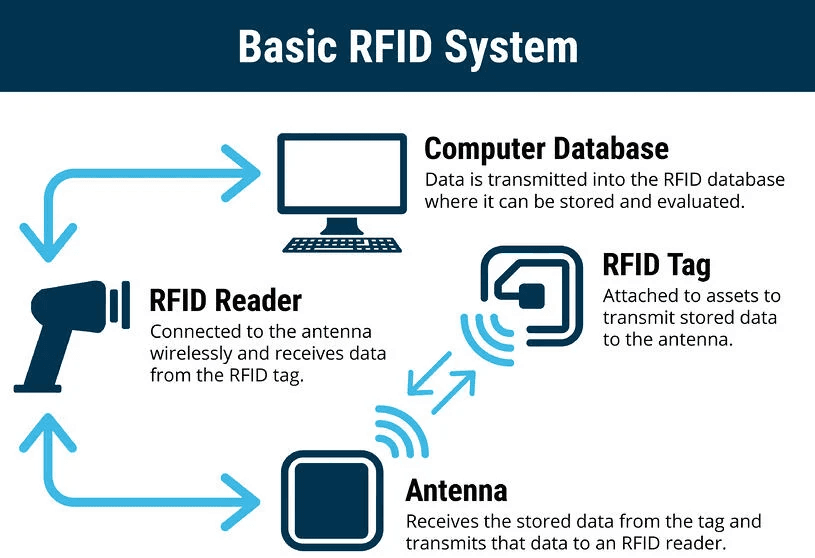
FASTag Annual Pass: prepaid RFID product allowing ₹3,000 one-time toll for 1 year or 200 crossings, private LMVs only

Geography: Applies on all NHAI highways; State Highways excluded unless states adopt scheme

Quick Facts for MCQs

Tech & Schemes

  • RFID tag auto-deducts toll via linked bank wallet ensuring cashless flow
  • One Vehicle, One FASTag drive discourages multiple-vehicle use of single tag
  • NPCI integration guarantees real-time settlement transparency

Legal & Policy

  • MoRTH portal formalises revenue-loss claims reducing operator-centre disputes
  • States may adopt Annual Pass with NHAI technical hand-holding
  • Scheme confined to National Highway Act jurisdiction unless state notification issued

Economic Angle

  • ₹3,000 upfront shifts cashflow to NHAI decreasing transaction costs of frequent recharges
  • Concessionaire compensation mechanism safeguards PPP toll revenue projections
  • Digital settlement curbs leakages enhancing tolling efficiency

Key Data Points

FeatureData-Point
Launch agenciesNHAI + NPCI
Launch month/yearAug 2025
One-time fee₹3,000
Validity limit12 months or 200 trips
Eligible vehiclesNon-commercial cars, jeeps, vans
TransferabilityNon-transferable (vehicle-specific)
Verification databaseVAHAN
Technology backboneRFID + NPCI payment rails
New MoRTH portal roleCalculates concessionaire compensation
Regular FASTag ruleStill applies on State Highways
GS-1History

4.Kotada Bhadli Harappan Caravanserai (Harappan Site)

Times of India
Illustration for Kotada Bhadli Harappan Caravanserai (Harappan Site)

What & Where

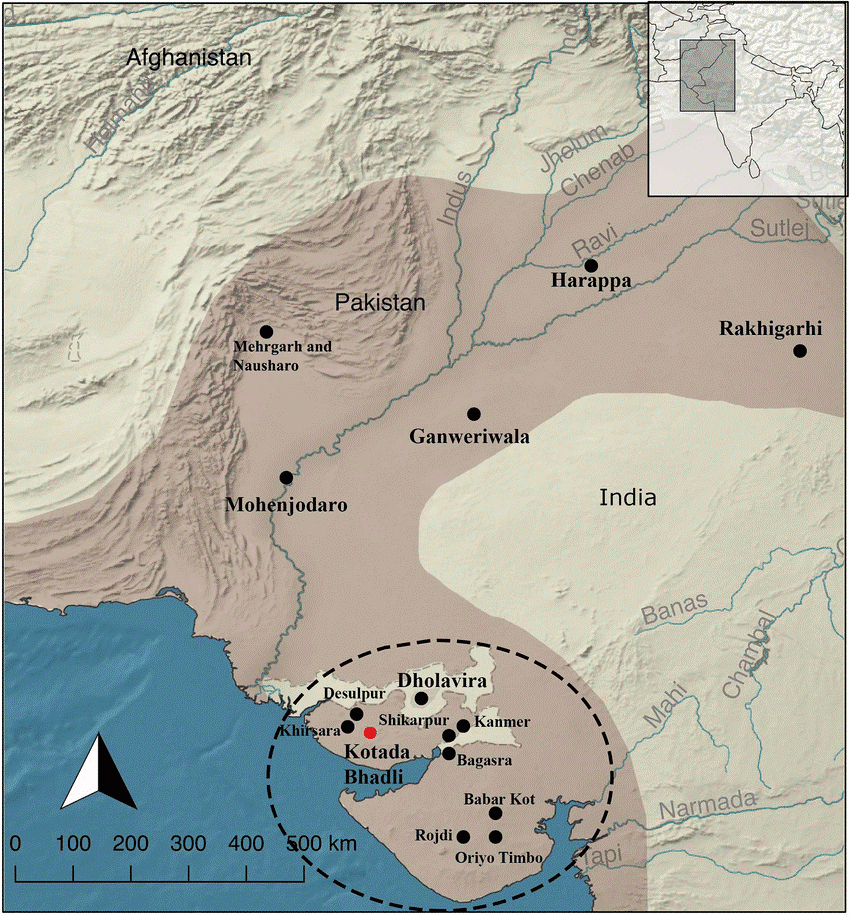
Kotada Bhadli: Mature Harappan (2300–1900 BCE) fortified caravanserai serving transient traders, not permanent residents.

Geography: Kutch district, Gujarat; on inland route linking Dholavira, Lothal, Shikarpur to coast/interior.

Type: Rural logistical hub—shelter, fodder, security for pack animals and merchants on long-distance overland circuits.

Quick Facts for MCQs

Structural Layout

  • Fortification: Bastioned perimeter with controlled entry ensuring asset security.
  • Courtyards: Broad open pens likely for tethering cattle, camels, donkey caravans.
  • Zoning: Distinct storage, habitation, and animal areas detected via subsurface scans.

Trade Significance

  • Connectivity: Plugged logistical gap between Sindh-Gujarat network and hinterland mineral zones.
  • Commerce type: Facilitated overland movement of copper, semi-precious stones, agro produce.
  • Economic inference: Indicates bureaucratic planning, provisioning and probable levies/record-keeping.

Research Methods

  • Remote sensing: Satellite imagery outlined wall lines before trenching began.
  • Isotopes: Animal remains traced to varied ecological zones, confirming long-range caravans.
  • Comparative typology: Layout parallels later Persian caravanserais, validating functional interpretation.

Chronological Relevance

  • Antiquity: Oldest caravanserai globally rivals Mesopotamian trade posts in age.
  • Cultural insight: Demonstrates Harappan mastery of terrestrial logistics—not just maritime trade.
  • Heritage value: Adds rural node perspective to predominantly urban Harappan narrative.

Key Data Points

FeatureData-Point
Time bracket2300–1900 BCE (Mature Harappan)
Civilisational tagEarliest known caravanserai in South Asia
Key structuresMulti-room core, bastioned walls, large courtyards
Confirmatory toolsGround-penetrating radar, isotopic study, satellite mapping
Principal excavatorsDeccan College, Symbiosis School for Liberal Arts, ASI
Trade roleStopover bridging inland–coastal Harappan cities
Chronological impactPushes organised trade hubs 2,000 yrs before Silk Route

Related UPSC Prelims PYQs

GS1, NDA_GAT 2025PYQ 1

In the Harappan Civilization, traces of canals have been found at

GS1, NDA_GAT 2021PYQ 2

Which one of the following ancient towns is well-known for its elaborate system of water harvesting and management where a series of bunds created check-dams and canals carried the water to connected reservoirs?

GS-3Environment

5.Blue Flag Beaches Certification India (Coastal Certification)

News on Air

What & Where

Blue Flag = global eco-label for beaches, marinas, sustainable boating sites

Awarded after meeting environment, safety, management benchmarks set by FEE-Denmark

Maharashtra’s Shrivardhan, Nagaon, Parnaka, Guhagar, Ladghar newly certified (2025)

Quick Facts for MCQs

Certification Body

  • FEE established 1981; non-profit, education-centric environmental network
  • Operates in 80+ countries; Blue Flag its flagship tourism label
  • Awards valid one season; annual renewal after on-site audits

Criteria & Standards

  • Environmental education: signages, outreach events compulsory
  • Water quality: fortnightly tests must meet EU Bathing Water Directive levels
  • Safety & services: certified lifeguards, first-aid posts, emergency plans mandatory

India Status Update

  • Total 18 flagged sites include Odisha’s Chandrabhaga, Gujarat’s Shivrajpur, Puducherry’s Eden
  • Maharashtra now highest Blue Flag count among Indian states (5)
  • MoEFCC nodal ministry; implements via Society of Integrated Coastal Management

Key Data Points

FeatureData-Point
Certifying NGOFoundation for Environmental Education (FEE)
FEE HQ countryDenmark
India joined programme2018
India Blue Flag tally 202518 beaches
New Maharashtra additions5 beaches
Mandatory criteria groups6 key areas
Core aimSustainable coastal tourism & ecosystem protection

Related UPSC Prelims PYQs

GEO_GS, NDA_GAT 2023PYQ 1

Thundi Beach and Kadmat Beach, which recently entered the coveted list of Blue Beaches, an eco-label given to the cleanest beaches in the world, are located in

GEO_GS, NDA_GAT 2022PYQ 2

Which among the following has initiated a nationwide flagship campaign ‘Puneet Sagar Abhiyan’ to clean seashores/beaches and other water bodies of plastic and other waste materials?

GS-3SpeciesQuick Bite

6.Indian Wolf Species Recognition (Indian Wolf)

The Hindu
Illustration for Indian Wolf Species Recognition (Indian Wolf)

What & Where

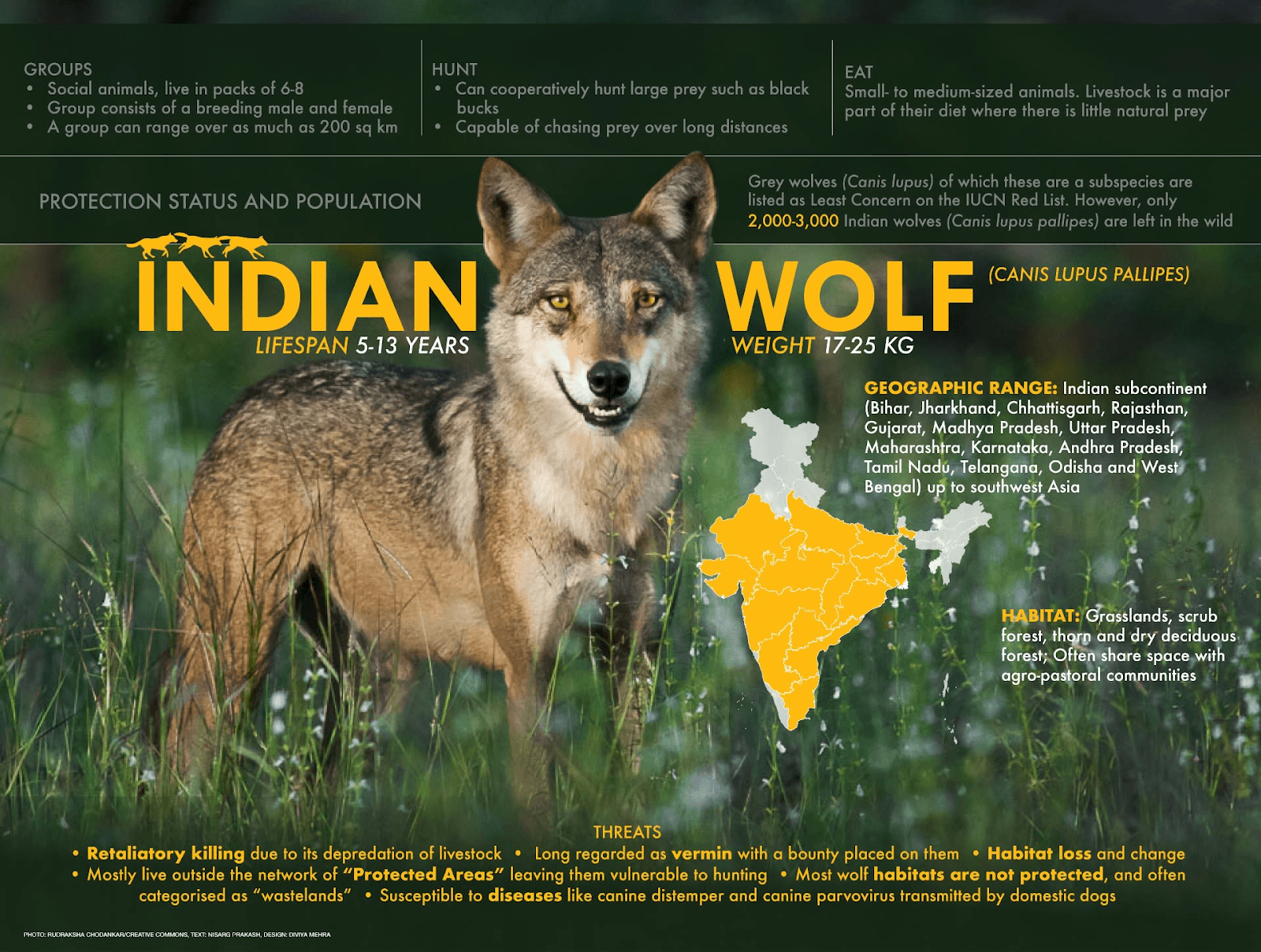
Indian wolf: canid across India–Pakistan; poised for IUCN recognition as a separate species from grey wolf.

Core habitat: arid, semi-arid grasslands and scrublands, often tagged “wastelands” in land-use records.

Conservation locus: likely IUCN Red List Vulnerable; already under Schedule I, Wildlife (Protection) Act 1972.

Quick Facts for MCQs

Taxonomy & Genetics

  • Divergence: Genomic analyses place split from grey wolf complex earlier than any extant wolf lineage.
  • Classification: Shift from subspecies of Canis lupus to full species pending IUCN update.

Habitat & Ecology

  • Habitat: Prefers open, treeless landscapes; avoids forests unlike many global wolf populations.
  • Niche: Apex predator sustaining grassland trophic balance alongside bustards and antelopes.

Threats

  • Infrastructure: Highways, industrial corridors dissect territories, causing mortality and isolation.
  • Prey base: Declining blackbuck and small herbivore numbers undermine wolf foraging success.
  • Genetics: Fragmented packs risk reduced diversity and inbreeding.

Legal & Policy

  • Protection: Schedule I listing mandates highest legal safeguards, anti-poaching enforcement.
  • Conservation impetus: Distinct species status expected to bolster national grassland protection agendas.

Key Data Points

FeatureData-Point
Current scientific tagCanis lupus pallipes
Lineage ageMost ancient living wolf lineage
Proposed IUCN statusVulnerable (forthcoming)
Indian legal statusSchedule I, WPA 1972
Primary habitat typeArid/semi-arid grasslands & scrublands
Range countriesIndia, Pakistan
Flagship co-habitantsGreat Indian Bustard, Blackbuck
Key threatsHabitat loss, prey decline, fragmentation
GS-3S&T

7.Recent Dual Comet Sightings (Comet Astronomy)

Times of India
Illustration for Recent Dual Comet Sightings (Comet Astronomy)

What & Where

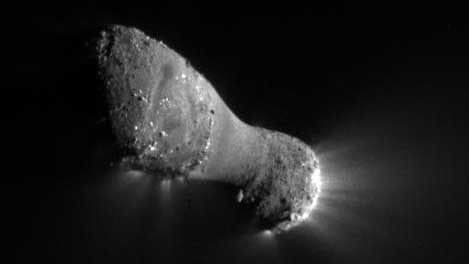
Comets: icy dust-gas bodies orbiting Sun; sunlight vaporises ices, creating glowing coma and dust/ion tails.

Types: short-period (<200 yr) from Kuiper Belt; long-period (≥1,000 yr) from far-flung Oort Cloud.

Current view: C/2025 R2 over Sagittarius (south India skies); C/2025 A6 near Bootes & Big Dipper (north).

Quick Facts for MCQs

Featured Comets

  • C/2025 R2: long-period visitor, unlikely again in human timeframe.
  • C/2025 A6: brighter, millennial reappearance slated 1150 yr hence.
  • Dual visibility over India in same week considered rare astronomical coincidence.

Physical Features

  • Nucleus: few km wide icy rock; source of ejected material.
  • Coma: transient atmosphere expands thousands of km near Sun.
  • Tails: dust curve, ion straight; both pushed anti-sunward by radiation & solar wind.

Origin Reservoirs

  • Kuiper Belt: 30–50 AU disc; supplies Halley-type short-period comets.
  • Oort Cloud: spherical shell ~50,000 AU; perturbations inject long-period bodies inward.

Scientific Significance

  • Primitive material: holds clues to 4.6-billion-yr solar nebula chemistry.
  • Delivery hypothesis: impacts may have seeded early Earth with water & organics, aiding biogenesis.

Key Data Points

FeatureData-Point
DesignationC/2025 R2 (SWAN)
Discovery sourceSOHO–SWAN ultraviolet instrument
Return period R2≈ 20,000 years
DesignationC/2025 A6 (Lemmon)
Apparent magnitude A64.5 (naked-eye threshold)
Return year A63175 CE
Sky location R2Above Sagittarius constellation
Sky location A6Near Bootes, close to Big Dipper
Tail status R2Faint but visible
Core compositionFrozen water, CO₂, dust, organics

Related UPSC Prelims PYQs

GS1 2011PYQ 1

What is the difference between asteroids and comets?

GS-3S&T

8.Amoebic Meningoencephalitis Infection (Naegleria fowleri)

DH
Illustration for Amoebic Meningoencephalitis Infection (Naegleria fowleri)

What & Where

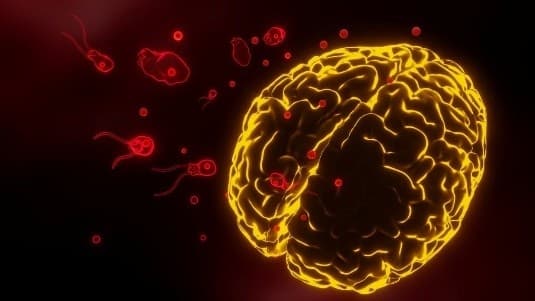
Definition: Primary Amebic Meningoencephalitis, acute brain infection by free-living amoeba Naegleria fowleri

Geography: Warm freshwater bodies worldwide, recent spike in Kerala with 27 deaths in 2025

Habitat: Lakes, rivers, hot springs, poorly chlorinated pools, summer-favoured soil and water

Quick Facts for MCQs

Transmission Pathway

  • Exposure: Diving, swimming, water sports in untreated freshwater
  • Nasal route: Amoeba ascends olfactory nerves, invades CNS swiftly
  • Seasonality: Peaks in summer months when water is warmer

Symptoms & Progression

  • Early: Headache, fever, nausea, vomiting within a week
  • Advanced: Stiff neck, confusion, seizures, hallucinations, rapid coma
  • Outcome: Death typically within days without prompt therapy

Therapeutics & Prevention

  • Drugs: Early IV Amphotericin B plus oral/IV Miltefosine offer rare survival
  • Prevention: Use nose clips, avoid warm stagnant water, maintain pool chlorination ≥1 ppm free chlorine
  • Public health: Rapid reporting, water-body monitoring crucial in tropical states

Key Data Points

FeatureData-Point
Causative agentNaegleria fowleri (brain-eating amoeba)
Human-to-human spreadAbsent
Entry routeContaminated water through nasal cavity, via olfactory nerve
Ideal water temperatureWarm, usually >25 °C
Incubation period1 – 9 days
Case-fatality rate>95 %
Proven drugsAmphotericin B, Miltefosine, supportive care
Kerala deaths 202527
GS-3S&T

9.India Digital Public Platforms Vision (Digital Public Goods)

BL

What & Where

Digital Public Platforms (DPPs): open, interoperable digital infrastructure for public services.

Indian suite: Aadhaar (identity), UPI (payments), DigiLocker & Account Aggregator (data exchange).

Originated in India; UPI/MOSIP now piloted in France, Singapore, Sri Lanka & 27 other nations.

Quick Facts for MCQs

Tech & Schemes

  • UPI enables real-time, low-cost retail payments; studied for cross-border use.
  • MOSIP: free, secure, modular platform for national digital IDs.
  • DigiLocker & Account Aggregator allow consent-based data sharing.

International Adoption

  • France, Singapore, Sri Lanka piloting or integrating UPI rails.
  • MOSIP toolkits downloaded/field-tested by 27 governments across Africa, Asia, LatAm.

Economic Angle

  • Higher UPI usage statistically lifts GDP; 1 % volume bump adds 0.03 % growth.
  • Scalable DPPs cut transaction costs, widening formal financial inclusion.

Governance & Policy

  • RBI Governor urges positioning UPI & MOSIP as global public goods.
  • India champions international DPP collaboration under “Digital Public Infrastructure” narrative.

Key Data Points

FeatureData-Point
MOSIP developerIIIT-Bangalore
Countries exploring MOSIP27
UPI GDP linkage1 % rise in volume → 0.03 % GDP growth
Core DPP traitsOpen architecture, interoperability, scalability
DPP service clustersIdentity, payments, data exchange

Related UPSC Prelims PYQs

GS1 2018PYQ 1

पहचान प्लेटफॉर्म ‘आधार’ खुला (ओपन) ‘एप्लिकेशन प्रोग्रामिंग इंटरफेस’ (ए.पी.आई.) उपलब्ध कराता है। इसका क्या अभिप्राय है ?

GS1 2017PYQ 2

Which of the following is a most likely consequence of implementing the ‘Unified Payments Interface (UPI)’?

GS-2Editorial

10.India UN Peacekeeping Role (UN Peacekeeping)

FL
Illustration for India UN Peacekeeping Role (UN Peacekeeping)

What & Where

United Nations Peacekeeping Force (UNPKF): field missions for cease-fire monitoring and civilian safety; created 1948 under UN Charter Chapters VI & VII

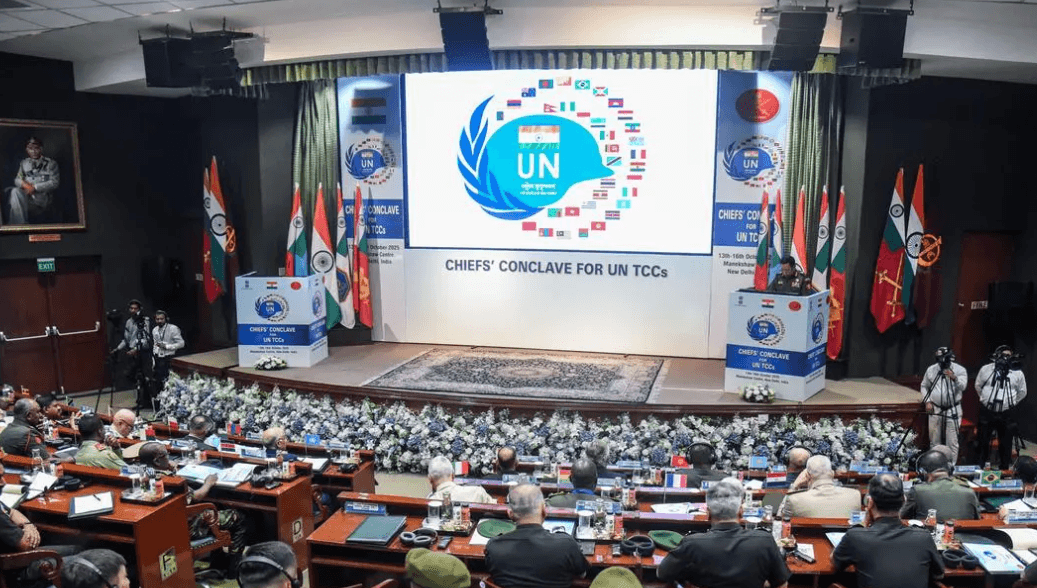
United Nations Troop Contributing Countries Chiefs’ Conclave 2025: first India-led forum, New Delhi, 14–16 Oct 2025

India: largest consistent UN troop donor, 3 lakh+ personnel across 50 missions on four continents

Quick Facts for MCQs

India’s Contributions

  • Deployment: contingents in Congo, Lebanon, South Sudan, Liberia; multiple UN gallantry medals
  • Gender: first all-women police unit enhanced mission legitimacy and local confidence
  • Stance: rejects national caveats, maintaining impartial conduct and host-community trust

Technology Push

  • Drones: UAS/C-UAS layers for reconnaissance, convoy security, casualty evacuation
  • AI: data analytics and real-time surveillance proposed to cut casualties and boost transparency
  • Expo: Defence Expo 2025 unveiled 41 indigenous peacekeeping systems under Aatmanirbhar Bharat

Operational Gaps

  • Mandate: vague, politically influenced goals reduce clarity and effectiveness
  • Resources: chronic funding, equipment, personnel shortfalls hinder mission readiness
  • Threats: hybrid, cyber, drone warfare outpaces legacy peacekeeping frameworks

Reform Agenda

  • Mandate alignment: context-driven goals prioritising civilian protection and host consent
  • Empowerment: larger TCC role in planning, training, policy review for mission ownership
  • Accountability: transparent audits, war-crime prosecution, enhanced peacekeeper welfare

Key Data Points

FeatureData-Point
UNTCC Chiefs’ Conclave 2025New Delhi, 14–16 Oct 2025
UNPKF launch year1948
Charter chapters usedVI & VII
Indian troops contributed>3,00,000 across 50 missions
First all-women police unitLiberia, 2007
Indian ethosSeva, Vasudhaiva Kutumbakam, Ahimsa
Policy hallmarkNo National Caveats
4 Cs approachConsultation, Cooperation, Coordination, Capacity Building
New tech doctrineUAS/C-UAS layered drone system
Proposed data hubBlueSky Peacekeeping Commons

Related UPSC Prelims PYQs

CDS_GK 2023PYQ 1

India is the first country in the world to deploy an all-woman contingent to a UN Peacekeeping Mission. In which country did this mission operate?

CDS_GK 2022PYQ 2

Blue Helmets are

GS-2Economy

11.China Challenges India EV Subsidies (WTO Trade Dispute)

Business Standard

What & Where

WTO dispute: China files consultation request against India over electric-vehicle (EV) & battery subsidy programmes.

Location: Subsidies granted within India; complaint lodged at WTO headquarters, Geneva.

Key process: WTO Dispute Settlement understanding under Agreement on Subsidies & Countervailing Measures (ASCM).

Quick Facts for MCQs

Legal & Policy

  • ASCM Article 3 lists import-substitution subsidies as outright prohibited, liable for immediate withdrawal.
  • National Treatment (GATT Art. III) mandates equal post-entry treatment for imported and domestic goods.
  • Failure to settle in consultations lets China seek WTO panel, possible appellate review.

Economic Angle

  • 46 % subsidy lowers Indian EV prices, potentially crowding out foreign (mainly Chinese) exporters.
  • Higher aid exceeds global norm, raising “trade-distortion” argument and possible countervailing duties abroad.
  • India’s aim: spur domestic manufacturing, reduce oil imports, capture battery value-chain.

Tech & Schemes

  • FAME Phase-II: demand incentives up to ₹10,000/kWh, charging-infra grants.
  • PM e-Drive: targets 30 % EV share by 2030 via tax cuts, concessional loans.
  • PLI-ACC: ₹18,100 cr outlay, 50 GWh cell capacity with localisation riders.

International Institutions

  • WTO Dispute Settlement Body supervises case; panels report within 9 months, adoption unless consensus opposes.
  • Similar EV subsidy rows: US-China solar panels (2012), EU-US Boeing-Airbus (subsidy disciplines precedent).

Key Data Points

FeatureData-Point
ComplainantPeople’s Republic of China
RespondentRepublic of India
Alleged breachNational Treatment & ASCM rules
Claimed subsidy level India≈ 46 % of vehicle cost
Subsidy range in major economies10 – 26 %
Prohibited category allegedImport-substitution subsidy
Flagship scheme citedFAME India
Other central schemesPM e-Drive; PLI for ACC batteries
Typical state incentiveRegistration-fee waiver / tax rebate
WTO remedy first stepRequest for consultations (60-day window)
GS-2Scheme

12.UDAN Regional Connectivity Scheme (Regional Aviation)

PIB
Illustration for UDAN Regional Connectivity Scheme (Regional Aviation)

What & Where

Definition: UDAN is the flagship Regional Connectivity Scheme making air travel affordable by linking Tier-2/3 cities nationwide

Governance: Run by Ministry of Civil Aviation under National Civil Aviation Policy; covers airports, heliports, water aerodromes

Geography: Pan-India network scaled to 159 airports, touching remote Northeastern, Himalayan, island and inland-water regions

Quick Facts for MCQs

Economic Angle

  • Democratisation: Affordable capped fares driving passenger growth in underserved regions
  • Funding: ₹4,300 crore VGF cushions airline losses keeping routes viable
  • Multiplier: Regional connectivity spurs tourism, cargo, employment in Tier-2/3 hubs

Incentive Structure

  • Concessions: Waiver on landing, parking, Route Navigation Facility charges at UDAN airports
  • Taxes: States offer ATF concessions lowering operating cost for regional flights
  • Fare-cap: MoCA ceiling ensures ticket prices stay within common citizen reach

Infrastructure Status

  • Expansion: Airport network jumped from 74 (2014) to 159 (2024) doubling national reach
  • Assets: 93 airports, 15 heliports, 2 water aerodromes functional under UDAN routes
  • Future: UDAN 5.5 seaplane focus extends scheme to last-mile water and heli connectivity

Key Data Points

FeatureData-Point
Scheme full formUde Desh ka Aam Nagrik
Launch date21 Oct 2016
First UDAN flightShimla–Delhi, 27 Apr 2017
Parent policyNational Civil Aviation Policy 2016
Latest phaseUDAN 5.5 & Seaplane Guidelines 2024
Operational routes649
Airports served93
Heliports covered15
Water aerodromes2
Passengers carried1.56 crore
UDAN flights operated3.23 lakh
VGF disbursed₹4,300 + crore
Regional airport capex₹4,638 crore
Airport network 2014→202474 → 159

Related UPSC Prelims PYQs

NDA_GAT 2022PYQ 1

उड़े देश का आम नागरिक (उड़ान) योजना के बारे में निम्नलिखित कथनों पर विचार कीजिए :

GS-1Editorial

13.Rural Education Youth Migration (Rural Migration)

The Hindu

What & Where

Concept: rural-to-urban youth migration; movement of 15-25 age group from villages to cities for work or marriage

Geography: 89 % of migrants start in rural India; major pull centres Delhi, Mumbai, other Tier-1 metros

Scale: migrants constitute ~29 % of national population, making it one of the world’s largest internal flows

Quick Facts for MCQs

Drivers of Migration

  • Job-deficit: scarce rural non-farm work; 39 % end up as short-term industrial labour
  • Education-job mismatch: degrees lack market skills, fuelling >15 % graduate joblessness
  • Infrastructure gap: weak transport, credit, digital services hinder local enterprise expansion

Socio-Economic Impact

  • Urban strain: congestion, slums, pollution in megacities like Delhi, Mumbai
  • Rural hollowing: youth exodus weakens agriculture, local governance capacity
  • Labour informality: 88 % migrants sans social security, heightening vulnerability

Schemes & Initiatives

  • Livelihood: MGNREGA wage safety net; 10,000-FPO plan boosts farm value chains
  • Skills: DDU-GKY, PMKVY provide vocational training aligned to industry demand
  • Enterprise: Mudra loans, SVEP, Start-Up India support micro-businesses in villages

Policy Suggestions

  • Curriculum revamp: embed agri-tech, digital, vocational modules in rural schools
  • Sector diversification: promote handicrafts, logistics, renewables, agri-tourism for local jobs
  • Portability: universal PDS, pension, health insurance to protect circular migrant workers

Key Data Points

FeatureData-Point
Share of migrants in India29 % of population
Rural origin of migrants89 %
Migrants aged 15-25>50 %
Women migrating for marriage86.8 %
Graduate unemployment (CMIE 2024)>15 %
Pandemic reverse migrants (2020)40 million
Migrant daily wagers49 %
Informal migrant workers88 %
SC & OBC migration skewHigher than upper castes
Female workforce entry post-migrationRare, widens gender gap

Related UPSC Prelims PYQs

CDS_GK 2020PYQ 1

Which one of the following is the biggest cause of incidence of migration of female persons in India?

CDS_GK 2020PYQ 2

2011 की जनगणना के अनुसार, भारत में ऐसे लोग, जिन्हें प्रवासी (आंतरिक) माना जा सकता है अर्थात् जो अपने पिछले निवास से हट कर किसी अन्य स्थान पर बस गए हैं, की प्रतिशतता (लगभग) कितनी है?

GS-1Editorial

14.Six-Pocket Syndrome Parenting Trend (Overindulgent Parenting)

Indian Express

What & Where

Definition: Child pampered by two parents plus four grandparents, breeding entitlement.

Origin: Term from China’s one-child policy era (1979-2015); spreading to urban India.

Geography: Common in Indian middle-class metros where both parents work.

Quick Facts for MCQs

Sociological Perspective

  • Shift: Responsibility-based families replaced by right-centric, comfort-first child rearing.
  • Goffman: Children perform for validation, not character formation.
  • Bauman: Liquid modernity prioritises instant gratification over deep bonds.

Psychological Effects

  • Behaviour: Low patience, reward-demanding, emotional immaturity noted.
  • Consequence: Higher risk of tantrums, aggression, anxiety, substance abuse later.
  • Skill deficit: Limited empathy, resilience, autonomy under peer pressure.

Legal & Policy

  • UNCRC: Article 5 urges guidance proportional to evolving capacities, curbing entitlement.
  • India: JJ Act 2015, National Policy 2013 push disciplined, resilience-building environments.
  • Digital: IT Rules 2021 mandate safeguards against cyberbullying, harmful content.

Digital Concerns

  • Datafication: First fully tracked cohort; DPDP Act 2023 questions child data rights.
  • Screen-time: Early exposure reduces attention span, creativity, critical thinking.
  • Consumerism: Influencer culture equates self-worth with visibility and possessions.

Key Data Points

FeatureData-Point
Origin countryChina
Policy backdropOne-child policy 1979-2015
Adults per child6 (2 parents + 4 grandparents)
Indian prevalenceUrban middle-class families
Affected generationAlpha : born 2010-2024/25
Core trait outcomeLow frustration tolerance
Key Indian policyNational Policy for Children 2013
GS-1Economy

15.Updated Rangarajan Poverty Line Findings (Poverty Measurement)

Indian Express
Illustration for Updated Rangarajan Poverty Line Findings (Poverty Measurement)

What & Where

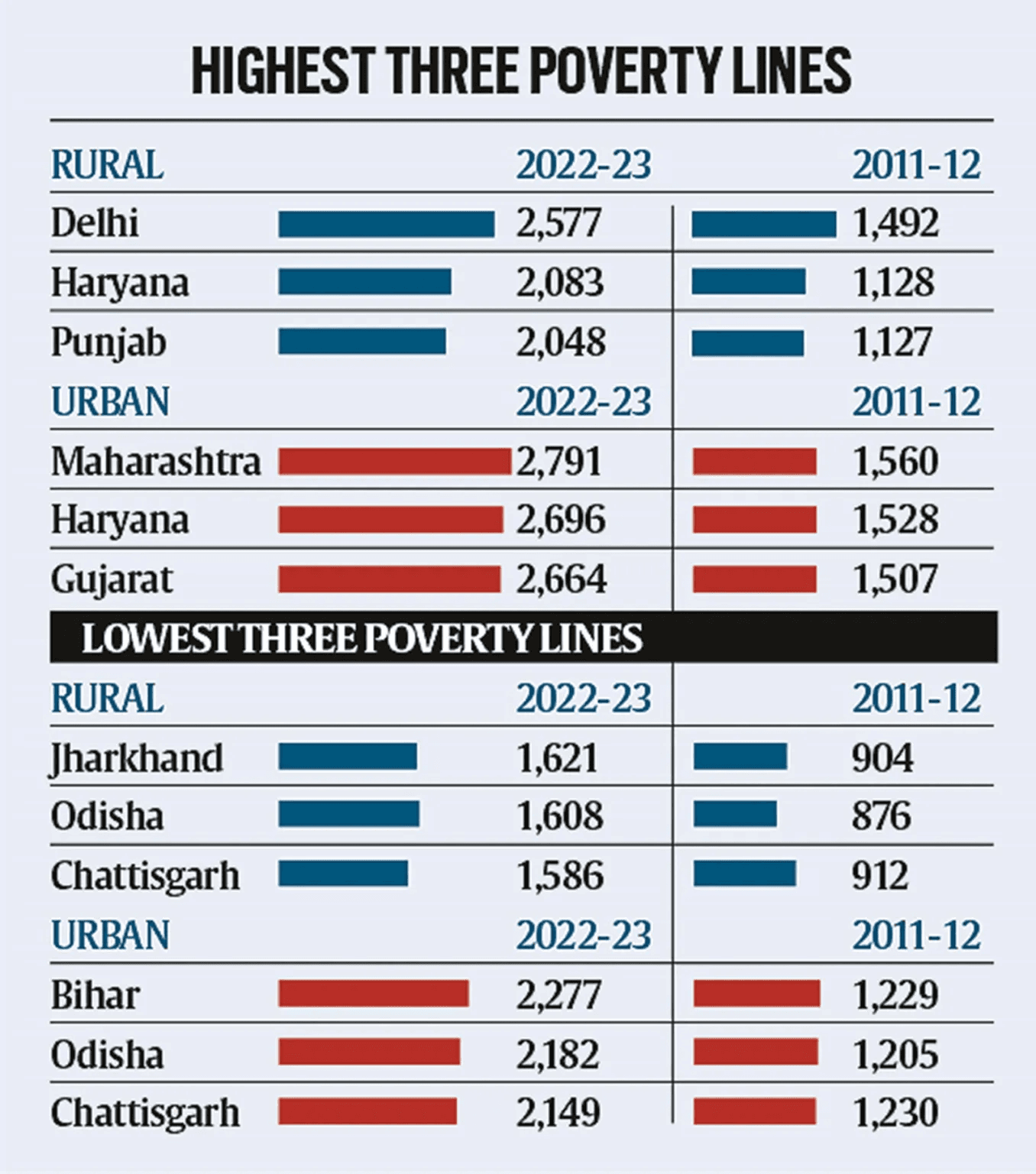
Updated Rangarajan Poverty Line recalculated for 20 Indian states using 2022-23 Household Consumption Expenditure Survey (HCES)

Approach retains separate rural & urban Poverty Line Baskets, expressing minimum monthly per-capita spend

Exercise by RBI’s Department of Economic & Policy Research to gauge post-2011-12 poverty shifts

Quick Facts for MCQs

State-wise Trends

  • Odisha rural poverty fell 39.2 ppt during 2011-12→2022-23
  • Bihar urban poverty dropped 41.7 ppt in same period
  • Kerala-Himachal minimal decline due to already single-digit poverty

Estimation Committees

  • Tendulkar 2009 introduced uniform basket & Mixed Reference Period data
  • Rangarajan 2014 proposed ₹972 (rural) & ₹1,407 (urban) monthly cut-offs
  • Alagh-Lakdawala anchored poverty lines in calorie-norm consumption

Multidimensional Indices

  • Global MPI 2025 counts 1.1 billion (18.3 %) acute poor across 109 countries
  • National MPI shows Indian poverty at 11.28 %; 24.82 crore escaped since 2013-14
  • Gini index fell to 25.5 from 28.8 (2011-12) indicating lower inequality

Key Schemes

  • DAY-NULM supports urban poor through skill, credit, shelter components
  • MGNREGA assures 100-day wage employment; demand-driven legal right
  • POSHAN Abhiyaan converges nutrition programmes targeting women & children

Key Data Points

FeatureData-Point
Rural poverty lowest (2022-23)Himachal Pradesh 0.4 %
Rural poverty highest (2022-23)Chhattisgarh 25.1 %
Urban poverty lowest (2022-23)Tamil Nadu 1.9 %
Urban poverty highest (2022-23)Chhattisgarh 13.3 %
Biggest rural fallOdisha 47.8 %→8.6 %
Biggest urban fallBihar 50.8 %→9.1 %
International Poverty Line (2021 PPP)USD 3.00/day

Related UPSC Prelims PYQs

CDS_GK, GEO_GS 2024PYQ 1

Which of the following statements with regard to the Report of Tendulkar Committee (2009) on poverty estimates is/are correct?

CDS_GK, GEO_GS 2021PYQ 2

Which one of the following statements with regard to poverty is correct?

Ready to practice?

Test your knowledge with our UPSC test series.

Start Free Trial