UPSC Current Affairs

13 topicsGS-1: 2GS-2: 5GS-3: 6
0/13 done
GS-2Polity

1.Darbar Move Resumption in Jammu & Kashmir (Darbar Move)

Indian Express

What & Where

Darbar Move = biannual shift of Jammu & Kashmir Civil Secretariat and offices

Offices work April–Oct in Srinagar, Nov–Mar in Jammu

Restarting winter 2025 after four-year suspension

Quick Facts for MCQs

Historical Context

  • Origin 1872 to offset poor intra-region connectivity and bring ruler nearer subjects
  • Continued post-1947 as symbol of Jammu–Kashmir integration
  • Dogra lineage link – Gulab Singh founded J&K 1846

Legal & Policy

  • 2020 J&K High Court held no constitutional mandate for Darbar Move
  • 2021 LG administration formally halted practice, promoted e-office
  • 2025 decision revokes halt, reinstates traditional migration

Economic Angle

  • Seasonal relocation boosts host city hotels, transport, retail each switch
  • Earlier halt projected ₹200 crore annual public-exchequer saving
  • Revival trades fiscal prudence for perceived regional parity

Administrative Challenges

  • Logistics involve moving staff, files, vehicles across 300 km twice yearly
  • Two-week governance slowdown during packing, transit, resettling period
  • Convoys raise carbon footprint and heighten security deployment

Key Data Points

FeatureData-Point
Initiation year1872
Initiated byMaharaja Ranbir Singh
Summer capitalSrinagar
Winter capitalJammu
Break period2021 – 2024
HC verdict year2020
Estimated saving if ended₹200 crore per year
GS-3Infrastructure

2.Decarbonising Indian Railways (Railway Decarbonisation)

The Hindu

What & Where

Hydrogen‐powered trains; fuel-cell coaches using green H₂; first Indian trial July 2025 at Integral Coach Factory, Chennai

Rail electrification; 45,000 km wired in last decade, raising broad-gauge electric coverage to 98 %

Pan-India network; Dedicated Freight Corridors aim 45 % freight share by 2030, cutting road‐based emissions

Quick Facts for MCQs

Technology & Schemes

  • Electrification; near-universal broad-gauge coverage plus regenerative braking, AI energy optimisation planned
  • Hydrogen for Heritage; 35 H₂ trains earmarked for non-electrified tourist and hilly routes
  • Renewable push; 553 MW solar, 103 MW wind, 100 MW hybrid already feeding traction load

Environmental Impact

  • Emissions; 60 Mt CO₂ cut equals removing 13 million cars from roads annually
  • Energy security; green H₂ lowers imported diesel dependence, supports domestic electrolyser industry
  • Awareness; 24 million daily passengers exposed to visible zero-carbon mobility showcase

Finance & Investment

  • Sovereign bonds; ₹42,000 crore of ₹58,000 crore directed to rail electrification and expansion
  • IRFC; issued USD 500 million green bond (2017) and ₹7,500 crore loan to NTPC Green Energy
  • World Bank; USD 245 million Rail Logistics Project loan enhances freight efficiency

Key Data Points

FeatureData-Point
Broad-gauge electrified98 %
Track electrified (past decade)45,000 km
Renewable capacity commissioned756 MW
Solar-powered stations2,000 +
Hydrogen trains sanctioned35 units
Annual CO₂ avoided60 million t
Freight share target 203045 %
Sovereign green bonds (since FY 23)₹58,000 crore

Related UPSC Prelims PYQs

GS1 2025PYQ 1

निम्नलिखित कथनों पर विचार कीजिए :

GS1 2023PYQ 2

Consider the following heavy industries:

GS-3Environment

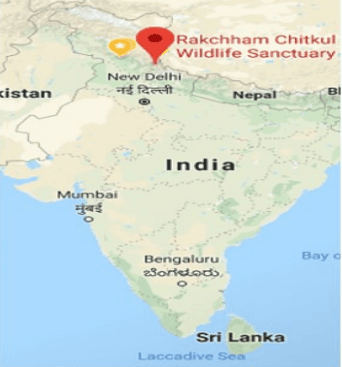
3.Rakchham–Chitkul Wildlife Sanctuary, Himachal Pradesh (Protected Areas)

Indian Express
Illustration for Rakchham–Chitkul Wildlife Sanctuary, Himachal Pradesh (Protected Areas)

What & Where

High-altitude wildlife sanctuary; cold-desert ecosystem; shelters endangered alpine fauna and migratory birds

Located in Kinnaur district, Himachal Pradesh; Western Himalaya; elevation 3 200 – 5 486 m

Covers 30.98 sq km in dry trans-Himalayan zone, acting biodiversity bridge between Western and Trans-Himalaya

Quick Facts for MCQs

Physical Geography

  • Terrain snow-clad peaks, glacial streams, rugged valleys encouraging high-altitude trekking
  • Rain-shadow climate; minimal monsoon unlike most Himachal sanctuaries
  • Connectivity Lamkhanga Pass links Kinnaur with Gangotri basin

Flora & Fauna

  • Vegetation alpine rhododendron, pine, oak, juniper plus rare medicinal herbs
  • Mammals snow leopard, Himalayan black bear, musk deer, red fox, Himalayan pheasants
  • Avifauna Plumbeous Water Redstart, Blue-fronted Redstart, Rock Bunting, Yellow-breasted Greenfinch

Ecotourism & Adventure

  • Activities ecotourism, mountaineering, birding anchor conservation-linked livelihoods
  • International birding programme attracted participants from 15 countries
  • Promotion aligns with National Biodiversity Action Plan goals

Biodiversity Significance

  • Acts corridor merging Western Himalayan and Trans-Himalayan gene pools
  • Strengthens India’s alpine conservation commitments amid climate stress
  • High-altitude refuge critical for endangered species persistence

Key Data Points

FeatureData-Point
StateHimachal Pradesh
DistrictKinnaur
Legal statusWildlife Sanctuary
Area30.98 sq km
Altitude range3 200 – 5 486 m
BiomeCold-desert, dry trans-Himalayan
Key trekLamkhanga Pass to Gangotri
Flagship carnivoreSnow leopard
Notable ungulateHimalayan musk deer
Birding record35 + species by 15 countries
Dominant floraRhododendron, pine, oak, juniper
GS-3Species

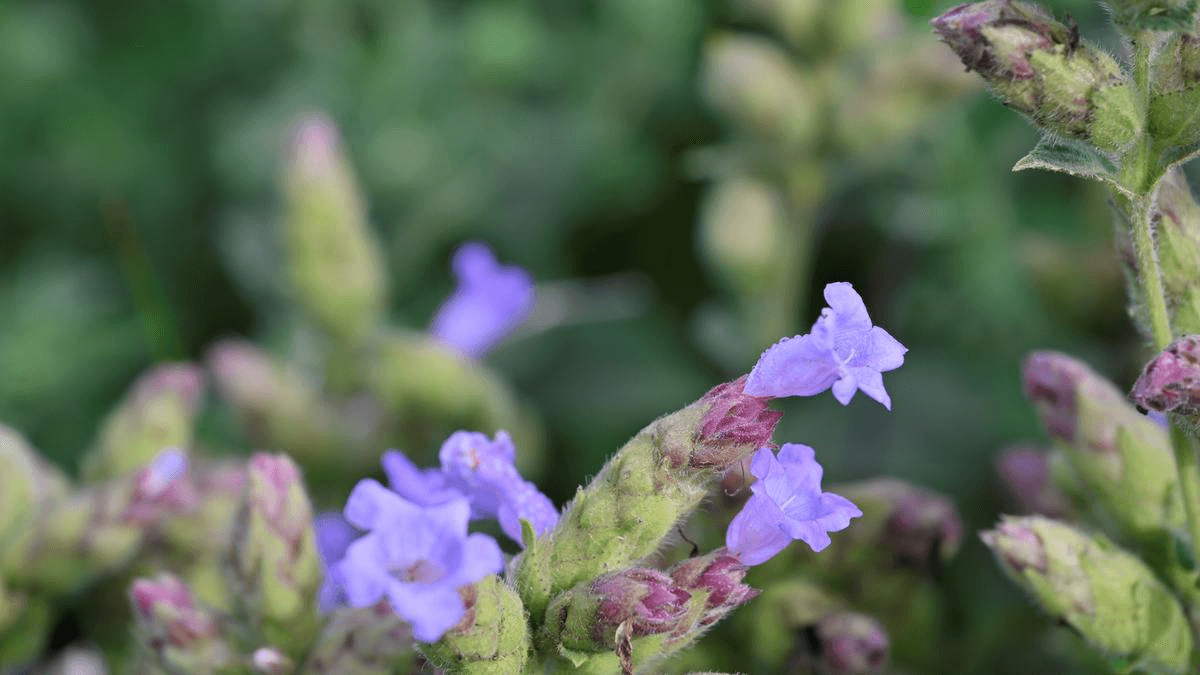
4.Kurinji Bloom in Nilgiris (Kurinji Flowering)

The Hindu
Illustration for Kurinji Bloom in Nilgiris (Kurinji Flowering)

What & Where

Kurinji = gregarious-flowering shrubs of genus Strobilanthes, strictly endemic to Western Ghats montane grassland–shola mosaics.

Key taxa ⇢ Strobilanthes sessilis (8-yr, Gudalur Reserve Forest) & Neelakurinji S. kunthiana (12-yr, Kodaikanal).

Range covers Nilgiri, Palani, Anamalai hills; > 60 species, 33 recorded in Nilgiris.

Quick Facts for MCQs

Ecological Importance

  • Mass flowering attracts butterflies, honeybees, enhancing landscape-level pollination.
  • Acts as bioindicator of healthy grasslands supporting elephants, tigers, hornbills.
  • Synchronised seeding rejuvenates soil seed bank and slope stability.

Cultural Significance

  • Associated with Lord Muruga in Tamil devotional lore.
  • Muthuvas & Todas revere bloom as emblem of love, passion.
  • Tourist draw when hills turn blue, fostering biocultural identity.

Conservation & Status

  • Neelakurinji tagged Vulnerable on IUCN Red List; habitat loss main threat.
  • Gudalur Reserve Forest notification and bloom signal ecological recovery.
  • Altered rainfall–temperature patterns may shift flowering periodicity, warranting monitoring.

Key Data Points

FeatureData-Point
Bloom cycle (S. sessilis)8 years
Bloom cycle (Neelakurinji)12 years
IUCN status (Neelakurinji)Vulnerable
Kurinji species in Western Ghats> 60
Varieties in Nilgiris33
Post-flowering fateParent shrub dies; seeds reboot population
Dominant flower coloursPurple, blue, white, pink
Local range namingNilgiris “Blue Mountains” from Neelakurinji bloom
GS-3S&T

5.MAM01 Monoclonal Antibody Against Malaria (Monoclonal Antibody)

DD News

What & Where

MAM01: novel monoclonal antibody delivering passive immunity against Plasmodium falciparum malaria.

Binds conserved circumsporozoite-protein epitope, blocking parasite entry into liver cells.

Engineered and Phase-1 tested at University of Maryland School of Medicine, USA.

Quick Facts for MCQs

Technology & Mechanism

  • Monoclonal-IgG produced via recombinant DNA; high affinity to CSP epitope.
  • Immediate protection without host B-cell activation or booster doses.
  • Dose-dependent serum concentration correlates with prophylactic period.

Clinical Trial Data

  • Top dose 20 mg/kg gave sterile protection post controlled parasite challenge.
  • Lower doses showed proportional decline in efficacy, validating threshold concept.
  • Safety profile limited to mild, transient injection-site discomfort.

Public Health Significance

  • Single-shot format circumvents multi-visit vaccine logistics in remote areas.
  • Could sharply reduce >600 k annual malaria deaths, mainly in sub-Saharan Africa.
  • Adds complementary tool alongside RTS,S & R21/Matrix-M vaccines for elimination targets.

Key Data Points

FeatureData-Point
Molecule nameMAM01
Biomedical classMonoclonal antibody (IgG)
Immunisation typePassive, not vaccine-induced
Target parasitePlasmodium falciparum
Target antigenConserved region of CSP (circumsporozoite protein)
DeveloperUniv. of Maryland School of Medicine’s CVD
Intended usersYoung children & pregnant women in endemic zones
Dose regimenSingle IV dose; months-long protection
Phase-1 cohort38 malaria-naïve adults (18–50 yr)
Trial designRandomised, double-blind, placebo-controlled
Protection at top dose100 %
Adverse eventsNo severe reactions
Global strategy linkWHO GTS 2025–30 malaria elimination

Related UPSC Prelims PYQs

GS1 2010PYQ 1

Widespread resistance of malarial parasite to drugs like chloroquine has prompted attempts to develop a malarial vaccine to combat malaria. Why is it difficult to develop an effective malaria vaccine ?

GS-3S&T

6.Zombie Deer Disease (CWD) (Prion Disease)

TN

What & Where

Chronic Wasting Disease (CWD): fatal prion-induced Transmissible Spongiform Encephalopathy in deer, elk, moose

Detected first in Colorado (1960s); now in 34 U.S. states, Canada, parts of Europe

Latest spread: Florida’s wild deer—first case 2023, second case 2025—shows southeastern U.S. reach

Quick Facts for MCQs

Geographical Spread

  • Expansion: from Rocky Mountains to southeastern U.S. with Florida cases
  • International: confirmed in Canada and several European nations

Transmission & Vectors

  • Direct-contact: bodily fluids enable deer-to-deer infection
  • Environmental: prions persist years in soil, plants, carcasses
  • Anthropogenic: hunters, scavengers, deer-urine lures aid long-distance movement

Symptoms & Progression

  • Behavioural: lethargy, staggering, reduced fear of humans, “zombie-like” demeanour
  • Physical: rapid weight loss leading to emaciation; disease always fatal

Control Measures

  • Management: surveillance zones, carcass disposal, movement restrictions on venison and hunting gear
  • No vaccine: focus on early detection and population monitoring

Key Data Points

FeatureData-Point
Causative agentMisfolded prion protein
Disease groupTransmissible Spongiform Encephalopathies
Primary hostsDeer, elk, moose
First detectionColorado, USA, 1960s
U.S. spread34 states as of 2025
Florida detection years2023 and 2025
Human casesNone confirmed
Key symptomsWasting, drooling, blank stare, loss of fear
Transmission mediumSaliva, urine, feces, contaminated soil/plants
Prion resilienceHeat, radiation, disinfectant resistant
Cure/vaccineNone; surveillance & containment only
GS-2Editorial

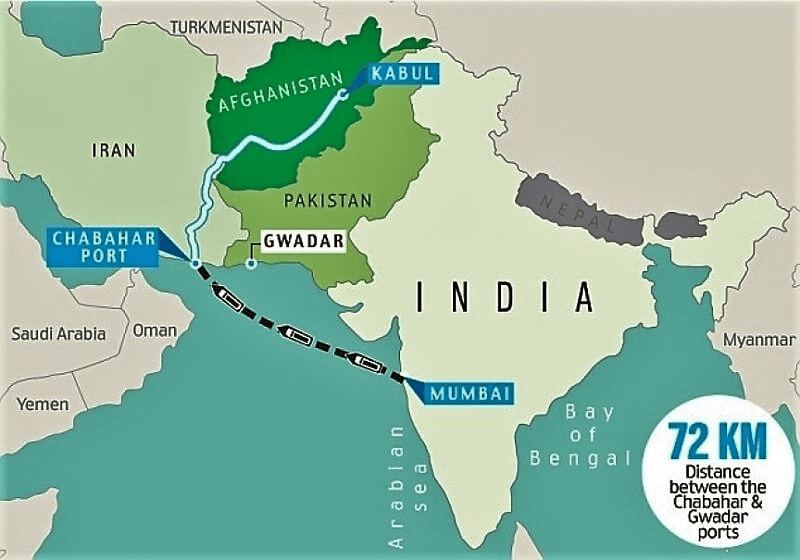
7.India's Taliban Engagement Without Recognition (Taliban Engagement)

Indian Express
Illustration for India's Taliban Engagement Without Recognition (Taliban Engagement)

What & Where

Engagement without Recognition: India runs Kabul embassy yet withholds formal de jure nod to Taliban regime

Oct 2025: highest-level Taliban delegation in New Delhi; technical mission upgraded to full embassy

Geography links: Salma Dam (Herat), Zaranj-Delaram highway, TAPI route, Chabahar-Kabul trade corridor

Quick Facts for MCQs

Legal & Policy

  • Vienna rules allow diplomatic work sans recognition, basis for India’s Kabul stance
  • Similar practice: Taiwan, Myanmar junta dealings minus formal nod
  • UN seat demands: inclusive government, terror breakup, women’s rights—Taliban non-compliant

Strategic Interests

  • First-mover engagement counters China-Pakistan imprint, widens Indian influence
  • Taliban remarks call Kashmir a bilateral Pakistan issue, easing Indian security fears
  • Embassy presence protects USD 3 billion assets and future mining stakes

Development Projects

  • Major builds: Salma Dam, Zaranj-Delaram road, Kabul Parliament, power grids
  • Soft-power aid: drought food, Covid medicines, scholarship quotas
  • Connectivity thrust: TAPI gas line and Chabahar multimodal route to Central Asia

Security Dimension

  • Threat entities: LeT, JeM still linked to Afghan sanctuaries despite Taliban pledges
  • Pakistan ISI backing, unchecked TTP militants fuel border volatility
  • Opium revenue sustains terror networks, spills into India’s Punjab drug crisis

Key Data Points

FeatureData-Point
Embassy statusTechnical mission → full embassy (Oct 2025)
Recognition policyDe facto engagement, no de jure nod
Indian investmentUSD 3 billion+ projects
Vienna Conventions years1961, 1963
UN seat rejection4th straight year, 2024
Afghan mineral worthUSD 1–3 trillion
Flagship pipelineTurkmenistan-Afghanistan-Pakistan-India
Alternate portChabahar, Iran
Narcotic rankingWorld’s top opium producer
GS-2Economy

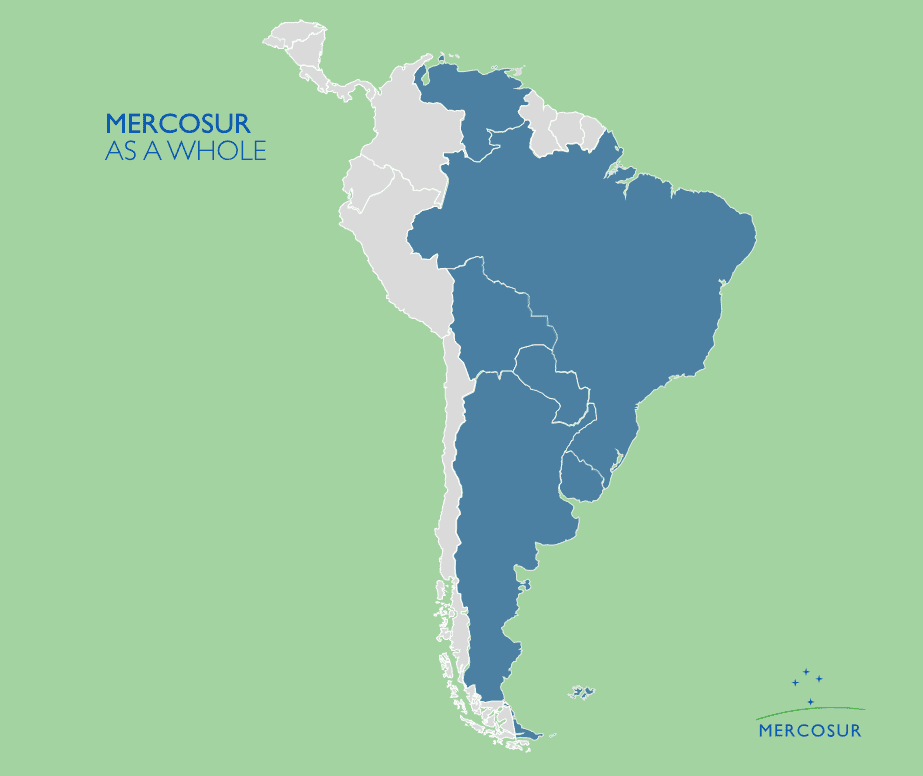
8.India-MERCOSUR Preferential Trade Agreement Expansion (India-MERCOSUR PTA)

The Hindu
Illustration for India-MERCOSUR Preferential Trade Agreement Expansion (India-MERCOSUR PTA)

What & Where

Preferential Trade Agreement (PTA): limited-scope pact granting reduced tariffs on select goods, narrower than Free Trade Agreement

MERCOSUR: Southern Common Market of Brazil, Argentina, Uruguay, Paraguay; customs union since 1994 Treaty of Ouro Preto

Geography focus: South America-India corridor spanning Atlantic sea routes, HQ of bloc in Montevideo, Uruguay

Quick Facts for MCQs

Economic Angle

  • Tariff-widening expected to boost Indian export competitiveness versus Chinese and EU suppliers
  • MERCOSUR economies commodity-heavy; India offers pharmaceuticals, engineering goods, IT services complementarity
  • PTA supports India’s multipolar trade push alongside EU, US, Indo-Pacific FTAs

Legal & Policy

  • Joint Administration Committee under Article 23 to steer scope, modalities, safeguard rules
  • Five original annexes govern tariff concessions, rules of origin, safeguards, dispute settlement
  • Expansion entails aligning non-tariff measures with WTO norms and digital trade facilitation

Challenges

  • Agricultural protectionism in Brazil, Argentina restricts Indian sugar, pulses, dairy entry
  • Consensus hurdle as all four MERCOSUR members must ratify any new product list or rule
  • Long shipping distances and limited logistics capacity dampen utilisation of tariff benefits

Key Data Points

FeatureData-Point
India-MERCOSUR Framework Agreement2003
PTA signed / operational2004 / 2009
Present tariff lines covered≈450
MERCOSUR founding treatyTreaty of Asuncion 1991
Bloc headquartersMontevideo, Uruguay
Official languagesPortuguese, Spanish
MERCOSUR integrated-market rank4th largest globally
Combined population~270 million
India↔Brazil trade 2024-25USD 12.2 bn
PTA expansion trade targetUSD 20 bn by 2030

Related UPSC Prelims PYQs

CAPF_GAI, CDS_GK 2024PYQ 1

If India enters into Free Trade Agreements (FTAs) with other nations, then the growth of exports of India would depend upon which of the following?

CAPF_GAI, CDS_GK 2024PYQ 2

Which of the following is NOT one of the pillars of India’s ‘Foreign Trade Policy-2023’?

GS-2MiscQuick Bite

9.World Food Day and FAO 80th Anniversary (FAO & Food Day)

PIB

What & Where

World Food Day; global observance on 16 Oct marking FAO creation, held annually since 1981 in 150+ nations

FAO; Rome-based UN specialised agency on food, agriculture, forestry, fisheries, water-land management, 194 members + EU

India–FAO; partnership since 1945, drove shift from food-deficit to surplus feeding 1.4 billion people

Quick Facts for MCQs

International Institutions

  • Anniversary; FAO enters 80-year mark in 2025 alongside World Food Day activities
  • Endorsement; UNGA formally recognised World Food Day in 1984 for global anti-hunger mobilisation
  • Membership; India founding member, active in Council plus Committees on Agriculture, Fisheries, Forestry

Food Security Progress

  • Transformation; India evolved from PL-480 wheat imports to food-surplus exporter feeding 1.4 billion
  • Leadership; FAO cites India as global agricultural leader guiding Global South practices
  • Goal; Collaboration advances SDG 2 Zero Hunger and national food-security targets

Schemes & Frameworks

  • CPF 2023-27; four priorities to modernise Indian agrifood systems via global best practices and tech support
  • Alignment; CPF dovetails with India-UN Sustainable Development Cooperation Framework 2023-27
  • Vision; Initiatives designed to realise Viksit Bharat 2047 sustainable, inclusive agriculture

Key Data Points

FeatureData-Point
World Food Day founding date16 Oct 1945
First observance year1981
First themeFood Comes First
2025 themeHand in Hand for Better Foods and a Better Future
UN endorsement year1984
FAO headquartersRome, Italy
FAO membership194 countries + EU
Flagship report sampleThe State of Food and Agriculture
India joined FAO1945
CPF validity2023 – 2027
CPF priority countFour
National vision backedViksit Bharat 2047
GS-3Security

10.INS Vikrant Indigenous Aircraft Carrier (Aircraft Carrier)

NDTV
Illustration for INS Vikrant Indigenous Aircraft Carrier (Aircraft Carrier)

What & Where

Vessel: INS Vikrant (IAC-1), India’s first home-built aircraft carrier, Western Naval Command, Arabian Sea theatre

Builder: Cochin Shipyard Limited under Indigenous Aircraft Carrier programme, designed by Directorate of Naval Design

Namesake: honours original INS Vikrant that fought 1971 Indo-Pak War, continuing maritime legacy

Quick Facts for MCQs

Tech & Schemes

  • Initiative: Flagship Aatmanirbhar Bharat symbol, largest warship ever built in India
  • Programme: Indigenous Aircraft Carrier (IAC) project showcases public-sector shipbuilding, naval design prowess
  • Future integration: Designed to host indigenous fighter aircraft and drones, modular upgrade pathways

Security Dimension

  • Deterrence: Enhances blue-water reach, force projection, sea control across Indian Ocean choke-points
  • Surveillance: Embarked AEW helicopters and fighters enable 360° maritime domain awareness, fleet air defence
  • Operation Sindoor: Recent success lauded, underlining combat readiness and joint forces synergy

Humanitarian & Support

  • HADR: Carrier’s aviation wing and onboard hospital allow rapid disaster relief, medical evacuation in littoral states
  • Sustainment: 18 decks and city-at-sea logistics permit prolonged deployments without shore support
  • Diplomacy: Port calls project soft power, strengthen maritime partnerships in Indo-Pacific

Key Data Points

FeatureData-Point
Commissioned on2 Sep 2022 by Prime Minister at Kochi
Displacement~45,000 tonnes
Length × Beam262 m × 62 m
Decks18
Max speed28 knots (≈52 km/h)
PropulsionFour gas turbines
Aircraft complement≈30 (MiG-29K, Kamov-31, MH-60R, future indigenous)
Crew capacity1,600 personnel
Medical facility16-bed hospital
Compartments~2,400
Operational clearanceAchieved 2024
Command areaWestern Naval Command, Indian Ocean Region

Related UPSC Prelims PYQs

CDS_GK 2020PYQ 1

Which one of the following is a decommissioned aircraft carrier?

CDS_GK 2021PYQ 2

Which one of the following ships was involved in ‘Mission Sagar – II’?

GS-2Scheme

11.India's Fight Against Leprosy (Leprosy Eradication)

PIB
Illustration for India's Fight Against Leprosy (Leprosy Eradication)

What & Where

Leprosy (Hansen’s disease): chronic Mycobacterium leprae infection of skin, nerves, eyes; curable with WHO-supplied multidrug therapy.

Transmission: prolonged close-contact nasal/oral droplets; considered a neglected tropical disease across 120+ nations, including India.

India’s fight: National Leprosy Eradication Programme (NLEP) active in every district since 1983.

Quick Facts for MCQs

Timeline & Milestones

  • 1954 NLCP begins; 1983 NLEP with free MDT; 2005 elimination status; 2023 NSP released.
  • 2025 prevalence 0.57/10k, sustaining elimination for 20 years.
  • 2030 deadline set for zero indigenous leprosy cases.

Schemes & Portals

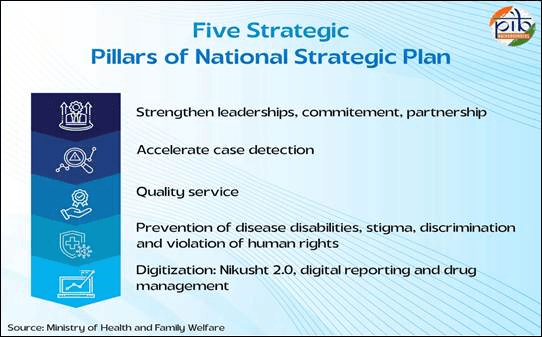
  • Nikusth 2.0 enables real-time patient tracking, district dashboards, outcome analytics.
  • Integration with Ayushman Bharat, RBSK, RKSK widens screening across age groups.
  • PM-JANMAN tags PVTG households to guarantee leprosy care access.

Epidemiology Trends

  • Child proportion halved in a decade, indicating reduced transmission.
  • Grade-2 disability down, reflecting earlier diagnosis and treatment adherence.
  • PEP single-dose rifampicin driving 92 % contact coverage.

Global Collaboration

  • WHO supplies MDT, monitors program, funds Modified Leprosy Elimination Campaigns and COMBI behaviour projects.
  • World Bank (1993-2004) financed IEC and community-based rehabilitation.

Key Data Points

FeatureData-Point
Prevalence 198157.2 per 10,000
Prevalence 20250.57 per 10,000
Overall decline≈99 %
National elimination declared2005 (PR < 1/10,000)
Grade-2 disability 20251.88 per million
Child case share 2014-159.04 %
Child case share 2024-254.68 %
New case detection 2014-159.73 per 100,000
New case detection 2024-257.0 per 100,000
Post-exposure prophylaxis coverage92 % of eligible contacts
NLCP launch1954-55 (Dapsone monotherapy)
NLEP launch1983 (after WHO MDT nod)
National Strategic Plan span2023-2027
NSP targetsTransmission interruption 2027; zero indigenous cases 2030
High-burden districts under watch121 (PR > 1/10,000)
Digital portalNikusth 2.0
AMR surveillance start2023
PVTG inclusion schemePM-JANMAN
Key global donorWHO (free MDT, tech support)
World Bank support years1993-2004 (IEC, community work)
GS-1Editorial

12.Harnessing Talent for Viksit Bharat 2047 (Talent Retention)

skilled professionals

What & Where

Brain Drain/Gain; shift of skilled Indians abroad vs re-attracting them; central to Viksit Bharat 2047 vision

Two-pillar strategy; BHARAT-STAY retains graduates, BHARAT-RETURN eases diaspora comeback via visas, tax breaks, spouse jobs

Innovation Corridors; proposed deep-tech hubs in Bengaluru, Hyderabad, Pune, NCR with labs, startups, quality urban amenities

Quick Facts for MCQs

Challenges

  • Research-gaps; no moon-shot missions, outdated labs limit high-end opportunities
  • Governance; grant bureaucracy, restricted university autonomy, paucity of senior posts repel academics
  • Living-standards; congestion, pollution, visa/tax irritants dissuade returnees

Strategic Reforms

  • Governance-reform; Bharat Talent Alliance under PMO unifies policy, monitors talent metrics
  • Mega-projects; National AI, Semiconductor Self-Reliance, Quantum, Genomics missions launched as talent magnets
  • Incentives; higher R&D tax credits, academia-industry hybrid careers, co-funded PhDs bridge lab-market gap

Skill Schemes

  • Flagships; PMKVY, Skill India, SANKALP, TEJAS, NAPS, DDU-GKY boost vocational capability
  • NSDC; coordinates private partners, Model Skill Loan finances training expenses
  • Gap; schemes focus on basic skilling, not high-end research retention, hence need BHARAT-STAY/RETURN layer

Key Data Points

FeatureData-Point
Nobel Economics 2025 insightGrowth driven by innovation & tech renewal
India Global Innovation Index 2025 rank38
National goal yearViksit Bharat 2047
Proposed apex bodyBharat Talent Alliance (statutory)
Incentive bundlesBHARAT-STAY & BHARAT-RETURN
Target sunrise sectorsAI, semiconductors, quantum, biotechnology

Related UPSC Prelims PYQs

CDS_GK, GS1 2025PYQ 1

भारत में नवाचार तथा अनुसंधान और विकास के बारे में निम्नलिखित कथनों पर विचार कीजिए :

CDS_GK, GS1 2017PYQ 2

What is the aim of the programme ‘Unnat Bharat Abhiyan’?

GS-1Misc

13.Global Multidimensional Poverty Index 2025 Report (Poverty Index)

UNDP
Illustration for Global Multidimensional Poverty Index 2025 Report (Poverty Index)

What & Where

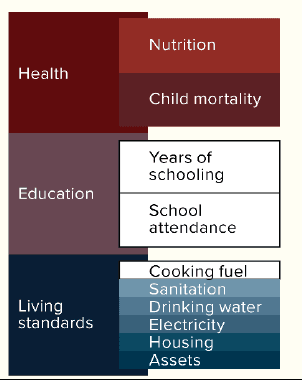
Global Multidimensional Poverty Index (MPI): composite metric of acute poverty across health, education, living-standards dimensions.

Issued jointly by UNDP HDR Office & Oxford OPHI; first unveiled in 2010 Human Development Report.

2025 edition analyses 109 developing nations, guiding SDG-1 strategies worldwide.

Quick Facts for MCQs

Global Findings

  • Prevalence 18.3 percent acutely poor across 109 nations; pandemic slowed earlier gains
  • Distribution two thirds in middle-income countries; Sub-Saharan Africa hosts 49.2 percent
  • Demography children 51 percent; rural 83.5 percent of poor

India Highlights

  • Trend poverty fell to 16.4 percent in 2019-21; 414 million exits since 2005-06
  • Drivers Swachh Bharat PM-Awas Ujjwala Jal Jeevan targeted sanitation housing fuel water
  • Concern persistent child malnutrition and rural deprivation hinder full gains

Climate Linkages

  • Exposure 80 percent global poor and 99 percent Indian poor face droughts floods heatwaves
  • Double-burden climate shocks erode livelihoods and deepen deprivations
  • Need climate-resilient welfare vital for SDG-1 achievement

Policy Prescriptions

  • Integration merge poverty schemes with adaptation green infrastructure disaster insurance
  • Data district MPI dashboards enable precise targeting and monitoring
  • Finance concessional climate funds and global aid support dual crises

Key Data Points

FeatureData-Point
Global MPI launch year2010
Countries covered 2025 edition109
Global multidimensionally poor1.1 billion (18.3%)
Poor in severe category43.6% (501 million)
Poor living in middle-income states740 million ≈ 66%
Sub-Saharan Africa share49.2% of poor
Rural share of poor83.5%
Poor facing ≥1 climate hazard~80%
Children’s share among poor51%
Indians lifted from poverty414 million (2005-21)
Indian poor in climate-risk zones99%

Related UPSC Prelims PYQs

CDS_GK, GS1 2012PYQ 1

The Multi-dimensional Poverty Index developed by Oxford Poverty and Human Development Initiative with UNDP support covers which of the following?

CDS_GK, GS1 2023PYQ 2

According to the National Multi-dimensional Poverty Index (MPI) constructed by the NITI Aayog, a household is considered deprived if

Ready to practice?

Test your knowledge with our UPSC test series.

Start Free Trial