UPSC Current Affairs

13 topicsGS-1: 2GS-2: 3GS-3: 8
0/13 done
GS-3Editorial

1.Rising Educated Unemployment Crisis (Educated Unemployment)

Indian Express

What & Where

Educated unemployment – joblessness among degree-holders despite qualifications, signalling labour-market mismatch in India

Key type – overqualification forcing applicants toward low-skill vacancies such as sanitation and peon posts

Core geography – acute in Bihar, Jharkhand; nationwide IIT/NIT campuses report sharp placement declines

Quick Facts for MCQs

Drivers

  • Skill-mismatch – 33 % graduates report industry-irrelevant education, limited practical exposure
  • Jobless-growth – manufacturing low employment elasticity; services high GDP share yet limited hiring
  • Institutional-disconnect – 12 % job-seekers receive no campus placement support

Impacts

  • Productivity-loss – idle educated workforce curbs innovation and GDP potential
  • Brain-drain – overseas migration dilutes demographic dividend
  • Social-discontent – 14,000 unemployed-youth suicides recorded by NCRB 2023

Schemes & Policies

  • ABRY 2020 – reimburses MSME EPF contributions for new formal hires
  • ELI Scheme – incentivises labour-intensive firms, targets 3.5 crore jobs
  • PM-KVY 2015 – certified skill training for 1.4 crore youth in AI, green sectors

Gender & Region

  • Female-constraints – mobility, safety, cultural bias keep >30 % educated women jobless
  • Urban-crowding – graduates chase service roles; rural skilled positions scarce
  • East-India hotspot – Bihar, Jharkhand unemployment of educated youth exceeds 35 %

Key Data Points

FeatureData-Point
Official unemployment rate4–6 %
Share of unemployed who are graduates/PG66 %
IIT graduates unplaced in 20242 of 5
Haryana sanitation applicants 202446,000 grads/PGs
Rajasthan peon posts vs applicants18 posts : 12,000 pros
IT sector net job loss FY2464,000
Avg fresh-graduate salary₹3–4 lakh per yr
Female graduate unemployment>30 %
Services share GDP vs jobs54 % GDP; <30 % jobs
Educated joblessness Bihar/Jharkhand>35 %

Related UPSC Prelims PYQs

CDS_GK 2021PYQ 1

The mismatch in the regional or occupational pattern of job vacancies and the pattern of worker availability results in
GS-3Economy

2.GIFT City Foreign Currency Settlement (GIFT IFSC Payments)

Business Standard

What & Where

Real-time Foreign Currency Settlement System (FCSS) for inter-bank deals inside GIFT City IFSC

Shifts from multi-leg correspondent banking to 4–5 second local USD settlement

Geography: International Financial Services Centre, GIFT City, Gujarat, India

Quick Facts for MCQs

Legal & Policy

  • Statutory-cover: FCSS treated as payment system under PSS Act ensuring systemic oversight
  • Supervision: IFSCA monitors compliance, transparency, resilience standards within IFSC
  • Risk-mitigation: Local settlement eliminates overseas jurisdictional complications

Tech & Schemes

  • Architecture: API-ready platform supports fintech, digital banks, cross-border payment rails
  • Resilience: Domestic clearing ring-fences liquidity, enables continuous operations even during offshore outages
  • Scalability: Multi-currency engine designed for swift onboarding of additional hard currencies

Economic Angle

  • Cost-saving: Bypass Nostro chains, slashes intermediary fees for resident and non-resident entities
  • Liquidity-boost: Same-day availability of foreign currency widens credit, trade finance options in GIFT City
  • Competitiveness: Aligns Indian IFSC infrastructure with global hubs such as Singapore, Dubai, London

Key Data Points

FeatureData-Point
RegulatorInternational Financial Services Centres Authority (IFSCA)
Legal basisPayment and Settlement Systems Act, 2007
System operatorCCIL IFSC Ltd., subsidiary of CCIL
Initial currencyUS Dollar (USD)
Planned additionsEuro, Yen, Pound Sterling
Legacy settlement lag36–48 hours
FCSS settlement time≈ 4–5 seconds, near real time
Account structureEach IBU holds account with local settlement bank
Launch announced byUnion Finance Minister
Core objectiveReduce settlement risk, costs, bolster India’s global financial positioning
GS-3Economy

3.e-NAM Commodity Expansion Update (e-NAM Expansion)

PIB

What & Where

e-NAM: pan-India electronic portal for agricultural trade, Central-funded, launched April 2016.

Core process: online auction linking APMC mandis via single licence & single-point market fee.

Footprint: 1,389 mandis across 23 States + 4 UTs (Feb 2024).

Quick Facts for MCQs

Objectives & Benefits

  • Unified-market: inter-state trade minus physical movement of buyers.
  • Price-discovery: transparent bidding raises farmgate realisation, cuts post-harvest loss.
  • Consumer impact: steadier supply, moderated prices.

Operational Features

  • Digital payments: direct transfer to farmer bank accounts.
  • Assaying & grading: QR-tagged reports link price to quality.
  • Logistics plug-ins: warehousing, transport, FPO dashboards integrated.

Regulatory Reforms

  • States must amend APMC Acts enabling e-auction, single licence, one-time market fee.
  • Licence valid across entire State/UT, reduces entry barriers for traders.
  • Harmonised product standards notified by DMI ease interstate trade.

Recent Expansion

  • Oct 2025: platform commodity basket rises from 238 to 247.
  • Inclusion aimed at widening buyer choice, boosting volumes, diversifying farmer income.
  • Reinforces target of “one nation, one market” for agriculture.

Related Digital Schemes

  • Digital Agriculture Mission, IDEA, Agri-Stack bolster data backbone.
  • AGMARKNET, Krishi UDAN 2.0 enhance market information & air logistics.
  • AMIF funds mandi infrastructure complementary to e-NAM rollout.

Key Data Points

FeatureData-Point
Implementing agencySmall Farmers Agribusiness Consortium (SFAC)
Parent ministryAgriculture & Farmers’ Welfare
Launch year2016
Funding pattern100 % Central
Latest addition dateOct 2025
New commodities added9
Total tradable commodities247
Integrated mandis1,389
Participating States/UTs23 States + 4 UTs
Registered farmers1.77 crore
Registered traders2.53 lakh
Prerequisite APMC reformse-trading, single state licence, single-point fee
Quality assaying agencyDirectorate of Marketing & Inspection (DMI)

Related UPSC Prelims PYQs

ESE_GS, GS1 2025PYQ 1

Which one of the following is an effort to get to the next stage of creating a pan-India electronic portal, which networks the existing APMC mandis by creating a national market for agricultural commodities?

ESE_GS, GS1 2017PYQ 2

‘राष्ट्रीय कृषि बाजार (National Agricultural Market)’ योजना को क्रियान्वित करने का क्या लाभ है ?

GS-3EconomyQuick Bite

4.NPCI Tech Solutions Subsidiary Launch (Fintech Subsidiary)

Business Standard

What & Where

Fintech: tech-enabled delivery of financial services for higher efficiency, security, inclusion.

Key segments: digital payments, P2P lending, neo-banking, investment apps, InsurTech.

Geography: India focus; Global Fintech Fest held annually in Mumbai, Maharashtra.

Quick Facts for MCQs

Institutional Setup

  • NTSL formed under Companies Act as NPCI’s innovation arm.
  • Complements BHIM, International Payments, and Bharat BillPay subsidiaries.
  • NPCI retains not-for-profit umbrella structure despite multiple for-profit offshoots.

Industry Event

  • Global Fintech Fest provides global platform for innovation, collaboration, transformation.
  • Rapidly evolved into benchmark dialogue forum since pandemic-era debut 2020.
  • Attendees include regulators, start-ups, investors, banks, BigTech.

Fintech Segments

  • Digital payments dominate via UPI apps, mobile wallets, contactless cards.
  • P2P lending portals directly match borrowers with retail investors, bypassing banks.
  • Neo-banks offer branchless, app-only current and savings services through partner banks.

Key Data Points

FeatureData-Point
New NPCI subsidiaryNPCI Tech Solutions Ltd (NTSL)
Subsidiary countFourth under NPCI
Earlier subsidiariesNBSL, NIPL, NBBL
Launch venueGlobal Fintech Fest 2025, Mumbai
Fest inception2020
Fest organisersPCI, NPCI, Fintech Convergence Council
NTSL mandateDrive experimentation & pioneering innovations in fintech
Sector coveredCapital Market, IT & Computers

Related UPSC Prelims PYQs

GS1 2017PYQ 1

निम्नलिखित कथनों पर विचार कीजिए :

GS1 2024PYQ 2

निम्नलिखित कथनों पर विचार कीजिए :

GS-1Misc

5.2025 Nobel Prize in Literature (Nobel Literature 2025)

Indian Express
Illustration for 2025 Nobel Prize in Literature (Nobel Literature 2025)

What & Where

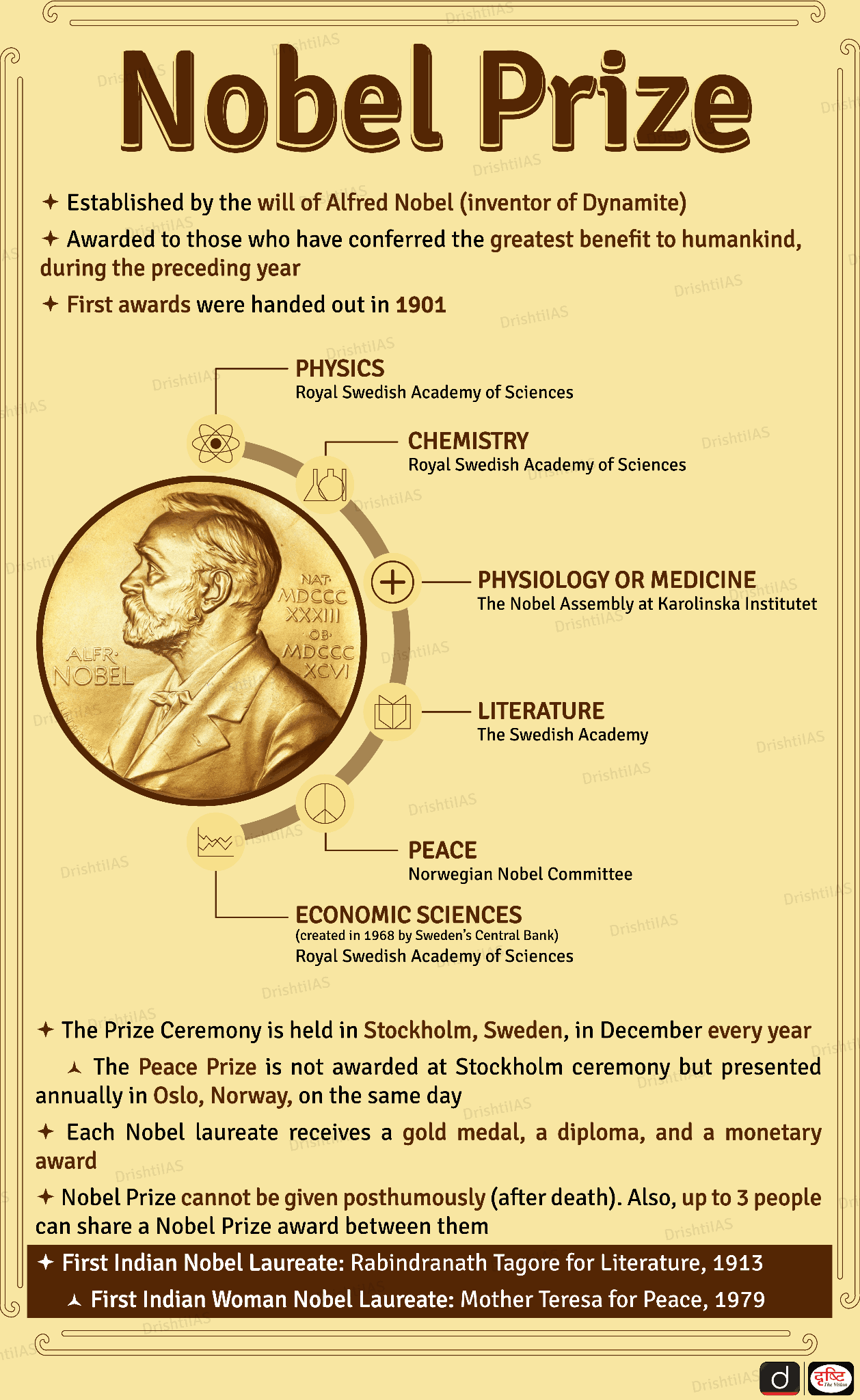
Nobel Prize in Literature – annual Swedish Academy award honouring outstanding world writing

Announcement & ceremony – Stockholm, Sweden; medal, diploma, 11 mn SEK purse

2025 laureate – Hungarian novelist-screenwriter László Krasznahorkai

Quick Facts for MCQs

Author Profile

  • Genre Postmodern dystopian melancholic fiction with philosophical depth
  • Themes Apocalyptic visions, human delusion, moral collapse, beauty amid despair
  • Form Frequent single-sentence chapters demanding close reader engagement

Major Works

  • Satantango Debut novel later filmed by Béla Tarr
  • The Melancholy of Resistance Described by 2015 Booker judges as prophetic Western satire
  • Seiobo There Below, The Last Wolf, The World Goes On extend global reputation

Indian Angle

  • Amitav Ghosh Jnanpith laureate figured on 2025 Nobel prediction lists
  • Tagore Only Indian Literature Nobel, honoured 1913 for English self-translation of Bengali verse

Previous Recognition

  • Man Booker International 2015 won; 2018 shortlist for The World Goes On
  • Global translators George Szirtes & Ottilie Mulzet pivotal in Anglophone reach

Key Data Points

FeatureData-Point
Award year2025
LaureateLászló Krasznahorkai
NationalityHungary
Swedish selectorSwedish Academy
Citation phrase“compelling and visionary oeuvre … reaffirms the power of art”
Narrative styleLabyrinthine prose; long single-sentence paragraphs
Flagship novelsSatantango; The Melancholy of Resistance; War & War
Major prior awardMan Booker International 2015
Indian contender 2025Amitav Ghosh
Only Indian Literature NobelRabindranath Tagore 1913

Related UPSC Prelims PYQs

CDS_GK 2023PYQ 1

Georgi Gospodinov Georgiev won the International Booker Prize, 2023 for the darkly comic novel by the name:

GS-1Mapping

6.Atacama Desert Rare Flower Bloom (South America Desert)

IT

What & Where

Atacama Desert – driest non-polar desert; Mars-analog terrain with extreme aridity and mineral-rich soils.

Sited in northern Chile, 600–700 mi long, wedged between Pacific Ocean and Andes; Peru borders north.

2024 winter rains triggered “Desierto Florido” mass bloom of Cistanthe longiscapa across normally barren landscape.

Quick Facts for MCQs

Physical Geography

  • Landforms: salt flats, volcanic cones, sand dunes, alluvial plains.
  • Loa River basin incises northern sector.

Climatic Anomaly

  • Unusual winter rainfall broke typical hyper-aridity, enabling mass germination.
  • Fog plus upwelling currents add scant but crucial moisture.

Floral Adaptations

  • Drought-tolerant metabolism alters photosynthesis and respiration under stress.
  • Seeds persist underground awaiting ≥ rare rainfall pulse.

Ecological Role

  • Bloom supports insects, small fauna, aids soil regeneration during brief weeks.
  • Temporary biomass spike boosts desert biodiversity reservoir.

Observation & Research

  • Satellite imagery captured floral carpet, assisting climate-impact studies.
  • Atacama often used as testbed for Mars exploration instruments.

Key Data Points

FeatureData-Point
Average annual rainfall≈ 2 mm; some zones zero for decades
Elevation rangeSea level to > 4,000 m (Atacama Plateau)
Major cold currentHumboldt Current moderates temperature
Typical summer temp~18–19 °C
Dominant bloom speciesCistanthe longiscapa
Local flower namePata de guanaco
Bloom phenomenonDesierto Florido (Flowering Desert)
Flower colourFuchsia/pink/purple visible from space
Seed strategyYears-long dormancy until moisture arrives
Fog termCamanchaca—Pacific upwelling fog supplying moisture

Related UPSC Prelims PYQs

GEO_GS 2022PYQ 1

Which one of the following deserts is not located around 20°-30° latitude North or South of the Equator?

GS-3Environment

7.India National Red List Roadmap (National Red List)

DD News

What & Where

India’s National Red List Roadmap: integrated, science-based system to assess & classify threatened Indian flora + fauna.

Vision 2025-2030: strategic blueprint for biodiversity database, species monitoring & Red Data Books publication by 2030.

Launched at IUCN World Conservation Congress 2025, Abu Dhabi; led by ZSI & BSI with IUCN-India and Centre for Species Survival.

Quick Facts for MCQs

Legal & Policy

  • CBD-linked: fulfils KMGBF targets on species conservation & data transparency.
  • Wildlife Action Plans: baseline data to inform future national plans & legislation.
  • Equity clause: framework mandates inclusion of indigenous communities in decision processes.

Tech & Schemes

  • Centralised Database: cloud-based repository for real-time species data and threat categories.
  • GIS Mapping: spatial tracking of populations to refine conservation prioritisation.
  • Coordination Network: links scientific, academic, local institutions for seamless data flow.

Social Dimension

  • Traditional Knowledge: community-driven inputs recognised as valid conservation evidence.
  • Inclusivity Focus: equitable participation of local & tribal stakeholders in red-listing.
  • Capacity Building: taxonomy training and expert collaboration to strengthen grassroots identification skills.

Key Data Points

FeatureData-Point
Launch venue & yearIUCN World Conservation Congress 2025, Abu Dhabi
Nodal scientific bodiesZoological Survey of India & Botanical Survey of India
Coverage breadthTerrestrial, marine, multi-taxa flora and fauna
Target output yearNational Red Data Books ready by 2030
Global alignmentConvention on Biological Diversity & Kunming–Montreal GBF
Methodology baseIUCN globally accepted threat-assessment criteria
Community inputTraditional knowledge integrated into documentation
Digital toolsCentralised database, GIS mapping for species monitoring

Related UPSC Prelims PYQs

GS1, NDA_GAT 2022PYQ 1

The International Union for Conservation of Nature (IUCN) has recently categorized the Red Sanders (Red Sandalwood) into

GS1, NDA_GAT 2011PYQ 2

The "Red Data Books" published by the International Union for Conservation of Nature and Natural Resources (IUCN) contain lists of

GS-3EnvironmentQuick Bite

8.Breathable Art Air Purification Installation (Air-Purifying Installation)

PIB

What & Where

Breathable Art: living structure of air-purifying plants; unveiled at Indira Paryavaran Bhawan, New Delhi.

Linked to ‘Breath of Change – Clean Air, Blue Skies’ campaign under EIACP arm of MoEFCC’s EEARSD Scheme.

Acts as public, QR-enabled hub showcasing nature-based solutions for urban air-quality improvement.

Quick Facts for MCQs

Tech & Schemes

  • EEARSD funds eco-clubs, youth clubs for hands-on, non-formal environmental education.
  • EIACP focuses on information dissemination, capacity building, green livelihood creation.
  • Breathable Art aligns with national push for nature-based, low-cost air-pollution mitigation.

Environmental Impact

  • Plants selected scientifically filter benzene, formaldehyde, xylene & CO₂ from ambient air.
  • Installation expands urban green micro-habitats, aiding heat-island mitigation and humidity regulation.

Social Concerns

  • QR-codes democratise environmental science learning for students, residents, tourists.
  • Visual, tactile format enhances empathy and behavioural change toward pollution control.

Key Data Points

FeatureData-Point
Lead ministryMoEFCC
Scheme categoryCentral Sector
Parent schemeEnvironment Education, Awareness, Research & Skill Development (EEARSD)
Implementing sub-programmeEnvironmental Information, Awareness, Capacity Building & Livelihood Programme (EIACP)
Flagship campaignBreath of Change – Clean Air, Blue Skies
Key plant speciesAreca palm, Snake plant, Peace lily
Learning aidQR-code tagged content
Primary objectiveRaise awareness on air quality & sustainable living
GS-3Editorial

9.AI for Inclusive Societal Development (AI Inclusive Development)

PIB

What & Where

Mission Digital ShramSetu: proposed NITI Aayog national mission to digitise & formalise India’s informal workforce

Covers ~490 mn informal workers spanning agriculture, construction, retail, healthcare and more

Leverages AI, blockchain, robotics, immersive learning to deliver identity, skilling, wages, social security

Quick Facts for MCQs

Mission Design

  • Apex_Governing_Body: Prime Minister–chaired board coordinates policy, budget, oversight
  • Sectoral_Task_Forces: agriculture, healthcare, retail, construction craft solutions, implementation
  • State_Units: ensure local adaptation and outreach

Technology Tools

  • Blockchain_Smart_Contracts: automate wage payments, cut disputes
  • Federated_Credentials: real-time skill verification, job portability via DLT
  • AR/AI_Training: multilingual adaptive modules, even offline

Challenges

  • Financial_Fragility: irregular wages, costly informal credit
  • Market_Access: lack digital presence causes underemployment, migration exploitation
  • Low_Digital_Literacy: scarce adaptive skilling keeps productivity low

Existing Schemes

  • eShram_Portal: national database for informal worker identity
  • PM-SYM: voluntary pension scheme for unorganised workers
  • PMJJBY: life insurance cover for low-income citizens

Key Data Points

FeatureData-Point
Informal labour share85 % of labour force
Informal worker count~490 million
GDP contribution~45 % of GDP
Avg productivityUSD 5/hour
National avg productivityUSD 11/hour
Avg annual incomeUSD 1,800 (2025)
Women in informal trade15 % participation
Social security coverage48 % workers
Formalisation target 204773.2 % enterprises
Apex chair ShramSetuPrime Minister

Related UPSC Prelims PYQs

GS1, NDA_GAT 2022PYQ 1

भारत सरकार की प्रमुख टेलीमेडिसिन सेवा ‘ई-संजीवनी’ को हाल ही में किसके साथ एकीकृत किया गया?

GS1, NDA_GAT 2019PYQ 2

अटल नवाचार (Innovation) मिशन किसके अधीन स्थापित किया गया है?

GS-2Editorial

10.India Afghanistan Engagement under Taliban (India-Afghanistan Ties)

YT
Illustration for India Afghanistan Engagement under Taliban (India-Afghanistan Ties)

What & Where

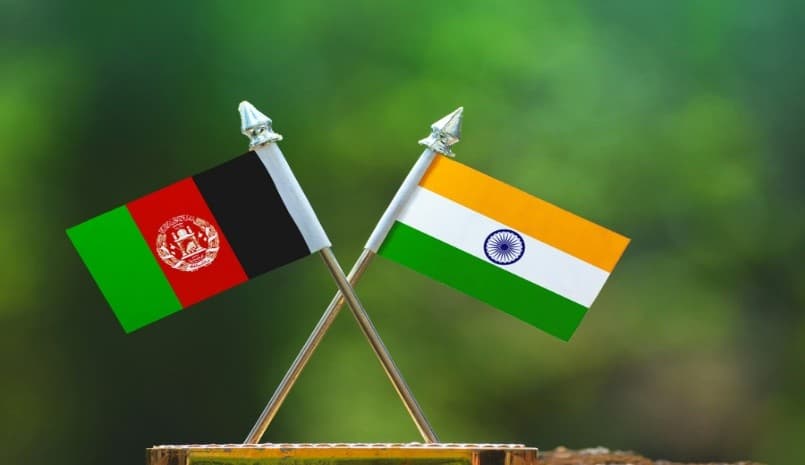
India–Afghanistan engagement: first Taliban ministerial visit to India since Aug 2021 regime change.

Afghanistan is India’s overland gateway to Central Asia via Chabahar Port–INSTC corridors.

Relationship currently de facto; channelled through aid shipments and multilateral regional dialogues.

Quick Facts for MCQs

Historical Linkages

  • Silk-Route era Kabul–Gandhara–Taxila corridor enabled Buddhist, Indo-Greek exchanges.
  • Post-1947 political warmth: Kabul alone opposed Pakistan’s UN membership.
  • Soft-power pillars: scholarships, hospitals, Bollywood, cricket training.

Strategic Drivers

  • Connectivity; Afghan stability vital for Chabahar and INSTC viability.
  • Counterweight to Pakistan’s “strategic depth” and China’s BRI western push.
  • Direct intelligence channel against LeT/JeM/ISKP plots.

Policy Dilemmas

  • Non-recognition versus pragmatic talks; no Taliban flag in meetings.
  • US sanctions on Iran cloud Chabahar usage.
  • Human-rights concerns—women’s education, inclusivity—remain red-line.

Regional Implications

  • Dialogue reduces Islamabad’s leverage in Kabul.
  • Opens possibility of mining, transit trade through Hindu Kush to Central Asia.
  • Reinforces India’s image as autonomous, balancing actor among US, Russia, Iran, China.

Way Forward

  • Dual-track: unconditional humanitarian aid plus conditional diplomatic interface.
  • Institutionalise India–Afghanistan security contact group for real-time intel.
  • Seek multilateral waiver to safeguard Chabahar connectivity projects.

Key Data Points

FeatureData-Point
Taliban FM Amir Khan Muttaqi visit length6 days
India’s reconstruction spend (2001-21)> US $3 billion
Humanitarian wheat sent after 202150,000 tonnes
Key Indian-built assetsSalma Dam, Afghan Parliament, Zaranj–Delaram Highway
Country opposing Pakistan’s UN entry, 1947Afghanistan
Estimated Afghan mineral wealthUS $1–3 trillion
Active terror outfits of concernLeT, JeM, ISKP

Related UPSC Prelims PYQs

GS1 2017PYQ 1

भारत द्वारा चाबहार बंदरगाह विकसित करने का क्या महत्त्व है ?

GS-3Security

11.Saksham Counter-Drone Grid Network (Counter-Drone System)

New Indian Express
Illustration for Saksham Counter-Drone Grid Network (Counter-Drone System)

What & Where

Indigenous, AI-driven C2 system for real-time detection, tracking, identification, neutralisation of hostile drones/UAS.

Deployed across Indian Army Tactical Battlefield Space; controls ground and low-altitude airspace up to 3,000 m.

Modular plug-and-play grid named Saksham (Situational Awareness for Kinetic Soft and Hard Kill Assets Management).

Quick Facts for MCQs

Technology

  • AI-fusion engine merges multi-sensor inputs onto GIS digital grid.
  • Modular design permits plug-and-play jammers, lasers, EMP or future sensors.
  • Unified dashboard displays combined air-ground threats for commanders.

Security Dimension

  • System counters drone reconnaissance, weapon drops, low-altitude incursions in hybrid warfare.
  • Instantaneous soft/hard kill decisions minimize engagement latency.
  • Layered defence created with Akashteer enhances theatre air security.

Institutional Setup

  • Army Corps of Air Defence co-developed with BEL, supporting Atmanirbhar Bharat.
  • Induction via FTP ensures rapid deployment across field formations.
  • Encrypted ADN backbone safeguards data sharing among formations.

Key Data Points

FeatureData-Point
DeveloperBEL Ghaziabad + Indian Army Corps of Air Defence
Induction routeFast Track Procurement (FTP)
Coverage altitudeUp to 3,000 m (≈10,000 ft)
Operating networkSecure Army Data Network (ADN)
IntegrationLinked to Akashteer automated air-defence system
Counter measuresSoft kill (jamming/spoofing) + Hard kill (kinetic)
Threat classificationAI/ML-based friendly/neutral/hostile tagging
Core battlefield zoneAir Littoral within Tactical Battlefield Space

Related UPSC Prelims PYQs

CDS_GK, ESE_GS 2024PYQ 1

Which one of the following is an ‘end-to-end secure mobile ecosystem’ developed recently by the Indian Army?

CDS_GK, ESE_GS 2024PYQ 2

Ministry of Defence signed contract with which one of the following organizations for Upgraded Super Rapid Gun Mount (SRGM) and other equipment for around 3000 crores?

GS-2Scheme

12.DRAVYA Digital Ayush Repository Portal (Ayush Digital Portal)

PIB

What & Where

DRAVYA: AI-ready open-access digital repository consolidating classical and modern data on Ayush medicinal substances.

Location nexus: Developed by CCRAS, launched by Ministry of Ayush, Government of India.

Coverage: Phase-1 digitally catalogues 100 flagship medicinal substances for global users.

Quick Facts for MCQs

Tech & Schemes

  • AI-architecture enables analytics, research mapping, future digital health tool plug-ins.
  • QR-based display ensures real-time, standardised drug information in gardens, museums.
  • Ayush Grid linkage allows seamless data flow across other ministry digital initiatives.

Research & Innovation

  • Cross-disciplinary interface integrates Ayurveda with botany, chemistry, pharmacology communities.
  • Evidence-based dataset aimed at accelerating formulation validation and new drug discovery.
  • Continuous expansion planned beyond initial 100 substances via iterative updates.

Accessibility & Standardisation

  • Open-access portal democratises authentic medicinal data for global researchers, students, industry.
  • Multi-dimensional fields standardise terminology across classical texts and modern science.
  • Verified entries enhance safety compliance and reduce ambiguity in traditional medicine use.

Key Data Points

FeatureData-Point
Portal acronymDigitised Retrieval Application for Versatile Yardstick of Ayush
Launching ministryMinistry of Ayush
Developing bodyCentral Council for Research in Ayurvedic Sciences
Phase-1 catalogue size100 medicinal substances
Architecture typeAI-ready digital knowledge repository
Access modelDynamic, open-access, searchable
Key data domainsPharmacotherapeutics, botany, chemistry, pharmacy, pharmacology, safety
Tech add-onQR code integration for gardens & repositories
Interoperability linkConnected with Ayush Grid
Core objectiveEvidence-based research & innovation in Ayush
GS-2SchemeQuick Bite

13.Viksit Bharat Buildathon Student Innovation (Student Innovation Initiative)

PIB
Illustration for Viksit Bharat Buildathon Student Innovation (Student Innovation Initiative)

What & Where

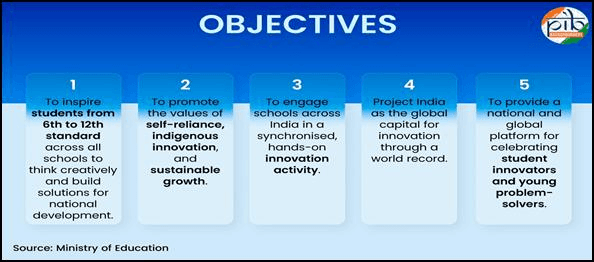
Initiative: Viksit Bharat Buildathon 2025—nationwide innovation contest for students of Classes 6-12

Organisers: Ministry of Education + Atal Innovation Mission (NITI Aayog), India

Scope: Implements NEP 2020 vision, nurturing prototypes for a self-reliant India

Quick Facts for MCQs

Tech & Schemes

  • Platform: uses Atal Tinkering Labs network for ideation, prototyping, mentorship
  • Alignment: mirrors NEP-2020 experiential learning and entrepreneurship thrust
  • Reward: district, state, national prize ladder accelerates solution scalability

Social Equity

  • Inclusion: targets Aspirational Districts, tribal, remote schools through focused outreach
  • Accessibility: online registration and mentoring narrow urban-rural participation gap
  • Diversity: ministry advisory seeks gender-balanced, multilingual student teams

Economic Vision

  • Themes: Atmanirbhar Bharat, Swadeshi, Vocal for Local, Samriddh Bharat orient innovations to domestic value chains
  • Outcome: student prototypes aimed at MSME strengthening and local manufacturing growth
  • Workforce: builds future innovators for India’s $5-trillion economy aspiration

Key Data Points

FeatureData-Point
Launch year2025
Lead ministryMinistry of Education
CollaboratorAtal Innovation Mission, NITI Aayog
Target classes6 – 12
Award poolRs 1 crore
Core themes4: Atmanirbhar Bharat, Swadeshi, Vocal for Local, Samriddh Bharat
Inclusion focusAspirational Districts, Tribal & Remote Areas
Policy linkageNational Education Policy 2020

Related UPSC Prelims PYQs

CDS_GK, GS1 2025PYQ 1

“Million Minds Augmenting National Aspirations and Knowledge” (MANAK), a scheme under the flagship programme, Innovation in Science Pursuit for Inspired Research (INSPIRE), caters to:

CDS_GK, GS1 2019PYQ 2

अटल नवाचार (Innovation) मिशन किसके अधीन स्थापित किया गया है?

Ready to practice?

Test your knowledge with our UPSC test series.

Start Free Trial