UPSC Current Affairs

14 topicsGS-1: 3GS-2: 7GS-3: 4
0/14 done
GS-2Polity

1.National Demographic Mission Launch (Demographic Policy)

The Hindu

What & Where

National Demographic Mission; monitors fertility, mortality, migration, population distribution across India

High-powered commission; integrates border security with socio-economic planning

Focus areas: border States, ageing hotspots, high-fertility belts, major migrant corridors

Quick Facts for MCQs

Security Dimension

  • Surveillance: satellite mapping plus real-time analytics to identify infiltration corridors
  • Border planning: demographic data to redeploy security forces & welfare schemes
  • Sensitisation: avoid communal polarisation while discussing population change

Human Capability

  • Education: align school, skilling seats with regional youth bulges
  • Health: geriatric care expansion in ageing districts; preventive focus where fertility falling
  • Labour: migrate-friendly skill registries to harness internal mobility

Data & Tech

  • Integration: unify Census, NFHS, NPR into single interoperable dashboard
  • Timeliness: near real-time updates replace 10-year census lag
  • Accuracy: GIS tagging of households for precise service delivery

Governance Challenges

  • Overlap: Home, Health, Labour, Rural ministries require clear mandates
  • Rights: balance migrant constitutional freedoms with security vetting
  • Finance: sustainable pension & healthcare funds for rising elderly share

Key Data Points

FeatureData-Point
AnnouncementIndependence Day speech, 15 Aug 2025
AnnouncerPrime Minister of India
Core AimCurb illegal infiltration & manage demographic shifts
Lead BodyHigh-powered National Demographic Commission
Key ToolsData analytics, satellite mapping, census digitisation
Priority SectorsEducation, health, skill-building, ageing, mobility
Data SourcesCensus, NFHS, NPR, digital platforms
Proposed Think-tankNational Institute for Demographic Research & Policy
Policy Add-onNational Migration Policy (proposed)
Security FocusBorder population profiling & resource allocation
GS-2Polity

2.Two Decades of RTI Act (Right to Information)

Economic Times
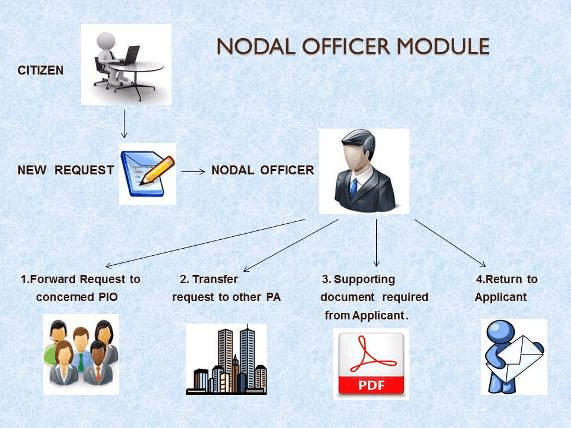
Illustration for Two Decades of RTI Act (Right to Information)

What & Where

Definition: 2005 Indian law granting citizens access to information held by public authorities

Mechanism: File RTI to Public Information Officer; two-stage appeal before State or Central Information Commissions

Coverage: Central, State, local bodies nationwide; certain security agencies placed in Second Schedule

Quick Facts for MCQs

Institutional Gaps

  • Vacancy: Six ICs defunct 2023-24; Jharkhand and Himachal still idle
  • Delay: Appeals pendency tops one year; Telangana backlog touches 29 years
  • Leadership: CIC, Chhattisgarh, Andhra Pradesh running without Chief Commissioner

Legislative Amendments

  • Amendment2019: Centre now fixes IC salary and tenure curbing independence
  • DPDP2023: Section8(1) revised; all personal data exempt, including officials
  • OSA1923: National security cited frequently to deny requested information

Suggested Reforms

  • Strengthen: Transparent, time-bound IC appointments; performance benchmarks; adequate staffing
  • Technology: AI chatbots, blockchain, DigiLocker links, real-time tracking for applications
  • Protection: Activate Whistleblower Act; district helplines, legal aid, fast-track courts for activist safety

Key Data Points

FeatureData-Point
Enactment year2005
First RTI filed byShahid Raza Burney, Pune
Override clauseSection 22
Public-interest testSection 8(2)
Original IC tenure5 years / age 65
Amendment altering tenure2019
Commissions defunct 2023-24Six
Longest estimated wait29 yrs 2 m (Telangana)
DPDP Act year2023

Related UPSC Prelims PYQs

CAPF_GAI 2023PYQ 1

सूचना का अधिकार अधिनियम, 2005 के बारे में निम्नलिखित में से कौन-सा/कौन-से कथन सही है/हैं ?

CAPF_GAI 2024PYQ 2

Which of the following statements is/are correct?

GS-1Infrastructure

3.Sawalkote Hydroelectric Project Clearance (Hydroelectric Project)

DH
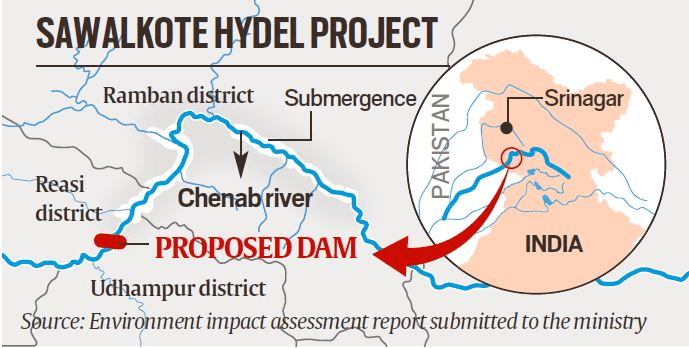
Illustration for Sawalkote Hydroelectric Project Clearance (Hydroelectric Project)

What & Where

Run-of-the-river hydro project on west-flowing Chenab, Indus basin.

Site: Ramban district, J&K; 1,159 ha mix of riverine & forest land.

Developer: NHPC; among India’s largest Indus-basin hydels.

Quick Facts for MCQs

Historical Timeline

  • Proposal 1984; design iterations continued for decades.
  • First nod 2017 by MoEF; NHPC takeover 2021.
  • Fresh clearance 2025 post-treaty suspension accelerates construction.

Financials

  • Revision raises outlay to ₹31,380 crore from ₹22,000 crore.
  • Two-stage configuration concentrates 1,856 MW capacity for cost efficiency.

Strategic & Policy

  • Clearance fast-tracked to maximise western-river utilisation after treaty halt.
  • Project enhances grid stability and strategic presence in border UT.

Environmental Footprint

  • Land diversion includes significant forest patches within 1,159 ha envelope.
  • Run-of-river design limits submergence yet forms sizable 530 Mm³ reservoir.

Key Data Points

FeatureData-Point
Main riverChenab
UT/DistrictJ&K / Ramban
Installed capacity1,856 MW (Stage I 1,406 MW; Stage II 450 MW)
Dam type & heightConcrete gravity, 192.5 m
Reservoir storage530 million m³
Annual output≈8,000 MU
Land required1,159 ha
Implementing agencyNHPC Ltd
First proposal year1984
Initial env. clearance2017 (under JKPDC)
NHPC operation span2021–2061
Fresh EAC clearance2025
Project cost (revised)₹31,380 crore
Treaty backdropIndus Waters Treaty suspended Apr 2025

Related UPSC Prelims PYQs

CDS_GK 2025PYQ 1

Salal Power Project is situated on which one among the following rivers?

CDS_GK 2021PYQ 2

The Luhri Hydro-Electric Power Project is being constructed on the river

GS-3Environment

4.Green Hydrogen Port Hubs (Green Hydrogen)

Economic Times
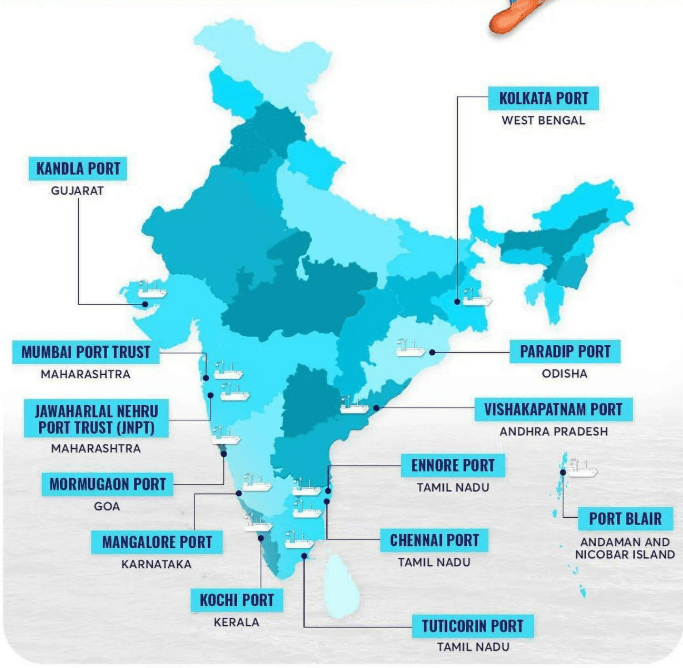
Illustration for Green Hydrogen Port Hubs (Green Hydrogen)

What & Where

Green Hydrogen Hub = region‐specific cluster integrating production, storage, transport & use of green H₂/derivatives (ammonia, methanol).

Implemented under National Green Hydrogen Mission, steered by MNRE via Hydrogen Valley Innovation Clusters scheme.

First hubs: Deendayal Port (Gujarat, west), V.O. Chidambaranar Port (Tamil Nadu, south), Paradip Port (Odisha, east).

Quick Facts for MCQs

Cluster Model

  • Cluster-based “hydrogen valleys” co-locate renewable power, industry, logistics.
  • Design aimed at efficiency, scale economies, cost reduction.
  • Region-specific approach avoids long-distance H₂ transport losses.

Infrastructure & Tech

  • Integrated pipelines, storage tanks, bunkering & port facilities form seamless supply chain.
  • Encourages PPPs, R&D pilots to raise production efficiency.
  • Focus on green derivatives (ammonia, methanol) for easier handling/export.

Export Strategy

  • Coastal hubs planned as export gateways for green H₂/ammonia to global markets.
  • Positions India as potential leader in clean fuel exports.
  • Deendayal & Paradip emphasised for export-linked value chains.

Key Data Points

FeatureData-Point
Recognising ministryMNRE
Mission umbrellaNGHM
Supporting schemeHVIC
No. of ports named3
West-coast hubDeendayal Port Authority, Gujarat
South-coast hubV.O. Chidambaranar Port Authority, Tamil Nadu
East-coast hubParadip Port Authority, Odisha
Core objectiveSelf-sustaining green H₂ ecosystem & emissions cut
Key hard-to-abate sectorsSteel, cement, shipping

Related UPSC Prelims PYQs

CAPF_GAI, ESE_GS 2025PYQ 1

Which of the statements given below is/are correct?

CAPF_GAI, ESE_GS 2022PYQ 2

US-based Ohmium International has started India's first green hydrogen electrolyzer manufacturing unit at

GS-3EnvironmentQuick Bite

5.SC Halts Aravalli Safari Project (Aravalli Range)

Indian Express

What & Where

Aravalli Jungle Safari Project: proposed world’s largest safari near Gurugram–Nuh, Haryana; announced 2022, now SC-stayed.

Aravalli Range: 800 km ancient fold mountain chain from Gujarat→Rajasthan→Haryana→Delhi; highest point Guru Peak (1 722 m).

Region forms Delhi-NCR’s “green lung”, intercepts Thar desert dust and hosts headwaters of Banas, Sahibi, Luni.

Quick Facts for MCQs

Legal & Policy

  • Supreme Court invoked environmental sensitivity to pause state safari project.
  • Halt underscores judicial oversight over large eco-tourism ventures in ecologically fragile zones.

Environmental Impact

  • Safari threatens forest cover crucial for dust-blocking, groundwater recharge, wildlife corridors.
  • NCR air-quality dependency on Aravalli green belt cited as core concern.

International Examples

  • Sharjah Safari (UAE) referenced for layout; Gir Sanctuary model for big-cat management practices.

Key Data Points

FeatureData-Point
Project statusTemporarily halted by Supreme Court (Oct 2025)
Proposed locationGurugram & Nuh districts, Haryana
Announcement year2022
Claimed scale“World’s largest” jungle safari
Design modelsSharjah Safari (UAE), Gir Sanctuary (Gujarat)
Planned zonesBig-cat, bird park, herpetarium, underwater world, eco-trails
Aravalli length~800 km
Highest peakGuru Peak / Guru Shikhar, Mount Abu (1 722 m)
Main sub-rangesSambhar-Sirohi & Sambhar-Khetri
Key rivers originatingBanas, Sahibi (Yamuna trib.), Luni (to Rann of Kutch)
GeologyPredominantly quartzite, sand; rich in minerals
Ecosystem roleBarrier to western desert; green lung for NCR

Related UPSC Prelims PYQs

GS1, NDA_GAT 2017PYQ 1

Recently there was a proposal to translocate some of the lions from their natural habitat in Gujarat to which one of the following sites?

GS1, NDA_GAT 2022PYQ 2

हाल ही के एक निर्णय में, भारत के उच्चतम न्यायालय द्वारा दिए गए निर्देश के अनुसार, देश के सभी संरक्षित वन, राष्ट्रीय उद्यान एवं वन्यजीव अभयारण्यों में कम-से-कम कितना अनिवार्य पारिस्थितिक संवेदनशील क्षेत्र (इको-सेंसिटिव जोन – ESZ) होगा?

GS-3S&T

6.Single-Qubit Quantum Randomness (Quantum Computing)

The Hindu

What & Where

Certified randomness technique: quantum-based random-number generation using a single qubit and Leggett–Garg Inequality tests

Demonstrated on IBM cloud-hosted superconducting quantum processor by Raman Research Institute (RRI), Bengaluru

Geographic locus: Bengaluru (RRI) with remote access to IBM Quantum, USA

Quick Facts for MCQs

Tech & Schemes

  • Single-qubit, shallow-circuit design allows execution on publicly accessible cloud hardware
  • Device-independent protocol certifies randomness irrespective of internal processor details
  • Scalable blueprint: can benchmark larger qubit arrays or embed within live cryptosystems

Security Dimension

  • Generates tamper-proof random bits essential for encryption keys and secure communications
  • Classical spoofing impossible; randomness rooted in quantum indeterminacy verified by LGI violation
  • Supports national cyber-security initiatives needing verifiable entropy sources

Foundational Physics

  • First Indian demonstration of LGI violation on a commercial quantum computer
  • Confirms quantum coherence over temporal correlations, reinforcing non-classical predictions
  • Bridges laboratory quantum foundations research with applied quantum information tasks

Key Data Points

FeatureData-Point
Core resource1 physical qubit
Inequality testedLeggett–Garg (temporal Bell analogue)
Measurement instances3 different times in one circuit
Certification conditionLGI violation + no-signalling-in-time
Error controlReadout correction & other error-mitigation
Hardware classNoisy Intermediate-Scale Quantum (NISQ)
Lead institutionRaman Research Institute, Bengaluru
Industry collaboratorIBM Quantum cloud
GS-3S&T

7.India-UK 6G Innovation Centre (Telecom Research)

DH

What & Where

Platform: India–UK Connectivity & Innovation Centre, bilateral hub for next-gen digital connectivity R&D

Processes: Joint work on 6G, AI-driven telecom, non-terrestrial networks, cybersecurity, standards development

Geography: Facilities and testbeds distributed across Indian DoT labs and UK DSIT partner institutions

Quick Facts for MCQs

Tech & Schemes

  • 6G: Research on ultra-low latency, network slicing, AI orchestration
  • AI: Predictive maintenance, dynamic spectrum allocation, intelligent service delivery
  • NTNs: Satellites and HAPS enabling rural last-mile connectivity

Economic Angle

  • Investment: Equal £33 mn injection bolsters bilateral telecom supply chains
  • Market: Opens testing-to-deployment pathway for SMEs in both countries
  • Standards: Early compliance advantage may unlock future exports

Security Dimension

  • Cybersecurity: Focus on secure, interoperable open RAN architectures
  • Standards: Alignment with global bodies mitigates vendor lock-in risks
  • Initiative: Falls under UK-India Technology Security Initiative for trusted networks

Key Data Points

FeatureData-Point
Total investment~£33 million ≈ ₹282 crore
Funding split50 % India ; 50 % UK
Duration4 years (2024-28)
Indian lead agencyDepartment of Telecommunications, Ministry of Communications
UK lead agencyDepartment of Science, Innovation & Technology
Support bodyUK Research & Innovation under UK-India Technology Security Initiative
Core focus areasAI in Telecom, Non-Terrestrial Networks, Telecom Cybersecurity
Flagship goalShape global 6G and AI-enabled telecom ecosystem
Vision linkageAligned with India–UK 2035 Vision
Key outputsJoint testbeds, pilot trials, standards participation

Related UPSC Prelims PYQs

ESE_GS, GEO_GS 2024PYQ 1

Which Union Ministry announced '5G & Beyond Hackathon 2023' aimed at shortlisting India-focused cutting-edge ideas workable beyond products and solutions?

ESE_GS, GEO_GS 2022PYQ 2

The e-AMRIT web portal on electric vehicles, launched at COP26 Summit in Glasgow recently, has been developed by NITI Aayog in collaboration with the Government of

GS-2Misc

8.Nobel Peace Prize 2025 Award (Nobel Prize)

Indian Express
Illustration for Nobel Peace Prize 2025 Award (Nobel Prize)

What & Where

Nobel Peace Prize – annual award for peace, human-rights, democracy work, created under Alfred Nobel’s 1895 will

Conferred by five-member Norwegian Nobel Committee, ceremonied in Oslo, Norway

2025 laureate: María Corina Machado, Venezuelan opposition leader battling authoritarianism

Quick Facts for MCQs

Democratic Struggle

  • Led two-decade campaign demanding free elections, rule of law, civil liberties in Venezuela
  • Mobilised citizens during 2024 rigged polls to protect vote counts, document fraud
  • Rejects violence; champions ballots-over-bullets approach to regime change

Civil Society Tools

  • Súmate monitors elections, trains volunteers, audits voter rolls for transparency
  • Atenea Foundation provides education, rehabilitation for Caracas street children
  • Utilises grassroots networks, digital evidence gathering to counter state propaganda

Human Rights & Global Significance

  • Prize spotlights Latin American fight against authoritarian erosion of institutions
  • Signals international backing for peaceful transition, electoral integrity, civic courage
  • Adds to roster of non-violent democracy activists honoured since Martin Luther King Jr.

Security Dimension

  • Operates under constant surveillance, travel bans, legal harassment by Venezuelan security apparatus
  • Demonstrates civilian resilience against coercive state power, encouraging similar movements globally

Key Data Points

FeatureData-Point
First awarded1901
Founder (will of)Alfred Nobel
Selecting bodyNorwegian Nobel Committee
Ceremony cityOslo, Norway
2025 laureateMaría Corina Machado
NationalityVenezuelan
Nickname“Iron Lady of Venezuela”
Key NGO foundedSúmate, 2002
Early social initiativeAtenea Foundation, 1992
Core methodNon-violent democratic mobilisation

Related UPSC Prelims PYQs

CAPF_GAI, GEO_GS 2024PYQ 1

Which of the following statements about the Nobel Peace Prize for 2023 is/are correct?

CAPF_GAI, GEO_GS 2025PYQ 2

Which/Who among the following has been selected for the Nobel Peace Prize, 2024?

GS-2Scheme

9.Bharat Taxi Cooperative Platform (Ride-Hailing Platform)

PIB
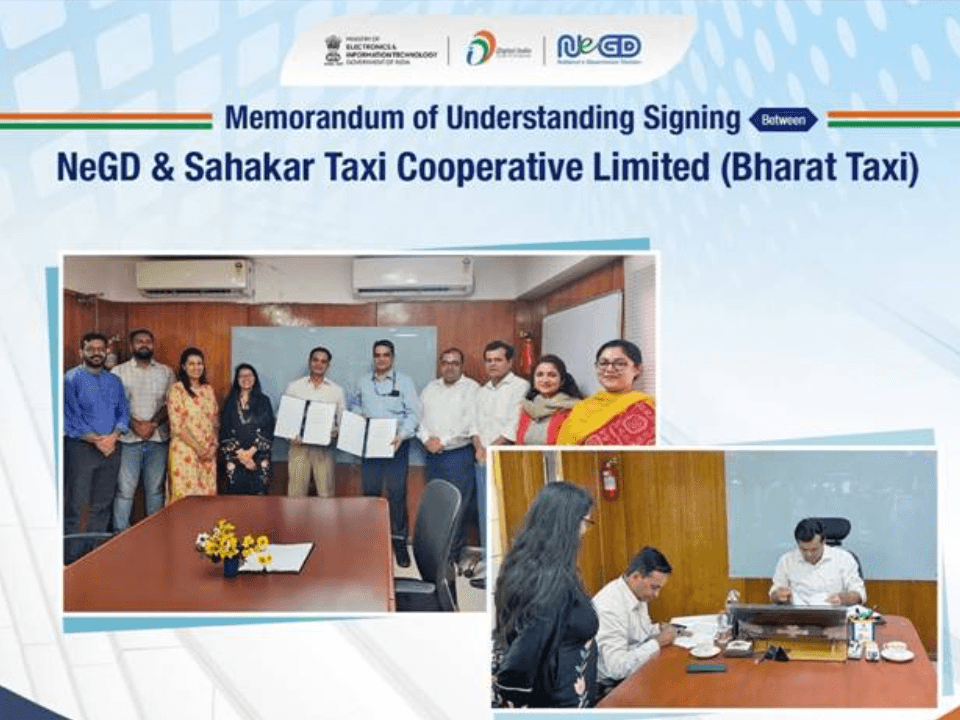
Illustration for Bharat Taxi Cooperative Platform (Ride-Hailing Platform)

What & Where

Bharat Taxi cooperative-driven national ride-hailing platform under Sahakar Taxi Cooperative Ltd

Built by National e-Governance Division, Digital India Corporation, MeitY; coverage pan-India

Roll-out slated December 2025 via DigiLocker, UMANG, API Setu integration

Quick Facts for MCQs

Tech & Schemes

  • Integration uses DigiLocker KYC, UMANG service layer, API Setu interoperability
  • Platform follows Digital India stack with scalable micro-service architecture
  • NeGD provides advisory on technical design, governance, program management

Economic Angle

  • Cooperative ownership returns higher revenue share to driver-members versus commission-heavy aggregators
  • Domestic solution curbs foreign outflow, boosts Atmanirbhar mobility sector
  • NABARD and NDDB may finance vehicle purchase for rural cooperative members

Social Concerns

  • Multilingual interface expands access for non-English urban and rural users
  • Transparent fare algorithm targets surge-pricing grievances
  • Cooperative governance enables participatory rider-driver dispute resolution

Security Dimension

  • Data hosted on Indian servers complying with emerging DPDP Act provisions
  • End-to-end encryption and periodic CERT-In audits mandated
  • Single sign-on via DI-ID lowers credential phishing risk

Key Data Points

FeatureData-Point
Lead institutionNational e-Governance Division (NeGD), MeitY
Operating entitySahakar Taxi Cooperative Ltd
Platform nameBharat Taxi
Promoting agenciesNCDC, IFFCO, AMUL, KRIBHCO, NAFED, NABARD, NDDB, NCEL
Launch timelineNationwide December 2025
Access channelsDigiLocker, UMANG, API Setu
Compliance focusGoI cybersecurity and data-protection norms
UI highlightMultilingual inclusive design
Core aimFair driver income and secure citizen mobility
Vision alignmentDigital India, Atmanirbhar Bharat

Related UPSC Prelims PYQs

ESE_GS, NDA_GAT 2025PYQ 1

Under which one of the following initiatives does the NITI Aayog support interested States to establish a State Institution for Transformation (SIT)?

ESE_GS, NDA_GAT 2026PYQ 2

The Samriddh Gram Phygital Services Pilot Project was recently launched by which organization?

GS-2Scheme

10.SPARK-4.0 Ayurveda Studentship (Ayurveda Research)

DD News

What & Where

Studentship Program for Ayurveda Research Ken (SPARK–4.0); fourth edition of CCRAS flagship studentship scheme

Implemented by Central Council for Research in Ayurvedic Sciences, Ministry of Ayush

Pan-India roll-out in NCISM-affiliated BAMS colleges, cycle 2025–26

Quick Facts for MCQs

Research & Innovation

  • Orientation; nurtures scientific curiosity and modern methodology skills in Ayurveda scholars
  • Bridge; integrates classical Ayurveda concepts with contemporary research designs
  • Pipeline; readies talent for future Ayush innovation and public health integration

Capacity Building

  • Financial-support; ₹50,000 incentivises early research engagement
  • Mentorship; faculty supervision hones proposal, data and analysis competencies
  • Nationwide-reach; strengthens Ayush research ecosystem across diverse regions

Policy & Governance

  • Alignment; advances Ministry of Ayush goal of evidence-based traditional medicine
  • Synergy; complements NCISM undergraduate curriculum reforms
  • Mainstreaming; supports national push to embed Ayush research into healthcare planning

Key Data Points

FeatureData-Point
Edition4.0 (Fourth)
Implementing AgencyCCRAS, Ministry of Ayush
Target StudentsBAMS undergraduates
Total Slots300 students
Stipend₹50,000 (₹25k × 2 months)
DurationTwo months
Academic Year2025–26
Eligibility InstitutionNCISM-recognized colleges
Project TypeFaculty-guided, short-term research
Completion BenefitCertificate issued

Related UPSC Prelims PYQs

CDS_GK 2025PYQ 1

“Million Minds Augmenting National Aspirations and Knowledge” (MANAK), a scheme under the flagship programme, Innovation in Science Pursuit for Inspired Research (INSPIRE), caters to:

GS-2Scheme

11.Dhan-Dhaanya Krishi Yojana (Agriculture Reform)

News on Air

What & Where

Flagship agriculture mission, Pradhan Mantri Dhan-Dhaanya Krishi Yojana (PMDDKY), by Ministry of Agriculture & Farmers’ Welfare

Operates in 100 low-performing districts identified by NITI Aayog across India

Focus: technology-driven, climate-resilient, income-doubling farm transformation (2025-31)

Quick Facts for MCQs

Targets & Outcomes

  • Productivity boost via high-yield seeds, precision irrigation, mechanisation
  • Post-harvest wastage cut 20 % through new warehouses, cold chains
  • Income rise 20–40 % through e-NAM, PMDDKY market apps

Technology & Digital

  • IoT sensors, drones, AI dashboards for real-time farm monitoring
  • Unified digital platform merges 36 schemes, tracks 117 KPIs
  • Precision tools support climate-smart, resource-efficient practices

Infrastructure

  • Investment in irrigation lines, cold storages, processing units, rural roads
  • Direct market linkages developed to FPOs, mandis, export hubs
  • Storage infrastructure reduces transit time, maintains quality

Socio-Economic

  • Priority to women farmers, youth agripreneurs, smallholders, FPOs
  • Concessional credit, skill workshops through KVKs, global exposure trips
  • Allied sectors dairy, fisheries projected to spur village employment

Key Data Points

FeatureData-Point
Launch authorityPrime Minister of India
Launch year2024
Total outlay₹1.44 lakh crore
Annual allocation₹24,000 crore
Mission span6 years (2025-31)
Target districts100
Scheme convergence36 Central schemes
Digital KPIs tracked117
Productivity rise aim20–30 %
Post-harvest loss cap< 5 %
Income targetDouble by 2030
Loan range₹50,000–₹10 lakh
Credit channelsKCC, NABARD
Women Producer Groups10,000 units
Women beneficiaries5 lakh
Rural jobs expected10–15 per village
Overseas trainees500 farmers
Training nationsIsrael, Japan, Netherlands

Related UPSC Prelims PYQs

CAPF_GAI, ESE_GS 2025PYQ 1

Which one among the following schemes focuses on developing modern infrastructure and optimizing supply chain from farm to retail in Indian agriculture sector?

CAPF_GAI, ESE_GS 2025PYQ 2

Which one of the following Yojanas replaces two schemes – National Agricultural Insurance Scheme (NAIS), 1999 as well as the Modified National Agricultural Insurance Scheme (MNAIS), 2010 – by incorporating the best features of all these schemes while removing the previous shortcomings and weaknesses?

GS-2Scheme

12.Paramparagat Krishi Vikas Yojana (Organic Farming)

PIB
Illustration for Paramparagat Krishi Vikas Yojana (Organic Farming)

What & Where

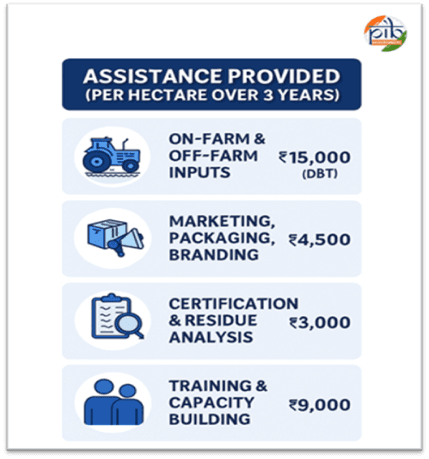
Scheme; Paramparagat Krishi Vikas Yojana (2015) under Soil Health Management–NMSA; promotes chemical-free farming through Participatory Guarantee System.

Process; farmers grouped in 20 ha clusters, receive training, input aid, PGS certification, marketing via Jaivik Kheti portal.

Geography; pan-India; funding 60:40 Centre:States, 90:10 NE/Himalayan, 100 % for UTs.

Quick Facts for MCQs

Funding & Subsidy

  • Allocation; largest share earmarked for compost, biofertilisers, botanical pesticides.
  • Disbursement; phased payments aligned with three-year conversion schedule.
  • Equity; higher Central share eases fiscal load on special category states.

Institutional Design

  • Clustering; 50–100 farmers cooperate, share resources, ensure uniform practices.
  • Capacity; regular field schools, demonstrations on soil fertility, crop diversification.
  • End-to-end; support spans production, processing, branding, logistics.

Certification Models

  • PGS; community verification, low cost, domestic market focus.
  • NPOP; third-party audit, export-compliant, higher fee structure.
  • Distinction; PKVY mandates PGS, not NPOP, to cut compliance cost for smallholders.

Digital & Market Linkage

  • Portal; Jaivik Kheti connects farmers directly with consumers, institutions.
  • Transparency; QR-based traceability for certified lots under PGS-India.
  • Market; scheme encourages local haats, organic melas, e-NAM integration.

Key Data Points

FeatureData-Point
Launch year2015
Nodal ministryAgriculture & Farmers Welfare
Parent missionNational Mission on Sustainable Agriculture
ComponentSoil Health Management
Certification modelParticipatory Guarantee System-India
Alternative certificationThird-Party under NPOP
Standard cluster size20 hectares
Subsidy amount₹31,500 per ha
Subsidy duration3 years
Funding ratio (general)60 : 40 (Centre:State)
Funding ratio NE/Himalayan90 : 10
Funding ratio UTs100 % Central
Landholding cap2 ha per applicant
Primary subsidy headOn-farm & off-farm organic inputs
E-commerce portalJaivik Kheti

Related UPSC Prelims PYQs

CAPF_GAI, GEO_GS 2026PYQ 1

Which one of the following government schemes in India promotes organic farming?

CAPF_GAI, GEO_GS 2025PYQ 2

Which one among the following schemes focuses on developing modern infrastructure and optimizing supply chain from farm to retail in Indian agriculture sector?

GS-1Editorial

13.Digital Exams for Sustainable Education (Digital Education)

The Hindu

What & Where

Digital examinations: computer-based, online or AI-assisted assessment replacing paper answer books

Geography: proposed for India’s 1,100+ higher-education institutions under Digital India & NEP 2020 vision

Key processes: e-question paper delivery, onscreen marking, automated analytics, cloud storage

Quick Facts for MCQs

Environmental Impact

  • Deforestation: current paper load fells “millions of trees” each year
  • Emissions: logistics & storage add significant fuel burn, avoidable via cloud workflows
  • Sustainability: digital shift aligns with responsible consumption and climate action goals

Economic Angle

  • Printing/logistics elimination trims institutional budgets by up to 40 %
  • Warehouse, transport security & paper handling costs reallocated to academics
  • Faster, automated result processing enhances recruiter confidence and institutional reputation

Administrative Efficiency

  • Traceable digital workflows curb malpractice and evaluation errors
  • Instant analytics enable timely feedback, re-evaluation, multilingual interfaces
  • Removal of physical answer-sheet movement eases exam-season congestion

Challenges & Gaps

  • Digital divide: patchy broadband/device access risks rural exclusion
  • Capacity: faculty upskilling in e-pedagogy and cybersecurity essential
  • Policy: UGC, AICTE, states must harmonise standards for uniform digital testing

International Examples

  • Europe & East Asia report cost, inclusivity gains from nationwide e-assessment platforms
  • Scandinavian AI-based marking models cited for objectivity & instant feedback
  • Global precedents affirm feasibility for India’s larger scale

Key Data Points

FeatureData-Point
Students in Indian HE≈ 4.3 crore
Exams conducted yearly≈ 100 crore
Paper per tree≈ 8,000 sheets
Cost saving via digital30–40 % of exam outlay
Trees saved if 50 % online“Lakhs” (hundreds of thousands)
CO₂ avoided (50 % shift)“Thousands of tonnes” annually
SDGs servedSDG 12 & SDG 13
Global adoptersEurope, East Asia; AI use in Scandinavia

Related UPSC Prelims PYQs

GS1 2018PYQ 1

निम्नलिखित में से कौन-सा/से भारत सरकार की ‘Digital India’ योजना का/के उद्देश्य है/हैं?

GS-1Editorial

14.Farmer Skill Development Initiatives (Farmer Training)

PIB
Illustration for Farmer Skill Development Initiatives (Farmer Training)

What & Where

Agricultural skill-development: government’s multipronged training, certification and mechanisation push for farmers & rural youth.

Key platforms: KVKs, ATMA, STRY, SMAM, PMKVY, MIDH, RGM, PMKSY, Soil-Health Cards, FPOs.

Spatial note: Programmes pan-India; irrigation highest in Punjab-Haryana-UP-Telangana, <20 % in Jharkhand & Assam.

Quick Facts for MCQs

Institutional Platforms

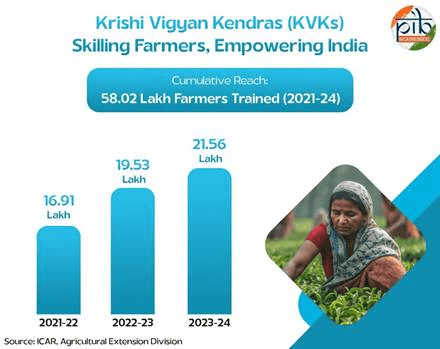
  • KVKs: district labs providing hands-on demos; ICAR anchored.
  • ATMA: state-led, decentralised extension; uses exposure visits & demonstrations.
  • FPOs: cluster collectives linking to e-NAM & GeM, boosting market knowledge.

Youth & Mechanisation

  • STRY: short vocational courses in allied sectors, creating skilled rural manpower.
  • SMAM: custom-hiring, subsidy on equipment, mechanisation trainings surpass 57k farmers.
  • PMKVY 4.0: agriculture job roles embedded into flagship skilling framework.

Sectoral Schemes

  • MIDH: scientific horticulture, nearly 10 lakh farmers trained.
  • RGM: breed improvement via AI training for 38k technicians.
  • PMKSY: processing infrastructure to curb wastage, sanctioning 1,601 projects.

Economic Angle

  • Agricultural income CAGR 5.23 % over decade, mirroring 5 % sectoral GVA growth.
  • Fisheries & livestock lead value growth; oilseeds lag at 1.9 %.
  • Irrigation expansion key driver, with Punjab touching 98 % GCA coverage.

Key Data Points

FeatureData-Point
Farm-dependant population share≈ 67 %
KVK trainees58.02 lakh (2021-24) + 18.56 lakh till Feb 2025
ATMA trainees1.27 crore (2021-25)
STRY youths skilled43,000 (2021-24)
SMAM mechanisation trainees57,139 (2021-25)
Soil Health Cards issued25.17 crore (July 2025)
Soil-card demonstrations6.8 lakh
Registered FPOs>10,000
PMKVY individuals trained1.64 crore since 2015
PMKVY certified1.29 crore
MIDH horticulture trainees9.73 lakh (2014-24)
RGM AI technicians38,736
PMKSY agro-processing projects1,601; benefits 34 lakh farmers
Agri GVA share24.38 % (2014-15) → 30.23 % (2022-23)
Agriculture growth (2016-23)5 % CAGR
Highest sub-sector growthFisheries 13.67 %
Irrigation coverage49.3 % (2015-16) → 55 % (2020-21) GCA
Irrigation intensity144.2 % → 154.5 %

Related UPSC Prelims PYQs

CAPF_GAI, CDS_GK 2025PYQ 1

Which one among the following schemes focuses on developing modern infrastructure and optimizing supply chain from farm to retail in Indian agriculture sector?

CAPF_GAI, CDS_GK 2025PYQ 2

केंद्र सरकार द्वारा 2015-16 में प्रारंभ की गई परंपरागत कृषि विकास योजना (PKVY) का उद्देश्य है:

Ready to practice?

Test your knowledge with our UPSC test series.

Start Free Trial