UPSC Current Affairs

16 topicsGS-1: 4GS-2: 5GS-3: 7
0/16 done
GS-2Polity

1.Online Gaming Regulation Bill Features (Online Gaming)

Indian Express

What & Where

Indian Lok Sabha cleared Promotion & Regulation of Online Gaming Bill 2025.

Applies nationwide to online platforms hosting money-stake games.

Sets up statutory body to regulate, ban gambling-like play and foster e-sports.

Quick Facts for MCQs

Legal & Policy

  • Prohibition clause targets fantasy leagues, card games, gambling-style models irrespective of skill claims.
  • Bill balances Article 19 concerns by allowing non-monetary skill gaming.
  • Enforcement enabled through platform takedown, advertisement ban, user participation penalties.

Social Concerns

  • Addiction linkage highlighted via suicides and mounting personal debts.
  • Fraudulent algorithms, cheating tools listed as consumer protection triggers.
  • Financial-psychological harms form primary legislative rationale.

Regulatory Architecture

  • Statutory authority empowered to licence, issue standards, monitor compliance.
  • Mandate includes clear demarcation between e-sports and gambling-oriented games.
  • Authority envisioned as nodal hub for structured sectoral development.

Industry Impact

  • Fantasy cricket, online rummy, poker operators face outright market exit or pivot.
  • Advertising ecosystem hit; celebrities, influencers barred from paid promotions.
  • E-sports tournament organisers gain formal recognition and potential incentives.

Key Data Points

FeatureData-Point
Bill year2025
House passedLok Sabha
Core banReal-money online games with monetary returns
Encouraged sectorSkill-based e-sports
New body typeStatutory authority
Coverage verbsOffering, facilitation, promotion, advertisement, participation
Consultation heldNo; Govt invoked prohibition exemption
Minister citedPrior multi-year industry engagement
Harms addressedAddiction, suicides, fraud, financial loss
GS-2Polity

2.Machine-Readable Electoral Rolls Debate (Electoral Rolls)

The Hindu

What & Where

Electoral roll: official list of Indian citizens eligible to vote, constituency-wise, overseen by ECI

Machine-readable roll: text-searchable PDF/Excel enabling computerised indexing, duplicate detection, large-scale scrutiny

Geography: applied across all States/UTs, uploaded on EC portals as constituency “part” files

Quick Facts for MCQs

Legal & Policy

  • SupremeCourt 2018 declined mandamus compelling EC to share text rolls
  • EC 2018 directive cites voter privacy, mandates image PDFs only
  • RPA 1950 empowers ECI to set roll preparation format

Tech & Schemes

  • OCR converts image PDFs to text but demands high cost, millions of pages
  • Text PDF/CSV enables instant computer matching, analytics
  • Image PDFs restrict automated verification, require manual checks

Security Dimension

  • DataPrivacy concern: searchable names/addresses may aid profiling, foreign misuse
  • PoliticalManipulation risk: targeted outreach, surveillance possible with machine-readable data
  • EC cites security as core reason to limit text access

Operational Challenges

  • OCR adoption by parties incurs significant expense and time
  • Continuous roll updates complicate maintaining synchronised machine-readable datasets
  • Duplicate detection currently labor-intensive due to non-searchable format

Key Data Points

FeatureData-Point
Preparing authorityElection Commission of India via district officials
Present web formatImage-only PDFs, non-searchable
Supreme Court refusal2018 Kamal Nath v. EC case
EC internal order year2018 circular restricting text uploads
Key opposition demandRelease rolls in text-searchable, machine-readable form

Related UPSC Prelims PYQs

CDS_GK 2021PYQ 1

Which of the following statements regarding the electoral rolls is/are correct?

GS-2Polity

3.Minister Removal Amendment Bill (Minister Disqualification)

LiveMint

What & Where

Constitution (130th Amendment) Bill 2025 seeks to amend Arts 75, 164 & 239AA plus two UT Acts

Introduced in Lok Sabha; now with a Joint Parliamentary Committee

Applies across Union, States, NCT Delhi, all Union Territories including J-K

Quick Facts for MCQs

Legal & Policy

  • Inserts automatic-vacancy clause directly in Arts 75, 164, 239AA via constitutional text
  • Mirrors provisions in Government of UTs Act 1963 & J-K Reorganisation Act 2019

Governance Ethics

  • Aims to safeguard constitutional morality and public trust by eliminating taint in executive posts
  • Statement of Objects cites need to thwart misuse of office during detention

Administrative Mechanism

  • President/Governor/LG act only after statutory 30-day trigger, ensuring no discretionary removal
  • No bar on same individual returning post-acquittal or bail, retaining political flexibility

Key Data Points

FeatureData-Point
Bill number130th Constitution (Amendment) Bill, 2025
Core objectiveKeep ministers under grave criminal custody out of office
Minimum custody period30 consecutive days
Offence thresholdPunishable with ≥ 5 years imprisonment
Offices coveredPM, CMs, Union & State ministers, UT council of ministers
Removal order signed byPresident / Governor / Lieutenant-Governor
Prime Minister’s dutyAdvise President to remove minister on 31st day
Automatic effectOffice vacated if advice not sent by PM
Reappointment allowedYes, after release from custody
Committee stageReferred to Joint Parliamentary Committee

Related UPSC Prelims PYQs

CAPF_GAI, GS1 2025PYQ 1

Identify the correct option that represents the change made to Article 74(1) of the Constitution of India by the 42nd Constitutional Amendment Act, 1976:

CAPF_GAI, GS1 2009PYQ 2

Which one of the following Constitutional Amendments states that the total number of Ministers, including the Prime Minister, in the Council of Ministers shall not exceed fifteen percent of the total number of members of the House of the People ?

GS-3Economy

4.Draft Climate Finance Taxonomy (Climate Finance)

The Hindu

What & Where

Definition – National taxonomy classifying investments as climate-aligned for mitigation, adaptation, transition.

Geography – Applies across India; prepared by Dept. of Economic Affairs, Ministry of Finance.

Nature – “Living document” meant to evolve with domestic priorities and global climate pledges.

Quick Facts for MCQs

Legal & Policy

  • Alignment – Harmonises with domestic laws and emerging global standards, ensuring regulatory coherence.
  • Enforcement – Notified categories to guide green bonds, carbon markets, financial disclosures.

Governance Mechanisms

  • Oversight – Proposed expert committee for taxonomy updates and grievance redressal.
  • Accountability – Dashboards publish project eligibility, capital flows, periodic review findings.

Economic Angle

  • Investor-confidence – Clear criteria reduce due-diligence costs, attract domestic and foreign green capital.
  • Net-zero pathway – Complements sovereign/municipal green bonds and voluntary carbon markets.

Key Data Points

FeatureData-Point
Draft releasedMay 2025
Nodal ministryMinistry of Finance (DEA)
Coverage pillarsMitigation, Adaptation, Transition
Review cyclesAnnual course-correction & 5-year strategic
Legal anchorsEnergy Conservation Act, SEBI norms, Carbon Credit Trading Scheme
Inclusivity toolSimplified compliance, staggered timelines for MSMEs/vulnerable
Transparency aidPublic dashboards; standing review unit
GoalMobilise climate finance, curb greenwashing

Related UPSC Prelims PYQs

CAPF_GAI 2025PYQ 1

The Union Budget for which of the following years announced the issue of Sovereign Green Bonds to reduce the carbon intensity of the economy?

GS-3EconomyQuick Bite

5.Mines and Minerals Amendment 2025 (Critical Minerals)

The Hindu
Illustration for Mines and Minerals Amendment 2025 (Critical Minerals)

What & Where

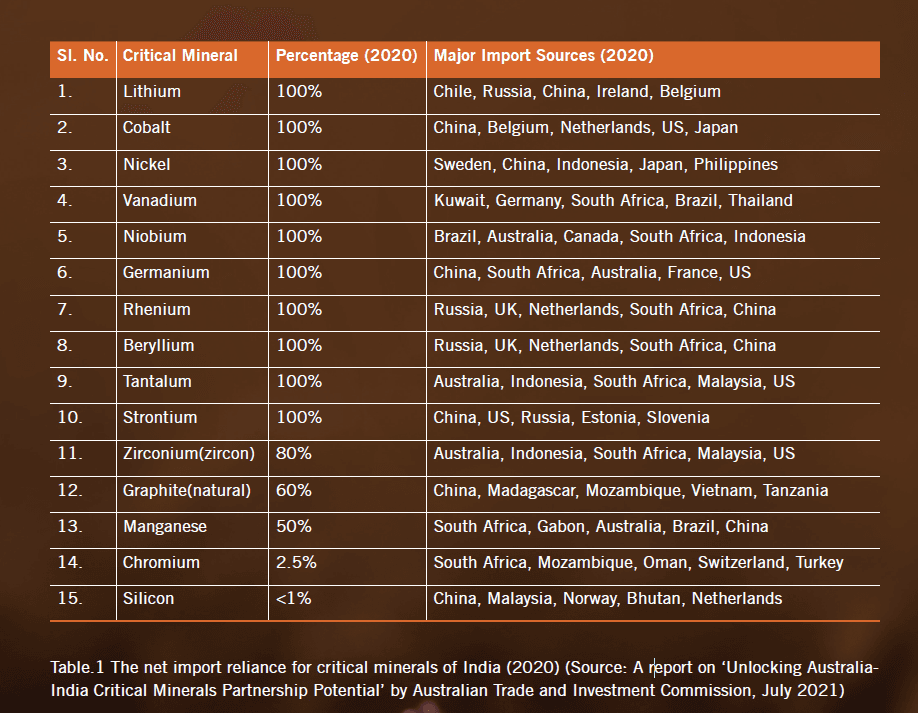
Critical-minerals: essential for economy and security; high supply risk; India lists 30, imports lithium-nickel fully

MMDR-amendment-2025: updates 1957 Act enabling zero-waste, deep-seated, offshore mining and seamless inclusion of critical minerals

Geography-focus: domestic deep-sea nodules Andaman Sea; overseas sourcing via KABIL in Argentina, Zambia, Australia

Quick Facts for MCQs

Legal & Policy

  • Provision: critical minerals may be added to existing leases without extra royalty
  • Provision: Centre empowered to create mineral exchanges for price discovery
  • Provision: captive mines allowed unrestricted sale after meeting end-use

Institutional Reforms

  • Upgrade: NMET becomes NMEDT funded by 3 % royalty for exploration-development
  • Mission: NCMM pursues fast-track clearances, recycling, skilling, stockpiling
  • Support: PRISM incentivises startup and MSME innovation in mineral value chain

Exploration & Production

  • Focus: promotes deep-seated, offshore, zero-waste mining including Andaman nodules
  • Facility: one-time area hike 10 % leases and 30 % composite licences
  • Mechanism: GSI spearheads 1 ,200 explorations 2024-31

International Examples

  • Diplomacy: KABIL acquiring five lithium blocks in Argentina from 2026
  • Partnership: collaborations with Zambia, Australia, IEA for supply security
  • Context: global processing dominated by China prompting diversification

Key Data Points

FeatureData-Point
Bill passedMines & Minerals (Amendment) Bill 2025
Act amendedMMDR Act 1957
Royalty to NMEDTraised 2 % → 3 %
NMET renamedNational Mineral Exploration & Development Trust
Critical minerals identified30 total; 24 in Part-D Schedule I
Central auction powerapplies to Part-D minerals
Lease area extension10 % mining lease; 30 % composite licence
Captive sale ceilingearlier 50 %; now removed post end-use
Import dependence100 % lithium & nickel; 93 % copper
GSI exploration target1 ,200 projects by 2030-31
NCMM launch2025 under Mines Ministry
Deep-sea exampleAndaman Sea polymetallic nodules

Related UPSC Prelims PYQs

CDS_GK, GS1 2025PYQ 1

Consider the following statements:

CDS_GK, GS1 2024PYQ 2

Recently the Government of India entered into an agreement for a lithium exploration and mining project with which one among the following countries?

GS-3EconomyQuick Bite

6.China Lifts Rare Earth Magnet Curbs (Rare Earths)

Financial Express
Illustration for China Lifts Rare Earth Magnet Curbs (Rare Earths)

What & Where

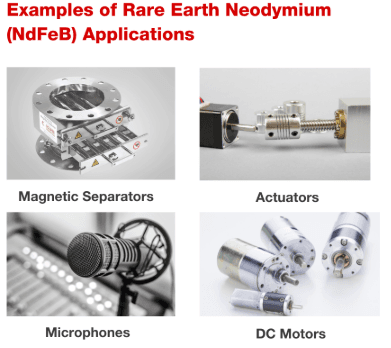
Definition: rare earth magnets = strongest commercial permanent magnets, high coercivity, resist demagnetisation

Composition: neodymium-iron-boron alloys using Nd, Pr, Dy; sometimes samarium-cobalt

Core geography: China ~70 % mining, ~90 % magnet output; India now allowed direct Chinese supply

Quick Facts for MCQs

Economic Angle

  • Supply opening reduces input costs across high-value manufacturing, boosts Make in India margins
  • Domestic chain plan supported by incentives plus public–private partnerships for up-stream to finished magnets

Tech & Schemes

  • Magnet adoption driven by EV traction motors, wind-turbine generators, compact sensors requiring strong fields
  • Indian roadmap includes exploration, separation, alloying, sintering facilities with Production-Linked Incentive cues

Security Dimension

  • Dependence on single-nation supply critical for defence, aerospace; diversification to Vietnam, Brazil, Russia hedges risk

Key Data Points

FeatureData-Point
Chinese mining share≈70 % of global rare earth metals
Chinese magnet production≈90 % of global output
Key RE elementsNeodymium, Praseodymium, Dysprosium
Typical alloyNd-Fe-B (neodymium-iron-boron)
India’s import shiftRestrictions lifted Aug 2025
Planned Indian production chainTarget within 3–5 years
Interim import sourcesVietnam, Brazil, Russia
Major user sectorsEVs, renewable energy, electronics, defence, aerospace, healthcare
Magnet advantagesHigh strength, miniaturisation, thermal resistance
Recent demand surgePast 6–8 years

Related UPSC Prelims PYQs

GS1 2012PYQ 1

Recently, there has been a concern over the short supply of a group of elements called ‘rare earth metals’. Why?

GS-1Mapping

7.Nigeria Geographic Profile (African Geography)

DH

What & Where

Armed attack on mosque + homes in Katsina State, northwest Nigeria; 50 dead, 60 abducted.

Nigeria: West-African nation; capital Abuja; borders Niger, Chad, Cameroon and Gulf of Guinea.

Terrain spans Niger-Benue basin, Jos Plateau, Chappal Waddi peak; climate shifts arid north→humid south.

Quick Facts for MCQs

Security Dimension

  • Attackers struck during dawn prayers in Kankara district, Katsina State, northwest Nigeria
  • Casualties: about 50 worshippers killed, 60 residents abducted
  • Region plagued by banditry despite ongoing security operations

Physical Geography

  • Drainage: Niger-Benue system forms national backbone, empties via vast Niger Delta
  • Relief: Jos Plateau volcanic upland; Chappal Waddi highest at 2,419 m, part of Cameroon Highlands
  • Plains: Sokoto (NW) and Borno (NE) frame savanna zones

Resource Economy

  • Hydrocarbons: Petroleum, natural gas constitute primary export revenue
  • Delta region: Wetland supports oil infrastructure yet faces environmental degradation
  • Savanna soils: Fertile middle belt sustains agriculture alongside energy sector

Key Data Points

FeatureData-Point
CapitalAbuja (since 1991)
RegionWestern coast of Africa
BordersNiger, Chad, Cameroon, Gulf of Guinea
Main riversNiger & Benue
Largest wetlandNiger Delta
Highest peakChappal Waddi – 2,419 m
Central plateauJos Plateau (extinct volcanoes)
Northwest plainSokoto Plains
Northeast plainBorno Plains
Major resourcePetroleum & natural gas
Climate gradientArid north → humid equatorial south
Recent incidentKatsina mosque attack: 50 killed, 60 abducted
GS-1Mapping

8.Mercator Projection Critique (Map Projections)

Indian Express
Illustration for Mercator Projection Critique (Map Projections)

What & Where

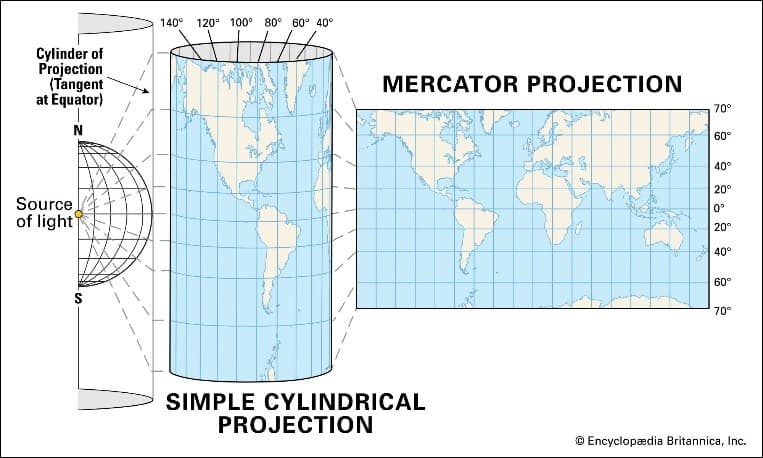
Mercator projection – cylindrical world map devised 1569 for rhumb-line navigation on flat charts

Projects meridians vertical, parallels horizontal; grid meets at right angles, conformal but area-distorting

Africa-oriented campaign by African Union seeks replacement with map showing true continental sizes

Quick Facts for MCQs

Historical Context

  • Renaissance cartography shift demanded sea-route accuracy prompting Mercator’s conformal solution
  • Adoption surged with European naval expansion and colonial trade routes

Distortion Pattern

  • Polar regions appear infinite; 80° latitude stretches 4× equatorial length
  • Greenland shown Africa-sized though real area ≈14 % of Africa
  • Antarctic landmass grotesquely inflated, misleading geopolitical perception

Current Campaign

  • African Union endorses global move to equitable map projection showing true continental proportions
  • Advocates promote alternatives like Gall-Peters, Equal Earth, Robinson for classrooms
  • Goal targets curricula, digital platforms, international agencies for adoption

Key Data Points

FeatureData-Point
InventorGerardus Mercator, Flemish cartographer
Year introduced1569
Projection typeCylindrical, conformal
Navigation aidStraight rhumb lines allow constant compass bearing
True scale zoneOnly along Equator
Distortion trendIncreases pole-ward; areas enlarged, shapes preserved
Notable size errorAfrica & S. America shrink; Europe, N. America, Greenland enlarge
Grid natureMeridians equally spaced verticals; parallels horizontal with widening gaps
Primary use eraAge of Exploration maritime charts
Current critiquePerpetuates Eurocentric size bias
GS-3Editorial

9.National Space Law Imperative (Space Legislation)

The Hindu
Illustration for National Space Law Imperative (Space Legislation)

What & Where

Definition: Space law governs exploration, commercial use, liability and safety of outer-space activities

Scope: Applies beyond national airspace to Moon, planets, celestial bodies under Outer Space Treaty 1967

India: Draft umbrella Space Activities Law planned to regulate government and private sector ventures

Quick Facts for MCQs

Legal & Policy

  • Draft Space Activities Bill envisages licensing, liability cap, OST compliance
  • Indian Space Policy 2023 opens launches, satellites, remote-sensing to private firms
  • Lack of statute keeps regulatory decisions vulnerable to court challenges

Economic Angle

  • Clear law expected to unlock FDI, prevent startup flight and brain drain
  • High third-party insurance premiums currently raise entry barriers for SMEs
  • Strong IP protection seen as key to investor confidence and tech transfer

Institutional Gaps

  • IN-SPACe operates without parliamentary mandate; authority purely executive
  • Approvals split among Defence, DoT, DoS causing duplication and delays
  • Government presently shoulders full OST liability for private mission mishaps

International Examples

  • USA, Luxembourg, Japan allow private asteroid mining, commercial launch services
  • France offers subsidised debris-liability insurance pool for operators
  • UAE, Luxembourg permit 100 % automatic FDI to attract global space startups

Key Data Points

FeatureData-Point
National Space Day23 August (marks Chandrayaan-3 landing)
Core global treatyOuter Space Treaty 1967
Key OST principleNo national appropriation; peaceful use
UN treaties India ratifiedOST, Liability Convention 1972, Registration Convention 1976
Current Indian policyIndian Space Policy 2023
Nodal authorising bodyIN-SPACe (executive order)
Existing FDI routeLimited; no automatic entry for satellites
Primary liability ruleLaunching State bears international damage claims
GS-3S&TQuick Bite

10.Bharatiya Antariksh Station Plan (Space Station)

All India Radio

What & Where

Bharatiya Antariksh Station: proposed Indian modular space station in Low-Earth Orbit 400–450 km above Earth.

Five-module build; Base Module launch 2028, full operational capability by 2035.

Forms part of roadmap toward crewed Indian Moon mission by 2040 and Viksit Bharat 2047 vision.

Quick Facts for MCQs

Tech & Schemes

  • Assembly: phased module launches enabling on-orbit construction similar to ISS architecture.
  • Research focus: microgravity biotech, materials science, Earth observation for disaster response.
  • Long-duration habitation capability to test life-support for deeper space missions.

International Examples

  • ISS: benchmark habitable satellite, joint venture NASA, Roscosmos, ESA, JAXA, CSA.
  • ISS life extension lessons inform BAS maintenance, international collaboration models.

Economic & Scientific Significance

  • Space economy boost via commercial payloads, indigenous tech development, STEM inspiration.
  • Strategic presence strengthens India’s bargaining power in future lunar and deep-space consortia.

Key Data Points

FeatureData-Point
Planned operatorISRO, Govt. of India
Orbit altitude400–450 km LEO
Total modules5
Base Module target year2028
Full station ready2035
Proposed crewed Moon missionBy 2040
ISS partner nations15
ISS experiments so far3,000 + from 108 + countries

Related UPSC Prelims PYQs

CDS_GK 2024PYQ 1

निम्नलिखित में से कौन-सा प्रथम वाणिज्यिक अंतरिक्ष स्टेशन है?

CDS_GK 2022PYQ 2

India's maiden human space mission will be launched in 2023. What is its name?

GS-3S&TQuick Bite

11.SabhaSaar AI Gram Sabha Tool (AI Governance)

Indian Express

What & Where

SabhaSaar AI; MoPR tool auto-generates Gram Sabha minutes from audio-video; first deployed in Tripura

Integrated with Bhashini; offers multilingual transcription & translation across 13 Indian languages

Targets grassroots governance transparency; plugs into digital Panchayat ecosystem

Quick Facts for MCQs

Tech & Schemes

  • Bhashini; AI translation layer enabling speech-to-text, text-to-text across Indian languages
  • Panchayat digital suite; eGramSwaraj, AuditOnline, Gram Manchitra, Panchayat NIRNAY ensure end-to-end e-governance
  • SVAMITVA; drone surveys issue rural property cards enhancing land security

Governance Bodies

  • Gram Sabha; approves budgets, reviews reports, conducts social audits ensuring accountability
  • Gram Panchayat; elected Panchs implement schemes, manage assets under Gram Sabha oversight
  • Direct democracy model; empowers rural voters in decision making

Linked Initiatives

  • Rashtriya Gram Swaraj Abhiyan; capacity building of Panchayati Raj Institutions
  • Common Service Centers; deliver digital citizen services at village level
  • Real-time monitoring; Panchayat NIRNAY records and tracks meeting regularity

Key Data Points

FeatureData-Point
Launching ministryMinistry of Panchayati Raj
Core tech partnerBhashini platform (MeitY, 2022)
Supported languages13, incl. Hindi & English
Primary functionAutomated MoM from Gram Sabha media
First rollout stateTripura
Parent missionNational Language Translation Mission
Gram Sabha natureVillage legislature; all registered voters
Gram Panchayat roleExecutive council headed by Sarpanch
Panchayat tenure5 years
GS-2Editorial

12.India-China Relations New Course (India-China Ties)

Indian Express
Illustration for India-China Relations New Course (India-China Ties)

What & Where

India–China Foreign Ministers’ meet, Delhi, Aug 2025; first dialogue since Nov 2024 LAC disengagement.

Core agenda – LAC peace, economic facilitation, cultural links, multilateral coordination (SCO, BRICS, G-20).

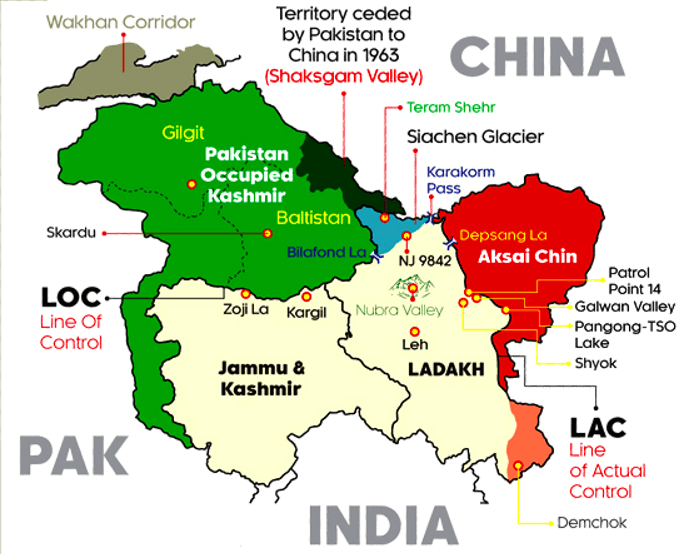
Geography focal – 3,488 km Line of Actual Control from Aksai Chin (west) to Arunachal Pradesh (east).

Quick Facts for MCQs

Security Dimension

  • Doctrine: India’s 3 Ds (disengage, de-escalate, de-induct) + 3 Mutuals (respect, sensitivity, interest).
  • Flashpoints: Depsang, Charding-Ninglung Nala, Doklam 2017, Galwan 2020 maintain high alert.
  • Proposal: demilitarised buffers, advanced ISR, mountain warfare upgrades for credible deterrence.

Economic Angle

  • Facilitation: Fertilisers, rare-earths, tunnel-borers; border trade via Lipulekh, Shipki La, Nathu La restarted.
  • Imbalance: High-value Chinese imports (APIs, electronics, solar); selective engagement & supply-chain diversification urged.
  • Investment: Chinese tech funding large; India exploring tighter screening to guard strategic sectors.

Multilateral & Climate

  • Platforms: BRICS, SCO, AIIB, NDB utilised for Global South finance reform and multipolar advocacy.
  • COP29 stance: Joint India-China rejection of EU Carbon Border Tax, seeking equitable climate governance.
  • Vision: coordinated push for restructured global financial, security institutions.

People & Culture

  • Heritage: Ayurveda, Yoga, classical arts attract Chinese learners; Xuanzang-Bodhidharma linkages recalled.
  • Measures: Tourist/business visas restored; Kailash Mansarovar Yatra revival; 2026 High-Level Exchange Mechanism slated.
  • Incrementalism: student exchanges, disaster-relief drills proposed as low-cost trust multipliers.

Key Data Points

FeatureData-Point
Bilateral trade (2024-25)USD 127.7 billion
India’s trade deficit with China (2023-24)USD 85 billion
Chinese stake in 18 Indian unicorns (till 2020)USD 3.5 billion
Chinese-held Aksai Chin area38,000 sq km
Chinese claim on Arunachal Pradesh90,000 sq km
LAC total length3,488 km
Chinese share of Indian smartphone market≈75 %

Related UPSC Prelims PYQs

ESE_GS, NDA_GAT 2024PYQ 1

निम्नलिखित में से कौन-सा, 1954 में भारत और चीन द्वारा हस्ताक्षरित ‘पंचशील’ समझौते में निहित पाँच सिद्धांतों का भाग नहीं है ?

ESE_GS, NDA_GAT 2025PYQ 2

Which one of the following is not the principle of India’s Foreign Policy for Panchsheel?

GS-3Security

13.Agni-5 Missile Test Success (Ballistic Missile)

Hindustan Times
Illustration for Agni-5 Missile Test Success (Ballistic Missile)

What & Where

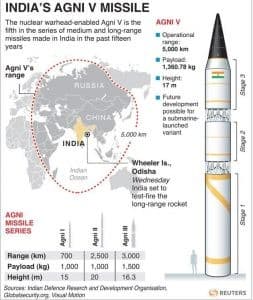
Agni-V: Indian surface-to-surface, nuclear-capable ballistic missile, often ICBM-class; developed by DRDO.

Latest user-trial from Abdul Kalam Island, Chandipur (Odisha) by Strategic Forces Command.

5,000–5,500 km reach envelopes entire Asia plus parts of Europe & Africa.

Quick Facts for MCQs

Technology Features

  • Solid-fuel stages ensure quicker launch readiness, minimal logistics.
  • Canisterised design allows all-weather storage, swift “cold-launch” firing.
  • Composite structures plus advanced guidance enhance range-to-weight efficiency.

Security Dimension

  • Nuclear deterrence enlarged by credible second-strike reach beyond 5,000 km.
  • MIRV warheads overwhelm missile defences, multiplying target options.
  • Strategic Forces Command trials denote near-operational status.

Agni Series

  • Agni-I: 700–1,200 km, single-stage solid, short-range roles.
  • Agni-II/III/IV: 2,000–4,000 km, two-stage solids, deeper penetration tasks.
  • Agni-V: canister-based, MIRV-ready, longest Indian range.

Key Data Points

FeatureData-Point
CategorySurface-to-surface, nuclear-capable
Range5,000–5,500 km
Payload1.5 t nuclear warhead (single/MIRV)
StagesThree
PropellantAll solid fuel
Launch systemRoad/Rail mobile, canisterised
NavigationRing-Laser Gyro & Micro-Inertial
MIRV capabilityValidated March 2024
DeveloperDRDO
Test siteAbdul Kalam Island, Odisha

Related UPSC Prelims PYQs

GS1 2014PYQ 1

With reference to Agni-IV Missile, which of the following statements is/are correct?

GS1 2001PYQ 2

The range of Agni-II missile is around

GS-2Scheme

14.Jal Jeevan Mission Overview (Drinking Water)

PIB

What & Where

Nationwide Jal Jeevan Mission: Centre-sponsored drive for functional household tap water by 2024.

Anchored under Ministry of Jal Shakti; unveiled Independence Day 2019, Delhi.

Operates pan-India, dovetailing with existing water, irrigation, sanitation schemes.

Quick Facts for MCQs

Legal & Policy

  • Mission converges with Central & State schemes, ensuring fund pooling and regulatory coherence.
  • Centre stresses decentralised implementation via Panchayats for last-mile governance.

Environmental Impact

  • Challenges: groundwater depletion, pollution, climate variability hinder potable supply security.
  • Emphasis on recharge, tank desilting, greywater reuse to protect sources.

Tech & Schemes

  • Processes: point recharge structures, minor-tank restoration, agriculture reuse of treated greywater.
  • Mission framed as Jan Andolan; mass participation expected for monitoring & maintenance.

Key Data Points

FeatureData-Point
Announced byPrime Minister on 15 Aug 2019
Nodal ministryUnion Ministry of Jal Shakti
Target year2024 for universal tap connection
Indicative outlay> ₹3.5 lakh crore
Population share vs water16 % people, 4 % freshwater
Key delivery modePiped, in-house potable supply
Core approachSource sustainability & community Jan Andolan
Recent eventState Ministers’ conference, Aug 2019, New Delhi

Related UPSC Prelims PYQs

CAPF_GAI, ESE_GS 2023PYQ 1

Consider the following statements regarding the aim of Jal Jeevan Mission to provide every rural household of the country with adequate tap water of prescribed quality on regular basis:

CAPF_GAI, ESE_GS 2025PYQ 2

जल जीवन मिशन के संदर्भ में निम्नलिखित में से कौन-सा कथन सही नहीं है?

GS-1Editorial

15.Migrant Voter Disenfranchisement Crisis (Migrant Voting)

The Hindu
Illustration for Migrant Voter Disenfranchisement Crisis (Migrant Voting)

What & Where

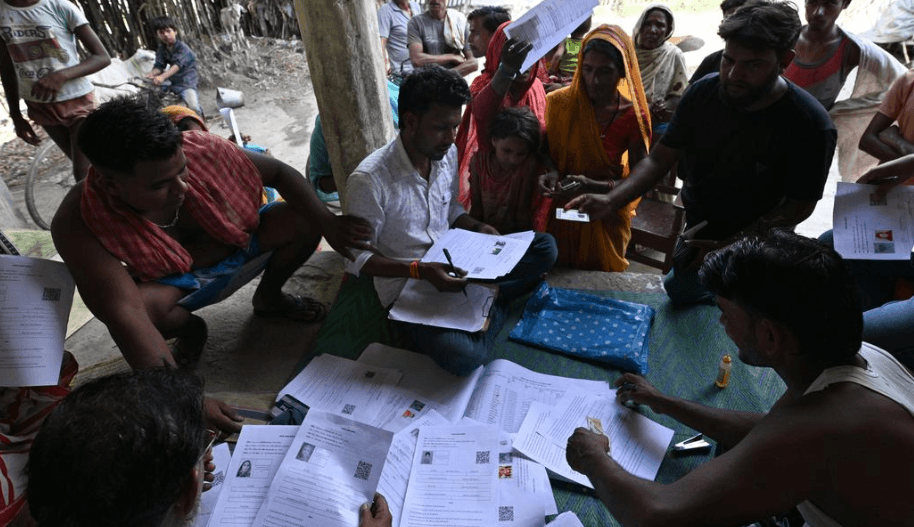
Migrant disenfranchisement: deletion or non-enrolment of mobile workers, leaving them unable to vote at source or destination.

Triggered during Special Intensive Revision (SIR) of electoral rolls, which relies on home-visit verification.

Current flashpoint: Bihar, where 3.5 million names cut; issue mirrors patterns across migrant-sending states.

Quick Facts for MCQs

Structural Causes

  • Sedentary framework: enrolment tied to fixed residence, physical verification, proof of address.
  • Circular migration: seasonal absence misread as permanent shift, prompting roll deletions.
  • Host-state resistance: fear of altered electorates curbs new registrations.

Legal & Policy

  • RPA 1950 & 1951 guarantee enrolment at ordinary residence but lack portability mechanism.
  • ERONET enables continuous updating; efficacy limited without field-level coordination.
  • Proxy voting, postal ballot, ONOVI portability still proposals; not operational for internal migrants.

Social Concerns

  • Poor, casual workers hit hardest, creating two-tier citizenship.
  • Women near India–Nepal border face added documentation and citizenship hurdles.
  • Regionalism frames migrants as outsiders, fuelling xenophobic exclusion.

Reform Proposals

  • Portable voter ID linked to Aadhaar with privacy safeguards for cross-state voting.
  • Cross-verification with destination rolls before deletion; temporary enrolment for seasonal workers.
  • Panchayat/NGO outreach drives; emulate Kerala migration surveys for accurate re-registration.

Key Data Points

FeatureData-Point
Names deleted in Bihar SIR~3.5 million
Share of Bihar electorate removed4.4 %
Annual out-migrants from Bihar≈7 million
TISS–ECI study year2015
Avg. turnout Bihar (last 4 polls)53.2 %
Avg. turnout Gujarat66.4 %
Avg. turnout Karnataka70.7 %

Related UPSC Prelims PYQs

GEO_GS, GS1 2026PYQ 1

What is the full form of SIR introduced by the Election Commission of India?

GEO_GS, GS1 2017PYQ 2

लोक सभा के निर्वाचन के लिए नामांकन-पत्र

GS-1Editorial

16.Caste-Linked Honour Killings Rise (Honour Killings)

The Hindu

What & Where

Definition: Murder/violence by relatives or caste councils against couples deemed to breach caste endogamy or gender codes.

Process: Khap (North) & katta (South) councils sanction attacks, families execute to “restore honour”.

Geography: Highest reportage in Tamil Nadu, Telangana, Maharashtra, Kerala where Dalit mobility challenges dominant castes.

Quick Facts for MCQs

Legal & Policy

  • Gap: No standalone national law; proposals for specific offence, fast-track courts, witness protection.
  • Directive: SC ordered district-level safe houses, police nodal officers, FIR within 24 hrs in Shakti Vahini.
  • Hindrance: NCRB lumps cases under murder obscuring scale, hampering targeted policing.

Judicial Landmarks

  • Lata Singh 2006: Police duty to shield consenting adult couples.
  • Vikas Yadav 2016: Honour motive no mitigation; maximum sentence upheld.
  • Courts reiterate caste councils lack legal status; any diktat punishable.

Social Drivers

  • Family socialisation embeds caste boundaries; honour tied to women’s sexuality.
  • Empowerment paradox: Rising Dalit education/job access provokes dominant-caste backlash.
  • Digital anonymity fuels caste-pride propaganda, glorifying violence against inter-caste unions.

Reform Measures

  • Shelter homes expansion and 24 × 7 helplines for at-risk couples.
  • Curriculum inclusion of gender equality & constitutional rights to counter orthodoxy.
  • Community outreach using caste/religious leaders to delegitimise honour violence narratives.

Key Data Points

FeatureData-Point
Core Constitutional shieldsArts 14, 15, 19(1)(a)&(c), 21
Statute permitting inter-caste & sagotra Hindu marriagesHindu Marriage Act 1955
Secular route for any inter-faith/caste marriageSpecial Marriage Act 1954
Penal classification todayCounts under ‘Murder’ in IPC/Bharatiya Nyaya Sanhita
Khap panchayats declared illegalArumugam Servai v State TN 2011
Safe-house & vigilance directionsShakti Vahini v Union 2018
SC: Choice of spouse integral to libertyShafin Jahan v Asokan 2018
States showing paradox of progressTamil Nadu, Telangana, Maharashtra, Kerala

Related UPSC Prelims PYQs

GS1 2019PYQ 1

भारत के संविधान का कौन-सा अनुच्छेद अपनी पसंद के व्यक्ति से विवाह करने के किसी व्यक्ति के अधिकार को संरक्षित करता है?

Ready to practice?

Test your knowledge with our UPSC test series.

Start Free Trial