UPSC Current Affairs

13 topicsGS-1: 3GS-2: 3GS-3: 7
0/13 done
GS-2Editorial

1.Constitution’s Ninth Schedule Evolution (Ninth Schedule)

New Indian Express
Illustration for Constitution’s Ninth Schedule Evolution (Ninth Schedule)

What & Where

Definition: Ninth Schedule lists statutes shielded from Fundamental-Rights scrutiny by courts

Genesis: Inserted by First Constitutional Amendment 1951 with Article 31B to secure land reforms

Scope: Contains 284+ Central & State laws; post-24 Apr 1973 entries subject to basic-structure review

Quick Facts for MCQs

Historical Context

  • Trigger: Patna HC 1951 struck Bihar Land Reforms creating Parliament–judiciary deadlock
  • Directive push: Aimed to realise Articles 38, 39(b), 39(c) on resource equity
  • Expansion: Successive governments inserted welfare, industrial, even reservation statutes

Judicial Timeline

  • 1967 Golaknath curtailed Parliament power, cast doubt on schedule
  • 1973 Kesavananda birthed basic-structure, set prospective limit
  • 2007 I.R. Coelho opened post-1973 entries to rights-based review

Positive Outcomes

  • Agrarian change: Uttar Pradesh alone redistributed 2 crore acres by 1960
  • Litigation drop: Over 50 land-reform Acts survived challenges by 1970s
  • Social equity: Enabled ceilings, tenancy security, affirmative action measures

Challenges

  • Overreach: Many non-agrarian laws parked merely to evade scrutiny
  • Rights risk: Potential violation of Articles 14, 19, 21 through blanket immunity
  • Ambiguity: Courts still evolving uniform test for welfare laws under basic structure

Key Data Points

FeatureData-Point
Introduced byFirst Constitutional Amendment 1951
Idea mooted byV.K. Thiruvenkatachari, Advocate General Madras
Linked Articles31A agrarian reforms; 31B immunity clause
Initial Acts listed13 zamindari-abolition laws
Present count (2023)284+ laws
Cut-off for automatic shield24 April 1973 (Kesavananda date)
Post-1973 testBasic structure doctrine (I.R. Coelho 2007)
Earliest SC upholdingSankari Prasad v. Union 1951
Landmark partial limitWaman Rao v. Union 1981
Noted contentious entryTamil Nadu 69 % reservation law

Related UPSC Prelims PYQs

GS1, NDA_GAT 2003PYQ 1

The Ninth Schedule to the Indian Constitution was added by

GS1, NDA_GAT 2024PYQ 2

In which Schedule of the Constitution of India, provisions as to disqualification on grounds of defection are given?
GS-2Polity

2.CCPA Fines Rapido for Misleading Ads (Consumer Protection)

Times of India
Illustration for CCPA Fines Rapido for Misleading Ads (Consumer Protection)

What & Where

Statutory regulator under Consumer Protection Act 2019; apex body for consumer-rights enforcement in India.

Constituted July 2020; headquarters New Delhi; nationwide remit over all goods & services.

Operates through Chief Commissioner, two Commissioners and an Investigation Wing for evidence-based inquiries.

Quick Facts for MCQs

Legal & Policy

  • Sections 10, 20, 21 empower fines, ad stoppage, class actions for mass harm.
  • Jurisdiction covers companies and endorsing celebrities issuing misleading claims.
  • May recommend prosecution when unfair trade practices breach other laws.

Organisation & Hierarchy

  • Decision quorum: Chief Commissioner plus at least one thematic Commissioner.
  • Investigation Wing gathers evidence, conducts raids, submits reports for final orders.
  • Regional & district links feed complaints from helplines into central database.

Enforcement Action

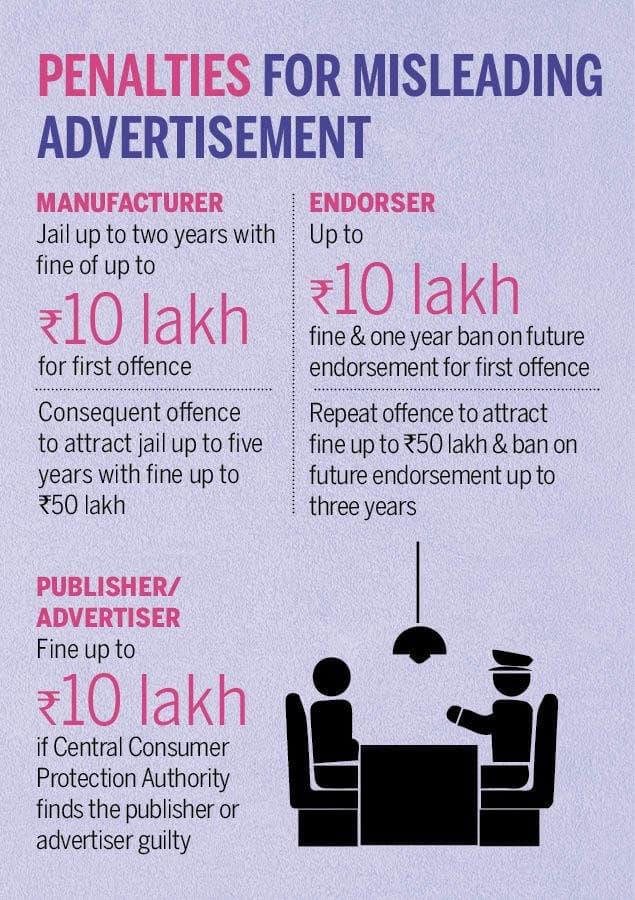
  • Rapido ad “Auto in 5 min or ₹50” held misleading; fined ₹10 lakh.
  • CCPA directed compensation to all affected consumers and ad discontinuation.
  • Case reinforces deterrence for app-based mobility platforms’ marketing claims.

Key Data Points

FeatureData-Point
Statutory basisConsumer Protection Act 2019
Key sections10, 20, 21
Formation dateJuly 2020
Top postChief Commissioner
Special Commissioners2 – Goods & Services
Investigation headDirector-General
Linked helplineNational Consumer Helpline 1915
Core powerFines, ad withdrawal, prosecution advice
Recent penalty₹10 lakh on Rapido
GS-3Editorial

3.RBI Inflation Targeting Credibility Debate (Monetary Policy)

Indian Express
Illustration for RBI Inflation Targeting Credibility Debate (Monetary Policy)

What & Where

Flexible Inflation Targeting: RBI-MoF pact (2016) pegs headline CPI at 4% within 2–6% band.

Geography: Applies pan-India; reviewed quinquennially, current mandate ends 31 Mar 2026.

Process: Monetary Policy Committee (RBI Act §45Z) adjusts repo rate to keep CPI near target.

Quick Facts for MCQs

Credibility & Ratings

  • Investor-confidence: S&P upgrade cites RBI inflation record; higher target risks perception of tolerance.
  • External-balance: Low CPI supports rupee, curbs risk premium on Indian assets.
  • Institutional-trust: FIT seen as reinforcing fiscal discipline and MPC autonomy.

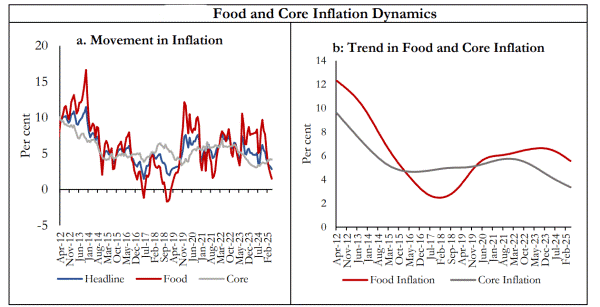
Headline vs Core Debate

  • RBI-view: Food shocks spill into wages, rents, eventually core; headline indispensable.
  • Survey-view: Core preferable as food/fuel supply-driven and outside monetary control.
  • Comparative-practice: Nearly all IT nations focus on headline CPI.

Band Calibration

  • Option-retain: 2–6% band offers flexibility during shocks.
  • Option-narrow/remove: Might raise accountability but cut policy space.
  • RBI-caution: Alterations may disrupt anchored expectations.

Outcome Metrics

  • Inflation-expectations: Households, firms now plan around 4% anchor.
  • Shock-resilience: Pandemic, oil spikes managed without runaway inflation.
  • Growth-compatibility: RBI warns lowering target below 4% may constrain development.

Key Data Points

FeatureData-Point
Mid-point target4% headline CPI
Statutory band2%–6%
Framework startFY 2016-17
Next reset dueMarch 2026
July 2025 CPI1.55% (second-lowest)
CPI basket food weight≈50%
2014-25 CPI range1.5%–8.6%
Only core-targeter globallyUganda
S&P rating (2025)Upgraded to BBB
Core vs headline global norm35 of 36 IT countries use headline

Related UPSC Prelims PYQs

GS1 2017PYQ 1

मौद्रिक नीति समिति (Monetary Policy Committee/MPC) के सम्बन्ध में निम्नलिखित कथनों में से कौन-सा/से सही है/हैं ?

GS1 2022PYQ 2

भारतीय अर्थव्यवस्था के संदर्भ में, 'मुद्रास्फीति-संलग्न बांड (Inflation-Indexed Bonds — IIBs)' के क्या लाभ हैं?

GS-3Economy

4.SEBI Plans Regulated Venue for Unlisted Shares (Capital Markets)

Financial Express
Illustration for SEBI Plans Regulated Venue for Unlisted Shares (Capital Markets)

What & Where

Regulated venue: SEBI-supervised platform to trade unlisted companies’ shares before an IPO.

Offers transparent, rule-based alternative to India’s informal grey market.

Jurisdiction: Indian securities market under the SEBI Act, 1992.

Quick Facts for MCQs

Legal & Policy

  • SEBI proposal introduces registration, reporting and surveillance norms for pre-IPO trades.
  • Platform envisaged under existing securities law; aims to bolster market integrity.

Economic Angle

  • Accurate demand-supply signals curb IPO overvaluation, aiding efficient capital formation.
  • Formal trades plug tax leakages, adding capital-gains and stamp-duty revenue.

Investor Protection

  • SEBI oversight mitigates fraud, manipulation and opaque pricing rampant in grey market.
  • KYC-compliant, auditable transactions enhance retail investor confidence.

International Alignment

  • US ATS, UK secondary private markets show precedent for regulated pre-IPO share trading.

Key Data Points

FeatureData-Point
RegulatorSecurities and Exchange Board of India
InstrumentsPre-listing equity shares
Core purposeFair price discovery pre-IPO
Key benefitDocumented trades → tax capture
Informal rivalGrey market (unregulated)
GS-3Economy

5.CAG Review of FRBM Compliance (Fiscal Responsibility)

Times of India
Illustration for CAG Review of FRBM Compliance (Fiscal Responsibility)

What & Where

FRBM Act 2003: statutory framework guiding India’s fiscal deficit, debt and transparency targets.

CAG annual FRBM review: Constitution-mandated audit assessing Union compliance with Act.

Geography: applies to Union + all States across India; report tabled in Parliament, New Delhi.

Quick Facts for MCQs

Legal & Policy

  • Amendment years: 2004, 2012, 2015, 2018; each tweaked deficit or debt targets.
  • Finance Minister must table half-yearly fiscal reviews to both Houses.
  • Medium-Term Fiscal Policy statement prescribes rolling 3-year targets for RD, FD, debt.

Fiscal Metrics

  • Debt-to-GDP trending downward since pandemic peak, aiding macro-stability narrative.
  • Unrealised taxes rising, posing collection-efficiency challenge to meeting targets.
  • Guarantee cap restricts contingent liabilities, protecting Consolidated Fund.

Debt Sustainability

  • CAG uses Debt Sustainability Analysis; stable/declining debt ratio = sustainable.
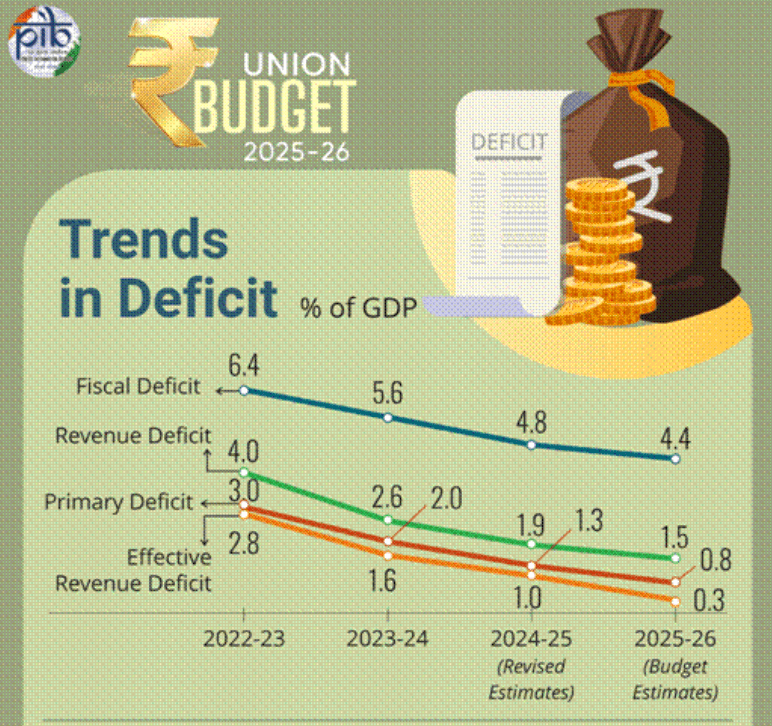
  • Centre met definition with 4-point fall in ratio between FY 2021 & 2024.

Overshoot Risks

  • GGD still 21 pp above 60 % cap, signalling continued consolidation required.
  • Pandemic-induced FD escape clause deferred original 3 % goal beyond 2021.

Key Data Points

FeatureData-Point
Central govt debt (Mar 2024)57 % of GDP
Peak central debt61.38 % of GDP in FY 2020-21
General govt debt (Mar 2023)81.3 % of GDP
GGD statutory cap (FY 2024-25)60 % of GDP
Centre debt statutory cap40 % of GDP
Fiscal deficit achieved FY 2024-254.8 % of GDP
FD pledged for FY 2025-26< 4.5 % of GDP
Unrealised taxes (end-FY 2023-24)₹31.11 lakh crore
Increase in unrealised taxes YoY+₹9.81 lakh crore
Extra loan-guarantee ceiling0.5 % of GDP per year
Last major amendment2018 (targets, escape clauses)

Related UPSC Prelims PYQs

GS1 2018PYQ 1

Consider the following statements:

GS1 2010PYQ 2

Which one of the following was NOT stipulated in the Fiscal Responsibility and Budget Management Act, 2003?

GS-1Mapping

6.Uganda Geographical Snapshot (East Africa Geography)

Indian Express
Illustration for Uganda Geographical Snapshot (East Africa Geography)

What & Where

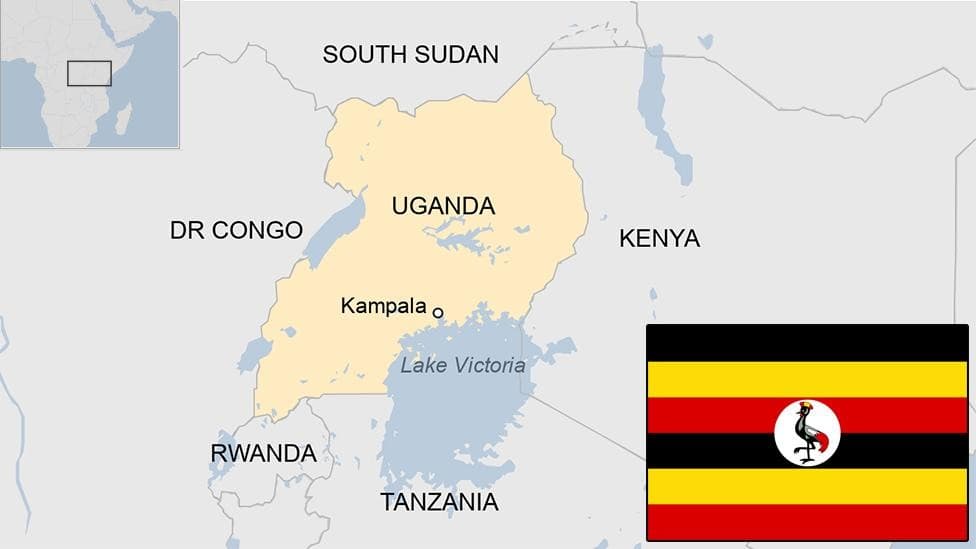
Uganda; land-locked East African nation straddling equator, centred on Lake Victoria basin.

Drained northward by White Nile system; sculpted westward by Albertine Rift mountains.

Bimodal tropical rains; altitude and lakes moderate temperatures.

Quick Facts for MCQs

Physical Geography

  • Rwenzori Mountains create Africa’s third-highest summit; glaciers feed Nile headwaters.
  • East African Rift western arm shapes deep lakes Albert, Edward; seismic and oil-rich zone.
  • Central plateau savanna supports mixed farming; volcanic soils favour banana, coffee belts.

Natural Resources

  • Agriculture dominates GDP; coffee leading foreign-exchange earner since 1980s.
  • Untapped crude oil estimated 6.5 billion barrels in Albertine Graben.
  • Hydropower expanding on Victoria Nile; flagship Bujagali and Karuma dams.

International Relations

  • 21 Aug 2025 accord in principle with USA on non-criminal deportees; excludes unaccompanied minors.
  • Landlocked status drives reliance on Kenyan and Tanzanian ports for trade corridors.
  • Member of East African Community; pursuing shared rail-pipeline links to coast.

Key Data Points

FeatureData-Point
CapitalKampala
Equator passageYes
Neighbour eastKenya
Highest pointMt Stanley / Margherita Peak 5,109 m
Major volcanic massifMt Elgon 4,321 m
Principal riverWhite Nile (Victoria Nile → Lake Kyoga → Lake Albert)
Largest lake shareLake Victoria
Key rift segmentAlbertine Graben (Western Rift)
Oil reserves zoneLake Albert basin
Rain peaksMar–May & Sep–Nov
Plateau altitude~1,000–1,300 m
Core exportsCoffee, tea, fish, cotton
Mineral basketGold, copper, cobalt, iron ore, phosphates
Soil typesVolcanic, ferrallitic east/southwest; savanna central/north
2025 US migrant dealAccepts deportees sans criminal record, not unaccompanied minors
GS-3Environment

7.NTCA Restricts Tiger Corridor Definition (Tiger Corridors)

Indian Express

What & Where

NTCA — statutory apex body for tiger conservation under MoEFCC, operational since 2005 amendment of Wildlife (Protection) Act, 1972

Tiger corridors — linear habitats enabling dispersal/gene-flow; NTCA now limits definition to 32 “least-cost pathways” mapped in 2014

Geographic spread — corridors connect 50-plus protected areas across Central, Eastern, Western Ghats, Shivalik-Terai, NE Hill landscapes

Quick Facts for MCQs

Legal & Policy

  • Restriction removes WII/AITE-identified corridors, potential non-compliance with statutory duty to ensure connectivity
  • Bombay HC hearing challenges NTCA’s narrowed list; verdict may reset corridor legitimacy
  • 2014 NTCA guideline itself acknowledged alternative connectivities requiring protection

Ecological Impact

  • Reduced corridor ambit lowers genetic exchange, raises inbreeding risk for 3,167 wild tigers
  • Fragmentation increases human-tiger conflict likelihood along infrastructure edges
  • Long-term viability of small reserves (<800 km²) critically tied to functional corridors

Economic Angle

  • Mining, highways, transmission lines gain faster clearance when outside NTCA-listed corridors
  • States may attract investment yet bear future mitigation costs of wildlife conflict
  • Loss of eco-tourism revenue possible if tiger sightings decline from isolated populations

Institutional Structure

  • NTCA coordinates with State Forest Depts, tiger reserve field directors, WII for science inputs
  • Provides 100% Central funding for core protection, 50:50 sharing for buffer & ecotourism schemes
  • Periodic appraisal missions evaluate TCP compliance, release finance accordingly

Key Data Points

FeatureData-Point
Parent ministryMoEFCC
Legal basisWildlife (Protection) Act, 1972 §38V-38X
Year NTCA created2005 (notified 2006)
NTCA chairpersonUnion Environment Minister
Vice-chairpersonMinister of State, Environment
Member SecretaryAdditional DG (Wildlife), MoEFCC
Tiger corridors now recognised32 least-cost pathways (2014 report)
Earlier consultative agencyWildlife Institute of India (WII)
Key power clauseSection 38(O): regulate projects in reserves/corridors
All-India Tiger Estimation (AITE)Conducted every 4 years; NTCA-WII
GS-3S&TQuick Bite

8.Rubella Eradication and CRS Risks (Rubella Virus)

WHO

What & Where

Rubella = German measles, contagious disease by enveloped single-stranded RNA rubella virus

WHO on 22 Aug 2025 certified Nepal as rubella-free under South-East Asia verification

Global elimination drives focus on measles-rubella control through universal MR vaccination

Quick Facts for MCQs

Health Impact

  • CRS outcomes include deafness, cataract, cardiac defects, developmental delay
  • Disease usually mild in adults yet severe fetal consequences
  • Leading preventable cause of congenital disability worldwide

Vaccination & Coverage

  • MR vaccine gives long-term immunity, cornerstone of elimination strategies
  • Missed doses threatening herd immunity in multiple regions
  • Two-dose compliance critical to interrupt transmission chains

Indian Initiatives

  • National Zero Measles-Rubella Elimination Campaign 2025-26 under UIP targets 100 % coverage
  • Mission Indradhanush and Intensified MI boost outreach in low-coverage blocks
  • Surveillance grading shows steady district-level progress toward WHO certification

International Milestones

  • Nepal joins Maldives, Sri Lanka as rubella-free in WHO SEAR
  • WHO monitors verification commissions for each member state
  • Global goal seeks rubella eradication following regional success stories

Key Data Points

FeatureData-Point
Virus natureEnveloped single-stranded RNA
Key pregnancy riskMiscarriage, stillbirth, Congenital Rubella Syndrome
2022 global cases17,865 across 78 nations
2024 totally unvaccinated children14.3 million
Infants with first measles dose 202484 %
MR vaccine schedule2 doses
India elimination targetYear 2026
India MR full-dose coverage 2024-25> 90 % children
Measles-free Indian districts Jan-Mar 2025332
Rubella-free Indian districts Jan-Mar 2025487

Related UPSC Prelims PYQs

CDS_GK 2021PYQ 1

Mission Indradhanush aims at

GS-3DefenseQuick Bite

9.Agni-5 Intermediate-Range Ballistic Missile (Agni-5 Missile)

PIB
Illustration for Agni-5 Intermediate-Range Ballistic Missile (Agni-5 Missile)

What & Where

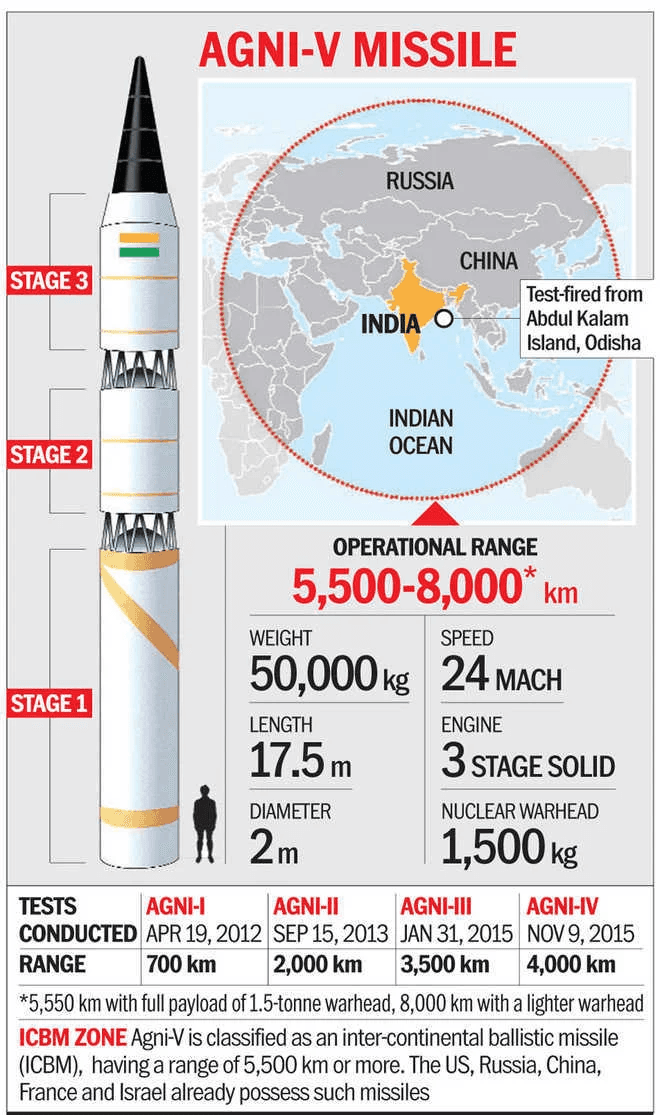
SSBMs: ground-launched ballistic missiles for land/sea targets, configurable with conventional or nuclear warheads.

Agni-5: MIRV-capable, nuclear-armed IRBM (~5,000 km) under India’s Integrated Guided Missile Development Programme.

IGMDP also produced Prithvi, Trishul, Nag, Akash; Agni-5 strengthens credible minimum deterrence.

Quick Facts for MCQs

Tech & Schemes

  • IGMDP: 1980s DRDO initiative delivering five indigenous missile families including Agni-5.
  • MIRV technology: single booster deploys multiple independently targetable warheads.
  • Range taxonomy: SRM <1,000 km; MRBM 1,000–3,000 km; IRBM 3,000–5,500 km; ICBM >5,500 km.

Security Dimension

  • Deterrence: Agni-5 bolsters India’s assured nuclear retaliation doctrine.
  • Validation: August 2025 flight test confirmed reliability of propulsion, guidance, re-entry systems.
  • Nuclear-capable status: expands strategic strike envelope without breaching minimum-deterrence threshold.

International Examples

  • Peers: Only USA, Russia, China, France share MIRV-capable IRBM capability with India.
  • Benchmark: Entry into club signals technological parity in multi-warhead delivery systems.

Key Data Points

FeatureData-Point
Missile nameAgni-5
Missile typeSurface-to-surface ballistic
Range classIntermediate-Range (3,000–5,500 km)
Stated reachAbout 5,000 km
Warhead techMIRV, nuclear-capable
Parent programmeIGMDP
Sister missilesPrithvi, Trishul, Nag, Akash
Recent testAug 2025, validated operational & technical parameters
Strategic aimCredible minimum deterrence
MIRV-IRBM clubUSA, Russia, China, France, India

Related UPSC Prelims PYQs

GS1 2001PYQ 1

The range of Agni-II missile is around

GS1 2014PYQ 2

With reference to Agni-IV Missile, which of the following statements is/are correct?

GS-3DefenseQuick Bite

10.SLINEX-25 India-Sri Lanka Naval Exercise (SLINEX Exercise)

PIB
Illustration for SLINEX-25 India-Sri Lanka Naval Exercise (SLINEX Exercise)

What & Where

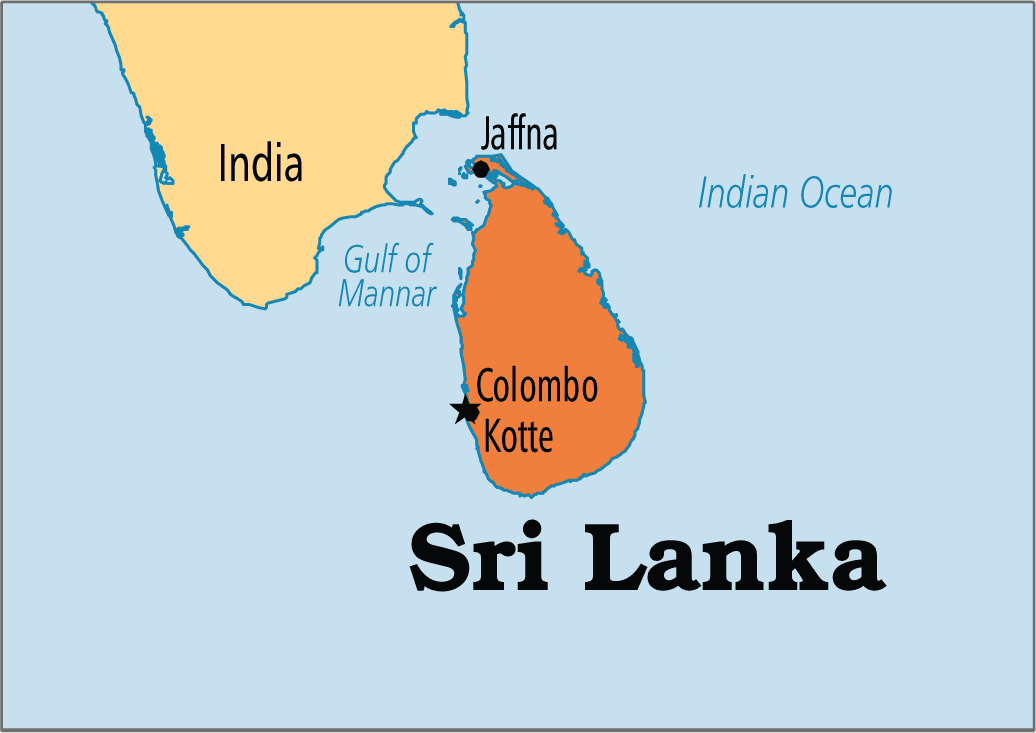
SLINEX: bilateral India–Sri Lanka naval exercise, launched 2005, 12th edition held 2025.

Conducted in and off Colombo, strengthening Indian Ocean littoral cooperation.

Focus: interoperability, best-practice exchange, aligned to India’s MAHASAGAR maritime vision.

Quick Facts for MCQs

Security Dimension

  • Enhances joint maritime patrol, surveillance, humanitarian assistance, disaster relief readiness.
  • Builds trust for Indian Ocean sea-lanes security.
  • Demonstrates coordinated naval command, control and communication procedures.

Defence Engagements

  • Mitra Shakti complements SLINEX, covering counter-insurgency and counter-terrorism land operations.
  • Memorial visit signals respect for earlier joint sacrifices, deepening military diplomacy.
  • Regular bilateral drills institutionalise tri-services familiarity.

Historical Context

  • IPKF (1987-1990) remains pivotal marker in India-Sri Lanka defence ties.
  • SLINEX evolution from 2005 shows sustained maritime engagement post-civil-war era.
  • Continuity highlights stable neighbourhood-first approach in South Asia.

Key Data Points

FeatureData-Point
Full nameSri Lanka–India Naval Exercise (SLINEX)
2025 edition12th
2025 host venueColombo, Sri Lanka
Initiation year2005
Key policy linkageMAHASAGAR (Mutual & Holistic Advancement for Security Across the Regions)
Parallel Army drillExercise Mitra Shakti
Tribute site visitedIndian Peace Keeping Force Memorial
IPKF deployment years1987 – 1990
India’s HADR role“First responder” for Sri Lanka

Related UPSC Prelims PYQs

CDS_GK, ESE_GS 2025PYQ 1

‘विनि’ भारत और किस देश के बीच एक संयुक्त सैन्य अभ्यास है ?

CDS_GK, ESE_GS 2022PYQ 2

Which one of the following countries did the Indian Navy participate in the U.S. Navy-led Southeast Asia Cooperation and Training (SEACAT) military exercise, to demonstrate its maritime manoeuvres?

GS-2Scheme

11.Fortified Rice Scheme Extended to 2028 (Food Fortification)

PIB
Illustration for Fortified Rice Scheme Extended to 2028 (Food Fortification)

What & Where

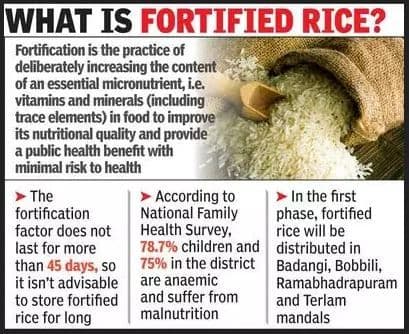
Scheme: nationwide supply of Iron-Folic Acid-Vitamin B12 fortified rice via all central food-security channels

Geography: universal rollout across States/UTs; pilot 2019, full coverage March 2024, extended till Dec 2028

Nodal: Department of Food & Public Distribution under Consumer Affairs Ministry; FSSAI frames fortification standards

Quick Facts for MCQs

Funding & Costs

  • Allocation: Cabinet okays ₹17,082 crore, fully borne by Centre, covers fortificants, blending, quality testing
  • Costing: States procure fortificants via FCI price schedule; no additional burden on beneficiaries

Implementation Channels

  • PDS: fortified rice replaces normal grain at ration shops for Antyodaya and priority households
  • PM POSHAN & ICDS: school meals, anganwadi rations now mandatorily use fortified rice nationwide
  • Special nutrition: Wheat-Based Programme and Scheme for Adolescent Girls integrated for fortified supply

Nutrition & Health

  • Deficiency focus: combats anaemia, cognitive impairment, hidden hunger among women, children and adolescents
  • Fortificant levels: iron 28 mg, folic acid 100 µg, vitamin B12 0.75 µg per 100 g rice (FSSAI)

Monitoring & Partnerships

  • Quality control: States, UTs, FSSAI inspectors ensure blending, logo display, random lab testing
  • Convergence: dovetails with Anemia Mukt Bharat, Poshan Maah, media IEC for behavioural change
  • NDDB Gift Milk: supplements fortified rice in selected schools, enhancing protein, calcium intake

Key Data Points

FeatureData-Point
Cabinet approval periodUp to December 2028
Funding pattern100 % Central; ₹17,082 crore
Nutrients addedIron, Folic Acid, Vitamin B12
Major channelsPDS, PM POSHAN, ICDS, WBNP, SAG
Pilot launch year2019
National scale-up sanction2022
Standards bodyFSSAI
Complementary foods advisedDouble Fortified Salt, fortified edible oil
Linked missionAnemia Mukt Bharat (2018)

Related UPSC Prelims PYQs

GS1 2004PYQ 1

Which one of the following statements is NOT correct?

GS1 2023PYQ 2

‘पोषण मुक्त भारत अभियान’ के अंतर्गत की जा रही व्यवस्थाओं के संबंध में, निम्नलिखित कथनों पर विचार कीजिए :

GS-1Polity

12.NOTTO Prioritises Women in Organ Allocation (Organ Transplant)

The Hindu
Illustration for NOTTO Prioritises Women in Organ Allocation (Organ Transplant)

What & Where

NOTTO = apex national coordination centre for organ & tissue donation/transplant; under MoHFW, Govt. of India

Mandate rooted in Transplantation of Human Organs & Tissues Act 1994 (amended 2011), operational since 2014

Headquarters: Institute of Pathology (ICMR) building, Safdarjung Hospital campus, New Delhi

Quick Facts for MCQs

Structure & Divisions

  • National Network Division maintains real-time donor–recipient registry, allocates organs
  • National Biomaterial Centre banks tissues: cornea, bone, skin etc.
  • Coordinates vertically with ROTTOs (regional) and SOTTOs (state) for ground execution

Functions & Powers

  • Database: captures nationwide donation, retrieval, transplant statistics for policy and audit
  • Protocols: issues ethical, clinical guidelines; trains transplant coordinators & hospital teams
  • Compliance: monitors THOA adherence, curbs trafficking/commercial trade via inspections

Social Concerns

  • Directive 2023: prioritises organ allocation to women patients & female relatives of deceased donors
  • Aim: address documented gender disparity in both access to transplants and donor recognition
  • Awareness drives: focused campaigns to boost voluntary female pledges and family consent

Key Data Points

FeatureData-Point
Parent ministryUnion MoHFW
Chairing authorityDirector General of Health Services
Statutory basisTHOA 1994, amended 2011
Year formed2014
HQ cityNew Delhi
Key divisionsNational Network Division; National Biomaterial Centre
Core roleMaintain registry, ensure transparent allocation
GS-1Misc

13.UPSC Mains 2025 Papers Repository (UPSC Examination)

UPSC

What & Where

Repository: Single hub hosting official UPSC CSE Mains 2025 question papers.

Coverage: Essay, GS I–IV, Indian Language, English, Optional Papers 1 & 2.

Access: Free PDFs plus high-resolution scans on InsightsIAS; updated after each exam day.

Quick Facts for MCQs

Exam Schedule

  • Sequence: Essay → GS I & II → GS III & IV → Qualifying → Optional.
  • Span: 22 Aug–31 Aug 2025, five examination days.
  • Dual GS sittings: Two GS papers conducted per day (23 & 24 Aug).

Preparation Strategy

  • Practice: Attempt timed mocks using released PDFs for real-time exam simulation.
  • Mapping: Align each question with UPSC syllabus to detect recurring themes.
  • Review: Compare answers with forthcoming model approaches from InsightsIAS.

Resources & Access

  • Consolidation: Single portal eases cross-paper weightage analysis and theme tracking.
  • Verification: Scanned originals allow fine-print checks vis-à-vis typed PDFs.
  • Alerts: Telegram notifications ensure immediate receipt of new papers and analyses.

Key Data Points

FeatureData-Point
First paper date22 Aug 2025 (Essay)
GS papers dates23 Aug 2025 (GS I & II); 24 Aug 2025 (GS III & IV)
Qualifying papers date30 Aug 2025 (Indian Language & English)
Optional papers date31 Aug 2025
Total GS papers4 (Paper 1–4)
Format offeredPDF downloads + scanned images
AuthenticityOfficial UPSC questions, high-quality reproductions
Instant updates channelOfficial InsightsIAS Telegram group

Related UPSC Prelims PYQs

CAPF_GAI, GS1 2025PYQ 1

निम्नलिखित वर्षों पर विचार कीजिए :

CAPF_GAI, GS1 2025PYQ 2

निम्नलिखित में से किस वर्ष का कैलेंडर वर्ष 2025 के समान (identical) होगा?

Ready to practice?

Test your knowledge with our UPSC test series.

Start Free Trial