UPSC Current Affairs

19 topicsGS-1: 4GS-2: 7GS-3: 8
0/19 done
GS-2Polity

1.UPSC Centenary Merit Legacy (Civil Services)

PIB

What & Where

UPSC = constitutional body conducting nationwide exams/interviews for All-India & Central Civil Services

HQ New Delhi; origin 1 Oct 1926; centenary span 1 Oct 2025 – 1 Oct 2026

Mandate meritocracy, transparency, integrity in top‐level public‐service recruitment

Quick Facts for MCQs

Historical Evolution

  • Pre-1854 Patronage; Haileybury-trained nominees served East India Company
  • 1854 Macaulay reforms launched competitive ICS exams in London
  • 1937 Federal PSC, 1950 UPSC under Constitution institutionalised national recruitment

Legal & Policy

  • Constitution Articles 315-323 define composition, power, independence
  • Public Service Commission (Functions) Rules 1926 governed early operations
  • Government of India Act 1935 provided statutory base for Federal PSC

Organisational Details

  • Current role selects Group ‘A’ & select Group ‘B’ officers via CSE, IFoS, CMS, CAPF, etc.
  • UPSC advised on promotions, disciplinary matters ensuring fairness
  • Centenary theme: 100 years of transparent, merit-based public service recruitment

Key Data Points

FeatureData-Point
Founding date1 October 1926
Trigger reportLee Commission 1924
First chairmanSir Ross Barker
Original strength1 chairman + 4 members
Federal PSC start1937 (GoI Act 1935)
Became UPSC26 January 1950
Constitutional articles315 – 323
First ICS IndianSatyendranath Tagore (1864)
Competitive exams started1855 (London)
Exams first held in India1922 Allahabad, later Delhi

Related UPSC Prelims PYQs

CDS_GK 2020PYQ 1

The creation of a Federal Court in India was advocated by which of the following Acts/Commissions?

CDS_GK 2021PYQ 2

Which one of the following statements about the British Indian Medical Service (IMS) is not correct?
GS-2Polity

2.Modernising India’s Maritime Laws (Maritime Bills)

The Hindu
Illustration for Modernising India’s Maritime Laws (Maritime Bills)

What & Where

Bills passed Aug 2025: Merchant Shipping, Coastal Shipping, Carriage of Goods by Sea — overhaul of colonial-era maritime laws

Key processes: cabotage licensing, carriage liability via Hague-Visby Rules, detention of stateless vessels, national coastal strategy

Core geography: 7,500 km Indian coastline, 12 major & 200+ minor ports on key East-West trade lanes

Quick Facts for MCQs

Legal & Policy

  • Cabotage alignment with IMO norms via Coastal Shipping Bill replacing Part XIV of 1958 Act
  • Hague-Visby Rules adoption replaces 1925 Act, standardises Bills of Lading liabilities
  • Merchant Shipping Bill empowers Centre to detain non-flagged vessels in Indian waters

Economic Angle

  • Objective raise coastal movement to 230 Mt, reduce foreign-flag dependence, create maritime jobs
  • Policy mix includes tax holidays, shipbuilding & repair incentives, Bharat Global Ports Consortium formation
  • Exports touched USD 451 billion FY23 aided by port modernisation

Infrastructure & Capacity

  • Major ports capacity up 87 % during 2014-24; 12 majors plus private terminals expanding
  • One Nation-One Port Process and LPPI index introduced for unified digital workflows and benchmarking
  • National Coastal & Inland Shipping Strategic Plan to guide infrastructure investment decisions

Green & Tech Initiatives

  • NCoEGPS set up for green port tech, alternative fuels, emission norms
  • Green Tug Transition Program targets 50 % green tugs by 2030
  • MAITRI platform integrates regulatory clearances for seamless maritime trade

Key Data Points

FeatureData-Point
Coastal cargo target230 million t by 2030
Trade moved by sea95 % volume; 70 % value
Major port capacity FY241,629.86 million t
Cargo handled FY24819.22 million t
Indian-flagged ships1,530 (registered)
Logistics Performance Index 2023Rank 38
Ship recycling rank3rd; ~30 % global share
Largest breaking yardAlang, Gujarat
FDI in ports/harbours100 % automatic route

Related UPSC Prelims PYQs

CDS_GK, NDA_GAT 2024PYQ 1

Consider the following statements:

CDS_GK, NDA_GAT 2024PYQ 2

Which of the following statements is not correct?

GS-1Environment

3.Cretaceous Atlantic Mud Waves (Seafloor Sediments)

Times of India

What & Where

Mud waves: kilometre-scale rhythmic sediment beds produced by persistent bottom currents on deep ocean floor

Location: ~1 km beneath Atlantic seabed west of Guinea-Bissau; discovered via seismic imaging study 2025

Origin: Early Cretaceous saline density flows through Equatorial Atlantic Gateway sculpted sediment into >1 km long waves

Quick Facts for MCQs

Formation Dynamics

  • Saline-spill: Dense northern water spilled southward triggering downslope turbidity currents
  • Sediment-avalanches: Collisions stirred mud-organic mix generating giant seafloor flows
  • Wave-growth: Continuous currents stacked deposits into rhythmic bedforms now lithified

Geological Significance

  • Paleo-currents: Layered sequences archive intensity, direction of ancient bottom currents
  • Gateway-timing: Offers earliest sedimentary proof of North-South Atlantic deep-water exchange

Atlantic Physical Geography

  • Shape: Atlantic displays characteristic S-curve, second-largest ocean after Pacific
  • Ridge: Mid-Atlantic Ridge spans ~14,000 km, rises nearly 4 km, parallel to basin axis
  • Shelves-trenches: Widest shelves NE America, NW Europe; key trench Puerto Rico, limited compared with Pacific

Key Data Points

FeatureData-Point
Agec.117 million years
Individual wave length>1 km
Individual wave heightHundreds of metres
Burial depth~1 km below seabed
Discovery year2025 study
Tectonic contextEarly North-South Atlantic separation
Formative gatewayEquatorial Atlantic Gateway
Mid-Atlantic Ridge length~14,000 km
GS-1Environment

4.Global Flood Risk Management Practices (Flood Management)

Down to Earth

What & Where

Flood-risk management: blend of engineered works and nature-based steps to lessen inundation damage

Key streams: Structural measures (embankments, reservoirs, channelisation) versus Non-structural (forecasting, zoning, relocation)

Core Indian hotspot: ~40 M ha flood-prone, mainly Ganga-Brahmaputra-Meghna basin

Quick Facts for MCQs

International Examples

  • Tanzania Msimbazi Basin dredging plus green belts; relocates residents for resilience
  • Netherlands floating concrete-glass homes rise with water; powered by rooftop solar
  • China Sponge Cities deploy permeable pavements and wetlands to absorb stormwater

Indian Structural Measures

  • Interlinking under NPP diverts Ganga-Brahmaputra-Meghna surplus to deficit basins
  • Embankments common yet trigger riverbed rise and erosion; high reliance in Assam, Bihar
  • Detention basins in Rajasthan and Bihar store peak flows behind low embankments

Indian Non-Structural Measures

  • CWC real-time forecasts guide evacuation and asset protection
  • Flood-plain zoning restricts construction in high-risk belts to cut losses
  • Flood-proofing lifts settlement plinths across UP, West Bengal, Assam

Technology & Finance

  • Mantra 3F: Forecasting, Financing, Frontline Preparedness for proactive risk reduction
  • Google Flood Hub plus satellite data offers 7-day alerts enhancing global flood justice
  • Denmark Green Climate Screen lets willow panels and mineral wool soak roof runoff without energy use

Key Data Points

FeatureData-Point
India flood-prone area40 million ha
Share of annual economic loss due to floods63 %
Internal displacements 2024 (India)5.4 million
Slum dwellers in Indian flood zones158 million
Vienna flood-relief channel length21 km
Tanzania Msimbazi Basin financerWorld Bank
AI-based 7-day flood toolGoogle Flood Hub

Related UPSC Prelims PYQs

ESE_GS 2020PYQ 1

Which of the following practices are adopted for river basin water resources management?

ESE_GS 2020PYQ 2

Which one of the following is an iterative and evolutionary process for achieving sustainable development?

GS-1MappingQuick Bite

5.Strategic Dardanelles Strait Mapping (Strategic Strait)

BBC
Illustration for Strategic Dardanelles Strait Mapping (Strategic Strait)

What & Where

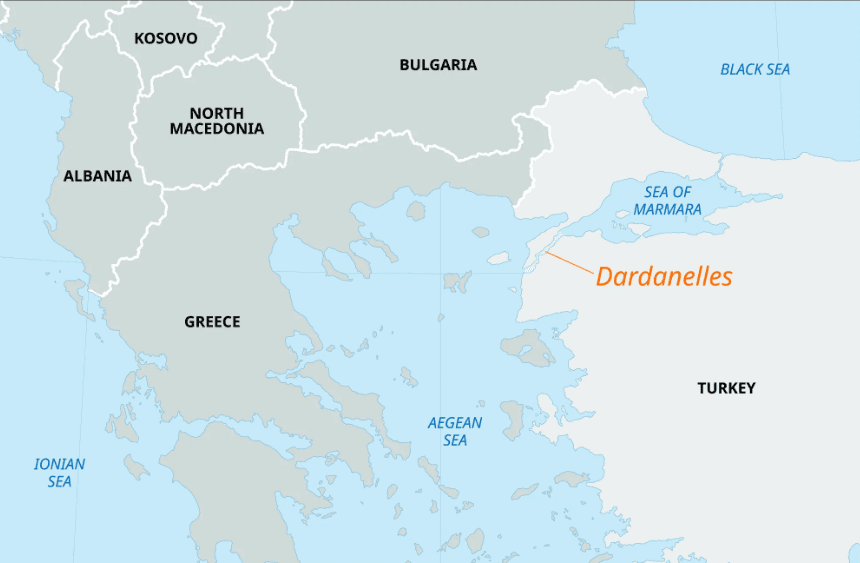
Narrow Turkish strait separating Gallipoli Peninsula (Europe) from Asian mainland

Connects Aegean Sea to Sea of Marmara, enabling onward passage to Black Sea via Bosporus

Currently shut to maritime traffic due to north-west Turkey forest fires

Quick Facts for MCQs

Current Affairs

  • Forest fires in Çanakkale province forced maritime closure 13 Aug 2025
  • Closure reroutes Mediterranean-Black Sea shipping increasing voyage time and costs

Transport & Trade

  • Waterway critical for energy, grain, naval movements between Mediterranean and Black Sea
  • Ships must transit Dardanelles plus Bosporus to access Black Sea ports

Historical Significance

  • Persian invasion 480 BCE saw Xerxes build pontoon bridges across strait
  • Gallipoli Campaign 1915 attempted Allied seizure but met strong Ottoman defense

Key Data Points

FeatureData-Point
CountryTurkey
PositionNorth-western Anatolia
European bankGallipoli Peninsula
Asian bankÇanakkale Province
Connecting seasAegean → Sea of Marmara
Further linkageAccess to Black Sea via Bosporus
Major portsGallipoli, Eceabat, Çanakkale
Recent closure13 Aug 2025 forest‐fire emergency
Key battlesPersian invasion 480 BCE; Gallipoli Campaign 1915

Related UPSC Prelims PYQs

GS1 2014PYQ 1

Turkey is located between

GS1 2007PYQ 2

Through which one of the following Straits does a tunnel connect the United Kingdom and France?

GS-3S&T

6.Rabies Virus and Control Measures (Zoonotic Disease)

The Hindu

What & Where

Rabies virus; 100 % vaccine-preventable yet almost always fatal once symptomatic

Primary reservoir: domestic dogs, widespread across India & other endemic regions

WHO lists rabies among Neglected Tropical Diseases (NTDs) needing One-Health action

Quick Facts for MCQs

Legal & Policy

  • SupremeCourt: ordered immediate capture and permanent confinement of Delhi stray dogs
  • Trigger: spike in rabies deaths and public safety concerns

Epidemiology

  • India: several thousand rabies deaths annually, majority rural dog bites
  • Dogs: dominant infection source, human cases rarely from wildlife

Clinical Stages

  • Early: fever, headache, paresthesia at wound site
  • Furious: hyperactivity, hydrophobia, aerophobia, excessive salivation
  • Paralytic: flaccid weakness progressing to coma and death

Prevention & Treatment

  • PostExposure: wound flush 15 min, vaccine days 0-3-7-14, add RIG if unvaccinated
  • PreExposure: 2-dose schedule for veterinarians, lab staff, travellers to hotspots
  • Community: mass dog vaccination key to WHO 2030 zero-human-death goal

Key Data Points

FeatureData-Point
DefinitionFatal zoonotic disease by Rabies virus
WHO tagNeglected Tropical Disease
Primary vector shareDogs cause ≈99 % human cases
Other carriersCats, bats, foxes, skunks, livestock
Transmission modeBite, scratch, saliva on broken skin/mucosa
Incubation periodUsually 1–3 months (range days–months)
Clinical formsFurious / Paralytic
Fatality after symptomsNearly 100 %
High-risk ageChildren 5–14 years
PEP protocolImmediate wash + 4-dose vaccine + RIG
WHO-listed vaccinesRABIVAX-S, VaxiRab N, VERORAB
GS-3S&T

7.India Semiconductor Mission New Fabs (Semiconductor Manufacturing)

New Indian Express
Illustration for India Semiconductor Mission New Fabs (Semiconductor Manufacturing)

What & Where

Approval: Union Cabinet clears ₹4,600 cr for four semiconductor projects under India Semiconductor Mission

Locations: SiCSem & 3D Glass Solutions at Odisha, ASIP Technologies at Andhra Pradesh, Continental Device India expansion at Punjab

Mission: ISM (2021, MeitY) targets self-reliant semiconductor and display manufacturing ecosystem in India

Quick Facts for MCQs

Tech & Schemes

  • SiliconCarbide focus enables high-temperature, high-efficiency power devices for EVs, 5G, defence
  • 3DIntegration modules use embedded glass substrates lowering signal loss and footprint
  • ISM incentives cover fabs, compound semiconductors, ATMP/OSAT, display units up to 50 % project cost

Economic Angle

  • ImportReduction expected, cutting multibillion-dollar annual semiconductor bill under Atmanirbhar Bharat
  • ClusterDevelopment in Bhubaneswar, Mohali, Tirupati accelerates allied electronics supply chains
  • JobCreation spans fabrication, packaging, design, logistics and ancillary services

International Collaboration

  • Partnerships: Clas-SiC UK and APACT South Korea transfer fabrication and packaging know-how
  • JointVentures adhere to FDI norms, ensuring majority Indian ownership with tech access
  • GlobalSynergy complements India-US and Quad efforts on resilient semiconductor supply chains

Key Data Points

FeatureData-Point
Cabinet outlay₹4,600 crore
New projects count4
Covered statesOdisha, Andhra Pradesh, Punjab
India’s 1st SiC fabSiCSem Pvt Ltd, Odisha
Advanced packaging tech3D Heterogeneous Integration
Brownfield siteMohali, Punjab
Foreign partnersClas-SiC UK; APACT South Korea
ISM launch year2021
Nodal ministryMeitY
Workforce training target60,000 persons

Related UPSC Prelims PYQs

ESE_GS, GEO_GS 2026PYQ 1

Which state is home to India’s first Silicon Carbide (SiC) semiconductor manufacturing plant?

ESE_GS, GEO_GS 2026PYQ 2

Dholera and Sanand in Gujarat are in news for setting up

GS-3S&T

8.African Trypanosomiasis Elimination (Parasitic Disease)

Down to Earth

What & Where

Definition: Vector-borne protozoan disease “sleeping sickness” caused by Trypanosoma brucei, fatal if untreated

Key types: T.b. gambiense (chronic, West-Central Africa) & T.b. rhodesiense (acute, East-Southern Africa)

Geography: Sub-Saharan rural zones; Kenya now WHO-certified free, 10th African country eliminated as public-health problem

Quick Facts for MCQs

Vector & Pathogen

  • Transmission: Tsetse bites after feeding on infected human or animal reservoir
  • Acquisition: Flies ingest trypanosomes with blood meal; later inoculate during subsequent bites
  • Reservoirs: Domestic livestock and wildlife sustain rhodesiense cycle

Clinical Stages

  • Haemo-lymphatic signs: Fever, headaches, joint pain, pruritus, lymphadenopathy
  • Neurological signs: Confusion, behavioural changes, poor coordination, daytime somnolence with nocturnal insomnia
  • Stage shift: Parasites cross blood–brain barrier if untreated

Treatment & Drugs

  • Early-stage choice: Pentamidine for gambiense; suramin for rhodesiense
  • Late-stage regimens: Nifurtimox–eflornithine combo or melarsoprol depending on form
  • Access: All medicines donated to endemic nations via WHO stockpiles

Global Progress

  • Elimination target: WHO aims interruption of transmission by 2030
  • Certification criteria: <1 case per 10,000 population in every district for ≥5 years
  • Surveillance: Continued tsetse control and passive case detection essential post-elimination

Key Data Points

FeatureData-Point
Vector insectTsetse fly (Glossina spp.)
Parasite genusTrypanosoma brucei
Disease nicknameHuman African trypanosomiasis
First stage locationBlood & lymphatic system
Second stage locationCentral nervous system
Hallmark symptom late stageDisrupted sleep–wake cycle
Untreated outcomeUsually fatal
Gambiense form speedSlow, years, chronic
Rhodesiense form speedRapid, weeks–months
Countries affected (gambiense)24 in West & Central Africa
Countries affected (rhodesiense)13 in East & Southern Africa
WHO-supplied drugsPentamidine, suramin, fexinidazole, nifurtimox–eflornithine, eflornithine, melarsoprol
Kenya status 2023Certified eliminated as public-health problem
Total African eliminations10 countries
Main risk groupsFarming, fishing, livestock rural communities
GS-3S&T

9.International Olympiad on Astronomy 2025 (Astronomy Olympiad)

PMI
Illustration for International Olympiad on Astronomy 2025 (Astronomy Olympiad)

What & Where

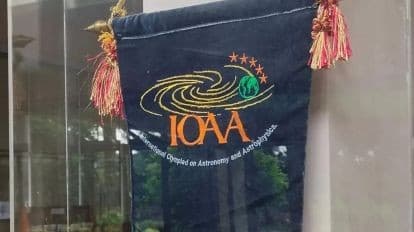
IOAA – annual global Olympiad testing high-schoolers in astronomy, astrophysics & observational science.

18th edition scheduled 2025 at Mumbai, Maharashtra, India.

Hosted by Homi Bhabha Centre for Science Education & TIFR with Union Ministry of Education.

Quick Facts for MCQs

Objectives

  • Promotion scientific thinking, data-analysis and hands-on observation among secondary students.
  • Fostering international cooperation and cultural exchange via team mixed-country activities.
  • Inspiration early careers in astronomy, space science and research.

Event Features

  • Scale largest edition yet with 300 + contestants from 64 nations.
  • Blend theory papers, real telescope work and computer-based data problems.
  • Night-sky practical leveraging Mumbai’s clear post-monsoon skies.

Indian Space Showcase

  • Highlight Aryabhatta legacy to contemporary missions Chandrayaan-3, Aditya-L1.
  • Exhibition domestic observatories like GMRT, upcoming National Large Solar Telescope.
  • Display STEM initiatives enabling wider student participation in space science.

Global Collaboration

  • Emphasis cooperation on Square Kilometre Array radio telescope network.
  • Promotion LIGO-India project linking with US gravitational-wave facilities.
  • Networking future scientists for multinational space and astrophysics ventures.

Key Data Points

FeatureData-Point
Edition number18th
Year2025
Host cityMumbai
Host stateMaharashtra
Expected students300 +
Participating countries64
Lead organisersHBCSE + TIFR
Nodal ministryUnion Ministry of Education
Exam partsTheory, Data-analysis, Night-sky observation
India space missions showcasedChandrayaan-3, Aditya-L1
STEM schemes highlightedAtal Tinkering Labs, One Nation One Subscription
Linked mega-projectsSquare Kilometre Array, LIGO-India

Related UPSC Prelims PYQs

GS1 2025PYQ 1

निम्नलिखित वर्षों पर विचार कीजिए :

GS1 2025PYQ 2

ग्रैण्ड पैलै (Grand Palais) पेरिस में नवम्बर 2025 में आयोजित होने वाले AI शिखर सम्मेलन के सन्दर्भ में, निम्नलिखित कथनों पर विचार कीजिए :

GS-3S&T

10.Low-Earth Satellite Internet Constellations (Satellite Broadband)

The Hindu
Illustration for Low-Earth Satellite Internet Constellations (Satellite Broadband)

What & Where

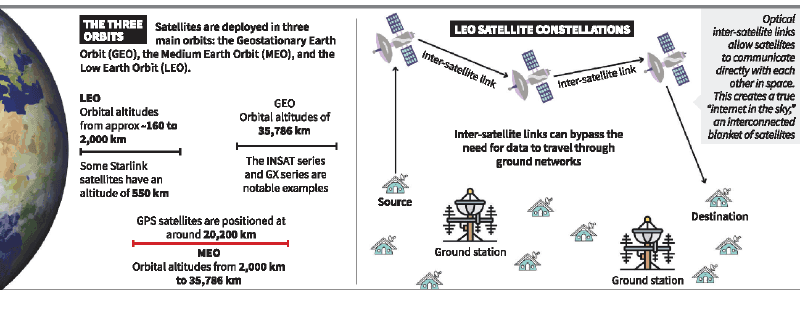
Definition: Satellite internet delivers broadband via space‐based links, bypassing terrestrial fibre or towers

Orbits: GEO (~35,786 km), MEO (2,000–35,786 km), LEO (<2,000 km) enable varying latency-coverage trade-offs

India: Starlink poised to launch service, promising pan-India reach including remote, border, maritime areas

Quick Facts for MCQs

Digital Inclusion

  • Bridging-gap: Reaches villages, islands, mountains where fibre roll-out uneconomical
  • E-services: Boosts telemedicine, e-governance, e-commerce for underserved populations
  • Mobility: Provides stable internet to ships, aircraft, road convoys anywhere

Disaster & Resilience

  • Rapid-restore: Reconnects flood, quake, cyclone zones when ground networks fail
  • Independence: Operates without local cables, immune to terrestrial damage
  • Portable kits: User terminals quickly air-dropped or trucked to crisis areas

Security Dimension

  • High-altitude ops: Keeps Siachen-like posts linked despite terrain challenges
  • Battlefield edge: Enables encrypted comms, drone control, real-time ISR sharing
  • Autonomy need: India urged to develop indigenous sat-internet for strategic control

Key Data Points

FeatureData-Point
Orbit altitude GEO~35,786 km
Orbit altitude MEO2,000–35,786 km
Orbit altitude LEO<2,000 km
Starlink constellationThousands of LEO satellites
System partsSpace segment, ground stations, user terminals
Deployment timeConnectivity possible within hours
Technology natureDual-use: civilian + military
Seamless handoverAutomatic switch between fast-moving LEO satellites

Related UPSC Prelims PYQs

GEO_GS, GS1 2011PYQ 1

Satellites used for telecommunication relay are kept in a geostationary orbit. A satellite is said to be in such an orbit when:

GEO_GS, GS1 2026PYQ 2

For satellite communication, why are microwave links at 10–12 GHz preferred?

GS-3S&T

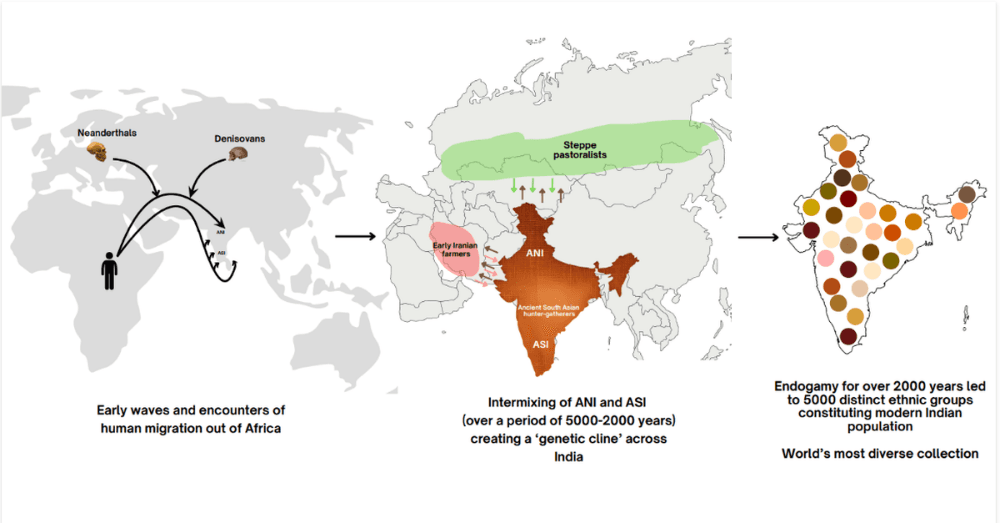
11.India’s Unique Genetic Diversity (Human Genomics)

The Hindu
Illustration for India’s Unique Genetic Diversity (Human Genomics)

What & Where

India shows unparalleled genetic diversity arising from ancient migrations, Neanderthal-Denisovan mixing, and persistent endogamy

>5,000 endogamous ethnic groups across subcontinent hold distinct DNA signatures acting as isolated gene pools

Composite genome reflects Ancestral North and South Indian blend layered with archaic human contributions

Quick Facts for MCQs

Population Genetics

  • Endogamy maintained isolation, intensifying founder effects and identical gene copies
  • Multiple ancient inputs: hunter-gatherers, Iranian farmers, Steppe herders layered over core African settlers
  • Each community acts as a natural genetic laboratory preserving rare alleles

Health & Medicine

  • Rare-variant concentration enables early detection of congenital, metabolic, neurological disorders
  • Personalised-medicine potential includes drug targeting, metabolism profiling, disease-risk stratification
  • Community screening could prevent high-frequency founder disorders cost-effectively

Policy & Infrastructure

  • Scaling genome sequencing to millions proposed for comprehensive diversity capture
  • National biobank on UK model envisaged for long-term health-data linkage
  • Integrating genetic screening into public health flagged as priority

Research & Economy

  • Large variant catalog positions India as global genomics innovation hub
  • Biotech and pharma investment expected to rise via genome-driven drug discovery
  • Ethical frameworks needed to monetise data while safeguarding privacy

Key Data Points

FeatureData-Point
Ethnic groups with unique DNA>5,000
First African settlers≈50,000 years ago
Unique disease-linked variants~1.6 lakh identified
Core ancestral blocksANI + ASI admixture
Founder-disease exampleButyrylcholinesterase deficiency in Vysyas
Archaic human inputNeanderthal & Denisovan genes
GS-3S&T

12.AI Transformation of India’s IT Sector (Artificial Intelligence)

The Hindu

What & Where

Artificial-Intelligence: machine-learning, generative and RPA tools transforming India’s export-oriented IT services model.

Processes: coding assistants, automated testing, predictive maintenance, AI-driven cybersecurity, big-data analytics.

Geography: India; USD 280 bn industry, 5.8 mn employees, hubs Bengaluru–Hyderabad–NCR.

Quick Facts for MCQs

Productivity & Automation

  • Coding-assistants: GitHub Copilot boosting developer output, shifting roles toward oversight, ethics, domain logic.
  • RPA-leader: UiPath automates repetitive rule-based tasks, reducing human error, turnaround time.
  • Predictive-tools: Splunk analyses performance data to pre-empt hardware or software failure, cutting downtime.

Security Dimension

  • Threat-detection: Darktrace Enterprise Immune System learns normal traffic, flags anomalous logins or file transfers.
  • Response-speed: AI systems act faster than analysts, hardening enterprise cyber posture.

Workforce Concerns

  • Skill-gap: urgent reskilling needed in AI, data science, cybersecurity, ethical governance.
  • Displacement-risk: routine coding, maintenance, back-office roles most exposed to automation.
  • Wage-pressure: possible stagnation for mid-level legacy skills as demand shifts to AI expertise.

Policy & Schemes

  • Infrastructure-push: IndiaAI Mission planning high-performance GPU centres; AIKosh to share public datasets.
  • Regulation-need: DPDP Act sets privacy baseline; applicability to AI model training still unclear.
  • PPP-research: Government encouraging deep-tech hubs, startup funding, proprietary AI product development.

Key Data Points

FeatureData-Point
Indian IT market sizeUSD 280 billion
Sector employment5.8 million persons
TCS job cuts 2025~12,000 positions
McKinsey automation estimate50 % global work 2030-2060
WEF potential jobs displaced85 million by 2025
DPDP Act enactment2023
Fund of Funds allocation₹10,000 crore for deep-tech
AI Impact SummitNew Delhi, 2026

Related UPSC Prelims PYQs

GS1 2025PYQ 1

विश्व बैंक ने यह चेतावनी दी है कि भारत वह पहला देश बन सकता है जहाँ आर्टिफ़िशियल इंटेलिजेंस-आधारित ऑटोमेशन (डेटा-ड्रिवन ऑटोमेशन) के कारण 35% से अधिक नौकरियाँ प्रभावित होंगी। निम्नलिखित कथनों पर विचार कीजिए:

GS1 2020PYQ 2

विकास की वर्तमान स्थिति में, कृत्रिम बुद्धिमत्ता (Artificial Intelligence), निम्नलिखित में से किस कार्य को प्रभावी रूप से कर सकती है?

GS-3S&TQuick Bite

13.NASA Orbiting Carbon Observatories (Climate Satellites)

Indian Express
Illustration for NASA Orbiting Carbon Observatories (Climate Satellites)

What & Where

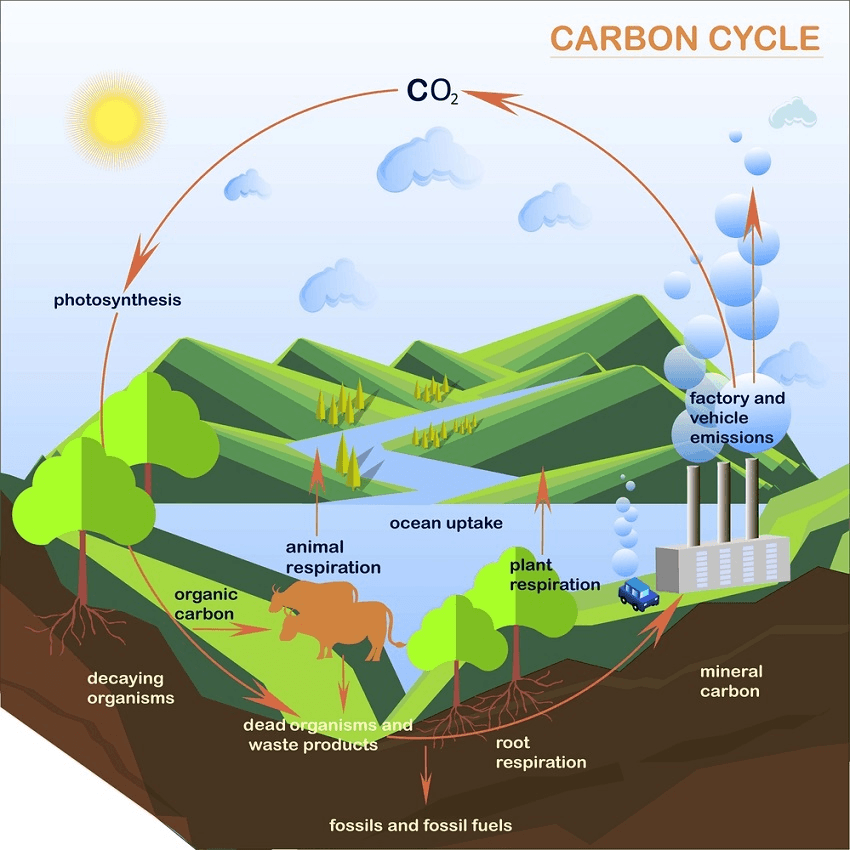
NASA Orbiting Carbon Observatories (OCO-2 polar, OCO-3 ISS) deliver global high-resolution atmospheric CO2 observations

Coverage spans all continents; OCO-2 samples each location same local time, OCO-3 multiple times daily

Missions quantify CO2 sources, sinks and map photosynthetic solar-induced fluorescence indicating crop health

Quick Facts for MCQs

Tech & Schemes

  • Sensor detects reflected sunlight to derive CO2 concentration and plant fluorescence concurrently
  • ISS orbit lets OCO-3 revisit locations different times enabling diurnal CO2 and crop stress analysis
  • Data fusion OCO-2 polar constancy plus OCO-3 multi-time views refines carbon flux estimates

Environmental Impact

  • Boreal taiga identified by OCO-2 as dominant global carbon sink over tropical rainforests
  • Observations show drought or deforestation can flip ecosystems from CO2 sink to net source
  • Fluorescence mapping aids monitoring of global plant productivity supporting climate adaptation measures

Policy Decision

  • US administration 2025 ordered early termination of OCO-2 and OCO-3 missions
  • Potential data gap could hamper Paris Agreement stocktakes and IPCC carbon budgets
  • Findings guide policymaking on emission reduction and carbon market baselines worldwide

Key Data Points

FeatureData-Point
First launch attemptOCO (2009) failed fairing separation
Successor launchesOCO-2: 2014; OCO-3: 2019
Platform OCO-2Sun-synchronous polar orbit ~705 km
Platform OCO-3Mounted on ISS, 90-min Earth orbit
Termination notice2025 US directive to NASA
Core measurementAtmospheric CO2 and solar-induced fluorescence
Key findingBoreal taiga absorbs more CO2 than tropical forests
Sink reversal clueDrought or deforestation turns sinks into sources
GS-2MiscQuick Bite

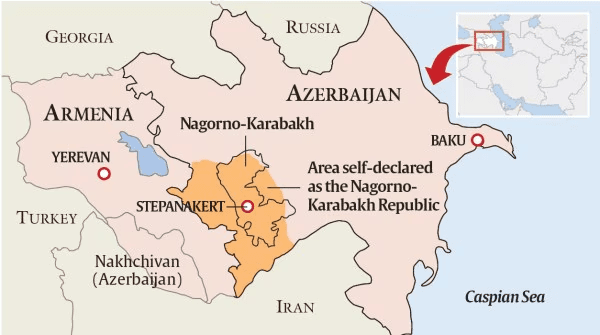
14.Armenia-Azerbaijan Peace Deal (Nagorno-Karabakh)

Indian Express
Illustration for Armenia-Azerbaijan Peace Deal (Nagorno-Karabakh)

What & Where

Nagorno-Karabakh : mountainous, land-locked enclave in South Caucasus between Black & Caspian Seas.

Internationally recognised as Azerbaijan’s territory; majority ethnic Armenians drove century-long sovereignty dispute.

Aug 2025 US-brokered peace: Armenia & Azerbaijan respect borders, renounce force, drop territorial claims.

Quick Facts for MCQs

Conflict Timeline

  • 1917 Russian collapse sparked rival claims over enclave.
  • 1994 ceasefire left area under Armenian-backed control despite Azerbaijani sovereignty.
  • 2023 offensive displaced thousands of ethnic Armenians, restoring Baku’s military hold.

US Strategic Role

  • Secured sole development rights over South Caucasus transit corridor, boosting regional influence.
  • Agreement bans use of force, aligns with international law, positions Washington as key mediator.

India Angle

  • Sees Armenia & Azerbaijan along International North-South Transport Corridor trade axis.
  • Supports pact; existing 1995 treaty with Armenia complements INSTC connectivity ambitions.

Key Data Points

FeatureData-Point
Peace brokerUnited States
Deal signedAugust 2025
Key clauseMutual territorial integrity recognition
Exclusive corridor rights‘Trump Route for International Peace & Prosperity’ to USA
2023 eventAzerbaijani offensive regained enclave control
India-Armenia pact1995 Friendship & Cooperation Treaty
GS-2Scheme

15.Nasha Mukt Bharat Anti-Drug Campaign (Anti-Drug Initiative)

The Hindu
Illustration for Nasha Mukt Bharat Anti-Drug Campaign (Anti-Drug Initiative)

What & Where

Nationwide anti-drug mission covering 272 vulnerable districts across India

Launched 15 Aug 2020; nodal body — Ministry of Social Justice & Empowerment

Works on prevention, demand-reduction, treatment and rehabilitation of substance users

Quick Facts for MCQs

Tech & Scheme Design

  • Digital integration via mobile app, website, real-time dashboards for outreach tracking
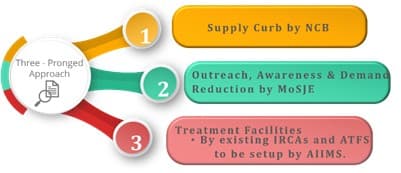
  • Inter-ministerial model: NCB cuts supply, MoSJE handles demand, Health Ministry manages treatment

Community Mobilisation

  • Youth, women, panchayats enlisted as volunteer force for rallies, nukkad-nataks, campus drives
  • Faith-based groups and local NGOs amplify messaging in vernacular languages

Capacity & Impact

  • 20 k+ master volunteers cascade training to village level service providers
  • 18 crore citizens reached; early reports indicate dip in drug-related crime and social unrest

Key Data Points

FeatureData-Point
Launch date15 August 2020
Nodal ministrySocial Justice & Empowerment
High-risk districts272
Core approachSupply-Demand-Treatment triad
Supply armNarcotics Control Bureau
Tech toolsNMBA app, portal, social media
Master volunteers trained20,000 +
Citizens sensitised18 crore +
Partner NGOsArt of Living, Brahma Kumaris, ISKCON
Field committeesDistrict & State; Collector/Secretary-led
GS-2Scheme

16.SHRESTH Drug Regulatory Index (Drug Regulation)

News on Air
Illustration for SHRESTH Drug Regulatory Index (Drug Regulation)

What & Where

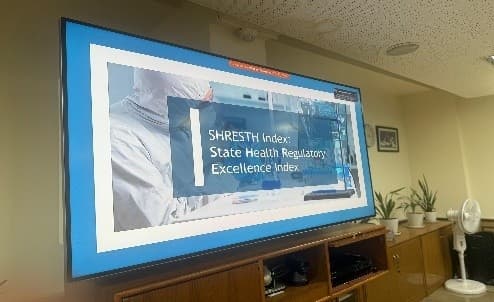
SHRESTH: first national virtual index benchmarking state/UT drug regulatory systems

Implementer: CDSCO, Union Ministry of Health & Family Welfare; coverage—entire India

Categories: Manufacturing States, Distribution States/UTs assessed separately

Quick Facts for MCQs

Tech & Schemes

  • Digital-platform captures state data, auto-generates rankings and dashboards
  • Cross-learning module showcases top-state success stories for replication
  • Supports broader e-governance drive in pharmaceutical regulation

Evaluation Metrics

  • Five themes weight performance on manpower strength, facilities, process rigour, market vigilance, citizen response
  • Separate indicator sets respect differing roles of manufacturing vs distribution jurisdictions
  • Continuous monthly cycle fosters real-time corrective action

Legal & Policy

  • Harmonisation target: consistent enforcement of Drugs and Cosmetics Act, 1940 across India
  • Index designed to elevate national regulator maturity to WHO-benchmarked ML3 level
  • Strengthened compliance expected to boost global trust in Indian-made medicines

Key Data Points

FeatureData-Point
Full formState Health Regulatory Excellence Index
Launch year2024
Implementing bodyCDSCO
Parent ministryUnion Health & Family Welfare
Tool typeVirtual gap-assessment & ranking
Manufacturing indicators27
Distribution indicators23
Common themesHR, Infrastructure, Licensing, Surveillance, Responsiveness
Data submissionMonthly by states/UTs
Feedback frequencyMonthly scoring & report
WHO alignment goalML3-equivalent standards
Key outcomeUniform Drugs & Cosmetics Act implementation

Related UPSC Prelims PYQs

ESE_GS 2026PYQ 1

Which organization developed the Online National Drugs Licensing System (ONDLS) portal?

GS-2Scheme

17.Revised MPLADS Scheme Guidelines (MPLADS)

PIB
Illustration for Revised MPLADS Scheme Guidelines (MPLADS)

What & Where

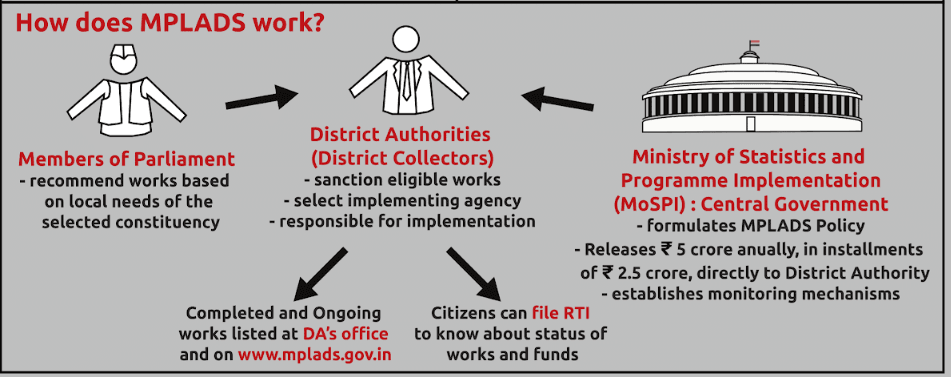
Central-sector scheme (MPLADS) launched 1993; lets MPs propose durable community assets.

Core process: MoSPI releases ₹5 cr/MP/yr to district authority; project sanction & execution at district level.

Geography: Lok Sabha within constituency; Rajya Sabha within state; nominated MPs any one state; small cross-border leeway nationally.

Quick Facts for MCQs

Legal & Policy

  • Guidelines 2023 mandate full technical + financial delegation to district authority for speed.
  • Bar Association buildings on court premises now admissible, recurring costs barred.
  • Nominated MPs must pick only one state for all works.

Funding Pattern

  • Carry-forward possible across Lok Sabha terms if MP re-elected.
  • Interest earned on deposits treated as additional MPLADS funds.
  • Unspent balance after 18 months of term end reverts to Consolidated Fund.

Monitoring Architecture

  • MoSPI conducts annual review, publishes online dashboard progress.
  • State committees plus third-party audits for projects ≥ ₹50 lakh.
  • Implementing agency must geo-tag and 100 % verify completed assets.

Key Data Points

FeatureData-Point
Admin MinistryMoSPI
Scheme launch1993
Scheme natureCentral Sector
Annual entitlement₹5 crore per MP
Installments2 × ₹2.5 crore
SC asset minimum15 % of funds
ST asset minimum7.5 % of funds
Outside-constituency unity spend≤ ₹25 lakh/yr
Calamity relief anywhere≤ ₹1 crore
Fund characterNon-lapsable, carry-forward permitted
Eligible landGovt land or regd NGO (≥3 yrs)
Convergence allowed withSBM, MGNREGS, Khelo India
District inspection quota≥ 10 % works yearly
State inspection quota≥ 1 % works yearly
Audit authorityCAG-empanelled auditors

Related UPSC Prelims PYQs

CDS_GK, GS1 2020PYQ 1

Which of the following statements is not correct regarding the Members of Parliament Local Area Development Scheme (MPLADS)?

CDS_GK, GS1 2020PYQ 2

With reference to the funds under Members of Parliament Local Area Development Scheme (MPLADS), which of the following statements are correct?

GS-2SchemeQuick Bite

18.PMUY LPG Subsidy Extension (Clean Cooking Fuel)

Indian Express

What & Where

Union Cabinet India okays OMC loss-cover FY 24-25 and extends PMUY LPG subsidy FY 25-26

Delivery via PAHAL DBT; Rs 300 support per 14.2 kg cylinder; max 9 refills

Nationwide clean-fuel push under Pradhan Mantri Ujjwala Yojana launched 2016

Quick Facts for MCQs

Government Decision

  • Cabinet approves loss compensation for public OMCs selling below import-parity
  • Rs 300 DBT subsidy retained; routed through PAHAL; Treasury bears burden

Eligibility & Access

  • Beneficiary women 18 +; no prior LPG; SC/ST, PMAY-G, AAY, MBC, SECC poor, tribal, island groups
  • Ujjwala 2.0 eases KYC for migrants via self-declaration

Social Impact

  • Indoor air-pollution fall improving women’s respiratory health
  • Reduced firewood collection cuts drudgery; boosts time for income and education
  • Lower biomass burning aids deforestation control and nutrition enhancement

Performance Metrics

  • 10.33 crore active PMUY connections; widest household clean-fuel coverage globally
  • 49 % rise in per-capita LPG consumption signals adoption momentum

Key Data Points

FeatureData-Point
PMUY launch year2016
Implementing ministryPetroleum & Natural Gas
DBT subsidy per cylinderRs 300
Cylinder size subsidised14.2 kg
Refill cap per year9
OMC budgetary support spanFY 2024-25
Subsidy continuation spanFY 2025-26
PMUY connections (Jul 2025)10.33 crore
LPG use jump among PMUY homes49 % between 2019-24
PMUY Phase-2 labelUjjwala 2.0
Migrant family relaxationsSelf-declaration in lieu of address proof

Related UPSC Prelims PYQs

CAPF_GAI 2020PYQ 1

PAHAL, an initiative to transfer the subsidy to direct bank account of the beneficiaries, is related to

GS-1Polity

19.CBSE Open-Book Assessment Reforms (Education Reform)

Indian Express

What & Where

Open-Book Assessment (OBE); exam lets students consult pre-approved books/notes

Rolled out by CBSE across India; full launch Class 9 in 2026-27 session

Pilot run 2023-24 for English, Mathematics, Science, Biology

Quick Facts for MCQs

Policy Alignment

  • NEP 2020 mandate competency-based, analytical evaluation
  • CBSE Governing Body formalised OBE adoption June 2025

Pedagogical Shift

  • Emphasis on critical thinking, problem-solving over memorisation
  • Requires rapid referencing, conceptual clarity, idea synthesis

Implementation Roadmap

  • Gradual scaling beyond pilot subjects; adaptable to multiple grades
  • Pre-approved material list to be standardised for uniformity

Student Impact

  • Early studies indicate reduced stress, accommodates diverse learning styles
  • Encourages authentic engagement with curriculum, not cram-and-dump

Key Data Points

FeatureData-Point
Implementing bodyCentral Board of Secondary Education
Governing Body nodJune 2025
First full cohortClass 9, academic year 2026-27
Pilot year2023-24
Pilot subjectsEnglish, Maths, Science, Biology
Key aimShift from rote to competency-based learning
NEP linkageAligns with NEP 2020
Allowed resourcesTextbooks, class notes, teacher sheets
Question focusInterpretation, synthesis, real-life application
Reported benefitLower exam anxiety vs closed-book tests

Ready to practice?

Test your knowledge with our UPSC test series.

Start Free Trial