UPSC Current Affairs

14 topicsGS-1: 3GS-2: 5GS-3: 6
0/14 done
GS-2Polity

1.AI SabhaSaar Gram Sabha Tool (Local Governance)

DH

What & Where

SabhaSaar: AI-driven tool auto-transcribes video/audio of Gram Sabha meetings into structured, official-ready minutes.

Built by Union Ministry of Panchayati Raj; plugged into Bhashini National Language Translation Mission platform.

Pilot launch in Tripura; slated for nationwide use, incl. Special Gram Sabhas on national days.

Quick Facts for MCQs

Tech & Schemes

  • NLP engine converts multilingual speech to text; summariser flags decisions and action items.
  • Cloud architecture enables scalable deployment across 2.6 lakh Gram Panchayats.
  • Output formatted to statutory template, ready for digital signature and archival.

Governance Efficiency

  • Automation cuts several man-hours per meeting; frees officials for developmental tasks.
  • Standardised minutes promote uniform record-keeping across diverse Panchayats.
  • Instant availability accelerates follow-up on sanctioned works and fund releases.

Transparency & Inclusion

  • Tamper-proof digital records curb later alterations and disputes.
  • 13-language support empowers non-English/Hindi functionaries and local communities.
  • Public access to authenticated minutes strengthens social audit and accountability.

Key Data Points

FeatureData-Point
DeveloperUnion Ministry of Panchayati Raj
Core TechArtificial Intelligence + NLP
IntegrationBhashini (National Language Translation Mission)
Supported languages13 (incl. Kannada, English)
Initial roll-out stateTripura
Primary user levelGram Sabha / Panchayat officials
Main deliverableStructured minutes with decisions, resolutions, action points
Key benefitsTime-saving, transparency, standardisation
Planned coverageAll states; nationwide scaling
Usage occasionsRegular & Special Gram Sabhas on national days
GS-2Polity

2.Overseas Citizen of India Scheme (Citizenship Policy)

Hindustan Times

What & Where

Overseas Citizen of India (OCI): quasi-citizenship status for persons of Indian origin to reside, work, travel visa-free in India.

Governed by Citizenship Act, 1955; latest MHA rules tighten cancellation criteria for criminal offences anywhere worldwide.

Applies globally to eligible diaspora except those with Pakistani/Bangladeshi citizenship in self or ancestry.

Quick Facts for MCQs

Legal & Policy

  • Amendment empowers Centre to cancel OCI upon mere charge-sheet, not just conviction, for serious offences.
  • Cancellation discretionary yet follows principles of natural justice under Citizenship Rules.
  • Strengthens state oversight over diaspora residency privileges.

Eligibility & Rights

  • Eligibility spans citizens of India post-26 Jan 1950, their children/grandchildren, minor children of such persons.
  • Enjoys economic, educational parity with NRIs minus political participation.
  • Aligns with India’s diaspora engagement strategy without diluting sovereign control.

Security Dimension

  • New rules plug security gaps by recognising foreign convictions/charges under equivalent Indian offences.
  • Places OCI holders under similar criminal scrutiny thresholds as foreign visa applicants.
  • Facilitates swift action against transnational crime or activities hurting India’s integrity.

Key Data Points

FeatureData-Point
Launch year2005
Nodal ministryHome Affairs
Governing lawCitizenship Act, 1955
Relevant section7D clause (da)
Visa benefitLifelong, multiple-entry
Conviction term cut-off≥ 2 years jail
Charge-sheet barOffence punishable ≥ 7 years
Jurisdiction reachIndia & abroad if offence mirrors Indian law
Property barNo agricultural/plantation land
Political rightsNo voting/constitutional posts
Excluded nationalitiesPakistan, Bangladesh
Cancellation old groundsFraud, disaffection, enemy trade, sovereignty threats
GS-2Scheme

3.Fast Track Special Courts Scheme (Judicial Reforms)

PIB
Illustration for Fast Track Special Courts Scheme (Judicial Reforms)

What & Where

Definition: Fast Track Special Courts expedite rape & POCSO trials for swifter victim justice

Scheme-type: Centrally Sponsored, created Aug 2019 under Department of Justice, Ministry of Law & Justice

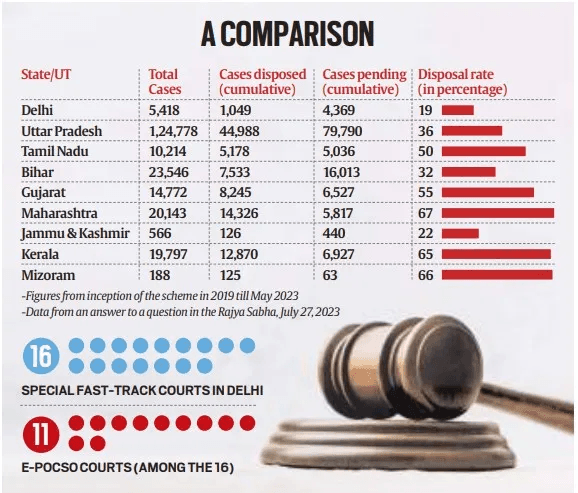
Coverage: 761 courts (414 POCSO-exclusive) functional across 30 States/UTs

Quick Facts for MCQs

Legal & Policy

  • Enactment: 2018 amendment added death penalty for rape, necessitating dedicated courts
  • Directive: Supreme Court 2019 ordered swift POCSO disposal leading to scheme formulation
  • Approval: Union Cabinet Nov 2023 okayed three-year continuation with central funding

Performance Metrics

  • Disposal: 1.95 lakh cases cleared, yet huge backlog persists
  • Rate-gap: Designed 165 vs realised 28 cases per court annually
  • Conviction: Only 3.3 % conviction from total trials, raising efficacy concerns

Operational Challenges

  • Infrastructure: Courts mostly redesignated, lacking separate buildings, staff, tech
  • Pendency: States like UP, Bihar may need 21-30 years to clear dockets
  • Human-resource: 23 % judge vacancies, minimal specialised training for sexual-offence handling

Reform Suggestions

  • Investment: Allocate funds for courtrooms, e-tools, support staff
  • Case-flow: Enforce strict schedules, curb adjournments, fast evidence recording
  • Staffing: Fill vacancies swiftly, post judges trained in child & sexual-crime law

Related Schemes

  • Beti Bachao Beti Padhao focuses on girl survival, education, empowerment
  • Juvenile Justice Act 2015 governs child protection, care, rehabilitation

Key Data Points

FeatureData-Point
Cabinet extensionUp to 31 Mar 2026
Initial launchOct 2019 (1-year pilot)
Legal basisCriminal Law (Amendment) Act 2018
Supreme Court triggerSuo-motu Writ (Criminal) 2019
Total cases disposed≈ 1.95 lakh
Pending POCSO cases2.43 lakh (31 Jan 2023)
Operational courts761; of these 414 exclusive POCSO
Average yearly clearance28 cases per court vs target 165
Convictions achieved8,909 of 2.68 lakh trials
Judiciary vacancy rate23 % in lower courts (2022)
GS-3Economy

4.Jute Fibre Import Restrictions (Jute Industry)

News on Air
Illustration for Jute Fibre Import Restrictions (Jute Industry)

What & Where

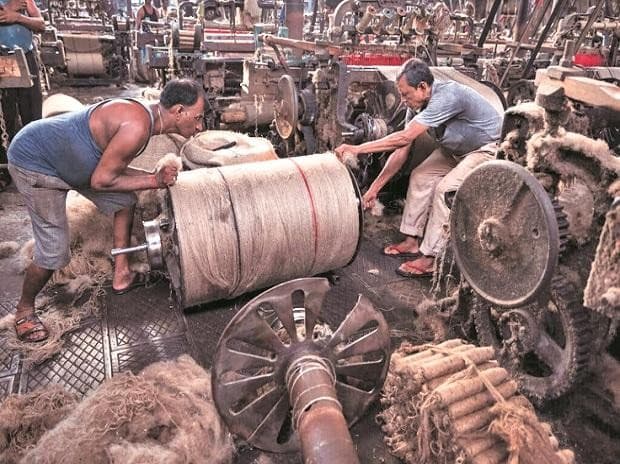
Fibre: Long, lustrous bast strands from Corchorus genus; called the Golden Fibre.

Process: Water-retting of stalks, then spinning into coarse, high-strength yarn.

Core belt: Ganga–Brahmaputra delta; West Bengal, Assam, Bihar, Odisha, Andhra Pradesh.

Quick Facts for MCQs

Trade & Policy

  • Ban: Selected Bangladeshi jute goods, ropes barred via land crossings.
  • Checkpoint: Nhava Sheva sole entry to enforce BIS quality norms.
  • Objective: Shield domestic mills, curb sub-standard imports.

Geography & Climate

  • Delta plains ensure waterlogging vital for retting.
  • Sowing March–May; harvest July–Sept aligned with monsoon peak.
  • Secondary belts: Assam valley, coastal Odisha, north Andhra.

Industrial History

  • British-era Calcutta mills anchored global jute trade.
  • Post-1947 industry key for rural jobs, export earnings.
  • Recent diversification into geotextiles, composites to revive demand.

Material Properties

  • Biodegradable, renewable; supports plastic-substitution drives.
  • High tensile strength fits sacking, erosion-control, ropes.
  • Six-month crop cycle offers quick biomass turnover.

Key Data Points

FeatureData-Point
India’s world share≈70 % of output
Dominant stateWest Bengal
Ideal climateWarm, humid, heavy rain
Best soilDeltaic alluvium
Botanical familyMalvaceae
New import ruleOnly via Nhava Sheva seaport
Banned routesAll land borders with Bangladesh
Popular aliasGolden Fibre
Earliest useIndus Valley ropes, mats
Colonial mill hubHooghly belt, Bengal

Related UPSC Prelims PYQs

GS1 1996PYQ 1

Which one of the following is an important crop of the Barak valley?

GS1 2020PYQ 2

“This crop is of tropical origin. For its development it requires about 210 frost-free days and 50–100 centimetres of rainfall annually. Its adaptability to moist, deep, well-drained soils makes it ideally suited for plantation agriculture.” Which one of the following crops is described in the above passage?

GS-3Economy

5.RBI Framework for Ethical AI Adoption (Responsible AI)

Indian Express
Illustration for RBI Framework for Ethical AI Adoption (Responsible AI)

What & Where

Framework for Responsible and Ethical Enablement of AI (FREE-AI) — RBI committee blueprint for banking & financial services.

Scope: Indian regulated entities (banks, NBFCs, payments, insurers) using AI/ML across credit, risk, compliance, consumer interface.

Geography: Pan-India; aligns with RBI policy statement dated 6 Dec 2024.

Quick Facts for MCQs

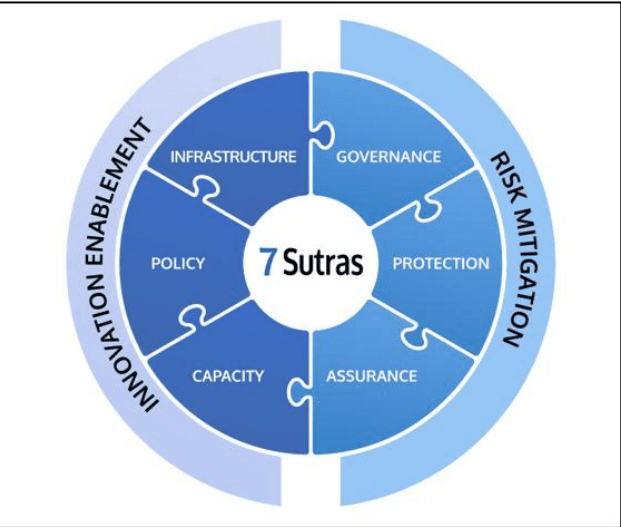
Guiding Sutras

  • Trust-foundation; transparency & reliability prioritized.
  • People-first; AI assists, not replaces, human judgment.
  • Understandable-by-design; explainability mandatory to avoid “black-box” decisions.

Key Recommendations

  • Governance: Board-approved AI policy covering lifecycle, audits, grievance redress.
  • Product rollout: Include AI-specific risk tests in RBI product-approval process.
  • Cybersecurity: Mandatory AI incident reporting; resilient, sustainable architectures.

Challenges

  • Bias risk; skewed datasets may trigger discriminatory credit/fraud flags.
  • Privacy vulnerabilities; large-scale financial data attractive to cyber-attacks.
  • High costs; compute infrastructure and skilled talent raise entry barriers.

Key Data Points

FeatureData-Point
Constituting bodyReserve Bank of India
Committee nameFREE-AI Committee
ChairpersonDr. Pushpak Bhattacharyya
Formation referenceMonetary Policy Statement, 6 Dec 2024
Deliverables7 “Sutras” + 26 recommendations under 6 pillars
Central aimBalance innovation with transparency, fairness, accountability
AI Innovation SandboxRecommended controlled test environment
Shared infra proposalCommon data & compute layer for all regulated entities

Related UPSC Prelims PYQs

ESE_GS, NDA_GAT 2024PYQ 1

To increase transparency and consumer awareness and handle customer complaints, a 'Centralised Receipt and Processing Centre' and an 'Integrated Ombudsman Scheme' have been set up. These two schemes are related to which one of the following institutions?

ESE_GS, NDA_GAT 2025PYQ 2

निम्नलिखित में से कौन-सी एजेंसी ‘SAFE आवास : वित्तीय विकास के लिए श्रमिक आवास सुविधाएँ’ पर रिपोर्ट जारी करती है?

GS-3Infrastructure

6.TRAI Digital Connectivity Rating Framework (Digital Infrastructure)

LiveMint
Illustration for TRAI Digital Connectivity Rating Framework (Digital Infrastructure)

What & Where

National framework to rate real-estate on digital-connectivity readiness and performance.

Assesses fibre readiness, indoor mobile coverage, Wi-Fi, broadband speed and overall user experience with measurable metrics.

Applicable across India; released 2024 by Telecom Regulatory Authority of India (TRAI), New Delhi.

Quick Facts for MCQs

Tech & Schemes

  • Metrics include fibre availability, signal attenuation, Wi-Fi density, throughput, latency-based UX scoring.
  • Manual provides uniform protocol for accredited Digital Connectivity Rating Agencies across property categories.

Legal & Policy

  • 2024 regulations give statutory status; ratings voluntary but may guide future building codes & municipal approvals.
  • Supports Digital India by encouraging transparent, competition-friendly disclosure of property-level connectivity quality.

Consumer & Developer Impact

  • Buyers/tenants get pre-purchase clarity, aiding remote work, e-learning, telehealth, online services adoption.
  • Early design integration of ducts & in-building solutions lowers retrofit costs, boosting developer incentives.

Key Data Points

FeatureData-Point
Launching bodyTRAI
Framework nameProperty Rating Framework for Digital Connectivity
Legal backingRating of Properties for Digital Connectivity Regulations, 2024
Core evaluation aspectsFibre, indoor 4G/5G, Wi-Fi, broadband speed, UX
Target usersBuyers, tenants, enterprises, developers
TRAI set-up date20 Feb 1997
TRAI headquartersNew Delhi
Related tribunalTDSAT, created 2000 on TRAI advice

Related UPSC Prelims PYQs

ESE_GS 2026PYQ 1

The Samriddh Gram Phygital Services Pilot Project was recently launched by which organization?

GS-1HistoryQuick Bite

7.Goa Dhirio Bull Fighting Tradition (Traditional Sport)

Indian Express

What & Where

Dhirio / Dhiri = non-lethal bull-versus-bull strength contest rooted in Goa, India.

Originates from Portuguese era; practised mainly in coastal villages despite legal ban.

Fights held on paddy fields or football grounds during village feasts or post-harvest events.

Quick Facts for MCQs

Legal & Policy

  • 1997 Bombay HC ban invoked Prevention of Cruelty to Animals Act 1960
  • Supreme Court upheld ban same year sustaining nationwide illegality
  • Fresh legalization demand cites SC 2023 cultural exemption granted to Jallikattu

Cultural Context

  • Integral to Goan church feasts and post-harvest village celebrations
  • Seen as community attraction with potential tourism draw
  • Maintains devoted local following despite prohibition

Sport Mechanics

  • Two specially bred, trained bulls pushed to test strength until one withdraws
  • Events staged on makeshift arenas in paddy fields or football grounds
  • Lacks matadors or ritual killing unlike Spanish bullfighting

Key Data Points

FeatureData-Point
Sport natureBull-on-bull strength contest
Matador / killingAbsent
Primary stateGoa
Period of originPortuguese era
Banning court & yearBombay High Court 1997
Statutory basisPrevention of Cruelty to Animals Act 1960
Supreme Court stanceBan upheld 1997
Cultural linkChurch feasts & agrarian celebrations
Current practiceContinues illegally in some villages
Comparator sportTamil Nadu Jallikattu allowed by SC 2023
GS-1Mapping

8.Nepal Geography and Tourism Overview (Country Mapping)

NDTV
Illustration for Nepal Geography and Tourism Overview (Country Mapping)

What & Where

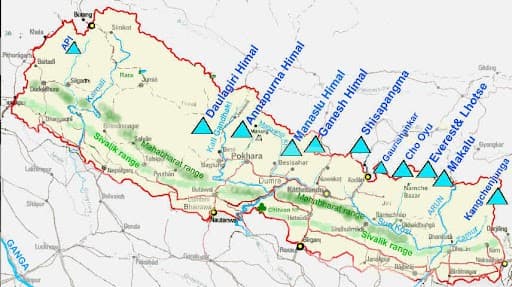
Waiver: Nepal eliminates climbing fees on 97 lesser-known western peaks to stimulate regional tourism

Location: Targeted summits lie in Karnali and Sudurpaschim provinces within the western Himalayan belt

Nepal: Landlocked South Asian state between India and Tibet, capital Kathmandu, home to world’s highest mountains

Quick Facts for MCQs

Tourism Policy

  • Fee-cut: Permit cost removal expected to attract climbers away from overcrowded Everest routes
  • Regional focus: Policy designed to channel trekking income into underserved western communities, boosting lodges, guides, porters
  • Competitive edge: Nepal seeking to outcompete alternative Himalayan destinations by lowering entry barriers

Himalayan Geography

  • Peaks: Nepal hosts Everest, Kanchenjunga, Lhotse, Makalu, Cho Oyu, Dhaulagiri, Manaslu, Annapurna
  • Terrain: Steep altitudinal variation from Terai plains to 8,000 m zones within 200 km north-south span
  • Strategic: Mountain barrier forms natural frontier with Tibet, influencing climate and defence considerations

Water Resources

  • Rivers: Kosi, Narayani, Karnali flow south into India, fed by glacial melt
  • Energy: Sharp gradients grant high hydropower potential, key for bilateral electricity trade with India
  • Floods: Monsoon runoff from Himalayan catchments often causes downstream flooding in Bihar and Uttar Pradesh

Key Data Points

FeatureData-Point
Fee-waiver peaks97 mountains
Provinces coveredKarnali & Sudurpaschim
Country statusLandlocked South Asia
Neighbouring entitiesIndia; Tibet A.R. of China
CapitalKathmandu
Highest peakMount Everest 8,849 m
8,000-m summits8 of world’s top 10
Major riversKosi, Narayani (Gandak), Karnali
Hydropower traitSteep, glacial fed; high potential
GS-3Species

9.Jellyfish Blooms Impact Nuclear Cooling (Marine Species)

Indian Express

What & Where

Jellyfish – ancient, gelatinous Cnidaria (class Scyphozoa) often bloom massively, drifting in global oceans.

Gravelines Nuclear Power Station – six-unit PWR complex on France’s North Sea coast between Calais & Dunkirk.

Massive jellyfish swarm clogged plant’s seawater intakes, forcing temporary shutdown of three reactors.

Quick Facts for MCQs

Biological Traits

  • Nematocysts deliver stings for prey defense.
  • Lacks bones, brain, heart; nutrients diffuse through 95 % water body.
  • Blooms triggered by warm water, eutrophication, low predators.

Energy Operations

  • PWRs need uninterrupted seawater for heat exchange.
  • Intake blockages trigger automatic reactor scrams for safety.
  • Jellyfish, algae and debris are recurrent bio-fouling risks.

Geographic Context

  • Gravelines sits midpoint Calais-Dunkirk on North Sea littoral.
  • Site proximity to shallow, nutrient-rich waters encourages jellyfish aggregations.
  • Coastal nuclear plants worldwide share similar marine-organism shutdown incidents.

Key Data Points

FeatureData-Point
PhylumCnidaria
ClassScyphozoa
Body water content≈95 %
Common exemplar speciesAurelia aurita (Moon Jellyfish)
Evolutionary age> 500 million years
MovementPassive drift; bell pulsations
Bloom definitionRapid population explosion under favourable conditions
Plant reactor typePressurised Water Reactor (PWR)
Reactors affected3 of 6
Plant rankAmong Europe’s largest nuclear stations
Cooling sourceNorth Sea coastal waters
Regional locationHauts-de-France, Northern France
GS-3S&T

10.Private Indigenous EO Satellite Constellation (Space PPP)

The Hindu
Illustration for Private Indigenous EO Satellite Constellation (Space PPP)

What & Where

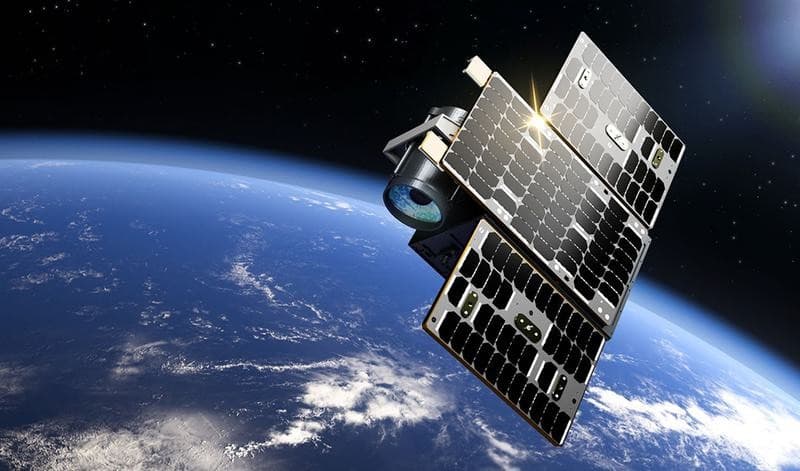
Initiative: India’s first fully indigenous commercial Earth-Observation satellite constellation under PPP via IN-SPACe

Coverage: 12 private‐built EO satellites assembled, launched, operated from India (Bengaluru firms in lead)

Objective: Supply high-resolution, secure geospatial data for domestic needs and global customers

Quick Facts for MCQs

Tech & Schemes

  • First PPP for satellite ownership and ops sanctioned after 2020 space sector reforms
  • Hyperspectral sensors capture hundreds of spectral bands enabling fine-grained analytics
  • Outputs delivered as cloud-based ARD and AI-driven VAS for quick user integration

Economic Angle

  • ₹1,200 crore private spend signals rising venture capital in Indian space economy
  • Indigenous constellation slashes import of costly foreign EO datasets, saving forex
  • Export of high-value geospatial intelligence expected to open new revenue streams

Security Dimension

  • Domestic control over imaging chain enhances data sovereignty and cyber resilience
  • High-resolution feeds aid border vigilance, maritime domain awareness, strategic planning
  • Rapid revisit capability strengthens disaster response and critical infrastructure monitoring

Key Data Points

FeatureData-Point
Implementing bodyIN-SPACe PPP framework
Lead partnerPixxel Space India
Other consortium firmsPiersight Space; Satsure Analytics; Dhruva Space
Constellation size12 EO satellites
Imaging techHyperspectral + other advanced sensors
Private investment₹1,200 crore over 5 years
Data productsAnalysis Ready Data; Value-Added Services
Core applicationsClimate, disaster, agri, marine, urban, security
Global outreachForeign geospatial intelligence market addressed
Pixxel founded2019; HQ Bengaluru

Related UPSC Prelims PYQs

GS1 2010PYQ 1

In the context of space technology, what is “Bhuvan”, recently in the news?

GS1 1996PYQ 2

Which one of the following satellites is to be launched from India in 1996?

GS-2EconomyQuick Bite

11.India-Oman CEPA Negotiations Concluded (Trade Agreement)

Economic Times

What & Where

Definition: Comprehensive Economic Partnership Agreement (CEPA) = broad free-trade pact covering goods, services, facilitation, IPR, competition

Type: Wider scope than standard FTA, addresses regulatory issues for predictable trade

Geography: Bilateral pact between India and Oman, key Gulf state bordering UAE, Saudi Arabia, Yemen

Quick Facts for MCQs

Legal & Policy

  • Scope: Includes trade facilitation, competition policy, intellectual property rights
  • Character: Goes beyond tariffs to regulatory coherence ensuring smooth trade
  • Forums: Oman also key in GCC, Arab League, IORA dialogues

Economic Angle

  • Exports: India ships light oils, rice, machinery, metals to Oman
  • Imports: India buys crude oil, LNG, fertilizers, chemicals from Oman
  • Objective: CEPA aims to boost two-way trade & investment volumes beyond USD 10 billion mark

Strategic Relations

  • Status: Upgraded to strategic partnership in 2008 reflecting deepening security and economic ties
  • Location value: Oman’s Gulf position offers India access to West Asian markets and energy routes
  • Multilateral role: Oman serves as important interlocutor for India within GCC negotiations

Key Data Points

FeatureData-Point
Partner countryOman
Pact nameIndia-Oman CEPA
Diplomatic ties since1955
Strategic partnership year2008
Bilateral trade FY 24-25USD 10.61 billion
GCC export rank for India3rd after UAE & Saudi Arabia

Related UPSC Prelims PYQs

CAPF_GAI, CDS_GK 2022PYQ 1

Recently, with which one of the following countries did India sign the 'Comprehensive Economic Partnership Agreement'?

CAPF_GAI, CDS_GK 2024PYQ 2

Consider the following statements about the Regional Comprehensive Economic Partnership (RCEP):

GS-3Security

12.Left Wing Extremism Countermeasures Progress (Left Wing Extremism)

The Hindu

What & Where

Definition: LWE = Maoist-led armed insurgency seeking government overthrow through violence.

Core geography: Ex-Red Corridor now shrunk to 18 districts across central & eastern India.

Roots: Naxalbari uprising, 1967, Darjeeling district, West Bengal.

Quick Facts for MCQs

Trends & Metrics

  • Decline: Continuous contraction of violence and geographical spread since 2014.
  • Benchmark: Government tracking elimination progress against March 2026 deadline.
  • Data-driven: Dashboard monitoring of key result areas under SAMADHAN.

Kinetic Operations

  • Operation Black Forest 2025: Eliminated senior Maoist cadre, zero security-force casualties.
  • Intelligence: Strengthened Special Intelligence Branches enable pre-emptive strikes.
  • Area-domination: Persistent patrols deny rebels safe havens.

Development Push

  • Infrastructure: Roads, telecom, digital services framed as counter-insurgency tools.
  • Welfare: Last-mile delivery of health, education, livelihoods to undercut recruitment.
  • Rehabilitation: Surrender-cum-skill packages facilitate ex-cadre mainstreaming.

Coordination Mechanisms

  • Whole-of-government: Unified command joins Centre, states, and multiple agencies.
  • Real-time intel: Technology platforms share field inputs instantly.
  • Community interface: Local grievance redress builds trust, curbs extremist narratives.

Key Data Points

FeatureData-Point
Districts still LWE-hit (2025)18
Fall in incidents 2004-14 vs 2014-23>50 %
Maoists neutralised in 2024 intel ops290
Key 2025 actionOperation Black Forest, Karreguttalu Hill
Target year to end NaxalismMarch 2026
Lead investigation agencyNIA
Guiding doctrineSAMADHAN
Origin year of movement1967
GS-2Scheme

13.Export Promotion Mission for MSMEs (Trade Promotion)

Economic Times
Illustration for Export Promotion Mission for MSMEs (Trade Promotion)

What & Where

Government-wide Export Promotion Mission to shield Indian exports from trade shocks

Two pillars: NIRYAT PROTSAHAN (finance) & NIRYAT DISHA (market access)

Nationwide rollout by Ministry of Commerce & Industry through DGFT

Quick Facts for MCQs

Economic Angle

  • Credit support via easy schemes lowers MSME financing burden
  • Overseas warehousing cuts delivery time and inventory cost
  • GST rationalisation and simpler trade procedures reduce export transaction expenses

Tech & Schemes

  • NIRYAT PROTSAHAN provides concessional trade finance and insurance backing
  • NIRYAT DISHA funds market diversification, product adaptation, global branding
  • Mission enables government-backed storage facilities abroad for supply reliability

International Context

  • Triggered by 50 % US tariff hike on Indian textiles, chemicals, leather, footwear
  • Focus on tapping new geographies to counter rising protectionism
  • Strives to enhance export resilience against global market volatility

Key Data Points

FeatureData-Point
Mission NameExport Promotion Mission
Budget Outlay₹2,250 crore
Announced InUnion Budget 2025-26 (1 Feb 2025)
Nodal MinistryCommerce & Industry
Key ImplementerDirectorate General of Foreign Trade
Flagship ComponentsNIRYAT PROTSAHAN, NIRYAT DISHA
Core ObjectiveCushion exports from global protectionism
Primary BeneficiariesMSMEs, e-commerce exporters
Trigger Event50 % US tariff hike on select Indian goods
Overseas WarehousingGovernment-facilitated storage abroad

Related UPSC Prelims PYQs

CAPF_GAI, CDS_GK 2024PYQ 1

Which of the following is NOT one of the pillars of India’s ‘Foreign Trade Policy-2023’?

CAPF_GAI, CDS_GK 2024PYQ 2

The Atmanirbhar Bharat Scheme announced by the Government helps in:

GS-1Scheme

14.Higher Education Commission of India Reform (Higher Education)

The Hindu
Illustration for Higher Education Commission of India Reform (Higher Education)

What & Where

HECI = single, tech-driven regulator superseding UGC, AICTE, NCTE for all Indian higher-education institutions.

Scope pan-India, supported by six Regional Education Excellence Centres for contextual oversight.

Four verticals: NHERC (regulation), NAC (accreditation), HEGC (grants), GEC (curriculum norms).

Quick Facts for MCQs

Legal & Policy

  • Consolidation; repeals UGC Act, AICTE Act, NCTE Act through enabling legislation.
  • Staggered HECI member terms shield from political cycles.
  • All regulatory decisions immutably recorded on blockchain for audit.

Tech & Schemes

  • AI analytics predict institutional quality dip 18 months ahead.
  • NLP mines multilingual student feedback; computer vision audits infrastructure via imagery.
  • Blockchain layer underpins open dashboards for public scrutiny.

Implementation Timeline

  • Phase 2 (2027–28): Full NEIP, blockchain launch, 25 % migration from legacy systems.
  • Phase 3 (2028–29): Complete function transfer, activate performance-linked grants.
  • Phase 4 (2030 onwards): Global branding, expanded foreign partnerships.

Challenges & Safeguards

  • Digital divide; rural colleges lack high-speed connectivity for real-time monitoring.
  • Change management; moving from compliance to outcomes may face institutional resistance.
  • Equity guardrails; funding formula to avert widening quality gaps.

Expected Outcomes

  • Academic excellence; higher employability, research impact, global rankings rise.
  • Governance efficiency; single-window approvals, reduced duplication, better transparency.
  • Innovation push; stronger industry links yield patents, startups, societal solutions.

Key Data Points

FeatureData-Point
Vision yearIndia global education hub by 2030
Constitutional statusAutonomy akin to Election Commission
Guaranteed funding1.5 % of GDP, inflation-indexed
Key tech spineNational Education Intelligence Platform (NEIP)
Data inputs500 + indicators per institution per month
Credential securityBlockchain-verified degrees, instant employer access
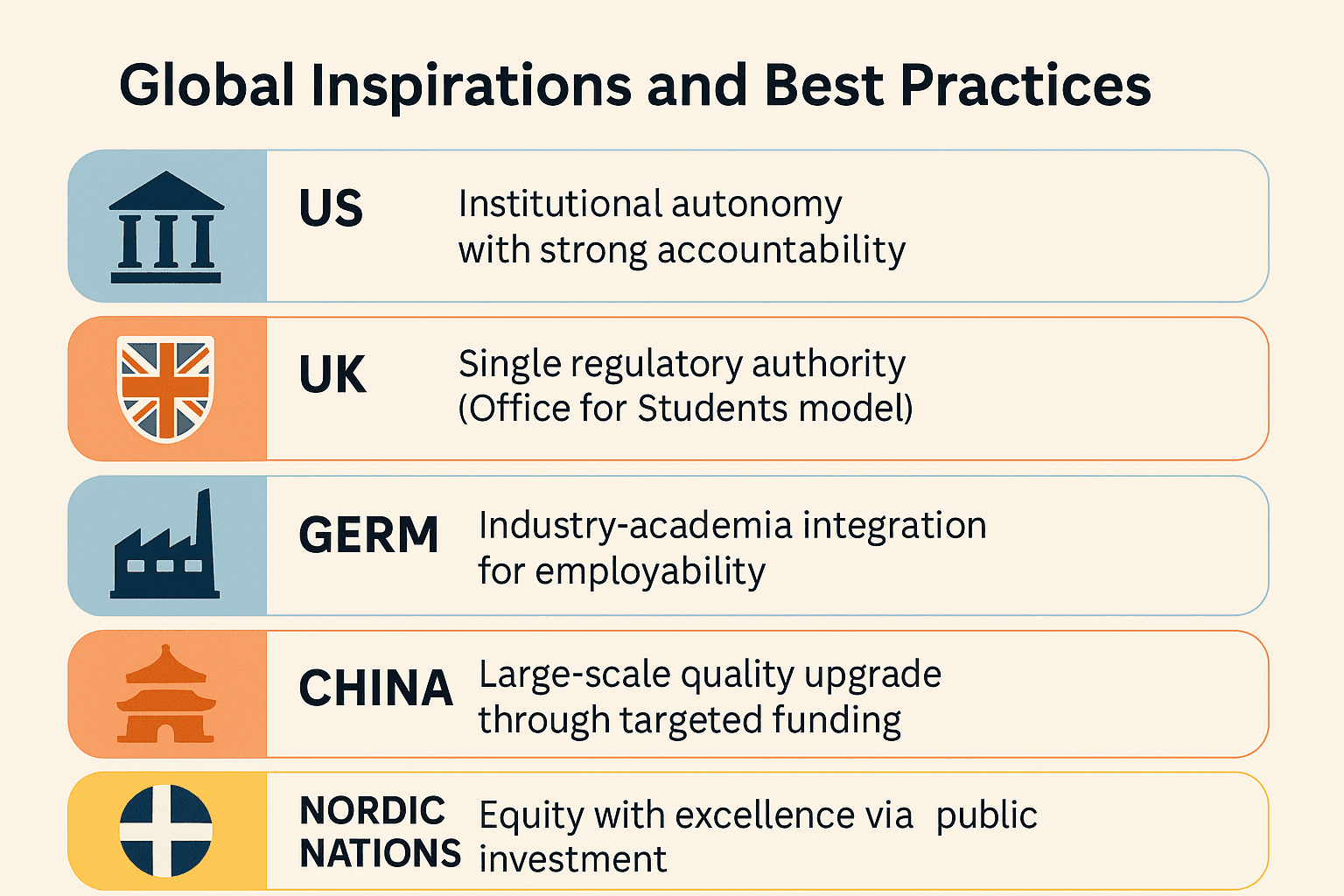
Performance funding modelSimilar to UK Research Excellence Framework
Phase-1 rollout2026–27; NEIP pilot in 100 institutes
Final phase goal20 Indian universities in world top-500
International students target5 lakh by 2030

Related UPSC Prelims PYQs

ESE_GS, GEO_GS 2021PYQ 1

Which one of the following statements is NOT correct regarding the National Education Policy 2020 in India ?

ESE_GS, GEO_GS 2023PYQ 2

What is Academic Bank of Credit (ABC) as per the National Education Policy (NEP), 2020?

Ready to practice?

Test your knowledge with our UPSC test series.

Start Free Trial