UPSC Current Affairs

15 topicsGS-1: 5GS-2: 6GS-3: 4
0/15 done
GS-2Polity

1.Parliament Monsoon Session 2025 begins (Parliament Sessions)

PIB

What & Where

Session: period between first sitting & prorogation of a House; Parliament normally meets thrice yearly in New Delhi

Regular sessions: Budget (Feb–May), Monsoon (Jul–Aug), Winter (Nov–Dec); Special Session for urgent, historic matters

Bills of Lading Bill 2025: modern maritime statute replacing Indian Bills of Lading Act 1856 for nationwide shipping documents

Quick Facts for MCQs

Parliamentary Terms

  • Summoning: President convenes each House; Constitution silent on exact number of yearly sessions
  • Adjournment: Presiding Officer suspends sitting; sine die leaves return date open, business resumes intact
  • Prorogation: President formally ends session; fresh summons required to meet again

Constitutional Limits

  • Dissolution: terminates Lok Sabha, lapsing pending business except RS-origin Bills, ministerial assurances
  • Special Session: can be called outside regular trio for crises such as 1962 India-China war
  • Quorum: one-tenth membership mandatory for valid sitting; ensures legislative legitimacy

Maritime Trade

  • Bill of Lading: evidence of goods loaded, document of title, transferable to endorsees/receivers
  • 2025 Bill fixes rights & liabilities, grants conclusive evidentiary value, reduces litigation in shipping
  • Alignment: brings Indian law closer to UNCITRAL, boosts ease-of-doing-business in global maritime trade

Key Data Points

FeatureData-Point
Summoning articleArticle 85
Max gap between sessions≤ 6 months
Quorum fraction1/10th House strength
Quorum numbersLS 55; RS 25
Authority to dissolve LSPresident under Art 85(2)
LS normal tenure5 years; extendable during Emergency
Business surviving dissolutionRajya Sabha-origin Bills, Ministerial Assurances
Document modernisedIndian Bills of Lading Act 1856
Implementing ministryPorts, Shipping & Waterways
Evidence status of BoLConclusive proof of shipment

Related UPSC Prelims PYQs

GS1 2024PYQ 1

With reference to the Parliament of India, consider the following statements:

GS1 2004PYQ 2

Consider the following statements:
GS-2Polity

2.Vice-President resignation constitutional process (Vice-Presidency)

Indian Express
Illustration for Vice-President resignation constitutional process (Vice-Presidency)

What & Where

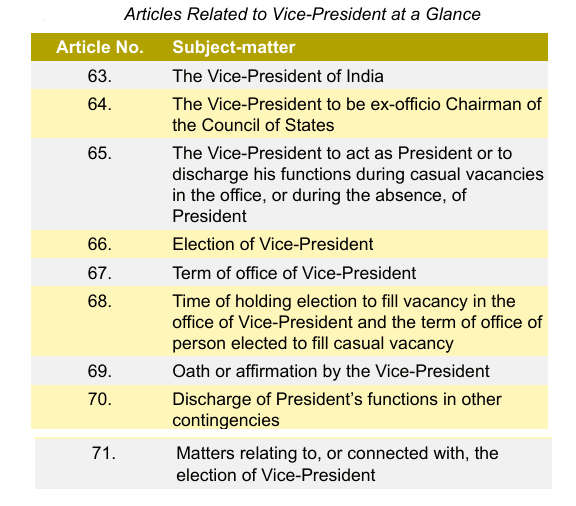
Vice-President; second-highest constitutional office under Articles 63-71, ex-officio Chairman of Rajya Sabha

Resignation; written to President per Article 67(a), no acting VP, Deputy Chairman presides in interim

Election; MPs of both Houses choose new VP by STV-PR, full five-year term regardless of predecessor balance

Quick Facts for MCQs

Constitutional Provisions

  • Article 64; VP doubles as Rajya Sabha Chairman, normally no vote
  • Article 68; fresh election mandatory on vacancy, successor serves full term
  • Oath; administered by President under Article 69, pledging constitutional fidelity

Election Process

  • Notification; issued by Election Commission under 1952 Act, RO rotates between House Secretaries
  • Nomination; 20 proposers + 20 seconders, ₹15,000 security deposit
  • Counting; Droop quota decides winner in single preferential tally

Powers & Functions

  • Discipline; Rule 256 allows Chairman to suspend disorderly members for session remainder
  • Committee referral; screens bills, motions, resolutions for detailed examination
  • No Money Bill role; certification power solely with Lok Sabha Speaker

Comparative Insight

  • Succession; US VP becomes President for full balance, Indian VP only interim six months
  • Executive role; US VP sits in Cabinet, Indian VP largely legislative and ceremonial

Key Data Points

FeatureData-Point
Constitutional spanArticles 63-71
Resignation clauseArticle 67(a)
Vacancy election limit“As soon as possible”; no fixed days
Electoral collegeAll elected + nominated MPs, states excluded
Voting methodProportional rep, single transferable, secret ballot
Minimum age35 years
EligibilityRajya Sabha-qualifiable, no office of profit
Removal voteRS effective majority + LS simple; 14-day notice
Acting as PresidentUp to 6 months, Article 65
Rajya Sabha voteOnly casting vote during tie

Related UPSC Prelims PYQs

CDS_GK 2022PYQ 1

Which one of the following statements about the Speaker of Lok Sabha is not correct?

CDS_GK 2021PYQ 2

Which one of the following statements about the Vice-President of India is not correct?

GS-2PolityQuick Bite

3.Good Governance Practices conference (Grievance Redressal)

PIB

What & Where

National Conference on Good Governance Practices held in Bhubaneswar, Odisha; jointly by DARPG & Odisha Govt.

Focus on award-winning governance innovations under Prime Minister’s Awards for Excellence in Public Administration.

Showcased digital tools: CPGRAMS grievance portal & Jeevan Pramaan biometric life-certificate system.

Quick Facts for MCQs

Tech & Schemes

  • CPGRAMS links all central ministries & state depts for seamless grievance tracking.
  • Jeevan Pramaan eliminates physical presence, ensuring frictionless pension disbursal, fraud reduction.
  • Both tools cited as global governance models during conference.

Administrative Setup

  • DARPG oversees design, adoption and monitoring of good-governance digital platforms.
  • Prime Minister’s Awards initiatives serve as replicable templates for other jurisdictions.
  • Conference platform enables cross-state learning on administrative reforms.

Social Impact

  • Timely grievance redressal via CPGRAMS boosts citizen trust in public delivery.
  • Digital life certificates ease compliance burden for elderly pensioners.
  • Large-scale adoption indicates rising digital literacy among beneficiaries.

Key Data Points

FeatureData-Point
Conference year2025
Organising Union deptDARPG, Min. of Personnel
State partnerOdisha
Theme tagline“Good Governance Practices”
CPGRAMS nature24×7 online grievance redressal
CPGRAMS appeal provisionOne appeal if reply unsatisfactory
CPGRAMS exclusionsRTI, sub-judice, religious issues, staff service matters
Jeevan Pramaan launch2014
Verification modeAadhaar-based biometrics via app/web
Eligible pensionersCentral, State & other govt retirees
Life certificates submitted10.31 crore (2014-2025)

Related UPSC Prelims PYQs

GEO_GS 2024PYQ 1

Which of the following statements about 'Good Governance Index' (GGI) is/are not correct?

GS-3Economy

4.GENIUS Act regulates stablecoins (Digital Currency)

TN

What & Where

Stablecoins = blockchain tokens pegged to reference assets, chiefly USD, to keep near-fixed purchasing value.

Key types: fiat-collateralised (USDC), crypto-collateralised (DAI), algorithmic (TerraUSD, defunct), commodity-backed (PAX Gold).

USA: 2024 GENIUS Act gives first federal framework; Treasury + Federal Reserve supervise issuers.

Quick Facts for MCQs

Legal & Policy

  • GENIUS Act excludes regulated stablecoins from securities status; imposes Treasury–Fed licensing, consumer-first redemption.
  • Compliance: full cash/T-bill reserves, real-time disclosures, penalties for mis-management.

Technology & Mechanism

  • Public blockchains enable programmable, borderless, near-instant transfers and DeFi integration via smart contracts.
  • Peg upheld through issuance/redemption using fiat, crypto over-collateralisation, or algorithmic supply controls.

Economic Angle

  • Cross-border remittances: minutes settlement, sub-1 % fees, bypass traditional correspondent banking.
  • Volatility hedge: investors park value in stablecoins during crypto downturns to retain dollar exposure.

Key Data Points

FeatureData-Point
US law nameGENIUS Act (signed 2024)
Mandatory reserve ratio100 % of outstanding tokens
Audit requirementIndependent monthly attestations
Typical peg1 token ≈ 1 USD
Major issuersTether-USDT, Circle-USDC, MakerDAO-DAI
Failure caseTerraUSD collapse, May 2022
CBDC issuerNational central bank (not private)
GS-1History

5.Hatti tribe polyandry tradition (Tribal Customs)

NDTV
Illustration for Hatti tribe polyandry tradition (Tribal Customs)

What & Where

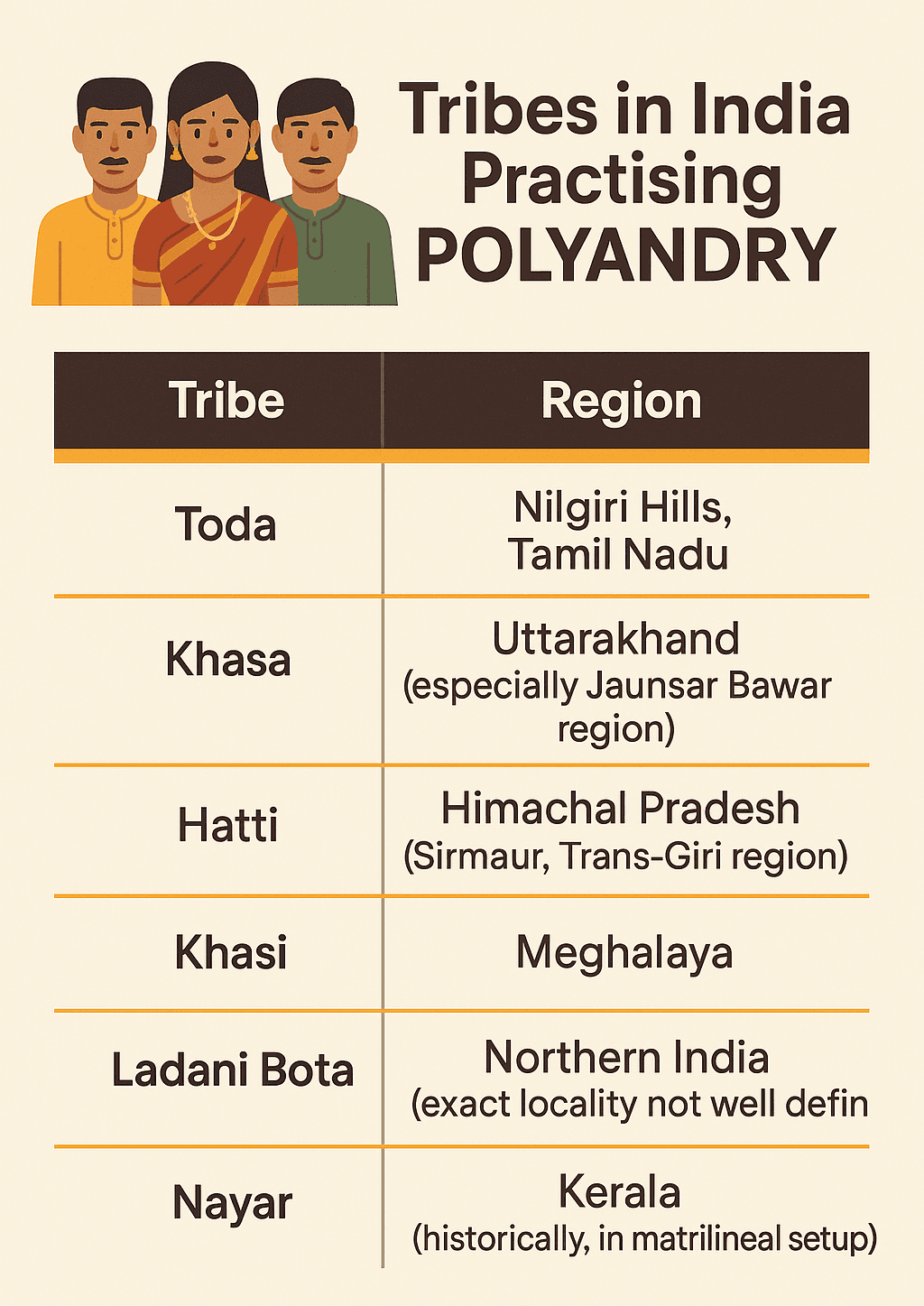
Polyandry: Hatti custom Jodidara/Jajda where a woman marries two or more brothers.

Types: Fraternal (adelphic) among brothers; Non-fraternal among unrelated men by rotation.

Geography: Trans-Giri (Sirmaur, HP) & Jaunsar-Bawar (Dehradun, Uttarakhand) between Giri and Tons rivers.

Quick Facts for MCQs

Cultural Markers

  • Attire: Men wear white headgear; tribe named after trading in rural haats.
  • Social: Inter-clan marriages, strong joint-family bonds reinforced by polyandry.

Economic Logic

  • Landholding: Shared wives keep ancestral plots intact, avoiding costly subdivision.
  • Labour: Multiple husbands supply continuous manpower for terrace farming, livestock, and remote-area security.

Legal & Policy

  • Custom evidence: Section 13 Indian Evidence Act permits proving ancient tribal practices in court.
  • Limitation: HMA 1955 & SMA penalise bigamy; exemption stands until Centre notifies tribe otherwise.

Key Data Points

FeatureData-Point
Tribe statusScheduled Tribe, Himachal Pradesh
Governing councilKhumbli
Polyandry termJodidara / Jajda
Marriage ritualSeenj ceremony at groom’s house
HeadgearWhite pagri for men
Region riversGiri & Tons (Yamuna tributaries)
Main motivePrevent land fragmentation
Penal provisionSection 82 BNS: bigamy
Act exemptionHindu Marriage Act excludes STs
GS-1History

6.National Flag Day observance (Indian Flag)

Indian Express

What & Where

Tiranga, India’s tricolour national flag, officially adopted by Constituent Assembly on 22 July 1947.

National Flag Day (Tiranga Adoption Day) observed annually on 22 July across India.

Governed nationwide by Flag Code of India 2002 and Prevention of Insults to National Honour Act 1971.

Quick Facts for MCQs

Historical Evolution

  • 1904 Nivedita flag red-yellow with Vajra, lotus, “Bande Mataram”.
  • 1906 Calcutta tricolour green-yellow-red; 1907 Bhikaji Cama flag green-saffron-red.
  • 1931 Congress adopts saffron-white-green with spinning wheel; 1947 wheel replaced by Ashoka Chakra.

Symbolism

  • Saffron denotes strength, courage; White purity, truth, peace; Green fertility, prosperity.
  • Ashoka Chakra signifies dharma, motion; 24 spokes represent continuous progress.

Legal & Policy

  • Flag Code parts: I-description, II-public use, III-government display.
  • Code bars flag as drapery, clothes, vehicle covering; bans touching ground or water.
  • Citizens, institutions may hoist flag any day, respecting prescribed dignity.

Material & Manufacturing

  • Khadi monopoly ended 2021; polyester, cotton, wool, silk now approved.
  • BIS specifications govern dimensions, colour shades, fastness.
  • Manufacture still restricted to licensed units for quality compliance.

Key Data Points

FeatureData-Point
Popular nameTiranga (Tricolour)
Designer creditedPingali Venkayya, 1921 draft
Adoption date22 July 1947
Stripe order (top–bottom)Saffron / White / Green
Centre emblemNavy-blue Ashoka Chakra
Chakra spokes24
Flag ratio3 : 2 (length : height)
Constitutional dutyArt 51A(a) – respect flag & anthem
Core legislationPrevention of Insults to National Honour Act 1971
Flag Code in force26 Jan 2002; amended 2021 & 2022
2021 changeAllowed polyester & machine-made flags
2022 changePermitted 24×7 display when in open/home
Oldest surviving flagFort St George Museum, Chennai
Material idealisedHand-spun khadi for self-reliance
National Flag Day22 July each year

Related UPSC Prelims PYQs

GS1 2003PYQ 1

Which one of the following statements is correct?

GS1 2021PYQ 2

With reference to Madanapalle of Andhra Pradesh, which one of the following statements is correct?

GS-1MappingQuick Bite

7.Kamchatka Peninsula seismic hotspot (Pacific Ring Fire)

LiveMint
Illustration for Kamchatka Peninsula seismic hotspot (Pacific Ring Fire)

What & Where

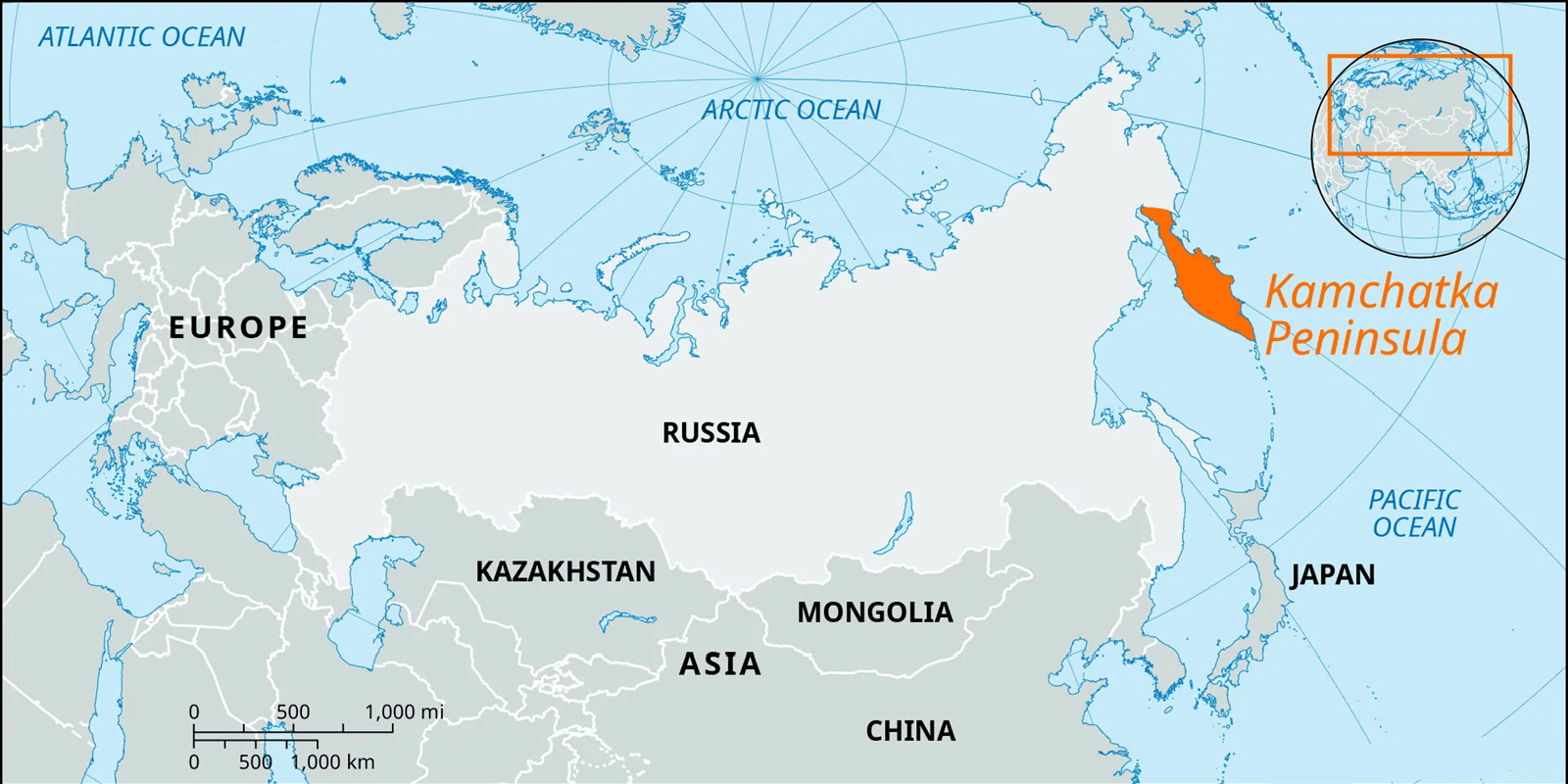
Russian Far-East peninsula on Pacific Ring of Fire, between Sea of Okhotsk (W) and Pacific/Bering Sea (E).

Sits on Pacific–North American plate boundary; intense quakes, >150 volcanoes with 29 active.

Relief dominated by Sredinny & Vostochny ranges; Kamchatka River is principal drainage.

Quick Facts for MCQs

Seismic Activity

  • Five quakes July 2025; strongest 7.4 Mw off east coast.
  • Driven by Pacific plate subduction; shallow focus increases surface impact.
  • Part of Pacific Ring of Fire, ranking among world’s highest seismic zones.

Volcanism

  • >150 volcanoes; 29 active form UNESCO World Heritage site.
  • Klyuchevskoy ~4,750 m, tallest and most active stratovolcano.
  • Significant geothermal fields suitable for renewable energy.

Climate & Population

  • Predominantly tundra; long, harsh winters limit agriculture.
  • Low population density; settlements clustered near coasts and river valleys.
  • Wildlife habitats relatively undisturbed due to sparse human footprint.

Geopolitics

  • Kuril Archipelago extends southward; sovereignty tussle Russia–Japan since 1945.
  • Peninsula offers Russia strategic Pacific naval access.
  • Harsh climate impedes extensive military and civilian infrastructure.

Key Data Points

FeatureData-Point
Strongest July 2025 quake7.4 Mw
Number of quakes (Jul 2025)Five
Plate junctionPacific & North American
UNESCO tagVolcanoes of Kamchatka
Total volcanoes150 +
Active volcanoes29
Highest/most active volcanoKlyuchevskoy
Main riverKamchatka River
Mountain rangesSredinny, Vostochny
Climate typeTundra
Western water bodySea of Okhotsk
Eastern water bodiesPacific Ocean, Bering Sea
Disputed nearby islandsKuril Archipelago (Russia–Japan)
GS-1Mapping

8.Bitra Island location and features (Lakshadweep Isle)

Hindustan Times
Illustration for Bitra Island location and features (Lakshadweep Isle)

What & Where

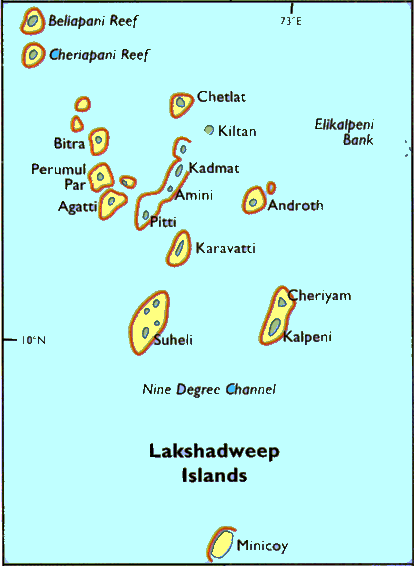
Identity: smallest inhabited Lakshadweep atoll; land 0.105 sq km within 45.61 sq km lagoon

Location: 11°36′N 72°11′E, ~483 km west of Kochi; coral-reef-ringed

Significance: hosts Malik Mulla shrine; now notified for defence acquisition citing strategic Arabian-Sea lanes

Quick Facts for MCQs

Security Dimension

  • Shipping lanes: overlooks busy Arabian Sea traffic near Hormuz–Malacca linkage
  • Defence plan: convert into naval outpost enhancing maritime domain awareness
  • Force posture: complements INS Dweeprakshak (Kavaratti) and planned INS Jatayu (Minicoy)

Legal & Policy

  • Framework: land notified under Land Acquisition, Rehabilitation & Resettlement Act 2013
  • SIA: Lakshadweep Collector orders social-impact survey to finish within two months
  • Precedent: marks third defence-related land move inside Lakshadweep archipelago

Social Concerns

  • Mobilisation: “Save Bitra Island” protests and online campaigns by residents
  • Livelihood fear: fishing, coconut farming and shrine-linked tourism may suffer
  • Rights debate: tension between national security objectives and indigenous consent

Key Data Points

FeatureData-Point
Land area0.105 sq km
Lagoon area45.61 sq km
Coordinates11°36′N 72°11′E
Distance from Kochi≈483 km west
Population (2011)271 persons
Annual rainfall~1600 mm
AdministrationUT of Lakshadweep
Acquisition lawLARR Act 2013
GS-3S&T

9.NISAR dual-frequency SAR satellite (Earth Observation)

The Hindu
Illustration for NISAR dual-frequency SAR satellite (Earth Observation)

What & Where

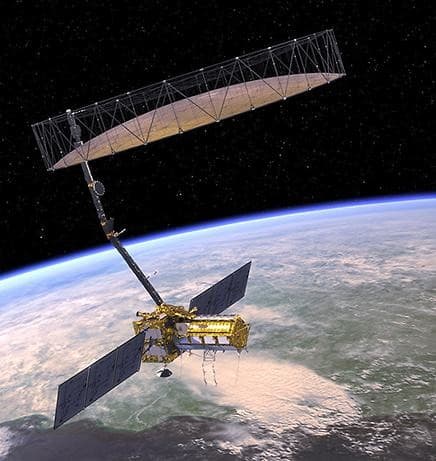
NISAR = first NASA-ISRO dual-frequency Synthetic Aperture Radar Earth-observation satellite

Operates L-band (NASA) + S-band (ISRO) SAR for all-weather, day-night surface imaging

To be launched from SDSC Sriharikota aboard GSLV-F16 on 30 Jul 2025 into near-polar Sun-synchronous orbit

Quick Facts for MCQs

Technology Specs

  • Dual-frequency SAR enables deeper penetration through vegetation, ice, soil
  • SweepSAR provides wide swath while maintaining high resolution
  • Ku-band downlink planned for rapid data transfer

Applications

  • Monitoring land deformation, glacier flow, coastal subsidence, crop biomass
  • Inputs for disaster response: earthquakes, landslides, floods
  • Supports SDG metrics via soil moisture, forest carbon, wetland extent mapping

International Cooperation

  • 2014 NASA–ISRO MoU formalised cost and hardware sharing
  • First US radar payload to fly on an Indian launch vehicle
  • Data policy: free and open global science access after standard latency

Key Data Points

FeatureData-Point
Full formNASA-ISRO Synthetic Aperture Radar
Launch date30 July 2025 (target)
Launch vehicleGSLV-F16
Orbit747 km Sun-synchronous, 12-day repeat
Swath width242 km
Antenna type12 m unfurlable mesh reflector
Detectable change< 1 cm surface displacement
Indian hardwareS-band radar, modified I-3K bus
US hardwareL-band radar, GPS, telecom, data systems
Key techSweepSAR dual-frequency imaging

Related UPSC Prelims PYQs

CAPF_GAI, GS1 2023PYQ 1

NISAR satellite is manufactured jointly by Indian Space Research Organisation and:

CAPF_GAI, GS1 1996PYQ 2

Which one of the following satellites is to be launched from India in 1996?

GS-3S&T

10.AdFalciVax multistage malaria vaccine (Vaccine Development)

DD News

What & Where

AdFalciVax; multistage chimeric malaria vaccine under ICMR; employs Lactococcus lactis vector

Targets Plasmodium falciparum liver (pre-erythrocytic) and sexual (mosquito-stage) phases

Malaria belts: sub-Saharan Africa, Southeast Asia, South America; India chasing elimination by 2030

Quick Facts for MCQs

Tech & Schemes

  • Make-in-India push; AdFalciVax conceived for domestic production and export
  • Chimeric design fuses multiple parasite antigens boosting breadth of immunity
  • Food-grade bacterial vector promises high safety and easier cold-chain

Epidemiological Trend

  • Malaria burden cut ~80 % between 2015 and 2023 per World Malaria Report 2024
  • India removed from WHO High Burden to High Impact cohort in 2024
  • Elimination roadmap targets zero indigenous cases nationally by 2030

Treatment & Prevention

  • Licensed pediatric vaccines: RTS,S and R21/Matrix-M validated as safe and efficacious
  • Standard therapeutics include chloroquine and artemisinin; latter earned Nobel for Youyou Tu
  • Parasite sequence: liver infection precedes red-blood-cell invasion causing fever, chills, headache

Key Data Points

FeatureData-Point
Vaccine nameAdFalciVax
Vaccine natureChimeric multistage
Lead agencyICMR India
Vector platformLactococcus lactis
Parasite speciesPlasmodium falciparum
Stages hitLiver & sexual
Other WHO-cleared vaccinesRTS,S; R21/Matrix-M
India cases 201511.69 lakh
India cases 20232.27 lakh
HBHI list status 2024India exited
National zero-malaria goalYear 2030
Artemisinin discovererYouyou Tu (Nobel)

Related UPSC Prelims PYQs

GEO_GS, GS1 2010PYQ 1

Widespread resistance of malarial parasite to drugs like chloroquine has prompted attempts to develop a malarial vaccine to combat malaria. Why is it difficult to develop an effective malaria vaccine ?

GEO_GS, GS1 2022PYQ 2

Covaxin, a COVID-19 vaccine manufactured in India, is

GS-3S&TQuick Bite

11.International Moon Day celebration (Lunar Missions)

The Hindu

What & Where

International Moon Day: UN-recognised observance on 20 July, commemorates Apollo 11’s 1969 first human lunar landing.

Origin: Proposed by UN COPUOS; formal adoption by UNGA in 2021 to foster global space-exploration cooperation.

Geography: Highlights Moon’s South Pole after India’s Chandrayaan-3 soft-landing, expanding exploration beyond near-equatorial Apollo sites.

Quick Facts for MCQs

Historical Missions

  • Apollo Program: Six successful landings, last being Apollo 17 in 1972.
  • Landmark: Apollo 11 proved crewed lunar return feasibility, inspiring international follow-up missions.

Indian Missions

  • Chandrayaan-series: Progressive agenda from remote sensing (-1) to landing (-3) to sample-return (-4).
  • Technology: Chandrayaan-3 used indigenous lander-rover combo, validating soft-landing, hazard-detection algorithms.

UN & Cooperation

  • Resolution: UNGA urged educational outreach on Moon science, especially for developing nations.
  • Collaboration: LUPEX exemplifies Asia-Pacific synergy, merging ISRO lander with JAXA rover for polar exploration.

Key Data Points

FeatureData-Point
Observance date20 July, annually
UNGA recognition year2021
Recommending bodyCOPUOS
Apollo 11 launch16 Jul 1969
First Moonwalk20 Jul 1969
Apollo crew on surfaceNeil Armstrong, Buzz Aldrin
Command-module astronautMichael Collins
Total Apollo surface missions6 (11, 12, 14, 15, 16, 17)
India’s first lunar missionChandrayaan-1 (2008)
Key Chandrayaan-1 findingWater molecules on Moon
Chandrayaan-2 statusOrbiter active; lander failed (2019)
Chandrayaan-3 featFirst soft-landing at lunar South Pole, 2023
India’s global rank in lunar landings4th nation
Upcoming Chandrayaan-4Sample-return, target 2027
LUPEX (Chandrayaan-5) partnersISRO & JAXA
LUPEX focusPolar water-ice exploration
LUPEX tentative window2027–28

Related UPSC Prelims PYQs

GS1 2009PYQ 1

India has recently landed its Moon Impact Probe on the Moon. Among the following countries, which one landed such probe on the Moon earlier ?

GS-2Editorial

12.India deepens engagement with Taliban (India-Afghanistan)

FF
Illustration for India deepens engagement with Taliban (India-Afghanistan)

What & Where

India–Taliban 2.0: post-Aug 2021 calibrated contacts between New Delhi and Taliban rulers in Kabul

Process: humanitarian aid, Foreign Secretary-level talks, EAM Jaishankar–Muttaqi call, no formal recognition yet

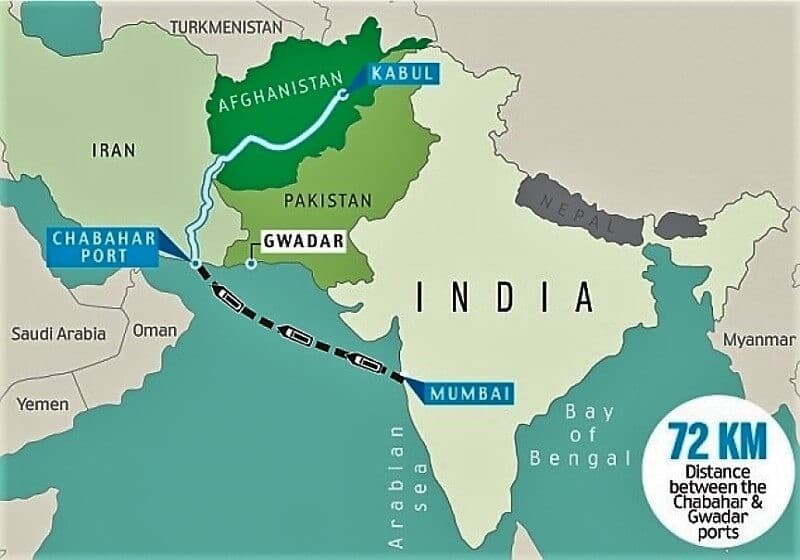
Geography: Afghanistan sits in India’s “first ring” buffer, linking South Asia to Central Asia via Iran’s Chabahar

Quick Facts for MCQs

Geopolitical Context

  • Hostility 1996-2001 shifted to pragmatic dialogue after 2021 withdrawal
  • Pakistan influence eroding; India, Russia, Iran filling vacuum
  • Afghanistan viewed as insulating state per Buzan, critical for regional order

Strategic Interests

  • Counter-terror: secure promise against anti-India groups operating from Afghan soil
  • Connectivity: land bridge to Central Asia bypassing Pakistan, supports energy security
  • China-Pakistan containment: alternate routes dilute CPEC strategic depth

Challenges

  • Legitimacy: engaging a UN-sanctioned regime sensitive for democratic India
  • Human rights: Taliban curbs on women, minorities strain India’s normative stance
  • Multipolar contest: China investments, Pakistan proxies complicate Indian leverage

Policy Pathways

  • De facto engagement: aid, talks, projects minus formal recognition
  • Layered diplomacy: channel support through UN, NGOs to Afghan civil society
  • Regional hedging: tighter coordination with Iran, Central Asian republics, Russia

Key Data Points

FeatureData-Point
Taliban first regime1996 – 2001
Taliban retook KabulAugust 2021
Indian aid to AfghanistanUSD 3 billion + (dams, hospitals, Parliament)
Key connectivity assetChabahar port–Zaranj/Delaram corridor
Russia’s stance Oct 2023Formal recognition of Taliban government
Main Pak-Taliban riftTaliban refusal to curb Tehrik-e-Taliban Pakistan
Shafiee “ring” categoryAfghanistan in India’s First Ring
Taliban status at UNUnder sanctions, no global recognition
GS-2Scheme

13.Meri Panchayat rural governance app (Digital Governance)

PIB
Illustration for Meri Panchayat rural governance app (Digital Governance)

What & Where

Meri Panchayat: mobile-based m-Governance platform for Gram Panchayats across rural India.

Provides transparent, interactive access to Panchayat budgets, plans, assets, feedback.

Jointly built by Ministry of Panchayati Raj & NIC (MeitY).

Quick Facts for MCQs

Tech & Schemes

  • Real-time dashboards expose Panchayat budgets, payments, GPDP progress.
  • Geo-tools monitor project location, allow location-based grievance redressal.
  • Multilingual interface ensures digital inclusion across diverse rural users.

Governance Impact

  • Social-audit features track fund utilisation, heightening accountability.
  • Civic module lets villagers propose projects, rate completed works, submit feedback.
  • App narrows knowledge divide, strengthening participatory democracy in Gram Sabhas.

International Recognition

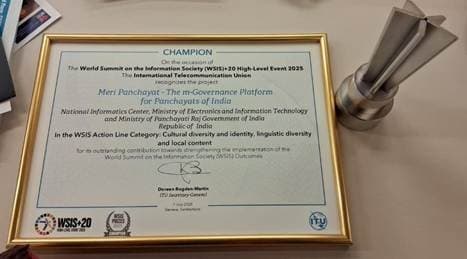
  • Bagged WSIS Champion Award 2025 for cultural and linguistic diversity.
  • Recognised in Geneva as model of citizen-centric rural e-governance.
  • Endorsed by ITU, UNESCO, UNDP, UNCTAD for grassroots digital inclusion.

Key Data Points

FeatureData-Point
Launch entityMinistry of Panchayati Raj + National Informatics Centre
Platform natureMobile m-Governance application
Core usersRural citizens & Panchayati Raj Institutions
Languages supported12 plus Indian languages
Key tech toolsGeo-tagging, geo-fencing, social-audit modules
Real-time dataBudgets, payments, GPDPs, weather, civic assets
Award yearWSIS Prizes 2025
Award categoryCultural Diversity & Local Content
Award venueWSIS+20 High-Level Event, Geneva
Host organisationsITU, UNESCO, UNDP, UNCTAD
GS-2Scheme

14.SASCI iconic tourism investment scheme (Tourism Infrastructure)

DD News
Illustration for SASCI iconic tourism investment scheme (Tourism Infrastructure)

What & Where

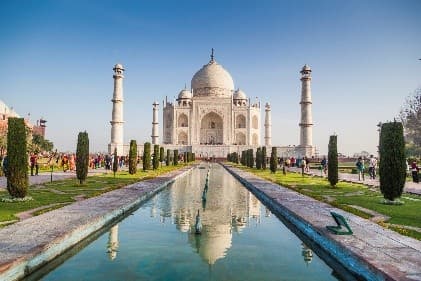
SASCI: centrally funded scheme upgrading iconic Indian tourist sites to global benchmark by 2026

Implemented by Ministry of Tourism; state governments propose and execute projects

Nationwide coverage; every sanctioned project must finish within 24 months

Quick Facts for MCQs

Development Components

  • Coverage spans connectivity, ecological safeguards, carrying capacity, branding, site operations
  • Upgrades include last-mile roads, visitor amenities, heritage interpretation, smart tech features
  • Digital promotion through social media, global roadshows, Incredible India branding

Funding & Timeline

  • Central grants released against state-submitted detailed project reports and milestones
  • Two-year deadline enforced; funds reallocated if targets missed
  • Monitoring via Ministry review, periodic progress reports, on-site inspections

Economic Angle

  • Local jobs expected in hospitality, guides, transport, handicrafts
  • Catalyses private investment along tourism value chain, boosts state revenues
  • Elevates India’s image as infrastructure-ready, culturally vibrant long-haul destination

Key Data Points

FeatureData-Point
Full formSpecial Assistance to States for Capital Investment
TaglineDevelopment of Iconic Tourist Centres to Global Scale
Implementing ministryMinistry of Tourism, GoI
Execution modelState-led, Centre-funded capital investment
Completion window24 months from project approval
Core focusInfrastructure, services, immersive experiences, sustainability
Promotion modeIntegrated domestic & global digital campaigns
Intended outcomesWorld-class sites, higher tourist footfall, investment, jobs

Related UPSC Prelims PYQs

NDA_GAT 2025PYQ 1

The scheme PRASHAD (Pilgrimage Rejuvenation & Spiritual Heritage Augmentation Drive) provides assistance for

GS-1Editorial

15.India female labour participation paradox (Female Employment)

EPW

What & Where

Definition: Female Labour Force Participation Rate share of women 15 + employed or actively seeking work in economy

Data: Measurements from Periodic Labour Force Survey 2023-24 and World Bank 2024 datasets

Geography: Comparison across Indian rural agrarian belts versus urban service-sector centres

Quick Facts for MCQs

Structural Causes

  • Inflexibility: Urban service jobs rigid hours deter workers with caregiving duties
  • Safety: Limited safe transport and public spaces reduce female job access
  • Care penalty: No crèches or re-entry schemes leads to post-maternity dropouts

Rural–Urban Contrast

  • Flexibility: Farm and self-employment near home sustains rural women’s work
  • Kinship: Extended families in villages provide informal childcare support
  • Status: Rising urban incomes revive homemaker norm despite higher literacy

Policy Prescriptions

  • Childcare: Scale anganwadis and mandate employer-linked crèches in cities
  • Flexiwork: Promote part-time, gig and remote models through labour-code tweaks
  • Infrastructure: Invest in safe transport, lighting and women-friendly facilities

Key Data Points

FeatureData-Point
Urban female literacy84.9 %
Urban FLFPR28 %
Rural literacy–FLFPR gap~22 pp
Urban literacy–FLFPR gap~57 pp
National female literacy74.6 %
National employment gap33 pp
Gap in developed nations~40 pp
Gap in developing nations~25 pp
Urban nuclear households61.3 % (NFHS-5)
PLFS edition used2023-24

Related UPSC Prelims PYQs

CAPF_GAI, CDS_GK 2025PYQ 1

Consider the following statements regarding Annual Periodic Labour Force Survey (PLFS) report 2023–24 by the National Statistical Organization (NSO):

CAPF_GAI, CDS_GK 2020PYQ 2

Which of the following statements about employment situation in India according to Periodic Labour Force Survey 2017-18 is/are correct?

Ready to practice?

Test your knowledge with our UPSC test series.

Start Free Trial