UPSC Current Affairs

18 topicsGS-1: 4GS-2: 5GS-3: 9
0/18 done
GS-2Polity

1.UPSC Pratibha Setu Recruitment Linkage Platform (UPSC Recruitment Platform)

Indian Express

What & Where

Platform: UPSC Pratibha Setu links employers with candidates who cleared UPSC written exams but missed final recommendation

Hosting: Union Public Service Commission portal, New Delhi; open to government, PSU and now private recruiters

Coverage: CSE, IFoS, ESE, IES/ISS, CMS, CDS, CAPF (AC), Combined Geo-Scientist examinations

Quick Facts for MCQs

Tech & Schemes

  • Digitalisation: Secure UPSC portal enables real-time candidate filtering and download
  • Inclusion: Private sector access added in 2024, widening hiring ecosystem
  • Security: Candidate data visible only after employer authentication and candidate consent

Economic Angle

  • Talent-pool: Utilises already-tested merit, reducing search and assessment costs for recruiters
  • Efficiency: Bridges labour-market gaps, especially for specialists in engineering, medicine, economics
  • PSU synergy: Facilitates faster filling of technical and managerial vacancies in public enterprises

Social Concerns

  • Merit utilisation: Prevents wastage of high-performing aspirants barred by limited UPSC vacancies
  • Equity: Expands career options irrespective of socio-economic background of candidates
  • Motivation: Provides fallback opportunity, sustaining aspirant morale and exam competitiveness

Key Data Points

FeatureData-Point
Launch year (as PDS)2018
Renamed year2024
PRATIBHA expansionProfessional Resource And Talent Integration – Bridge for Hiring Aspirants
Eligible candidatesCleared written stage; not recommended in interview; given consent
Recruiter accessGovernment, PSUs, Autonomous bodies, Private employers
Core functionView, filter, recruit via subject/discipline search tools
Data release basisVoluntary candidate opt-in
Portal credentialsUPSC issues secure login to registered organisations
GS-2Polity

2.Impeachment Procedure for Indian Judges (Judiciary Removal)

The Hindu
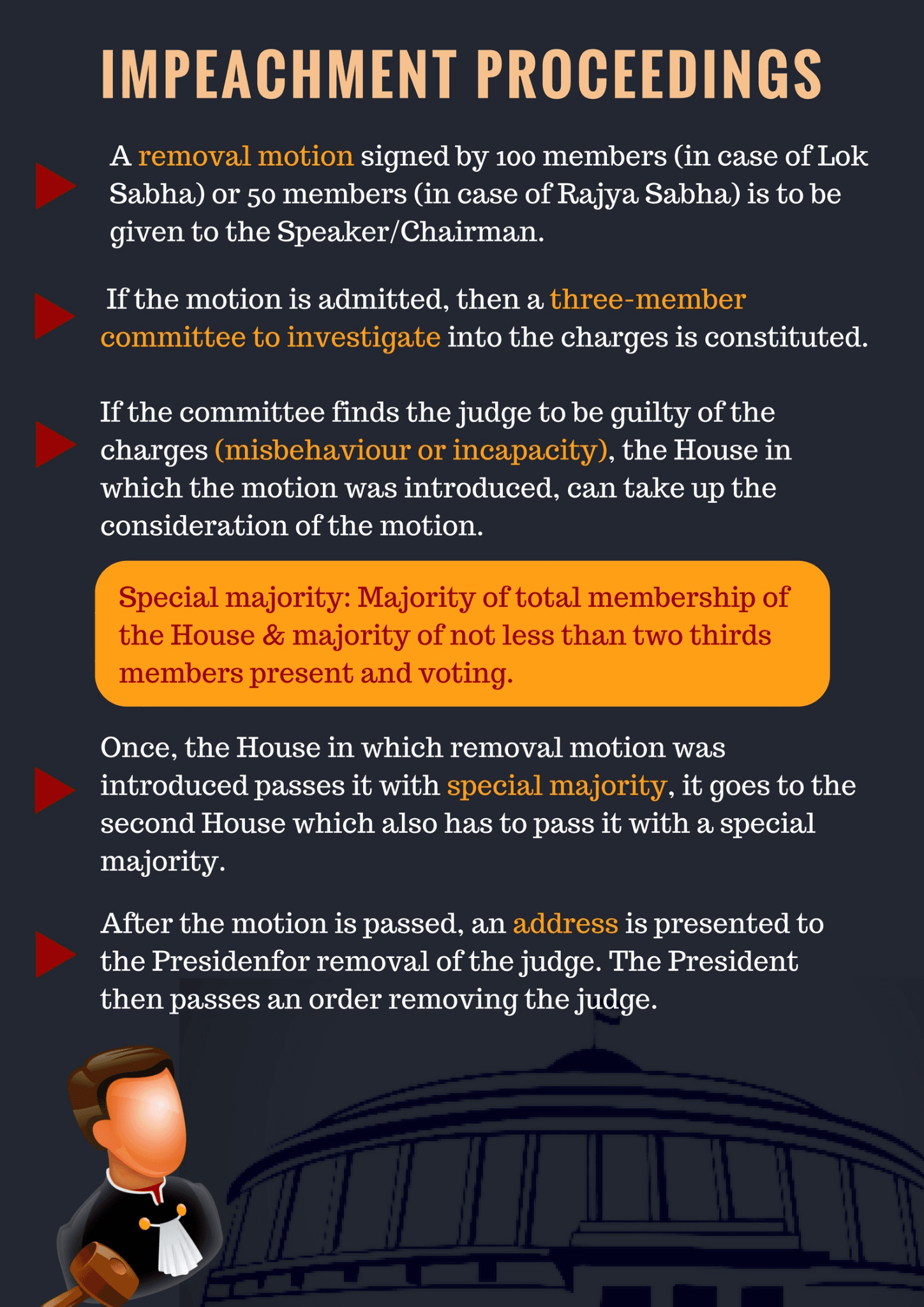
Illustration for Impeachment Procedure for Indian Judges (Judiciary Removal)

What & Where

Judicial removal: constitutional mechanism to oust SC/HC judge for “proved misbehaviour or incapacity” under Arts 124(4), 217, 218.

Core steps: Notice by ≥100 LS or 50 RS MPs → 3-member Inquiry Committee → special majority in both Houses, same session → Presidential order.

Geography: Jurisdiction pan-India; proceedings in Parliament, New Delhi; committee draws from Supreme Court & High Courts.

Quick Facts for MCQs

Legal & Policy

  • Safeguard: Stringent dual-majority designed to shield judiciary from partisan pressure.
  • Committee: Quasi-judicial body collects evidence, submits report to initiating House.
  • Resignation clause: Process lapses if judge quits before motion passed.

Historical Cases

  • V. Ramaswami 1993: Found guilty of fund misuse; Lok Sabha motion failed due to abstentions.
  • Soumitra Sen 2011: Rajya Sabha approved removal; resignation pre-Lok Sabha debate halted process.
  • Post-1950 record: No judge actually removed despite multiple attempts.

Process Drawbacks

  • Political arithmetic: Party alliances & abstentions can derail motion despite evidence.
  • Time lag: Multi-stage procedure prolongs uncertainty, harms public confidence.
  • Accountability gap: Resignation or vote failure leaves misconduct unpunished.

Key Data Points

FeatureData-Point
Governing statuteJudges (Inquiry) Act 1968
Key constitutional article (SC)Art 124(4)
Extension to HCsArt 218
Motion signatories100 MPs (LS) / 50 MPs (RS)
Screening authoritySpeaker (LS) / Chairman (RS)
Inquiry CommitteeSC Judge/CJI + HC Chief Justice + eminent jurist
Voting requirementAbsolute majority + ⅔ present & voting, both Houses
Session conditionSame parliamentary session
Final removal orderPresident of India
Successful impeachments so far0

Related UPSC Prelims PYQs

GS1 2007PYQ 1

Consider the following statements:

GS1 2012PYQ 2

What is the provision to safeguard the autonomy of the Supreme Court of India?

GS-3Editorial

3.Improving Regulatory Oversight in Indian Aviation (Aviation Safety)

The Hindu
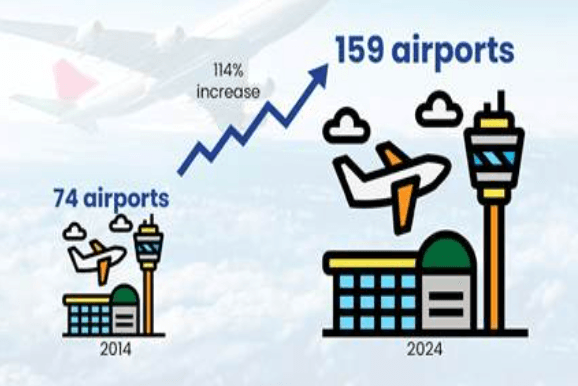
Illustration for Improving Regulatory Oversight in Indian Aviation (Aviation Safety)

What & Where

Aviation sector = airlines, airports, ATC, regulators (DGCA + MoCA); ensures domestic & international air connectivity.

Key processes: safety regulation, air-traffic management, crash investigation (AAIB).

Hot-spot geographies: Mumbai, Kozhikode, Ahmedabad airports where recent crashes/obstacle breaches surfaced.

Quick Facts for MCQs

Regulatory Weakness

  • DGCA limited in-house expertise; leans on FAA/EASA for safety directives.
  • Multiple AAIB crash reports flag unresolved systemic lapses.
  • Proposal: autonomous safety regulator outside MoCA chain-of-command.

Human Fatigue

  • Airlines exploit DGCA exemptions to exceed Flight Duty Time Limits.
  • AMEs & ATCOs face unregulated hours; 2010 Mangalore-triggered reforms still idle.
  • Fatigue increases risk of maintenance misses and operational errors.

Infrastructure Encroachment

  • High-rises around airports violate Aircraft Act & S.O. 988 buffer norms.
  • > 1,000 vertical obstacles near Mumbai alone breach Instrument-Flight-Procedure limits.
  • Green-energy coverage limited to ~80 airports amid rapid capacity addition.

Reform Agenda

  • Reinstate statutory obstacle controls with strict enforcement.
  • Institute whistle-blower protection for pilots, engineers, ATCOs.
  • Harmonise fatigue limits, licensing, audits with ICAO standards while ensuring Indian contextualisation.

Key Data Points

FeatureData-Point
Global domestic rank3rd largest
Annual passengers (2024)350 + million
Daily passengers (2024)> 5 lakh
Traffic growth 2024Domestic 5.9 %; International 11.4 %
Women pilot share13 – 18 %
Airports on green energy~80
Pilot demand by 204034,000 +
Obstacle breaches near Mumbai> 1,000 structures

Related UPSC Prelims PYQs

GS1, NDA_GAT 2003PYQ 1

Which one of the following statements is correct?

GS1, NDA_GAT 2022PYQ 2

उड़े देश का आम नागरिक (उड़ान) योजना के बारे में निम्नलिखित कथनों पर विचार कीजिए :

GS-3Economy

4.Regulation of Agricultural Biostimulants in India (Biostimulant Regulation)

Indian Express
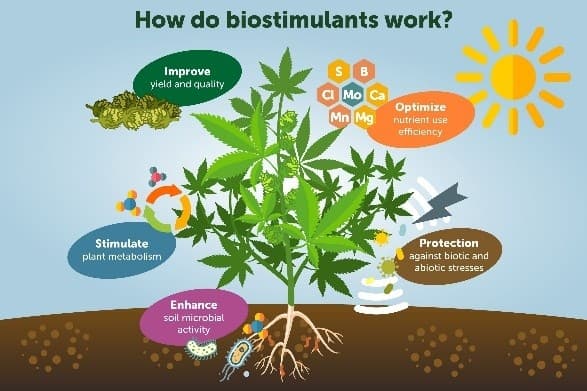
Illustration for Regulation of Agricultural Biostimulants in India (Biostimulant Regulation)

What & Where

Definition: Biostimulants = natural substances/microbes enhancing nutrient uptake, growth, yield, stress-tolerance; neither fertiliser nor pesticide

Process: Applied as foliar/soil input; trigger plant physiological pathways without adding primary nutrients

Geography: Regulated across India under Fertiliser Control Order (FCO) 1985 (amended Feb 2021)

Quick Facts for MCQs

Legal & Policy

  • Inclusion: Biostimulants formally notified under Schedule VI of FCO for first time in India
  • Directive: Union Agriculture Minister asked states to stop forced sales bundled with subsidised fertilisers
  • Crop-wise specifications: Separate norms notified May 2025 for paddy, tomato, chilli, cotton, soybean, others

Compliance Crackdown

  • Action: Unsold stocks without final approval now illegal post-March 2024 deadline
  • Reduction: From 30k unregistered labels to 650 authorised products after verification
  • Penalty: Non-compliant firms face cancellation and seizure under Essential Commodities Act provisions

Testing Protocols

  • Requirement: Acute, eco and bio-efficacy studies must be NABL or GLP certified
  • Safety: No mutagenicity, carcinogenicity or teratogenicity allowed above OECD limits
  • Lab standards: Central committee prescribes methods, frequencies, reference materials

Economic Angle

  • Driver: Rising demand for low-input, climate-resilient farming systems
  • Segment: Seaweed, humic substances, protein hydrolysates dominate Indian biostimulant sales
  • Forecast: CAGR around 15 % expected 2025-32 due to horticulture and export crops

Key Data Points

FeatureData-Point
Legal coverFCO 1985, Amendment Feb 2021
Central Biostimulant CommitteeConstituted 2021; 5-year tenure
Mandatory acute toxicity testsOral, dermal, inhalation, eye, skin (5)
Eco-toxicity testsFish, birds, honeybees, earthworms (4)
Field trials3 agro-ecological zones, 3 doses, 1 season
Unregulated products earlier>30,000
Permitted products now~650
Provisional licence expiryMarch 2024
Market size (India)USD 410 mn (2025 est.)
Projected sizeUSD 1.13 bn by 2032
GS-3Economy

5.India Leads Global Real-Time Payments via UPI (UPI Fast Payments)

DD News
Illustration for India Leads Global Real-Time Payments via UPI (UPI Fast Payments)

What & Where

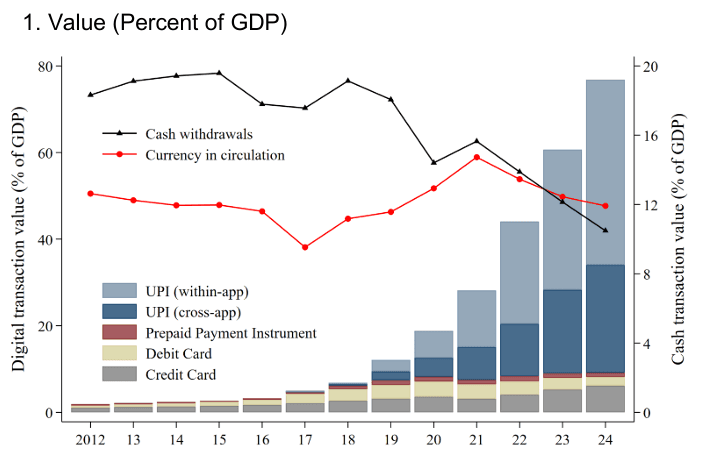
Fast Payments Report 2025: IMF–FIS Global study benchmarking digital payment adoption via Faster Payment Adoption Score (FPAS).

Unified Payments Interface (UPI): India’s interoperable, real-time retail payment rail enabling P2P and merchant transfers.

Geography: India tops list of 30 assessed countries; UPI also live in France, UAE, Singapore, Bhutan, Nepal, Sri Lanka, Oman.

Quick Facts for MCQs

Economic Angle

  • Leadership: India surpasses Brazil, Singapore, UK, USA in real-time payments adoption and usage.
  • Scale: UPI drives cost-effective micro-payments, boosting digital commerce and financial inclusion.
  • BRICS push: India pitching UPI as common cross-border standard for BRICS+ settlement.

Tech & Schemes

  • Interoperability: Single QR and virtual IDs across PhonePe, GPay, Paytm, banking apps.
  • Innovation stack: Aadhaar eKYC, DigiLocker, Account Aggregator layered for frictionless onboarding.
  • Security: Real-time fraud analytics, tokenisation, RBI-mandated compliance norms.

Limitations & Fixes

  • Connectivity gap: Most UPI modes need internet; expansion of USSD, NFC-based Lite+ proposed.
  • Data privacy: Need dedicated Digital Payments Consumer Protection Act for collection and misuse safeguards.
  • Grievance redressal: Plan for unified AI-aided portal integrating NPCI and RBI for faster dispute closure.

Key Data Points

FeatureData-Point
FPAS rank of India1st among 30 countries
FPAS percentage87.5 %
June 2025 UPI volume18.39 billion transactions
Average daily UPI volume640 million
Individuals on UPI491 million
Merchant touchpoints65 million
Participating banks675
Processing time≤5 seconds
Per-transaction costNear zero
Overseas markets7 countries

Related UPSC Prelims PYQs

GS1 2017PYQ 1

Which of the following is a most likely consequence of implementing the ‘Unified Payments Interface (UPI)’?

GS1 2025PYQ 2

Consider the following countries :

GS-3Economy

6.Offshore Atomic Mineral Rules 2025 (Offshore Atomic Mining Rules)

Business Standard
Illustration for Offshore Atomic Mineral Rules 2025 (Offshore Atomic Mining Rules)

What & Where

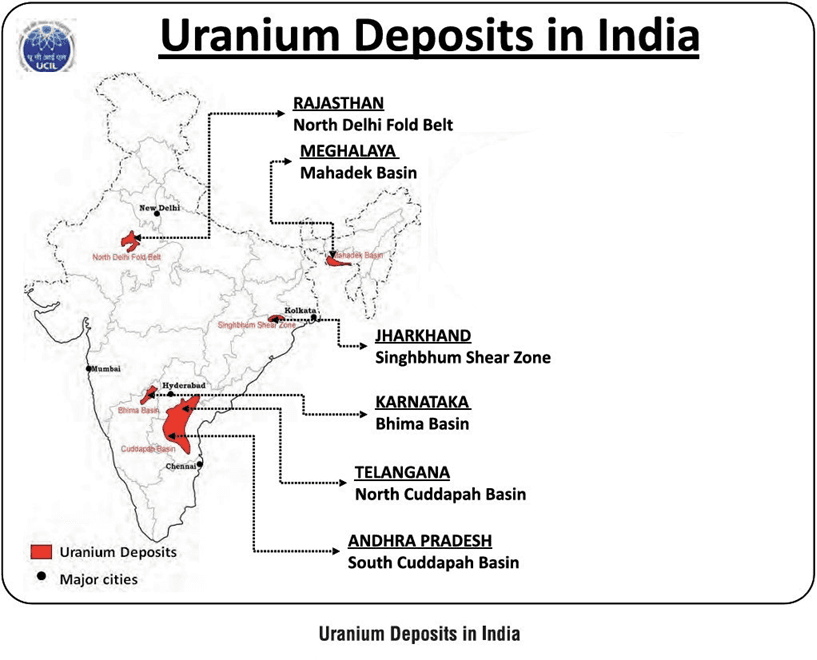
Offshore Areas Atomic Minerals Operating Right Rules 2025: governs uranium & thorium exploration/mining in India’s offshore Exclusive Economic Zone.

Applies only when atomic-mineral grade ≥ government-notified threshold; otherwise 2024 Offshore Areas Operating Right Rules prevail.

Eligible operators: CPSEs or Centre-nominated Indian firms; foreign participation needs prior Union approval.

Quick Facts for MCQs

Legal & Policy

  • Monopoly; private access only via explicit Central nomination under 2025 rules.
  • Dual-rule framework; 2024 rules govern non-atomic or low-grade deposits.
  • Prior approval mandate curbs unregulated foreign tech or equity entry.

Environmental Impact

  • Mandatory seabed rehabilitation; operator must restore marine ecology within six months post-operations.
  • Restoration clause aims to minimise biodiversity loss from dredging and tailings.

Mineral Geography

  • Thorium abundance; monazite sands along Kerala–Odisha contain roughly 8–10 % ThO₂.
  • Uranium scarcity; limited inland lodes, major offshore hunt targets high-grade nodules.

Key Data Points

FeatureData-Point
Parent ActOffshore Areas Mineral (Development & Regulation) Act 2002
Notification Year2025
Minerals CoveredUranium, Thorium (atomic minerals)
JurisdictionOffshore areas within India’s EEZ
Licence EligibilityCPSEs / Centre-nominated Indian entities
Foreign EntryOnly with prior GoI approval
Threshold ClauseRules trigger when U/Th above minimum grade
Post-exploration RehabSeabed restoration within 6 months
Alternative Rule-setOffshore Areas Operating Right Rules 2024 (for sub-threshold grades)
Thorium-rich SandsMonazite deposits – Kerala & Odisha coasts
First Uranium MineJaduguda, Jharkhand

Related UPSC Prelims PYQs

GS1 2022PYQ 1

With reference to India, consider the following statements :

GS1 2021PYQ 2

Consider the following statements:

GS-3Economy

7.Stablecoins Asset-Backed Cryptocurrencies Overview (Cryptocurrency Stablecoins)

Indian Express

What & Where

Stablecoin = cryptocurrency pegged to external asset (fiat, commodity, crypto, or none) aiming for low volatility

First issued 2014; flagship example Tether (USDT); now under formal US financial-stability review

Reserve assets commonly cash, govt debt, commercial paper; act bridge between traditional money & investment cryptos like Bitcoin

Quick Facts for MCQs

Classification

  • Fiat-collateralised; Multi-asset collateralised; Crypto-collateralised; Non-collateral/algorithmic categories
  • Over-collateralisation used to offset crypto price swings in crypto-backed models
  • Multi-asset coins may fluctuate with commodity or bond markets

Risk Factors

  • Liquidity-risk : short-term debt reserves can freeze under stress
  • Contagion-risk : rapid reserve liquidation could spill into broader financial markets
  • Stability-myth : price depends on quality, transparency of backing assets

Regulatory Angle

  • US President’s Working Group mulling formal oversight; no global uniform framework yet
  • Accountability-gap : operates like shadow banks, outside traditional banking audits
  • Cross-border coordination complicated by divergent laws, development levels

Utility

  • Settlement-speed : enables near-instant crypto trades without banking delays
  • Bridge-function : links legacy fiat systems to decentralised finance platforms
  • Perceived-safety : marketed as cash-equivalent despite underlying reserve risks

Key Data Points

FeatureData-Point
First stablecoinTether, 2014
Basic peg ratio1:1 against underlying fiat for fiat-collateralised coins
Asset-backed examplesTether, Gemini Dollar, TrueUSD
Crypto-collateral exampleDai (over-collateralised)
Commodity-backed exampleDigix Gold (physical gold)
Non-collateral/algorithmicBasis
Key US concern 2021Potential threat to financial stability, liquidity risk in reserves
GS-3Economy

8.OECD-FAO Agricultural Outlook 2025-34 Highlights (OECD-FAO Outlook)

Down to Earth

What & Where

Outlook: OECD-FAO Agricultural Outlook 2025-34, 10-year projections for global agriculture, fisheries, biofuels.

Producers: Joint report of OECD (Paris) & FAO (Rome); covers 40 + commodities across 65 regions.

Scope: Baseline assumes current policies; base period 2022-24, forecast window 2025-34.

Quick Facts for MCQs

Market Trends

  • Cereal-demand shift: India, Southeast Asia surge; China slows as diet diversifies.
  • Animal-calories: Global +6 %; lower-middle nations jump 24 %, low-income lag at 143 kcal.
  • Biofuel pull: Brazil, India, Indonesia supply most incremental ethanol demand.

Biofuel–Food Security

  • Land-use stress: Biofuel crops risk diverting fertile farmland, inflating staple prices.
  • Resource strain: Ethanol production water-intensive; fertiliser demand escalates.
  • Environmental cost: Possible deforestation & biodiversity loss threaten food-system resilience.

Policy & Tech Options

  • Feedstock shift: 3G algae ethanol, GM bioenergy crops reduce food-crop diversion.
  • Zoning approach: Restrict biofuel cultivation to marginal/wasteland under ecological safeguards.
  • Productivity push: Precision farming, crop rotations, improved livestock feed boost yields and cut emissions.

Key Data Points

FeatureData-Point
Cereal production CAGR1.1 % (2025-34)
Yield contribution0.9 %/yr
Harvested-area growth0.14 %/yr
Cereal use 2034Food 40 % ; Feed 33 % ; Biofuel 27 %
Biofuel demand CAGR0.9 %
Agri + fish output rise14 % by 2034
Agri GHG emission change+6 %
India + SE Asia share of new cereal demand39 %
China share (was 32 %)13 %
Land for India E20 goal7.1 mn ha (~3 % cropped)
Water need per litre ethanol8–12 L
India rice price rise 202314.5 %
Animal-calorie gain lower-middle income+24 % to 364 kcal/day
Productivity hike to end hunger15 % → 7 % emission cut

Related UPSC Prelims PYQs

NDA_GAT 2025PYQ 1

What is the conclusion of the author in the passage about the prospects of agriculture in the world?

GS-1History

9.Marungur Iron Age Habitation-Burial Site (Iron Age Site)

The Hindu
Illustration for Marungur Iron Age Habitation-Burial Site (Iron Age Site)

What & Where

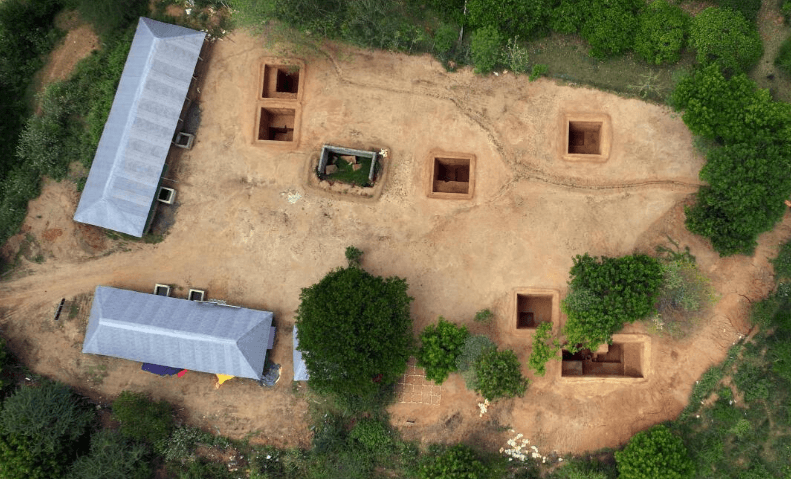
Excavation Marungur: habitation-cum-burial site spanning Iron Age–Early Historic, multidisciplinary by Tamil Nadu State Department of Archaeology

Geography Panruti taluk, Cuddalore district, between Thenpennai & Vada Vellar rivers, ancient Naduvil Mandalam zone

Context Rare coexistence mound + urn cemetery; advanced UAV, LiDAR, AMS carbon dating deployed

Quick Facts for MCQs

Archaeological Significance

  • Rarity habitation plus cemetery offers holistic lifestyle snapshot for Naduvil Nadu
  • Continuous occupation profile clarifies regional shift toward early urban centres
  • Trade linkage evidence aligns with coastal hubs Arikamedu and Poompuhar

Epigraphy & Scripts

  • Tamil-Brahmi sherds extend corpus of earliest south Indian writing
  • Inscribed grave goods refine palaeographic dating of megalithic phase
  • Literacy indicators suggest socio-political complexity pre Sangam age

Technology & Methods

  • UAV photogrammetry LiDAR furnish centimetre-level terrain and mound models
  • AMS dating coupled phytoliths builds secure multi-century chronology
  • GIS trench logs enable 3D visualisation of burial architecture and stratigraphy

Key Data Points

FeatureData-Point
Executing agencyTamil Nadu State Dept. of Archaeology
Site componentsHabitation mound and megalithic urn burials
District & StateCuddalore, Tamil Nadu
Stratified depthAnthropogenic deposits to 6 m
Artifact tally95 catalogued items
Script foundTamil-Brahmi on grave pots
Burial patternConcentric laterite stone circles with urns
Key artifactsIron swords, jasper beads, antimony rods, Chola coins
Dating toolsAMS carbon dating, phytolith, UAV LiDAR mapping
Cultural phaseTransition Iron Age → Early Historic
GS-1HistoryQuick Bite

10.Shaheed Mangal Pandey Birth Anniversary (1857 Revolt)

PIB

What & Where

Personality; Mangal Pandey, sepoy of 34th Bengal Native Infantry, East India Company

Geography; born Ballia (Uttar Pradesh), mutinied Barrackpore (Bengal), revolt spread Ambala-Lucknow-Meerut-Delhi

Process; refusal of greased Enfield cartridges catalysed 1857 Sepoy Mutiny / First War of Independence

Quick Facts for MCQs

Early Life

  • Birthplace Ballia; rustic peasant-sepoy background common among Bengal Army recruits
  • Recruitment age 22; posted to Barrackpore cantonment

Mutiny Trigger

  • Cartridge greased with beef-pork fat offended Hindu-Muslim faiths
  • Refusal escalated; solitary firing act ignited open rebellion in regiment

Spread & Leadership

  • Discontent diffused to Ambala, Lucknow, Meerut; mass uprising 10 May 1857
  • Delhi capture; Bahadur Shah Zafar declared symbolic emperor, providing pan-Indian legitimacy

Execution & Legacy

  • Court-martial hanging 8 Apr 1857; regiment dissolved
  • Remembered as precursor hero; embodies sepoy-peasant grievances against colonial rule

Key Data Points

FeatureData-Point
Birth date19 Jul 1827
Birth placeNagwa village, Ballia district, Uttar Pradesh
Regiment34th Bengal Native Infantry
Age joined army22 years
Objectionable weaponEnfield Pattern 1853 rifle-musket
Key mutiny actFired on Senior Sergeant Major, 29 Mar 1857
Execution8 Apr 1857, Barrackpore
Symbolic title for Bahadur Shah IIShah-en-shah-i-Hindustan
Subsequent major revoltMeerut uprising, 10 May 1857
Regiment fate34th BNI disbanded for disaffection
GS-1Mapping

11.Guryul Ravine Permian–Triassic Fossil Site (Permian–Triassic Fossil)

DH
Illustration for Guryul Ravine Permian–Triassic Fossil Site (Permian–Triassic Fossil)

What & Where

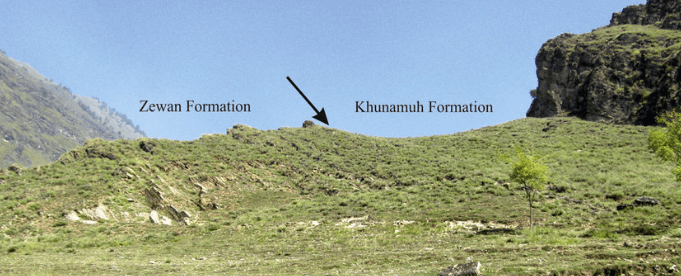
Fossil site recording Permian–Triassic mass-extinction, ~260 Ma old

Formed during volcanic upheaval, oxygen decline, mixed marine–terrestrial sedimentation

Situated at Guryul Ravine, Khonmoh, outskirts Srinagar, J-&-K (Vihi District)

Quick Facts for MCQs

Scientific Value

  • Palaeoclimate: Strata chronicle abrupt warming, oceanic anoxia, biodiversity collapse
  • Biostratigraphy: Rich fossil continuum aids extinction recovery mapping
  • Tsunami: Earliest known sedimentary imprint guides hazard paleostudies

Conservation & Threats

  • Quarrying: Ongoing limestone extraction eroding boundary layers
  • Land diversion: Non-scientific use violates 2017 fossil-zone notification
  • GSI warning: Urgent call for National Geological Monument tagging

International Context

  • Scale: Boundary section tenfold thicker than China’s global stratotype
  • Collaboration: Frequent expeditions by US, Japan, China universities
  • Recognition gap: Lacks UNESCO status unlike Meishan Bench­mark

Tourism Angle

  • Geotourism: Potential flagship site for Kashmir earth-heritage circuit
  • Comparative draw: Could mirror Meishan visitor economy if conserved
  • Education: Open-air classroom for schools, researchers, enthusiasts

Key Data Points

FeatureData-Point
Geological age~260 million years
Mass-extinction eventPermian–Triassic “Great Dying”
Species loss rates90 % marine; 70 % terrestrial
Boundary layer thickness≈3 m
Meishan comparisonChina site only 27 cm
Oldest tsunami recordPreserved in exposed strata
Protection order year2017 (J-&-K Govt)
Notified area9.8 lakh sqm
UNESCO eligibilityGlobal Geopark candidate
Global researchers>10 countries visit site
GS-3S&T

12.Cy-TB Latent Tuberculosis Skin Test (TB Diagnostics)

The Hindu
Illustration for Cy-TB Latent Tuberculosis Skin Test (TB Diagnostics)

What & Where

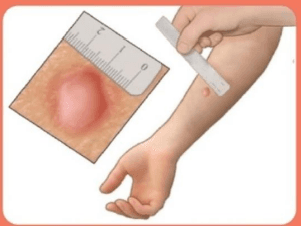
Cy-TB: intradermal skin test using ESAT-6 & CFP-10 antigens for latent tuberculosis infection (LTBI) detection

Process: inject 0.1 ml into inner forearm; measure induration after 48–72 h

Roll-out: first adopted by Kerala under National TB Elimination Programme (NTEP)

Quick Facts for MCQs

Tech & Schemes

  • Integration; Kerala pioneer introducing Cy-TB under NTEP scale-up roadmap
  • Support; ICMR funding, state TB units manage cold-chain, training, reporting

Operational Edge

  • Specificity; ESAT-6, CFP-10 antigens minimise BCG cross-reaction, improving diagnostic accuracy
  • Logistics; no phlebotomy, no lab, reading onsite within 3 days ideal for outreach camps
  • Follow-up; booster phenomenon assists serial testing in long-latent infections, supports contact surveillance

Safety & Limitations

  • Reactogenicity; itching, swelling common, ulceration rare, monitored via active pharmacovigilance
  • Limitation; cannot differentiate latent from active TB, clinical correlation mandatory
  • Contraindication; avoid use during severe skin disorders at injection site

Key Data Points

FeatureData-Point
Test typeNew-generation intradermal LTBI skin test
Antigens usedESAT-6 and CFP-10
DetectsTB exposure/latent infection
Injection volume0.1 ml
Reading window48–72 hours
Positive cut-offInduration ≥ 5 mm
Target groupAdults ≥ 18 y, high-risk contacts
Active vs latentCannot differentiate
Vial size10 doses
Shelf life28 days refrigerated
Equipment needNone; visual on-site reading
Common reactionsMild itching or swelling; rare ulceration
Programme anchorNTEP with ICMR support
GS-3S&T

13.AdFalciVax Indigenous Two-Stage Malaria Vaccine (Malaria Vaccine)

DD news
Illustration for AdFalciVax Indigenous Two-Stage Malaria Vaccine (Malaria Vaccine)

What & Where

AdFalciVax; India’s first indigenous recombinant two-stage vaccine against Plasmodium falciparum malaria

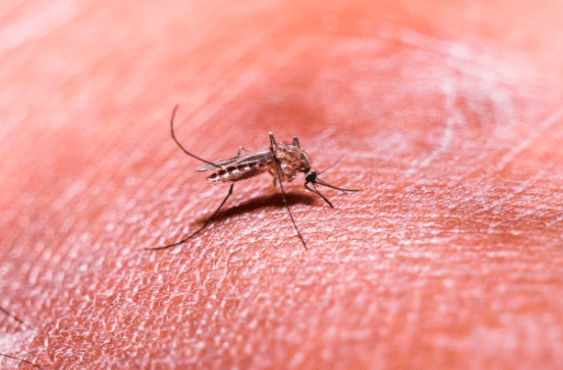
Blends liver-stage CSP fragment with mosquito-stage Pfs25 antigen; aims at infection prevention and transmission blockade

Jointly created by ICMR-RMRC Bhubaneswar, NIMR, DBT-NII; expressed in food-grade Lactococcus lactis platform

Quick Facts for MCQs

Tech & Schemes

  • Multistage design; lowers immune evasion and extends protection span
  • Food-grade bacterial expression; enables low-cost, scalable GMP production
  • Non-exclusive licensing; accelerates private participation in vaccine rollout

Health & Social Impact

  • Dual protection; expected reduction in morbidity and mortality in endemic zones
  • Transmission blocking; community-level herd protection without full coverage requirement
  • Indigenous development; boosts public confidence and equitable rural access

Policy & Targets

  • Aligns with National Framework for Malaria Elimination 2016-30 milestones
  • Complements Ayushman Bharat preventive health thrust and SDG 3.3 on communicable diseases
  • Demonstrates Atmanirbhar Bharat capability in tropical disease solutions

Key Data Points

FeatureData-Point
Parasite TargetPlasmodium falciparum
Vaccine TypeRecombinant chimeric multistage antigen
Stages CoveredPre-erythrocytic (liver) + Sexual (mosquito)
Core DevelopersICMR, RMRC-Bhubaneswar, NIMR, DBT-NII
Expression HostLactococcus lactis
Room-Temp Stability≥ 9 months
Licensing PlanNon-exclusive, global & domestic partnerships
National Goal SupportedMalaria elimination by 2030
Flagship MissionMake in India – Vaccine innovation
Key BeneficiariesTribal, high-endemic belts

Related UPSC Prelims PYQs

GS1 2010PYQ 1

Widespread resistance of malarial parasite to drugs like chloroquine has prompted attempts to develop a malarial vaccine to combat malaria. Why is it difficult to develop an effective malaria vaccine ?

GS-3S&TQuick Bite

14.Optical Atomic Clocks Redefine the Second (Optical Atomic Clocks)

The Hindu

What & Where

Second now defined via 9 192 631 770 microwave cycles of Caesium-133 (1967, SI system).

Optical atomic clocks use Strontium-87, Ytterbium-171, Indium-115 transitions in visible range for ultra-stable timing.

2025 experiment gave most precise optical-clock comparison; target is SI-second redefinition by 2030.

Quick Facts for MCQs

Tech & Schemes

  • Laser interrogation produces highly coherent light stabilised to atomic transition.
  • Higher photon energy boosts signal-to-noise, yielding 10 000× finer frequency resolution than microwaves.
  • International labs synchronise optical clocks via fibre links and satellite transfer.

Accuracy Benchmark

  • Comparison experiment achieved world-record fractional uncertainty below 10⁻¹⁸.
  • Optical clocks could redefine second once reproducibility shown across multiple labs.
  • Shift requires global consensus via International Bureau of Weights and Measures.

Applications

  • Quantum sensing enables tiny gravity-potential mapping for geodesy and mineral surveys.
  • Network synchronisation supports sub-nanosecond timing for 6G, financial trading, distributed computing.
  • Space missions may use optical clocks for deep-space navigation and tests of General Relativity.

Key Data Points

FeatureData-Point
Current SI definition year1967
Caesium-133 reference frequency9 192 631 770 Hz (microwave)
Atomic clock inventorLouise Essen, 1955
Drift: optical clock1 s in 15 billion years
Drift: cesium clock1 s in 300 million years
Optical clock frequency bandVisible/optical
Main optical-clock isotopesSr-87, Yb-171, In-115
Accuracy gain over cesium~100×
Potential SI update deadline2030 (planned)
Key application clusterQuantum sensing, high-speed networks, space science, fundamental tests
GS-2Misc

15.Codex Alimentarius Global Food Safety Standards (Food Safety Standards)

Times of India
Illustration for Codex Alimentarius Global Food Safety Standards (Food Safety Standards)

What & Where

Definition – Codex Alimentarius: global compendium of food standards, guidelines, codes of practice for safety & fair trade

Establishment – 1963, joint FAO-WHO initiative; secretariat housed in Rome, Italy

Coverage – hygiene, additives, labelling, pesticide residues, contaminants; reference for WTO SPS matters

Quick Facts for MCQs

Leadership & Committees

  • India – chairs Codex Committee on Spices & Culinary Herbs; steers whole-millet standard
  • Appreciation – CCEXEC88 lauded India’s millet leadership and SMART KPI inputs
  • Co-chairs – Mali, Nigeria, Senegal share millet drafting responsibility

Standards & Science

  • Science-based – standards rely on JECFA, JMPR risk evaluations
  • Coverage – includes additives, pesticide residues, contaminants, labelling, hygiene
  • WTO relevance – cited in dispute settlements for SPS consistency

Capacity Building

  • Mentorship – India trained Bhutan, Nepal, Sri Lanka via Codex Trust Fund
  • Objective – harmonise regional regulations, cut non-tariff barriers
  • Outcome – enhances South-South cooperation within Codex framework

Key Data Points

FeatureData-Point
Founding bodiesFAO & WHO
Year created1963
HeadquartersRome, Italy
Legal natureVoluntary but globally influential
WTO linkReference text for SPS Agreement
Main risk-assessment inputsJECFA, JMPR
India-chaired Codex bodiesCCSCH; Whole-Millet Working Group
CCSCH launch year2014
Whole-millet co-chairsMali, Nigeria, Senegal
Latest executive meetCCEXEC88, Rome
Strategic plan window2026-2031
KPI approachSMART indicators
Regional trainees by IndiaBhutan, Nepal, Sri Lanka

Related UPSC Prelims PYQs

GS1 2010PYQ 1

As regards the use of international food safety standards as reference point for the dispute settlements, which one of the following does WTO collaborate with?

GS1 2015PYQ 2

The terms ‘Agreement on Agriculture’, ‘Agreement on the Application of Sanitary and Phytosanitary Measures’ and ‘Peace Clause’ appear in the news frequently in the context of the affairs of the

GS-2Scheme

16.Common Service Centres for Rural E-Governance (Common Service Centres)

PIB

What & Where

Definition: Common Services Centres (CSCs) are MeitY‐backed digital kiosks delivering G2C & B2C services, mainly in rural India

Process: Operate via PPP 3-tier chain—Village Level Entrepreneur (VLE) → Service Centre Agency (SCA) → State Designated Agency (SDA)

Geography: Present in all states; CSC 2.0 targets one outlet in each of 2.5 lakh Gram Panchayats

Quick Facts for MCQs

Legal & Policy

  • NeGP 2006 provides umbrella for CSC scheme; Digital India 2015 gives renewed thrust
  • SPV CSC e-Governance Services India Ltd incorporated under Companies Act 1956 to monitor network
  • PPP structure legally recognises VLE, SCA, SDA as distinct implementation tiers

Tech & Schemes

  • Backbone: BharatNet, SWAN, SDC, SSDG enable real-time service portals and cloud hosting
  • Integration: Aadhaar, PAN, DigiLocker, UPI, IRCTC, utility payments offered at single kiosk window
  • IndiaAI Mission 34,000+ GPUs (2025) set to enrich CSC‐based AI applications and skilling modules

Economic Angle

  • Services: Banking, insurance, pensions, PM-KISAN, DBT improve rural liquidity and credit uptake
  • 2022 MoU lets PACS & LAMPS act as CSCs, expanding agri-credit and market linkages
  • CSC Grameen eStore platform opens rural e-commerce, supporting local producers and logistics

Social Inclusion

  • Workforce: 74,000+ women VLEs foster gendered entrepreneurship and village leadership
  • Literacy: PMGDISHA, skill courses run via CSCs to bridge digital divide for youth, SC/ST, minorities
  • Language: BHASHINI stack adds 35+ vernaculars, guaranteeing multilingual access to e-services

Key Data Points

FeatureData-Point
Implementing ministryMeitY
Approval under NeGP2006
SPV formed16 Jul 2009
Current CSCs (2025)>6.5 lakh
CSCs in 201483,000
Decadal growth≈680 %
CSC 2.0 launch2015
Gram Panchayat target2.5 lakh
Women VLEs>74,000
PACS/LAMPS tie-up year2022
Digital India launch1 Jul 2015

Related UPSC Prelims PYQs

ESE_GS 2020PYQ 1

Which one of the following is the nodal department to implement public internet access program and rural internet connectivity by converting its offices as multi-service centres?

ESE_GS 2026PYQ 2

The Samriddh Gram Phygital Services Pilot Project was recently launched by which organization?

GS-2Scheme

17.NAMASTE Scheme for Safe Sanitation Work (NAMASTE Sanitation Scheme)

PIB

What & Where

Manual scavenging = human-excreta removal from dry latrines, sewers, septic tanks; banned under PEMSR Act 2013

NAMASTE = 2022 Central-Sector scheme targeting 100 % mechanical desludging across all Urban Local Bodies (ULBs)

Geography focus = nationwide roll-out; joint MoHUA + MoSJE implementation, budgeted via Union Budget 2023-24

Quick Facts for MCQs

Tech & Schemes

  • Identification : Census of Sewer/Septic-Tank Workers, issuance of IDs
  • Mechanisation : Funding support for jetting, grabber, suction machines to SHG-run enterprises
  • IEC drive : Joint ULB-NSKFDC campaigns promoting registered, trained service providers

Legal & Policy

  • PEMSR Act 2013 superseded 1993 law; outlaws insanitary latrine cleaning, dry latrine construction
  • Draft 2020 amendment seeks full mechanisation, on-site safety, statutory compensation; awaiting Cabinet nod
  • Prevention of Atrocities Act 1989 safeguards Dalit sanitation workers, majority of manual scavengers

Social Concerns

  • Caste-linked : >90 % manual scavengers belong to Scheduled Castes
  • Livelihood shift : NAMASTE subsidies encourage transition to mechanised, safer sanitation enterprises
  • Awareness gap : Scheme mandates campaigns to alter user demand toward certified safe services

Key Data Points

FeatureData-Point
Budget 2023-24 allotment₹100 crore
Launch year of NAMASTE2022
Implementing ministriesMoHUA & MoSJE
Scheme natureCentral Sector
Target coverage100 % ULBs, all cities & towns
Health cover channelAB-PMJAY
Key objectiveZero fatalities in sanitation work
Worker collectivisationSelf-Help Groups
Financial aidCapital + interest subsidy for machinery
PPE & trainingProvided to all identified SSWs
Supervisory tiersNational, State, ULB
Manual scavenging ban ActPEMSR Act 2013
Pending amendment bill2020 Draft mechanisation bill
SC compensation (2014)₹10 lakh per sewer-death

Related UPSC Prelims PYQs

GS1 2016PYQ 1

'Rashtriya Garima Abhiyaan' is a national campaign to

GS-1Scheme

18.Kashi Declaration on Youth-Led Drug Eradication (Drug Abuse Action)

Hindustan Times
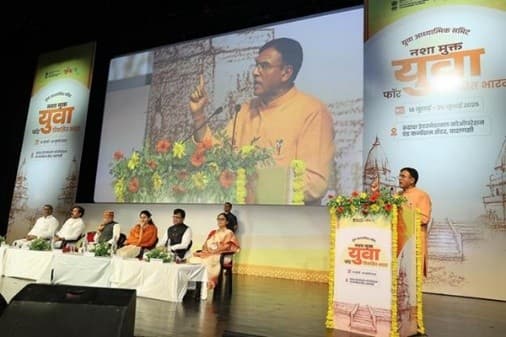
Illustration for Kashi Declaration on Youth-Led Drug Eradication (Drug Abuse Action)

What & Where

Instrument: Kashi Declaration – national action plan against substance abuse

Venue: Youth Spiritual Summit 2025, Varanasi (Kashi), Uttar Pradesh

Scope: Youth & spiritual leadership-driven, whole-of-society, multi-ministerial framework

Quick Facts for MCQs

Objectives

  • Eradication: build drug-free youth base for Viksit Bharat 2047
  • Spiritualisation: leverage India’s spiritual capital for prevention & recovery
  • Integration: families, communities, institutions aligned in single continuum

Institutional Mechanism

  • Multi-ministerial: Youth, Social Justice, Culture, Labour, Home coordinate actions
  • Joint Committee: central node for planning, funding, reporting
  • Annual audit: progress gauged at 2026 Young Leaders Dialogue

Outreach & Engagement

  • MY Bharat clubs: spearhead pledge drives, de-addiction camps, helplines
  • Community campaigns: grassroots workshops, culturally rooted messaging
  • Digital safeguards: monitoring platforms vs online drug solicitation

Monitoring & Evaluation

  • Digital dashboard: real-time tracking of outreach metrics
  • Indicators: volunteer numbers, rehab enrolments, awareness sessions held

Key Data Points

FeatureData-Point
Declaring MinistryYouth Affairs & Sports
Target YearViksit Bharat 2047
Core Motto“Nasha Mukt Yuva”
Key PlatformMY Bharat youth clubs
Coordination BodyJoint National Committee
Review EventViksit Bharat Young Leaders Dialogue 2026
Digital FocusCounter online targeting of school children
Thematic SessionsPsychology, Trafficking, Awareness, Spiritual Rehab
Allied MinistriesSocial Justice, Culture, Labour, Home Affairs
Monitoring ToolAnnual progress reports & digital dashboard

Ready to practice?

Test your knowledge with our UPSC test series.

Start Free Trial