UPSC Current Affairs

15 topicsGS-1: 3GS-2: 7GS-3: 5
0/15 done
GS-2Polity

1.Central Adoption Resource Authority Overview (Child Adoption)

DH

What & Where

CARA – statutory body under Ministry of Women & Child Development, regulating Indian child adoptions.

Processes – in-country & inter-country adoption via JJ Act 2015 and Hague Convention 1993.

Geography – HQ New Delhi; jurisdiction pan-India, acts as Central Authority internationally.

Quick Facts for MCQs

Legal & Policy

  • Statutory-status grants enforcement powers over all Registered Adoption Agencies.
  • Issues guidelines ensuring ethical, transparent, time-bound adoption compliant with JJ Act.
  • Acts as Central Authority mandated by Hague Convention obligations.

Institutional Functions

  • Regulation – accredits, monitors state & specialised adoption agencies nationwide.
  • Capacity-building – trains adoption professionals, empanels qualified counsellors.
  • Digital-oversight – CARINGS portal tracks every adoption step for transparency.

Social Concerns

  • Counselling-directive targets emotional wellbeing across adoption lifecycle.
  • Focus on orphaned, abandoned, surrendered children’s rights protection.
  • Emphasis on psychosocial support to mitigate adoption adjustment issues.

Key Data Points

FeatureData-Point
Year set up (as agency)1990
Became statutoryJuvenile Justice (Care & Protection) Act, 2015
Parent ministryWomen & Child Development
International treaty handledHague Convention on Inter-country Adoption, 1993
India ratification year2003
Digital portalCARINGS (Child Adoption Resource Information & Guidance System)
Recent directiveStrengthen structured counselling pre-, during, post-adoption
Key stakeholders counselledBiological parents, adoptive parents, adopted children
HeadquartersNew Delhi
Legal powerIssues binding directions under JJ Act & Adoption Regulations
GS-2Polity

2.PAC Seeks Comprehensive UIDAI Review (UIDAI Oversight)

The Hindu
Illustration for PAC Seeks Comprehensive UIDAI Review (UIDAI Oversight)

What & Where

Body: Public Accounts Committee – Parliamentary watchdog auditing Union expenditure via CAG reports across India

Process: Examined UIDAI after 2021 CAG audit, focusing on Aadhaar enrolment, authentication, data security

Geography: Functions within Lok Sabha & Rajya Sabha; oversight affects nationwide welfare schemes linked to Aadhaar

Quick Facts for MCQs

Operational Gaps

  • Biometric failures bar genuine users from PDS, MGNREGA, other subsidies
  • Slow post-death deactivation leaves duplicate or inactive Aadhaar in circulation
  • Grievance redressal cumbersome, error correction delayed for citizens

Security Dimension

  • Aadhaar datasets reportedly surfaced on dark web raising PAC concern
  • Duplicate IDs plus breach risk enable identity theft and subsidy fraud
  • UIDAI asserts core database secure, vulnerabilities lie in peripheral centres

Social Impact

  • Exclusion: Beneficiaries denied welfare, trust in digital governance wanes
  • Misuse: Non-citizens allegedly leveraging Aadhaar to access Indian schemes
  • Vulnerability: Elderly and manual labourers hit hardest by biometric mismatch

Recommended Fixes

  • Alternatives: Facial recognition, OTP, assisted verification for failed biometrics
  • Integration: Link civil death registries to auto-deactivate Aadhaar of deceased
  • Compliance: Stricter centre protocols, full scientific security audit of UIDAI

Key Data Points

FeatureData-Point
Committee strength22 MPs (15 Lok Sabha, 7 Rajya Sabha)
Chair selectionTraditionally from Opposition benches
TenureReconstituted annually
Audit triggerCAG Performance Audit on UIDAI 2021
Aadhaar issuedNumbers exceed projected Indian population
Major failure causeWorn fingerprints, iris mismatch among elderly
Data-leak locusEnrolment/update centres per UIDAI
Key PAC demandForensic audit of central Aadhaar repository

Related UPSC Prelims PYQs

CDS_GK 2022PYQ 1

Which one of the following statements about the Public Accounts Committee (PAC) of the Parliament is not correct?

GS-2Polity

3.SC Admits Secret Spousal Recordings (Evidence Act Section 122)

Indian Express

What & Where

Ruling: SC allows secretly recorded spousal conversations as admissible evidence in matrimonial cases across India

Focus: Overrides absolute spousal privilege under Section 122, Indian Evidence Act 1872

Geography: Applicable pan-India in civil & criminal matrimonial proceedings

Quick Facts for MCQs

Legal & Policy

  • Interpretation: Communication privilege not absolute when justice demands disclosure
  • Admissibility: Electronic evidence accepted if relevancy and authenticity proven under Evidence Act
  • Waiver: Privilege may be waived by necessity, not solely by spouse consent

Fundamental Rights

  • Balance: Right to privacy limited when clashing with fair-trial requirement
  • Court View: Justice delivery prioritised over absolute informational privacy within marriage
  • Precedent: Strengthens earlier rulings limiting privacy in family litigation

Matrimonial Disputes

  • Utility: Secret recordings can corroborate cruelty, desertion, dowry demands
  • Burden: Party submitting recording must prove genuineness and chain of custody
  • Impact: Likely rise in electronic evidence use during family court proceedings

Key Data Points

FeatureData-Point
CourtSupreme Court of India
Key StatuteSection 122, Indian Evidence Act 1872
Evidence AllowedSecretly recorded marital conversations
Constitutional ArticlesArt 21 (Privacy) vs Art 14 & 21 (Fair trial)
Nature of PrivilegeQualified, waivable in divorce/criminal matters
Case DomainMatrimonial disputes, including divorce
GS-2PolityQuick Bite

4.Court Upholds Peace Over Loud Prayers (Noise Pollution Ruling)

The Hindu

What & Where

Madras High Court, July 2025, bans loud religious gatherings in residential premises without District Collector nod

Builds on 2005 Supreme Court ruling that noise pollution violates Article 21 and loudspeakers lack Fundamental Right status

Conflict space: Article 25 collective worship vs Article 21 peaceful living across Indian neighbourhoods

Quick Facts for MCQs

Legal & Policy

  • Requirement: written Collector approval before holding amplified prayers in residential zones
  • SC 2005 ratio applied, terming loudspeaker use a regulable activity, not a Fundamental Right
  • Madras HC frames regulation as neighbourhood order issue, not faith suppression

Fundamental Rights

  • Priority: Article 21 tranquillity supersedes Article 25 collective practice when disturbance occurs
  • Principle: no person may convert others into captive audience of religious sound
  • Neighbour consent alone inadequate, statutory clearance mandatory to safeguard silent third parties

Environmental Impact

  • Noise classified as air pollutant under 1981 Air Act whenever harmful to humans or ecology
  • Courts embed quiet environment within Article 21 quality-of-life guarantee
  • Regulation of religious noise treated as environmental protection, religion-neutral measure

Key Data Points

FeatureData-Point
Court delivering latest orderMadras High Court
Year of HC verdict2025
SC precedent cited2005 Noise-pollution judgment
Fundamental Right limitedArticle 25 Freedom of religion
Higher Right protectedArticle 21 Right to life & peace
Statute tagging noise as pollutantAir (Prevention and Control of Pollution) Act 1981
Permission authorityDistrict Collector
GS-1HistoryQuick Bite

5.Adikabi Sarala Das Birth Anniversary (Odia Literature Pioneer)

PIB

What & Where

Personality – Adikabi Sarala Das, 15th-century Odia poet, born Siddheswara Parida in coastal Odisha.

Works – composed first Odia Mahabharata plus other epics at Munigosain religious seat.

Language – Odia, eastern Indo-Aryan; accorded Classical status in 2014.

Quick Facts for MCQs

Literary Works

  • Mahabharata (Odia) introduced local idiom, devotional flavour.
  • Vilanka Ramayana adapts Rama-Ravana war narrative to Odia culture.
  • Chandi Purana glorifies Goddess Chandi; mix of mythology and social commentary.

Language Status

  • Classical tag gives Odia funding for research, dedicated university centers.
  • Criteria include antiquity > 1500 years, rich ancient literature, original tradition.
  • Post-2024 list: 11 classical languages total in India.

Historical Setting

  • Period marked by Gajapati empire expansion under Kapilendra Dev.
  • Sarala Das leveraged court patronage yet wrote in vernacular, boosting mass literacy.
  • Works preceded printing; transmitted via palm-leaf manuscripts.

Linguistic Influences

  • Ardhamagadhi core provides Indo-Aryan grammar backbone.
  • Dravidian phonetics visible in retroflex consonant usage.
  • Persian-Arabic lexicon entered via medieval coastal trade.

Key Data Points

FeatureData-Point
Honorific titleAdikabi (First poet)
Birth nameSiddheswara Parida
Century15th C CE
Patron kingGajapati Kapilendra Dev (contemporary)
Writing venueMunigosain religious establishment
Major epicsMahabharata (Odia), Vilanka Ramayana, Chandi Purana
Other textLaxmi Narayana Vachanika
Odia derived fromArdhamagadhi Prakrit
External influencesDravidian, Arabic, Persian, English
Classical status year2014 (6th language)
New classical entrants 2024Marathi, Pali, Prakrit, Assamese, Bengali
Constitutional listingEighth Schedule language

Related UPSC Prelims PYQs

GS1 1997PYQ 1

Which one of the following pairs of composers in different languages and their works on the Mahabharata theme is correctly matched?

GS-1Mapping

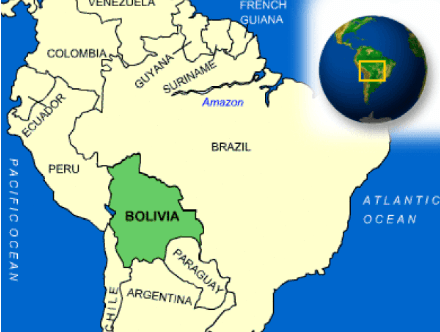
6.Bolivia: Location and Key Landforms (South American Geography)

News on Air
Illustration for Bolivia: Location and Key Landforms (South American Geography)

What & Where

Bolivia — land-locked west-central South America; dual capitals La Paz (administrative) & Sucre (constitutional)

India rushed 3 lakh Measles-Rubella vaccine doses to Bolivia under Development Partnership Programme

Aid exemplifies South-South health diplomacy leveraging India’s pharmaceutical manufacturing edge

Quick Facts for MCQs

Physical Geography

  • Andes split into Cordillera Occidental & Oriental surrounding Altiplano
  • Yungas humid slopes descend to Amazonian lowlands
  • Chaco & Oriente comprise hot southern lowlands and eastern rainforests

Health Diplomacy

  • Consignment included ancillary supplies besides vaccines
  • Rapid dispatch addresses active measles-rubella outbreak, reinforcing India’s vaccine-hub image

Bilateral Cooperation

  • Engagement warm across G-77, NAM, BRICS outreach platforms
  • Energy, technology and mineral sectors earmarked for deeper collaboration

Natural Resources

  • Lithium abundance positions Bolivia for battery-value-chain partnerships
  • Diverse ecology hosts salt, gas and hydropower potential

Key Data Points

FeatureData-Point
Continent positionWest-central South America
NeighboursBrazil, Paraguay, Argentina, Chile, Peru
N-S extent~1,500 km
E-W extent~1,300 km
Highest peakMt Sajama 6,542 m
Major plateauAltiplano ~12,000 ft
Largest salt flatUyuni 10,400 sq km
Major lakeTiticaca on Altiplano
Key riversBeni, Mamoré, Iténez → Amazon
Vaccine consignment3 lakh Measles-Rubella doses
Indian aid frameworkDevelopment Partnership / South-South Cooperation
Resource highlightLarge lithium reserves

Related UPSC Prelims PYQs

GS1 2003PYQ 1

Which one of the following countries is land locked?

GS1 2025PYQ 2

Consider the following countries:

GS-3Environment

7.Just Transition in Global Plastics Treaty (Global Plastics Treaty)

Down to Earth

What & Where

Global Plastics Treaty – UNEP-led, legally binding instrument to end plastic pollution across entire life-cycle, mandated by UNEA-5/14 (2022).

Intergovernmental Negotiating Committee (INC) sequence: INC-1 Uruguay, 2 Paris, 3 Nairobi, 4 Ottawa, 5.1 Busan, 5.2 Geneva Aug 2025.

“Just Transition” aims fair, inclusive shift for 20 mn-strong informal waste workforce, mainly in developing cities.

Quick Facts for MCQs

Legal & Policy

  • Draft-treaty gaps: Arts 8-9 merely “encourage”; Art 11 misses finance; no compulsory worker safeguards.
  • Binding-need: Delegations seek ILO, human-rights references plus enforceable obligations for social protection.
  • Scope-clarity: India warns against overlap with Basel, Rotterdam, Stockholm Conventions and WTO rules.

International Stances

  • EU supports legal recognition, safe conditions for informal workers through plastics chain.
  • PSIDS press for indigenous & local community inclusion in transition design.
  • African Group backs youth, waste-picker mention but hesitant on formal recognition wording.

Indian Schemes

  • 2024 Plastic Waste Management Rules: annual audits, central registration portal, mandatory online reporting by ULBs.
  • India Plastics Pact: time-bound targets for reduction, reuse, recycled content via multi-stakeholder platform.
  • Project REPLAN & Un-Plastic Collective: integrate waste plastic into handmade paper; drive corporate circularity pledges.

Social Concerns

  • Informal workers lack contracts, health cover despite critical recycling role; high displacement risk from plastic bans.
  • Health-hazards: open burning, dumpsite toxins elevate urban morbidity.
  • Proposal: Global Just Transition Fund for retraining, formalisation, green infrastructure in affected regions.

Key Data Points

FeatureData-Point
Global plastic output/yr460 million t
Leakage to environment20 million t/yr
Macro-plastic share (2019)88 % of leakage
India plastic waste/yr9.46 million t
Uncollected in India40 % of total
Informal recovery share> 50 % urban plastic recycling in Global South
Material value loss, IndiaUSD 133 bn by 2030
Next INC sessionGeneva, Aug 2025
GS-3S&T

8.GW231123 Record Black Hole Merger (Gravitational Waves)

NDTV
Illustration for GW231123 Record Black Hole Merger (Gravitational Waves)

What & Where

Black-hole merger: two orbiting black holes lose energy via gravitational waves, collapse into one larger black hole.

GW231123: record-size stellar-mass merger spotted in LIGO-Virgo-KAGRA fourth observation run (O4).

Origin estimated ~12 billion light-years away, beyond reach of electromagnetic telescopes.

Quick Facts for MCQs

Astrophysical Significance

  • Record-breaking scale redefines upper bound for stellar-origin black holes.
  • High-spin waveform offers rare probe into extreme relativistic conditions.
  • Deep-space source provides data unattainable through light-based astronomy.

Physics Implications

  • Mass-gap breach questions pair-instability supernova models and stellar collapse limits.
  • Supports hierarchical mergers scenario within dense stellar clusters or primordial remnants.
  • Demands refined population synthesis and gravitational-wave templates.

Detection Network

  • LVK synergy enabled prompt triangulation and parameter estimation.
  • O4 sensitivity upgrades crucial for capturing high-mass, high-spin events.
  • Multi-detector confirmation boosts signal-to-noise, reducing false-alarm probability.

Key Data Points

FeatureData-Point
Event codeGW231123
Primary black hole mass≈ 140 M☉
Secondary black hole mass≈ 100 M☉
Remnant mass≈ 225 M☉
Mass gap range60–130 M☉ (theory)
Gap violatedYes, both components exceed limit
Spin of larger BHNear maximum set by General Relativity
Detection networkLIGO (US) + Virgo (Italy) + KAGRA (Japan)
Observation runO4 (2023)
Estimated look-back timeup to 12 billion yr
Energy release formGravitational waves
Possible formationSecond-generation merger

Related UPSC Prelims PYQs

GS1 2019PYQ 1

Recently, scientists observed the merger of giant 'blackholes' billions of light-years away from the Earth. What is the significance of this observation?

GS-3S&TQuick Bite

9.Noise Impact on Quantum Entanglement (Quantum Entanglement)

PIB

What & Where

Quantum entanglement phenomenon; measurement of one particle instantly defines partner, distance-independent correlation

Types: Intraparticle (spin–path same particle) vs Interparticle (distinct particles)

Location: Study by Raman Research Institute, IISc Bengaluru, IISER Kolkata, India

Quick Facts for MCQs

Indian Institutions

  • Collaborators: RRI Bengaluru, IISc Bengaluru, IISER Kolkata
  • Recognition: Findings released via Press Information Bureau July 2025

Noise Dynamics

  • Amplitude damping: energy-loss channel can create, preserve, revive intraparticle entanglement
  • Phase damping & Depolarizing: mainly degrade coherence; no revival observed, steady decay in interparticle pairs
  • Resilience ranking: Intraparticle > Interparticle under all tested noise models

Practical Implications

  • Global Noise Model enables pre-design screening of qubit architectures for field-level noise conditions
  • Insights aid quantum computing, cryptography, communication where controlled noise might boost entanglement

Key Data Points

FeatureData-Point
Study goalProbe quantum-noise impact on entanglement
Most entanglement-enhancing noiseAmplitude damping
Weaker for enhancementPhase damping, Depolarizing noise
More noise-resilient systemIntraparticle entanglement
Analytical toolGlobal Noise Model with closed-form equation
Year of PIB release2025

Related UPSC Prelims PYQs

ESE_GS 2023PYQ 1

Which one of the statements is NOT relevant to quantum computing?

GS-2Misc

10.UN GoF for Peacekeeper Accountability (UN Peacekeeping)

Business Standard
Illustration for UN GoF for Peacekeeper Accountability (UN Peacekeeping)

What & Where

Platform informal Group of Friends for Accountability of Crimes against Peacekeepers situated at UN Headquarters

Launch December 2022 during India-led Presidency of UN Security Council

Composition about 40 member states across Asia Africa Latin America co-chaired by India

Quick Facts for MCQs

Legal & Policy

  • Framework pushes national laws to prosecute assaults on peacekeepers and close jurisdictional gaps
  • Resolution 2589 tracking mandates host states investigate and report on attacks
  • GoF advocates Secretary-General annual reports on accountability progress

Security Dimension

  • Accountability labelled strategic necessity for mission success and troop morale
  • Deterrence stressed; impunity seen to encourage repeated violence
  • Focus on high-risk deployments where Global South personnel dominate

India’s Leadership

  • India co-chairs GoF and convened July 2025 high-level meet
  • Legacy includes 300,000 deployed peacekeepers and 182 fatalities
  • New pledge of legal diplomatic and moral backing to accountability agenda

Key Data Points

FeatureData-Point
Launch month-yearDecember 2022
Forum of launchUN Security Council Presidency of India
Current co-chairsIndia + like-minded states from Asia, Africa, Latin America
Membership size~40 UN member states
Core mandateAccountability for crimes against UN peacekeepers
Monitored UNSC resolution2589 (2021)
Indian peacekeepers deployed>3 lakh since 1948
Indian fatalities in missions182 personnel
July 2025 meet focusAccountability as strategic necessity
GS-3Security

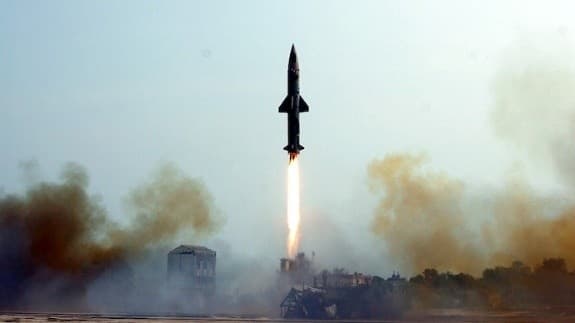
11.Agni-I and Prithvi-II Ballistic Missiles (Ballistic Missiles)

TNN
Illustration for Agni-I and Prithvi-II Ballistic Missiles (Ballistic Missiles)

What & Where

SRBMs Agni-I (700–900 km) and Prithvi-II (≈350 km) underpin India’s nuclear deterrence doctrine

Dual tests conducted from Integrated Test Range, Chandipur, Odisha, one day after Akash Prime trial in Ladakh

Missiles designed by DRDO under Integrated Guided Missile Development Programme; trials overseen by Strategic Forces Command

Quick Facts for MCQs

Technical Specifications

  • Agni-I larger payload, longer reach, high-accuracy guidance for counter-value and counter-force roles
  • Prithvi-II quick-reaction, liquid-propellant SRBM; flexible trajectory for evading missile defences
  • Both missiles road-mobile, enhancing survivability and dispersed deployment

Security Dimension

  • Tests validate second-strike credibility and reinforce minimum credible deterrence posture
  • Regular user trials ensure reliability amid evolving regional threat perceptions
  • Dual successful launches signal operational readiness to adversaries post-conflict scenarios

Institutional Setup

  • Strategic Forces Command conducts user trials separate from R&D flights by DRDO
  • IGMDP umbrella earlier produced Prithvi, Agni series, Akash, Trishul, Nag
  • ITR Chandipur provides coastal over-water corridor enabling full-range ballistic evaluations

Key Data Points

FeatureData-Point
Missile classShort-range ballistic (SRBM)
Range Agni-I700–900 km
Range Prithvi-II~350 km
Payload Agni-I≤1,000 kg
Payload Prithvi-II≤500 kg
Warhead optionsConventional or nuclear
Guidance Agni-ISophisticated inertial + terminal
Guidance Prithvi-IIAdvanced inertial navigation
Launch platformRoad-mobile transporter-erector-launcher
DeveloperDRDO
Supervising commandStrategic Forces Command
ProgrammeIGMDP
Test locationITR Chandipur, Odisha
Speed Prithvi-IIAbove Mach 1
Induction Agni-IEarly 2000s

Related UPSC Prelims PYQs

GS1 2007PYQ 1

Consider the following statements:

GS1 2003PYQ 2

With reference to Indian defence, which one of the following statements is correct?

GS-3Security

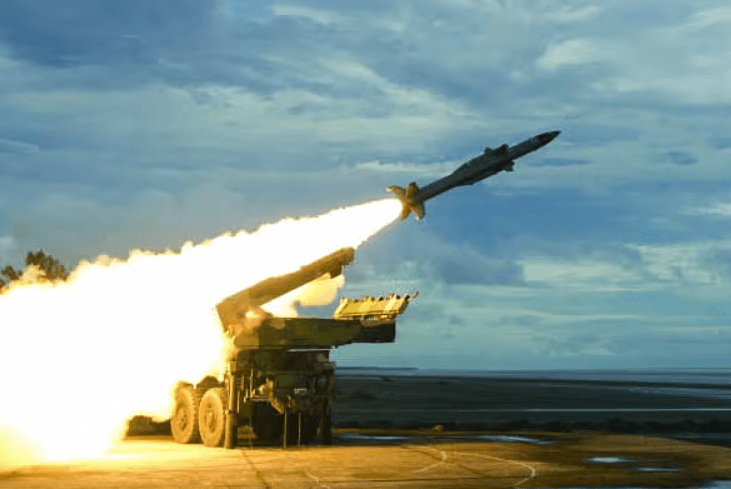
12.Akash Prime High-Altitude Air-Defence Missile (Surface-to-Air Missile)

PIB
Illustration for Akash Prime High-Altitude Air-Defence Missile (Surface-to-Air Missile)

What & Where

Akash Prime = indigenous, upgraded Akash surface-to-air missile for high-altitude, low-oxygen engagements

Successful flight trial at Ladakh high-altitude range (~15,000 ft)

Protects mountainous borders Ladakh, Sikkim from drones, aircraft, cruise missiles

Quick Facts for MCQs

Technology & Performance

  • Hybrid guidance unites command updates with active seeker for terminal accuracy
  • Propulsion sustains supersonic Mach 2.5 flight in rarefied Himalayan air
  • All-weather electronics validated during Ladakh winter conditions

Security Dimension

  • High-altitude capability plugs air-defence gaps along Line of Actual Control
  • Adds layer to Akash, Barak-8, S-400 networked batteries
  • Boosts deterrence against swarm drones and low-RCS cruise missiles

Industrial Impact

  • 100 % indigenous content strengthens defence self-reliance under Aatmanirbhar Bharat
  • Orders channel work to MSME supply chains via BDL, BEL integrators
  • Indigenous system avoids expensive imports, trimming lifecycle costs

Key Data Points

FeatureData-Point
DeveloperDRDO + BDL + BEL
Missile typeMedium-range SAM
Max range30 km
Peak speedMach 2.5
Tested altitude15,000 ft
GuidanceCommand + terminal active radar homing
SeekerIndigenous active radar
Kill probability (single)88 %
Kill probability (dual)98.5 %
MobilityTruck-mounted launcher
All-weatherOperates in extreme cold, low air density
Mission targetsDrones, fighter aircraft, cruise missiles
Self-reliance linkAatmanirbhar Bharat

Related UPSC Prelims PYQs

CDS_GK, GS1 2003PYQ 1

With reference to Indian defence, which one of the following statements is correct?

CDS_GK, GS1 2022PYQ 2

The term ‘Terminal High Altitude Area Defense’, sometimes mentioned in news, refers to

GS-2Scheme

13.Swachh Survekshan 2024-25 Award Highlights (Urban Sanitation Rankings)

Indian Express

What & Where

Swachh Survekshan – annual MoHUA survey ranking urban sanitation performance across India since 2016

Processes include citizen feedback, waste-segregation audits, field verification; 2024-25 covered 4,589 ULBs

Core geography: all States/UTs; awards hosted in New Delhi, special category Super Swachh League cities nationwide

Quick Facts for MCQs

Scheme Design

  • Classification reform; cities ranked within five population bands for equitable comparison
  • Indicators simplified into 10 sections; new metrics on Project Grounding, City Transport Unit transformation
  • School-level assessments launched to embed ‘Swachhta’ among youth

Award Highlights

  • Indore, other serial winners shifted to SSL to allow newer cities recognition
  • 35 cities tagged “Promising Swachh Shehar” for rapid improvement; examples Patna, Guwahati, Bhubaneswar
  • Special Swachh Mahakumbh 2025 award granted to Prayagraj for festival waste management

Labour Safety

  • Safaimitra Surakshit Shehar Award honors cities ensuring mechanised, safe sanitation practices; promotes worker dignity

Circular Economy

  • 2025 theme aligns with Jaipur Declaration on 3R & circularity; prioritises segregation, recycling, resource recovery

Key Data Points

FeatureData-Point
Current edition9th, 2024-25
Survey windowApr 2024 – Mar 2025
ULBs covered4,589
Organising ministryMoHUA
New fairness measureSuper Swachh League (SSL)
Population categories5 (Very Small <20k … Million Plus >10 lakh)
Cleanest CantonmentSecunderabad
Cleanest Ganga TownPrayagraj
Safaimitra Surakshit Shehar winnersVisakhapatnam, Jabalpur, Gorakhpur
2025 survey theme“Reduce, Reuse, Recycle (3R)”
Mission umbrellaSwachh Bharat Mission-Urban
Launch year SBM2014
SBM-Urban 2.0 launch2021
Funding windowSwachh Bharat Kosh (CSR/Philanthropy)

Related UPSC Prelims PYQs

CDS_GK, NDA_GAT 2024PYQ 1

निम्नलिखित में से किन शहरों को स्वच्छ सर्वेक्षण पुरस्कार, 2023 के अंतर्गत, सबसे स्वच्छ शहर पुरस्कार प्रदान किए गए?

CDS_GK, NDA_GAT 2024PYQ 2

Recently the Ministry of Environment, Forest and Climate Change has submitted three nominations from India for Wetland City Accreditation (WCA) under the Ramsar Convention on Wetlands. Which one among the following cities is not one among them?

GS-2Scheme

14.Decade of Skill India Mission (Skill Development)

PIB

What & Where

Definition – Skill India Mission: nationwide programme to skill-reskill-upskill youth, launched 15 Jul 2015, Ministry of Skill Development & Entrepreneurship

Key processes – short-term training, apprenticeship promotion, community‐based skilling, all courses mapped to National Skills Qualification Framework

Geography – pan-India network of Training Centres, RSETIs, Jan Shikshan Sansthans, NSTIs, Digital Hub platform

Quick Facts for MCQs

Legal & Policy

  • Restructured Skill India Mission 2022-26 approved Feb 2025; single umbrella Central Sector Scheme
  • Standardisation – all certifications NSQF-aligned; credit transfer through National Credit Framework, records in DigiLocker
  • Compliance – SIDH enables Aadhaar-based verification, real-time outcome tracking, integration with education-startup ecosystems

Performance Metrics

  • Coverage – overall 6 crore trained; annual average 60 lakh since launch
  • Apprenticeship – engaged across 36 States/UTs, boosting industry exposure and wage prospects
  • Community reach – JSS targets non-literates & dropouts; RSETI entrepreneurial training jumped from 2.29 mn (2017) to 5.67 mn (2025)

Sectoral Focus

  • Emerging areas – AI, robotics, green hydrogen, Industry 4.0 skills embedded in PMKVY 4.0 courses
  • Infrastructure – Centres of Excellence at NSTIs Hyderabad & Chennai for advanced instructor and green-tech skilling
  • Traditional trades – PM Vishwakarma supports 18 artisan crafts via toolkits, digital incentives, collateral-free credit, market linkage

Key Data Points

FeatureData-Point
Launch date15 July 2015 (World Youth Skills Day)
2025 UN day themeEmpowering youth through AI & digital skills
Total persons trained6 crore + (2015-25)
PMKVY trainees till Jul 20251.63 crore
Apprentices engaged (PM-NAPS)43.47 lakh by May 2025
JSS beneficiaries26 lakh during FY 2018-24
RSETI trainees5.67 million by Jun 2025
Scheme type (2022-26)Central Sector; merges PMKVY 4.0, PM-NAPS, JSS
Stipend support under PM-NAPS25 % via DBT for age 14-35
Digital backboneSkill India Digital Hub (SIDH)

Related UPSC Prelims PYQs

GEO_GS, GS1 2018PYQ 1

प्रधान मंत्री कौशल विकास योजना के संदर्भ में, निम्नलिखित कथनों पर विचार कीजिए:

GEO_GS, GS1 2026PYQ 2

Consider the following statements about the SANKALP Scheme:

GS-1Scheme

15.Kerala KITE Ethical AI Education (EdTech Initiative)

The Hindu

What & Where

Kerala Infrastructure and Technology for Education (KITE): state-run tech arm integrating AI in Kerala’s public school system

Scope: 15,000+ Kerala schools, Classes 8–12; emphasis on transparency, inclusion, teacher autonomy

Tools: Samagra Plus RAG-based AI engine and Little KITEs clubs for robotics-AI learning

Quick Facts for MCQs

Tech & Schemes

  • FOSS adoption ensures cost saving, code transparency, vendor neutrality
  • Samagra Plus aligns AI responses strictly with state curriculum avoiding bias and test-prep pitfalls
  • Infrastructure fully state-owned safeguarding algorithmic control

Training & Capacity

  • 80k teachers upskilled in bias spotting, privacy, curricular mapping
  • Modules emphasise critical AI use over mere tool operation
  • Continuous peer-learning loop via teacher-curated content repositories

Data & Ethics

  • Data sovereignty upheld through state data centres eliminating third-party profiling
  • Bias resistance achieved via locally vetted datasets and rule-based response filters
  • Ethical guidelines prioritise inclusion, accessibility, teacher oversight

International Recognition

  • UNICEF lists KITE among global best practices for responsible EdTech 2024
  • Initiative cited at national EdTech forums for equitable AI integration
  • Model promoted for replication in other Indian states by NCERT

Key Data Points

FeatureData-Point
Launch agencyGovernment of Kerala
Parent departmentGeneral Education Department, Kerala
Schools on FOSS stack15,000+
Teachers AI-trained80,000+ (Classes 8–12)
Core AI platformSamagra Plus; in-house RAG engine
Student innovation wingLittle KITEs IT Clubs
Data stanceIn-house servers; open datasets; no commercial surveillance
Global recognitionUNICEF tagged KITE as responsible EdTech best practice

Ready to practice?

Test your knowledge with our UPSC test series.

Start Free Trial