UPSC Current Affairs

14 topicsGS-2: 2GS-3: 12
0/14 done
GS-2Editorial

1.Supreme Court Flags Online Free Speech Abuse (Free Speech)

B&B
Illustration for Supreme Court Flags Online Free Speech Abuse (Free Speech)

What & Where

Definition: Free speech is the Article 19(1)(a) right to express opinions sans State censorship—verbal, written, artistic, symbolic, digital

Context: Supreme Court flags rampant online hate, defamation, religious insults; warns Indians to self-regulate or face tighter laws

Forms: Objectionable religious posts, defamatory political cartoons, anonymous hate amplified via X, Instagram, Facebook

Quick Facts for MCQs

Legal & Policy

  • ReasonableRestrictions: sovereignty, public order, decency, morality, defamation, contempt; proportionality review by Supreme Court
  • SupremeCourt: clubbed FIRs, stressed citizen discipline, hinted statutory control if abuse continues
  • ReformSuggestions: update IT Act, delineate horizontal rights, mandate platform algorithm audits

Social Concerns

  • Polarisation: Online hate linked to offline communal violence and vigilantism incidents
  • JudicialBurden: Multiple state FIRs and bail petitions clog courts, trigger SC consolidation orders
  • GlobalPerception: Digital rights indices question India’s freedom-with-responsibility record

Civic Initiatives

  • DigitalCivilityCode: Proposed voluntary charter for respectful online conduct
  • LiteracyCampaigns: Schools, workplaces, local bodies to embed ethical internet behaviour
  • AlgorithmAudits: Platforms urged to assess amplification models curbing hate virality

Key Data Points

FeatureData-Point
Constitutional guaranteeArticle 19(1)(a)
Restriction clauseArticle 19(2)
Landmark digital speech caseShreya Singhal v. UoI (2015)
Provision struck downSec 66A IT Act
SC 2025 tone“Self-regulation or inevitable State regulation”
Internet users in India≈ 800 million
Fundamental duty implicatedArt 51A: fraternity & integrity
Recent controversy casesWazahat Khan post; Hemant Malviya cartoon

Related UPSC Prelims PYQs

CDS_GK 2022PYQ 1

Article 19(1) of the Constitution of India, as it stands amended, includes which of the following ?

CDS_GK 2023PYQ 2

सुभाष शर्मा बनाम भारत संघ (1991) के मामले में उच्चतम न्यायालय के ऐतिहासिक निर्णय में निम्नलिखित में से भारत के संविधान के किस मूल सिद्धान्त के बारे में उल्लेख किया गया ?
GS-2Polity

2.Lok Sabha Seat-Based Digital Attendance System (Parliament Procedure)

DH
Illustration for Lok Sabha Seat-Based Digital Attendance System (Parliament Procedure)

What & Where

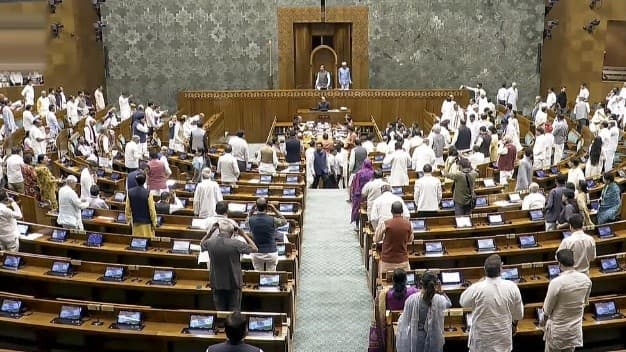
Seat-based Multimedia Device (MMD) enables digital attendance inside Lok Sabha, India’s lower house of Parliament.

MPs verify presence through biometric thumb, 6-digit PIN or smart I-card tap at individual seats.

Roll-out from Monsoon Session starting 21 July; supports ongoing “Digital Parliament” initiative.

Quick Facts for MCQs

Tech & Schemes

  • MMD integrates with internal digital portal; real-time data sync.
  • Seat-embedded terminal eliminates external kiosks and lobby crowding.
  • Biometric data stored within secure Lok Sabha LAN; no internet dependence.

Governance & Transparency

  • Accurate attendance aids allowance disbursal and public disclosure.
  • Aligns with Digital Parliament mission, Good Governance initiatives.
  • PIN/biometric logs create audit trail, discouraging proxy marking.

Parliamentary Efficiency

  • Instant check-in frees floor time for legislative business.
  • Paperless attendance cuts manual tallying delays during quorum/division.
  • Crowd-reduction supports COVID-era distancing, smoother session management.

Key Data Points

FeatureData-Point
System nameMultimedia Device (MMD) digital attendance
VenueLok Sabha chamber, Parliament of India
Launch sessionMonsoon Session, from 21 July
Verification modesBiometric thumb, PIN login, Smart I-card tap
Developer/ManagerLok Sabha Secretariat
Extra functionsAccess agenda papers, documents, division lists
Paper register statusRetained temporarily as hybrid backup
GS-3Infrastructure

3.Machilipatnam Greenfield Port Development Progress (Greenfield Port)

BL
Illustration for Machilipatnam Greenfield Port Development Progress (Greenfield Port)

What & Where

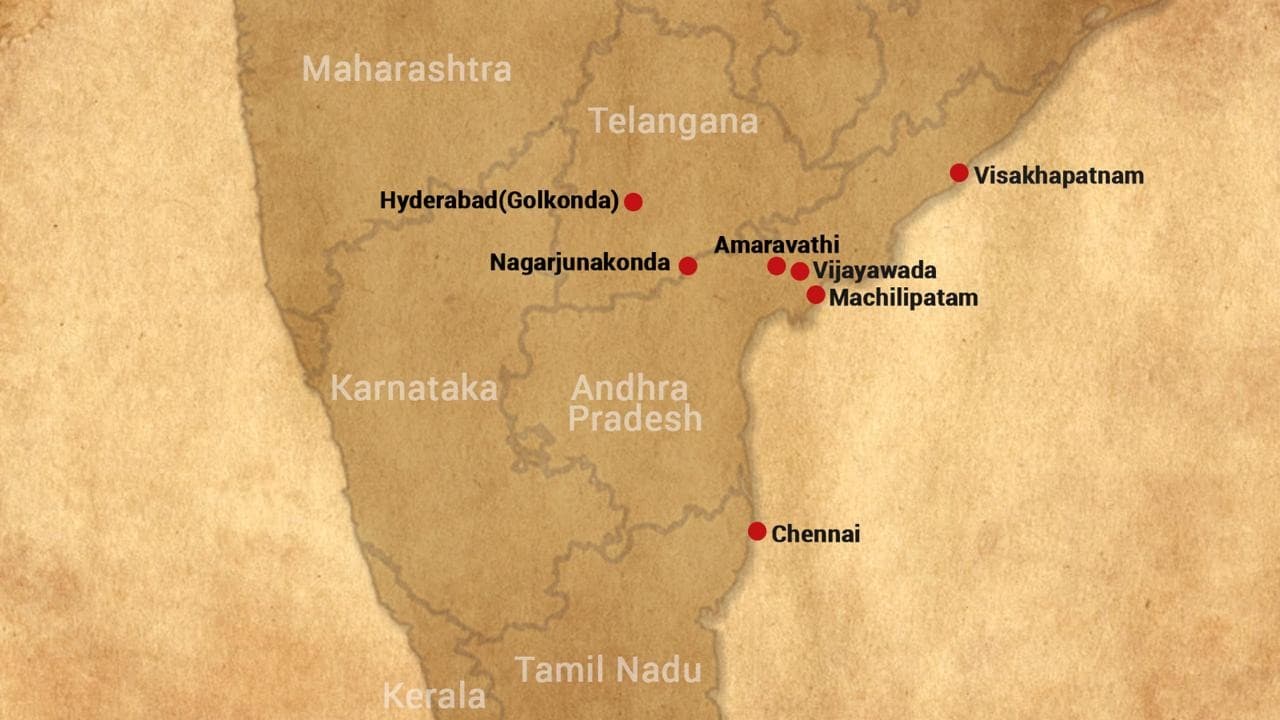
Machilipatnam (Masulipatnam/Bandar) – coastal city & upcoming deep-sea greenfield port at Manginapudi, Krishna district, Andhra Pradesh.

Sits at River Krishna mouth on Bay of Bengal; historically major Satavahana-Golconda maritime hub.

Port slated operational end-2026; Phase-I 4 berths, expandable to 16, 36 MTPA capacity.

Quick Facts for MCQs

Historical Legacy

  • Satavahana-era port exported beads, textiles across Indian Ocean.
  • Golconda period famed maslin muslin reached Persia, Europe, Southeast Asia.
  • 17th-century Dutch, British, French factories testified global linkages.

Capacity & Engineering

  • Breakwaters with tetrapods mitigate siltation & cyclonic waves.
  • Expandable design allows seamless scale-up from 4 to 16 berths.
  • Handles Panamax-class 80,000-tonne vessels, rare on AP coast.

Connectivity & Logistics

  • Planned Telangana freight corridor channels dry-port cargo inland.
  • Port envisaged gateway for AP’s coastal economic corridor exports.
  • Expected multiplier on jobs, land prices, warehouse investments.

Key Data Points

FeatureData-Point
StateAndhra Pradesh
DistrictKrishna
WaterbodyBay of Bengal
River mouthKrishna
Historical namesMasulipatnam, Bandar
Ancient rule linkedSatavahana (1st century AD)
Medieval rulerGolconda Sultanate
European factories set upDutch, British, French (17th c)
Decline causeBritish focus on Madras; siltation
Construction progress (2024)~48 %
Target operationEnd-2026
Phase-I berths4
Ultimate berths16
Planned capacity36 MTPA
Max vessel size80,000 tonnes
Coastal protection techTetrapods, breakwater
Key cargo mixCoal, cement, pharma, fertilisers, containers
Telangana planDry port + freight corridor to Machilipatnam

Related UPSC Prelims PYQs

GS1 2017PYQ 1

Which one of the following was a very important seaport in the Kakatiya kingdom?

GS1 2009PYQ 2

In which one of the following States has India's largest private sector sea port been commissioned recently?

GS-3EconomyQuick Bite

5.Catastrophe Bonds For Disaster Risk Financing (Catastrophe Bonds)

The Hindu

What & Where

Catastrophe Bonds: insurance-linked securities shifting earthquake / cyclone / flood losses from issuers to investors via capital markets

Mechanism: investors earn high coupons; if pre-set disaster trigger hits, principal funds immediate relief instead of repayment

Geography: active globally since 1990s; India evaluating national and South-Asian pooled issuances for climate-disaster hotspot

Quick Facts for MCQs

Economic Angle

  • Diversification: catastrophe risk largely uncorrelated with equity or interest-rate cycles
  • Fiscal buffer: faster payouts cut post-disaster budget reallocation and borrowing needs
  • Investor incentive: higher coupons compensate possible 100 % principal wipe-out

India Prospects

  • Vulnerability: frequent cyclones, floods, earthquakes driving premium hikes and insurer exits
  • Partnership option: issuance via World Bank or ADB structures leveraging existing budget allocations
  • Regional idea: South-Asian Cat Bond could pool India Bangladesh Nepal Sri Lanka risk lowering premiums

Global Trends

  • Market growth: over USD 180 billion issued since launch with steady multi-year coverage demand
  • 2023 shift: exceptional returns pulled fresh retail flows into once exclusively institutional niche
  • Oversight: triggers and payouts contractually defined, promoting disaster-risk modelling and preparedness

Key Data Points

FeatureData-Point
Asset classHybrid of insurance contract and bond
First issuanceLate 1990s
Global issuance till 2024≈ USD 180 billion
Currently outstanding≈ USD 50 billion
2023 performance tagBest-performing hedge-fund strategy
Typical buyersPension funds, hedge funds; rising retail
Indian annual disaster-mitigation spendUSD 1.8 billion (since FY 2021-22)

Related UPSC Prelims PYQs

GS1 2022PYQ 1

भारतीय अर्थव्यवस्था के संदर्भ में, 'मुद्रास्फीति-संलग्न बांड (Inflation-Indexed Bonds — IIBs)' के क्या लाभ हैं?

GS-3Environment

6.Sierra Leone Tiwai-Gola World Heritage Site (UNESCO Site)

The Hindu
Illustration for Sierra Leone Tiwai-Gola World Heritage Site (UNESCO Site)

What & Where

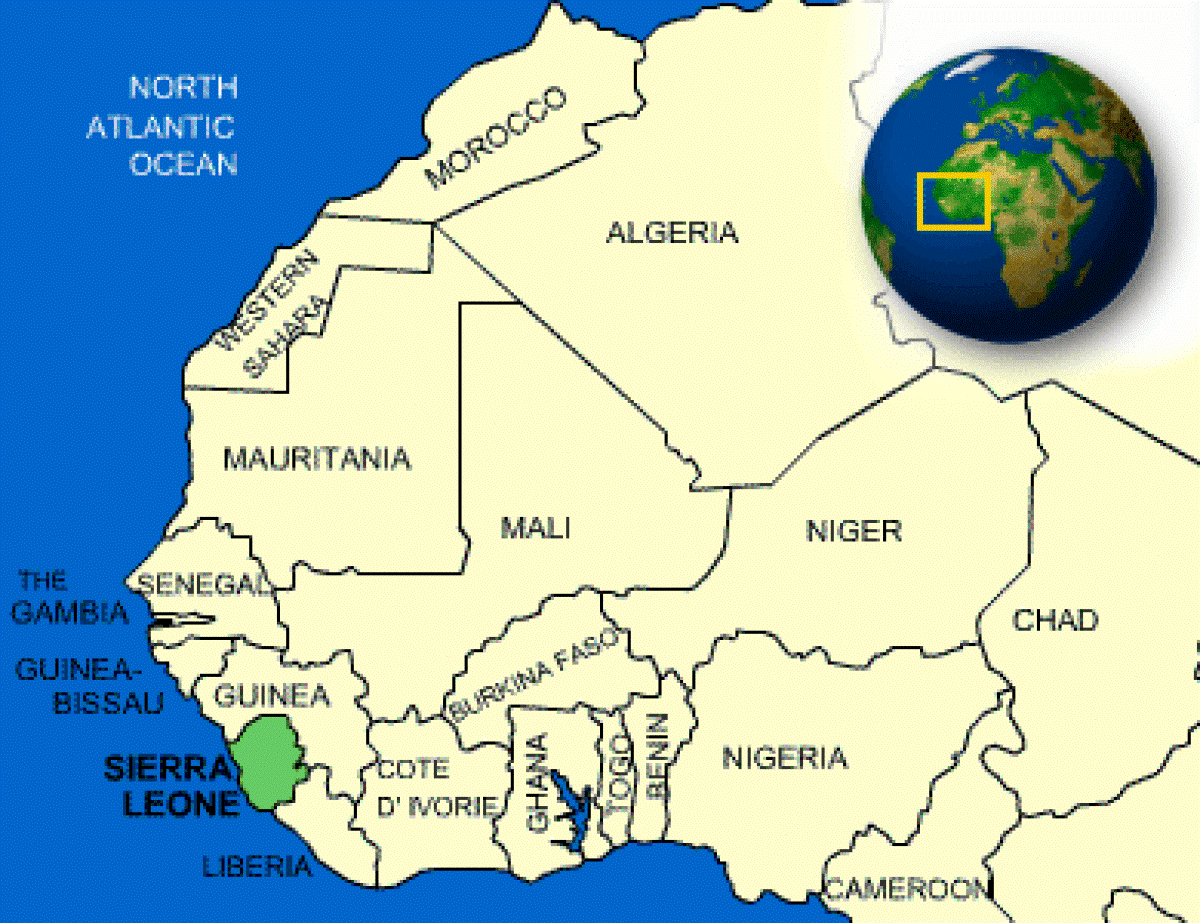
First UNESCO World Heritage Site of Sierra Leone; natural category.

Comprises Tiwai Island Wildlife Sanctuary (12 km²) + Gola Rainforest National Park.

Located along Moa River, southern Sierra Leone, bordering Liberia.

Quick Facts for MCQs

Biodiversity Richness

  • Tiwai hosts 11 primates: western chimpanzee, Diana monkey, king colobus prominent.
  • Gola rainforest shelters pygmy hippopotamus, African forest elephant, hundreds of birds/insects.
  • Landscape critical for carbon sequestration and Upper-Guinean genetic diversity.

Physical Geography

  • Site straddles Moa River valley adjoining Liberia.
  • Interior relief includes Loma Mountains; Mt Bintimani highest at 1,948 m.
  • Rivers Moa, Sewa, Mano, Rokel rise in Guinea’s Fouta Djallon, flow SW to Atlantic.

Economy & Resources

  • Diamonds, gold, bauxite, rutile underpin export earnings.
  • Agriculture and mining dominate employment across plains and plateaus.
  • Tiwai ecotourism model links conservation with local income generation.

Climate & Soils

  • Tropical climate with high rainfall; Harmattan winds mark dry season.
  • Coastal mangrove swamps; interior lateritic soils and seasonally flooded Bolilands.

Key Data Points

FeatureData-Point
UNESCO inscription2024; Sierra Leone’s first
ComponentsTiwai Island + Gola Rainforest NP
Tiwai area12 sq km
Primate species on Tiwai11
Flagship primateEndangered western chimpanzee
Largest rainforest in countryGola Rainforest NP
Key megafaunaPygmy hippopotamus; African forest elephant
Capital cityFreetown on natural harbour
Highest peakMt Bintimani 1,948 m
Major riversMoa, Sewa, Mano, Rokel
Neighbouring statesGuinea, Liberia, Atlantic Ocean
Main mineralsDiamonds, gold, bauxite, rutile
GS-3Environment

7.FGD Exemption For 78% Thermal Plants (Flue Gas Desulphurisation)

The Hindu
Illustration for FGD Exemption For 78% Thermal Plants (Flue Gas Desulphurisation)

What & Where

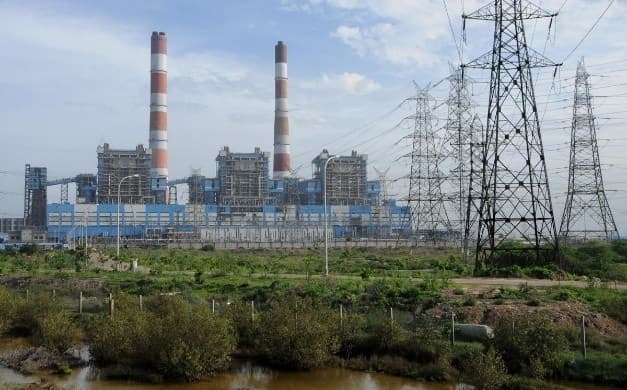
FGD: limestone or chemical scrubbers extracting SO₂ from coal-plant flue gas

New MoEFCC 2024 norms: Category A, B, C based on NCR proximity, CPA/NAC status

Geography: 78 % Indian thermal units outside high-risk zones now FGD-exempt

Quick Facts for MCQs

Legal & Policy

  • 2015 FGD mandate diluted by 2024 advisory panel led by Principal Scientific Adviser
  • Framework overrides earlier uniform deadline citing scientific reassessment
  • Precautionary principle critics flag rollback of established emission safeguards

Environmental Impact

  • SO₂ oxidation yields secondary PM2.5, acid rain, ecosystem acidification
  • Rural regions affected via long-range transport despite plant localization
  • CPA and NAC already breach NAAQS, require priority controls

Economic Angle

  • Capital outlay seen high but externalities of morbidity, productivity loss likely higher
  • Possible financing via green loans, pollution-linked tariffs suggested
  • Retrofit delays risk future cost escalation with stricter climate norms

Tech & Schemes

  • Wet limestone scrubbers dominant; by-product gypsum sale offsets O&M costs
  • Real-time Continuous Emission Monitoring Systems (CEMS) mandated for SO₂ reporting
  • Incentive models: interest subvention, accelerated depreciation for FGD adoption

Key Data Points

FeatureData-Point
Category A share11 % units
Category B share11 % units
Category C share78 % units
Category A deadline30 Dec 2027
Category B deadline31 Dec 2028
Category C requirementNo FGD
FGD cost estimate₹2.5 lakh crore (nationwide)
Coal PM2.5 share≈15 % ambient load (CEEW)
SO₂ health linksAsthma, cardiac disease, childhood bronchitis (WHO)
Dispersion reach>200 km from stack

Related UPSC Prelims PYQs

GS1 2011PYQ 1

Consider the following:

GS-3Environment

8.Assam Rhino Horn DNA Profiling Initiative (Rhino DNA Profiling)

The Hindu

What & Where

DNA profiling of 2,573 seized / naturally shed rhino horns via RhoDIS to bolster conservation & forensics

Samples verified at Kaziranga National Park, Assam; horns retained after 2021 public burning

Genetic analysis handled by Wildlife Institute of India, Dehradun; data fed into national database

Quick Facts for MCQs

Tech & Schemes

  • RhoDIS India; MoEFCC, State FDs, WII, WWF create unique DNA IDs for every sampled horn
  • Database integration; national forensic reference enables rapid horn-source matching
  • Launched 2016; Assam’s 2,573 samples form first large-scale upload

Conservation Impact

  • Population rise; 1,500 in 1980s to 4,014 in 2024, registering 170 % increase
  • Assam shelters 80 % of species; Kaziranga alone harbours about 70 % of total
  • DNA profiling deters poaching by increasing conviction certainty

Security Dimension

  • Wildlife crime; rhino horns fetch high black-market prices, driving targeted killings
  • Forensic linkage; DNA matches tie seized horns to carcasses, strengthening Wildlife Act prosecutions
  • Cross-jurisdiction support; shared database aids state, national, international enforcement coordination

Key Data Points

FeatureData-Point
Horn samples profiled2,573
Verification siteKaziranga NP, Assam
DNA labWildlife Institute of India, Dehradun
Scheme nameRhoDIS India
RhoDIS launch year2016
Assam share of global population≈ 80 %
Kaziranga share of global total≈ 70 %
Population growth since 1980s170 %
Current Indian rhino count (2024)4,014
GS-3S&T

9.China High-Speed Maglev Train Unveiling (Maglev Technology)

LiveMint
Illustration for China High-Speed Maglev Train Unveiling (Maglev Technology)

What & Where

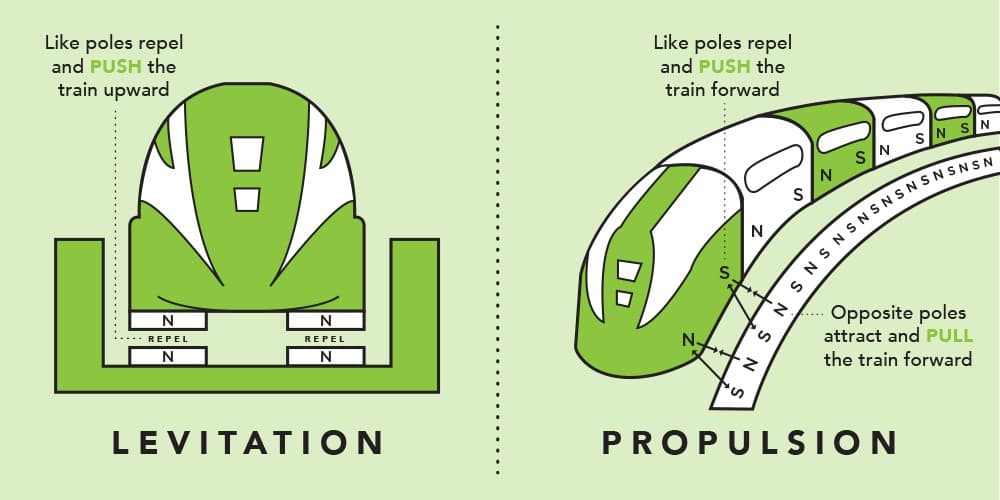
Definition Maglev : wheel-less train levitating on magnetic force, eliminating track friction

Types : EMS (electromagnetic attraction) & EDS (superconductor repulsion) suspension/propulsion systems

Geography : China’s new 600 km/h set targets Beijing–Shanghai 1 200 km in 2.5 h; tech also in Japan, S Korea, UK

Quick Facts for MCQs

Technology & Design

  • Propulsion : guideway coils switch polarity, pushing or pulling coaches
  • Superconductor EDS needs cryogenic cooling for stable repulsion gap
  • Aerodynamic nose reduces pressure waves in tunnels

Advantages

  • Speed cuts medium-haul air travel durations dramatically
  • Ride frictionless, silent, minimal vibration enhances passenger comfort
  • Energy efficiency lowers operational carbon footprint

Limitations & Challenges

  • Infrastructure cost high; dedicated guideways incompatible with existing rails
  • Heavy rare-earth demand raises costs and supply vulnerability
  • Operational reach still short; network scalability constrained

Strategic Significance

  • China solidifies exportable high-speed transport leadership
  • Serves as precursor platform for future vacuum hyperloops
  • Faster intercity links bolster Belt and Road logistics efficiency

Key Data Points

FeatureData-Point
InventorsRobert Goddard & Emile Bachelet
First commercial run1984, Birmingham (UK)
Top train speed600 km/h
Beijing–Shanghai time2.5 hours for 1 200 km
Suspension systemsEMS attraction / EDS repulsion
AccelerationLift-off within ~7 seconds
Design motifKingfisher-shaped aerodynamic nose
Rare-earth magnetsNeodymium, Dysprosium critical
Energy useLower than conventional railways
Main operatorsChina, Japan, South Korea
GS-3S&T

10.Quantum Noise Enables Entanglement Revival (Quantum Entanglement)

PIB
Illustration for Quantum Noise Enables Entanglement Revival (Quantum Entanglement)

What & Where

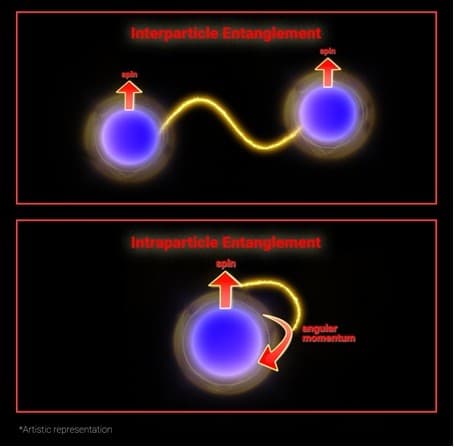
Quantum noise = random environment-induced disturbances degrading or, if harnessed, reviving entanglement in quantum systems.

Key channels: amplitude damping, phase damping, depolarising; can counter-intuitively generate entanglement, not just cause decoherence.

Site: Discovery by Raman Research Institute (RRI), Bengaluru; relevant to photons, neutrons, trapped ions worldwide.

Quick Facts for MCQs

Scientific Insight

  • Noise-generated entanglement overturns decoherence-only view of quantum noise.
  • Intraparticle entanglement shows greater resistance to decoherence under identical noise levels.
  • Impact of noise is non-deterministic: may diminish, alter, or create entanglement.

Technological Significance

  • Discovery offers pathway to noise-assisted quantum computing architectures.
  • Supports adaptive quantum error-correction leveraging constructive noise effects.
  • Paradigm shift converts unavoidable environmental noise into an engineering resource.

Cross-Platform Reach

  • Findings validated across photons, neutrons, trapped-ion qubits.
  • Insight independent of specific laboratory setup, easing technology transfer.
  • Aligns with India’s National Quantum Mission goals for multi-platform readiness.

Key Data Points

FeatureData-Point
Discovering bodyRaman Research Institute, Bengaluru
Core phenomenonNoise-induced creation & revival of entanglement
Most robust entanglementIntraparticle (vs interparticle)
Noise originHeisenberg Uncertainty Principle + environmental interaction
Key application areasQuantum communication, cryptography, error correction
GS-3S&TQuick Bite

11.Software Technology Parks Of India Milestones (STPI Scheme)

PIB

What & Where

Software Technology Parks of India (STPI) – autonomous society under MeitY (1991) to drive IT/ESDM exports & innovation.

Implements Software Technology Park (STP) & Electronics Hardware Technology Park (EHTP) schemes; provides infra, compliance, incubation.

Pan-India presence via centres of entrepreneurship; marked 33rd Foundation Day on 12 June 2024.

Quick Facts for MCQs

Legal & Policy

  • Registration: autonomous society enabling faster decision-making than departmental structure.
  • Mandate: boost software exports, regulate duty-free import under STP/EHTP.
  • Anniversary: 33rd year reiterates continuity since 1991 liberalisation era.

Start-up & Incubation

  • CoE network offers domain-specific labs, mentoring, market-access to early-stage ventures.
  • NGIS focuses on idea-to-MVP support for tier-II/III city innovators.
  • SayujNet & STPI-Workspace streamline resource discovery and affordable office seats.

Tech & Schemes

  • Ananta cloud provides sovereign, hyperscale compute to Indian entities, reducing foreign dependency.
  • STP/EHTP schemes extend customs, tax benefits for IT & electronics export units.
  • DeepTech Report supplies policymakers data on AI, IoT, quantum, 5G adoption gaps.

Key Data Points

FeatureData-Point
Year of establishment1991
Legal basisSocieties Registration Act 1860
Administrative ministryMinistry of Electronics & IT
Core schemes implementedSTP & EHTP
Flagship incubation drivesCentres of Entrepreneurship (CoE), Next Gen Incubation Scheme (NGIS)
New networking portalSayujNet
Co-working portalSTPI-Workspace
Indigenous hyperscale cloud“Ananta”
Cloud service layersIaaS, PaaS, SaaS, GPU services
Recent report releasedDeepTech Knowledge Report ‘Cutting-Edge Tech Forging India as a Software Product Nation’
GS-3Security

12.AH-64E Apache Attack Helicopters Induction (Attack Helicopter)

New Indian Express
Illustration for AH-64E Apache Attack Helicopters Induction (Attack Helicopter)

What & Where

Definition: AH-64E Apache—Boeing multi-role attack helicopter for high-intensity, network-centric warfare

Deployment: First Army batch arriving after 15-month delay, to be stationed at Jodhpur, Rajasthan

Variant: Latest E-model complements IAF’s 22 Apaches, expanding Army Aviation Corps strike fleet

Quick Facts for MCQs

Technology Specs

  • All-weather: functions day, night, low visibility, extreme heat, high altitude
  • Endurance: external tanks extend range for sustained battlefield presence
  • Survivability: redundant systems, ballistic protection, defensive suite enhance crew safety

Security Dimension

  • Border-focus: optimised for rapid strikes against armour along Pakistan front
  • Precision: Hellfire missiles enable high-accuracy, low-collateral engagements in CT ops
  • Interoperability: shared platform with US, QUAD partners eases joint missions and logistics

India-US Defence Ties

  • Procurement: Foreign Military Sales deal; delivery lag now resolved
  • Foundation: Synergises with COMCASA and BECA for secure data exchange
  • Symbol: Highlights deepening Indo-US strategic alignment in Indo-Pacific

Key Data Points

FeatureData-Point
ManufacturerBoeing, USA
Variant CodeAH-64E Guardian
First US Service1984 (AH-64A)
Indian OperatorArmy Aviation Corps (new), IAF (existing)
Primary SensorsAN/APG-78 Longbow radar, FLIR, night vision
Target HandlingTracks 256 targets, prioritises 16 threats
Main Armament30 mm chain gun, 70 mm rockets, AGM-114 Hellfire
Survivability AidsCrash-resistant frame, DAS, IR suppression
Endurance BoostWing-mounted external fuel tanks
Role FocusAnti-armour, close air support, counter-terror

Related UPSC Prelims PYQs

GS1 2008PYQ 1

In the context of the Indian defence, what is ‘Dhruv’?

GS-3SecurityQuick Bite

13.Exercise Talisman Sabre 2025 India Participation (Multinational Exercise)

The Hindu

What & Where

Exercise Talisman Sabre: Australia-led biennial multinational war-game, launched 2005, first India participation in 11th edition (2025).

Conducted across Queensland, Northern Territory, Western Australia, New South Wales, Christmas Island; 2025 extends to Papua New Guinea.

Focus: live-fire, amphibious, air-combat, maritime, ground manoeuvres enhancing joint readiness for a free, open Indo-Pacific.

Quick Facts for MCQs

Security Dimension

  • Objective: reinforce rules-based order; deter coercion in Indo-Pacific.
  • Activities: live weapons firing, expeditionary amphibious landings, integrated air-maritime strikes.
  • Outcome: validates high-tempo multinational command-and-control frameworks.

India Angle

  • India joins alongside Quad partners US, Australia, Japan, boosting strategic signalling.
  • Complements existing Ausindex, Pitch Black, Austrahind with Australia; Yudh Abhyas, Vajra Prahar with US.
  • Offers Indian forces exposure to Southern Pacific joint-ops environment.

Geography & Reach

  • Training areas span 5 Australian states/territories plus offshore Christmas Island.
  • Inclusion of Papua New Guinea deepens Southwest Pacific engagement.
  • Multi-domain scenarios cover littoral, jungle, desert and urban terrains.

Key Data Points

FeatureData-Point
Edition year2025
Edition number11th & largest
Lead organiserAustralia
Origin year2005
FrequencyBiennial
Participating nations (2025)19
Personnel strength35,000+
New entrant 2025India
First extension outside AustraliaPapua New Guinea
Core aimInteroperability & regional security architecture

Related UPSC Prelims PYQs

ESE_GS, GEO_GS 2022PYQ 1

Which one of the following countries did the Indian Navy participate in the U.S. Navy-led Southeast Asia Cooperation and Training (SEACAT) military exercise, to demonstrate its maritime manoeuvres?

ESE_GS, GEO_GS 2025PYQ 2

Naseem-Al-Bahr, held in October 2024, was a joint maritime exercise between the navies of India and

GS-3SecurityQuick Bite

14.Astra Indigenously Developed Air-To-Air Missile (Astra BVRAAM)

PIB

What & Where

Astra – India’s first indigenously developed Beyond Visual Range Air-to-Air Missile, flight-tested off Odisha coast

Fired from Indian Air Force Sukhoi-30 MKI fighter during September 2019 developmental trial

Design and production led by Defence Research and Development Organisation, multiple labs across Hyderabad and Pune

Quick Facts for MCQs

Tech & Schemes

  • Solid-fuel propulsion grants high manoeuvrability across entire flight envelope
  • Electronic Counter-Counter Measures shield guidance from enemy jamming and spoofing
  • Dual Lock-On modes integrated through DRDO’s indigenous seeker technology

Operational Features

  • Primary integration on Su-30 MKI; future fit planned for Mirage-2000, LCA Tejas
  • Lock-On After Launch enables shoot-and-scoot, lowering aircraft vulnerability
  • Proven capability against multiple simultaneous targets in dense electronic warfare environment

Security Dimension

  • Indigenous BVRAAM reduces reliance on imported Derby, R-77, MICA missiles
  • Enhances IAF air-superiority and deterrence across subcontinental airspace
  • Aligns with Make in India and self-reliance goals in defence manufacturing

Key Data Points

FeatureData-Point
DeveloperDRDO
Missile classBVRAAM
Launch platform (test)Sukhoi-30 MKI
Speed≈ 5,555 km h⁻¹ (4.5 Mach)
Effective range> 70 km
Warhead mass15 kg
Guidance modesLOBL and LOAL
Counter-jammingECCM suite onboard
Multi-target abilityYes
Test locationBay of Bengal, Odisha coast

Related UPSC Prelims PYQs

CDS_GK, GS1 2003PYQ 1

With reference to Indian defence, which one of the following statements is correct?

CDS_GK, GS1 2022PYQ 2

With reference to BrahMos missile, consider the following statements:

Ready to practice?

Test your knowledge with our UPSC test series.

Start Free Trial