UPSC Current Affairs

13 topicsGS-1: 1GS-2: 4GS-3: 8
0/13 done
GS-2Editorial

1.Supreme Court Warning on Regionalism (Regionalism)

Times of India

What & Where

Definition: Regionalism prioritises specific regional interests over national integration, can become divisive in politics

Manifestations: autonomy demands (Gorkhaland, Bodoland), language agitations (Tamil Nadu), local-jobs quota (Haryana 75% rule)

Hotspots: Telangana, Vidarbha, Maharashtra, Jammu & Kashmir—frequent centres of regionalist mobilisation

Quick Facts for MCQs

Legal & Policy

  • SupremeCourt: political promotion of regionalism violates constitutional unity, warrants judicial vigilance against divisive speeches
  • ElectionCommission: tasked to scrutinise manifestos for regional or communal polarisation, enforce Model Code
  • Article19: regional discrimination infringes free movement, residence, employment rights

Drivers

  • DevelopmentalDisparities: lopsided industrial growth breeds resentment, seen in Bihar–Jharkhand, Telangana demands
  • CulturalAssertion: fear of extinction amid migration sparks Marathi-NorthIndian friction, Dravidian linguistic pride
  • ElectoralMobilisation: parties like early ShivSena, AIMIM amplify identity for vote banks

Risks

  • NationalUnity: fragmentation narrative undermines idea of one India
  • Violence: migrants targeted, e.g., Bihari workers in Assam, Gujarat
  • GovernanceDeficit: populist identity politics diverts focus from inclusive development, stalls infrastructure

Prescriptions

  • BalancedDevelopment: equitable fiscal allocation to backward regions to pre-empt grievances
  • IntegrationPrograms: expand youth exchanges under Ek Bharat Shreshtha Bharat
  • PluralNationalism: celebrate regional identities within cooperative federalism, not against it

Key Data Points

FeatureData-Point
SC warningRegionalism as dangerous as communalism
Constitutional right impactedArticle 19 (movement, residence, employment)
Recent local-jobs quotaHaryana 75% private posts for locals
Union integration schemeEk Bharat Shreshtha Bharat
Classic autonomy demandGorkhaland movement, West Bengal
Language-based protestAnti-Hindi agitations, Tamil Nadu
Development disparity caseBihar vs Jharkhand industrial gap
Early regionalist partyShiv Sena, Maharashtra

Related UPSC Prelims PYQs

GS1 2022PYQ 1

यदि किसी विशिष्ट क्षेत्र को भारत के संविधान की पाँचवीं अनुसूची के अन्तर्गत लाया जाए, तो निम्नलिखित कथनों में से कौन-सा एक, इसके परिणाम के रूप में स्वतः ही परिलक्षित होता है?

GS-2PolityQuick Bite

2.ACC Appoints New NMC Chairperson (ACC Appointments)

Indian Express

What & Where

ACC: high-level Union committee deciding top civil-service, departmental-head, PSU appointments across India

NMC: apex regulator of medical education & practice, constituted under 2019 Act, headquartered at New Delhi

Cabinet Committees: eight extra-constitutional bodies created via Transaction of Business Rules, 1961 for specialised executive work distribution

Quick Facts for MCQs

Executive Structure

  • ACC handles senior appointments in civil services, PSUs, constitutional bodies requiring Cabinet approval
  • Parliamentary Affairs committee dubbed Super-Cabinet, coordinates legislative business across ministries
  • Cabinet Committees streamline decision-making, their recommendations later ratified by Union Cabinet

Regulatory Body Details

  • NMC membership includes ex-officio Health Secretary, DGHS, DG-ICMR, plus part-time state representatives
  • Mandate covers affordable quality medical education, national medical register maintenance, ethics oversight
  • Promotes skilled workforce, universal healthcare reach, and clinical research through transparent assessments

Legal & Policy

  • Cabinet Committees derive authority from Article 77(3) empowering President to make rules for government business
  • NMC replaced Medical Council of India to curb corruption and modernise medical governance
  • Extra-constitutional bodies hold executive legitimacy once decisions are confirmed by full Cabinet

Key Data Points

FeatureData-Point
New NMC ChairpersonDr. Abhijat Sheth
ACC Membership2 members – Prime Minister (Chair) + Home Minister
Cabinet Committees Count8 (incl. ACC, CCEA, CCS, etc.)
Legal Basis for CommitteesTransaction of Business Rules 1961, Article 77(3)
NMC Establishing ActNational Medical Commission Act 2019
NMC Total Members33 (Chair + 4 Board Presidents + others)
GS-3Infrastructure

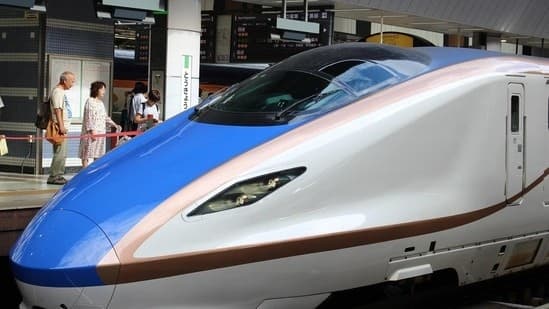
3.E10 Shinkansen High-Speed Rail Project (High-Speed Rail)

ITV
Illustration for E10 Shinkansen High-Speed Rail Project (High-Speed Rail)

What & Where

E10 Shinkansen — next-gen Japanese bullet train to replace E2/E5 series.

Selected for Mumbai–Ahmedabad High-Speed Rail; India first overseas operator.

Corridor features 21-km BKC–Thane tunnel, India’s maiden under-sea rail section.

Quick Facts for MCQs

Technology & Design

  • Cherry-blossom-inspired nose, flowing green livery integrates nature with tech.
  • Energy efficiency boosted via blowerless motor, reducing maintenance costs.
  • Spacious interiors prioritise comfort; adaptable car for freight envisaged.

Safety Measures

  • L-shaped guides prevent derailment during seismic events.
  • Lateral dampers cut shake; advanced brakes shorten stopping distance.
  • Autonomous-ready systems aim for consistent, human-error-free operations.

India-Japan Partnership

  • MAHSR marks first E10 deployment outside Japan, symbolising deep tech collaboration.
  • Japan supplies funding, know-how, rolling stock; India handles civil works.
  • Viaducts, stations, tunnels progressing rapidly toward 2030 launch.

Key Data Points

FeatureData-Point
DesignersJR East & UK firm Tangerine
Aesthetic shades“Tsugaru Green” + “Evening Elm”
Earthquake guardL-shaped guides
Vibration controlLateral dampers + advanced brakes
TractionBlowerless induction motor
Seating layoutTwo seats per row
Future-readyAutonomous operation & cargo space
Indian completion target2030
Under-sea tunnel length21 km (BKC–Thane)
Funding modelJapanese loans, Indian execution via NHSRCL
GS-3Environment

4.India’s 50% Non-Fossil Electricity Capacity (Renewable Capacity)

Financial Express
Illustration for India’s 50% Non-Fossil Electricity Capacity (Renewable Capacity)

What & Where

50 % Non-Fossil Capacity Milestone: half of India’s 484.82 GW installed power now from renewables, large hydro and nuclear.

Geography: nationwide mix; key pioneering states – Gujarat (solar parks), Tamil Nadu (wind corridors).

Timeline: target year 2030 (Paris NDC); achieved June 30 2025, five years early.

Quick Facts for MCQs

Political & Market Drivers

  • Political-leadership provided stable policies, incentives, budgetary support via MNRE and PM-level directives.
  • Private-investment, domestic and foreign, accelerated solar-wind-hybrid deployment with cost innovation.
  • State-initiatives like solar parks, wind corridors catalysed site availability and streamlined clearances.

Infrastructure Challenges

  • Grid-variability stresses frequency control; storage and demand response essential.
  • Land-conflicts over farms, forests and community holdings create social-environmental pushback.
  • Storage-deficit: limited BESS and pumped hydro hinder 24×7 renewable supply.

Forward Roadmap

  • Grid-modernisation with AI forecasting, two-way smart meters for distributed management.
  • Storage-scaling through BESS, pumped hydro; circular-economy recycling for panels, batteries, turbines.
  • Green-hydrogen expansion to decarbonise transport, refineries, heavy industry.

Key Data Points

FeatureData-Point
Total installed capacity484.82 GW
Non-fossil share (June 2025)50.08 %
Fossil-based share49.92 % (241.04 GW)
Renewable energy (solar, wind etc.)184.62 GW
Large hydro capacity49.38 GW
Nuclear capacity8.78 GW
Early achievement gap5 years before 2030 NDC
Lead ministriesMNRE, Power
Key global partnershipsISA, JETP

Related UPSC Prelims PYQs

CAPF_GAI, GEO_GS 2026PYQ 1

India's installed solar capacity in 2025 is close to

CAPF_GAI, GEO_GS 2025PYQ 2

India’s key climate targets include

GS-3Environment

5.FGD Installation Exemption for Thermal Plants (Air Pollution Control)

The Hindu

What & Where

Flue Gas Desulphurisation (FGD): end-of-pipe system at coal-fired thermal plants removing sulphur dioxide from exhaust gases.

Process: limestone/lime/ammonia reagent reacts in absorber tower, producing gypsum-type by-products for disposal or sale.

Scope: July 2025 MoEFCC order exempts 78 % of national coal fleet; only NCR, dense or critically-polluted clusters targeted.

Quick Facts for MCQs

Legal & Policy

  • 2015 MoEFCC norms mandated universal FGD; July 2025 amendment shifts to location-based requirement.
  • Exemption based on Principal Scientific Adviser panel citing low-sulphur Indian coal, adequate ambient compliance.
  • Decision released without public consultation, drawing procedural criticism.

Tech Details

  • Reagents limestone, lime, ammonia chosen for high SO₂ affinity and easy Indian availability.
  • Limited domestic suppliers and Covid-period import delays slowed tendering and erection.
  • By-product gypsum marketability varies, affecting plant economics.

Environmental & Health Impact

  • SO₂ converts to secondary sulphate PM2.5, aggravating respiratory and cardiac disease.
  • Tall stacks disperse pollutants but do not cut overall mass emissions.
  • Experts warn rollback could offset urban air-quality gains from other sectors.

Economic Angle

  • Installation deemed capital-intensive; utilities flagged tariff impacts and financing hurdles.
  • MoEFCC cites cost-benefit imbalance where ambient SO₂ already below limits.
  • Exemption expected to accelerate stalled coal capacity additions without FGD burden.

Key Data Points

FeatureData-Point
Plants now compulsory FGD (Category A)11 % units; within 10 km NCR or dense population
Plants possible FGD (Category B)11 % units near critically polluted / non-attainment cities
Exempt plants (Category C)78 % units nationwide
Original FGD deadline2017 notification (issued 2015)
Actual compliance till 2025≈ 8 % units
Ambient SO₂ Indian average10–20 µg/m³ vs 80 µg/m³ CPCB limit
Coal share in PM2.5 load~15 % of national total
Health impact radiusUp to 200 km downwind

Related UPSC Prelims PYQs

GS1 2024PYQ 1

According to the Environmental Protection Agency (EPA), which one of the following is the largest source of sulphur dioxide emissions?

GS-3Species

6.Kaziranga Grassland Bird Diversity Survey (Grassland Birds)

The Hindu

What & Where

Kaziranga National Park, floodplain of Brahmaputra, Assam; UNESCO World Heritage Site & Tiger Reserve.

July 2025 first grassland-bird survey logged 43 species, many globally threatened.

Grassland avifaunal richness now comparable to Gujarat & Rajasthan savanna-grasslands.

Quick Facts for MCQs

Biodiversity Highlights

  • Survey confirms Kaziranga as Northeast India’s richest grassland-bird hotspot.
  • Presence of florican & babblers elevates site’s global conservation priority.
  • Successful Finn’s weaver nesting signals intact tall-grass mosaics.

Designations & Timeline

  • 1908 Reserve Forest → 1950 Wildlife Sanctuary → 1974 National Park → 1985 WHS → 2007 Tiger Reserve.
  • Original motive: protect Indian one-horned rhinoceros; now multi-species focus.

Geographical Setting

  • Annual Brahmaputra floods deposit nutrients, sustain grasslands, yet cause bank erosion & habitat loss.
  • Park divided into three wildlife divisions, all surveyed for avifauna.

Key Data Points

FeatureData-Point
State & riverAssam; along Brahmaputra
Total area1,174 sq km
UNESCO tag1985
Tiger Reserve notification2007
First grassland-bird survey2025
Grassland bird species recorded43
Critically Endangered presentBengal florican
Endangered presentFinn’s weaver, Swamp grass babbler
Vulnerable species count6 (incl. Black-breasted parrotbill)
Finn’s weaver breeding statusConfirmed successful
Park’s “Big Five”Rhino, Tiger, Elephant, Asiatic Wild Buffalo, Eastern Swamp Deer
Eastern Swamp Deer population shareNearly entire global population

Related UPSC Prelims PYQs

CDS_GK, ESE_GS 2023PYQ 1

Cheetahs, brought from Namibia, were introduced in India to which one of the following National Parks?

CDS_GK, ESE_GS 2022PYQ 2

Which one of the following national parks has become the first national park in India to be equipped with satellite phones?

GS-3Editorial

7.Ethical Governance of Data Ecosystems (Data Governance)

CW
Illustration for Ethical Governance of Data Ecosystems (Data Governance)

What & Where

Concept: Data ethics governs responsible collection, use, storage, sharing, analysis of personal and sensitive data

Event: Three-day regional workshop on Data Ethics, Governance & Quality hosted by MoSPI with UN SIAP

Geography: Focus on Asia-Pacific statistical systems amid a rapidly changing data ecosystem

Quick Facts for MCQs

Core Principles

  • Ownership–Transparency–Privacy ensure consent, clear data use, PII protection
  • Intention–Fairness require legitimate purpose and non-discriminatory algorithmic outcomes

Need Drivers

  • Trust: 57 % users quit brands after misuse; ethics sustains digital economy
  • Compliance: GDPR and DPDP Act mandate lawful, accountable, explainable processing

Challenges

  • Black-boxes and consent fatigue erode accountability and user control
  • Data monopolies and biased datasets embed discrimination in policing, hiring

Way Ahead

  • Ethical-by-design, XAI, external audits embed fairness and accountability
  • Awareness drives and global norms reinforce rights and cross-border governance

Key Data Points

FeatureData-Point
Workshop hostsMoSPI + UN Statistical Institute for Asia & the Pacific
Workshop typeRegional (Asia-Pacific) capacity-building
Duration3 days
Key principle count5 – Ownership, Transparency, Privacy, Intention, Fairness
Trust loss statistic57 % users disengage after data misuse (Accenture)
Indian statuteDigital Personal Data Protection Act 2023
Mitigation toolExplainable AI (XAI)
GS-3S&T

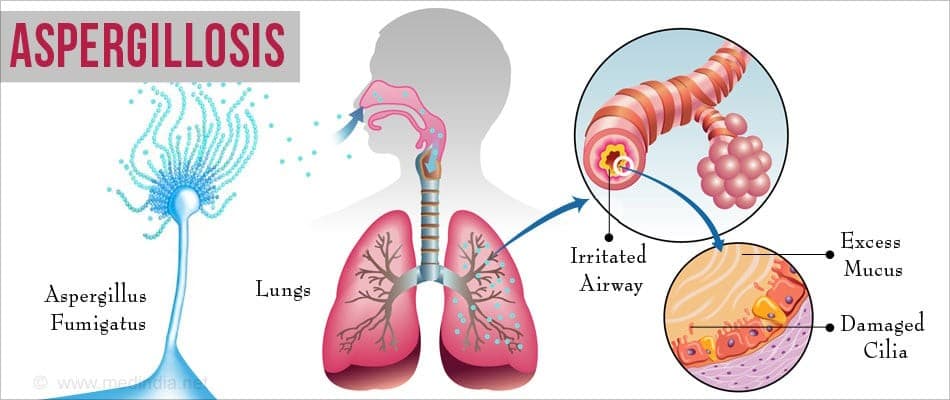
8.Aspergillosis Fungal Respiratory Infection (Fungal Disease)

New Indian Express
Illustration for Aspergillosis Fungal Respiratory Infection (Fungal Disease)

What & Where

Aspergillosis – respiratory infection by inhaling Aspergillus spores, chiefly A. fumigatus

Geography – ubiquitous worldwide; urban Indian cases wrongly linked to Blue Rock Pigeon presence

Habitat – spores flourish in moist, decaying matter, poorly ventilated or dusty sites

Quick Facts for MCQs

Environmental Sources

  • Reservoirs – Soil, rotting vegetation, old grains, compost heaps store high spore loads
  • Urban sites – Air ducts, damp walls, poorly ventilated rooms amplify fungal growth
  • Pigeons – Droppings only incidental spore carriers, not principal infection origin

Clinical Presentation

  • Symptoms – Persistent cough, wheeze, fever, dyspnoea, chest pain after heavy spore exposure
  • Chronic stage – Haemoptysis signals chronic pulmonary aspergillosis needing long therapy

Treatment & Control

  • Therapy – Azole antifungals voriconazole or itraconazole form mainstay of care
  • Surgery – Lobectomy or cavity debridement reserved for invasive, drug-refractory disease
  • Prevention – Dry ventilation, prompt removal of damp organic waste curb spore density

Social Concerns

  • Misconception – Public wrongly blames city pigeons for rising aspergillosis incidence
  • Impact – Unfounded fear risks unnecessary bird bans and distracts from true environmental fixes

Key Data Points

FeatureData-Point
Causative genusAspergillus (mold)
Dominant speciesA. fumigatus
Person-to-person spreadAbsent
Main reservoirsSoil, compost, damp walls, bird droppings
Key symptomPersistent cough with chest pain
First-line drugVoriconazole
GS-3S&T

9.GM Maize Confined Field Trials (GM Crops)

Times of India

What & Where

Trial: GM maize (HT + BT) biosafety BRL-I/II at PAU, Ludhiana, Punjab

Developer: Bayer; Implementer: Punjab Agricultural University; Regulator: Department of Biotechnology, Govt of India

Purpose: Evaluate agronomic performance & environmental biosafety under confined, non-commercial conditions

Quick Facts for MCQs

Legal & Policy

  • Framework: Rules 1989 under Environment Act mandate BRL-I/II trials before GEAC commercial decision
  • Approval: State-level multi-institutional committee issued NoC; activists seek its withdrawal
  • Oversight: DBT monitors compliance with biosafety guidelines, data submission timelines

Technological Traits

  • Stack: Single event combines HT gene + Cry (Bt) toxin genes for dual weed and pest control
  • Precedent: PAU earlier evaluated Bt cotton using similar biosafety protocols
  • Confined design: Border rows, isolation distance, post-harvest monitoring prevent gene escape

Social Concerns

  • Opposition: Environmental NGOs and farmer groups fear herbicide overuse, biodiversity loss
  • Transparency: University asserts data-driven research, periodic public reporting, no commercialization intent
  • Balance: Debate reflects productivity needs versus ecological prudence in Punjab’s intensive maize belt

Key Data Points

FeatureData-Point
Crop under testGenetically modified maize
Trait packageHerbicide tolerance + Bt insect resistance
Technology ownerBayer
Field sitePAU campus, Ludhiana
Regulatory phaseBRL-I and BRL-II trials
Central authorityDepartment of Biotechnology
Trial natureNon-commercial, confined
Primary objectiveEvidence for policymakers, not market release

Related UPSC Prelims PYQs

GS1 2018PYQ 1

भारत में विकसित आनुवंशिकतः संशोधित सरसों (जेनेटिकली मॉडिफाइड सरसों / GM सरसों) के सन्दर्भ में, निम्नलिखित कथनों पर विचार कीजिए:

GS1 2001PYQ 2

The American multinational company, Monsanto has produced an insect-resistant cotton variety that is undergoing field-trials in India. A toxin gene from which ONE of the following bacteria has been transferred to this transgenic cotton?

GS-3S&T

10.Silicon-Perovskite Tandem Solar Cells Breakthrough (Solar Cell Tech)

PIB

What & Where

Definition Tandem solar cell stacks silicon and perovskite layers to capture wider solar spectrum

Type 4-terminal Silicon/CdTe-Perovskite architecture with record 29.8 % lab efficiency

Geography Developed by ART-PV India, IIT Bombay incubated; showcased by MNRE in India

Quick Facts for MCQs

Technology Specs

  • Layering Silicon bottom cell plus perovskite top cell maximises photon absorption
  • CdTe interlayer used to optimise band-gap alignment and voltage output
  • Four-terminal design permits independent optimisation of each sub-cell

Economic Angle

  • Indigenous manufacturing slashes import reliance on Chinese PV modules
  • Higher efficiency cuts land area per MW, reducing balance-of-system costs
  • Export potential boosts Make in India clean-tech revenues

Policy Alignment

  • Supports Aatmanirbhar Bharat through home-grown advanced photovoltaics
  • Aids Net Zero 2070 roadmap by providing cost-effective renewable capacity
  • Complements PLI scheme for solar modules, fostering domestic supply chain

Key Data Points

FeatureData-Point
Latest efficiency29.8 %
Cell configuration4-terminal Silicon/CdTe-Perovskite
DeveloperART-PV India startup
Incubation hubIIT Bombay-based NCPRE
Union ministryMNRE
Cost aspectLower production cost, higher energy yield
Target efficiency>30 % feasible
Key applicationsRooftop, utility parks, EV charging
GS-2Scheme

11.Pradhan Mantri Kaushal Vikas Yojana Milestones (Skill Development)

DD News

What & Where

Scheme; Pradhan Mantri Kaushal Vikas Yojana under Skill India Mission, skilling youth in industry-relevant jobs

Processes; Short-Term Training, Recognition of Prior Learning, digital credit-linked certifications

Geography; Pan-India coverage via MSDE and 30 + sector skill councils

Quick Facts for MCQs

Tech & Schemes

  • Integration; AI analytics tracks outcomes, credits stored in Academic Bank for lifelong mobility
  • Skill Hubs; vocational modules embedded in schools for early skilling pipeline
  • Digital Hub; single platform for enrolment, assessment, placement tracking

Social Inclusion

  • Gender; nearly half trainees women, promoting female workforce entry
  • Equity; strong representation from SC, ST, OBC categories via targeted outreach
  • RPL; formal certification uplifts informal sector workers’ wages and dignity

Performance Metrics

  • Training scale; average 16 lakh youth added annually since 2015
  • Placement support; scheme mandates post-training placement assistance and wage monitoring
  • Alignment; sectors mapped to Make in India, Digital India, emerging tech demand

Key Data Points

FeatureData-Point
Launch year2015
Parent ministryMSDE
Mission umbrellaSkill India Mission
Current phasePMKVY 4.0 (FY 2022-25)
Total trained (all phases)1.63 crore
STT course length3–6 months
Women share≈ 45 % beneficiaries
Trained under PMKVY 4.025 lakh
RPL focus groupArtisans / weavers / craftsmen
Digital toolsAI analytics, Academic Bank of Credits, Skill India Digital Hub
Emerging skills coveredAI, IoT, drones, mechatronics
COVID Warriors trained1.2 lakh
Make in India link1.10 crore trained under PMKVY 2.0
Other MSDE schemes trained6 crore+ since 2014

Related UPSC Prelims PYQs

CAPF_GAI, GS1 2018PYQ 1

प्रधान मंत्री कौशल विकास योजना के संदर्भ में, निम्नलिखित कथनों पर विचार कीजिए:

CAPF_GAI, GS1 2025PYQ 2

Which one among the following schemes focuses on developing modern infrastructure and optimizing supply chain from farm to retail in Indian agriculture sector?

GS-2Scheme

12.ADEETIE Industrial Energy Efficiency Scheme (Energy Efficiency)

ET Energy
Illustration for ADEETIE Industrial Energy Efficiency Scheme (Energy Efficiency)

What & Where

ADEETIE: Assistance in Deploying Energy Efficient Technologies in Industries & Establishments; MoP–BEE flagship for low-carbon MSME growth.

National rollout; launch at Panipat, Haryana; targets identified industrial clusters across India.

Focus: subsidised EE tech adoption via audits, DPRs, loans, digital portal.

Quick Facts for MCQs

Tech & Schemes

  • Components: Investment-grade energy audits, DPR drafting, post-installation M&V.
  • Dedicated online portal manages applications, tracking, disbursement.
  • Cluster strategy aids scalable deployment in energy-intensive sectors.

Financial Support

  • Soft-loan interest buy-down delivered through partner FIs.
  • Early adopters & high-energy MSMEs prioritised for faster sanction.
  • Scheme aims to improve power-productivity ratio alongside credit access.

Environmental Impact

  • Direct CO₂ mitigation via reduced industrial electricity demand.
  • Contributes to Net-Zero 2070 & Viksit Bharat milestones.
  • Promotes clean-tech market expansion within domestic supply chains.

Key Data Points

FeatureData-Point
Scheme windowFY 2025-26 – FY 2027-28
Total budget₹1000 cr
Interest subvention5 % Micro/Small; 3 % Medium
Interest-subvention corpus₹875 cr
Audit allocation₹50 cr
Handholding allocation₹75 cr
Phase-I clusters60
Phase-II clusters100
Expected catalysed investment₹9000 cr (₹6750 cr MSME loans)
Potential energy cutUp to 50 % per tech
GS-1Editorial

13.Rising Dowry Deaths Across India (Dowry Deaths)

The Hindu

What & Where

Dowry death = woman’s unnatural demise within 7 yrs of marriage after dowry-linked cruelty; defined under Section 80 Bharatiya Nyaya Sanhita.

Cruelty under Section 86 BNS covers willful conduct or harassment for unlawful money/property demands; cognisable, non-bailable.

Hotspot belt: West Bengal, Odisha, Bihar, Jharkhand, Uttar Pradesh, Madhya Pradesh, Rajasthan, Haryana account for ~80 % cases.

Quick Facts for MCQs

Legal & Policy

  • Dowry Prohibition Act 1961 + BNS 2023 collectively criminalise giving, taking, demanding dowry.
  • Supreme Court 2011 (Sanjay Kumar Jain) termed dowry a societal curse needing eradication.
  • Proposal: dedicated fast-track courts to shorten trial cycle.

Judicial Bottlenecks

  • Charge-sheet delay: 70 % filed after ≥2 months, evidence degrades.
  • >90 % cases languish in courts, conviction rare, impunity rises.
  • Police-led “mediation” often replaces FIR, diluting legal deterrence.

Socio-Economic Drivers

  • Cultural entitlement masks dowry as “gifts,” sustaining illegality.
  • Consumerism, social-media weddings inflate monetary expectations.
  • Patriarchal mindset commodifies brides, legitimising control & abuse.

Mitigation Measures

  • Tech helplines, WhatsApp channels enable anonymous dowry complaints.
  • Schemes: Beti Bachao, Sukanya, Mudra, Skill Mission boost female financial autonomy.
  • District shelters with cash, legal aid create real exit pathways.

Key Data Points

FeatureData-Point
BNS clause-Dowry deathSection 80
BNS clause-CrueltySection 86
Minimum punishment7 yrs imprisonment
Maximum punishmentLife imprisonment
Avg dowry deaths (2017-22)≈7,000/yr
Charge-sheeted cases≈4,500/yr
Annual convictions≈100
Probes pending >6 months (2022)67 %
Rural marriages with dowry (1960-2008)95 %
States giving 80 % deathsWB, OD, BR, JK, UP, MP, RJ, HR

Ready to practice?

Test your knowledge with our UPSC test series.

Start Free Trial