UPSC Current Affairs

15 topicsGS-1: 1GS-2: 2GS-3: 12
0/15 done
GS-2Polity

1.Maharashtra Scraps Mandatory Hindi Third Language (Three-Language Policy)

The Hindu

What & Where

Three-Language Formula: Kothari Commission (1964-66) framework for studying three languages in school education.

Maharashtra: 2023-24 GRs made Hindi compulsory Grades 1-5; July 2025 GRs scrapped; review led by Dr Narendra Jadhav.

NEP 2020: flexible multilingualism, mother-tongue medium till Grade 5, no imposed language.

Quick Facts for MCQs

Legal & Policy

  • Article 29, 343, 350A, 351 ensure linguistic rights while guiding Hindi promotion.
  • NEP 2020 grants states flexibility; rejects compulsory Hindi.
  • Tamil Nadu upholds 1968 two-language stance; stopped 2019 draft Hindi clause.

Pedagogical Concerns

  • Neuroscience: early exposure helps, yet literacy must first anchor in mother tongue.
  • Three early languages risk diluted reading skills and encourage rote learning.
  • Rural schools lack trilingual teachers; curriculum design remains patchy.

Federal & Cultural Issues

  • Compulsory Hindi viewed as linguistic centralisation, challenging Concurrent-list federalism.
  • Civil groups warn of tribal and minority tongue marginalisation; seek participatory policymaking.
  • Balanced reciprocity proposed: Kendriya Vidyalayas northwards could teach Dravidian or tribal languages.

Key Data Points

FeatureData-Point
Kothari Commission1964-66 report proposing formula
Maharashtra GR withdrawnJuly 2025
Review committee headDr Narendra Jadhav
NEP mother-tongue mediumUp to at least Grade 5
Eighth Schedule languages22
AISES 2009 primary schools using mother tongue86.62 % (2002: 92.07 %)
Article 350AMandates primary education in mother tongue
CBSE foreign languages optionAvailable from secondary level

Related UPSC Prelims PYQs

GEO_GS 2024PYQ 1

Which one among the following statements is not correct as per the Constitution of India?
GS-3Economy

2.India-Saudi Fertilizer Import Deal (Fertilizer Imports)

News on Air

What & Where

Long-term India–Saudi deal to import Diammonium Phosphate (DAP) fertilizer from FY 2025-26 for five years

Parties: Indian IPL, KRIBHCO, Coromandel; Saudi Arabian Mining Co. (Ma’aden)

Geography: Supply routed from Saudi facilities to Indian ports, boosting domestic nutrient security

Quick Facts for MCQs

Economic Angle

  • Assurance: Stable DAP price signals, lowering subsidy volatility for Indian exchequer
  • Scale: 3.1 MMT equals ~40 % of India’s present DAP import basket
  • Opportunity: Bilateral window for capital flows into mining and fertilizer infrastructure

Strategic Relations

  • Partnership: Expands energy-centric Indo-Saudi ties into agri-inputs, reinforcing West Asia outreach
  • Supply security: Diversifies sources amid geopolitical shipping risks in Black Sea & Red Sea
  • Dialogue: Dedicated bilateral team to align policy, logistics and investment timelines

Research & Innovation

  • Collaboration: Co-development of region-specific nutrient blends to enhance soil health
  • Productivity: Targeted formulations aim to raise crop yields without excessive chemical load
  • Sustainability: Alternative fertilizers may reduce import dependence over long term

Key Data Points

FeatureData-Point
Fertilizer typeDiammonium Phosphate (DAP)
Annual volume3.1 MMT (≈30 LMT)
Contract term5 years, extendable
Start yearFY 2025-26
Indian signatoriesIPL, KRIBHCO, Coromandel
Saudi signatoryMa’aden
Research clauseJoint R&D on India-specific alternative fertilizers
Investment scopePSU stakes in Saudi, Saudi funds in Indian agri-inputs
GS-3Economy

3.Debating Inequality Levels in India (Income Inequality)

The Hindu
Illustration for Debating Inequality Levels in India (Income Inequality)

What & Where

Inequality: uneven distribution of consumption, income and wealth

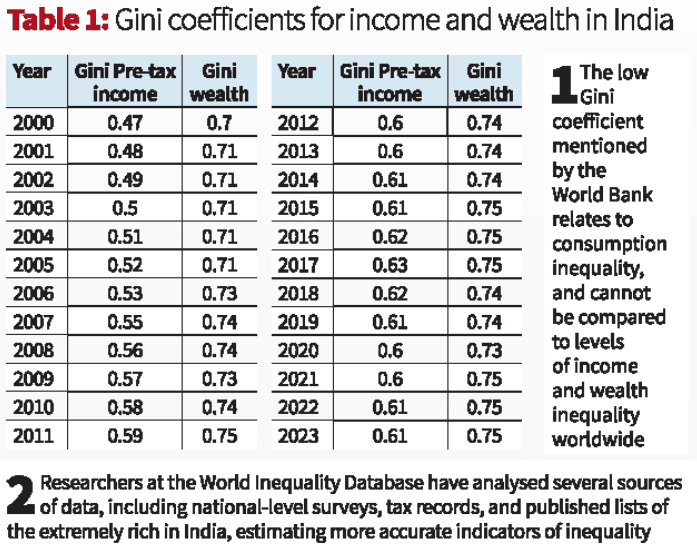
Key measures: Gini coefficients for Consumption, Income, Wealth across time

Focus area: India, comparing 2011-12 and 2022-23 survey rounds

Quick Facts for MCQs

Measurement Challenges

  • Survey limitation: HCES misses top earners and under-reports assets
  • Tax coverage: informal earnings untaxed, skewing CBDT records
  • Wealth data gap: absence of census, reliance on Forbes and SEBI proxies

Economic Effects

  • Mobility: bottom 50 % experience restricted upward movement
  • Demand: high saving propensity of rich dampens aggregate consumption
  • Growth skew: top 10 % reap most GDP gains

Legal & Policy

  • Constitution: Articles 38(2) and 39(c) oppose income and wealth concentration
  • Schemes: MGNREGA, PM-KISAN, PM-SVANidhi, JAM seek redistribution yet leakages persist
  • Metrics: Gini needs backup by Top 1 % share and P90 / P10 ratios

Reform Options

  • Taxation: progressive wealth and inheritance levies on ultra-rich
  • Services: universal health, education, nutrition to equalise life chances
  • Data: integrate tax, survey and asset records for transparent inequality tracking

Key Data Points

FeatureData-Point
Consumption Gini 2011-120.288
Consumption Gini 2022-230.255
Income Gini (WID 2023)0.61
Wealth Gini (WID 2023)0.75
Individual income-tax filers≈6 crore
Constitutional guide Article38(2) minimise inequalities

Related UPSC Prelims PYQs

CAPF_GAI, GS1 2007PYQ 1

Consider the following statements:

CAPF_GAI, GS1 2024PYQ 2

हाल के वर्षों में, निम्नलिखित में से कौन-सा, भारतीय अर्थव्यवस्था में, अवरोही क्रम में, माँग का स्रोत रहा है?

GS-3Economy

4.Decline in Household Savings Trend (Household Savings)

BL

What & Where

Definition: Household savings = disposable income not consumed; split into Net Financial Savings (NFS) & Physical Savings.

Process: NFS = Gross Financial Savings minus annual financial liabilities; physical mainly real estate, gold, equipment.

Geography: India – data span FY12-FY24, urban–rural contrast prominent.

Quick Facts for MCQs

Savings Trend

  • Decline: Household NFS slipped below long-term average, consumption rebound post-Covid.
  • Shift: Preference moves from bank deposits to equities, gold, real estate.
  • Urban tilt: Better digital access drives higher financial-asset participation.

Debt Stress

  • Surge: Unsecured credit, credit cards, personal loans expanding fastest.
  • Risk: Higher debt-to-income raises default probability, potential NPA uptick.
  • Vulnerability: Low real interest rates reduce savings buffer against shocks.

Policy Levers

  • Incentive: Raise tax deductions, issue inflation-indexed bonds to protect savers.
  • Regulation: RBI may cap DTI ratios, raise risk weights on unsecured loans.
  • Social security: Expand Atal Pension Yojana, NPS to informal workers.

Economic Angle

  • Capital formation: Lower household saving forces greater reliance on foreign capital inflows.
  • Consumption boost: Short-term GDP support but risks debt-fuelled bubble.
  • Policy dilemma: RBI balance between encouraging saving and keeping borrowing affordable.

Key Data Points

FeatureData-Point
Gross domestic savings rate 2011-1234.6 % of GDP
Gross domestic savings rate 2022-2329.7 % of GDP (4-decade low)
Household liabilities FY246.4 % of GDP
Household liabilities previous peak6.6 % of GDP in 2007
Physical savings share FY2059.7 % of total household savings
Physical savings share FY2471.5 %
Bank deposits share in financial savings FY1258 %
Bank deposits share FY2337 %
Equity + MF inflow FY21₹1.02 lakh cr
Equity + MF inflow FY23₹2.02 lakh cr

Related UPSC Prelims PYQs

GS1 2022PYQ 1

With reference to the Indian economy, consider the following statements:

GS1 1997PYQ 2

The average rate of domestic savings (gross) for the Indian economy is currently estimated to be in the range of

GS-3Environment

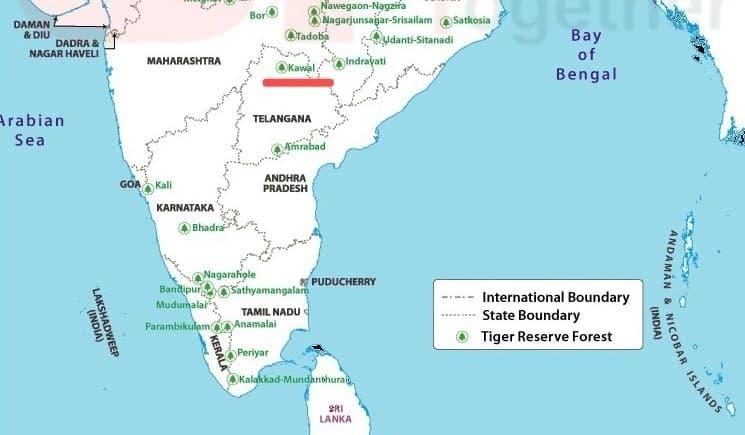
5.Tadoba Andhari Tiger Reserve Profile (Tiger Reserves)

Down to Earth
Illustration for Tadoba Andhari Tiger Reserve Profile (Tiger Reserves)

What & Where

NBWL okays Durgapur Opencast coal mine inside Chandrapur tiger corridor, Maharashtra

Corridor links Tadoba–Andhari TR, Kanhargaon WLS, Tipeshwar WLS within Central Indian Tiger Landscape

TATR oldest Maharashtra Project Tiger reserve; Tadoba NP 1955 plus Andhari WLS 1986 merged 1995

Quick Facts for MCQs

Legal & Policy

  • NBWL clearance under Wildlife Protection Act Section 29 forest diversion
  • Project within designated Eco Sensitive Zone needing additional state forest nod
  • WII prepared mandatory Wildlife Management Plan annexed to approval

Ecological Significance

  • Corridor enables tiger dispersal ensuring gene flow across three reserves
  • Area harbours tigers, leopards, sloth bears, gaurs, rich avifauna
  • Central Indian Landscape pivotal for national tiger connectivity matrix

Mitigation Measures

  • Plan includes solar fencing and patrolling tracks to curb human–wildlife conflict
  • Removal of invasive Prosopis juliflora to restore native deciduous flora
  • Periodic field surveys mandated to monitor animal movement during mining

Economic Angle

  • Coal extraction expected to boost regional power supply and employment
  • Mine expansion aligns with Western Coalfields production targets
  • ₹18 crore mitigation cost internalised into project financials

Key Data Points

FeatureData-Point
Forest diverted80.77 ha
Approving bodyNational Board for Wildlife
Mine proponentWestern Coalfields Ltd
Corridor connectsTadoba–Kanhargaon–Tipeshwar
DistrictChandrapur, Maharashtra
Wildlife Plan cost₹18.07 crore
Key rivers in TATRAndhari, Era, Tadoba
Protected area size87 sq km (TATR core)
Tribal deity originTaru beside Tadoba Lake
GS-3Environment

6.South Asian Climate Migration (Climate Migration)

The Hindu

What & Where

Definition Climate migration = forced human movement triggered by floods, droughts, heatwaves, sea-level rise, erosion.

Types Seasonal, cyclical, or permanent displacement; poor rural households most exposed.

Core belts Bundelkhand (UP-MP), Vidarbha-Marathwada (MH), Jamuna River chars, Bangladesh.

Quick Facts for MCQs

Drivers

  • Drought Collapse of rain-fed farming in Bundelkhand, Marathwada after failed or delayed monsoons.
  • Flood/Erosion Jamuna swelling from glacial melt sweeps away homesteads, cropland.
  • Heat Extreme temperatures and water scarcity cut yields, compelling labour exodus.

Socio-Economic Impacts

  • Displacement Whole villages empty, altering rural demography and land use.
  • Exploitation Koita couples bound to harvest till debt cleared, mirroring modern bondage.
  • Gender Women left behind face violence, added workload, child school dropouts.

Challenges

  • Legal No recognised “climate migrant” category under Indian law or welfare schemes.
  • Portability Ration, MGNREGA, pensions often non-transferable to destination states.
  • Data Absence of centralized monitoring hinders targeted intervention.

Policy & Tools

  • Recognition Insert climate displacement under NDMA Act; enable relief, resettlement.
  • Portability Scale One Nation One Ration Card, e-Shram for mobile benefits.
  • Resilience Upscale MGNREGA water works, agroforestry; launch district-level Climate Migration Index.

Key Data Points

FeatureData-Point
Global annual climate displaced20 million (IRAP 2022)
Bundelkhand drought episodes8–9 times, 1998-2009
Projected Bundelkhand warming+2 – 3.5 °C by 2100 (IMD)
Jamuna riverbank erosion12–52 m per year
Charpauli houses lost (2022)500 + in one week
Sugarcane-belt peak heat50 °C + recorded
Typical cane-worker advance₹50,000 – ₹5 lakh debt bonds

Related UPSC Prelims PYQs

GEO_GS 2020PYQ 1

According to the Global Climate Risk Index 2020, published by environmental think tank Germanwatch, in the year 2018 India’s rank in the list of top most climate affected nations is:

GS-3Environment

7.Drivers of River Pollution in India (River Pollution)

Indian Express

What & Where

Namami Gange Programme (NGP): flagship Jal Shakti mission to cut pollution, revive Ganga & tributaries incl. Delhi’s Yamuna.

Five-tier governance: National Ganga Council ➔ ETF ➔ NMCG ➔ State ➔ District committees.

Pollution drivers: industrial effluent, agricultural runoff, cultural waste, solid plastics, thermal/radioactive discharge, climate-induced low flow.

Quick Facts for MCQs

Pollution Sources

  • Industrial: textiles, tanneries, chemicals often bypass ETPs; heavy metals lead, mercury, arsenic noted in Ganga stretch.
  • Agricultural: nitrate-phosphate runoff; Punjab–Haryana stubble ash enters rivers via rainfall.
  • Cultural: idol immersion, cremation waste with POP & toxic paints heavily at Varanasi ghats.

Scheme Architecture

  • Governance: ETF led by Jal Shakti Minister ensures inter-ministerial coordination.
  • River-front development: creates public spaces to boost community engagement & tourism.
  • Ganga Gram: converts riverside villages into sanitation-secure model settlements.

Key Interventions

  • Nirmal Ganga: STPs installation, industrial discharge minimisation with real-time monitoring.
  • Aviral Ganga: flow restoration, flood-plain protection, biodiversity enhancement.
  • Jan Ganga: mass awareness drives, local stakeholder participation.

Achievements

  • Pollution abatement: substantial STP network commissioning across basin states.
  • Biodiversity: documented rise in Gangetic dolphin population post-programme.
  • Global acclaim: UN Ecosystem Restoration listing bolsters international credibility.

Mitigation Measures Ahead

  • Regulation: enforce Zero Liquid Discharge, stiff penalties for illegal dumping.
  • Technology: deploy AI, IoT sensors, drones, GIS for effluent tracking.
  • Ecosystem: desilt, reforest banks, revive wetlands; restrict flood-plain encroachments.

Key Data Points

FeatureData-Point
Apex bodyNational Ganga Council chaired by PM
Implementing agencyNational Mission for Clean Ganga (NMCG)
Sewage capacity rise>30 × pre-2014 levels
Water quality in UP (BOD)Dropped to 3–6 mg/L by 2022
Water quality in Bihar (BOD)Dropped to 6–10 mg/L by 2022
UN recognition2022 “Top 10 World Restoration Flagship”
Key pillarsNirmal, Aviral, Jan, Gyan Ganga
Biodiversity gainGangetic dolphin sightings in Bithura–Rasula, Babai, Bagmati

Related UPSC Prelims PYQs

GS1, NDA_GAT 2016PYQ 1

Which of the following are the key features of ‘National Ganga River Basin Authority (NGRBA)’?

GS1, NDA_GAT 2022PYQ 2

Which among the following has initiated a nationwide flagship campaign ‘Puneet Sagar Abhiyan’ to clean seashores/beaches and other water bodies of plastic and other waste materials?

GS-3SpeciesQuick Bite

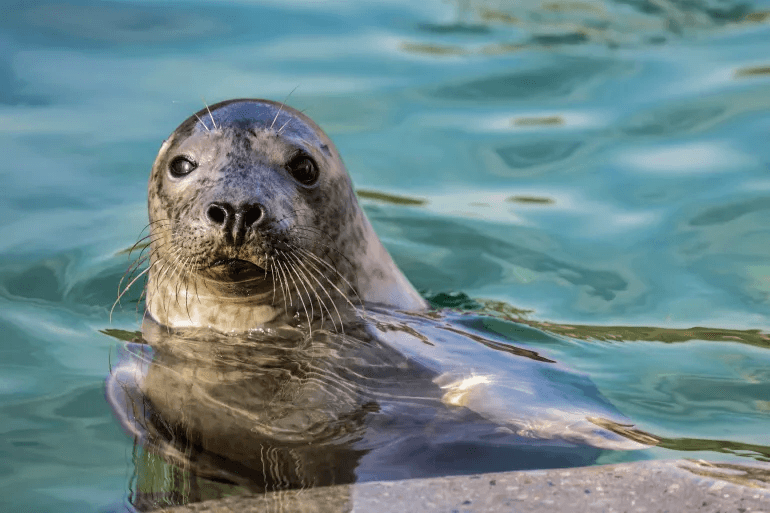
8.Baltic Grey Seal Conservation Effort (Grey Seal)

The Hindu
Illustration for Baltic Grey Seal Conservation Effort (Grey Seal)

What & Where

Species: Grey seal (Halichoerus grypus) native to cold–temperate North Atlantic waters.

Baltic: Lithuania begins rehabilitation to stabilise Baltic Sea sub-population.

Haul-outs: Rocky shores, islands, sandbars, seasonal sea-ice.

Quick Facts for MCQs

Morphology

  • Dimorphism: Males possess large, horse-shaped heads; bulkier than females.
  • Lanugo: Dense white fur on pups conserves heat post-birth.

Behavior & Diet

  • Aggregations: Large groups for breeding/molting; mostly solitary otherwise.
  • Feeding: Opportunistic hunter of mid-size fish, cephalopods, seabirds.

Threats

  • Climate: Receding Baltic ice reduces safe pupping platforms.
  • Pollution: Persistent organics/metals bioaccumulate, harming reproduction & immunity.
  • Fisheries: Declining stocks heighten food scarcity and by-catch mortality.

Conservation Measures

  • Rehabilitation: Lithuania treating injured/orphaned seals to boost survival.
  • Monitoring: Seal tissue analyses guide Baltic marine-pollution management.

Key Data Points

FeatureData-Point
Scientific nameHalichoerus grypus
Global rangeUS/Canada ➜ Baltic & European coasts
Baltic IUCN statusLeast Concern
Male length≈10 ft (3 m)
Female sizeSmaller than males
Gestation~11 months, one pup
Lifespan25–35 years
New-born coatWhite lanugo
Trophic roleApex predator; pollution bioindicator
Core dietFish, squid; occasional seabirds
Key threatsIce loss, pollutants, overfishing, disease
Lithuanian step2025 rehabilitation programme
GS-3PolityQuick Bite

9.Delhi Reverses End-of-Life Vehicle Ban (Vehicle Scrappage)

The Hindu

What & Where

CAQM: statutory commission overseeing air-quality action across Delhi-NCR and adjoining states

End-of-Life Vehicle ban: Petrol > 15 yrs, Diesel > 10 yrs; Delhi withdrawal ordered by CAQM

Geography: Applies to private vehicles registered or plying inside National Capital Territory and wider NCR

Quick Facts for MCQs

Legal & Policy

  • NGT 2015 bans diesel >10 yrs, petrol >15 yrs; disallows re-registration
  • SupremeCourt 2018 permits on-spot impounding of non-compliant vehicles
  • EP End-of-Life Vehicles Rules 2025 mandate scrapping within 180 days of registration expiry

Institutional Bodies

  • CAQM empowered to issue binding directions overriding state measures
  • CAQM coordinates Centre, Delhi, Haryana, UP, Rajasthan for uniform pollution control
  • NGT functions as specialised tribunal for environmental disputes, including vehicular emissions

Health & Pollution Stats

  • WHO cites 1.67 million Indian deaths yearly from air pollution
  • StateOfGlobalAir 2023 attributes 17 % of national deaths to polluted air
  • IQAir 2024 lists Delhi as world’s most polluted capital city

Key Data Points

FeatureData-Point
ELV age threshold (Diesel)10 years
ELV age threshold (Petrol)15 years
Original ban issuerNGT Order 2015
Supreme Court backingMC Mehta vs UoI 2018
Registration validity15 years (MVA 1988)
Scrapping deadline180 days post-expiry (EP ELV Rules 2025)
India rank (IQAir 2024)5th most polluted
Mean PM2.5 India 202450.6 µg/m³
Annual Indian deaths1.67 million
Share of total deaths17 %
GS-3S&T

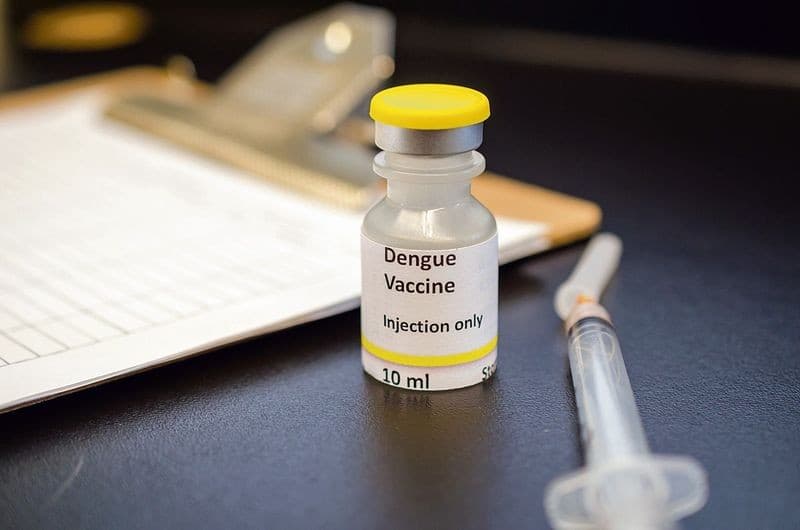
10.Indigenous Dengue Vaccine Phase-3 Trials (Vaccine Development)

BT
Illustration for Indigenous Dengue Vaccine Phase-3 Trials (Vaccine Development)

What & Where

Vaccine: DengiAll, live-attenuated tetravalent dengue vaccine (DENV-1-4) under Phase-3 trials

Geography: 20 trial centres across India—Delhi, Chennai, Pune, Hyderabad, etc.

Context: Indigenous candidate derived from NIH TV003/TV005 strain, led by ICMR & Panacea Biotec

Quick Facts for MCQs

Clinical Trial Scale

  • Enrolment: ~80 % target achieved, largest dengue vaccine study in India
  • Monitoring: Continuous safety-efficacy checks till 2026 end
  • Multicentric: Urban & semi-urban hospitals ensure demographic diversity

Technology & Formulation

  • Attenuation: Weakened viruses stimulate immunity without causing disease
  • Tetravalency: Minimises serotype-specific gaps; curbs repeat infections
  • Process patent: Panacea controls proprietary manufacturing steps

Institutional Roles

  • ICMR: Primary funder, protocol designer, ethics oversight
  • Panacea Biotec: GMP production, logistics, regulatory filings
  • NIH: Provided base strain under licence, no trial operations in India

Public Health Impact

  • Disease burden: Dengue among top mosquito-borne illnesses nationwide
  • Child protection: Vaccine aims to cut paediatric hospitalisations markedly
  • Reinfection curb: Broad immunity critical owing to low natural cross-protection

Key Data Points

FeatureData-Point
Vaccine nameDengiAll
Virus types coveredAll 4 dengue serotypes
PlatformLive-attenuated, tetravalent
Dose schedule2 doses
Post-dose follow-up2 years
Trial phase (2024)Phase-3
Participants enrolled8,000+ of 10,000 target
Trial sites20 pan-India centres
Lead scientific agencyICMR
Developer & patent holderPanacea Biotec
Origin strainNIH TV003/TV005
Earlier phases completedPhase-1 & 2 in 2018-19
Key age focusChildren (high hospitalisation risk)

Related UPSC Prelims PYQs

CDS_GK, GEO_GS 2020PYQ 1

Which one of the following Indian institutes was approved by the Drugs Controller General of India for conducting human trials of the Oxford-AstraZeneca Covid-19 vaccine candidate?

CDS_GK, GEO_GS 2022PYQ 2

Covaxin, a COVID-19 vaccine manufactured in India, is

GS-3S&T

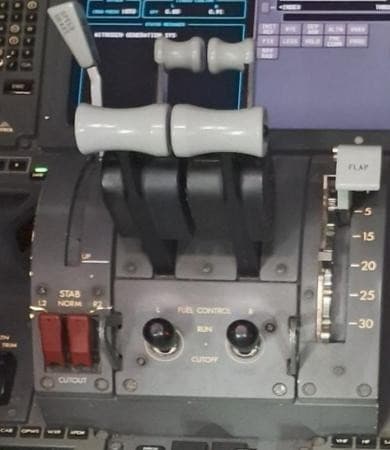
11.Boeing 787 Fuel Control Switches (Aircraft Systems)

DH
Illustration for Boeing 787 Fuel Control Switches (Aircraft Systems)

What & Where

Fuel control switches; cockpit levers regulating fuel to each engine on Boeing 787-8

Location; mounted just below thrust levers; one switch per engine

Two positions; RUN for normal flow, CUTOFF for instant shutdown

Quick Facts for MCQs

Design & Mechanism

  • Spring-loaded action; lift before move prevents inadvertent toggle
  • Independent wiring and backup power per switch ensure redundancy
  • Fuel valves auto-close on electrical loss acting as fail-safe

Operational Use

  • Startup; RUN position initiates combustion after start selector engagement
  • In-flight; switches remain on RUN; shift to CUTOFF halts thrust instantly
  • Fault handling; CUTOFF then RUN allows automatic engine relight attempts

Safety Architecture

  • Visual cue; red illumination on affected switch during emergencies
  • Redundant power circuits minimise simultaneous failure risk
  • Pull-to-unlock design mandates deliberate human input

Accident Findings

  • AI171 crash; simultaneous CUTOFF movement caused dual engine flame-out seconds after take-off
  • Resultant thrust loss led to fatal accident despite safeguards
  • Probe underscores need for switch position vigilance during high-workload phases

Key Data Points

FeatureData-Point
Aircraft modelBoeing 787-8 Dreamliner
Switch mechanismSpring-loaded pull-to-unlock lever
Startup stepStart selector followed by switch to RUN
Accident triggerBoth switches moved to CUTOFF post-take-off
Emergency indicationRed light on affected switch
GS-3S&T

12.India's Silent Salt Overconsumption Crisis (Public Health Research)

Times of India

What & Where

Silent Salt Consumption Epidemic: nationwide over-consumption of NaCl raising NCD load

Pilot Intervention: ICMR-NIE 3-year salt-reduction counselling study among hypertensives

Geography Focus: community roll-outs in Punjab & Telangana

Quick Facts for MCQs

Health Impact

  • Hypertension: excess sodium key driver of rising national prevalence
  • Cardiovascular: higher risk of stroke, myocardial infarction, arterial stiffness
  • Renal: prolonged intake impairs nephron function, elevating CKD cases

Tech & Schemes

  • Low-sodium salts: partial NaCl replacement with K/Mg retains taste, cuts risk
  • ICMR-NIE programme: counselling, monitoring sodium excretion & BP in target groups
  • Public health aim: scalable model for nationwide salt-reduction policy

Social Concerns

  • Dietary culture: pickles, farsan, processed snacks embed high NaCl
  • Awareness gap: public largely unaware of 5 g threshold and slow toxicity
  • Urban–rural divide: cities record nearly double safe limit, villages still exceed guideline

Key Data Points

FeatureData-Point
WHO safe daily salt limit5 g
Urban India average intake9.2 g/day
Rural India average intake5.6 g/day
BP fall with low-sodium salt≈ 7 / 4 mmHg
Common salt chemicalNaCl
Substitute ions usedPotassium, Magnesium
Study tenure3 years
Lead agencyICMR-National Institute of Epidemiology
GS-3S&T

13.Interstellar Object 3I/Atlas Profile (Interstellar Objects)

Indian Express
Illustration for Interstellar Object 3I/Atlas Profile (Interstellar Objects)

What & Where

3I/Atlas: hyperbolic, Sun-unbound comet from outside Solar System; third confirmed interstellar object.

Detected by ATLAS telescope, Río Hurtado (Chile) while 670 million km from Sun; now near Jupiter’s orbit.

Travels ~60 km/s, carrying ‑7 billion-year-old material predating 4.6 Ga Solar System.

Quick Facts for MCQs

Scientific Significance

  • Clues: chemical, physical makeup of distant planetary systems unreachable by current craft.
  • Sample: first-hand exoplanetary material available for telescopic study pre-interstellar missions.
  • Chronology: oldest known comet, offers pre-solar molecular fingerprints.

Identification Criteria

  • Orbit: open hyperbolic path with no returning aphelion distinguishes from bound ellipticals.
  • Velocity: high inbound speed indicates extra-solar origin, not Solar-accelerated.
  • Trajectory modelling: fits interstellar influx, fails native-Oort Cloud simulations.

Comparative Context

  • Continuity: extends dataset after 1I and 2I, enabling comparative composition studies.
  • Frequency: three detections in seven years suggest interstellar visitors more common than once thought.
  • Technology: wide-field automated surveys (ATLAS, Pan-STARRS) critical for early spotting.

Key Data Points

FeatureData-Point
Designation3I/Atlas
Object natureInterstellar comet (open hyperbola)
Discovery systemATLAS survey
Discovery siteRío Hurtado, Chile
Distance at spotting≈ 670 million km from Sun
Present location≈ 917 million km from Earth (near Jupiter)
Heliocentric speed~60 km s⁻¹
Estimated age≈ 7 billion years
Earlier interstellar visitors1I/ʻOumuamua (2017); 2I/Borisov (2019)
GS-2International Relations

14.Chin Refugees in Mizoram (Border Migration)

New Indian Express

What & Where

Chin refugees: ethnic minority from Myanmar’s Chin State, kin to Mizos, fleeing junta-linked violence

July 2025 influx: ~4,000 crossed into Champhai district, Mizoram via Tiau River corridors

Hotspots: Zokhawthar, Saikhumphai, Vaphai, Farkawn on India-Myanmar border

Quick Facts for MCQs

Ethno-Cultural Identity

  • Lineage: Zo ancestry binds Chins with Mizos across borders
  • Language: Tibeto-Burman dialects enable inter-community communication
  • Faith: Predominantly Christian, retaining indigenous rituals

Cross-Border Movement

  • Regime: FMR earlier allowed 16 km visa-free travel, now halted
  • Routes: Zokhawthar, Vaphai, Farkawn, Saikhumphai act as transit hubs
  • Resistance: Many refugees linked to CNDF & CDF-Hakha fighting Myanmar military

Legal & Policy

  • Bill: Household Registers to list residents, identify non-citizens in Mizoram
  • Support: State, NGOs extend food, shelter despite scant Union aid
  • Concern: Local bodies flag resource strain, illicit trade rise

Key Data Points

FeatureData-Point
Home stateChin State, Myanmar
Ethnic familyZo group (Mizos, Bawms, Kuki-Zos)
July 2025 arrivals≈4,000 persons
Entry districtChamphai, Mizoram
Main crossingZokhawthar over Tiau River
Free Movement RegimeSuspended 2024
Anti-junta outfitsCNDF, CDF-Hakha
Proposed state billMizoram Household Registers Bill
GS-1Misc

15.Census Enumeration of Andaman Tribes (PVTG Tribes)

The Hindu

What & Where

Enumeration: 16th Census 2026-27 will separately count six indigenous tribes of Andaman & Nicobar Islands

Geography: Habitats span Strait, Little, Middle, South Andaman, North Sentinel, Great Nicobar, 19 Nicobar Islands

Classification: Five tribes tagged PVTG; Nicobarese only Scheduled Tribe

Quick Facts for MCQs

Demography

  • Population-range: 39 (Sentinelese) to >27 k (Nicobarese); sharp decline among smaller groups
  • Sex-ratio data limited; absolute numbers drive vulnerability assessments

Lifestyle & Economy

  • Subsistence: Hunting, fishing, foraging dominate; Nicobarese add horticulture, pig & poultry rearing
  • Land-tenure: Tuhet ensures communal ownership for Nicobarese; others remain nomadic/semi-nomadic without titles

Historical & Contact

  • Resistance: Great Andamanese fought British in Battle of Aberdeen 1859
  • Isolation: Sentinelese allowed brief friendly contact 1991, now reject outsiders vehemently

Legal & Policy

  • Protection: Andaman & Nicobar Protection of Aboriginal Tribes Regulation 1956 restricts outsider entry, land transfer
  • Census update: Dedicated 2026-27 headcount aims targeted welfare, habitat conservation

Key Data Points

FeatureData-Point
Great Andamanese pop (2001)43
Great Andamanese islandStrait Island
Onges pop (2001)96
Onges habitatDugong Creek & South Bay, Little Andaman
Jarawa pop (2011)380
Jarawa zoneWest coast Middle & South Andaman
Sentinelese pop (2001 est.)39
Sentinelese islandNorth Sentinel
Shompen pop (2011 est.)229
Shompen sub-groupsMawa & Interior
Nicobarese population>27,000
Nicobarese spread19 Nicobar Islands
Nicobarese family unitTuhet (patriarchal joint)
PVTG tribesAll except Nicobarese
Historic battle yearAberdeen 1859

Related UPSC Prelims PYQs

GS1 2004PYQ 1

In which one of the following Union Territories, do the people of the Onge tribe live?

GS1 2009PYQ 2

In which one of the following places is the Shompen tribe found ?

Ready to practice?

Test your knowledge with our UPSC test series.

Start Free Trial