UPSC Current Affairs

16 topicsGS-1: 3GS-2: 5GS-3: 8
0/16 done
GS-2Editorial

1.Enhancing Legislative Productivity in India (Parliament Functioning)

PIB
Illustration for Enhancing Legislative Productivity in India (Parliament Functioning)

What & Where

Concept: Legislative productivity = efficiency of lawmaking, oversight, budget approval, debate in Parliament & State Legislatures

Scope: Applies to Lok Sabha, Rajya Sabha, 28 State Assemblies, 6 Councils; cascades to ULB councils

Metrics: Sitting days, debate hours, committee scrutiny, disruption minutes, member attendance

Quick Facts for MCQs

Current Decline

  • Sittings: Budget sessions among shortest since 1952, routine quorum strains
  • Scrutiny: Committee referrals plummeted from 71% (15th) to 10% (17th)
  • Participation: Debate quality hit despite 79% attendance

Governance Impact

  • Oversight: Limited Question Hour weakens executive accountability
  • Lawmaking: Hasty passage raises risk of judicial invalidation & poor implementation
  • Trust: Perceived dysfunction fuels voter apathy and legitimacy loss

Existing Measures

  • Code: Mandatory conduct rules and suspension powers for disorder
  • Tech: NeVA, live-streaming, e-notice systems boost transparency
  • Committees: 24 DRSCs provide sectoral scrutiny though under-used recently

Suggested Reforms

  • Calendar: Statutory minimum sitting days and pre-announced annual agenda
  • Mandate: Compulsory committee vetting of all major Bills, pre-legislative consultation papers
  • Transparency: Real-time dashboards on attendance, voting, disruptions; stronger RTI coverage

International Examples

  • IPU norms: Benchmarks on inclusivity, open data adopted worldwide
  • UK/German practice: Fixed sitting weeks, obligatory committee stage for every Bill
  • OECD parliaments: Public performance scorecards inspire accountability drives

Key Data Points

FeatureData-Point
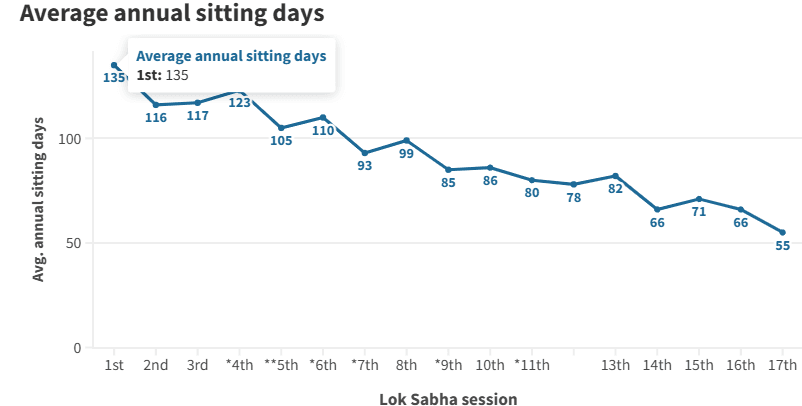
1st vs 17th Lok Sabha sitting days135 days → ≈55 days per year
2023 Budget Session working timeLok Sabha 33%, Rajya Sabha 24%
Bills sent to committees, 17th LS10% (14 Bills)
Bills sent to committees, 14th LS60%
Avg MP attendance, 17th LS79%
Avg debates per MP, 17th LS45
Question Hour utilisation, 17th LSLS 19%, RS 9%
Private Member Bills passed post-1970Nil (last in 1970)
Joint sittings held since 1950Three
Time lost to disruptions, 15th LS>30%

Related UPSC Prelims PYQs

GS1 2020PYQ 1

निम्नलिखित कथनों पर विचार कीजिए :

GS1 2017PYQ 2

भारत की संसद के संदर्भ में, निम्नलिखित कथनों पर विचार कीजिए :
GS-2Polity

2.Draft Petroleum and Gas Rules 2025 (Petroleum Regulations)

Financial Express
Illustration for Draft Petroleum and Gas Rules 2025 (Petroleum Regulations)

What & Where

Draft-Rules; MoPNG proposal modernising India’s upstream oil & gas regulation, titled Petroleum & Natural Gas Rules, 2025

Key-Processes; Stabilisation clause, third-party pipeline access, renewables integration, dedicated adjudication, data governance

Geography; Applies across all Indian onshore, offshore blocks, pipelines and associated facilities

Quick Facts for MCQs

Legal & Policy

  • Stabilisation-Clause; Shields investors from fiscal changes, enhancing certainty
  • Contract-Reforms; New MRSC enables lease merger, reservoir unitisation, easy relinquishment
  • Adjudication; Dedicated authority empowered to penalise, resolve disputes swiftly

Environmental Norms

  • GHG-Monitoring; Continuous emissions tracking compulsory for all leases
  • CCS-Mandate; Operators must plan carbon capture and storage readiness
  • Restoration-Fund; Lessees finance closure, monitored additional five years

Economic Angle

  • Investment-Pull; Stable regime expected to boost FDI in exploration and production
  • Infrastructure-Sharing; Monetises underused pipelines, slashes duplicative capex
  • Transition-Synergy; Hybrid oilfields can co-produce green hydrogen aiding net-zero targets

Key Data Points

FeatureData-Point
Year of draft2025
Replacing rulesPCR 1949 & PNG 1959
Stabilisation clauseCompensation if taxes/royalties rise
Third-party accessMandatory sharing of idle capacity
Allowed renewablesSolar, wind, hydrogen, geothermal
Data confidentialityGovt owned; 7-year external embargo
Post-closure monitoring5 years via restoration fund
Adjudicating AuthorityJoint Secretary rank
Oil & gas energy share≈35 % of India’s mix
Next bidding roundOALP Round X

Related UPSC Prelims PYQs

GS1 2019PYQ 1

निम्नलिखित कथनों पर विचार कीजिए :

GS1 2025PYQ 2

Consider the following activities:

GS-3Economy

3.Catastrophe Bonds Disaster Financing (Disaster Financing)

The Hindu

What & Where

Definition Catastrophe bonds are insurance-linked securities shifting natural-hazard losses to global investors

Process Sponsor pays premium; bond issued; parametric trigger decides if principal moves to sponsor or returns to investors

Geography Pitched for India/South Asia but marketed worldwide via World Bank, ADB platforms

Quick Facts for MCQs

Economic Angle

  • Budget Shield reduces post-disaster fiscal shocks and borrowing needs
  • Investor Base attracts pension funds seeking uncorrelated, high-return instruments
  • Regional Pool proposal could lower premiums for multiple South Asian nations

Operational Features

  • Trigger Design uses real-time data for rapid, rule-based disbursal
  • Independence Natural peril risk decoupled from business cycles, enabling diversification
  • Coupon Payments continue until trigger event or bond maturity

Challenges

  • Coverage Narrow parameters may deny payout despite heavy damage
  • Perception Unused bonds invite criticism over high upfront premiums
  • Accuracy Requires granular hazard data and robust catastrophe modelling

Key Data Points

FeatureData-Point
Sponsor entityGovernment or insurance company
Typical intermediariesWorld Bank, Asian Development Bank
Investor lureHigh-yield coupon uncorrelated with equity markets
Trigger styleParametric metrics like ≥7.0 Mw quake, wind speed
Payout flowInvestor principal diverted to relief, recovery
Maturity outcomeNo disaster → principal repaid plus coupons
Diversification benefitPortfolio hedge against market-driven assets
Notable riskPayout gap if event falls outside trigger band
Political concernPremiums seen wasteful when disaster absent
Data needTransparent actuarial and hazard modelling essential

Related UPSC Prelims PYQs

GS1 2022PYQ 1

भारतीय अर्थव्यवस्था के संदर्भ में, 'मुद्रास्फीति-संलग्न बांड (Inflation-Indexed Bonds — IIBs)' के क्या लाभ हैं?

GS-1Mapping

4.Mahi River Westward Flow (Indian River)

LiveMint
Illustration for Mahi River Westward Flow (Indian River)

What & Where

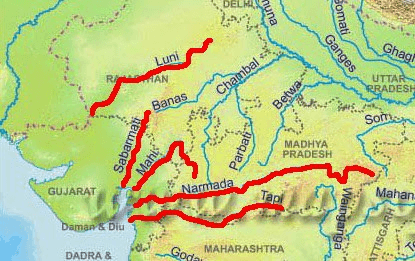
West-flowing peninsular river originating in Vindhyan hills, traversing MP–Rajasthan–Gujarat into Gulf of Khambhat

Cuts Tropic of Cancer twice, rare among Indian rivers; culturally revered as Mahisagar

Recent Gambhira bridge collapse on 9 July 2025 near Vadodara caused 9 fatalities

Quick Facts for MCQs

Infrastructure

  • Dams: Mahi Bajaj Sagar (Rajasthan), Kadana (Gujarat), Wanakbori Weir regulate irrigation, power
  • Bridge network spans river; Gambhira section collapse highlights maintenance gaps

Unique Geography

  • West-flowing course contrasts most Deccan rivers draining eastward
  • Dual Tropic crossings create inverted-S path shaping floodplain diversity

Disaster Event

  • Collapse date 9 July 2025; multiple vehicles plunged, nine dead
  • Site: Mujpur stretch, Vadodara district; rescue focused on submerged cars, two-wheelers

Key Data Points

FeatureData-Point
OriginMinda village, Dhar (MP), ~500 m asl
Total length583 km
Drainage basin34,842 sq km
States traversedMP, Rajasthan, Gujarat
MouthArabian Sea via Gulf of Khambhat
Mouth typeWide estuary
Major damsMahi Bajaj Sagar, Kadana, Wanakbori Weir
Tropic of Cancer crossingsTwo
Collapsed bridgeGambhira bridge, Mujpur, Vadodara

Related UPSC Prelims PYQs

CDS_GK, GS1 2024PYQ 1

भारत की नदियों के संबंध में, निम्नलिखित कथनों पर विचार कीजिए:

CDS_GK, GS1 2013PYQ 2

The Narmada river flows to the west, while most other large peninsular rivers flow to the east. Why?

GS-1Mapping

5.Tarragona Province Mediterranean Geography (Spanish Province)

DD News
Illustration for Tarragona Province Mediterranean Geography (Spanish Province)

What & Where

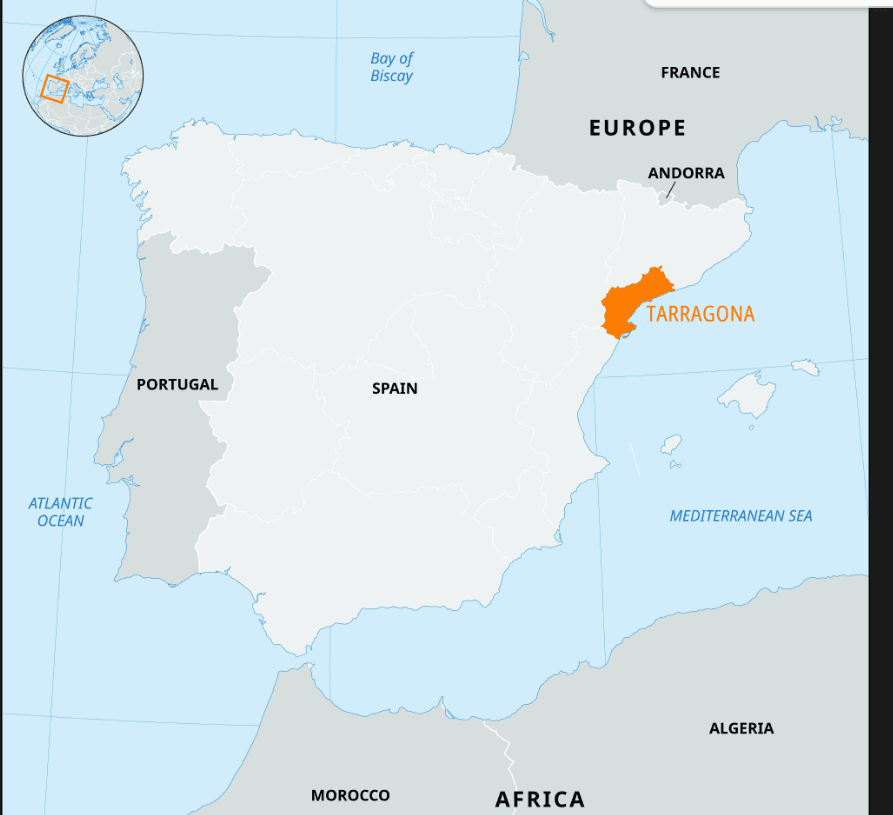
Tarragona — coastal province, southern Catalonia, NE Spain, on Mediterranean Sea; famous for Roman sites and natural landscapes.

Massive June wildfire burned ≈3,000 ha forest, compelled indoor lockdown for >18,000 residents.

Region mixes Ebro River valley with Catalan ranges; Mediterranean climate gives hot, dry, highly fire-prone summers.

Quick Facts for MCQs

Geography & Resources

  • Topography: Catalan ranges & Pauls Mountains create steep, road-scarce terrain.
  • Agriculture: cereals, grapes, fruits, olives, hemp, silk rely on Ebro irrigation.
  • Minerals: copper, lead, silver, limestone, marble quarried across province.

Disaster Drivers

  • Heatwave: Spain’s hottest June on record desiccated vegetation to flash-fuel levels.
  • Wind: Mistral gusts 90 km/h rapidly expanded firefront.
  • Climate: cyclic hot, dry Mediterranean summers elevate wildfire frequency.

Operational Challenges

  • Access: rugged slopes and dense pine forests slowed ground crews.
  • Safety: authorities opted for stay-indoors order over mass evacuation.
  • Air support: mountain-induced turbulence hindered aerial water drops.

Key Data Points

FeatureData-Point
ProvinceTarragona
CountrySpain
Autonomous regionCatalonia
CoastlineMediterranean Sea
Major riverEbro
Mountain beltsCatalan ranges, Pauls Mts.
Area burnt~3,000 ha
People in lockdown>18,000
Peak wind gustsUp to 90 km/h (Mistral)
Key natural park hitPorts Natural Park
GS-3SpeciesQuick Bite

6.Pethia dibrugarhensis New Cyprinid Fish (New Fish Species)

CIFRI

What & Where

Pethia dibrugarhensis – new cyprinid “barb” recorded 2025 in Brahmaputra at Dibrugarh, Assam.

Occurs in moderately fast, muddy-sandy-stony stretches of the Brahmaputra River basin.

Work led by ICAR-CIFRI, Barrackpore; river rises at Chemayungdung Glacier, flows Tibet-India-Bangladesh.

Quick Facts for MCQs

Biodiversity Significance

  • Discovery enriches cyprinid diversity within Indo-Burma biodiversity hotspot.
  • Adds data for conservation planning of Brahmaputra aquatic fauna.
  • Highlights need for habitat protection amid hydrological alteration threats.

Morphological Traits

  • Incomplete lateral line aids swift manoeuvring in turbulent reaches.
  • Black caudal peduncle blotch critical for species identification in field surveys.
  • Lack of barbels separates it from many other Indian barbs.

Institutional Framework

  • ICAR-CIFRI mandates sustainable inland open-water fisheries research and capacity building.
  • Works under Indian Council of Agricultural Research, Ministry of Agriculture.
  • Generates livelihood models like cage culture and river ranching.

River System

  • Brahmaputra seventh-largest discharge globally; monsoon swells foster rich fish diversity.
  • Majuli erosion and flood pulses influence spawning habitats.
  • Multiple snow-fed and rain-fed tributaries sustain year-round flow regime.

Key Data Points

FeatureData-Point
Taxonomic familyCyprinidae
Genus–speciesPethia dibrugarhensis
Named afterDibrugarh district, Assam
Humeral markAbsent
BarbelsAbsent
Lateral lineIncomplete
Diagnostic blotchNear caudal peduncle
Habitat speedModerately fast flow
Substrate typeMuddy–sandy–stony
Discovery bodyICAR-Central Inland Fisheries Research Institute
ICAR-CIFRI HQBarrackpore, West Bengal
CIFRI establishment1947
River Tibetan nameYarlung Tsangpo
Arunachal nameSiang / Dihang
Source glacierChemayungdung near Mansarovar
Largest river islandMajuli, Assam
Countries traversedChina, India, Bangladesh
Key Indian tributarySubansiri (others: Lohit, Dibang etc.)
GS-3SpeciesQuick Bite

7.Great Hornbill Rare Sighting (Great Hornbill)

The Hindu

What & Where

Great Hornbill (Buceros bicornis); large, yellow-casqued, predominantly frugivorous bird of Bucerotidae.

Core range: Western Ghats, Eastern Himalayas, Northeast & parts of Central India; also Bhutan-Indonesia.

July 2025: rarely recorded coastal sighting at Kannur, Kerala.

Quick Facts for MCQs

Habitat & Ecology

  • Habitat: tropical/sub-tropical evergreen, moist deciduous forests requiring old-growth tree cavities.
  • Nesting: monogamous pairs reuse large cavities; reliant on intact canopy.
  • Coastal presence: anomalous, indicating dispersal or habitat pressure inland.

Cultural Significance

  • Symbolism: most revered bird among Nagas; festival promotes tribal heritage.
  • Emblem: official state bird for Kerala, Arunachal Pradesh; featured in logos, literature.
  • Vernacular identity: Malayalam name “Malamuzhakki Vezhambal” reflects local cultural association.

Threats & Conservation

  • Hunting: casque, feathers, meat drive direct persecution.
  • Deforestation: logging removes nesting trees, fragments foraging habitat.
  • Protection: IUCN VU, CITES I, WPA Schedule I impose trade ban, stringent penalties.

Key Data Points

FeatureData-Point
FamilyBucerotidae
Average length95–120 cm
Average weight≈3 kg
Elevation range600–2000 m
Primary dietFruits; hunts small animals
BehaviourArboreal, diurnal, non-migratory
IUCN statusVulnerable
CITES listingAppendix I
Indian lawWPA 1972 – Schedule I
Indian state birdKerala & Arunachal Pradesh
Named festivalNagaland’s Hornbill Festival

Related UPSC Prelims PYQs

GS1 2016PYQ 1

In which of the following regions of India are you “most likely” to come across the ‘Great Indian Hornbill’ in its natural habitat?

GS1 2010PYQ 2

Consider the following pairs:

GS-3S&T

8.Optical Atomic Clock Standard Revision (Optical Clocks)

The Hindu
Illustration for Optical Atomic Clock Standard Revision (Optical Clocks)

What & Where

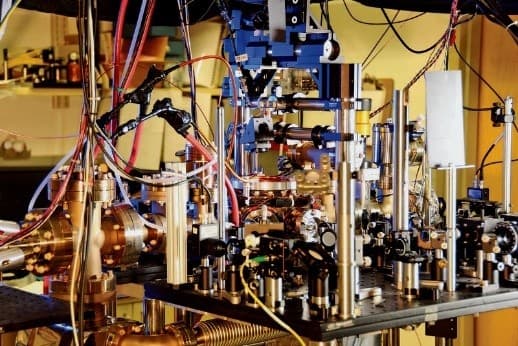
Optical atomic clock – next-generation device using optical-frequency atomic transitions for ultra-precise timekeeping

Key references – Sr-87, Yb-171, Yb⁺(E2/E3), Sr⁺-88, In⁺-115 selected for stable electronic lines

Geography – 65-member team linked labs in Europe, Asia, North America for largest clock comparison

Quick Facts for MCQs

Working Principle

  • Optical-lattice traps or ion traps immobilise atoms, minimise Doppler shifts
  • Laser excitation matched to atomic transition; counting optical cycles realises the “second”
  • GPS-disciplined clocks act as holdover during maintenance gaps

Advantages

  • Frequency-multiple – optical lines 10,000× faster than caesium microwaves
  • Stability – sub-10⁻¹⁸ noise enables geodesy and gravitational red-shift tests
  • Application-range – boosts GNSS accuracy, climate monitoring, quantum networks, deep-space navigation

International Collaboration

  • Consortium – PTB Germany, SYRTE France, NICT Japan, INRIM Italy, VTT Finland, NPL UK among others
  • Infrastructure – intercontinental 1,799 km fibre plus GPS common-view ensured synchronous read-outs
  • Outcome – identified systematic offsets, validating readiness for SI-second redefinition

Key Data Points

FeatureData-Point
Operating frequency≈10¹⁵ Hz (optical band)
Relative precision10⁻¹⁶ – 10⁻¹⁸
Drift rate1 s in 15 billion years
Experiment duration45 days
Participating continentsEurope, Asia, North America
Reference atoms/ionsSr-87, Yb-171, Yb⁺, Sr⁺-88, In⁺-115
Link technologyOptical fibre + GPS time transfer
Target year to redefine second2030
GS-3S&T

9.World Bioproduct Day and BioE3 Policy (Bioeconomy Policy)

PIB

What & Where

Bioproducts = fuels, chemicals, materials sourced from renewable biomass via biotech routes like fermentation, pyrolysis, enzymatic conversion.

Key categories: biofuels, bioplastics, bio-based chemicals/cosmetics, plant-derived therapeutics.

Indian focus nodes: iBRIC+ platform, BioE3 policy hubs, 13-institution BRIC network under DBT.

Quick Facts for MCQs

Legal & Policy

  • BioE3 provisions: Bio-AI hubs, biofoundries, global regulatory alignment, ethical biosafety mandates.
  • Strategy linkage: complements National Biotechnology Development Strategy 2020-25, Biopharma & Atal Jai Anusandhan missions.
  • Workforce clause: skilling focus on Tier-II/III cities using local biomass.

Tech & Schemes

  • iBRIC+ role: multi-stakeholder accelerator strengthening regional innovation ecosystems for sustainable biomanufacturing.
  • BRIC aim: governance parity, NEP-aligned interdisciplinary R&D, mission convergence.
  • Carbon Capture & Utilization promoted as dedicated BioE3 thrust area.

Environmental Impact

  • Bioproduct substitution cuts fossil-fuel dependence, aiding air-quality, biodiversity, deforestation targets.
  • Alignment with Lifestyle for Environment (LiFE) encourages circular, resource-efficient consumer behaviour.
  • Climate-resilient agriculture theme backs adaptive farming under changing rainfall and temperature regimes.

Key Data Points

FeatureData-Point
World Bioproduct Day launch2021, by World Bioeconomy Forum
2025 India event hostsDST + BIRAC + iBRIC+
2030 bioeconomy targetUSD 300 billion
iBRIC+ parent ministryDepartment of Biotechnology
BRIC coverage13 DBT institutes, one governance frame
BioE3 full formBiotechnology for Economy, Environment, Employment
BioE3 launch year2024
LiFE linkageSupports regenerative bioeconomy models
Core BioE3 themes6 (Bio-chemicals, Smart proteins, Precision biotherapeutics, Climate-resilient agri, CCU, Marine/Space)
Bioproduct feedstocksCrops, forestry/agri waste, algae, mycelium
GS-3S&TQuick Bite

10.Vera C Rubin Observatory First Images (Rubin Observatory)

Indian Express

What & Where

Observatory site: Vera C. Rubin Observatory, Cerro Pachón, Chile, 8 684 ft a.s.l.

Mission: continuous wide-field survey of southern night sky via Simonyi Survey Telescope

Status: first test images captured July 2025 with 3 200-MP camera

Quick Facts for MCQs

Technology Highlights

  • Wide-field optics outperform Hubble (1 %) and JWST (75 %) in single-shot coverage
  • Fastest-slewing mount enables near-real-time tracking of transient phenomena
  • 3 200-MP digital imager provides highest pixel count ever deployed in astronomy

Scientific Goals

  • Cosmology: constrain dark energy 68 % and dark matter 27 % of Universe composition
  • Solar System: hunt for hypothetical Ninth Planet; map potentially hazardous asteroids
  • Galactic studies: reconstruct Milky Way formation through deep, time-domain imaging

Historical Context

  • Namesake Vera C. Rubin first supplied rotational-curve evidence for dark matter in 1970s
  • Observatory honors groundbreaking female contributions to astrophysics

Key Data Points

FeatureData-Point
LocationCerro Pachón, Chile
Elevation8 684 ft (≈2 648 m)
Primary instrumentSimonyi Survey Telescope
Field of viewArea equal to 40 full Moons
Camera size3 200 megapixels (world’s largest)
Slewing speedRe-positions in 5 s
Faintness limitDetects objects 100 million × dimmer than naked eye
Sky coverage vs Hubble40 × larger (Hubble 1 % of Rubin view)
Named afterVera C. Rubin, dark-matter evidence (1970s)
GS-2Editorial

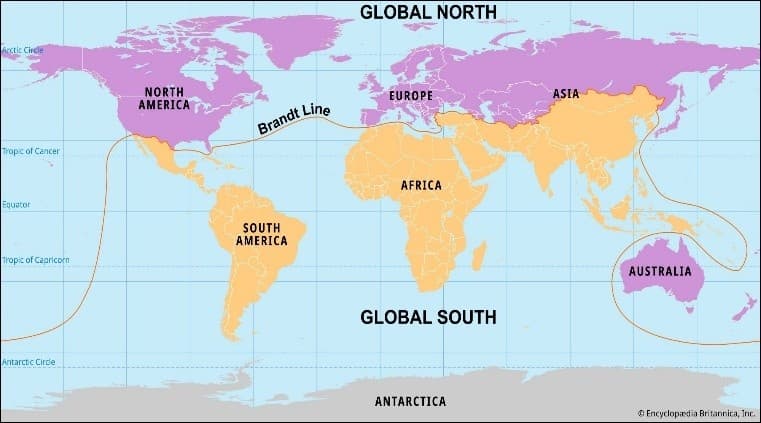
11.India’s Global South Outreach (Global South)

DH
Illustration for India’s Global South Outreach (Global South)

What & Where

Global South: developing/emerging nations in Asia-Africa-Latin America-Oceania seeking fair voice in global governance

Concept emerged 1960s; Brandt Line (1980) popularised North-South economic divide

India’s 2024 five-nation tour (Ghana, Trinidad & Tobago, Argentina, Brazil, Namibia) deepened outreach to this bloc

Quick Facts for MCQs

Development Challenges

  • Climate impact: highest vulnerability despite lowest per-capita emissions
  • Debt stress: pandemic + inflation intensified external repayment crises
  • Digital gap: limited AI, fintech access widening prosperity divide

India Initiatives

  • Diplomatic voice: championed AU in G20, convened Voice of GS summits
  • Tech exports: Digital Public Infrastructure, telemedicine, CDRI climate-resilient projects
  • Balanced positions: maintained strategic autonomy on Gaza, Iran within BRICS

Strategic Partnerships

  • Ghana: rare-earth mining, Gulf of Guinea maritime security cooperation
  • Argentina: KABIL lithium exploration ensuring EV battery supply chain resilience
  • Brazil/Namibia: defence hardware, biofuels, UPI fintech, critical minerals

Reform Agenda

  • UNSC/WTO/IMF: India pressing for quota, seat, and rule-making overhaul
  • South-South finance: expansion through NDB, ISA, Exim credit lines
  • Proposed permanent Global South forum to coordinate negotiating stance

Key Data Points

FeatureData-Point
G77 membership134 countries
NAM membership120 nations
African CO₂ share< 4 % of global emissions
China share in rare-earth processing~70 %
Voice of Global South SummitsJan 2023 & Nov 2024 (virtual, India-hosted)
African Union G20 entrySecured during India G20 Presidency 2023
Lithium MoUKABIL-Argentina, Catamarca province
UPI international launchNamibia, 2024
Defence interest by BrazilAkash surface-to-air missile system
Debt default examplesSri Lanka 2022, Zambia 2020

Related UPSC Prelims PYQs

CAPF_GAI, GEO_GS 2021PYQ 1

G-20 is a forum of countries that intends to promote global economic stability and sustainable growth. Which among the following group of countries DOES NOT form a part of the forum?

CAPF_GAI, GEO_GS 2023PYQ 2

निम्नलिखित में से भारत की G20 प्राथमिकताएँ क्या हैं?

GS-2Editorial

12.Five Pillars India-Brazil Partnership (India-Brazil Ties)

PIB

What & Where

India–Brazil Strategic Partnership: launched 2006; revitalised July 2025 state visit, Brasilia.

Geography: connects South Asia and South America; pillar-based engagement across defence, energy, tech, trade, food.

Multilateral setting: ties overlap BRICS, G20, Global South forums; India chairs BRICS 2026.

Quick Facts for MCQs

Defence & Security

  • Agreement on Exchange & Protection of Classified Information plus pact on Combating Terrorism and Transnational Crime.
  • Mechanisms: Joint Defence Committee, 2+2 Political-Military Dialogue first held 2024.

Economic Angle

  • Target USD 20 billion trade within 5 years; focus diversify beyond crude, sugar, petrochemicals.
  • Tools: 2020 Investment Cooperation Treaty, 2022 Double-Taxation Protocol, proposed Brazil-India Business Council.

Energy & Climate

  • Biofuel synergy: ethanol blending tech; support Global Biofuels Alliance expansion.
  • India backs Brazil’s COP30 Presidency and Tropical Forests Forever Fund.

Tech & Innovation

  • Joint Commission on S&T to cover digital public infrastructure, AI, quantum, space.
  • New Cybersecurity Dialogue for threat intel and capacity building.

Key Data Points

FeatureData-Point
Brazil honour to Indian PMGrand Collar of the National Order of the Southern Cross
Five priority pillarsDefence-Security, Food-Agri, Energy-Climate, Digital-Tech, Industrial Partnerships
Bilateral trade 2024-25USD 12.2 billion
Indian investments in Brazil≈ USD 6 billion
Defence Cooperation AgreementSigned 2003, ratified 2006
Amazonia-1 launchISRO PSLV, 2021
Global Biofuels AllianceCo-founded 2023, both founding members
Next BRICS SummitIndia, 2026 (18th edition)

Related UPSC Prelims PYQs

CDS_GK, ESE_GS 2026PYQ 1

What is the name of the initiative launched by India and Denmark in November 2025 to enhance bilateral ties?

CDS_GK, ESE_GS 2020PYQ 2

BRICS Summit, 2020 will be hosted by

GS-2Misc

13.Namibia Welwitschia Civilian Honour (Civilian Honour)

PIB
Illustration for Namibia Welwitschia Civilian Honour (Civilian Honour)

What & Where

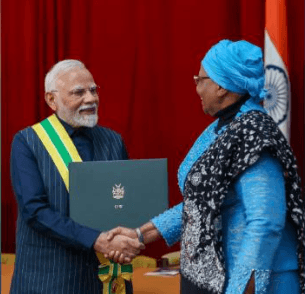
Order of the Most Ancient Welwitschia Mirabilis – Namibia’s apex civilian decoration for extraordinary foreign contribution.

Named after Welwitschia mirabilis, a hardy Namib Desert plant living >1,000 years, symbolising endurance.

Bestowed in Windhoek by the President of Namibia; India’s PM is the first Indian awardee.

Quick Facts for MCQs

Diplomatic Significance

  • Milestone: First Indian leader honoured, cementing South-South partnership.
  • Recognition: Highlights India–Namibia cooperation across minerals, defence, health, fintech.

Strategic Minerals

  • Resources: Namibia hosts uranium, rare earths, oil, copper reserves coveted for clean-energy supply chains.
  • Engagement: India negotiating exploration, offtake and tech transfer for strategic security.

Defence & Security

  • Cooperation: Talks cover defence manufacturing, maritime domain awareness, joint training.
  • Multilateral: Namibia joined Indian-initiated CDRI platform for disaster-resilient infrastructure.

Tech & Health Collaboration

  • Fintech: UPI technology licensing underway for Namibian digital payments rollout.
  • Social sectors: MoUs signed on healthcare, pharmaceuticals, entrepreneurship capacity-building.

Conservation Efforts

  • Wildlife: Namibia enabled Project Cheetah, translocating African cheetahs to Kuno National Park.
  • Symbolism: Conservation links reinforce shared ecological stewardship narrative.

Key Data Points

FeatureData-Point
Award tierHighest civilian honour of Namibia
Conferred byPresident H.E. Netumbo Nandi-Ndaitwah
Namesake plantWelwitschia mirabilis (Namib Desert)
Plant lifespanMore than 1,000 years
SymbolismDurability, trusted friendship
First Indian recipientPrime Minister of India
VenueState visit to Windhoek
Core bilateral eraPost-independence, 1990-present
GS-3Security

14.Indigenous MALE Surveillance Drones (MALE Drones)

Economic Times
Illustration for Indigenous MALE Surveillance Drones (MALE Drones)

What & Where

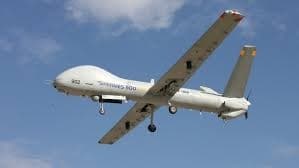
MALE drones = unmanned aerial vehicles flying up to ~35,000 ft for >30 hr, suited for ISR & limited strikes.

₹20,000 cr fast-track order for 87 indigenously built units under Make in India.

Deployment eyed along India-Pakistan/China borders and Indian Ocean littoral for round-the-clock surveillance.

Quick Facts for MCQs

Tech & Schemes

  • Make in India push ensures majority local subsystems, reducing import dependence.
  • Payload: EO/IR sensors, maritime radar, optional precision munitions enable day-night target tracking.
  • Ground stations employ encrypted SATCOM/LOS links for remote control and live data relay.

Security Dimension

  • Continuous watch over LAC, LoC, coastal EEZ deters incursions and hostile naval moves.
  • Tri-services integration supplies real-time common operating picture for Army, Navy, Air Force commanders.
  • Persistent eyes aid counter-insurgency in Naxal belts, Northeast, J&K.

Economic Angle

  • Large domestic order spurs drone supply-chain, MSME participation, skilled jobs.
  • Forex savings by replacing costly Israeli imports strengthen Defence Budget efficiency.
  • Indigenous MALE capability positions India for future UAV exports under DPEPP-2020.

Key Data Points

FeatureData-Point
Altitude ceiling~35,000 ft
Endurance>30 hr
Units cleared87 drones
Approved cost₹20,000 crore
Indigenous content>60 %
Previous supplierIsraeli firms
Core roleISR & limited combat

Related UPSC Prelims PYQs

GS1 2025PYQ 1

मानव-रहित वायु वाहन (UAV) के संदर्भ में, निम्नलिखित कथनों पर विचार कीजिए :
GS1 2025PYQ 2

भारत की रक्षा के संदर्भ में, निम्नलिखित युग्मों पर विचार कीजिए :

GS-3Security

15.Indigenous Extended Range Anti-Submarine Rocket (Anti-Submarine Weapon)

Times of India
Illustration for Indigenous Extended Range Anti-Submarine Rocket (Anti-Submarine Weapon)

What & Where

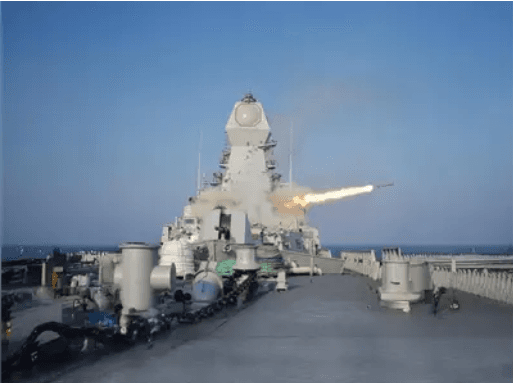
Weapon: Extended Range Anti-Submarine Rocket (ERASR) is an indigenous underwater strike rocket by DRDO

Locale: User trials fired from INS Kavaratti with Indigenous Rocket Launchers in Indian Ocean waters

Target: Neutralises hostile submarines across short and long ranges

Quick Facts for MCQs

Technology Features

  • Propulsion: Twin-motor design enables both short and long engagement envelopes
  • Fuze: Electronic timing made in India ensures precise depth detonation
  • Integration: Fits frontline warships using Indian 212 mm rocket launchers

Trial Outcomes

  • Validation: 17 rockets fired under simulated combat conditions from INS Kavaratti
  • Performance: All shots met range, fuze reliability, warhead detonation criteria
  • Readiness: Indian Navy declared system combat-ready after user evaluation

Indigenisation Drive

  • Atmanirbharta: Replaces costly ASW imports and conserves defence budget
  • Ecosystem: Showcases DRDO–Navy synergy in high-tech maritime weapons
  • Scalability: Design ready for mass production across multiple frontline ships

Key Data Points

FeatureData-Point
DeveloperDRDO
User armIndian Navy
Launch platformWarships with Indigenous Rocket Launchers
PropulsionTwin rocket motor system
FuzingIndigenous electronic time fuze
Trial shipINS Kavaratti
Rockets tested17
Core roleExtended-range anti-submarine warfare

Related UPSC Prelims PYQs

CDS_GK, ESE_GS 2021PYQ 1

Which one of the following is correct about ‘Pinaka’?

CDS_GK, ESE_GS 2024PYQ 2

Ministry of Defence signed contract with which one of the following organizations for Upgraded Super Rapid Gun Mount (SRGM) and other equipment for around 3000 crores?

GS-1Scheme

16.PARAKH Rashtriya Sarvekshan Learning Report (Student Assessment)

The Hindu
Illustration for PARAKH Rashtriya Sarvekshan Learning Report (Student Assessment)

What & Where

PARAKH Rashtriya Sarvekshan = national, competency-based student assessment replacing National Achievement Survey.

Conducted Dec 2024 by NCERT under PARAKH, Ministry of Education.

Covers Grades 3-6-9; subjects: language, maths, EVS/science; all States/UTs sampled.

Quick Facts for MCQs

Learning Outcomes

  • Language: G-3 60 % read small stories; G-9 54 % extract editorial ideas.
  • Mathematics: G-3 55 % number ordering; G-6 38 % daily sums; G-9 28 % percentage use.
  • Science/EVS: G-6 44 % observe-describe nature; G-9 34 % identify living traits.

Geographical Spread

  • Consistent toppers: Punjab, Kerala, Himachal, Chandigarh, DNH&DD in all three grades.
  • Persistently weak: Garo Hills, Shi Yomi, Reasi, Rajouri, Sahebganj.
  • Regional gaps widen at higher grades, notably in maths & science.

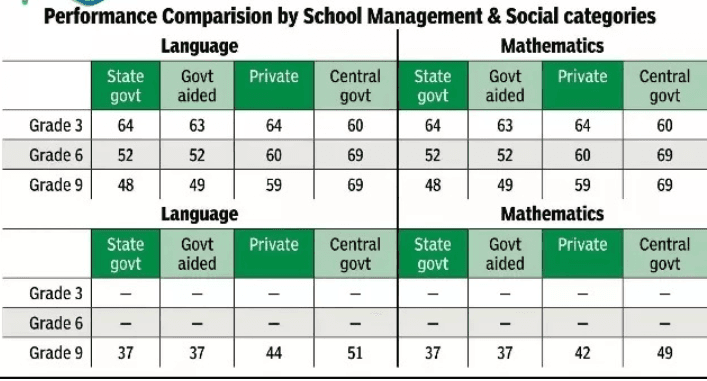
School-Type Trends

  • Grade 3: Kendriya Vidyalayas lowest in maths.
  • Grade 6: State-run & aided schools weakest in maths.
  • Grade 9: Kendriya Vidyalayas best in language.

Governance

  • Mandate: Track competency gains vis-à-vis NEP 2020 benchmarks.
  • Method: Low-stakes, sample-based, competency-linked test items.
  • Positioning: PARAKH to act as national assessment regulator.

Key Data Points

FeatureData-Point
Apex bodyPARAKH (NCERT)
Former nameNational Achievement Survey
Survey month-yearDecember 2024
Grades assessed3, 6, 9
Core subjectsLanguage, Mathematics, Science/EVS
Top States/UTsPunjab, Kerala, Himachal, Chandigarh, DNH&DD
Low districtsGaro Hills, Shi Yomi, Reasi, Rajouri, Sahebganj
G-3 maths: order ≤9955 % correct
G-6 daily arithmetic38 % correct
G-9 apply percentages28–31 % correct

Related UPSC Prelims PYQs

CDS_GK, NDA_GAT 2023PYQ 1

शिक्षा मंत्रालय द्वारा वर्ष 2020-2021 के लिए प्रकाशित प्रदर्शन ग्रेडिंग सूचकांक (PGI) में, निम्नलिखित में से किस राज्य/संघ राज्य-क्षेत्र का स्थान शीर्ष दस में शामिल नहीं है?

CDS_GK, NDA_GAT 2024PYQ 2

good quality elementary education conforming P

Ready to practice?

Test your knowledge with our UPSC test series.

Start Free Trial