UPSC Current Affairs

17 topicsGS-1: 3GS-2: 4GS-3: 10
0/17 done
GS-2Polity

1.Admiralty Act 2017 Maritime Jurisdiction (Admiralty Law)

Indian Express

What & Where

Admiralty (Jurisdiction and Settlement of Maritime Claims) Act, 2017: central law for maritime claims, ship arrest, liens.

Invoked by Kerala High Court to arrest Liberian ship MSC Akiteta II for alleged marine-ecosystem damage in state waters.

Maritime jurisdiction now spans High Courts of Bombay, Calcutta, Madras, Gujarat, Kerala, Karnataka, Odisha, Telangana & Andhra Pradesh.

Quick Facts for MCQs

Legal & Policy

  • Jurisdiction-expansion empowers non-colonial ports’ High Courts, ensuring uniform admiralty adjudication.
  • Ship arrest possible even for sister ships sharing ownership, securing claims pre-judgment.
  • Act expressly recognises environmental damage as a standalone maritime claim.

Environmental Impact

  • Oil-spill or hazardous discharge treated at par with cargo or collision claims.
  • State can quantify ecosystem loss, seek restitution under Section 4(k).
  • Provision deters negligent navigation in ecologically sensitive coastal zones.

Economic Angle

  • Predictable dispute mechanism boosts investor confidence for Sagarmala, port SEZs.
  • Quick arrest remedy pressures foreign owners to settle, limiting port congestion costs.
  • Compensation flow safeguards coastal livelihoods, sustaining blue-economy growth.

Key Data Points

FeatureData-Point
Enactment year2017
Colonial laws replaced1861 & 1890 Admiralty Acts
Section on claim typesSection 4
Section on vessel arrestSection 5
Kerala’s total compensation demand₹9,531 crore
Claim earmarked for fishermen₹526 crore
Nature of jurisdictionIn rem & in personam
International alignmentUNCLOS + IMO conventions
Vessel’s flag stateLiberia
Newly added HC jurisdictionsKerala, Karnataka, Odisha, Telangana, Andhra Pradesh
GS-1Environment

2.Melting Glaciers Boost Volcanic Activity Risk (Subglacial Volcanoes)

Indian Express

What & Where

Subglaciated volcanoes – magma systems buried beneath ice in Iceland, British Columbia, Antarctica, NZ, Russia.

Glacial unloading – melting ice lessens overburden, gases expand, eruption odds rise.

West Antarctic Ice Sheet hosts ~100 such volcanoes, flagged as highest future hazard.

Quick Facts for MCQs

Mechanism & Triggers

  • Glacial unloading removes kilometres-thick pressure, letting magma and volatiles expand explosively.
  • Climate-enhanced precipitation percolates rock, alters magma chemistry, possibly initiating eruptions.
  • Hypothesis first floated 1970s; modern geochemical models provide quantitative backing.

Regional Hotspots

  • West Antarctica predicted to transition into multi-decade eruptive phase as ice retreats.
  • Additional danger zones: Iceland, British Columbia, North American Cordillera, New Zealand, Russian arcs.
  • Antarctic volcanic edifices currently blanketed by kilometres of ice, heightening sensitivity to melt.

Climate Feedbacks

  • Sulfur-rich eruptions form stratospheric sulfate aerosols, reflecting sunlight, causing short-term cooling.
  • Repeated eruptions emit CO₂, CH₄, reinforcing long-term warming and glacier loss.
  • Feedback loop: melt lowers pressure, eruption frequency increases, greenhouse release accelerates further melt.

Key Data Points

FeatureData-Point
2025 Goldschmidt venuePrague
Subglaciated volcanoes under WAIS≈100
Iceland deglaciation eruption jump30–50 × present
Land area with glacial ice~10 %
Sea-level rise if total melt>60 m (195 ft)
Mt Pinatubo 1991 cooling~0.5 °C for >1 yr
GS-1Mapping

3.Bulgaria Geography and Eurozone Accession (European Geography)

NBC

What & Where

Eurozone – monetary union of EU nations using the euro; physical currency launched 2002.

Bulgaria – southeastern Balkan state cleared to adopt euro from 1 Jan 2026, becoming 21st eurozone member.

Borders – Romania (Danube), Serbia, North Macedonia, Greece, Turkey; Black Sea to east.

Quick Facts for MCQs

Physical Geography

  • Danube forms entire northern boundary; supports shipping, farming, tourism.
  • Balkan Mountains run east-west mid-country, creating north–south divide.
  • Black Sea littoral hosts resorts Sunny Beach, cities Varna, Burgas.

Economic Angle

  • Single currency removes FX risk, easing Bulgaria-EU trade & travel.
  • ECB sets interest rates; inflation targeting applies uniformly.
  • Stability tools: European Stability Mechanism, fiscal oversight frameworks.

Eligibility & Process

  • Maastricht criteria demand low inflation, stable exchange rate, sound deficits-debt.
  • Eurogroup, Ecofin ministers grant final accession approval.
  • Bulgarian National Bank to join Eurosystem; euro coins/notes circulate 2026.

Cultural Mosaic

  • Heritage blends Slavic, Ottoman, Greek, Thracian strands.
  • Landmarks: Orthodox churches, Ottoman mosques, Roman ruins.
  • Signature foods: yogurt, banitsa pastry, grilled kebapche.

Key Data Points

FeatureData-Point
Eurozone members (pre-Bulgaria)20
Bulgaria’s euro entry date1 Jan 2026
Most recent entrant earlierCroatia (2023)
Euro physical launch2002
Governing bankEuropean Central Bank
Bulgaria’s capitalSofia
Major border riverDanube
Highest Balkan peakMusala (Rila Range)

Related UPSC Prelims PYQs

GS1 2007PYQ 1

Which one of the following pairs of countries joined the European Union in 2007?

GS1 2009PYQ 2

Consider the following countries :

GS-3Editorial

4.Reforming UNFCCC Process before COP30 (UNFCCC Reform)

Indian Express

What & Where

UNFCCC = 1992 Rio Earth-Summit treaty; HQ Bonn; near-universal 198 Parties.

Core processes: annual COP, SBSTA & SBI reviews, NDC reporting, Green Climate Fund finance flow.

COP-30 scheduled 2025, Belém-Brazil; reform push targets decision rules, finance, accountability.

Quick Facts for MCQs

Institutional Weakness

  • Consensus rule grants every party veto, often yields diluted texts.
  • Secretariat lacks enforcement; defaulters face no sanctions.
  • Complex, agenda-heavy sessions impede timely decisions.

Climate Finance

  • Developed-world USD 100 bn pledge still unmet; mistrust deepens.
  • Loss & Damage Fund underfunded; liability debates stall payouts.
  • Proposal: tie Green Climate Fund disbursal to transparent, measurable results.

Proposed Reforms

  • Majority-voting trigger after failed consensus period.
  • Independent technical body to audit NDC credibility and progress.
  • Human-needs framing to align mitigation with housing, food, mobility goals.

Fossil-Fuel Influence

  • COP-28 first to mention fossil exit, yet hosted by petro-state Dubai.
  • Future hosts (e.g., Baku) spark greenwashing concerns.
  • Civil-society demands conflict-of-interest guidelines for presidency selection.

Key Data Points

FeatureData-Point
Paris-Agreement legal natureVoluntary NDCs, not legally binding
Parties submitting 2035 NDCs (May 2025)21 countries ≈ 11 %
Historical emission rise 1997-2012+44 % despite Kyoto
SIDS emission share< 1 % of global total
Projected SIDS annual loss @ 2 °CUSD 75 billion by 2050
COP-28 shortfallNo binding finance timeline for Loss & Damage Fund
UNFCCC guiding principleCommon but Differentiated Responsibilities (CBDR)

Related UPSC Prelims PYQs

CAPF_GAI, GEO_GS 2024PYQ 1

Which one among the following statements with regard to the United Nations Climate Change Conference (COP28) is NOT correct?

CAPF_GAI, GEO_GS 2026PYQ 2

The United Nations Framework Convention on Climate Change (UNFCCC) was first signed during

GS-3Environment

5.Great Nicobar Project Seismic Risk Concerns (Great Nicobar Project)

The Hindu

What & Where

Great Nicobar Infrastructure Project (GNIP): 2021-launched ₹72,000 cr port–airport–township initiative.

Site: Great Nicobar Island, southern tip of Andaman & Nicobar; abuts Malacca Strait, Indira Point.

Zone: High seismicity; source area of 2004 M 9.1 Indian-Ocean tsunami.

Quick Facts for MCQs

Environmental Impact

  • Deforestation 130 sq km; compensatory afforestation in Haryana & MP fails biodiversity equivalence
  • Leatherback turtle nesting zone lost after 2021 de-notification of Galathea Bay WLS
  • CRZ-1A coastline faces ship-repair, dredging, coral and reef degradation risks

Seismic Risk

  • IIT-Kanpur: sandstone–shale over volcanics amplifies shaking, liquefaction probability high
  • Sediments at Badabalu show seven paleo-tsunamis in 8 kyr, underscoring frequent megathrust events
  • Site-specific seismic & tsunami modelling still absent for Campbell Bay, Car Nicobar

Strategic & Economic

  • ICTT targets import–export transhipment autonomy, aligns with Maritime India Vision 2030 & Amrit Kaal 2047
  • Greenfield airport boosts tri-service deployment, supports Act East and QUAD maritime surveillance
  • Location near Malacca, Sunda, Lombok enables oversight of 60% global energy traffic

Key Data Points

FeatureData-Point
Estimated cost₹72,000 crore
Launch year2021
Executing agencyANIIDCO
Core assetsICTT, greenfield airport, township, tourism hub, gas plant
Strategic chokepointMalacca Strait (also Sunda & Lombok)
Forest diversion130 sq km primary rainforest
Potential trees felledUp to 10 million
Coastline categoryCRZ-1A
2004 quake magnitude9.1
Mega-quake return period420–750 years
Large (≥7.5) quake period80–120 years
Island national parksCampbell Bay, Galathea
Southernmost point of IndiaIndira Point
Tribal groupsShompen, Nicobarese, Onge, Andamanese
GS-3Species

6.Kharai Camel Swimming Breed of Gujarat (Kharai Camel)

Times of India
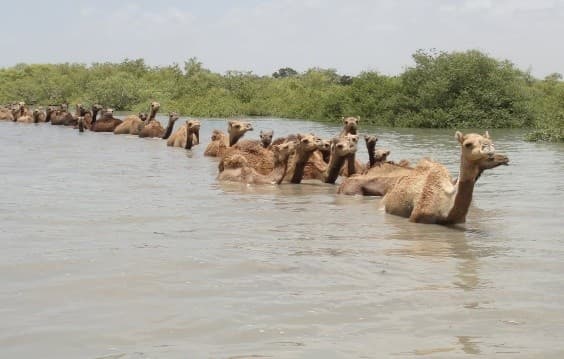
Illustration for Kharai Camel Swimming Breed of Gujarat (Kharai Camel)

What & Where

Kharai camel – India’s 9th recognised camel breed, uniquely able to swim for mangrove grazing.

Core range – coastal Kutch districts (Bhachau, Abdasa, Lakhpat) plus Devbhumi Dwarka & Jamnagar, Gujarat.

Lives in saline marsh & mangrove islands of Arabian Sea’s inter-tidal zone.

Quick Facts for MCQs

Physical Traits

  • Muscular build, salt-tolerant physiology enabling survival on halophytic plants.
  • Thick, water-resistant coat aids long seawater exposure.
  • Extended nostril closure minimises saline water intake while swimming.

Pastoral Communities

  • Rabari, Fakirani Jat & broader Maldhari groups practise mobile herding with traditional knowledge.
  • Camels supply milk, manure and limited transport; not primarily slaughtered for meat.
  • Seasonal migration synchronized with tidal charts and mangrove phenology.

Conservation Significance

  • Grazing maintains mangrove understorey, reducing fire risk and enhancing biodiversity niches.
  • Represents climate-resilient livestock suitable for rising salinity and shrinking rangelands.
  • Population decline from coastal industrialisation prompts need for breed conservation programmes.

Key Data Points

FeatureData-Point
Recognition rank9th Indian camel breed
Camel typeSingle-humped (dromedary)
Total population (Gujarat)≈ 4,000 animals
In coastal Kutch alone≈ 2,000 animals
Maximum swim distanceUp to 3 km in sea
Adult weightAround 500 kg
Name originGujarati khara = salty
Main dietMangrove species
Key handler groupsRabari & Fakirani Jat
Peak grazing seasonMonsoon weeks on islands

Related UPSC Prelims PYQs

GS1 2016PYQ 1

What is/are unique about 'Kharai camel', a breed found in India?

GS-3S&T

7.Coartem Baby Pediatric Malaria Drug (Malaria Treatment)

Times of India

What & Where

Definition: Coartem Baby, first artemether-lumefantrine antimalarial for 2–5 kg infants in endemic areas

Origin: Novartis & Medicines for Malaria Venture; cleared by Swissmedic’s Global Health Products pathway

Geography: Fast-track filings in Kenya, Tanzania, Uganda, Nigeria, Malawi, Mozambique, Burkina Faso, Ivory Coast

Quick Facts for MCQs

Tech & Formulation

  • Palatability: cherry flavour, dissolves in milk boosting adherence
  • Fixed-dose: removes need for tablet-splitting, lowers dosing error
  • Infant-specific packaging reduces caregiver confusion

Public Health Gap

  • Vulnerability: newborns lack vaccine cover and prior trial data
  • Safety: replaces off-label adult dosing, mitigating toxicity/underdose risks
  • Potential: targets high neonatal mortality pockets in sub-Saharan Africa

Regulatory & Rollout

  • Swissmedic Global Health pathway accelerates LMIC access
  • Eight African states using reliance mechanisms for swift licensure
  • Novartis to supply near-cost through public channels

International Context

  • Partnership: MMV coordinated R&D funding and access planning
  • Alignment: aids WHO 2030 goal of 90 % malaria mortality cut
  • Example: showcases alternative licencing when FDA/EMA routes slow

Key Data Points

FeatureData-Point
Drug nameCoartem Baby
API comboArtemether + Lumefantrine
Eligible weight2–5 kg (newborn – <6 months)
Form & tasteDispersible, cherry-flavoured; dissolves in breast milk
Dose designRatio adjusted for immature liver function
First approvalSwissmedic, Switzerland
Pricing modelLargely not-for-profit in endemic nations
Annual infants at risk≈30 million in Africa
Earlier gapNo licensed drug for <4.5 kg babies
GS-3S&T

8.Accelerator Mass Spectrometry Dating Technique (Radiocarbon Dating)

The Hindu

What & Where

AMS Dating: high-precision radiocarbon method that counts individual C-14 atoms instead of measuring radioactive decay.

Handles micro-samples (~20 mg), enabling near-non-destructive dating of fragile archaeological materials.

Tamil Nadu Archaeology sent 23 charcoal samples from 7 sites to Beta Analytic Lab, USA for AMS dating.

Quick Facts for MCQs

Technology & Process

  • Ionization: cesium beam sputters graphite, yielding C⁻ ions for acceleration.
  • Tandem-accelerator: stripper foils create C⁺ ions; magnets split C-12/C-13/C-14 masses.
  • Detection: direct C-14 atom counting drastically cuts background noise, raising precision.

Archaeological Usage

  • Charcoal, bone, potsherd dating refines Sangam-era and other Tamil site chronologies.
  • Micro-sample capability conserves priceless artifacts for future multidisciplinary analyses.

Global Collaboration

  • Beta Analytic chosen due to ISO-accredited AMS facilities and quick turnaround.
  • Beyond archaeology, AMS supports sediment studies, ocean carbon mapping, and biomedical microdosing research.

Key Data Points

FeatureData-Point
Full formAccelerator Mass Spectrometry
Primary isotopeCarbon-14
Minimum sample need≈ 20 mg
Sample prepChemical cleaning → graphite target
Ion sourceCesium sputter beam (negative ions)
Accelerator typeTandem electrostatic
Key advantage1,000 × less sample than radiometric
Typical result timeHours (vs days)
TN nodal agencyState Dept. of Archaeology (TNSDA)
Foreign labBeta Analytic, Florida, USA
GS-3S&T

9.CRISPR-Enhanced Japonica Rice Phosphate Efficiency (CRISPR Agriculture)

The Hindu

What & Where

CRISPR-Cas9 gene editing applied to Indian-grown japonica rice cultivars.

Key locus OsPHO1;2 tweaked to enhance root-to-shoot phosphate transport.

Field trials in India; aims at low-input, high-yield rice cultivation.

Quick Facts for MCQs

Tech & Mechanism

  • Repressor site deletion boosts OsPHO1;2 expression without foreign DNA insertion.
  • Cas9 creates double-strand break; cell repairs, omitting repressor sequence.
  • Classified as “gene-edited”, not transgenic; may ease regulatory hurdles.

Agronomic Impact

  • 40 % yield gain achieved under one-tenth phosphate input.
  • Lower fertiliser need cuts input costs and mitigates eutrophication risk.
  • Potential scalability to indica rice and other cereals.

Economic Angle

  • Reduced dependence on costly phosphate imports strengthens fertiliser self-reliance.
  • Savings on subsidy outgo; phosphate is entirely imported as raw rock.
  • Aligns with Atmanirbhar Bharat and sustainable agriculture targets.

Key Data Points

FeatureData-Point
Editing toolCRISPR-Cas9 (Cas9 endonuclease as “molecular scissors”)
Target geneOsPHO1;2 promoter (repressor-binding site removed)
Yield change+40 % grain yield
Phosphate applied10 % of standard fertiliser recommendation
India’s phosphate fertiliser import> 4.5 million tonnes / yr
Indian soils low in organic C85 % of samples (CSE 2022)
N deficiency in soils97 % samples
P deficiency in soils83 % samples
K deficiency in soils71 % samples
Micronutrient shortfallsB 47 %, Zn 39 %, Fe 37 %, S 36 %

Related UPSC Prelims PYQs

CDS_GK, GS1 2025PYQ 1

Recently, ICAR (Indian Council of Agricultural Research) has developed the world's first genome-edited rice varieties. Which of the following statements is/are correct with respect to the developed products?

CDS_GK, GS1 2019PYQ 2

What is Cas9 protein that is often mentioned in news?

GS-3S&T

10.Phenome India National Biobank Launch (National Biobank)

PIB

What & Where

Biobank – repository storing blood, tissue, DNA plus linked health data for research.

National Biobank housed at CSIR-Institute of Genomics & Integrative Biology, New Delhi.

Process – longitudinal collection of genomic, lifestyle, clinical metrics from 10,000 diverse Indians.

Quick Facts for MCQs

Tech & Schemes

  • Infrastructure – cryogenic storage, digital registry linking samples with anonymised metadata.
  • Data-layer – genomic sequencing, electronic health records, lifestyle questionnaires integrated.
  • Compliance – ethical approvals and data-protection protocols aligned with national guidelines.

Health Goals

  • Prevention – early-risk stratification enabling timely interventions.
  • Therapy – discovery of India-specific drug targets and tailored treatment regimens.
  • Policy – evidence base for population-specific health programmes.

Research Scope

  • Gene-environment interaction studies on cardio-metabolic disorders.
  • Development of risk-prediction models calibrated to Indian phenotypes.
  • Resource for studying chronic, infectious and rare diseases.

International Examples

  • UK Biobank showcases biobank-driven insights into population health, guiding Indian adaptation.
  • Other global cohorts (e.g., FinnGen) emphasise longitudinal design and open researcher access.

Key Data Points

FeatureData-Point
Parent projectPhenome India–CSIR Health Cohort Knowledgebase (PI-CHeCK)
Launch year2025 (Biobank); 2023 (Phenome India)
Implementing bodyCouncil of Scientific & Industrial Research (CSIR)
Target participants10,000 individuals across regions, ages, socio-economic strata
Core aimEnable data-driven personalised medicine for Indian population
Key disease focusDiabetes, cancer, cardiovascular, rare genetic disorders
Global modelInspired by UK Biobank
Term “Phenome”Complete set of observable traits shaped by gene-environment interaction
GS-3S&T

11.Smart Mosquito Surveillance System Andhra (Mosquito Surveillance)

Indian Express

What & Where

Smart Mosquito Surveillance System (SMoSS) = AI-IoT network for continuous mosquito detection and vector-control decisions.

Integrates sensors, drones, weather feeds; reports species, gender, density; issues real-time spray alerts.

Rolled out across Andhra Pradesh urban areas to replace blanket fogging with pinpoint larvicide actions.

Quick Facts for MCQs

Tech & Schemes

  • AI sensors classify species, gender, density in real time.
  • Central dashboard streams live field data enabling geo-fenced spray orders.
  • Drones reduce manpower cost, allow precise larvicide deposition.

Disease Profiles

  • Dengue: four serotypes DEN-1-4; 2024 India 2.3 lakh cases, 297 deaths; diagnosis via blood test.
  • Zika: Aedes-borne flavivirus; maternal infection linked to microcephaly, congenital defects.
  • Yellow fever: hemorrhagic; ~30 000 global deaths annually; 17D vaccine effective lifelong.

Implementation & Governance

  • Specialised agencies operate SMoSS; performance tracked through mobile app dashboards.
  • Accountability metrics logged real time to curb ineffective blanket spraying.
  • Data-driven approach aligns with National Vector Borne Disease Control Programme goals.

Key Data Points

FeatureData-Point
Launch stateAndhra Pradesh
Core techAI sensors + IoT + drones
Drone roleCost-effective larvicide spraying
Alert triggerDensity crosses safe limit
Primary vector trackedAedes aegypti
India dengue cases 2024≈ 2.3 lakh
India dengue deaths 2024297
Yellow fever annual deaths≈ 30 000 (global)
Yellow fever vaccine17D, WHO-endorsed
Diseases in focusDengue, Zika, Chikungunya, Yellow Fever
GS-2Editorial

12.India-Argentina Strategic Partnership Highlights (India-Argentina Ties)

Indian Express

What & Where

Argentina – 8th largest country; capital Buenos Aires; borders Chile, Bolivia, Paraguay, Brazil, Uruguay & Atlantic Ocean.

2025 Indian PM’s first Argentina visit in 57 yrs marks 75 yrs ties & 5 yrs Strategic Partnership.

Partnership pillars: trade, energy, critical minerals, defence co-development, digital public infrastructure.

Quick Facts for MCQs

Economic Angle

  • Trade: bilateral commerce aims diversification; PTA expansion with MERCOSUR eyed as FTA precursor.
  • Council: India-Argentina Business Council drives investment; Goldilocks market fits between US/EU stringency & African competition.

Energy & Minerals

  • Shale: ONGC Videsh–YPF cooperation sought for gas/oil supply security.
  • Lithium: Triangle membership gives India cleaner-energy inputs, lowering external dependence.

Defence & Digital

  • Defence: co-development, tech transfer; existing HAL-Argentine Air Force collaborations cited.
  • Digital: UPI, telemedicine, digital-health platforms to be deployed as India Stack showcase.

Cultural Links

  • Yoga Day, Ayurveda Day, Gandhi@150 events draw large Argentine turnout; ISKCON, Art of Living active.
  • Tagore-Ocampo 1924 encounter spurred Argentine interest in Indian arts, philosophy.

Key Data Points

FeatureData-Point
Capital of ArgentinaBuenos Aires
Global area rank8th largest
India–Argentina trade (2024)USD 5.2 billion
Trade growth 202553.9 % YoY
India’s rank in Arg. trade4th largest partner
Shale gas reserve rank2nd largest worldwide
Shale oil reserve rank4th largest worldwide
India–MERCOSUR PTA operational2009
KABIL’s lithium concessionsCatamarca & Salta, Argentina
Indira Gandhi Argentina visit1968
Tagore’s work in BA“Purabi” dedication to Victoria Ocampo

Related UPSC Prelims PYQs

CDS_GK 2024PYQ 1

Recently the Government of India entered into an agreement for a lithium exploration and mining project with which one among the following countries?

GS-2Misc

13.Brazilian Grand Collar Honour to PM (Brazilian Honor)

News on Air
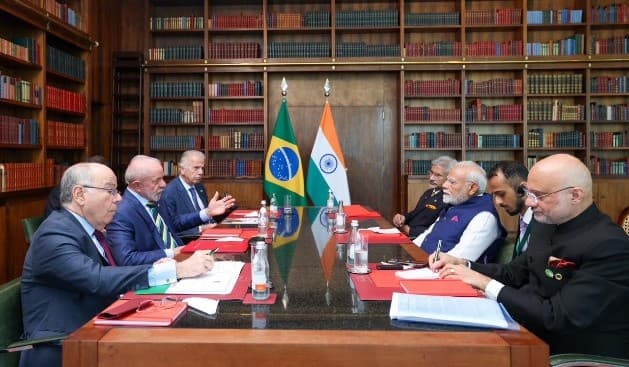
Illustration for Brazilian Grand Collar Honour to PM (Brazilian Honor)

What & Where

Award: Grand Collar of the National Order of the Southern Cross, Brazil’s highest civilian honour for foreign dignitaries

Process: Conferred by the President of Brazil, who is ex-officio Grand Master, via presidential decree in Brasília

Origin: Instituted 1 Dec 1822 by Emperor Pedro I; re-established 1932 by President Getúlio Vargas

Quick Facts for MCQs

Historical Context

  • Independence: Order commemorates 1822 separation from Portugal and coronation of Pedro I
  • Republic: 1932 relaunch positioned it as civilian diplomatic order
  • Soft-power: Tool for Brazil’s Global South outreach

Defence & Security

  • Pact: Joint action announced against terrorism and transnational organised crime
  • Classified: Framework inked for mutual protection of sensitive defence-science information
  • Monitoring: New ministerial mechanism tracks trade and strategic security cooperation

Tech & Schemes

  • Digital: MoU to share digital public goods; Brazil exploring India-style UPI payments
  • IP: DPIIT–Brazil Commerce Ministry pact to exchange patent, trademark best practices
  • Innovation: Cooperation channel for startups and advanced technology transfer

Energy & Environment

  • Renewables: Agreement on biofuels, solar, green hydrogen, overall energy transition
  • Sustainability: Collaborative R&D on low-carbon tech and circular economy models
  • Forums: Commitment to coordinate positions within ISA and IRENA

Agriculture & Food

  • Research: ICAR-EMBRAPA MoU on seed R&D, precision farming, agri-tech
  • Resilience: Focus on drought-tolerant, climate-smart crop varieties
  • Market: Aim to diversify bilateral agri-trade and buffer supply shocks

Key Data Points

FeatureData-Point
CountryBrazil
Award rankHighest civilian decoration
EligibilityForeign heads of state & eminent dignitaries
Founded on1 December 1822
Re-established1932 (Republican era)
Conferred byPresident of Brazil
Current Indian recipientPrime Minister of India, 2024 visit
SymbolismIndependence commemoration & diplomatic goodwill
Motto colourSouthern Cross constellation on blue-white ribbon

Related UPSC Prelims PYQs

NDA_GAT 2021PYQ 1

Which one of the following statements is not correct in respect of the ‘Legion of Merit’ award?

GS-3Security

14.Indigenous ATAGS Artillery Gun System (Artillery Modernisation)

New Indian Express
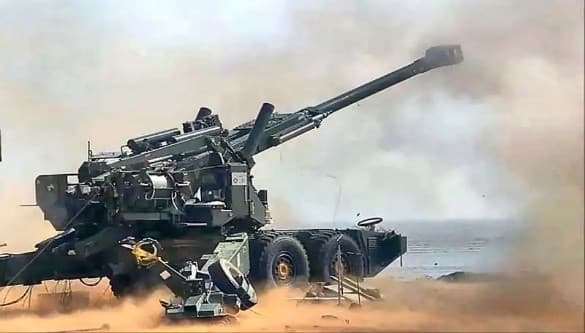
Illustration for Indigenous ATAGS Artillery Gun System (Artillery Modernisation)

What & Where

ATAGS = Indigenous 155 mm/52-cal long-range towed artillery gun for precision firepower.

Developed by DRDO with Tata Advanced Systems & Bharat Forge; executed under Make-in-India artillery mission.

First regiment to join Indian Army, boosting fire support across varied Indian operational theatres.

Quick Facts for MCQs

Tech & Schemes

  • Automation upgrade: electric drives cut maintenance, enhance reliability over legacy hydraulic guns
  • Design collaboration: DRDO-led consortium showcases private–public model under MoD’s DAP-2020 & Atmanirbhar push
  • Wider firing arc provides greater destructive envelope, aligning with network-centric warfare needs

Security Dimension

  • Range-plus-accuracy combo strengthens Indian Army’s counter-bombardment and deep-strike capabilities along sensitive borders
  • Rapid 90-s deployment enables quick “shoot-shift-mask”, reducing vulnerability to enemy counter-battery fire
  • Indigenous system lowers supply risk during prolonged conflicts, ensuring assured spares & ammunition compatibility

Industrial Angle

  • >80 % local content spurs domestic metallurgy, gun-barrel forging, electronics and servo-drive sectors
  • Orders for first regiment open pipeline for 150+ guns, creating high-skill jobs and SME opportunities
  • Export potential arises as cost-competitive alternative to FH-77, M777 and Caesar systems

Key Data Points

FeatureData-Point
Calibre155 mm/52
Proven range≈ 48 km
Deployment time≤ 90 seconds
Firing modesBurst / Intense / Sustained
Drive systemFully electric, no hydraulics
Ammunition handlingAutomatic loader + onboard crane
Indigenous content> 80 % components
Future variantMounted Gun System (MGS) for shoot-and-scoot

Related UPSC Prelims PYQs

CDS_GK, ESE_GS 2024PYQ 1

Ministry of Defence signed contract with which one of the following organizations for Upgraded Super Rapid Gun Mount (SRGM) and other equipment for around 3000 crores?

CDS_GK, ESE_GS 2021PYQ 2

Which one of the following is correct about ‘Pinaka’?

GS-3Security

15.FATF 2025 Terrorist Financing Update (Terrorist Financing)

The Hindu

What & Where

Terror-financing: routing value to extremist entities via digital payments, crypto assets, e-commerce, VPNs, crowdfunding

Key processes: online procurement of bomb materials, anonymous transfers through mixers, trade invoice manipulation, third-party gateways

Geography: FATF flags South Asia—India, West Africa, Sahel, Middle East—as top emerging digital-terror hubs

Quick Facts for MCQs

Digital Modus Operandi

  • E-commerce abuse: covert purchase of dual-use chemicals and components
  • Cryptocurrency use: unregulated exchanges, mixers enable borderless pseudonymous transfers
  • VPNs & encrypted apps: mask location, secure coordination away from interception

Investigation Challenges

  • Jurisdictional gaps: cross-border data hosting delays MLAT access
  • Weak KYC norms: fintech platforms allow fake identities, hamper attribution
  • Rapid tech shifts: terror groups outpace legacy AML-CTF regulations

FATF Recommendations

  • Strengthen digital KYC: mandatory verification for wallets, gateways, marketplaces
  • Real-time monitoring: AI/ML to flag abnormal patterns linked to explosive materials
  • Crypto regulation: exchanges to file STRs and maintain immutable audit trails

Key Data Points

FeatureData-Point
FATF update year2025
Report titleComprehensive Update on Terrorist Financing Risks
Indian case studiesPulwama bombing, Gorakhnath Temple attack
E-commerce item boughtAluminium powder via Amazon
Payment tool in Gorakhnath casePayPal masked with VPN
Rising threat profileLone actors funded by online crowdfunding
High-risk regionsSouth Asia, West Africa, Sahel, Middle East
Main regulatory gapWeak digital KYC/AML compliance

Related UPSC Prelims PYQs

CAPF_GAI 2022PYQ 1

हाल ही, 'अविनिमेय (Non-Fungible) टोकन्स' की चर्चा निम्नलिखित में से किससे संबंध में की जाती है?

GS-2Scheme

16.Cooperative Stack Digital Framework via PACS (Cooperative Stack)

Economic Times

What & Where

Cooperative Stack: AI-enabled digital framework delivering credit, subsidies, advisories via Primary Agricultural Credit Societies (PACS).

Core process: Integrates welfare schemes with PACS-linked platforms for direct, leakage-free rural benefit transfer.

Geography: Targets all 1.08 lakh PACS across rural India under State Cooperative Acts.

Quick Facts for MCQs

Tech & Schemes

  • AI-driven tools: automated weather advisories, precision subsidy transfer, integrated credit scoring.
  • Digital platform: single stack interfaces with banking, welfare, insurance modules.
  • Financial inclusion: direct benefit routing reduces leakages, boosts rural credit uptake.

Legal & Policy

  • Registration: PACS governed by respective State Cooperative Societies Acts.
  • Position: PACS form grassroots tier below DCCBs and SCBs in cooperative credit hierarchy.
  • Framework conceptualised by Government of India to streamline rural scheme delivery.

Implementation Status

  • Computerisation: 63,000 PACS already on core banking software.
  • Target: full digitisation planned for 80,000 societies.
  • Scale: stack expected to cover 1.08 lakh PACS nationwide.

Key Data Points

FeatureData-Point
Anchor institutionPrimary Agricultural Credit Societies
Total PACS nationwide≈ 1.08 lakh
PACS in advanced computerisation≈ 63,000
Digitisation goal80,000 PACS fully online
Credit hierarchy3-tier: PACS → DCCB → SCB
GS-1Editorial

17.India Digital Divide Survey Insights (Digital Divide)

The Hindu

What & Where

Digital divide = unequal access, usage, skills & autonomy in ICT across demographics.

Key gaps: Access, Usage, Skill, Gender (women lag in ownership/skills).

Scope: CMS-NSS “Telecom 2025” survey; youth (15-29 yrs), urban-rural India.

Quick Facts for MCQs

Access Trends

  • Coverage: BharatNet to 1.7 lakh GPs; mobile signal near-universal, broadband still sparse.
  • Ownership gap: Rural women trail rural men by 24 pp, limiting private access.
  • Infrastructure: Fibre adoption <10 %, choking high-bandwidth services.

Usage & Skills

  • Consumption bias: One-third youth online only for entertainment.
  • Creation skills: <33 % made slides; <23 % drafted docs—low productivity capacity.
  • Financial tech: UPI mass-adopted, yet multimodal banking literacy just 18.8 %.

Policy & Schemes

  • First-gen tools: Digital India, PMGDISHA, UPI, JAM pushed basic inclusion.
  • Next-gen needs: Women-centric training, school ICT curriculum, local-language awareness.
  • Civic tech gap: <27 % know cyber-complaint process; highlights urgency for cyber-hygiene drives.

Gender Dimension

  • Usage parity rising: Female Internet use now 91.3 %, yet device control lags.
  • Dependency issue: Shared family phones curb privacy, limit empowerment.
  • SHG potential: Targeted digital skilling can convert access into income avenues.

Key Data Points

FeatureData-Point
Youth using mobiles97.1 %
Youth owning mobiles73.4 %
Urban youth ownership82 %
Rural youth ownership69.3 %
Male youth ownership83.3 %
Female youth ownership63 %
Rural female ownership56.9 %
Fibre-optic households7.2 % (rural 3.2 %)
Households with InternetUrban 91.6 % ; Rural 83.3 %
Young women Internet use91.3 % (↑ from 77.1 % in 2022)
Internet only-entertainment30.4 % (females 36 %)
Can send email attachment85.1 % youth
Created presentation32.2 % youth
Drafted document22.9 % youth
UPI usage among youth80.7 %
Net-banking usage0.7 %
Both UPI & Net-banking18.8 %
Cyber-crime complaint aware26.9 % youth

Related UPSC Prelims PYQs

ESE_GS, GS1 2020PYQ 1

Which one of the following is not the vision area of Digital India as a program to transform India into a digitally empowered society and knowledge economy?

ESE_GS, GS1 2018PYQ 2

निम्नलिखित में से कौन-सा/से भारत सरकार की ‘Digital India’ योजना का/के उद्देश्य है/हैं?

Ready to practice?

Test your knowledge with our UPSC test series.

Start Free Trial