UPSC Current Affairs

14 topicsGS-1: 1GS-2: 2GS-3: 11
0/14 done
GS-2Polity

1.Special Intensive Electoral Roll Revision (Electoral Rolls)

Hindustan Times

What & Where

SIR: time-bound house-to-house verification to update electoral rolls before major polls

Authority: Election Commission of India under Article 324 & Section 21, Representation of the People Act 1950

Focus: Supreme Court review on Bihar SIR; previous Bihar revision held 2003

Quick Facts for MCQs

Legal & Policy

  • Jurisdiction: SC affirmed ECI competence for SIR, dismissing authority challenge
  • Documentation: Court urged inclusion of Aadhaar, voter ID, ration card for residency proof
  • History: 12 national SIR cycles conducted between 1952 and 2004

Tech & Schemes

  • Blockchain: Bihar E-SECBHR mobile e-voting pilot used blockchain, facial recognition, biometrics
  • AI-audit: Proposal for anomaly detection and real-time dashboards to flag bulk deletions
  • Linkage: Aadhaar–voter ID seeding recommended with privacy and error safeguards

Social Concerns

  • Disenfranchisement: Excluding common IDs may marginalise migrants, homeless, illiterate voters
  • Migrant mobility: Frequent relocations complicate residence proof, risking roll omissions
  • NRC fears: Birth or legacy proofs seen as stealth citizenship test impacting minorities

Key Data Points

FeatureData-Point
Enabling statute sectionSec 21, RPA 1950
Citizenship exclusion clauseSec 16, RPA 1950
Minimum voter age18 years
Core constitutional powerArticle 324
Universal adult franchiseArticle 326
Parliament election law powerArticle 327
State election law powerArticle 328
Key SC precedentMohinder Singh Gill v CEC 1977
IDs suggested by SCAadhaar, voter ID, ration card
Latest Bihar SIR2003

Related UPSC Prelims PYQs

GEO_GS 2026PYQ 1

What is the full form of SIR introduced by the Election Commission of India?
GS-3Infrastructure

2.Dholera Special Investment Region Smart City (Industrial Corridor)

ANI
Illustration for Dholera Special Investment Region Smart City (Industrial Corridor)

What & Where

Definition: India’s first greenfield smart industrial city, notified Special Investment Region under Delhi–Mumbai Industrial Corridor.

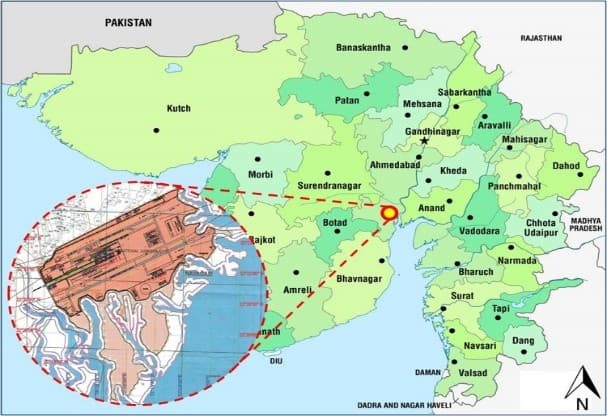
Geography: ~100 km SW of Ahmedabad; 920 sq km across 22 Dholera-taluka villages, Ahmedabad district, Gujarat.

Governance: Created via Gujarat SIR Act 2009; planned by DSIRDA, executed by DICDL (NICDC Trust + GoG JV).

Quick Facts for MCQs

Legal & Policy

  • Gujarat SIR Act 2009 empowers land acquisition, zoning, incentives.
  • DSIRDA frames Development Plan; six TPS ensure phased, serviced plots.
  • Semicon India Programme extends PLI, infra support to Dholera fab.

Infrastructure & Connectivity

  • 6-lane expressway and MRTS promise <1-hr Ahmedabad commute.
  • Greenfield International Airport targets 2027 operations, dual runway plan.
  • ICCC integrates utilities, traffic, surveillance for real-time governance.

Economic Angle

  • Focus sectors: semiconductors, EVs, green energy, defence, logistics.
  • Platinum-rated smart city promotes non-polluting, resource-efficient industries.
  • Projected output aligns with Vision 2047 goal of $30-tn economy.

International Cooperation

  • Japanese envoy Keiichi Ono led delegation to assess semiconductor, smart-city tie-ups.
  • Visit builds on India-Japan MoC on industrial corridors & manufacturing.
  • Potential JICA, JBIC funding eyed for infrastructure and fab supply-chain.

Key Data Points

FeatureData-Point
StateGujarat
CorridorDelhi–Mumbai Industrial Corridor
Legal basisGujarat SIR Act 2009
Planning bodyDholera SIR Development Authority
Implementing JVDICDL (NICDC Trust 51% : GoG 49%)
Area~920 sq km
Villages covered22
Distance from Ahmedabad≈100 km
Planned expressway6-lane Ahmedabad–Dholera
Mass transitMRTS corridor (under DMRC)
Airport statusDholera Greenfield Intl. Airport, clearances obtained
ICCCIntegrated Command & Control Centre operational
Town Planning SchemesSix sanctioned
Semiconductor anchorTata Electronics + PSMC fab
Job potential>8 lakh

Related UPSC Prelims PYQs

GEO_GS 2026PYQ 1

Dholera and Sanand in Gujarat are in news for setting up

GS-3Environment

3.UNEP Frontiers 2025 Legacy Pollutants (Legacy Pollutants)

Down to Earth

What & Where

UNEP Frontiers Report 2025 “The Weight of Time” on flooding-triggered release of buried toxic chemicals

Process: intense river/coastal floods remobilise sediment-bound legacy pollutants—heavy metals, POPs, PAHs

Core geography: Ganga–Hindon–Vaigai basins, Texas Galveston Bay, Niger Delta, Pakistan pesticide depots

Quick Facts for MCQs

Environmental Impact

  • Bioaccumulation: Pollutants shift from sediments to fish, crops, then humans
  • Health risks: Cadmium causes cancer, kidney damage, pregnancy issues; POPs disrupt endocrine systems
  • Persistence: Chemicals survive decades, allowing repeated flood-driven release

International Examples

  • Hurricane Harvey 2017 dispersed mercury, carcinogens across Galveston Bay
  • Niger Delta floods 2012 remobilised PAHs in oil-rich wetlands
  • Pakistan floods 2010 swept obsolete pesticide stores into waterways

Mitigation Measures

  • Nature-based solutions: floodplains, wetlands, riparian buffers moderate flow, trap sediments
  • Infrastructure: polders, dikes, retention basins curb sediment movement, protect storage sites
  • Integrated basin management: combine hydrology, ecology, community inputs; employ pollutant geo-mapping and monitoring

Key Data Points

FeatureData-Point
Lead agencyUnited Nations Environment Programme
Edition & title2025 Frontiers Report “The Weight of Time”
Key pollutant classesHeavy metals, POPs, PAHs
Indian rivers over cadmium limitsGanga, Hindon, Vaigai
Global POP waste in landfills4.8 – 7 million tonnes
Obsolete pesticides lost, Pakistan 2010Part of 2,835 MT stock
Climate driver highlightedHigher rainfall & tropical cyclones

Related UPSC Prelims PYQs

CDS_GK, GS1 2020PYQ 1

The 'Basel Convention' is aimed at protecting human health and environment against adverse effects of which of the following?

CDS_GK, GS1 2024PYQ 2

कई उपभोक्ता उत्पादों के निर्माण के लिए प्रमुख होने वाले परफ्लुओरोकिल और पॉलीफ्लुओरोएल्किल पदार्थ (PFAS) के संदर्भ में, निम्नलिखित कथनों पर विचार कीजिए:

GS-3Species

4.Sariska Tiger Reserve Ecosystem (Tiger Reserve)

PIB

What & Where

Sariska Tiger Reserve: dry-deciduous forest in Aravalli hills, Alwar district, Rajasthan.

Notified wildlife sanctuary 1955; upgraded to Tiger Reserve 1978 under Project Tiger.

First reserve to achieve successful tiger translocation; current estimate ≈ 20 Royal Bengal tigers.

Quick Facts for MCQs

Biodiversity

  • Fauna: leopards, nilgai, sambar, chital, Indian peafowl, vultures, crested serpent eagle.
  • Habitat: scrub-thorn, rocky terrain, seasonal streams sustaining dry deciduous ecology.
  • Avifauna diversity attracts winter birdwatching tourism.

Legal & Policy

  • Project Tiger provides 100 % central aid for core, 60:40 for buffer works.
  • NTCA oversees approval of reserve management plans, relocation and funding.
  • Sariska translocation model now reference for Mukandra, Panna efforts.

Cultural Heritage

  • Kankarwadi Fort: Aurangzeb imprisoned Dara Shikoh here during succession conflict.
  • Pandupol Hanuman temple links site to Mahabharata lore, draws pilgrims.
  • Ruined medieval temples and hunting pavilions offer combined heritage–wildlife circuit.

Key Data Points

FeatureData-Point
State locationRajasthan
Biogeographic zoneSemi-arid, Aravalli range
Sanctuary notification1955
Tiger Reserve tag1978
Present tiger count (approx.)20
National tiger population 20182,967
2014-18 tiger rise33 %
Project Tiger natureCentrally Sponsored Scheme
NTCA statutory statusWildlife Act amendment 2006
NTCA launch year2005
First successful tiger relocationSariska
Dekho Apna DeshComponent of Paryatan Parv
Paryatan Parv other componentsTourism for All; Tourism & Governance

Related UPSC Prelims PYQs

GS1 2017PYQ 1

Recently there was a proposal to translocate some of the lions from their natural habitat in Gujarat to which one of the following sites?

GS1 2012PYQ 2

Consider the following protected areas:

GS-3Editorial

5.Strengthening State Science and Technology Councils (State S&T Councils)

PIB

What & Where

State Science & Technology Councils (SSTCs) – state bodies steering science, technology, innovation policy and grassroots solutions

Created via Centre–State S&T partnership (1971) under DST’s State Science & Technology Programme

Present in almost all States/UTs; pioneers: Karnataka, Kerala, Uttar Pradesh, West Bengal

Quick Facts for MCQs

Funding & Budget

  • Overdependence; Gujarat ₹300 cr budget, ₹1.07 cr DST; Kerala ₹150 cr, zero DST
  • State share; R&D contribution 6.7 %, NITI seeks ≥0.5 % GSDP S&T spend
  • Budget trend; FY24-25 rise 17.65 %, cuts: Sikkim −16.16 %, TN −4 %, Uttarakhand −5 %

Governance & Leadership

  • Weak leadership; many councils led by bureaucrats, roadmap demands full-time scientist chairpersons
  • Funding reform; DST core grants to shift to performance-linked projects except small NE, UT councils
  • Oversight; national monitoring system proposed to track outputs and ensure accountability

State Successes

  • Kerala; fellowship relaunching women scientists, annual S&T allocation ≈₹170 cr
  • Tamil Nadu; Patent Information Centre tops patent & GI filings, wins 2023 National IP award
  • Punjab; paddy-straw management cuts pollution, generates rural jobs, showcases sustainable agriculture

Key Data Points

FeatureData-Point
Origin year1971
InitiatorC. Subramaniam
First statesKA, KL, UP, WB
Central R&D share44 %
State R&D share6.7 %
FY24–25 council budget change+17.65 %
NITI target spend≥0.5 % GSDP
TN IP rank 2022-231st patents & GI

Related UPSC Prelims PYQs

GS1, NDA_GAT 2025PYQ 1

Under which one of the following initiatives does the NITI Aayog support interested States to establish a State Institution for Transformation (SIT)?

GS1, NDA_GAT 2019PYQ 2

अटल नवाचार (Innovation) मिशन किसके अधीन स्थापित किया गया है?

GS-3S&T

6.AI-Based Agricultural Monitoring API (Agri AI Monitoring)

DH

What & Where

AMED API: open-source AI tool delivering field-level crop and land-use insights

Where: pan-India farmland monitored via satellite imagery and deep learning

Built by Google DeepMind & Partnerships Innovation with IIT-Kharagpur, TerraStack

Quick Facts for MCQs

Tech & Schemes

  • Satellite remote sensing integrates with deep learning for crop-type, season and field boundary detection
  • Open-source architecture plug-in ready; adds event detection beyond ALU API
  • Biweekly refresh supports near real-time climate-adaptation analytics

Economic Angle

  • Crop-level data enables objective rural credit, insurance and yield forecasts
  • Policymakers gain evidence for subsidies, procurement and disaster relief design
  • Agri-tech startups cut ground-survey costs using verified datasets

Institutions & Initiatives

  • Collaboration spans Google DeepMind, Partnerships Innovation, TerraStack, IIT-Kharagpur
  • Part of Google Amplify Initiative enhancing AI with Indian linguistic, cultural inputs
  • Outputs India-focused now, open-source model allows Global South scaling

Key Data Points

FeatureData-Point
Core purposeAgricultural Monitoring & Event Detection
DeveloperGoogle DeepMind + Partnerships Innovation
Indian partnersIIT-Kharagpur, TerraStack
Data refresh intervalEvery 2 weeks
Historical land-use span3 years per field
Spatial granularityIndividual farm field
Key outputsCrop type, field size, crop season
Core techSatellite remote sensing + deep learning
Complementary APIAgricultural Landscape Understanding (ALU)
Intended usersAgri-tech firms, lenders, policymakers
GS-3S&T

7.HTBt Genetically Modified Cotton (GM Crops)

New Indian Express

What & Where

GM cotton cultivar combining Bt‐based insect resistance with glyphosate herbicide tolerance, branded Bollgard II Roundup Ready Flex.

Developed by Mahyco-Monsanto Biotech (Bayer); now cleared by GEAC’s expert panel for biosafety in India.

Cultivation target: Indian cotton belt facing weed-control labour shortages and yield stagnation.

Quick Facts for MCQs

Tech & Traits

  • Dual-trait stack enables single-pass spraying without crop injury.
  • Glyphosate binding blocked by CP4-EPSPS, preserving plant photosynthesis.
  • Compatible with large-scale mechanised sowing and picking.

Legal & Policy

  • GEAC recommendation precedes final approval by Environment Ministry.
  • Biosafety dossier examined for food, feed & environmental risk per Rules 1989.
  • Commercial sale would curtail rampant illegal HT seed trade.

Economic Angle

  • Weed-control labour share up to 25 % of cotton cost; HT tech slashes it.
  • Reduced pest and weed losses stabilise yields, boosting farmer profitability.
  • Labour-scarce states (Punjab, Haryana, Telangana) seen as prime adopters.

Key Data Points

FeatureData-Point
Full nameHTBt (Herbicide-Tolerant Bacillus thuringiensis) cotton
Trait packageBollgard II Roundup Ready Flex (BG-II RRF)
Key genesCry1Ac + Cry2Ab (Bt) & CP4-EPSPS (glyphosate tolerance)
Tolerated herbicideGlyphosate (broad-spectrum, non-selective)
DeveloperMahyco-Monsanto Biotech, now Bayer Crop Science
Indian regulatorGenetic Engineering Appraisal Committee (MoEFCC)
Latest statusFavourable biosafety report by GEAC sub-panel, 2024
First Bt cotton nod in India2002 (Bollgard I)
Core benefitOver-the-top herbicide spray cuts manual weeding cost
Yield threat addressedBollworm & weed competition; helps counter Tobacco Streak Virus-linked stagnation

Related UPSC Prelims PYQs

GEO_GS, GS1 2023PYQ 1

Bt Cotton is a genetically modified crop with a foreign gene from

GEO_GS, GS1 2001PYQ 2

The American multinational company, Monsanto has produced an insect-resistant cotton variety that is undergoing field-trials in India. A toxin gene from which ONE of the following bacteria has been transferred to this transgenic cotton?

GS-3S&T

8.AI Machine Vision Rail Inspection System (Railway AI Inspection)

News on Air
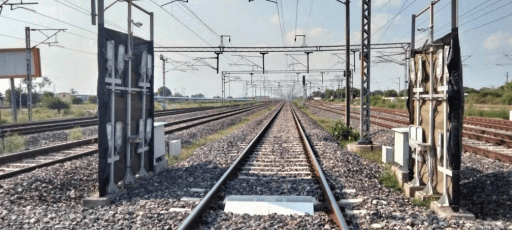
Illustration for AI Machine Vision Rail Inspection System (Railway AI Inspection)

What & Where

Definition MVIS is an AI–ML visual‐inspection platform for real-time detection of freight-train rolling-stock defects

Core Process Trackside high-speed cameras feed YOLOv8/CNN analytics; dashboard issues instant maintenance alerts

Geography MoU signed between Indian Railways & DFCCIL; technology co-developed with IISc Bengaluru & start-up L2M

Quick Facts for MCQs

Tech & Schemes

  • Deployment Nationwide scalable architecture planned after successful MoU pilot
  • Integration DPUs process footage on edge, push reports to cloud for rail-maintenance ecosystem
  • Automation System replaces manual undercarriage checks, offering fatigue-free 24×7 monitoring

Operational Features

  • Multi-view Upper, lower, undercarriage camera modules ensure 360° component coverage
  • Real-time Alerts dispatched instantly to maintenance teams, minimising service delays
  • Environmental LED lighting enables day-night and poor-visibility imaging without speed restrictions

Safety Dimension

  • Prevention Early defect detection curbs derailments and cascading operational failures
  • Reliability Accurate AI analytics reduce false positives common in human inspection
  • Maintenance Platform supports shift from reactive to preventive asset management

Key Data Points

FeatureData-Point
Max train speed handled100 km/h
Camera typesArea-scan & Line-scan monochrome
Lighting solutionHigh-intensity LED arrays
Key AI modelsYOLOv8 + custom CNN
OCR roleAutomatic wagon-number capture
Detected defectsHanging parts, broken springs, missing bolts, EM pad damage, hot axles
Data sync methodNTP-server time-stamping
User interfaceCloud GUI with train-wise defect metrics

Related UPSC Prelims PYQs

GS1 2025PYQ 1

निम्नलिखित कथनों पर विचार कीजिए :

GS-3S&TQuick Bite

9.Raman-Driven Spin Noise Magnetometry Technique (Quantum Magnetometer)

PIB

What & Where

RDSNS; all-optical, laser-based spin-noise method to quantify magnetic fields without perturbing Rubidium atoms

Invented at Raman Research Institute, Bengaluru; integrates into portable quantum magnetometers

Operable indoor/outdoor; no magnetic shielding; wide dynamic range

Quick Facts for MCQs

Tech & Schemes

  • Innovation; leverages spontaneous spin noise rather than induced precession
  • All-optical readout; eliminates coils, reduces power, eases miniaturisation
  • Candidate for DRDO-type rugged sensors, Space-QM missions

Applications

  • Healthcare; low-cost MRI-like imaging without cryogenics
  • Geoscience; detects ore bodies, volcanic basalt anomalies
  • Space; maps Martian, lunar crustal fields from landers

Comparative Edge

  • Shield-free; cuts bulky µ-metal costs typical of OPAM/SERF
  • Wide dynamic window; functions from urban labs to open field sites
  • Mechanical vibration immunity; suited to drones, marine towed arrays

Key Data Points

FeatureData-Point
Full formRaman-Driven Spin Noise Spectroscopy
Core mediumRubidium (alkali) atoms
Key inputDual laser beams (pump & probe)
Shield requirementNil; works in ambient field
Sensitivity rangeFew nanotesla to tens of microtesla
Main developerRaman Research Institute, India
Comparator techOPAM, SERF need µ-metal shielding
Major usesMRI alternative, mineral survey, planetary magnetism, quantum studies
Noise immunityHigh against electrical/mechanical perturbations
PortabilityHand-held potential; field deployable
GS-3Security

10.S-400 Sudarshan Chakra Air Defence System (Air Defence System)

The Hindu
Illustration for S-400 Sudarshan Chakra Air Defence System (Air Defence System)

What & Where

System: S-400 ‘Sudarshan Chakra’ Russian‐origin long-range, multi-layered SAM now in IAF inventory

Geography: Deployed Pathankot, Siliguri Corridor & Western theatre to cover Pakistan–China axes

Update: MoD selects Indian firm to create domestic MRO facility for fleet support

Quick Facts for MCQs

Tech & Specs

  • Multi-range missiles enable layered kills at 40 km, 120 km, 250 km, 400 km
  • Sensors track-to-launch within seconds; missiles use active & semi-active radar seekers
  • Integrated C2, long-range surveillance radar, engagement radar, TELs on high-mobility trucks

Security Dimension

  • Role: Airspace denial against fighters, cruise & ballistic missiles, UAVs, hypersonic threats
  • Strategic shield for metros, forward bases, nuclear assets; deterrence on Western & Northern fronts
  • Claimed success during Operation Sindoor intercepting 15+ hostile aerial objects

Economic Angle

  • Indigenous MRO to cut turnaround time, logistics lag, and rouble-linked costs
  • Local facility aligns with Aatmanirbhar Bharat & offsets clause in 2018 contract
  • Delivery delays possible due to Russia-Ukraine conflict; domestic support vital for readiness

Key Data Points

FeatureData-Point
NATO codeSA-21 Growler
Russian developerAlmaz-Antey Air & Space Defence Corp
Entered Russian service2007
Indian deal year & costOct 2018; ~₹35,000 cr (US $5.4 bn)
Squadrons ordered / delivered5 / 3
Remaining arrival schedule2026 & 2027
Detection range≈600 km
Max engagement range400 km
Concurrent targetsUp to 80
Vehicles per squadron~16 (command, radars, launchers)

Related UPSC Prelims PYQs

CDS_GK, GS1 2023PYQ 1

भारत ने निम्नलिखित में से किस देश से S-400 ट्रायम्फ एयर डिफेंस मिसाइल सिस्टम प्राप्त किया है ?

CDS_GK, GS1 2003PYQ 2

With reference to Indian defence, which one of the following statements is correct?

GS-3Security

11.INS Nistar Diving Support Vessel (Diving Support Vessel)

DD News
Illustration for INS Nistar Diving Support Vessel (Diving Support Vessel)

What & Where

Diving Support Vessel INS Nistar; India’s first indigenous platform for deep-sea saturation diving, submarine rescue, underwater ops

Built by Hindustan Shipyard Ltd, Visakhapatnam; ~80 % indigenous components via 120+ MSMEs

Commissioned at Visakhapatnam; operates across Indian Ocean Region as mother ship to Deep Submergence Rescue Vehicle

Quick Facts for MCQs

Technical Specs

  • Saturation-diving suites, air diving chambers, ROVs, side-scan SONAR integrated for complex underwater tasks
  • Dynamic Positioning maintains precise station during rescue, salvage, logistics ops in high-sea conditions
  • Helicopter deck plus 15-ton subsea crane enable rapid transfer of personnel, stores, heavy equipment

Security Dimension

  • Capability gap bridged for on-call submarine rescue across Indian Ocean Region fleets
  • Readiness boosted for peacetime accidents, natural disasters, wartime underwater casualties
  • Assurance of post-incident survivability strengthens deterrence for friendly submarine forces

Indigenisation Drive

  • 80 % local content sourced from 120+ MSMEs aligns with Atmanirbhar Bharat defence vision
  • Legacy name INS Nistar (1971) revived through fully Indian design and build
  • Programme stimulates domestic shipbuilding ecosystem centred on Hindustan Shipyard Visakhapatnam

Key Data Points

FeatureData-Point
Displacement>10,000 t
Length120 m
Endurance60+ days
BuilderHindustan Shipyard Ltd, Vizag
Indigenous content~80 %
Commissioning siteVisakhapatnam
Support platformDeep Submergence Rescue Vehicle
PositioningDynamic Positioning System
Subsea crane15 t capacity
Medical setupOT + ICU + 8-bed hospital + hyperbaric
Helicopter deckPresent

Related UPSC Prelims PYQs

CDS_GK, GS1 2024PYQ 1

Which one of the following statements about 'INS Tarmugli' is not correct?

CDS_GK, GS1 2016PYQ 2

Which one of the following is the best description of 'INS Astradharini', that was in the news recently?

GS-3SecurityQuick Bite

12.Indigenous MALE Surveillance Drones (MALE Drones)

The Hindu

What & Where

Medium Altitude Long Endurance drones, ≥60 % indigenous, procured to reinforce Indian border surveillance.

87 units from Indian private manufacturers under Make in India, replacing earlier Israeli imports.

Operate over land & maritime frontiers, delivering ISR at 35,000 ft for 30+ hours.

Quick Facts for MCQs

Tech & Schemes

  • MALE platform endurance achieved via improved airframes, fuel-efficient engines, SATCOM links.
  • DRDO portfolio spans target, multi-mission, short-range and weaponised UAV categories.
  • Make in India impetus expands defence tech self-reliance ecosystem.

Security Dimension

  • Continuous ISR coverage enhances early warning on Western, Northern, Indian Ocean sectors.
  • Indigenous drones reduce spares vulnerability during conflict or sanctions.
  • 35,000 ft ceiling enables operations above most man-portable air-defence threats.

Policy & Procurement

  • Accelerated Fast-Track procedure approved to cut foreign dependence.
  • Private sector inclusion signals shift from DPSU monopoly.
  • Bulk order size supports economies of scale, export prospects.

Key Data Points

FeatureData-Point
Planned procurement87 MALE drones
Indigenous contentMinimum 60 %
Flight endurance>30 hours
Operating ceiling35,000 ft
Supply modelFirst private MALE order
Core missionISR on land & sea borders
Former supplier nationIsrael
DRDO UAV lineupLakshya, Nishant, Rustom-1, TAPAS, Archer

Related UPSC Prelims PYQs

GS1 2025PYQ 1

भारत की रक्षा के संदर्भ में, निम्नलिखित युग्मों पर विचार कीजिए :

GS1 2025PYQ 2

मानव-रहित वायु वाहन (UAV) के संदर्भ में, निम्नलिखित कथनों पर विचार कीजिए :

GS-2Scheme

13.TALASH Digital Platform for Tribal Students (Tribal Education Scheme)

PIB

What & Where

TALASH = Tribal Aptitude, Life Skills & Self-Esteem Hub; first national digital platform for EMRS tribal students’ holistic growth

Processes: psychometric testing → career cards, life-skills modules, teacher mentoring portal, phased national rollout

Coverage: All Eklavya Model Residential Schools in 28 States & 8 UTs by 2025

Quick Facts for MCQs

Tech & Schemes

  • Digitalisation: personalised career cards, AI-based aptitude analytics, online life-skills content
  • Integration: aligns with NEP 2020 holistic, learner-centred vision
  • Accessibility: reaches remote tribal regions via online interface

Social Concerns

  • Empowerment: boosts self-esteem, emotional resilience, decision-making in marginalised youth
  • Equity: addresses academic and aspirational gaps specific to Scheduled Tribes
  • Inclusion: first scheme dedicated solely to tribal students’ non-academic development

Capacity Building

  • Teacher-centric: portal enables peer-led mentoring, continuous professional development
  • Scaling: city-level pilots ensure smooth adoption before nationwide expansion
  • Monitoring: aptitude-interest-aspiration alignment yields measurable career guidance outcomes

Key Data Points

FeatureData-Point
Full formTribal Aptitude, Life Skills & Self-Esteem Hub
Launch collaboratorsNESTS + UNICEF India
Nodal ministryMinistry of Tribal Affairs
Target group1.38 lakh EMRS students
Psychometric baseNCERT “TAMANNA” model
Teachers pre-trained189 from 75 EMRSs
Rollout deadlineEnd-2025
Platform natureMobile-friendly digital hub
GS-1Editorial

14.India’s Demographic Dividend Opportunity (Demographic Dividend)

The Hindu

What & Where

Demographic dividend: 2005-2055 phase when India’s working-age share peaks, offering growth leverage.

Youth cohort: 371 mn people aged 15-29, world’s largest, concentrated in Uttar Pradesh, Bihar, Maharashtra.

World Population Day 2025 theme: “empower youth to plan families they want”, aligns with India’s SRHR agenda.

Quick Facts for MCQs

Demographic Profile

  • Workforce edge: youthful labour offsets ageing Japan, EU; aids outsourcing, manufacturing competitiveness.
  • Urbanisation driver: youth propel entrepreneurship, digital adoption, knowledge economy shift.

Social Concerns

  • Gender norms: stigma around SRHR, low female employment restrict autonomy and delayed family planning.
  • Service gaps: rural areas lack contraception, safe abortion, mental health, widening regional inequities.

Initiatives & Schemes

  • Beti Bachao Beti Padhao & NAHP target adolescent fertility reduction, rights awareness expansion.
  • State pilots: Rajasthan, Odisha showcase community-led, data-guided child marriage prevention successes.

Economic Angle

  • Education, health, skilling investment could add $1 trillion to GDP by 2030 (World Bank-NITI).
  • Human-centred skilling plus safe transport, childcare, housing critical for higher female LFPR.

Policy Way Forward

  • Universal SRHR: free contraceptives, safe abortion, infertility care, mental health at PHCs.
  • Behaviour change: school life-skills, media, community outreach to shift patriarchal norms.
  • Decentralisation: district plans based on local youth data, with flexible state innovation funds.

Key Data Points

FeatureData-Point
India youth (15-29)371 million (UNICEF)
Female LFPR<25 %
Unintended pregnancies36 % (NFHS-5)
Unmet fertility aspirations30 %
Child marriage rate23.3 % girls <18 yrs
Teenage pregnancies7 % overall
GDP boost possible$1 trillion by 2030
Demographic dividend window2005-2055
Project Udaan outcome30k marriages, 15k teen pregnancies averted
Project Advika villages11,000 child-marriage-free (2022)
Project Manzil jobs16,000 young women employed
Extra yr of girl’s schooling6 % drop in child marriage

Related UPSC Prelims PYQs

GS1 2011PYQ 1

India is regarded as a country with “Demographic Dividend”. This is due to

GS1 2013PYQ 2

To obtain full benefits of demographic dividend, what should India do?

Ready to practice?

Test your knowledge with our UPSC test series.

Start Free Trial