UPSC Current Affairs

10 topicsGS-1: 2GS-2: 1GS-3: 7
0/10 done
GS-2Polity

1.Bihar Mobile e-Voting for Local Polls (Electronic Voting)

The Hindu

What & Where

Mobile-app e-voting system E-SECBHR enabling remote ballot casting

Pilot used in Bihar urban local body elections across all 224 civic bodies

Designed by C-DAC for Bihar State Election Commission; first such deployment in India

Quick Facts for MCQs

Tech & Schemes

  • RemoteVoting enabled after OTP, voter-ID, facial match integration
  • MultilingualUI ensures inclusivity across linguistic groups
  • RealTimeMonitoring dashboard tracks usage, latency, malicious attempts

Security Dimension

  • Blockchain immutability secures vote ledger against tampering
  • DigitalAuditTrail logs every user action for post-poll scrutiny
  • BiometricVerification prevents proxy and duplicate votes

Social Concerns

  • Accessibility boost for elderly, disabled, pregnant, migrant voters
  • ContactlessProcess reduces crowding risks in pandemics or adverse weather
  • DigitalLiteracy gaps may still limit adoption in low-tech demographics

Key Data Points

FeatureData-Point
Overall voter participation via app70.2 %
Launch event2024 Bihar ULB polls
Lead developerCentre for Development of Advanced Computing
Security stackBlockchain ledger + facial recognition
Platform supportAndroid smartphones only
Voter validation capMax 2 users per mobile number
First e-vote cast byBibha Kumari, East Champaran
Voting windowElection day only
GS-3Economy

2.National Turmeric Board Headquarters Inaugurated (Spice Board)

PIB
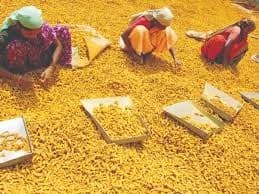
Illustration for National Turmeric Board Headquarters Inaugurated (Spice Board)

What & Where

National Turmeric Board (NTB): statutory body to promote, regulate and export turmeric value-chain.

Headquarters: Nizamabad, Telangana—nicknamed “Turmeric Capital of India”.

Core geography: Top producers Maharashtra, Telangana, Karnataka, Tamil Nadu, Andhra Pradesh, Meghalaya.

Quick Facts for MCQs

Governance Structure

  • Composition includes Commerce Secretary, reps of AYUSH, Agriculture, Pharma, producer-states, farmers, exporters, researchers.
  • Works with Spices Board, National Cooperative Exports Ltd for market linkage.

Objectives & Functions

  • Value-addition, branding, GI-tagged organic promotion, logistics upgrade, quality compliance.
  • Farmer-centric aim: remove middlemen, raise income, offer training & skill-development.
  • Global outreach to highlight medicinal properties and meet food-safety norms.

Agronomic Profile

  • Species Curcuma longa, termed “Golden Spice” for culinary, dye, medicinal uses.
  • Over 30 indigenous varieties cultivated across 20 states.
  • Requires high rainfall, tropical climate; sown in kharif, harvested 7-9 months later.

Trade & Exports

  • End-to-end export infrastructure being developed; focus on value-added products.
  • Board targets USD 1 bn export by 2030 through market access, branding, standards.
  • Logistics, cold-chain, and testing labs to align with international benchmarks.

Key Data Points

FeatureData-Point
Parent ministryCommerce & Industry
Coordinating ministriesAYUSH, Agriculture, Pharmaceuticals, Cooperation
Governing headChairperson appointed by Central Govt
Statutory statusYes
HQ city & stateNizamabad, Telangana
India’s global share75 %+ of turmeric output
Area 2022-233.24 lakh ha
Production 2022-2311.61 lakh t
Export 2022-231.53 lakh t; USD 207.45 mn
2030 export targetUSD 1 billion
Major buyersBangladesh, UAE, USA, Malaysia
Ideal temperature20–30 °C
Soil preferenceWell-drained loam
Crop natureTropical, rhizomatous herb
Cultivation modeBoth rain-fed & irrigated

Related UPSC Prelims PYQs

ESE_GS, GS1 2025PYQ 1

Consider the following statements about turmeric during the year 2022-23:

ESE_GS, GS1 2026PYQ 2

Which organization is responsible for implementing the National Beekeeping & Honey Mission (NBHM)?

GS-3Infrastructure

3.India Energy Stack Digital Infrastructure Launch (Power Sector DPI)

Times of India

What & Where

India Energy Stack (IES): unified digital public infrastructure for power-sector data, spanning generation-to-consumption.

Led by Ministry of Power; pilot rollouts in Delhi, Gujarat & Mumbai before nationwide scaling.

Powers secure identifiers, real-time consented data flow, open APIs, Utility Intelligence Platform, consumer-choice tools.

Quick Facts for MCQs

Tech & Schemes

  • Unique-Identifier system tags consumers, assets, transactions, aiding traceability and precision in metering and billing.
  • Open-API architecture invites startups, third-party apps, fintech-energy convergence.
  • Utility Intelligence Platform offers modular analytics dashboards to DISCOMs, regulators, policymakers.

Implementation Path

  • White Paper release precedes pilots; feedback refines architecture, standards, governance.
  • Pilot learnings craft national rollout roadmap, scalability tests, cyber-security hardening.
  • Task-force under Ministry coordinates stakeholders: DISCOMs, regulators, tech vendors, consumer groups.

Consumer Angle

  • Empowerment tools enable tariff comparison, supplier switching, demand-response participation.
  • Real-time data visibility promotes energy budgeting, rooftop-solar optimisation, appliance efficiency.
  • Consent-layer modeled on Account Aggregator ensures privacy, granular data-sharing control.

Key Data Points

FeatureData-Point
Nodal ministryMinistry of Power
Sector coveredElectricity (generation, distribution, consumption)
Infrastructure typeDigital Public Infrastructure (DPI)
Core tech elementsUnique IDs, consent-based sharing, open APIs
Analytics layerUtility Intelligence Platform (UIP)
First pilotsDelhi, Gujarat, Mumbai
Upcoming documentWhite Paper for public feedback
Key objectiveGrid efficiency & Net-Zero support
Consumer focusChoice, comparison, market participation
Aspirational scaleComparable to Aadhaar & UPI

Related UPSC Prelims PYQs

ESE_GS 2026PYQ 1

The Samriddh Gram Phygital Services Pilot Project was recently launched by which organization?

ESE_GS 2020PYQ 2

Which one of the following is not the vision area of Digital India as a program to transform India into a digitally empowered society and knowledge economy?

GS-1History

4.Lakhapar Early Harappan Burial Discovery (Indus Valley)

The Print
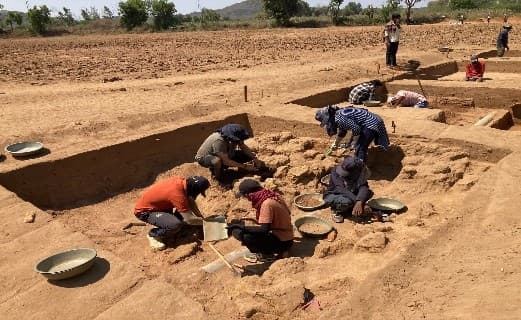
Illustration for Lakhapar Early Harappan Burial Discovery (Indus Valley)

What & Where

Site : Early Harappan habitation-cum-cemetery (c 3300–2600 BCE) unearthed at Lakhapar village, Nakhatrana taluk, Kutch, Gujarat

Agency : Excavation led by University of Kerala Department of Archaeology, builds on nearby Juna Khatiya work

Importance : Provides first Gujarat burial with Pre-Prabhas pottery, linking Harappan and Chalcolithic cultural spheres

Quick Facts for MCQs

Archaeological Findings

  • Burial : Single adult interred supine in plain pit with Pre-Prabhas jars and bowls
  • Architecture : Rectilinear sandstone-shale walls indicate planned habitation layout and resource organization
  • Artefacts : Ceramics, beads, bone tools mirror Early Harappan typology of Sindh and lower Indus

Cultural Interaction

  • Exchange : Pottery forms show Saurashtra–Sindh techno-stylistic convergence before Mature Harappan urbanism
  • Network : Lakhapar plus Juna Khatiya hint at regional cemetery cluster across western Gujarat coast
  • Bridge : Gujarat acted as corridor linking Indus core with peninsular agro-pastoral groups

Historical Significance

  • Geography : Pushes Early Harappan influence deeper into western Indian peninsula beyond previously mapped zones
  • Chronology : Supplies rare pre-urban burial record complementing Mature Harappan cemeteries like Rakhigarhi and Harappa
  • Paradigm : Undermines linear evolution narrative by revealing coexistence of foragers, chalcolithic farmers and proto-urbanites

Key Data Points

FeatureData-Point
Cultural phaseEarly Harappan, pre-urban
Time bracket~5300 years BP; 3300–2600 BCE
District-StateKutch, Gujarat
Excavating bodyUniversity of Kerala Archaeology Dept
Burial stylePit in natural soil, no superstructure
Diagnostic potteryPre-Prabhas ware of Saurashtra tradition
Structural materialSandstone and shale blocks
Nearby comparative siteJuna Khatiya cemetery with 197 burials
Interaction evidenceCeramics parallel Sindh Early Harappan assemblage
Significance tagEarliest Gujarat link between Chalcolithic & Harappan
GS-1History

5.PC Mahalanobis and Statistics Day (Statistical Legacy)

PIB

What & Where

National Statistics Day – annual 29 June observance across India honouring statistician P.C. Mahalanobis and role of statistics

National Sample Survey (NSS) – continuous nationwide household-industry survey rounds by NSO since 1950 for evidence-based policy

GoIStat app – 2025 mobile portal giving real-time official statistics; launched during 19th Statistics Day

Quick Facts for MCQs

Personalities

  • Mahalanobis Distance – multivariate deviation metric used in pattern recognition and outlier detection
  • Mahalanobis Model – Second Plan strategy pushing heavy-industry led growth for long-term capital formation
  • Bhuyan Award – honours contemporary excellence, continuing legacy of Indian statistical pioneers

Institutions & Schemes

  • NSO Structure – CSO + NSSO under Statistics Wing of MoSPI; PI Wing handles TPP, IPM, MPLADS
  • NSS Operations – year-long rounds, ASI, rural-urban price surveys, crop area supervision, urban sampling frame
  • National Statistical Commission – apex advisory body; ISI recognised as Institute of National Importance

Economic Models

  • Feldman-Mahalanobis Approach – prioritises capital-goods investment to accelerate self-reliant industrialisation
  • Strategy Adoption – influenced planning in India, USSR-inspired, later guiding other developing economies
  • Heavy-Industry Focus – steel, machinery, capital goods considered growth multipliers under the model

Key Data Points

FeatureData-Point
2025 Statistics Day number19th edition
Mahalanobis birth anniversary marked132nd
2025 theme“75 Years of National Sample Survey”
NSS launch year1950
Prof C.R. Rao Award 2025 winnerDr Prajamitra Bhuyan
GoIStat app purposeOne-stop access to Union Govt statistics
MoSPI created as ministry15 Oct 1999
ISI founding year & city1931, Kolkata
Journal started by MahalanobisSankhya (1933)
Heavy-industry growth model associatedFeldman-Mahalanobis
GS-3Environment

6.Sariska Tiger Reserve Boundary Redraw (Tiger Reserve)

TI

What & Where

Sariska Tiger Reserve; former royal hunting ground in Alwar, Rajasthan, Aravalli hills.

Core–buffer protected area; scrub-thorn arid to dry-deciduous forests, rocky grasslands.

Vital northern Aravalli wildlife corridor link; first site of global tiger reintroduction success.

Quick Facts for MCQs

Legal & Policy

  • Proposal: Central govt seeks eco-sensitive boundary redrawing to permit 50 mine reopenings.
  • Action faces strong opposition from conservationists, state wildlife board members.
  • Potential dilution of core/buffer demarcation challenges Wildlife (Protection) Act safeguards.

Conservation Success

  • Sariska globally first to reintroduce wild tigers after complete extinction.
  • Population grew 0 → 48 in two decades, validating translocation, prey-base management.
  • Success model now guides Panna, Mukundra tiger recovery efforts.

Ecology & Wildlife

  • Fauna diversity: tigers, leopards, nilgai, sambhar, chital, peafowl, vultures, serpent eagles.
  • Aravalli landscape provides crucial east-west genetic flow for big cats.
  • Habitat ranked among India’s driest deciduous forest blocks, sensitive to fragmentation.

Economic Angle

  • Mining revival promises marble, dolomite revenues but risks habitat fragmentation, groundwater depletion.
  • 50 mines previously closed on ecological grounds; reopening demands fresh environmental clearances.
  • Eco-tourism income could decline if wildlife disturbance escalates.

Key Data Points

FeatureData-Point
State/DistrictRajasthan / Alwar
Sanctuary notification1958
Project Tiger inclusion1978
National Park declaration1982
Total area1,203.34 km²
Core area881 km²
Buffer area322.23 km²
Terrain typesScrub-thorn, dry deciduous, grassland, rocky hills
EcoregionKhathiar–Girdry deciduous
2004 tiger statusLocal extinction (0)
Relocation years2008-10 (aerial from Ranthambore)
Tiger count 202548
Corridor roleNorthern Aravalli Leopard & Wildlife
Planned boundary changeReopen 50 closed mines
Major mineralsMarble, dolomite, limestone, masonic stone

Related UPSC Prelims PYQs

GEO_GS, GS1 2017PYQ 1

Recently there was a proposal to translocate some of the lions from their natural habitat in Gujarat to which one of the following sites?

GEO_GS, GS1 2024PYQ 2

Which of the following tiger reserves is/are not situated in the state of Rajasthan?

GS-3Environment

7.Community-Centric Western Ghats Conservation (Western Ghats)

Indian Express
Illustration for Community-Centric Western Ghats Conservation (Western Ghats)

What & Where

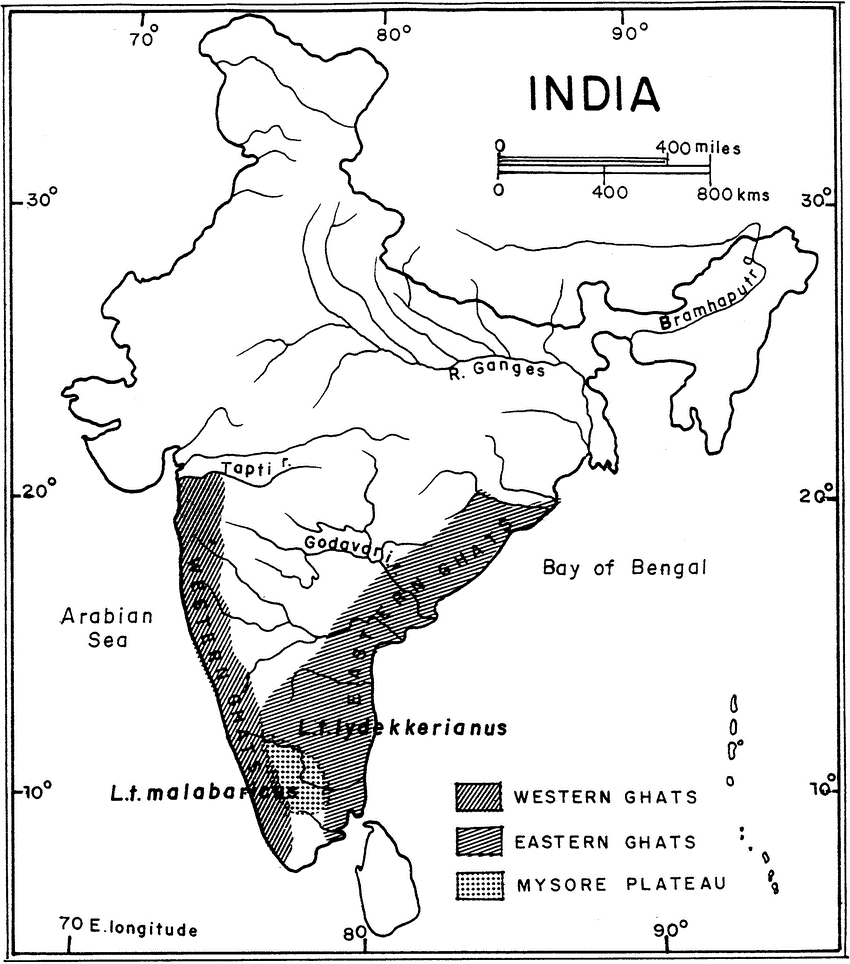
UNESCO World Heritage mountain chain, ~1600 km, runs along western edge of Deccan Plateau (Gujarat→Tamil Nadu)

Orographic wall steering southwest monsoon, birthing major peninsular rivers; ranked among eight global hottest biodiversity hotspots

Built by Precambrian shield uplift, Deccan Trap basaltic eruptions, coast-ward faulting and long-term monsoon erosion

Quick Facts for MCQs

Biodiversity & Hydrology

  • Endemism: 50 % flowering plants, 65 % amphibians confined to Ghats niches
  • Water security: Catchments serve ~245 million people across peninsular India
  • Rainfall hotspot: Agumbe, Mahabaleshwar record >7,000 mm annually

Legal & Policy

  • FRA 2006: Community Forest Rights largely pending in Kerala, Karnataka districts
  • WGEEP 2011 sought Gram Sabha-led ESA governance with veto powers
  • Kasturirangan 2013 diluted ESA, prioritising infrastructure and mining corridors

Governance Failures

  • Data-opacity: Forest Dept inflated bamboo stocks tenfold to justify paper-mill supply
  • Industrial pollution: Grasim Rayon’s mercury effluent devastated Chaliyar River fisheries
  • Fire misuse: Tendu-leaf collection fires intensified in Gadchiroli, Karnataka woods

Community Solutions

  • CFR success: Pachgaon, Maharashtra earns bamboo revenue, eliminated forest fires, revived sacred groves
  • Kerala VSS model shares timber income, boosts participatory patrolling
  • NTFP ventures: Wayanad tribal co-ops export organic turmeric, wild honey linking income with conservation

Geomorphology

  • Basaltic stair-step relief mirrors 66 Ma Deccan Trap flows
  • Western escarpment rose as Arabian Sea margin subsided during Gondwana breakup
  • Lateritic caps, canyon-like valleys sculpted by monsoon-fed river erosion

Key Data Points

FeatureData-Point
States coveredGujarat, Maharashtra, Goa, Karnataka, Kerala, Tamil Nadu
Highest peakAnai Mudi 2,695 m
Recorded species~7,400; high endemism
Key rivers originateGodavari, Krishna, Kaveri, Periyar, Tungabhadra
Geological age>600 million years (Precambrian)
UNESCO inscription2012
WGEEP ESA proposal64 % of Ghats area
Kasturirangan ESA cut37 % of Ghats area

Related UPSC Prelims PYQs

GS1 1996PYQ 1

Which one of the following regions of India is now regarded as an 'ecological hot spot'?

GS1 2016PYQ 2

'Gadgil Committee Report' and 'Kasturirangan Committee Report', sometimes seen in the news, are related to

GS-3S&TQuick Bite

8.Lecanicillium Biopesticide Controls Cardamom Thrips (Agricultural Biotech)

PIB

What & Where

Biopesticide; granular formulation of entomopathogenic fungus Lecanicillium psalliotae for cardamom thrips control

Application; mixed with farmyard manure, 3–4 soil broadcasts per season in South-Indian cardamom basins

Geography; developed at ICAR-IISR Kozhikode, targeted to Western-Ghats cardamom belts (Kerala, Karnataka, Tamil Nadu)

Quick Facts for MCQs

Tech & Schemes

  • Innovation; first Lecanicillium-based product cleared for commercial cardamom IPM in India
  • Delivery; solid granules ensure slow release, farmer-friendly handling, no spray drift
  • Compliance; residue-free produce aids export quality standards

Environmental Impact

  • Eco-friendly; non-toxic to humans, pollinators, vertebrates
  • Sustainability; replaces organophosphates, integrates into organic certification
  • Soil health; fungal metabolites stimulate rhizosphere microbes

Production Geography

  • Western Ghats; evergreen rainforest origin of Elettaria cardamomum
  • District hubs; Idukki, Wayanad, Kodagu dominate Indian output
  • Emerging species; Agasthyamalai & Periyar reserves yield new wild cardamoms

Key Data Points

FeatureData-Point
Fungus groupSame as Beauveria & Metarhizium
FormulationGranular biopesticide
ModeContact infection through cuticle
TargetsLarva, pupa, adult of Sciothrips cardamomi
Application mixWith farmyard manure
Recommended rounds3–4 per crop cycle
Key benefitCuts chemical pesticide use; boosts roots, soil nutrients
Cardamom nickname“Queen of Spices”
Botanical familyZingiberaceae
Optimal rainfall1500–4000 mm
Temperature band10 °C – 35 °C
Altitude range600–1500 m
Soil pH5.0–6.5 acidic loam
World top producerGuatemala
India rank2nd globally
Leading Indian stateKerala (≈58 %)
New Elettaria spp.facifera, tulipifera
GS-3S&TQuick Bite

9.CRISPR-dCas9 Tool Boosts Plant Stress Tolerance (Gene Editing)

PIB

What & Where

CRISPR-dCas9 tool: nuclease-inactive Cas9 guided by RNA to switch plant genes on/off without DNA cuts.

Developed at Bose Institute, Department of Science & Technology (DST), India.

Uses tomato NACMFT3 transmembrane domain to release dCas9 into nucleus only under heat or pathogen stress.

Quick Facts for MCQs

Tech & Schemes

  • DST-funded Bose Institute devised stress-inducible CRISPR-dCas9 platform employing tomato NACMFT3 transmembrane domain.
  • dCas9 remains cytoplasmic, translocates to nucleus under stress, binds promoters, up-regulating genes sans DNA cleavage.

Agricultural Impact

  • Tomato exhibits maximal benefit; platform validated in potato and tobacco cultivars.
  • Trait gains include higher water retention, sustained leaf greenness, superior thermotolerance, energy-efficient stress management.

Pathogen Defence

  • Upon Pseudomonas syringae challenge, system activates CBP60g, SARD1, strengthening salicylic-acid-mediated immunity.

Key Data Points

FeatureData-Point
DeveloperBose Institute (DST)
Tool variantCRISPR-dCas9 (dead Cas9)
Core actionGene activation switch; no cutting
Stress triggersHeat stress; pathogen attack
Pathogen examplePseudomonas syringae
Heat-responsive genesNAC2, HSFA6b
Pathogen-responsive genesCBP60g, SARD1
TM domain sourceTomato protein NACMFT3
Tested cropsTomato, potato, tobacco
Highest efficacyTomato plants

Related UPSC Prelims PYQs

GEO_GS, GS1 2019PYQ 1

What is Cas9 protein that is often mentioned in news?

GEO_GS, GS1 2025PYQ 2

Clustered Regularly Interspaced Short Palindromic Repeats are associated with

GS-3Security

10.Securing Indian Ocean Region Against Chinese Presence (Maritime Security)

The Hindu

What & Where

Indian Ocean Region (IOR): maritime space from Strait of Malacca to Horn of Africa, India’s trade-energy lifeline.

String of Pearls: Chinese dual-use ports/bases—Gwadar, Hambantota, Djibouti, Chittagong, Kyaukpyu—enabling PLAN logistics arc.

Parliament panel flags extra-regional, mainly Chinese, military-economic footprint as prime strategic challenge for India.

Quick Facts for MCQs

Security Dimension

  • Ports: Gwadar, Hambantota, Djibouti allow PLAN refuel, surveillance, possible Malacca/Hormuz blockade.
  • Submarines: Regular Chinese SSN/SSK visits and “research” ships boost under-sea intelligence near India.
  • ANC: Committee urges missile, air-strip upgrades and frequent QUAD, ASEAN exercises.

Economic Angle

  • Debt-trap: BRI loans in Sri Lanka, Maldives amplify Beijing’s leverage on littoral states.
  • Trade: 80 % overall and 90 % energy cargoes of India sail through IOR.
  • Corridor: IMEC, Chabahar, Sabang, Duqm projected as non-BRI connectivity nodes.

Diplomatic Moves

  • Groupings: IORA and Colombo Security Conclave positioned for collective maritime security initiatives.
  • Partnerships: Deeper QUAD, France, ASEAN defence ties sought for tech sharing, joint patrols.
  • Forum: Newly-minted China-IOR Forum signals Beijing’s parallel diplomatic platform.

Technological Measures

  • NAVIC: Planned footprint enlargement plus fresh reconnaissance satellites for real-time vessel tracking.
  • AI: Maritime analytics engines proposed to flag PLAN movements and predict choke-point congestion.
  • Cybersecurity: Hardening of ports, naval networks against Chinese cyber-intrusions prioritised.

Key Data Points

FeatureData-Point
Hambantota lease period99 years
Djibouti PLA base year2017
India’s oil imports via IOR≈ 80 %
IFC-IOR inauguration2018
Indian coastline length11,098 km
Global containers on IOR routes≈ 70 %
Blue Economy GDP target4 %
Deep-sea submersibleMatsya 6000

Related UPSC Prelims PYQs

CAPF_GAI, GS1 2015PYQ 1

‘क्षेत्रीय सहयोग के लिए हिन्द महासागर रिम संघ (Indian Ocean Rim Association for Regional Cooperation – IOR-ARC)’ के संदर्भ में, निम्नलिखित कथनों पर विचार कीजिए :

CAPF_GAI, GS1 2024PYQ 2

Which one among the following statements with regard to India’s maritime initiative, SAGAR, is correct?

Ready to practice?

Test your knowledge with our UPSC test series.

Start Free Trial