UPSC Current Affairs

14 topicsGS-1: 2GS-2: 5GS-3: 7
0/14 done
GS-2Polity

1.RGI Directive on Timely Birth Certificates (Civil Registration)

The Hindu

What & Where

Birth registration: mandatory civil record under Registration of Births & Deaths Act, 1969, pan-India.

Registrar General of India (MHA) tells States: issue birth certificates within 7 days, ideally before hospital discharge.

Digital certificates generated on Central Civil Registration System (CRS) portal; sole proof of birth since 1 Oct 2023.

Quick Facts for MCQs

Legal & Policy

  • RBD Act 1969: compulsory registration, zero fee inside 21 days.
  • 2023 amendment: digital-only process, electronic records valid, coverage extended to adopted, orphaned, surrogate, single-parent births.
  • New directive: 7-day issuance deadline, discharge tied to certificate in government hospitals.

Governance & Tech

  • CRS portal centralises state databases, auto-updates NPR and welfare schemes.
  • Digital certificate now single source for multiple services, reducing document redundancy.
  • Leveraging >50 % government-hospital births for on-site, real-time registration.

International Commitments

  • Reform advances ESCAP CRVS Decade 2014-24 objective.
  • Directly supports SDG 16.9: universal legal identity by 2030.
  • Robust civil registration seen as governance backbone in UN guidance.

Key Data Points

FeatureData-Point
Administrative headRegistrar General of India, MHA
Free-registration windowWithin 21 days of birth
Coverage 201486 % births registered
Coverage 2024>96 % births registered
Govt-facility births share>50 % of institutional births
Latest legal changeRBD (Amendment) Act 2023
Digital certificate start1 Oct 2023
Key usagesSchool, jobs, marriage, DL, passport
CRS data feedsNPR, ration cards, property, electoral rolls
UN sloganESCAP “Get everyone in the picture”
Linked SDGTarget 16.9 (legal identity)
GS-3Economy

2.Rose-Scented Litchi Export to Qatar (Horticulture Crop)

Economic Times

What & Where

Litchi – juicy, aromatic Sapindaceae fruit eaten fresh, canned, dried

First export of rose-scented Pathankot litchi sent to Doha, facilitated by APEDA

Cultivated across Indo-Gangetic belt; species originated in southern China

Quick Facts for MCQs

Agro-Climatic Needs

  • Temperature range 21–35 °C; cool dry winter needed for flowering
  • Rainfall demand 1500–2000 mm; irrigation vital during dry spells
  • Deep well-drained loam, pH 5.5–7; sensitive to waterlogging

Production Hotspots

  • Bihar leads output ~221.7 k MT; famed Shahi, China cultivars
  • West Bengal records highest productivity ~10.5 t / ha
  • Punjab, Assam, Tripura, Jharkhand, Uttarakhand form secondary clusters

Export & Schemes

  • APEDA launched first rose-scented litchi consignment Pathankot→Doha using reefer pallets
  • Move aligns with One District One Product for global farmer linkage
  • High-value lots sourced via progressive farming models in Punjab

Nutrition & Uses

  • Rich in vitamin C, B1, riboflavin, calcium, phosphorus
  • Processed into squash, wine, pickles, dried “litchi-nut” for growing Gulf, ASEAN demand

Key Data Points

FeatureData-Point
Botanical familySapindaceae
Native originSouthern China; reached India 18th C via Myanmar-NE
Ideal temperature21–35 °C
Annual rainfall need1500–2000 mm
Preferred soil pH5.5–7; deep loam
Largest producer stateBihar ~221.7 k MT
Highest productivity stateWest Bengal ~10.5 t/ha
Punjab production share71,490 MT; 12.39 % of India
First export destinationDoha, Qatar
Facilitating bodyAPEDA

Related UPSC Prelims PYQs

GS1 2011PYQ 1

Among the following States, which one has the most suitable climatic conditions for the cultivation of a large variety of orchids with minimum cost of production, and can develop an export-oriented industry in this field?

GS-3Economy

3.Skills for the Future Workforce Report (Skill Development)

PIB

What & Where

“Skills for the Future” report, 2024, by Institute for Competitiveness; launched by Union Skill Development Ministry, India.

Studies PLFS 2023-24 data using NCO skill levels 1-4 to map workforce competency, wages, education.

Focuses on TVET, higher education pipeline, and Industry 4.0 readiness to harness demographic dividend by 2047.

Quick Facts for MCQs

Economic Angle

  • GDP link: 1 % rise in tertiary GER lifts GDP 0.511 %.
  • Wage spread quadruples from Skill 1 to 4, fuelling inequality.
  • EV, AI, green-tech competitiveness hinges on high-skill labour supply.

Skill Mismatch

  • Overqualification: >50 % graduates in low-skill roles, underusing human capital.
  • Underqualification: informal pathways place low-educated workers in skilled posts.
  • Sector gaps: IT, healthcare, EVs lack technicians, associate professionals.

Regional Disparity

  • Bihar, Assam: ~95 % workforce in low-skill jobs; high migration outflows.
  • Kerala, Chandigarh hold larger Skill 3-4 shares, attracting talent inflows.
  • Uneven skilling perpetuates spatial economic divergence.

Policy & Schemes

  • Data reform: nationwide Skill Gap Survey, central repository for real-time metrics.
  • Curriculum overhaul: update NCO, embed digital & green modules in TVET, PMKVY tie-ups.
  • Access push: integrate vocational in schools, expand NAPS apprenticeships, prioritise women & SC/ST skilling.

Key Data Points

FeatureData-Point
Workforce in Skill 1 & 288 %
Workforce in Skill 3 & 410-12 %
Graduates in matching jobs8.25 %
Formal vocational training4.5 % of workforce
Avg wage Skill 1₹ 98,835/yr
Avg wage Skill 4₹ 3.94 lakh/yr
Workers earning <₹1 lakh46 %
GER – Higher secondary (2021-22)57.56 %
GER – Higher education<30 %
Non-farm jobs needed/yr till 20305 lakh
GS-1History

4.Kolhapuri Chappal GI Heritage Footwear (GI Handicraft)

Hindustan Times
Illustration for Kolhapuri Chappal GI Heritage Footwear (GI Handicraft)

What & Where

Handcrafted leather sandals; open-toe, T-strap; branded as Kolhapuri chappals

Made via vegetable-tanned buffalo hide; nail-free braided design

Origin districts: Kolhapur, Sangli, Satara (Maharashtra) + Belgaum, Bagalkot, Dharwad (Karnataka)

Quick Facts for MCQs

Legal & Policy

  • GI_tag provides origin-linked branding, bars outsiders from using “Kolhapuri” name without registration
  • Compensation_gap: GI Act lacks monetary remedies unless name/process explicitly misused
  • Prada_case: No infringement likely as brand avoided the protected term

Cultural Significance

  • Heritage_symbol of rural Maharashtra-Karnataka craftsmanship, worn for durability and status
  • Skill_transfer through familial guilds, sustaining livelihoods of thousands of cobbler families
  • Sustainable_fashion image due to natural tanning, zero synthetic inputs

IP Challenges

  • Individualist_IP frameworks ill-suited for community crafts lacking single inventor or novelty claims
  • Traditional_knowledge often undocumented, preventing patents or copyrights protection
  • Enforcement_void leaves artisans dependent on reputation marketing rather than legal redress

Key Data Points

FeatureData-Point
GI year2019
GI holdersArtisans of Maharashtra & Karnataka (joint)
Earliest trace13th century, reign of King Bijjala & Basavanna
Core materialVegetable-tanned buffalo hide
Fasteners usedNone; nail-free construction
Key designOpen-toe, T-strap, braided straps
Eco attributeFully biodegradable, breathable leather
Recent disputePrada 2026 line allegedly imitates
GS-3Species

5.Dhole Reappearance in Kaziranga Landscape (Endangered Species)

The Hindu
Illustration for Dhole Reappearance in Kaziranga Landscape (Endangered Species)

What & Where

Dhole: Endangered Asiatic wild dog, rusty-red, matriarchal hunting packs

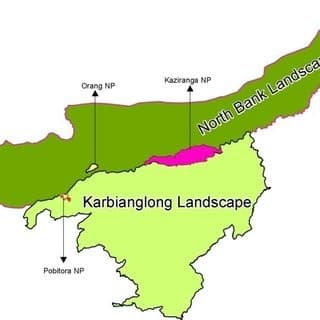
Reappearance: Wildlife Institute of India confirms species back in Kaziranga–Karbi Anglong Landscape (KKAL), Assam

KKAL: ~25,000 km² contiguous forest–grassland south of Brahmaputra, linking Kaziranga NP with Karbi Anglong hills

Quick Facts for MCQs

Conservation Status

  • IUCN Endangered; primary threats habitat loss, prey depletion, disease
  • Listed in Schedule II, Wildlife (Protection) Act, 1972; affords high legal protection
  • CITES Appendix II; regulates international trade

Habitat & Distribution

  • South, Central, Southeast Asia range; India hosts largest global population
  • Needs ≥100 km² undisturbed terrain per pack for viable prey access
  • Highest densities recorded Western Ghats followed by KKAL revival

Landscape Significance

  • KKAL forms genetic corridor between Brahmaputra floodplains and Himalayan foothills
  • One of last large continuous forest blocks in Northeast; buffers species against fragmentation
  • Supports >500 bird species, multiple megafauna ensuring ecosystem stability

Species Ecology

  • Apex-pack predation controls ungulate numbers, maintaining forest-grassland balance
  • Communal pup-rearing enhances survival; vocal whistle communication unique among canids
  • Diurnal hunting reduces competition with nocturnal tigers, leopards

Key Data Points

FeatureData-Point
Scientific nameCuon alpinus
IUCN statusEndangered
Indian strongholdsWestern Ghats, Eastern Ghats, central India, Northeast
Preferred habitatDense forest, scrub, mountain with high prey
KKAL locationAssam; edges of Meghalaya, Nagaland
KKAL size≈25,000 km²
Key KKAL parksKaziranga NP, Karbi Anglong WLS
Flagship faunaOne-horned rhino, tiger, elephant
Dhole coatRusty-red, black-tipped tail
Pack structureMatriarchal, highly coordinated

Related UPSC Prelims PYQs

GS1 1999PYQ 1

"India has the largest population of the Asian X. Today, there are just about 20,000 to 25,000 X in their natural habitat spreading across the evergreen forests, dry thorn forests, swamps and grasslands. Their prime habitats are, however, the moist deciduous forests. The X population in India ranges from Northwest India where they are found in the forest divisions of Dehradun, Bijnor and Nainital districts of UP to the Western Ghats in the states of Karnataka and Kerala and in Tamil Nadu. In Cen

GS1 2011PYQ 2

A sandy and saline area is the natural habitat of an Indian animal species. The animal has no predators in that area but its existence is threatened due to the destruction of its habitat. Which one of the following could be that animal ?

GS-3EnvironmentQuick Bite

6.Climate Change Impact on Food Production (Climate Impact Agriculture)

The Hindu

What & Where

Study models global staple crop yields under incremental 1 °C warming up to 2100

Includes farmer adaptation tactics: heat-resistant varieties, shifted sowing dates, adjusted irrigation regimes

Covers wheat, rice, maize, soybean across breadbaskets in US, Europe, China, India, Sub-Saharan Africa

Quick Facts for MCQs

Yield Projections

  • Wheat: 30–40 % decline under 2050-2100 warming scenario
  • Maize & soybean: significant global decreases, magnitude severe
  • Rice: mixed trend India & Southeast Asia; >50 % losses Sub-Saharan Africa, Europe

Farmer Adaptation

  • Measures: heat-tolerant varieties, altered sowing dates, optimized watering
  • Benefit: trims yield losses 23 % by 2050, 34 % by 2100; deficits remain
  • Rice: adaptation achieves comparatively smaller net loss among staples

Regional Impact

  • Northern India projected worst wheat losses
  • Modern breadbaskets US, Europe, China also threatened, not just poorer nations
  • Sub-Saharan Africa faces >50 % rice output decline, heightening food security risk

Key Data Points

FeatureData-Point
Per-capita calorie loss per +1 °C4 % by 2100
Adaptation cut to losses (2050)23 %
Adaptation cut to losses (2100)34 %
Wheat yield fall 2050-210030–40 % (China, Russia, US, Canada; worst North India)
Rice loss in Sub-Saharan Africa & Europe>50 %
Staple crops analysedWheat, Rice, Maize, Soybean

Related UPSC Prelims PYQs

GS1 2014PYQ 1

The scientific view is that the increase in global temperature should not exceed 2 °C above the pre-industrial level. If the global temperature increases beyond 3 °C above the pre-industrial level, what can be its possible impact/impacts on the world?

GS-3EnvironmentQuick Bite

7.Project Elephant Review and Updates (Elephant Conservation)

Indian Express

What & Where

Project Elephant (1992); nationwide centrally-sponsored scheme for Asian elephant conservation, research, corridors, conflict mitigation

Synchronized population estimation Phase-I finished in Northeast landscapes; India hosts ~60 % of global Asian elephants

Core strongholds: Karnataka > Assam > Kerala; Sathyamangalam division tops among protected areas

Quick Facts for MCQs

Tech & Schemes

  • Initiative: DNA/genetic profiling completed for captive elephants; aids parentage, illegal capture tracking
  • Programme: MIKE, Project REHAB, Gaj Yatra, World Elephant Day leverage awareness, monitoring, livelihood alternatives
  • Survey: Rail high-risk zones mapped for fencing, early-warning sensors, speed regulations

Conflict & Mortality

  • Statistic: Human-elephant conflict hotspot action plans prepared for Southern and Northeastern regions
  • Corridor focus: Securing, restoring traditional migratory paths to cut crop raiding, fatalities
  • Mitigation: Bee-fence REHAB model, night-patrols, rapid-response teams being scaled

Legal & Policy

  • Decision: NBWL committee recommended Sloth bear, Gharial inclusion under Species Recovery Programme funding
  • Mandate: National Elephant Action Plan aligns with Wildlife Protection Act amendments, eco-sensitive zone guidelines
  • Advisory: Railway-Forest coordination committees directed to implement site-specific speed curbs, overpasses

Key Data Points

FeatureData-Point
National heritage animalIndian elephant
2017 all-India census29,964 individuals
Rail collisions 2019-2473 elephant deaths
Project Elephant launch1992
IUCN status (Asian)Endangered
WPA, 1972 scheduleSchedule I
CITES listingAppendix I
Highest population stateKarnataka
Species Recovery add-onsSloth bear, Gharial
Genetic profiling targetAll captive elephants

Related UPSC Prelims PYQs

GS1 1999PYQ 1

"India has the largest population of the Asian X. Today, there are just about 20,000 to 25,000 X in their natural habitat spreading across the evergreen forests, dry thorn forests, swamps and grasslands. Their prime habitats are, however, the moist deciduous forests. The X population in India ranges from Northwest India where they are found in the forest divisions of Dehradun, Bijnor and Nainital districts of UP to the Western Ghats in the states of Karnataka and Kerala and in Tamil Nadu. In Cen

GS1 2020PYQ 2

With reference to Indian elephants, consider the following statements :

GS-3Mapping

8.MM Hills Sanctuary Tiger Corridor (Wildlife Sanctuary)

Times of India

What & Where

Male Mahadeshwara Hills Wildlife Sanctuary (MM Hills) — dry-deciduous dominated protected area in Chamarajanagar, S-E Karnataka, bordering Tamil Nadu.

Forms continuous tiger habitat with Biligiri Rangaswamy Temple TR, Cauvery WLS (Karnataka) & Sathyamangalam TR (TN).

Notified 2013; proposal pending to upgrade to standalone Tiger Reserve.

Quick Facts for MCQs

Ecological Connectivity

  • Corridor links Western & Eastern Ghats tiger populations across Karnataka–TN boundary.
  • Mixed forest mosaics aid genetic flow, climate-resilience for apex predators.

Conservation Status & Proposal

  • Tiger Reserve tag stuck on state approvals; would enhance NTCA funds & eco-development projects.
  • Upgradation aims to reduce poaching, strengthen anti-depredation squads.

Human–Wildlife Conflict

  • Recent poisoning of tigress + 4 cubs highlights retaliatory killings amid livestock depredation fears.
  • Soligas & Lingayats settlements inside eco-sensitive zone complicate relocation and compensation schemes.

Key Data Points

FeatureData-Point
State / DistrictKarnataka / Chamarajanagar
Neighbouring StateTamil Nadu
Elevation zonesDry deciduous to shola patches
Contiguous PAsBRT TR, Cauvery WLS, Sathyamangalam TR
Core faunaTiger, leopard, elephant; high prey density
Tiger Reserve statusProposal pending ~15 yrs
Distinction if approved1st Indian district with 3 TRs (Bandipur, BRT, MM Hills)
Karnataka tiger count (2022 Est.)563 — 2nd after Madhya Pradesh
Sanctuary declaration year2013
Dominant local communitiesSoligas (ST), Lingayats (temple priests)

Related UPSC Prelims PYQs

GS1 2017PYQ 1

From the ecological point of view, which one of the following assumes importance in being a good link between the Eastern Ghats and the Western Ghats ?

GS-2Editorial

9.China-Pakistan-Bangladesh Trilateral Nexus Challenge (Regional Alliances)

The Hindu
Illustration for China-Pakistan-Bangladesh Trilateral Nexus Challenge (Regional Alliances)

What & Where

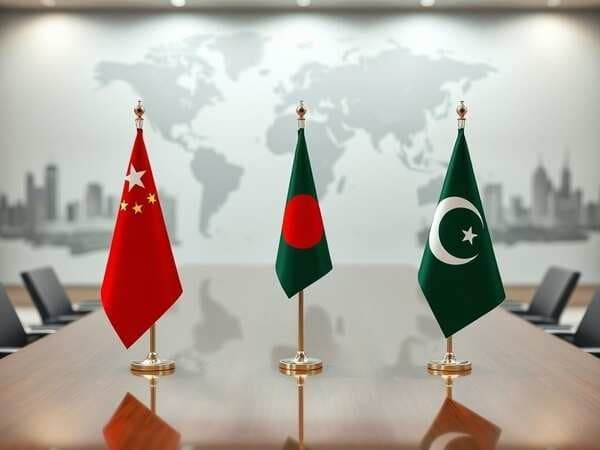
Trilateral nexus: China-Pakistan-Bangladesh (CPB) & China-Pakistan-Afghanistan (CPA) dialogues expanding Beijing’s South-Asia footprint.

First CPB round held at Kunming, Yunnan; CPA meetings already regular since 2017.

Geography: Gwadar-Khyber west, Bay of Bengal east, pressuring India’s Siliguri corridor.

Quick Facts for MCQs

Historical Context

  • 1962-postwar: Beijing arms Islamabad, forging enduring anti-India axis.
  • 1965 Siliguri gambit: Pakistan, China, Nepal, East Pakistan planned corridor choke.
  • Repeated UNSC vetoes: China blocks sanctions on Pakistan-based terror outfits.

Security Dimension

  • Terror facilitation: Forums mask coordinated cross-border strikes, e.g., 2025 Pahalgam attack claim.
  • Tech transfer: Chinese drones, radars used by Pakistan in Operation Sindoor.
  • Encirclement: BRI corridors ring India’s land & maritime flanks.

Regional Diplomacy

  • Polarisation: Smaller South Asian states hedge between India & China, eroding SAARC unity.
  • Proxy risk: Chinese backing may embolden renewed Pakistan-sponsored militancy.
  • Influence shift: External power entry weakens home-grown cooperation platforms.

India’s Response

  • Redlines: Link anti-India alignments to economic, political, military costs.
  • Alternative platforms: Accelerate BIMSTEC, IORA, BBIN connectivity to offset BRI pull.
  • Economic-defence mix: Offer credit, market access, joint exercises with Bangladesh, Maldives, Afghanistan.

Key Data Points

FeatureData-Point
Convenor countryChina
First CPB venueKunming (Yunnan)
Legacy template1965 Siliguri Strategy
UNSC veto patternChina shields LeT, JeM listings
Pakistan’s payoffStrategic cover + Chinese finance
Core Chinese aimDilute India, secure BRI routes

Related UPSC Prelims PYQs

NDA_GAT 2024PYQ 1

निम्नलिखित में से कौन-सा, 1954 में भारत और चीन द्वारा हस्ताक्षरित ‘पंचशील’ समझौते में निहित पाँच सिद्धांतों का भाग नहीं है ?

NDA_GAT 2024PYQ 2

In January 2024, India has entered into a bilateral agreement through which it will provide grant assistance to a country to construct a 20 feet Bailey bridge. Identify the country.

GS-2Polity

10.Kishenganga-Ratle Arbitration Dispute under IWT (Indus Waters Treaty)

NDTV

What & Where

Court of Arbitration: ad-hoc body under Annexure G, Indus Waters Treaty 1960, activated when bilateral talks fail.

Kishenganga (330 MW) on Kishenganga/Neelum; Ratle (850 MW) on Chenab—both run-of-river projects in J-K.

India calls the 2023 “supplemental award” void; says COA formed unilaterally, breaching treaty procedure.

Quick Facts for MCQs

Legal & Policy

  • India invokes Vienna Convention to suspend obligations, citing Pakistan-sponsored terrorism as material breach.
  • COA jurisdiction contested; India prefers Neutral Expert mechanism per IWT sequencing.
  • Supplemental award deemed non-binding on sovereignty or project operation.

Project Specifications

  • Ratle: joint venture NHPC + JKPDC; key for regional clean-energy supply.
  • Kishenganga diverts water to Jhelum basin—permitted under IWT with flow & ecology safeguards.
  • Both are run-of-river, limiting large reservoir creation, thus usually treaty-compliant.

Security Dimension

  • Cross-border terrorism framed as core reason for India’s tough treaty posture.
  • Water infrastructure strategically vital for Kashmir’s energy, adding geopolitical sensitivity.
  • Pakistan leverages legal fora to delay projects; India counters via technical redesigns and diplomatic notes.

Key Data Points

FeatureData-Point
Indus Waters Treaty signed1960
Parties to IWTIndia & Pakistan
Annexure governing COAAnnexure G
COA formation ruleRequires consent of both states
Present COA status (India)“Illegally constituted”
Kishenganga river alias in PakistanNeelum
Kishenganga project districtBandipora, J-K
Kishenganga capacity330 MW
Ratle riverChenab
Ratle project districtKishtwar, J-K
Ratle capacity850 MW
Previous Neutral Expert report2013
India’s treaty step post-Pahalgam attackIWT kept in abeyance
Suspension legal basis citedVienna Convention — material breach
Pakistan’s design objectionSpillway & pondage parameters

Related UPSC Prelims PYQs

CDS_GK, GS1 2009PYQ 1

Consider the following statements :

CDS_GK, GS1 2025PYQ 2

Which of the following statements about the Indus Waters Treaty is/are correct?

GS-2Polity

11.India Rejects SCO Defence Statement (SCO Defence Meet)

Hindustan Times
Illustration for India Rejects SCO Defence Statement (SCO Defence Meet)

What & Where

SCO — Eurasian inter-governmental bloc for security, economic & defence cooperation; evolved from “Shanghai Five”, formalised 15 Jun 2001.

Geography: Central-Asian core (Kazakhstan, Kyrgyzstan, Tajikistan, Uzbekistan) plus Russia-China belt and South-Asian India-Pakistan; HQ Beijing, RATS Tashkent.

Membership (2025): 10 states ‑ China, Russia, Kazakhstan, Kyrgyzstan, Tajikistan, Uzbekistan, India, Pakistan, Iran, Belarus.

Quick Facts for MCQs

Membership & Structure

  • Apex body: Heads of State Council; Defence & Foreign Ministers meet annually under rotating chair.
  • Observer status, dialogue partners & guest attendees widen SCO’s outreach beyond core ten.
  • Permanent organs: Secretariat (coordination) and RATS (counter-terrorism, separatism, extremism database).

India’s Stand at Qingdao

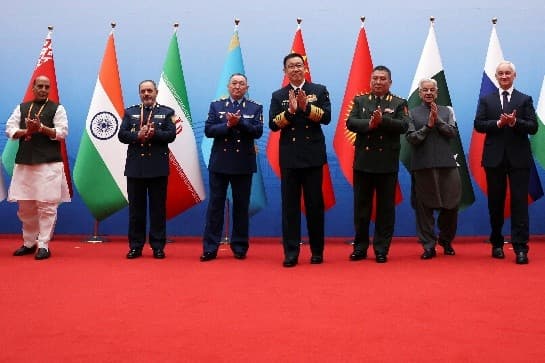
  • Defence Minister declined draft statement; objected to omission of 2023 Pahalgam terror attack reference.
  • Pakistan blocked inclusion; document still highlighted 1998 Jaffar Express hijack inside Pakistan.
  • India reiterated zero-tolerance, demanded accountability for state-sponsored groups like LeT.

Security Dimension

  • RATS tasked with joint exercises (e.g., “Peace Mission”), intelligence-sharing & black-listing terrorists.
  • India pushes balanced listing of all member-state terror threats, resists selective narratives.
  • Blocked joint declaration signals unresolved terror definition & politicisation within SCO.

Diplomatic Significance

  • India disrupted consensus in 10-member bloc, showcasing strategic autonomy even in China-led forum.
  • Move aligns with previous assertive multilateral actions post-Galwan & Operation Sindoor.
  • Sets tone for upcoming Tianjin Heads-of-State summit to prioritise terror-centric reforms in RATS.

Key Data Points

FeatureData-Point
Founding date15 June 2001
Origin platform1996 “Shanghai Five”
Charter signedSt. Petersburg, 2002 (effective 2003)
Secretariat cityBeijing
RATS HQTashkent, Uzbekistan
Current members (2025)10
Founding members6
Latest entrantsIran (2023), Belarus (formalisation 2024-25)
India joined9 June 2017 (Astana Summit)
Official languagesChinese & Russian

Related UPSC Prelims PYQs

CDS_GK 2024PYQ 1

शांघाई सहयोग संगठन (SCO) के संबंध में निम्नलिखित में से कौन-सा/कौन-से कथन सही है/हैं?

CDS_GK 2024PYQ 2

Consider the following statements about the Shanghai Cooperation Organisation (SCO):

GS-3Security

12.Operation Deep Manifest Anti-Smuggling Drive (Anti-Smuggling)

DD News
Illustration for Operation Deep Manifest Anti-Smuggling Drive (Anti-Smuggling)

What & Where

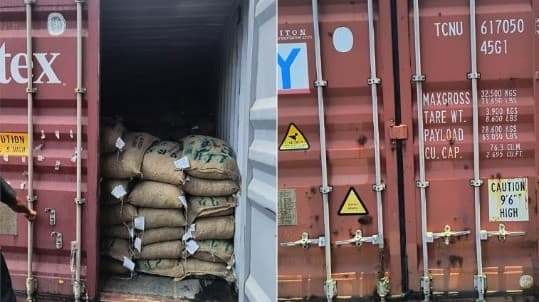
Operation Deep Manifest: DRI-led crackdown on Pakistani-origin imports stealthily routed into India via UAE ports.

Core process: container surveillance, document forensics, financial-trail mapping to enforce 2019 all-goods import ban on Pakistan.

Geography: Indian seaports (unnamed) ←→ Dubai’s Jebel Ali transhipment hub; seized consignments valued at ₹9 crore.

Quick Facts for MCQs

Security Dimension

  • Disruption: breaks hostile-state revenue lines, curbing economic infiltration linked to post-terror retaliation policies.
  • Deterrence: signals zero-tolerance toward third-country re-routing to evade Indian sanctions.
  • Intelligence synergy: blends customs data with financial surveillance for threat mapping.

Enforcement Tools

  • Container tracking: identifies swaps, dual-port routing patterns masking origin.
  • Document forensics: exposes falsified bills of lading, misdeclarations, split manifests.
  • Financial analytics: traces payment loops connecting UAE traders to Pakistani entities.

Economic Angle

  • Trade ban compliance: upholds 2019 blanket prohibition on Pakistan imports post-Pulwama.
  • Revenue protection: prevents duty evasion and unfair market entry worth multi-crore rupees.
  • Institutional credibility: elevates DRI reputation in tech-enabled anti-smuggling operations.

Key Data Points

FeatureData-Point
Launching bodyDirectorate of Revenue Intelligence
Administrative parentCentral Board of Indirect Taxes & Customs
Union ministryFinance
Focus country of originPakistan
False declared originUnited Arab Emirates
Key transit portJebel Ali, Dubai
Containers intercepted39
Total weight seized1,115 metric tonnes
Assessed value≈ ₹9 crore
Operation toolsAI-driven data analytics, container tracking, fund-flow analysis
Enforcement resultArrest of importing-firm partner; wider criminal probes
GS-2Scheme

13.Revamped Sugamya Bharat Accessibility App (Accessible India)

PIB

What & Where

Crowdsourced mobile platform to flag accessibility barriers across India’s public infrastructure, transport & ICT systems.

Operated by Department of Empowerment of Persons with Disabilities, Ministry of Social Justice & Empowerment.

Integral tool under Accessible India Campaign (Sugamya Bharat Abhiyan) since 2021.

Quick Facts for MCQs

Tech & Schemes

  • AI-chatbot provides instant scheme info, circulars, notifications in-app.
  • User-friendly interface redesigned for screen readers & low-vision compatibility.
  • Real-time updates integrate with DEPwD databases for policy alerts.

Citizen Engagement

  • Crowdsourcing enables Jan-Bhagidari in barrier-free infrastructure monitoring.
  • Geo-tag feature ensures location accuracy for swift authority action.
  • App encourages community vigilance beyond urban hubs.

Governance Metrics

  • Resolution rate ≈70 % (1,897/2,705) indicates active grievance redressal.
  • Data analytics inform ministries on priority accessibility gaps.
  • Complaints dashboard aids inter-agency coordination for timely fixes.

Key Data Points

FeatureData-Point
Launch year2021
Revamp year2025
Implementing dept.DEPwD
Parent ministryMoSJE
Campaign linkageAccessible India Campaign
Key new techAI-powered chatbot
Complaint mechanismGeo-tagged photo upload
Total complaints (till Jun 2025)2,705
Resolved complaints1,897
Target groupsPwDs & senior citizens

Related UPSC Prelims PYQs

CDS_GK, GEO_GS 2024PYQ 1

Consider the following statements regarding the Sugamya Bharat Abhiyan:

CDS_GK, GEO_GS 2025PYQ 2

Which one of the following statements about Tele MANAS App is correct?

GS-1Editorial

14.Foreign Universities Entry into India (Higher Education Policy)

The Hindu

What & Where

Concept: Foreign Higher Educational Institution (FHEI) branch campuses allowed under UGC (FHEI) Regulations 2023

Process: NEP 2020 invites top-ranked global universities, permits joint campuses with Indian HEIs

Geography: Early sites include GIFT City (Gujarat) and Navi Mumbai, zones offering regulatory relaxations

Quick Facts for MCQs

Economic Drivers

  • Diversification: Western universities target India after visa curbs, stagnant domestic enrolments
  • Demography: Large, English-proficient, rising-income youth fuels untapped market demand
  • Revenue: Offshore campuses hedge forex dependence, broaden global visibility

National Benefits

  • Access: Global-standard degrees delivered locally cut tuition, visa and living costs
  • Research: Joint centres and faculty exchange boost innovation, academic governance reforms
  • Diplomacy: Reciprocity aids Indian HEIs abroad, enhances education-led soft power

Equity & Risks

  • Affordability: High fees may confine access to affluent, thwart NEP inclusion goals
  • Sustainability: Prior closures in China, Gulf show vulnerability to low enrolment and cost overruns
  • Integration: Curricula must localise to avoid elitist, culturally detached campuses

Key Data Points

FeatureData-Point
UGC Act enactment1956
Youth ≤30 yrs share52 % of population
Higher-education GERjust under 30 %
Indian students abroad (2023)9 lakh
Settling-abroad intent> 75 % of outbound
Int’l student share in UK/Aus/Can HEIs≈ 33 %

Related UPSC Prelims PYQs

ESE_GS 2021PYQ 1

Which one of the following statements is NOT correct regarding the National Education Policy 2020 in India ?

Ready to practice?

Test your knowledge with our UPSC test series.

Start Free Trial