UPSC Current Affairs

13 topicsGS-1: 2GS-2: 4GS-3: 7
0/13 done
GS-2Polity

1.Parliamentary Estimates Committee Oversight (Parliamentary Committees)

FPJ

What & Where

Estimates Committee — Lok Sabha’s financial-oversight panel reviewing budget allocation, spending economy and accountability.

Institutional location: Parliament of India; only Lok Sabha MPs, ministers barred.

75-year milestone marked by National Conference inaugurated in Mumbai by Lok Sabha Speaker.

Quick Facts for MCQs

Composition & Election

  • Membership mirrors party strength; Rajya Sabha has no representation.
  • Chairperson usually senior ruling-party MP chosen solely by Speaker.
  • Reconstituted every financial year through internal Lok Sabha ballot.

Core Functions

  • Examination of Demands for Grants, suggesting savings and efficiency gains.
  • Recommendation of alternative fiscal or administrative policies for better outcomes.
  • Advice on improving structure and presentation of Union Budget documents.

Procedure Flow

  • Annual selection of specific Ministries/Departments/statutory bodies for scrutiny.
  • Information gathered via documents, witness evidence, and field visits cleared by Speaker.
  • Reports laid in Lok Sabha; Finance Ministry circulates ATR within six months.

Track Record

  • Reviewed virtually all Union Ministries since inception.
  • Inputs catalysed concepts like outcome budgeting and consolidation of minor grants.
  • Periodic national conferences share oversight best practices with State Legislatures.

Key Data Points

FeatureData-Point
Year constituted1950
House representedLok Sabha only
Membership strength30 MPs
Minister eligibilityNot permitted
Election methodAnnual PR-STV by whole House
Chairperson appointed bySpeaker, Lok Sabha
Individual term1 year; renewable
Exclusion scopePublic Undertakings
Govt reply limit6 months via Action Taken Report
Total reports (1950-2024)1184 (656 Original + 528 ATR)

Related UPSC Prelims PYQs

CDS_GK, GEO_GS 2020PYQ 1

Which one of the following is NOT a parliamentary standing committee on financial matters?

CDS_GK, GEO_GS 2022PYQ 2

Which one of the following statements about the Public Accounts Committee (PAC) of the Parliament is not correct?
GS-2Polity

2.Directorate General of Civil Aviation Mandate (Regulatory Bodies)

New Indian Express
Illustration for Directorate General of Civil Aviation Mandate (Regulatory Bodies)

What & Where

Directorate General of Civil Aviation (DGCA) – apex civil-aviation regulator of India.

Conducting Comprehensive Special Audit covering entire domestic aviation ecosystem.

Jurisdiction: All Indian civil aircraft, airports, airlines, training & maintenance entities.

Quick Facts for MCQs

Legal & Policy

  • Statutory-body status grants wider enforcement, penalty & rule-making powers since 2020.
  • Operates under legacy Aircraft Act, 1934 & subordinate Aircraft Rules, 1937.
  • Advises Union Govt on bilateral air-service agreements & technical regulations.

Safety Oversight

  • Audit, inspection, surveillance ensure compliance by pilots, airlines, MROs, ATCs.
  • Investigates incidents; issues safety circulars for accident-prevention.
  • Launching Special Audit to plug systemic gaps amid traffic growth.

Licensing & Certification

  • Registers every civil aircraft; licences pilots, ATCOs, maintenance engineers, cabin crew.
  • Certifies airports for operational safety, CNS, firefighting readiness.
  • Approves flying schools, simulators, AME training institutes.

International Engagement

  • Represents India in ICAO Council, panels, working groups.
  • Coordinates corrective action plans after ICAO USOAP & FAA IASA audits.
  • Promotes indigenous aircraft/component manufacturing to align with global standards.

Key Data Points

FeatureData-Point
Original setup1978, attached office, MoCA
Statutory upgradeAircraft (Amendment) Act, 2020
Parent ministryMinistry of Civil Aviation
Core mandateSafety regulation & licensing
New initiativeComprehensive Special Audit, 2024
Key rulebookAircraft Rules, 1937
Airport clearance issuedAerodrome Certificate
Airline entry permitAir Operator’s Certificate
Airworthiness documentCertificate of Airworthiness
Global linkageICAO USOAP participation

Related UPSC Prelims PYQs

ESE_GS, GS1 2003PYQ 1

Which one of the following statements is correct?

ESE_GS, GS1 2022PYQ 2

Which one of the following ministries has repealed the Unmanned Aircraft Systems (UAS) Rules, 2021 and replaced the same with the liberalized Drone Rules, 2021?

GS-3Editorial

3.Reforming Food and Fertiliser Subsidies (Subsidy Reforms)

Indian Express
Illustration for Reforming Food and Fertiliser Subsidies (Subsidy Reforms)

What & Where

Subsidy: Government financial support lowering production or consumer cost to meet welfare or policy goals in India.

Types: Direct cash transfers (e.g., PM-KISAN) and Indirect price/tax support (e.g., NFSA cereals, LPG).

Geography: Nationwide reach via PDS to 800 million citizens and fertiliser support to 140 million farm holdings.

Quick Facts for MCQs

Economic Angle

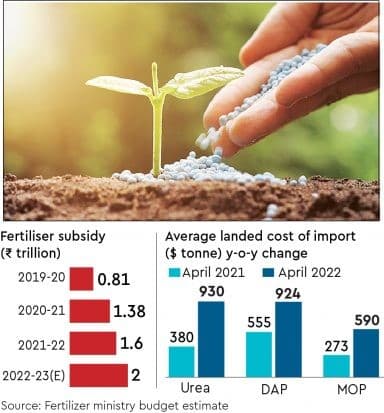
  • Fiscal-space concern: food + fertiliser subsidies ≈3.6 lakh crore limiting rural capital investment.
  • Targeting need: blanket support vs only bottom 15 % using Aadhaar SECC PM-KISAN data fusion.
  • Coupon proposal: ₹700 digital wallet per poor family enabling diverse food purchase reducing cereal over-procurement.

Tech & Schemes

  • Digitisation: 84 % ration cards Aadhaar-seeded with ePOS reducing ghost entries.
  • Fertiliser DBT: retailer PoS authentication subsidises companies then passes lower price to farmers.
  • Neem-Coated Urea: slows nitrogen release curbs diversion saves 10 % consumption.

Social Concerns

  • Nutrition gap: cereal-heavy PDS misses pulses milk eggs causing micronutrient deficiency.
  • Inclusion error: ghost cards Jharkhand purge highlights ongoing leakage despite tech.
  • Communication need: farmer trust critical as earlier subsidy reform attempts faced protests.

Environmental Impact

  • Nutrient imbalance: excess nitrogen versus P&K depletes soil fertility lowers yields.
  • Encouragement: NBS policy and bio-fertiliser incentives aim balanced eco-friendly application.
  • Soil health link: sustainable fertiliser mix key for 4 % agri growth target.

Key Data Points

FeatureData-Point
Food subsidy outlay FY26₹2.03 lakh crore
Fertiliser subsidy outlay FY26₹1.56 lakh crore
Extreme poverty rate 20225.3 %
Extreme poverty rate 201127.1 %
PDS free grain beneficiaries800 million people
Ration-card coverage FY2384 % households
Rural Gini 2023-240.237
Neem-coated urea status100 % mandatory coating

Related UPSC Prelims PYQs

CAPF_GAI, CDS_GK 2020PYQ 1

As per the Budget Estimates of expenditure on major subsidies during 2019–20, the maximum expenditure was likely to be on

CAPF_GAI, CDS_GK 2020PYQ 2

PAHAL, an initiative to transfer the subsidy to direct bank account of the beneficiaries, is related to

GS-1MappingQuick Bite

4.Subarnarekha River and Basin (East India River)

The Hindu
Illustration for Subarnarekha River and Basin (East India River)

What & Where

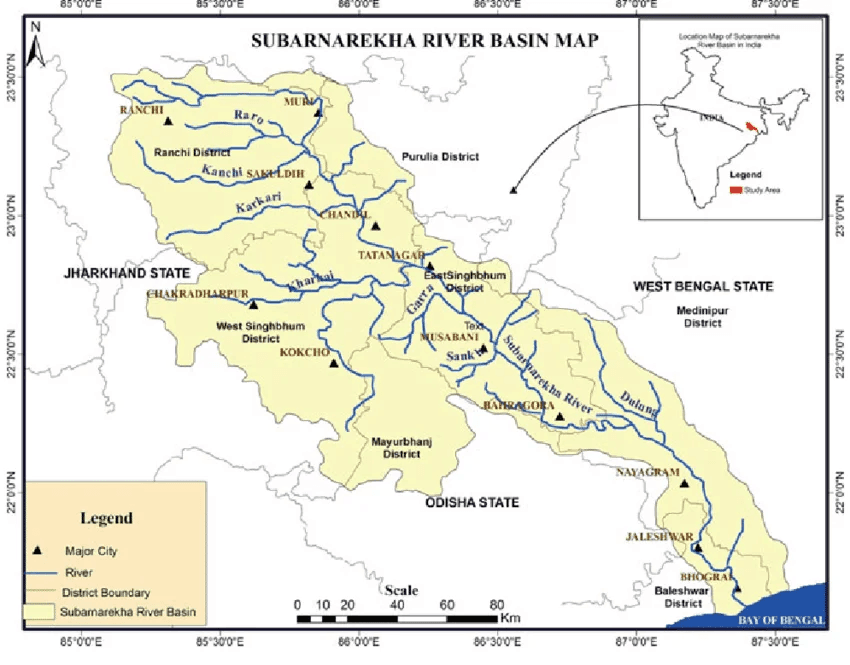
Subarnarekha east-flowing Peninsular river, 395 km, empties into Bay of Bengal between Ganga–Mahanadi deltas

Rises near Nagri village, Ranchi district; drains Jharkhand, Odisha, West Bengal across Chota Nagpur Plateau fringe

Forms estuary and Hundru Falls; basin bounded by Baitarani basin south, Kasai valley east

Quick Facts for MCQs

Hydrology & Basin

  • Drainage spreads over plateau uplands, lateritic soils influencing rapid runoff
  • Estuarine stretch between two mega deltas augments tidal ingress and sediment deposition
  • Basin prone to flash floods due to short, steep tributaries

Infrastructure

  • Chandil multipurpose dam on main stem regulates irrigation, hydropower, flood moderation
  • Series of barrages enable water diversion for Jamshedpur industrial belt
  • Getalsud reservoir supplies drinking water to Ranchi urban agglomeration

Disaster Concern

  • Recent Balasore flooding triggered by alleged unnotified Chandil gate release, exposing inter-state coordination gaps
  • Downstream Odisha districts lack real-time telemetry on Jharkhand reservoir discharges
  • Historical flash-flood events recur during peak monsoon, affecting paddy fields and coastal fisheries

Key Data Points

FeatureData-Point
Source locationNagri village, Ranchi, Jharkhand
Total length~395 km
MouthBay of Bengal estuary
States traversedJharkhand, Odisha, West Bengal
Major tributaryKharkai River at Sonari/Domuhani
Notable waterfallHundru Falls
Key dam upstreamChandil Dam, Jharkhand
Other reservoirsGetalsud, Galudih Barrage, Icha, Kharkai Barrage
Basin boundary north-westChota Nagpur Plateau

Related UPSC Prelims PYQs

GS1 2011PYQ 1

Two important rivers – one with its source in Jharkhand (and known by a different name in Odisha), and another, with its source in Odisha – merge at a place only a short distance from the coast of Bay of Bengal before flowing into the sea. This is an important site of wildlife and biodiversity and a protected area. Which one of the following could be this?

GS1 2002PYQ 2

The correct sequence of the eastward flowing rivers of the peninsular India from north to south is

GS-3EnvironmentQuick Bite

5.Rice Yellow Mottle Virus Outbreak (Plant Virus)

Down to Earth

What & Where

Rice Yellow Mottle Virus (RYMV): Sobemovirus causing destructive rice disease

Originated 1800s Eastern Arc Mountains, Tanzania; now across Sub-Saharan Africa with an outlier in Turkey

Spreads chiefly via insect/mechanical contact; not seed-borne

Quick Facts for MCQs

Transmission Vectors

  • Beetles: Chrysomelidae act as principal insect carriers
  • Grasshoppers etc: cows, rats, donkeys transfer virus via feeding or contact
  • Water splash: root wounds enable mechanical spread

Symptoms & Diagnosis

  • Streaks: initial yellow-green streaks on young leaves progress to mottling
  • Morphology: twisted leaves, stunting, poor panicle, sterility common
  • Timing: early infection phase linked to near 100 % yield loss

Agricultural Impact

  • Losses: yield reduction ranges 10–100 % across African fields
  • Variability: high genetic variability complicates breeding durable resistance
  • Food security: major risk for Sub-Saharan Africa rice consumers

Key Data Points

FeatureData-Point
Origin regionEastern Arc Mountains, Tanzania
First emergence1800s
Virus familySobemovirus
Core geography todaySub-Saharan Africa; detected in Turkey
VectorsBeetles, grasshoppers, cows, rats, donkeys
Seed-borneNo
Yield loss range10 % – 100 %
GS-3S&T

6.Rare Helium-Rich Star A980 Discovery (Astrophysics)

PIB

What & Where

Star A980; cool Extreme Helium (EHe) star with almost no hydrogen, product of helium-rich + carbon-oxygen white-dwarf merger

Situated in Ophiuchus constellation, approx 25,800 light-years from Earth

Exhibits first Ge II detection in EHe stars, germanium abundance ≈ 8 times Solar

Quick Facts for MCQs

Stellar Composition

  • Elemental pattern Helium-dominated atmosphere, trace carbon/oxygen, overabundant germanium
  • Detection method High-resolution spectroscopy revealed Ge II lines, unprecedented in EHe category
  • Rarity EHe stars number <30 known; A980 enriches coolest subgroup data

Evolution Models

  • Challenge Existing nucleosynthesis places heavy-element creation in supernovae or AGB stars, not EHe atmospheres
  • Indication White-dwarf merger may trigger in-situ heavy-element production
  • Outcome Drives refinement of post-merger mixing and nucleosynthesis simulations

Indian Institute of Astrophysics

  • Governance Autonomous DST institution focused on astronomy, astrophysics, instrumentation
  • Infrastructure Roots at Kodaikanal Solar Observatory; HQ shifted Bengaluru 1975
  • Contribution Team employed indigenous spectroscopy facilities for A980 analysis

Key Data Points

FeatureData-Point
Star nameA980
Star classificationExtreme Helium (EHe), cool
ConstellationOphiuchus
Distance from Earth~25,800 light-years
Dominant elementHelium; negligible hydrogen
Unique detectionSingly-ionised germanium (Ge II)
Germanium abundance~8 × Solar
Probable originMerger of He-white dwarf + C–O white dwarf
Model implicationChallenges standard stellar nucleosynthesis
Lead institutionIndian Institute of Astrophysics (DST)
GS-3S&TQuick Bite

7.Spinal Muscular Atrophy Prenatal Therapy (Genetic Disorder)

Indian Express

What & Where

Spinal Muscular Atrophy (SMA) = autosomal-recessive neuromuscular disorder from SMN1 gene mutation

Causes progressive skeletal-muscle wasting owing to Survival Motor Neuron (SMN) protein deficiency

Feb 2025: world’s first in-utero SMA therapy; girl now 2.5 yrs old

Quick Facts for MCQs

Pathophysiology

  • SMN protein deficit triggers spinal motor-neuron degeneration
  • Signal loss from neurons to muscles precipitates rapid atrophy

Clinical Signs

  • Early proximal-muscle weakness; poor head, trunk control
  • Progressive respiratory compromise, dysphagia, life-threatening infections

Treatment Milestone

  • In-utero intervention attempts SMN rescue before irreversible neuronal loss
  • Success opens window for prenatal gene-based therapies in similar disorders

Key Data Points

FeatureData-Point
Causative geneSMN1
Protein lackingSMN protein
InheritanceBoth parents carriers; autosomal-recessive
Global incidence≈ 1 per 10,000 live births
Mortality statusLeading genetic cause of infant/child deaths
Primary tissue hitVoluntary skeletal muscles
Early symptom clusterShoulder, hip, thigh weakness
Vital complicationsRespiratory and swallowing difficulties
First prenatal therapyReported Feb 2025; patient age 2.5 yrs
GS-3S&TQuick Bite

8.CERN Transmutes Lead into Gold (Nuclear Transmutation)

Down to Earth
Illustration for CERN Transmutes Lead into Gold (Nuclear Transmutation)

What & Where

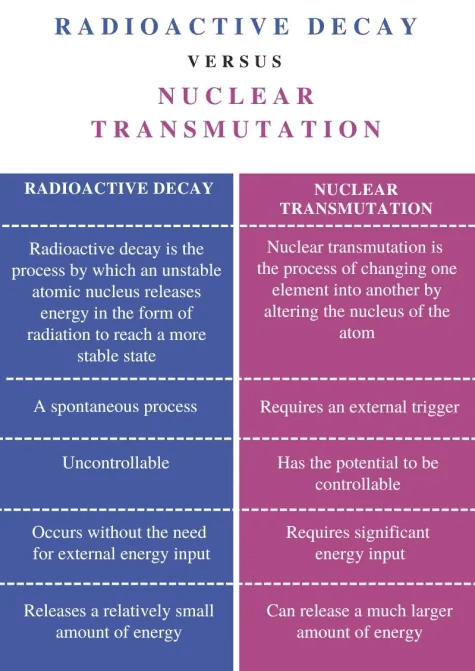
Nuclear transmutation – man-made change of one element to another by altering proton/neutron count.

Achieved at CERN’s Large Hadron Collider, Switzerland–France border, via ultra-peripheral “near-miss” lead-lead interactions.

Electromagnetic fields eject nucleons; stripping three protons from Pb-208 briefly yields Au-205/206.

Quick Facts for MCQs

Nuclear Transmutation

  • Alchemy dream realised by modern particle physics, first lab Pb→Au demonstration in femtoscopic quantities.
  • Confirms theoretical models of photon-induced nucleon knock-out in heavy nuclei.
  • Offers baseline for synthesising rare isotopes without radioactive targets.

Collision Dynamics

  • Near-miss lead ions generate intense virtual photon flux; no hadronic debris from primary collision.
  • Photon energy scales with Lorentz factor of ions, enabling multi-nucleon removal.
  • Process distinct from fusion or spallation; purely electromagnetic.

Scientific Significance

  • Deepens understanding of strong–electromagnetic interplay under extreme fields.
  • Provides calibration data for cosmic-ray induced transmutation in astrophysics.
  • Demonstrates versatility of LHC beyond high-energy discovery physics.

Key Data Points

FeatureData-Point
Accelerator usedLarge Hadron Collider (LHC)
Collision typeUltra-peripheral, non-contact
Initial nucleusLead-208, Z = 82
Product nucleusGold isotopes, Z = 79
MechanismElectromagnetic dissociation by high-energy photons
Nucleons removed3 protons (± neutrons)
Other elements formedThallium, Mercury
Existence duration≈ 1 nanosecond
Amount producedTiny, laboratory-scale
Host organisationCERN
GS-2Editorial

9.Evolving Geopolitics in West Asia (West Asia Conflict)

New Indian Express
Illustration for Evolving Geopolitics in West Asia (West Asia Conflict)

What & Where

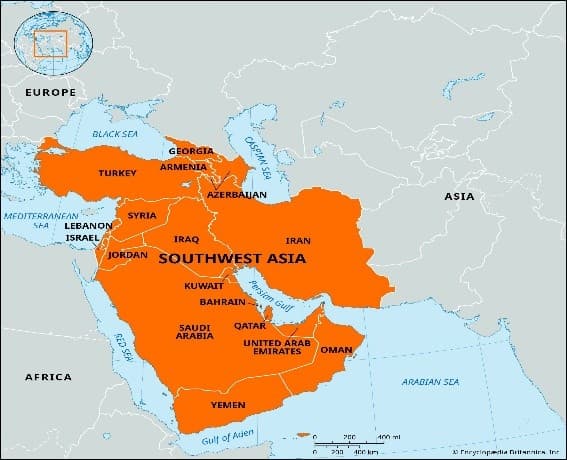
Reshaping West Asia geopolitics — shift in power, alliances, energy leverage amid Israel-Iran escalation

Key processes — missile exchanges, potential Hormuz blockade, energy weaponisation, multipolar diplomatic realignments

Core geography — Gulf monarchies, Iran, Israel around Strait of Hormuz linking Persian Gulf-Arabian Sea

Quick Facts for MCQs

Energy Security

  • Blockade threat raises global supply shock and price spike
  • Gulf producers weaponise oil / gas flows for diplomatic leverage
  • Slow renewable uptake keeps hydrocarbon dependency critical

Regional Power Balance

  • Multipolar alignments steadily erode traditional US primacy
  • Iran-Gulf thaw and Abraham Accords create fluid triangular dynamics
  • Fragile coexistence risks escalation into wider interstate conflict

India Implications

  • Supply disruption may spike inflation, widen current account gap, dent remittances
  • Chabahar, INSTC, IMEC corridors face heightened security uncertainty
  • Delhi walks diplomatic tightrope between Tehran and Tel Aviv

Non-State Actors

  • Iran-linked militias capable of striking rival Gulf energy assets
  • Proxies and hybrid warfare blur classic deterrence calculations
  • Street-level pro-Palestine sentiment constrains Gulf rulers’ policy choices

Key Data Points

FeatureData-Point
Strait of Hormuz share≈20 % global crude trade
India import dependence40-50 % oil / LNG passes Hormuz
Latest Israeli actionAirstrikes on Iranian nuclear sites
Iranian retaliationBallistic missiles on Israeli targets
Historical energy precedent1973 OPEC Arab oil embargo
Emerging blocsBRICS, SCO, China-Russia-Gulf linkages
Key non-state forceIran-backed militias (Houthis, Hezbollah etc)
GS-2Security

10.US Level-2 Travel Advisory for India (US Travel Advisory)

Economic Times

What & Where

Level 2 US Travel Advisory = “Exercise Increased Caution” within 4-tier global alert system.

Covers entire India; highest risk tags for J-K, India–Pakistan border, Naxalite belt, Manipur, remoter Northeast.

Issued by US Department of State, Bureau of Consular Affairs.

Quick Facts for MCQs

Security Dimension

  • Crowded markets, transport hubs, religious sites highlighted as potential terror targets without warning.
  • Naxalite presence prompts movement curbs across central-eastern districts; insurgent Northeast under “reconsider travel”.
  • Jammu & Kashmir labeled Level 4 “Do Not Travel”; similar caution for active Line of Control sectors.

Legal & Policy

  • Satellite phones/GPS import or use illegal; punishable by fine, seizure, imprisonment.
  • E-visas valid only at notified airports/seaports; land crossings require regular visa.
  • Overstay or document mismatch risks detention, deportation, entry bans.

Economic Angle

  • Advisory can depress US tourist arrivals, squeezing hotels, guides, aviation revenues.
  • Perception hit may deter FDI delegations and MICE events citing personal security.
  • Spurs Indian agencies to strengthen tourist policing, CCTV and women-safety programmes.

Key Data Points

FeatureData-Point
Advisory level for IndiaLevel 2
Total alert tiersFour (1 → 4)
“Do Not Travel” sub-zonesJ-K; India–Pakistan border
Key threats citedViolent crime, terrorism
Restricted gadgetsSatellite phones, GPS devices
E-visa land useNot permitted
US officials’ no-go statesParts of Maharashtra, Telangana, West Bengal
Insurgency belt flaggedChhattisgarh, Jharkhand, Odisha borders
Northeast cautionArunachal, Sikkim, remote frontiers
GS-3Security

11.US Military Bases in West Asia (US Bases)

DH
Illustration for US Military Bases in West Asia (US Bases)

What & Where

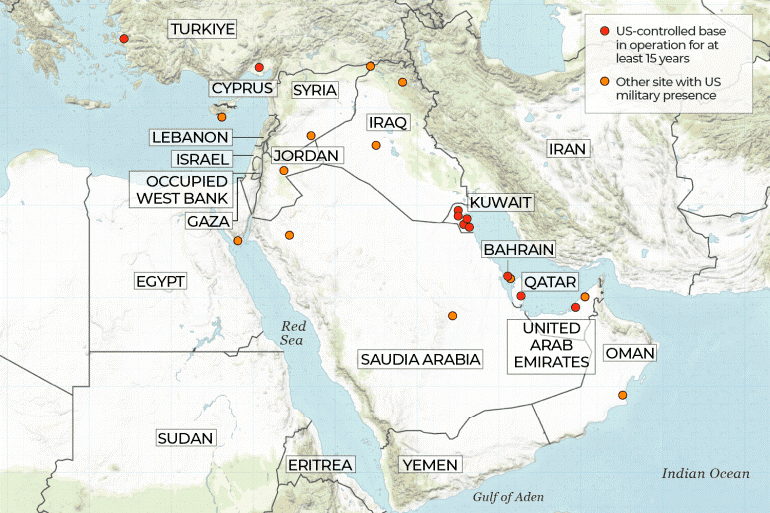
Definition: Forward-deployed US naval, air and army bases enabling CENTCOM power projection in West Asia.

Key types: Fleet headquarters, large multi-runway airbases, desert army camps, logistics ports.

Core geography: Clustered around Persian Gulf—Bahrain, Qatar, Kuwait, UAE, Iraq, Saudi Arabia, Jordan.

Quick Facts for MCQs

Security Dimension

  • Escalation: Tehran threatens strikes on listed US bases after nuclear-site bombing.
  • Defense: Patriot and THAAD batteries positioned at Prince Sultan, Al Dhafra, Al Udeid.
  • Vulnerability: Ain Al Asad previously hit by Iranian missiles January 2020.

Operational Roles

  • Naval: Fifth Fleet controls Gulf, Red Sea, Arabian Sea from Bahrain.
  • Airpower: Al Udeid, Al Dhafra, Muwaffaq al-Salti fly sorties against ISIS and regional targets.
  • Staging: Camp Buehring, Camp Arifjan funnel troops into Iraq-Syria theaters.

Host-Nation Context

  • Partnership: Al Dhafra shared with UAE Air Force; Jordan base hosts USAF 332nd Wing.
  • Troop Levels: ~10,000 personnel in Qatar; ~2,300 in Saudi Arabia.
  • Logistics: Jebel Ali handles biggest US Navy resupply outside continental US.

Key Data Points

FeatureData-Point
Bahrain baseUS Navy Fifth Fleet HQ, Manama
Qatar baseAl Udeid Air Base
Kuwait army HQCamp Arifjan
Kuwait air hubAli Al Salem “The Rock”
UAE baseAl Dhafra Air Base
UAE portJebel Ali—major logistics node
Iraq basesAin Al Asad & Erbil
Saudi basePrince Sultan Air Base
Jordan baseMuwaffaq al-Salti (Azraq)
GS-3Security

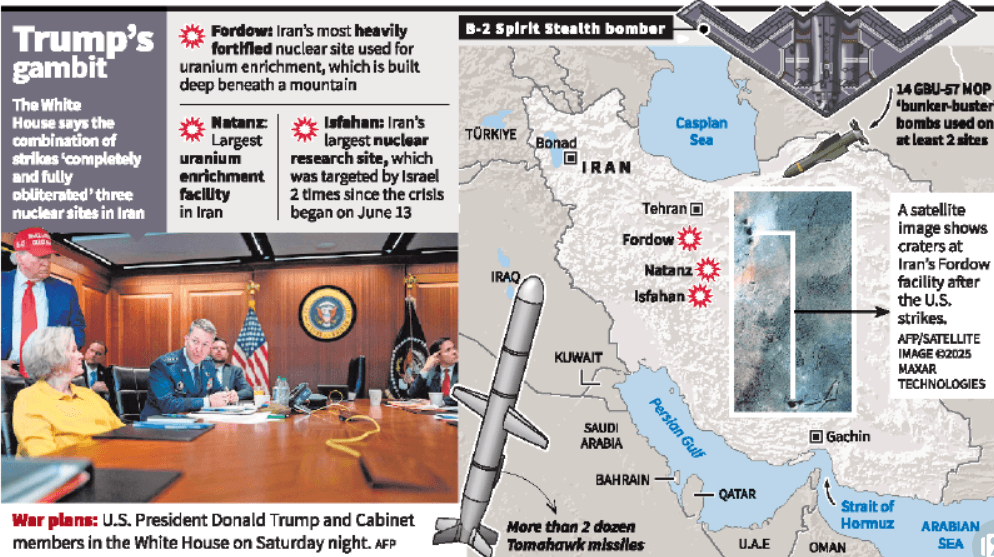
12.Operation Midnight Hammer Airstrike on Iran (US Precision Strike)

NDTV
Illustration for Operation Midnight Hammer Airstrike on Iran (US Precision Strike)

What & Where

Operation Midnight Hammer – classified US airstrike degrading Iran’s nuclear facilities with precision bunker-buster munitions.

Targets – Fordow, Natanz enrichment sites and Isfahan conversion plant, central Iran.

Platforms – B-2 Spirit stealth bombers, sub-launched Tomahawk cruise missiles, decoy & SEAD fighters under US DoD command.

Quick Facts for MCQs

Technology & Weaponry

  • Stealth feature; radar cross-section bird-sized, bypasses advanced SAM networks.
  • Automation; two-pilot crew controls global sorties via fly-by-wire and defensive avionics.
  • Payload flexibility; carries MOP, JDAM, JSOW, JASSM-ER and B83 nuclear bombs.

Security Dimension

  • Deterrence role; B-2 forms airborne leg of US nuclear triad.
  • Strike depth; MOP destroys deeply buried centrifuge halls and hardened bunkers.
  • Counter-defence; decoy aircraft and SEAD fighters suppress Iranian air defences.

Strategic Significance

  • Power projection; intercontinental raid showcases US reach without regional bases.
  • Messaging; demonstrates US readiness to employ high-end assets against WMD programmes.
  • Escalation risk; direct hit on nuclear sites heightens regional conflict potential.

Key Data Points

FeatureData-Point
Operation codenameMidnight Hammer
Operation aimDegrade Iranian nuclear infrastructure
Primary aircraftB-2 Spirit stealth bomber
Primary munitionGBU-57A/B Massive Ordnance Penetrator
MOP weight30,000 lb
Penetration depth200 + ft reinforced concrete
B-2 unit costUSD 2.1 billion
B-2 unrefuelled range> 6,000 nautical miles
B-2 max payload40,000 lb
B-2 crewTwo pilots
Cruise missilesTomahawk Land Attack (sub-launched)
GS-1Editorial

13.Alcohol Consumption and Regulation in India (Public Health Policy)

The Hindu

What & Where

Alcohol = psychoactive ethanol beverage; heavy episodic drinking ≥60 g pure alcohol/occasion

Key categories : Indian-Made Indian Liquor (IMIL), bottled spirits, premixed/flavoured RTDs

Hot-spot States : Chhattisgarh, Tripura, Punjab, Arunachal Pr., Goa report highest use

Quick Facts for MCQs

Health Burden

  • DALYs 2.6 m and ₹6.24 trn economic loss highlight severity
  • Morbidity links : cancer, NCDs, suicides, domestic violence, mental illness
  • Disorder rate exceeds 10 % in five listed high-risk states

Commercial Drivers

  • Surrogate ads, influencers, OTT glamorise drinking and target youth
  • Product innovation : premixed cans, flavoured spirits increase trial among beginners
  • Online retail plus low-cost IMIL expands rural and urban availability

Regulatory Framework

  • Alcohol on State List; policies, ages, pricing rules vary widely
  • Prohibition limited; some states piloting home-delivery despite access concerns
  • National acts/policies (Excise 1944, NAPDDR, NMAP, Mental Health 2014) urge tighter control

Proposed Measures

  • 6A strategy : Affordability, Allocation, Accessibility, Advertisement, Attractiveness, Awareness
  • Excise hikes with earmarked health funds; restrict physical, digital sale points
  • AI surveillance to flag online promos, underage targeting, policy breaches

Key Data Points

FeatureData-Point
NFHS-5 overall prevalence14.6 % (10–75 yrs)
Male vs female share23 % men ; 1 % women
Estimated consumers16 crore persons
DALYs lost 20212.6 million
Societal cost 2021₹6.24 trillion
States with prohibitionBihar, Gujarat, Nagaland, Mizoram
Legal drinking-age range18 – 25 years (state-wise)
High disorder prevalenceTripura, AP, Punjab, Chhattisgarh, Arunachal
Excise tax statusOutside GST; key state revenue
Article 47 DPSPCalls for prohibition of intoxicants

Ready to practice?

Test your knowledge with our UPSC test series.

Start Free Trial