UPSC Current Affairs

15 topicsGS-1: 4GS-2: 3GS-3: 8
0/15 done
GS-3Economy

1.IPPB Wins Digital Payments Award (Digital Payments)

SS

What & Where

Digital Payments Award – DFS, Ministry of Finance prize for advancing India’s digital payment ecosystem

2024-25 winner – India Post Payments Bank (IPPB), nationwide postal-network payments bank

Geography – Pan-India focus on inclusive, secure, tech-driven financial services

Quick Facts for MCQs

Tech & Schemes

  • India Stack backbone enables paperless, cashless, presence-less transactions
  • Multilingual mobile interface in 13 languages boosts user reach
  • Services include money transfer, bill pay, digital savings, literacy drives

Institutional Setup

  • IPPB housed under Department of Posts, Ministry of Communications
  • Award administered by DFS, highlighting secure, innovative digital banking models
  • Eligibility spans banks, payments banks, fintechs, other financial providers

Financial Inclusion

  • Doorstep banking via ≈ 2 lakh postal agents delivers services to households
  • Core aim – bridge urban-rural divide through affordable, trusted banking
  • Award criteria reward entities elevating literacy, accessibility, secure payments

Key Data Points

FeatureData-Point
Instituting bodyDepartment of Financial Services, MoF
Award cycle2024-25
2024-25 winnerIndia Post Payments Bank
EligibilityBanks, payments banks, fintechs, FSPs
Key metricsPerformance index, innovation, outreach
IPPB ownership100 % Government of India
IPPB launch date1 Sep 2018
Parent ministry (IPPB)Ministry of Communications
Doorstep agents≈ 2 lakh Postmen & Gramin Dak Sevaks
Service languages13 Indian languages

Related UPSC Prelims PYQs

GS1 2018PYQ 1

निम्नलिखित में से कौन भारत के सभी ATM को जोड़ता है ?

GS1 2017PYQ 2

Which of the following is a most likely consequence of implementing the ‘Unified Payments Interface (UPI)’?
GS-3Economy

3.India's Pulses Self Sufficiency (Pulse Procurement)

Indian Express

What & Where

Definition Pulses are dry edible seeds of Fabaceae, protein-rich, nitrogen-fixing, long-shelf crops.

Types Rabi: gram, chana, masoor; Kharif: moong, urad, arhar; over 60 % of output from Rabi.

Geography Top producers Madhya Pradesh, Maharashtra, Rajasthan, Uttar Pradesh, Karnataka; mostly rain-fed belts.

Quick Facts for MCQs

Policy Bias

  • MSP focus favours wheat rice; pulse procurement patchy deters acreage.
  • Subsidy skew water power fertiliser sustains paddy wheat monoculture.
  • PM-AASHA coverage limited; expansion urged for assured purchase.

Production Constraints

  • Rain-fed cultivation heightens monsoon risk, droughts slash yields.
  • Low seed quality and R&D lag keeps yields 27 % below world mean.
  • Smallholder fragmentation hampers scale investments in irrigation and IPM.

Trade & Imports

  • Import spike from Canada Russia Australia Mozambique Tanzania Myanmar USA.
  • Tariff modulation advised—lift in surplus years, relax in deficit.
  • High imports depress mandi prices despite nominal MSP, hurting growers.

Tech & Schemes

  • NFSM-Pulses, NMSA, RKVY target productivity via HYVs, micro-irrigation, intercropping.
  • Early-maturing moong, pigeon-pea hybrids and biofortified lentils promoted.
  • FPOs, mini dal mills, hermetic silos proposed to cut 5–10 % post-harvest loss.

Key Data Points

FeatureData-Point
India share in global output25 %
India share in global consumption27 %
India share in global imports14 %
Record import volume (2024-25)7.3 mt
Record import value (2024-25)USD 5.5 bn
Previous peak import volume (2016-17)6.6 mt
Average import 2018-222.6 mt
2023-24 production dip (El Niño)24.2 mt
Current average yield India660 kg/ha
World average yield909 kg/ha
Dominant crop share – gram40 %
Suggested buffer stock2.5–3 mt

Related UPSC Prelims PYQs

GS1 2002PYQ 1

With reference to Indian agriculture, which one of the following statements is correct?

GS1 2020PYQ 2

With reference to the production of pulses in India, consider the following statements:

GS-1History

4.Ghumot Traditional Goan Drum (Goan Percussion Instrument)

Down to Earth
Illustration for Ghumot Traditional Goan Drum (Goan Percussion Instrument)

What & Where

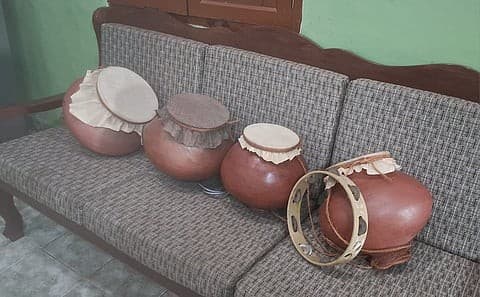
Definition Traditional clay-pot membranophone from Goa; one mouth sealed with animal/synthetic skin and hand-tapped.

Key processes Clay shaping, sun-dry & kiln firing, membrane stretching, coir-rope lacing for tuning.

Geography Made by tribal potters across Goa; played in Hindu, Christian and folk celebrations statewide.

Quick Facts for MCQs

Legal & Policy

  • Declaration Goa notified Ghumot as State Heritage Instrument in August 2019.
  • Wildlife Use of monitor-lizard skin illegal; offenders face WPA penalties.
  • Compliance Artisans shifted to goat/buffalo hide and explore polymer membranes.

Cultural Significance

  • Identity Sharp earthy beats underpin Goan folk songs, mandos, pre-wedding rituals.
  • Syncretism Same drum bridges caste and faith lines, underscoring plural ethos.
  • Revival Workshops, stage shows and exports rekindle youth interest.

Craft Technique

  • Material Refined alluvial clay moulded pumpkin-shape in three parts, air bubbles tapped out.
  • Firing Sun-dry 24–48 h, then kiln for strength and resonance.
  • Tuning Skin laced with wet coir; pitch adjusted by moistening or heating membrane.

Socio-economic Angle

  • Livelihood Resurgent demand can boost incomes of ~100 artisan families.
  • Skill transfer Master drummers mentor children via community classes.
  • Tourism Handmade Ghumot souvenirs marketed at festivals and music fairs.

Key Data Points

FeatureData-Point
State heritage tagGoa, 2019
Instrument familyMembranophone percussion
Local namesGhumot / Ghumat
Traditional skinBengal monitor lizard
Current legal skinsGoat, buffalo, synthetic
Wildlife lawWPA 1972 Schedule I ban on lizard skin
Core makersTribal Kumbhar potters
Major festivalsSao Joao, Ganesh Chaturthi, Shigmo
Religious reachHindus & Catholics alike
Classical statusOutside Hindustani/Carnatic canons
GS-1History

5.Magna Carta Constitutional Legacy (Magna Carta)

Indian Express

What & Where

Charter Magna Carta 1215 limited King John’s arbitrary powers; affirmed ruler subject to law

Process Rebellion by English barons forced written guarantees of feudal and legal rights

Geography Signed at Runnymede Meadows on River Thames near London, England

Quick Facts for MCQs

Historical Context

  • Rebellion Barons reacted to war losses and fiscal burdens undermining feudal contract
  • Feudalism Land grants exchanged for loyalty and knight service, now contractually safeguarded
  • Renewal Charter re-issued multiple times 13th century to secure crown-baron peace

Legal & Policy

  • Supremacy Principle king bound by written law, foundational for constitutional governance
  • Due-process Clauses 39-40 protected against arbitrary detention and corrupt justice
  • Precedent Inspired later petitions of right and judicial review concepts

Legacy & Influence

  • Symbol Resistance to tyranny and assertion of individual liberties worldwide
  • Transatlantic Adopted by American revolutionaries shaping US founding documents
  • Human-rights Cited by courts, parliaments and activists as early rights charter

Key Data Points

FeatureData-Point
Signing date15 June 1215
LocationRunnymede Meadows, near London
Signatory monarchKing John of England
Total clauses63
Core clause 39No arrest or exile without lawful judgment
Core clause 40Justice neither sold nor delayed
Immediate triggerHigh taxes and military defeats (Normandy 1204, Bouvines 1214)
StakeholdersRebel barons holding land-for-service fiefs
Legal idea seededRule of law over sovereign
Later influenceHabeas corpus, US Constitution, Bill of Rights
GS-1HistoryQuick Bite

6.International Yoga Day 2025 (International Yoga Day)

PIB

What & Where

International Yoga Day (IDY) – UN-declared observance on 21 June promoting global awareness of yoga’s mind-body-spirit benefits

Core practice Yoga – Sanskrit Yuj union; major modern schools Hatha, Ashtanga, Iyengar; codified in Patanjali’s Yogasutra

Geography & timing – Propelled by India; now marked in 180+ countries; date aligns with Northern Hemisphere summer solstice

Quick Facts for MCQs

Origin & Recognition

  • Proposal India’s PM Modi, 2014 UNGA, adopted by record 177 co-sponsors
  • UNESCO inscription highlights living tradition conveying Vedic knowledge
  • Global participation now includes mass sessions at UNHQ, Times Square, Eiffel Tower

Health Dimension

  • Practice improves flexibility, cardiorespiratory fitness, stress markers per WHO studies
  • Employed in India’s NCD control programmes and school curriculum guidelines
  • Recognised adjunct therapy during Covid-19 isolation centres

Indian Initiatives

  • Schemes Fit India Movement, Yoga Certification Board, Yogasana sports competition
  • Education NCERT vocational courses, UGC credit framework for BSc in Yoga
  • Digital M-Yoga multilingual videos synced with WHO quality standards

Astronomical Link

  • Summer solstice marks Dakshinayana start in yogic lore symbolising spiritual transition
  • Maximum solar energy believed to aid practitioner receptivity
  • Choice of 21 June blends science, tradition, global daylight availability

Key Data Points

FeatureData-Point
UN adoption of IDY11 Dec 2014, 69th UNGA
1st celebration21 Jun 2015; theme “Yoga for Harmony and Peace”
11th celebration year2025
2025 themeYoga for One Earth, One Health
UNESCO tagIntangible Cultural Heritage, 2016
WHO viewTool against NCDs; in Global Action Plan 2018-30
Summer solstice traitLongest daylight in Northern Hemisphere
Sanskrit rootYuj = to unite
Patanjali textYogasutra, 2nd century BC
Six orthodox schoolsNyaya, Vaisheshika, Sankhya, Mimamsa, Yoga, Vedanta
Govt sports status‘Priority’ discipline, Ministry of Youth Affairs 2015
Key appM-Yoga (WHO–Ministry of AYUSH)
Covid-19 usePsycho-social rehabilitation tool

Related UPSC Prelims PYQs

CDS_GK, NDA_GAT 2023PYQ 1

Match List I with List II and select the correct answer using the code given below the Lists:

CDS_GK, NDA_GAT 2021PYQ 2

Which one of the following is the theme of the International Day of Yoga 2021?

GS-3SpeciesQuick Bite

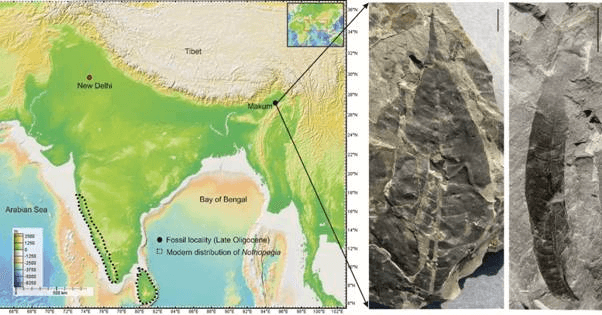
7.Nothopegia Fossil Leaves Discovery (Fossil Plant Leaves)

PIB
Illustration for Nothopegia Fossil Leaves Discovery (Fossil Plant Leaves)

What & Where

Fossilized Nothopegia leaves recovered from Makum Coalfield, Tinsukia district, Assam

Age 24–23 Ma, late Oligocene; indicate warm humid tropics once prevailed in Northeast India

Genus today restricted to Western Ghats, showing past range contraction

Quick Facts for MCQs

Fossil Details

  • Leaves broad reticulate‐veined, morphologically match extant Western Ghats species
  • Provide evidence of genus presence in Northeast before climatic upheaval
  • Support tropical forest dominance during Oligocene Assam

Analytical Methods

  • Morphological clustering used for taxonomic match with living species
  • CLAMP employed to derive palaeotemperature, rainfall parameters
  • Multivariate leaf traits underpin quantitative climate estimates

Climate Impact

  • Himalayan orogeny altered temperature, rainfall, wind, expelling tropical taxa from Northeast
  • Western Ghats offered climatic stability enabling Nothopegia survival
  • Case exemplifies climate‐driven species migration within India

Geographical Significance

  • Makum Coalfield only operational coal belt in Northeast India
  • Site yields rich Tertiary fossils aiding Indian palaeoclimate research
  • Located near Margherita town, Tinsukia district, Upper Assam

Key Data Points

FeatureData-Point
Plant genusNothopegia
FamilyAnacardiaceae
Fossil age24–23 million years
Geological epochLate Oligocene
Discovery siteMakum Coalfield, Assam
Present rangeWestern Ghats only
Key methodCLAMP climatic reconstruction
Main cause of NE extinctionHimalayan uplift–driven climate shift
Coalfield statusSole NE India coal producer
Fossil significanceTertiary palaeobotanical hotspot

Related UPSC Prelims PYQs

GS1 2016PYQ 1

Recently, our scientists have discovered a new and distinct species of banana plant which attains a height of about 11 metres and has orange-coloured fruit pulp. In which part of India has it been discovered?

GS-3S&T

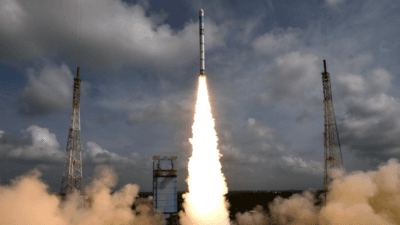
8.SSLV Technology Transfer to HAL (Space Launch Vehicle)

Times of India
Illustration for SSLV Technology Transfer to HAL (Space Launch Vehicle)

What & Where

TechnologyTransfer; full know-how of ISRO’s Small Satellite Launch Vehicle awarded to HAL

Location; executed within India’s space ecosystem led by Bengaluru-based ISRO and HAL

Purpose; empower private small-sat launch market independent of ISRO’s launch manifest

Quick Facts for MCQs

Tech & Schemes

  • DesignFlexibility; HAL authorised to modify SSLV architecture for varied payload demands
  • ProductionLine; ToT aims at continuous manufacturing enabling quick launch cadence
  • Handholding; ISRO mentors HAL during design audits, qualification and first launches

Economic Angle

  • BidValue; ₹511 crore contract signals serious commercialisation of Indian launch capability
  • RevenueModel; HAL can sell services to domestic and foreign small-sat operators without ISRO mediation
  • SupplyChain; programme expected to deepen private vendor ecosystem in motors, avionics, composites

Institutional Players

  • IN-SPACe; grants licences, monitors compliance, drives private entry into space sector
  • NSIL; commercial arm to negotiate launch contracts and insurance packages when required
  • MoD; oversees HAL ensuring civil-military synergies in aerospace production

Defence & Aerospace

  • HALLegacy; first Indian producer of MiG-21, Jaguar, SU-30MKI, LCA Tejas strengthening trust in complex builds
  • SpaceRole; supplies structures for GSLV Mk-III, Mars Orbiter and Gaganyaan missions
  • CorporateStatus; listed PSU delivers revenues and transparency while retaining strategic control

Key Data Points

FeatureData-Point
Winning bidderHindustan Aeronautics Ltd (HAL)
Bid value₹511 crore
Awarding bodyIN-SPACe (space regulator)
Other key agenciesISRO, NSIL
Initial ToT duration2 years with ISRO handholding
Post-ToT ownershipHAL owns, builds, markets SSLV
Planned annual output6 – 10 rockets
HAL establishment23 Dec 1940
HAL HQBengaluru, Karnataka
Parent ministryMinistry of Defence
Stock-listing year2018 (BSE & NSE)
GS-3S&T

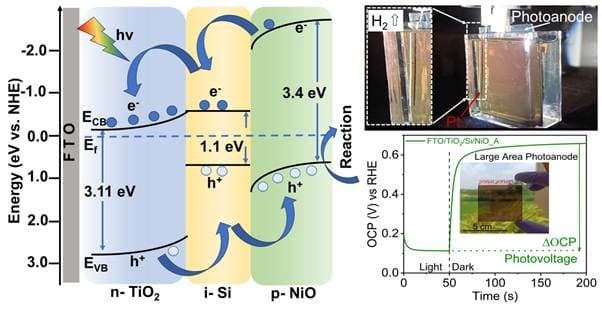
9.Solar Device for Green Hydrogen (Green Hydrogen Tech)

PIB
Illustration for Solar Device for Green Hydrogen (Green Hydrogen Tech)

What & Where

Innovation: solar-driven water-splitting device generating green hydrogen; photoanode uses n-i-p silicon heterojunction.

Developer: Centre for Nano and Soft Matter Sciences (CeNS), Bengaluru, Karnataka.

Process location: laboratory-scale proven, scaled to 25 cm² electrode for potential industrial deployment.

Quick Facts for MCQs

Tech & Materials

  • Silicon base paired with TiO₂ and NiO ensures efficient charge separation under alkaline conditions.
  • Magnetron sputtering noted as industry-scale, roll-to-roll compatible deposition technique.
  • Absence of rare, expensive catalysts cuts capital cost barriers.

Performance & Scale

  • High solar-to-hydrogen efficiency claimed, leveraging 600 mV photovoltage to lower energy losses.
  • Device maintained near-steady current density over 10-hour continuous run.
  • Scalable photoanode size demonstrates pathway from lab to pilot-plant modules.

Environmental Impact

  • Green hydrogen substitutes fossil-based H₂, reducing industrial CO₂ emissions.
  • Solar-only operation eliminates grid or thermal power dependence, lowering lifecycle footprint.
  • Supports India’s net-zero and National Green Hydrogen Mission objectives.

Economic Angle

  • Low-cost materials plus scalable sputtering aim for competitive ₹/kg hydrogen prices.
  • Durable electrodes lower replacement frequency, improving levelised cost of hydrogen.
  • Potential uptake in hard-to-abate sectors—fertilisers, refineries, steel—drives domestic clean-tech market.

Key Data Points

FeatureData-Point
Core energy sourceDirect sunlight only
Key layersn-TiO₂ / intrinsic-Si / p-NiO
Fabrication methodMagnetron sputtering
Surface photovoltage≈ 600 mV
Onset potential≈ 1 V_RHE
Stability test10 h; <4 % degradation
Scaled photoanode area25 cm²
Primary materialsEarth-abundant, low-cost elements

Related UPSC Prelims PYQs

CAPF_GAI, ESE_GS 2021PYQ 1

Scientists at CSIR-NCL Pune, with support from the Water Technology Initiative of the Department of Science and Technology (DST), Government of India, have recently developed a novel hybrid technology to bring safe and healthy drinking water. What is the name of the hybrid technology?

CAPF_GAI, ESE_GS 2022PYQ 2

US-based Ohmium International has started India's first green hydrogen electrolyzer manufacturing unit at

GS-3S&T

10.BSNL Quantum 5G FWA (5G Fixed Wireless)

PIB

What & Where

Quantum 5G FWA = BSNL’s SIM-less, Direct-to-Device 5G fixed wireless broadband solution.

Delivers fibre-like gigabit speeds via 5G radio; replaces physical fibre and SIM cards.

Soft-launched in Hyderabad; first fully indigenous FWA stack built under Atmanirbhar Bharat.

Quick Facts for MCQs

Tech & Schemes

  • Indigenous-stack ensures compliance with Atmanirbhar Bharat, reduces foreign tech dependency.
  • D2D platform embeds authentication inside CPE; network auto-recognises device on power-up.
  • Plug-and-play model avoids trenching, quick rural or urban deployment.

Economic Angle

  • No fibre laying cuts capex/O&M, lowering consumer tariff potential.
  • Gigabit speeds enable UHD streaming, cloud gaming, remote work; spurs digital economy growth.
  • Service can extend affordable broadband to underserved villages, narrowing digital divide.

Security Dimension

  • Domestic hardware/software gives India full control over upgrades, patches, surveillance resilience.
  • Absence of foreign core components mitigates supply-chain and espionage risks.
  • Centralised Indian data routing aligns with emerging telecom security directives.

Implementation Timeline

  • Soft launch completed in Hyderabad, customer onboarding ongoing.
  • Six-city pilot rollout scheduled, target completion September 2025.
  • Wider national deployment contingent on pilot performance and spectrum availability.

Key Data Points

FeatureData-Point
Launch operatorBSNL
First launch cityHyderabad
Access typeFixed Wireless (5G)
SIM requirementNone (D2D authentication)
Peak download speed980 Mbps
Peak upload speed140 Mbps
Typical latency< 10 ms
Core/RAN/CPE origin100 % Indian vendors
Household coverage (Hyd)> 85 %
CPE naturePlug-and-play
Pilot expansion citiesBengaluru, Pondicherry, Visakhapatnam, Pune, Gwalior, Chandigarh
Expansion timelineBy Sept 2025

Related UPSC Prelims PYQs

ESE_GS 2026PYQ 1

The Samriddh Gram Phygital Services Pilot Project was recently launched by which organization?

GS-2Editorial

11.Ethics of State Self Defence (Self-Defence Ethics)

AN

What & Where

Self-defence: authorised use of force to repel imminent threat against sovereignty or lives under customary and treaty law

Codified right: UN Charter Article 51 allows defensive action until Security Council intervenes

Current flashpoint: Israel’s strikes on Iranian nuclear sites ahead of US-Iran talks claim preventative self-defence

Quick Facts for MCQs

Legal & Policy

  • UNArticle51: grants inherent right of self-defence, mandates immediate UNSC report by acting state
  • JustWarDoctrine: jus ad bellum plus jus in bello criteria anchor moral legality of force
  • Pre-emptiveStrikes: legality disputed when threat not clearly imminent, erodes international norms

Ethical Dilemmas

  • ImminenceAmbiguity: unreliable intelligence can justify premature force, complicating moral judgement
  • CivilianHarm: defensive operations against dual-use sites risk non-combatant casualties, challenging proportionality
  • NationalInterestVsCollectiveSecurity: unilateral action may protect citizens yet destabilise global order

Safeguards

  • ProportionalityPrinciple: deploy only minimum force required to neutralise threat
  • NecessityTest: exhaust diplomacy, sanctions, cyber-containment before kinetic response
  • TransparencyRequirement: share verifiable evidence to earn global legitimacy and accountability

Key Data Points

FeatureData-Point
UN Charter basisArticle 51 permits self-defence until UNSC acts
Ethical yardsticksProportionality, necessity, last resort
Key philosophersMichael Walzer (Just War), Thomas Aquinas (Natural Law)
Typical misuse risksCollateral civilian harm, escalation spiral
Current case studyIsrael pre-emptive strikes on Iran nuclear program
Famous restraint quotesSun Tzu “subdue without fighting”, Gandhi “eye for eye”
GS-2Security

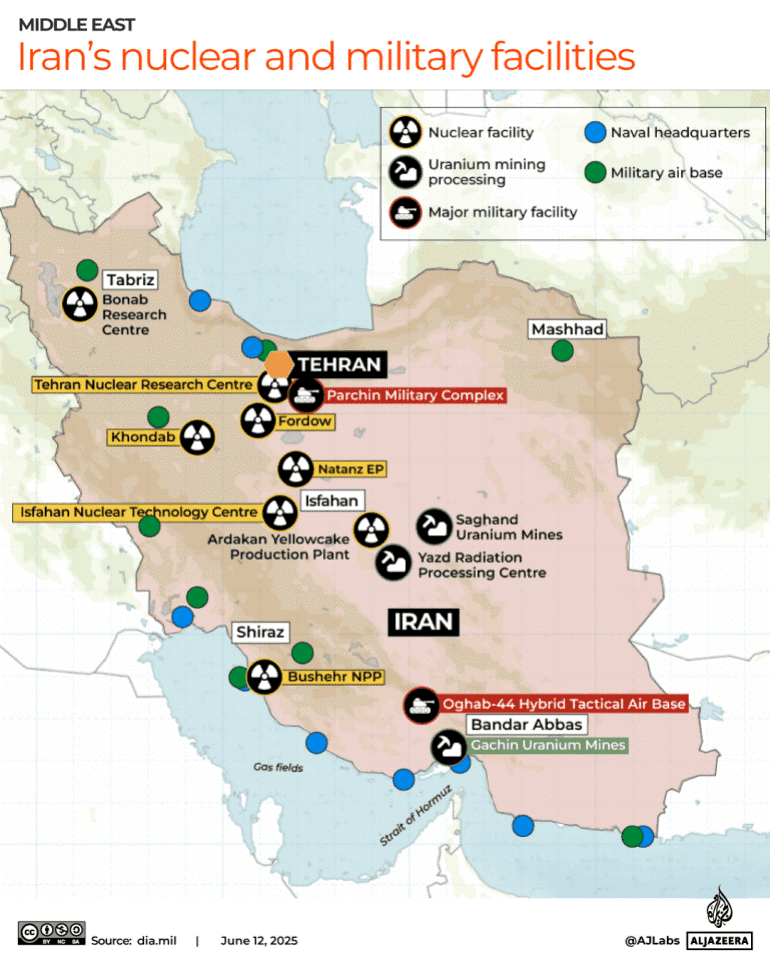
12.Fordow Underground Enrichment Site (Iran Nuclear Site)

Business Standard
Illustration for Fordow Underground Enrichment Site (Iran Nuclear Site)

What & Where

Fordow = Iran’s deepest, most fortified underground uranium-enrichment facility.

Sited near Qom, ~90 km SW of Tehran; buried 80 m within a mountain.

Core to Iran’s weapons-grade breakout; enriches uranium up to 60 %.

Quick Facts for MCQs

Structural Features

  • Reinforcement: multiple concrete slabs under mountain rock.
  • Access shafts limited, complicating aerial penetration.
  • Design intent: survive conventional airstrikes and delay assault forces.

Operational Significance

  • Breakout: 60 % enrichment leaves short technical sprint to 90 % weapons grade.
  • Continuity: underground siting enables covert run even during bombardment.
  • IAEA scrutiny: regular but contested inspections since revelation.

Security Dimension

  • Air umbrella: layered missiles deter hostile strike aircraft.
  • Regional flashpoint: facility in focus amid Israel-Iran escalation.
  • Deterrence logic: depth necessitates specialised munitions, raising attack costs.

Key Data Points

FeatureData-Point
Operational since2009 (IAEA-confirmed)
Depth below surface≈ 80 metres
Max enrichment level60 % U-235
Structural shieldSoil + rock + concrete layers
Air defenceIranian & Russian missile batteries
Claimed penetratorUS GBU-57 bunker-buster
SymbolismDefiance of Western nuclear oversight
GS-2Misc

13.51st G7 Summit Outcomes (G7 Summit 2025)

Hindustan Times
Illustration for 51st G7 Summit Outcomes (G7 Summit 2025)

What & Where

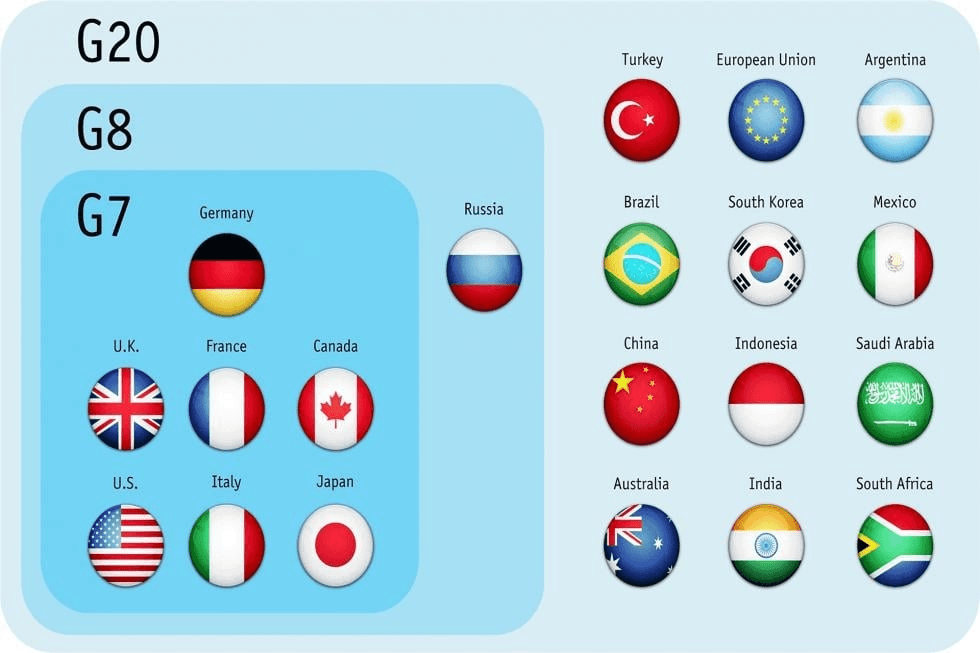
G7: informal forum of seven advanced economies—US, UK, France, Germany, Italy, Japan, Canada—plus EU as participant

Venue 2025: 51st summit, Kananaskis (Alberta), Canada; India present as outreach invitee for sixth consecutive year

Core process: rotating annual presidency, consensus decisions, no treaty or permanent secretariat

Quick Facts for MCQs

2025 Summit Deliverables

  • Charter: Kananaskis Wildfire Charter commits science-based, nature-based wildfire mitigation, aligns Glasgow 2030 deforestation goal
  • Minerals: G7 Critical Minerals Action Plan stresses supply diversification, local value, builds on 2023 Five-Point Plan, supports RISE Partnership
  • Security: Condemns Transnational Repression; launches Coalition & 2024 Action Plan against migrant smuggling

Institutional Features

  • Membership: seven nations plus EU observer; IMF, World Bank, UN invited ad-hoc
  • Governance: host nation sets agenda; outcomes political not legally binding
  • Modus: finance, foreign, climate ministers meet through year preparing leader communiqué

India Angle

  • Status: not member, regular outreach partner since 2019 continuous invites
  • Alignment: endorsed 2023 critical minerals five-point plan, engages on resilient supply chains
  • Significance: platform to voice Global South concerns without formal obligations

Key Data Points

FeatureData-Point
Founded as G61975, Rambouillet, France
Became G71976 after Canada joined
G8 phase1997 – 2014; Russia expelled over Crimea
2025 PresidencyCanada
Global GDP share≈40 %
World population share≈10 %
Energy demand share≈30 %
CO₂ emissions share≈25 %
EU roleNon-enumerated member
India’s attendance count12 times till 2025

Related UPSC Prelims PYQs

GS1, NDA_GAT 2021PYQ 1

Which one of the following nations is not a permanent member of G7?

GS1, NDA_GAT 2009PYQ 2

A present group of nations known as 'G-8' started first as G-7. Which one among the following was not one of them ?

GS-3Security

14.Israel's Samson Option Doctrine (Israeli Nuclear Doctrine)

TN

What & Where

Doctrine Massive-retaliation nuclear strategy by Israel, codenamed Samson Option

Geography Centred on Israel–West Asia; deters any actor posing existential threat

Platforms Triad capability via Jericho missiles, F-15I/F-35I aircraft, Dolphin-class submarines

Quick Facts for MCQs

Security Dimension

  • Deterrence Ensures second-strike ability despite Israel’s small, vulnerable geography
  • Mutual-destruction message aims to prevent WMD use against Israel

Delivery Platforms

  • Missiles Jericho-III range 4,800–6,500 km covers West Asia, Europe, parts of Asia
  • Submarines Dolphin-class may deploy nuclear Popeye-Turbo cruise missiles for stealth response
  • Aircraft F-15I Ra’am and F-35I Adir enable rapid, flexible nuclear delivery

Regional Dynamics

  • Iran Nuclear facility attacks reignite debate on Samson Option credibility and thresholds
  • Non-state actors Hezbollah, Hamas adjust strategies, factoring unpredictable Israeli nuclear redline

Key Data Points

FeatureData-Point
Nation involvedIsrael (undeclared nuclear power)
Estimated warheads80 – 400
Policy stanceStrategic ambiguity; no confirm / deny
Trigger conditionExistential threat to state survival
Retaliation scaleMassive, potentially city-level nuclear strikes
Delivery modesLand missiles, combat aircraft, sea-launched cruise missiles
Name originBiblical hero Samson collapsing temple on foes
Recent spotlightIran strikes under Operation Rising Lion, 2024
GS-1Scheme

15.District FRA Cells Initiative (Forest Rights Act)

The Hindu

What & Where

District-level FRA Cells: district support units under Dharti Aba Janjati Gram Utkarsh Abhiyaan (DAJGUA) to ease FRA 2006 processes

Coverage: 324 cells approved across 18 tribal-dominated States/UTs of India

Funding & locus: Grants-in-aid from Union Tribal Affairs Ministry; housed in district HQs for claimant facilitation

Quick Facts for MCQs

Legal & Policy

  • Bottom-up: claims initiated by Gram Sabha, vetted by SDLC, cleared by DLC, monitored by State Committee
  • FRA 2006 corrects colonial dispossession, vests individual, community, habitat and MFP rights
  • FRA cells aim to demarcate vested land, convert forest habitations to revenue villages

Tech & Schemes

  • Digitisation: cells upload FRA records to State & central portals for real-time monitoring
  • Coordination: liaise with Tribal Welfare Depts, forest, revenue and Gram Sabhas to hasten approvals
  • Funding: 100 % central assistance covering staff, GIS tools, field facilitation kits

Implementation Concerns

  • Overlap risk: new cells may duplicate FRC, SDLC, DLC roles causing accountability confusion
  • Parallel structure: outside FRA’s statutory chain, may weaken legally mandated committees
  • Legacy issues: irregular committee meetings, forest department delays unlikely solved solely by cells

Rights Significance

  • Livelihood: secure tenure boosts grazing, MFP marketing, seasonal cultivation for STs & OTFDs
  • Protection: FRA with LARR 2013 guards against eviction without rehabilitation, permits essential infrastructure
  • Conservation: assigns Gram Sabha duty to sustainably manage forests, biodiversity, water bodies

Key Data Points

FeatureData-Point
Parent schemeDharti Aba Janjati Gram Utkarsh Abhiyaan
Sanctioned cells324 district units
States/UTs covered18
Funding sourceUnion Ministry of Tribal Affairs Grants-in-aid
Primary statute servedForest Rights Act, 2006
Legal basis of cellsDAJGUA guidelines (not FRA itself)
Key village bodyGram Sabha Forest Rights Committee
Max individual forest land right4 ha for eligible ST/OTFD
Community resource termCommunity Forest Resource (CFR)
Minor Forest Produce scopeAll non-timber products incl. bamboo

Related UPSC Prelims PYQs

CAPF_GAI, GS1 2013PYQ 1

Under the Scheduled Tribes and Other Traditional Forest Dwellers (Recognition of Forest Rights) Act, 2006, who shall be the authority to initiate the process for determining the nature and extent of individual or community forest rights or both?

CAPF_GAI, GS1 2022PYQ 2

Which one of the following statements is not true with regard to tribal welfare?

Ready to practice?

Test your knowledge with our UPSC test series.

Start Free Trial