UPSC Current Affairs

15 topicsGS-1: 3GS-2: 5GS-3: 7
0/15 done
GS-2Polity

1.Lokpal of India Overview (Anti-corruption Body)

PIB

What & Where

Independent statutory ombudsman to probe corruption allegations against Union public functionaries

Process triggered via written complaint; empowered to investigate, prosecute, attach property, supervise CBI

Headquarters Vasant Kunj, New Delhi

Quick Facts for MCQs

Composition

  • Structure Chairperson plus eight Members ensuring 50 % judicial presence
  • Reservation Minimum 50 % seats for SC/ST/OBCs, minorities & women collectively
  • Tenure Five years or until 70 years of age, resignable to President

Jurisdiction & Powers

  • Coverage Ministers, MPs, PSU officials, NGOs receiving large foreign funds
  • Authority Summon, search, seize, order suspension or transfer of accused officials
  • Autonomy Independent Inquiry Wing & Prosecution Wing headed by Director-level officers

Recent Update

  • Change Adopted new motto to boost citizen engagement & visibility
  • Adoption Full Bench approval; replaces Sanskrit motto retained since 2019 setup
  • Outreach Plans include stronger social media presence, quarterly public reports

Key Data Points

FeatureData-Point
Parent lawLokpal & Lokayuktas Act 2013
Act commencement16 Jan 2014
New motto (2024)Empower Citizens, Expose Corruption
Old mottoMa Gridhah Kasyasvid Dhanam
Chairperson eligibilityFormer CJI or Supreme Court Judge
Total membersUp to 8 (4 judicial + 4 non-judicial)
Appointing authorityPresident of India
Selector bodyPM, LoP, CJI-nominee, Speaker, another Union minister
Jurisdiction top postPrime Minister (with safeguards)
Employee coverageGroup A–D Central staff
NGO/FC thresholdForeign contribution > ₹1 crore / yr
Key penal law appliedPrevention of Corruption Act 1988
Core powerSanction prosecution & order property attachment
CBI linkSupervises CBI in referred cases
HQ stateDelhi

Related UPSC Prelims PYQs

GEO_GS, GS1 2025PYQ 1

Consider the following statements about Lokpal:

GEO_GS, GS1 2026PYQ 2

Who among the following holds his/her office at the pleasure of the President?
GS-2SchemeQuick Bite

2.NeVA Paperless Legislature Platform (NeVA Platform)

PIB
Illustration for NeVA Paperless Legislature Platform (NeVA Platform)

What & Where

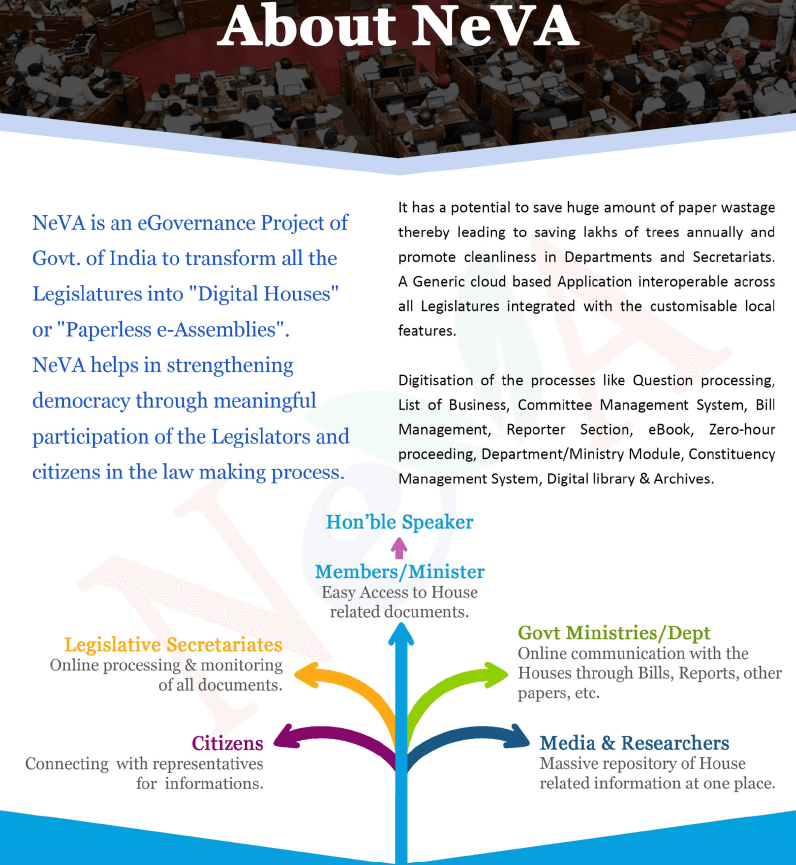
National e-Vidhan Application workflow platform enabling paperless legislative business across India

Part of One Nation One Application; inaugurated for Puducherry Legislative Assembly June 2025

Hosted on NIC Cloud MeghRaj; first adopted by Nagaland in 2022

Quick Facts for MCQs

Tech & Schemes

  • Real time access to rules bills questions reports via unified portal
  • Secure login permits members online submission of questions and notices
  • mNeVA mobile app provides 24x7 legislative data to citizens

Governance & Transparency

  • Live streaming broadens public oversight of House proceedings
  • Unified repository eliminates redundant state platforms ensuring standardised data
  • Member centric design accelerates decision workflow within assemblies

Environmental Impact

  • Paperless operations projected to save 3–5 tonnes paper annually
  • Digital workflow cuts carbon footprint of assembly secretariats
  • Supports UN SDGs on responsible consumption and strong institutions

Key Data Points

FeatureData-Point
Recently inaugurated forPuducherry Legislative Assembly, Jun 2025
Presiding ministerMoS Information & Broadcasting & Parliamentary Affairs
Funding pattern100 % Central Assistance, Ministry of Parliamentary Affairs
Hosting infrastructureNIC Cloud MeghRaj
First implementing stateNagaland, 2022
Core initiativeOne Nation, One Application
Device compatibilityDevice-neutral; tablets and handhelds
Citizen interfaceLive streaming; mNeVA app Android / iOS
Estimated paper saving3–5 tonnes each year
SDG linkageDigital India, Go Green, Good Governance goals
GS-3Economy

3.India Microfinance Sector Stress (Microfinance Sector)

BL

What & Where

Microfinance: small‐ticket loans, savings, insurance for low-income, collateral-free; regulated by RBI as NBFC-MFIs/SFBs.

Core goal: financial inclusion, women entrepreneurship, poverty alleviation across rural and peri-urban India.

Origin: 1974 SEWA Bank (Ahmedabad); inspired by 1976 Grameen model.

Quick Facts for MCQs

Sector Metrics

  • Portfolio-shrink: lender risk aversion, regulatory tightening cut new loans.
  • Ticket-size rise: focus shifts to fewer, larger accounts amid credit stress.
  • Regional divergence: policy backlash in Karnataka vs expansion in eastern & southern belts.

Challenges

  • Over-indebtedness: multiple concurrent loans, weak credit bureau usage.
  • High-interest margins: usury concerns amplify borrower distress.
  • Coercive recoveries: harassment, suicides trigger state-level punitive laws.

Regulatory & Policy

  • RBI: sole regulator; exploring uniform recovery code, interest caps.
  • Malegam norms: set NBFC-MFI criteria, margin ceilings, multiple-borrowing checks.
  • State actions: Karnataka law penalises intimidation, indirectly hits compliant MFIs.

Tech & Way Forward

  • AI analytics: early-warning on defaults, borrower heat-maps.
  • Digital KYC & e-mandates: streamline onboarding, ensure repayment discipline.
  • Empathy focus: shift from profit maximisation to community-centric developmental finance.

Key Data Points

FeatureData-Point
FY25 Gross Loan Portfolio₹3.75 lakh crore (-13.5% YoY)
FY25 NPAs outstanding~₹55,000 crore
31–180 day PAR6.2% (up from 2%)
Q4 FY25 disbursal₹70,942 crore (-34% YoY)
Avg loan ticket size₹53,897 (+11.5%)
Leading states by outreachBihar, Tamil Nadu, Uttar Pradesh
State with sharpest fallKarnataka: 17% GLP decline
Key oversight report2010 Malegam Committee
Interest issue flaggedHigh margins despite low-cost funds
Recovery concernRising coercive practices, legal backlash

Related UPSC Prelims PYQs

CDS_GK, GS1 2011PYQ 1

Microfinance is the provision of financial services to people of low-income groups. This includes both the consumers and the self-employed. The service/services rendered under microfinance is/are:

CDS_GK, GS1 2022PYQ 2

Which one of the following statements about a borrower from a Microfinance Company is NOT correct?

GS-1History

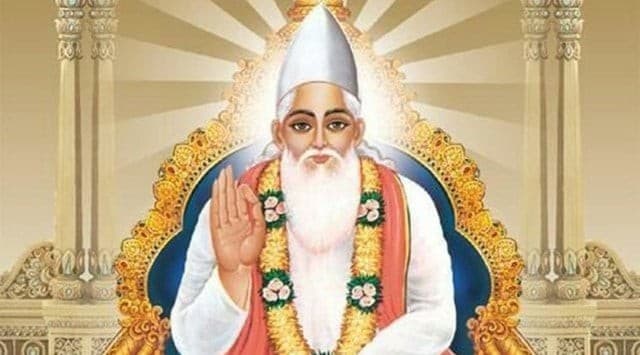
4.Sant Kabir Das Teachings (Bhakti Movement)

Indian Express
Illustration for Sant Kabir Das Teachings (Bhakti Movement)

What & Where

Mystic poet-saint Kabir Das; 15th-century Bhakti reformer

Propounded Nirguna Bhakti stressing formless divine & inner realisation

Lived-worked mainly in Varanasi region, present Uttar Pradesh

Quick Facts for MCQs

Philosophy & Teachings

  • Inner divinity; God within not in idols or pilgrimages
  • Seva, humility, minimalism viewed as path to moksha
  • Critiqued dogma; upheld human dignity across caste creeds

Impact on Movements

  • Kabir Panth institutionalised dohas via sadhus, lay followers
  • Sikh Gurus incorporated his bani shaping egalitarian ethics
  • Inspired Dadu Panthis, Namdhari, other anti-ritual sects

Contemporary Relevance

  • Harmony message counters communal polarisation
  • Caste critique aligns with constitutional equality articles 14-17
  • Simplicity ethos echoes sustainability & minimalist living

Key Data Points

FeatureData-Point
Traditional birth year1440 CE
Foster familyMuslim Julaha (weaver) couple Niru & Nima
Key worksBijak, Sakhi Granth, Kabir Granthavali, Anurag Sagar
Verses in Guru Granth Sahib261 padas, 3 shlokas
Core doctrineNirguna Brahman, Nam-smaran, Ahimsa
Social stanceRejected caste, ritual; stressed equality & seva
Founded sectKabir Panth with mathas at Varanasi, Chhattisgarh, Gujarat
InfluencedGuru Nanak, Dadu Dayal, Sikh & Bhakti traditions
Death traditionMaghar, UP (not Kashi) to refute salvation myths
Jayanti observance 202411 June, 648th anniversary

Related UPSC Prelims PYQs

CAPF_GAI, CDS_GK 2021PYQ 1

Who among the following Bhakti saints did not belong to Nirguna School of Bhakti?

CAPF_GAI, CDS_GK 2024PYQ 2

भक्ति कवि नामदेव के संबंध में, निम्नलिखित में से कितना/कितने कथन सही है/हैं?

GS-1Mapping

5.Taiwan Physical Geography (East Asia Island)

New Indian Express

What & Where

Earthquake 5.9 M jolted Taipei and coastal Taiwan on a high-risk tectonic boundary

Taiwan sits at Eurasian–Philippine Sea plate junction within the Pacific Ring of Fire

Island nation in western Pacific, ~160 km off China’s southeast; capital Taipei

Quick Facts for MCQs

Physical Geography

  • Mountains dominate >66 % area; Central Range forms north-south backbone
  • Soils volcanic, fertile yet erosion-prone under heavy rainfall

Hydrography

  • Rivers short, steep, heavy sediment; limit navigation and cause flash floods
  • Zhuoshui longest 186 km; Gaoping widest basin; Danshui only major navigable course

Seismic Risk

  • Constant plate collision drives frequent shallow quakes and associated landslides
  • Ring of Fire accounts for 90 % world earthquakes, Taiwan among most active zones

Neighbourhood & Straits

  • Borders Pacific Ocean east, East China Sea north, Bashi Channel south, Taiwan Strait west
  • Ryukyu Islands lie northeast; Philippines across Bashi Channel southward

Key Data Points

FeatureData-Point
Latest quake magnitude5.9
Plate convergenceEurasian & Philippine Sea
Global seismic beltPacific Ring of Fire
Terrain mountainous> two-thirds of island
Highest peakYu Mountain 3,997 m
Main rangeChung-yang (Central) Range
Longest riverZhuoshui 186 km
Largest river basinGaoping
Navigable riverDanshui to Taiwan Strait
Distance to China~160 km
GS-3Environment

6.Kerala Seeks Wildlife Act Amendment (Wildlife Act Amendment)

Indian Express

What & Where

Wildlife (Protection) Act, 1972: pan-India statute governing conservation, habitat management and wildlife trade control.

Kerala: seeking Union-level amendment to permit controlled culling of life- or crop-threatening wild animals.

Post-2022 regime: four schedules—Schedule I absolute protection; Schedule IV lists CITES specimens for trade regulation.

Quick Facts for MCQs

Legal & Policy

  • Section 9 bans hunting Schedules I-IV species; exemptions only via Sections 11, 12 permits.
  • Section 11 allows killing if human life threatened, animal incurably diseased, relocation impossible.
  • Section 62 empowers Centre to list non-Schedule I/Part II animals as vermin for limited area, period.

Implementation Challenges

  • Approval lag: district collectors need court endorsement; Section 50 grants no crisis powers.
  • Schedule I listing of bonnet macaque blocks timely action despite crop depredation reports.
  • Dual verification required: authorities must prove capture/relocation infeasible before lethal sanction.

Human-Wildlife Conflict

  • Kerala recorded multiple human fatalities 2016-25, heightening rural resentment and policy pressure.
  • Conflict drivers: habitat shrinkage, crop-raiding elephants, macaques in peri-urban zones.
  • State amendment plea targets faster mitigation to safeguard farmers’ lives and livelihoods.

Key Data Points

FeatureData-Point
Enactment year1972
Latest amendment2022
Current schedulesFour (I-IV)
Highest protectionSchedule I
Kill approval authorityChief Wildlife Warden (Sec 11)
Vermin declaration powerUnion Govt (Sec 62)
Hunting ban clauseSection 9
Kerala request year2025

Related UPSC Prelims PYQs

GS1 2020PYQ 1

If a particular plant species is placed under Schedule VI of The Wildlife Protection Act, 1972, what is the implication?

GS1 2017PYQ 2

In India, if a species of tortoise is declared protected under Schedule I of the Wild Life (Protection) Act, 1972, what does it imply?

GS-3EnvironmentQuick Bite

7.Etalin Hydropower Forest Clearance (Etalin Dam Clearance)

Indian Express

What & Where

Etalin run-of-the-river hydropower (3,097 MW) planned in Dibang Valley, Arunachal Pradesh, Eastern Himalaya Biodiversity Hotspot.

Two gravity dams on Dri & Talo (Tangon) tributaries feed Dibang → Brahmaputra basin.

Secured in-principle forest clearance from statutory Forest Advisory Committee (MoEFCC).

Quick Facts for MCQs

Biodiversity

  • Habitat shelters tiger, leopard, snow leopard, black bear, musk deer, Mishmi takin.
  • Eastern Himalaya hotspot: 1 of 36 global biodiversity hotspots recognised internationally.
  • Avifauna concentration makes valley critical for endemic and migratory bird conservation.

Legal & Policy

  • FAC advisory; MoEFCC grants final Stage-II clearance after mitigation, compensatory afforestation compliance.
  • Unclassified forest diversion avoids Reserved/Protected forest restrictions, easing procedural hurdles.
  • FAC evaluates mining, industry, township, power proposals under Forest (Conservation) Act.

Social Concerns

  • Indigenous Idu Mishmi have lodged sustained protests against deforestation and cultural landscape alteration.

Key Data Points

FeatureData-Point
Project capacity3,097 MW
Project typeRun-of-the-river hydropower
Dam count/type2 gravity dams
RiversDri & Talo (Tangon)
River basinDibang → Brahmaputra
Forest land diversion>1,100 ha unclassified
Trees to be felled≈2.7 lakh
Biodiversity hotspotEastern Himalaya
Threatened mammals6 (3 EN, 3 VU)
Bird richness56 % of India’s species
Endemic birds3 restricted-range species
Local oppositionIdu Mishmi community
Clearing authorityForest Advisory Committee
FAC legal baseForest (Conservation) Act 1980
GS-3S&T

8.Salmonella Foodborne Infection (Foodborne Pathogen)

Hindustan Times
Illustration for Salmonella Foodborne Infection (Foodborne Pathogen)

What & Where

Salmonella; gram-negative bacterium behind intestinal food-borne illness salmonellosis

Current outbreak; 79 confirmed cases across several US states linked to eggs

Recall zone; 1.7 million cartons from California-based August Egg Company pulled nationwide

Quick Facts for MCQs

Transmission Vectors

  • Raw/undercooked eggs, chicken dominant carriers
  • Contaminated meat, fruits, vegetables, processed nut products noted in past outbreaks
  • Pets, especially reptiles, can shed Salmonella into household environments

Clinical Features

  • Onset 12–96 hours; diarrhoea (sometimes bloody), stomach cramps, fever prevalent
  • Headache, vomiting, appetite loss frequent; dehydration risk in severe cases
  • Illness usually self-limiting within a week; antibiotics for high-risk groups only

Prevention Measures

  • Cook eggs & poultry to ≥74 °C internal temperature
  • Wash hands before meals, after bathroom, and post-handling pets or raw food
  • Keep raw and cooked foods separate; sanitise utensils, cutting boards, countertops

Regulatory Action

  • CDC & FDA coordinating traceback, public advisories, and ongoing surveillance
  • Retailers instructed to remove implicated cartons; consumers urged to discard or refund
  • Monitoring continues for new cases; further recalls possible if contamination persists

Key Data Points

FeatureData-Point
PathogenSalmonella spp.
DiseaseSalmonellosis
Cases (CDC update)79 people
Product recall size1.7 million egg cartons
Firm involvedAugust Egg Company, California
Incubation period12 – 96 hours
Main vectorsRaw/undercooked eggs & poultry
Other sourcesContaminated meat, dairy, produce, nut butters
Person-to-personFecal-oral via hands, surfaces, utensils
Core symptomsDiarrhoea, cramps, fever, nausea, vomiting
Key preventionThorough cooking; strict hand hygiene

Related UPSC Prelims PYQs

NDA_GAT 2019PYQ 1

Which one of the following is a bacterium that causes disease in the human body?

GS-3S&TQuick Bite

9.Hydrogen Plasma Green Nickel Extraction (Green Metallurgy)

The Hindu

What & Where

Nickel = silvery-white, 5th-most common metal (80 ppm in crust), pivotal for EV batteries & stainless steel.

Hydrogen-plasma extraction replaces carbon smelting; trims CO₂ by 84 %, lifts energy efficiency 18 %.

Major reserves: Australia, USA, Brazil, Canada, China; Indian laterite (Sukinda, Odisha) & sulphide (East Singhbhum, Jharkhand); India imports nearly 100 %.

Quick Facts for MCQs

Green Metallurgy

  • Hydrogen-plasma uses renewable H₂, eliminates coke, curbs process greenhouse footprint dramatically.
  • Aligns with global push to decarbonise steel/alloy supply chains.

Indian Context

  • Entire domestic demand met via imports, heightening supply risk for battery programme.
  • Exploration focus on lateritic belts under National Mineral Exploration Policy.
  • Inclusion in critical minerals list drives incentives for recycling & alternative sourcing.

Applications

  • 70 % demand from stainless steel; rising share from Li-ion batteries for EVs & grid storage.
  • Also used in aerospace super-alloys, electroplating, coinage, chemical catalysts.

Key Data Points

FeatureData-Point
Conventional CO₂ intensity> 20 t CO₂ / t nickel
New method CO₂ cut84 % lower
Energy saving18 % higher efficiency
2040 demand projection> 6 million t/year
Ore groupsSulphide & Laterite
Key sulphide oresPentlandite, Millerite, Gersdorffite
Key laterite oresGarnierite, Nickeliferous limonite, Saprolite
Indian primary outputNil; small by-product at HCL Ghatsila
Main Indian depositsSukinda Valley (laterite), East Singhbhum (sulphide)
Critical mineral statusListed among India’s 30 critical minerals
GS-3S&TQuick Bite

10.KATRIN Neutrino Mass Experiment (Neutrino Mass Measurement)

The Hindu
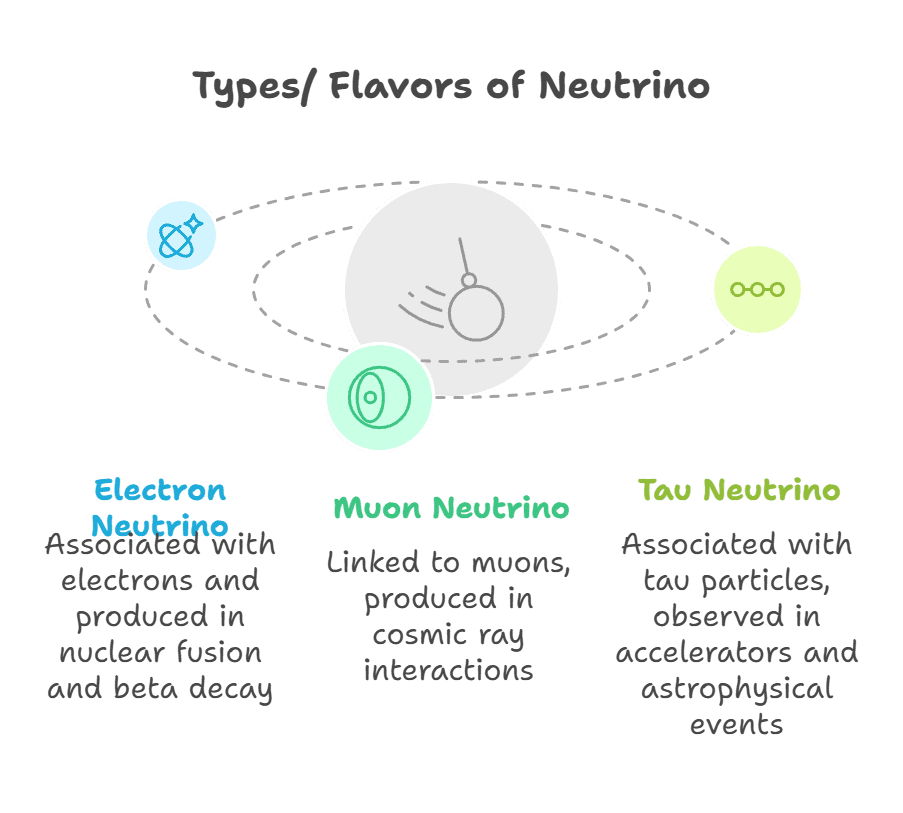
Illustration for KATRIN Neutrino Mass Experiment (Neutrino Mass Measurement)

What & Where

KATRIN experiment Germany measures absolute neutrino mass via precise β-decay spectra of molecular tritium

Neutrino subatomic ghost particle with near-zero mass, neutral charge, interacts only through weak nuclear force

Photons rank first, neutrinos second most abundant cosmic particles, travel straight lines unaffected by magnetic fields

Quick Facts for MCQs

Experiment Details

  • Uses precise monitoring of molecular tritium β-decay spectrum
  • Objective establish absolute neutrino mass scale, not just differences
  • Located at Karlsruhe Institute of Technology Germany

Particle Properties

  • No size or electric charge, virtually zero mass
  • Interact rarely due to weak nuclear force only
  • Travel cosmic distances unperturbed by strongest magnetic fields

Detection Challenges

  • Minimal interaction necessitates massive, sensitive detectors for observation
  • Ghostlike passage through Earth causes high background suppression needs
  • Direct neutrino mass measurement remains frontier task in experimental physics

Key Data Points

FeatureData-Point
Full formKarlsruhe Tritium Neutrino Experiment
Host countryGermany
Primary aimDetermine absolute mass of neutrino
Source isotopeMolecular tritium (³H₂)
Interaction forceWeak nuclear only
Electric chargeZero
Cosmic abundance rank2nd after photons; 1st among matter particles
Magnetic field responseUnaffected, maintain straight trajectory

Related UPSC Prelims PYQs

GEO_GS, GS1 2010PYQ 1

India-based Neutrino Observatory is included by the Planning Commission as a mega science project under the 11th Five-Year Plan. In this context, consider the following statements:

GEO_GS, GS1 2023PYQ 2

In a beta decay process, a nucleus spontaneously emits an electron (or positron) accompanied by the emission of antineutrino (or neutrino). Which one of the following statements is not true about neutrinos/antineutrinos?

GS-2Security

11.International Marine Navigation Aids Body (Maritime Navigation)

PIB
Illustration for International Marine Navigation Aids Body (Maritime Navigation)

What & Where

IALA — intergovernmental technical body setting global norms for Marine Aids to Navigation (AtoN) to boost maritime safety

Core work: standardising buoys, beacons, lighthouses, Vessel Traffic Services; promoting digital & environment-friendly navigation

HQ: Saint-Germain-en-Laye, France; 2nd Council Session held in Nice, India to host 2025 GA & 2027 Conference in Mumbai

Quick Facts for MCQs

India’s Role

  • Leadership: elected Council VP, signalling rising maritime influence
  • Hosting: voluntarily offers Mumbai for GA-3 (2025) & Conference-21 (2027)
  • Training: Kolkata institute to conduct global AtoN capacity programmes

Functions & Standards

  • Standardisation: issues colours, shapes, light rhythms for buoys, beacons, lighthouses
  • Digitalisation: develops IoT-enabled AtoN, Maritime Service Registry, e-navigation tools
  • Harmonisation: aligns regional practices to one global Maritime Buoyage System

Environmental & Heritage Angle

  • Safety: aims to cut accidents, protect marine environment via precise navigation aids
  • Conservation: promotes preservation of historic lighthouses, dovetailing with India’s lighthouse tourism drive

Capacity & Technology Sharing

  • Workshops: member states receive training, tech transfer, advisory missions
  • Funding: encourages joint R&D on sustainable, energy-efficient navigation aids

Key Data Points

FeatureData-Point
Founded as NGO1957
Became inter-governmental2021
HeadquartersSaint-Germain-en-Laye, France
Current Council Session2nd, Nice (France), 2024
India on Council since1980
India’s Vice-Presidency2023 – 2027
First General Assembly2023, Singapore
Next General Assembly2025, Mumbai
Next IALA Conference2027, Mumbai
Core mandateDevelop international AtoN standards & guidance
Key technical areasBuoys, Beacons, Lighthouses, VTS, Digital AtoN
Capacity hub in IndiaMarine Navigation Training Institute, Kolkata
GS-2Security

12.UNSC Taliban and Counter-Terrorism Committees (UNSC Committees)

Indian Express
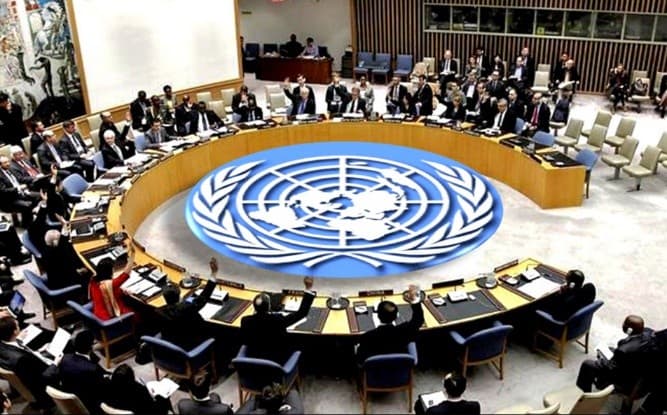
Illustration for UNSC Taliban and Counter-Terrorism Committees (UNSC Committees)

What & Where

1988 Taliban Sanctions Committee: UNSC subsidiary enforcing travel ban, arms embargo, asset freeze on Taliban-linked actors in Afghanistan

1373 Counter-Terrorism Committee: UNSC technical body supervising states’ compliance with post-9/11 Resolution 1373 obligations

Both seated at UN HQ; measures legally binding on all UN members, Taliban list currently ≈130 names

Quick Facts for MCQs

Mandate & Objectives

  • 1988 TSC: ensure sanctions hit Taliban elements threatening Afghan peace
  • 1373 CTC: push states to criminalise terrorism, choke financing, deny safe havens

Structure & Procedure

  • Chair controls agenda, consultations, recommendations; no unilateral listings
  • Both committees operate without investigative arms; depend on national reporting

Pakistan’s Role

  • Pakistan to steer 1988 TSC deliberations and vet listing/delisting requests
  • Vice-Chair in 1373 CTC offers procedural influence on global capacity-building reviews

Key Data Points

FeatureData-Point
Establishment year (1988 TSC)2011
Establishment year (1373 CTC)2001
Foundational Resolution (1988 TSC)UNSCR 1988
Foundational Resolution (1373 CTC)UNSCR 1373, Chapter VII
Current Chair (2025-26)Pakistan for 1988 TSC
Current Vice-Chair (2025-26)Pakistan for 1373 CTC
Listing regimeYes for 1988 TSC; none for 1373 CTC
Listed individuals/entities≈130 (Taliban-linked)
Decision styleConsensus in both committees
Enforcement powerRelies on state cooperation; no own investigations
GS-3Security

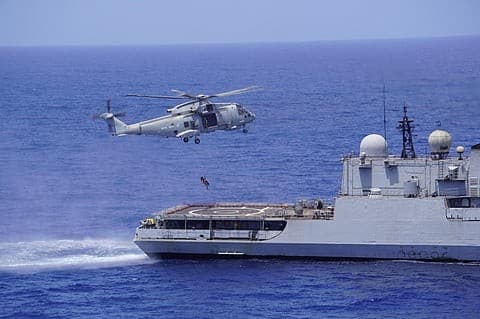
13.India–UK PASSEX Naval Exercise (India-UK Naval Drill)

New Indian Express
Illustration for India–UK PASSEX Naval Exercise (India-UK Naval Drill)

What & Where

Definition: ad-hoc bilateral naval drill held when friendly warships cross paths during deployments

Geography: 2024 iteration executed in North Arabian Sea between Oman and India shipping lanes

Purpose: enhance interoperability, communication, anti-submarine coordination, maritime domain awareness

Quick Facts for MCQs

Participants & Assets

  • IndiaAssets: stealth frigate INS Tabar, conventional submarine, P-8I long-range maritime patrol aircraft engaged
  • UKAssets: HMS Prince of Wales carrier and HMS Richmond frigate deployed within UK Carrier Strike Group
  • OfficerExchange: temporary cross-deck postings fostered crew familiarity and procedural interoperability

Operational Highlights

  • HelicopterControl: coordinated take-offs, landings, vectored flights for rapid multi-platform response against undersea targets
  • RealTimeData: encrypted links transmitted sensor feeds enhancing shared situational awareness across air, surface, subsurface units
  • CommunicationProtocols: voice and data link drills validated system compatibility for seamless coalition missions

Strategic Significance

  • Diplomacy: bolsters India’s defence engagement footprint in Indo-Pacific alongside traditional partner United Kingdom
  • SAGAR: exercise supports Security And Growth for All in Region vision through cooperative maritime security
  • Deterrence: joint presence signals commitment to free, rules-based trade routes and counters hostile submarine activity

Key Data Points

FeatureData-Point
Exercise typePassage Exercise (PASSEX)
Host waterbodyNorth Arabian Sea
Indian assetsINS Tabar, conventional submarine, P-8I aircraft
UK assetsHMS Prince of Wales carrier, HMS Richmond frigate
Core focusAnti-Submarine Warfare interoperability

Related UPSC Prelims PYQs

ESE_GS, GEO_GS 2022PYQ 1

Which one of the following countries did the Indian Navy participate in the U.S. Navy-led Southeast Asia Cooperation and Training (SEACAT) military exercise, to demonstrate its maritime manoeuvres?

ESE_GS, GEO_GS 2025PYQ 2

Naseem-Al-Bahr, held in October 2024, was a joint maritime exercise between the navies of India and

GS-2Scheme

14.CROPIC AI Crop Monitoring Scheme (AI Crop Monitoring)

Indian Express

What & Where

CROPIC = Collection of Real Time Observations & Photo of Crops, mobile-app system for AI-based crop imaging.

Process: farmer photo uploads → cloud vision analytics → dashboard diagnostics → evidence for PMFBY loss assessment.

Pilot: 50 districts across agro-climatic zones during Kharif 2025 & Rabi 2025-26.

Quick Facts for MCQs

Technology & Data

  • AI-cloud: computer vision detects crop type, growth stage, pest or weather stress, loss severity.
  • Dashboard: live geo-mapped analytics enable proactive state or district intervention.
  • Database: image signature library trains machine learning for future diagnostics.

Farmer Participation

  • Upload: growers contribute geo-tagged, time-stamped images via Android/iOS app.
  • Crowdsourcing: farmer inputs widen spatial coverage and minimise enumerator visits.
  • Evidence: photos act as verifiable proof during insurance claim scrutiny.

Insurance & Policy

  • PMFBY: CROPIC integration expedites transparent settlement of crop-loss claims.
  • FIAT funding: initiative showcases innovation mandate within national farm-insurance framework.
  • Resilience: digital monitoring bolsters climate-risk adaptation and agri-policy responsiveness.

Key Data Points

FeatureData-Point
Full formCollection of Real Time Observations & Photo of Crops
Nodal ministryAgriculture & Farmers Welfare
Funding windowFIAT under PMFBY
Linked schemePradhan Mantri Fasal Bima Yojana
Pilot seasonsKharif 2025, Rabi 2025-26
Pilot coverage50 districts; 3 insured crops each
Farmer uploads4–5 photos per crop cycle
Core techAI cloud vision & image recognition
Dashboard usersDistrict & state agriculture officials
Key aimsReal-time monitoring, early stress flag, automated claim validation
GS-1Misc

15.UNFPA 2025 Population Report Highlights (UNFPA Population Report)

TH1
Illustration for UNFPA 2025 Population Report Highlights (UNFPA Population Report)

What & Where

UNFPA’s State of World Population 2025 reviews global fertility, ageing, reproductive autonomy

India emerges as largest population base; report maps interstate fertility divide, demographic window, unmet needs

Focus area spans all 36 States/UTs contrasting high-fertility BIMARU belt with low-fertility southern & metro zones

Quick Facts for MCQs

Demographic Metrics

  • Fertility_Gap Bihar 3.0 vs Kerala ≈1.6 highlights development and gender disparities
  • Youth_Bulk 26 % aged 10-24 offers short demographic dividend needing rapid skilling
  • Dependency_Rise expected as ageing accelerates after 2030s

Social Barriers

  • Financial_Cost 40 % couples delay births over money constraints
  • Housing_Issue 22 % cite inadequate space; Job_Insecurity deters 21 %
  • Anxiety_Triggers climate, politics, economy increasingly influence family-size decisions

Policy Prescriptions

  • Access_First universal contraception, infertility care, safe abortion stressed over coercive targets
  • Inclusion_Need services for unmarried, LGBTQIA+, marginalised, rural youth
  • Support_System childcare, housing, secure jobs, gender-equal norms essential to meet desired fertility

UNFPA Basics

  • Mandate ensure wanted pregnancies, safe childbirth, fulfilled youth potential aligning with SDG 3-4-5
  • Funding fully voluntary contributions; no UN regular budget allocation
  • 2030_Goals zero unmet family planning, zero preventable maternal deaths, zero gender violence

Key Data Points

FeatureData-Point
India population Apr 2025146.39 crore
Peak size & timing170 crore, early 2060s
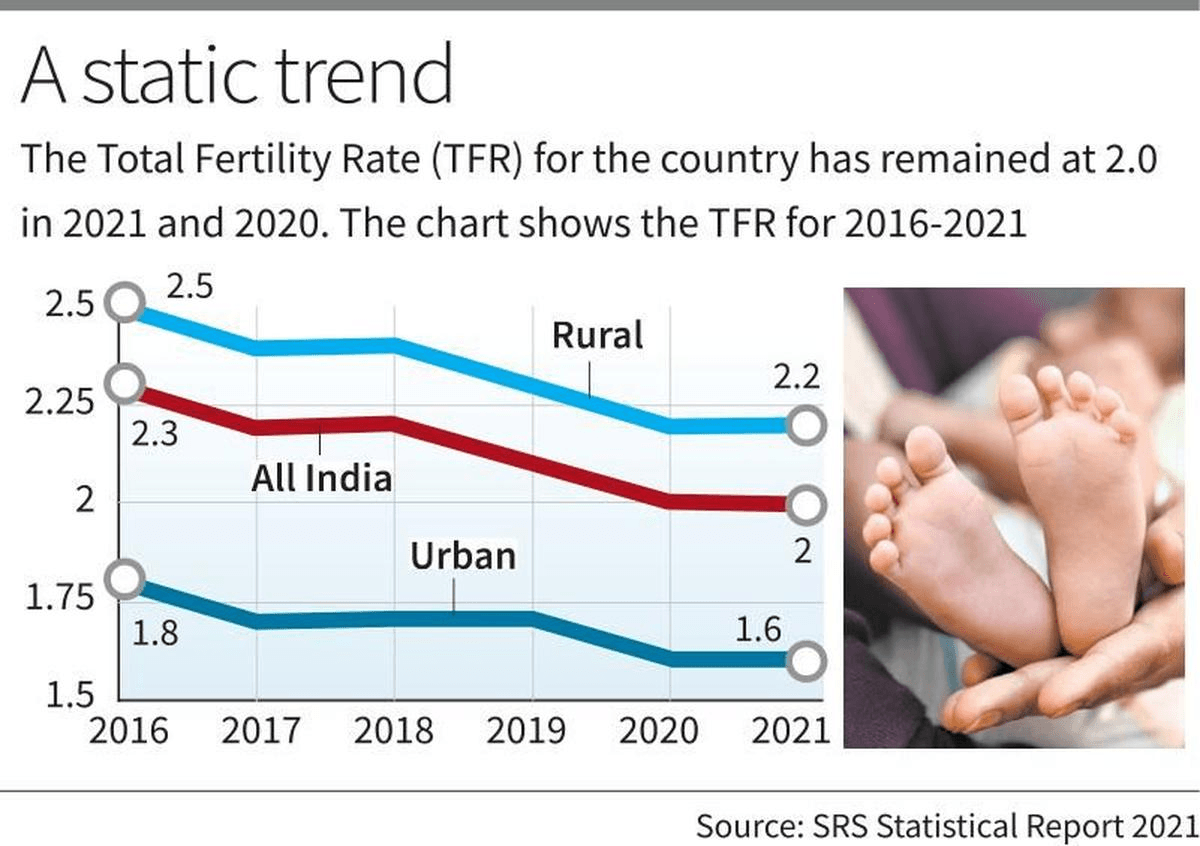
National TFR 20251.9
Replacement TFR2.1
States above 2.1 TFR5
Life expectancy M/F71 yrs / 74 yrs
Working-age share 15-6468 %
Children 0-14 share24 %
Elderly 65+ share7 %
Median age28.2 yrs
Dependency ratio47 dependents per 100 workers
Male / Female LFPR78.8 % / 41.7 %

Related UPSC Prelims PYQs

GS1 2008PYQ 1

As per India's National Population Policy, 2000, by which one of the following years is it our long-term objective to achieve population stabilization?

GS1 2005PYQ 2

Consider the following statements:

Ready to practice?

Test your knowledge with our UPSC test series.

Start Free Trial