UPSC Current Affairs

14 topicsGS-1: 4GS-2: 3GS-3: 7
0/14 done
GS-3Economy

1.India's FDI Net Decline (Foreign Direct Investment)

EPW
Illustration for India's FDI Net Decline (Foreign Direct Investment)

What & Where

Foreign Direct Investment (FDI): ≥10 % equity stake by a non-resident, conferring control/management rights.

Routes & Forms: Automatic vs Government approval; equity infusion, reinvested earnings, intra-company loans.

Core Sources FY 24-25: Singapore (~15 %), Mauritius (~10 %), reflecting financial-centre dominance.

Quick Facts for MCQs

Trends & Numbers

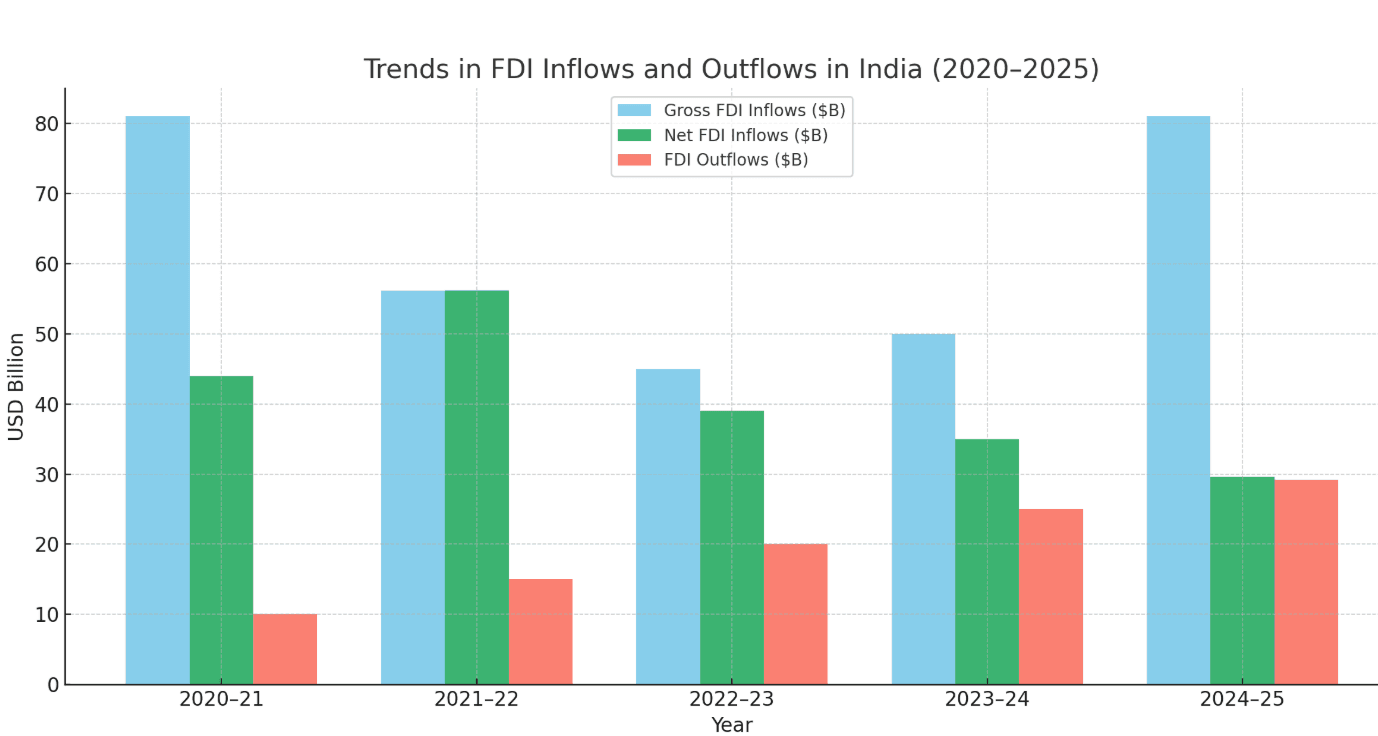
  • Net-FDI collapsed: USD 44 bn (2020-21) ➜ USD 0.4 bn (2024-25).
  • Disinvestments ballooned: <1 % early-2000s ➜ 63.5 % of gross inflow now.
  • Outward-FDI surged to USD 29.2 bn, nearly tripling within five years.

Structural Issues

  • Concentration: Singapore & Mauritius flows suggest round-tripping, low real-sector linkage.
  • Sectoral slide: Manufacturing share just 12 %; computer services see withdrawals.
  • Data mismatch: UNCTAD figures 60 % below RBI, hinting possible overstatement.

Policy Toolkit

  • Stability: Transparent, predictable FDI regime to retain long-term investors.
  • Quality push: Prioritise manufacturing, green tech, R&D via targeted incentives.
  • Treaty rationalisation: Curb tax-haven routing; institute sector-wise outcome monitoring.

Key Data Points

FeatureData-Point
Gross FDI inflow growth FY 24-2513.7 %
Net FDI FY 24-25USD 0.4 bn
Net FDI FY 20-21 (peak)USD 44 bn
Avg gross inflow growth, last 4 yrs0.3 % p.a.
Repatriation growth post-pandemic18.9 % p.a.
Disinvestments share in gross FDI63.5 %
Manufacturing FDI share FY 24-2512 %
Outward FDI FY 24-25USD 29.2 bn
Outward FDI rise in 5 yrs~3×
UNCTAD vs RBI FDI gapup to 60 % lower

Related UPSC Prelims PYQs

ESE_GS, GS1 2020PYQ 1

With reference to Foreign Direct Investment in India, which one of the following is considered its major characteristic?

ESE_GS, GS1 2026PYQ 2

According to the Reserve Bank of India’s report, which two countries together accounted for over one-third of the total FDI in India?
GS-1History

2.Pandya Era Shiva Temple Found (Pandya Era Temple)

The Hindu

What & Where

Discovery: 800-year-old Thennavanisvaram Shiva temple, Later Pandya phase, Udampatti (ex-Attur), Dindigul district, Tamil Nadu.

Dating: Inscriptions/Shilpa Śāstras place it in 1217-18 CE under King Maravarman Sundara Pandya.

Significance: Shows royal title “Thennavan”, waterbody-sale inscription, tax earmarked to deity ensuring temple autonomy.

Quick Facts for MCQs

Historical Context

  • Timeline: Early Pandyas lost to Kalabhras, resurged 6th c., eclipsed by Cholas, revived as Later Pandyas 12th c.
  • Decline: 14th-century Delhi Sultanate invasion, territories folded into Vijayanagar Empire.

Economic Angle

  • Inscription details sale of Nagankudi tank for 64 kasu, highlighting monetised land-water transactions.
  • Land-tax revenue legally routed to deity, granting financial independence and maintenance funds.

Dynasty Connections

  • Title “Thennavan” in temple name denotes direct Pandya royal patronage.
  • Pandya trade links: Romans, Greeks, Chinese, Egyptians; lauded by 13th-c. traveller Marco Polo.

Temple Architecture & Epigraphy

  • Shilpa Śāstra conformity verifies structural style of Later Pandya Dravidian architecture.
  • Multiple stone inscriptions serve as primary sources for socio-economic practices of the era.

Key Data Points

FeatureData-Point
Dynasty phaseLater Pandyas (1216-1345 CE)
Ruling king at constructionMaravarman Sundara Pandya
Temple nameThennavanisvaram
DeityLord Shiva
Old village nameAttur
Present village nameUdampatti, Dindigul
Inscribed year1217–1218 CE
Waterbody soldNagankudi
Sale price64 kasu (coins)
Revenue beneficiary“God of Thennavanisvaram” (temple)
GS-1S&TQuick Bite

3.Core-Mantle Metal Leakage (Earth Core Studies)

LS
Illustration for Core-Mantle Metal Leakage (Earth Core Studies)

What & Where

Discovery: Hawaii plume basalts rich in core-exclusive isotope ¹⁰⁰Ru, proving core-to-surface metal leakage.

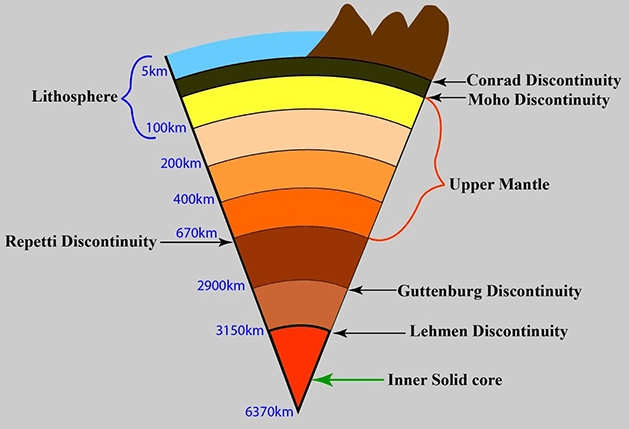
Process: Mantle plumes ferry siderophile metals (gold, platinum, ruthenium) from core-mantle boundary (~2 900 km) to volcanoes.

Locale: Hotspot chains (Hawaii, Iceland etc.) tap deep mantle sources rooted near Earth’s outer core.

Quick Facts for MCQs

Geochemical Evidence

  • Isotope ¹⁰⁰Ru identified as core signature absent in crustal meteorite inventory.
  • Elevated Ru/Pt ratios in plume lavas signal direct siderophile influx.
  • Challenges notion of a chemically sealed core established since 1970s.

Earth-Layer Properties

  • Upper-mantle density 2.9–3.3 g cm⁻³; lower mantle 3.3–5.7 g cm⁻³.
  • Outer core liquid iron generates geodynamo; inner core solid despite higher heat due to immense pressure.
  • Inner core rotates eastward, laps surface roughly every 1 000 years.

Mantle Dynamics

  • Temperature gradient 200 °C (crust) to ~4 000 °C (CMB) drives convection currents.
  • Asthenosphere ductility enables plate drift and magma supply for ocean-island volcanism.
  • Subduction-zone quakes penetrate mantle to 670 km, marking phase transitions.

Key Data Points

FeatureData-Point
Gold in core>99.999 % of Earth total
Core-mantle boundary depth~2 900 km
Outer core thickness~2 250 km
Inner core radius~1 220 km
Inner-outer core boundaryLehmann Discontinuity
Outer core temperature~4 000–6 000 °C
Inner core temperature~5 000–7 000 °C
Mantle share of volume≈83 %
Mantle share of mass≈67 %
Moho depth range~7–35 km
Asthenosphere depth~80–200 km
Deepest mantle quakesto 670 km

Related UPSC Prelims PYQs

GEO_GS, GS1 2009PYQ 1

In the structure of planet Earth, below the mantle, the core is mainly made up of which one of the following ?

GEO_GS, GS1 2024PYQ 2

Which one of the following is the thinnest layer of the Earth?

GS-1Mapping

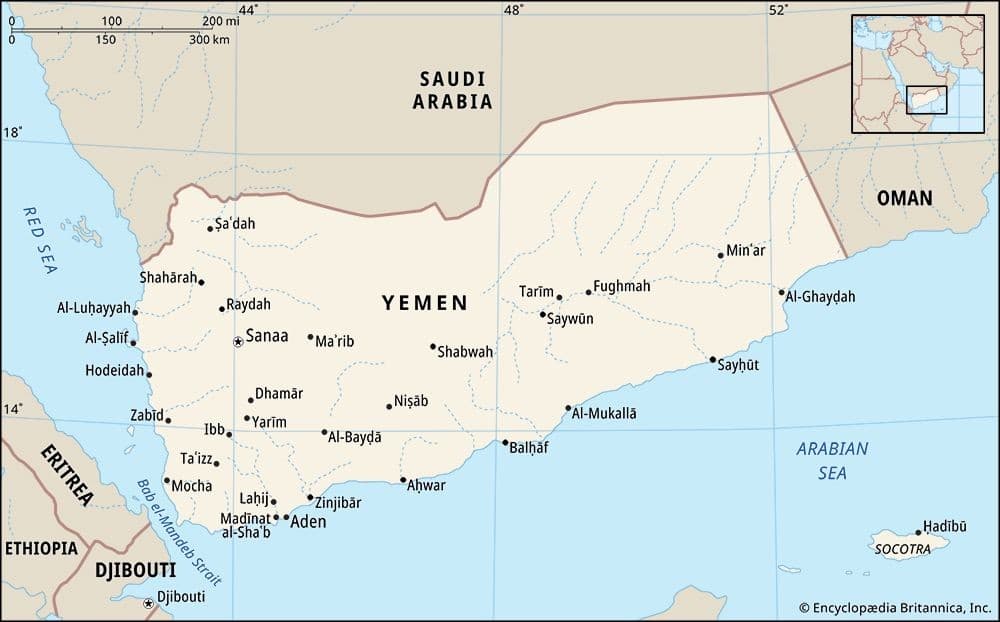
4.Hodeidah Port, Yemen (Ports Mapping)

Hindustan Times
Illustration for Hodeidah Port, Yemen (Ports Mapping)

What & Where

Hodeidah Port — Yemen’s chief seaport on Tihāmah plain, western Red Sea coast.

Handles bulk of humanitarian aid, fuel, commercial imports; lifeline for war-hit population.

Now focal point of Israel-Houthi flashpoint after first Israeli naval strike hit two piers.

Quick Facts for MCQs

Security Dimension

  • Israel claims port used for Iranian-supplied missile, drone logistics to Houthis.
  • Naval strike marks expansion of Gaza war theatre into Red Sea shipping lanes.
  • Houthis have fired projectiles toward Israel, challenging Saudi-led coalition.

Physical Geography

  • Yemen straddles Red Sea entrance linking Europe-Africa-Asia maritime trade.
  • Terrain mix: western mountains, central highlands, Tihāmah lowland, eastern Empty Quarter desert.
  • Absence of permanent rivers heightens reliance on rain-fed wadis & aquifers.

Humanitarian & Economic Angle

  • 70–80 % of Yemen’s imports, incl. food, arrive via Hodeidah; any disruption risks famine spike.
  • Modern docking facilities enable container, fuel tanker handling despite war damage.
  • Port closure or blockade raises global shipping insurance and regional oil transit costs.

Key Data Points

FeatureData-Point
CountryYemen
Coastline waterbodyRed Sea
Adjacent plainTihāmah coastal plain
Controlling groupHouthi rebels
Strike actor (2024)Israeli Navy
Historic shellingItalo-Ottoman War (1911-12)
Yemen highest peakMount Al-Nabi Shuʿayb – 12,030 ft
Perennial rivers in YemenNone
Eastern desert partRubʿ al-Khali (Empty Quarter)
Key seasonal riverWadi Hadhramaut
GS-3Environment

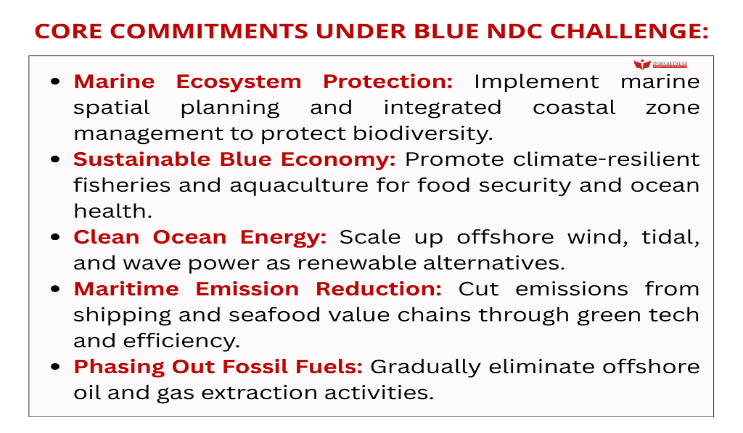
5.Blue NDC Climate Initiative (Ocean NDCs)

Down to Earth
Illustration for Blue NDC Climate Initiative (Ocean NDCs)

What & Where

Initiative; urges embedding ocean-centric actions in Nationally Determined Contributions (NDCs) to meet 1.5 °C goal

Launched at UN Ocean Conference-3, Nice, France; pre-COP30 mobilisation for Belem, Brazil 2025

Founding nations Brazil & France; early joiners Australia, Fiji, Kenya, Mexico, Palau, Seychelles

Quick Facts for MCQs

Legal & Policy

  • Integration; commits nations to quantify blue carbon, resilience metrics within NDC text
  • Compliance; aligns with Marrakech Partnership Ocean Breakthroughs for tracking progress
  • Advocacy; promotes national moratoria on new offshore drilling in sensitive zones

Environmental Impact

  • Restoration; large-scale mangrove, reef, salt-marsh projects enhance sequestration & storm protection
  • Mitigation; ocean-based renewables reduce coastal fossil dependence
  • Adaptation; elevates coastal-zone planning against sea-level rise & extreme events

Economic Angle

  • Blue economy; pushes diversified livelihoods via sustainable fisheries and ecotourism
  • Investment; channels climate finance toward tidal, wave, floating offshore-wind pilots
  • Market; encourages carbon credits from verified blue-carbon ecosystems

Global Partnerships

  • Collaboration; leverages Global Mangrove Alliance technical support for member states
  • Monitoring; UN High-Level Climate Champions to publish annual blue-NDC scoreboard
  • Capacity; WRI offers modelling tools for nations lacking marine-data expertise

Key Data Points

FeatureData-Point
Formal nameBlue NDC Challenge
Launch event & yearUNOC-3, June 2025
Lead countriesBrazil, France
Initial participants6 (Aus, Fji, Ken, Mex, Plu, Sey)
Core aimIntegrate ocean actions into updated NDCs by COP30
Key ecosystems targetedMangroves, coral reefs, salt marshes
Economic focusClimate-resilient fisheries, ocean renewable energy, carbon-smart aquaculture
Fossil fuel stanceGradual phase-out of offshore oil & gas
Supporting alliancesGlobal Mangrove Alliance, UN Climate Champions, WRI, Ocean Breakthroughs
Alignment treatyParis Agreement 1.5 °C pathway
GS-3Environment

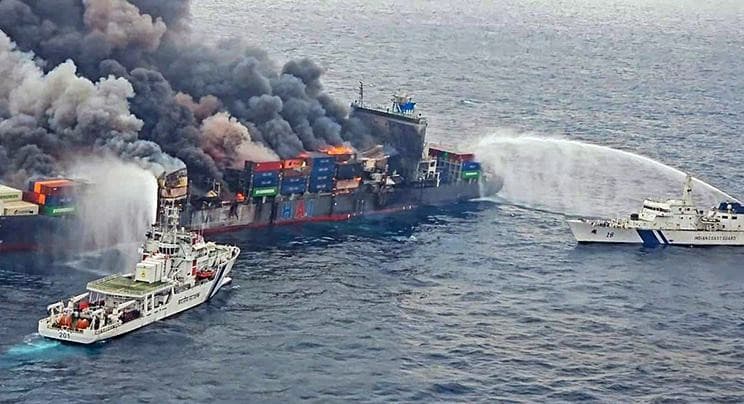
6.Wan Hai 503 Fire Kerala (Oil Spill Risk)

DH
Illustration for Wan Hai 503 Fire Kerala (Oil Spill Risk)

What & Where

Singapore-flagged container ship M.V. Wan Hai 503 caught fire off Kerala’s 590 km Arabian-Sea coast (8°17′–12°47′ N).

Cargo: 157 containers of flammable/hazardous goods; fuel stores ~2,000 t oil + 240 t diesel heighten explosion-spill risk.

Incident threatens Kerala’s flat, water-rich littoral of estuaries, backwaters and Western-Ghats linked ecosystems.

Quick Facts for MCQs

Environmental Impact

  • Oil-spill risk to estuaries, lagoons, mangroves, tourism beaches.
  • Hazardous-cargo combustion may emit toxic halogens harming marine biota.
  • Explosions threaten busy Colombo-Mumbai sea-lane, demanding rapid Coast Guard containment.

Physical Geography

  • Coast: flat strip <15 km wide, rises to Western Ghats ~1,500 m inland.
  • Rivers: 41 west-flowing, short, torrential; Periyar longest at 244 km.
  • Backwaters: Vembanad, Ashtamudi support 190 km National Waterway-3.

Mineral & Radiation

  • Beach placers yield ilmenite, monazite, rutile, zircon; strategic for titanium, thorium.
  • Karunagappally shows natural radiation >10 mSv/yr from thorium-rich sands.
  • Atomic Minerals Directorate surveys; Indian Rare Earths Ltd undertakes extraction.

Key Data Points

FeatureData-Point
Ship flagSingapore
Voyage segmentColombo → Mumbai
Hazardous containers157
Fuel oil onboard≈2,000 t
Diesel onboard≈240 t
Kerala coast length590 km
Latitude span8°17′N–12°47′N
West-flowing rivers41 of 44
Longest Kerala riverPeriyar (244 km)
Major backwater lakeVembanad
Heavy-mineral sandsIlmenite, monazite, thorium, titanium
Radiation hotspotKarunagappally
GS-3Species

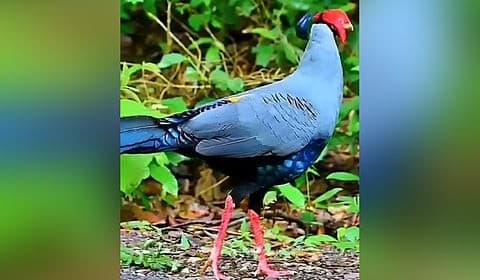
7.Siamese Fireback in Uttarakhand (Bird Species)

New Indian Express
Illustration for Siamese Fireback in Uttarakhand (Bird Species)

What & Where

Siamese Fireback (Lophura diardi) – pheasant species, national bird of Thailand, IUCN Least Concern.

Native to lowland evergreen/deciduous forests of Thailand, Laos, Cambodia, Vietnam; first Indian sighting in Ranikhet, Uttarakhand.

Prefers dense, humid woodland; recent high-altitude Himalayan record signals notable range flexibility.

Quick Facts for MCQs

Conservation & Threats

  • IUCN Least Concern yet experiencing moderate decline from habitat loss, fragmentation, poaching.
  • Avoids human disturbance; expanding agriculture and logging intensify vulnerability.

Ecology & Behaviour

  • Omnivorous forager; scratches forest floor for seeds, fruits, invertebrates.
  • Breeding March–June; males perform elaborate dance, females incubate 4–6 eggs.
  • Shy, elusive nature; more often detected by calls than visual sightings.

Range Significance

  • First Uttarakhand record pushes known distribution ~1700 km northwest of Southeast Asian core zone.
  • High-altitude Himalayan presence indicates climatic adaptability and potential dispersal corridors along Indo-Myanmar ranges.

Key Data Points

FeatureData-Point
Scientific nameLophura diardi
National bird ofThailand
IUCN categoryLeast Concern
Native countriesThailand, Laos, Cambodia, Vietnam
First Indian sightingRanikhet forests, Uttarakhand
Preferred habitatDense evergreen & deciduous woodlands
Breeding seasonMarch – June
Clutch size4 – 6 ground-nest eggs
Adult male plumageMetallic blue-black body, red-orange rump, white tail
DietOmnivorous—seeds, fruits, insects, small fauna
GS-3Species

8.Indian Grey Wolf Pups Birth (Indian Grey Wolf)

The Hindu
Illustration for Indian Grey Wolf Pups Birth (Indian Grey Wolf)

What & Where

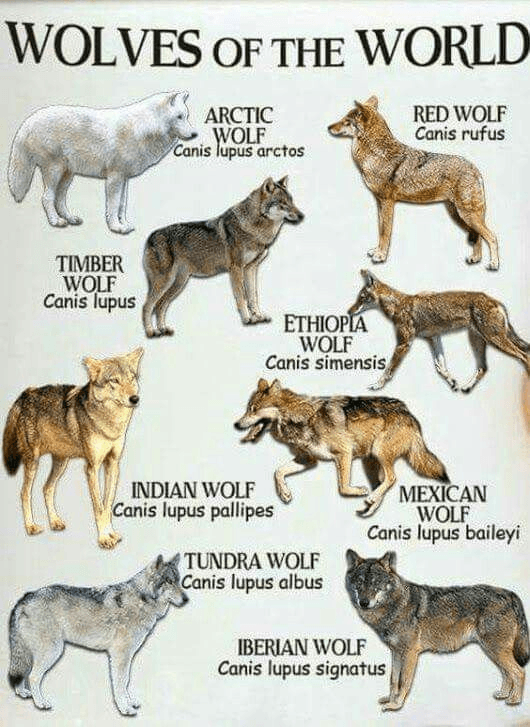
Indian grey wolf (Canis lupus pallipes) — grey-wolf subspecies ranging across Southwest Asia & Indian subcontinent.

Apex predator of scrub, grassland, semi-arid agro-ecosystems; hunts nocturnally in small, less-vocal packs.

Bankapur Wolf Sanctuary, 332 ha in Karnataka, is India’s second wolf-exclusive protected area after Mahuadanr (Jharkhand).

Quick Facts for MCQs

Legal & Policy

  • Schedule I and CITES Appendix I grant highest trade & hunting prohibitions.
  • Sanctuary notification triggers WPA §35 stringent protection within Karnataka.

Ecology & Behaviour

  • Nocturnal hunting from dusk to dawn reduces human overlap.
  • Smaller pack size, subdued vocalisation distinguish subspecies from other grey wolves.

Protected Area Specifics

  • Habitat mix: scrub forest, low hills, natural caves suitable for denning.
  • Sympatric fauna: leopards, blackbucks, peacocks, foxes, hares.

Key Data Points

FeatureData-Point
IUCN Red ListEndangered
Estimated Indian population2,000 – 3,000 individuals
CITES listingAppendix I
Wildlife Protection Act, 1972Schedule I
Bankapur sanctuary area332 hectares
Karnataka wolf-only statusFirst in State
India wolf-only rankingSecond after Mahuadanr, 1976
Recent event8 pups born Jan 2025
GS-3S&T

9.KATRIN Neutrino Mass (Particle Physics)

The Hindu
Illustration for KATRIN Neutrino Mass (Particle Physics)

What & Where

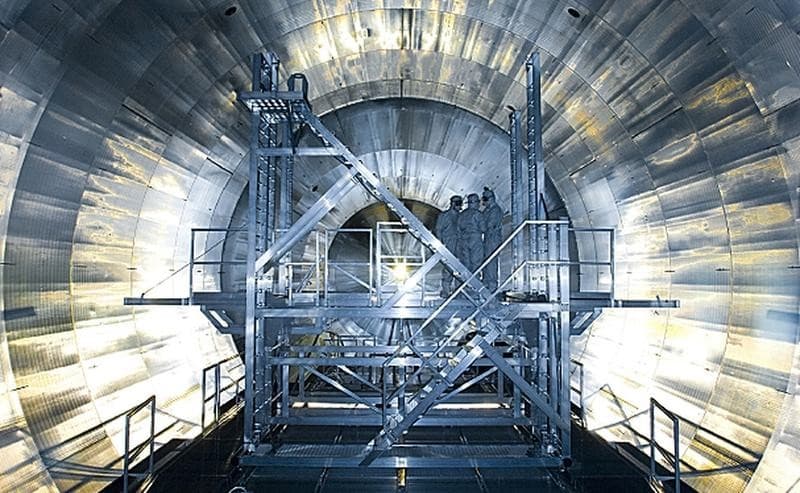
KATRIN: Karlsruhe Tritium Neutrino experiment at Karlsruhe Institute of Technology, Germany

Process: gauges endpoint energy of electrons from tritium (³H) beta decay via giant electrostatic spectrometer

Purpose: direct, model-independent upper limit on absolute masses of three neutrino flavours

Quick Facts for MCQs

Tech & Schemes

  • Spectrometer: magnetic adiabatic collimation plus electrostatic filter achieves sub-eV energy resolution
  • Tritium source: windowless gaseous setup ensures high purity, stable activity
  • Background control: ultra-high vacuum, cryogenic pumping, magnetic shielding suppress stray events

Scientific Significance

  • Constraint: halves earlier lab limit, narrows cosmological parameter space
  • Standard-Model gap: existence of mass mandates physics beyond SM, e.g., seesaw mechanisms
  • Benchmark: provides design yardstick for future beta-decay and neutrinoless double-beta searches

International Collaboration

  • Partners: Max Planck institutes, U.S. DOE labs, Czech, Russian, UK universities
  • Funding: multi-agency European and American contributions exceeding €60 million
  • Data sharing: open analysis framework permits independent cross-checks and meta-studies

Key Data Points

FeatureData-Point
Latest ∑ neutrino-mass cap8.8 × 10⁻⁷ mₑ (≈0.45 eV)
Precision vs previous2 × tighter
Detector mass200 tonnes
Detector typeElectrostatic MAC-E filter spectrometer
Isotope monitoredTritium (³H)
Electrons analysed36 million
Effective run time259 days
Lead instituteKarlsruhe Institute of Technology
Collaboration spanGermany, USA, multiple EU nations
Measurement natureLaboratory, model-independent

Related UPSC Prelims PYQs

GS1 2010PYQ 1

India-based Neutrino Observatory is included by the Planning Commission as a mega science project under the 11th Five-Year Plan. In this context, consider the following statements:

GS-3S&T

10.GLP-1 Weight-Loss Drugs (GLP-1 Drugs)

The Hindu
Illustration for GLP-1 Weight-Loss Drugs (GLP-1 Drugs)

What & Where

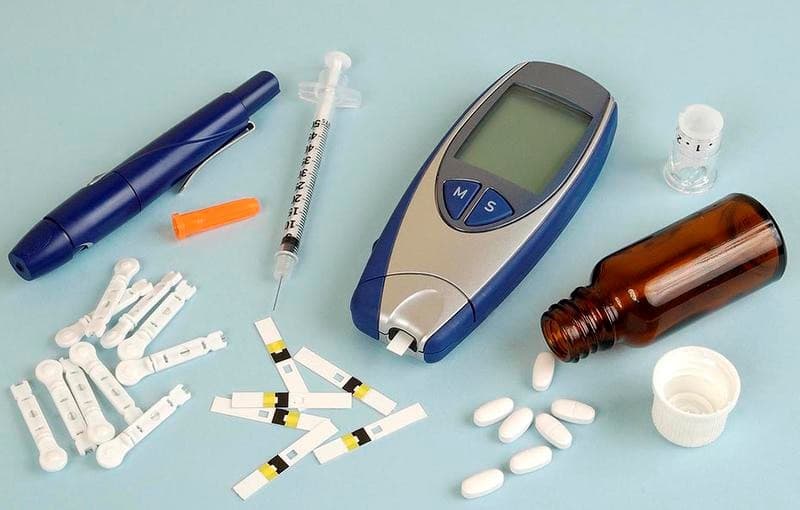
Definition: Injectable GLP-1 receptor agonists repurposed from Type-2 diabetes to chronic weight management

Key types: Semaglutide (Ozempic/Wegovy) by Novo Nordisk; Tirzepatide (Mounjaro/Zepbound) by Eli Lilly

Geography: US-led effectiveness study; drugs FDA-approved and recently launched in India

Quick Facts for MCQs

Pharmacology & Mechanism

  • GLP-1 analogue stimulates insulin, inhibits glucagon, delays gastric emptying, increases satiety
  • Tirzepatide also targets GIP receptor, offering dual-incretin action
  • Administered weekly via subcutaneous injection

Efficacy Gap

  • Clinical–real world divide: lesser weight loss linked to poor adherence, dose reduction
  • Side-effects nausea, vomiting drive drop-outs
  • Study underscores need for behavioural and medical follow-up

Economic Angle

  • Monthly cost several hundred dollars in US; higher relative burden in out-of-pocket Indian market
  • Limited insurance coverage curtails sustained therapy
  • Potential market size huge but affordability constraints persist

Public Health Concerns

  • Obesity prevalence rising; drugs offer option where lifestyle changes fail
  • Dependence risk: continuous use required to maintain weight loss
  • Equity issue: high cost may widen health disparity

Key Data Points

FeatureData-Point
Drug classInjectable GLP-1 receptor agonist
Core mechanismMimics GLP-1 to suppress appetite & slow digestion
Trial weight-loss10–15 % mean body-weight reduction
Real-world study journalObesity (US)
Adherence findingSignificant early discontinuation, dose cuts
Cost issueHigh price limits long-term use, esp. India
Post-withdrawal effectRapid weight regain
FDA statusApproved for chronic weight management
GS-2Editorial

11.Reforming United Nations Role (UN Reforms)

Indian Express

What & Where

United Nations: 1945-born multilateral body; HQ New York; 193 members; key organs—GA, UNSC, ECOSOC, ICJ, Secretariat.

Core processes: peacekeeping, veto-based Security Council decisions, SDGs coordination, humanitarian & development programmes (WFP, UNDP).

Geography of crisis: 56 active wars across 92 states; conflict zones house 40 % of world’s poor.

Quick Facts for MCQs

Achievements

  • Climate leadership: shepherded 2015 Paris Agreement; continues global convening on green transitions.
  • Humanitarian relief: WFP largest food-aid network; UNDP microfinance revived Liberia post-war.
  • Peacekeeping: missions in South Sudan improved security perception, local household welfare.

Structural Gaps

  • Enforcement weakness: Rwanda-style delays, sanctions hurting civilians (1990s Iraq).
  • Governance imbalance: P5 veto blocks Gaza, Ukraine action; India, Brazil still excluded from UNSC permanent seats.
  • Financing shortfall: recurrent arrears, e.g., US cuts to UNRWA, hamper climate, humanitarian mandates.

Reform Proposals

  • Veto reform: non-partisan review plus GA 2/3 override; France-Mexico push to ban veto amid mass atrocities.
  • Membership expansion: add India, Brazil, South Africa, Germany, Japan; rotating seats for SIDS & climate-vulnerable.
  • Funding innovation: automatic dues, penalties; explore billionaire, carbon, digital levies for SDGs & climate rebuild.

Key Data Points

FeatureData-Point
Global conflict deaths 2024≈ 2.33 lakh
People displaced 2024120 million
Active wars56 across 92 nations
Violence economic cost 2023USD 19.3 trn (13.5 % world GDP)
Military share in global CO₂5.5 %
War-zone share of global poor40 % ≈ 455 million
UN peacekeepers deployment modelVoluntary troop contributions
Proposed GA override of vetoTwo-thirds majority

Related UPSC Prelims PYQs

CDS_GK, GEO_GS 2024PYQ 1

Which one among the following statements about the United Nations (UN) is not correct?

CDS_GK, GEO_GS 2025PYQ 2

“युद्ध का जन्म लोगों के मस्तिष्क में होता है, इसलिए शांति की रक्षा भी लोगों के मस्तिष्क में ही की जानी चाहिए।” यह टिप्पणी संयुक्त राष्ट्र संघ के निम्नलिखित किस अंग के संविधान में मिलती है?

GS-2Security

12.Madleen Aid Ship Interception (Gaza Flotilla)

Indian Express

What & Where

Humanitarian-flotilla: civil society vessels attempting to breach Israeli naval blockade of Gaza to deliver aid

Madleen: British-flagged ship, intercepted in Mediterranean international waters en route from Catania to Gaza

Gaza Strip: coastal Palestinian enclave under Israeli air-sea blockade since 2007

Quick Facts for MCQs

Security Dimension

  • Interception: Israeli navy enforced blockade, boarding Madleen via patrol craft
  • Deportation: Activists expelled under Israeli immigration regulations, ship redirected to Israeli port
  • Blockade: Naval cordon applied since Hamas’ 2007 control, justified by Israel as security measure

Humanitarian Aid

  • Supplies: Focus on life-saving medical goods, infant nutrition, clean-water filters, prosthetic limbs
  • Beneficiaries: War-affected Gazans facing compounded shortages post-2023 conflict
  • Delivery mode: NGO-led flotillas circumventing land crossings perceived as restrictive

Historical Parallel

  • Precedent: 2010 Mavi Marmara assault drew global censure, ICC preliminary probes
  • Continuity: FFC created post-raid, coordinating repeated flotillas to sustain pressure
  • Symbolism: Madleen voyage framed as legal test mirroring 2010 challenge

Key Data Points

FeatureData-Point
Flag of MadleenUnited Kingdom
Voyage organiserFreedom Flotilla Coalition
Departure portCatania, Italy
Departure date1 Jun 2025
Volunteers on board12
Notable passengersGreta Thunberg, MEP Rima Hassan
Key cargomedical kits, baby food, water filters, prosthetics
Interception siteInternational waters off Gaza
Israeli actionDetention of ship; deportation of crew
FFC formation year2010
FFC core methodPeaceful maritime missions
Mavi Marmara raid date31 May 2010
Activists killed 201010
Aid load 2010≈10,000 tonnes
GS-2Scheme

13.Indigenous Heeng Cultivation Breakthrough (Heeng Cultivation Mission)

The Hindu

What & Where

Definition: Heeng (asafoetida) is a perennial herb; edible oleo-gum resin tapped from root after 5 years.

Core geography: Native to cold, arid Iran-Afghanistan-Central Asia; acclimatisation now proven at CSIR-IHBT Palampur (HP), India.

Indian potential zones: High-altitude semi-arid belts of Lahaul-Spiti (HP) and Uttarkashi (UK).

Quick Facts for MCQs

Agro-Climatic Needs

  • Temperature: 10-20 °C optimum; withstands 40 °C heat and ‑4 °C frost.
  • Rainfall: Under 300 mm; soils must be sandy, well-drained, moisture-sparse.
  • Location: Best suited to cold-desert districts Lahaul-Spiti and Uttarkashi.

Tech & Schemes

  • Mission: CSIR-IHBT 2020 National Mission introduced Iranian-Afghan seeds to Indian highlands.
  • Breakthrough: First flowering + seed set reported 2025, proving acclimatisation feasibility.
  • Field roll-out: Initial cultivation plots established at Kwaring, Lahaul Valley.

Economic Angle

  • Consumption: India world’s largest user; previously fully import-dependent.
  • Benefit: Domestic production may slash import bill and diversify Himalayan farmer incomes.
  • Market: Valued Ayurvedic spice for digestion, taste enhancement; steady high demand.

Key Data Points

FeatureData-Point
Botanical familyUmbelliferae (Apiaceae)
Resin harvest age5 years after planting
Ideal temp range10 – 20 °C
Tolerance extremesHeat 40 °C; Cold -4 °C
Annual rainfall need< 300 mm
Preferred soilSandy, well-drained, low moisture
National Mission launch2020 by CSIR-IHBT
First Indian plantationKwaring village, Lahaul Valley (HP)
1st flowering in India2025 at IHBT Palampur
Pre-mission import share100 % from Afghanistan, Iran, Uzbekistan
GS-1Misc

14.UNFPA World Population 2025 (UNFPA Report)

UNFPA
Illustration for UNFPA World Population 2025 (UNFPA Report)

What & Where

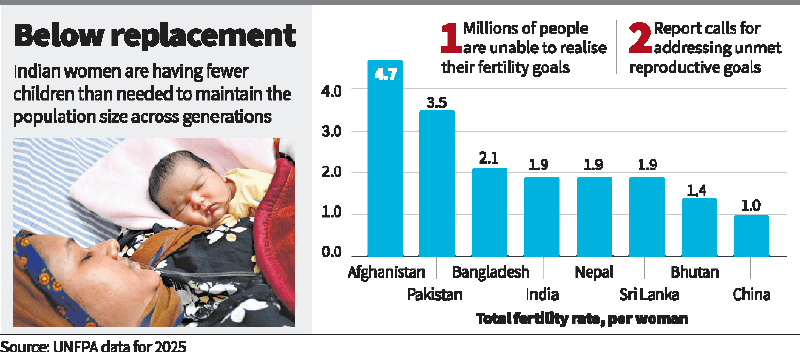
Fertility: actual children born per woman aged 15-49; gauged by Total Fertility Rate (TFR).

Replacement level: TFR 2.1 maintains population size without migration.

India, April 2025: world’s largest population hub at 146.39 crore amid global slowdown.

Quick Facts for MCQs

Demographic Dividend

  • Window: large 15-64 cohort boosts productivity if jobs, skills, health align.
  • Contrast: ageing nations (Japan, Italy, Korea) face <1.5 TFR and labour shortages.
  • Sub-Saharan Africa: high >4 TFR strains resources, delays dividend realization.

Reproductive Choice & Gaps

  • Emphasis: UNFPA flags unmet fertility goals, not numeric “crisis”.
  • Access: contraception, maternal care, education lag; gender gaps skew outcomes.
  • Outcome: unrealized fertility persists even with India’s below-replacement TFR.

Policy Imperatives

  • Census 2027: essential for evidence-based socio-economic, fertility recalibration.
  • Actions: expand family planning, women’s education, adolescent health services.
  • Balance: simultaneous elderly care reform and youth skilling to sustain growth.

Key Data Points

FeatureData-Point
India population (Apr 2025)146.39 crore
Global population 20258.2 billion
India TFR 20251.9
Replacement TFR2.1
Peak India population~170 crore in 2060s
India working-age share68 %
India youth 0-1424 %
India elderly 65+7 %
Life expectancy IndiaM 71 yrs; F 74 yrs
World 15-64 share>60 %

Related UPSC Prelims PYQs

GS1 2008PYQ 1

As per India's National Population Policy, 2000, by which one of the following years is it our long-term objective to achieve population stabilization?

GS1 2005PYQ 2

Consider the following statements:

Ready to practice?

Test your knowledge with our UPSC test series.

Start Free Trial