UPSC Current Affairs

15 topicsGS-1: 3GS-2: 2GS-3: 10
0/15 done
GS-2Polity

1.New Ladakh UT Regulations (Domicile Rules)

Indian Express

What & Where

What: Five President-made regulations under Art 240 crafting Ladakh-specific rules on jobs, language, reservations, LAHDC seats.

Where: Union Territory of Ladakh (Kargil & Leh districts), a legislature-less UT carved from J&K in Oct 2019.

Key processes: Domicile certification by tehsildar; rotational women reservation in two Hill Development Councils.

Quick Facts for MCQs

Legal & Policy

  • First indigenous legal set post-2019 bifurcation, replacing borrowed J&K laws.
  • Regulations published as executive rules; no legislative vote needed.
  • Enhance affirmative action scope, aligning with Ladakh’s ST-majority demographics.

Social Concerns

  • Women empowerment via mandatory LAHDC representation.
  • Language recognition safeguards plural ethnic identity and script preservation.
  • Domicile clause assuages fears of demographic dilution after Article 370 abrogation.

Administrative Process

  • Online & offline domicile applications, 15-day disposal timeline.
  • Reservation rosters and language use directives to be framed by Ladakh administration.

Key Data Points

FeatureData-Point
Constitutional power usedArticle 240(1)
Total new regulations5 (2025 batch)
Job reservation basisLadakh domicile
Domicile definition15-yr resident / 7-yr schooling+exam / child of long-term Central staff
Caste quota ceiling85 % in jobs & professional seats
Separate EWS quota10 % (outside 85 %)
Women seats in LAHDCOne-third, rotational
Issuing authority for domicile cert.Tehsildar; appeal to Deputy Commissioner
Official languages notifiedEnglish, Hindi, Urdu, Bhoti, Purgi
Promoted tribal dialectsShina, Brokskat, Balti, Ladakhi

Related UPSC Prelims PYQs

CDS_GK 2024PYQ 1

निम्नलिखित में से किस क्षेत्र को नागरिकता (संशोधन) अधिनियम, 2019 के कारगर से छूट दी गई है?
GS-2Polity

2.PMLA Oversight for Online Gaming (PMLA Amendment)

BL
Illustration for PMLA Oversight for Online Gaming (PMLA Amendment)

What & Where

Definition: Online real-money gaming (RMG) = staking actual funds on fantasy sports, poker, other skill contests.

Core geography: India, now world’s largest gaming market, slated to add RMG to Prevention of Money Laundering Act, 2002.

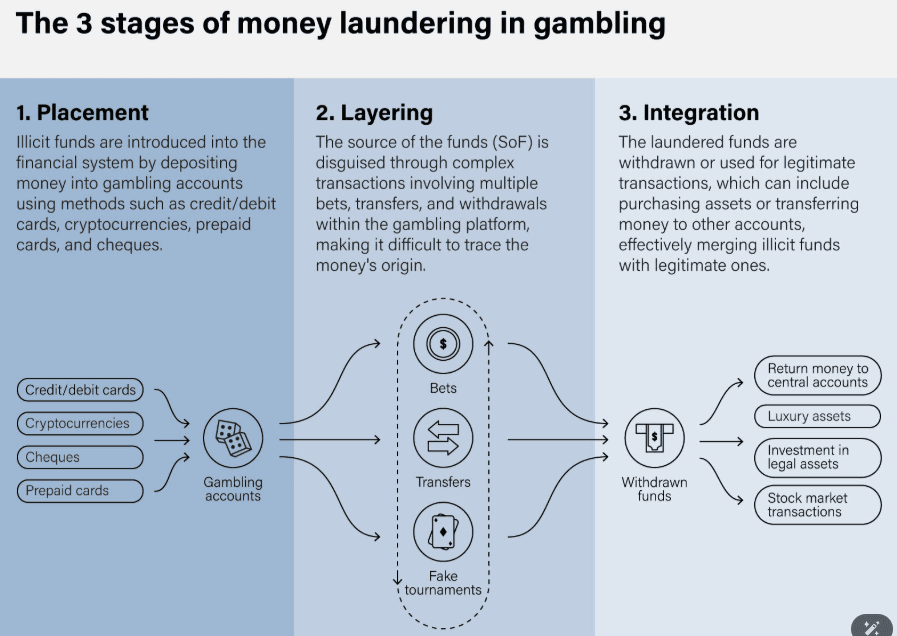
Key process: Three-step laundering—Placement of illicit deposits, Layering via in-game moves, Integration as “winnings”/crypto withdrawals.

Quick Facts for MCQs

Market Profile

  • Driver: Cheap data, smartphones, seamless UPI payments boosting youth engagement.
  • Catalyst: IPL & celebrity ads heighten spikes in fantasy and betting traffic.
  • Motive: High unemployment nudges users toward quick-money avenues.

Legal & Policy

  • Legacy: Public Gambling Act 1867 exempts skill games; states craft own betting laws creating patchwork.
  • Update: IT Rules 2023 define “online game”, “RMG”, mandate self-regulatory bodies.
  • Move: Centre to list RMG under PMLA, enabling FIU oversight and reporting.

Money Laundering Modus

  • Tactic: Shell firms, mule accounts, crypto wallets blend illicit and legitimate flows.
  • Scale: Mahadev app ₹6,000 cr; Fiewin ₹400 cr suspected proceeds.
  • Risk: Anonymity aids terror financing and cross-border fund transfer.

Enforcement Hurdles

  • Volume: Thousands of micro-transactions per minute obscure red flags.
  • Jurisdiction: Offshore sites (e.g., 1xBet) swap domains, dodge Indian reach.
  • Penalty gap: Multiple agencies, low deterrent fines encourage repeat violations.

Reform Ideas

  • Proposal: Tiered KYC—OTP for low stakes, full KYC after threshold.
  • Suggestion: Algorithm audits, dark-pattern bans under upcoming Digital India Act.
  • Diplomacy: Extradition pacts with UAE & other safe havens to track offenders.

Key Data Points

FeatureData-Point
Indian gamers (2023)568 million
App downloads (2023)9.5 billion
Market size 2023USD 2.2 billion
Forecast 2028USD 8.6 billion
GST on legal RMG28 % of face value
TDS on winnings >₹10,00030 % (plus surcharge & cess)
Digital-literacy households38 %
Constitutional entryEntry 34, State List
Foreign tech/FDI in bettingCompletely banned
GS-3Economy

3.India Energy Security Strategy (Energy Policy)

The Hindu
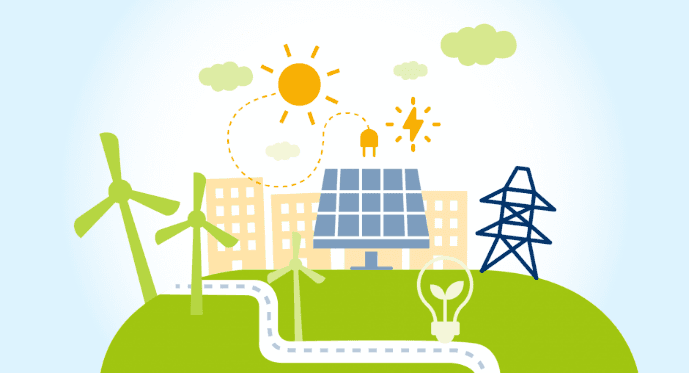
Illustration for India Energy Security Strategy (Energy Policy)

What & Where

Energy security – assured, affordable, clean supply supporting rapid growth and India’s net-zero 2070 pathway

Major sources – imported crude, domestic oil-gas, ethanol, compressed biogas, green hydrogen

Geography – basin exploration at 16 %; national gas grid 25,000 km across 20+ States

Quick Facts for MCQs

Demand & Security

  • Demand_2047: India projected to supply 25 % of global incremental energy demand
  • Growth_need: 6.7 % Q1 2025 GDP growth hinges on uninterrupted energy for infra, manufacturing
  • Equity_push: City-gas networks plus rural LPG ensure balanced state development

Exploration & Reforms

  • OALP_DSF: basin coverage doubled 2021-25; 1 mn sq km aim by 2030
  • Pricing_shift: domestic gas capped at 10 % of crude basket; 20 % premium on new wells
  • Hybrid_lease_2024: same block can host hydrocarbons and renewables, easing low-carbon transition

Green Energy Push

  • Ethanol: blend rose 1.5 %→19.7 %, paid ₹1.79 lakh crore to distillers, large forex saving
  • Green_H2: IOCL Panipat 10 KTPA plant; national tender 8.62 lakh t; NRL pilots in Northeast
  • CBG_SATAT: 100+ plants launched; 5 % gas blending target 2028 using agri-residue feedstock

Key Data Points

FeatureData-Point
India’s expected share in global energy demand (2047)25 %
GDP rank & size (2025)4th; $4.3 trn
Ethanol blending level (2025)19.7 %
Forex saved via ethanol (till 2025)₹1.26 lakh crore
Exploration coverage (2025)16 % of basins
Target exploration area (2030)1 million sq km
Product pipeline length24,000 km
Gas pipeline length now / 203025,000 km / 33,000 km
Green-hydrogen tender size8.62 lakh tonnes
SATAT compressed biogas goal5 % blending by 2028

Related UPSC Prelims PYQs

CAPF_GAI, GS1 2023PYQ 1

निम्नलिखित कथनों पर विचार कीजिए :

CAPF_GAI, GS1 2025PYQ 2

India’s key climate targets include

GS-1Mapping

4.Mount Etna Stratovolcano Eruption (Active Volcano)

Hindustan Times

What & Where

Stratovolcano; among world’s most active; tagged “Decade Volcano” for high risk

Sited on eastern Sicily, Italy, between Messina–Catania; straddles African–Eurasian plate boundary

Europe’s tallest active cone (≈3,403 m); current 2025 flank-plus-summit eruption spewing ash kilometres high

Quick Facts for MCQs

Geological Features

  • Basaltic composition; complex conduit network enables simultaneous summit & flank eruptions
  • Layered lava–ash build results in steep cone and multiple nested craters
  • Persistent degassing yields frequent strombolian fountains and lava flows

Tectonic Setting

  • Subduction of African plate under Eurasian induces mantle melting beneath Sicily margin
  • Regional faults act as magma pathways, concentrating vents along rift-like fractures
  • Volcanic edifice acts as regional GPS benchmark for plate-motion studies

Eruption History

  • Activity traced back >500,000 years via tephrostratigraphy
  • Notable recent eruptions: Dec 2018, Feb 2021, Jan 2025 (ongoing) disrupting air traffic
  • Historic 1669 lava flow reached Catania, exemplifying urban hazard

Eruption Mechanics

  • Magma ascent driven by volatile expansion of CO₂, SO₂ under decompression
  • Overpressure fractures crust, generating explosive ash columns reaching stratosphere
  • Gas-rich pulses alternate with effusive phases, modulating hazard intensity

Global Recognition

  • UNESCO cites scientific value, continuous monitoring and education opportunities
  • Tourism, vineyards and research stations benefit from volcanic soils yet face evacuation drills
  • Etna joins Vesuvius & Stromboli as Italy’s triad of world-famous active cones

Key Data Points

FeatureData-Point
Volcano typeStratovolcano
Plate boundaryAfrican–Eurasian
Elevation~3,403 m
Areal extent1,190 km²
Basal circumference140 km
Summit craters5 active
Flank vents300 +
Eruptive style debateStrombolian vs Plinian
UNESCO inscription2013
Risk labelDecade Volcano

Related UPSC Prelims PYQs

CDS_GK 2020PYQ 1

Match List-I with List-II and select the correct answer using the code given below the Lists:

GS-3Scheme

5.Aravalli Green Wall Initiative (Reforestation Programme)

The Print

What & Where

Centrally coordinated reforestation and landscape-restoration drive along entire 700 km Aravalli range, led by MoEFCC

Covers 29 desertification-prone districts of Haryana, Rajasthan, Gujarat, Delhi; launch on World Environment Day 2025

Builds a continuous “Green Wall” to halt Thar expansion, boost biodiversity, water bodies and carbon sinks

Quick Facts for MCQs

Legal & Policy

  • Alignment with India’s NDC under UNFCCC and Land Degradation Neutrality goal under UNCCD
  • Uses existing Ek Ped Maa Ke Naam, CAMPA guidelines for convergence
  • Detailed roadmap to be tabled at UNCCD COP-16 Riyadh

Environmental Impact

  • Natural barrier prevents west-to-east Thar Desert spread into NCR
  • Targets enhanced carbon sequestration, biodiversity recovery and surface-water rejuvenation
  • Agroforestry and pasture restoration combat land degradation in 29 districts

Implementation Tools

  • Creation of 1,000 native-species nurseries financed via CAMPA, MNREGA, state budgets
  • Community eco-tourism: safaris, trekking routes, nature parks for local income
  • Plantation model includes agroforestry belts, pasturelands, lake and pond revival

Key Data Points

FeatureData-Point
Project nameAravalli Green Wall Initiative
Launch date5 June 2025
Lead ministryMoEFCC
Range length670–700 km
States coveredDelhi, Haryana, Rajasthan, Gujarat
Districts targeted29
Nurseries planned1,000 (native species)
Funding poolsCAMPA, MNREGA, State schemes
Phase-I deadline2027
Action plan revealCOP-16 UNCCD, Riyadh
Highest Aravalli peakGuru Shikhar – 1,722 m
Geological ageProterozoic fold mountains
GS-3Species

6.Kulsi River and Gangetic Dolphin (River Dolphin)

DH
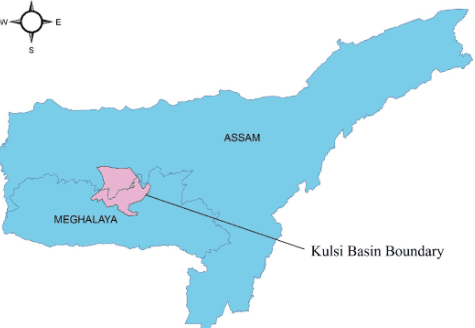
Illustration for Kulsi River and Gangetic Dolphin (River Dolphin)

What & Where

55 MW hydropower project jointly planned by Assam & Meghalaya on the inter-state Kulsi River.

Kulsi: 60 km, originates West Khasi Hills (Meghalaya), enters Kamrup (Assam), joins Brahmaputra.

River stretch shelters Endangered Ganges River dolphin, India’s National Aquatic Animal.

Quick Facts for MCQs

Hydropower Project

  • Joint-venture: Assam–Meghalaya cleared DPR for 55 MW run-of-river plant.
  • Infrastructure: Dam may inundate shallow dolphin breeding pools.
  • Energy-goal: Adds renewable capacity to Northeast regional grid.

River Geography

  • Origin: Springs in Meghalaya plateau, descends to Brahmaputra at Kamrup.
  • Morphology: Shallow, 70–80 m wide, monsoon-fed, sandbar-rich channel.
  • Biodiversity: Hosts fish shoals, riverine birds, Gangetic dolphin population.

Species Conservation

  • Taxonomy: Platanista gangetica; one of five global river dolphin species.
  • Physiology: Blind, echoes for navigation; surfaces every 30–120 s.
  • Protection: IUCN Endangered; symbol of freshwater ecosystem since 2009.

Key Data Points

FeatureData-Point
Project capacity55 MW
Partner statesAssam, Meghalaya
Kulsi length to confluence~60 km
Average river width70–80 m
Origin districtWest Khasi Hills, Meghalaya
Confluence riverBrahmaputra
Dolphin IUCN statusEndangered
National aquatic animal year2009
Dolphin surfacing interval30–120 s
Local dolphin nameSusu

Related UPSC Prelims PYQs

GS1 2015PYQ 1

Which one of the following is the national aquatic animal of India?

GS-3Infrastructure

7.Indigenous Polar Research Vessel (Polar Research)

HBL

What & Where

Polar Research Vessel: ice-class ship for Arctic & Antarctic navigation and multidisciplinary oceanographic studies.

Built in India by GRSE, Kolkata, using design/tech transfer from Norway’s Kongsberg.

Operates under National Centre for Polar and Ocean Research (NCPOR), Goa.

Quick Facts for MCQs

Tech & Schemes

  • Make in India: first indigenous PRV, boosts domestic complex-vessel capability.
  • Blue Economy: platform for ocean floor mapping, marine biodiversity indexing, resource assessment.
  • IMO norms: integration of low-emission propulsion, eco-friendly waste protocols.

Environmental Impact

  • Climate monitoring: continuous polar temperature, salinity, CO₂ flux data for IPCC models.
  • Carbon-sink goal: supports India’s 2.5 Gt CO₂ equivalent sink target by 2030.
  • Ocean health: tracks acidification, microplastics, polar ecosystem shifts.

International Collaboration

  • India–Norway: extends 2019 ocean dialogue to green, smart shipping projects.
  • Reduces charter dependence: ends reliance on foreign leased vessels for polar campaigns.
  • Enhances global science stature: positions India among few nations owning Arctic-capable PRVs.

Key Data Points

FeatureData-Point
Vessel typePolar Research Vessel (PRV)
Indian yardGarden Reach Shipbuilders & Engineers Ltd (GRSE)
Foreign tech partnerKongsberg, Norway
Supervising ministriesPorts, Shipping & Waterways; Earth Sciences
Nodal science bodyNCPOR, Goa
Max exploration depth≈ 6 km
Primary theatresArctic & Antarctic
Ice-breaking classPolar-Class, IMO compliant
Key instrumentsSeabed samplers, seismic profilers, multibeam sonar, onboard labs
Sustainability featureGreen fuel & energy-efficient systems

Related UPSC Prelims PYQs

GS1, NDA_GAT 2024PYQ 1

Consider the following statements about INS Sagardhwani:

GS1, NDA_GAT 2015PYQ 2

The term ‘IndARC’, sometimes seen in the news, is the name of

GS-3S&T

8.Antibiotic-Producing Thermophiles Discovery (Antimicrobial Research)

The Hindu

What & Where

Definition: heat-loving thermophilic bacteria (45-80 °C) able to biosynthesise antibiotics.

Site: Rajgir hot spring, Nalanda district, Bihar; isolated by Vellore Institute of Technology team.

Key taxa: Actinobacteria, Thermus aquaticus, Sulfolobus spp.—noted for heat-stable enzymes & antimicrobial metabolites.

Quick Facts for MCQs

Medical Potential

  • Discovery: Di-ethyl phthalate shows broad inhibition, valuable against antimicrobial-resistant strains.
  • Advantage: Heat-stable antibiotics remain active during high-temperature pharmaceutical processes.
  • Opportunity: Novel pathways widen drug pipeline amid rising AMR crisis.

Industrial Applications

  • PCR: Taq polymerase withstands >90 °C cycling, enabling rapid DNA amplification.
  • Biofuel: Thermostable hydrolases speed lignocellulose breakdown at elevated reactor temps.
  • Waste management: High-temp composting uses thermophiles to degrade organic refuse efficiently.

Ecology & Adaptations

  • Cell envelope: Saturated ether lipids maintain fluidity, prevent thermal denaturation.
  • DNA protection: Robust repair enzymes counter heat-induced mutations.
  • Sporulation: Certain strains form endospores, ensuring survival during temperature fluxes.

Key Data Points

FeatureData-Point
Optimum growth range45 °C – 80 °C
Habitat typeGeothermal hot springs, hydrothermal vents
Newly reported compoundDi-ethyl phthalate (antibacterial)
Target pathogen testedListeria monocytogenes
Key antibiotic genusActinobacteria
Famous thermophile enzymeTaq polymerase from Thermus aquaticus
Membrane adaptationEther-linked, saturated lipids resist melting
Metabolic noveltySulfur/iron utilisation enables low-competition niches
Research institutionVellore Institute of Technology, Tamil Nadu
State locationBihar (Rajgir hot spring)
GS-3S&T

9.Building-Integrated Photovoltaics Technology (Solar Innovation)

The Hindu
Illustration for Building-Integrated Photovoltaics Technology (Solar Innovation)

What & Where

BIPV: photovoltaic cells integrated into structural elements—façade, window, roof—turning building skin into power plant

Urban focus: ideal for Indian high-rises with limited rooftops; World Bank pegs 309 GW installable on existing stock

Installation: incorporated during design or retrofit by replacing glass, tiles, cladding with PV-laminated modules

Quick Facts for MCQs

Tech & Schemes

  • Customization: transparency, colour, shape possible without separate mounting structures
  • Integration: PV cells sandwiched in insulated glass, solar tiles, spandrel panels
  • Government push: Surya Ghar Yojana spotlights BIPV for urban households

Economic Angle

  • Savings: German balconies show up to 30 % bill reduction offsetting initial expense over years
  • Market: Opens niches for solar architects, façade engineers, green construction jobs
  • Material replacement: Avoids buying separate glass or tiles, lowering lifecycle cost

Policy & Manufacturing

  • Gap: Absence of BIS performance standards slows approvals and bank financing
  • Supply risk: Import dependence raises costs, exposure to currency and logistics shocks
  • Planning miss: Often excluded from early architectural design, limiting seamless integration

Environmental Impact

  • Emission cut: Onsite generation reduces grid demand, aiding Paris NDC targets
  • Passive design: Lower heat gain decreases HVAC energy use in tropical cities
  • Decentralisation: Distributes clean power, easing urban distribution network loads

Key Data Points

FeatureData-Point
Dual functionBuilding material + electricity generation
Output comparisonFaçade 150 kWp vs rooftop 40 kWp (typical high-rise)
Space useEmploys vertical surfaces, railings, skylights
Cooling benefitSemi-transparent panels lower indoor heat load, cut AC demand
Cost barrierHigher upfront than rooftop due to customized modules
Domestic manufacturingMostly imported BIPV glass and laminates
Policy statusNo dedicated Indian standards/norms yet
Scheme linkHighlighted under PM Surya Ghar: Muft Bijli Yojana 2024

Related UPSC Prelims PYQs

GS1 2014PYQ 1

With reference to technologies for solar power production, consider the following statements: 1. 'Photovoltaics' is a technology that generates electricity by direct conversion of light into electricity, while 'Solar Thermal' is a technology that utilizes the Sun's rays to generate heat which is further used in electricity generation process. 2. Photovoltaics generates Alternating Current (AC), while Solar Thermal generates Direct Current (DC). 3. India has manufacturing base for Solar Thermal t

GS1 2025PYQ 2

Consider the following statements about ‘PM Surya Ghar Muft Bijli Yojana’ :

GS-3S&T

10.Internet of Things Applications (IoT Technology)

Financial Express

What & Where

Definition Networked physical objects with sensors, software, connectivity enabling data exchange, remote control, autonomous action

Core stack Sensors-actuators → local connectivity → gateways → edge-cloud analytics → user interface

Indian focus Smart City pilots like Jaipur, 5G rollout and DPDP Act driving domestic IoT ecosystem

Quick Facts for MCQs

Tech Stack

  • Sensors measure temperature, motion, light, moisture for real-world input
  • Connectivity options Bluetooth short, Wi-Fi medium, 4G ⁄ 5G long range
  • Edge gateways preprocess, encrypt, cut latency before cloud analysis

Key Applications

  • Smart cities manage traffic, adaptive lighting, waste bins, disaster alerts
  • Smart homes enable energy-saving thermostats, remote locks, real-time cameras
  • Healthcare uses wearables, glucose monitors, emergency alerts for remote care

Security Dimension

  • Weak default passwords fuel botnets like Mirai attacking websites and devices
  • Insecure APIs expose data, Amazon Ring cited for unauthorized access risks
  • Adversaries deploy AI deepfakes to manipulate sensor data, trigger false alarms

Policy & Schemes

  • Draft IoT Policy 2015 outlines roadmap for 5-billion device ecosystem
  • DPDP Act 2023 mandates consent, storage limits, breach penalties for personal data
  • 5G, BharatNet, Future Skills Prime bolster broadband reach and skilled workforce

Key Data Points

FeatureData-Point
Draft IoT Policy2015
Annual IoT data volume73 zettabytes
Notorious botnetMirai (2016, resurfaced 2025)
Indian smart city showcaseJaipur Smart City
Precision-agri startupFyllo
Popular smart thermostatGoogle Nest
Security frameworkZero Trust Architecture
Standard bodyOpen Connectivity Foundation
Short-range protocolBluetooth
Indian data lawDPDP Act 2023

Related UPSC Prelims PYQs

ESE_GS 2026PYQ 1

Which one of the following protocols is suitable for IoT communication that though it was originally designed to support IEEE 802.15.4 low-power wireless networks in the 2.4-GHz band?

GS-3S&TQuick Bite

11.Long-Period Radio Transient Discovery (Astronomy Discovery)

Indian Express

What & Where

Long-period radio transient: Milky Way object emitting periodic radio + X-ray bursts; newly recognised stellar-remnant class.

Burst cadence 44 min—minutes–hours range, contrasting pulsar millisecond–second blinking governed by rapid rotation.

Sited ~15,000 ly toward constellation Scutum; identified via multi-telescope campaign led by NASA’s Chandra X-ray Observatory.

Quick Facts for MCQs

Stellar Evolution

  • Magnetar: neutron star with magnetic field 10¹⁴–10¹⁵ G; possible source of 44-min bursts.
  • White dwarf: dense Earth-sized core of ≤8 M☉ star post red-giant phase, candidate explanation.
  • Pulsar: rapidly rotating neutron star; serves comparison benchmark for transient’s slow cadence.

Tech & Instruments

  • Chandra captured coincident X-rays, crucial for multi-wavelength confirmation.
  • Ground radio arrays mapped burst timing, verifying long-period behaviour.

Electromagnetic Spectrum

  • Radio waves: penetrate atmosphere, ideal for broadcasting and deep-space communication.
  • X-rays: high-energy photons enabling medical imaging and astrophysical plasma studies.

Key Data Points

FeatureData-Point
Object classLong-period radio transient
Burst interval44 minutes
Dual emissionRadio waves & X-rays (simultaneous)
Galaxy locationMilky Way
Approx. distance15,000 light-years
ConstellationScutum
Likely natureMagnetar or white-dwarf binary
Typical pulsar periodMilliseconds to seconds
Key instrumentNASA Chandra X-ray Observatory
Radio wave traitLong wavelength, low frequency, communications
X-ray traitShort wavelength, high frequency, medical imaging
GS-3SecurityQuick Bite

12.Miniratna Status for DPSUs (Defense PSUs)

PIB
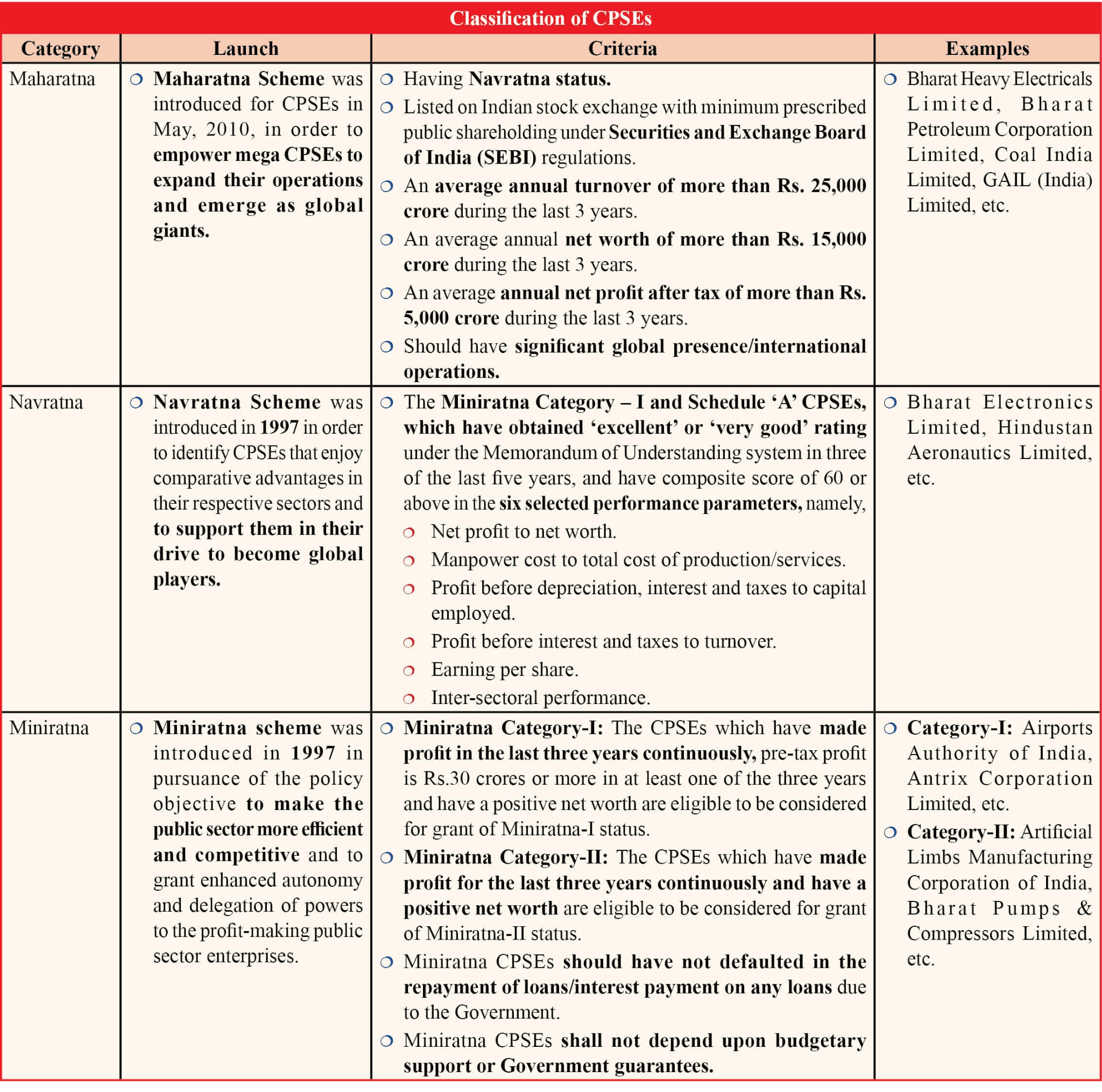
Illustration for Miniratna Status for DPSUs (Defense PSUs)

What & Where

Miniratna (Category-I): GoI tag granting higher operational autonomy to profit-making Central PSUs.

Newly conferred on three Defence PSUs carved from Ordnance Factory Board—MIL, AVNL, IOL.

OFB corporatised in 2021 into seven DPSUs to boost defence self-reliance.

Quick Facts for MCQs

Industrial Policy

  • Corporatisation 2021: split OFB into 7 DPSUs aligning with Atmanirbhar Bharat, Make-in-India thrust.
  • Miniratna upgrade incentivises efficiency, market orientation, faster capex approvals.
  • Status enhances DPSUs’ credibility when bidding globally.

Defence Manufacturing

  • Munitions India: ammunition, mortars, rockets, grenades, in-house explosives portfolio.
  • Armoured Vehicles Nigam: MBT Arjun, T-90 tanks, BMP-II Sarath, Stallion/LPTA logistics trucks.
  • India Optel: opto-electronic sights, night-vision, fire-control gear for land & naval systems.

Corporate Autonomy

  • Eligibility filters ensure financially stable CPSEs gain relaxed investment ceilings, debt raising powers.
  • Board autonomy trims decision cycles, bypassing repeated Cabinet approvals.
  • Enhanced flexibility expected to sharpen competitiveness against private & foreign OEMs.

Key Data Points

FeatureData-Point
MinistryDefence
Fresh MiniratnasMunitions India Ltd, Armoured Vehicles Nigem Ltd, India Optel Ltd
Original entityOrdnance Factory Board (dissolved 2021)
Miniratna profit conditionContinuous profit during last 3 years
Minimum pre-tax profit≥ ₹30 crore in at least 1 of those years
Net-worth criterionMust be positive
Key advantageGreater autonomy to invest, borrow, form JVs

Related UPSC Prelims PYQs

CAPF_GAI 2023PYQ 1

‘Rail Vikas Nigam Limited’ is a:

CAPF_GAI 2020PYQ 2

निम्नलिखित में से कौन सा एक केंद्रीय सार्वजनिक क्षेत्र उपक्रम (CPSUs) मिनीरत्न के रूप में मान्य है ?

GS-3SecurityQuick Bite

13.Trojan Horse Drone Strike (FPV Drones)

Indian Express
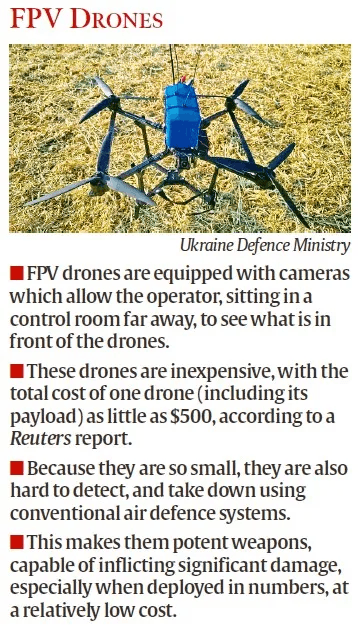
Illustration for Trojan Horse Drone Strike (FPV Drones)

What & Where

FPV drones – remotely piloted UAVs streaming live video for first-person control.

Trojan-Horse tactic – weaponised drones concealed in wooden cabins moved by trucks.

Geography – Ukraine executed covert strike on Russian air bases.

Quick Facts for MCQs

Tech & Devices

  • FPV drones enable real-time guidance, high agility, low cost.
  • Wooden cabins mask heat, radar, visual signatures during transport.
  • Truck mobility extends operational reach deep into adversary territory.

Security Dimension

  • Trojan-Horse delivery circumvents perimeter surveillance through harmless facade.
  • Covert unmanned raids minimise friendly casualties and political exposure.
  • Deception tactics complicate enemy attribution and response planning.

Cyber Terminology

  • Cyber Trojans leverage social engineering to gain unauthorised system access.
  • Both mythic and digital Trojans hide malicious payloads within benign shells.
  • Concept exemplifies cross-domain doctrine of deceptive infiltration.

Key Data Points

FeatureData-Point
FPV stands forFirst Person View
Trojan Horse originGreek mythology deception at Troy
Cyber TrojanMalware posing as legitimate software
Concealment methodMobile wooden cabins on trucks
Strike targetRussian air bases
GS-1Scheme

14.National Polio Surveillance Network (Disease Surveillance)

The Hindu

What & Where

National Polio Surveillance Network (NPSN); India-wide system monitoring polio and other vaccine-preventable diseases.

Launched 1997 as National Polio Surveillance Project; MoHFW–WHO collaborative initiative.

Network to contract from 280 labs to 140 by 2026-27, then fold into IDSP.

Quick Facts for MCQs

Operational Scope

  • Surveillance: Detects, investigates AFP cases; confirms via laboratories; verifies zero wild poliovirus transmission.
  • Vaccination: Supplies technical aid for pulse polio rounds and routine immunisation.
  • Training: Builds state/district capacities on VPD surveillance protocols.

Phase-Out Plan

  • Timeline: Gradual withdrawal begins June 2025; 50 % downsizing targeted by FY 2026-27.
  • Transition: Polio assets to be absorbed into wider IDSP framework.
  • Continuity: Residual 140-centre grid to retain critical AFP monitoring.

Institutional Linkages

  • Coordination: Joint WHO India Country Office–MoHFW management since inception.
  • Workforce: Surveillance Medical Officers serve as nodal experts across all states/UTs.
  • Expansion: Mandate now covers measles-rubella elimination and other VPD controls.

Key Data Points

FeatureData-Point
Establishment year1997
Original nameNational Polio Surveillance Project (NPSP)
Lead bodiesWHO & MoHFW
Core targetAcute Flaccid Paralysis (wild polio indicator)
Field footprint>200 units led by Surveillance Medical Officers
Current surveillance centres280
Planned centres post-cut140 (by 2026-27)
Phase-out startJune 2025
Key campaign supportPulse Polio & routine immunisation
Future integrationIntegrated Disease Surveillance Programme (IDSP)
GS-1MiscQuick Bite

15.National Florence Nightingale Awards (Nursing Awards)

PIB

What & Where

National Florence Nightingale Awards: India’s apex recognition for nursing excellence, conferred by the President.

Instituted 1973 by Ministry of Health & Family Welfare; honours service in clinical care, public health, education, administration.

Venue normally Rashtrapati Bhavan, New Delhi; 2025 edition honoured 15 nurses nationwide.

Quick Facts for MCQs

Award Structure

  • Composition includes monetary prize, silver-gilt medal, presidentially signed certificate
  • Presented across three clearly demarcated professional categories for transparency

Eligibility & Categories

  • Nominees must be registered under relevant nursing councils
  • Service allowed in government, UT, or recognised voluntary organisations

Historical Context

  • Florence Nightingale pioneered evidence-based nursing, founded Nightingale School at St Thomas’, London
  • Her Crimean War sanitation reforms cut mortality, inspiring global nursing standards

Key Data Points

FeatureData-Point
Year instituted1973
Instituting ministryMoHFW, Government of India
2025 awardees15 nursing professionals
Award components₹1 lakh + Medal + Certificate
CategoriesRN & RM, RANM, Registered Lady Visitors
Eligibility settingsHospital, community, teaching, administration
Namesake lifespan1820 – 1910
War linked to namesakeCrimean War

Ready to practice?

Test your knowledge with our UPSC test series.

Start Free Trial