UPSC Current Affairs

13 topicsGS-1: 2GS-2: 4GS-3: 7
0/13 done
GS-3Economy

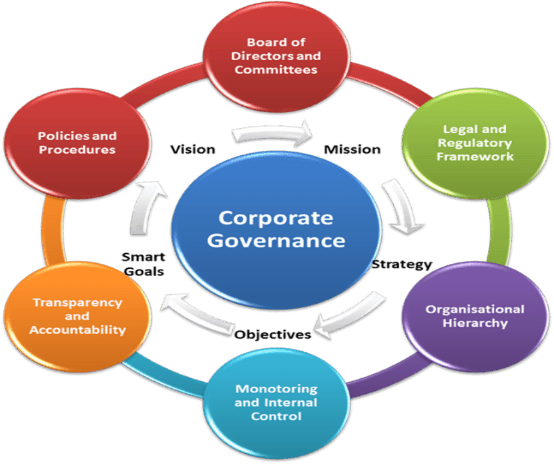
1.Corporate Governance Failures in India (Corporate Governance)

LL
Illustration for Corporate Governance Failures in India (Corporate Governance)

What & Where

Governance defined as rules-practices-processes guiding corporate direction and control

Indian context spotlight: Gensol Engineering, BluSmart, BharatPe, GoMechanic, DHFL scandals

Goal: safeguard stakeholder interests via fairness, transparency, accountability, responsibility, risk management

Quick Facts for MCQs

Core Principles

  • Fairness ensures equal voting rights for minority shareholders
  • Transparency mandates timely disclosure of material financials and conflicts
  • Accountability fostered through AGMs questioning board decisions

Failure Triggers

  • Diversion of investor funds into personal luxury assets
  • Falsified revenues inflating valuation to attract funding
  • Weak board supervision under promoter dominance

Governance Tools

  • Independent board oversight counters promoter influence
  • Tiered financial controls flag high-value transactions for extra checks
  • Conflict-of-interest declarations scrutinise related-party dealings

Recent Indian Cases

  • Gensol promoters allegedly used EV funds to buy premium residences
  • BluSmart routed capital through opaque loops violating disclosure norms
  • GoMechanic confessed to revenue overstatement to secure investments

Key Data Points

FeatureData-Point
Core principlesFairness, Transparency, Risk-management, Responsibility, Accountability
Key regulatorSecurities & Exchange Board of India (SEBI)
SEBI ESG ruleMandatory risk disclosure in annual filings
Independent directors norm≈ 1/3 of listed-company board
Typical control lapseRelated-party deals hidden via shell firms
Whistle-blower needAnonymous, anti-retaliation system flagged as best practice
Audit safeguardExternal audit + active audit committee
PYQ linkage2023 UPSC Q on moral integrity vs professional efficiency

Related UPSC Prelims PYQs

GS1 2024PYQ 1

भारत में निगमित सामाजिक उत्तरदायित्व (CSR) नियमों के संदर्भ में, निम्नलिखित कथनों पर विचार कीजिए:

GS1 1995PYQ 2

To prevent recurrence of scams in Indian Capital Market, the Government of India has assigned regulatory powers to
GS-3Economy

2.Direct Agricultural Subsidy Reform (Agriculture Subsidy)

PIB

What & Where

Agricultural subsidies: government transfers lowering farm input cost or directly augmenting income.

Key instruments: DBT cash (PM-KISAN), input aids (fertiliser, power, irrigation), output price support via MSP/FRP.

Regional concentration: procurement benefits ~6 % growers, chiefly Punjab, Haryana, Andhra Pradesh.

Quick Facts for MCQs

Fiscal Impact

  • Allocation Rs3.71 lakh crore 2025-26 strains Centre finances and debt-ridden states like Punjab.
  • Only 6 % farmers gain from MSP procurement, skewing subsidy equity and budget allocation.
  • DBT route can trim administrative overheads and leakages, improving fiscal efficiency.

Environmental Impact

  • Overuse of urea pushes NPK ratio to 6.7:2.4:1, degrading soils.
  • Free electricity spurs 100 %+ groundwater extraction in Punjab, Rajasthan, Haryana, Delhi.
  • High fertiliser residues contaminate groundwater, generating cancer clusters in Punjab-Haryana belt.

Market Distortions

  • MSP focus on rice-wheat led FCI to discard 18 million t grain in 2024.
  • Low incentives curb pulses, oilseed output, enlarging import dependency.
  • Subsidy levels invite WTO scrutiny, undermining export competitiveness.

DBT Pros & Cons

  • Pros include targeted delivery, transparency, farmer autonomy, reduced input overuse.
  • Cons feature exclusion of undocumented farmers and digital divide challenges.
  • Price-shock exposure and possible nonfarm diversion remain residual risks under cash mode.

Key Data Points

FeatureData-Point
Estimated annual cash gain per farmer if subsidies consolidated~₹35,000
Union Budget 2025-26 food + fertiliser outlay₹3.71 lakh crore
PM-KISAN beneficiary count (Jan 2025)> 11 crore
Actual N:P:K use ratio6.7 : 2.4 : 1
Ideal agronomic N:P:K ratio4 : 2 : 1
Agriculture share of India’s groundwater withdrawal87 %
Alleged Indian rice subsidy vs WTO cap (2020-21)93.9 % vs 10 % ceiling
Interest-subvention loan ceiling & rate₹3 lakh @ 7 %

Related UPSC Prelims PYQs

CAPF_GAI, CDS_GK 2020PYQ 1

As per the Budget Estimates of expenditure on major subsidies during 2019–20, the maximum expenditure was likely to be on

CAPF_GAI, CDS_GK 2020PYQ 2

PAHAL, an initiative to transfer the subsidy to direct bank account of the beneficiaries, is related to

GS-1History

3.India Pavilion at Osaka Expo (Soft Power Diplomacy)

The Hindu

What & Where

Global exposition at Osaka, Japan (2025); theme “Designing Future Society for Our Lives”.

India Pavilion, curated by IGNCA (Culture Ministry), narrates civilisational ethos via compassion-inclusivity lens.

Combines Ajanta Buddhist art, yoga-Ayurveda wellness and tech, acting as modern sutradhar.

Quick Facts for MCQs

Architectural Elements

  • Lotus Courtyard displays Ajanta Bodhisattva frescoes, lotus motifs.
  • Oneness Lounge houses reimagined Bodhi Tree installation signifying unity.
  • Wall of Life presents Yoga, Ayurveda wellness narratives via interactive tech.

Spiritual Symbolism

  • Bodhisattva Padmapani embodies compassion, knowledge in Mahayana Buddhism.
  • Bodhi Tree evokes Buddha’s enlightenment, shared spiritual heritage.
  • Lotus motif denotes purity emerging from worldly turbulence.

Soft Power & Diplomacy

  • Pavilion leverages culture, spirituality, science as foreign-policy soft power tools.
  • Showcases India’s SDG-aligned innovation fostering global partnerships.
  • Functions as living narrative promoting inclusive, compassionate world order.

Key Data Points

FeatureData-Point
Host cityOsaka, Japan
Expo year2025
Expo umbrella theme“Designing Future Society for Our Lives”
Expo concept“Living Lab” for SDG-oriented innovation
Indian pavilion curatorIndira Gandhi National Centre for the Arts
Central visual motifBodhisattva Padmapani (Ajanta Caves)
Ajanta Caves age≈2,000 years; UNESCO World Heritage
Key zonesLotus Courtyard, Oneness Lounge, Wall of Life
Wellness focusYoga & Ayurveda
Core narrative valuesCompassion, inclusivity, knowledge
GS-1Mapping

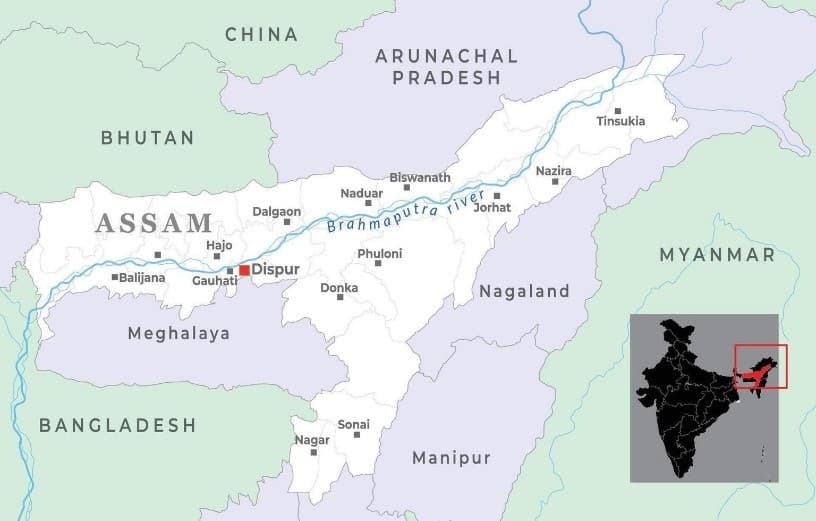
4.Assam Flood Geography (State Geography)

DH
Illustration for Assam Flood Geography (State Geography)

What & Where

Assam, Northeast India; borders Bhutan, Arunachal, Nagaland, Manipur, Mizoram, Tripura, Meghalaya, West Bengal & Bangladesh.

Monsoon-fed Brahmaputra-Barak systems overflow flat alluvial plains, producing annual floods.

July-2024 spell: 5.15 lakh people hit in 22 districts; 38 deaths across Northeast.

Quick Facts for MCQs

Causes

  • Monsoon rainfall among India’s highest saturates plains.
  • Brahmaputra, Barak and tributaries overtop, breaching embankments.
  • Earthquake-induced landslides block drainage channels.

Hydrography

  • Brahmaputra main stem plus Dhansiri, Kopili, Kushiyara, Katakhal cross danger mark annually.
  • Barak rules southern valley, later bifurcates into Kushiyara & Surma in Bangladesh.
  • Embankment failures amplify inundation spread.

Relief & Topography

  • Brahmaputra Valley: broad, low-gradient alluvium bordered by hills; highly flood-prone.
  • Barak Valley: narrower, fertile; relies on embankments to curb spillage.
  • North Cachar & Rengma hills with Chenghehishon peak separate central Assam from Nagaland.

Key Data Points

FeatureData-Point
CapitalDispur (Guwahati suburb)
Districts affected 202422
Population impacted≈5.15 lakh
Flood deaths (NE)38
Main riverBrahmaputra
Entry into AssamNear Sadiya
Length inside state≈725 km
Southern major riverBarak
Peak hill height≈1,000 m (Dima Hasao)
Wettest monthsJun – Sep
Key tributariesDhansiri, Kopili, Kushiyara, Katakhal
Chief valleysBrahmaputra, Barak

Related UPSC Prelims PYQs

CDS_GK, GS1 2014PYQ 1

Consider the following rivers :

CDS_GK, GS1 2022PYQ 2

Which one of the following is a tributary of Barak River in Manipur?

GS-3S&T

5.Israel Magen Laser Air Defence (Directed Energy)

NDTV

What & Where

Magen (“Shield of Light”): Israel high-energy laser air-defence in Iron Beam programme, combat-deployed 2024.

Process: Optical tracking locks UAV/drone, 100 kW-class beam causes thermal kill within seconds, silent & debris-free.

Geography: Active along Israel–Lebanon frontier, intercepting dozens of Hezbollah drones.

Quick Facts for MCQs

Technology & Performance

  • Speed-of-light interception removes projectile flight lag, boosts hit probability.
  • Single-point laser burn yields high accuracy, no shrapnel or explosive residue.
  • AI controller prioritises threats, auto-switches to missiles when laser unsuited.

Economic Angle

  • $5 shot cost slashes expenditure versus $50k Iron Dome missile.
  • No missile storage, transport, disposal logistics, lowering life-cycle costs.
  • Cheap engagements enable defence against swarming, low-cost drone attacks.

Security Dimension

  • Israel first nation with proven combat laser air-defence capability.
  • Silent, invisible beam preserves tactical surprise, hinders enemy counter-measures.
  • Effective against small, low-signature threats challenging for radar-guided interceptors.

Future Platforms

  • Road-mobile Lite Beam variant in trials for armoured vehicles.
  • Naval Iron Beam planned for close-in shipborne defence.
  • Airborne laser concepts considered for large aircraft and UAV integration.

Key Data Points

FeatureData-Point
System nameMagen / Shield of Light
Parent programmeIron Beam
Lead developerRafael Advanced Defense Systems
Weapon typeGround-based high-energy laser
Power class≈ 100 kW
Cost per shot~US $5
Iron Dome interceptor cost~US $50,000
First combat use2024 Israel–Hezbollah clashes
Primary targetsDrones, UAVs, rockets, mortars
Engagement timeFew seconds
GS-3S&T

6.BharatGen Indian Multimodal LLM (AI Language Model)

DD News

What & Where

BharatGen = first Govt-funded multimodal Large Language Model supporting text-speech-image in 22 Indian tongues

Led by TIH Foundation for IoT & IoE, IIT-Bombay; unveiled at BharatGen Summit 2025, India

Funded through National Mission on Interdisciplinary Cyber-Physical Systems (NM-ICPS)

Quick Facts for MCQs

Tech & Schemes

  • Integration: Multimodal architecture enables unified NLP, speech and vision pipelines
  • Scalability: Designed to plug into national e-governance platforms like CPGRAMS seamlessly
  • R&D push: Hackathons, incubators, parks embedded in NM-ICPS framework

Social Inclusion

  • Language-first: Training corpus spans major & regional dialects, reducing urban-English bias
  • Rural focus: Tailored AI tools for health outreach, agri-extension, local governance
  • Accessibility: Goal of free/low-cost APIs for startups and state agencies

Economic Angle

  • Entrepreneurship: Low-latency APIs expected to spawn vernacular AI start-ups
  • Job creation: Demand for dataset curation, model fine-tuning, domain apps across states
  • Techade vision: Aligns with India@100 roadmap for $1 trn digital economy

Education Nexus

  • NEP 2020 sync: AI-driven bilingual content, assessments, assistive tools for diverse learners
  • Humanities-STEM bridge: Encourages cross-disciplinary research in linguistics, ethics, computer science
  • Capacity-building: Upskilling programs for teachers and students on LLM utilization

Key Data Points

FeatureData-Point
Model typeMultimodal Large Language Model
Supported modalitiesText, Speech, Image
Language coverage22 Indian languages
Lead developerTIH Foundation for IoT & IoE, IIT-Bombay
Funding missionNM-ICPS (DST)
Launch eventBharatGen Summit 2025
Core aimDemocratic, ethical, inclusive AI ecosystem
Key sectors targetedGovernance, Health, Education, Agriculture
Scalability examplesCPGRAMS, Tele-medicine, AI-in-Education
Collaboration partnersGovt, Academia, Start-ups, Students

Related UPSC Prelims PYQs

ESE_GS 2026PYQ 1

What is the name of the national digital framework launched at India Maritime Week 2025 to make Indian ports data-driven and AI-enabled?

GS-3S&T

7.Early Neurodegenerative Disease Mechanisms (Medical Research)

TH1,

What & Where

Neurodegenerative diseases: progressive, irreversible neuron loss; impair memory, movement, speech; no curative therapy yet.

Key types: Alzheimer (Aβ), Parkinson (α-synuclein), ALS, Huntington, Guillain-Barré.

India link: early-stage vascular mechanisms mapped by NCBS-TIFR, Bengaluru.

Quick Facts for MCQs

Pathogenesis

  • Vascular dysfunction: early BBB breaching lets toxins enter brain parenchyma.
  • Proteinopathy: Aβ, α-synuclein, others aggregate, poison cellular machinery.
  • Mitochondrial shortfall: low ATP + reactive oxygen species hasten cell death.

Research Findings

  • Mouse models show BBB leakage precedes cognitive or motor signs.
  • Restoring TDP-43 localisation limits vascular damage in experiments.
  • Targeting Esyt-mediated membrane contact sites proposed for pre-symptom therapy.

Contributing Factors

  • Genetics: mutant APP, SNCA, SOD1 raise susceptibility.
  • Chronic inflammation: activated microglia release neurotoxic cytokines.
  • Ageing: impaired proteostasis and waste clearance escalate neuronal vulnerability.

Key Data Points

FeatureData-Point
Protective brain gateBlood-Brain Barrier (BBB)
Early BBB disruptorMis-localised TDP-43 protein
Vascular leak outcomeInflammation + neuron death precede symptoms
Membrane-contact regulatorExtended Synaptotagmin (Esyt) binds Ca²⁺
Esyt failure effectLipid/Ca²⁺ signalling collapse → degeneration
High-risk driversGenetics, misfolded proteins, oxidative stress, ageing
Environmental triggersPesticides, heavy metals, infections
Research instituteNCBS-TIFR, Bengaluru
Disease courseChronic, progressive, largely incurable
Wider categoryNeurological disorders; may be reversible (e.g., stroke)
GS-3S&TQuick Bite

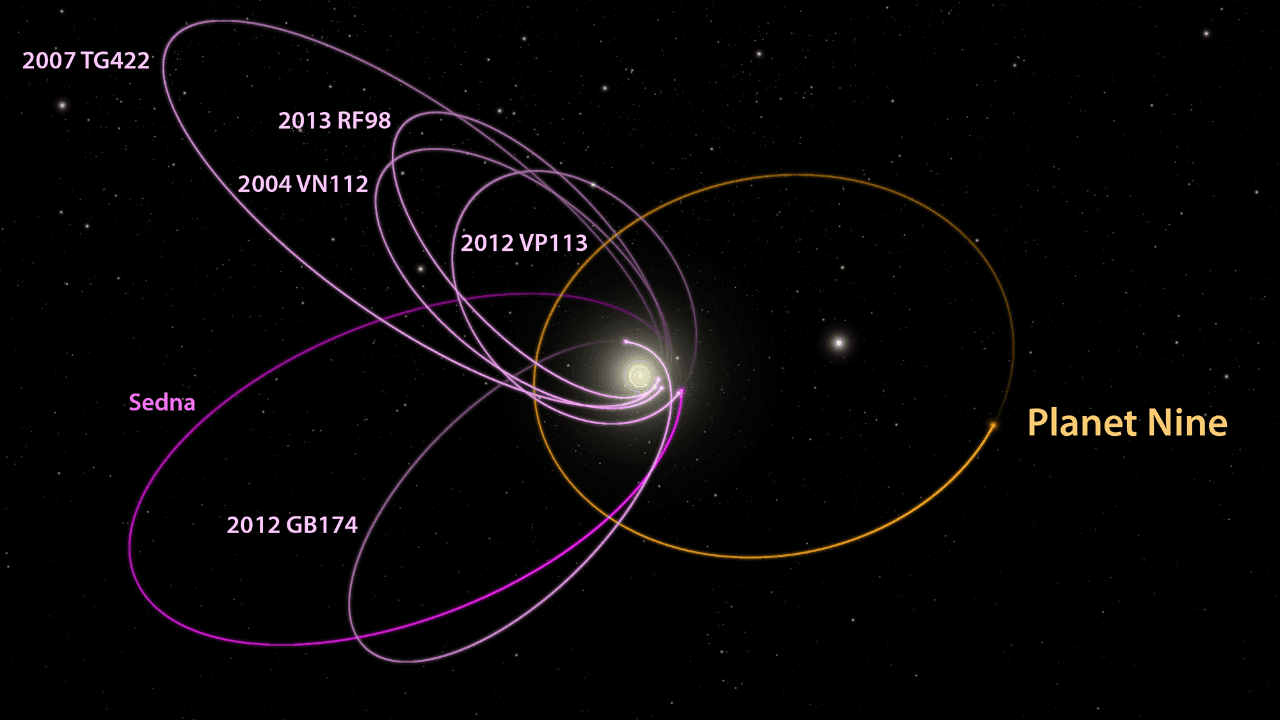
8.Dwarf Planet 2017 OF201 Discovery (Outer Solar System)

Hindustan Times
Illustration for Dwarf Planet 2017 OF201 Discovery (Outer Solar System)

What & Where

2017 OF201: 700 km trans-Neptunian dwarf planet, 25 000-year orbit reaching ~1 600 AU into inner Oort Cloud

Kuiper Belt: doughnut-shaped band of icy bodies and dwarf planets beyond Neptune, part of outer solar system

Planet Nine zone: far-flung region where clustered extreme TNO orbits hint at an undiscovered massive planet

Quick Facts for MCQs

Orbital Characteristics

  • Eccentricity: elongated path diverges from clustered extreme TNOs
  • Reach: trajectory enters Sun’s gravitational boundary near Oort Cloud
  • Alignment: unusual orientation challenges current clustering models

Dwarf Planet Definition

  • Criteria: solar orbit, near-spherical, non-satellite, uncleared neighbourhood
  • Contrast: planets clear orbits; dwarfs share space with asteroids or TNOs
  • Examples: Pluto, Eris, Ceres, candidate 2017 OF201

Planet Nine Hypothesis

  • Basis: perihelia clustering and high inclinations of extreme TNOs
  • Prediction: unseen body ~5–10 Earth masses beyond ~200 AU
  • Status: unobserved; new TNOs refine search parameters

Scientific Significance

  • Census: points to large, unexplored icy population beyond Neptune
  • Dynamics: informs models of solar system edge and formation history
  • Search aid: additional orbital data constrains Planet Nine trajectory

Key Data Points

FeatureData-Point
Object discovered2017 OF201
Estimated diameter~700 km
Orbital period≈25 000 years
Max distance (aphelion)~1 600 AU
Region traversedKuiper Belt → inner Oort Cloud
Orbit alignmentNon-clustered, atypical
Hypothetical influencerPlanet Nine
Similar bodies projected“Hundreds” beyond Neptune
Dwarf planet testNot cleared orbital path
Early cluster evidenceSedna, 2012 VP113

Related UPSC Prelims PYQs

NDA_GAT 2022PYQ 1

Once considered ninth planet of the solar system, Pluto is today listed as the largest dwarf planet of the solar system.

GS-2Security

9.India-Japan Maritime Cooperation Expansion (Maritime Cooperation)

NDTV
Illustration for India-Japan Maritime Cooperation Expansion (Maritime Cooperation)

What & Where

Framework: India-Japan maritime cooperation on port digitisation, shipbuilding, smart-islands, seafarer deployment.

Geography: Indian shipyards (Imabari greenfield, Andhra Pradesh) and islands (Andaman & Nicobar, Lakshadweep).

Arena: Wider Indo-Pacific sea lanes under FOIP and IPOI visions.

Quick Facts for MCQs

Economic Angle

  • Investment: Japan eyeing ports, shipyards; 5-trillion-yen target by 2027 under Partnership for Quality Infrastructure.
  • Workforce: 1.54-lakh Indian seafarers offer cost-effective labour to ageing Japanese maritime sector.

Security Dimension

  • Strategy: Cooperation aligns with QUAD, SCRI, strengthens Indo-Pacific deterrence against Chinese maritime assertiveness.
  • Connectivity: Upgraded Indian ports extend Navy logistics reach from Andaman chokepoints to Western Pacific.

Tech & Schemes

  • Digitisation: AI, IoT adoption in ports meshes with Sagarmala 2.0, targets efficiency and emission cuts.
  • Smart-Islands: Japan to install renewable micro-grids, disaster-resilient systems in A&N and Lakshadweep.

Key Data Points

FeatureData-Point
Bilateral trade FY 2022-23USD 21.96 billion
Target Japanese investment5 trillion yen (~Rs 3.2 lakh crore) by 2027
Skilled Indian seafarers1.54 lakh personnel
Proposed Japanese shipyardImabari greenfield, Andhra Pradesh
Clean Energy PartnershipLaunched 2022
Civil Nuclear AgreementSigned 2017
Shared platformsQUAD, Supply Chain Resilience Initiative
Indian maritime roadmapsVision 2030 & Amrit Kaal 2047
Port-digitisation aimEfficiency rise, carbon-cut

Related UPSC Prelims PYQs

CAPF_GAI, ESE_GS 2024PYQ 1

Which one among the following statements with regard to India’s maritime initiative, SAGAR, is correct?

CAPF_GAI, ESE_GS 2026PYQ 2

What is the name of the national digital framework launched at India Maritime Week 2025 to make Indian ports data-driven and AI-enabled?

GS-3Security

10.Ukraine Operation Spider’s Web Drones (Drone Offensive)

Business Standard
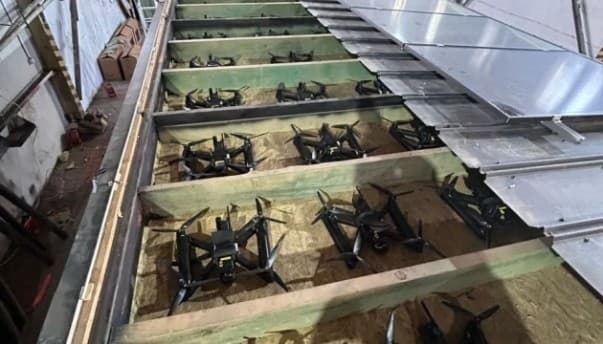
Illustration for Ukraine Operation Spider’s Web Drones (Drone Offensive)

What & Where

Operation Spider’s Web = Ukraine’s long-range, high-precision drone strike campaign against Russian airbases deep inside mainland Russia.

Process: 117 explosive UAVs, truck-borne “Trojan-Horse” launch, remote activation across several time zones.

Geography: Hits at Belaya (Irkutsk), Olenya (Murmansk), Dyagilevo (Ryazan), Ivanovo Severny, Ukrainka (Amur Oblast).

Quick Facts for MCQs

Security Dimension

  • Attrition: Multiple strategic bombers neutralised, reducing Russia’s long-range strike inventory.
  • Deterrence: Demonstrates Kyiv’s reach over 5,000 km, altering Russian base-defence calculus.
  • Cost-effectiveness: Low-cost drones inflicted multi-billion-dollar damage.

Technological Innovation

  • Mobility: Civilian trucks enable covert forward deployment unnoticed by Russian radar.
  • Remote-launch: Operators triggered UAVs from safe distances, minimising Ukrainian personnel risk.
  • Multi-time-zone coordination: Simultaneous strikes overloaded Russian air-defence networks.

Diplomatic Angle

  • Signalling: Operation timed to strengthen Ukraine’s stance in prospective cease-fire negotiations.
  • Messaging: Underscored vulnerability of Russian heartland, pressuring Moscow politically.

Key Data Points

FeatureData-Point
PlannerSecurity Service of Ukraine (SBU)
Planning period~18 months
Drones launched117 explosive-laden UAVs
Concealment methodWooden sheds on civilian trucks
Aircraft damagedTu-95, Tu-160, Tu-22M bombers; A-50 AWACS
Estimated loss≈ US $7 billion to Russian airpower
Primary objectiveCripple strategic bomber fleet & cruise-/nuclear-missile capacity
Trigger eventFollowed Russian Iskander strike on Dnipropetrovsk (few hours later)
Negotiation angleBuilt leverage ahead of impending peace talks
GS-2Scheme

11.UMEED Waqf Property Digital Portal (Waqf Management)

New Indian Express

What & Where

UMEED Portal = centralised digital system for registration & regulation of Waqf properties.

Core process: time-bound e-registration, geotagging, automatic dispute referral, High-Court appeal.

Coverage: Pan-India, led by Ministry of Minority Affairs with State Waqf Boards.

Quick Facts for MCQs

Legal & Policy

  • Amendment-2025 mandates digital registration, six-month limit, tribunal empowerment for unregistered assets.
  • Appeal-route shifted to High Court within ninety days, strengthening judicial oversight.
  • Oversight-boost via State Waqf Boards; tighter trustee regulation.

Tech & Schemes

  • Geotagging-module logs coordinates, dimensions, photos for every property.
  • Dashboard-analytics deliver real-time compliance, dispute alerts, policy metrics.
  • User-support tools offer legal guides, stepwise registration help.

Social Concerns

  • Transparency-drive grants beneficiaries online access to rights, obligations, property status.
  • Eligibility-maintained for women, children, EWS even if women-titled land excluded from Waqf tag.
  • Dispute-classification mechanism deters concealment, promotes equitable charitable utilisation.

Key Data Points

FeatureData-Point
Acronym expansionUnified Waqf Management, Empowerment, Efficiency, Development
Launch date6 June 2025
Nodal ministryMinority Affairs
Mandatory registration window6 months post-launch
Appeal forum & limitHigh Court, within 90 days
Auto-dispute triggerUnregistered property after deadline
Women-titled propertyCannot be declared Waqf
GS-2Scheme

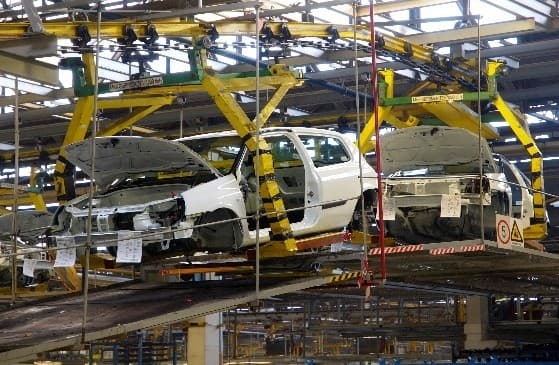
12.Electric Passenger Car Manufacturing Scheme (EV Manufacturing)

Financial Express
Illustration for Electric Passenger Car Manufacturing Scheme (EV Manufacturing)

What & Where

Scheme: Promote Manufacturing of Electric Passenger Cars in India (SPMEPCI) offers duty relief against firm investment, localisation targets

Geography: Applies pan-India; concessional CBU imports via any Indian port, manufacturing units to be set up domestically

Governance: Nodal Ministry – Heavy Industries; Project Management Agency (PMA) handles monitoring

Quick Facts for MCQs

Duty Concession

  • Rate: 15 % versus usual 70–100 % CBU duty
  • Tenure: Benefit available for five consecutive financial years
  • Ceiling: Concession withdrawn if imports exceed 8,000 units annually

Investment Conditions

  • Timeline: ₹4,150 crore to be infused within three years of scheme approval
  • Facility: Domestic manufacturing must begin commercial production inside same three-year window
  • Land: Cost excluded from eligible outlay; may be owned or leased

Localization Targets

  • Milestones: 25 % DVA in three years, 50 % in five years post-approval
  • Verification: Testing agencies to certify DVA using FAME-II methodology
  • Penalty: Shortfall triggers proportional forfeiture of bank guarantee

Compliance Safeguards

  • Monitoring: Quarterly progress reports to PMA; annual audit by MHI
  • Refund: Bank guarantee released only after investment and DVA milestones met
  • Cap: Total duty foregone cannot exceed lower of ₹6,484 crore or actual investment

Key Data Points

FeatureData-Point
Launch monthMarch 2024 (guidelines June 2025)
Nodal ministryMinistry of Heavy Industries
Customs duty on eligible CBUs15 %
CBU import ceiling8,000 cars / year for 5 years
Minimum CIF valueUSD 35,000 per car
Minimum committed investment₹4,150 crore within 3 years
Domestic Value Addition targets25 % in 3 yrs; 50 % in 5 yrs
Duty concession cap₹6,484 crore or actual investment, lower
Bank-guarantee sizeDuty foregone or ₹4,150 crore, higher
Eligible firm turnover≥₹10,000 crore global automotive revenue
Eligible fixed assets≥₹3,000 crore
Charging-infra spend limit5 % of total investment
GS-2Scheme

13.Seva Se Seekhen Youth Campaign (Youth Engagement)

PIB

What & Where

Youth-centric Seva Se Seekhen: 15-day experiential service stint at Jan Aushadhi Kendras (JAKs).

Blends skill-building with generic-medicine outreach using Pradhan Mantri Bharatiya Janaushadhi Pariyojana network.

Implemented nationwide across all States/UTs, five volunteers per district.

Quick Facts for MCQs

Governance & Ministries

  • Joint stewardship ensured through inter-ministerial coordination between MYAS and Dept Pharmaceuticals.
  • Campaign aligns with National Youth Development Framework objectives of nation-building through service.
  • Leverages existing PMBJP network for low-cost medicine distribution.

Operational Design

  • Deployment formula standardised: five volunteers per district, five Kendras each, enabling uniform national coverage.
  • Structured task sheet guides daily operations, inventory tracking, customer education sessions.
  • Mentorship by Kendra pharmacists provides real-time skill acquisition.

Capacity Building

  • Volunteers practice inventory, logistics, soft skills like empathy, discipline, teamwork.
  • Exposure to supply chain of generic drugs enhances technical proficiency relevant to pharma sector.
  • Certification post-internship aids employability in health services.

Public Health Outreach

  • Generic medicine literacy campaigns increase awareness of affordable alternatives.
  • Community engagement at JAKs expected to widen footfall among low-income patients.
  • Data collection by volunteers feeds into feedback loop for PMBJP improvements.

Key Data Points

FeatureData-Point
Launch year2025
Nodal ministriesYouth Affairs & Sports; Dept of Pharmaceuticals
Internship length15 days
Volunteer density5 youth per district, in 5 JAKs
Primary workplacesJan Aushadhi Kendras
Target poolsMY Bharat, NSS, pharmacy students, other youth
Core objectivesExperiential learning; medicine awareness; skill development
Sample activitiesCustomer support; stock logistics; health campaigns

Related UPSC Prelims PYQs

NDA_GAT 2024PYQ 1

निम्नलिखित में से किस युवा संगठन/योजना का आदर्श वाक्य “स्वयं से पहले आप (Not me, but you)” है ?

Ready to practice?

Test your knowledge with our UPSC test series.

Start Free Trial