UPSC Current Affairs

13 topicsGS-1: 3GS-2: 4GS-3: 6
0/13 done
GS-2Polity

1.ECINET Real-Time Voter Turnout System (Election Management)

Indian Express

What & Where

Reform; real-time voter-turnout reporting via ECINET mobile app at every Indian polling station

Process; presiding officer enters data two-hourly, offline sync possible, automatic constituency aggregation

Geography; nationwide rollout by Election Commission of India, including low-network remote booths

Quick Facts for MCQs

Tech & Schemes

  • Integration; single app replaces multiple legacy platforms, minimises relay chain
  • Automation; instant constituency-level aggregation removes manual collation delays
  • Connectivity; offline capture ensures mountainous, rural, shadow zones covered

Governance Significance

  • Transparency; near real-time public display counters manipulation allegations
  • Credibility; direct digital entry trims human error, boosts institutional trust
  • Digital India; aligns with broader e-governance push in electoral administration

Operational Changes

  • Hierarchy shift; bypasses sector/returning officers for turnout figures
  • Time lag; reduction from hours–days (2019) to minutes–hours (2024)
  • Public access; turnout percentages released immediately after polls, subject to network availability

Key Data Points

FeatureData-Point
App nameECINET
Integrated sub-apps40+
Data entry nodePresiding Officer at booth
Update intervalEvery 2 hours
Offline uploadYes; sync later
Visibility of turnoutShortly after poll close
GS-2Polity

2.India's 16th Digital Census Plan (Digital Census)

The Hindu
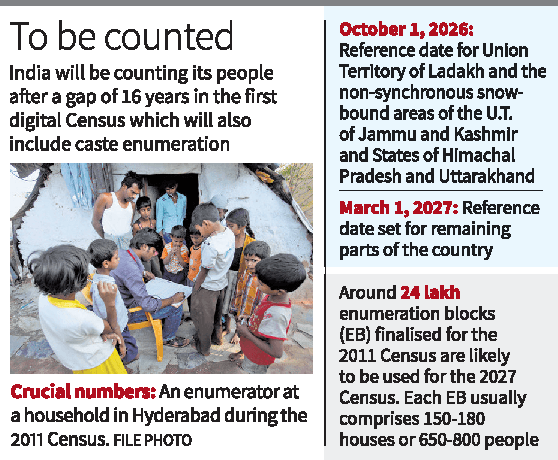
Illustration for India's 16th Digital Census Plan (Digital Census)

What & Where

Census: decennial, nationwide enumeration of population & socio-economic traits by Registrar General-cum-Census Commissioner, MHA.

16th Census (2026-27): first digital, first caste-wise count in independent India; two-phase fieldwork via mobile app.

Reference dates: 1 Oct 2026 snow-bound States/UTs; 1 Mar 2027 rest of India.

Quick Facts for MCQs

Legal & Policy

  • Statutory cover via Census Act 1948; non-compliance punishable.
  • Union List empowers Centre; States assist operationally.
  • Data confidentiality mandated; individual data cannot be shared in courts.

Digital Rollout

  • Mobile app collects geo-tagged data, eliminates paper transport/storage.
  • Enumerators receive standardized, on-device training modules.
  • Portal allows household self-entry; enumerator only verifies.

Political Implications

  • Fresh population figures trigger Lok Sabha & Assembly seat reallocation after 2026 freeze lifts.
  • Caste statistics expected to influence reservation, welfare formulae.
  • Digital dataset aids evidence-based policy targeting.

Historical Timeline

  • 1872 pilot → 1881 full count → decennial continuity till 2011.
  • COVID-19 deferred 2021 round, extending 1971 delimitation relevance.

Key Data Points

FeatureData-Point
Constitutional entryUnion List 69, Seventh Schedule
Principal lawCensus Act 1948
Subsidiary rulesCensus Rules 1990
Supervising officeRegistrar General & Census Commissioner
Ministry in chargeHome Affairs
Normal periodicityEvery 10 years
Series count16th overall; 8th since 1947
Last completed census2011
2021 round statusPostponed due to COVID-19
First non-synchronous count1872
First synchronous count1881 by W.C. Plowden
Data-collection mode 2026-27Secure mobile application
Self-enumeration pre-conditionUpdated National Population Register
Total enumerators to be trained≈ 30 lakh
Enumeration phases1-Housing list; 2-Population & caste
Caste coverageAll castes + existing SC/ST
Snow-area reference date1 Oct 2026
Rest-of-India reference date1 Mar 2027
Delimitation base year after censusReplaces 1971 figures post-2026
Paper schedulesCompletely phased out

Related UPSC Prelims PYQs

CAPF_GAI, CDS_GK 2024PYQ 1

Consider the following statements with reference to Census in India:

CAPF_GAI, CDS_GK 2022PYQ 2

अखिल भारतीय जनगणना का प्रथम प्रयास कब किया गया?

GS-2Polity

3.Digital Personal Data Protection Framework (Data Protection)

Hindustan Times

What & Where

Digital Personal Data Protection (DPDP) Act 2023 + Draft Rules 2025 = India’s first end-to-end privacy regime

Governs processing of digital personal data; key actors – Data Principal, Data Fiduciary, Significant Data Fiduciary

Territorial reach – data processed in India or abroad when goods/services offered to India residents

Quick Facts for MCQs

Legal & Policy

  • Exemptions broad for security, sovereignty, public order raising privacy dilution worries
  • Draft Rules introduce graded compliance easing load on start-ups & MSMEs
  • Board envisioned digital-by-design for online consent and grievance handling

Rights & Duties

  • Principal rights – access, correction, deletion, nominate representative
  • Fiduciary obligations – accuracy, security, breach notice, post-purpose erasure
  • No right to data portability or explicit harm redress presently

Institutional Setup

  • Data Protection Board of India monitors compliance, imposes penalties, handles breaches
  • Consent Managers act as licensed intermediaries to collect/manage permissions
  • Govt may declare any platform with large user base (e.g., Facebook) as SDF

Global Parallels

  • Inspired by EU GDPR; contrasts with US sectoral model and China PIPL-DSL combo
  • Draft advises bilateral/multilateral pacts for trusted cross-border transfers
  • Right to privacy in India affirmed in 2017 Puttaswamy ruling paving legislative path

Key Data Points

FeatureData-Point
Enactment year2023 (Act), 2025 Draft Rules
Child age cut-off< 18 years
Section mandating parental OKSec 9
Max data retention3 yrs after last interaction/effective date
Erasure notice window≥ 48 hrs to principal
Penalty false complaintUp to ₹10,000
Significant Data Fiduciary tag byCentral Govt
Extra SDF dutiesDPO, audit, impact assessment
Consent Manager formIndian Co., ≥ ₹2 cr net worth
Board tenureDPBI members – 2 yrs, re-appointable
Appeals lie toTDSAT
RTI tweak viaSec 44(3) deleting larger-public-interest test
Cross-border flowAllowed unless govt notifies ban list

Related UPSC Prelims PYQs

CAPF_GAI 2023PYQ 1

सूचना का अधिकार अधिनियम, 2005 के बारे में निम्नलिखित में से कौन-सा/कौन-से कथन सही है/हैं ?

GS-3Infrastructure

4.Congo Inga Hydropower Project (Hydropower Project)

Down to Earth
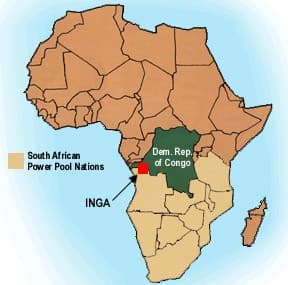
Illustration for Congo Inga Hydropower Project (Hydropower Project)

What & Where

Cascade of hydropower dams (Inga 1-1972, Inga 2-1982, planned Inga 3, Grand Inga) tapping Inga Falls.

Site about 225 km southwest of Kinshasa on the Congo River, Democratic Republic of Congo.

Inga 3 envisaged as run-of-river core of $10 billion regional export-oriented scheme.

Quick Facts for MCQs

Financing

  • World Bank initial credit $250 million; larger envelope up to $1 billion under consideration.
  • Overall investment tag about $10 billion, seeking multilateral, private, regional contributions.
  • Revenue strategy hinges on long-term supply contracts to mines and South African grid.

Technical Specs

  • Capacity targets: Inga 3 ≈ 4.8 GW; Grand Inga cumulative ≈ 9 GW, among world’s largest.
  • Design employs natural 96 m head; minimal reservoir reduces inundation footprint.
  • Scale projected to rival China’s Three Gorges in total annual generation ambitions.

Social Concerns

  • Critics note limited rural electrification; majority output earmarked for copper-cobalt mining belt, export lines.
  • Civil society flags displacement risk, biodiversity disruption despite run-of-river label.
  • Governance worries over contracting transparency amid DRC conflict dynamics.

Key Data Points

FeatureData-Point
Main riverCongo
Waterfall exploitedInga Falls
Operational damsInga 1, Inga 2
Planned stagesInga 3, Grand Inga
Inga 3 capacity≈ 4.8 GW
Grand Inga potential≈ 9 GW
Design typeRun-of-the-river
Lead nationDemocratic Republic of Congo
Financing partnerWorld Bank
WB approval (2024)$250 million
Possible WB total$1 billion
Estimated scheme cost$10 billion
Distance from Kinshasa~225 km SW
Primary power usersMining sector, export grids
GS-3Infrastructure

5.Tehri Variable Speed Pumped Storage Plant (Pumped Storage)

SM
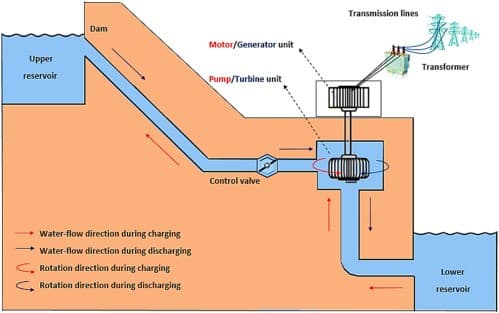
Illustration for Tehri Variable Speed Pumped Storage Plant (Pumped Storage)

What & Where

Variable-speed Pumped Storage Plant: pumps water up with surplus power, releases it for generation during peaks

India’s first of its kind; Phase-1 250 MW now commercial within 1 000 MW Tehri PSP scheme

Sited at Tehri Garhwal, Uttarakhand; executed by THDC India Ltd, Ministry of Power

Quick Facts for MCQs

Tech & Schemes

  • Variable-speed turbines allow bidirectional operation without changing motor-generator coupling
  • GE Vernova supplied power electronics enabling ±10% speed modulation
  • Project aligns with National Hydropower Policy push for large-scale storage

Grid & Efficiency

  • Precise speed control cuts hydraulic losses, raising round-trip efficiency over fixed-speed PSPs
  • Fast ramp capability stabilises renewables-rich Northern Grid within seconds
  • Continuous synchronisation avoids black-start delays during demand spikes

Energy Storage Role

  • Acts as water battery storing midday solar surplus for evening peak use
  • Supports 500 GW non-fossil target by providing 6-hour firm dispatch
  • Reduces curtailment of wind-solar, improving capacity utilisation and revenue streams

Key Data Points

FeatureData-Point
Commissioned unit250 MW
Ultimate capacity1 000 MW (4 × 250 MW)
Energy storage~1 000 MWh
Plant typeVariable-speed pumped storage hydro
DeveloperTHDC India Limited
Technology partnerGE Vernova
State & river basinUttarakhand, Bhagirathi
Key advantageIndependent control of turbine speed
Grid roleFrequency support & peak-shaving
Ministry in chargeMinistry of Power

Related UPSC Prelims PYQs

GS1 2008PYQ 1

Where are Tapovan and Vishnugarh Hydroelectric Projects located?

GS-1Mapping

6.Socotra Island Biodiversity Hotspot (Island Geography)

DD News
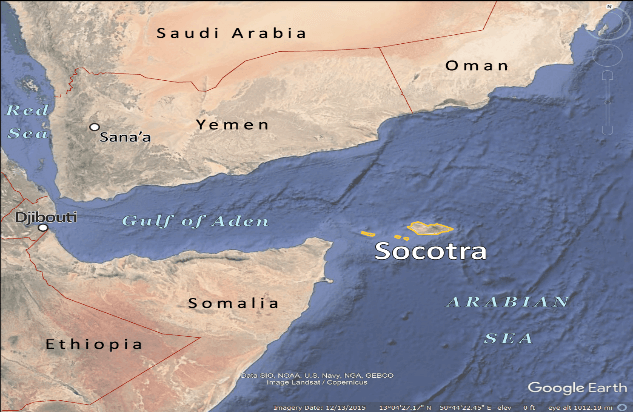
Illustration for Socotra Island Biodiversity Hotspot (Island Geography)

What & Where

Biodiversity-rich Socotra Island, nicknamed “Galápagos of Indian Ocean”, UNESCO World Heritage Site since 2008.

Lies ~340 km southeast of Yemen in the Indian Ocean near Horn of Africa; area ≈ 3,796 sq km.

Principal isle of Socotra Archipelago (with Abd Al-Kuri, Samhah, Darsa); administratively part of Yemen.

Quick Facts for MCQs

Environmental Significance

  • Endemism: frankincense, myrrh, aloes add to 700+ documented plant species.
  • UNESCO listing cites “outstanding universal value” for both terrestrial and marine biodiversity.
  • Nickname underlines parallel with Ecuador’s Galápagos for evolutionary studies.

Climate & Relief

  • Terrain: coastal plains fringe limestone plateau; central Hagghier peaks rise ~1,500 m.
  • Low rainfall plus fierce SW monsoon limit agriculture and historical maritime access.
  • Archipelago’s small isles extend unique habitats for birds, corals, reptiles.

Security & Humanitarian

  • Control: UAE-backed Southern Transitional Council wields de-facto authority despite Yemeni sovereignty.
  • UAE maintains military assets, officially for relief and anti-piracy operations.
  • Economy: fishing, pearl diving, herding; malnutrition triggers 2024 UAE-WHO nutrition programme.

Key Data Points

FeatureData-Point
UNESCO inscription2008
Plant endemism≈ 37 % unique species
Signature treeDragon’s Blood (Dracaena cinnabari)
Main reliefHagghier Mountains
Climate typeSemi-desert
Peak monsoon monthsJune – September
Humanitarian planUAE-WHO, 2 years, malnutrition focus
Name originSanskrit “Dvipa Sukhadhara” (island abode of bliss)
GS-3Environment

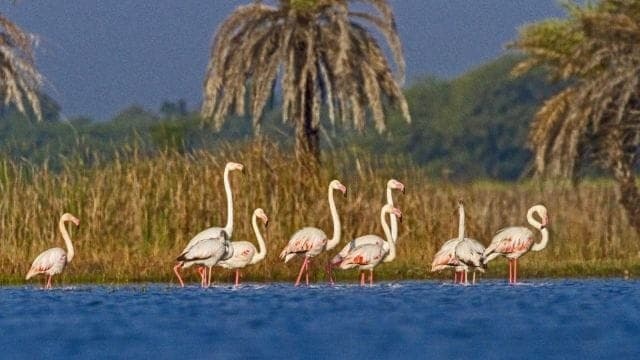
7.Menar and Khichan Ramsar Wetlands (Ramsar Wetlands)

Hindustan Times
Illustration for Menar and Khichan Ramsar Wetlands (Ramsar Wetlands)

What & Where

Ramsar Site wetland of international importance designated under 1971 Ramsar Convention

Menar (104 ha, Udaipur) & Khichan (Phalodi) added June 2025, taking India to 91 sites

Rajasthan wetlands lie on Central Asian Flyway, vital for migratory cranes, ducks, herons

Quick Facts for MCQs

Site Highlights

  • Menar supports Eurasian coot, spot-billed duck, herons; declared Important Bird Area 2016
  • Khichan acts major wintering roost for thousands of Demoiselle cranes
  • Both wetlands emerging eco-tourism nodes on Udaipur–Chittorgarh & Jodhpur-Bikaner routes

Community Stewardship

  • Menar residents ban fishing and hunting ensuring habitat integrity
  • Khichan village tradition of daily grain feeding protects migratory cranes
  • Local initiatives showcase community-led wetland conservation model

Legal & Policy

  • Ramsar listing mandates wise-use principles, encourages funding under Wetlands (Conservation & Management) Rules 2017
  • Site notification aids eligibility for National Plan for Conservation of Aquatic Ecosystems
  • Inclusion aligns with National Biodiversity Targets to expand protected wetlands

Key Data Points

FeatureData-Point
Convention signedRamsar, Iran, 1971
India signatory date1 Feb 1982
First Indian sitesChilika Lake & Keoladeo NP (1981)
Total Indian Ramsar sites91 (June 2025)
Total area covered~13.59 lakh ha
Asia ranking1st
Global ranking3rd after UK 175, Mexico 142
Top state countTamil Nadu 20
Uttar Pradesh sites10
Rajasthan sites4 (post-addition)
Menar nicknameBird Village
Menar bird species>200
Khichan iconic speciesDemoiselle cranes
Key flywayCentral Asian Flyway
Ramsar criteria neededAny 1 of 9 ecological criteria

Related UPSC Prelims PYQs

CDS_GK 2022PYQ 1

Which of the following about Khijadiya Bird Sanctuary is/are correct?

CDS_GK 2022PYQ 2

With reference to Bhindawas Wildlife Sanctuary, Sultanpur National Park, Thol Lake Wildlife Sanctuary and Wadhwana Wetland, which of the following statements is/are correct?

GS-3Environment

8.World Environment Day 2025 Highlights (World Environment Day)

Indian Express

What & Where

World Environment Day: UNGA-1972 creation, UNEP-led since 1973; 2025 host – Republic of Korea, theme “Beat Plastic Pollution”.

Ek Ped Maa Ke Naam: India-wide tree-planting honouring mothers; launched 5 Jun 2024, PM planting Banyan under scheme.

Aravalli Green Wall: 1,400 km × 5 km afforestation belt along Aravalli range through Gujarat, Rajasthan, Haryana, Delhi.

Quick Facts for MCQs

Legal & Policy

  • Frameworks: Plastic Waste Management Rules 2016, Amendments 2022 & 2024; Swachh Bharat Mission; India Plastics Pact.
  • EPR 2022 obliges FMCG/e-commerce brands to collect & recycle specified quotas.
  • SUP ban 2022 covers 19 items; enforcement via fines, seizure.

Environmental Impact

  • Leakage: 11 million t plastics enter global waters yearly; India adds 0.6 million t to oceans.
  • Health: Open-burn releases dioxins/furans; microplastics traced in Indian salt, seafood, drinking water.
  • Desertification: Aravalli greening targets dust-buffer, biodiversity revival, share of 26 mha restoration pledge.

Tech & Schemes

  • Pyrolysis: Pune’s Rudra plant converts mixed plastic into usable diesel.
  • Infrastructure: >1 lakh km Indian roads incorporate shredded plastic in bitumen.
  • Inclusive models: Pune SWaCH cooperative formalises waste-picker recycling with safety gear, fair wages.

Key Data Points

FeatureData-Point
Stockholm Conference date5 June 1972
First World Environment Day1973
2025 WED global hostRepublic of Korea
India’s annual plastic waste9.3 million tonnes
Share of single-use plastics (2023)43 % (4.07 million t)
Land degraded in India (2018-19)97.85 mha – 29.7 % TGA
Planned Aravalli belt width5 km
Plastic burnt annually in India5.8 million tonnes

Related UPSC Prelims PYQs

CDS_GK, NDA_GAT 2022PYQ 1

Which among the following was the host country of the United Nations World Environment Day, 2022?

CDS_GK, NDA_GAT 2023PYQ 2

सूची-I को सूची-II के साथ सुमेलित कीजिए, और सूचियों के नीचे दिए गए कूट का प्रयोग कर सही उत्तर चुनिए :

GS-3EnvironmentQuick Bite

9.Industrial Iron Pollution Threatens Oceans (Industrial Iron Pollution)

The Hindu

What & Where

Industrial-iron pollution: anthropogenic iron from coal/ore processing enters oceans via air and runoff.

Core zones: temperate spring-bloom belts and adjoining coastal waters receiving industrial fallout.

Mechanism: Added iron → phytoplankton over-bloom → rapid macronutrient drawdown → food-web destabilisation.

Quick Facts for MCQs

Environmental Impact

  • Excess-iron blooms exhaust nitrate, phosphate, silicate, reducing later-season productivity.
  • Nutrient loss compounds climate-change stress on already warming, stratified oceans.

Marine Ecology

  • Disrupted plankton cycles cut food supply to fish, seabirds, cetaceans.
  • Non-migratory species suffer most; adaptive migration limited or impossible.

Industrial Pollution

  • Steel-plant furnaces emit particulates, hazardous waste, wastewater, degrading air, water, soil simultaneously.
  • Atmospheric iron deposition links inland industrial hubs to distant oceanic nutrient shifts.

Key Data Points

FeatureData-Point
India iron & steel GHG share≈ 5 % of national emissions
Key air pollutantsSOx, NOx, CO₂, CO, PM2.5, PM10, PAHs
Added-iron effectTriggers spring phytoplankton blooms & nutrient loss
Ecological reachImpacts entire chain: zooplankton → whales
HAB riskToxic algal blooms threaten marine life + humans

Related UPSC Prelims PYQs

GS1 2014PYQ 1

Which of the following are some important pollutants released by steel industry in India?

GS1 2021PYQ 2

Magnetite particles, suspected to cause neurodegenerative problems, are generated as environmental pollutants from which of the following?

GS-2Misc

10.India Elected to UN ECOSOC (UN ECOSOC)

Times of India
Illustration for India Elected to UN ECOSOC (UN ECOSOC)

What & Where

Body: UN Economic and Social Council, prime organ for global economic-social-humanitarian policy coordination

Location: Headquarters New York; sessions also Geneva & Vienna

Scope: Oversees 15 specialised agencies, 8 functional & 5 regional commissions

Quick Facts for MCQs

Composition & Election

  • Membership: 54 seats allotted by fixed regional quotas, elected by simple UNGA majority
  • Rotation: One-third seats contested annually, ensuring continuity and representation
  • India: Won 2026-28 Asia-Pacific seat with overwhelming cross-regional support

Core Functions

  • Coordination: Aligns policies of WHO, ILO, FAO and 12 other specialised agencies
  • Oversight: Directs functional commissions on women, narcotics, science-tech, population etc.
  • Monitoring: Hosts annual HLPF to track 2030 SDG implementation and issue ministerial outcome

Objectives

  • Living standards: Promote full employment and economic well-being globally
  • Challenges: Address poverty, inequality, health crises through multilateral programmes
  • Rights: Foster cultural cooperation, education, human rights and fundamental freedoms

India Angle

  • Legacy: India among ECOSOC founding members; served multiple terms since 1946
  • Agenda: Push for reformed multilateralism, enhanced Global South voice in SDG financing
  • Synergy: Supports G20 priorities on inclusive growth, digital public goods, climate finance

Key Data Points

FeatureData-Point
Full formUnited Nations Economic and Social Council
Established1945, UN Charter
Total members54 states
Electing bodyUN General Assembly
Individual term3 years
India’s new stint2026-28
Regional quota14 Africa / 11 Asia-Pac / 6 EEur / 10 LAC / 13 WEOG
Core mandatePolicy dialogue & consensus on socio-economic issues
SDG review forumHigh-Level Political Forum (HLPF)
Financial partnersHolds joint sessions with IMF & World Bank

Related UPSC Prelims PYQs

GS1 2009PYQ 1

With reference to the United Nations, consider the following statements :

GS1 2009PYQ 2

The Security Council of UN consists of 5 permanent members, and the remaining 10 members are elected by the General Assembly for a term of

GS-3Security

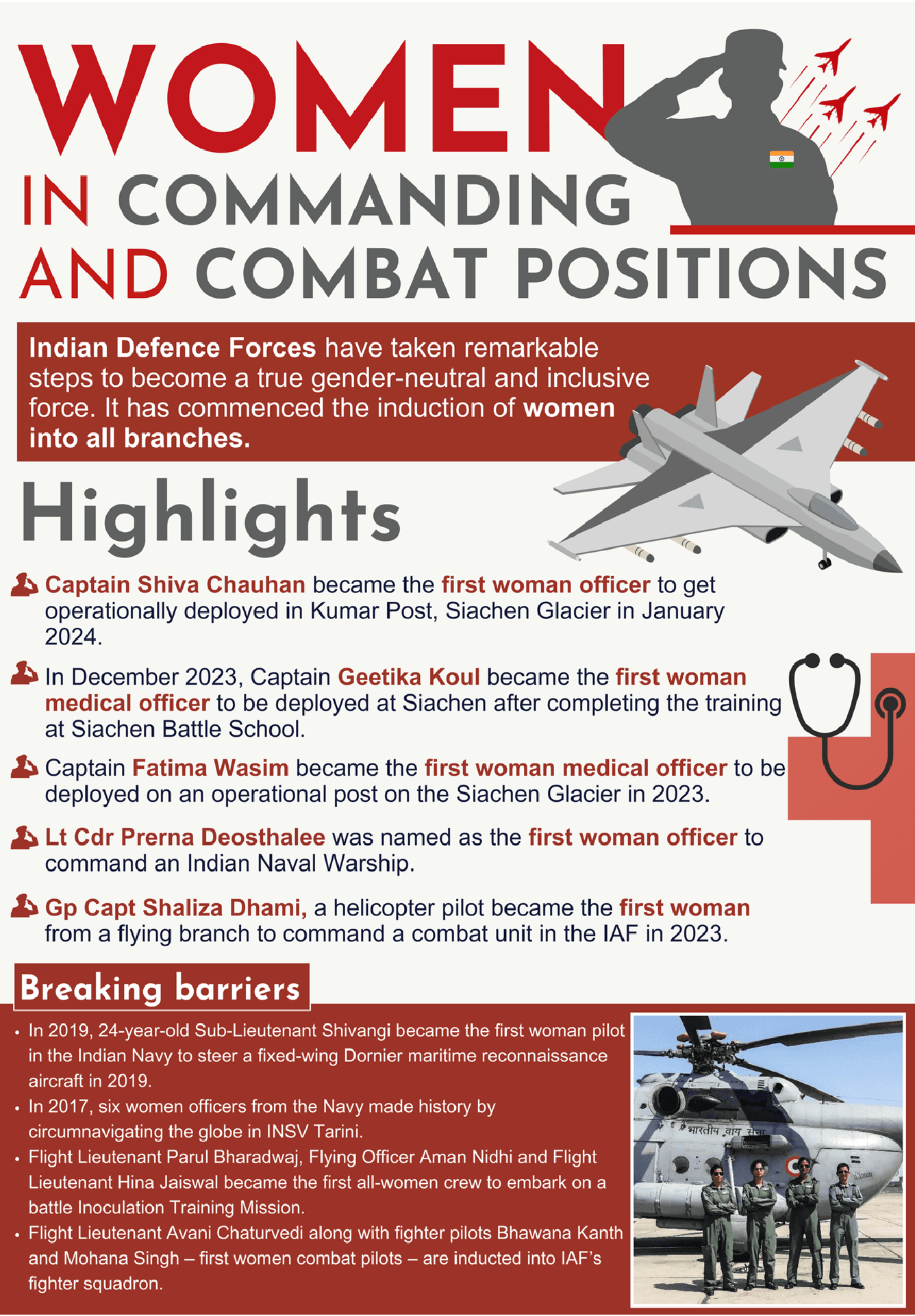
11.Women Integration in Indian Armed Forces (Women Officers)

PIB
Illustration for Women Integration in Indian Armed Forces (Women Officers)

What & Where

National Defence Academy (Khadakwasla, MH): first batch of 17 women cadets commissioned Jun 2025.

Indian women entry routes: Nursing 1888 → WSES/SSC 1992 → Permanent Commission 2008+ → Agnipath 2022.

Supreme Court Babita Puniya 2020 invoked Article 14 to mandate gender-neutral Permanent Commission & command roles.

Quick Facts for MCQs

Historical Milestones

  • 1888 Nursing Service; 1958 women doctors commissioned in Army Medical Corps.
  • 1992 Women Special Entry Scheme began non-medical SSC induction.
  • 2022 NDA admission; 2025 first 17 women graduates.

Legal & Policy

  • Section 12 bar overturned by SC Babita Puniya 2020; Permanent Commission mandated.
  • SSC tenure 10 + 4 yrs; PC gender-neutral till retirement.
  • Agnipath 2022 opened Agniveer intake to women across services.

Operational Challenges

  • Infantry, Armour, Special Forces still closed to women officers.
  • Limited sanitation, creches, counselling in forward locations.
  • Socio-cultural bias lowers authority, retention, mental health.

International Examples

  • Israel IDF mixed-gender battalions; US opened combat roles 2015.
  • India fielded all-women UN police unit, Liberia 2007-16.
  • Role-specific fitness tests recognised as global best practice.

Key Data Points

FeatureData-Point
NDA women admission year2022
First women NDA graduates17 cadets, Jun 2025
Women share in Army≈4 %
First Permanent Commission grant2008 (JAG, AEC)
SC Babita Puniya verdictFeb 2020
Non-medical entry start1992 (WSES)
Agnipath launch2022
Oldest women military wingMilitary Nursing Service, 1888

Related UPSC Prelims PYQs

GEO_GS, GS1 2020PYQ 1

Why was sub-lieutenant Shivangi in news recently?

GEO_GS, GS1 2001PYQ 2

Consider the following statements regarding the Armed Forces:

GS-1Editorial

12.UNESCO GEM Report 2024 Findings (Education Outcomes)

NDTV
Illustration for UNESCO GEM Report 2024 Findings (Education Outcomes)

What & Where

UNESCO Global Education Monitoring (GEM) Report 2024-25—UNESCO’s annual tracker of SDG-4 progress in 120+ nations.

2024-25 focus: school leadership, gender equity, foundational literacy-numeracy; India highlighted for enrolment-learning gap.

Relies on ASER, NAS, PISA, TIMSS datasets; compiled by UNESCO HQ, Paris.

Quick Facts for MCQs

Learning Outcomes

  • ASER & NAS show persistent literacy-numeracy gaps despite near-universal enrolment.
  • Female-led schools in parts of Africa delivered ≈1 extra learning year.
  • GEM urges shift from enrolment metrics to outcome-based monitoring.

Gender Gap

  • Reading advantage for girls; parity reverses in maths post-COVID in Brazil, UK, Italy.
  • Leadership pipeline thin: 13 % female VCs India; similar global under-representation.
  • Digital divide during closures hurt girls more in low-connectivity regions.

Leadership & Governance

  • <50 % countries mandate pre-appointment leadership training for heads.
  • NEP 2020’s 50-hour principal PD sees uneven state rollout.
  • Delhi “middle-leadership” pilot raised teacher trust via peer mentorship.

Key Data Points

FeatureData-Point
India primary enrolment>95 %
Class 3 reading proficiency (ASER 2023)43 %
Class 8 math proficiency (NAS 2021)25 %
Female elementary teachers (India)60 %
Women vice-chancellors, central univ. (2022)13 %
Annual leadership training mandated by NEP 202050 hours
Boys per 100 girls reaching reading minimum (global)87
Boys per 100 girls, middle-income states72
Countries requiring headteacher prep course<50 %
Women education ministers (world)19 %

Related UPSC Prelims PYQs

ESE_GS, GEO_GS 2024PYQ 1

Consider the following statements with reference to a Report titled 'The Paths to Equal', published in 2023, prepared by 'UN Women' and 'UNDP' (United Nations Development Programme):

ESE_GS, GEO_GS 2021PYQ 2

Which one of the following statements is NOT correct regarding the National Education Policy 2020 in India ?

GS-1Misc

13.Stampede Risks and Crowd Management (Crowd Management)

The Hindu
Illustration for Stampede Risks and Crowd Management (Crowd Management)

What & Where

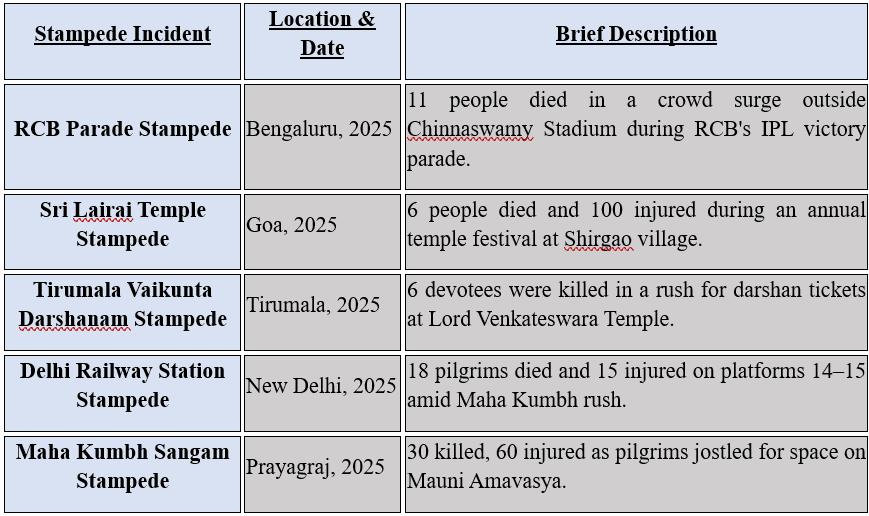
Stampede – sudden, uncontrolled crowd surge causing crush, suffocation, trampling; classified under human-induced disasters.

Hotspots – religious gatherings, sports events, railway stations; recent case: Chinnaswamy Stadium, Bengaluru, 4 Jun 2025.

Geography – India averages ≥1 major stampede/year; high-risk states: UP, Maharashtra, Karnataka, Tamil Nadu.

Quick Facts for MCQs

Causes

  • Overcrowding – attendance >8× capacity; legal caps ignored.
  • Planning lapses – no flow strategy, late police arrival despite advance footfall alerts.
  • Communication gaps – rumours, unclear announcements trigger panic surges.

Impacts

  • Mortality – crush injuries primarily affect elderly, children, women.
  • Economic loss – compensation payouts, event cancellations, tourist confidence erosion.
  • Administrative fallout – inquiries, officer suspensions, negligence litigation.

NDMA Guidelines

  • Access control – barricades, ticketing, staggered entry/exit.
  • Trained personnel – marshals, medics, volunteers versed in SOPs and first aid.
  • Real-time surveillance – AI analytics on CCTV feeds to flag density hotspots.

Preventive Solutions

  • Smart monitoring – drones, thermal mapping, crowd-density alerts to control rooms.
  • Decongestion tools – satellite screens, digital ticket limits, timed slots.
  • Mock drills – periodic multi-agency exercises ensure rapid evacuation readiness.

Key Data Points

FeatureData-Point
Bengaluru fatalities11 persons
Injured Bengaluru30 +
Crowd present≈3 lakh
Stadium capacity35,000 seats
Key triggerOvercrowding + delayed police deployment
NDMA crowd cap basisVenue safe capacity, not ticket sales
Critical choke pointsNarrow gates, blocked exits, poor signage
Tech advisedCCTV, drones, heat-map sensors
First NDMA stepPre-event risk assessment
Example past stampede2017 Elphinstone FOB, Mumbai

Ready to practice?

Test your knowledge with our UPSC test series.

Start Free Trial