UPSC Current Affairs

13 topicsGS-1: 3GS-2: 2GS-3: 8
0/13 done
GS-2Polity

1.UIDAI Aadhaar Face Authentication Pilot (UIDAI Face Authentication)

News on Air

What & Where

Proof-of-Concept: Aadhaar-linked face authentication trial during NEET-UG 2025

Process: contactless, real-time biometric match with UIDAI database via NIC platform

Location: selected National Testing Agency centres in Delhi

Quick Facts for MCQs

Tech & Schemes

  • Contactless system; eliminates fingerprint/iris devices
  • NIC digital stack integrates admit-card and attendance data
  • Algorithm uses stored Aadhaar face templates for high match accuracy

Security Dimension

  • Instant mismatch rejection curbs proxy candidates
  • Streamlined entry shortens queues, lowering on-site vulnerabilities
  • Authentication executed within UIDAI environment, enhancing data protection

Institutional Setup

  • UIDAI: maintains biometric DB, issues IDs, offers auth services
  • NIC: supplies backend infrastructure and APIs
  • NTA: implements protocols for national entrance examinations

Key Data Points

FeatureData-Point
DeveloperUIDAI + NIC + NTA
Pilot examNEET-UG 2025
Pilot cityDelhi
Authentication modeLive face recognition
Primary aimImpersonation prevention
Statutory base UIDAIAadhaar Act 2016
UIDAI HQNew Delhi
UIDAI start of operations12 July 2016
Administrative ministryMeitY
Aadhaar digits12
GS-3Economy

2.Maize Diversion to Ethanol Fuel Crisis (Maize Ethanol Demand)

Indian Express
Illustration for Maize Diversion to Ethanol Fuel Crisis (Maize Ethanol Demand)

What & Where

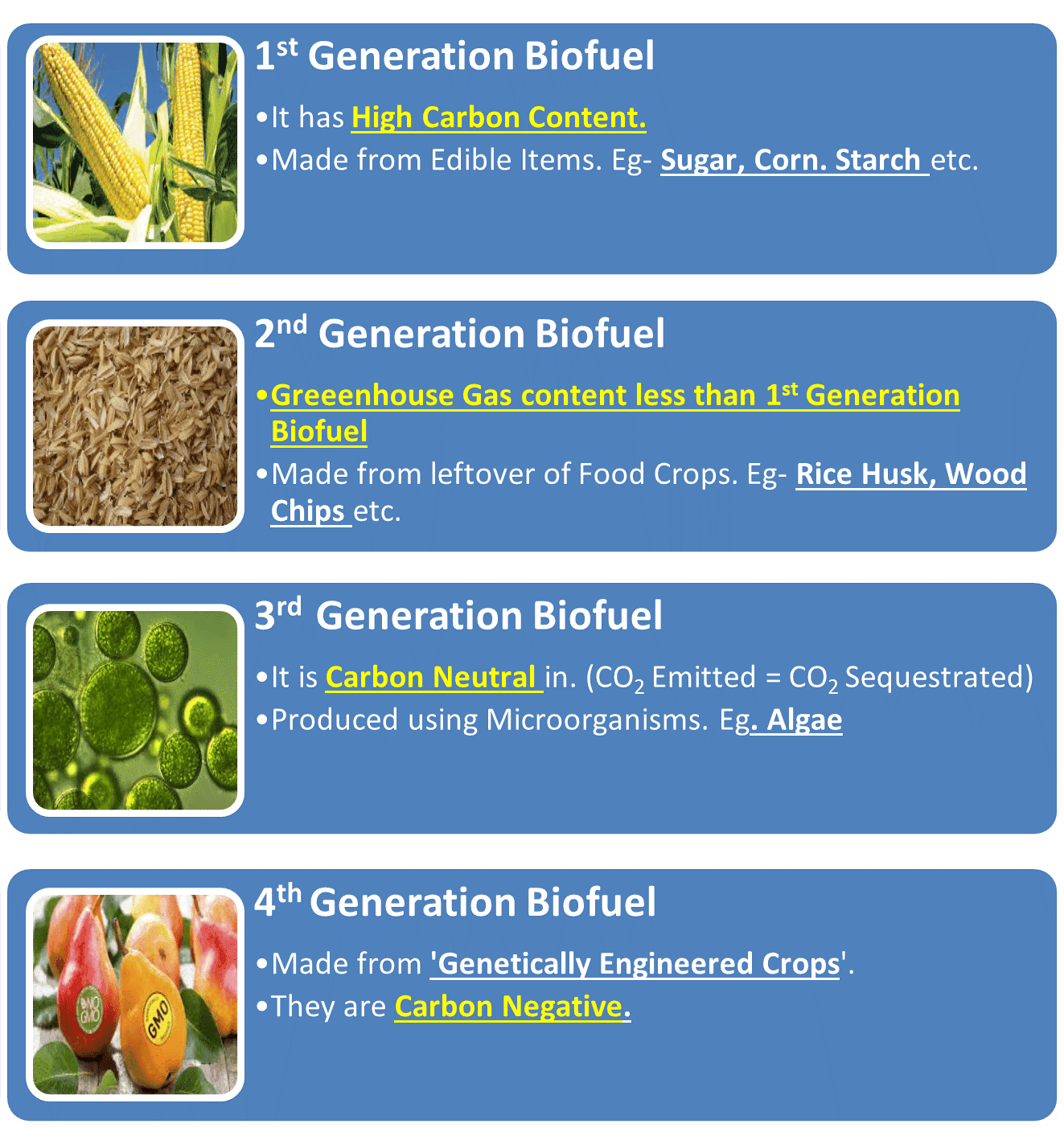
Biofuels – renewable liquid fuels made from biological feedstocks to replace petrol/diesel.

India: maize & sugarcane dominate 1G ethanol; maize ethanol demand jumped 0.8 MT (2022-23)→12.7 MT (2024-25).

Ethanol Blended Petrol (EBP) Programme: 10 % achieved; 20 % national target set for 2025.

Quick Facts for MCQs

Economic Angle

  • Price-spike: maize up 65 %; India shifts from net exporter to importer.
  • DDGS cheaper protein depresses soy farmer returns below MSP.
  • Poultry, starch, dairy industries face input-cost stress.

Food vs Fuel

  • Ethanol pull restricts feed, prompting calls to import GM maize.
  • 4F contest: food, feed, fibre, fuel compete for same acreage.
  • Proposed blending “off-ramps” during food/feed inflation.

Policy & Tech

  • Promote 2G/3G biofuels: agri-waste, used cooking oil, cellulosic biomass.
  • Suggest duty-free GM maize imports only for ethanol with tracking safeguards.
  • Plan feed buffer stocks, crop diversification, strict MSP enforcement.

International Examples

  • EU, Brazil cut blending mandates in 2022 to cool food prices.
  • US RFS linked to 2007-08, 2011, 2022 global cereal price spikes.
  • Biofuel mandates often trigger export bans, worsening food insecurity.

Key Data Points

FeatureData-Point
Maize-to-ethanol yield1 t maize ⇒ 380 L ethanol
India maize output pre-202132–33 MT
Non-ethanol maize demand≈28 MT/yr
Maize diverted to ethanol 2024-25~7 MT
Ethanol from maize 2023-24286 crore L
Maize price rise₹15,000 → ₹25,000 /t
DDGS price₹16,000–₹19,000 /t
Soy DOC price drop₹32,000 → ₹22,000 /t
Soybean MSP vs market₹4,892 /q vs ₹4,300 /q
Livestock feed maize need>20 MT/yr
US corn to ethanol (RFS)>40 % of crop

Related UPSC Prelims PYQs

ESE_GS, GS1 2024PYQ 1

Consider the following statements about ethanol:

ESE_GS, GS1 2014PYQ 2

Consider the following statements :

GS-3Infrastructure

3.Kaleshwaram Lift Irrigation Project Safety Review (Lift Irrigation)

Indian Express
Illustration for Kaleshwaram Lift Irrigation Project Safety Review (Lift Irrigation)

What & Where

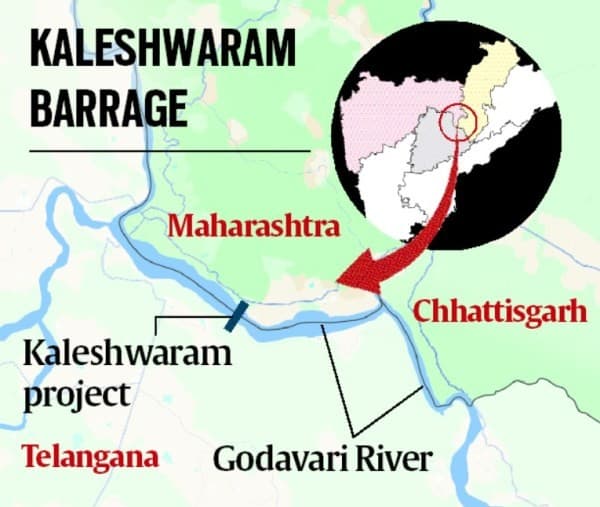
Kaleshwaram Lift Irrigation Project (KLIP): world’s largest multi-stage lift scheme diverting Godavari water to drought-prone Telangana.

Located at Kaleshwaram, Jayashankar Bhupalpally district; draws from Pranahita-Godavari confluence; canals serve 13 districts.

National Dam Safety Authority (NDSA): statutory regulator under Dam Safety Act 2021 overseeing dam design, operation, inspection.

Quick Facts for MCQs

Tech & Infrastructure

  • Sequential pumping via four stations; Ramadugu lifts water with 980 MW aggregate capacity to Telangana plateau.
  • Integrated system of 1,800 km canals, three barrages, balancing reservoirs supplies irrigation, drinking and industrial needs.

Legal & Policy

  • NDSA under 2021 Act sets dam safety standards, audits compliance, mediates disputes between SDSOs and dam owners.
  • Authority mandates Emergency Action Plans, capacity-building and uniform surveillance over India’s specified large dams.

Safety Concerns

  • NDSA inspection flagged severe pier, raft and scour damage at Medigadda, Annaram, Sundilla barrages of KLIP.
  • Recommended immediate repairs and comprehensive structural review before restoring full reservoir levels and pump operations.

Key Data Points

FeatureData-Point
Project typeMulti-stage lift irrigation
Main riverGodavari (with Pranahita)
District locationJayashankar Bhupalpally, Telangana
Major barragesMedigadda, Annaram, Sundilla
Canal length1,800 km
Total storage240 TMC (195 TMC Medigadda)
Irrigation command~18 lakh acres
Key pump houseRamadugu; 7 × 140 MW BHEL pumps
Water allocationAgri 169 TMC; Hyderabad 30; Industry 16; Rural 10
NDSA HQNew Delhi

Related UPSC Prelims PYQs

CDS_GK 2021PYQ 1

The Kaleshwaram Lift Irrigation System, which was in the news recently, is constructed in

GS-3EconomyQuick Bite

4.Fair and Remunerative Price Hike for Sugarcane (Fair Remunerative Price)

The Hindu
Illustration for Fair and Remunerative Price Hike for Sugarcane (Fair Remunerative Price)

What & Where

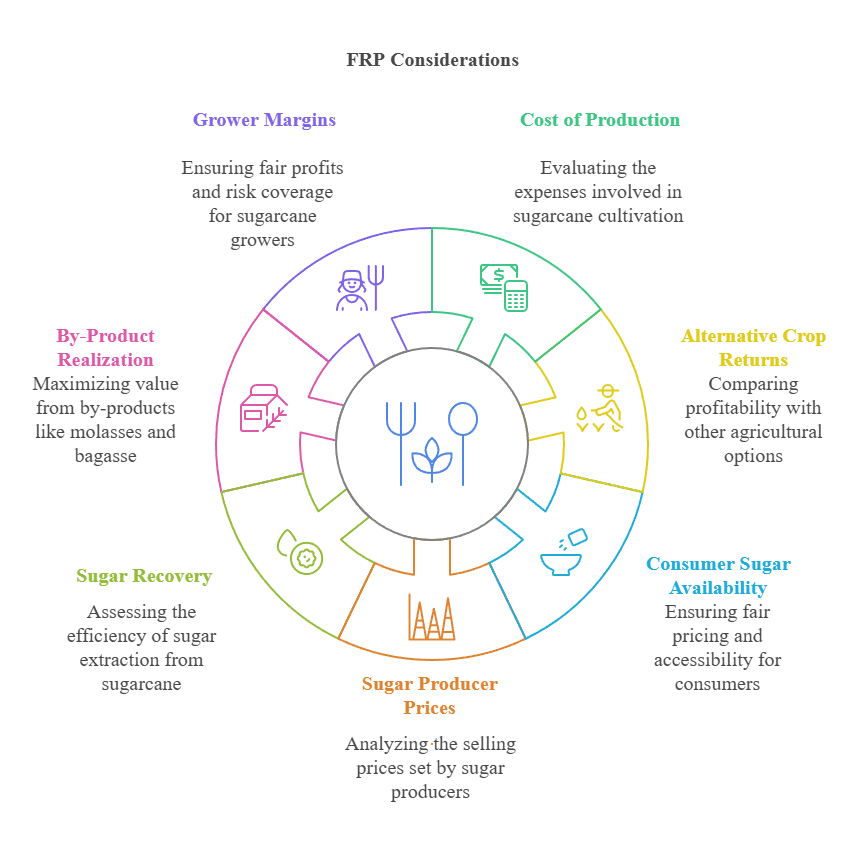
FRP; statutory minimum price sugar mills must pay cane growers across India

Determination; based on CACP advice, Rangarajan 2012 formula, approved by CCEA

Governance; Sugarcane Control Order 1966 under Essential Commodities Act 1955

Quick Facts for MCQs

Legal & Policy

  • Essential Commodities Act empowers Centre to fix cane prices, regulate supply
  • CCEA approval gives FRP nationwide applicability overriding State Advised Prices floor
  • Order mandates written purchase agreements between mills and growers

Institutional Setup

  • CACP calculates cost, risk margin, submits non-binding recommendation to Centre
  • State cane commissioners monitor compliance, initiate recovery for unpaid dues
  • Directorate of Sugar coordinates with mills, ethanol blending policies

Economic Angle

  • Payment default treated as land revenue enabling speedy asset seizure
  • Rangarajan formula links FRP to 70 % ex-mill sugar price or 75 % sugar plus by-products
  • Timely FRP critical for liquidity of 50 lakh cane-growing households

Key Data Points

FeatureData-Point
Governing OrderSugarcane Control Order 1966
Parent ActEssential Commodities Act 1955
Advisory BodyCACP, Agriculture Ministry
Basis ReportRangarajan Committee 2012
Payment DeadlineWithin 14 days of delivery
Interest on DelayUp to 15 % per annum
Recovery MethodAttachment of mill properties
Latest Season2025-26 FRP hike

Related UPSC Prelims PYQs

GS1 2015PYQ 1

The Fair and Remunerative Price (FRP) of sugarcane is approved by the

GS1 2010PYQ 2

Consider the following statements :

GS-1History

5.Nabakalebara Ritual of Lord Jagannath (Jagannath Ritual)

DH

What & Where

Meaning: Nabakalebara = “new body” ritual replacing wooden idols of Jagannath, Balabhadra, Subhadra, Sudarshana at Puri, Odisha

Periodicity: Held only in years having double Āṣāḍha month, i.e., every 12 or 19 years

Geography: Key sites are Banajaga forest zones (tree search), Grand Road procession route, Koili Baikuntha burial ground inside Jagannath Temple

Quick Facts for MCQs

Ritual Process

  • Selection: Daitapati servitors locate neem trees showing conch, discus, mace, lotus, cobra, ant-hill marks
  • Transport: Logs moved in guarded chariots; devotees offer prayers en route
  • Carving: 21-day secluded workshop inside temple; no metal nails permitted

Astrological Basis

  • Calendar: Ritual triggered only when two Āṣāḍha months appear in Purnimanta Hindu calendar
  • Leap-month: Adhika Māsa insertion aligns lunar and solar years, roughly 7 times in 19 years
  • Timing: Entire schedule fixed by temple astrologers using sidereal calculations

Cultural Significance

  • Symbolism: Rebirth doctrine reflects impermanence; continuity of deity’s Brahma element reassures devotees
  • Footfall: Millions converge on Puri, boosting regional economy and heritage tourism
  • Identity: Ritual anchors Jagannath cult as syncretic bridge between tribal, Vaishnava traditions

Current Controversy

  • Allegation: Digha Jagannath Temple idols made from surplus 2015 dāru, breaching Nabakalebara sanctity
  • Governance: Odisha Endowments Dept ordered fact-finding probe; Puri servitors deny authorised wood release
  • Semantics: Use of term “Jagannath Dham” for Digha criticised as misappropriating Puri’s traditional epithet

Key Data Points

FeatureData-Point
Last observed2015
Next expected2034 (subject to lunar calendar)
Sacred woodFour neem (dāru) trees with divine symbols
Tree-hunt nameBanajaga Yatra
Idol carversBiswakarma sevayats
Essence transferBrahma Padārtha at midnight
Old idols fateBuried in Koili Baikuntha
Extra lunar month termAdhika Māsa
Associated festivalNabakalebara Rath Yatra
Contested reuse claimLeftover 2015 wood at Digha, WB
GS-1History

6.Vikramaditya I and Badami Chalukyas (Badami Chalukyas)

Hindustan Times
Illustration for Vikramaditya I and Badami Chalukyas (Badami Chalukyas)

What & Where

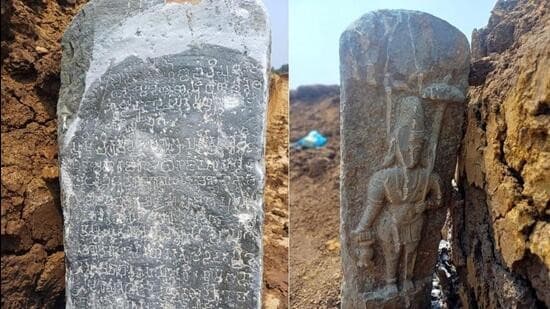
Inscription seventh-century Old Kannada epigraph, reign of Vikramaditya I

Located in sluice masonry of Madapura tank, Davangere, central Karnataka

Mentions land grant, local taxes, feudatory Singhavenna

Quick Facts for MCQs

Dynasty Profile

  • Origin Kannada chiefs, claimed Ayodhya solar lineage for legitimacy
  • Capital Vatapi guarded Malaprabha valley trade routes
  • Plateau revenue thin, maritime fleet and conquest supplemented treasury

Key Rulers

  • Pulakesin I performed Ashvamedha, fortified Badami
  • Pulakesin II reached zenith, hosted Persian embassy, Ajanta depiction
  • Vikramaditya I retook Badami from Pallavas, titled Rajamalla Yuddhamalla

Administration & Economy

  • Governance centralised, villages enjoyed limited autonomy
  • Inscription records land-tax structure, grants to loyal Singhavenna
  • Military expansion crucial revenue source in dry Deccan plateau

Religion & Culture

  • Patronage inclusive Shaiva, Vaishnava, Shakta, Jain traditions
  • Jain basadis received royal gifts, yet Vedic sacrifices continued
  • Cultural base enabled later flowering under Vikramaditya II

Architecture

  • Vesara style fused Nagara shikhara with Dravida vimana
  • Rock-cut caves Badami, structural temples Aihole, Pattadakal (UNESCO)
  • Forms influenced later Rashtrakuta and Hoysala builders

Key Data Points

FeatureData-Point
DynastyBadami Chalukya
Reigning kingVikramaditya I (644-681 CE)
Discovery siteMadapura Lake, Davangere
Script / LanguageOld Kannada
Capital cityVatapi (Badami)
FounderPulakesin I, 543-566 CE
Greatest rulerPulakesin II, 609-642 CE
Key victoryHarshavardhana beaten on Narmada
Naval strength100 ships under Pulakesin II
Signature styleVesara temple architecture

Related UPSC Prelims PYQs

CAPF_GAI, GS1 1997PYQ 1

The Badami rock inscription of Pulakesin I is dated in the Saka year 465. If the same were to be dated in Vikrama Samvat, the year would be

CAPF_GAI, GS1 2023PYQ 2

The ruler Vindhyashakti during the period preceding the Gupta Age is associated with which one of the following dynasties?

GS-1Mapping

7.Mt Makalu Location and Features (Mt. Makalu)

The Hindu
Illustration for Mt Makalu Location and Features (Mt. Makalu)

What & Where

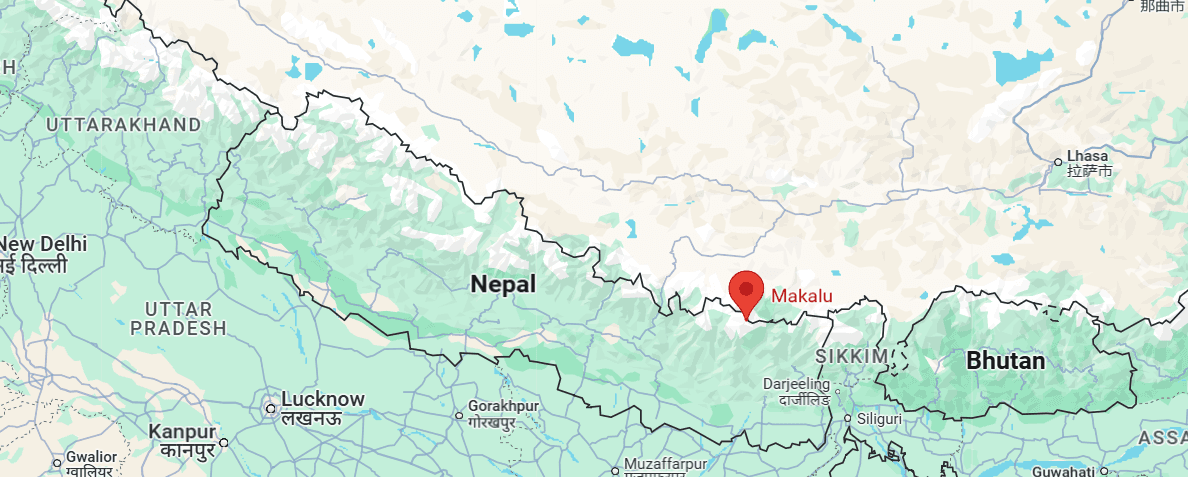
Mt. Makalu (8,485 m) lies in the Mahalangur range, on the Nepal–Tibet border, southeast of Everest.

Characterised by a pyramid shape with four sharp ridges; inside Nepal’s Makalu-Barun NP overlooking Barun Valley.

Indo-Tibetan Border Police (ITBP) team summited in 2025, marking its 6th climb of the world’s 14 eight-thousanders.

Quick Facts for MCQs

Geography & Environment

  • Barun Valley noted for deep glacial gorges, alpine meadows, rich biodiversity inside Makalu-Barun NP.
  • Makalu’s steep faces and knife-edge ridges create one of Himalayas’ most technically demanding climbs.

Mountaineering Record

  • ITBP overall summits: 229 peaks worldwide by 2025.
  • Prior ITBP eight-thousander ascents include Everest (1965 first Indian success participation).

Security Dimension

  • ITBP specialises in high-altitude operations, reinforcing India’s presence along sensitive Himalayan border regions.

Key Data Points

FeatureData-Point
Global height rank5th highest peak
RangeMahalangur Himalayas
Border nationsNepal & China (Tibet)
Elevation8,485 m
National ParkMakalu-Barun NP, Nepal
First ascent1955, French team led by Jean Franco
Subsidiary peaksMakalu I & II, ~3 km from main summit
ITBP ministryMinistry of Home Affairs
India-China border length guarded by ITBP3,488 km
ITBP eight-thousanders scaled till 20256 (incl. Everest, Kanchenjunga, Dhaulagiri, Lhotse, Manaslu, Makalu)

Related UPSC Prelims PYQs

CDS_GK 2024PYQ 1

Which of the following peaks are situated in India?

GS-3Environment

8.Tendu Leaves Trade and Smuggling (NTFP Tendu Leaves)

New Indian Express
Illustration for Tendu Leaves Trade and Smuggling (NTFP Tendu Leaves)

What & Where

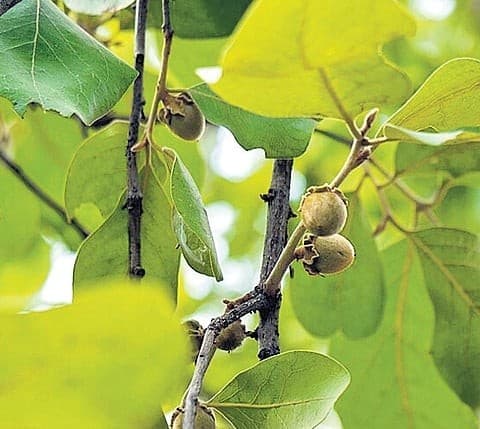
Definition: Tendu (Diospyros melanoxylon) leaves, called “Green Gold”, primary wrapper for beedis, classified as Non-Timber Forest Produce.

Geography: Central India stronghold—Madhya Pradesh ~25 %, Chhattisgarh ~20 %, Odisha 15-20 %, Maharashtra ~10 %.

Habitat: Shrub/small tree thriving in dry deciduous forests; premium quality from Dantewada-Sukma belt, S Chhattisgarh.

Quick Facts for MCQs

Economic Angle

  • Price disparity: Chhattisgarh rate ₹5,500/bag versus lower neighboring rates driving arbitrage.
  • Rural livelihood: Tendu trade anchors beedi supply chain, sustaining large seasonal cash flow in tribal belts.
  • Demand pressure: Health taxes & smoking decline threaten long-term market stability.

Social Concerns

  • Collector exploitation: Field workers earn ~₹60/day despite high state procurement margins.
  • Tribal dependency: Over 100 million person-days tie forest dwellers to a single, health-debated commodity.
  • Alternative livelihoods: Limited diversification increases vulnerability to any beedi demand drop.

Security Dimension

  • Smuggling surge: Illegal inflow from Maharashtra, Odisha, MP peaks during April-May collection.
  • Enforcement strain: Forest & police departments grapple with cross-border haul monitoring.
  • Quality draw: Southern Chhattisgarh’s superior leaf grade incentivises clandestine sourcing despite risks.

Key Data Points

FeatureData-Point
Procurement price in Chhattisgarh (2024 season)₹5,500 per standard bag
Standard bag composition1,000 bundles × 50 leaves
Peak employment generated>100 million person-days annually
Local daily wage for collectors~₹60
Main end-use sectorBeedi industry
NicknameGreen Gold
Botanical nameDiospyros melanoxylon
Highest state producer shareMadhya Pradesh 25 %
GS-3Environment

9.Forest Rights Act Rights-Based Conservation Model (Forest Rights Act)

The Hindu
Illustration for Forest Rights Act Rights-Based Conservation Model (Forest Rights Act)

What & Where

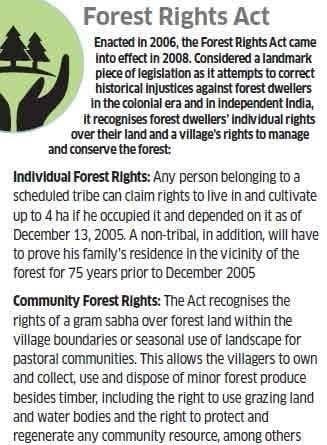
Forest Rights Act 2006: nationwide law granting 13 forest rights to Scheduled Tribes & Other Traditional Forest Dwellers.

Process: Gram Sabha-led identification, mapping and governance of community forests for conservation plus livelihood security.

Global: CBD COP-16 (2025, Colombia) creates permanent subsidiary body for Indigenous Peoples & Local Communities (IPLCs).

Quick Facts for MCQs

Legal & Policy

  • FRA links tenure security with biodiversity; unique rights-based alternative to exclusionary protected-area statutes.
  • Constitution Arts 244, 244A plus PESA empower self-governance in Scheduled Areas; BDA complements biodiversity mandates.
  • Draft BDA 2024 rules enable bioprospecting; require FRA-aligned safeguards against corporate capture of traditional knowledge.

Implementation Gaps

  • Recognition lag; forest officials reject or downsize many of 1.4 crore rights claims.
  • NBSAPs 2024 recentralise forests under departments, marginalising constitutionally empowered Gram Sabhas.
  • Absence of “indigenous” term in Indian law reduces UNDRIP 2007 compliance and cultural autonomy guarantees.

International Examples

  • Fortress conservation in Uganda, Kenya etc displaced Batwa, Masai; criminalises traditional users.
  • Peru’s Ashaninka law and Canada’s Indigenous Protected Areas legally embed IPLC stewardship.
  • Joint Protected Area Committees in Mexico, Nepal showcase co-management success.

Key Data Points

FeatureData-Point
FRA enactment2006
Recognised right types13
Core decision unitGram Sabha
Relevant Constitution articles244, 244A
Complementary ActsPESA 1996; BDA 2002
Claims filed under FRA>1.4 crore
CBD article on traditional knowledge8(j)
People displaced by fortress model10–20 million (global)
COP-16 host year & focus2025; IPLC subsidiary body

Related UPSC Prelims PYQs

GS1 2018PYQ 1

Consider the following statements:

GS1 2013PYQ 2

Under the Scheduled Tribes and Other Traditional Forest Dwellers (Recognition of Forest Rights) Act, 2006, who shall be the authority to initiate the process for determining the nature and extent of individual or community forest rights or both?

GS-3S&T

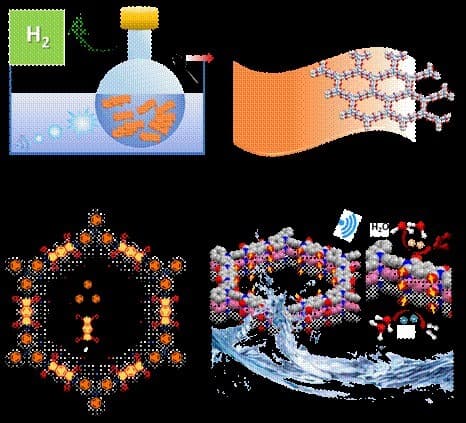
10.Metal-Free Hydrogen Piezocatalyst for Water Splitting (Hydrogen Piezocatalyst)

DD News
Illustration for Metal-Free Hydrogen Piezocatalyst for Water Splitting (Hydrogen Piezocatalyst)

What & Where

Metal-free donor-acceptor COF acts as piezocatalyst splitting water into H₂ under mechanical stress.

Generates electron-hole pairs via ferrielectric ordering, needing no external light or metal ions.

Invented at JNCASR Bengaluru with IISER Pune & Wrocław Univ., Poland; relevant to India’s Green Hydrogen push.

Quick Facts for MCQs

Tech & Schemes

  • Mechanism converts ubiquitous mechanical energy into clean hydrogen, bypassing photons or costly electrodes.
  • Supports Green Hydrogen Mission targets of 5 MMT annual H₂ production by 2030.
  • Potential integration in moving vehicles, industrial vibrations, tidal motion devices.

Environmental Impact

  • Eliminates reliance on rare, toxic metals like Pt, Ir, Ru, reducing mining footprint.
  • Operates at ambient conditions; lowers external power demand and greenhouse emissions.
  • Organic framework is recyclable and less hazardous at disposal phase.

Research Collaboration

  • Project led by Prof. Tapas K. Maji’s group under Department of Science & Technology funding.
  • Cross-institutional synthesis, structural analysis and catalytic testing expedited proof-of-concept.
  • Encourages Indo-EU academic linkages in sustainable energy materials.

Key Data Points

FeatureData-Point
Catalyst nameDonor-acceptor covalent organic framework (TAPA-PDA)
Metal usedNone; fully organic
Catalytic typePiezocatalysis (mechanically driven)
Key internal propertyFerrielectric ordering–induced electric fields
Primary energy inputAmbient vibration/pressure
Output gasHydrogen (H₂)
Lead instituteJNCASR, Bengaluru
CollaboratorsIISER Pune; Wrocław Univ. of Science & Technology
Mission alignedNational Green Hydrogen Mission
Structural traitSponge-like porous architecture

Related UPSC Prelims PYQs

CAPF_GAI, ESE_GS 2021PYQ 1

Scientists at CSIR-NCL Pune, with support from the Water Technology Initiative of the Department of Science and Technology (DST), Government of India, have recently developed a novel hybrid technology to bring safe and healthy drinking water. What is the name of the hybrid technology?

CAPF_GAI, ESE_GS 2022PYQ 2

US-based Ohmium International has started India's first green hydrogen electrolyzer manufacturing unit at

GS-3S&T

11.Genome-Edited Rice Varieties for Climate Resilience (CRISPR Rice Varieties)

Indian Express

What & Where

Genome-edited rice via CRISPR-Cas9 SDN-1 released by ICAR; categorised as non-transgenic.

Varieties: DRR Dhan 100 (Kamala) targeting CKX2 (Gn1a); Pusa DST Rice 1 targeting DST gene.

Adapted across India for drought, salinity and early-harvest ecologies.

Quick Facts for MCQs

Tech & Process

  • CRISPR-Cas9 SDN-1 induces small insertions or deletions without donor template.
  • SDN-1 edits exempt from foreign-DNA biosafety protocols in many jurisdictions.
  • Targeted mutagenesis accelerates trait fixation versus conventional breeding.

Yield & Resource Use

  • CKX2 knock-out boosts grain number, lifting yield without extra nitrogen.
  • Early harvest lowers water requirement, freeing fields for rabi crops.
  • Higher yields under salinity translate to improved land productivity in coastal belts.

Climate & Stress Tolerance

  • DST gene edit enhances drought and salt tolerance, mitigating climate-induced yield loss.
  • Varieties offer resilience across coastal, alkaline and inland saline ecosystems.
  • Stress tolerance reduces dependence on chemical ameliorants, cutting cultivation cost.

Key Data Points

FeatureData-Point
Release year2025
Editing toolCRISPR-Cas9 SDN-1
Foreign DNA presentNo
DRR Dhan 100 parentSamba Mahsuri
Pusa DST Rice 1 parentMaruteru 1010
Gene edited in DRR Dhan 100CKX2 (Gn1a)
Gene edited in Pusa DST Rice 1DST
Early maturity gain15–20 days earlier
Nitrogen-use efficiencyHigh in DRR Dhan 100
Drought toleranceBoth varieties
Salinity yield gain30.4 % coastal; 9.67 % inland
Alkaline soil yield gain14.66 %
DeveloperICAR institutes (IIRR & IARI)
Editing categorySDN-1: small indels
SDN-2 differenceUses template DNA for precise edits

Related UPSC Prelims PYQs

CDS_GK, GS1 2025PYQ 1

Recently, ICAR (Indian Council of Agricultural Research) has developed the world's first genome-edited rice varieties. Which of the following statements is/are correct with respect to the developed products?

CDS_GK, GS1 2010PYQ 2

Mon 863 is a variety of maize. It was in the news for the following reason

GS-3Security

12.INS Tamal Stealth Frigate Capabilities (Krivak-III Frigate)

Times of India
Illustration for INS Tamal Stealth Frigate Capabilities (Krivak-III Frigate)

What & Where

INS Tamal – 3,900-tonne Krivak-III class advanced stealth frigate for Indian Navy.

Built at Yantar Shipyard, Kaliningrad (Russia); 2 of 4-frigate India-Russia 2016 deal.

Operates mainly in Arabian Sea–Indo-Pacific blue-water zones.

Quick Facts for MCQs

Tech & Schemes

  • Stealth-design reduces detection across electromagnetic spectrum, boosting survivability.
  • BrahMos fit marks indigenous-foreign tech fusion under “Make in India + global” model.
  • Transfer-of-Technology enables Goa Shipyard to locally produce remaining two frigates.

Security Dimension

  • Enhances tri-domain (air, surface, subsurface) deterrence amid elevated Arabian Sea threats.
  • Extends Navy’s blue-water reach, supporting Indo-Pacific force projection.
  • Frigate’s 30+ knot sprint aids quick reaction to emergent maritime crises.

International Collaboration

  • Krivak-III project reinforces long-standing India-Russia defence ties post-2016 contract.
  • Russian built hulls delivered first; Indian yard follows, ensuring schedule resilience.
  • Joint project showcases balanced foreign procurement and domestic capacity building.

Key Data Points

FeatureData-Point
Displacement3,900 t
Speed> 30 knots
Primary AShMBrahMos supersonic, 450 km range
SAM systemShtil (naval Buk)
ASW gearTorpedoes & rockets
Helo deck fitsKamov-28 (ASW), Kamov-31 (AEW)
Stealth cutsRadio, infrared, acoustic signatures
Automation levelHigh; reduced crew workload
Sister shipINS Tushil (commissioned Dec 2024)
Indian yard twin buildsGoa Shipyard Ltd (Triput & Tavasya)

Related UPSC Prelims PYQs

CDS_GK, GS1 2024PYQ 1

Which one of the following statements about 'INS Tarmugli' is not correct?

CDS_GK, GS1 2004PYQ 2

INS Trishul acquired by the Indian Navy in 2003 has been built by

GS-2Scheme

13.Panchayat Advancement Index for Local Governance (Panchayat Advancement Index)

Business Standard
Illustration for Panchayat Advancement Index for Local Governance (Panchayat Advancement Index)

What & Where

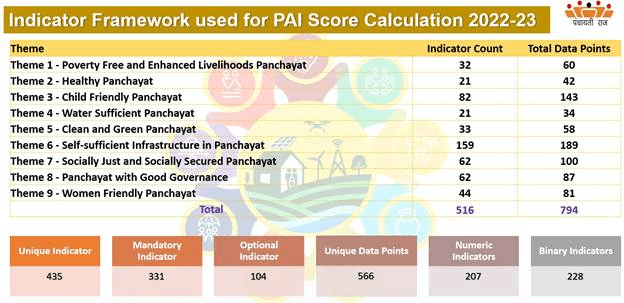
Panchayat Advancement Index (PAI): national composite tool ranking Gram Panchayats on SDG-linked socio-economic metrics.

Coverage: 2.16 lakh GPs across 29 States/UTs; data self-entered and state-validated on a dedicated portal.

Architecture: 435 indicators, 9 themes; five score bands from Beginners (<40) to Achiever (90+).

Quick Facts for MCQs

Legal & Policy

  • 73rd Amendment institutionalises elections, devolution, reservations; Art 40 directs village panchayats formation.
  • <20 % states fully devolved all 29 subjects listed in Eleventh Schedule.
  • Most states overdue in constituting quinquennial State Finance Commissions.

Performance Data

  • 2022-23: 0 Achievers; 35.8 % Performer, 2.7 % Beginners.
  • Validation undertaken by States/UTs before scores finalised.
  • PAI aligns with National Indicator Framework and LSDG roadmap.

Fiscal Issues

  • Panchayats largely grant-dependent; local taxation politically sensitive, weakly administered.
  • RBI 2022 recommends GIS-based asset mapping for automated tax rolls.
  • Timely, untied transfers vital for need-based GP planning.

Capacity & Tech

  • Only 7 states/UTs report 100 % pucca GP offices; Arunachal Pradesh at 5 %.
  • Computer access: 12 states 100 %, Arunachal 0 %; internet gaps similar.
  • BharatNet, e-Gram Swaraj, Mission Antyodaya promoted for digital plans, audits.

Gender & Social

  • Women occupy 46.6 % seats; ‘Pradhan Pati’ limits agency in many northern states.
  • MP, Haryana, Punjab, Tripura below mandated 50 % reservation.
  • 2013 panel urges Women Resource Centres, gender budgeting in GPDPs.

Key Data Points

FeatureData-Point
Constitutional backing73rd Amendment 1992
Relevant Articles243-243O
Eleventh Schedule subjects29
PAI themes9
PAI indicators435
GPs uploaded 2022-232.16 lakh
Share ‘Aspirant’ band61.2 %
Share ‘Front Runner’0.3 %
GP average revenue₹21.23 lakh
Own-source revenue share1.1 %
States with 6th SFC8
States 100 % computerised GPs12

Ready to practice?

Test your knowledge with our UPSC test series.

Start Free Trial