UPSC Current Affairs

15 topicsGS-1: 3GS-2: 4GS-3: 8
0/15 done
GS-2Editorial

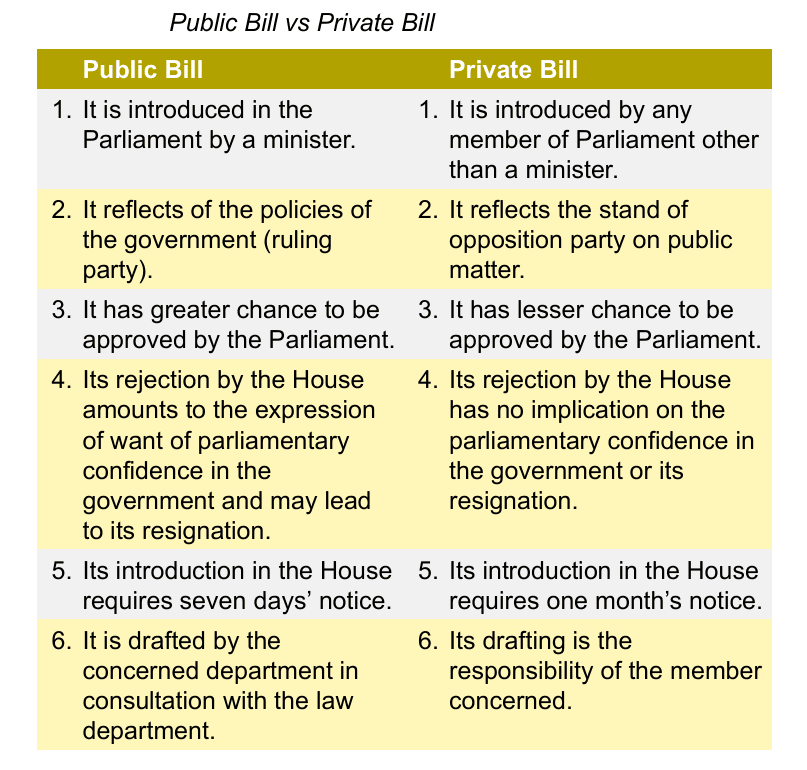
1.Reviving Private Members’ Bills (Parliamentary Procedure)

The Hindu
Illustration for Reviving Private Members’ Bills (Parliamentary Procedure)

What & Where

Definition Private Member’s Bill proposed by non-minister MP outside government

Procedure Notice 1 month → introduction → Friday debate slot → vote or withdrawal

Venue Lok Sabha and Rajya Sabha under Rules of Procedure, Parliament of India

Quick Facts for MCQs

Historical Data

  • Passage Only 14 PMBs became Acts; none passed both Houses after 1970
  • Volume 17th LS witnessed 1,434 PMB introductions across two Houses
  • Debate Rajya Sabha historically devotes more hours than Lok Sabha

Legislative Value

  • Innovation Right to Disconnect Bill 2019 ignited national debate on work-life balance
  • SocialJustice 2014 Transgender Bill catalysed 2019 Protection of Rights Act
  • Governance Early PMB shaped Waqf Act 1954 now updated 2025

Operational Challenges

  • Time Friday slot often lost to adjournments or early constituency departures
  • Discipline Anti-Defection law restrains MPs deviating from party whip
  • Scrutiny Lack of dedicated committee hampers vetting and prioritisation

Reform Ideas

  • Reservation Amend rules to protect Friday PMB hours except national emergency
  • Committee Establish PMB Review body with fast-track lane for high-impact bills
  • Benchmark Adopt UK Ten-Minute Rule; extend sitting by 1–2 hours to balance agendas

Key Data Points

FeatureData-Point
First PMB passedMuslim Wakfs Bill 1952
Total Acts via PMB14 since 1950
Last PMB cleared both Houses1970
17th LS PMBs introduced (LS/RS)729 / 705
17th LS PMBs discussed (LS/RS)2 / 14
18th LS introduced till May 2025 (LS/RS)64 / 82
18th LS discussed till May 2025 (LS/RS)0 / 1
Time on PMBs 17th LS (hrs)Lok Sabha 9.08; Rajya Sabha 27.01
Reserved slotFriday post-lunch
Anti-Defection amendment year1985 (52nd CAA)

Related UPSC Prelims PYQs

GS1 2017PYQ 1

With reference to the Parliament of India, consider the following statements :

GS1 2017PYQ 2

भारत की संसद के संदर्भ में, निम्नलिखित कथनों पर विचार कीजिए :
GS-2Polity

2.ECINET Unified Digital Election Platform (Election Commission)

Indian Express

What & Where

ECINET – unified digital interface by Election Commission of India integrating 40 + electoral apps.

Purpose – single-window access to election services for voters, officials, parties, civil society.

Geography – pan-India coverage, targeting nearly 100 crore electors.

Quick Facts for MCQs

Tech & Schemes

  • Integration – merges disparate applications into one clean, aesthetic interface.
  • Accessibility – cross-device design ensures seamless voter and official usage.
  • Real-time – dashboard delivers instant, verified electoral information.

Security Dimension

  • Cybersecurity – subjected to robust vulnerability and performance audits.
  • Data-integrity – statutory forms override platform entries on discrepancy.
  • Authorisation – restricted data input prevents unauthorised manipulation.

Administrative Reform

  • Simplification – replaces multiple logins with one portal, cutting procedural clutter.
  • Infrastructure – digital unification strengthens nationwide electoral management backbone.
  • Stakeholders – caters simultaneously to voters, officials, political parties, CSOs.

Key Data Points

FeatureData-Point
Nodal bodyElection Commission of India
Total apps merged40 + mobile & web applications
Sample integrated appsVoter Helpline, cVIGIL, Suvidha 2.0, ESMS, Saksham, KYC
Login systemSingle Sign-On for all services
Device supportDesktop and smartphone compatibility
Data entry rightsOnly authorised EC officials
Cyber measureRigorous safety, performance, usability tests
Core objectivesSimplify access, eliminate redundancy, real-time verified data

Related UPSC Prelims PYQs

NDA_GAT 2025PYQ 1

BHARATPOL portal has been developed by

GS-2Polity

3.Enforcement Directorate 69th Foundation Day (Enforcement Directorate)

PIB

What & Where

Enforcement Directorate; federal agency combating foreign-exchange violations, money laundering, fugitive offenders

Processes: investigations, provisional attachment, prosecution under PMLA 2002, FEOA 2018; civil adjudication under FEMA 1999

Geography: HQ New Delhi; zonal offices pan-India under Union Ministry of Finance, Dept of Revenue

Quick Facts for MCQs

Organisational Setup

  • Hierarchy: Director, Special/Joint Directors, Deputy Directors across zones
  • Cadre: partly drawn from IRS, IPS, Customs, promoted Group-B officers

Statutory Mandate

  • Objective: deter money laundering, terror finance, organised crime undermining economic security
  • Powers: search, seize, arrest, attach, confiscate, file complaints in PMLA special courts

Recent Achievements

  • Attachment growth indicates intensified recovery focus towards Viksit Bharat 2047 goal
  • Enhanced inter-agency coordination with FIU-India, CBI, NIA for financial intelligence

Key Data Points

FeatureData-Point
Foundation year1 May 1956 (as Enforcement Unit)
Renamed as ED1957
Parent ministryFinance; Dept of Revenue since 1960
Director’s rankNot below Additional Secretary, GoI
Core criminal lawsPMLA 2002; FEOA 2018
Core civil lawFEMA 1999 (replacing FERA 1947)
FY 2024-25 provisional attachment₹30,036 crore (44 % rise in cases; 141 % value jump)
Cumulative attachment value₹15.46 lakh crore (till 2025)
New PMLA probes 2014-24~5,000

Related UPSC Prelims PYQs

CDS_GK, GS1 2021PYQ 1

Which one of the following is not correct in respect of Directorate of Enforcement?

CDS_GK, GS1 2003PYQ 2

Which one of the following statements is correct with reference to FEMA in India?

GS-3Economy

4.16th Finance Commission Challenges (Fiscal Devolution)

Indian Express
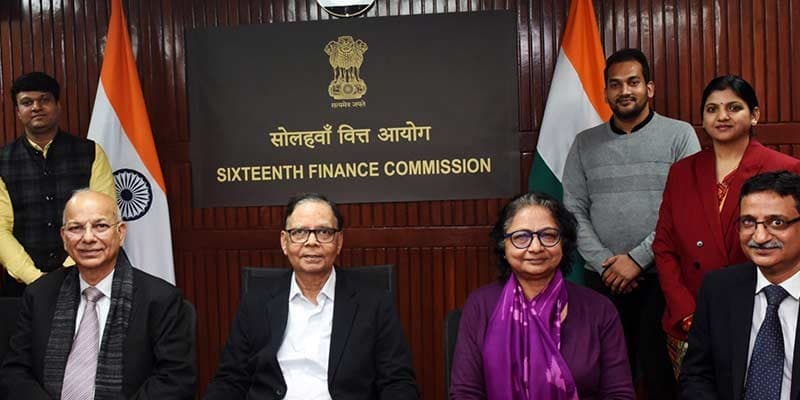
Illustration for 16th Finance Commission Challenges (Fiscal Devolution)

What & Where

Finance Commission: constitutional body (Art. 280) deciding tax devolution & grants between Centre-States.

16th FC: set up Dec 2023; remit FY 2026-31; chair—Arvind Panagariya.

Geography: applies to entire Union of India, incl. Panchayats & Municipalities via FC-recommended grants.

Quick Facts for MCQs

Fiscal Federalism

  • Shrinking-pool: cesses surge cuts shareable taxes, fuelling state demand for higher devolution.
  • Reform ask: cap cesses, prune CSS, boost untied transfers within fiscal limits.
  • Equity worry: low-income states (e.g., Bihar) risk lagging in per-capita service spend.

Revenue Pressures

  • Centre: grant funding via additional borrowing strains fiscal deficit.
  • States: rising revenue deficits in Karnataka, Punjab, others despite higher overall transfers.
  • Populism hazard: untied funds may bankroll free power, water, etc.

Spending Quality

  • Capital-vs-revenue: risk that larger untied money shifts to subsidies over infrastructure.
  • Accountability need: monitoring, outcome-based conditions proposed with untied hikes.
  • Quasi-universal cash schemes already expanding, could accelerate with more autonomy.

Local Devolution

  • Panchayats/ULBs: receive tiny slice of public spend, unlike global peers.
  • Incentive idea: performance grants for states linking extra FC funds to 3rd-tier empowerment.
  • Potential gain: closer-to-citizen service delivery, improved convergence across regions.

Key Data Points

FeatureData-Point
States’ formal share (15th FC)41 % of divisible pool
Actual share 2021-22≈32 % of Centre’s gross tax due to cesses/surcharges
Divisible-pool weight fall88.6 % (2011-12) ➜ 78.9 % (2021-22)
Cesses/surcharges statusNot shareable with states
States’ demanded share50 % of gross tax revenue
Union borrowing for grants FY23~₹2 lakh crore
Income-support schemes14 states; cost ≈0.6 % GDP
3rd-tier share in IndiaFar below China, South Africa benchmarks
16th FC tenure coveredFY 2026-27 to FY 2030-31
UPSC linkArt. 280; Fiscal Federalism

Related UPSC Prelims PYQs

CAPF_GAI, GS1 2024PYQ 1

Population of the year 2011 was first introduced in the tax devolution formula for sharing Union tax revenue with the States by

CAPF_GAI, GS1 2002PYQ 2

Which one of the following authorities recommends the principles governing grants-in-aid of the revenues to the states out of the Consolidated Fund of India?

GS-3Economy

5.NITI Aayog MSME Growth Roadmap (MSME Reforms)

PIB
Illustration for NITI Aayog MSME Growth Roadmap (MSME Reforms)

What & Where

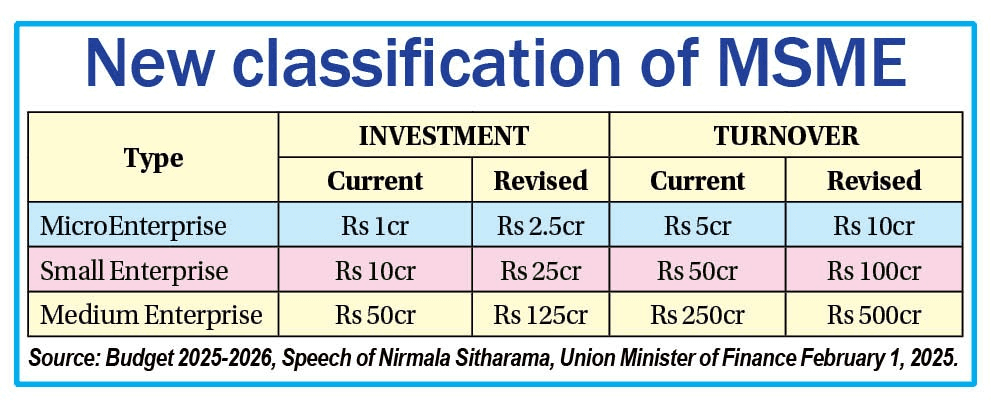
Definition: MSMEs are enterprises classified by investment in plant & machinery/equipment and annual turnover under MSMED Act 2006

Typology: Micro ≤ ₹1 cr & ≤ ₹5 cr; Small ≤ ₹10 cr & ≤ ₹50 cr; Medium ≤ ₹50 cr & ≤ ₹250 cr

Geography: ~6.34 crore units, largely clustered in rural and semi-urban India

Quick Facts for MCQs

Economic Angle

  • Output: Sector drives textiles, handicrafts, PURA style rural industrialization, significant foreign-exchange earnings
  • Inclusivity: Provides 20 % women-owned businesses and large OAE presence enhancing livelihood security
  • Start-ups: Backbone of India’s third-largest global start-up ecosystem in fintech, e-commerce, deep-tech

Core Challenges

  • Informality: Compliance costs keep 90 % units unregistered, limiting scheme reach and value-chain integration
  • Credit gap: Only 19 % demand met; collateral issues push borrowing at 30–60 % informal rates
  • Technology lag: Just 6 % online sellers; outdated machinery, weak infrastructure curb productivity and diversification

Reform Proposals

  • Finance: Revamp CGTMSE, channel SIDBI funds to NBFCs, relax state subsidy eligibility thresholds
  • Skilling: Expand STEM, align ITIs with industry, subsidise targeted financial-literacy and operational courses
  • Tech push: Subsidised AI, Industry 4.0 adoption, upgrade CFCs to Institute for Collaboration hubs for R&D

Government Schemes

  • Credit: Pradhan Mantri MUDRA Yojana, Mutual Credit Guarantee, Emergency Credit Line Guarantee Scheme
  • Digital & grievance: Udyam Registration, CHAMPIONS portal, GeM procurement access, MSME SAMADHAAN for delayed payments

Key Data Points

FeatureData-Point
GDP contribution29.2 %
Manufacturing output share36.2 %
Employment generated120 million persons
Export share FY 2245 % of total exports
Women-owned enterprises20 % of Udyam registrations
Informal MSME share90 % of total units
Formal credit met FY 2119 % of demand
Units on Udyam portal95 lakh vs 6.34 crore total
E-commerce adoption6 % of MSMEs
AI adoption45 % of surveyed units

Related UPSC Prelims PYQs

CDS_GK, GS1 2022PYQ 1

सूक्ष्म, लघु और मध्यम उद्योगों (MSMEs) के बारे में निम्नलिखित कथनों पर विचार कीजिए:

CDS_GK, GS1 2023PYQ 2

Consider the following statements with reference to India:

GS-1History

6.Satavahana Dynasty Inscriptions in Telangana (Satavahana Dynasty)

The Hindu
Illustration for Satavahana Dynasty Inscriptions in Telangana (Satavahana Dynasty)

What & Where

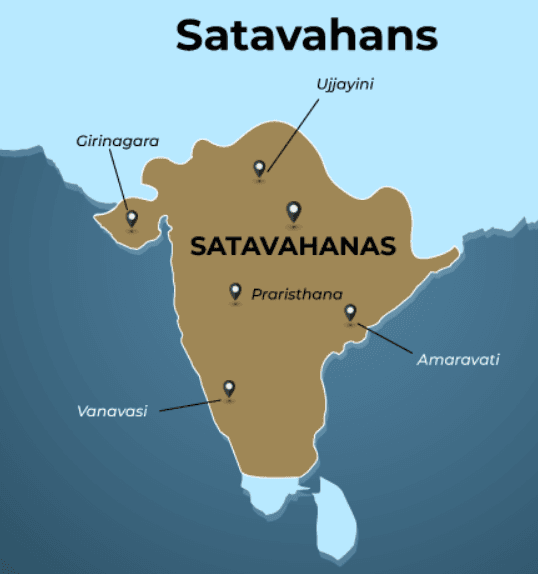
Satavahana inscriptions; Brahmi-Prakrit stone epigraphy dated 1 BCE–6 CE

Found at Peddapalli, Telangana; region part of ancient Asmaka Mahājanapada in eastern Deccan

Texts illuminate Satavahana rule, culture, trade across Krishna-Godavari valley to Malwa & Karnataka

Quick Facts for MCQs

Political History

  • Gautamiputra: crushed Kshaharata Shakas, re-struck Nahapana coins, restored varna order
  • Satavahana-Western Kshatrapa conflicts eased via marriage alliance by Vashishthiputra
  • Telangana inscriptions affirm Satavahana control over Asmaka territory

Economy & Trade

  • Roman and Satavahana coins dense in Krishna-Godavari, signalling Indo-Mediterranean exchange
  • Yajna Sri patronised navigation; ship motif marks maritime peak
  • Urban centres like Peddabankur featured brick houses, wells, covered drains

Religion & Art

  • Rulers Brahmanas yet major patrons of Buddhism; frequent land grants to viharas
  • Rock-cut marvels Karle Chaitya, Nasik Viharas, Ajanta Caves 9-10 under dynasty support
  • Amravati School of Art flourished; stupa panels narrate Buddha life

Key Data Points

FeatureData-Point
FounderSimuka (60–37 BCE)
Greatest rulerGautamiputra Satakarni (106–130 CE)
Capital shiftPaithan on Godavari by Pulumayi
Peak maritime kingYajna Sri Satakarni; ship on coins
Core era1 c BCE – early 3 c CE
Official languagePrakrit
Script of recordsBrahmi
Principal coin metalslead, potin, copper, bronze
Gold usageBullion, not regular coinage
Iconic coin motifTwo-masted ship
Agricultural advanceIron ploughshares, paddy transplantation
Major rice zoneKrishna-Godavari delta
Cotton fameNoted by Pliny for Andhra
3-tier polityRaja – Mahabhoja – Senapati
Military notePliny cites large infantry-cavalry-elephant force
Land grantsFirst to Brahmanas, more to Buddhist monks
Key Buddhist sitesAmaravati, Nagarjunakonda
Literary workGathasaptasati by King Hala
Successor dynastyIkshvakus (eastern Deccan)

Related UPSC Prelims PYQs

CAPF_GAI, NDA_GAT 2022PYQ 1

Which one of the following was composed by Harishena?

CAPF_GAI, NDA_GAT 2020PYQ 2

Which of the following statements is/are correct?

GS-1Mapping

7.Angola Geographical Profile (African Geography)

Times of India
Illustration for Angola Geographical Profile (African Geography)

What & Where

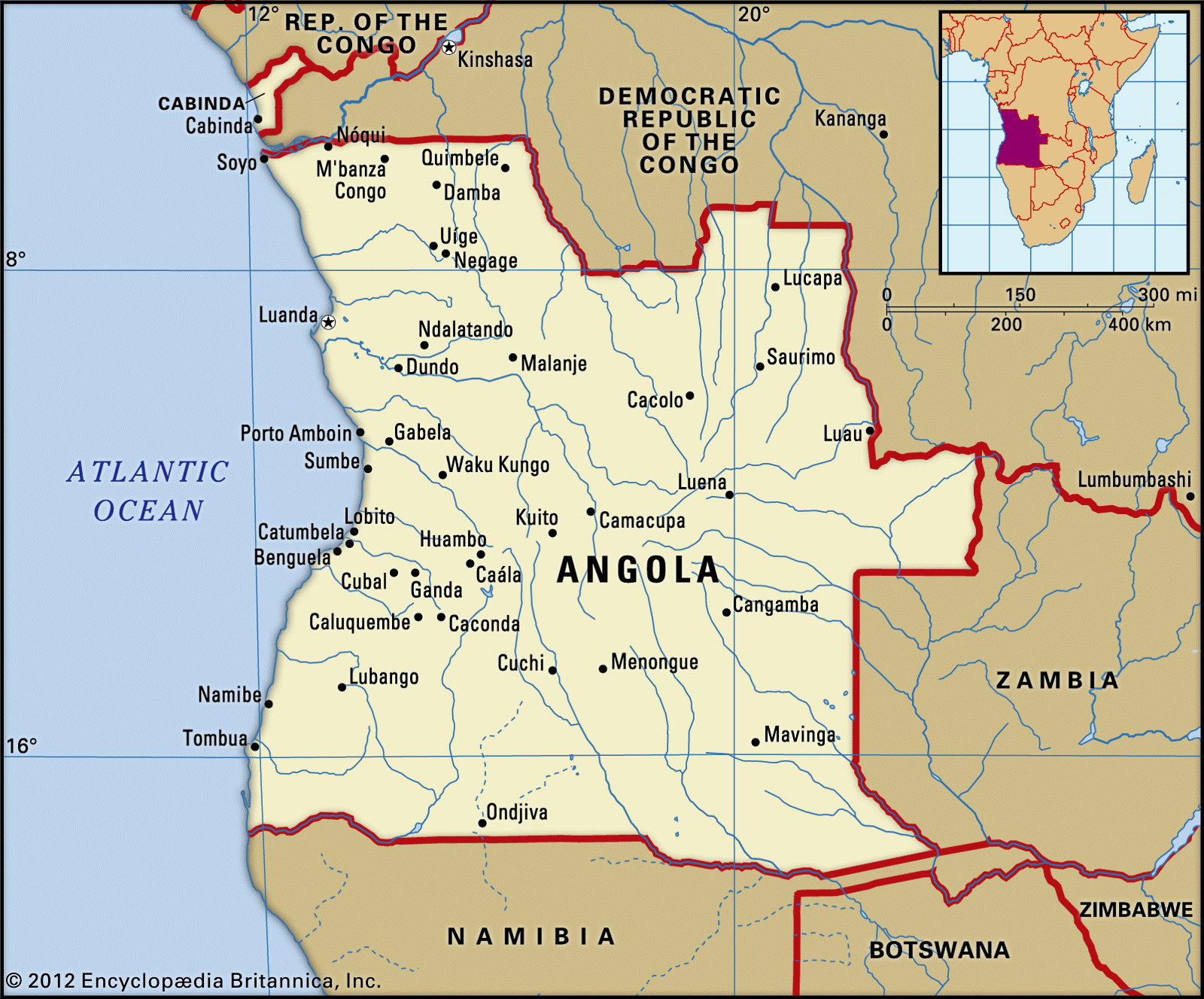
Angola: southwestern African state on Atlantic coast; exclave Cabinda lies north of main landmass.

Terrain rises from narrow coast to Bié/Huíla plateaus; Mount Moco (2,620 m) highest; SW fringe touches Namib Desert.

Tropical climate; rainfall shaped by cold Benguela Current.

Quick Facts for MCQs

Bilateral Ties

  • India extended USD 200 mn defence credit; focus naval, surveillance equipment.
  • Talks pledged cooperation: infrastructure, space tech, capacity-building.
  • Visit commemorates 40 yrs of India-Angola diplomatic relations.

Physical Geography

  • Rivers flow to Atlantic (Cuanza) and inland basins (Zambezi, Okavango).
  • Plateaus create fertile central highlands and hydropower potential.
  • Cabinda separated by DR Congo strip, rich in offshore oil blocks.

Resources & Economy

  • Second-largest oil producer in sub-Saharan Africa; crude drives >90 % exports.
  • NE alluvial gravels yield high-quality diamonds; Kimberlite yet under-explored.
  • Iron, copper, gold reserves targeted for diversification post-oil.

Key Data Points

FeatureData-Point
CapitalLuanda
Ocean FrontAtlantic
ExclaveCabinda
NeighboursRep. Congo, DR Congo, Zambia, Namibia
Highest PointMount Moco – 2,620 m
Major PlateausBié (~2,600 m); Huíla (~2,300 m)
Largest RiverCuanza (Kwanza)
Border River with NamibiaCunene
Congo TributaryCuango
Desert ZoneNamib (south-west)
Influential CurrentBenguela (cold)
Key Ethnic GroupsOvimbundu, Kimbundu, Bakongo
Top MineralsOil, diamonds, iron ore, copper, gold
India’s Defence LoCUSD 200 million
Diplomatic Ties40 years (est. 1983)
GS-1Mapping

8.Chenab River Geography and Projects (Indian Rivers)

Hindustan Times
Illustration for Chenab River Geography and Projects (Indian Rivers)

What & Where

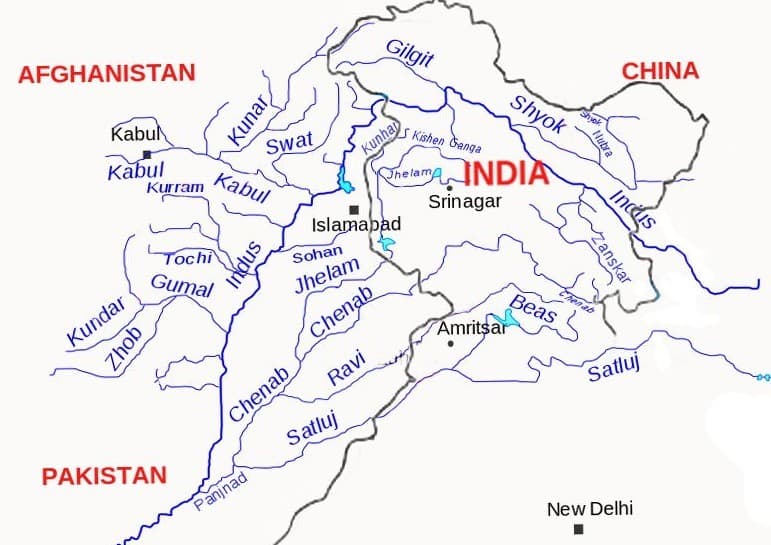
Chenab: glacier-fed Chandra-Bhaga merging at Tandi, flows via Himachal & J-K, enters Pakistani Punjab, meets Sutlej

Baglihar: 900 MW run-of-river dam on Chenab at Ramban district, Jammu & Kashmir

Issue: India halted Chenab discharge through Baglihar after suspending Indus Waters Treaty post Pahalgam attacks

Quick Facts for MCQs

Hydropower Projects

  • Portfolio: Salal, Dul Hasti, Ratle, Pakal Dul, Kiru, Kishtwar
  • Ownership: NHPC leads Baglihar phases
  • Storage: minimal, run-of-river design

Historical Significance

  • Vedic Sapta Sindhu reference
  • Mentioned in Alexander’s 325 BCE campaign
  • Site of Sikh-Afghan Battle of Chenab

Legal & Policy

  • Pakistan challenged Baglihar design parameters
  • World Bank neutral expert allowed build with tweaks
  • India suspends Indus Waters obligations post-terror attacks

Security Dimension

  • Water halt deployed as strategic pressure tool
  • Ramban dam located in militancy-prone Chenab valley
  • Hydro-diplomacy entwined with broader Indo-Pak security calculus

Key Data Points

FeatureData-Point
FormationChandra + Bhaga at Tandi
Chandra sourceBara-lacha-la Pass east
Bhaga sourceSurya Taal lake west
Upper-reach nameChandra-Bhaga
Indian statesHimachal Pradesh, J&K
Pakistan entryPunjab province
ConfluenceJoins Sutlej → Panjnad
Largest tributaryMarusudar (right bank)
Baglihar capacity900 MW
Treaty involvedIndus Waters 1960

Related UPSC Prelims PYQs

CDS_GK, GS1 2025PYQ 1

Salal Power Project is situated on which one among the following rivers?

CDS_GK, GS1 2009PYQ 2

The Dul Hasti Power Station is based on which one of the following rivers ?

GS-3Environment

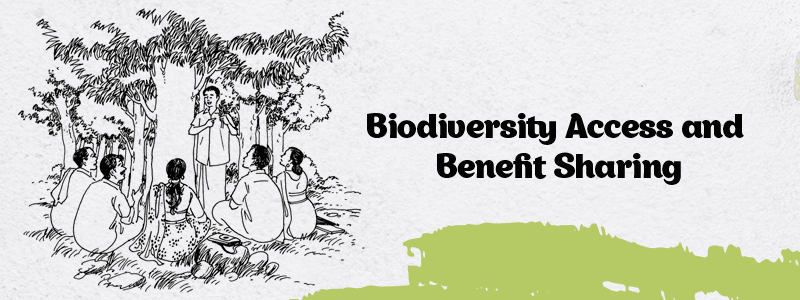
9.Biodiversity Benefit Sharing Regulations 2025 (Benefit Sharing)

Down to Earth
Illustration for Biodiversity Benefit Sharing Regulations 2025 (Benefit Sharing)

What & Where

Biodiversity Benefit Sharing Regulations 2025: new NBA rules under Biological Diversity Act 2002 for equitable benefit sharing.

Covers all utilisation (physical or Digital Sequence Information) of India’s biological resources by industry, researchers, IPR seekers.

Jurisdiction: entire India; regulator-cum-approver is National Biodiversity Authority, HQ Chennai.

Quick Facts for MCQs

Legal & Policy

  • Turnover-linked rates replace earlier profit-based model for clearer compliance.
  • Mandatory annual disclosure tightens monitoring of biodiversity use.
  • Researchers/IPR applicants must show ABS compliance before approvals.

Economic Angle

  • Low-revenue entities (<₹5 cr) incentivised with zero liability.
  • Slab approach expected to raise predictable funds for local communities.
  • High-value species clause deters over-extraction of premium resources.

International Context

  • Aligns India’s ABS with Nagoya Protocol and COP16 decision on multilateral DSI benefit sharing.
  • Industries (pharma, biotech, cosmetics) globally urged to compensate indigenous custodians.

Key Data Points

FeatureData-Point
Notified byNational Biodiversity Authority
Statute baseBiological Diversity Act 2002
Effective year2025
Reporting thresholdFirms with ≥ ₹1 crore turnover
Benefit-share slabs0% (<₹5 cr); 0.2% (₹5–50 cr); 0.4% (₹50–250 cr); 0.6% (>₹250 cr)
High-value species minimum5 % of ex-factory turnover (red sanders, sandalwood, agarwood)
Cultivated medicinal plantsExempt from benefit sharing (2023 Amendment)
NBA retention10–15 % of received amount
DSI coverageExplicitly brought under ABS regime
NBA set-up year2003; HQ Chennai

Related UPSC Prelims PYQs

GEO_GS, GS1 2020PYQ 1

Pursuant to the ratification of Convention on Biological Diversity, India legislated Biodiversity Act in the year:

GEO_GS, GS1 2012PYQ 2

How does National Biodiversity Authority (NBA) help in protecting the Indian agriculture?

GS-3EnvironmentQuick Bite

10.Surge in Leopard Poaching (Leopard Poaching)

Down to Earth
Illustration for Surge in Leopard Poaching (Leopard Poaching)

What & Where

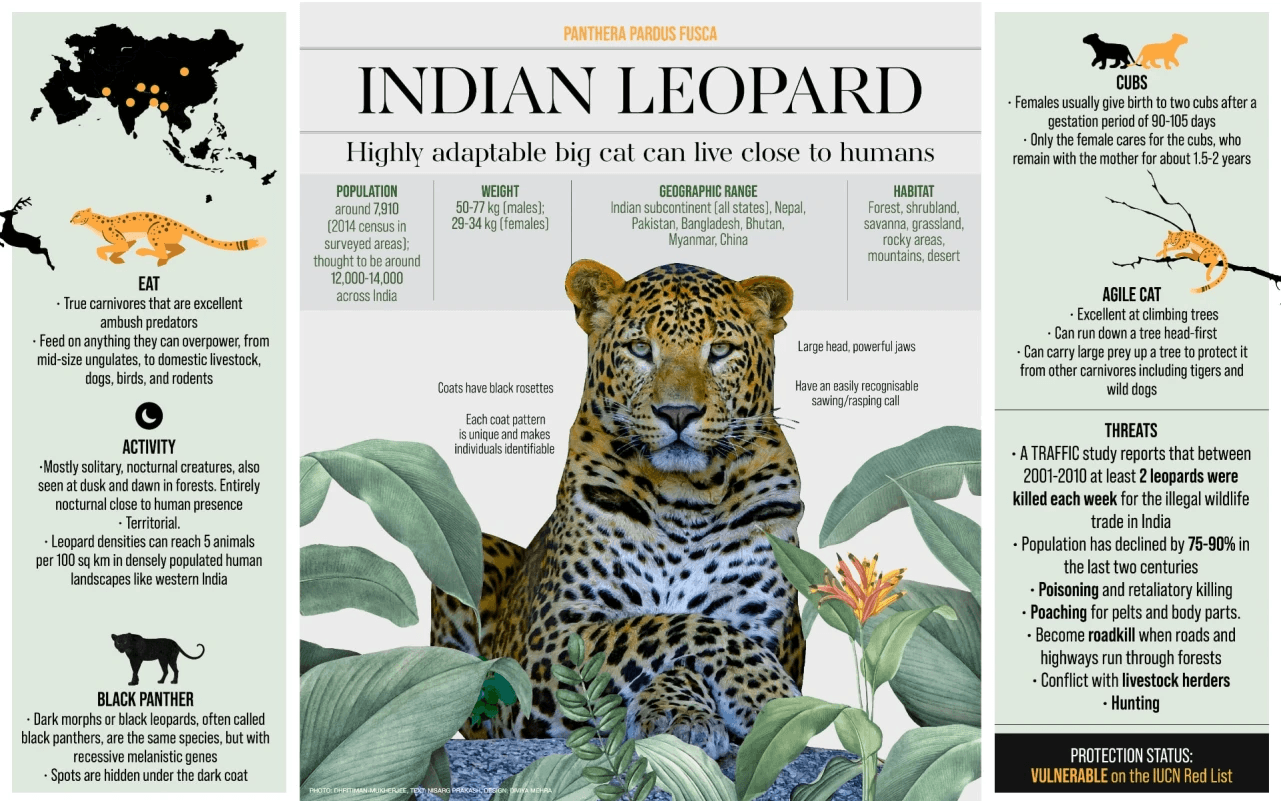
Leopard (Panthera pardus): adaptable big-cat once widespread across sub-Saharan Africa, Middle East, South-SE Asia.

Species now absent from ≈75 % of historical range due to poaching, habitat loss.

Indian strongholds: Madhya Pradesh > Maharashtra > Karnataka > Tamil Nadu; national estimate 13,874 (2024).

Quick Facts for MCQs

Trade Dynamics

  • Substitution: Poachers pivot to leopards as tigers face stricter protection and lower detectability.
  • Parts mis-branded as tiger to satisfy Asian demand for medicine, trophies, luxury goods.
  • South African captive-breeding plus weak laws act as global supply node for illicit big-cat parts.

Legal & Policy

  • Tigers enjoy tighter surveillance, inadvertently pushing traffickers toward less-guarded leopards.
  • CITES Appendix I bans commercial export; enforcement gaps enable continued cross-border flows.
  • India’s Schedule I listing mandates highest protection, but field enforcement varies across states.

Conservation Trends

  • India shows modest recovery; global picture grim with vast range contractions.
  • Poaching, habitat fragmentation, retaliatory conflicts synergise to depress non-protected populations.
  • Central Indian forests remain critical corridors for long-term genetic viability.

Key Data Points

FeatureData-Point
Illegal trade (2020-23)≈12,000 leopards/parts (CITES)
Historic range lost≈75 % across Africa-Asia
India population 202413,874 individuals
Annual growth 2018-241.08 % per year
Top Indian stateMadhya Pradesh
IUCN statusVulnerable
CITES listingAppendix I
Wildlife Act tagSchedule I (WPA 1972)

Related UPSC Prelims PYQs

GS1 1999PYQ 1

"India has the largest population of the Asian X. Today, there are just about 20,000 to 25,000 X in their natural habitat spreading across the evergreen forests, dry thorn forests, swamps and grasslands. Their prime habitats are, however, the moist deciduous forests. The X population in India ranges from Northwest India where they are found in the forest divisions of Dehradun, Bijnor and Nainital districts of UP to the Western Ghats in the states of Karnataka and Kerala and in Tamil Nadu. In Cen

GS1 2017PYQ 2

In India, if a species of tortoise is declared protected under Schedule I of the Wild Life (Protection) Act, 1972, what does it imply?

GS-3SpeciesQuick Bite

11.Red Admiral Butterfly First Indian Record (Red Admiral)

The Hindu
Illustration for Red Admiral Butterfly First Indian Record (Red Admiral)

What & Where

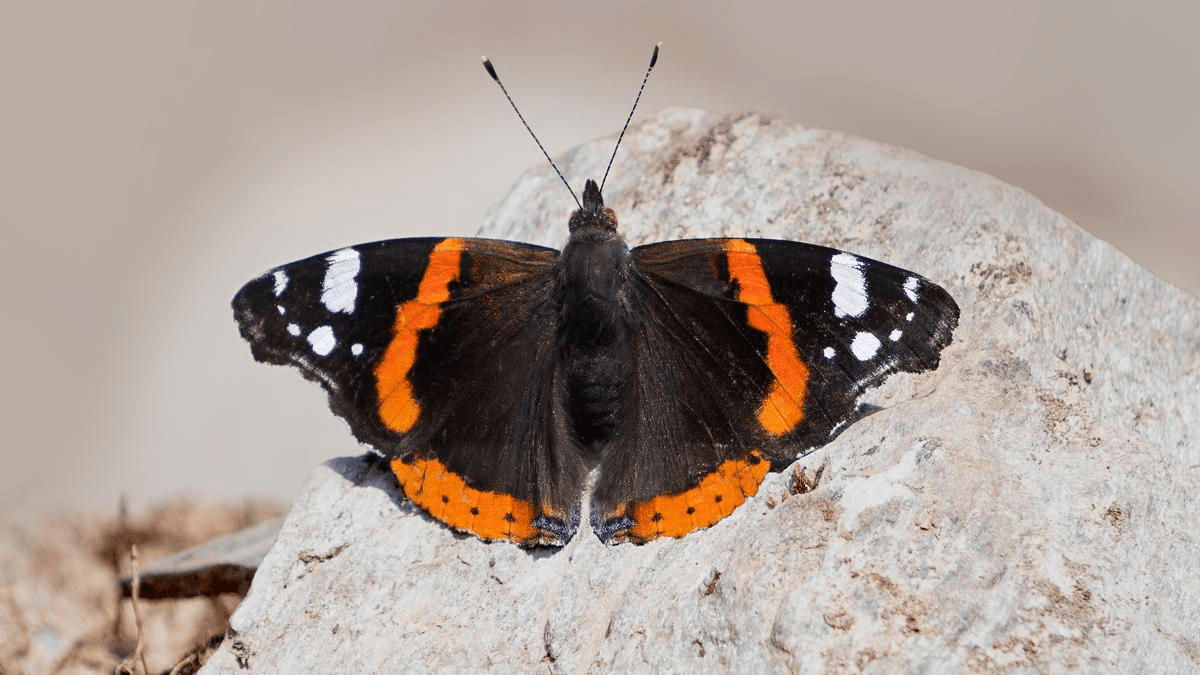
Red Admiral (Vanessa atalanta) recorded first-ever in India, Dhauladhar range, Himachal Pradesh, Western Himalaya.

Nymphalidae family; wingspan 67–72 mm; narrower, deeper crimson discal band + constant upper-forewing spot vs V. indica.

Native to North & South America, Europe, much of Asia; no verified records China, Mongolia, Afghanistan till now.

Quick Facts for MCQs

Taxonomy & Morphology

  • Discal-band Colour: deeper crimson, narrower than V. indica.
  • Sexual Dimorphism: slight size increase in females; pattern constant across sexes.
  • Spot Presence: upper-forewing white spot always present, absent in Indian counterpart.

Habitat & Distribution

  • Western Himalaya: nettle abundance aids larval survival.
  • Global Spread: Nearctic, Neotropical, Palearctic ecozones, absent verified East-Central Asian records.
  • Microhabitats: frequents stream banks, city gardens, wet woodlands needing minerals, sugars, water.

Behaviour & Life Cycle

  • Territory: males defend perching sites, chase rivals vigorously.
  • Feeding: adults sip nectar, tree sap; larvae feed exclusively on Urtica spp.
  • Phenology: multivoltine in temperate zones, migratory in colder regions.

Climate Adaptation

  • Host-Plant Diversity: reliance on widespread Urticaceae buffers against temperature shifts.
  • Threats: habitat loss, altered plant phenology could outpace adaptive capacity.
  • Conservation Cue: urban-friendly species still benefits from wetland and forest protection.

Key Data Points

FeatureData-Point
FamilyNymphalidae
Scientific nameVanessa atalanta
Indian first sightingDhauladhar mountains, Himachal Pradesh
Wingspan (♂–♀)67–72 mm
Key ID markDiagnostic white spot on upper forewing
Look-alike speciesIndian Red Admiral (V. indica)
Larval host plantStinging nettle (Urtica dioica)
Usual habitatsUrban areas, disturbed sites, moist forests, wetlands
Male behaviourStrong territorial chases at roosting spots
Climate resilience driverUses diverse Urticaceae host plants

Related UPSC Prelims PYQs

CDS_GK, GS1 2023PYQ 1

Which butterfly species was recently named the official butterfly of Jammu and Kashmir?

CDS_GK, GS1 2016PYQ 2

Recently, for the first time in our country, which of the following States has declared a particular butterfly as ‘State Butterfly’?

GS-3S&T

12.DRDO Stratospheric Airship Platform (High-Altitude Airship)

The Hindu
Illustration for DRDO Stratospheric Airship Platform (High-Altitude Airship)

What & Where

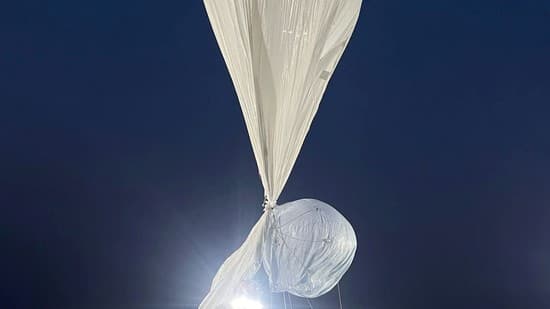
Stratospheric Airship Platform — helium-filled, lighter-than-air craft meant to loiter at ~17 km in the stratosphere.

Developed by ADRDE, Agra under DRDO; maiden test flight reached target altitude over Uttar Pradesh skies.

Intended for continuous ISR, earth observation, comm-relay; complements satellites at a fraction of cost.

Quick Facts for MCQs

Technology Specs

  • Envelope uses multilayer polymer-fabric resisting UV, low temperature, low pressure.
  • Autonomous pressure control maintains shape despite thermal variations.
  • Solar/ battery options planned for multi-day station-keeping.

Test Objectives

  • Validate pressure control accuracy, emergency venting under simulated faults.
  • Capture in-flight telemetry for simulation models and future design optimisation.
  • Demonstrate safe retrieval without payload loss.

Security Dimension

  • Persistent ISR boosts border, coastal and maritime domain awareness.
  • High-altitude platform offers minimal radar cross-section, increasing survivability.
  • Indigenous capability reduces dependence on foreign satellite imagery.

Civil Applications

  • Disaster relief: quick comms relay when ground networks fail.
  • Environmental monitoring: long-dwell atmospheric sensing for climate, pollution data.
  • Rural broadband: potential stratospheric internet hubs for remote areas.

Key Data Points

FeatureData-Point
DeveloperAerial Delivery R&D Establishment, Agra
Parent bodyDRDO, Ministry of Defence
Flight altitude achieved~17 km (stratosphere)
Endurance during test62 minutes
Propulsion typeLighter-than-air, helium lift
Core materialHigh-strength, low-permeability envelope
Key systems validatedEnvelope pressure control, emergency deflation
Primary payload roleISR sensors & communication relays
Recovery statusComplete post-mission system recovery
Comparative costCheaper than satellite launches for persistent coverage

Related UPSC Prelims PYQs

CDS_GK, ESE_GS 2024PYQ 1

भारत का ‘मिशन शक्ति’ (DRDO) निम्नलिखित में से किससे संबंधित है?

CDS_GK, ESE_GS 2024PYQ 2

Ministry of Defence signed contract with which one of the following organizations for Upgraded Super Rapid Gun Mount (SRGM) and other equipment for around 3000 crores?

GS-3S&T

13.India's First Genome-Edited Rice (Genome Editing)

News on Air
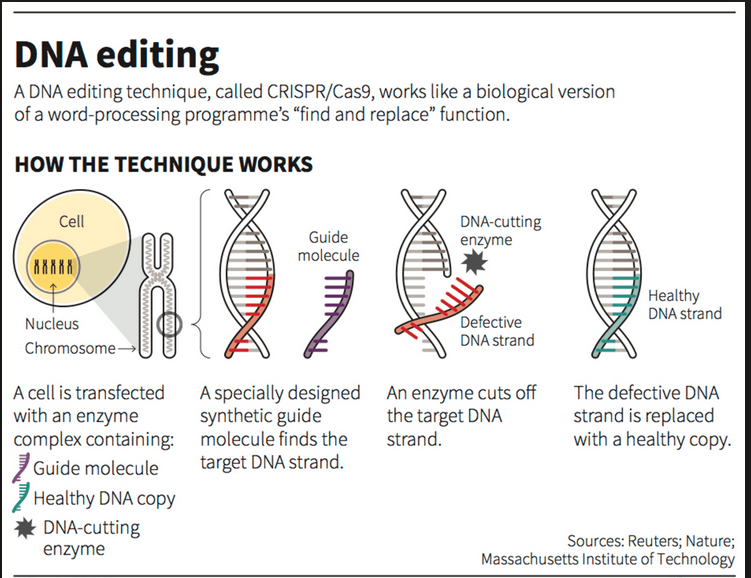
Illustration for India's First Genome-Edited Rice (Genome Editing)

What & Where

India’s first genome-edited rice, DRR Dhan-100 & Pusa DST Rice-1, launched 2023-24 by ICAR institutes.

Created via CRISPR-Cas9 (SDN1) editing; no transgenes, hence outside “strict GMO” regime.

Labs: ICAR-Indian Institute of Rice Research, Hyderabad; ICAR-Indian Agricultural Research Institute, New Delhi.

Quick Facts for MCQs

Tech & Genes

  • CRISPR SDN1 removes/knocks-out gene fragments without donor template.
  • CKX2 down-regulation elevates cytokinin, boosting panicle grain number.
  • DST mutation enhances drought, salinity tolerance by modulating stomatal closure.

Environmental Impact

  • Early maturity plus sturdy stem lowers lodging losses and methane duration.
  • Large irrigation saving reduces groundwater extraction pressure.
  • Stress-tolerant line sustains yields on marginal saline soils.

Legal & Policy

  • 2022 Dept of Biotechnology guidelines exempt SDN1 & SDN2 edits from GEAC approval.
  • Varieties treated akin to conventional mutants for seed certification.
  • Facilitates faster R&D-to-field pipeline versus transgenic crops.

Key Data Points

FeatureData-Point
Parent variety (DRR Dhan-100)Samba Mahsuri / BPT 5204
Parent variety (Pusa DST Rice-1)MTU 1010
Yield increaseDRR Dhan-100: +19%; Pusa DST Rice-1: +30.4% in stress soils
Days to maturityDRR Dhan-100: ≈130 days (≈20 days earlier)
Key gene editedDRR Dhan-100: CKX2 (Gn1a); Pusa DST Rice-1: DST
Major traitHigher grains & lodging resistance / Drought-salinity tolerance
Water saving≈7,500 M cum irrigation water (DRR Dhan-100)
Methane cutFaster crop reduces CH₄ emissions (DRR Dhan-100)
Foreign DNA presentNone; SDN1 precise deletions
Regulatory statusNot classified as GMO under India’s 2022 guidelines
Editing methodCRISPR-Cas9, site-directed nuclease-1 (SDN1)
Developer institutesIIRR-Hyderabad; IARI-New Delhi

Related UPSC Prelims PYQs

CDS_GK, GS1 2025PYQ 1

Recently, ICAR (Indian Council of Agricultural Research) has developed the world's first genome-edited rice varieties. Which of the following statements is/are correct with respect to the developed products?

CDS_GK, GS1 2018PYQ 2

भारत में विकसित आनुवंशिकतः संशोधित सरसों (जेनेटिकली मॉडिफाइड सरसों / GM सरसों) के सन्दर्भ में, निम्नलिखित कथनों पर विचार कीजिए:

GS-3S&T

14.Global Rise in Vaccine-Preventable Diseases (Immunisation)

The Hindu
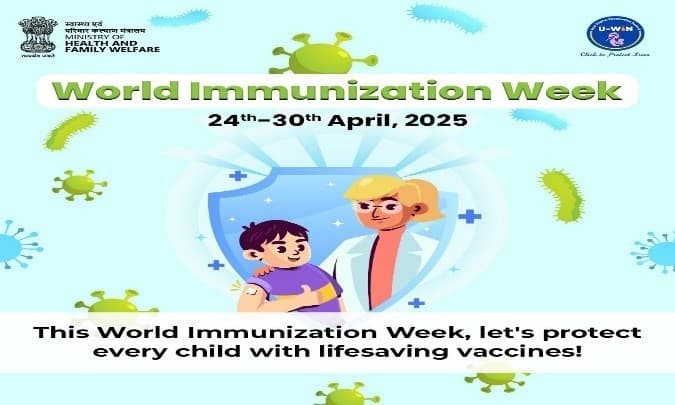
Illustration for Global Rise in Vaccine-Preventable Diseases (Immunisation)

What & Where

Vaccine-Preventable Diseases (VPDs): illnesses like measles, polio, tetanus avoidable through timely immunisation.

Vaccination: injection of weakened/inactive pathogen to trigger protective immune memory without causing disease.

Hotspots: U.S. measles spike, polio return in several African states, 15 mn children at risk in fragile zones.

Quick Facts for MCQs

Global Uptake

  • Decline: COVID-19 disruptions stalled routine shots worldwide.
  • Herd-Immunity: High coverage lowers outbreak probability, protecting unvaccinated groups.
  • Funding: Gavi, COVAX facing budget squeezes threatening rollout continuity.

Key Challenges

  • Misinformation: Social media myths fuelling vaccine hesitancy, e.g., U.S. measles surge.
  • Logistics: Weak cold-chains delay rural deliveries, especially in low-income states.
  • Conflict: Insecurity blocks outreach in Africa, Middle East, South Asia.

Indian Programme

  • UIP: Targets 26 mn children, 34 mn pregnant women annually; introduced MR, PCV, RVV.
  • Milestones: Polio-free 2014; maternal–neonatal tetanus eliminated 2015.
  • Gap: 1 in 4 Indian children still misses essential doses.

Way Forward

  • Strengthen-Primary: Upgrade sub-centres, cold-chain, frontline staffing.
  • Counter-Myths: Use AI analytics, community influencers, school curricula for fact-based messaging.
  • Finance-Commit: Support Immunisation Agenda 2030; honour Gavi US $9 bn pledge.

Key Data Points

FeatureData-Point
Children missing all routine shots 202314.5 million
Countries with moderate–severe service disruption 2024>50 % of WHO-monitored
U.S. measles cases Jan–May 2025935 (3× 2024 total)
Polio resurgence locationMultiple African nations
Lives saved by vaccines yearly4.2 million
Share by measles vaccine60 % of lives saved
ROI per $1 on vaccines (WHO)US $54
Child survival rise since 197440 %
India full immunisation (NFHS-5)76.1 %
Mission Indradhanush launch2014

Related UPSC Prelims PYQs

CDS_GK, GEO_GS 2021PYQ 1

Mission Indradhanush aims at

CDS_GK, GEO_GS 2020PYQ 2

Mission Indradhanush is a scheme pertaining to:

GS-2Scheme

15.Khelo India Youth Games Overview (Khelo India)

Hindustan Times

What & Where

Khelo India Youth Games (KIYG) – annual national multi-sport meet under Khelo India Scheme

Aims: grassroots talent ID, mass participation, excellence grooming for global events

7th edition 2024 hosted in Patna, first multi-discipline national event for Bihar

Quick Facts for MCQs

Tech & Schemes

  • Khelo India Scheme funds venue upgrade, athlete training, annual scholarships
  • Esports inclusion signals push toward digital-era competitive formats
  • Online athlete registration and Geo-tagged progress tracking used for transparency

Event Highlights

  • Sepaktakraw entry raises indigenous and Southeast Asian sport exposure
  • Esports kept demonstrative to gauge future medal-sport feasibility
  • Bihar debut aims regional sporting ecosystem boost and facility legacy

Youth Focus

  • Under-17 segment nurtures school talent pipeline for Junior Nationals
  • Under-21 bracket provides bridge to Khelo India University Games and senior squads

Key Data Points

FeatureData-Point
Launch year2018
Nodal ministryYouth Affairs & Sports
Current edition7th
2024 host venuePatna, Bihar
Previous venuesDelhi, Pune, Guwahati, Panchkula, Bhopal, Chennai
Target age bandsUnder-17 & Under-21
Total medal disciplines27
First-time disciplineSepaktakraw
Demonstration eventEsports
Player benefit₹5-lakh annual scholarship up to 8 years
Inauguration modeVirtual by PM Narendra Modi

Related UPSC Prelims PYQs

CAPF_GAI, CDS_GK 2020PYQ 1

Which one of the following States is planned to host the Khelo India Youth Games (4th Edition)?

CAPF_GAI, CDS_GK 2023PYQ 2

Consider the following statements about Khelo India University Games (KIUG):

Ready to practice?

Test your knowledge with our UPSC test series.

Start Free Trial