UPSC Current Affairs

14 topicsGS-1: 5GS-2: 1GS-3: 8
0/14 done
GS-2PolityQuick Bite

1.National Civil Services Day 2025 (Civil Services)

DD News
Illustration for National Civil Services Day 2025 (Civil Services)

What & Where

National Civil Services Day – annual observance on 21 April across India honoring civil servants

Origin – marks Sardar Patel’s 21 Apr 1947 Metcalf House (Delhi) address calling bureaucracy the “steel frame of India”

PM’s Awards for Excellence in Public Administration – national recognition of innovative Central/State officers, presented on this day

Quick Facts for MCQs

Award Mechanics

  • Screening Committee vets submissions; Expert Committee ranks; Cabinet Secretary & PM give final nod
  • Evaluation emphasises innovation, replicability, measurable impact on service delivery

Social Concerns

  • Record 41 % women in 2023 IAS cohort signals rising gender diversity within higher bureaucracy
  • PM lauded inclusive cadre, urged officers to uphold citizen-centric governance

Tech & Schemes

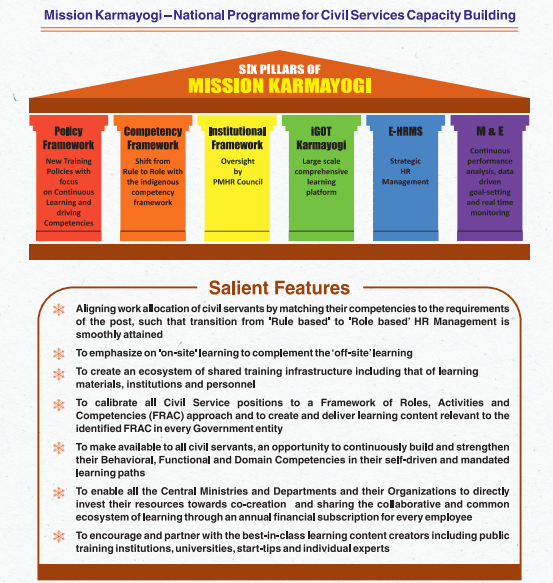
  • Mission Karmayogi digital platform upskills 50 lakh officials via iGOT Karmayogi portal
  • e-Samiksha real-time PMO dashboard monitors project implementation, quickens inter-ministry coordination
  • CPGRAMS 7.0 offers AI-based grievance sorting, 45-day resolution mandate

Key Data Points

FeatureData-Point
First observance year2006
2025 edition number17th
2023 IAS batch women74 officers
% women in 2023 IAS batch41 %
Award eligibilityAll govt officers & organisations
Selection tiersScreening → Expert → Cabinet Secy & PM
Award packageTrophy + Scroll + Rs 20 lakh
Funding useSupport public-welfare initiatives
Key schemes linkedMission Karmayogi, LES, e-Samiksha, CPGRAMS
Day’s slogan by Patel“Steel frame of India”

Related UPSC Prelims PYQs

CDS_GK 2024PYQ 1

भारत सरकार की पहल ‘निष्ठा’ (NISHTHA) के संदर्भ में निम्नलिखित में से कौन-सा कथन सही है?

CDS_GK 2020PYQ 2

The Government of India has recently constituted a civilian award in the name of Sardar Vallabhbhai Patel in the field of contribution to
GS-3Infrastructure

2.ANPR-Based Barrierless Tolling (Barrier-less Tolling)

DH

What & Where

ANPR-FASTag: barrier-less toll collection to debut at selected National Highway plazas, India.

GNSS tolling: satellite-based, distance-linked charging; MoRTH says “no rollout from 1 May 2025”.

MoRTH: nodal ministry steering both technologies’ trials and regulatory framework.

Quick Facts for MCQs

Tech & Schemes

  • ANPR: camera captures plate, software OCRs, backend cross-checks FASTag, auto debit.
  • GNSS: on-board unit tracks via GPS/Galileo etc., uploads route, server computes toll.
  • FASTag: RFID tag remains compulsory during ANPR pilot phase.

Implementation Status

  • Timeline: No fixed nationwide date; May 2025 GNSS launch officially denied.
  • Coverage: “Selected plazas” identified for ANPR pilots before wider scaling.
  • Regulatory: MoRTH preparing rules under NH Fee Rules, 2008 amendments.

Compliance & Penalties

  • Violation: unpaid toll triggers e-notice under CMV Act provisions.
  • Deterrent: FASTag suspension blocks fuel & toll payments nationwide.
  • Legal: Repeat defaulters liable for additional penalties under VAHAN-linked enforcement.

Key Data Points

FeatureData-Point
Nodal ministryMoRTH
Current decisionANPR-FASTag rollout, not GNSS
Core hardwareHigh-resolution cameras + FASTag scanners
Enforcement databaseVAHAN
Penalty toolFASTag suspension / e-notice
GNSS meaningGlobal Navigation Satellite System
GNSS charge basisKilometres travelled (distance-based)
ANPR charge basisNumber plate match + FASTag validation
Payment modes in GNSSPrepaid & postpaid, auto debit
Key benefitStop-free, congestion-less plazas

Related UPSC Prelims PYQs

CDS_GK 2023PYQ 1

भारतीय राष्ट्रीय राजमार्ग प्राधिकरण (NHAI) के बारे में निम्नलिखित में से कौन-सा कथन सही नहीं है?

GS-1History

3.World Heritage Day 2025 (World Heritage Sites)

PIB
Illustration for World Heritage Day 2025 (World Heritage Sites)

What & Where

World Heritage Sites: UNESCO‐listed cultural, natural or mixed locations of outstanding universal value under 1972 Convention

Process: State Party nominates; UNESCO World Heritage Committee evaluates, inscribes, monitors conservation

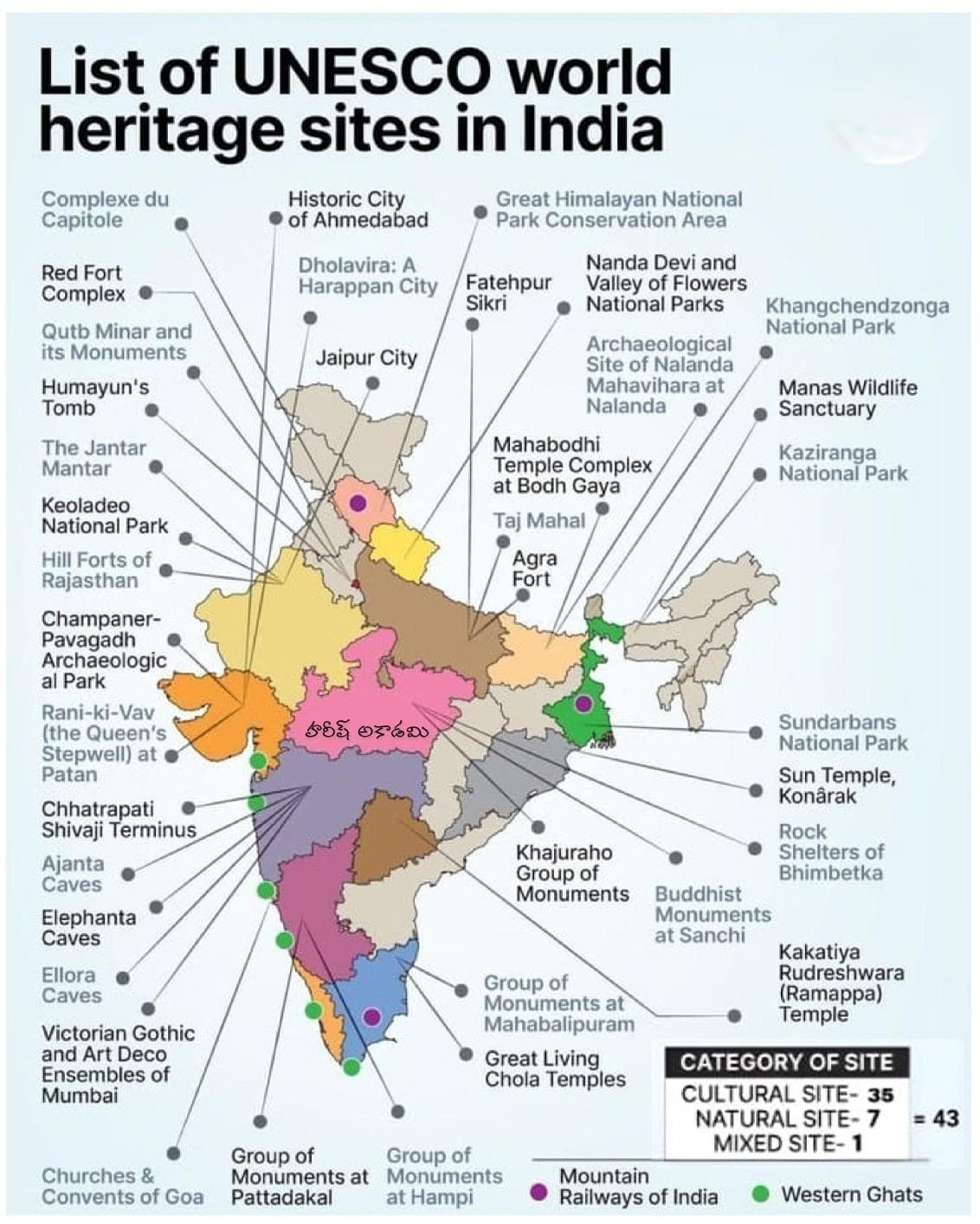
India snapshot: 43 WHS (34 C, 7 N, 2 M) plus 62 Tentative sites as on Apr 2025

Quick Facts for MCQs

International Observance

  • Origin: ICOMOS 1982 adoption, UNESCO endorsement 1983
  • Theme2025: Heritage under Threat from Disasters and Conflicts
  • IndiaMove: ASI grants free monument entry on 18 April 2025

Statistics

  • GlobalTally Oct2024: 1 223 sites – 952 cultural, 231 natural, 40 mixed
  • IndiaTally Apr2025: 43 WHS, Tentative list 62
  • AntiquityReturn: 655 artefacts brought back since 1976

Tech & Schemes

  • AdoptHeritage 2017: CSR funded maintenance via private or public partners
  • NMMA: 12.3 lakh antiquities & 11 400 heritage sites digitised
  • MustSee portal: immersive data for ~100 ASI monuments

Institutional Framework

  • Convention1972: binds State Parties to identify, protect, report on WHS
  • UNESCOCommittee: administers World Heritage Programme, decides inscriptions
  • ASI: Culture Ministry agency under AMASR Act 1958, leads survey, conservation

Key Data Points

FeatureData-Point
World Heritage Day18 April
Declared byICOMOS 1982, UNESCO 1983
2025 ThemeHeritage under Threat from Disasters & Conflicts
Global WHS count (Oct 2024)1 223 (952 C / 231 N / 40 M)
India WHS count (Apr 2025)43 (34 C / 7 N / 2 M)
India WHS Tentative List62 sites
India ratified Convention1977
Antiquities repatriated655 since 1976
Adopt a Heritage launch2017
NMMA digitised antiquities12.3 lakh
NMMA digitised sites11 400
ASI establishment1861
ASI founderAlexander Cunningham
ASI monuments managed3 698

Related UPSC Prelims PYQs

GS1 2024PYQ 1

यूनेस्को (UNESCO) द्वारा जारी विश्व धरोहर सूची में शामिल की गई निम्नलिखित संपदाओं पर विचार कीजिए :

GS1 2005PYQ 2

Consider the following statements:

GS-1HistoryQuick Bite

4.Pope Francis Obituary (Catholic Church)

Hindustan Times
Illustration for Pope Francis Obituary (Catholic Church)

What & Where

Papacy: office of the Bishop of Rome, visible head of the global Roman Catholic Church.

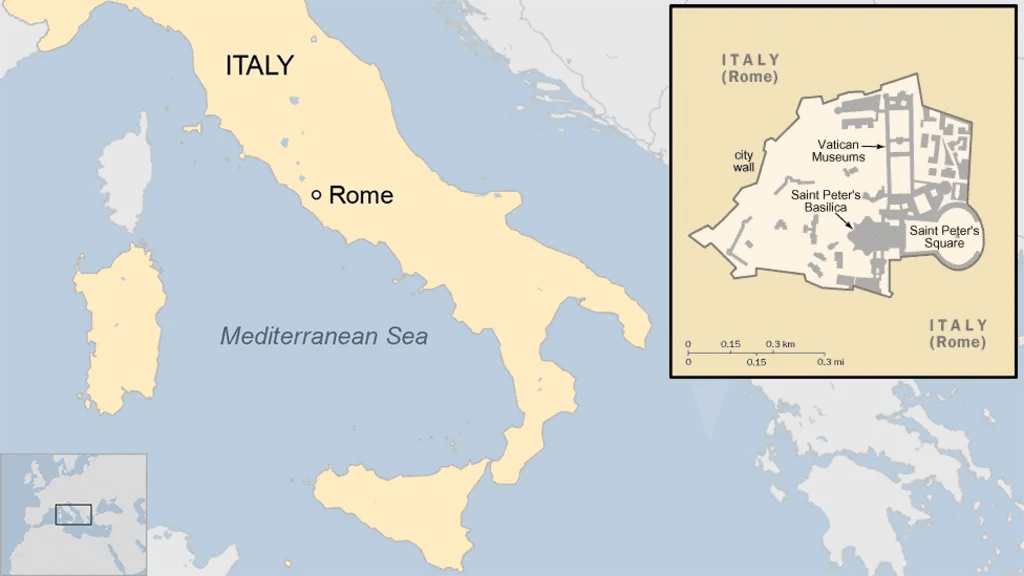
Vatican City: world’s smallest sovereign state, landlocked inside Rome; independent under the Lateran Treaty-1929.

Pope Francis (Jorge Mario Bergoglio): supreme pontiff residing in Vatican City; reported deceased.

Quick Facts for MCQs

Institutional Structure

  • Authority: Pope holds legislative, executive, judicial control within Vatican City.
  • Systems: Own postal, financial, and security services separate from Italy.
  • Visibility: Pope is visible church head; Jesus Christ regarded as invisible head.

Election Process

  • Cardinals (<80 yrs) locked in Sistine Chapel for successive ballots.
  • Two-thirds majority required; white smoke signals successful election.
  • Cardinals usually select one of their own, though any Catholic male eligible.

Economic & Administrative

  • Revenue flows from global Catholic donations, museum tickets, investment portfolios.
  • No income tax; budget managed by Prefecture for the Economic Affairs of the Holy See.
  • Vatican operates customised financial regulations, distinct from Italian banking laws.

Key Data Points

FeatureData-Point
Office namePapacy
Holder titleSupreme Pontiff / Bishop of Rome
Pope’s birth nameJorge Mario Bergoglio
Residence city-stateVatican City
Election bodyCollege of Cardinals
Voting eventSecret conclave
EligibilityAny baptized Catholic male
Independence treatyLateran Treaty 1929
Governance modelAbsolute elective monarchy
Key landmarkSt. Peter’s Basilica
Income taxNone levied
Main revenueDonations, investments, publication sales
GS-1Environment

5.Heatwaves and Impacts in India (Indian Heatwaves)

The Hindu
Illustration for Heatwaves and Impacts in India (Indian Heatwaves)

What & Where

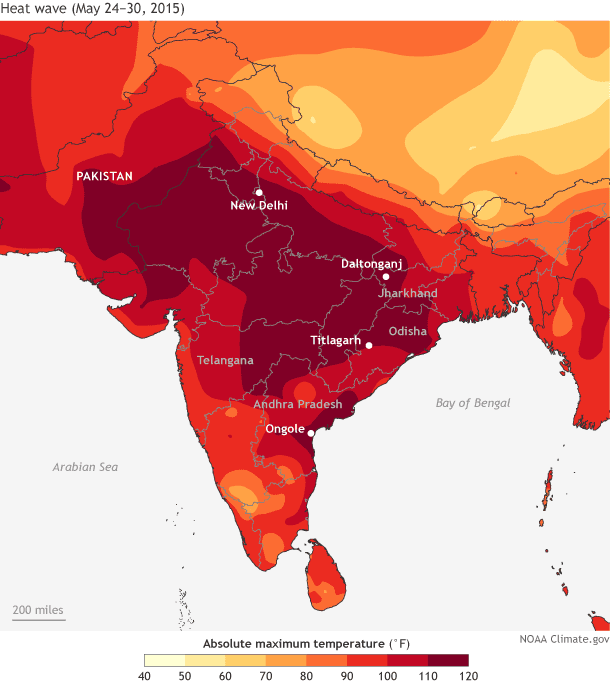
Definition: Prolonged extreme heat; Indian heatwave when max T >40 °C (plains) or >30 °C (hills)

Timing: 2025 episode began in March, 20 days earlier than 2024

Drivers: Global warming, high humidity, low wind, urban heat-island amplify severity

Quick Facts for MCQs

Health Impact

  • Heat-stress: damages kidney, liver, brain; may cause mortality
  • Vulnerabilities: elderly, women, outdoor workers face highest risk
  • Inequity: dense, low-income urban areas amplify exposure

Economic Angle

  • Productivity: crop decline, livestock deaths erode rural earnings
  • Labour loss: informal sector loses work time; 6 % hours lost 2023
  • GDP: heat stress trims 3–5 % of national output

Implementation Gaps

  • Data: incomplete morbidity-mortality statistics hinder planning
  • Infrastructure: limited cooling shelters, public water, ORS points
  • Awareness: heat-safety education remains patchy and uneven

Adaptive Measures

  • Early-warning: adopt Heat Health Alert using combined day–night temperatures
  • Urban design: scale cool roofs, green spaces, heat-resilient materials
  • Social safety: create summer shelters, wage-loss insurance for extreme heat

Key Data Points

FeatureData-Point
Plains threshold>40 °C
Hilly threshold>30 °C
2025 onset lead20 days earlier than 2024
Work-hour loss 20236 % of national hours
GDP hit estimate3–5 % annually
Key vulnerable groupElderly, women, outdoor workers
Heat Action PlansPresent but poorly executed
GS-1Environment

6.Cloudburst, Landslide and Flash Floods (Disaster Management)

Indian Express
Illustration for Cloudburst, Landslide and Flash Floods (Disaster Management)

What & Where

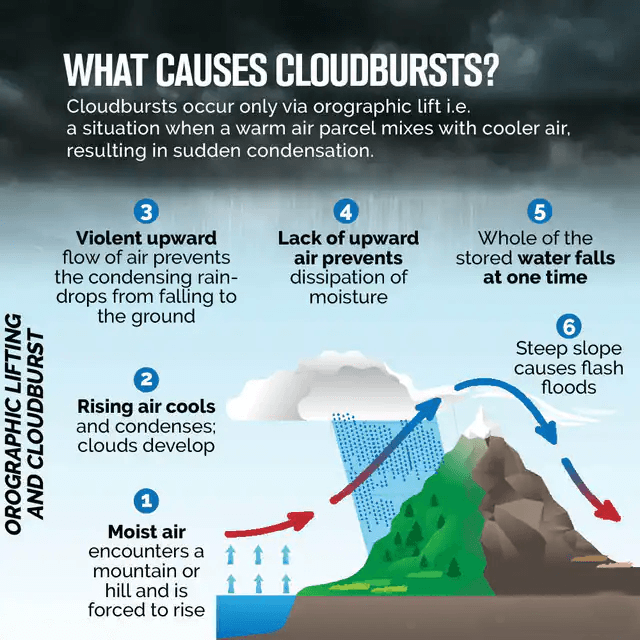
Cloudburst: >10 cm rain in <1 hr over ~10 km², frequent in Himalayan terrain, triggers flash floods/landslides.

Landslide: gravity-driven downslope movement of rock/soil; intensified by rainfall, quakes, deforestation; major in Himalayas & Western Ghats.

Flash flood: rapid (<6 hr) water-level surge after intense rain, snowmelt or dam-breach; highly localised and short-lived.

Quick Facts for MCQs

Causes

  • Orography: moist monsoon air uplifted by ranges, cooling-condensation creates burst rainfall.
  • Updraft dynamics: strong currents grow raindrops; collapse dumps water suddenly.
  • Anthropogenic: deforestation, slope cutting, concrete cover weaken terrain & amplify runoff.

Vulnerable Regions

  • Himalayas: steep relief, fractured rocks, monsoon funneling make prime cloudburst & landslide zone.
  • Western Ghats & Konkan: heavy orographic rain, lateritic soils prone to slips.
  • Urban basins: Mumbai, Srinagar experience flash floods due to drainage choke and sea-level constraints.

Recent Events

  • 2024 Himachal cloudbursts: fatal floods, highway damage.
  • 2021 Chamoli glacier-linked landslide: flash flood, hydropower loss.
  • 2005 Mumbai deluge: 944 mm in 24 hr, classic urban flash-flood case.

Key Data Points

FeatureData-Point
Cloudburst rain rate>100 mm hr⁻¹
Typical affected area≈10 km²
Himalayan rainfall burstup to 75 mm hr⁻¹ on monsoon arrival
Flash-flood onset windowWithin 6 hours of trigger
India landslide-prone zone0.42 million km² (12.6 % land)
Key landslide beltsNE & NW Himalaya, Western Ghats, Konkan, Eastern Ghats
Recent Ramban hazardsCloudburst, landslide, flash flood combo
Urbanisation impactImpervious surfaces ↑ runoff, ↑ flood risk

Related UPSC Prelims PYQs

NDA_GAT 2022PYQ 1

The deluge affected the population.

NDA_GAT 2022PYQ 2

Consider the following features about a geographical phenomenon:

GS-1Mapping

7.Syria Geographic Overview (West Asia Geography)

The Hindu

What & Where

Syria — South-west Asian state on the eastern Mediterranean; capital Damascus; borders Turkey, Iraq, Jordan, Israel, Lebanon.

Latakia port got first wheat cargo since Dec 2024 regime change, marking restart of vital grain imports.

Landscape: narrow coastal plain, Al-Anṣariyyah Mountains, Euphrates & Orontes valleys, expansive Syrian Desert.

Quick Facts for MCQs

Physical Geography

  • Al-Anṣariyyah chain shields coast; creates humid strip supporting citrus, olive cultivation.
  • Syrian Desert occupies southeast; sparse settlement, hosts phosphate and oil deposits.
  • Interior ranges — Al-Durūz, Abū Rujmayn, Bishrī — break plateau monotony, influence road alignments.

Hydrography

  • Euphrates dams supply irrigation, hydropower; Lake Al-Asad crucial for Raqqa agriculture.
  • Orontes irrigates Ghāb Depression; historic battleground for water rights with Turkey.
  • Yarmouk tributaries feed Jordan River basin, subject to tri-state water accords.

Food Security & Economy

  • Wheat import via Latakia aims to stabilise bread subsidies and curb post-war inflation.
  • Port rehabilitation expected to revive coastal trade, boost foreign exchange inflow.

Key Data Points

FeatureData-Point
CapitalDamascus
Key seaportLatakia (Mediterranean)
Neighbouring countriesTurkey, Iraq, Jordan, Israel, Lebanon
Highest pointAl-Anṣariyyah Mts ≈ 1,562 m
Principal riverEuphrates; forms Lake Al-Asad
Northward riverOrontes; drains to Mediterranean
Border riverYarmouk; Syria–Jordan boundary
Largest seasonal salt lakeAl-Jabbūl
Major desertSyrian Desert (rocky, gravelly)

Related UPSC Prelims PYQs

GS1 2015PYQ 1

Which one of the following countries of South-West Asia does not open out to the Mediterranean Sea?

GS-3S&T

9.CROP Satellite Crop Monitoring (Remote Sensing)

The Hindu

What & Where

Framework: CROP is a semi-automated satellite system tracking crop sowing-to-harvest in near real time

Developer: National Remote Sensing Centre, ISRO; operative across eight major wheat-growing States

Data mix: Optical + SAR feeds from EOS-04, EOS-06, Resourcesat-2A, analysed at 5 × 5 km grid

Quick Facts for MCQs

Tech & Schemes

  • Multi-source fusion merges optical EOS-06 chlorophyll with SAR EOS-04 backscatter for cloud-independent monitoring
  • Crop-growth models ingest sowing date, acreage, weather to refine district-level yield estimates
  • Dashboard interface ready for extension to rice, pulses and horticulture crops

Food Security

  • Early yield numbers let FCI plan procurement, buffer stock and export-import decisions months ahead
  • Robust acreage data supports accurate MSP fixation and PDS grain allocation

Disaster Management

  • Frequent satellite revisits enable rapid drought, flood, pest impact mapping on standing wheat
  • Geotagged outputs streamline relief targeting and crop-insurance claim validation

Key Data Points

FeatureData-Point
Full formComprehensive Remote Sensing Observation on Crop Progress
Parent bodyNRSC-ISRO
First wheat forecast122.724 million tonnes (Rabi 2024-25)
Geographic scope8 major wheat States; ≈8 lakh ha mapped
Core satellitesEOS-04 (RISAT-1A), EOS-06 (Oceansat-3), Resourcesat-2A
Spatial resolution5 km × 5 km grid
Analysis natureNear real-time, semi-automated
Key usersMinistry of Agriculture, FCI, disaster agencies

Related UPSC Prelims PYQs

GS1 2010PYQ 1

An objective of the National Food Security Mission is to increase the production of certain crops through area expansion and productivity enhancement in a sustainable manner in the identified districts of the country. What are those crops?

GS1 2015PYQ 2

निम्नलिखित में से किन कार्यकलापों में भारतीय दूर संवेदी (IRS) उपग्रह का प्रयोग किया जाता है?

GS-3S&T

10.Perovskite Solar Recycling Method (Solar Cell Recycling)

The Hindu
Illustration for Perovskite Solar Recycling Method (Solar Cell Recycling)

What & Where

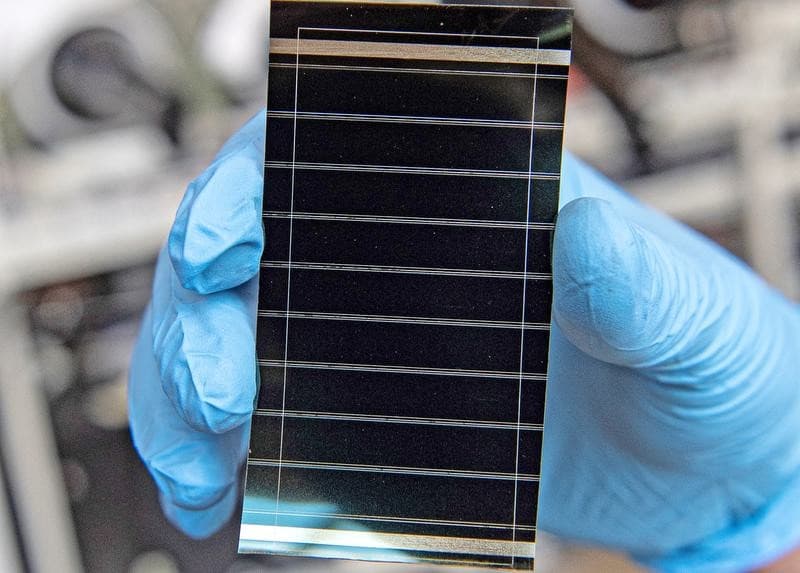
Perovskite solar cells: lead-based photovoltaic devices noted for rapid efficiency gains, flexibility and low-cost fabrication.

New method: water solution with sodium acetate, sodium iodide, hypophosphorous acid recycles spent perovskite layers.

Output: ≈99 % material recovery and near-original efficiency sustained through five reuse cycles.

Quick Facts for MCQs

Tech & Schemes

  • Process removes lead by acetate complexation; iodide and acid re-form pristine perovskite crystals.
  • Entire operation water-based, eliminating hazardous organic solvents.
  • Method compatible with scalable thin-film device manufacturing lines.

Environmental Impact

  • Lead capture prevents soil-water contamination during panel disposal.
  • Water-only workflow cuts greenhouse and volatile organic emissions from recycling facilities.

Circular Economy

  • High recovery enables closed-loop supply, slashing raw material demand.
  • Efficiency retention maintains device value, improving investor confidence in commercial roll-out.

Key Data Points

FeatureData-Point
Recovery rate~99 % of perovskite materials
Efficiency after 5 cyclesAlmost unchanged from original
Key dissolving agentSodium acetate in water
Crystal-regenerating additivesSodium iodide + hypophosphorous acid
Toxic solvent avoidedDimethylformamide (DMF)
Core toxicity issueLead content in perovskites
Main advantagesLightweight, low-cost, high efficiency
GS-3S&T

11.Angstrom-Scale Chip Development (Advanced Semiconductors)

Times of India
Illustration for Angstrom-Scale Chip Development (Advanced Semiconductors)

What & Where

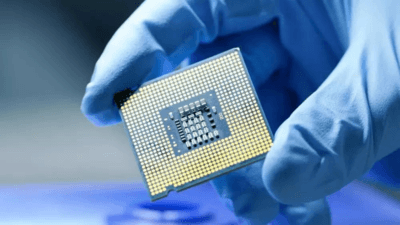
Angstrom-scale chips = semiconductor devices engineered at ~1 Å (0.1 nm), one-tenth size of today’s 3 nm nodes.

Process uses atom-thick 2D materials (graphene, Transition-Metal Dichalcogenides) enabling ultra-dense, low-power circuits.

Geography: Concept DPR filed by IISc Bengaluru to Principal Scientific Adviser & MeitY, India.

Quick Facts for MCQs

Tech & Schemes

  • DPR aims national capability in post-silicon chips, projecting India as next-gen fabrication hub.
  • Strategy includes heterogeneous integration of 2D layers onto traditional CMOS platforms.
  • Alignment with Digital India Semiconductor Mission for indigenous design-to-manufacture stack.

Materials & Properties

  • Graphene delivers high carrier mobility, enabling high-speed switching at atomic thickness.
  • TMDs provide intrinsic bandgap, supporting logic transistor operation absent in pure graphene.
  • Both offer mechanical flexibility and thermal resilience, critical for wearables and harsh-environment electronics.

Applications

  • Flexible electronics for biomedical wearables and foldable displays leverage bendable atom-scale layers.
  • Quantum computing circuits benefit from reduced decoherence due to atomically flat interfaces.
  • AI accelerators and 6G radios gain from dense, low-latency interconnects via heterogeneous chiplet stacking.

Key Data Points

FeatureData-Point
One angstrom0.1 nanometre
Benchmarked node~0.3 nm vs existing 3 nm
Lead institutionIndian Institute of Science, Bengaluru
Core 2D materialsGraphene, Transition Metal Dichalcogenides
Key propertiesHigh conductivity, flexibility, thermal stability
Govt recipientsPSA Office & MeitY
Target sectorsAI, 5G/6G, space, quantum, wearables
Power advantageLower consumption than silicon nanometre nodes

Related UPSC Prelims PYQs

CDS_GK, GS1 2012PYQ 1

Graphene is frequently in news recently. What is its importance?

CDS_GK, GS1 2025PYQ 2

Which one of the following is not a property of 'graphene'?

GS-3S&T

12.Stellite Nozzle for PSLV (Rocket Engine Materials)

News on Air
Illustration for Stellite Nozzle for PSLV (Rocket Engine Materials)

What & Where

Divergent nozzle – flared exit of rocket engine accelerating exhaust for thrust and vector control

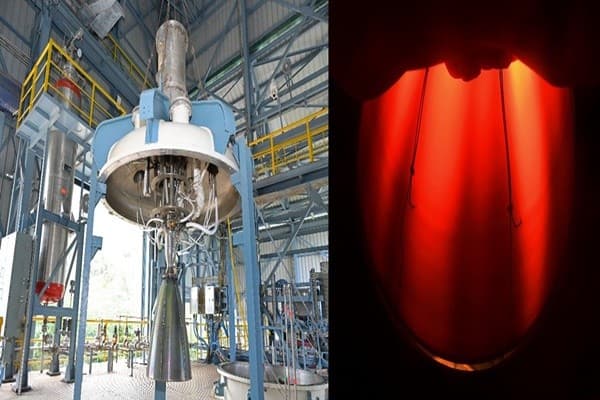
New Stellite (KC20WN) nozzle for PSLV-C4 fourth stage, developed at ISRO Propulsion Complex Mahendragiri

Replaces imported Columbium (C103) alloy, enhancing India’s launcher self-reliance

Quick Facts for MCQs

Tech & Schemes

  • Composition: cobalt base enriched with chromium, nickel, tungsten, iron for high-temperature strength
  • Manufacturing: fully indigenous fabrication and hot-fire qualification at ISRO test stands
  • Future scope: adoption in other launch vehicles and satellite propulsion modules

Economic Angle

  • Import substitution slashes foreign exchange outgo for rare Columbium metal
  • Lower cost enables higher launch cadence and competitive pricing of PSLV missions

Strategic Importance

  • Indigenous alloy strengthens aerospace supply chain resilience against export restrictions
  • Achievement aligns with Make in India and boosts confidence for deep-space mission hardware

Key Data Points

FeatureData-Point
Max operating temperature> 1100 °C
Old alloyColumbium (C103)
New alloyStellite KC20WN (Co-Cr-Ni-W-Fe)
Cost saving~ 90 % vs C103 nozzle
Development agencyISRO Propulsion Complex, Mahendragiri
Application stagePSLV fourth stage
Key stresses handledExtreme thermal & mechanical
Strategic goalAtmanirbhar Bharat in space hardware
GS-3S&T

13.DSLIG Solar Desalination (Desalination Tech)

The Hindu

What & Where

Dual-Sided Superhydrophobic Laser-Induced Graphene (DSLIG) evaporator: IIT-Bombay desalination device combining solar and Joule heating.

Two chief desalination routes: Thermal evaporation & Membrane-based Reverse Osmosis; both strip dissolved salts from sea/brackish water.

India’s first Low-Temperature Thermal Desalination plant: Kavaratti, Lakshadweep (NIOT).

Quick Facts for MCQs

Tech & Materials

  • PVDF confers hydrophobicity; PES supplies mechanical rigidity.
  • Laser scribing converts surface to photothermal graphene, boosting heat localisation.
  • Salt-repellent texture maintains high evaporation rates over extended cycles.

Environmental Impact

  • Low-carbon energy mix curbs greenhouse emissions versus conventional desalters.
  • Reduced brine discharge mitigates coastal ecological stress.
  • Aligns with SDG-6 (Clean Water) and SDG-13 (Climate Action).

Indian Context

  • NIOT runs five LTTD units across Lakshadweep; each ~1 lakh L/day capacity.
  • UPSC 2008 asked: first LTTD site — Kavaratti, Lakshadweep.
  • DSLIG adds to India’s indigenous water-technology portfolio alongside RO and LTTD.

Key Data Points

FeatureData-Point
DeveloperIIT Bombay scientists
Heating modesSolar irradiation + Joule electric
Surface natureLotus-like superhydrophobic, salt-repellent
Core materialPVDF + PES polymers, laser-written graphene
Key advantageWorks even under low sunlight
Primary outputPotable water from seawater/effluents
Carbon profileLow; supports green-tech goals

Related UPSC Prelims PYQs

CAPF_GAI, GS1 2021PYQ 1

Scientists at CSIR-NCL Pune, with support from the Water Technology Initiative of the Department of Science and Technology (DST), Government of India, have recently developed a novel hybrid technology to bring safe and healthy drinking water. What is the name of the hybrid technology?

CAPF_GAI, GS1 2008PYQ 2

Where was the first desalination plant in India to produce one lakh litres freshwater per day based on low temperature thermal desalination principle commissioned?

GS-3S&T

14.Intermediate-Mass Black Hole Discovery (Gravitational Waves)

Indian Express
Illustration for Intermediate-Mass Black Hole Discovery (Gravitational Waves)

What & Where

Gravitational-wave signal GW190521 from two merging black holes detected by LIGO-USA and Virgo-Italy

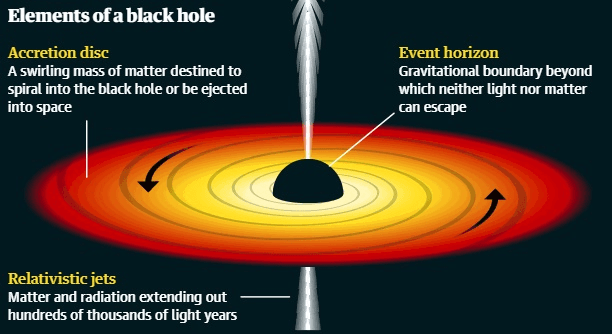
Event produced first observed intermediate-mass black hole bridging stellar and supermassive categories

Origin ≈17 billion light-years away when universe was about half its present age

Quick Facts for MCQs

Astrophysical Significance

  • Intermediate-mass category fills gap between stellar (<100 M☉) and supermassive (>10⁵ M☉) black holes
  • Presence inside pair-instability gap implies hierarchical mergers not direct stellar collapse
  • Strongest strain yet recorded improving constraints on black-hole population models

Detection Technology

  • LIGO uses 4 km laser interferometers sensing spacetime strain ~10⁻²¹
  • Virgo adds triangulation boosting sky-localisation accuracy for event sources
  • Energy release 8 M☉ ≈ 10⁴⁹ Joules detectable across cosmic distance

Black Hole Basics

  • Black hole gravity prevents light escape; concept Einstein 1915, term Wheeler 1960s
  • Stellar-mass black holes from core-collapse supernovae; supermassive ones in galactic centres
  • Solar mass standard unit 1.989 × 10³⁰ kg ≈ 333 000 Earth masses

Key Data Points

FeatureData-Point
Signal designationGW190521
Detecting facilitiesLIGO (Hanford & Livingston), Virgo (Cascina)
Event duration< 0.1 second
Luminosity distance≈ 17 billion light-years
Pre-merger masses85 M☉ and 66 M☉
Post-merger mass142 M☉
Energy radiated≈ 8 M☉ as G-waves
Pair-instability gap65 – 120 M☉
Detection year2019 (published 2020)
Solar mass value1.989 × 10³⁰ kg

Related UPSC Prelims PYQs

GS1 2019PYQ 1

Recently, scientists observed the merger of giant 'blackholes' billions of light-years away from the Earth. What is the significance of this observation?

Ready to practice?

Test your knowledge with our UPSC test series.

Start Free Trial