UPSC Current Affairs

16 topicsGS-1: 3GS-2: 3GS-3: 10
0/16 done
GS-2Polity

1.Article 142 Judicial Powers Debate (Article 142)

DD News

What & Where

Article 142: empowers Supreme Court to issue any decree/order “necessary for complete justice” in cases before it.

Clause 1 allows enforceable directions; Clause 2 covers attendance, evidence seizure, contempt across India.

2024: invoked to treat 11 pending Tamil Nadu bills as passed, sidestepping Governor/President assent.

Quick Facts for MCQs

Legal & Policy

  • Invocation bypassed Governor assent under Articles 200-201, directly validating 11 state bills.
  • Provision supplements Articles 32 & 136, plugging legal gaps without statutory amendment.
  • Decrees carry civil-court enforceability, binding all authorities across India.

Separation of Powers

  • Critics warn judiciary acting quasi-legislative, weakening democratic accountability mechanisms.
  • Overuse risks upsetting federal balance by overruling state and Union executives.
  • Supporters cite case-specific relief safeguarding rights when other organs fail.

Way Forward

  • Recommendation: codify judicial protocol restricting Article 142 to truly extraordinary scenarios.
  • Call for quicker executive assent workflows to pre-empt courtroom governance.
  • Proposal: Parliament enact clarifying statute to reinforce institutional checks and balances.

Key Data Points

FeatureData-Point
Constitutional Article142
LocationPart V, Chapter IV (Union Judiciary)
Clause 1 PowerComplete-justice decrees/orders
Clause 2 PowerAttendance, document production, contempt
Landmark early useUnion Carbide Bhopal gas, 1989
Recent flashpointTamil Nadu assent delay, 2024
NaturePlenary, residuary, binding nationwide

Related UPSC Prelims PYQs

GS1 2019PYQ 1

With reference to the Constitution of India, prohibitions or limitations or provisions contained in ordinary laws cannot act as prohibitions or limitations on the constitutional powers under Article 142. It could mean which one of the following?

GS1 2003PYQ 2

Under which Article of the Indian Constitution did the President make a reference to the Supreme Court to seek the Court’s opinion on the constitutional validity of the Election Commission’s decision on deferring the Gujarat Assembly elections (in the year 2002)?
GS-2Polity

2.India Justice Report 2025 Findings (India Justice Report)

The Hindu

What & Where

National ranking India Justice Report (IJR) periodically measures state capacity to deliver justice

Evaluation spans four pillars—Police, Prisons, Judiciary, Legal Aid & SHRCs—across five parameters: HR, infrastructure, budgets, workload, diversity

Coverage includes all Indian states, grouped as large/mid (>1 crore) and small (<1 crore) for fair comparison

Quick Facts for MCQs

Rankings

  • Top states large/mid Karnataka first, Andhra Pradesh second, Telangana third
  • Sikkim leads small states, Bihar Chhattisgarh Odisha register biggest improvements

Gender & Diversity

  • Women only 8 % police officers, <1 000 of 4 940 senior IPS posts
  • 78 % police stations now equipped with Women Help Desks

Resource Gaps

  • Judge density 15 per million versus recommended 50
  • High Court vacancies 33 %, district courts 21 % limiting case disposal

Prison Conditions

  • Occupancy 131 %, under-trials 76 %; projected 1.65 lakh excess inmates by 2030
  • Doctor-inmate ratio 1:775 far below benchmark 1:300

Budget Trends

  • Judiciary allocation ₹182 per capita; no state crosses 1 % of budget
  • Legal aid spend ₹6 per head; PLVs reduced 38 %, only 3 per lakh population

Key Data Points

FeatureData-Point
Report edition2025
Assessment pillarsPolice, Prisons, Judiciary, Legal Aid & SHRCs
Core parametersHR, Infrastructure, Budget, Workload, Diversity
Top large/mid states1 Karnataka 2 Andhra Pradesh 3 Telangana
Top small stateSikkim
Judge density15 per million (norm 50)
High Court vacancy33 %
District court vacancy21 %
Police per lakh population120 (UN norm 222)
Police officer shortfall28 %
Women police officers8 % of cadre
Per-capita police spend₹1,275
Prison occupancy131 %
Under-trial share76 % prisoners
Doctor–inmate ratio1:775 (norm 1:300)
Per-capita judiciary spend₹182
Per-capita legal aid spend₹6
Paralegal volunteers3 per lakh; 38 % fall in 5 yrs
GS-3Editorial

3.Ethanol Production Sustainability Challenges (Ethanol Blending)

The Hindu
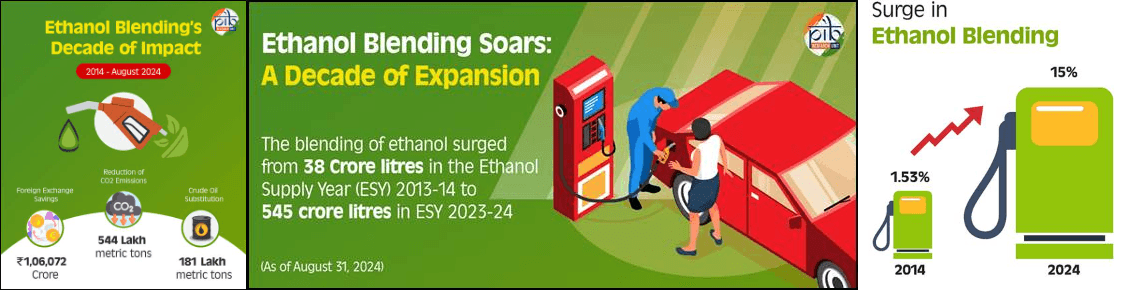
Illustration for Ethanol Production Sustainability Challenges (Ethanol Blending)

What & Where

Ethanol— clear, colorless biofuel alcohol; higher octane; produced by fermentation or ethylene hydration

Feedstocks— Indian production mainly from sugarcane molasses; maize, rice, wheat, biomass increasingly tapped

Geography— EBP nationwide; major producing states Maharashtra, Uttar Pradesh, Karnataka

Quick Facts for MCQs

Legal & Policy

  • Policy2022— advances E20 target to 2025-26; envisages 30 % blend by 2030
  • EBP— nationwide since 2003; mandatory 5 % start, now 20 % achieved March 2025
  • JI-VAN— incentivizes 2G/3G ethanol via Viability Gap Funding

Environmental Impact

  • Water— 8-12 L water per 1 L ethanol; drip irrigation cuts 40 % usage in Maharashtra trials
  • Emissions— plants emit acetaldehyde, formaldehyde; only modest CO₂ savings towards Net-Zero 2070
  • Land— E20 needs 7.1 M ha feedstock; maize ethanol 187 ha equals 1 ha solar energy

Economic Angle

  • Forex— ₹1.06 lakh cr saved via crude import substitution; 181 lakh t crude replaced
  • Prices— retail rice rose 14.51 % in 2023 from feedstock diversion pressure
  • Sugar— diversion rising to 35 lakh t in 2024-25, boosting mill revenues

Tech & Schemes

  • 3G-Ethanol— microalgae feedstock using wastewater; reduces food, freshwater stress
  • ZLD— mandated recycling at plants; Balrampur Chini cut water use 60 %
  • Circular— byproducts reused for animal feed, biogas under National Bio-Energy Programme

Key Data Points

FeatureData-Point
Sugar diverted to ethanol 2024-2535 lakh tonnes (est.)
Sugar diverted 2023-2421.5 lakh tonnes
Current blend ratio (Mar 2025)20 %
Initial EBP blend (2003)5 %
Target blend 2025-2620 %
Target blend 203030 %
Production capacity 20241,600 crore litres
Forex saved₹1.06 lakh crore
CO₂ avoided544 lakh metric t
Land needed for E207.1 million ha

Related UPSC Prelims PYQs

ESE_GS, GS1 2024PYQ 1

Consider the following statements about ethanol:

ESE_GS, GS1 2009PYQ 2

In the context of alternative sources of energy, ethanol as a viable bio-fuel can be obtained from

GS-3Economy

4.Bhagwa Pomegranate Sea Export (Agricultural Exports)

PIB
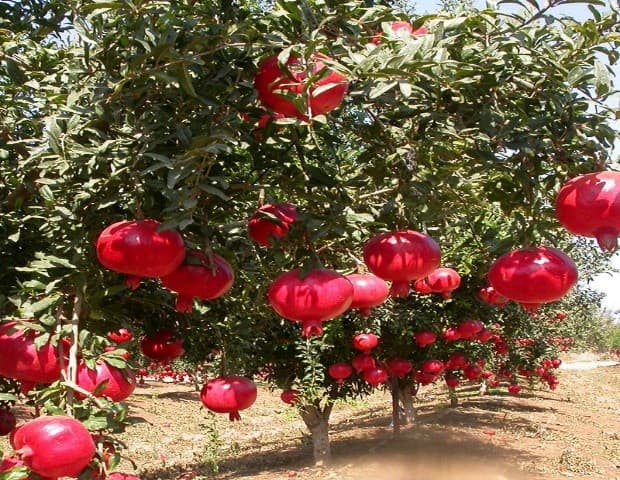
Illustration for Bhagwa Pomegranate Sea Export (Agricultural Exports)

What & Where

First commercial sea shipment of Bhagwa pomegranates sailed Navi Mumbai–New York, March 2024

Bhagwa: deep-red arils, superior taste, high antioxidants, trial shelf life 60 days

Export enabled by APEDA, Kay Bee Exports farms, irradiation treatment, refrigerated sea freight

Quick Facts for MCQs

Economic Angle

  • MarketAccess to premium US retail boosts farmer incomes, diversifies export basket
  • SeaFreight cuts cost vs air, enhancing price competitiveness and scalability
  • ShelfLife extension enables longer distribution cycles, lowers spoilage losses

Tech & Schemes

  • IrradiationTreatment meets US phytosanitary norms, eliminates quarantine pests
  • APEDAAssistance funds packaging, marketing, infrastructure for fresh-produce exporters
  • PreClearance programmes speed inspection, reduce border delays

Legal & Policy

  • APEDAStatutory body under APEDA Act 1985 for agricultural export development
  • Powers include exporter registration, quality standards, export surveys, training
  • Promotes sustainability in export-oriented production per national trade policy

Key Data Points

FeatureData-Point
Commodity exportedBhagwa pomegranate
Origin stateMaharashtra
Processing siteAPEDA irradiation facility, Navi Mumbai
Transport modeCommercial sea freight
Arrival regionU.S. East Coast (New York)
Trial shelf lifeUp to 60 days
APEDA Act year1985 (operational 13 Feb 1986)
APEDA headquartersNew Delhi
Administrative ministryCommerce & Industry
Core APEDA mandateRegister exporters, fix quality, promote agri exports
GS-3Economy

5.Decarbonising India’s Logistics Network (Green Logistics)

The Hindu

What & Where

Decarbonisation: cutting CO₂ via renewables, electrification, low-carbon fuels across sectors

Focus Area: Indian logistics—road, rail, waterways, warehouses—under Viksit Bharat 2047 & net-zero 2070

Pilot Geography: Delhi-Jaipur e-highway, inland waterways, future freight corridors

Quick Facts for MCQs

Emission Profile

  • Dominance: Road freight major emitter, warehouses add energy-intensive load
  • Modal Gap: Inland shipping, rail underutilised limiting low-carbon shift

Challenges

  • Investment: High capex for e-trucks, overhead wires, charging nodes
  • Technology: Maritime LNG/ammonia adoption faces scale & safety hurdles
  • Infrastructure: Limited renewable integration in conventional warehouses

Tech & Schemes

  • E-Highways: Overhead catenary lines trialed Delhi-Jaipur for heavy trucks
  • Green Vessels: Push for LNG ships, solar-assisted boats on inland waterways
  • Renewable Warehousing: Solar, wind, geothermal retrofits promoted through incentives

Policy & Incentives

  • Rail Boost: Expand electrified freight corridors to raise modal share
  • Fiscal Nudges: Subsidies, tax breaks for green logistics R&D and deployment
  • Integrated Strategy: Cross-sector decarbonisation roadmap aligning transport, energy, trade

Key Data Points

FeatureData-Point
Logistics share in India’s GHG13.5 %
Road transport share within logistics CO₂88 %
Trucks’ CO₂ contribution (global road freight)38 % (IEA 2023)
Passenger movement by road (India)≈ 90 %
Freight moved by road (India)≈ 70 %
Target year for Indian net-zero2070
Vision plan covering logisticsViksit Bharat 2047
Rail freight share goal (China benchmark)~50 %
Key pilotDelhi-Jaipur electric highway
Clean maritime fuels eyedLNG, ammonia, hydrogen

Related UPSC Prelims PYQs

CAPF_GAI, ESE_GS 2022PYQ 1

Consider the following statements regarding Forum for Decarbonizing Transport:

CAPF_GAI, ESE_GS 2025PYQ 2

India’s key climate targets include

GS-1HistoryQuick Bite

6.Golconda Blue Diamond Auction (Golconda Diamonds)

Times of India

What & Where

Golconda Blue = 23.24-carat rich-blue diamond, colour grade signifying exceptional purity & saturation.

Mined in historic Golconda diamond fields, present-day Telangana, famed for legendary gems.

Currently headed for international auction, highlighting India’s royal gem legacy.

Quick Facts for MCQs

Royal Lineage

  • Ownership: Passed Indore Holkar ruler → American jeweller → Baroda Gaekwad dynasty.
  • Provenance: Royal history boosts collectability and auction premiums.
  • Tavernier: Documented Mughal & Golconda gems, linking stone to early modern narratives.

Golconda Mines

  • Location: On Krishna river belt; flourished under Qutb Shahi sultans.
  • Output: Source of world-renowned Koh-i-Noor, Hope and Darya-i-Noor diamonds.
  • Quality: Produces nitrogen-free, optically superior Type II diamonds.

Global Gem Trade

  • Auction: Blue diamonds among highest per-carat prices worldwide.
  • Market: Supply scarcity and royal provenance heighten investment demand.
  • Certification: Colour grading ensures transparency for collectors and insurers.

Key Data Points

FeatureData-Point
Carat weight23.24 ct
Colour typeRich/Deep Blue (high saturation)
Geological classType IIb Golconda diamond
Mine locationGolconda region, Telangana, India
Early royal ownerMaharaja Yeshwant Rao Holkar II, Indore
Later royal ownerMaharaja of Baroda
Famous peer gemsKoh-i-Noor, Hope Diamond, Darya-i-Noor
Key chroniclerJean-Baptiste Tavernier (17th-century French merchant)
Auction year2025 (scheduled)
GS-1HistoryQuick Bite

7.Poila Boishakh Bengali New Year (Bengali New Year)

PIB

What & Where

Poila Boishakh = first day of Baisakh in Bengali lunisolar calendar; marks Bengali New Year.

Celebrated 14–15 April in West Bengal, Tripura, Assam and Bangladesh.

Calendar credited to King Shoshangko, c. 594 CE.

Quick Facts for MCQs

Cultural Spread

  • Percentage: Over 50 % Indians use Baisakh-based New Year, 35–40 % use Chaitra Shukla Pratipada.
  • States list: Punjab, Bengal, Assam, Tamil Nadu, Kerala, Odisha, Bihar mark New Year in Baisakh.
  • Diaspora: Bangladesh adopts Poila Boishakh as national cultural event.

Comparative Festivals

  • Chaitra-based: Gudi Padwa, Ugadi, Cheti Chand, Nowroz, Thapna.
  • Baisakh-based: Baisakhi, Rongali Bihu, Puthandu, Vishu, Pana Sankranti, Jude Sheetal.
  • Agricultural link: Deccan observes harvest earlier than northern Baisakhi.

Historical Origin

  • Shoshangko’s reform: Syncretic solar-lunar system aligned tax collection with harvest.
  • Continuity: Calendar still guides Bengali business ledger opening (Haalkhata).
  • Evolution: Mughal-era adaptations added lunar calculations for Islamic revenue cycles.

Key Data Points

FeatureData-Point
Calendar typeBengali lunisolar
Typical date14th or 15th April
Inception rulerKing Shoshangko (~594 CE)
Core regionsWest Bengal, Tripura, Assam, Bangladesh
Festival natureHarvest & New Year
Related monthBaisakh (Vaishakha)
PM greetings year2025
GS-1Mapping

8.Kailash Mansarovar Pilgrimage Routes (Pilgrimage Route)

Indian Express

What & Where

Pilgrimage Kailash Mansarovar Yatra to Mount Kailash 6638 m and Lake Mansarovar 4600 m in Tibet Autonomous Region

Geography Ngari Prefecture near India–Nepal–China tri-junction accessed via Lipulekh (Uttarakhand), Nathu La (Sikkim) and Nepalgunj route

Resumption slated 2025 after four-year halt owing to COVID-19 and border tensions

Quick Facts for MCQs

Religious Significance

  • Shiva Abode belief central for Hindu pilgrims performing parikrama
  • Buddhists view Kailash as sacred cosmic axis
  • Jains and Bon regard mountain and lake as scriptural landmarks

Routes & Access

  • Lipulekh Route via Pithoragarh Uttarakhand involves high-altitude Himalayan trekking
  • Nathu La Route Sikkim motorable till Tibetan town easing travel for seniors
  • Nepalgunj–Hilsa corridor offers alternative avoiding Indian passes

Strategic Dimension

  • Yatra boosts people-to-people contact strengthening India–China cultural diplomacy
  • Resumption after COVID-19 and Ladakh standoff signals cautious thaw
  • Infrastructure upgrades on Indian approach routes aid security and local economy

Key Data Points

FeatureData-Point
Elevation Lake4,600 m
Elevation Mount6,638 m
Admin regionNgari Prefecture, TAR (China)
Upcoming Yatra year2025
Last held2019
Main Indian routesLipulekh Pass, Nathu La Pass
Nepal access routeNepalgunj–Hilsa corridor
Associated faithsHindu, Buddhist, Jain, Bon
GS-3Environment

9.Gandhi Sagar Wildlife Sanctuary (Wildlife Sanctuary)

NDTV

What & Where

Sanctuary: 62 sq km dry-deciduous reserve, declared 1974, NW Madhya Pradesh on MP-Rajasthan border, Khathiar-Gir ecoregion.

Geography: Chambal River splits west Neemuch & east Mandsaur blocks, creating mixed terrestrial-aquatic habitats.

Cheetah plan: Second Indian release site; two South-African males shifting from Kuno National Park.

Quick Facts for MCQs

Flora

  • Dominance Khair, Salai, Kardhai, Dhawda, Tendu, Palash enhancing dry-deciduous character
  • Forest-types include dry mixed deciduous and dry scrub mosaics

Fauna

  • Herbivores Chinkara, Nilgai, Spotted deer maintain prey base
  • Carnivores Indian leopard, striped hyena, jackal indicate apex presence
  • Aquatic life hosts Mugger crocodile, otters, diverse fishes, turtles

Conservation Move

  • Relocation Two South-African males Prabhas & Pavak transferred under Project Cheetah phase-II
  • Significance GSWS becomes national backup habitat mitigating Kuno overcrowding risk

Hydrology & Landscape

  • Chambal creates ravines, gorges supporting cliff-nesting birds, riparian vegetation
  • Riverine corridor boosts sanctuary’s biodiversity and cross-district connectivity

Key Data Points

FeatureData-Point
Year notified1974
Expansion year1983
Area62 sq km
Main riverChambal
Forest typeNorthern tropical dry deciduous
BiomeKhathiar-Gir dry deciduous forests
IBA tag byBirdLife International
DistrictsNeemuch (W), Mandsaur (E)
New species moveAfrican cheetah (Prabhas, Pavak)
India cheetah sites1) Kuno NP 2) Gandhi Sagar WLS

Related UPSC Prelims PYQs

CDS_GK, GS1 2023PYQ 1

Cheetahs, brought from Namibia, were introduced in India to which one of the following National Parks?

CDS_GK, GS1 2017PYQ 2

Recently there was a proposal to translocate some of the lions from their natural habitat in Gujarat to which one of the following sites?

GS-3Environment

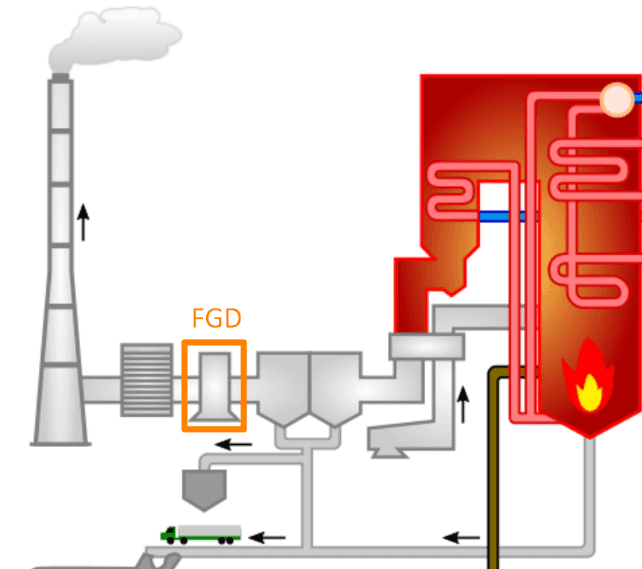
10.Flue Gas Desulphurisation Mandate Review (FGD Standards)

The Hindu
Illustration for Flue Gas Desulphurisation Mandate Review (FGD Standards)

What & Where

Definition: Flue Gas Desulphurisation removes SO₂ from coal‐plant exhaust using alkaline reagents before release.

Key types: Dry Sorbent Injection; Wet Limestone scrubber; Seawater absorption (70–95 % SO₂ cut).

Geography: India’s 537 coal units were mandated (2015) to fit FGD; rollback urged except for imported or >0.5 %-S coal.

Quick Facts for MCQs

Legal & Policy

  • Mandate: 2015 FGD requirement; 2022 notice adds escalating per-kWh penalties for delay.
  • Recommendation: PSA-commissioned study seeks rollback, retain FGD only for high-sulphur or imported coal plants.
  • Timeline: Original 2018 deadline repeatedly extended; 230 units ordered FGD, 260 yet to place orders.

Economic Angle

  • Burden: Retrofitting 218 GW current capacity ⇒ ₹2.6 lakh crore outlay, rising with 283 GW projected by 2032.
  • Penalties: Charge rate grows with years of non-compliance, directly hits generation cost.
  • Alternative: ESP solution far cheaper, targets India-specific high-ash particulate pollution.

Environmental Impact

  • Dispersion: Tall stacks plus tropical winds already limit local SO₂; IIT-Delhi finds acid rain “not significant”.
  • Trade-off: FGD power use raises CO₂, removing cooling SO₂ and potentially worsening net warming.
  • Cooling credit: SO₂ aerosols offset ~0.5 °C global warming during 2010-19 vs 1850-1900 baseline.

Key Data Points

FeatureData-Point
Mandate year2015 MoEFCC notification
Plants covered537 thermal units
Capital cost≈ ₹1.2 crore per MW
Indian coal sulphur92 % has only 0.3–0.5 % S
Stack height norm220 m for SO₂ dilution
Compliance (2024)Only 8 % plants operational with FGD
Extra CO₂ if installed69 Mt (2025-30)
SO₂ reduction gained17 Mt (2025-30)
ESP retrofit cost≈ ₹25 lakh per MW
PM removal by ESPUp to 99 % efficiency
GS-3EnvironmentQuick Bite

11.International Big Cat Alliance HQ (Big Cat Alliance)

Indian Express

What & Where

Alliance: treaty-based intergovernmental body for conserving seven big cats across range and supporter nations.

Headquarters: India designated host of IBCA secretariat, formalised 19 Apr 2025.

Launch: Announced April 2023 on Project Tiger’s 50th anniversary.

Quick Facts for MCQs

Legal & Policy

  • Treaty-based body provides international legal framework for apex predator conservation.
  • Global legal entity status triggered once five signatories ratified instrument.
  • Designation aligns with India’s existing wildlife statutes and global biodiversity commitments.

Governance Structure

  • Assembly of Members supreme decision-making organ, each state one vote.
  • Standing Committee handles interim oversight between Assembly sessions.
  • Permanent Secretariat in India ensures coordination, technical support, fundraising.

Membership

  • Open membership lets donor, technology and knowledge partners join beyond range states.
  • Range countries provide field experience; non-range members offer finance, tech, research.
  • Inclusive model mirrors CMS Raptors MoU and Global Tiger Forum precedents.

Key Data Points

FeatureData-Point
Launch occasion50th anniversary of Project Tiger
Launch month-yearApril 2023
Big cats coveredTiger, lion, leopard, snow leopard, puma, jaguar, cheetah
Headquarters & SecretariatIndia
Legal statusGlobal entity after 5-country ratification
Founding ratifiersIndia, Liberia, Eswatini, Somalia, Nicaragua
India’s formal joiningSeptember 2023
Membership eligibilityAll UN member states, range & non-range
Governance organsAssembly of Members, Standing Committee, Secretariat
GS-3S&T

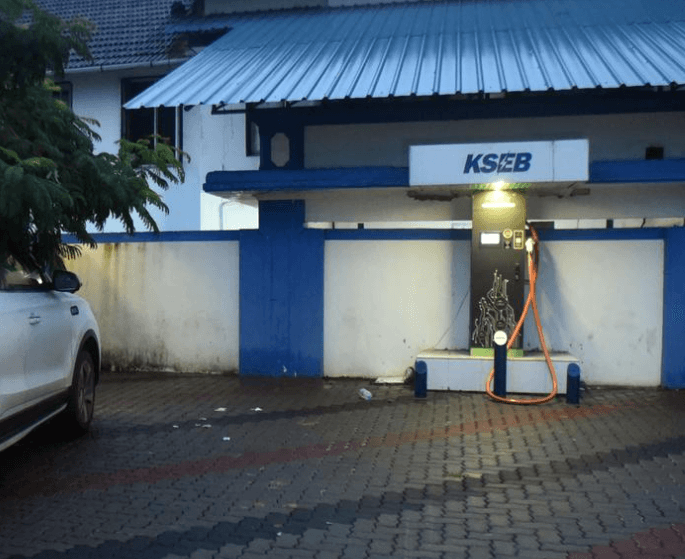
12.Vehicle-to-Grid Energy Integration (Vehicle-to-Grid)

The Hindu
Illustration for Vehicle-to-Grid Energy Integration (Vehicle-to-Grid)

What & Where

Vehicle-to-Grid (V2G) = bidirectional power exchange between electric vehicle batteries and utility grid

Key processes : Grid-to-Vehicle charging, Vehicle-to-Grid discharging, smart Time-of-Use scheduling

Pilot site : Kerala State Electricity Board + IIT Bombay, Kerala

Quick Facts for MCQs

Tech & Schemes

  • Bi-directional charger hardware allows both battery charging and reverse power flow
  • Smart-charging algorithm follows Time-of-Use signals to optimise charge–discharge cycles
  • Aggregated parked EVs create a virtual distributed battery supporting renewable ramping

Economic Angle

  • Tariff differential enables EV owners to earn income by supplying electricity during peak
  • European and United States pilots show monetisation feasibility for household vehicles and fleets
  • Peak-load shaving through V2G can delay costly grid capacity additions

Environmental Impact

  • Surplus solar and wind stored in EVs dispatched at night increases renewable utilisation factor
  • Reduced reliance on fossil-fuel peaker plants lowers grid greenhouse gas emissions
  • Technology supports India 2070 net-zero emissions commitment via power-transport sector coupling

Key Data Points

FeatureData-Point
Concept originLate 1990s, Dr Willett Kempton, Univ of Delaware
Current pilotKSEB + IIT Bombay, Kerala
Power flow mediumBi-directional charger
Charge windowLow demand or renewable surplus hours
Discharge windowPeak demand hours
Grid serviceDistributed storage, frequency and voltage support
Owner benefitRevenue via Time-of-Use export tariffs
Climate linkSupports India 2070 net-zero target

Related UPSC Prelims PYQs

GS1 2025PYQ 1

निम्नलिखित प्रकार के वाहनों पर विचार कीजिए :

GS-3S&T

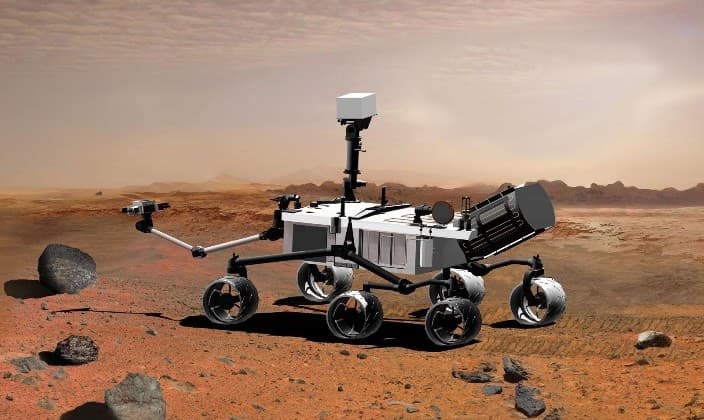
13.Curiosity Rover Finds Martian Siderite (Mars Exploration)

FPJ
Illustration for Curiosity Rover Finds Martian Siderite (Mars Exploration)

What & Where

Siderite mineral (FeCO₃) located in Gale Crater’s sedimentary layers on Mars

Discovery by Curiosity rover under NASA’s Mars Science Laboratory (MSL) mission

Carbonate formation process implies ancient dense CO₂ atmosphere enabling stable liquid water

Quick Facts for MCQs

Mission Specs

  • Curiosity mass 899 kg, car-sized nuclear-powered rover
  • Core goals climate study, geology analysis, habitability assessment
  • Operates with onboard CheMin X-ray diffraction for mineral ID

Geological Evidence

  • Siderite presence fills earlier carbonate detection gap
  • Sedimentary strata show prolonged water interaction before atmospheric loss
  • Carbonate sequestration suggests imbalance without Earth-like plate tectonics

Climate Significance

  • Dense ancient CO₂ atmosphere explains warm wet Mars billions of years ago
  • Subsequent CO₂ trapping led to atmospheric thinning and surface desiccation
  • Finding aids models of planetary greenhouse collapse and habitability timelines

Key Data Points

FeatureData-Point
Mission nameMars Science Laboratory
Rover nameCuriosity
Launch date26 Nov 2011
Mars landing06 Aug 2012
Exploration siteGale Crater, 154 km diameter
Drilling period2022 – 2023 (three sites)
Mineral detectedSiderite (iron carbonate)
Chemical signLocks atmospheric CO₂ into crust
Past atmosphereDense, greenhouse, water-stable
GS-3S&TQuick Bite

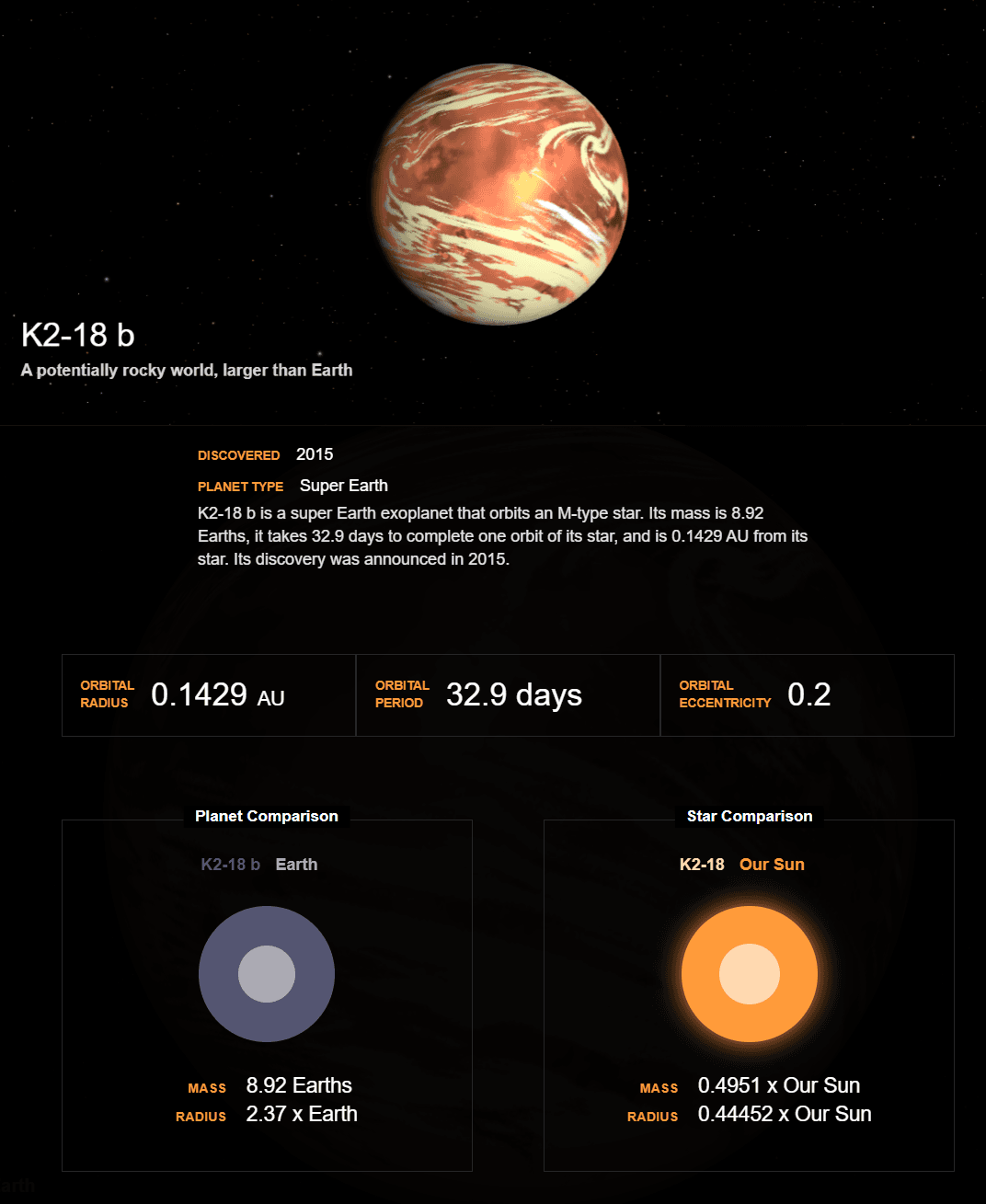
14.Biosignature Gases Detected on K2-18b (Exoplanet Biosignatures)

Indian Express
Illustration for Biosignature Gases Detected on K2-18b (Exoplanet Biosignatures)

What & Where

Biosignature gases dimethyl sulphide (DMS) and dimethyl disulphide (DMDS) spotted in exoplanet K2-18b’s atmosphere by JWST

K2-18b: super-Earth, 2.6 × Earth size, 8.92 × mass, 32.9-day orbit in habitable zone 120 ly away

James Webb Space Telescope: NASA-ESA-CSA infrared observatory (2021) stationed at Sun–Earth L2

Quick Facts for MCQs

Astrobiology Significance

  • DMS, DMDS on Earth chiefly from marine microbes; termed strong yet non-definitive biosignatures
  • Detection reopens extraterrestrial life debate; parallels earlier phosphine on Venus, methane bursts on Mars

Technology & Missions

  • JWST infrared spectroscopy deciphers exoplanet atmospheres beyond Hubble reach, operating at cryogenic Sun-Earth L2
  • Mission joint NASA, ESA, CSA; launched 2021 by Ariane-5 from French Guiana

Comparative Observations

  • Previous atmospheric hints include phosphine on Venus, methane on Mars; none confirmed biological origin
  • K2-18b in habitable zone offers water-rich sub-Neptune profile unlike arid Venus or Mars

Key Data Points

FeatureData-Point
Discovery year (K2-18b)2015
Planet categorySuper-Earth exoplanet
Distance from Earth~120 light-years
Planet radius2.6 × Earth
Planet mass8.92 × Earth
Orbital period32.9 Earth days
Telescope usedJWST
JWST launch year2021
JWST positionSun–Earth L2
Biosignature gasesDMS, DMDS
GS-2Security

15.EU Operation Atalanta Maritime Security (Maritime Security)

Economic Times

What & Where

Operation Atalanta = EU naval security mission under CSDP, active since 2008

Theatre = Western Indian Ocean, Gulf of Aden, Bab-el-Mandeb Strait, Somali coast, Red Sea approaches

Proposed India-EU exercise to expand anti-piracy and humanitarian escort synergy in region

Quick Facts for MCQs

Objectives

  • Escort WFP vessels, guarantee food aid continuity
  • Anti-piracy patrols, armed robbery suppression on high-traffic sea lanes
  • Fisheries monitoring, support other EU missions in Horn of Africa

Geostrategic Significance

  • Secures Suez-Malacca maritime artery vital for EU-Asia trade
  • Enhances EU presence in Indo-Pacific narrative: free, open, inclusive seas
  • Joint drills with India elevate multilateral maritime domain awareness

Partnerships

  • Core participants = rotating EU warships, maritime patrol aircraft, drones
  • Associated partners like Norway, Serbia join via opt-in arrangements
  • India engagement set to bolster information sharing, coordinated escort operations

Key Data Points

FeatureData-Point
Launch year2008
Mandating frameworkCommon Security and Defence Policy (CSDP)
Core EU naviesSpain, Italy, Germany, France + others
Past non-EU partnersNorway, Serbia
Primary humanitarian taskEscort World Food Programme (WFP) aid ships to Somalia
Security taskDeter, prevent, repress piracy & armed robbery
Additional roleMonitor fishing activities
Likely Indian partnerIndian Navy (Western Fleet)
Critical chokepointsGulf of Aden, Bab-el-Mandeb Strait
Area nicknameHigh Risk Area (HRA) for piracy

Related UPSC Prelims PYQs

CAPF_GAI, NDA_GAT 2021PYQ 1

The maiden Indian Navy – European Union Naval Force (IN-EUNAVFOR) Exercise (2021) was conducted in

CAPF_GAI, NDA_GAT 2024PYQ 2

Which one among the following statements with regard to India’s maritime initiative, SAGAR, is correct?

GS-3SecurityQuick Bite

16.Meghayan 25 Naval Met Symposium (Naval Meteorology)

PIB

What & Where

Symposium Meghayan 25: 3rd Indian Navy Meteorological & Oceanological meet aligning with WMO Day 2025.

Conducted to honour WMO establishment; theme 2025: ‘Closing the Early Warning Gap Together’.

Launchpad for Navy-ISRO weather tech and revival of journal ‘Sagarmanthan’.

Quick Facts for MCQs

Tech & Schemes

  • MOSDAC-IN: satellite-derived, customised weather feeds; individual log-ins for every Naval Met Office.
  • Sagarmanthan revival bolsters Navy-academia Met-Ocean research dissemination.
  • Theme-driven sessions focused on early-warning tech integration with naval operations.

International Treaties

  • WMO Convention ratified 1950; grants intergovernmental legal status.
  • IMO (1873) served as organisational precursor, later absorbed into WMO.
  • 2025 WMO theme underscores multilateral cooperation on global early-warning equity.

Security Dimension

  • Tailored forecasts enhance fleet safety, maritime domain awareness and HADR readiness.
  • Meghayan series institutionalises met-ocean expertise within naval strategic planning.
  • Collaboration with ISRO leverages space assets for real-time operational advisories.

Key Data Points

FeatureData-Point
Symposium nameMeghayan 25
Edition number3rd
Host agencyIndian Navy
Launch year of MOSDAC-IN2025
MOSDAC-IN partnersDNOM & SAC–ISRO
Naval journal relaunchedSagarmanthan 10th ed.
WMO Day23 March (annual)
WMO creation23 Mar 1950 (Convention)
Became UN agency1951
WMO headquartersGeneva, Switzerland
WMO membership193 States & Territories
Precursor bodyInternational Meteorological Organisation, 1873 Vienna

Ready to practice?

Test your knowledge with our UPSC test series.

Start Free Trial