UPSC Current Affairs

16 topicsGS-1: 5GS-2: 6GS-3: 5
0/16 done
GS-2Editorial

1.India Justice Report 2025 Findings (Justice Delivery)

IT
Illustration for India Justice Report 2025 Findings (Justice Delivery)

What & Where

Report definition – India Justice Report 2025 ranks States/UTs on justice delivery capacity.

Release source – Tata Trusts with CHRI, DAKSH, Vidhi, TISS-Prayas; relies exclusively on official data.

Method focus – Five filters (HR, budgets, infrastructure, workload, diversity) applied to five justice pillars.

Quick Facts for MCQs

Gender Representation

  • Quota gap – No State/UT met reserved women quota in police; <1,000 senior women officers.
  • Judiciary trend – Female judge share rising yet below 15 % in many High Courts.
  • State leader – Bihar highest female police proportion, still under target.

Police Infrastructure

  • Coverage gap – 17 % stations lack CCTV; 30 % miss women help desks.
  • Compliance issue – Paramvir Singh CCTV mandate only partially executed.
  • Southern edge – Higher police budget use, training, tech rollout.

Judicial Backlog & Staffing

  • Pendency scale – 5 crore+ cases; Bihar 71 % older than three years.
  • Vacancy hotspot – Gujarat HC vacancies exceed 30 %.
  • Disposal boost – High Courts posted >100 % clearance in 2023-24.

Prisons & Undertrials

  • Overcrowding – 176 prisons operate beyond 200 % capacity.
  • Demographic shift – Undertrials now 76 % of prisoners, up a decade.
  • Best practice – Tamil Nadu leads prison management; 100 % budget use, ideal staff ratio.

Key Data Points

FeatureData-Point
Latest edition2025
PublisherTata Trusts & partners
Pillars covered5 – Police, Judiciary, Prisons, Legal Aid, HRCs
Top large stateKarnataka (6.78/10)
Avg legal aid spend₹6 per capita
Prison undertrials share76 % of inmates
GS-2Polity

2.Digital Birth and Death Registration (Civil Registration)

The Hindu

What & Where

Registration of Births & Deaths (RBD): compulsory, nationwide civil record of every birth/death

System managed by Registrar General of India, executed through State Chief Registrars & local Registrars

Post-1 Oct 2023: 100 % digital entry via Civil Registration System (CRS) portal

Quick Facts for MCQs

Legal & Policy

  • Amendment 2023 mandates end-to-end digital records; elevates CRS certificate as exclusive DOB document
  • Government hospitals act as Registrars; private hospitals only report to local Registrar
  • RGI circular March 2024 directs strict compliance, referencing Sec 23(2) fines

Tech & Schemes

  • CRS portal centralises real-time birth/death data; feeds linked databases automatically
  • Digital certificate envisaged for school, jobs, marriage, electoral roll, property dealings

Implementation Gaps

  • 10 % births/deaths still missed despite legal mandate
  • Non-registration concentrated in delayed hospital reporting and remote local bodies

Key Data Points

FeatureData-Point
Governing lawRBD Act 1969; amended 2023
Oversight ministryHome Affairs
Time-limit for entryWithin 21 days of event
Digital switch date1 Oct 2023
Penalty Sec 23(2)₹1,000 on negligent registrar
Share unregistered events≈10 % (RGI March 2024)
Sole date-of-birth proofCRS birth certificate
Auto-update datasetsNPR, ration cards, other schemes
GS-2Polity

3.Telangana Implements SC Sub-Categorisation (SC Subcategorisation)

The Hindu

What & Where

Sub-categorisation: splits existing 15 % SC quota among internal groups without altering overall percentage.

First operationalised by Telangana through Scheduled Castes (Rationalisation of Reservations) Act 2025.

Enabled after Supreme Court ruling State of Punjab v Davinder Singh 2024 permitting State-led intra-SC/ST classification.

Quick Facts for MCQs

Legal & Policy

  • Act restructures 59 SC sub-castes into three benefit-based groups using literacy, employment, aid indicators.
  • Reservation shares fixed within existing quota; possible hike after forthcoming Census.

Constitutional Basis

  • Article 14 allows reasonable classification; Articles 15(4),(5), 16(4) permit special measures for backward classes.
  • Article 341 assigns SC list power to President, changes only via Parliament.

Judicial Precedents

  • Chinnaiah 2004 declared state sub-classification ultra-vires Presidential List.
  • Davinder Singh 2024 seven-judge bench upheld state power if backed by empirical data, subject to review.

Social Concerns

  • Proponents cite targeted support, avoidance of intra-SC creamy layer.
  • Critics warn of stigma persistence, potential political fragmentation.

Key Data Points

FeatureData-Point
Implementing stateTelangana
Act year2025
CommissionShamim Akhtar Commission
Representations examined8,600 +
Total SC quota (state)15 %
Group I reservation1 %
Group II reservation9 %
Group III reservation5 %
Group I share in SC population3.288 %
Enabling SC judgmentDavinder Singh 2024
Overruled precedentChinnaiah 2004

Related UPSC Prelims PYQs

GEO_GS 2021PYQ 1

Article 243 (D) of the Constitution of India provides reserved seats in Panchayats for:

GEO_GS 2024PYQ 2

Consider the following statements:

GS-3Economy

4.Hydrogen Meets India’s Power Surge (Green Hydrogen)

The Hindu
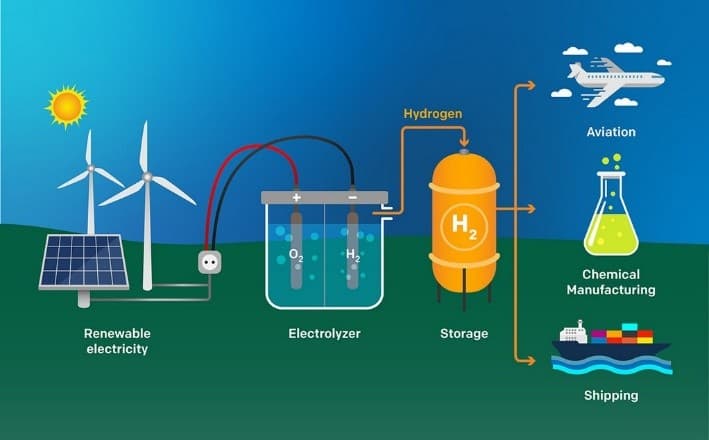
Illustration for Hydrogen Meets India’s Power Surge (Green Hydrogen)

What & Where

Hydrogen–nuclear integration: using nuclear electricity/heat to electrolyse water for low-carbon H₂.

Key processes: conventional electrolysis, high-temperature steam electrolysis via PHWRs/BSRs.

Geography: India targets 500 GW non-fossil by 2030, 100 GW nuclear by 2047.

Quick Facts for MCQs

Targets & Missions

  • Net-zero 2070; 500 GW non-fossil 2030; 100 GW nuclear 2047.
  • Green Hydrogen Mission urges carbon-threshold, not source-based, labelling.
  • End-use electrification via EVs, heat pumps, electric furnaces.

Demand Drivers

  • Developed-economy aim; electricity per capita may triple by 2040.
  • Urbanisation, cooling, data-centres raise continuous power need.
  • Steel, cement, fertiliser plan H₂ substitution for coal/natural gas.

Challenges

  • Solar/wind intermittent; large batteries costly, lithium supply insecure.
  • Nuclear flexing uneconomical due high capital, low marginal cost.
  • Treating H₂ and storage separately inflates infrastructure expenditure.

Solutions & Policy

  • Define green H₂ by <2 kg CO₂ / kg H₂, allowing nuclear-based label.
  • Pair electrolyser H₂ production with batteries to cut curtailment.
  • Fast-track indigenous PHWR/BSR deployment; leverage surplus grid power for industrial H₂.

Key Data Points

FeatureData-Point
Net-zero deadline2070
Non-fossil capacity goal500 GW by 2030
Planned nuclear capacity100 GW by 2047
NPCIL current expansion26 reactors under execution
Proposed green-H₂ carbon cap< 2 kg CO₂ / kg H₂
Electricity use outlookPer-capita ×3 by 2040

Related UPSC Prelims PYQs

CAPF_GAI, GS1 2023PYQ 1

Consider the following heavy industries:

CAPF_GAI, GS1 2025PYQ 2

Which of the statements given below is/are correct?

GS-3Economy

5.Boosting Hand and Power Tools Exports (Tools Exports)

PIB

What & Where

Tool: handheld device; two categories—manual hand tools & motor-driven power tools.

Sector geography: Indian clusters around Punjab; global export dominance by China.

Report: NITI Aayog 2025 roadmap targets USD 25 bn tool exports by 2035.

Quick Facts for MCQs

Market Size & Share

  • China leads: USD 13 bn hand, USD 22 bn power; ~50 % and 40 % shares.
  • India now USD 1 bn; target USD 25 bn export, 10 % power & 25 % hand share by 2035.

Cost & Capability Gaps

  • Disadvantage 14-17 % due to costly power, rigid labour laws, inland freight.
  • Input dependence on imported high-grade steel; export duties curb scrap availability.
  • Tech lag: expensive CNC, weak R&D, MSME land & FAR limits hinder scaling.

Existing Schemes

  • RoDTEP rebates minimal—hand 1.1 %, power 0.9 % FOB—insufficient against cost gap.
  • DFIA allows duty-free input import; corporate tax 34 % and no R&D credit reduce appeal.

Suggested Interventions

  • Plan 3-4 plug-and-play clusters (4,000 acres) via PPP-driven SPVs with housing, testing, reliable utilities.
  • Rationalise QCOs; cut duties on steel, PVC, motors; ease EPCG and AEO conditions.
  • Push CNC, 3D printing, cordless premium tools under National Manufacturing Mission.

Key Data Points

FeatureData-Point
Global tools market 2022USD 100 bn
Projected global market 2035USD 190 bn
India hand-tool exports 2023USD 600 mn (1.8 %)
India power-tool exports 2023USD 425 mn (0.7 %)
Target Indian exports 2035USD 25 bn
Expected new jobs3.5 mn
India cost disadvantage vs China14–17 %
RoDTEP rebate—hand tools1.1 % FOB
RoDTEP rebate—power tools0.9 % FOB
China share in hand-tool exports~50 %

Related UPSC Prelims PYQs

CDS_GK 2025PYQ 1

Consider the following statements with respect to performance of the merchandise export of India in FY–2024:

GS-1HistoryQuick Bite

6.Himachal Pradesh Foundation Day History (State Formation)

Business Standard

What & Where

Himachal Pradesh Day: annual 15 April observance marking 1948 creation of Chief Commissioner’s province

Celebrates state’s constitutional journey from Part C state to India’s 18th full state in 1971

Location: Western Himalayas; borders J-K, Ladakh, Punjab, Haryana, Uttarakhand; international frontier with China

Quick Facts for MCQs

State Formation

  • 1948–1971 witnessed four status changes: province, Part C, UT, state
  • Reorganisation 1966 added Kangra, Kullu, Shimla etc from Punjab
  • Statehood granted by Parliament under Article 2 powers

Economic Angle

  • Pharma dominates export basket, nearly seven-tenths share
  • Consistent FDI inflow post 2019 indicates investor confidence in hill manufacturing hubs
  • GSDP growth supported by hydropower, horticulture, tourism diversification

Geography & Borders

  • Himalayan terrain earns “snow-laden lap” epithet
  • Shares 260 km approximate international boundary with Tibet (China)
  • Strategic passes: Shipki-La, Nathpa-La bolster cross-border vigilance

Key Data Points

FeatureData-Point
Chief Commissioner’s province formed15 Apr 1948
Became Part C state26 Jan 1950
Declared Union Territory1 Nov 1956
Expanded with Punjab hill areas1966
Full statehood under Act 197025 Jan 1971
Order of statehood18th state
Statehood Act nameState of Himachal Pradesh Act, 1970
EtymologySanskrit Hima (snow) + Anchal (lap)
GSDP 2024-25₹2.27 trillion (~US $27.27 bn)
Exports FY25 till AugUS $223.20 mn
Major export share69.5 % drug formulations & biologicals
Cumulative FDI 2019-23US $246.74 mn
Domestic neighboursPunjab, Haryana, Uttarakhand, J-K & Ladakh (UTs)
International neighbourChina

Related UPSC Prelims PYQs

GS1 2006PYQ 1

Which one of the following pairs is not correctly matched?

GS-1MappingQuick Bite

7.Tuti Island at Nile Confluence (Island Mapping)

The Hindu
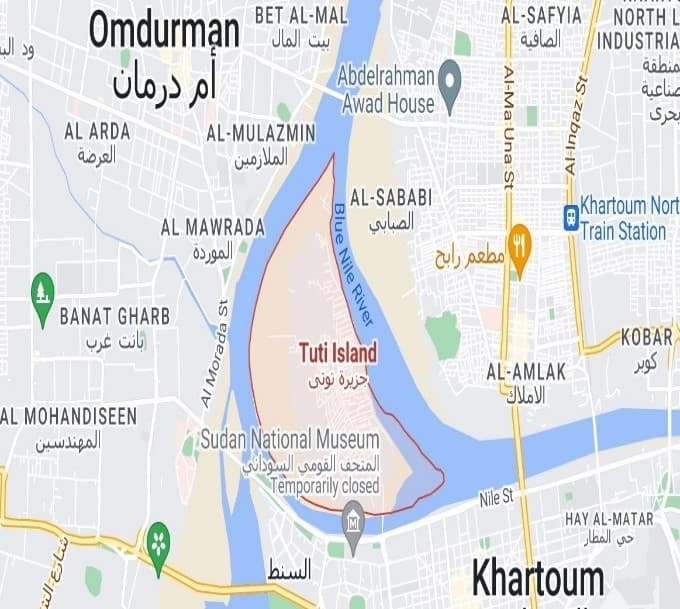
Illustration for Tuti Island at Nile Confluence (Island Mapping)

What & Where

Tuti Island; riverine island at Blue–White Nile confluence, heart of Greater Khartoum.

Encircled by the “Three Towns” – Khartoum, Omdurman, Bahri; linked via bridges/ferries.

Sudan; Northeast-African state, Nile-dominated landscape, Red Sea frontage.

Quick Facts for MCQs

Geography

  • Confluence-point creates fertile alluvial soils sustaining intensive horticulture.
  • Island’s central position makes it hydrological reference for Blue–White Nile merge.

Agriculture

  • Pre-war output supplied large share of capital’s produce, reducing import dependence.
  • Traditional irrigation and hand tools still dominate cultivation practices.

Security Dimension

  • National army regained island after two-year civil war; area now depopulated, infrastructure ruined.
  • Conflict disrupted food supply to Khartoum, amplifying humanitarian stress.

Key Data Points

FeatureData-Point
Island nickname“Khartoum’s Garden”
Main river systemBlue Nile + White Nile ⇒ Nile
Island farmingManual, fruit–vegetable hub
Bordering urban trioKhartoum, Omdurman, Bahri
Sudan capitalKhartoum
Sudan coastlineRed Sea
Northern neighbourEgypt
Eastern neighboursEritrea, Ethiopia
Southern borderSouth Sudan
Western neighboursCentral African Rep., Chad, Libya
Key mountainsNuba, Marrah, Red Sea Hills
GS-1S&TQuick Bite

8.Hadean Proto Crust Study Insights (Early Crust)

The Hindu
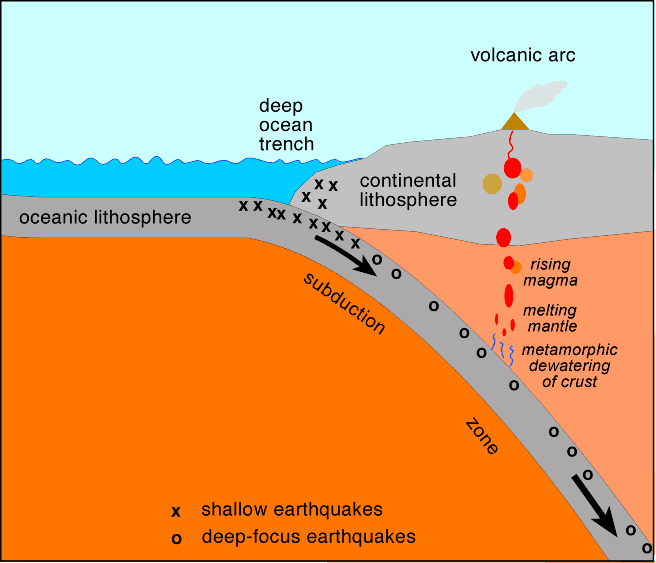
Illustration for Hadean Proto Crust Study Insights (Early Crust)

What & Where

Hadean proto-crust: first solid crust formed within 200 Myr of Earth’s birth (4.6 – 4 Ga), under extreme heat.

Chemical signatures: enriched Light Rare Earth Elements + distinct Nd, Sr, Pb isotopic ratios classically tied to subduction.

Study zone: Ancient zircons show signatures pre-dating known plate motion, hinting at non-subduction formation processes.

Quick Facts for MCQs

Geological Time Scale

  • Hadean precedes Archean when stable continents, early life, overt plate tectonics emerged.
  • Cooling allowed thick crust to ride over semi-fluid asthenosphere.

Chemical Signatures

  • LREE enrichment indicates partial melting & fluid interaction in early mantle.
  • Isotopic ratios act as geochemical fingerprints for crustal recycling events.

Plate Tectonics Debate

  • Study challenges exclusivity of chemical proxies for subduction, urging re-assessment of early Earth dynamics.
  • Suggests proto-subduction-like geochemical processes existed before mechanical plate coupling.

Key Data Points

FeatureData-Point
Study leadMacquarie University, Australia
Hadean Aeon span4.6 Ga – 4.0 Ga
Proto-crust windowFirst 200 Myr of Hadean
Next eonArchean, 4.0 – 2.5 Ga
Typical subduction markersTrenches, volcanic arcs, earthquakes
Key chemical cuesLREE enrichment; Nd-Sr-Pb isotope ratios
New findingSame cues possible without subduction
Classical tectonic linkPlate convergence & slab descent
GS-3Environment

9.AQUASTAT Global Water Database (Water Database)

FAO

What & Where

AQUASTAT = FAO’s global, open-access database on water resources & agricultural water management.

Initiated early 1990s; covers 1960-present data for 200-odd countries/territories.

Headquarters Rome; monitors worldwide progress on SDG 6.4 water-use efficiency & water stress.

Quick Facts for MCQs

Tech & Schemes

  • Platform-upgrade adds advanced search, map visualisation, bulk downloads enhancing evidence-based planning.
  • Multilingual interface broadens accessibility for non-English stakeholders.
  • CSV/Excel outputs enable direct import into policy and academic models.

SDG Linkage

  • Indicators SDG 6.4.1 efficiency & 6.4.2 stress computed using AQUASTAT datasets.
  • Countries rely on database for official SDG progress submissions to UN.

International Cooperation

  • Member states supply/validate figures, building national statistical capacity.
  • Data underpins UN-Water & FAO flagship water reports, promoting harmonised global metrics.

Key Data Points

FeatureData-Point
Parent bodyFAO, UN agency
Year initiatedEarly 1990s
Anniversary marked30 years (2024)
Variables tracked180 +
Temporal span1960 → present
New platform2024 Dissemination Platform
Key toolsInteractive maps, multilingual UI, CSV/Excel download
SDG tracked6.4 (water-use efficiency, water stress)
Main usersCountries, UN World Water Development Report
Data validationMember-state collaboration
GS-3S&T

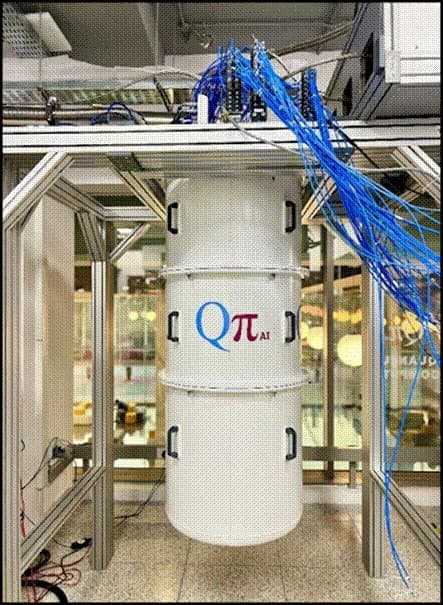
10.India Unveils 25-Qubit Quantum Computer (Quantum Computing)

PIB
Illustration for India Unveils 25-Qubit Quantum Computer (Quantum Computing)

What & Where

QpiAI-Indus: India’s first full-stack quantum computer, integrating hardware, software and AI-hybrid control

Installed at Bengaluru, unveiled on World Quantum Day 2025

Part of National Quantum Mission (NQM) led by Dept of Science & Technology

Quick Facts for MCQs

Tech & Schemes

  • Hardware Superconducting-qubit architecture enables low-error intermediate scale processing
  • Software AI-integrated stack offers hybrid classical-quantum optimisation
  • Control scalable electronics designed for real-world deployments

Economic Angle

  • Indigenous platform reduces dependence on foreign quantum hardware imports
  • Start-up support aligns with Make in India and deep-tech manufacturing goals
  • High-value sectors targeted promise new IP and export opportunities

Security Dimension

  • Quantum communication & secure satellite links planned under NQM fortify cyber-security
  • Atomic clocks and sensing tech enhance strategic navigation and defence capabilities

Key Data Points

FeatureData-Point
Launch day14 April 2025 (World Quantum Day)
LocationBengaluru, Karnataka
DeveloperQpiAI, DST-supported startup
Qubit type & count25 superconducting qubits
System classFull-stack Quantum-HPC-AI platform
Key usesDrug discovery, logistics, climate, materials, life sciences
NQM approval year2023
NQM Budget₹6,003.65 crore (2023-2031)
Nodal ministryDepartment of Science & Technology
Target computer size under NQM50 – 1000 qubits
Thematic hubs4 (Computing, Communication, Sensing & Metrology, Materials & Devices)

Related UPSC Prelims PYQs

GS1 2022PYQ 1

"क्यूबिट (qubit)" शब्द का उल्लेख निम्नलिखित में कौन-से एक प्रसंग में होता है ?

GS1 2025PYQ 2

Consider the following statements:

GS-3S&T

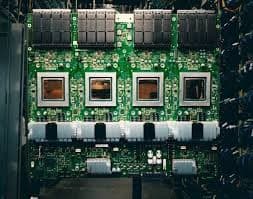
11.Google Ironwood TPU (AI Hardware)

Indian Express
Illustration for Google Ironwood TPU (AI Hardware)

What & Where

Ironwood: seventh-gen Tensor Processing Unit (TPU) ASIC by Google Cloud for high-performance AI workloads.

Executes tensor/matrix operations, expediting deep-learning training and inference.

Deployed in Google data centres worldwide; backbone for Search, YouTube, DeepMind; accessible through Google Cloud.

Quick Facts for MCQs

Tech & Design

  • ASIC architecture removes general-purpose overhead, maximising tensor throughput.
  • Native matrix-multiplication units minimise energy per AI operation.
  • Supports both training and real-time inference phases.

Performance Advantage

  • Dedicated logic and parallelism deliver Google’s fastest in-house AI acceleration.
  • Rapid training cycles shorten model iteration and deployment timelines.

Ecosystem & Deployment

  • Offered to external developers via Google Cloud TPU clusters.
  • Forms foundational layer for emerging generative-AI features across Google products.

Hardware Comparison

  • CPU: 2–16 versatile cores; efficient sequential tasks, slowest AI training.
  • GPU: thousands general-purpose parallel cores; strong for graphics and ML workloads.
  • TPU: fewer specialised matrix cores; highest speed, narrow focus on deep-learning tensors.

Key Data Points

FeatureData-Point
GenerationSeventh (Ironwood)
DeveloperGoogle Cloud AI Infrastructure team
Chip CategoryApplication-Specific Integrated Circuit (ASIC)
Core DesignFew, highly-specialised matrix cores
Primary TaskTensor computations in deep learning
Training SpeedCuts model training from weeks to hours
IntegrationFully cloud-ready within Google Cloud
Internal UsesPowers Search, YouTube, DeepMind models
GS-2Polity

12.WHO World Pandemic Treaty Draft (Pandemic Preparedness)

CNN

What & Where

World Pandemic Treaty: legally binding WHO pact for stronger pandemic prevention, preparedness and equitable response.

Negotiated by Intergovernmental Negotiating Body since Dec 2021; draft finalised 2024 after three-year talks.

Applies globally; One Health approach; Geneva-based WHO Secretariat to coordinate implementation support.

Quick Facts for MCQs

Legal & Policy

  • Sovereignty upheld; treaty cannot override national decisions on lockdowns, travel bans, vaccination.
  • Compliance channelled through World Health Assembly; domestic ratification still necessary.
  • Supplements 2005 International Health Regulations with broader preparedness scope.

Technology & Supply Chains

  • Mandates equitable tech transfer for vaccines, diagnostics, therapeutics to developing states.
  • Plans regionally balanced R&D and manufacturing hubs to curb concentration risks.
  • Advances surge manufacturing agreements for robust supply chains during emergencies.

WHO Governance & Funding

  • World Health Assembly retains amendment, monitoring authority over treaty.
  • WHO Secretariat, led by Director-General, coordinates technical assistance, workforce mobilisation.
  • Preparedness funding draws from assessed dues plus targeted voluntary contributions.

Key Data Points

FeatureData-Point
Instrument typeLegally binding treaty
Negotiating bodyINB under WHO
Draft finalised2024 (3-year process)
Core approachOne Health
Pathogen sharingAccess & benefit-sharing system
Supply chain aimGlobal health logistics resilience
Sovereignty clauseNo mandatory lockdowns/vaccines
WHO founded1948, Geneva HQ
Funding streamsAssessed + voluntary
GS-2Polity

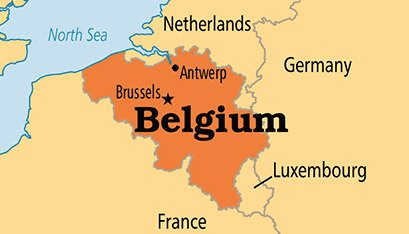
13.India-Belgium Extradition Treaty Details (Extradition Treaty)

The Hindu
Illustration for India-Belgium Extradition Treaty Details (Extradition Treaty)

What & Where

Extradition: sovereign hand-over of a fugitive criminal for prosecution or sentence under Indian Extradition Act, 1962.

India-Belgium Extradition Treaty 2020: replaces 1901 GB-Belgium pact; operative between Republic of India & Kingdom of Belgium.

Central Authority: Ministry of External Affairs (MEA) processes all incoming/outgoing extradition demands.

Quick Facts for MCQs

Legal & Policy

  • Dual-criminality principle ensures only mutually punishable offences qualify.
  • Treaty explicitly allows refusal when request targets State’s own nationals.
  • Political offence safeguard aligns with standard international extradition norms.

Procedure & Timelines

  • Arrest requires provisional request; full dossier within 14 days, evidence within 60 days.
  • MEA vets, transmits documents via diplomatic channels to Belgian Federal Justice Service.
  • Belgian courts examine admissibility before executive approval.

Notable Case

  • Individual: Mehul Choksi, PNB ₹13,500 cr fraud accused.
  • Formal Indian request: August 2024 citing cheating, conspiracy, bribery.
  • Belgian authorities arrested 2025 after confirming offences meet treaty criteria.

Key Data Points

FeatureData-Point
Treaty year in force2020
Old treaty replaced1901 GB-Belgium pact (applied to India 1958)
Governing Indian lawExtradition Act, 1962
Fugitive criminal defined underSection 2(f), Extradition Act
Central AuthorityMinistry of External Affairs
Dual criminality clauseCrime must be punishable in both States
Extradition of own citizensNot obligatory for either State
Formal request window≤ 14 days of arrest
Evidence submission window≤ 2 months
Political offence barRequests can be refused if politically motivated
GS-2Misc

14.President Murmu Visits Slovakia (India-Slovakia Ties)

PIB

What & Where

Slovakia landlocked Central Europe; borders Hungary, Poland, Czech Republic, Austria, Ukraine

Created 1993 via Velvet Divorce of Czechoslovakia; capital Bratislava; parliamentary democratic republic

First Indian Presidential visit in 29 years by Droupadi Murmu, April 2025

Quick Facts for MCQs

Diplomatic Highlights

  • Visit objective deepen bilateral ties across trade, technology, education
  • Murmu received Doctorate Honoris Causa from Slovak university
  • Event marks highest-level engagement since establishment of ties

Trade & Economy

  • Commerce surplus favours India within €1.28 bn turnover
  • JEC 1995 primary platform for reviewing economic cooperation
  • Core trade items vehicles, machinery, electronics, pharma, garments

Science & Technology

  • SKcube launch via Indian PSLV showcases space collaboration potential
  • Nuclear MoU focuses on safety, peaceful applications, capacity building
  • Scope exists for IT, automotive R&D partnerships

Country Basics

  • Borders five nations, no coastline; Danube corridor key transit route
  • Velvet Revolution 1989 ended communism; Velvet Divorce 1993 birthed Slovakia
  • EU, NATO, Schengen and Eurozone member, capital Bratislava

Key Data Points

FeatureData-Point
Presidential visit gap29 years (last in 1996)
Honoris Causa to MurmuPublic service, women empowerment, social justice
Bilateral trade FY 2024€1.28 billion
India→Slovakia exportsMobiles, footwear, garments, auto parts, medicaments
Slovakia→India exportsMotor vehicles, machinery, pumps, transmission shafts
Joint Economic CommitteeEstablished 1995
First Slovak satelliteSKcube on PSLV-XL, 2017
Nuclear cooperationMoU on peaceful uses of atomic energy
Slovak economy statusHigh-income developed
Political systemParliamentary democratic republic
GS-1Editorial

15.Challenges of India’s Ageing Population (Elderly Care)

The Hindu

What & Where

Elderly = Indians aged ≥60 under all government schemes/census definitions

Count: 103.8 mn (2011) → 193.4 mn (2031) → 300 mn + (2050)

Surge driven by falling fertility and rising life expectancy nationwide

Quick Facts for MCQs

Health Challenges

  • Multiple morbidities; typical elder takes 8–9 daily medicines
  • Depression, dementia, loneliness surged post-COVID in nuclear families
  • Caregiver shortage grows as youth migrate; training initiatives beginning

Economic & Social Risks

  • Few pensions/insurance; long-term care often unaffordable
  • Elderline 14567 flags rising abandonment, isolation cases
  • Age-friendly hospitals, transport, MBBL buildings scarce nation-wide

Government Schemes

  • NPHCE: geriatric care from PHC to tertiary hospitals
  • AVYAY: homes, continuous-care centres, Mobile Medicare Units
  • RVY aids devices; SACRED jobs; IGNOAPS ₹200–500 pension

Way Forward

  • Create geriatric departments, specialist seats in every medical college
  • Scale doorstep care models like Makkalai Thedi Maruthuvam
  • Regulate, subsidise assisted living; teach elder empathy in schools

Key Data Points

FeatureData-Point
Age cut-off60 yr +
Seniors 2011103.8 mn
Projection 2031193.4 mn
Projection 2050300 mn +
Polypharmacy avg8–9 drugs
Elderline number14567
AVYAY focusHomes & Mobile Medicare
SACRED roleRe-employment portal

Related UPSC Prelims PYQs

CAPF_GAI, GS1 2008PYQ 1

What is the approximate percentage of persons above 65 years of age in India's current population?

CAPF_GAI, GS1 2023PYQ 2

Which of the following statements is/are correct?

GS-1Polity

16.Karnataka Caste Survey Overhaul (Caste Survey)

Indian Express

What & Where

Caste Survey: state-run, sample-based mapping of caste-wise socio-economic, educational status

Karnataka: Socio-Economic & Education Survey tabled April 2025 by State Backward Classes Commission

Goal: recalibrate reservation matrix by exposing intra-OBC disparities and dominant-caste overestimation

Quick Facts for MCQs

Demographic Findings

  • OBCs largest bloc, figure 38 % higher than earlier assumption
  • Traditional dominants Vokkaliga, Lingayat numerically lower than presumed
  • Data highlights intra-OBC heterogeneity warranting sub-classification

Quota Recommendations

  • Raise OBC reservation to 51 %, overtopping national ceiling
  • Create IB sub-quota by slicing Most Backward out of IIA list
  • Figures likely to trigger fresh quota-share negotiations among castes

Legal Context

  • Indra Sawhney 1992 fixed 50 % ceiling and creamy-layer filter
  • Any breach needs quantifiable data plus constitutional justification of extraordinary circumstances
  • State survey data offers evidentiary base to defend cap override in courts

Data Instruments

  • Caste Survey: state, sample, quicker, policy-specific
  • Caste Census: RGI-led, door-to-door enumeration; last attempt SECC 2011, data mostly unreleased
  • Detailed caste metrics enable targeted welfare, curb benefit capture by affluent sub-groups

Key Data Points

FeatureData-Point
Survey nameSocio-Economic & Education Survey
Conducting bodyKarnataka State Backward Classes Commission
Estimated OBC share69.6 % of population
Vokkaliga share12.2 %
Lingayat share13.6 %
Current OBC quota32 %
Proposed OBC quota51 %
Supreme Court cap50 % (Indra Sawhney 1992)
New sub-categoryIB for Most Backward Classes
Survey vs CensusSample vs exhaustive enumeration

Ready to practice?

Test your knowledge with our UPSC test series.

Start Free Trial