UPSC Current Affairs

15 topicsGS-1: 3GS-2: 4GS-3: 8
0/15 done
GS-2Editorial

1.AI-Driven Justice Reforms (AI Judiciary)

Indian Express
Illustration for AI-Driven Justice Reforms (AI Judiciary)

What & Where

Artificial Intelligence: machine-based systems replicating cognition for autonomous or assisted decision-making.

Governance locus: Indian policing, cybercrime control, judicial efficiency; benchmarked against US and Chinese AI drives.

Key processes: predictive policing, chatbot e-FIRs, SUPACE e-Courts engine, AFRS facial recognition.

Quick Facts for MCQs

Tech & Schemes

  • SUPACE: AI portal summarises briefs, suggests precedents, under e-Courts Phase III.
  • AFRS: NCRB system matches CCTV images with criminal, missing-persons databases.
  • Auto-FIR: Mumbai Police chatbot files e-FIRs, cuts paperwork and station time.

Legal & Policy

  • DPDP Act 2023: consent-centric rules limit sensitive data use in justice AI.
  • Srikrishna Committee: recommends bias audits, liability norms for judicial algorithms.
  • AI Justice Task Force proposal: central node for standards, procurement, capacity-building.

International Examples

  • Stargate: US USD 100 bn programme for AI-driven justice, real-time court transcription pilots.
  • China: QWQ, DeepSeek LLMs fueling e-prosecutor, court analytics rollouts.
  • Singapore: AI for Justice Initiative trains officers in predictive analytics, referenced as template.

Challenges & Ethics

  • Bias: US COMPAS risk tool’s racial skew warns of tainted Indian training datasets.
  • Privacy: facial recognition and predictive models risk mass surveillance without oversight.
  • Capacity: large-scale AI literacy needed among police, judges, clerks for effective adoption.

Key Data Points

FeatureData-Point
Indian judicial backlog≈50 million cases
SUPACE launch bodySupreme Court of India
SMART policing acronymStrategic, Meticulous, Adaptable, Reliable, Transparent
AFRS owner agencyNational Crime Records Bureau
US Stargate AI outlayUSD 100 billion
Digital Personal Data Protection Act2023
B.N. Srikrishna panel focusAI governance framework

Related UPSC Prelims PYQs

CAPF_GAI, ESE_GS 2025PYQ 1

निम्नलिखित में से कौन-सा, कृत्रिम बुद्धिमत्ता (Artificial Intelligence) का उपयोग है?

CAPF_GAI, ESE_GS 2026PYQ 2

Which Ministry released the India AI Governance Guidelines in 2025?
GS-2Polity

2.SC Upholds Disability Rights (Disability Rights)

Economic Times

What & Where

Definition: SC-2025 declares disability-based non-discrimination under RPwD Act a fundamental right, binding on all State recruitment.

Key process: Judicial Service Exams must offer separate cut-off, relaxations, reasonable accommodation for visually impaired and other PwDs.

Core geography: Rules of Madhya Pradesh & Rajasthan struck; applies pan-India owing to constitutional supremacy.

Quick Facts for MCQs

Legal & Policy

  • SC-2025; equality breach triggers Articles 14-15, not mere statutory right.
  • Mandate; separate PwD cut-off, eligibility relaxations similar SC/ST precedent (Indra Sawhney reference).
  • State duty; rights-based, not charity-based, hiring environment.

Landmark Cases

  • Suchita-Srivastava 2009 protected reproductive choice of mentally retarded woman.
  • Ravi-Prakash-Gupta 2010 barred job-profile excuse against PwD reservation.
  • National-Federation-Blind 2013: 3 % quota applies to entire cadre, not posts tagged “suitable”.

Social Concerns

  • Demographics: 44 % PwDs are women, mostly rural; dual discrimination prevalent.
  • Barriers: inaccessible transport, stigma, weak communication channels, inconvenient service schedules.
  • Guidance: UNCRPD & DPSP-Art 41 press for inclusive public assistance.

Govt Schemes

  • Flagships: PM-DAKSH, Accessible India, DDRS, ADIP, Fellowship for Students with Disabilities.
  • RCI role; upscale rehabilitation workforce and assistive technology outreach.
  • RPwD 2016 empowers with education, skill training, penalty clauses for discrimination.

International Examples

  • Japan-Dawn-Cafe showcases robot-assisted remote work, model for Indian inclusive employment.

Key Data Points

FeatureData-Point
Year of SC verdict2025
Rule invalidatedRule 6A, MP Judicial Service Rules 1994
Reservation floor in jobs4 % for PwDs (RPwD 2016)
Recognised disability types21
Disabled share of population2.21 % ≈ 2.68 crore (Census 2011)
Key constitutional articles14, 15, 21, 41
Global treaty referencedUNCRPD 2007

Related UPSC Prelims PYQs

GS1, NDA_GAT 2011PYQ 1

India is home to lakhs of persons with disabilities. What are the benefits available to them under the law?

GS1, NDA_GAT 2021PYQ 2

निम्नलिखित में से कौन-सा मूल अधिकार का भाग नहीं है ?

GS-3Economy

3.Gum Arabic Trade Disruption (Commodity Supply)

Indian Express

What & Where

Natural plant resin tapped from Acacia senegal & A. seyal in the Sahel dry‐belt

Sudan dominates output, supplying ≈70 % of world demand, followed by Chad, Nigeria, Senegal, Mali

Collected manually, sun-dried, exported as hard nodules for food, cosmetic, pharma industries

Quick Facts for MCQs

Economic Angle

  • Export revenue lifeline for Sudanese economy
  • Supply halt risks price spikes across global confectionery & beverage markets
  • Multinationals may face production cuts, reformulation costs

Industrial Uses

  • Beverage industry relies on gum to prevent flavour oil separation in fizzy drinks
  • Confectionery gains sheen & chewiness in gummies, jujubes
  • Topical cosmetics use resin for viscosity and smooth texture

Supply Chain Risk

  • Concentrated sourcing in conflict-prone Sahel increases vulnerability
  • Limited stockpiles cover only a few months for major bottlers
  • Logistical shutdown at Port Sudan and border crossings blocks outbound shipments

Key Data Points

FeatureData-Point
Botanical sourceAcacia senegal & A. seyal
Global share, Sudan≈70 %
Other producersChad, Nigeria, Senegal, Mali
Main functionsStabiliser, emulsifier, thickening agent
Core usersFood & beverage, cosmetics, pharmaceuticals
Iconic productsCoca-Cola, Pepsi, candies, lotions
Substitute availabilityNo full functional replacement
Current disruption causeArmed conflict halting Sudan exports
GS-3Economy

4.Offshore Areas Mineral Regulation (Offshore Mining Policy)

The Hindu

What & Where

Offshore Areas Mineral (Development & Regulation) Act, 2002 governs exploration–extraction of minerals in India’s Exclusive Economic Zone

Applies seaward of baseline up to 200 nautical miles, excluding territorial waters already under coastal State jurisdiction

2023 amendment introduces auction route enabling private firms to mine deep-sea strategic and rare minerals

Quick Facts for MCQs

Legal & Policy

  • Provision empowers Centre to notify reserve areas, cancel licences for strategic reasons
  • Kerala Assembly resolution urges withdrawal citing inadequate State consultation
  • Act overrides coastal State laws, triggering federalism debate

Environmental Impact

  • Deep-sea dredging risks habitat loss, turbidity, noise stressing benthic fauna
  • Potential disruption of upwelling zones critical for Kerala’s sardine, anchovy fisheries
  • No comprehensive Environmental Impact Assessment guidelines yet finalised

Economic & Livelihood

  • Fisherfolk fear catch decline, gear damage near mining blocks
  • State alleges benefit-cost mismatch as royalties flow mainly to Centre
  • Private auction may favour large conglomerates over local cooperatives

Security Dimension

  • Strategic minerals like cobalt, tellurium vital for defence electronics
  • Unrestricted private access could expose sensitive bathymetric data
  • Central control justified citing national security yet contested by States

Key Data Points

FeatureData-Point
Enactment year2002
Latest amendmentOffshore Areas Mineral (Amdt.) Act, 2023
Administering ministryUnion Ministry of Mines
Concession instrumentComposite licence & production lease via e-auction
Royalty shareCentre collects; portion transferred to State where coastline lies
Governing authorityOffshore Areas Mineral Trust for oversight & funds
Minerals coveredPolymetallic nodules, REEs, phosphorites, hydrocarbons excluded

Related UPSC Prelims PYQs

GEO_GS, GS1 2021PYQ 1

Consider the following statements:

GEO_GS, GS1 2020PYQ 2

Which one of the following is NOT vested in the Union by the Constitution (Fortieth Amendment) Act?

GS-3Economy

5.Income-Tax Bill 2025 Overhaul (Income Tax Reform)

The Hindu
Illustration for Income-Tax Bill 2025 Overhaul (Income Tax Reform)

What & Where

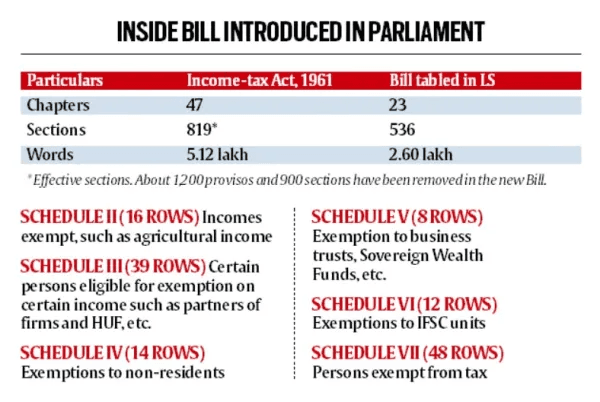
Income-Tax Bill, 2025: proposal to replace Income-Tax Act, 1961 in India.

Introduces ‘tax year’ aligned to financial year; abolishes ‘assessment year’.

Expands “income” to include virtual digital assets (cryptos, NFTs) as capital assets.

Quick Facts for MCQs

Legal & Policy

  • Alignment: merges wealth-tax rules, deletes redundant clauses, reduces provisos and cross-references.
  • Compliance: schedules/tabulation for deductions, TDS rates, limitation periods centralised.
  • Penalties: largely mirrors 1961 Act; no big overhaul of surcharge, interest or default fines.

Economic Angle

  • Readability: plainer language expected to cut interpretation time and litigation costs.
  • Efficiency: consolidated rules aim faster processing, lower administrative delays.
  • Digital economy: first statutory recognition of crypto/NFT gains under capital gains head.

Social & Security Concerns

  • Privacy: broadened search-and-seizure powers trigger fears of data overreach.
  • Litigation risk: undefined terms like “risk-management strategy” may spawn new disputes.
  • Taxpayer burden: Bill silent on reducing filing paperwork or high compliance expenses.

Key Data Points

FeatureData-Point
Applicable geographyEntire territory of India
Tax year span1 Apr – 31 Mar (or date of business set-up)
Repealed principal ActIncome-Tax Act, 1961
Removed legacy sectionSec 54E capital-gains exemption (pre-1992 transfers)
VDA tax statusTreated as capital asset like land, shares, bullion
Consolidated chaptersTDS, assessment timelines, dispute resolution, deductions
Added external provisionsWealth-tax elements, inventory valuation, revenue recognition
Search power upgradeOfficers may override passwords to access digital accounts

Related UPSC Prelims PYQs

GS1 2004PYQ 1

Which of the following is not a recommendation of the task force on direct taxes under the chairmanship of Dr. Vijay L. Kelkar in the year 2002?

GS-1Environment

6.Wallace Line Biogeographic Boundary (Biogeography)

The Hindu

What & Where

Imaginary faunal boundary in maritime SE Asia separating Asian and Australian biogeographic realms

Tracks Makassar Strait between Borneo–Sulawesi; also lies between Bali–Lombok, dividing Sunda vs Sahul shelves

Marks sharp shift in terrestrial species composition on either side

Quick Facts for MCQs

Species Contrast

  • West side hosts typical Asian mammals; east side dominated by Australasian marsupials and birds
  • Sulawesi displays mixed assemblage, eg tarsier plus dwarf cuscus
  • Absence of placental carnivores eastward underscores dispersal barrier

Wallacea Region

  • Cluster of oceanic islands between two faunal lines, biogeographic transition zone
  • Lower overall richness yet extreme endemism due to long isolation
  • Acts as evolutionary laboratory for reptiles, birds, insects

Formation Factors

  • Continental drift created geographic separation, enabling independent evolution
  • Persistent deep trenches prevented land-bridge formation even at glacial sea-level lows
  • Distinct Asian tropical vs Australian arid-adapted species limited cross-colonisation

Key Data Points

FeatureData-Point
Discovered byAlfred R. Wallace, 19th century
West fauna typeMonkeys, apes, rhinos, tigers, hornbills
East fauna typeTree-kangaroos, cockatoos, honeyeaters
Deep-water barrierMakassar Strait, remained submerged during ice ages
Continental shelves splitSunda (Asia) vs Sahul (Australia)
Intermediate zoneWallacea between Wallace & Weber lines
Key Wallacean islandsSulawesi, Flores, Lombok, Timor
Flagship Wallacea speciesKomodo dragon, babirusa, world’s largest bee
Tectonic originAustralia drifted north after splitting Antarctica ~85 Ma

Related UPSC Prelims PYQs

GEO_GS 2024PYQ 1

Which one among the following islands in South-East Asia is situated between Wallace's Line and Weber's Line that are related to Bio-diversity?

GS-1Environment

7.Kashmir Crop Contingency Plan (Drought Management)

The Hindu

What & Where

Crop Contingency Plan = pre-set agronomic package to offset extreme-weather yield losses.

Drawn by Sher-e-Kashmir Univ. of Agricultural Sciences & Technology for Kashmir Valley, J&K (winter 2024 rainfall –80 %).

Pillars: alternative crops, water-saving devices, growth regulators, pest advisories.

Quick Facts for MCQs

Crop Choices

  • Maize hybrids SMC-8 & SMH-5 need markedly less water than paddy.
  • Pulses & cowpea chosen for drought tolerance, heat resilience.
  • Early-bloom control via growth-regulators in fruit crops.

Water Management

  • Mulching with organic matter curbs evaporation, enriches soil.
  • Drip, mist, micro-sprinkler systems optimise limited water, suit vegetables.
  • Anti-transpirant sprays cut foliage water loss during heatwaves.

Pest Management

  • Higher temperatures boosting aphid, leaf-miner blotch incidence.
  • SKUAST circulating chemical-control advisories to farmers.
  • Timely sprays integrated with new crop schedule to minimise damage.

Key Data Points

FeatureData-Point
Rainfall deficit (winter 2024)≈ 80 %
Replaced water-intensive cropRice
Promoted maize hybridsSMC-8, SMH-5
Heat-tolerant pulse suggestedCowpea
Key water-saving methodDrip/micro-sprinkler irrigation
Moisture retention aidOrganic mulching
Chemicals advisedAnti-transpirants, growth-regulators
Major emerging pestsAphids, leaf-miner blotch

Related UPSC Prelims PYQs

CDS_GK, GS1 2018PYQ 1

भारतीय कृषि की परिस्थितियों के संदर्भ में, “संरक्षण कृषि” की संकल्पना का महत्व बढ़ जाता है। निम्नलिखित में से कौन-कौन से संरक्षण कृषि के अंतर्गत आते हैं?

CDS_GK, GS1 2025PYQ 2

केंद्र सरकार द्वारा 2015-16 में प्रारंभ की गई परंपरागत कृषि विकास योजना (PKVY) का उद्देश्य है:

GS-1Mapping

8.Kabul City Geography (Places in News)

The Hindu
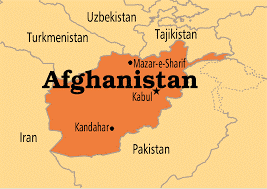
Illustration for Kabul City Geography (Places in News)

What & Where

Capital city of Afghanistan located in the Kabul River valley

Sits at about 1,790 m in eastern Hindu Kush foothills

Serves as nation’s political, economic and transport nucleus

Quick Facts for MCQs

Physical Geography

  • Kabul River valley carved through mountainous Hindu Kush terrain
  • Hindu Kush forms northern and western high walls around city
  • Paghman Range rises to southwest adding natural barrier

Climate

  • Winters cold with frequent sub-zero temperatures
  • Summers hot and dry, temperatures often exceed 30 °C
  • Continental regime creates sharp seasonal contrasts

Strategic & Economic

  • Hosts Afghan government, foreign embassies and diplomatic missions
  • Industries in textiles, food processing, handicrafts drive local economy
  • Kabul International Airport vital for passenger, cargo and military traffic

Security Dimension

  • City experiences recurrent conflicts, insurgencies and terror attacks
  • Abbey Gate bombing 2021 underscores persistent extremist threat
  • Geostrategic focus for India, China, Russia and United States

Key Data Points

FeatureData-Point
CountryAfghanistan
RegionEastern Afghanistan
Elevation~1,790 m (5,873 ft)
Main riverKabul River, Indus tributary
Neighbouring provincesParwan, Logar, Kapisa, Nangarhar
Flanking rangesHindu Kush (N,W); Paghman (SW)
Climate typeContinental, cold winters & hot summers
Major airportKabul International Airport
Highway roleCentral node linking Afghan cities
Key industriesTextiles, food processing, handicrafts
GS-3Species

9.Narwhal Species Overview (Arctic Cetacean)

Down to Earth
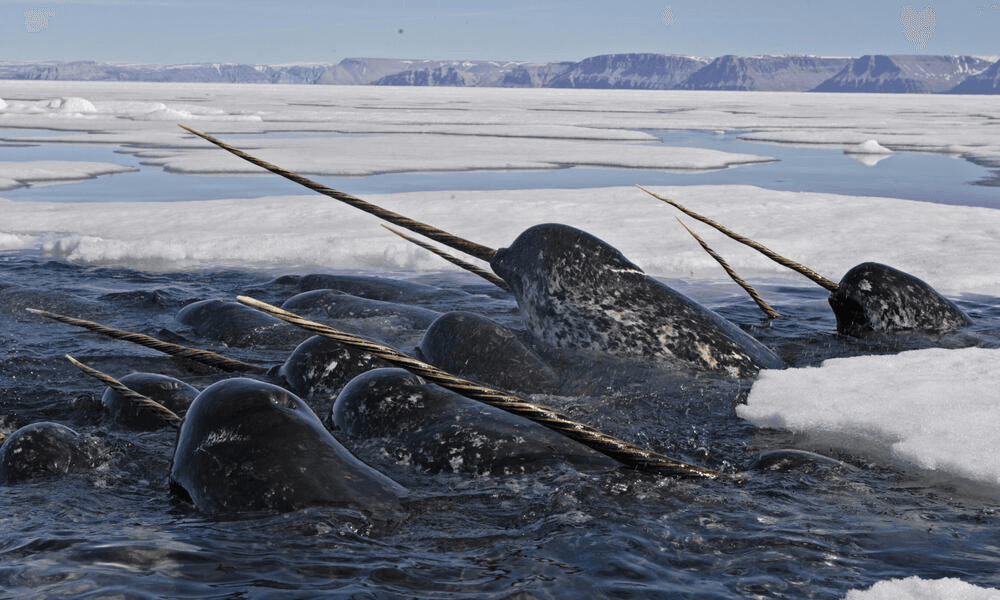
Illustration for Narwhal Species Overview (Arctic Cetacean)

What & Where

Definition: Medium-sized toothed whale (Monodon monoceros) with single spiral tusk; popularly called Sea Unicorn.

Geography: Native to deep Arctic waters around Greenland, Canada, Russia; does not undertake long-distance migrations.

New insight: First video evidence of tusk actively stunning prey, highlighting adaptation in a warming Arctic.

Quick Facts for MCQs

Morphology

  • Tusk: Spiral, sensory, sometimes absent; sexual dimorphism prominent.
  • Dentition: Mouth toothless unlike other odontocetes; tusk may number one, two, or zero.

Behavior & Ecology

  • Sociality: Highly social, forming small pods for foraging and protection.
  • Feeding: Uses tusk to strike or daze fish like Arctic char before ingestion.
  • Movement: Remains within high-latitude seas; follows seasonal sea-ice openings rather than long migrations.

Climate Impact

  • Warming Arctic: Changing ice and prey distribution driving observed innovative hunting behavior.
  • Indicator species: Narwhal responses serve as bio-markers for broader Arctic marine ecosystem shifts.

Key Data Points

FeatureData-Point
Scientific nameMonodon monoceros
Common nicknameSea Unicorn
IUCN statusLeast Concern
Typical pod size2 – 25 individuals
Tusk lengthUp to 3 m
Tusk originElongated upper left tooth
Teeth in mouthNone
Max tusks reportedTwo
Key preyGreenland halibut, Arctic & polar cod, squid, shrimp, Arctic char
Hunting methodTusk stuns/manipulates prey
Migration patternLimited; largely resident within Arctic basin
GS-3S&T

10.Hydrogen Fuel-Cell Truck Trials (Green Hydrogen)

PIB
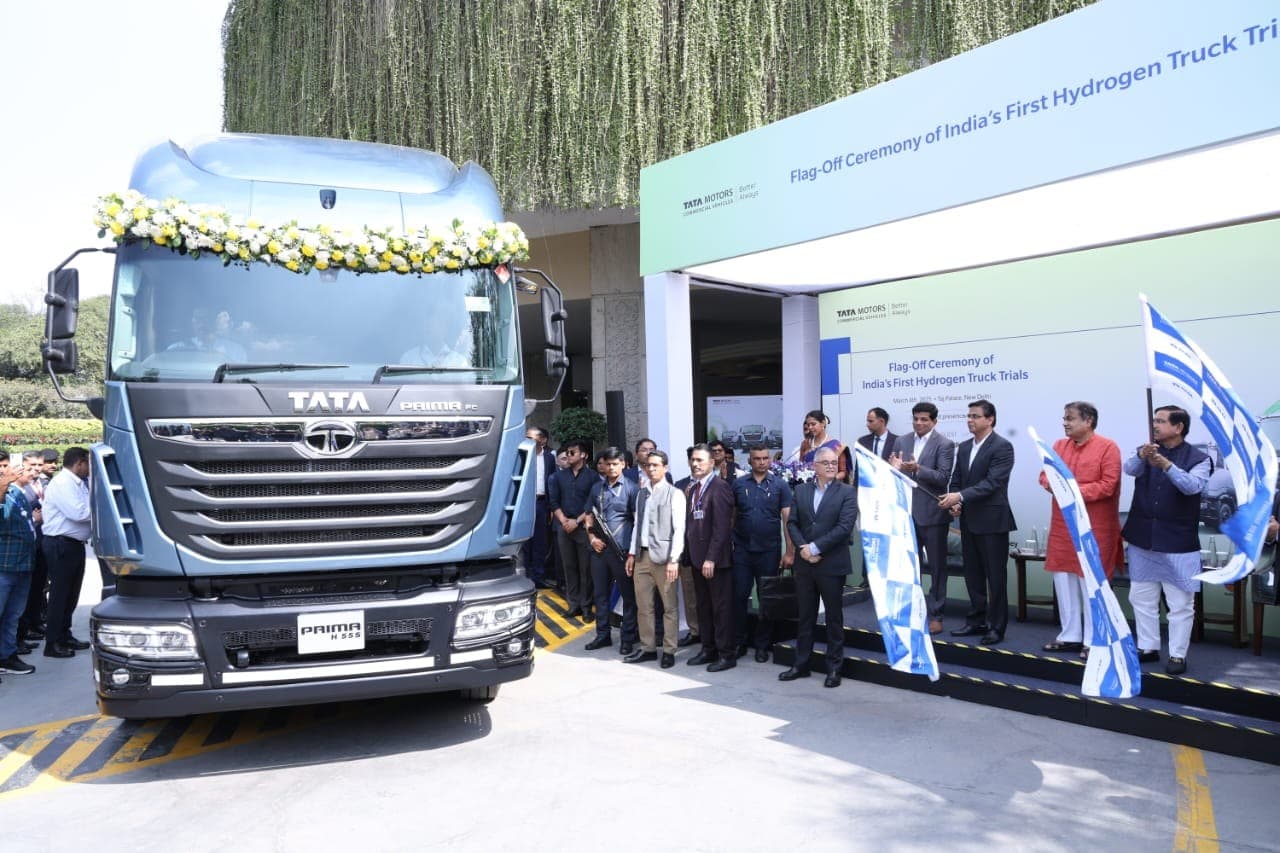
Illustration for Hydrogen Fuel-Cell Truck Trials (Green Hydrogen)

What & Where

New Delhi launch of India’s first hydrogen fuel-cell heavy-duty truck trials, flagged off by Union Minister Pralhad Joshi

Technology: hydrogen → fuel-cell → electricity; trucks emit only water, replacing diesel freight transport

Trial corridors: Faridabad–Delhi NCR and Ahmedabad–Surat–Vadodara in western and northern India

Quick Facts for MCQs

Tech & Schemes

  • Fuel-cell: Proton-exchange membrane stack generates onboard electricity, water as by-product
  • Scheme tie-in: Trials funded under NGHM’s mobility component for heavy transport decarbonisation
  • Partnership: MNRE oversight; IOCL supplies green hydrogen, vehicles, logistics support

Infrastructure

  • Stations: IOCL building four high-pressure hydrogen pumps along selected corridors
  • Refuel time: Comparable to diesel turnaround, enabling minimal fleet downtime
  • Data collection: Telemetry will monitor efficiency, range, maintenance for future scale-up

Environmental Impact

  • Emission cut: Zero CO₂, NOₓ, PM from tailpipe, aiding urban air-quality goals
  • Oil import reduction: Green hydrogen substitution trims diesel demand and forex outflow
  • Net-zero alignment: Supports 45% emission intensity reduction target by 2030 under updated NDC

Key Data Points

FeatureData-Point
Nodal ministryMinistry of New & Renewable Energy
Implementing PSUIndian Oil Corporation Ltd (IOCL)
Umbrella missionNational Green Hydrogen Mission
Supporting initiativeHydrogen Mobility Initiative
Planned refuel citiesFaridabad, Vadodara, Pune, Balasore
Net-zero target year2070
Key advantageLonger range & faster refuel than battery EVs
Flag-off date/placeSept 2023, New Delhi (PIB report)

Related UPSC Prelims PYQs

CAPF_GAI, GS1 2025PYQ 1

Which of the statements given below is/are correct?

CAPF_GAI, GS1 2023PYQ 2

With reference to green hydrogen, consider the following statements:

GS-3S&TQuick Bite

11.NASA PUNCH Solar Mission (Space Weather)

Indian Express
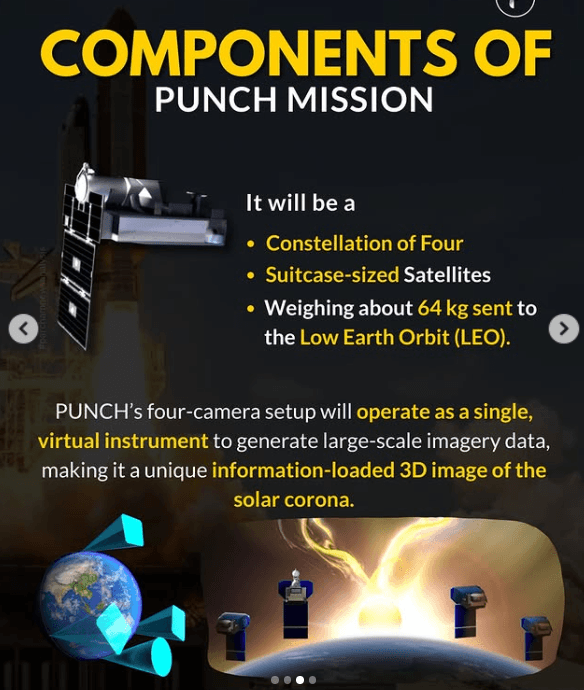
Illustration for NASA PUNCH Solar Mission (Space Weather)

What & Where

Mission: NASA PUNCH will study Sun’s corona–heliosphere interface, tracing solar wind formation and propagation

Geography: Operates in Earth orbit, imaging inner corona across the whole sky via four micro-satellites

Process: Continuous wide-field polarimetry captures real-time evolution of coronal mass ejections and solar storms

Quick Facts for MCQs

Tech & Schemes

  • Constellation: four synchronized microsatellites form single wide-field imager encircling Earth
  • Instrumentation: polarimeters capture scattered sunlight, mapping density and velocity of solar outflow
  • Design: suitcase form factor lowers cost, enables uninterrupted 3-D tracking of coronal structures

Scientific Goals

  • Understand: how coronal structures transition into steady solar wind streams
  • Analyse: origin and evolution of coronal mass ejections driving geomagnetic storms
  • Enhance: heliospheric models predicting particle transport to planetary environments

Security Dimension

  • Early-warning: better storm forecasts shield GPS, aviation, power grids from space-weather disruptions
  • Satellite safety: data guides operators in manoeuvring assets against charged-particle damage
  • Communication resilience: improved forecasts aid frequency management, mitigating blackout risk

Key Data Points

FeatureData-Point
AcronymPolarimeter to Unify the Corona and Heliosphere
Launch agencyNASA
Planned launch date6 March 2025
Satellite countFour identical units
Satellite sizeSuitcase-sized microsatellites
Study focusSun’s outer corona & inner heliosphere
Imaging typeContinuous wide-field polarimetric imaging
Practical outcomeEnhanced space-weather prediction capability
Protection targetSatellites, communication networks, power grids
Mission noveltyFirst dedicated link-up of corona with heliosphere

Related UPSC Prelims PYQs

ESE_GS, GS1 2026PYQ 1

Which space organization launched the PUNCH Space Mission?

ESE_GS, GS1 2008PYQ 2

What is the purpose of the US Space Agency's Themis Mission, which was recently in the news?

GS-3S&TQuick Bite

12.Blue Ghost Private Lunar Landing (Private Lunar Mission)

The Hindu

What & Where

Blue Ghost Mission 1: Firefly Aerospace lunar lander “Golden” soft-landed upright near Mons Latreille on Moon’s northeastern near side

Landing counts as 2nd private lunar touchdown and 1st upright success under NASA Commercial Lunar Payload Services collaboration

Mission launched January 2025 aboard SpaceX Falcon 9; nickname “Ghost Riders in the Sky”

Quick Facts for MCQs

Private Sector Milestones

  • February 2024 IM-1: first private and first US soft landing since Apollo 17 (1972)
  • Blue Ghost 1: second private landing, first perfectly upright surface posture
  • IM-2 Athena slated March 2025 for polar drilling and volatile studies

Tech & Schemes

  • CLPS: fixed-price NASA contracts enable regular, low-cost commercial payload deliveries
  • Artemis programme relies on such cargo flights for crewed return and surface logistics
  • Reusable Falcon 9 boosters reduce marginal launch costs, boosting mission economics

Geography

  • Mons Latreille: isolated volcanic dome offering gentle slopes and good solar exposure
  • Northeastern near side keeps constant Earth line-of-sight, easing direct communication
  • Basaltic terrain aids assessment of in-situ resource utilisation potential

Key Data Points

FeatureData-Point
CompanyFirefly Aerospace (USA)
Mission nicknameGhost Riders in the Sky
Lander nameGolden
Launch vehicleSpaceX Falcon 9
Launch dateJanuary 2025
Landing siteMons Latreille, NE near side
Unique first1st private lander to stand upright
Private landing order2nd ever private lunar landing
NASA linkagePart of CLPS; backs Artemis
Next scheduled missionIM-2 Athena, March 2025
GS-3S&TQuick Bite

13.NASA SPHEREx Space Telescope (Cosmic Inflation Study)

The Hindu
Illustration for NASA SPHEREx Space Telescope (Cosmic Inflation Study)

What & Where

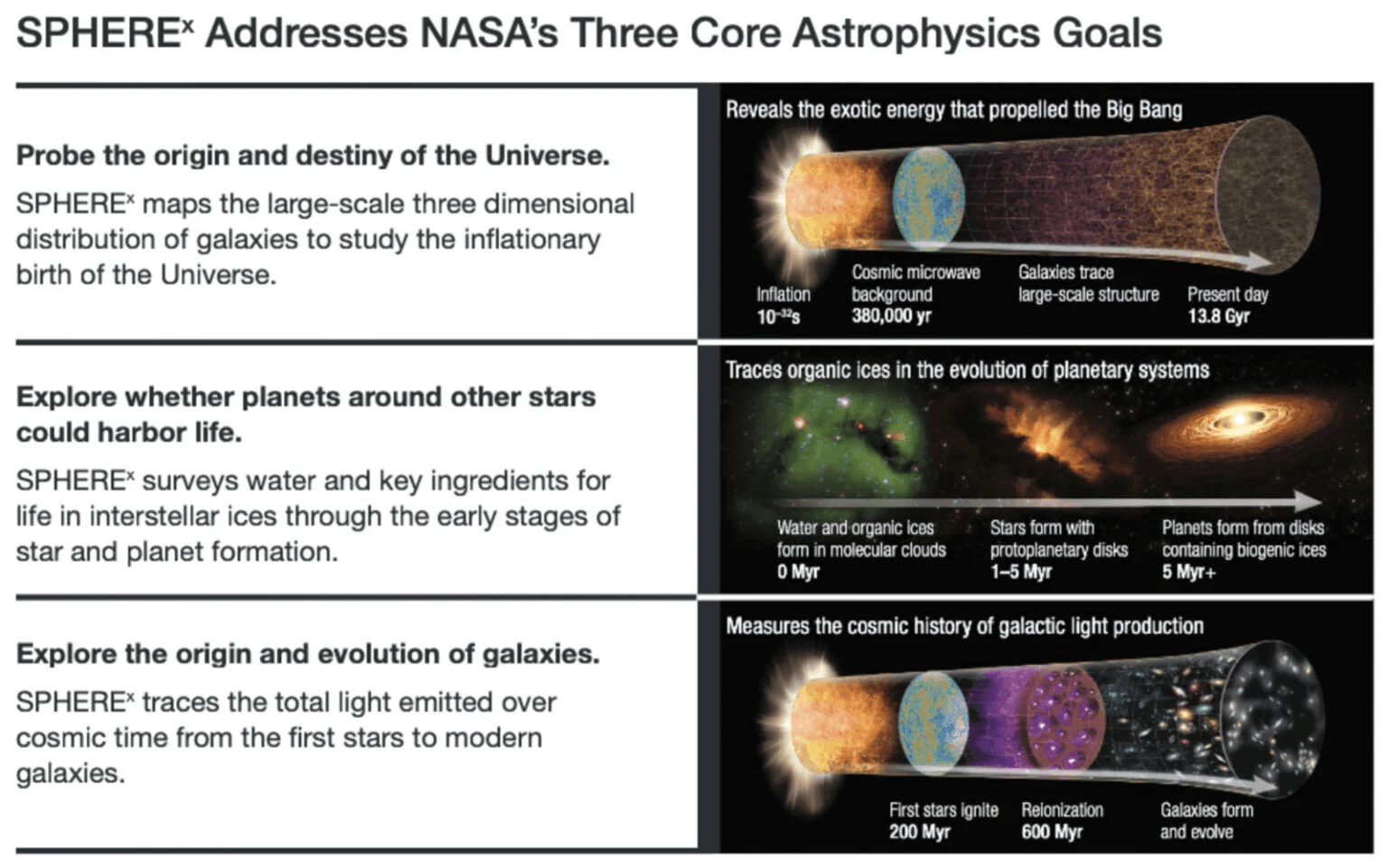
SPHEREx: NASA space telescope employing spectroscopy to create 3-D map of the sky

Scope: scans entire sky in 102 infrared color bands over 2-year Earth-orbit mission

Geography: mission operations from USA; telescope itself in low-Earth orbit observing intergalactic space

Quick Facts for MCQs

Tech & Instruments

  • Spectrometer: splits infrared light to analyse absorption-emission signatures
  • Data product: all-sky 3-D map enabling distance & composition estimates
  • Bandwidth: 0.75–5 µm infrared range (implicit from 102 bands)

Scientific Objectives

  • Inflation: probe fluctuations from rapid post-Big-Bang expansion
  • Cosmic ices: chart distribution of water and carbon compounds in star-forming clouds
  • Extra-galactic background light: measure cumulative glow to spot unseen objects

Astronomical Context

  • Big Bang: standard model dating universe to 13.8 billion years
  • Epoch of Reionization: era when first stars ionised neutral hydrogen; SPHEREx maps related signatures
  • Comparative missions: complements JWST deep-field views with wide-field spectral survey

Key Data Points

FeatureData-Point
Full formSpectro-Photometer for the History of the Universe, Epoch of Reionization, and Ices Explorer
Launch agencyNASA (USA)
Planned mission life2 years
TechniqueSpectroscopy across 102 color bands
Galaxies to be mapped≈ 450 million
Key chemical targetsH₂O, CO₂, CO in molecular clouds
GS-2Scheme

14.Model Women-Friendly Gram Panchayats Initiative (Grassroots Governance)

DD News
Illustration for Model Women-Friendly Gram Panchayats Initiative (Grassroots Governance)

What & Where

Model Women-Friendly Gram Panchayat (MWFGP): gender-inclusive governance model boosting women’s participation, safety, leadership at village level.

Launched by Ministry of Panchayati Raj, National Convention, New Delhi, 5 March 2025.

One model gram panchayat to be created in every district across India.

Quick Facts for MCQs

Tech & Schemes

  • Flagship Panchayati Raj scheme foregrounding women’s empowerment at the grassroots.
  • Reinforces 73rd Constitutional Amendment mandates on democratic decentralisation.
  • Repository to showcase best gender-sensitive governance practices for replication.

Capacity & Monitoring

  • SIRD&PRs lead structured training modules for representatives and staff.
  • Real-time dashboard tracks safety, equity, inclusivity indicators GP-wise.
  • Mahila Gram Sabhas institutionalise women-centric decision making on 8 March each year.

International Support

  • UNFPA provides technical assistance for framework and rollout.
  • Launch timed with International Women’s Day 2025, aligning with global gender equality agenda.

Key Data Points

FeatureData-Point
Launching ministryMinistry of Panchayati Raj
Launch date & venue5 Mar 2025, National Convention, New Delhi
Celebration linkagePart of International Women’s Day 2025 events
District coverage1 Model Women-Friendly GP per district
Support agenciesSIRD&PRs, UNFPA
Monitoring toolDedicated online dashboard
Capacity buildingTraining programmes for elected reps & officials
Community eventNationwide Mahila Gram Sabhas on 8 Mar 2025
Core aimGender-sensitive, safe, inclusive local governance
GS-2Scheme

15.PM-SYM Pension Scheme (Unorganised Pension)

DD News
Illustration for PM-SYM Pension Scheme (Unorganised Pension)

What & Where

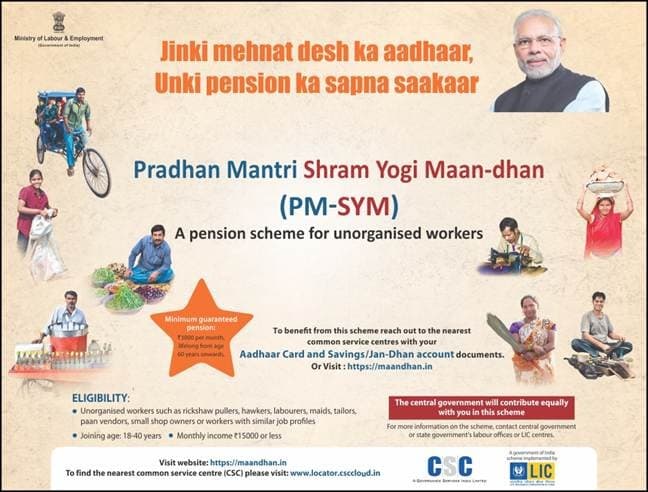
Scheme: Pradhan Mantri Shram Yogi Maandhan, voluntary contributory pension for India’s unorganised workers

Process: Worker contributes monthly, Centre matches 1:1, LIC manages fund, CSCs handle enrolment

Geography: Pan-India rollout under Ministry of Labour & Employment, launched Interim Budget 2019

Quick Facts for MCQs

Eligibility Norms

  • Eligibility: Unorganised workers, age 18-40, earnings ≤ ₹15k, not income-taxpayer or under EPF, ESIC, NPS
  • Discipline: Subscriber must maintain monthly contributions till 60 for full benefits

Contribution & Benefits

  • Contribution: Worker pays ₹55-₹200 monthly; Centre matches 1:1 up to retirement age
  • Benefit: Fixed ₹3,000 pension after 60; spouse receives 50 % upon subscriber death

Scheme Enhancements

  • Update: Revival period extended to three years, aiding financially stressed subscribers
  • Flexibility: New exit provisions allow refunds with appropriate interest based on tenure

Tech & Outreach

  • Digitisation: Integrated with e-Shram database for seamless verification and targeting
  • Awareness: SMS campaigns, state-UT review meetings, CSC network used to boost enrolment

Key Data Points

FeatureData-Point
Launch year2019
Admin ministryLabour & Employment
Managing agencyLIC of India
Monthly pension₹3,000 (post-60)
Income ceiling≤ ₹15,000 per month
Eligible age at entry18-40 years
Worker contribution range₹55–₹200 per month
Government match100 % of worker share
Family pension50 % to surviving spouse
Revival window3 years for lapsed accounts
Exit <10 yrsRefund + savings interest
Exit after 10 yrs, <60Refund + fund interest
Complete demiseCorpus reverts to scheme fund
Excluded categoriesIncome-taxpayers, EPF, ESIC, NPS members
Enrolment modeAadhaar-based CSCs / Maandhan portal

Related UPSC Prelims PYQs

GEO_GS, GS1 2021PYQ 1

Which one of the following is NOT correct with regard to Pradhan Mantri Shram Yogi Maan-Dhan Yojana (PM-SYM)?

GEO_GS, GS1 2024PYQ 2

With reference to the Pradhan Mantri Shram Yogi Maan-dhan (PM-SYM) Yojana, consider the following statements:

Ready to practice?

Test your knowledge with our UPSC test series.

Start Free Trial