UPSC Current Affairs

13 topicsGS-1: 2GS-2: 3GS-3: 8
0/13 done
GS-2Polity

1.Assam D Voter Citizenship (Citizenship Issues)

Down to Earth

What & Where

Definition: ‘D’ (Doubtful) voters—persons in Assam whose Indian citizenship is under verification

Process: Marked during electoral roll scrutiny; cases sent to Foreigners Tribunals for final citizenship verdict

Geography: Assam only; category created by Election Commission of India in 1997 amid influx concerns

Quick Facts for MCQs

Legal & Policy

  • Mandate: Citizenship Rules 2003 require NPR entry with verification remark for doubtful individuals
  • Tribunal: 100+ Foreigners Tribunals in Assam empowered to declare citizenship or foreigner status
  • Detention: State can confine declared foreigners in dedicated centres pending deportation

Administrative Process

  • Identification: Electoral registration officers flag mismatched documents during roll revisions
  • Marking: ‘D’ printed beside elector name; instantly removes voting and contesting rights
  • Resolution timeline: Decision legally expected in months yet often lingers for years

Social Concerns

  • Family split: Mixed citizenship status causes schooling, property, welfare access hurdles
  • Stigma: ‘D’ tag leads to social exclusion and job denials despite ongoing verification
  • Detention plight: Reports of Indian citizens jailed for years without timely review

Key Data Points

FeatureData-Point
First use year1997
Introduced byElection Commission of India
Governing ActCitizenship Act 1955 silent on ‘D’ category
Supporting RulesCitizenship Rules 2003 mandate NPR remark for doubtful cases
Voting rightSuspended until Foreigners Tribunal clearance
Eligible appealsForeigners Tribunal; further judicial review possible
Outcome if foreignerDetention or deportation possible
NRC linkageClearance enables inclusion in National Register of Citizens
Temporary tagMust be decided within definite period; cannot be perpetual
Common family issueSplit status—some citizens, some ‘D’ voters

Related UPSC Prelims PYQs

CDS_GK, GS1 2017PYQ 1

लोक सभा के निर्वाचन के लिए नामांकन-पत्र

CDS_GK, GS1 2024PYQ 2

निम्नलिखित में से किस क्षेत्र को नागरिकता (संशोधन) अधिनियम, 2019 के कारगर से छूट दी गई है?
GS-3Economy

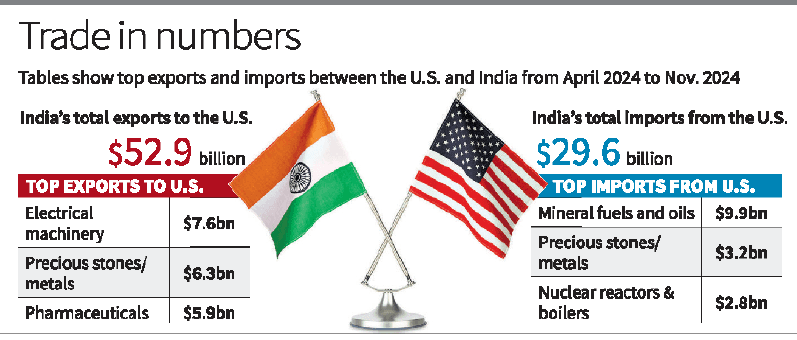
2.Reciprocal Tariffs Trade Policy (Trade Policy)

IT
Illustration for Reciprocal Tariffs Trade Policy (Trade Policy)

What & Where

Definition: reciprocal tariff equals the partner’s levy on U.S. exports

Coverage: applies to goods, services, non-tariff barriers against India, China, EU, Canada, Mexico

Objective: pressure partners to lower duties, shrink U.S. trade deficit

Quick Facts for MCQs

Legal & Policy

  • WTO-conflict: reciprocity breaches MFN equal-treatment clause
  • Exception-use: U.S. may invoke security or general exceptions to justify action
  • Dispute-risk: partners likely file cases at WTO panels

Economic Angle

  • Price-inflation: import cost hike lowers consumer purchasing power
  • Market-volatility: tariff unpredictability chills investment and growth
  • Domestic-production: higher foreign costs spur reshoring and job creation

International Relations

  • Retaliation-threat: China, Canada, Mexico signal counter-tariffs disrupting supply chains
  • Diplomacy-strain: escalating duties erode trust and multilateral trade norms

Key Data Points

FeatureData-Point
Targeted partnersIndia, China, EU, Canada, Mexico
WTO principle hitMost-Favoured-Nation non-discrimination
Possible WTO defenceArticle XXI (security) or Article XX (general exceptions)
Core aimMatch import tariffs with export tariffs
Key consumer effectHigher retail prices via cost pass-through
Expected domestic gainIncentive for on-shore manufacturing
GS-1Mapping

3.Japan Geographical Snapshot (Places in News)

CNN

What & Where

Ofunato wildfire, Iwate Prefecture, is Japan’s largest in ~30 yrs; >2,000 firefighters battling flames.

Site: coastal Ofunato, northern Honshu Island; dense forests, humid climate, mountainous backdrop.

Region sits on Pacific Ring of Fire, heightening seismic and volcanic disaster exposure.

Quick Facts for MCQs

Physical Geography

  • 80 % of Japan mountainous; four main islands: Honshu, Hokkaido, Kyushu, Shikoku.
  • Ofunato terrain combines coastal forests and mountains, aiding fire spread under humid conditions.
  • Mt Fuji dormant volcano; Ring of Fire status raises multi-hazard vulnerability.

Maritime Boundaries

  • Maritime neighbours: China, South Korea, North Korea, Russia, Taiwan across respective seas/straits.
  • Key waters encircling Japan: Sea of Japan, East China Sea, Philippine Sea, Pacific Ocean, Sea of Okhotsk.
  • Kuril dispute influences La Pérouse Strait boundary with Russia.

Economic & Biodiversity

  • Ofunato livelihood hinges on fisheries, tourism, biodiverse forests now imperilled by wildfire.
  • Coastal forests support marine–terrestrial ecosystem services essential for local economy.
  • Fire threatens habitat corridors for northern Honshu fauna and migratory birds.

Key Data Points

FeatureData-Point
PrefectureIwate
CityOfunato
IslandHonshu
Firefighters deployed>2,000
Japan capitalTokyo
Highest peakMt Fuji – 3,776 m
Longest riverShinano River
Strait with RussiaLa Pérouse (Sōya)
Surrounding seasSea of Japan, East China Sea, Sea of Okhotsk, Pacific Ocean
GS-3Environment

4.Asia-Pacific 3R Forum Jaipur Declaration (Circular Economy)

DD News
Illustration for Asia-Pacific 3R Forum Jaipur Declaration (Circular Economy)

What & Where

Regional 3R & Circular Economy Forum Asia-Pacific: annual platform on Reduce-Reuse-Recycle and resource-efficient growth.

12th edition hosted in Jaipur, Rajasthan by India’s Housing & Urban Affairs Ministry with UNCRD-IGES.

Geography focus: Asia-Pacific nations collaborating on urban waste, circular economy and SDG alignment.

Quick Facts for MCQs

Legal & Policy

  • Jaipur Declaration urges stronger waste systems, sustainable consumption, carbon-neutral roadmaps.
  • Circular economy framed as accelerator for SDGs and Paris Agreement targets.

Schemes & Initiatives

  • Cities Coalition for Circularity: global knowledge-sharing network on urban waste, resource loops.
  • CITIIS 2.0 agreements finance integrated waste and climate projects; multilateral development bank backed.

International Collaboration

  • Forum backed by UNESCAP, Japan MoE; showcases Indo-Japan environmental partnership.
  • India positioning to host WCEF 2026, enhancing global circular leadership profile.

Key Data Points

FeatureData-Point
Launch year2009
Current edition12th
2024 Host cityJaipur, Rajasthan
Lead Indian ministryMoHUA
Co-organisersUNCRD, IGES
Support agenciesUNESCAP, Japan MoE
Last forum (2023)Cambodia
India’s earlier hostIndore, 2018 (8th)
Jaipur DeclarationAdopted unanimously
New allianceCities Coalition for Circularity (C-3)
Theme (12th)“Realizing Circular Societies Towards Achieving SDGs and Carbon Neutrality”
India’s bidWorld Circular Economy Forum 2026
CITIIS 2.0 funds₹1,800 crore
CITIIS city coverage18 cities in 14 states

Related UPSC Prelims PYQs

GS1 2018PYQ 1

The Partnership for Action on Green Economy (PAGE), a UN mechanism to assist countries' transition towards greener and more inclusive economies, emerged at

GS1 2015PYQ 2

‘Beijing Declaration and Platform for Action’, often seen in the news, is

GS-3Environment

5.Wallace Line Biogeographical Boundary (Biogeography)

The Hindu
Illustration for Wallace Line Biogeographical Boundary (Biogeography)

What & Where

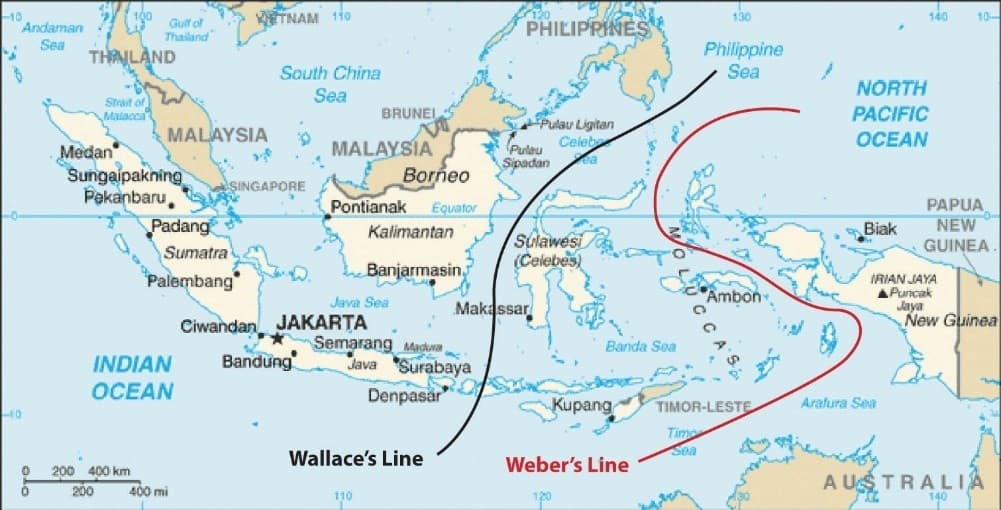
Biogeographical boundary separating Asian and Australian ecozones, identified by Alfred Russel Wallace in 1863

Tracks deep-water gaps between Bali–Lombok and through Makassar Strait between Borneo–Sulawesi, extending northward

Originated when Australia drifted from Antarctica and collided with Asia; deep trenches stayed even during Pleistocene low sea levels

Quick Facts for MCQs

Evolutionary Significance

  • Evidence; Sharp faunal turnover demonstrates isolation-driven diversification and supports allopatric speciation theory
  • Showcase; Boundary remains a textbook example validating natural selection through geographic separation

Geological History

  • Drift; Australia moved north after Antarctica split, contacting Asia ≈35 mya, forming lasting deep channels
  • Pleistocene; Global sea-level fall produced land bridges elsewhere but Wallacean trenches kept barrier intact

Conservation Angle

  • Forecasting; Knowledge of dispersal limits guides models predicting species responses to climate change and habitat loss
  • Planning; Distinct biotas demand island-specific conservation priorities within Indonesia and surrounding regions

Key Data Points

FeatureData-Point
Discovery year1863
DiscovererAlfred Russel Wallace
Boundary typeBiogeographical line
Key straitsLombok, Makassar
Channel width Bali–Lombok≈20 km
Geological causeAustralia–Antarctica split, Asia collision
Epoch with land bridgesPleistocene
West-side faunaAsiatic; tigers, elephants
East-side faunaAustralasian; kangaroos, marsupials
Impact on birds/mammalsStrong dispersal barrier
Impact on marine lifeLargely unaffected due to ocean connectivity

Related UPSC Prelims PYQs

GEO_GS 2024PYQ 1

Which one among the following islands in South-East Asia is situated between Wallace's Line and Weber's Line that are related to Bio-diversity?

GS-3EnvironmentQuick Bite

6.Carbon Intensity Indicator (Carbon Intensity)

The Hindu
Illustration for Carbon Intensity Indicator (Carbon Intensity)

What & Where

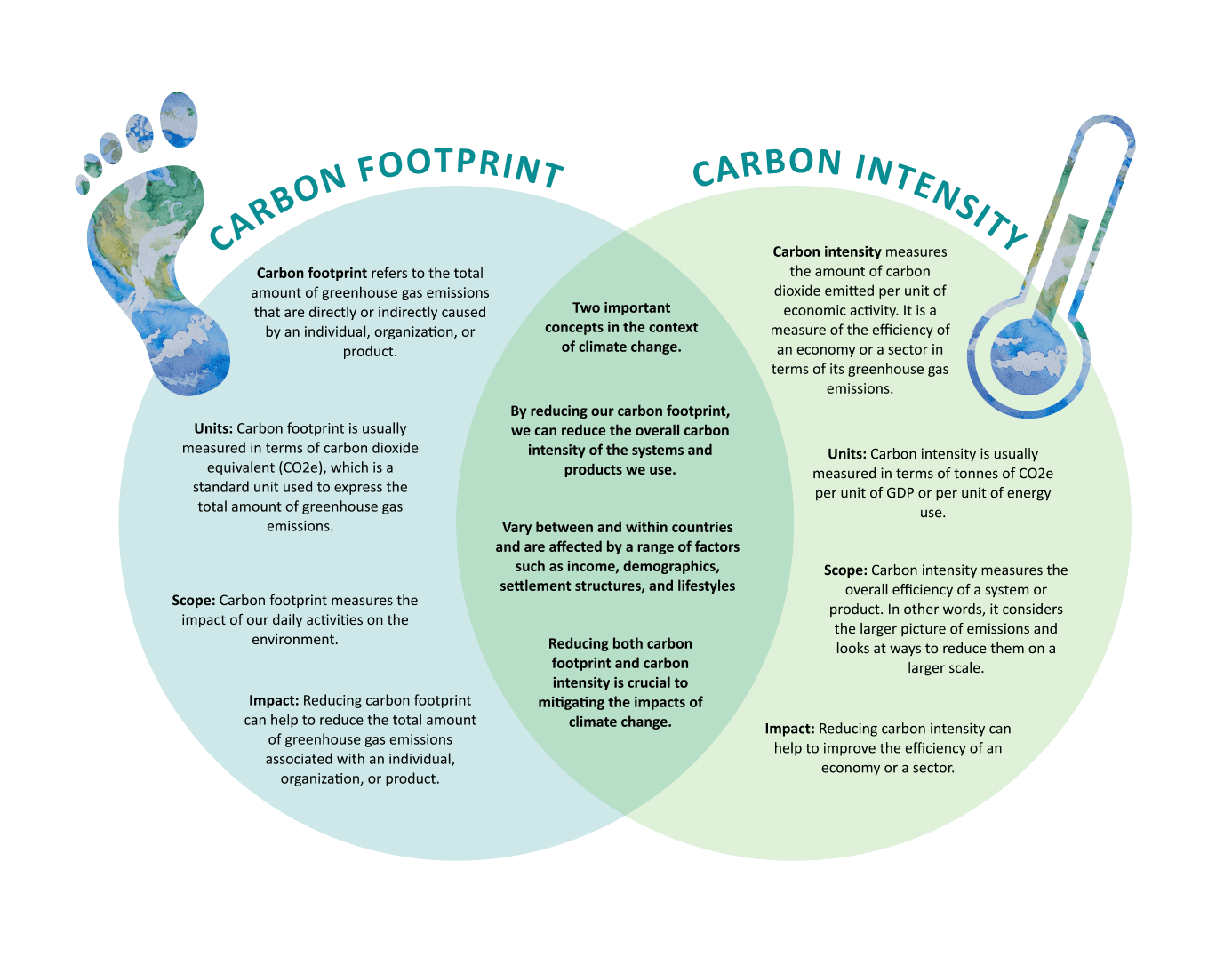
Definition : Carbon intensity = CO₂ emitted per output unit (sector) or per GDP unit (nation)

Scope : Tracks emission trends while normalising for production or economic growth

Example : Steel sector tonnes CO₂ per tonne steel produced

Quick Facts for MCQs

Legal & Policy

  • Paris Agreement demands transparent intensity tracking for NDCs
  • India’s Updated NDC (2022) embeds 45 % intensity-reduction pledge

Economic Angle

  • Metric enables growth-compatible decarbonisation benchmarking
  • Lower intensity indicates more CO₂-efficient value creation

Sector Illustration

  • Steel sector often benchmarked; guides technology upgrades like green hydrogen furnaces

Key Data Points

FeatureData-Point
National metricCO₂ emissions ÷ GDP (per capita)
Sector metricCO₂ emissions ÷ physical output
Indian target45 % cut in emissions intensity of GDP by 2030 vs 2005
Climate pactParis Agreement 2015 under UNFCCC
Illustrative sectorSteel: t steel / t CO₂

Related UPSC Prelims PYQs

GEO_GS, GS1 2020PYQ 1

India has committed to reduce emission intensity of its GDP from 2005 levels by 33-35 per cent by the year:

GEO_GS, GS1 2025PYQ 2

Consider the following statements:

GS-3EnvironmentQuick Bite

7.A23a Iceberg Near South Georgia (A23a Iceberg)

Hindustan Times
Illustration for A23a Iceberg Near South Georgia (A23a Iceberg)

What & Where

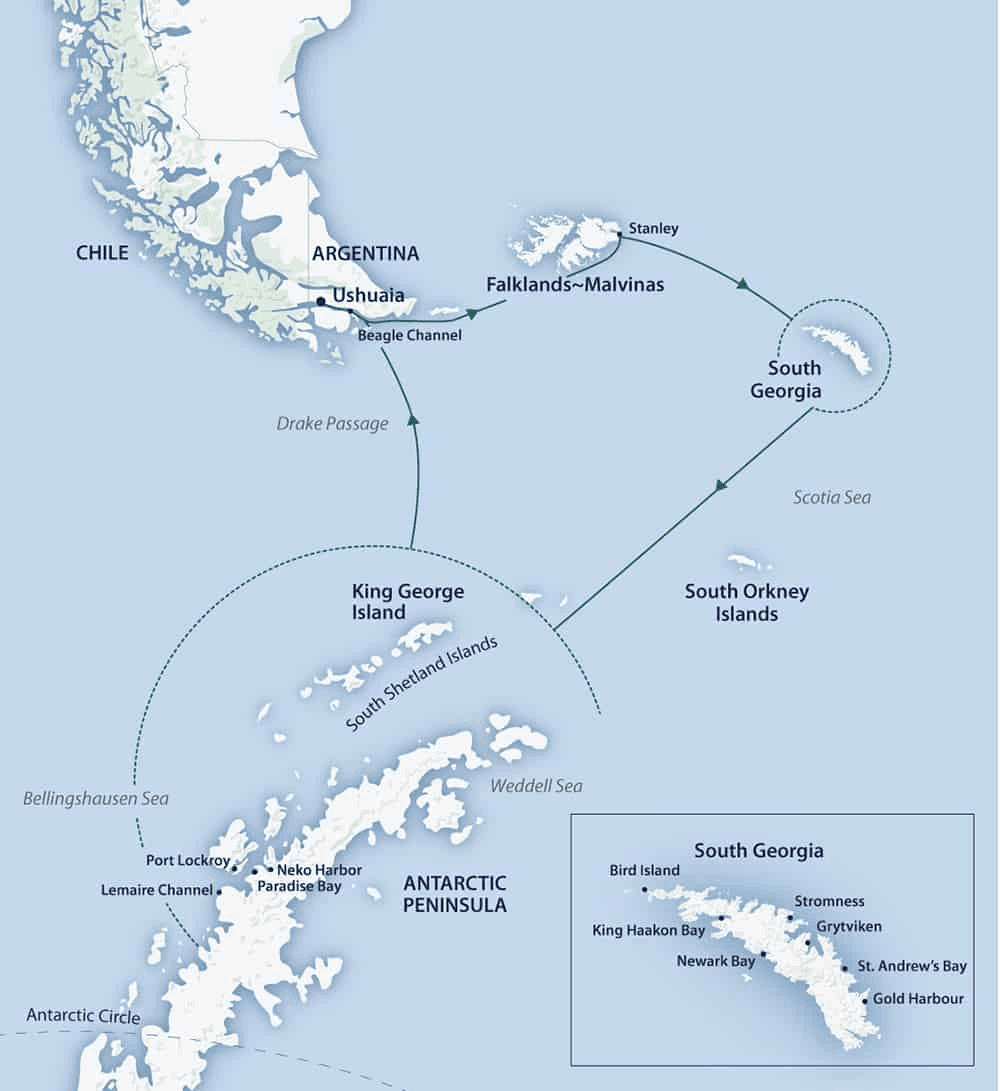
Iceberg A23a: world’s largest (3,672 sq km), calved 1986 from Antarctica’s Filchner Ice Shelf, now grounded near South Georgia.

South Georgia Island: sub-Antarctic, ~70 km from A23a, administered by UK as British overseas territory, also claimed by Argentina.

Icebergs: floating freshwater ice masses; calved from glaciers/shelves; ~90 % volume remains submerged due to lower density.

Quick Facts for MCQs

Environmental Impact

  • Nutrient release from melting fosters phytoplankton, enhancing regional marine food web.
  • Grounding offshore minimizes direct habitat crush risk for seals, penguins on island beaches.
  • Iceberg’s slow melt offers prolonged ecological fertilisation versus sudden disturbance.

Geopolitical Context

  • Territory status underscores UK–Argentina tension echoing wider South Atlantic disputes.
  • British Antarctic Survey monitors iceberg to safeguard fisheries and conservation zones.
  • Strategic location key for Southern Ocean resource management and maritime navigation.

Glaciology & Oceanography

  • Weddell Gyre initially trapped A23a; Antarctic Circumpolar Current later propelled northward.
  • Grounding occurs when keel ≥ seabed depth, temporarily halting drift.
  • Large tabular icebergs like A23a influence ocean stratification and carbon sequestration.

Key Data Points

FeatureData-Point
Iceberg nameA23a
Surface area3,672 sq km
Calving year1986
Parent ice shelfFilchner Ice Shelf, Antarctica
Stuck in Weddell Sea>30 years (1986-2020)
Drift restart2020
Current distance to South Georgia≈70 km
Administration of South GeorgiaUnited Kingdom (British overseas territory)
Competing sovereignty claimArgentina
Portion of iceberg submerged≈90 %

Related UPSC Prelims PYQs

GEO_GS, NDA_GAT 2026PYQ 1

A23a refers to

GEO_GS, NDA_GAT 2024PYQ 2

but it is virtually covered by a dome-shaped P

GS-3S&T

8.Space Debris Governance (Space Debris)

The Hindu

What & Where

Space debris – non-functional human objects orbiting Earth or re-entering atmosphere

Key types – large defunct satellites/boosters, small collision fragments, microscopic paint flakes

500 kg suspected debris fell in Kenya, spotlighting liability loopholes

Quick Facts for MCQs

Legal & Policy

  • Treaty regime holds launching state absolutely liable for Earth-surface damage but lacks enforcement teeth
  • No binding global rule mandating controlled re-entry or active debris removal
  • Attribution difficulty hampers compensation claims and accountability

Tech & Schemes (India)

  • IS4OM provides real-time threat evaluation and supports collision-avoidance decisions
  • Project Netra adds indigenous radar, optical sensors, data analytics for debris cataloguing
  • SSA Control Centre acts as national hub for space traffic coordination

Challenges & Risks

  • Rising mega-constellations multiply collision probability and Kessler chain reactions
  • Limited compliance with 25-year rule leaves thousands of dead satellites aloft
  • Uncontrolled descents endanger life, property, aviation routes

Way Forward

  • Mandatory deorbit or graveyard-orbit plan as launch licence prerequisite
  • Global liability tribunal for quick, uniform compensation awards
  • Promotion of reusable launchers, on-orbit servicing, dedicated debris-removal missions

Key Data Points

FeatureData-Point
Outer Space Treaty1967
Liability Convention1972
UN COPUOS debris guidelinesNon-binding
25-Year deorbit rule compliance≈ 30 %
Uncontrolled re-entry penaltiesNone
ISRO collision avoidance 202221 manoeuvres
IS4OM start2022
Project Netra capabilityTracks ≥ 10 cm debris to 3 400 km
SSA Control Centre2020, Bengaluru
Weight of Kenya object~ 500 kg
Past crash caseCosmos 954 in Canada, 1978
Mega-constellation examplesStarlink, OneWeb, Kuiper
GS-3S&T

9.Quantum Computing Defence Implications (Quantum Computing)

News on Air

What & Where

Quantum computing: qubits exploit superposition + entanglement for parallel, exponential processing beyond 0/1 classical bits.

Modalities: superconducting circuits, trapped ions, photonic, neutral-atom, topological qubits under rapid global R&D.

India focus: NITI Aayog strategic paper; National Quantum Mission 2023 aims indigenous compute, comms, crypto capacity.

Quick Facts for MCQs

Tech & Schemes

  • Funding: Mission covers computing, communication, cryptography, workforce; incentivises indigenous hardware supply chain.
  • Collaboration: Academia-industry-government consortia building prototypes, cloud access platforms.
  • Startups: Grants & incubators spurring QpiAI, BosonQ Psi innovations in software, simulation.

Security Dimension

  • Cybersecurity: Quantum attacks endanger RSA/ECC; nationwide PQC migration critical.
  • Military use: Real-time SIGINT, stealth detection, autonomous-weapon navigation gain quantum edge.
  • Economic warfare: Quantum-safe systems needed to shield markets, critical databases.

Challenges

  • Noise: High error rates demand resource-heavy error correction.
  • Scalability: Cryogenic cooling, precision lasers restrict large qubit arrays.
  • Protectionism: US-China-EU export curbs threaten tech access, supply chains.

International Collaboration

  • Agreements: India partners with US, EU, Japan for joint labs, standards, IP sharing.
  • Talent: Proposed bi-national PhD, post-doc programmes to enlarge quantum workforce.

Key Data Points

FeatureData-Point
Strategic paper issuerNITI Aayog, New Delhi
National Quantum Mission₹6,003 crore; approved 2023
Key Indian startupsQpiAI, BosonQ Psi, TCS Quantum Lab
Longer qubit coherenceAtom Computing; ColdQuanta
High-fidelity controlIBM; Quantinuum
Self-correcting chipGoogle “Willow”
Topological qubit demoMicrosoft “Majorana-1”
Core defence riskClassical encryption break; PQC urgent
Major global investorsUS, China, European Union

Related UPSC Prelims PYQs

ESE_GS, GS1 2022PYQ 1

"क्यूबिट (qubit)" शब्द का उल्लेख निम्नलिखित में कौन-से एक प्रसंग में होता है ?

ESE_GS, GS1 2026PYQ 2

Consider the following statements regarding quantum dots:

GS-2Scheme

11.Parvatmala Ropeway Development (Ropeway Connectivity)

New Indian Express
Illustration for Parvatmala Ropeway Development (Ropeway Connectivity)

What & Where

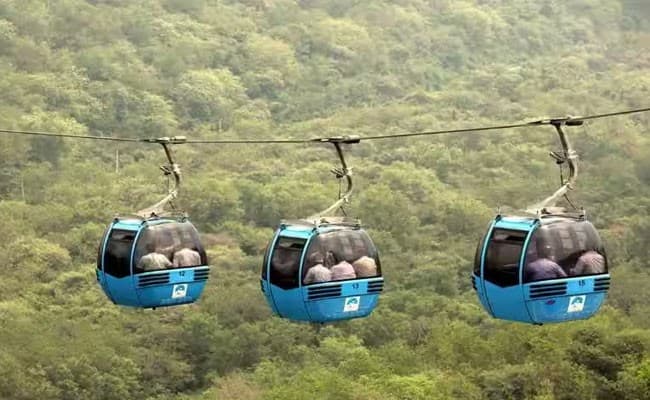
Parvatmala Pariyojana = National ropeways programme to link difficult Himalayan terrains through PPP-based projects.

Approved stretches: Govindghat–Hemkund Sahib 12.4 km, Sonprayag–Kedarnath 12.9 km, Uttarakhand.

Hemkund Sahib: 4,632 m Sikh shrine in Chamoli; entry to UNESCO-listed Valley of Flowers.

Quick Facts for MCQs

Tech & Schemes

  • Hybrid-Annuity blends EPC efficiency with annuity stability, improving private ROI.
  • Indigenous manufacturing pushed under Make in India, cutting import dependence.
  • Multi-utility design allows passenger, urban commute and light-cargo operations.

Economic Angle

  • Tourism boost expected for Sikh, Hindu pilgrimages and Valley of Flowers trekkers.
  • Shorter travel time likely to extend tourist season, increasing local homestay income.
  • Ropeways cheaper than hill roads, lowering state maintenance burden.

Environmental Impact

  • Electric drive system reduces vehicular emissions in fragile Himalayas.
  • Elevated alignment minimises land diversion and forest felling versus road widening.
  • Fewer diesel ponies and helicopters diminish noise and waste near sanctuaries.

Religious & Heritage

  • Hemkund Sahib revered as meditation site of Guru Gobind Singh; attracts global Sikhs.
  • Kedarnath part of Char Dham; ropeway eases elderly pilgrim access.
  • Improved connectivity could spread visitor load, aiding shrine crowd management.

Key Data Points

FeatureData-Point
Programme launchUnion Budget 2022-23
Implementing ministryMoRTH
Executing agencyNational Highways Logistics Management Ltd
Planned ropeways200+ in 5 years
Total outlay₹1.25 lakh crore
Funding modeHybrid Annuity; GoI bears 60% CAPEX
Core techMonocable & tricable gondola
Hemkund altitude4,632 m
Present trek length21 km from Govindghat
Kedarnath ropeway length12.9 km

Related UPSC Prelims PYQs

NDA_GAT 2021PYQ 1

Bharatamala Pariyojana is related to

GS-2Scheme

12.Revised Livestock Health Programme (Livestock Health)

PIB

What & Where

Scheme: Centrally sponsored Livestock Health & Disease Control Programme (LHDCP), India, Dept. of Animal Husbandry & Dairying.

Processes: Mass vaccination, disease surveillance (INAPH), Mobile Veterinary Units, generic-drug supply via new Pashu Aushadhi.

Coverage: All states/UTs; cost-share 60:40 (states), 90:10 (NE/Himalayan), 100 % (UTs) during 2024-26.

Quick Facts for MCQs

Tech & Schemes

  • MVU: GPS-tracked vans with medicines, portable diagnostics, tele-consult link.
  • INAPH: Cloud platform for real-time case, vaccine, animal ID data.
  • Infrastructure: Upgraded hospitals, dispensaries, state labs under LHDCP capex.

Economic Angle

  • Productivity: Healthier animals yield higher milk, meat, draft power income.
  • Loss-reduction: Fewer outbreaks cut culling, trade bans, compensation payouts.
  • Affordability: Generic drugs via PM-Kisan Samriddhi Kendra/co-ops slash treatment cost.

Health & Biosecurity

  • NADCP goal: Eradicate FMD & Brucellosis through biannual nationwide vaccination.
  • CADCP ambition: 100 % coverage against PPR (sheep/goat) & CSF (pig) by 2026.
  • Capacity-building: Farmer, vet trainings on biosecurity, early-warning, outbreak containment.

Key Data Points

FeatureData-Point
Total outlay 2024-26₹3,880 crore
New componentPashu Aushadhi
Pashu Aushadhi budget₹75 crore
Flagship sub-schemeNADCP (FMD & Brucellosis)
Another sub-schemeCADCP (PPR & CSF)
Diseases additionally coveredLSD, Anthrax, Rabies etc.
Mobile Vet UnitsDiagnostic-equipped doorstep service
Central:State share60:40 (states); 90:10 (NE/Hills); 100 % (UTs)

Related UPSC Prelims PYQs

NDA_GAT 2021PYQ 1

निम्नलिखित में से कौन-सा राष्ट्रीय पशुधन मिशन का विनिर्दिष्ट उप-मिशन नहीं है?

GS-1Editorial

13.Slum Redevelopment Challenges Maharashtra (Slum Redevelopment)

Indian Express

What & Where

Slum: run-down, overcrowded urban settlement lacking tenure security and basic services (UN definition).

Act: Maharashtra Slum Areas (Improvement, Clearance & Redevelopment) Act 1971 creates Slum Rehabilitation Authority, enables land acquisition.

Geography: Maharashtra leads with 1.18 crore slum dwellers; Dharavi, Mumbai is India’s biggest slum cluster.

Quick Facts for MCQs

Legal & Policy

  • SupremeCourt: ordered Bombay HC systemic review of 1971 Act delays.
  • SRA-Model: private developer builds free tenements, gains extra saleable FSI.
  • LandPooling: DDA example cited for clear acquisition framework.

Challenges

  • Bureaucracy: lengthy land titles and clearances stall projects.
  • Finance: low ROI deters private capital, causing cost overruns.
  • Governance: developer-induced delays, weak transparency plague Mumbai SRA execution.

Social Concerns

  • Health: high typhoid, cholera incidence from unsafe water and waste.
  • Vulnerability: women, children exposed to trafficking, begging, prostitution.
  • Crime: inadequate policing and services foster malnutrition, educational gaps, petty offences.

Reform Measures

  • HolisticRehab: integrated services could unlock USD 1.3 trillion societal value.
  • PPP: Mumbai SRA, Ahmedabad SNP showcase private funds with social safeguards.
  • CommunityEngagement: UN-Habitat participatory upgrading cuts relocation resistance, preserves social fabric.

Key Data Points

FeatureData-Point
Enactment year of Maharashtra Slum Act1971
Slum Rehabilitation Scheme launch1995
Constitutional right impactedArticle 21 (shelter & livelihood)
Urban population projected by 202640 %
Slum share in urban India (2011)17.4 %
Maharashtra slum population1.18 crore
Developer incentiveHigher Floor Space Index
Avg. rehab cost/householdUSD 7,500
Estimated social return4 × investment
Potential national impactUSD 1.3 trillion

Ready to practice?

Test your knowledge with our UPSC test series.

Start Free Trial