UPSC Current Affairs

20 topicsGS-1: 4GS-2: 6GS-3: 10
0/20 done
GS-2Editorial

1.Supreme Court Seeks Periodic Law Reviews (Legislative Review Mechanism)

Indian Express

What & Where

Periodic review: SC suggests expert‐led scrutiny of every law at 20–50 yr intervals

Section 81, RPA 1951: election petition must reach jurisdictional High Court within 45 days of result

RPA 1951: core statute regulating delimitation, voter rolls, qualifications, election offences across India

Quick Facts for MCQs

Legal & Policy

  • SupremeCourt: legislative audit needed to spot outdated, politically driven or conflicting provisions
  • Example laws needing tweaks: IT Act 2000 for cybercrime; Bihar Prohibition Act causing bail surge
  • Misuse concern: IPC 498A illustrates unintended consequence of protective provisions

Challenges

  • Politicalwill: reviews can be stalled or skewed toward electoral gains e.g. Farm Laws 2020 debate
  • Legalcomplexity: interlinked statutes risk anomalies like POCSO–IPC child pornography overlap
  • Publicparticipation: low legal literacy exemplified by limited inputs to 2020 Criminal Law panel

International Examples

  • UnitedKingdom: Law Commission repealed archaic Witchcraft Act 1735 after systematic review
  • Australia: ALRC conducts scheduled thematic reports ensuring contemporary relevance
  • USA: PATRIOT Act amended periodically to balance security with privacy rights

Reform Bodies

  • Institutions: Administrative Reforms Commission, NCRWC 2000, Ranbir Singh Committee 2020, Law Commission
  • LawCommission tasks: repeal deadwood, draft DPSP-linked bills, advise on judicial administration

Way Forward

  • StrengthenLawCommission: give autonomy, funds, mandated cyclical review calendar
  • UseTechnology: MyGov consultations; AI analytics for impact assessment and drafting efficiency
  • ResourceAllocation: dedicated reform budget plus training for legislators, judges, enforcement cadres

Key Data Points

FeatureData-Point
Act involvedRepresentation of the People Act, 1951
Section 81 limit45 days from result declaration
Petition forumHigh Court of the constituency
RPA focusSeats allocation, delimitation, electoral rolls, offences
First Law Commission (British era)1834; chaired by Lord Macaulay
First Law Commission (post-Independence)1955; M.C. Setalvad
Current Law Commission23rd; tenure 1 Sep 2024 – 31 Aug 2027

Related UPSC Prelims PYQs

GS1 2017PYQ 1

In India, ‘judicial review’ implies

GS1 2019PYQ 2

With reference to the Constitution of India, prohibitions or limitations or provisions contained in ordinary laws cannot act as prohibitions or limitations on the constitutional powers under Article 142. It could mean which one of the following?
GS-2Polity

2.BNSS Section 479 Undertrial Bail Rules (Undertrial Bail Reform)

Business Standard

What & Where

Section 479, Bharatiya Nagarik Suraksha Sanhita 2023: statutory bail mechanism for under-trial prisoners (UTPs).

Applicable across all States & Union Territories via fresh Ministry of Home Affairs directive.

Activates release once custody touches fixed fractions of the offence’s maximum sentence.

Quick Facts for MCQs

Legal & Policy

  • Provision codifies Supreme Court bail guidelines into primary legislation.
  • Statutory mandate removes discretionary delays, ensuring automatic court move.
  • Exclusion clause maintains strict custody for capital & life-term offences.

Administrative Mechanism

  • Jail Superintendent must track sentence fractions, file bail/bond plea without inmate request.
  • Courts decide final release terms; denial must be reasoned and recorded.
  • Compliance reporting expected to be monitored by State Home departments.

Social Concerns

  • Measure targets high under-trial share (≈65 % of prison population per NCRB).
  • Anticipated easing of prison overcrowding and associated human-rights issues.
  • Facilitates quicker reintegration, reducing socio-economic cost of prolonged detention.

Key Data Points

FeatureData-Point
Parent lawBNSS 2023
Section number479
CoversUnder-trial prisoners (except death/life-imprisonment cases)
Bail trigger (regular UTP)50 % of maximum sentence completed
Bond trigger (first-time offender)33 % of maximum sentence completed
Mandatory applicantPrison Superintendent to concerned court
Issuing authority for directionsMinistry of Home Affairs
Key subsection on jail dutySub-sec (3)
GS-2MiscQuick Bite

3.BIS Celebrates 78th Foundation Day (BIS Milestones)

PIB

What & Where

BIS – statutory national standards body of India under BIS Act 2016; earlier Indian Standards Institution (ISI, 1947).

Mandate: standardisation, product certification, hallmarking, eco-labelling for goods/services across India.

Works under Ministry of Consumer Affairs, Food & Public Distribution; HQ New Delhi.

Quick Facts for MCQs

Institutional Evolution

  • ISI re-designated as BIS in 1987; current legal basis BIS Act 2016.
  • Celebrated 78th Foundation Day in 2025 emphasising “Quality Culture”.

Schemes & Marks

  • Product Certification provides ISI Mark ensuring safety & quality compliance.
  • Hallmarking certifies purity of gold/silver jewellery; massive scale rollout.
  • ECO Mark labels environment-friendly consumer products.

Strategic Planning

  • SNAP 2022-27 targets standards for emerging tech, sustainability, climate resilience.
  • Plan envisages industry-academia collaboration to tighten quality ecosystem.

Global Alignment

  • 94 % Indian standards already matched with ISO/IEC, aiding export compatibility.
  • Harmonisation reduces technical barriers, speeds mutual recognition.

Key Data Points

FeatureData-Point
Foundation Day6 Jan 1947 (as ISI); 78th anniversary celebrated 6 Jan 2025
Parent MinistryConsumer Affairs, Food & Public Distribution
Governing ActBureau of Indian Standards Act, 2016
Standards harmonised94 % with ISO & IEC norms
Hallmarked gold/silver items44.28 crore articles (cumulative)
Key certification logosISI Mark, Hallmark, ECO Mark
Strategic roadmapStandards National Action Plan (SNAP) 2022-27

Related UPSC Prelims PYQs

CDS_GK, GS1 2017PYQ 1

निम्नलिखित कथनों पर विचार कीजिए :

CDS_GK, GS1 2022PYQ 2

भारतीय दिवाला और शोधन-अक्षम बोर्ड (IBBI) किस वर्ष में स्थापित किया गया था?

GS-3Economy

4.HC Strikes Green Open Access Rules (Green Energy Access)

New Indian Express
Illustration for HC Strikes Green Open Access Rules (Green Energy Access)

What & Where

Green Energy Open Access Rules, 2022: Centre-notified framework easing open access for renewable power across India.

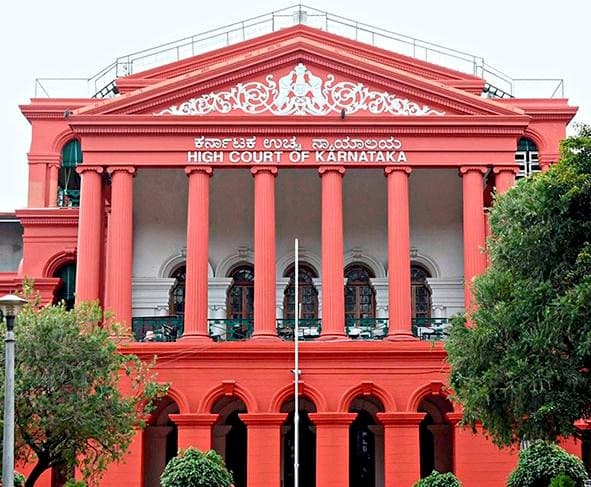
Karnataka High Court: Bengaluru bench quashed rules; held regulation of open access lies solely with State Electricity Commissions.

Statutory backdrop: Electricity Act 2003, especially Sections 42(2) & 181, allocate tariff-related powers to states.

Quick Facts for MCQs

Legal & Policy

  • Judgment: Centre acted ultra vires; rules invalid without prior Act amendment.
  • Sections cited: 42(2) assigns “open access” regulation; 181 empowers state commissions for subordinate legislation.
  • International commitments argument rejected; climate goals cannot override statutory federal powers.

Scheme Features

  • Portal: Single-window digital system for application, charge computation, tracking.
  • Demand option: Consumers may requisition green power; discoms obliged to supply.
  • Incentive: Concessional charges intended to spur private rooftop, C&I renewable uptake.

Consumer Angle

  • Smaller entities: 100 kW threshold lets MSMEs, malls enter open-access market.
  • Certification: Green power users earn tradable Renewable Energy Certificates, aiding ESG reporting.
  • Predictability: Fixed charge list reduces cost uncertainty for investors and consumers.

Key Data Points

FeatureData-Point
Notified byMinistry of Power, 2022
Open-access capReduced from 1 MW to 100 kW
Approval timeline15 days via national portal; deemed approved if delayed
Mandatory chargesTransmission, wheeling, cross-subsidy, others specified
Cross-subsidy surchargeCapped at 50 % of prevailing level
Additional surchargeRemoved for green open access
Eligible fuelsRenewable energy, waste-to-energy, green H₂ & NH₃
Renewable Purchase ObligationUniform across discoms, captive users, open-access consumers
Green certificatesAvailable to green-power users
HC ruling dateApril 2024 (Karnataka)
GS-3Economy

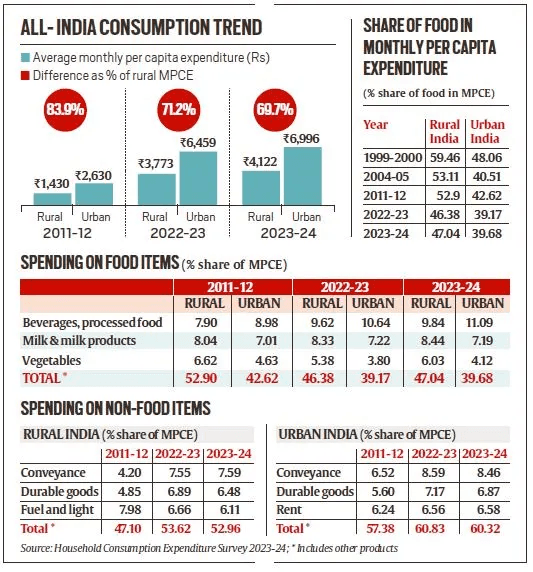
5.Household Consumption Survey 2023 Findings (HCES 2023 Findings)

PIB
Illustration for Household Consumption Survey 2023 Findings (HCES 2023 Findings)

What & Where

Household Consumption Expenditure Survey (HCES): nationwide NSS survey by NSO-MoSPI since 1951 to map spending patterns.

Captures Monthly Per-Capita Expenditure (MPCE) on food & non-food, inputs CPI revision, poverty and inequality estimates.

Coverage: all 36 States/UTs; latest round 2023-24 sampled 2.63 lakh households (rural 1.55 lakh, urban 1.08 lakh).

Quick Facts for MCQs

Economic Angle

  • Consumption surge; rural MPCE up 9.3 %, urban up 8.3 %, signaling demand-led growth.
  • Non-food share still dominant: 53 % rural, 60 % urban, indicating gradual lifestyle shift.
  • Services traction; conveyance largest non-food head in both geographies.

Regional Variations

  • Prosperity belt: Maharashtra, Punjab, Tamil Nadu, Telangana, Kerala above national MPCE.
  • Lagging belt: Bihar, UP, West Bengal, MP below average, flagging development gaps.
  • UT contrast: Chandigarh tops; Dadra-Nagar Haveli & Daman-Diu bottom in rural MPCE.

Inequality Metrics

  • Gini slide in both areas reflects modest reduction in consumption inequality.
  • Top 5 % spending contracted, bottom 5 % rose sharply, pointing to inclusive consumption gains.

Policy Implications

  • Rural transport, housing, processed-food regulation, and service-sector skilling emerge as priority focus areas.

Key Data Points

FeatureData-Point
Reference periodJuly 2023 – June 2024
Rural MPCE (nominal)₹4,122
Urban MPCE (nominal)₹6,996
Rural-urban MPCE gap69.7 % (2011-12: 83.9 %)
Highest MPCE stateSikkim – ₹9,377 (rural), ₹13,927 (urban)
Lowest MPCE stateChhattisgarh – ₹2,739 (rural), ₹4,927 (urban)
Top rural expense headFood 47.04 % (beverages & processed food highest)
Rural Gini 2023-240.237 (2022-23: 0.266)
Urban Gini 2023-240.284 (2022-23: 0.314)
Bottom 5 % MPCE riseRural +22 %, Urban +19 % YoY

Related UPSC Prelims PYQs

CDS_GK, GEO_GS 2023PYQ 1

The computation of poverty in terms of Monthly Per Capita Consumption Expenditure (MPCE) based on the Mixed Reference Period was recommended by the

CDS_GK, GEO_GS 2026PYQ 2

Consider the following statements about the Monthly Per Capita Expenditure (MPCE) in India:

GS-3Infrastructure

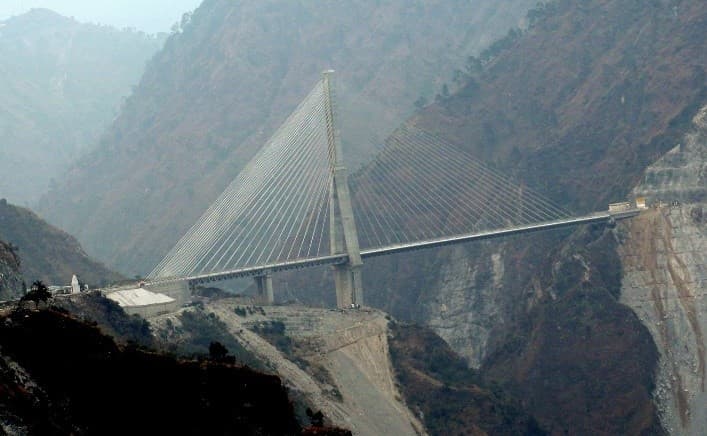
6.Anji Khad Rail Bridge Completed (Cable-Stayed Bridge)

DD News
Illustration for Anji Khad Rail Bridge Completed (Cable-Stayed Bridge)

What & Where

Anji Khad Bridge: India’s first cable-stayed rail bridge, integral to USBRL corridor

Sited between Katra and Reasi, Reasi district, Jammu & Kashmir

Spans Anji River valley 331 m above riverbed, enhancing Himalayan rail connectivity

Quick Facts for MCQs

Tech & Design

  • Cable-system: 96 stays of varying lengths counter high Himalayan winds and valley depth
  • Pylon: 193 m concrete-steel hybrid tower anchored to deep foundation for stability
  • Clearance: 331 m valley gap avoids intermediate piers, reducing geotechnical risks

Connectivity Impact

  • USBRL: bridge closes Katra–Reasi gap, enabling continuous Jammu–Baramulla rail travel
  • Tourism: faster Vaishno Devi and Kashmir access likely to spur pilgrim inflow and jobs
  • Strategic-military: improves troop, equipment mobility toward northern borders

Construction Challenges

  • Terrain: fragile slopes and winds up to 266 km/h necessitated cable-stayed choice
  • Seismic zone IV: design meets stringent earthquake resistance norms
  • Method: incremental launching and night shifts minimised ecological and social disruption

Key Data Points

FeatureData-Point
Bridge typeCable-stayed rail
National rank1st in India
Rail projectUdhampur-Srinagar-Baramulla Link
Location districtReasi, J&K
ConnectsKatra – Reasi
Total length725.5 m
Cable-stayed span473.25 m
Number of stay cables96
Cable length range82 m – 295 m
Pylon height193 m
Height above riverbed331 m
Executing agencyIndian Railways
GS-3InfrastructureQuick Bite

7.New Railway Divisions Inaugurated (Railway Divisions)

Indian Express

What & Where

Jammu Railway Division; 70th Indian division; carved from Firozpur; 742.1 km route in J&K.

Rayagada Railway Division; 69th; building foundation laid in Odisha under East Coast Railway.

Cherlapally terminal station; new passenger hub near Hyderabad, Telangana.

Quick Facts for MCQs

Infrastructure Expansion

  • Upgrade includes metro networks, dedicated freight corridors, solar-powered stations, high-speed rail initiatives.
  • Vande Bharat services to Srinagar slated with Katra–Reasi line opening.
  • Cherlapally terminal expected to decongest Secunderabad & promote suburban connectivity.

Institutional Stats

  • Jammu Division becomes 4th division in Northern Railway zone.
  • Rayagada Division adds to East Coast Railway, joining Khurda Road and Waltair divisions.
  • Division reorganisation aims improved administrative efficiency in difficult terrain regions.

Timeline & Targets

  • 26 Jan 2025 earmarked for both Katra–Reasi section and Vande Bharat operations.
  • 2050 vision projects India as dominant rail activity contributor globally.
  • Continuous creation of divisions/zones aligns with 100 % electrification and net-zero carbon goals.

Key Data Points

FeatureData-Point
Total railway zones17
Total divisions after Jan 202570
Jammu Division length742.1 km
Parent division before carvingFirozpur
Upcoming Katra–Reasi section start26 Jan 2025
First Indian train year1853
First train stretchBombay–Thane, 21 miles
India’s metro-rail rank3rd after China, USA
Projected Indian share of global rail activity 2050~40 %
GS-1History

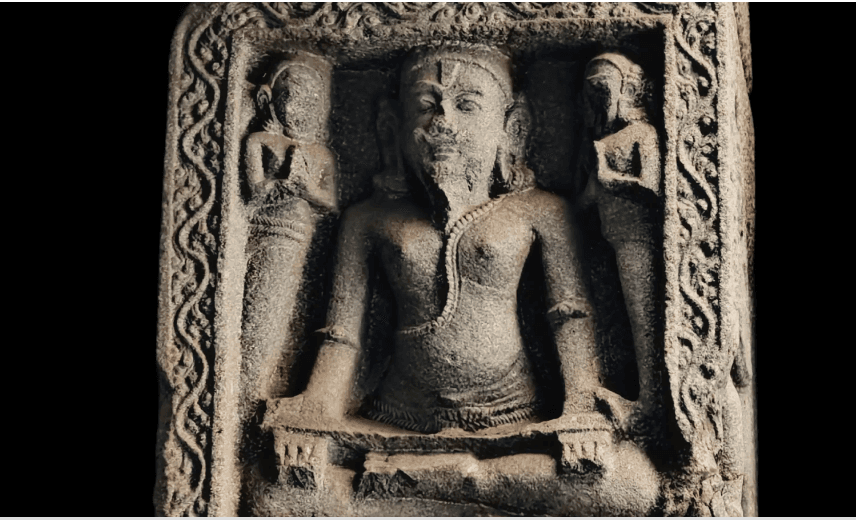
8.Saint Narahari Tirtha Contributions (Narahari Tirtha Legacy)

DC
Illustration for Saint Narahari Tirtha Contributions (Narahari Tirtha Legacy)

What & Where

Identity: 13th-century Vaishnava saint, scholar, minister; disciple of Madhvacharya’s Dvaita school

Geography: Birth—Chikakolu, Srikakulam (AP); long stint—Kalinga kingdom (modern Odisha / north-coastal AP)

Domain: Religion, governance, literature, performing arts in southern-eastern peninsula

Quick Facts for MCQs

Philosophical Contributions

  • Commentaries: Authored Dvaita expositions advancing Vaishnavism, Bhagavata purports
  • Dissemination: Travel-teaching across Andhra-Odisha-Karnataka, cementing dualism doctrine

Administrative Role

  • Ministership: Guided Kalinga rulers to align governance with Sanatana Dharma tenets
  • Policy impact: Introduced temple-centric education, ensured idol protection, patronized arts via state support

Literary & Musical Legacy

  • Kannada-bhakti songs under pseudonym Raghukulatilaka sparked devotional mass appeal
  • Recognised as progenitor of Haridasa stream later continued by Purandara Dasa et al.

Performing-Arts Promotion

  • Yakshagana Bayalata: Gave royal backing, shaping coastal folk dance-drama tradition
  • Kuchipudi: Supported classical dance codification in Telugu regions

Temple & Education Nexus

  • Simhachalam: Upgraded into scholastic hub for Dvaita texts, attracting students from Deccan and Kalinga

Key Data Points

FeatureData-Point
Birth eracirca 1243 CE
GuruShri Madhvacharya (Ananda Tīrtha)
PhilosophyDvaita Vedanta, Bhagavata Dharma
Ministerial tenure12 years in Kalinga kingdom
Pen nameRaghukulatilaka
Movement seededHaridasa bhakti movement
Key temple hubSimhachalam (transformed into Vaishnava learning centre)
Arts promotedYakshagana Bayalata, classical Kuchipudi
Idol missionSecured Moola Rama & Moola Sita idols for Madhvacharya
Language of songsKannada
GS-1History

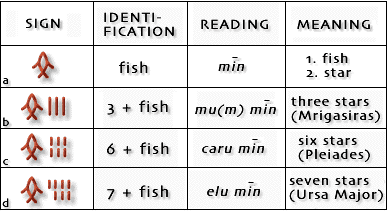
9.Indus Script Decipherment Challenge (Indus Script Decipherment)

Indian Express
Illustration for Indus Script Decipherment Challenge (Indus Script Decipherment)

What & Where

Indus Valley Script = undeciphered writing of Harappan civilisation (c 2600-1900 BCE) in present NW India & Pakistan

Carved on steatite seals, terracotta tablets, copper; generally right-to-left, occasionally boustrophedon

Corpus ≈ 3,500 objects; median inscription 5 signs, maximum 26

Quick Facts for MCQs

Script Features

  • Combination pictogram + syllabic signs; probable rebus principle
  • Includes numerical strokes, animal motifs, swastika-like glyphs
  • Seal usage hints trade, tax tagging, identity marks

Language Hypotheses

  • Dravidian theory backed by Asko Parpola, I Mahadevan; fish = meen (fish/star) parallel
  • Sanskrit/Indo-Aryan linkage earlier posited by S R Rao; timeline mismatch criticised
  • Non-linguistic view by Steve Farmer, Peggy Mohan sees mere emblem system

Decipherment Challenges

  • Absence of bilingual text unlike Rosetta Stone hampers phonetic mapping
  • Ultra-short, fragmentary corpus blocks grammatical pattern spotting
  • Sign count, language family, AI efficacy remain contested and inconclusive

Potential Gains

  • Language identification could clarify Dravidian-Indo-Aryan ancestry debate
  • Cultural insights into Harappan religion, governance, trade networks
  • Broader understanding of global script evolution and South Asian continuity

Key Data Points

FeatureData-Point
Discovery teamSir John Marshall’s archaeologists, 1920s
Civilisation spanMature phase 2600-1900 BCE
Known symbols (range)62 – 676 per various scholars
Average signs per text5
Longest inscription26 characters
Writing directionRight-to-left; longer texts alternate lines
Script type guessLogosyllabic with rebus use
Tamil Nadu prizeUSD 1 million for first full decipherment

Related UPSC Prelims PYQs

CAPF_GAI, GEO_GS 2021PYQ 1

James Prinsep is given credit for deciphering the script used in:

CAPF_GAI, GEO_GS 2023PYQ 2

Which one of the following statements is correct?

GS-1History

10.Guru Gobind Singh Birth Anniversary (Guru Gobind Singh)

PIB

What & Where

Sikhism; 10th Guru who fused spiritual authority with military leadership

Khalsa creation; started Amrit initiation at Anandpur Sahib (1699) to defend faith

Geography; born Patna Sahib, Bihar, later operated across Punjab’s Shivalik belt

Quick Facts for MCQs

Life & Succession

  • Succession; became Guru after martyrdom of Guru Tegh Bahadur in 1675
  • Childhood; known as Gobind Rai until elevation to Guruship
  • Patna birthplace now Takht Sri Patna Sahib, one of five Sikh takhts

Khalsa Institution

  • Establishment; called for five volunteers, formed Panj Pyare initiating Khalsa order
  • Identity; mandated Five Ks for visible, uniform Sikh persona
  • Aim; cultivate saint-soldiers committed to justice, egalitarianism

Martyrdom Legacy

  • Chamkaur; elder sons died leading rearguard against overwhelming Mughal forces
  • Sirhind; younger sons bricked alive after refusing Islamic conversion orders
  • National tribute; Veer Bal Diwas instituted 2022 to honour their valour

Key Data Points

FeatureData-Point
Birth date22 Dec 1666
Birth placePatna Sahib, Bihar
FatherGuru Tegh Bahadur
Birth-anniversary 20256 Jan (Nanakshahi calendar)
Festival namePrakash Utsav
Khalsa formation1699, Vaisakhi
Five K symbolsKesh, Kangha, Kara, Kirpan, Kachhera
Battle of Chamkaur1705; small Sikh force vs Mughals, hill chiefs
Elder sons’ martyrdomAjit Singh & Jujhar Singh, Chamkaur 1705
Younger sons’ martyrdomZorawar Singh (7) & Fateh Singh (9), Sirhind
Executor of younger sonsWazir Khan, governor of Sarhind
Commemoration dayVeer Bal Diwas – 26 Dec

Related UPSC Prelims PYQs

GS1 2004PYQ 1

Consider the following statements about Sikh Gurus:

GS1 1996PYQ 2

Which one of the following pairs is correctly matched?

GS-1Mapping

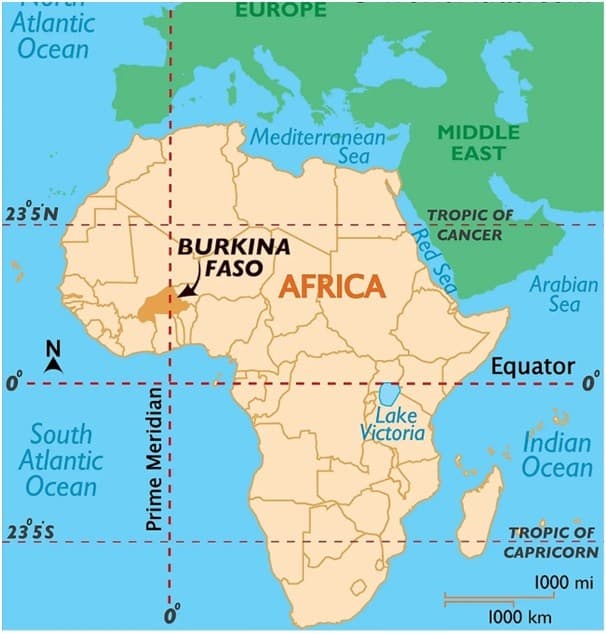
11.Burkina Faso Mapping Notes (West Africa Mapping)

The Hindu
Illustration for Burkina Faso Mapping Notes (West Africa Mapping)

What & Where

Burkina Faso: landlocked West African state, situated 6°–15° N within the Sahel belt.

Borders: Mali (NW), Niger (NE), Benin (SE), Togo & Ghana (S), Ivory Coast (SW).

Capital Ouagadougou lies on the Nakambe (White Volta) basin.

Quick Facts for MCQs

Physical Geography

  • Rivers: Three Volta headstreams drain southwards toward Ghana.
  • Sahel: Arid north marked by sparse vegetation, sand-dune landscapes.
  • Watersheds: Country lacks direct sea outlet, relying on transboundary river systems.

Colonial & Post-colonial History

  • French rule: Territory called Upper Volta until post-colonial era.
  • Renaming: Burkina Faso means “Land of Incorruptible People,” adopted 1984.
  • Instability: Recent years witness coups, jihadist violence, economic strain.

Socio-Linguistic Profile

  • Language mix: French administrative; Moore plus 60+ indigenous tongues grassroots.
  • Ethnicity: Mossi constitute ~40% population, dominating central plateau.
  • Cultural unity: Diverse groups linked via Voltaic customs, agrarian livelihoods.

Key Data Points

FeatureData-Point
RegionWest Africa
LandlockedYes
Capital cityOuagadougou
Former colonial nameUpper Volta
Year renamed1984
Renamed byPresident Thomas Sankara
Official languageFrench
Widely spoken indigenous tongueMoore
Largest ethnic groupMossi
Major riversMouhoun (Black Volta), Nakambe (White Volta), Nazinon (Red Volta)
Northern terrainSahel semi-desert
GS-3Environment

12.Climate Change Intensifies Water Cycle (Intensified Water Cycle)

Indian Express
Illustration for Climate Change Intensifies Water Cycle (Intensified Water Cycle)

What & Where

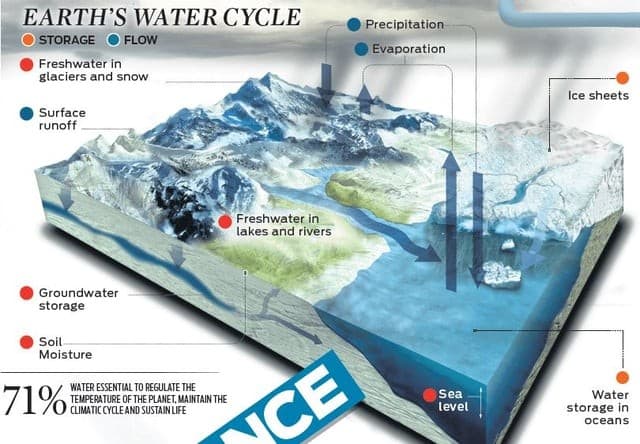
Hydrological cycle: Earth-atmosphere movement of water through solid, liquid, vapour states, powered by solar energy & gravity

Core processes: evaporation, transpiration, condensation, precipitation, infiltration, runoff governing weather and freshwater balance

2024 Global Water Monitor flags climate-driven intensification across all continents, hitting arid and glacier-fed zones hardest

Quick Facts for MCQs

Environmental Impact

  • Evaporation surge intensifies storms, flash floods and soil erosion across tropics and mid-latitudes
  • Heat-driven drought lengthens arid spells, desiccates soils, stresses crops
  • Glacier retreat diminishes perennial flows, raises sea levels, jeopardises downstream drinking supply

Economic Angle

  • Agriculture losses escalate as fertile topsoil washed away by heavy runoff
  • Infrastructure damage pushes global recovery bills to US$550 billion in 2024 alone
  • Water insecurity threatens industries, raising input costs and supply-chain volatility

Regional Shifts

  • Sahara greening observed as episodic rainfall supports new vegetation cover patches
  • Sahel gaining wetter seasons, improving pastoral water availability
  • High-latitude basins recording unprecedented rainfall, altering historical hydrological regimes

Tech & Schemes

  • Micro-irrigation, leak detection, rainwater harvesting promoted for efficient demand management
  • Reforestation amplifies soil moisture retention and atmospheric recycling of ‘green water’
  • Climate treaties & basin-level water-sharing agreements urged for coordinated adaptation finance

Key Data Points

FeatureData-Point
Global Water Monitor edition2024
Water-related deaths 2024>8,700
Displaced persons 202440 million
Economic loss 2024US$ 550 billion
Rise in record-dry months+38 % vs 1995-2005
Increase in rainfall records+52 % vs 2000
Water-cycle intensification (IPCC)up to 7.4 %
Population facing scarcity~3 billion

Related UPSC Prelims PYQs

GS1 2021PYQ 1

पृथ्वी पर जल के संदर्भ में, निम्नलिखित कथनों पर विचार कीजिए:

GS1 2002PYQ 2

For short-term climate prediction, which one of the following events, detected in the last decade, is associated with occasional weak monsoon rains in the Indian sub-continent?

GS-3Environment

13.Tranquilising Wild Animals Techniques (Wildlife Tranquilisation)

Indian Express

What & Where

Definition — Wildlife tranquillisation: sedating free-ranging animals with injectable drugs for safe capture, handling or relocation.

Process — Remote CO₂-powered dart guns deliver opioids or alpha-adrenergic mixes; effects later reversed with antidotes.

Geography — Tigress Zeenat moved Bankura (WB) ➔ Simlipal Tiger Reserve, Mayurbhanj district, Odisha.

Quick Facts for MCQs

Methods & Tools

  • Dart-Gun: metal syringe with barbed hypodermic needle, feather tuft stabiliser, fired from safe distance.
  • Drug-Choice: opioids for megafauna, alpha-adrenergics for medium species, dose weight-calibrated.
  • Reversal: field vets carry antagonists enabling fast recovery, minimising mortality.

Legal & Policy

  • Regulation: Schedule V of WP Act empowers authorised vets to immobilise threatened fauna.
  • Drug-Procurement: etorphine imports require Central Zoo Authority and Narcotics Controller clearance.
  • Oversight: state Chief Wildlife Warden issues case-specific tranquillisation orders.

Conservation Applications

  • Conflict-Mitigation: captures problem carnivores near settlements, prevents retaliatory killings.
  • Translocation: moves endangered individuals to bolster genetic diversity in protected areas.
  • Research: enables radio-collaring, health checks, disease surveillance without stressing animals.

International Collaboration

  • Treaties: CITES, CMS, CBD guide transboundary wildlife handling protocols.
  • Networks: TRAFFIC and Global Tiger Forum share best practices on chemical immobilisation.
  • IUCN-SSC: publishes Veterinary Guidelines for Safe Capture of Wild Mammals.

Key Data Points

FeatureData-Point
Regulating drug lawDrugs and Cosmetics Act 1940
Operational lawWildlife Protection Act 1972
Implementing agencyState Forest Departments
Technical supportWildlife Institute of India
Potent opioid usedEtorphine (M99)
Common comboXylazine + Ketamine
Standard antidoteNaloxone
Propellant in dart gunCompressed CO₂
Constitutional shift42nd Amendment 1976 put forests in Concurrent List
Environment articleArticle 48A
Citizen duty clauseArticle 51A(g)
Receiving reserveSimlipal, Odisha
GS-3S&T

14.MicroRNAs Regulate Genes (Gene Regulation)

The Hindu

What & Where

microRNAs (miRNAs); small, non-coding RNAs regulating gene expression post-transcriptionally

Discovered in nematode Caenorhabditis elegans; transparent 1 mm body aids cell-lineage tracking

Discovery earned Victor Ambros & Gary Ruvkun the 2024 Nobel Prize in Physiology or Medicine

Quick Facts for MCQs

Biological Role

  • Post-transcriptional regulation; miRNA-mRNA binding triggers degradation or translation block
  • Developmental precision; temporal-spatial gene expression controlled by miRNAs
  • Physiological breadth; ageing, apoptosis, neuronal circuitry modulated

Research Milestones

  • Nematode studies first revealed miRNA existence and suppressive mechanism
  • Findings laid groundwork for gene-silencing, ageing and neuronal research fields
  • Ambros & Ruvkun honoured with 2024 Nobel Prize for discovery

Model Organism Edge

  • Simple genome yet many genes conserved with humans
  • Transparent body enables real-time observation of every cell division
  • Powered breakthroughs like programmed cell death mapping and whole-genome sequencing

Medical Potential

  • Biomarkers; altered miRNA signatures enable early cancer detection
  • Therapeutics; synthetic mimics or inhibitors can rectify aberrant gene expression
  • Personalized medicine; miRNA profiles guide drug response and resistance monitoring

Key Data Points

FeatureData-Point
Molecule classmicroRNA (miRNA)
Coding capacityNon-coding
Primary actionPost-transcriptional gene silencing
MechanismmRNA degradation / translation block
Core organismCaenorhabditis elegans
Organism length≈1 mm
Organism traitTransparent body
Key discoverersVictor Ambros & Gary Ruvkun
Nobel recognitionPhysiology or Medicine, 2024
Future useCancer & genetic-disorder diagnostics / therapy

Related UPSC Prelims PYQs

GS1 2019PYQ 1

'RNA interference (RNAi) technology has gained popularity in the last few years. Why?

GS-3S&T

15.Record Long Galactic Tidal Tail (Galactic Tidal Tail)

IT

What & Where

Tidal tail = elongated stream of stars + gas ripped from galaxies during close encounters or mergers

Latest find: tail from galaxy NGC 3785, Leo constellation, spans 1.27 million ly

Typical outcome: two tails form—leading and trailing—from outer galactic regions

Quick Facts for MCQs

Astronomical Discovery

  • Observation sets longest-ever tidal tail record, surpasses previously known streams
  • Detection highlights capability of deep-sky imaging surveys in faint-light regimes

Formation Mechanism

  • Close galactic pass strips outer stellar + gas layers via tidal torque
  • Material flung outward conserves angular momentum, stretching into million-light-year filaments

Research Significance

  • Offers natural laboratory for studying ultra-diffuse galaxy formation pathways
  • Provides chronological marker to reconstruct merger timeline and star-formation quenching patterns

Key Data Points

FeatureData-Point
Host galaxyNGC 3785
ConstellationLeo
Record length1.27 million light-years
CompositionStars, interstellar gas, dust
Tail count per eventUsually two (leading + trailing)
Key driverGravitational tidal forces
Research valueTraces past mergers; probes galaxy evolution
Surface brightnessVery low; creates ultra-diffuse features
GS-3Security

16.Sonobuoys Enhance Submarine Tracking (Anti-Submarine Tech)

The Hindu
Illustration for Sonobuoys Enhance Submarine Tracking (Anti-Submarine Tech)

What & Where

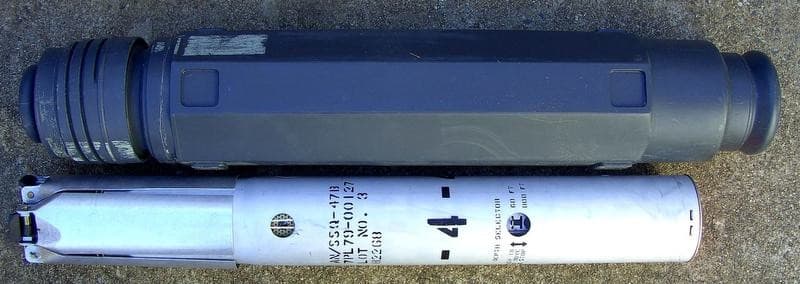
Sonobuoys = expendable sonar buoys for anti-submarine warfare & underwater acoustic research.

Process: air/ship launch ➔ water impact activation ➔ hydrophone descends, float transmits data via VHF/UHF.

India–U.S. plan joint manufacture, boosting Indo-Pacific undersea domain awareness.

Quick Facts for MCQs

Technology & Design

  • Hydrophone depth & sensitivity selectable to match salinity, temperature layers.
  • Real-time acoustic relay permits immediate threat classification.
  • Interoperability across fixed-wing, rotary-wing, unmanned naval aviation.

Security Dimension

  • Detects submarine engine, propeller, cavitation signatures for ASW missions.
  • Expendable units allow dense barrier fields without recovery.
  • Key tool for comprehensive undersea domain awareness in Indian Ocean.

Bilateral Collaboration

  • India–U.S. strategic partnership announced 2023 for sonobuoy co-production.
  • Targets niche sensor indigenisation, diversifying supply chains.
  • Expected to catalyse wider maritime surveillance tech transfers.

Key Data Points

FeatureData-Point
Typical diameter13 cm
Typical length91 cm
Communication bandVHF & UHF radio
Surface unitInflatable float + transmitter
Deployment platformsP-8, MH-60R, MQ-9B

Related UPSC Prelims PYQs

NDA_GAT 2022PYQ 1

SONAR is a device that is used to measure the distance of underwater objects by a ship. Which of the following types of waves does it use for this purpose?

NDA_GAT 2025PYQ 2

SONAR stands for

GS-2Scheme

18.Environment Relief Fund Amendments 2024 (Environment Relief Fund)

MoEFCC

What & Where

Environment Relief Fund (Amendment) Scheme 2024 — MoEFCC update to 2008 scheme covering whole of India

Central Pollution Control Board designated five-year Fund Manager for compensation-based environmental restoration

Online portal enables nationwide tracking, investment and 30-day disbursement of collected amounts

Quick Facts for MCQs

Legal & Policy

  • Amendment improves fund utilisation, audit stringency and administrative expense ceiling
  • Aligns with polluter-pays principle via NGT and Public Liability Insurance penalties
  • Central approval mandatory for every state-level restoration blueprint

Fund Flows

  • Compensation, penalties and investment returns credited continuously to single CPCB-managed account
  • Liquidity maintained; idle cash reinvested after meeting near-term payouts
  • 30-day release clause expedites relief to affected districts

Tech & Compliance

  • Portal offers end-to-end filing, tracking, MIS and public disclosure
  • Digital records streamline C&AG audits and reduce leakages
  • Real-time dashboards aid Centre in monitoring state-wise restoration progress

Key Data Points

FeatureData-Point
Launch MinistryMoEFCC
Fund Manager (2024-29)Central Pollution Control Board
Replaced ManagerUnited India Insurance Co. Ltd.
Key Legal SourceSec 24, National Green Tribunal Act 2010
Additional Legal SourceSec 14, 15, 17, Public Liability Insurance Act
Disbursement Deadline≤ 30 days of Collector/Centre order
Investment AvenuesPublic financial institutions, savings accounts
Restoration PlansDrafted by CPCB & SPCBs; Centre must approve
Administrative CapRaised to 2 % of fund corpus
AuditorIndependent, under C&AG oversight
Scheme ToolDedicated online portal
Validity of CPCB Tenure5 years

Related UPSC Prelims PYQs

GS1 2022PYQ 1

निम्नलिखित में से कौन-सा एक, पर्यावरण (संरक्षण) अधिनियम, 1986 के अन्तर्गत गठित किया गया है?

GS-2Scheme

19.Oil Palm Mission Expansion Targets (NMEO-Oil Palm)

PIB

What & Where

NMEO-OP; central mission boosting domestic crude palm oil, lowering import dependence

Oil palm; highest oil-yield crop, produces palm oil (mesocarp) and palm-kernel oil

Focus geography; North-East states plus Andaman & Nicobar earmarked for rapid plantation expansion

Quick Facts for MCQs

Policy & Scheme

  • Viability Price; DBT bridges gap between global rates and assured farmer returns
  • Rejuvenation; Rs 250 per plant sanctioned for ageing garden revival
  • Support practices; half-moon terraces, bio-fencing subsidised for hilly or wildlife-prone plots

Economic Angle

  • Import load; India purchased 9.2 mt palm oil in 2023-24, largest global buyer
  • Yield edge; oil palm gives five-times more oil per hectare than traditional oilseeds
  • Consumption cap; mission seeks to hold intake at 19 kg per-person annually till 2025-26

Geography & Cultivation

  • Production core; Andhra Pradesh, Telangana, Kerala contribute 98 % present output
  • Untapped land; 28 lakh ha potential versus 3.7 lakh ha currently cultivated
  • Expansion zone; Karnataka, Gujarat, Mizoram, Odisha, NE states listed for future coverage

Key Data Points

FeatureData-Point
Scheme typeCentrally Sponsored
Extra area by 2025-266.5 lakh ha
Total oil-palm area 2025-2610 lakh ha
CPO target 2025-2611.20 lakh t
CPO target 2029-3028 lakh t
Planting material aidRs 29,000 / ha
NE & A&N bonusGovt bears extra 2 % CPO price
Palm oil share in imports60 % of edible-oil basket

Related UPSC Prelims PYQs

CDS_GK, GS1 2021PYQ 1

Which of the following States/Union Territory/Region are in special focus in the National Mission on Edible Oils—Oil Palm?

CDS_GK, GS1 2010PYQ 2

An objective of the National Food Security Mission is to increase the production of certain crops through area expansion and productivity enhancement in a sustainable manner in the identified districts of the country. What are those crops?

GS-2Scheme

20.Decade of UJALA LED Scheme (UJALA LED Scheme)

PIB
Illustration for Decade of UJALA LED Scheme (UJALA LED Scheme)

What & Where

UJALA (2015): pan-India scheme replacing incandescent/CFL lamps with subsidised LED bulbs via Energy Efficiency Services Ltd (EESL).

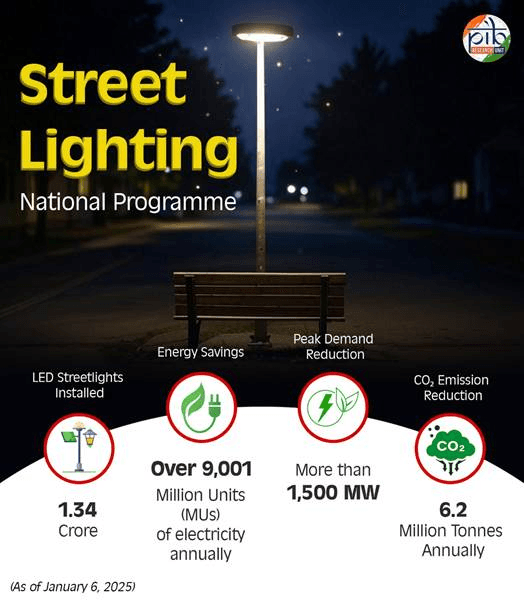
Street Lighting National Programme: swaps conventional public streetlights for LEDs under the same EESL umbrella.

Geography: all Indian states/UTs; Gram UJALA extends reach to rural households.

Quick Facts for MCQs

Policy Design

  • Demand-aggregation model enables bulk procurement, slashing LED prices without direct subsidy outlay.
  • Performance-contract: municipalities repay EESL from power bill savings; no upfront capital burden.
  • Objective aligns with NMEEE under National Action Plan on Climate Change.

Environmental Impact

  • Emission reduction 3.88 Mt CO₂ annually equals removing ≈1 million cars from roads.
  • LEDs lower heat output, indirectly cutting cooling loads in urban areas.
  • CFL phase-down curbs mercury disposal risks.

Economic Angle

  • Household electricity bills drop by ~₹150-200 per LED yearly.
  • National savings ₹19,153 crore free resources for DISCOM debt easing.
  • LED manufacturing scale-up spurred domestic electronics value chain.

Tech & Schemes

  • LED lifespan ≈25,000 hrs versus 1,000 hrs for incandescent.
  • Gram UJALA Phase-I: 1.5 crore bulbs, projected 2,025 million kWh yearly savings.
  • LEDs built on GaN/InGaN chips, enabling 75 % lower wattage for same lumen output.

Key Data Points

FeatureData-Point
UJALA launch5 Jan 2015
Implementing agencyEESL (Min of Power JV)
LED bulb price (2014→UJALA)₹450 → ₹70
Rural Gram UJALA price₹10 per LED
Bulbs distributed (till 2025)36.87 crore
Target bulb replacement77 crore
Streetlights targeted3.5 crore
Annual energy saved47,883 million kWh
Annual CO₂ avoided3.88 million t
Annual monetary saving₹19,153 crore
Peak demand shaved9,586 MW
LED vs ICL energy cut~90 %
SLNP uptime commitment95 %
EESL founding year2009

Related UPSC Prelims PYQs

GS1 2016PYQ 1

Which one of the following is a purpose of 'UDAY', a scheme of the Government?

Ready to practice?

Test your knowledge with our UPSC test series.

Start Free Trial