 View answer copy →
Apsara NRank 192CSE 2024
Answered a very similar question
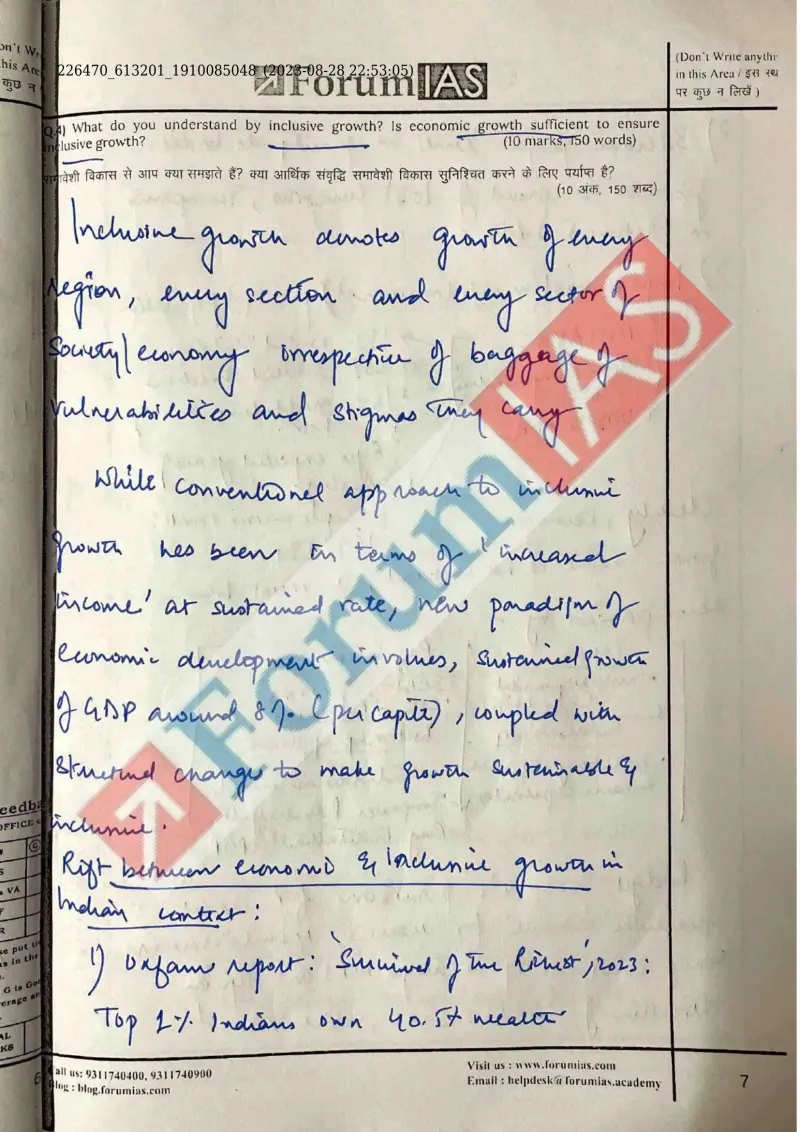
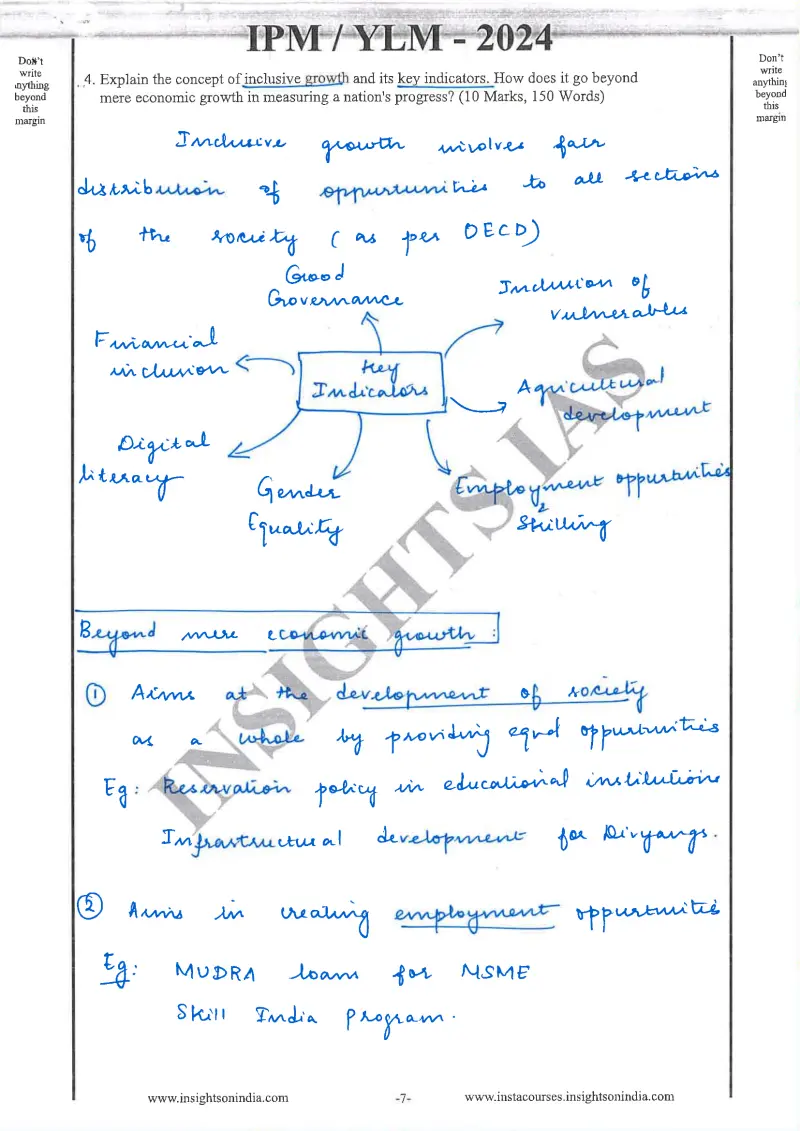
Their question: “Inclusive growth, indicators, beyond mere economic growth (10m)”
Apsara's Q4 defines inclusive growth via OECD with inequality data (Oxfam, GHI) and enabling schemes, the 'salient features of inclusive growth and measures' demand of 2017 Q2.
Key learnings from their answer
- ›Each answer opens with a one-line data- or body-anchored definition before the body, e.g. inclusive-growth framed via OECD, clean-energy via the IPCC report, instead of a vague generic opener -> lead with a sourced, authoritative one-liner so the examiner sees you've located the question in real institutional/data terrain from line one.
- ›Dense, precise factual loading throughout, GHI rank 107, Oxfam top-1%=40% of wealth, NFHS-5 57% women anaemic, GER 26%, FRBM 3% target, plus the N.K. Singh committee and German debt-brake, with sources named (Oxfam, OECD, NFHS-5, NITI Aayog) rather than vague 'studies show' -> memorise 4-5 hard numbers with their source per economy theme so claims are verifiable and not hand-waved.
What they cited: Global Hunger Index rank 107 · Oxfam: top 1% holds ~40% of wealth · OECD (inclusive growth); 128th Constitutional Amendment Bill · MGNREGA, National Rural Livelihood Mission, Skill India, Sarva Shiksha, PM Kaushal, PM Vishwakarma