
 View answer copy →
Aditya SrivastavaAIR 1CSE 2023
Answered a closely related question
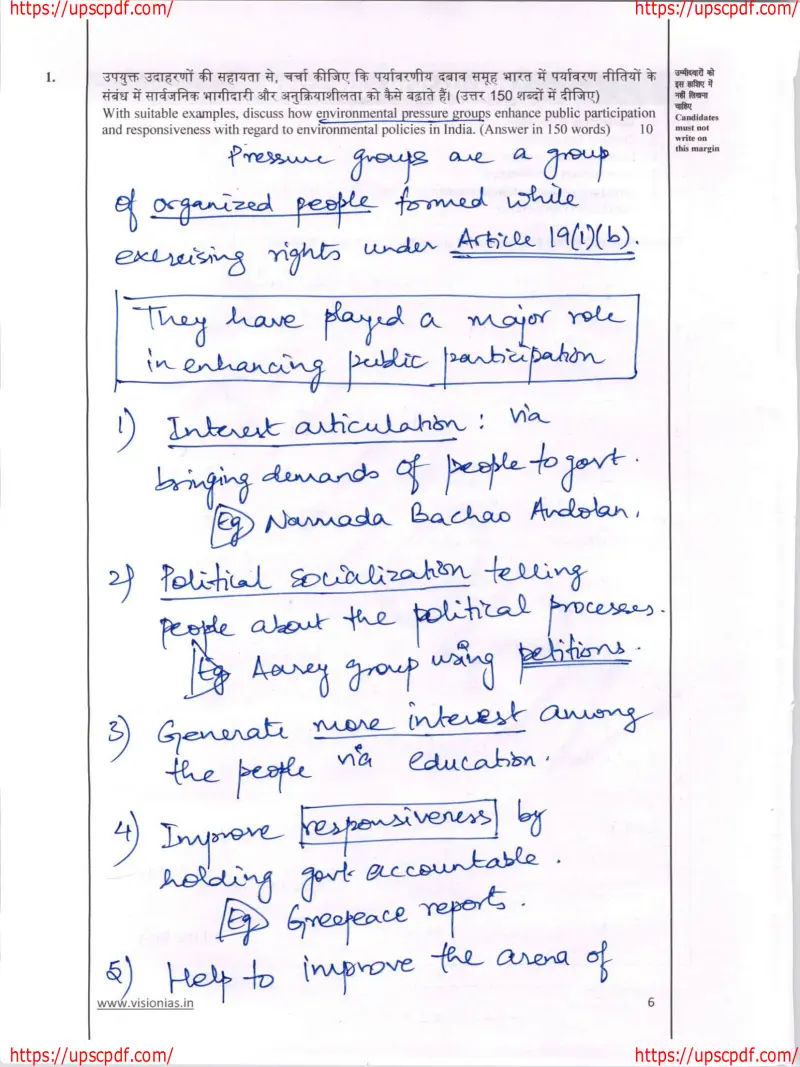
Their question: “How environmental pressure groups enhance public participation and responsiveness in India's environmental policies”
The topper's account of how environmental pressure groups mobilise participation and force policy responsiveness illustrates the structure and functioning of pressure groups the PYQ asks to assess.
Key learnings from their answer
- ›Arguments are carried by named, current case law and hard instances, not assertions, Google's Rs 1330 cr CCI fine (Q11); Hijab, Shirur Mutt, Sabarimala and Shayara Bano stacked under the essential-practices doctrine (Q13); NALSA for transgender rights (Q18) -> stockpile 3-4 landmark cases per static topic and deploy them as evidence so each claim lands with an authority behind it.
- ›Most answers close with a structured 'Way ahead' linked to a relevant SDG -> end forward-looking and solution-oriented, tying the topic to a global development target so the conclusion adds value instead of merely restating the intro.
What they cited: Narmada Bachao Andolan; Aarey forest group (petitions); Greenpeace reports (Q1)