
Who originally propounded the theory of three stages of social development?
- (a)Karl Marx
- (b)Talcott Parsons
- (c)Herbert Spencer
- (d)Auguste Comte
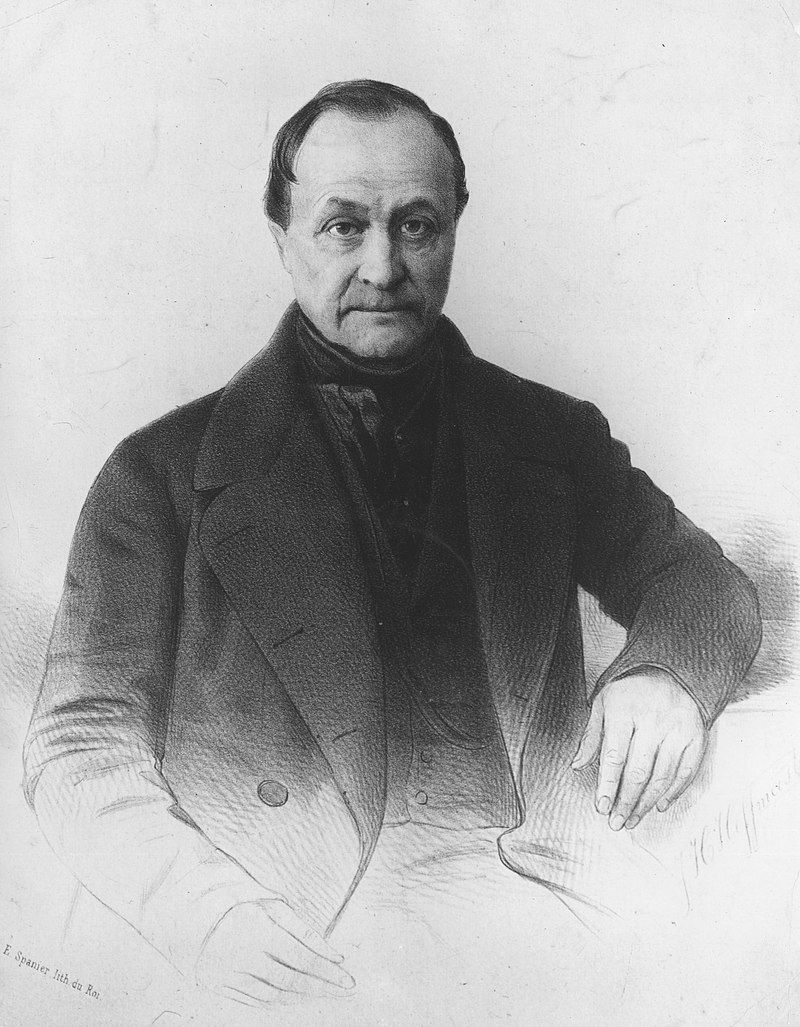
Correct — D, Auguste Comte. The French thinker Auguste Comte (1798–1857), widely regarded as the founder of sociology and of positivism, propounded the 'Law of Three Stages' (loi des trois états): he held that human thought — and society with it — necessarily passes through a theological (or fictitious) stage, a metaphysical (or abstract) stage, and finally a positive (or scientific) stage. In the positive stage, explanation by gods or abstract essences gives way to observation and reasoning about natural laws, the basis of his 'positive philosophy'.
- (a)Karl Marx — Marx proposed a materialist theory of historical stages based on modes of production (primitive communism, slavery, feudalism, capitalism, socialism) — not the theological–metaphysical–positive 'three stages' of Comte.
- (b)Talcott Parsons — Parsons, a 20th-century American sociologist, is associated with structural functionalism, the AGIL scheme and pattern variables — not with the law of three stages.
- (c)Herbert Spencer — Spencer did develop an evolutionary sociology (militant vs industrial society) and the 'survival of the fittest' idea, but the specific theory of three stages of intellectual/social development is Comte's, not Spencer's.
Auguste Comte coined the term 'sociology' and founded positivism — the view that genuine knowledge comes from observed, verifiable facts and the laws connecting them. His central 'Law of Three Stages' claims that each branch of knowledge, and human society as a whole, evolves through a theological stage (phenomena explained by supernatural beings), a metaphysical stage (explained by abstract forces or essences) and a positive stage (explained by scientific laws derived from observation).
The trap is that several thinkers proposed 'stage' theories of society. Lock the specific label: 'three stages — theological, metaphysical, positive' = Comte. Marx's stages are economic (modes of production); Spencer's is an evolutionary militant-to-industrial scheme; Parsons is a functionalist. Only Comte's is the 'law of three stages'.
- Auguste Comte (1798–1857) — French philosopher, founder of sociology and of positivism.
- Law of Three Stages: theological → metaphysical → positive (scientific).
- Comte coined the word 'sociology' and championed the 'positive' (scientific) method.
- Contrast: Marx = stages by mode of production; Spencer = militant vs industrial society; Parsons = structural functionalism.
- Confusing Comte's three stages with Marx's economic stages of history.
- Crediting Spencer (evolutionary sociology) with the 'law of three stages'.
UPSC/UPPSC pair a theory or coinage with its thinker — 'who propounded X / who coined sociology / whose is the law of three stages' — testing one-to-one attribution.
- practice — not a real PYQ
The three stages in Auguste Comte's 'Law of Three Stages' are:
- (a)Theological, Metaphysical, Positive
- (b)Slavery, Feudalism, Capitalism
- (c)Savagery, Barbarism, Civilisation
- (d)Militant, Transitional, Industrial
Answer(a) Theological, Metaphysical, Positive — culminating in the positive (scientific) stage. - practice — not a real PYQ
Who is credited with coining the term 'Sociology'?
- (a)Émile Durkheim
- (b)Herbert Spencer
- (c)Auguste Comte
- (d)Max Weber
Answer(c) Auguste Comte — who coined it (originally 'social physics') and founded positivism.