
With reference to Socotra Island, which of the following statement/s is/are correct ? 1. It is an Island of Oman, situated in the Arabian Sea. 2. It was designated as a world natural heritage site by UNESCO in 2008. Select the correct answer using the codes given below. Codes :
- (a)Only 1
- (b)Only 2
- (c)Both 1 and 2
- (d)Neither 1 nor 2
Correct — B, Only 2. Statement 2 is true: the Socotra Archipelago was inscribed by UNESCO as a World Natural Heritage Site in 2008, recognised for its exceptional biodiversity and high level of endemism. Statement 1 is false in one crucial detail: Socotra lies in the Arabian Sea (near the mouth of the Gulf of Aden), but it belongs to YEMEN, not Oman. Because the 'Oman' claim is wrong while the UNESCO-2008 claim is right, only statement 2 is correct — option (b).
- (a)Only 1 — Wrong — statement 1 misstates the owning country. Socotra is an island of Yemen, not Oman, so statement 1 is false (while statement 2 is in fact true).
- (c)Both 1 and 2 — Wrong — statement 2 is correct, but statement 1 wrongly assigns the island to Oman; Socotra belongs to Yemen.
- (d)Neither 1 nor 2 — Wrong — statement 2 is correct: UNESCO designated Socotra a World Natural Heritage Site in 2008.
The Socotra Archipelago is a group of four islands in the northwestern Indian Ocean, lying in the Arabian Sea near the mouth of the Gulf of Aden, roughly between the Horn of Africa and the Arabian Peninsula. Politically it is part of YEMEN. Its long isolation has produced remarkable endemic flora and fauna — most famously the umbrella-shaped Dragon's Blood Tree (Dracaena cinnabari) — earning it the nickname 'the Galapagos of the Indian Ocean'. UNESCO inscribed it as a World Natural Heritage Site in 2008.
The trap is the country. Because Oman occupies much of the southern Arabian coast, a plausible-sounding statement pairs the island with Oman. The single, decisive fact to remember is Socotra = Yemen. The UNESCO-2008 status is straightforwardly true, so once you flag statement 1's country error, 'Only 2' is forced.
- Socotra belongs to Yemen — NOT Oman.
- It lies in the Arabian Sea, near the mouth of the Gulf of Aden.
- UNESCO designated Socotra a World Natural Heritage Site in 2008.
- It is renowned for endemic species such as the Dragon's Blood Tree (Dracaena cinnabari).
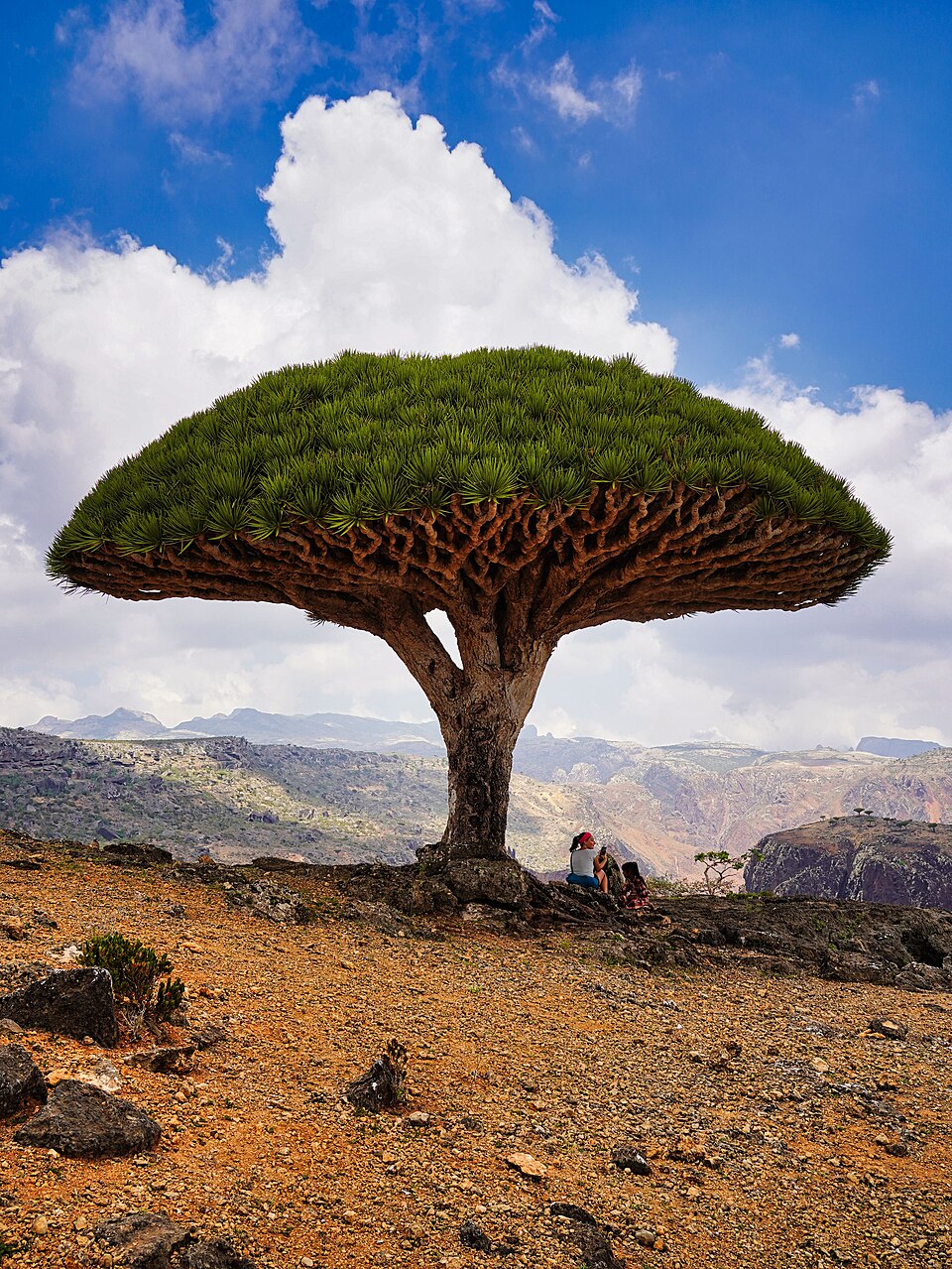
- Assigning Socotra to Oman instead of Yemen because both border the Arabian Sea
- Confusing 'World Natural Heritage' status with 'Biosphere Reserve' or 'Ramsar' listing
UPPSC and UPSC test islands as 'located in which sea / belongs to which country' and as statement-pairs mixing a correct heritage-status fact with a wrong country — verify the owning nation.
In the map given below, four islands of Indian Ocean region, i.e. A) Seychelles, B) Chagos, C) Mauritius and D) Socotra are marked as 1, 2, 3 and 4. Match them and select the correct answer from the codes given below. Codes:
- (a) A-1, B-3, C-4, D-2
- (b) A-3, B-1, C-2, D-4
- (c) A-1, B-3, C-2, D-4
- (d) A-3, B-1, C-4, D-2
Answer(d) A-3, B-1, C-4, D-2
Same subject — the location of Socotra. UPSC's map-matching item places Socotra 'off Yemen' near 12°N in the Arabian Sea, directly reinforcing why statement 1's 'Island of Oman' claim is false in this UPPSC question.
- practice — not a real PYQ
Socotra Island, known for its Dragon's Blood Trees, belongs to which country?
- (a)Oman
- (b)Yemen
- (c)Somalia
- (d)Djibouti
Answer(b) Yemen — Socotra lies in the Arabian Sea near the Gulf of Aden and is Yemeni territory. - practice — not a real PYQ
The endemic 'Dragon's Blood Tree' (Dracaena cinnabari) is characteristic of which island?
- (a)Zanzibar
- (b)Madagascar
- (c)Socotra
- (d)Maldives
Answer(c) Socotra — its unique endemic flora, including the Dragon's Blood Tree, earned it UNESCO World Natural Heritage status in 2008.